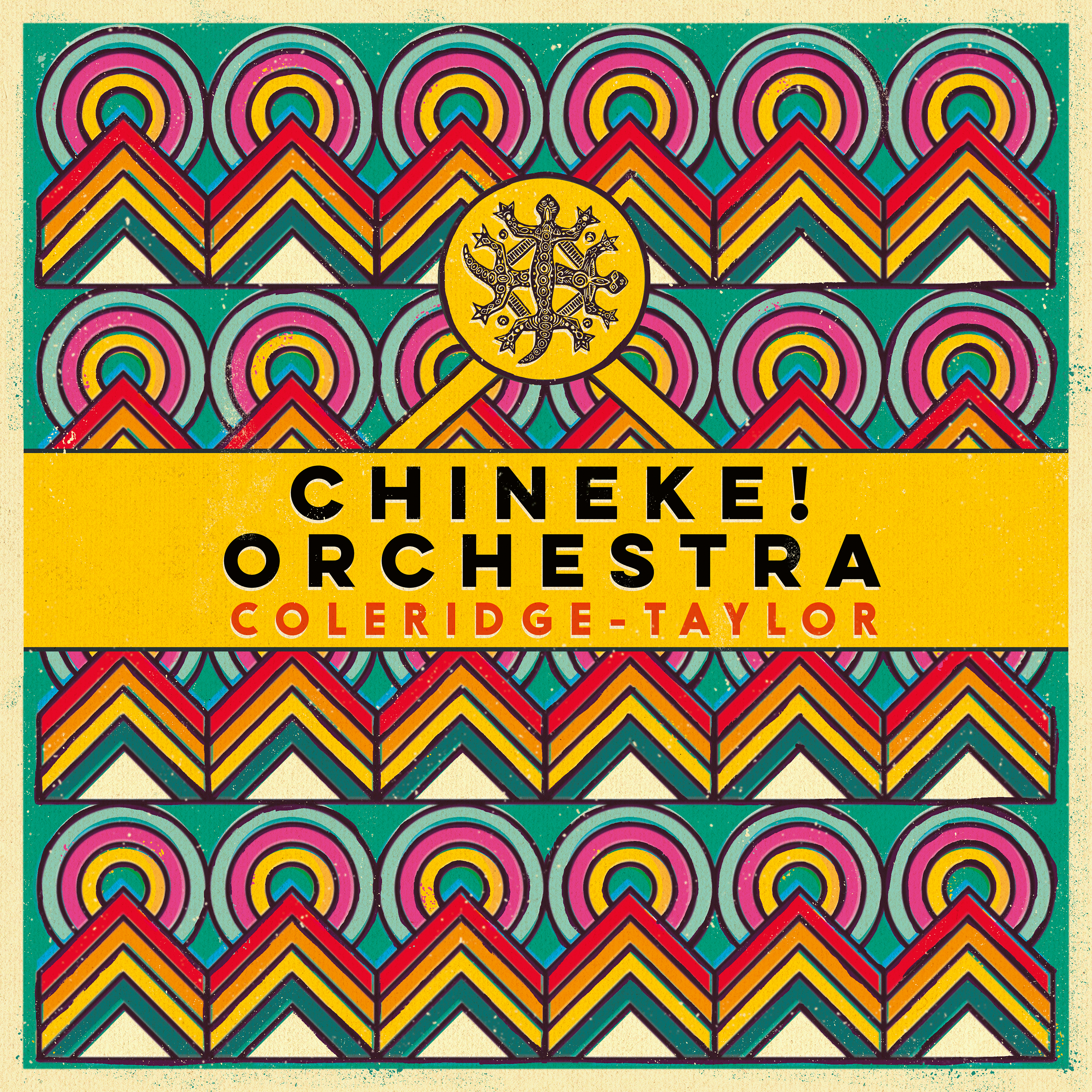
Samuel Taylor Coleridge begat Samuel Coleridge-Taylor, who begat Coleridge Taylor Perkinson… Wait, that’s not right. But these three men, listed in chronological order, became intertwined, much as they were admired, by their names. Samuel Taylor Coleridge (1792-1834) is the great (white) British poet. Samuel Coleridge-Taylor (1875-1912), named in honor of that poet (and the subject of this review) was a much lauded, though subsequently neglected British composer, as it happens a black British composer. Taylor Coleridge Perkinson (1932-2004), a much lauded and subsequently neglected black American composer named in honor of those predecessors. Stick with me, this comes together (for the purposes of this review) with the name of the orchestra on this recording, “Chineke”, a word taken from the African Igbo religion, meaning, “God”. Add an exclamation point and you get “Chineke!”, the orchestra which was founded in 2015 by the double bass player, Chi-chi Nwanoku CBE, to provide career opportunities for Black and ethnically diverse classical musicians in the UK and Europe.
All that to introduce listeners to this landmark of the recording industry, fulfilling in part the mission of this fine orchestra. This two CD set provides an intelligent selection of the music of Samuel Taylor-Coleridge which is nothing short of revelatory. Knowledge (at least outside of Britain) of his music, up until this release pretty much limited to his fine choral work “Hiawatha’s Wedding Feast” and perhaps a short orchestra movement. The late great Paul Freeman included an aria from that choral work and one movement (Danse Negre) from his African Suite in his defining set of recordings on Columbia/Sony, “Black Composers”. These brief pieces were the introduction for many people, this writer included, to this composer’s work.

Chineke! now presents a far more representative selection of this man’s work with a truly nice touch of alreleasing the first recording of music by Coleridge-Taylor’s daughter Gwendolyn Avril Coleridge-Taylor (1903-1998) who wrote under the pen name Peter Riley (it is hardly a secret that both black people and women suffer from lack of recognition in the world of classical music).
Coleridge-Taylor’s output was large, comprising some 82 pieces with opus numbers and unpublished works as well. That’s a lot of music from a man who died at age 37 from pneumonia. This two disc set does a very nice job of presenting music from all eras of his brief career. From the Opus 2 Nonet (1894) to the Opus 80 Violin Concerto (1912) this release provides a larger perspective on this artist (dubbed by white musicians in New York, in what today would be judged a pejorative appellation, “The Black Mahler”). My guess is that the same people who would speak condescendingly about Coleridge-Taylor were also not appreciative of that Jewish Austrian conductor/composer.
Though it appears that all these works have appeared previously in recordings (appropriately on mostly British labels) this collection does a great service in demonstrating the arc of his truncated life’s work. Only the Avril Coleridge-Taylor work, “Sussex Landscape” (1940), is a world premiere recording.

For the purposes of this review I will be discussing these works in chronological order rather than the order on the recordings. Even a short career demonstrably goes through changes over time, led by social, political, historical, and musical experiences. A photo (above) shows the order on the discs.
The Nonet Op. 2 (1894) for strings, winds, and piano was written by the 19 year old (still a student at the Royal College of Music). This unusual combination, nearly a chamber orchestra in dimension as is the grand, late romantic, Brahmsian dimension. His skill in orchestration is evident here and serves to clarify the musical lines in these four large movements. It is virtually a symphony with a virtuoso piano obbligato.
Here, emissaries of the nascent Harlem Renaissance came to England in the the form of a 1896 concert by the Fisk Jubilee Singers who presented a program of “Negro Spirituals” (Fisk is one of the so called “Historically Black Colleges and Universities” which were formed to provide educational opportunities for Black Americans who were barred from admittance to other colleges). The following year Coleridge-Taylor met the Black American poet Paul Laurence Dunbar (1872-1906), who had come to England on a literary tour. His parents were freed slaves in Kentucky. Both of these experiences had a profound effect on Coleridge-Taylor and his music. Coleridge-Taylor would attend the first Pan-African Conference in London in July 1900. There he would explore the ideas and philosophies of Pan-Africanism which emphasised the importance of a shared African heritage. The orchestral works “Ballade in A minor” Op. 33 and the “African Suite” Op. 35, (both 1898) reflect those influences.
The two movement Ballade is a grand romantic work with no particular program but one that demonstrates the composer’s amazing command of the orchestra. The African Suite, one of his more popular works, was directly influenced by the work of Dunbar (whose career, like Coleridge-Taylor’s, also ended prematurely).
The two movement “Romance” Op. 39 (1899) for violin and orchestra is a foreshadowing of the later Violin Concerto. It is a heavily late romantic work with a beautiful and substantial violin part.
His “Petite Suite” Op. 77 (1911) is among his most popular works and arguably served as a precursor to what would later be termed, “Light Music”. The second movement strikes deep into this writer’s memory as one of those pieces whose charm prompted me to find out what it was so I might hear it again. Very charming and immediately listener friendly music.
The first work on this set, The five movement, “Othello” Orchestral Suite Op. 79 was published in 1909 and first performed in 1911. It was conceived and written as an orchestral suite, not a suite of music drawn from another work and is complete as performed here. It is a stunning example of the composer’s skills with orchestration and with dramatic writing.
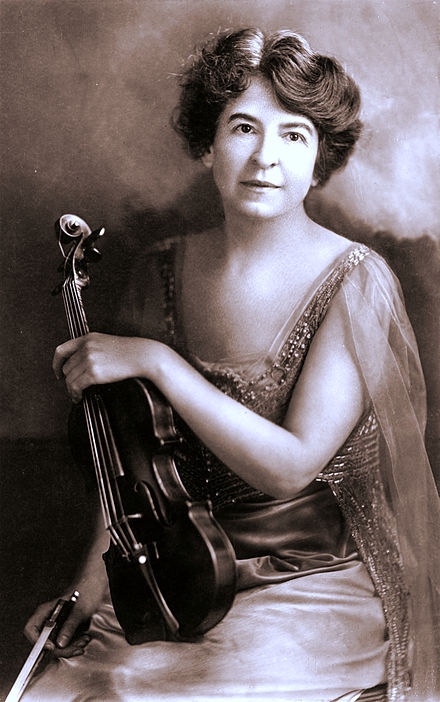
Now we come to the Op. 80 Violin Concerto of 1911-2 which is dedicated to American violinist Maud Powell, a staunch advocate for female musicians, black composers, and new music in general (an early model for the likes of Rachel Barton Pine). This work of high late romanticism echoes Brahms and Bruch in its Melodie’s, it’s harmonies, and the grand sweep of its gorgeously orchestrated three movements. It is easy to imagine this as a regular repertoire piece.

Last and most certainly not least is the world premiere recording by Coleridge-Taylor’s daughter, Gwendoline Avril Coleridge-Taylor (1903-1998), her “Sussex Landscape” Op. 27 (1940). This is just a taste of her 60+ compositions but it is compelling enough to prompt listeners (and hopefully progressive organizations such as “Chineke!”) to pursue more exploration of her oeuvre.
Chineke! Truly achieves their goal in producing this wonderful portrait of a composer whose work has, until very recently languished in relative obscurity. Even this writer, whose obsessive interest in the new and interesting, has been seriously transformed by this release. You really have to hear this release. My thanks and congratulations to everyone involved in this fine Chineke! release.
 New Music Buff