New Music Buff’s Best of 2023


Attack of the Music Memes

After agonizing about writing a “best of” blog and publishing it before January 1, I decided to take a pause and enjoy the holidays. So here I look back on my 2023 in the rear view mirror but with memories still pretty fresh.

Regular readers of this blog likely already know of my oft shared opinion of the superfluous nature of “best of” lists and of my acquiescence in producing such on an annual basis. I certainly don’t think of this as a meaningless exercise and I think the process has grown on me. It is a chance to achieve a perspective which would be missed by simply plowing on ahead with the usual flow of reviews and articles. But drawing down that 12 month perspective is an opportunity to evaluate those months, to see where we’ve been and to hopefully get a smidgen of insight into where I/we are likely headed.

My Facebook friends will recognize the representative meme at the head of this article which is one of the more cloying aspects of “AI”, whatever that is. So indulge me for a moment to look at this seemingly new intrusion into the reality we thought we knew. So, what is “AI” and what will it do to us? Ultimately I’m not the one to answer that question but I’d like to throw some ideas to add to the speculation.

First, the choices a composer makes, like the choices of a painter, a writer, etc. are the stuff of the mystery of creation itself. Why “A major”, or why that tuning, or scale, or rhythm, or orchestration, etc? So along comes the notion of removing, or at least distancing, the artist from their creative product. That notion started not with famed proponent John Cage but rather with Johannes Chrysostymous Wolfgang Amadeus Mozart in his K. 516f musical dice game. Voila! Algorithmic composition (actually fairly common practice in the classical era). An early manifestation of “AI”? Perhaps.

Lejaren Hiller (1924-1994) was the first composer to employ electronic data processing in a musical work in his Fourth String Quartet subtitled “Iliac Suite” in 1957. There followed similar experiments with various iterations of electronic creations at music centers worldwide including The University of Illinois at Champaign, Columbia-Princeton, Stanford, The University of California Berkeley and San Diego, The San Francisco Tape Music Center (later subsumed into the Mills College Center for Contemporary Music, IRCAM in Paris, Israel Electronic Music Studio, and counterparts in the Nordic countries, Germany, Belgium, etc. Proto “AI”?

While historically interesting I raise this issue to say that, as far as I can tell, “AI” has not made this writer’s greatest hits list but it is interesting and maybe even useful. With that, my concern for the subject officially goes to the back burner for a later time.

2023 has been a year of great personal changes for the writer of this blog. A job change, a geographical relocation, and many things unrelated to this blog characterized a busy year for New Music Buff. So here in a sort of holiday tradition I present my “Best of 2023” from my little listener’s corner of the world. For the sake of simplicity I present a more or less chronological exposition of my sonic adventures. (N.B. Not one portion of this article made use of “AI”).

I begin with not with my 20 most read posts, a practice that characterized previous iterations of this annual exercise. Instead I am providing my top 20 favorite releases that were reviewed in 2023. Please note a couple of caveats. First, I receive a lot of review requests, more than I can even listen to, much less give a reasonably intelligent review. Albums that I’ve not reviewed should not be assumed to be bad or insignificant and my reviews are personal observations. I really only review albums that interest me anyway. Second, this article is only one reviewer’s opinion and not intended to be definitive or to supersede anyone else’s opinions. Third, this is not the end of my attention to music that was released in 2023. Some releases require more time to give a fair listen and a respectful review. There are more to come in 2024.

First a few stats: 2023 saw the publication of some 45 blog posts on New Music Buff, earning me 9693 views for the year. I rarely get comments on my posts (though I welcome and invite comments both positive and negative). Not bad, I think, for the overall less appreciated musical styles that fuel my desire to write about.

Now, in chronological order (of publication) are my personal favorites as a listener:

Neuma 158

Binaural Beats in the Tudor Rainforest started my new year with a bang. Reviewing this disc required me to take a closer look at the astounding work of David Tudor and his unique contributions to new music. This important release is a recording of a work which, by its own concept cannot receive a “definitive” performance. But this recording comes mighty close, involving “binaural” recording utilizing a mobile set of binaural microphones which are worn by the recordist. In addition this recording involved a collaboration with Pauline Oliveros and a group called, “Composers Inside Electronics”. The recording was done during Oliveros’ tenure at UCSD. Rainforest IV is so called because it is the fourth iteration of the instructions that form the original concepts of Tudor’s composition, “Rainforest”. It is an immersive sonic experience heard on headphones but actually not bad even heard on stereo speakers. A rich and wonderful release.

Starkland S-236

From a 1960s electroacoustic to a budding 21st Century composer Kotoka Suzuki released on the reliably interesting and even visionary Starkland label. Next Gen Electroacoustic: Kotoka Suzuki will introduce the listener to this rising star who doubtless will produce more of her compelling compositions.

Sony 194399434826

Igor Levit is a fine concert pianist whose albums are effectively redefining the way we, as listeners, perceive the western classical oeuvre. Igor Levit: Defining Tristan does for the various musical pieces inspired by the Tristan legend what Levit did for the concept of the great keyboard variations in which he selected Beethoven’s “Diabelli Variations” and Frederic Rzewski’s “El Pueblo Unido Variations” to join his recording of the Bach “Goldberg Variations” in a 3 disc package placing these three large sets of variations as emblematic of the genre in three different centuries (18th, 19th, and 20th). Levit, by his recorded output, is providing a valuable perspective which may influence repertory choices for years to come.

Levit’s traversal of the Tristan legend here ranges from the second recording of Hans Werner Henze’s too seldom heard “Tristan Preludes” back to works by Wagner (of course) and Liszt. He even slips in his wonderful solo piano transcription of the Adagio of Mahler’s unfinished 10th Symphony into the mix. This is a very compelling Tristan anthology by a deservedly still rising star.

Cantaloupe

This Cantaloupe release by Bang on a Can composer and master clarinetist Evan Ziporyn is both masterful and great fun. Evan Ziporyn: Bang on a Pop consists of transcriptions of “pop” songs for multiple clarinets all played by Ziporyn via his very effective multi-track recordings. The album is very personal and pretty much cliche free with these engaging and insightful transcriptions. It is an homage to the songwriters as well as a showcase for Ziporyn both as composer and as performer.
Microfest MF 23

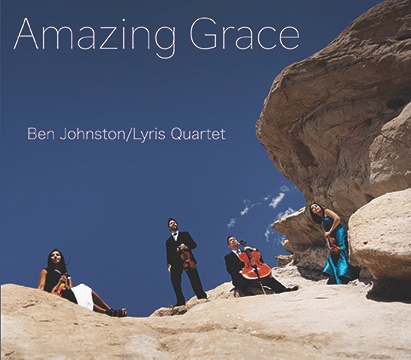
The Young Person’s Guide to Ben Johnston is an ideal way to introduce listeners to the wonderful world of the late Ben Johnston’s music. Johnston, a student and colleague of Harry Partch shows his compositional skills utilizing non-traditional western tunings in these representative works. Johnston here does for some quasi pop tunes what Evan Ziporyn did with his clarinetist perspective for the tunes on Pop Matters. But Johnston’s pretty, accessible work belies fascinating complexities that don’t actually sound complex to the listener. This disc contains Johnston’s last completed work, “Ashokan Farewell” (which Johnston took to be a public domain folk tune but is in fact a piece written by Jay Ungar). It is paired with the 4th String Quartet (a set of ingenious variations on “Amazing Grace”) from 1982 and the 9th String Quartet of 1997. Profound, lovely to listen to, and a great homage.

DVD OM 4001

This DVD is a major addition to the discography of Charles Amirkhanian’s sound poetry as fine sampling of one aspect of Carol Law’s (Amirkhanian’s life partner) complementary visual art. These collaborations are also important contributions to the visual and performative aspect of these collaborative works. Amirkhanian has been a fine curator and promoter of the work of others but he has rather seldom stepped into the spotlight himself. This quirky genre got some fabulous exposure at the 7 day Other Minds 23 festival in 2018 in which Amirkhanian’s work was presented in the (surprisingly varied) context of sound poetry of the amazing international collection of artists who were hosted at those events. This DVD should be in the collection of anyone interested in new music sound poetry and performance art. It is both entertaining and mind bending featuring a juxtaposition of images and sound reviewed in greater detail in the post “Dyadic Dreams”. But words cannot do justice to these works. You really have to see them.

Cedille CDR 90000 210

Readers of this blog know my fondness for the Chicago based label Cedille and their promotion of Chicago based musicians. This disc stands out in this group’s embrace of non-traditional composers alongside more traditional works. The inclusion of works by DJ composer Jlin and the academy based genre defying duo Flutronics alongside composers like Danny Elfman and Philip Glass demonstrate the wide ranging repertoire of Third Coast Percussion. Much more information can be found in Perspectives: Spectacular World Premiere Recordings from Third Coast Percussion on my blog. This one reimagines the percussion ensemble.

Neuma 176

This disc is a good example of why listeners and collectors should pay attention to the Neuma record label. Philip Blackburn, who had been the very successful curator of Innova records, took over the defunct Neuma label which was founded with the intention of promoting largely electroacoustic music though not exclusively.

Agnese Toniutti‘s New Music Vision is actually a review of two discs by this rising star, a dedicated new music pianist that needs to be on your radar. The other Neuma disc contains Toniutti’s traversal of John Cage’s reluctant masterpiece, “Sonatas and Interludes for prepared piano”.

The disc pictured here is Toniutti’s vision beyond the Cage work. This one focuses on mostly living composers Lucia Dlugoszewski, Tan Dun, Philip Corner, and Toniutti’s herself. Basically, if Toniutti plays it, you should probably at least give a listen.

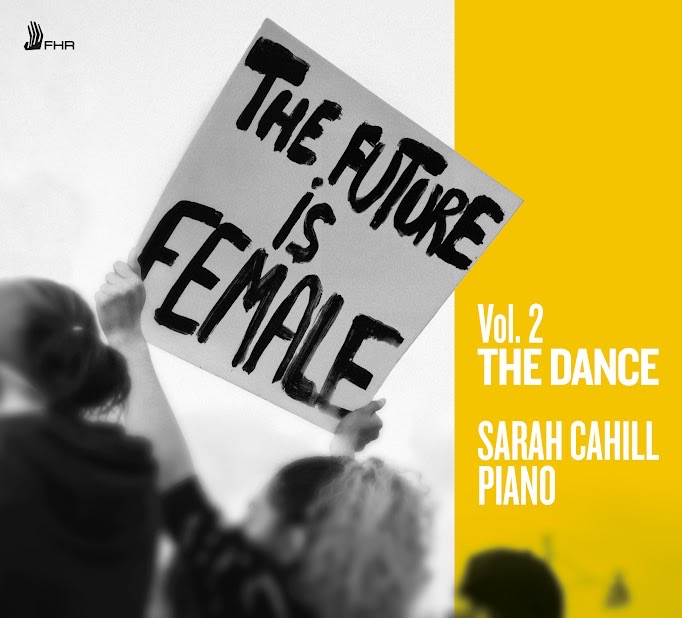
2023 saw the completion of Bay Area pianist Sarah Cahill’s epic survey of piano music by female composers. Cahill is another (predominantly) new music focused pianist about whom I would also assert that, if she plays it, you should probably give at least one listen.

The End of the Beginning: Sarah Cahill’s “The Future is Female” Trilogy Completed will tell you all you need to know about this trilogy which encompasses about 300 years of music history and sheds light on some fascinating and substantial music written by women. Most of the works on this trilogy of albums are, in fact, world premieres but, fear not, even the pieces which are not premieres are likely not in your collection. This is a brilliant selection of music that effectively throws down the gauntlet to challenge other artists to explore this repertory. This trilogy is a true landmark and a joy to the ears.

This third volume in the wonderful Catalyst Quartet’s survey of another unjustly neglected group of composers focuses on the music of three black Americans of the twentieth century. Catalyzing Blackness, Volume Three: The Catalyst Quartet plays 20th Century music by Black Americans was nominated (but didn’t win) for a Grammy Award and, happily, I’m told that more volumes are in preparation. Again, this music is a pleasant revelation that does for black composers what Sarah Cahill has done for women composers (N.B. The first volume by the Catalyst Quartet focused on the black female composer Florence Price). And here’s hoping that Coleridge Taylor Perkinson, George Walker and William Grant Still will become household names in the concert hall.

Microfest MF 21

Son of Partch, Carrying on a Tradition is a really wonderful disc which, though I reviewed it in exceedingly positive terms, provoked a strongly negative reaction from the artist. The reaction apparently also provoked enough interest to have made this review one of my most read of 2023.

But, aside from the unfortunate negative reaction, I still maintain that this is a fine release worthy of attention from anyone who likes new music, microtonality, and the music of Harry Partch. Cris Forster is a composer, theoretician, and instrument builder clearly descended from the Partch tradition. His work deserves attention and this disc is a very satisfying experience.

Islandia IMR 011

Steven Schick is a master percussionist and conductor. This release is the first volume of his personal choices of solo percussion repertoire. Solo Percussion Manifesto Volume I: Steven Schick’s “A Hard Rain” is a manifesto of sorts and does for solo percussion music what Sarah Cahill has done for women composers and the Catalyst Quartet is doing for black composers. There are not many recordings of solo percussion music and Maestro Schick essentially presents his favorite works in definitive performances on a label produced by Bang on a Can cellist Maya Beiser. The second volume is in my review queue and, if this first volume is any indication, it will be a landmark survey.

Cedille

Rising Star Seth Parker Woods’ “Difficult Grace” is a Classic in the Making. Here’s another Grammy nominee that did not win but, this second album by this fine American new music cellist is a winner in my book (er, blog). This is actually the audio of what was developed as a staged performance but the music speaks for itself. Keep an eye/ear out for this rising star who, even now, is storming the new music cello scene in invigorating ways.

Neuma 128

A Reason to Listen: Roger Reynolds’ Latest, “For a Reason”,new recordings on Neuma Records. Here we see Neuma following its original electroacoustic mission with this remarkable set in celebration of Roger Reynolds’s 90th year. This is a lavish 2 CD box set with a beautiful booklet and lucid liner notes. It is a worthy production which showcases recent works by this prolific and important American composer.

Readers of this blog likely are aware of my interest in music that is suppressed and/or neglected so this disc grabbed my attention immediately. Israel does a great job of funding the arts and this can be seen in the proliferation of truly fine performers nurtured by that funding. Less well known are the composers who have flourished in the art healthy politics of this country. Some 50 years of history are represented here. This is but a sampling, albeit finely curated, of several generations of composers displaying a plurality of styles with substantial results. This entertaining disc will whet the appetites of intelligent and curious listeners and, hopefully, bring about more recognition of the world class composers who deserve an audience.

So, finally, went my 2023.

My 2022, Best of and Worst of…


Mount Lassen in Northeastern California

Let me start with a positive image from a brief photography trip which I managed this year. It was one of the highlights of what has been a difficult year for many of us. Weather, politics, COVID, itinerant employment issues, financial, and personal difficulties were an encumbrance but now stand in relief to the many positive aspects of 2022.

First, let me say that nothing musical fell into the category of “worst of” so fear not, what follows is essentially my “best of” from 2022. In my head I blame the aforementioned encumbrances for delays and sheer lack of production on my part. Whether that is the ultimate truth does not matter really so here, for better or worse, is my celebration of the positive experiences enumerated in this music blog in 2022.

This is one of the albums that stoked my interest.

My first post for the year struck a sad note. It was my personal tribute to a composer, A Belated Fan Letter: Homage to George Crumb described George Crumb, who had been one of my “gateway drugs”, so to speak, which helped put me on the exciting roads of new music upon with I continue to travel with great joy. Recordings of his complete works are still being released on the visionary Bridge Records.

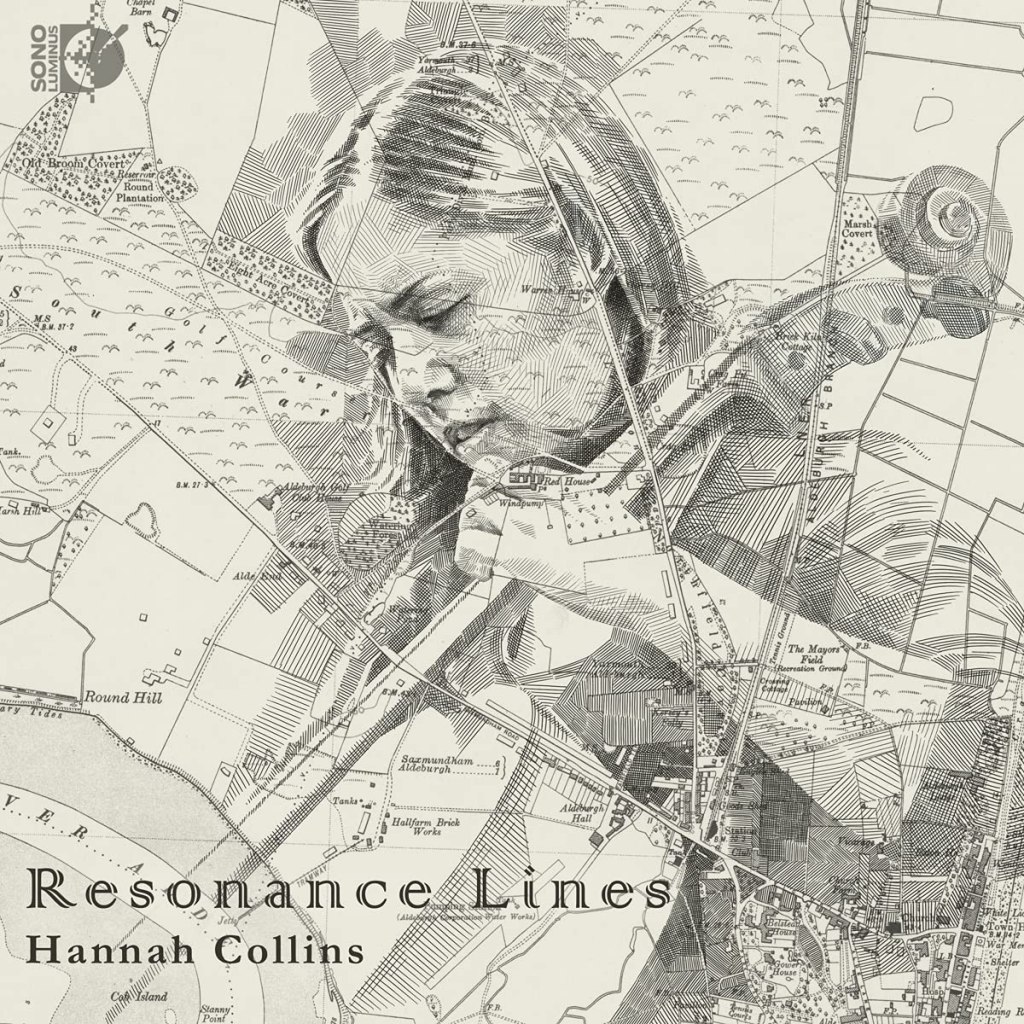
Hannah Collins debut on Sono Luminus was a compelling offering from this rising star.

Carolyn Shaw’s striking and much performed “In Manus Tuas” (on solo viola as well as solo cello) was originally written for Collins. Her selections on this album, including that Shaw work, suggest to this writer/listener that she has both vision and an encyclopedic knowledge of music, especially that written for her instrument. She will be among the major shapers of this repertoire via her vision as well as her interpretive talents. And Sono Luminus’ superb sonics certainly helps make this a great release.

The first volume of Sarah Cahill’s landmark trilogy of piano music by women composers.

I have followed the work of Sarah Cahill since her first solo CD (music of Ravel). Like Collins, she has been an artist who, by her intelligent selection of repertoire, serves as a guide to listeners (and musicians) as well. She has championed many composers as a pianist and as a broadcaster on her weekly KALW broadcasts. Her curation of concerts throughout the Bay Area, such as her solstice concerts at Oakland’s Chapel of the Chimes, have showcased a large variety of creative performers.

As she focuses her lens on women composers (neglected is implied) she embraces a stunning range of styles from the baroque era to the present and it seems as though she can play anything she chooses well. She is also collaborative with an amazing ability to discern the substance in the works she chooses to play. And she has discovered (or rescued?) much music from obscurity via scholarship and intelligent collaboration. Can’t wait for the next release. She is consistently interesting and relevant.

This release on Lars Hannibal’s OUR records was a brilliant new recording of
some of Ligeti’s music and introduced me to Kodaly’s solo choral works.

This album was sent to me by a friend. I knew the Ligeti pieces but heard them with new ears in this release and I was amazed by the Kodaly works too. Marcus Creed may not be as well known in the U.S. as he is across the pond but he should be.

Another debut album by a cellist.

This album was kindly sent to me for review by John Schneider of Microfest records. Read the review. Listen to this album. And watch for more from Chris Votek, another rising star in 2022.

Dan Lippel’s virtual manifesto displaying his vision and skill as he furthers the mission of the guitarist in all their guises.

Dan Lippel is one of the founders of the fabulous new music label, New Focus Recordings. Here he is acoustic, electric, conventional, and experimental but always interesting. Keep his name on your radar.

Languishing no longer.

This is a gorgeously designed, very collectible art object. It is a beautiful hard cover, full color book which also contains a CD of a recording (from acetate masters) which had languished in the archives of the Eastman/Rochester Music School where Harry Partch gave this lucid lecture/performance in 1942. Mr. Schneider, who sent me the Votek release as well, fronts an ensemble called PARTCH which, in addition to performing Harry Partch ‘s work, is recording Partch’s complete works for David and Becky Starobin’s Bridge label. This one is both eye and ear candy to my ears.

Rescuing those acetate masters from obscurity is a major find that rises in significance (in the musical sense) almost to the level of the archeological discovery of Tut’s Tomb. Schneider is a musician, a composer, a radio broadcaster, and an archivist and now a sonic archeologist I suppose. He also sports a collection of authentic copies of Partch’s curious instruments which were built to play the microtonal scales required. Partch is a major American composer whose work is now gaining its rightful place among the best of American classical music.

Seminal work by an American post minimalist composer.

I first discovered Mr. Susman’s work when I was asked to review a performance of another composer’s work. I heard one of his works played by the remarkable San Jose Chamber Orchestra on that same concert. Here we have another multi volume release of these lovely and significant piano works. The remarkable pianist (mentioned often in these pages) has contracted to record all 4 books of this sort of “Well Tempered Clavier” type gesture which effectively provides much insight to this composer. Nicolas Horvath, known for marathon concerts performing (and subsequently recording) all of Philip Glass’ piano music, among others. (We’re talking 15 hours or so. There is also a 35 hour live rendition of Erik Satie’s “Vexations” on you tube.) Who better to record these? The remaining three volumes are due some time this year. Who better to take on this post minimalist set of pieces? Can’t wait for the next volume.

Kondonassis’ new music manifesto for the Harp (and the earth).

Yolanda Kondonassis is about as household a name that you can find among harpists. These five minute (more or less) pieces are a significant addition to the solo harp repertoire. They are forward looking works for her instrument. Very interesting work, excellently performed.

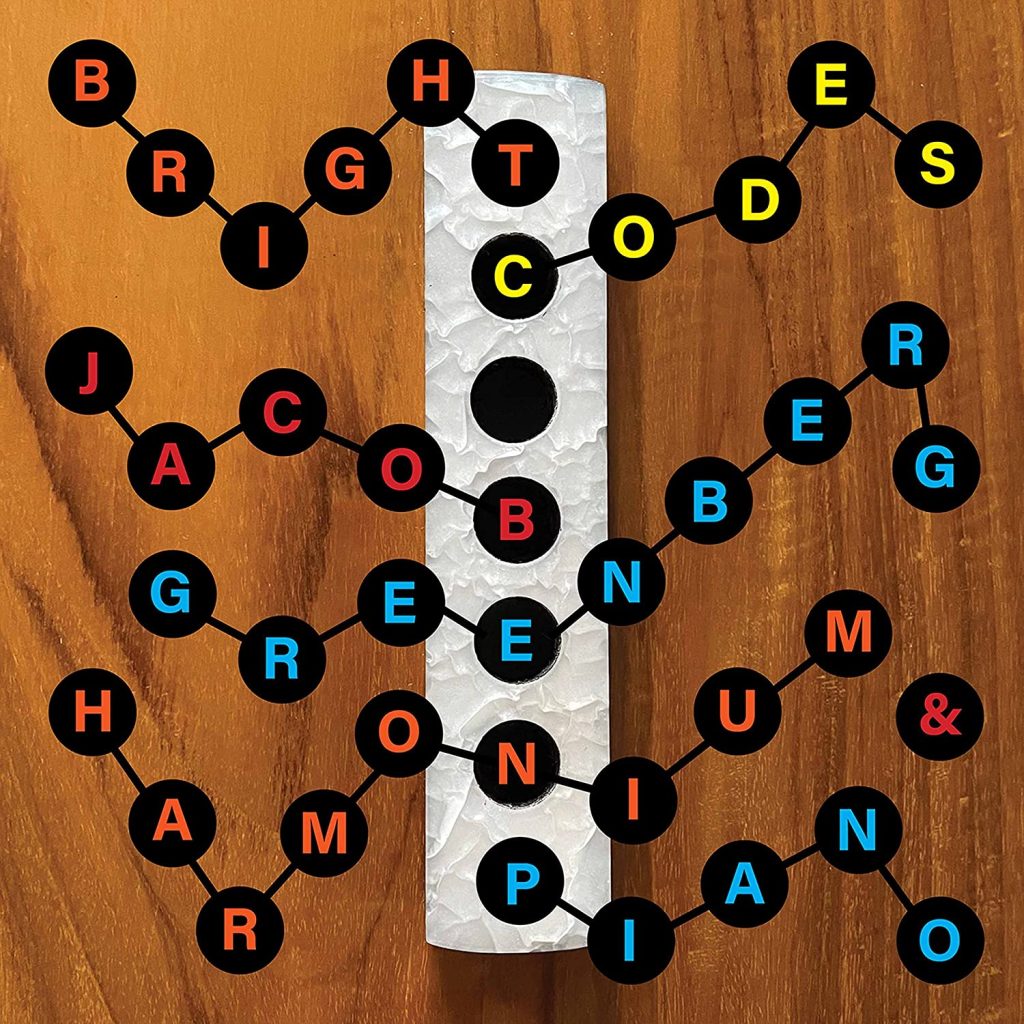
New piano music written for Jacob Greenberg

I remain in awe at the curatorial and historically aware work of this truly fine pianist. Greenberg helped me grasp the historical context of the Second Viennese School in a new way with his earlier release “Book of the Hanging Gardens”. In that release he played all the Debussy Preludes along with Schoenberg’s pre twelve tone song cycle, Webern’s Variations, and the Berg Sonata which helped this listener to better grasp the historical context of this music. This small collection of works written for him reflects a collaborative and visionary ethic akin to that of Sarah Cahill’s. Keep an ear out for this guy.

Lou Harrison’s brief Solo Violin Sonata

I have received some good natured teasing about the fact that this, one of my longer reviews, is of a 15 minute piece of music. But this act of musical archeology by the bay area’s Kate Stenberg (who is a regular collaborator with Sarah Cahill BTW) has made the first recording of this little work. It’s Webernian duration belies a style very much in character with this beloved composer’s other work. My review was as much about the music and the recording as it was about the dedication of Stenberg to new music. This release is from Other Minds, another shining example of advocacy of new music and collaboration among composers and performers. Get it. Listen to it. And don’t miss a chance to hear Stenberg live performances or to hear anything Harrison has written.

Music between the wars

The Chicago based Cedille label is one of my favorite classical music labels. Producer James Ginsburg has a golden ear and Cedille is the finest Chicago based classical label since the justly fabled Mercury records. All their releases deserve attention but this two disc set of little known works for String Trio written between the world wars is a feast of substantive, if slightly conservative, voices. This one is a great listen and, trust me, none of this music is in your collection.

Other Minds Executive and Artistic Director of Other Minds Charles Amirkhanian applauds a rare performance of his own music at OM 26.

While circumstances conspired to limit my attendance to only one of the three days of OM 26, I would be loathe to leave this world class music festival off my “best of” list. My first published blog of 2023 was of the 30th anniversary celebration which showcased Marc-Andre Hamelin’s stunning reading of Charles Ives’ massive Concord Sonata. Anything OM does deserves your attention but the roughly annual festival continues to present composers and performers from around the world. Not to be missed.

Volume two of three

Another exciting release of Cahill’s visionary series. Like the previous volume (and the aforementioned Cedille release) the consumer will suffer no unnecessary duplications if the music herein. Fascinating and expertly done. This set (the third volume due this year) is a testament to Cahill’s encyclopedic knowledge of piano music as well as her collaborative nature and, of course, her skills as a pianist.

A new voice in electroacoustic composition Kataro Suzuki.

I’m cheating a bit here since I wasn’t able to complete my review until 2023 but this Starkland disc was released in 2022 and definitely earns its place in my “best of” list. This rising star is another one to watch. Starkland, run by the dynamic Tom Steenland is one of those labels that reliably finds interesting and substantive new music. This one is no exception. It goes a long way to alleviating my skepticism of the electroacoustic genre.

DVD OM 4001

And, in order to be fair I must cheat equitably. Charles Amirkhanian kindly sent me this exciting and excellent DVD of his collaboration with his partner in life and in artistic crimes, Carol Law. My more extensive review will appear shortly but this was a major release in 2022. Amirkhanian spends far less time promoting and performing his own unique compositions so this is an especially welcome release.

Neuma

Last but not least of my best of 2022 is this wonderful Neuma release which, when I began my research to write a cogent and informed review, left me stunned at how little I actually knew about composer David Tudor and the astounding dimensions of this unusual piece that evolves with every performance. After gathering a whole ton of data I finally decided that I could not write a comprehensive review without more research so I settled on a tasteful (I hope) summary with the expectation that I will write a larger piece on Tudor and his work. The review will be out very shortly. This is an amazing and significant release.

Happy 2023 to all my readers and thanks to those who kept reading my blog during more fallow times. I have many blogs currently in preparation that I look forward to sharing in the months to come. Peace, health, and music to all.

Other Minds 26, Well Part of It Anyway


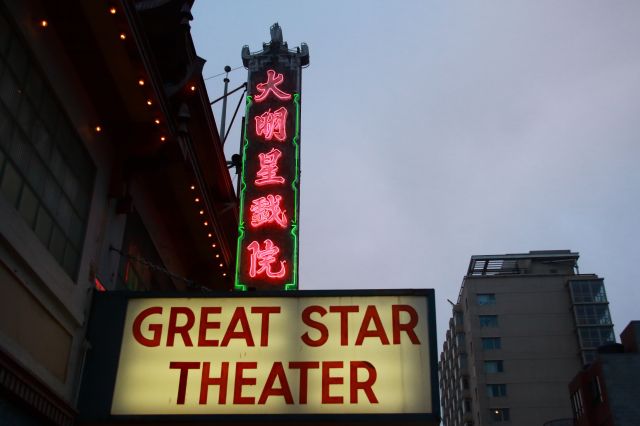
Chinatown’s Historic Great Star Theater

I have attended nearly every OM annual concert series since 2012. But pesky adult responsibilities intervened for the last few years. Having had to miss OM 25 due to my out of town work I resolved to make it to OM 26 now that I am back in California. However circumstances conspired such that I was only able to make one night of this essential new music festival.

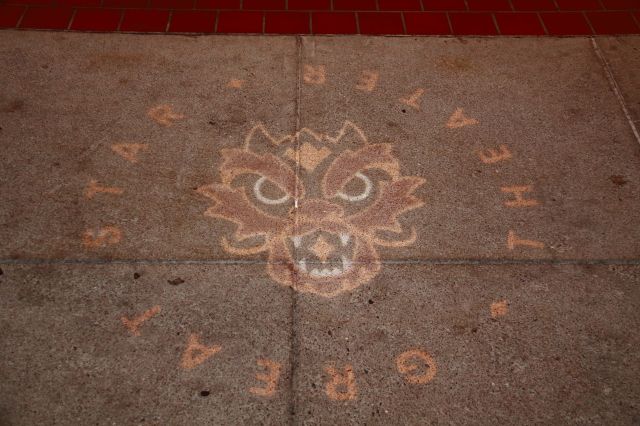
Sidewalk Projection in Front of Theater

I do plan to listen to the archived audio and video streams which Other Minds now provides. but nothing can truly take the place of live performances. And, in addition to providing some wonderful sonic ear candy, there is the spectacle of the performances themselves. On top of that, these performances have showcased many wonderful performance spaces such as the The Jewish Community Center, The SF Jazz Center to name a few of them. OM 26 was held at the historic Great Star Theater in San Francisco’s Chinatown neighborhood, a venue known for presenting traditional Chinese Opera (in fact Chinese Opera continues to be on the bill for this charming little performance space).

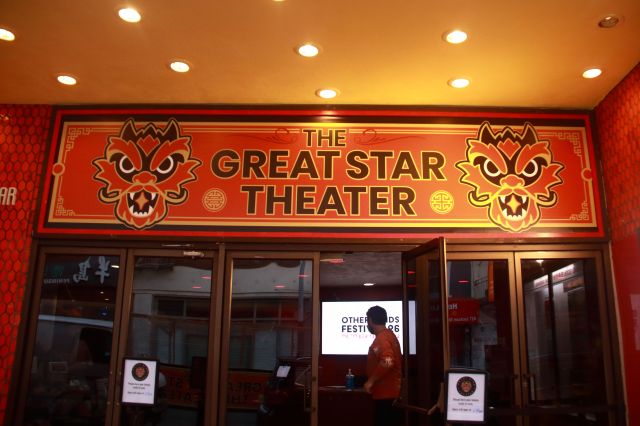
Lobby entrance.

A heavy fog enveloped the northern end of the city as I approached the venue but the sun greeted me when I reached my destination. According to their website this theater is “Located in San Francisco’s renowned Chinatown, the historic Great Star Theater is a one-of-a-kind venue. Built in 1925, this traditional proscenium stage live theater was originally home to Cantonese Opera and Hong Kong kung-fu movies. Recently under new management and newly renovated and revitalized, it now features a variety of theatrical, musical, circus, and motion pictures for a new generation.”

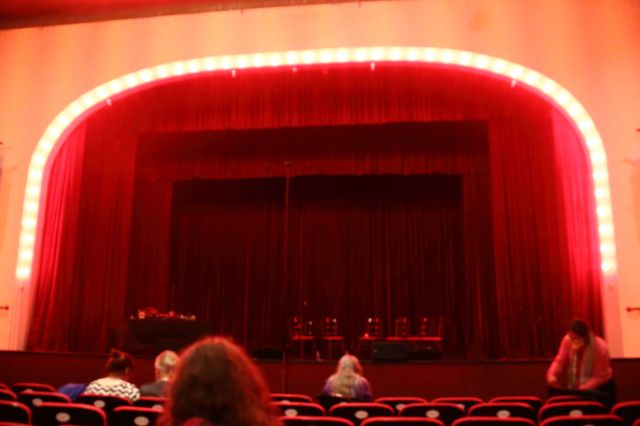
View of stage

The 438 seat theater was more than adequate to accommodate the small but fervent crowd of Other Minds fans. There were seats to be had but the small audience was a highly appreciative one willing to open themselves to the adventure of new music curated by Charles Amirkhanian who has presided over the new music scene of the Bay Area ever since his tenure as classical music director of radio station KPFA which began in 1969. The Fresno native studied at Mills College, earning an MFA in 1980. While his tenure at KPFA ended in 1992, his involvement in new music productions continued. During that time he recorded interviews with nearly every area composer and musician as well as a panoply of international artists. His gentle, friendly manner along with his mellifluous resonant baritone voice (one that looms large in his sound poetry) has served him well in radio and in his large catalog of interviews. He founded Other Minds in 1992 with television producer (now president emeritus of Other Minds) Jim Newman.

What I Missed

In this 26th incarnation of this iconic series of new music concerts the following were presented on the first concert:

First Night

THERESA WONG

Fluency of Trees

MARI KIMURA

JanMaricana, D’Alembert Caprice, Motion Notions (Dai Fujikura), Rossby Waving

RAVEN CHACON & GUILLERMO GALINDO Improvised Set

Missing this fabulous first night was a painful experience. Theresa Wong is a fine musician/performer from the Bay Area. Her name, of course, occurs elsewhere in the pages of this blog, She is not to be missed as composer, as cellist, as performer.

Mari Kimura, no stranger to Other Minds fans, is one whose work I do not know. But it is by introduction of stunningly intelligent and skilled artists such as this one that the OM fan can safely put on their collective and individual radar, sure that their/our attention is not misspent.

Pulitzer Prize Winner Raven Chacon is one of those fine artists about whom Other Minds (aka Mr. Amirkhanian) can say “I told you so,” If you studied your emails you will find a link to an OM interview with maestro Chacon. He is a Native American (Navajo Nation) musician whose experiments caught the eye/ear of OM and resulted in an appearance and interview. How wonderful for him to return in his post Pulitzer appearance.

Guillermo Galindo is a respected Bay Area musician, sound designer, conceptual artist, and teacher. He is one you want to keep your ear/eye on. His unique instincts visually and sonically are a good bet in his performances. Paired with Chacon? How can you go wrong?

Third Night

DOMINIC MURCOTT

The Harmonic Canon

KUI DONG

Scattered Ladder

LARS PETTER HAGEN 10 Svendsen Romances, Seven Studies in Sadness, Diabelli Cadenza, Coda

And the grand finale, always the one you go to if you can’t make them all, the third night:

Dominic Murcott (who appears as percussionist/conductor on evening two) is one who, by a glimpse of his online CV, immediately was placed on high listening/reading priority in my links list. It will forever be a “one that got away” story for this absent fan. The bell and the backstory are alone worth the price of the ticket,

Lars Petter Hagen is a new name to this writer, a warning shot across my bow from OM. The Sternberg/Cahill duo here performing this composer’s work are also a guarantee of fine performance,

Kui Dong is another esteemed Bay Area artist whose work has long had a productive affiliation with OM. Any new work or recording of her work is a cause for attention. Her work for the Prism Percussion Duo was doubtless a substantive experience.

There is a link provided for each of the artists for the reader’s convenience. Please do click those links and explore further. I know I certainly will,

What I Did See and Hear

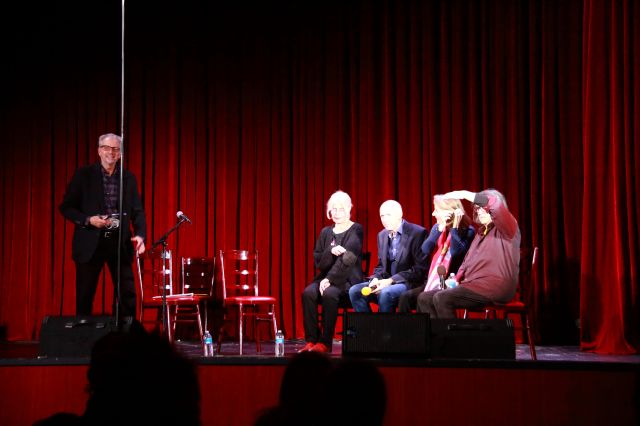
The panel style interviews before each concert are an opportunity to learn from the participants and to enjoy the interview style of Mr. Amirkhanian.

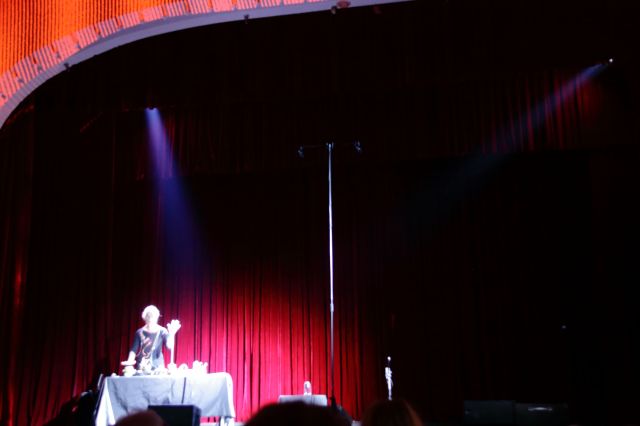
The concert began with the stylings of Hanna Hartman, a Berlin based Swedish composer who favors old and lower tech electronics. In this digital age with access to incredibly complex synthesizers and other sound technology, Hartman (at least here) worked with a Buchla 200 synthesizer and a selection of recorded and live sounds which were processed and created what sounded to my ears like a live performance of a tape composition. Quite a feat.

Hanna Hartman

Standing at a table stage left covered with electronic and non-electronic devices she looked like the host of a cooking show live mixing sounds into a logical flow which were projected in stereo to the audience.

The performance had her draped in multicolored tubes which she used to blow into and create sounds in miked containers of water. She stood actuating materials on her table that might have come from an erector construction set and/or a “Mouse Trap” game (familiar to listeners of a certain age) and which resulted in a veritable barrage of sound which moved from one speaker to another but created an immersive and room dominating flow of sounds.

Hanna Hartman in performance.

It might best be called a sound collage. It seemed to be guided by a program or sequence much as any musical composition. The sounds, sometimes apocalyptic, sometimes more drone like and serene, were engaging. And the curious image of her working with these various materials sometimes seemed indirectly connected to the sounds heard. It was as if the chef’s culinary efforts had taken on a sonic life of their own.

Though baffling at times the audience and this writer were very appreciative as the music revealed its internal logic. We had been introduced to yet another interesting artist by the Other Minds experience.

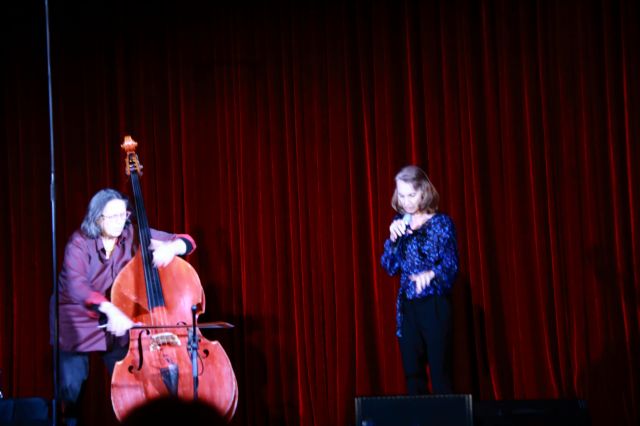
Joëlle Léandre (left) and Lauren Newton (right).

Then after just a bit of stage arranging Joëlle Léandre and Lauren Newton took the stage for a set of improvisations on double bass and voice. Going from the retro electronics and electroacoustic to good old live analog sound was a contrast.

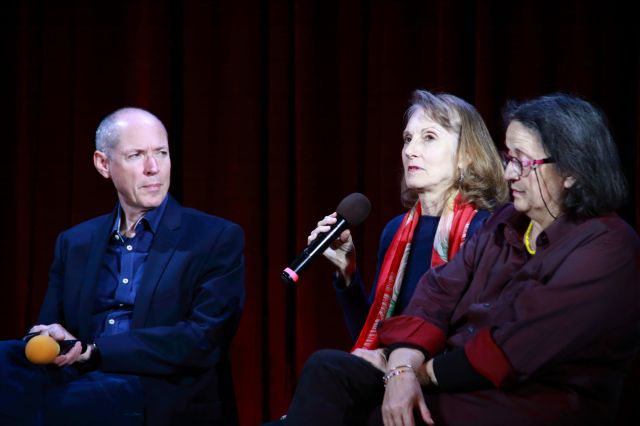
Lauren Newton speaking in the live stage interview with conductor/composer Dominic Murcott looking on and Joelle Leandre on the right,

These two brought an intense energy to the stage in a sort of cosmic cabaret. Newton is a classically trained singer who now performs (at least on this night) a sort of glossolalia of non linguistic sounds in league with co-improviser Léandre.

Joëlle Léandre is a double bass player with skills sufficient to have had her included in the late conductor/composer Pierre Boulez’ “Ensemble Intercontemporaine”. Boulez was a very demanding and exacting man. Léandre was also influenced by hearing the work of the AACM (American Association of Creative Musicians), a Chicago based group which introduced African musical ideas into modern western performances.

Call it “free jazz”, “new classical”, or whatever you choose. These new sounds and performance styles launched the double bass player to another world and another career as an improvising musician.

Well, these two women brought a wild shared creative energy to the stage. In a set of (if I counted correctly) five separate improvisations they traded with Léandre beginning, then Newton beginning, and clearly demonstrated a comfortable relationship between themselves as performers. The set went from moments of angst to moments of gentle humor to virtually indescribable moments which all shared an intimate connection between the performers as well as the audience.

Léandre compelled a variety of sounds ranging from standard bowed string sounds to ethereal harmonics, percussive sounds, and even her own vocalizations. Newton’s instrument (her voice) seemed to channel a mysterious range of sounds from whispers to glossolalia, to almost words. She and Léandre seemed possessed by dance like movements and hand gestures resembling those of raga singers all of which were a part of a truly engaging performance.

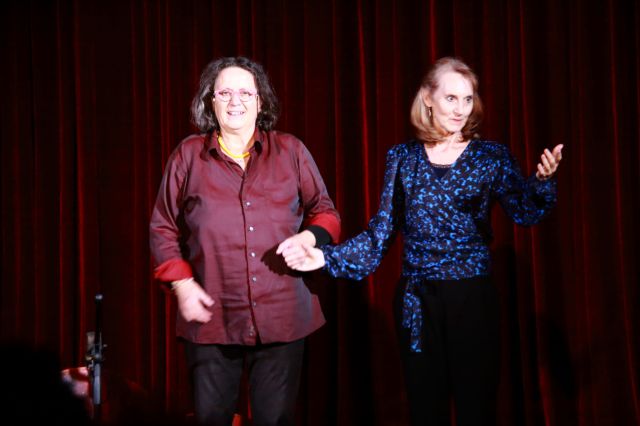
Joelle Léandre and Lauren Newton acknowledging a clearly very happy audience response to their performance.

After that intense experience the audience was allowed a brief intermission to recover and be able to focus on the final performance of the evening. From the electric to the acoustic we moved, perhaps inevitably, to the electroacoustic.

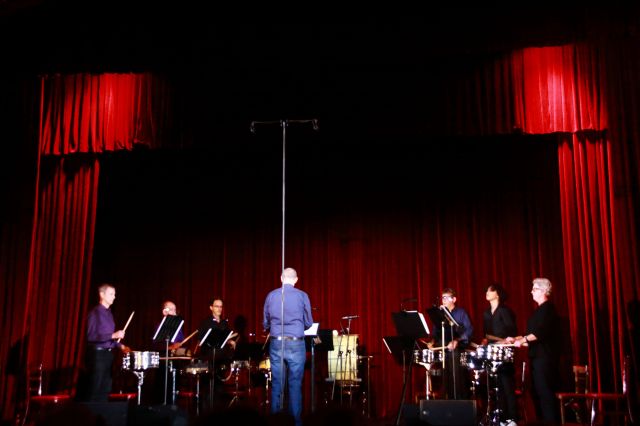
Dominic Murcott, peripatetic conductor/drummer about to lead this major opus by Charles Amirkhanian.

Yes, THAT Charles Amirkhanian, the voice of OM. In addition to his leadership work with the various aspects of OM, he is a much respected composer/sound artist, His astute advocacy of the up and coming voices presented via OM are an enduring legacy. Here is an exciting local premiere performance of a major opus.

Amirkhanian noted his earliest compositional inspirations to have been a result of his experience with being a drummer in the high school marching band. So that kind of gives you a clue as to this unusual orchestration.

Add to that his unique take on sound poetry, his skills with tape manipulation, sound samples, etc. and this multi movement work takes on an epic proportion. I reprint the liner notes below but my personal experience is as follows:

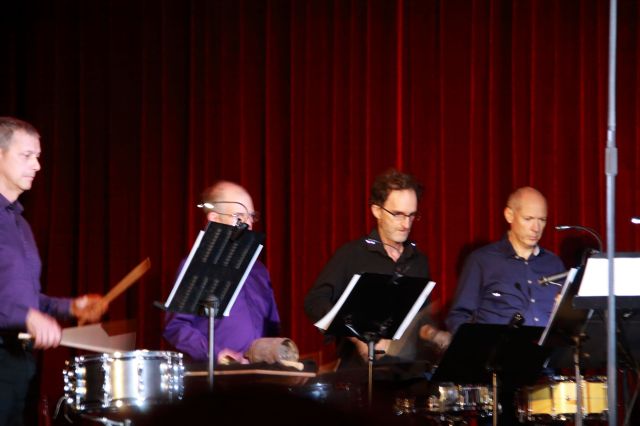
Drummers to the left,

“Ratchet Attach It” (2021)by Charles Amirkhanian is a large multi movement work for eight percussionists and sound samples. It is a piece which succeeds on many levels. The composer’s background (and clearly cherished) experience as a percussionist is the most obvious driving force and framework but the inclusion of his sound art, use of language as both sound and syntax interpolated between and sometimes with the live musicians performance. The electronic interpolations are, whether intended or not, a sort of nod to Edgar Varese’ “Deserts”. Their function within the composition however, are quite different.

There is a characteristic humor which runs through much of Amirkhanian’s work. His gentle defiance of drum cadence structures and doubtless other performance conventions in this work become transformed via caricature, a sort of personal nod to fellow percussionists. They are punctuated with a variety of audio intrusions between and sometimes within movements. These intrusions are autobiographical and nostalgic as they refer or connote respectful homages of fellow artists as noted in the very useful program notes. These are not actually intrusions as much as connecting audio cadences as a sort of mortar for the deconstructing drum cadences that dominate the music’s structure. It takes on a character of ringing changes in bell ringing but that is deconstructed as well,

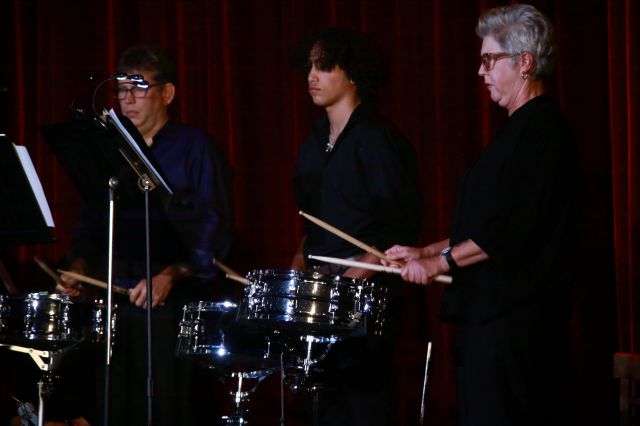
Drummers to the right,

There are a panoply of examples of the concept of humor in music at work here but as I am not a musicologist I will restrict my examples to the most obvious. In what may also be gentle parody, the conductor, Mr, Murcott, traveled between podium and fellow drummer leading the orchestra as did Mozart and Beethoven, with their instrument close by. Other players did their share of marching around in a visual ballet as they carried various bells that they played before returning to their assigned snare stations. A large bass drum asserted itself from back center in the ensemble, This was a disciplined performance making a strong case for the music. Quite a spectacle and maybe an “audicle” (sound spectacle) as well.

Replete with multiple references to personal and historical events as well as quasi minimalist manipulations of drum cadences in a live action electroacoustic visual and sonic event. It is a remarkably seamless mix of electric and acoustic, a major achievement. Dead serious but with great joy and humor.

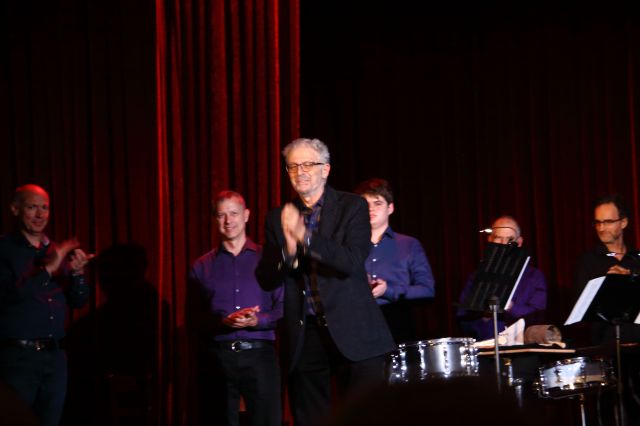
Composer Charles Amirkhanian acknowledging the very appreciative applause.

The composer’s notes here add much to the appreciation of this complex work:

I – The U.S. Army
Postal Unit at Blandford, Dorset, 1944
When it became apparent during World War
II that Hitler’s Germany would take a route through Blandford to attack England, the bar- racks from WWI were re-activated and popu- lated, in large measure, by U.S. Army personnel starting in 1943. The following year, my 29-year- old father Ben, the commander of a unit of men assigned to sort the mail sent from the U.S. to England and Continental Europe, arrived to be- gin work in Dorset. On the weekends, the com- mander had the privilege of driving some of his men around for sightseeing, from Stonehenge, to Piccadilly Square, to Edinburgh. Ben’s enthu- siasm for the people of England, the landscape and its history, is evident in his many letters home to my mother who was about to give birth to me in January 1945.

II – In Praise of the Venerable Piano Roll

The wonders of music made available to many non-performers in the early 20th Century by the invention of the player piano brought an unimag- inable thrill of excitement to so many. Before the days of high-fidelity sound recording, hearing the acoustic sounds of an actual piano, playing note-perfect renditions of classical and popular repertoire in one’s own home, was a profound-

ly mesmerizing experience. Snare drummers everywhere will welcome the chance to honor this signal achievement with a roll of their own. My thanks to Dominic Murcott for suggesting that the percussion repertoire lacked a single piece comprised solely of the sounds of drum rolls.

III – Ticklish Licorice

This movement comprises a quick-time perfor- mance of the novelty piece Flying Moments, by Leo Livens (1896-1990), accompanied by crystalline bell sounds from the percussionists. Livens, in his day, was a renowned British composer
of light music. Here the player piano is useful
in brightening up the music with a high-speed rendition of this playful music, performed in a studio recording by Rex Lawson with his usu-
al nuance and panaache on the Bösendorfer Imperial Grand at Dulwich College in 1994—John Whiting, sound engineer.

IV – Chatteratchet

The sound up close of a concert orchestral ratch- et can be hair-raising. Also, full of bird-chirping- like overtones. I learned this early on by accident while sitting in the enclosed cab of my Volkswa- gen bug and turning the handle of this ear-split- ting instrument. I decided to compose a solo for amplified ratchet, followed by duos, an octet, and other combinations over the years. The act of playing this mechanical instrument somehow relates, for me, to the mechanism of the player piano, with its constant rotating of the paper roll on which music has been encoded. The ratchet came to mind in relation to Spitalfields and the history there of tailoring. My only visit to the neighborhood came some years ago when I visited the offices of my friend Timothy Everest, bespoke tailor. In this quartet for four amplified ratchets, much of the work is devoted to the practice of turning the instrument’s handle con- tinuously, but at the slowest possible speed. The counterpoint between the instruments literally is out of the control of the players due to the nature of the spokes and their response to the turning crank, resulting in an interesting irregularity.

V – Hopper Popper

Numerous different ethnicities produced piano rolls of their own folk and popular music, includ- ing my people, the Armenians. Here is a roll of the love song “Haperpan” (a woman’s name), with its irregular phrase structure, augmented by our percussionists with wire brushes on the snare drum heads. The rhythmic irregularities in the cutting of the roll are especially interesting, if subtle.

VI – Exculpatorium

An excuplatorium (a word I coined) would be
a large, highly reverberant room where elder- ly snare drummers (and The Blue Man Group) must go to be absolved of their youthful sins of exhibitionism. As my first original compositions were relatively sedate marching band drum ca- dences, unlike some later more flamboyant and theatrical Fluxus-inspired pieces, I return to my pedestrian roots in this movement.

VII – To the Riled Wrecks

In 1896, the American composer Edward MacDowell (1860-1908) and his wife Marian purchased a lovely rural farm in Peterborough, New Hampshire. MacDowell immediately set about writing a series of short piano pieces he titled Woodland Sketches, Op. 51. One of these, “To a Wild Rose,” heard here, was a favorite of my piano teacher mother Eleanor’s. I’d often request it from her as music to go to sleep to when I was seven and just beginning myself

to study piano. Rex Lawson here performs an 88-note roll of the music on a pianola adjust- ed to a setting for rolls that contain only 65 notes across the width of the roll, with crushing results.

VIII – Dominictrix

This solo for snare drum was composed for my invaluable collaborator in the composition and world premiere of Ratchet Attach It, Dominic Murcott. I incorporate some of his favorite licks— thus, Dominic tricks.

IX – Bum of the Flightlebee

This backwards rendition of the Rimsky-Kor- sakov favorite The Flight of the Bumblebee is played by Rex Lawson by reversing the physical roll on the spindle. This piece is the only one I’ve

discovered that is both interesting and recogniz- able in any of the four possible performances of the paper roll—forward, backward, and each of those with treble to bass reversed.

X – Pedestrian

The most memorable drum cadence ever, in
my experience, was written for and played
at the funeral of the American President John Fitzgerald Kennedy on November 25, 1963. Its somber use of strictly regular rhythm capped by a dotted figure still haunts me, long after I heard it at the age of eighteen during the day-long event televised nationally from Washington, D.C. Using an additive process of extending the roll figure, and doubling it with the grating sounds of ratchets, resulted in this variation on a most memorable walking tune.

XI – Tyrannus Rex

Three piano rolls played by Rex Lawson com- prise the core of this concluding movement: The Tarantella from Rachmaninoff’s Suite No. 2 for Two Pianos in an arrangement made by the composer, Percy Grainger’s roll of his own Molly on the Shore, and a roll of the popular song from 1933, “Stormy Weather,” by Harold Arlen with lyrics by Ted Koehler, on an 88-note roll played while shifting back and forth between 65- and 88-note settings on the pianola. Percussion em- bellishments orchestrated by Dominic Murcott lend an added spatial dimension.

Performers included:

MEMBERS OF
THE OTHER MINDS ENSEMBLE 

JEREMY STEINKOLER, DIRECTOR

DOMINIC MURCOTT, CONDUCTOR

ANDREW GRIFFIN
ANDREW LEWIS
CLAY MELISH
ROWAN NYKAMP
ERIKA OBA
BRIAN RICE
DAWN RICHARDSON
KEITH TERRY

They played their hearts out. And I’m sure glad I didn’t miss this epic night,