
After agonizing about writing a “best of” blog and publishing it before January 1, I decided to take a pause and enjoy the holidays. So here I look back on my 2023 in the rear view mirror but with memories still pretty fresh.
Regular readers of this blog likely already know of my oft shared opinion of the superfluous nature of “best of” lists and of my acquiescence in producing such on an annual basis. I certainly don’t think of this as a meaningless exercise and I think the process has grown on me. It is a chance to achieve a perspective which would be missed by simply plowing on ahead with the usual flow of reviews and articles. But drawing down that 12 month perspective is an opportunity to evaluate those months, to see where we’ve been and to hopefully get a smidgen of insight into where I/we are likely headed.
My Facebook friends will recognize the representative meme at the head of this article which is one of the more cloying aspects of “AI”, whatever that is. So indulge me for a moment to look at this seemingly new intrusion into the reality we thought we knew. So, what is “AI” and what will it do to us? Ultimately I’m not the one to answer that question but I’d like to throw some ideas to add to the speculation.
First, the choices a composer makes, like the choices of a painter, a writer, etc. are the stuff of the mystery of creation itself. Why “A major”, or why that tuning, or scale, or rhythm, or orchestration, etc? So along comes the notion of removing, or at least distancing, the artist from their creative product. That notion started not with famed proponent John Cage but rather with Johannes Chrysostymous Wolfgang Amadeus Mozart in his K. 516f musical dice game. Voila! Algorithmic composition (actually fairly common practice in the classical era). An early manifestation of “AI”? Perhaps.
Lejaren Hiller (1924-1994) was the first composer to employ electronic data processing in a musical work in his Fourth String Quartet subtitled “Iliac Suite” in 1957. There followed similar experiments with various iterations of electronic creations at music centers worldwide including The University of Illinois at Champaign, Columbia-Princeton, Stanford, The University of California Berkeley and San Diego, The San Francisco Tape Music Center (later subsumed into the Mills College Center for Contemporary Music, IRCAM in Paris, Israel Electronic Music Studio, and counterparts in the Nordic countries, Germany, Belgium, etc. Proto “AI”?
While historically interesting I raise this issue to say that, as far as I can tell, “AI” has not made this writer’s greatest hits list but it is interesting and maybe even useful. With that, my concern for the subject officially goes to the back burner for a later time.
2023 has been a year of great personal changes for the writer of this blog. A job change, a geographical relocation, and many things unrelated to this blog characterized a busy year for New Music Buff. So here in a sort of holiday tradition I present my “Best of 2023” from my little listener’s corner of the world. For the sake of simplicity I present a more or less chronological exposition of my sonic adventures. (N.B. Not one portion of this article made use of “AI”).
I begin with not with my 20 most read posts, a practice that characterized previous iterations of this annual exercise. Instead I am providing my top 20 favorite releases that were reviewed in 2023. Please note a couple of caveats. First, I receive a lot of review requests, more than I can even listen to, much less give a reasonably intelligent review. Albums that I’ve not reviewed should not be assumed to be bad or insignificant and my reviews are personal observations. I really only review albums that interest me anyway. Second, this article is only one reviewer’s opinion and not intended to be definitive or to supersede anyone else’s opinions. Third, this is not the end of my attention to music that was released in 2023. Some releases require more time to give a fair listen and a respectful review. There are more to come in 2024.
First a few stats: 2023 saw the publication of some 45 blog posts on New Music Buff, earning me 9693 views for the year. I rarely get comments on my posts (though I welcome and invite comments both positive and negative). Not bad, I think, for the overall less appreciated musical styles that fuel my desire to write about.
Now, in chronological order (of publication) are my personal favorites as a listener:

Binaural Beats in the Tudor Rainforest started my new year with a bang. Reviewing this disc required me to take a closer look at the astounding work of David Tudor and his unique contributions to new music. This important release is a recording of a work which, by its own concept cannot receive a “definitive” performance. But this recording comes mighty close, involving “binaural” recording utilizing a mobile set of binaural microphones which are worn by the recordist. In addition this recording involved a collaboration with Pauline Oliveros and a group called, “Composers Inside Electronics”. The recording was done during Oliveros’ tenure at UCSD. Rainforest IV is so called because it is the fourth iteration of the instructions that form the original concepts of Tudor’s composition, “Rainforest”. It is an immersive sonic experience heard on headphones but actually not bad even heard on stereo speakers. A rich and wonderful release.

From a 1960s electroacoustic to a budding 21st Century composer Kotoka Suzuki released on the reliably interesting and even visionary Starkland label. Next Gen Electroacoustic: Kotoka Suzuki will introduce the listener to this rising star who doubtless will produce more of her compelling compositions.

Igor Levit is a fine concert pianist whose albums are effectively redefining the way we, as listeners, perceive the western classical oeuvre. Igor Levit: Defining Tristan does for the various musical pieces inspired by the Tristan legend what Levit did for the concept of the great keyboard variations in which he selected Beethoven’s “Diabelli Variations” and Frederic Rzewski’s “El Pueblo Unido Variations” to join his recording of the Bach “Goldberg Variations” in a 3 disc package placing these three large sets of variations as emblematic of the genre in three different centuries (18th, 19th, and 20th). Levit, by his recorded output, is providing a valuable perspective which may influence repertory choices for years to come.
Levit’s traversal of the Tristan legend here ranges from the second recording of Hans Werner Henze’s too seldom heard “Tristan Preludes” back to works by Wagner (of course) and Liszt. He even slips in his wonderful solo piano transcription of the Adagio of Mahler’s unfinished 10th Symphony into the mix. This is a very compelling Tristan anthology by a deservedly still rising star.

This Cantaloupe release by Bang on a Can composer and master clarinetist Evan Ziporyn is both masterful and great fun. Evan Ziporyn: Bang on a Pop consists of transcriptions of “pop” songs for multiple clarinets all played by Ziporyn via his very effective multi-track recordings. The album is very personal and pretty much cliche free with these engaging and insightful transcriptions. It is an homage to the songwriters as well as a showcase for Ziporyn both as composer and as performer.
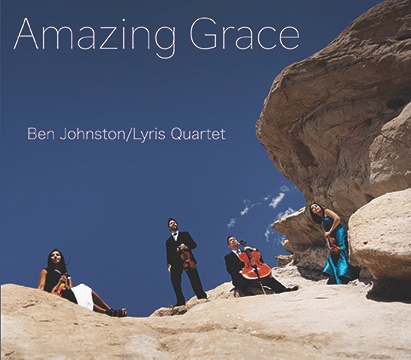
The Young Person’s Guide to Ben Johnston is an ideal way to introduce listeners to the wonderful world of the late Ben Johnston’s music. Johnston, a student and colleague of Harry Partch shows his compositional skills utilizing non-traditional western tunings in these representative works. Johnston here does for some quasi pop tunes what Evan Ziporyn did with his clarinetist perspective for the tunes on Pop Matters. But Johnston’s pretty, accessible work belies fascinating complexities that don’t actually sound complex to the listener. This disc contains Johnston’s last completed work, “Ashokan Farewell” (which Johnston took to be a public domain folk tune but is in fact a piece written by Jay Ungar). It is paired with the 4th String Quartet (a set of ingenious variations on “Amazing Grace”) from 1982 and the 9th String Quartet of 1997. Profound, lovely to listen to, and a great homage.

This DVD is a major addition to the discography of Charles Amirkhanian’s sound poetry as fine sampling of one aspect of Carol Law’s (Amirkhanian’s life partner) complementary visual art. These collaborations are also important contributions to the visual and performative aspect of these collaborative works. Amirkhanian has been a fine curator and promoter of the work of others but he has rather seldom stepped into the spotlight himself. This quirky genre got some fabulous exposure at the 7 day Other Minds 23 festival in 2018 in which Amirkhanian’s work was presented in the (surprisingly varied) context of sound poetry of the amazing international collection of artists who were hosted at those events. This DVD should be in the collection of anyone interested in new music sound poetry and performance art. It is both entertaining and mind bending featuring a juxtaposition of images and sound reviewed in greater detail in the post “Dyadic Dreams”. But words cannot do justice to these works. You really have to see them.

Readers of this blog know my fondness for the Chicago based label Cedille and their promotion of Chicago based musicians. This disc stands out in this group’s embrace of non-traditional composers alongside more traditional works. The inclusion of works by DJ composer Jlin and the academy based genre defying duo Flutronics alongside composers like Danny Elfman and Philip Glass demonstrate the wide ranging repertoire of Third Coast Percussion. Much more information can be found in Perspectives: Spectacular World Premiere Recordings from Third Coast Percussion on my blog. This one reimagines the percussion ensemble.

This disc is a good example of why listeners and collectors should pay attention to the Neuma record label. Philip Blackburn, who had been the very successful curator of Innova records, took over the defunct Neuma label which was founded with the intention of promoting largely electroacoustic music though not exclusively.
Agnese Toniutti‘s New Music Vision is actually a review of two discs by this rising star, a dedicated new music pianist that needs to be on your radar. The other Neuma disc contains Toniutti’s traversal of John Cage’s reluctant masterpiece, “Sonatas and Interludes for prepared piano”.
The disc pictured here is Toniutti’s vision beyond the Cage work. This one focuses on mostly living composers Lucia Dlugoszewski, Tan Dun, Philip Corner, and Toniutti’s herself. Basically, if Toniutti plays it, you should probably at least give a listen.

2023 saw the completion of Bay Area pianist Sarah Cahill’s epic survey of piano music by female composers. Cahill is another (predominantly) new music focused pianist about whom I would also assert that, if she plays it, you should probably give at least one listen.
The End of the Beginning: Sarah Cahill’s “The Future is Female” Trilogy Completed will tell you all you need to know about this trilogy which encompasses about 300 years of music history and sheds light on some fascinating and substantial music written by women. Most of the works on this trilogy of albums are, in fact, world premieres but, fear not, even the pieces which are not premieres are likely not in your collection. This is a brilliant selection of music that effectively throws down the gauntlet to challenge other artists to explore this repertory. This trilogy is a true landmark and a joy to the ears.

This third volume in the wonderful Catalyst Quartet’s survey of another unjustly neglected group of composers focuses on the music of three black Americans of the twentieth century. Catalyzing Blackness, Volume Three: The Catalyst Quartet plays 20th Century music by Black Americans was nominated (but didn’t win) for a Grammy Award and, happily, I’m told that more volumes are in preparation. Again, this music is a pleasant revelation that does for black composers what Sarah Cahill has done for women composers (N.B. The first volume by the Catalyst Quartet focused on the black female composer Florence Price). And here’s hoping that Coleridge Taylor Perkinson, George Walker and William Grant Still will become household names in the concert hall.

Son of Partch, Carrying on a Tradition is a really wonderful disc which, though I reviewed it in exceedingly positive terms, provoked a strongly negative reaction from the artist. The reaction apparently also provoked enough interest to have made this review one of my most read of 2023.
But, aside from the unfortunate negative reaction, I still maintain that this is a fine release worthy of attention from anyone who likes new music, microtonality, and the music of Harry Partch. Cris Forster is a composer, theoretician, and instrument builder clearly descended from the Partch tradition. His work deserves attention and this disc is a very satisfying experience.

Steven Schick is a master percussionist and conductor. This release is the first volume of his personal choices of solo percussion repertoire. Solo Percussion Manifesto Volume I: Steven Schick’s “A Hard Rain” is a manifesto of sorts and does for solo percussion music what Sarah Cahill has done for women composers and the Catalyst Quartet is doing for black composers. There are not many recordings of solo percussion music and Maestro Schick essentially presents his favorite works in definitive performances on a label produced by Bang on a Can cellist Maya Beiser. The second volume is in my review queue and, if this first volume is any indication, it will be a landmark survey.

Rising Star Seth Parker Woods’ “Difficult Grace” is a Classic in the Making. Here’s another Grammy nominee that did not win but, this second album by this fine American new music cellist is a winner in my book (er, blog). This is actually the audio of what was developed as a staged performance but the music speaks for itself. Keep an eye/ear out for this rising star who, even now, is storming the new music cello scene in invigorating ways.

A Reason to Listen: Roger Reynolds’ Latest, “For a Reason”,new recordings on Neuma Records. Here we see Neuma following its original electroacoustic mission with this remarkable set in celebration of Roger Reynolds’s 90th year. This is a lavish 2 CD box set with a beautiful booklet and lucid liner notes. It is a worthy production which showcases recent works by this prolific and important American composer.

Readers of this blog likely are aware of my interest in music that is suppressed and/or neglected so this disc grabbed my attention immediately. Israel does a great job of funding the arts and this can be seen in the proliferation of truly fine performers nurtured by that funding. Less well known are the composers who have flourished in the art healthy politics of this country. Some 50 years of history are represented here. This is but a sampling, albeit finely curated, of several generations of composers displaying a plurality of styles with substantial results. This entertaining disc will whet the appetites of intelligent and curious listeners and, hopefully, bring about more recognition of the world class composers who deserve an audience.
So, finally, went my 2023.

 New Music Buff