Political Classical: Leonard Bernstein’s Mass, a Synthesis of Religion, Music Theater, and Politics


Leonard Bernstein‘s liberal political sympathies are well known. But they were never as clearly presented in his music as they were in his ‘Mass’ from 1971. The work was commissioned for the opening of the Kennedy Center for the Performing Arts in Washington, DC and dedicated to the memory of John F. Kennedy.

In using the structure of the Catholic Mass Bernstein echoes the embrace of Christianity of previous Jewish composers like Schoenberg and Mahler.  Mahler embraced Christianity at least partly to get work in the increasingly antisemitic atmosphere of late nineteenth century Europe. Schoenberg’s dalliance with Christianity was more that of an existential crisis as he watched the rise of the Nazi party and their genocidal horrors. Bernstein’s embrace of Christianity seems a combination of homage and disappointment. He knew well the glories of liturgical settings of the traditional texts by the likes of Bach, Haydn, Mozart and Beethoven and had himself made an a capella setting of the mass using music he had originally written for Jean Anouilh’s play, “The Lark”.

He also knew well the suffering and deaths occurring in the protests against the Vietnam war and the struggles of American citizens for equality in the Civil Rights movement as well as the struggles in the war itself and the failure of religious institutions to stem the tide of violence.

Bernstein had dealt with religious themes in his first Symphony from 1942, which set texts from the Biblical “Lamentations of Jeremiah” in the last movement. His Chichester Psalms of 1965 set three Psalms in Hebrew. And, his Third Symphony, “Kaddish” (1963) can be seen as a forerunner to the 1974 “Mass”. His final symphony became a post hoc requiem subsequently dedicated to John F. Kennedy when, just weeks before the premiere, he was assassinated in Dallas. The composer dedicated the work to the late president. He also performed Mahler’s “Resurrection” symphony the day after John F. Kennedy’s assassination presenting it as a peaceful response to the murder.

Bernstein was no stranger to politics and progressive ideas and his activism is central to his life and legacy.

The traditional mass is a ritual of sacrifice which the composer uses to talk about the sacrifices of lives and culture occurring during the ongoing Vietnam war. It laments the ineffectiveness of religion in dealing with sociopolitical crises.  The full title of the score at hand is ‘Mass, a piece for singers, players, and dancers’. It was commissioned by Jacqueline Kennedy as the inaugural work for the opening of the newly completed Kennedy Center for the Performing Arts in Washington D.C. The first performance took place at the new Kennedy Center on September 8, 1971.

Richard Nixon had declined to attend ostensibly to not draw focus from Jacqueline Kennedy Onassis but subsequent research has determined that he had been warned by FBI head J. Edgar Hoover of the possibility of “subversive” texts within the piece.  He was apparently referring to the latin texts of the mass.  So, for “security” reasons, Nixon stayed home that night.

The work continues to be revived and recorded.

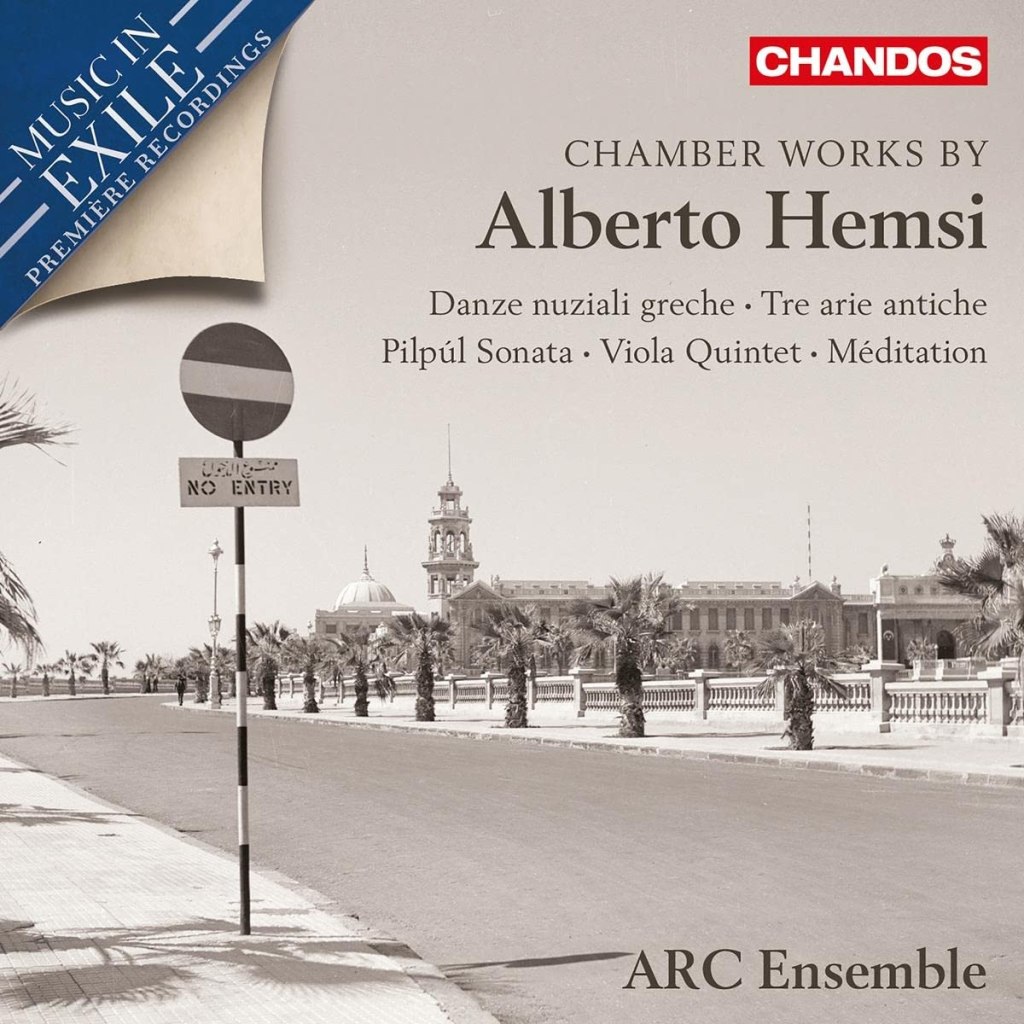
Alberto Hemsi, Out of Exile


Chandos CHAN 20243

“Music in Exile” is but one of many projects that are attempting to find, perform, and in many cases publish music neglected for many reasons, mostly political. Alberto Hemsi (1898-1975) is not a familiar name to this reviewer and will likely not be familiar to the average listener. But such are the hazards of resurrecting neglected music. This release in the 6th in the Music in Exile series and, like it’s predecessors, it is a loving adventure of discovery.

The ARC (artists of the royal conservatory) Ensemble here bring to a CD player near you an (apparently representative selection) of the extant works of this composer and ethnomusicologist. Hemsi spent 17 years collecting and publishing harmonizations of Sephardic Melodie’s he collected throughout the countries of the former Ottoman Empire.

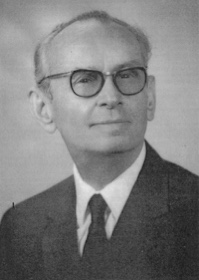
Alberto Hemsi (photo from University of Michigan website fair use)

The composer’s widow donated his manuscripts to the European Institute of Jewish Music in 2004 where The Hemsi Collection has become a significant part of one the largest collections of Judeo-Spanish music. Spain, in 1492, famously funded Christopher Columbus’ expedition of discovery and, infamously in that same year, officially exiled all of the Jews in Spain. Now some 500 years later the work of Hemsi is helping to preserve some of that culture.

Of course, like Bartok, Kodaly, Copland, and sundry like minded composers who incorporated similar song collecting ventures into the late romantic nationalist traditions in the late 19th and early to mid 20th century classical compositions. But this disc is actually more about Hemsi’s own compositions.

Track listing

The two works that comprise the first six tracks of this recording, the “Danzi Nuziali Greche” Op. 37 bis (1957) for cello and piano, and the “Tre Arie Antiche” Op. 30 (ca. 1945) for string quartet are fine examples of Hemsi’s direct incorporation of his collected folk musics into these charming chamber works.

But, for this listener, the pre 1945 works provide a compelling insight to this fine composer’s works that are not explicitly expositions of folk songs. Don’t get me wrong. All of these works are receiving world premiere recordings in this release, making them valuable additions to the history of music. But this listener was pleasantly drawn to Hemsi’s contributions to the western classical canon.

The three movement Violin and Piano Sonata Op. 27 (1942) is the longest work here and demonstrates the composer’s facility with larger compositional architectures. The same can be said of the “Quintet for Viola and String Quartet Op. 28 (ca. 1943). This very substantial music, composed in the shadow of the Second World War reveal a hopeful and talented composer producing music that would not see public performance in his lifetime.

The album concludes with the Meditation Op. 16 (ca. 1930). It Carrie’s the subtitle “in Armenian Style”. Hemsi’s folk song documentation also included Armenian Melodie’s, music of yet another culture of exile. It is doubtless influenced by some sense of the reality of the Armenian genocide which was vehemently denied until the 21st century.

We have yet another album of suppressed, oppressed, neglected music to add to an important and growing collection of music that arguably began with that of the Nazi declared “Entartete Musik” where music and composers were vilified viciously and directly. But this collection reminds listeners that the neglect and marginalization of art neither began or ended with “The Third Reich” and that there remains a great deal of research to be done and much joy to be derived from bringing such music to light as this disc does admirably.

Kudos to Chandos records and the fine Canadians of the ARC Ensemble for the joyful presentations of music that needs no longer languish in obscurity.

When Politics and the Arts Clash, OM 22


Isang Yun (1917-1995)


The relationship between politics and music is complex and varied.  There are many instances of clashes between these two disciplines from the politics of state and church sponsored music to its repression by those same institutions.

After centuries of Catholic church sponsored music a decision was made in 1903 to repress the performance of anything but Gregorian chant and any instruments except for the ubiquitous organ.  The reasons for this decree have been discussed but the end result was less work for musicians.

More recently the Nazi “degenerate art” concepts and the later proscriptions on “formalist music” in Soviet Russia similarly put artists and musicians out of work.  In fact many were jailed or killed.  Shostakovich and Prokofiev were high profile musicians who endured bans on performances of their music based ostensibly on claims that it brought (or potentially brought) harm to the state’s political visions.

Even more recently the blacklist created by Joseph McCarthy and his acolytes perpetrated a similar assault on actors, directors and writers like Dalton Trumbo (recently dramatized in the excellent film Trumbo with Bryan Cranston leading the fine cast).  This sad chapter of history did not completely end until the 1970s and only recently have efforts succeeded in restoring suppressed screen credits to these films.  Many lives were destroyed or irreparably harmed.  One hopes, of course, that such travesties will not be repeated but the recent efforts to eliminate the NEA suggest that such struggles remain with us.

On February 18th Other Minds will present a centennial celebration of two composers’ births.  Lou Harrison certainly expressed some political themes in some of his music but did not incur state sponsored political wrath.  Unfortunately this was not the case with the other honoree of Other Minds’ 22nd season.

In 1967 Korean composer Isang Yun was kidnapped by South Korean intelligence officers and taken to South Korea to face accusations of collaboration with the communist government of North Korea.  He was held for two years and was subjected to interrogation and torture based on information later acknowledged to have been fabricated.  Even so South Korea declined to allow the ailing composer’s request to visit his hometown in 1994.  He died the following year in his adoptive home in Berlin, Germany.

A petition signed by over 200 artists including composers Karlheinz Stockhausen, Hans Werner Henze, Gyorgy Ligeti and conductors Otto Klemperer and Joseph Keilberth among the many was sent to the South Korean government in protest.  A fine recent article by K. J. Noh, Republic of Terror, Republic of Torture puts the incident in larger political context. It is a lesson sadly relevant even now in our politically turbulent times.

The concert will feature works from various points in his career, both before and after the aforementioned incident.  It is a fine opportunity to hear the work of this too little known 20th century master.  Conductor and pianist Dennis Russell Davies knew and worked with both Harrison and Isang.  It is so fitting that he will participate along with his wife, justly famed new music pianist Maki Namekawa, in this tribute to the the late composer.  This can’t right the wrongs but what better way to honor a composer than by performing his music?

The performance is at 7:30 PM at the historic Mission Dolores Basilica at 3321 16th Street
San Francisco, CA 94114.  Tickets available (only $20) at Brown Paper Tickets.