Bob and Blue, A Musical Pilgrimage


Littlefield Hall (photo copyright by author)

…tell the old story for our modern times. Find the beginning.

-Homer, The Odyssey (Emily Wilson translation)

When I first got the email notice of this concert, I was, to say the least, intrigued. A two piano concert at Littlefield Concert Hall on the campus of Mills College featuring two composer/performers who figured prominently in that Temple of new music and in my personal listening life. Alas, I live some 350 miles from that location. But further intrigue came from the featured artists: Sarah Cahill and Joseph Kubera, two of the finest working new music pianists anywhere and both worked with the evening’s composers. This was just too compelling and I decided that I would regret missing this if I failed to go hear it.

So it was, I planned my little odyssey, leaving at about 9AM from Santa Barbara on a nice lightly trafficked trip, more a pilgrimage than an odyssey. A pilgrimage, frequently defined as a personal spiritual journey ostensibly in search of insight or enlightenment is how I’ve come to identify my listener’s adventure to the secular temple of Mills College featuring music of former Mills faculty Robert Ashley (1930-2014) and Robert Sheff (1945-2020), better known by his stage name, “Blue Gene Tyrrany”.
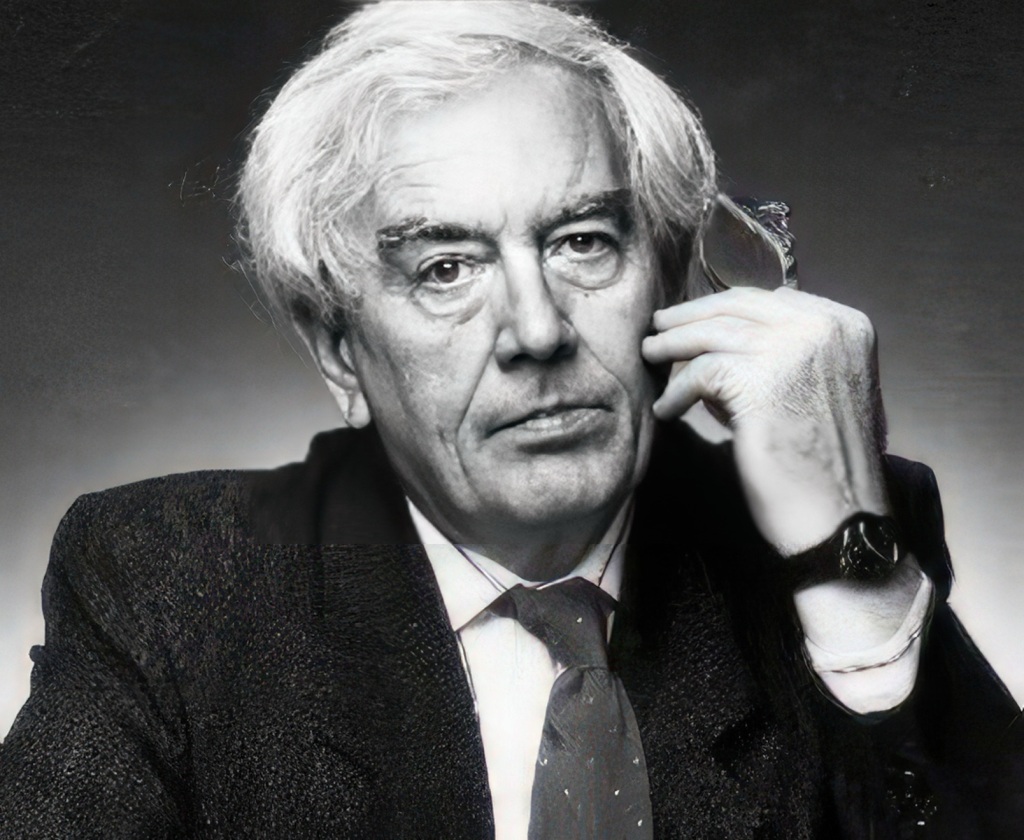
Robert Ashley (copyright unknown)
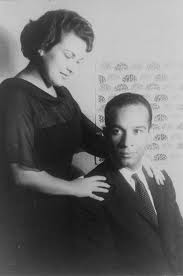
“Bob and Blue” (copyright by Other Minds)

The two featured composers had a strong connection to the Bay Area, mostly via their work at Mills College. This intelligent but modest production left little room to print program notes so the performers spoke of the music at various points during the concert and the excellent liner notes were made available by a QR code in the program book.

Sarah Cahill, pianist, radio host, producer, tireless advocate for new music (photo copyright by Other Minds)
Joseph Kubera, pianist, member of the SEM ensemble, Downtown Music, and countless collaborations promoting new music with many fine recordings to his name. (Photo copyright by Other Minds)

Our two performers are no strangers to each other or the composers on the program, having collaborated on numerous performances and recordings. The well rehearsed duo turned in riveting performances of this largely unknown repertoire which made a strong case that it be better known. Their playing and choice of repertoire compelled this listener’s attention such that I forgot to take all but a few performance shots. See those program notes for further biographical info on these two fine musical celebrants.
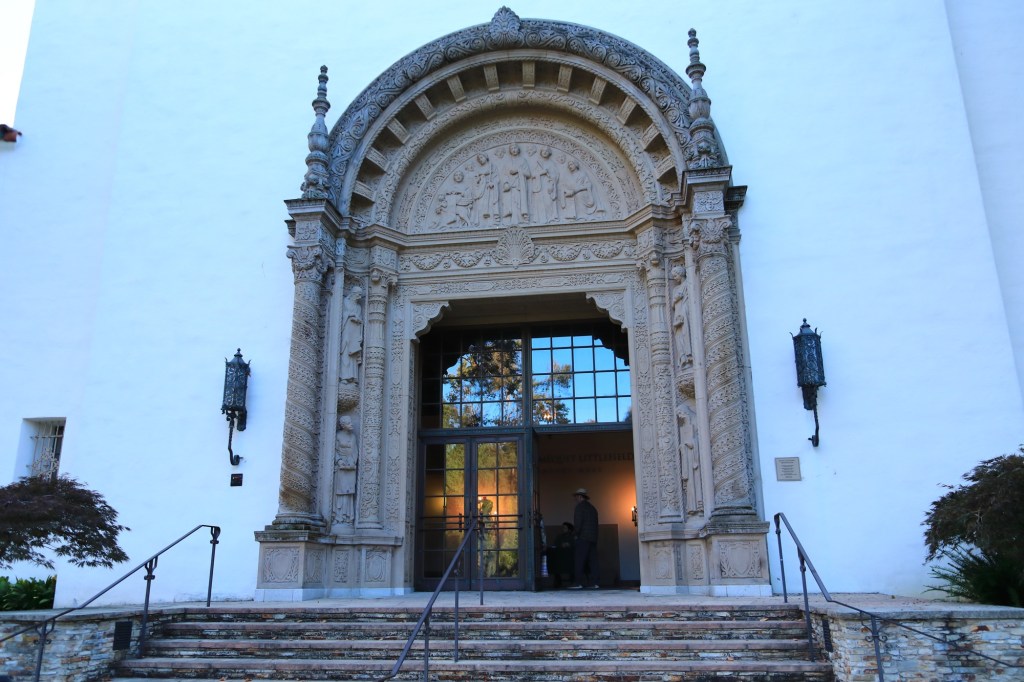
Entrance to Littlefield Concert Hall (copyright by author)

Mills College has long been a temple, a Mecca for new music in the Bay Area of California. Its roster of faculty and students comprises some of the finest post 1945 composers and performers. Darius Milhaud (1892-1974) and Luciano Berio (1925-2003) and students as diverse as Terry Riley (1935- ), Steve Reich (1936- ), and Dave Brubeck (1920-2012) to name but a few. Many artistic spirits musical and otherwise, exert their presence here. It’s a perfect destination for a pilgrimage.

A bust of frequent Mills visitor Lou Silver Harrison (1917-2003) in the lobby, a persistent benevolent spirit. (photo copright by author)

The concert was organized by Charles Amirkhanian and his Other Minds organization, another guiding light in the San Francisco/Oakland new music scene. Pianists Sarah Cahill and Joseph Kubera were to be the celebrants in the concert ritual paying homage to “Bob and Blue” as well as to the oracular Mills College.

Scene from the lobby (photo copyright by author)

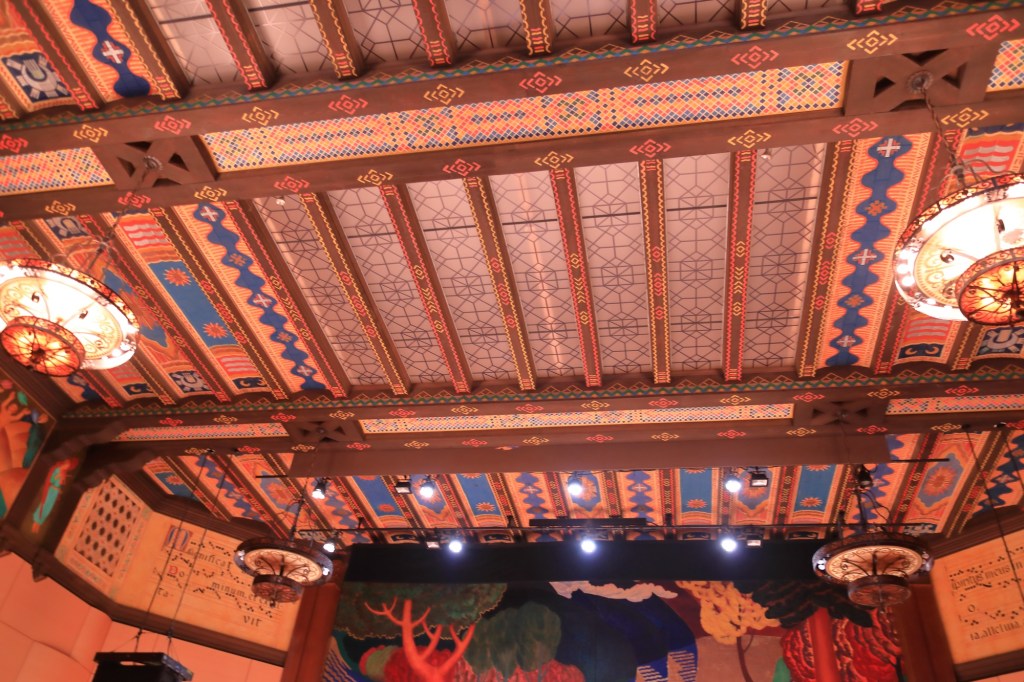
Let me tell you about this concert hall. It is the work of legendary California architect Julia Morgan (1872-1957) who famously also worked on Hearst Castle. This is one of her several architectural gems on campus. Her spirit was also witness to this celebration by virtue of her fine architecture.
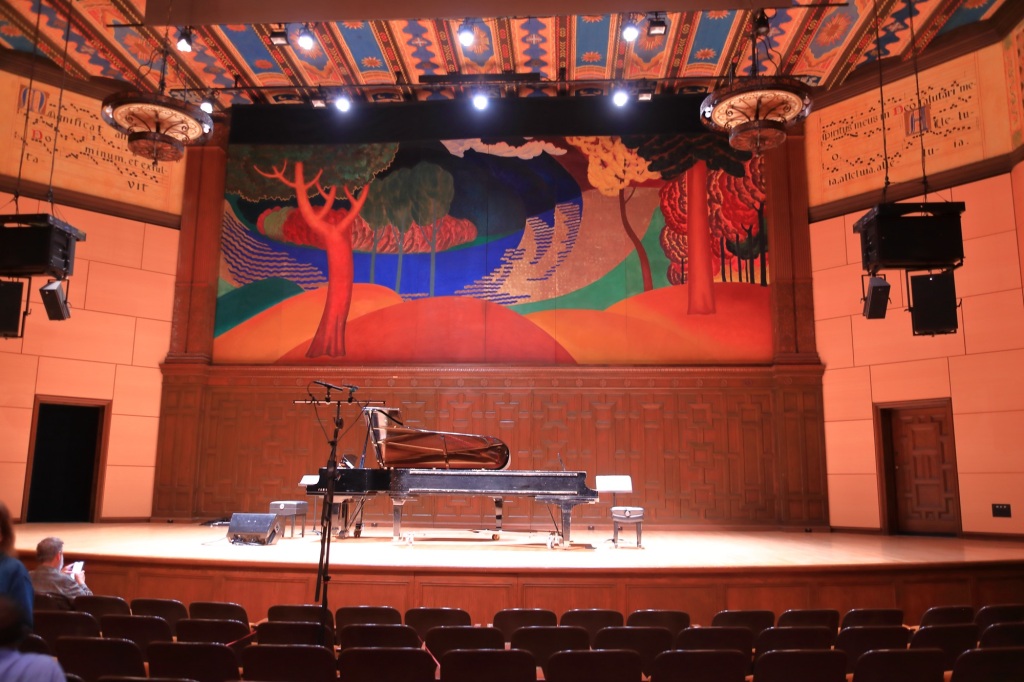
Stage at Littlefield Hall showing the ornate, colorful detailed designs (photo copyright by the author)
Look at that ceiling and those chandeliers (photo copyright by the author)

Two pianos, a new Steinway stage left and a slightly worn Baldwin stage right were placed such that the pianists seated at their respective keyboards could see each other. The Steinway with its lid open to reflect the sound to the audience and that well worn Baldwin with no lid at all (for reasons to be revealed later). The sonics of the hall and tuning of those pianos were excellent.
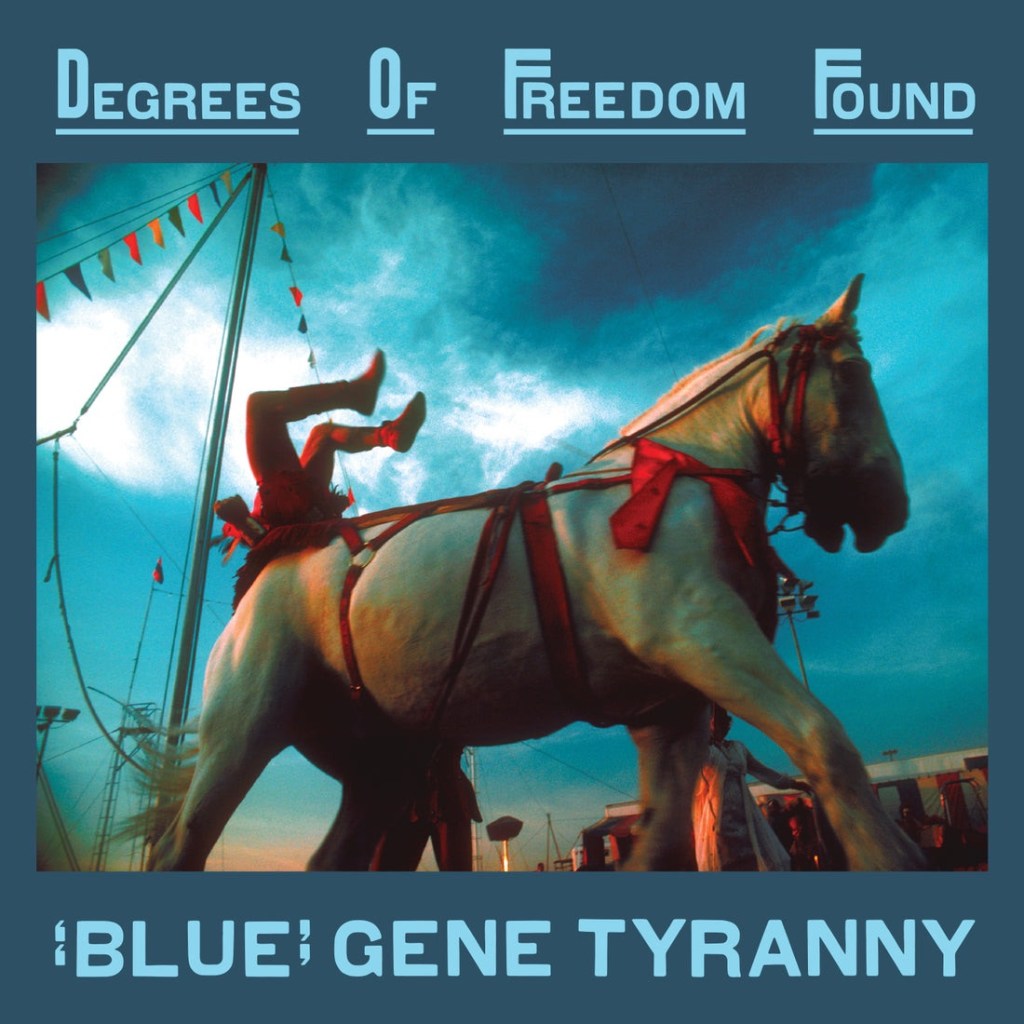
Unseen Worlds’ wonderful survey of Blue’s ensemble works.

The concert opened with Blue Gene Tyrrany’s peaen to old Route 66 in his “Decertified Highway of Dreams” (1999) for two pianos. It was clear from this first selection, that our performers were well rehearsed and in sync despite rhythmic complexities inherent in this quite beautiful work. It is cinematic and sweetly nostalgic, a fine example of “Blue”’s genius. The performance was riveting and worthy as the first performance ritual of the evening.

This was followed by a real rarity, a performance of Robert Ashley’s Piano Sonata (1959, 1979, 1985). In fact, it appears to have been the first complete performance of the two piano version of this impressive serially structured piece. Previous recordings are available, one with the composer performing the first movement at the ONCE Festival from 1966, the other by Blue Gene Tyrrany on his album, “Just for the Record”. This writer also found some useful analysis by musicologist Kyle Gann on his website. Gann worked with Ashley and later published a fine survey of Ashley’s music that is well worth your time. The result was a convincing, almost romantic sounding performance of this foundational work in Ashley’s oeuvre.

This was followed by a solo rendition by Joe Kubera of Tyrrany’s “The Drifter” (1994), which was written for Mr. Kubera. He spoke briefly about the structure of this work (which he also recorded on his recent “Horizons” album). This piece has a meandering quality created by the intricate evolving structure. Kubera’s performance was hypnotic and a fine tribute.

The second half began with Ms. Cahill solo at that stage left Steinway playing first Tyranny’s “Nocturne With and Without Memory” (1989), one of his better known works. Then she played his “Spirit” (1996/2002), a piece that is a sort of homage to the experimental composer/performer Henry Cowell (1897-1965). It was rather unusual in that it involved harmonics over which the pianist plays. The title is an homage to Cowell’s famous piano piece, “The Banshee”, a malevolent spirit in Irish mythology. Both were vintage Blue Gene pieces.

Two pianists, one piano.

Then Kubera returned, taking a seat at the blemished Baldwin with Cahill standing at that same piano, at a 90 degree angle to Kubera. Here, in these two obscure Ashley pieces, Viva’s Boy (1991), and “Details” (2b, 1962), Cahill played like a chef at a chef’s table, playing the strings inside the piano while Kubera manned the keyboard. These true rarities getting perhaps their first performance, were certainly a highlight of the concert.

It was Blue Gene Tyrrany’s spirit that was the final ritual celebration on this magical night with both pianists at their respective pianos to give a heartfelt reading of his, “A Letter From Home” (2002). This brought this learned, well rehearsed, beautifully collaborative evening’s ritual to a satisfying close.

The modest, self selected audience, applauded warmly and gave an extended, much deserved ovation and seemed as enthralled as this listener whose musico-spiritual pilgrimage found an ecstatic height. I drove home that same night, blessedly lifted, if only briefly, from the chaos of the world by this wonderful artistic ritual. They will now take this great program to New York.

Analog versus Digital, It’s Not Just About the Music


Ever since the introduction of digital recording in the 1980s there has been an ongoing controversy as to the merits of the new medium over the old. And unlike the leap from acoustic to electrical recording which happened about 1929 and the move to stereo recording in the mid 1950s the adoption of digital recording in the 1980s was not universally embraced as a step forward in recording technology by audiophiles.

So what is the issue?  Well it’s really quite simple.  Acoustic recording involved a needle connected to a membrane which vibrated analogously (more or less) to the sounds stimulating that membrane.  Electrical recording basically extended this technology by having the membrane (in the microphone) translate the sounds into analogous electrical impulses which were then recorded to a disc and later to magnetic tape.  This in turn would be used to drive a cutting lathe which cut the vinyl discs.  The discs are played with a needle in the groove which reads the little bumps and translates them into electrical impulses which are amplified to drive speaker cones which excite the air and produce sound.

Digital recording involves a sampling technique in which certain sounds or parts of sounds get encoded digitally and then reproduced or re-converted back to electrical impulses which then drive speaker cones.  The problem is that this is a sampling involving choices on the part of programmers as to which sounds/parameters will get encoded.  So potentially this would not be as accurate a representation of the sound as analog recording which responded directly to the sound as it occurred.  Of course more sampling containing more information produces a better recording than one which uses less sampling.

Now to be fair, all recording technologies have their flaws.  Even the best analog recordings do not reproduce the experience of hearing the sound live and in person. Characteristics and flaws in the analog equipment can and do limit aspects of the recording.  There is a limit to what this equipment can record so there are choices made even in the best case scenario as to what portions of the sound spectrum will get captured.  The frequency range and dynamic range are limited for example.  But the sonic experience of an analog recording is said by connoisseurs to be a warmer and more genuine sound than digital.

Certainly most people can hear the difference between early digital recordings and more recent ones.  That is because the sampling has gotten better, a wider range of frequencies and dynamics are being included.  But die hards will insist that analog recording was the finest recording technology for reproducing a satisfying listening experience and for faithfully reproducing the experience of the live sound.

I am not an engineer but as a person with ears I still enjoy the warm sound of analog recording.  Of course I listen to digital recordings because it is the dominant technology and I want to hear new recordings.  I am not advocating a change here, just pointing out the essential differences.

OK, you ask, this is all about sound but your title said it wasn’t all about sound.  So what gives?

Well my intention here is to use this simple exposition of recording technology as a metaphor for the digital sampling of opinions which are rampant in today’s business driven culture.  Everywhere we are asked for our opinions.  Whether you are approached by an interviewer, filling out a warranty card, or evaluating some experience you’ve just had at a concert or theater your opinions are being surveyed and placed into some sort of database which in turn undergoes some kind of analysis and that analysis, in turn, drives future choices made in a given business model.

Most of the audience at the première of Igor Stravinsky‘s Le Sacre du Printemps (The Rite of Spring) were rather famously not pleased with their listening experience on that night in 1913.  Yet today there are few people who would deny that this music is one of the most significant compositions of the twentieth century.  Modern business practices however would dictate that such music should not be programmed because it displeased the audience who would likely not return if they expected a repeat of such an experience.

The great musicologist/conductor/composer Nicolas Slonimsky (1894-1995) identified this phenomenon in his marvelous Lexicon of Musical Invective (1953) in which he documents quite a number of critical reviews of music which is now acknowledged as great but which, on first hearing by said critics, was described as inferior.  The point is well-taken.  Our initial experience of a new piece of music may be very different from our subsequent opinion after hearing it again.

With the elevation of statistical modeling to a religious practice there is increasing belief that those models embody the essence of truth and clear vision.  But what are the motivations behind this modeling?  Anyone who has taken a statistics course or who thinks about it for a bit will realize that statistics can obscure outcomes just as efficiently as they can clarify it.  So if the motivation is profit (as it should be in a business model) then there would necessarily be less of a focus on quality (whatever that is).

I have had many exciting and joyful experiences of hearing a new piece of music at a concert which I had never heard before.  I have experience the exhilaration of discovery.  Now not every new piece of music has this effect and, as I’ve said before, I have had that exhilaration of discovery after a second or third hearing.

I used to be very much a fan of classical broadcast radio.  At the time, in my adolescence, classical music was an adventure of discovery.  Of course I heard a lot of average and even poor music alongside the masterpieces but I also recall that there was an element of risk at times in programming new and less familiar music.  Sometimes I was bored, sometimes I was repelled, but sometimes I discovered something new to add to my listening repertoire choices.

That was in Chicago in the 1970s and 80s with Zenith’s WEFMWFMT and the late lamented independent WNIB.  But radio seems to have changed in similar fashion in terms of its programming to that of the concert hall.  Those radio stations frequently broadcast concerts of various orchestras including the Chicago Symphony, Milwaukee Symphony, Boston Symphony and various foreign orchestras.  Their programming also contained a fair amount of new music.

Over the last 5-10 years or so I have found classical broadcast radio to be increasingly dull and predictable.  Sure it’s good to hear Beethoven Symphonies and Mozart Piano Concertos but some stations have gone to a “request” model for their broadcasting which has resulted in an over representation of Bolero, the 1812 Overture and the broadcasting of what one writer called “wallpaper music”.  Wallpaper music is a reference to any number of newly recorded repertoire which is so mediocre as to make me almost scream with boredom and ennui.

I am not advocating ditching digital recording or a libertarian approach to concert programming.  Certainly both radio stations and concert organizations need to make at least a slim profit to survive.  What I am advocating is the inclusion of adventure and discovery in those business models to which I referred earlier.

Democratizing musical programming and playing to the center or the majority appears to produce mediocrity.  Every concert program and every broadcast classical station now are largely the same.  Of course there are notable exceptions as some orchestras employ resident composers and play the occasional premiere of a new work.  Less common is a second performance of a new work.

There are adventurous festivals of new music which program interesting music.  But these stand outside of the vast majority of classical programming today. So, at the end of the day (or the end of this little essay) listen to what gives you joy, but don’t be afraid of new musical ideas. And just be aware of new (and old) sound recording/reproducing technology and its impact on what you hear. It is not just about the music, it’s about the sound.

Black Classical Conductors (Black Classical Part Two)


James Anderson De Preist(1936-2013)

James Anderson De Preist
(1936-2013)

The recent passing of conductor James DePreist is a great loss to the world of classical music. I first encountered this man’s work when I bought a New World CD containing music by Milton Babbitt (Relata I), David Diamond (Symphony No. 5) and Vincent Persichetti (Night Dances). All performances are by the Julliard Orchestra under three different conductors of music by three different composers of about the same generation of east coast American Composers. De Priest conducts the Night Dances piece. He had studied under Persichetti at the Philadelphia Conservatory.

De Preist had a fondness and a feel for contemporary music. Among his fifty some recordings (no reliable discography is available online just yet) he recorded music by Paul Creston, George Walker, Gunther Schuller, Ellen Taaffe Zwilich, Easley Blackwood, Aulis Sallinen, Giya Kancheli, Alfred Schnittke, William Walton, Nicholas Flagello and Joseph Schwantner among other more familiar names as well.

He was the nephew of Marian Anderson and cared for her in his home in Portland, Oregon until her death in 1993. De Preist was the conductor of the Oregon Symphony and served as it’s music director from 1980 until 1993. He conducted nearly all of the world’s major orchestras and was awarded the National Medal of Arts in 2005.

His passing this February, Black History Month in the United States, got me thinking about the legacy of black classical conductors. There have been a few luminaries that also deserve attention and I will attempt a short survey a few of those whose art has touched my own life.

Paul Freeman

Paul Freeman

Paul Freeman (1936- ), now retired, was the founder and music director of the Chicago Sinfonietta, an alternative orchestra to the Chicago Symphony which played a distinctly different program from them introducing a great deal of new music by young composers along with an unusual selection of older music and some classical warhorses. His 9 LP survey recorded 1974 to 1979 and released by Columbia Records in 1986 of music by black composers is a landmark set of recordings surveying music by black composers from various countries with some emphasis on American Composers. He followed this in 2003 with 3 CDs of music by black composers on Chicago based Cedille records and has continued to give exposure to these unjustly neglected artists. Along with his promotion of black composers Freeman has recorded a great deal of 20th century music by other unjustly neglected masters such as Leo Sowerby, Meyer Kupferman, Bohuslav Martinu, Tibor Serly, Robert Lombardo, William Neil, Richard Felciano to name a few. He recorded a delightful complete set of Mozart Piano Concertos with frequent collaborator, pianist Derek Han (the set was incorporated into the Complete Works of Mozart released on the Brilliant Classics label).

Michael Morgan (1957- )

Michael Morgan (1957- )

Michael Morgan who I recall as having been the assistant conductor of the Chicago Symphony from 1986 to 1990 under both George Solti and Daniel Barenboim. I had the pleasure of hearing him conduct the Chicago Symphony’s fine training ensemble, The Civic Orchestra, on several occasions.

Currently he is the music director of the Oakland East Bay Symphony, a post he has held since 1990. In that time he has done much to strengthen the orchestras standing artistically and financially and he has forged alliances with the Oakland Youth Orchestra and the Oakland Symphony Chorus.

Unfortunately Morgan has made few recordings but his choice of repertoire and championing of new music continues to endear him to critics and to bay area audiences.

Thomas Wilkins (1956- )

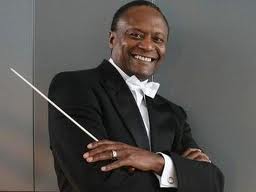
Thomas Wilkins (1956- )

In 2011 Thomas Wilkins became the first black conductor appointed to the Boston Symphony (a city historically resistant to integration in the 1960s). He is the conductor of that city’s youth orchestra.

He was appointed music director of the Omaha Symphony in 2005 and has held appointments with the Richmond Symphony, the Detroit Symphony and the Florida Orchestra.

Henry Lewis (1932-1996)

Henry Lewis (1932-1996)

California born Henry Lewis was the first black musician to join a major symphony orchestra when, at the age of 16, he joined the double bass section of the Los Angeles Philharmonic. He became the first African-American to lead a major symphony orchestra when Zubin Mehta appointed him assistant conductor of that same Los Angeles Philharmonic in 1961, a post he held until 1965. He is credited with founding the Los Angeles Chamber Orchestra as well

Lewis is probably better known in the media for having been married to soprano Marilyn Horne from 1960-1979.

Carl Van Vechten's portrait of Marilyn Horne with her husband Henry Lewis in 1961

Carl Van Vechten’s 1961 portrait of Marilyn Horne with her husband Henry Lewis.

Horne credits Lewis with her early development as a singer.

Charles Dean Dixon (1915-1976)

Charles Dean Dixon
(1915-1976)

Dean Dixon, as he was known, was born in Harlem and studied at Julliard and Columbia University. He formed his own orchestra when racial bias prevented him from working in most settings and in 1941 gave a concert at the request of Eleanor Roosevelt who in 1939 famously arranged for Marian Anderson to sing on the steps of the Lincoln Memorial after she had been prevented by racial bias (and the Daughters of the American Revolution) from singing in any concert venue in Washington D.C.

While he did guest conduct the NBC Symphony, the New York Philharmonic, the Philadephia Orchestra and the Boston Symphony he left the United States in 1949 to further his career in overseas. He conducted the Israel Philharmonic Orchestra during 1950-51, was principal conductor of the Gothenberg Symphony from 1953-60 (by popular demand), the HR Sinfonieorchester in Frankfurt from 1961-74, the Sydney Symphony Orchestra from 1964-67.

Dixon returned to the United States and had various guest conducting engagements with major orchestras. And he conducted the Mexico City Orchestra during the 1968 Olympics. His legacy includes quite a few recordings made in the 1950s, some of standard repertoire, but some of American music like that of Randall Thompson, Leo Sowerby and fellow black American William Grant Still among many others. These were some of the first recordings I ever heard of much of that repertoire.

He, like those who followed him, did a great deal to promote the music of Americans and of the 20th Century in general. And his recordings are an important part of his legacy that remains largely untapped (though Naxos historical has reissued some on CD, bless their hearts). The racial bias he encountered is our American legacy. Dixon once defined three phases of his career by the way he was described. First he was the “black American conductor”. Then he was the “American conductor” and, finally he simply, “the conductor Dean Dixon.”

Hello world! This is “New Music Buff”


Welcome to my music blog. I am an avid listener, collector and supporter of music in general. I am particularly interested in new and cutting edge music.

What I offer here are informed opinions about what is essentially one of my hobbies. The blog title “New Music Buff” is intended to connote a somewhat casual perspective by an educated consumer.

I offer personal opinions which I hope will provoke discussion but also stimulate interest.

Thank you for reading.

Allan J. Cronin