Young American Inventions: Music by Steven Ricks


Young American Inventions (New Focus FCR 158)

Young American Inventions
(New Focus FCR 158)

Let me say at the beginning here that this disc contains music of a rather experimental nature.  It has underlying complexities and this is not the kind of CD one would have playing at most parties except perhaps to clear the room.  That being said this is not bad music but it is challenging listening.

I had not been familiar with Steven Ricks (1969- ) or his music prior to receiving this disc for review.   Ricks earned his B.M. in Composition in 1993 from Brigham Young University, and M.M. (also in composition) from the University of Illinois at Urbana in 1995, a Certificate of Advanced Musical Studies from King’s College in 2000 and  Ph.D. from the University of Utah in 2001.  His teachers have included Morris Rosenzweig, Sir Harrison Birtwistle, Bill Brooks, and Michael Hicks.

He is currently on the Board of Advisors of the Barlow Endowment, and an Associate Professor of Music Theory and Composition at BYU where he also directs the Electronic Music Studio.  His works fall primarily into the realm of the “electroacoustic”.  His training and interests seem to put him into orbits that likely include Milton Babbitt, Mario Davidovsky, Lejaren Hiller and perhaps Salvatore Martirano (all, by my definition, great composers but difficult listening and with electroacoustic outputs primarily).

I must confess that I know relatively little about the forefront of electronic music these days and I am working on catching up on this history (which seems to exist almost completely separate from classical music per se).  Even the hybrid of “electroacoustic” music seems, for this writer at least, to remain rather marginal in terms of its listening audience and its prevalence in the concert hall.

Now, having loaded the reader with these prefaces, apologies and excuses, I move on to the music itself.

I listened numerous times to the tracks on this disc.  Sometimes I listened with direct intention and concentration, other times I listened with this disc playing ambiently (can I use that term here?) whilst pursuing other tasks (not recommended).  The music is assertive and, at times downright intrusive.

I get the feeling overall of a great deal of experimentation and complexity that nearly raises Milton Babbitt’s famous question, “Who cares if you listen?”.  Certainly the composer and performers care but that doesn’t rule out the likelihood that this music may speak to a limited audience who are better trained and more familiar with these techniques/ideas.

What I like about this disc, though, is that bold, experimental, doesn’t matter who is listening approach.  Were it not for such innovation a lot of good musical ideas would never have been expressed.  This music is experimental and perhaps more than a little “inside”, meaning that other composers/scholars might get things that the average listener would probably miss.  Call it an adventure.

Curiously I was/am intrigued by Ricks’ interest in algorithmic composition (an iffy genre as well, I know).  I was pleased to find that he has available for free download on his site a program he wrote called Universal Music Machine and I have been rather entertained by it both as a compositional tool and as a teaching/learning method.   And I promise to post mp3 files of any masterpieces I might generate.

There are 9 separately identified pieces here written between 2001-2014.  Two are multi-movement works and all but two involve electronics in performance to some degree.

The opening track, Ten Short Musical Thoughts (2002) serves well as an introduction.  It makes use of sampling and of algorithmic composition.  Indeed these are short musical ideas with some spoken word comments integrated with the music.

If you are not watching/listening closely you may miss the transition between the opening track and the next, “Young American Inventions” (2007) for solo piano and electronics.  The title, a mashup of David Bowie’s “Young Americans” and Steve Martland’s “American Inventions” reflects Ricks’ eclectic interests and fascination with both contemporary classical as well as popular culture.  Pianist Scott Holden navigates the challenging keyboard part accompanied by the electronic score.  Here is where Ricks’ work reminds me of Mario Davidovsky’s “Synchronisms” series.

The four movement, “Extended Play” (2007) continues the pop culture references as the composer states that those four movements are intended to mimic or approximate the four tracks which are found on most vinyl EP productions.  The ensemble composition, which is also full of more specific references to both classical and popular music, is executed by Flexible Music and is the most easily accessible work on this disc (to this listener’s ear).

“Ossifying (Keeping us from…) (2012), listed as “electroacoustic” is a piece of sound art like the opening track (no live performers in the concert hall here) and is one of the most experimental pieces on the disc.  It seems both deeply personal and inextricably self-referential.

“Geometria Situs” (2012) is the musical portion of a multimedia work called “WRENCH” which was written for and performed by Hexnut.  Mezzo-soprano Michaela Riener handles the delicate vocal lines with grace and ease.

“Sounded along dove dôve” (1999) is the last of the non-live “electroacoustic” pieces and, like its predecessors, is similarly cryptic and self-referential, a puzzle perhaps, in which the components of language itself are used as determinants of the settings of the texts.

A bit of an “aww” moment occurs with “Waves/Particles” (2008) which is performed by the Canyonlands Ensemble conducted by the composer’s former teacher Morris Rosenzweig.  Rosenzweig founded the ensemble in 1977.  This is both homage and acknowledgement between the two generations of artists.  It is lovingly played.

“Young American Inventions REMIX” (2014) invokes another pop culture metaphor of remixing a song.  This is another iteration/elaboration of the material in the earlier version of this piece.  Scott Holden is the soloist once again with the electronics.

“Stilling” (1997, rev. 2011) is a piece for solo piano.  This is described by the composer as being an impressionistic piece, perhaps a sort of tone poem.  The language is thorny and modern.  The very capable pianist here is Keith Kirchoff.

The lucid liner notes are by Jeremy Grimshaw.  The New Focus recording is clean and clear.  So if you enjoy adventures in experimental/electroacoustic music this is your disc.


Spirituals Re-Imagined


411Wkh4lXuL._SS280
I managed to squeeze a delightful brunch meeting with my busy friend and colleague Bill Doggett on New Years Day.  It was there at a favorite Oakland cafe that we discussed many topics and Bill gave me a copy of this beautiful CD by a young black composer whose work is entirely new to me.

Okpebholo

Shawn Opkebholo (1981- )

Shawn Okpebholo (1981-  ) was born in Lexington, Kentucky.  He earned his B.A. in music at Asbury College and his M.M. and D.M.A. degrees at the  Unniversity of Cincinatti.  Doctor. Okpebholo is currently on faculty at Wheaton College  in Illinois.

The present disc is Opkebholo’s first CD dedicated entirely to his own compositions and is the composer’s “reimagining” of spirituals.  Drawing on the folk tradition of spirituals, worksongs, etc. as well as classical art song traditions he fashions his personal take on these much loved melodies.

I do feel compelled to mention the beauty of the photography and album design.  Greg Halvorsen Schreck took the pictures and Jeremy Botts did the overall design.  Powerful stuff.

In a slight deviation from the classic voice and piano arrangements the composer chose to score this little cycle for baritone, mezzo-soprano, viola and flue along with piano.  For this writer this was an interesting and suitably entertaining choice.

jnai

J’nai Bridges

Willnewheadshot

Will Liverman

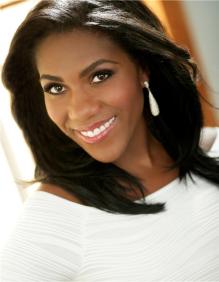
The singers Will Liverman, baritone and J’nai Bridges, mezzo-soprano are marvelous and sensuous voices and discharge their duties most beautifully.  The pianist Paul Tuntland Sànchez is also a composer and very accomplished soloist.

Sanchez_Photo

Paul Tuntland Sanchez


The violist is Dorthy White Opkebholo and is the composer’s wife.  She is an accomplished musician in her own right.

The flute is played by Caen Thomason-Redus.

This is a beautiful recording of these loving arrangements of spirituals which can occupy that place in the literature populated by the likes of Aaron Copland’s Old American Songs.  A must for art song and folk song fans and a great opportunity to hear some fine musicians at the beginnings of what is hoped to be long and successful careers.

all spring, Music of Emily Doolittle


doolittle

Emily Doolittle (1972- ) was born in Halifax, Nova Scotia.  She earned a B. Mus. from Dalhousie University in 1995 having studied with Dennis Farrell and Steve Tittle.  She went on to earn an M. Mus. in 1999 from Indiana University where she studied with Don Freund.  She completed her Ph.D. at Princeton in 2007 studying with Barbara White, Steve Mackey and Paul Lansky.  In addition she studied with Louis Andriessen from 1997-1999.

Doolittle now lives in Glasgow, UK having just left a faculty position at the Cornish school in Seattle, WA.  where she taught since 2008.  A quick look at her CV reveals a very busy composer and academic with an extensive list of compositions, performances, research, teaching etc. such that this reviewer is amazed to find that the present release is the first CD dedicated exclusively to her music.

I was pleased to be able to get a perspective from the composer that helped me understand the context of this disc in terms of the rest of her work.  She wrote:

“As I was making choices of what to include on this CD, I realized that my music divides itself into several (sometimes overlapping) categories. Over the next few years, I’m hoping to be able to record two or three more CDs. The one that I sent you is the one for fairly standard-ish chamber ensembles, with pieces that would sit fairly comfortably with chamber music of any era. At the moment I’m applying for funding to record a CD of pieces for one or two instruments/voices — these pieces also have a fairly similar musical language to the pieces on “all spring”. After that, I’d like to record a CD of my bird and animal song influenced music, which tends to be more experimental (in terms of sounds used and structure), and often involves some improvisation. And then I have a number of pieces that are harder to figure out how to present to a larger audience — site-specific pieces, pieces for amateurs or children, etc. So I guess I see this CD as both the culmination of one project, and the beginning of a larger project. And I think that getting this sort of overview of my compositions to date will help give me ideas about the directions I’m most interested in going in in the next few years. (I’m at a bit of a transitional time — I just left a full-time teaching position at Cornish College of the Arts in Seattle to move to Glasgow. I’m hoping to find part time teaching here, but mostly I want to devote a lot more time to composing than I’ve been able to in the last few years.)”

I was also unaware that there was such a thing as “zoo-musicology” or the study of things musical generated by the members of the animal kingdom.  Who knew?  I was familiar with Olivier Messiaen’s transcriptions and use of bird song but until now I was not aware that work was still being done in this area.  Alas, that will have to be the subject of another review as this disc, while later analysis might reveal zoomusicological influences, is ostensibly more in the category of absolute music or perhaps metaphorical music.  What is quite clear is the picture of an artist with wide-ranging interests who is working to shape her oeuvre and her research interests into a more unified effort which promises potentially fascinating results yet to be heard.

The CD is a very pleasant listening experience.  Nothing here sounds experimental, rather these works are beautifully composed and lovingly played by the Seattle Chamber Players (and friends).  All were composed from 2000 to 2014 and share a sort of romantic and nostalgic flavor and demonstrate the delicate nuances of this composer’s palette.

The first two works, “Four Pieces About Water” (2000) in four short movements and the single movement “falling still” (2000/2009) are purely instrumental as is the fourth piece on the disc “col”(2002/2014).  (Please note that all spellings are as they appear on the disc.)

Tracks 6-10 comprise the album’s title piece, “all spring”(2004) features the poetry of Canadian poet Rae Crossman and the final and longest piece, “Why the parrot repeats human words” (2005) features a text by the composer in which she tells her version of a Thai folk tale (think perhaps of a Canadian Peter and the Wolf maybe).  Both these works feature the beautiful spoken and singing voice of Maria Mannisto.

The ample and lucid notes are by the composer.  The recording was engineered by Doug Haire at the Jack Straw Cultural Center in Seattle and mastering was by John D. S. Adams at Stonehouse Sound in Mahone Bay, Nova Scotia for this Composer’s Concordance label release.

Certainly this writer will be looking forward to hearing more from this fascinating artist as she reveals more of her work on recordings and goes on to who knows what new and interesting areas in this (now) post-Boulez world.  Brava!


The “New” New Music Buff 2016


I’ve decided that I’m going to drop the cliche of “best of” in favor of the following:

As New Music Buff moves into 2016 I have been blessed by an increasing amount of musicians who have graciously sent CDs and books for review and I will do my best to keep up with them and do them justice.

In addition I intend to further develop some other projects, especially my interest in political classical music.  In this past year the tragedies that have given rise to important movements like Black Lives Matter have underscored for me the significance of these issues and provided further inspiration to develop my research in the area of politics and music.  

I am in the process of preparing some fairly comprehensive portraits of composers and musicians whose fate it was to appear on my radar screen.  These will be appearing beginning in February.

Of course I will continue report on musical performances as I am able to fit into my schedule.  In general this will mean at least two articles per month.

For now a big thank you to all who have contributed by sending CDs or books, by performing or simply by reading.  Hopefully I will be able to give you more worth reading.  Happy listening!