Notes From the Underground, A major new recording of Anthony Davis’ orchestral music


Album cover

Album cover

In March, 2014 the Boston Modern Orchestra Project released Notes From the Underground, a major retrospective recording of the composer’s work for large ensembles.  The recording includes Notes from the Underground (1988) a two movement work for orchestra, You Have the Right to Remain Silent (2007) a concerto for clarinet and contra-alto clarinet and Kurzweil processor and a new recording of the piano concerto Wayang No. 5 (1984) with the composer as soloist.  The Boston Modern Orchestra Project is conducted by Gil Rose.

There are liner notes by the composer and also by the great musician/composer/historian George Lewis (and a frequent musical collaborator with Davis).  The notes are relatively brief but contain a wealth of information and provide useful insights into both the musical processes and the sociopolitical forces that drive Davis’ music.  Davis describes his compositional processes and Lewis, a frequent musical collaborator,  places the music in historic and sociopolitical contexts.

Only the Wayang No. 5 has had a previous recording.  It was one of the two works included on the Gramavision release which included the equally engaging Violin Concerto “Maps” (1988) written for and performed by violinist Shem Guibbory.  The concerto reflects Davis’ interest in jazz as well as his study of gamelan music from whence comes the title “Wayang”. Davis has written a series of compositions for various combinations of instruments titled sequentially Wayang No. 1, No. 2, etc.  The term refers to the shadow puppet theater of  Bali which are accompanied by a gamelan orchestra, an ensemble largely of tuned gongs and other percussion instruments.  Davis studied gamelan music and wrote six compositions (so far) titled Wayang of which the fifth is the piano concerto on this recording.

Wayang No. V is the earliest composition on the disc and consists of four movements.  Opening-Dance begins with an improvisatory section with the pianist playing over unresolved harmonies in the orchestra which then leads to the main section of the movement which is characterized by ostinati in the orchestra as well as on the piano.  There is a seamless transition to the second movement Undine, a slow movement with an impressionistic feel.  March also begins without pause from the previous movement.  It is a scherzo like piece where the polyrhythmic structures are quite clear.   The finale, Keçak, a reference to the monkey chant in the ritual enactment of a scene from the Ramayana where the monkey-like Vanara help Prince Rama fight the evil King Ravana.  It begins with a long solo piano introduction followed  by a sort of dialog between the piano and several percussion instruments.  Davis demonstrates his virtuosity here in writing that is indebted as much to gamelan as it is to jazz and modernism from Schoenberg to Bartok, Stravinsky, Hans Werner Henze and Thelonius Monk.

This is a concerto that is more concerned more with expression than empty virtuosity though the piano part could hardly be called easy.  I am amazed that there have been no pianists who have added this wonderful piece to their repertory.  It is a very entertaining piece of music making.

The title track is the orchestral composition, Notes from the Underground (1988).  It is a two movement work dedicated to the writer Ralph Ellison (1914-1994), best known for his National Book Award winning novel The Invisible Man (1952).   The title evokes Dostoevsky’s existential 1864 novel as well as Ellison’s collection of essays, Shadow and Act (1964). The composer describes it as a “riff” on Duke Ellington’s Diminuendo and Crescendo in Blue (1937).  It is, to this listener, a grand set of orchestral variations.

Ralph Ellison

Ralph Ellison (Photo credit: Wikipedia)

The first movement, Shadow, is described by the composer as one that introduces fragments which will be heard in the second movement.  It features a prominent solo for the percussionist.  The second movement, Act is the longer of the two and is described as being written in ten steps with an elaborate polyrhythmic structures described in more detail in the accompanying notes. The writing here probably comes as close to minimalist or process music as anything the composer has done.  It is not minimalism per se  but it is perhaps proto-minimalist techniques whose roots are at least partly in jazz as musicologist Robert Fink suggests.   It produces a ritualistic and meditative feel to this richly orchestrated, reverent and mysterious sounding piece.   It is a fitting tribute to a great American man of letters as well as to the great composer Duke Ellington.

The concerto, You Have the Right to Remain Silent (2007) is the most recent as well as the most overtly political piece on the album and it is a gem.  It is written for clarinet doubling alto clarinet and a Kurzweil synthesizer/sampler and orchestra.  Longtime collaborator, the wonderful J. D. Parran  plays the clarinets winding his way through a balanced hybrid of styles including bebop, modern classical and free jazz styles comprising rhythmic complexity and multiphonics.  One could hardly imagine a soloist better suited for this music.  Earl Howard plays the Kurzweil which intones sampled speech of words from the Miranda Rights which are supposed to be presented at the time of an arrest.  Here they are presented strategically in poetic dialogue with the music controlled by the keyboard player.

Here again the individual movements have their own titles poetically referencing the issues which the composer attempts to invoke in this piece. He says in his notes, “I tried to approach ‘silence’ as, rather than John Cage’s apolitical world of ‘white privilege’, a much more dangerous place.”  The first, Interrogation, is intended to evoke the clarinet as being interrogated by the orchestra.  The second, Loss  features an improvised duet between the Kurzweil and the clarinet.  It ends with an homage to Charles Mingus, a major influence on Davis.  The third, Incarceration includes more text from the Miranda and the Kurzweil processes both the words and the clarinet solo.   And finally, Dance of the Other, intending to evoke the fantasy and the feeling of otherness and presumably alienation.

It is a concerto in the classical sense of a dialogue between soloist and orchestra and it seamlessly blends various classical and jazz harmonies and techniques which challenge the expertise of the soloist.  All the while it clearly presents a political context which meditates on the inhumanities and inequalities inherent in our “correctional” system and in our society as a whole.  As political music it lies within a grand tradition taking a place beside earlier masterpieces of that genre like Henze’s Essay on Pigs (1968) and Rzewski’s Coming Together (1971).  And as a concerto it is a challenge to the soloist and a delight to the listener.

This is a wonderful disc, well recorded and performed.  It presents some amazing and substantial music by one of the living treasures of American composers.  Anthony Davis has had a long and influential presence on the American music scene in his jazz performances as well as his chamber and orchestral music.  His operas like X: The Life and Times of Malcolm X (1986), Amistad(1997 ) and the more recent Wakonda’s Dream (2007) have been performed to critical acclaim. Hopefully this recording will introduce people to this composer’s works and remind those already familiar with the power and depth of Davis’ music.  Bravo to the Boston Modern Orchestra Project for bringing this music to the listening public.  I hope the major orchestras and theaters and recording companies are paying attention so we can hear more from this still too little known composer.

Enhanced by Zemanta

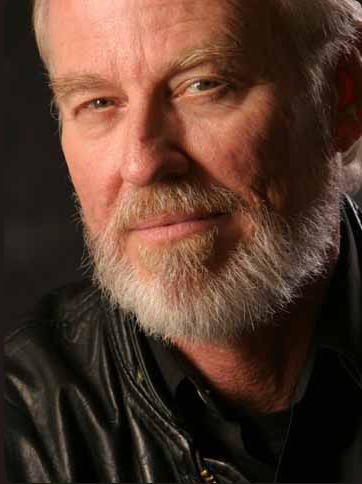
Black Composers Since 1964: Primous Fountain


Primjous Fountain (1949- )

Primjous Fountain (1949- )

I first encountered the work of this composer in 1982 in a broadcast concert of the Milwaukee Symphony that featured his Symphony No. 1. He was billed then as, “Primous Fountain III”.  I listened and, as was my obsessive practice, I recorded the work on a cassette tape so that I could listen again and not have the experience fade into obscurity.  I have listened many times to this wonderful piece and now in the age of social media one can find more of his music on his web page and his Facebook page.

Fountain was born in Chicago in 1949 where he attended Wendell Phillips High School and after graduation completed an orchestral piece Manifestation (1967) which was performed by the Chicago Symphony.  He has also had performances by the Boston Symphony and the New England Conservatory under Gunther Schuller.  I was fortunate recently to make the acquaintance of Mr. Bill Doggett who is a lecturer and marketing representative for black composers who is in touch with Mr. Fountain.  He informs me that Mr. Fountain is alive and well and living in his native Chicago.

Fountain with Hans Werner Henze

Fountain with Hans Werner Henze

Though largely self-taught he later studied with Hans Werner Henze and Gunther Schuller and these experiences seem to have been absorbed into the composer’s palette. In a 1972 interview with Charles Amirkhanian, conductor Harold Farberman and composer Charles Shere the then 20 something Fountain seems to react with disinterest to the apparently sincere  but rather uncomfortable efforts to address racial issues in music.  He speaks as though he feels his music to be so natural a part of his life that he reports his amazing abilities are simply normal to him. He seems unconcerned with the political aspects of being a “black composer”.   His instinct for complex things like orchestration are like walking or breathing, second nature.  His identity is in his music.

Fountain with Gunther Schuller

Fountain with Gunther Schuller

After hearing his youthful work Manifestation none other than Quincy Jones commissioned Fountain’s Symphony No. 2.  There is a performance by the Lugansk Symphony Orchestra of the Ukraine under the baton of Miran Vaupotic available for listening on the composer’s web site as well as on You Tube which now sports a performance of the first two movements of his fourth symphony along with the second movement of his Cello Concerto and selections from other orchestral works.

His idiom might be called conservative in that it incorporates a standard orchestra and uses well-known forms such as Symphony and Concerto but his skill at writing is the point much as it is with other composers trained in schools like Julliard, Curtis, Berklee and the New England Conservatory.

His work sounds at times like a latter day Stravinsky with jagged rhythms and rich orchestration.  There is a passionate post-romantic intensity to the pieces I have heard.  I definitely want to hear more.

Fortunately there is now a YouTube channel dedicated to this composer’s work.  There are, however, no commercial recordings of this man’s music that I was able to find.  Here we see a prodigy who was embraced by many in the world of serious music and whose star appeared to have been rising.

But for all the love and attention that prodigies sometimes get it hardly guarantees exposure beyond their youth.  Fountain is not well-known but that has nothing to do with the quality of his music from what I have been able to hear.  And as sincere as the performances are in the MP3 and YouTube selections they are hardly the pinnacle of musical interpretation.  His music is complex and challenging to performers and I have no doubt that a major symphony orchestra with an insightful conductor could better demonstrate the power of his music.

One hopes that the body of music of this American composer will find an audience in his native country some day but limitations of arts funding and the plight of the black minority composer suggest that this will not be an easy path.  I hope that some enterprising young musicology student might take on the cataloging and analysis of his work to help this process.  Any takers?

Maybe the people at Naxos records or one of the many fine and creative independent labels who have recorded so much neglected music might take on the task of bringing some of this music to classical audiences.  It would be a loss to allow it to languish under-appreciated and largely unheard.  We truly don’t know what we’re missing and I think that is a terrible shame.

Enhanced by Zemanta

Composers of Northern California, Other Minds 19


OM 19, the final bow.  Left to right: Charles Amirkhanian, Charles Celeste Hutchins, Joseph Byrd, Wendy Reid, Myra Melford, Roscoe Mitchell, John Schott, Mark Applebaum, John Bischoff, Don Buchla

OM 19, the final bow. Left to right: Charles Amirkhanian, Charles Celeste Hutchins, Joseph Byrd, Wendy Reid, Myra Melford, Roscoe Mitchell, John Schott, Mark Applebaum, John Bischoff, Don Buchla

This past Friday and Saturday the San Francisco Jazz Center hosted the 19th annual Other Minds Festival concerts.  This is the first year not to feature an international roster.  Instead the focus was on composers from northern California.  (Strictly speaking these composers’ creative years and present residence is northern California.)  It was not a shift in policy but a focus on a less generally well known group of artists who have not enjoyed the exposure of east coast composers but have produced a formidable body of work that deserves at least a fair assessment.  In fact these concerts presented a fascinating roster of composers from essentially three generations.

The first generation represented was one which came of age in the fabled 1960s and included electronic music pioneer Don Buchla, AACM founding member Roscoe Mitchell and proto-minimalist Joseph Byrd.  The second was represented by Wendy Reid, Myra Melford and John Bischoff.  And the youngest generation by Mark Applebaum and Charles Celeste Hutchins.

The program opened on Friday night with a sort of pantomime work by Stanford associate professor of music Mark Applebaum.  The piece, called Aphasia (2010) consists of an electronic score to which the composer, seated in a chair, responds with a variety of carefully choreographed gestures.  The result was both strange and humorous.  The audience was both amused and appreciative.

Applebaum's Metaphysics of Notation (2008) performed by the Other Minds Ensemble.  Left to right: Myra Melford, John Bischoff, Wendy Reid, John Schott, Joseph Byrd, Charles Amirkhanian and Charles Celeste Hutchins

Applebaum’s Metaphysics of Notation (2008) performed by the Other Minds Ensemble. Left to right: Myra Melford, John Bischoff, Wendy Reid, John Schott, Joseph Byrd, Charles Amirkhanian and Charles Celeste Hutchins

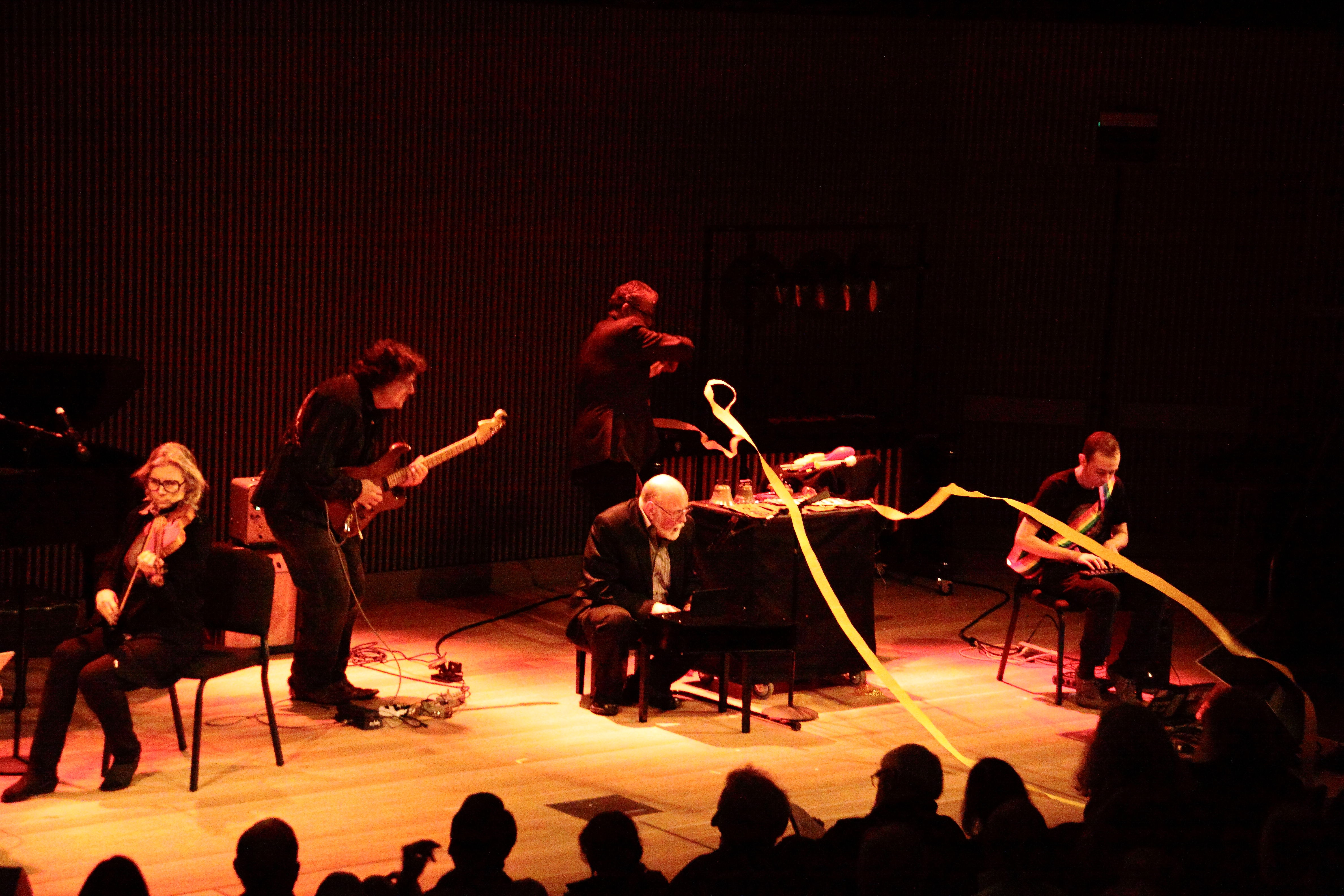
Applebaum’s graphic score Metaphysics of Notation (2008) was projected overhead while the ensemble played their interpretations of that score.  The ensemble, dubbed the Other Minds Ensemble, consisted of most of the composers who participated in the festival including Mr. Amirkhanian displaying his facility with  a percussion battery among other things.  (Presumably Roscoe Mitchell, who was reportedly not feeling well, would have joined the ensemble as well.)  Mr. Applebaum was conspicuously absent perhaps so as to not unduly influence the proceedings.

Ribbons strewn across the stage, a part of the Other Minds Ensemble's interpretation of the Metaphysics of Notation

Ribbons strewn across the stage, a part of the Other Minds Ensemble’s interpretation of the Metaphysics of Notation

The piece was full of minimal musical gestures, humorous events like ribbons strewn across the stage and the popping of little party favors that emitted streamers.  The ensemble appeared to have a great deal of fun with this essentially indeterminate score which they are instructed to interpret in their own individual  ways.  It was a rare opportunity to see and hear Mr. Amirkhanian (who is a percussionist by training) as well as an opportunity for the other composer/performers to demonstrate their skills and their apparent affinity for this type of musical performance.  Again the audience was both amused and appreciative.

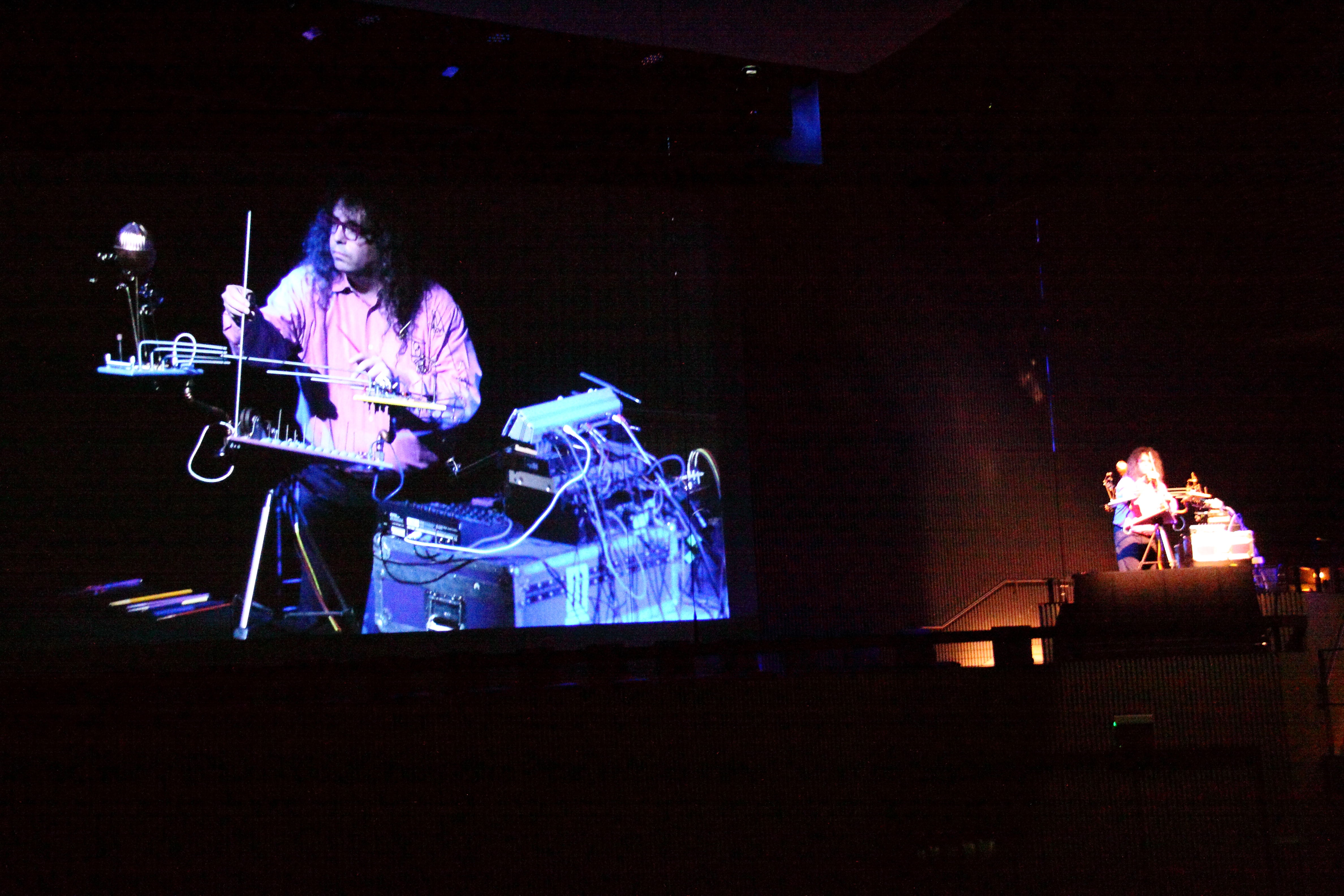
Mark Applebaum performing on his invented instrument.

Mark Applebaum performing on his invented instrument.

Projection of Applebaum performing with view of the composer/performer stage right as well.

Projection of Applebaum performing with view of the composer/performer stage right as well.

The third piece by Applebaum featured the composer with his invented instrument and electronics playing on a balcony stage right with a projection of himself on the big screen.  He produced a wide variety of sounds from his fanciful computer controlled contraption that seemed to please the audience.  This is the kind of unusual genre-breaking events which tend to characterize an Other Minds concert.

The second composer of the night was the elusive Joseph Byrd who is perhaps best known for his cult classic album The American Metaphysical Circus by Joe Byrd and the Field Hippies from 1969.  A previous band, The United States of America released a self-titled album which received critical acclaim in 1968.  Both are apparently out of print but available through Amazon.

Joe Byrd studied music with Barney Childs and worked with La Monte Young, cellist Charlotte Moorman, Yoko Ono and Jackson Mac Low.  Byrd went on to produce a great deal of music by others and also wrote music for films and television but his own compositions have only come to light again recently with the release of a New World CD released in 2013 which presents his work from 1960-63.  Mr. Amirkhanian said that it was this disc that got him interested in inviting Byrd to Other Minds (Byrd also taught at the College of the Redwoods in Eureka, California.).

This is the sort of musical archeology for which Other Minds has become known.  Amirkhanian is known for his ability to find and bring to performance and recordings music which has been unjustly neglected.  Hopefully this appearance will be followed by more releases of Byrd’s other music as well.

Byrd was represented here by performances of Water Music (1963) for percussionist and tape with Alan Zimmerman (who was one of the producers of the New World album) played the spare percussion part which integrated well with the analog electronic tape.

Alan Zimmerman performing Joe Byrd's Water Music.

Alan Zimmerman performing Joe Byrd’s Water Music.

A second piece, Animals (1961) was performed by the brilliant and eclectic bay area pianist Sarah Cahill with Alan Zimmerman and Robert Lopez on percussion and the fiercely talented Del Sol String Quartet (Kate Stenberg and Richard Shinozaki, violins, Charlton Lee, viola and Kathryn Bates Williams, cello).  This was another piece with soft, mostly gentle musical gestures involving a prepared piano and predominantly percussive use of the string players.  It was interesting to contemplate how this long unheard music must have sounded in 1961 but it was clear that it communicated well with the audience on this night.

Animals (1961)

Animals (1961)

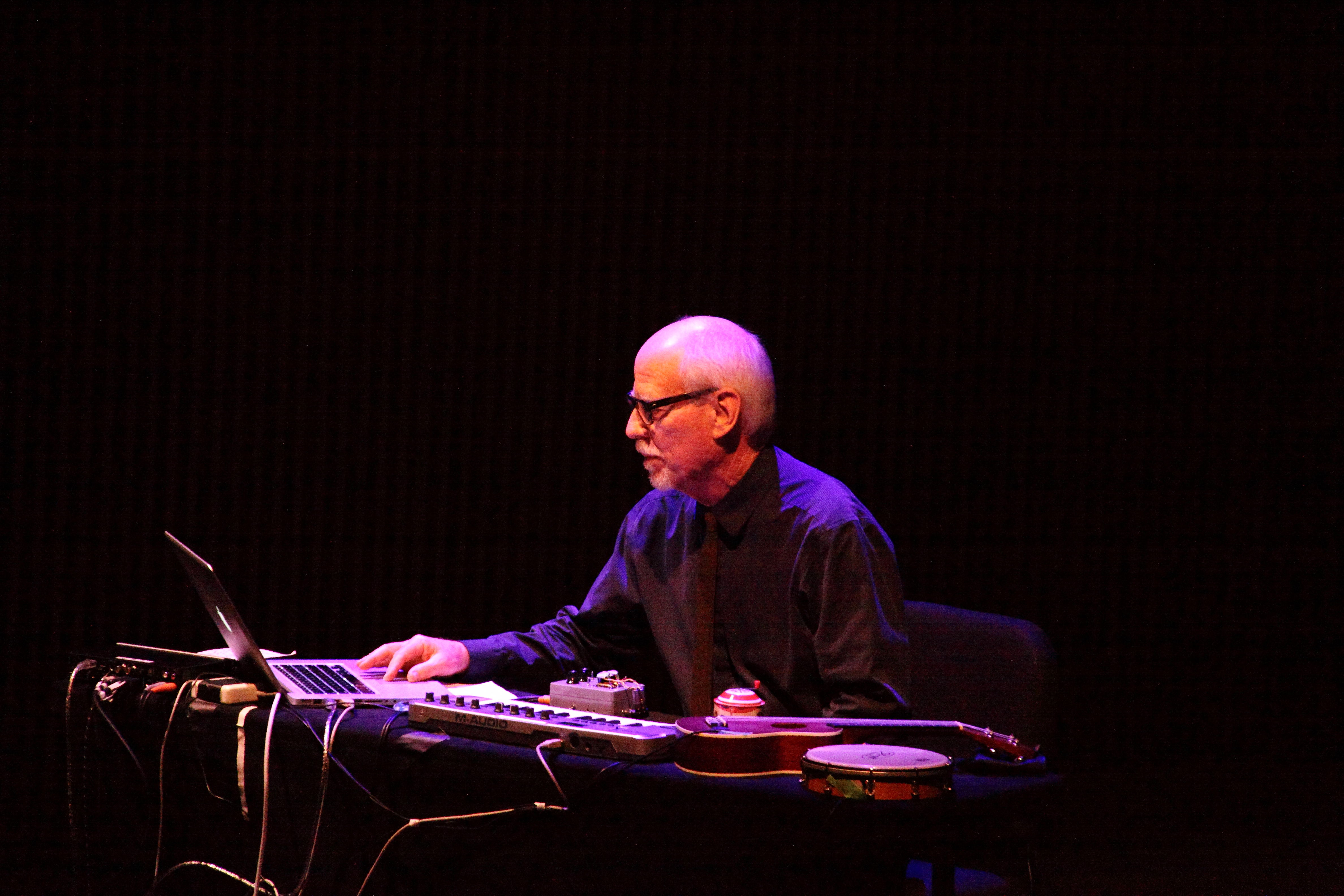
John Bischoff performing his work Audio Combine (2009)

John Bischoff performing his work Audio Combine (2009)

Following intermission we heard two pieces by Mills composer/performer John Bischoff.  The first was Audio Combine (2009) which featured Bischoff on this laptop producing a variety of digitally manipulated sounds.  It was followed by Surface Effect (2011) with creative lighting effects/animations that nicely complemented the laptop controlled analog circuitry.  Bischoff’s music is generally gentle and clear.  It belies the complexity of its genesis in state of the art computer composition and performance for which he is so well known.

John Bischoff performing Surace Effect (2011)

John Bischoff performing Surace Effect (2011)

All this led to the final performance of the evening by Don Buchla whose modular synthesizers were developed in the early 1960s with input from Ramon Sender, Morton Subotnick, Pauline Oliveros and Terry Riley at the legendary San Francisco Tape Music Center (which later became the Mills Center for Contemporary Music).  Buchla also designed the sound system for Ken Kesey’s bus “Furthur” which featured in the Electric Kool-Aid Acid Test.

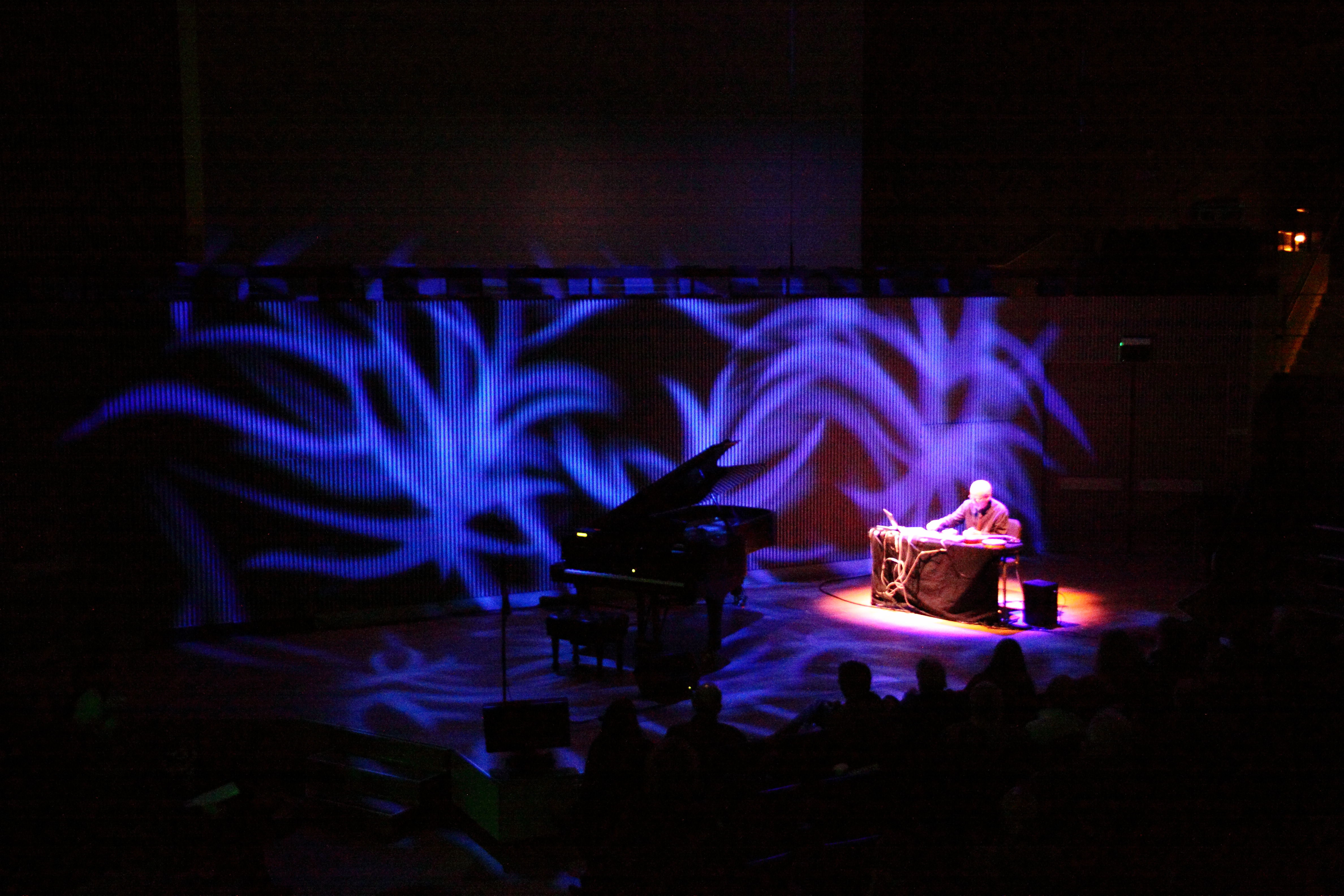
Don Buchla on the Buchla Bos and Nannick Buchla on the piano with film projection performing Drop by Drop (2012) in its American premiere.

Don Buchla on the Buchla Bos and Nannick Buchla on the piano with film projection performing Drop by Drop (2012) in its American premiere.

The conclusion of Friday’s program consisted of the American premiere of a Drop by drop by Don Buchla for Buchla 200e, electronically controlled “piano bar”  (another Buchla invention) and film projection.  The film was made in collaboration with bay area film maker Sylvia Matheus.  The sequence of images began with a dripping faucet and proceeded to a waterfall and then to emerging pictures of birds all the while accompanied by the various sounds from the synthesizer and the piano.

OM190028

Nannick and Donald Buchla receiving warm applause from the audience.

The Saturday night performances began with Charles Celeste Hutchins and his laptop improvising system.  Hutchins, a San Jose native, describes his system as related to Iannis Xenakis’ UPIC system and utilizes a live graphic interface which the computer uses to trigger sound events.

Charles Celeste Hutchins at his laptop performing Cloud Drawings (2006-9)

Charles Celeste Hutchins at his laptop performing Cloud Drawings (2006-9)

The drawings were projected onto the overhead screen.  There seemed to be a somewhat indirect correlation between the drawings and the resultant sounds and much of the tension of this performance derived from wondering what sounds would result when the cursor reached that particular drawing object.  The audience is basically watching the score as it is being written, a rather unique experience and the Other Minds audience clearly appreciated the uniqueness.

The projected graphic score for Cloud Drawings.

The projected graphic score for Cloud Drawings.

The Actual Trio: John Schott, guitar, Dan Seamans, bass, John Hanes, drums.

The Actual Trio: John Schott, guitar, Dan Seamans, bass, John Hanes, drums.

John Schott and his Actual Trio then took the stage to perform his own brand of jazz which seemed to be a combination of free jazz, Larry Coryell and perhaps even Jerry Garcia.  But these descriptions are merely fleeting impressions and are not intended to detract from some really solid and inspired music making.  After the conclusion of the set this listener half expected an encore.

But the program moved on toWendy Reid’s performance as we watched the stage being set up with music stands, some electronic equipment and a parrot in a cage.

Tree Piece #55 "lulu variations" with Tom Dambly, trumpet, Wendy Reid, violin and electronics and Lulu Reid on vocals.

Tree Piece #55 “lulu variations” with Tom Dambly, trumpet, Wendy Reid, violin and electronics and Lulu Reid on vocals.

Reid’s Tree Pieces are an ongoing set of compositions incorporating nature sounds with live performance.  This is not unlike some of Pauline Oliveros’ work in that it involves careful listening by the musicians who react within defined parameters to these sounds.

Lulu the parrot appeared nervous and did a lot of preening but did appear to respond at times.  The musicians responded with spare notes on violin and muted trumpet.  It was a whimsical experience which stood in stark contrast to the more declarative music of the previous trio but at least some of  the audience, apparently prepared for such contrasts, was appreciative.

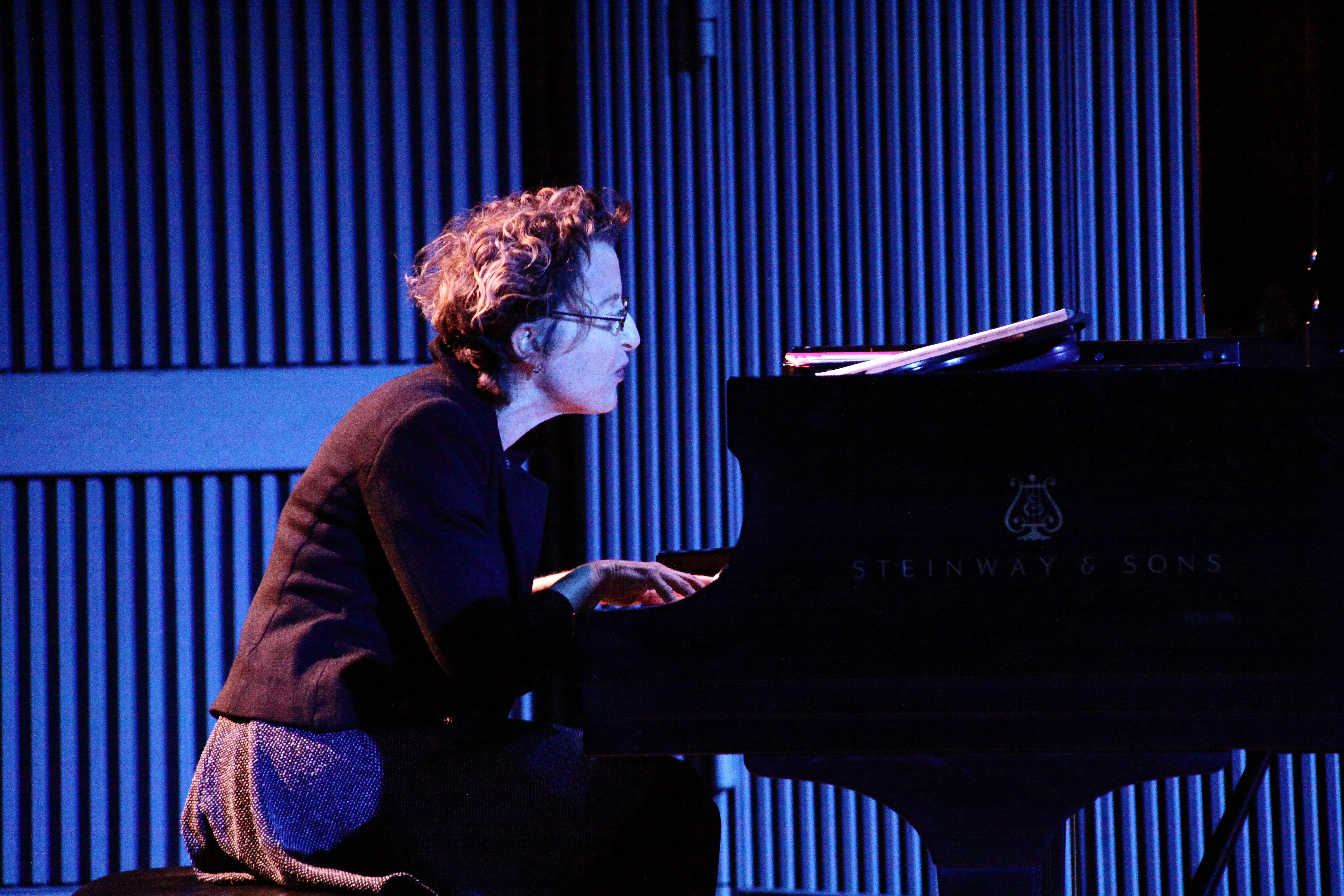
Myra Melford performing selections from Life Carries Me This Way (2013)

Myra Melford performing selections from Life Carries Me This Way (2013)

The diminutive figure of Myra Melford took command of the piano and the hearts of the audience in her rendition of several pieces from her recent CD.  She played sometimes forcefully with thunderous forearm cluster chords and sometimes with extreme delicacy but always with rapt attention to her music.  Her set received a spontaneous standing ovation from a clearly roused audience.  She is a powerful but unpretentious musician who clearly communicates well with her audience.

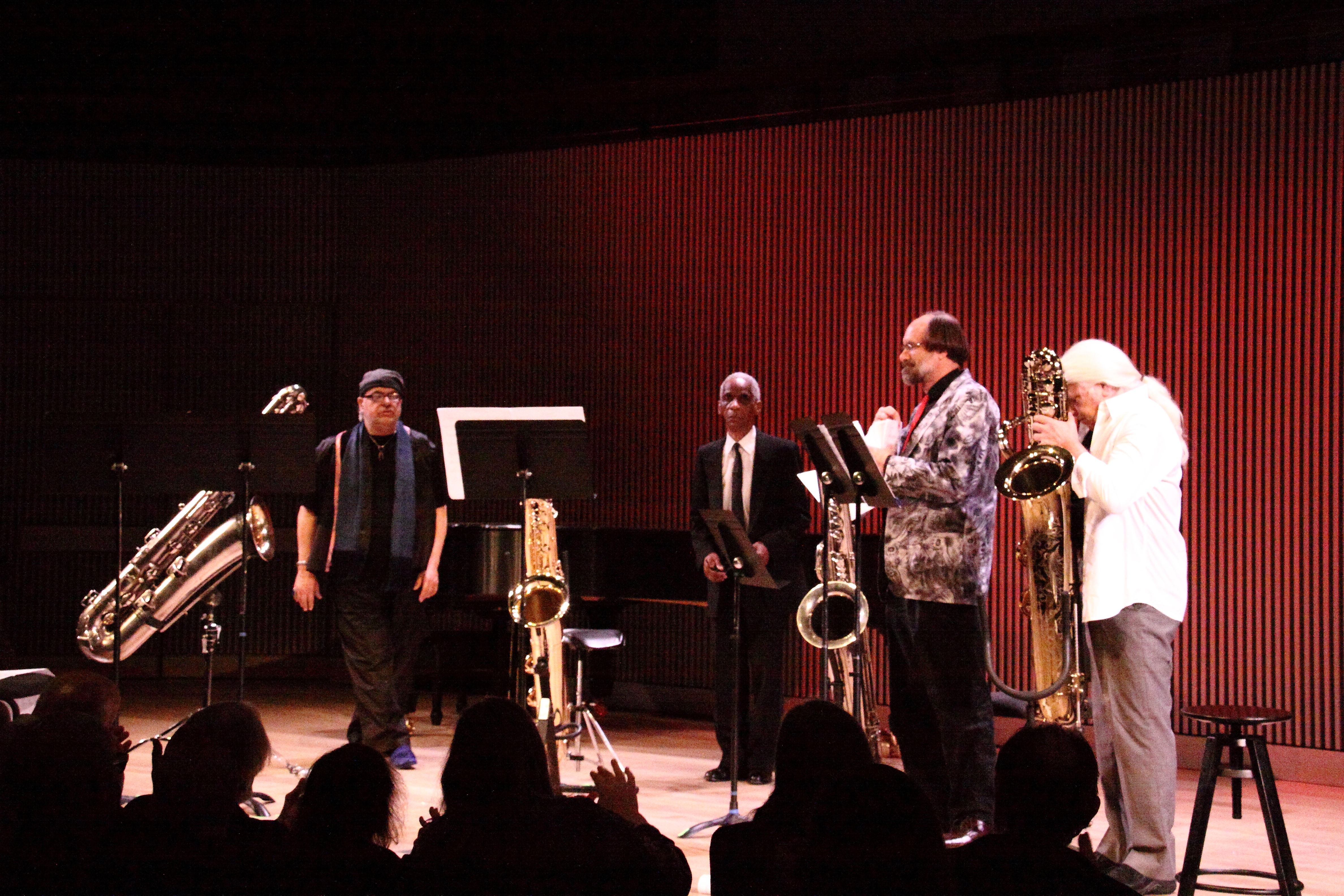
Roscoe Mitchell, Vinny Golia, Scott Robinson and J.D. Parran  following their performance of Noonah (2013)

Roscoe Mitchell, Vinny Golia, Scott Robinson and J.D. Parran following their performance of Noonah (2013)

The finale of OM 19 was the world premiere of an Other Minds commission, the version for four bass saxophones of Roscoe Mitchell’s Noonah (pronounced no nay ah).  It is the latest incarnation of a piece of music that Mitchell describes as having taken on a life of its own.  It exists now in several different versions from chamber groups to orchestra.

The piece is vintage Roscoe Mitchell, a combination of free jazz and sometimes inscrutable compositional techniques which clearly enthralled the very focused performers.  What the piece seemed to lack in immediate emotional impact it made up in mysterious invention which was brought out grandly by the very experienced and committed players.

Mitchell, who was not able to attend on the previous night, appeared rather tired but played with a focus and enthusiasm that matched his fellow musicians.  Like all of Mitchell’s music there is a depth and complexity that is not always immediately evident but does come with repeated listenings and performances.

Thus concluded another very successful edition of Other Minds.  Now we look forward to the gala 20th anniversary coming up in March, 2015.


Enhanced by Zemanta

Black Composers since 1964: Dreams Deferred?


For Black History Month this year I have posed a question: How has the 1964 Civil Rights Act impacted black composers? I assumed, even as I posed the question, that there had been relatively little progress but I have been able to document an increase in recordings of music by black composers.  However what I am finding and expect will continue to find is far less than the dream envisioned by the likes of Dr. Martin Luther King, Jr., Malcolm X and others who are of that generation. I have received some responses, two of which I have published here, which are carefully diplomatic though not without a note of skepticism.  I have received other responses which are far less optimistic which I have agreed not to publish.  And I will continue to write on this subject even after this American 28 day annual celebration of Black History Month. I did receive the following less optimistic reply from a concert promoter named Bill Doggett.  He is the nephew of the late keyboard player whose name he shares.  The musician Bill Doggett played with various jazz and rhythm and blues groups.  The concert promoter who carries on a commitment to black music agreed to write a response to my question and asked that I publish it. Here on the last day of Black History Month is Mr. Doggett’s commentary:

As we mark the end of Black History Month 2014, The 50th Anniversary of the 1964 Civil Rights Act and the critical new “My Brother’s Keeper”Initiative http://www.whitehouse.gov/my-brothers-keeper launched by the first African-American President, Barack Obama, the impact of these events on and for current and future contemporary African-American composers has promise
 
However, the promise is still a mixed one…
 
That is to say, while there was a major flowering and great showcase of programming and recording of music by contemporary black composers during the late 1960s-70s, i.e. Primous Fountain, George Walker, Adolphus Hailstork et al,   eager and invited programming of new music by black composers in symphony subscription concerts, much of that came to a screeching halt with the social conservatism that arrived during the administrations of President George H Walker Bush and with George Bush.
Adolphus Hailstork (1941- )

Adolphus Hailstork (1941- )

Primjous Fountain (1949- )

Primous Fountain (1949- )

The social political pulse of the country changed……from the heightened sense of social responsibility and accountability of the era of LBJ’s  “The Great Society”     If you will, there was a cultural “backlash” to the perception of “African-American” as synonymous with “welfare mother”, “food stamps”,”housing projects run amok”…and  “drugs”.  The social political tempo of the country was mirrored and linked to the iconic  Nancy Reagan motto “Just Say No” Anti Drug campaign.
Symphony orchestras stopped aggressively inviting and programming new music by Black Composers-except during February, Black History Month.
Yet, there were silver linings and sunshine in the dark clouds:  Anthony Davis’ 1986 landmark opera: X, The Life and Times of Malcolm X premiered at the recently closed New York City Opera,1995 Olly Wilson’s Shango Memory for Orchestra, commissioned for the 150th Anniversary of The New York Philharmonic,1997, Amistad: The Story of The Slave Ship Rebellion premiered at Lyric Opera of Chicago, the emergence of a new important generation of composers in the late 1990s including Jonathan Bailey Holland, James Lee III, Trevor Weston and Anthony R. Green.

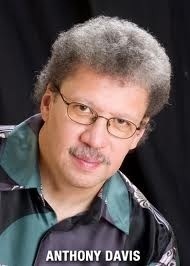
Anthony Davis (1951- )

Anthony Davis (1951- )

The challenge in 2014 for Black Composers is one that was on full view at the recent Sphinx Con think tank conference in Detroit sponsored by Aaron Dworkin’s Sphinx Music  www.sphinxmusic.org
Anthony R. Green (1984- )

Anthony R. Green (1984- )

 Artistic administrators and the major symphony orchestras consist of  predominantly upper to upper middle class white male and female musicians who are not interested in notable change that embraces a deep commitment to diversity in the classical performing arts.   
As Dworkin as passionately stated, Black Musicians only make up at maximum 2% of the composition of America’s orchestras.  Institutionally, American orchestras and their administrations are comfortable in this ivory tower status.     The entrenched practice of holding auditions with screens actually makes it nearly impossible to advance the goal of making Symphony Orchestras more ethnically diverse.
Jonathan Bailey Holland (1974- )

Jonathan Bailey Holland (1974- )

This applies even more so to the world of The Black Composer. Black Composers’ music is in 2014 rarely programmed on subscription concerts, excepting special events: like  “A Black History Month Concert”
Worse, at Sphinx Con, one white male presenter declared quite openly and declaratively…. that because white men are in charge of most of the leading artistic organizations, that white male privilege…..reigned and Black and Latinos seeking more rapid diversity….needed to get over it 
 Worse still, the suggestion followed that  White Male dominated artistic organizations should be PROUD OF their “incremental change” of 1% or 2% improvements ….
THAT is not a recipe for creative collaboration with American orchestras that the established and emerging contemporary Black Composer need to embrace.
In this light, thank goodness for the progressive vision and work of Conductor, Leonard Slatkin and The Detroit Symphony for inviting a conversation about nurturing and developing Diversity in Classical Music.   On March 9/10 2014, there is a showcase of music by contemporary African-American composers and a related Symposium.      A similar new energy has found its way to The Atlanta Symphony Orchestra with the hiring of African-American conductor, Joseph Young as Assistant Conductor and Music Director of The Atlanta Youth Orchestra.
Indeed, promise….is on the horizon.     Let us collectively ensure that we are called
to celebrate the truth of the old Negro Spiritual “This Little Light of Mine…Im gonna let it shine…”
Written by Bill Doggett, strategic marketer and rep for Black Composers at Bill Doggett Productions
I have articles currently in preparation on Anthony Davis, Primous Fountain, Jonathan Bailey Holland and Anthony R. Green among others.  If you don’t know these composers you should give a listen to their work.  I continue to welcome comments both on my question and on the composers and their music.
Coming Up, Other Minds 19 at the SF Jazz Center


Official Other Minds logo

Official Other Minds logo (Photo credit: Wikipedia)

On February 28 and March 1 the SF Jazz Center will host Other Minds for the first time.  OM 19 is the latest incarnation of this annual festival which presents an amazing range of new music.

The Other Minds Festival, brainchild of filmmaker/producer Jim Newman and musician, composer and broadcaster Charles Amirkhanian, was first heard in 1993 and, except for the years 1994, 1998 and  2007, has been an annual event in San Francisco  gathering mostly new but  always innovative composers to share their inspirations and innovations with each other and with bay area audiences.  Being curious about those apparent gaps in this festival I sent a query to the Other Minds office and received a prompt reply from none other than Charles Amirkhanian.  He stated as follows:

Executive Director Charles Amirkhanian in his ...

Executive Director Charles Amirkhanian in his office with ASCAP award in background (Photo credit: Wikipedia)

“Hi Allan,
Here’s the story:
After our first festival in November 1993, we needed time to raise more funds to produce OM 2 and get back on the Yerba Buena Center’s schedule. So we postponed until March 1995, the next available spot in the Djerassi schedule. Our timing for the festival is determined by when we have access to empty rooms at DRAP, so we need to be there either in Feb/March or November.
In 1997, once again, we needed time to raise more funds and simply postponed to the next available Djerassi time. Same for OM 13.
In each case, the delay was about eight months (for a November event) or four months (for a March event), giving us a festival in succeeding concert seasons, but not “annual” events. (A concert season is Fall ’07 through Spring ’08, for example.)
Thus the mysterious gaps.
Charles”

This internationally known festival is not just a series of concerts.  The diverse selection of composers gathers first for an artistic residency at the Djerassi Resident Artist Program (DRAP in Mr. Amirkhanian’s note), a pastoral setting nestled between the Pacific coastline and the hills west of Palo Alto, where the invited composers live, work and share ideas for a week prior to the public concerts. The Djerassi Foundation for the Arts was founded by biochemist Carl Djerassi whose daughter, an artist, committed suicide in 1978.  The area is a sculpture park and the facility operates all year round with residencies for artists of all media.  Charles Amirkhanian is one of the former directors of this venerable artist colony and is now the executive and artistic director of Other Minds. The selection process for OM artists is based on the incredible range of interests of the Other Minds Operating Board and in consultation with their advisory board which are very open to suggestions from the general public.  Just e-mail them.  They actually read all their e-mails and respond. This along with New Music America, the ONCE festival, the Telluride Festival (also one of Amirkhanian’s efforts) are among the important music festivals which have yet to receive adequate treatment and exposition of their histories. This year’s OM 19 (which also looks forward with eager anticipation to a very promising gala OM 20) includes Mark Applebaum, John Bischoff, Donald Buchla, Joseph Byrd, Charles Celeste Hutchins, Myra Melford, Roscoe Mitchell, Wendy Reid and John Schott.  For the first time in the history of the festival all the composers will be from northern California.  The dates for the festival, which moves this year to the new SF Jazz Center, are Friday February 28 and Saturday March 1. One might think that limiting the selection of composers would be limiting in the variety of artistic efforts to be had but one would be quite wrong.  In fact it would not be difficult to argue that music by musicians from northern California have been unjustly neglected in favor of the more dominant musical cultures of New York City, Chicago and Los Angeles.  A quick look at the roster for OM 19 reveals a great deal of variety:

Mark Applebaum at TEDx Stanford

Mark Applebaum at TEDx Stanford (Photo credit: Tamer Shabani Photography)

The Chicago born Mark Applebaum is currently associate professor of composition and theory at Stanford University.  He counts Brian Ferneyhough, Joji Yuasa, Rand Steiger, Roger Reynolds and Philip Rhodes among his teachers.  He also performs as a jazz pianist. He appears to be the first composer at these concerts to have given a TED talk.  In this talk he speaks of being “bored with music”, at least with traditional music and how he used that boredom to break through to another level of creativity creating new instruments and elaborate scores.  He is an engaging speaker and his presentation will no doubt be fascinating.

John Bischoff (1949- )

John Bischoff (1949- )

John Bischoff studied at the California Institute of the Arts and Mills College.  His teachers include Robert Moran, James Tenney and Robert Ashley.  He is currently visiting professor and composer at Mills College. He is one of the pioneers of live computer performance and he is a frequent performer at the Garden of Memory concerts held annually on the summer solstice at Oakland’s beautiful Chapel of the Chimes. Mills College with its Center for Contemporary Music can be said to be the primary life blood of northern California composers.  Bischoff is part of a long line of composers who  have guided musical pedagogy in the Bay Area and have included Chris Brown, Luciano Berio, Darius Milhaud, Lou Harrison, Steve Reich, Terry Riley, Pauline Oliveros, Morton Subotnick, Ramon Sender, John Cage, Chris Brown, Maryann Amacher, Maggie Payne, Larry Polansky, Robert Ashley, and many others. Bischoff has released 16 albums and numerous publications.  He founded the League of Automatic Composers, the first computer network band and continues to be a driving force in the computer music scene. Don_Buchla_and_200e

Donald Buchla is one of the elder statesmen of new music in California.  His collaboration with Ramon Sender and Morton Subotnick produced one of the first modular synthesizers in 1963.  He continues to develop synthesizers with his Buchla and Associates corporation (founded in Berkeley in 1962) . He studied physics, physiology and music.  His importance in the field of electronic music and music synthesis cannot be underestimated.  His electronics have driven many classical, rock and jazz music.  He and his corporation continue to make new electronic instruments such as the marimba lumina and the piano bar and has made available again some of the classic analog electronics which first made his name familiar to musicians worldwide. I was able to find very little about his musical compositions but it is worth noting that his electronics will power the performances of several of the artists in this concert series in addition to his own.

Joe Byrd in 1968

Joe Byrd in 1968

Kentucky born Joseph Byrd is an electronic musician, composer and producer.  His album, “The American Metaphysical Circus” (1969) is legendary and considered a cult album which has been reissued on CD and can also be heard on You Tube.  His band, Joe Byrd and the Field Hippies never performed live but this work of 60s psychedelia has established itself as a landmark recording and a cult classic.  He also did an album of synthesized Christmas Carols in 1975. Byrd has also been a producer with estimable credits such as producer and arranger of Ry Cooder’s amazing ‘Jazz’ album from 1978.

I can’t imagine how his latest work sounds but I am looking forward to it.

Charles Céleste Hutchins at SOUNDkitchen

Charles Céleste Hutchins at SOUNDkitchen (Photo credit: hellocatfood)

Charles Celeste Hutchins is, as far as I can tell, the first instance in which an Other Minds operating board member has been featured as a composer in this series.  The advisory board consists largely of composers who have already been featured on OM concerts.  Until this booking I was not aware of this man’s work.

Hutchins worked in the dot com business for a time and is now working on his musical interests.  His work involves the digital music program called Supercollider which he uses to manipulate sounds.  Discogs lists an MP3 compilation of some of his work in this area.

Melford in Helsinki, 1993

Melford in Helsinki, 1993

Myra Melford is an internationally known jazz pianist and composer with some 17 albums and some 20 years of playing.  Melford is originally from Illinois.

She has played with AACM musicians like Leroy Jenkins, Joseph Jarman and other musicians including Marty Ehrlich, Henry Threadgill, Mark Dresser, OM alumni Han Benink and Tyshawn Sorey.  Currently she teaches at the University of California Berkeley.

saxophonist Roscoe Mitchell at the Pomigliano ...

saxophonist Roscoe Mitchell at the Pomigliano Jazz Festival (Photo credit: Wikipedia)

Roscoe Mitchell is one of the founding members of the venerable AACM (American Association of Creative Musicians) which redefined both jazz and contemporary classical music from its founding in 1965 to the present.  Other notable members include Anthony Braxton, Lester Bowie, Malachi Favors, George Lewis and Lester Bowie among others.  Mitchell is currently professor of music at Mills College where he holds the Darius Milhaud chair.  He has collaborated with Frederic Rzewski, George Lewis, Anthony Braxton, Joseph Jarman, Malachi Favors, Muhal Richard Abrams, Albert Ayler, Henry Threadgill, Thomas Buckner and many others.

Mitchell is one of the acknowledged living masters of American music and he plays and teaches widely.  In 2012 her performed at the “All Tomorrow’s Parties” festival in Minehead, England.  Any performance by this musician is an event.

Wendy Reid is a new name for me.  She is a composer who works with nature sounds.  I did buy her CD entitled “Tree Music” which features 5 of her Tree Pieces with various combinations of violin, percussion, piano, mandolin, oboe and Don Buchla on “thunder” interacting with nature sounds.  For her OM performance she will be sharing the stage with a parrot.  Yes, it does sound like a Monty Python sketch, but this promises to be interesting if not revelatory.  Her work is clearly concerned with the sounds of nature and is at least distantly related to the work of Pauline Oliveros whose album ‘Troglodyte’s Delight’ involves musicians responding to the sounds of water in a limestone cave.

John Schott is another name with which I am not familiar.  But lack of familiarity spells adventure in this series of concerts.  A quick internet search reveals that he is a Berkeley based composer, guitar player and banjo player.  His web site is a blog which reveals his interest in a wide range of musical styles and literary interests.  He lists 8 CDs which feature his work.  He also lists his “compositions in the classical grain”.  It’s anyone’s guess as to what he will present at Other Minds but if the preceding artists are any indication it will be unique and interesting.

All in all this promises to be a very exciting event with the ‘revelatory’ music which Other Minds uses as a tag line in their publicity materials. I won’t miss it and neither should you.

Enhanced by Zemanta

Black Composers Since the 1964 Civil Rights Act


In this, the 50th anniversary year of the landmark 1964 Civil Rights act I have decided to do a survey of black composers who have come of age in the aftermath.  The push for equal rights in the way people are treated, given access to voting, education, business and financial opportunities was the spirit of that legislation.  Though many speak of a “post-racial” America it is clear from any fair analysis that we have a long way to go.

President Lyndon B. Johnson meets with Civil R...

President Lyndon B. Johnson meets with Civil Rights leaders Martin Luther King, Jr., Whitney Young, James Farmer (Photo credit: Wikipedia)

I am beginning a series of articles in honor of Black History Month and in honor of this legislation which attempts to address this inequality. Each article will feature a composer or composers whose work I personally find interesting and worth promoting and which was written or premiered in or after 1964.  I will not necessarily limit myself to Americans both because that would be unnecessarily constricting and inconsistent with the spirit of Black History Month and because non-American black composers suffer similar obscurity and may have even benefited from the 1964 legislation.
Civil Rights Act of 1964

Civil Rights Act of 1964 (Photo credit: Wikipedia)

Whether the legislation has improved the opportunities for black composers is, of course, open to debate but the quality of these artists stand alone on their own merits.  They may have had opportunities not available to their predecessors and this may be a positive result of this legislation.  But the fact that awareness of their work is limited and promoted in relatively obscure contexts such as this blog suggests that true equality in the area of recognition of artistic merit remains elusive (though the availability of recordings of the music of black composers has certainly increased) .  Curiously the United States has chosen the shortest month of the year to celebrate Black History whereas England, who abolished slavery before the U.S., celebrates it in October.  Yes, it’s only 3 days, but the irony is hard to miss.

The pioneering work of musicologist Dominique-Rene de Lerma has done a great service in promoting the work of black composers internationally.  He was involved in the production of the landmark series for Columbia Records along with the great (now retired) conductor Paul Freeman recording a variety of music from black composers world-wide. I had discussed this set in a blog last year and it is worth mentioning that the complete set of recordings has been reissued on 9 vinyl discs as a result of a Ford Foundation grant and remains available through the College Music Society in Missoula, Montana for $35.  This beautifully produced box set deserves an honored place in any record collection.

This pioneering set has inspired similar series by Albany Records and Cedille Records which have made recordings available of some very attractive music of black composers which deserves a wider audience.  It is largely these sets and the writing of Professor de Lerma which serve as the source for the series I am doing on this blog.

The internet site africalssical blog is also a very useful resource which is updated frequently and reports the work of black musicians working in the so-called classical world.  It is difficult and perhaps superfluous to try to separate jazz and classical so I will include composers without concern for specific genre categories except, perhaps, pop composers whose work is well-represented in the mainstream.

Pioneering black musicians like Natalie Hinderas, Martina Arroyo, Marian Anderson, Dean Dixon, William Grant Still and their like paved the way for their successors such as Kathleen Battle, Jessye Norman, Paul Freeman, George Walker and others whose stars became visible to the casual onlooker.  Of course there are fine black classical artists whose talents remain too little known.  How many people know Awadagin Pratt, Mark Doss, Michael Morgan and other active black musical artists?  It takes much more work for listeners to find and appreciate their talents.

It takes even more work to find black composers, especially if they are not also performers.  Most people, even most musicians, would have difficulty naming a single black classical composer.

I contacted several prominent black musicians to pose the question of how the Civil Rights Act of 1964 has impacted black classical composers.  To date I am pleased to say that I have received two gracious replies.  The first is from Michael Morgan who currently serves as conductor of the Oakland East Bay Symphony, the Sacramento Philharmonic and the Festival Opera in Walnut Creek.  He has numerous recordings to his credit as well.  Maestro Morgan replied as follows:

Michael Morgan (1957- )

Michael Morgan (1957- )

“I don’t believe the 64 Civil Rights Act has impacted black composers directly, however, the national conversation it inspired did cause performing arts groups (and their philanthropic supporters) to look for new ways to expand their audiences into communities not traditionally as well represented in concert halls. Orchestras are still making efforts (some more sincere than others) to connect with various minority communities. Unfortunately, rather than sprinkle such efforts throughout their seasons, some have opted for the annual Martin Luther King or Black History Month (or Cinco de Mayo, or Chinese New Year, etc. etc.) concert resulting in less sustained contact than might otherwise be possible. Such concerts have, however, been something of a boon for black composers, performers and conductors who find themselves at least included on orchestra programs on those annual occasions.

There may have been a more direct impact on the integration of some concert halls in particularly segregated cities, but the performing arts have historically been somewhat ahead of society in general in terms of promoting fully integrated events, at least in communities where there was significant acceptance of such integration.”

Morgan’s practical approach to programming is evident here and the point is well-taken that consistent programming of minority composers would result in a more sustained impact than simply having focused efforts during given months or weeks.  In fact this notion has convinced me that my blogs on the subject might be more effective if I were to spread them throughout the year, something which I will now incorporate.  My previous blog post on black classical conductors which included Maestro Morgan has been one of my most frequently viewed posts and I will expand on that subject in the months to come.

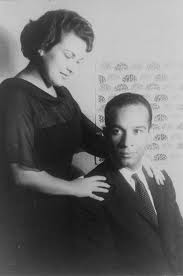
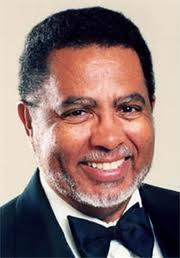
Adolphus Hailstork

Adolphus Hailstork

The second reply was from eminent composer Adolphus Hailstork who was the subject of my first blog post for black history month from last year.  He replied very thoughtfully as follows:

“Fifty Years After the 1964 Civil Rights Act

Having grown up in New York State and not experienced “legalized” segregation as practiced in the South, I had enjoyed as a youth, all the rights and privileges of American citizenship due me. There were no “colored” this and “white” that signs or classrooms, or lunch counters, etc. So the Civil Rights Act of 1964 did not have a direct effect on my life at that time.

(I much later came to appreciate the value of the changes in the south when I came to live there as a working adult.)

Actually, it was the assassination of Dr. King that opened doors to my beginning my doctorate degree that same year when I got out of the army (1968).

Also, that tragic event influenced the unfolding of my career, because it led to an interest in the music of African-American classical composers for the honoring of Dr. King’s birthday celebration in January and, by extension, the heightened interest in such music during the February Black History Month observance.

I believe the history of African-Americans is tragic, heroic, triumphant, and, of course, filled with awesomely dramatic stories. It is an honor to attempt in some small way to pay tribute through music to our story.”

Clearly Dr. Hailstork notes the difference between his experiences in the north where he was born and was able to see the profound contrast he experienced working in the south at Old Dominion University in Virginia particularly during the early civil rights struggles and their aftermath.  The emotional impact of the assassination of Dr. Martin Luther King in the same year he concluded his military service  is noted as a formative issue as well.

One can easily hear the deep emotional impact of which he speaks in works like his second symphony from 1999 which reflects his feelings after having visited the slave markets of West Africa and his American Guernica (1983) which is about the Birmingham 16th Baptist Church bombing which killed 4 little girls in 1963.  Other works such as his Epitaph for a Man Who Dreamed, In Memoriam Martin Luther King, Jr. (1979) also reflect the impact of these events on him personally and reflect what he describes as his feeling of honor in being able to pay tribute to these tragedies describing them aptly as “our story”.
I think it is important to begin to see the tragic and triumphant events of the civil rights era as our American story and not just as the story of black Americans.  Indeed these events are part of our collective history as human beings and as Americans.  These are stories that need telling and re-telling as a part of the healing process and the exorcising of the evil deeds of our collective past.

Enhanced by Zemanta

MLK, the Classical Playlist


President Lyndon B. Johnson meets with Martin ...

President Lyndon B. Johnson meets with Martin Luther King, Jr. (Photo credit: Wikipedia)

There is no doubt that rhythm and blues is the soundtrack of the Civil Rights Movement but in this, the 50th anniversary of the 1964 Civil Rights Act, I am issuing a programming challenge to the classical music world.  Hey there all you classical music stations, both internet based and broadcast.   Hey there Spotify and Pandora.  Have you explored the music written for and about the Civil Rights era?  Well, here’s your chance.

I begin my programming day with Joseph Schwantner’s “New Morning for the World” (“Daybreak of Freedom”), written in 1982.  Comparisons to Copland’s “Lincoln Portrait” are made due to the similarity in character and the use of a narrator.  The other work on this  Oregon Symphony CD under the late great James De Preist is  a work by an older composer Nicolas Flagello.  The cantata, “The Passion of Martin Luther King” from 1968, was composed in the shadow of the assassination of Dr. King and first performed in 1969.  Both works deserve more hearings for their musical accomplishments as well as for the subject of their dedications.

Description unavailable

Description unavailable (Photo credit: pennstatenews)

Moving on to the next segment I will move on to Adolphus Hailstork‘s 1978 “Epitaph for a Man Who Dreamed”  followed by William Grant 1930 Symphony No. 1 “Afro-American”.  Still is rightfully known as Dean of Afro-American composers.  A contemporary of Aaron Copland, his accomplishments established without a doubt the place in classical music for black composers.  Hailstork acknowledges his debt to the older master.  He is the next generation of black musicians contributing to the repertoire.  I will conclude this segment with Hailstork’s Symphony No. 2 which contains his impressions upon visiting the slave market areas of western Africa, places where began the shameful history of black slavery.

And on we go now to Luciano Berio’s 1968 “O King”, a chamber piece later incorporated into his masterwork, “Sinfonia” of the same year.  I program the version from Sinfonia, it’s my favorite rendering.  The vocal parts of this piece are solely comprised of the name “Martin Luther King”.  Also from 1968 there is Michael Colgrass’ “The Earth’s a Baked Apple” which is subtitled, “A Musical Celebration in Honor of Dr. Martin Luther King, Jr.” (psst, I have a bootleg of it).

We move on to afternoon programming featuring Anthony Davis’ opera, “X”, based on the life of Malcolm X.  This is  a work that deserves a new production.  Following this I will move on to Duke Ellington‘s 1943 “Black, Brown and Beige” Suite and then his “Three Black Kings” titled in French with rhyming wordplay as “Les Trois Roi Noir”.

Album cover

Album cover

The program would be incomplete without programming the wonderful Other Minds CD of Sarah Cahill’s album “A Sweeter Music” featuring a diverse collection of compositions written for her on commission by Terry Riley, Meredith Monk, Frederic Rzewski, Kyle Gann, Carl Stone, Phil Kline, Yoko Ono and The Residents.  The title is taken from Dr. King’s Nobel Prized lecture in which he refers to peace as “a sweeter music”.

Dizzy Gillespie

Cover of Dizzy Gillespie

I will end my fantasy program with Dizzy Gillespie’s “Brother K’ and Hale Smith’s “In Memoriam Dr. Martin Luther King, Jr.”  But fear not I leave you with a useful reference I have recently discovered.  “A Catalog of Music Written in Honor of Martin Luther King, Jr.” edited by Anthony McDonald.

Stay tuned for more on these subjects coming up during February for Black History Month.  Peace, Dr. King.

A mural painted on the side of the African Ame...

A mural painted on the side of the African American Museum depicts the Hough riots, the civil rights movement and a family looking towards a bright new future for the city and the community. (Photo credit: Wikipedia)


Enhanced by Zemanta

Belated Happy New Year and My Personal Best


Having taken a bit of a hiatus in blogging I am now preparing to get back to work on several projects languishing in the digital storage of WordPress and the recesses of my own mind.

2014 is the 50th anniversary of the enactment of the 1964 Civil Rights Act as well as the 50th anniversary of the “war on poverty”.  As I read further I’m sure I will find many more such milestones and, in the spirit of this blog, will explore connections to music and musicians.

Among the issues pressing for my attention in the beginning of this year are Black History Month, the upcoming Other Minds 19 and some overdue reviews of recent recordings.  I haven’t looked further into 2014 as yet.

I have actively avoided creating one of those “best of” lists that are ubiquitous at the end of every year.  I do read those lists but have no desire to compete at this point by creating yet another.  I have, however, taken a look back at the most viewed blog posts published in this blog.

Aside from my Home Page, About Page and Archives the top ten posts for the past year have been:

1. Secret Rose Blooms: Rhys Chatham at the Craneway Pavilion (actually my all time most viewed post)

2. Other Minds 18, three nights on the leading edge

3. Black Classical Conductors (Black Classical Part Two)

4. Far Famed Tim Rayborn Takes on the Vikings

5. Alvin Curran at 75, Experimentalism with an Ethnic and Social Conscience

6. Political Classical Music in the Twentieth and Twenty First Centuries

7. Annie Lewandowski, Luciano Chessa and Theresa Wong in Berkeley

8. A Fitting 100th Birthday Celebration for Conlon Nancarrow

9. Undercover Performance Practices in the Bay Area

10. The Feeling of the Idea of Robert Ashley: Kyle Gann‘s Appreciation of the Composer

You can certainly expect me to address some of the subject matter in these most read posts.  Revisiting the site of the crime is a time-honored tradition.  I responded with “shock and awe” at the amount of hits that the Chatham article evoked (418 hits in one day, my top score).  My follow-up gallery of some of those 100 guitars did become my 11th top viewed of the past year.

But as intoxicating as that boost of views was  I will not be able to resist focusing on that which finds its way into my attention for whatever reason.  I am grateful for the support and encouragement I have received from Adam Fong, Charles Amirkhanian, Steve Layton, David Toub, Tom Steenland, Tim Rayborn, Philip Gelb and all of my readers.  I apologize in advance if I have left someone out of this impromptu list but hope that my gratitude is understood among you as well.


Enhanced by Zemanta

Black Classical Part Five


Looking at the previous four installments in this, my personal tribute to Black History Month, I decided that I needed to write one more (for now) in this series. So here I will present some of the resources I have found useful in learning about this music. While I have some knowledge in this area I could not have written these posts without these sources and I will continue to look to them to help me discover more musical gems. I hope that these essays have sparked some interest and I hope that any such interest will have ways to grow further.

The most useful general search terms formed the titles of these posts: black classical (or “African-American classical” which then limits your search to U.S. or the Americas). The term, “classical” is problematic but did serve to differentiate my searches from blues, ragtime, traditional jazz, soul, rhythm and blues, pop, rap and related genres that are more stereotypically associated with black people in music.

My focus was on composers and conductors leaving out a vast category of black classical musicians. A useful overview can be found at: http://www.wqxr.org/#!/articles/black-history-month/2013/jan/31/timeline-history-black-classical-musicians/. This little timeline provides a perspective on the slow acceptance of black musicians in the elite ranks of producers and ensembles that define the classical music experience.

africlassical.com is a good general site that lists many black musicians and its far more up to date companion site http://africlassical.blogspot.com/ has postings of great interest on an almost daily basis has been both essential and revelatory at times (I bookmarked this blog).

Center for Black Music Research is a rich resource and also publishes an academic journal on the subject as well as many other useful and interesting publications. They also maintain a large research library of books, journals and recordings. And they cover all forms of music. An excellent resource.

But the starting point for my personal interest in this subject is the landmark set of recordings which I encountered in the mid to late 1970s. Columbia records release of nine albums entitled ‘Music by Black Composers’ is perhaps the best starting point due to the wonderful scholarship and musicianship in this set. Conductor Paul Freeman along with musicologist Dominique-Rene de Lerma collaborated on this set. They produced a fine overview of neglected black composers from the 18th century to the mid-20th century in an intelligent selection of music and excellent performances by American orchestras. I was pleased to find that the reissue of these albums as a 9 vinyl disc boxed set remains available for only $35 plus postage from here. I jumped at the opportunity to acquire this great reissue funded by the Ford Foundation and my order was sent to me in less than a week.

Chicago-based Cedille Records has some great releases and even more great black classical is available at Albany Records.  Search for the work of Paul Freeman on both labels.

The ultimate goal for me in all this would be to have black classical musicians and composers equally represented on recordings, in performances and in programming. But until that happens (I’m not holding my breath here) the recordings and resources thus far cited (and many that were not) will have to suffice. While I continue to enjoy discovering this music as a “best kept secret” or a limited boutique-type item I would much prefer that the art of these black musicians become common knowledge, not a political issue of which Marian Anderson‘s concert at the Lincoln Memorial has become emblematic.

20130221-135527.jpg

Let me end by referring my readers to my favorite fiction book about black musicians: Richard Powers‘ 2003 masterpiece ‘The Time of Our Singing‘. Powers, who is also trained as a musician, demonstrates amazing insight to music as well as civil rights issues in this sweeping epic of the twentieth century. The chapter entitled, Easter, 1939 (too long to quote here) brings the Marian Anderson concert to life in powerful prose. Read it, preferably out loud to a friend, because it will give you a history lesson and perhaps put you in touch with the emotional power and significance of that event.

Happy Black History Month to all. And happy listening.

20130222-084931.jpg


Black Classical Part Four


As promised in a previous blog I am here continuing a little personal survey of recordings of music by black classical composers in honor of Black History Month. I suppose it is worth adding that I pursue these recordings because they present interesting and exciting repertoire that has not gotten the circulation it deserves. Sadly this is most likely the result of the failure of producers, performers audiences and investors to look at the value of the art itself, looking instead through the lens of racial prejudice. I hope that readers of these blogs will avail themselves of this music, these performers, these recordings and maybe come to realize that those old prejudices serve only to limit one’s world view and prevent a rewarding artistic experience. Art, like people, must come to be valued by its own merits, not limited on the basis of skin color. MLK definitely phrased that more elegantly.

20130218-185316.jpg

And further proof of such valuable art can be found in a series of recordings on the Chicago-based label Cedille. In fact their website cedillerecords.org contains a link to the six albums of music by black composers they have thus far issued.

Building on the work he had begun with the Black Composers series for Columbia in the 1970s conductor Paul Freeman released three CDs in the Cedille series called ‘African Heritage Symphonic Series’. With the orchestra he founded Freeman presents music by Samuel Coleridge-Taylor, Fela Sowande, William Grant Still, Ulysses Kay, George Walker, Roque Cordero, Adolphus Hailstork, Hale Smith, David Abel’s, David Baker, William Banfield and Coleridge-Taylor Perkinson. Freeman released a CD dedicated exclusively to the music of Coleridge-Taylor Perkinson as well.

Violinist Rachel Barton-Pine released a disc of violin concertos by 18th and19th century black composers on Cedille and there is a disc of choral music which includes music by black composers.

Let’s turn now to the Albany www.albanyrecords.com label where you can find more of the artistry of Paul Freeman in 18 albums where he presents neglected music of the 20th century by a wide variety of composers black and white. Most of it is by American composers and much of that in styles related to the mid-century styles of the likes of William Schuman, Aaron Copland and their students. While these discs include music by many of the previously mentioned black composers there are no duplications of works or performances. I have heard but a few of these discs but what I have heard is enough to convince me to plan to purchase the others. Freeman, in addition to bringing the music of black composers to the listening audience has done a fine job of documenting many whose work has been little heard until now.

20130218-183122.jpg

Another composer who fits more or less into the context of the conventions of the western concert traditions whose work has informed my listening is that of Anthony Davis (1951- ). While he has played with musicians from more experimental traditions the influence of the western concert traditions is more easily heard.

His study of jazz as well as western classical and eastern gamelan are all evident in his work (though not necessarily all at the same time). The New York City Opera produced his, ‘X, the Life and Times of Malcolm X’ in 1986 and the Lyric Opera of Chicago produced ‘Amistad’ in 1997. He has written concertos for piano and for violin as well as music for orchestra and smaller ensembles. At the time of this writing he is professor of music at the University of California San Diego.

So far the music we have discussed has been of the sort more commonly heard in concert halls these days. Freeman’s efforts have seemingly jump-started the recording industry to pay some attention to the music of black and other neglected composers. Certainly there is much more gold to be mined there. But we have yet to address the contemporary scene, the new and creative artists who are bringing innovative ideas and sounds and advancing the musical arts for subsequent generations. Following on the innovations of great jazz artists such as Charlie Parker, John Coltrane and Ornette Coleman (among many) there was increasing focus on techniques being used by contemporary “classical” composers

20130218-190530.jpg

To these ends there is no better place to start than with the AACM, the American Association of Creative Musicians. Founded in Chicago in 1965 this collective has strived to bring various elements of black culture in an incredibly eclectic and experimental milieu which has had and continues to have an influence on music, musicians and audiences. This collective was finally given a proper overview in George Lewis’ book, ‘A Power Stronger Than Itself’. Lewis, a trombonist, composer and currently professor of music at Columbia University in New York was a member of the AACM.

The AACM was not the only such collective but it was one of the most visible, at least to me. And it continues to develop and evolve bringing the complex and innovative musical ideas evolving from the black roots of jazz to a level of recognition and respect formerly accorded pretty much exclusively to European academic models. The AACM, dubbed “Great Black Music” also strives to retain the identity of black music by black peoples of the world looking to non-western models that predate European colonialism marrying them to the best of European models as absorbed by the diaspora. Many of their members now hold academic positions including Roscoe Mitchell, Anthony Braxton, Wadada Leo Smith and Nicole Mitchell.

20130218-190751.jpg

Perhaps the best known ensemble to come out of the AACM is the flexibly-membered Art Ensemble of Chicago. Their album ‘Third Decade’ released in 1984 is representative of their work and also marks a sort of end to one creative era for this flexibly-membered group. Most listeners will hear this as progressive jazz and it certainly has those elements. But repeated listenings reveal many layers to this work. And this is but one of a large catalog of albums as diverse as they are numerous (about 50 albums and still counting). More on their work at their website www.artensembleofchicago.com.

20130218-190928.jpg

Another prominent figure that was a member of AACM is Anthony Braxton, saxophonist, composer, chess master who dislikes the term ‘jazz’ in reference to his music. He is currently professor of music at Wesleyan University. And indeed his music which ranges from solo saxophone work to small ensemble and orchestral music and opera are difficult to classify. His experimentalism is related to but not derivative of the work of John Cage. It would be impossible to represent his musical output in a single album but the solo saxophone ‘For Alto’ (1968) and ‘Creative Orchestra Music’ (1976) are good places to start in his discography of well over 100 albums. His website tricentricfoundatio.org offers many of his recordings for sale and even offers free downloads of bootleg recordings.

20130218-185224.jpg

<a

For the sake of brevity I will discuss only one more artist in this blog entry, Julius Eastman (1940-1990). He was a composer, vocalist, pianist and dancer. As a vocalist he sang and recorded the music of Meredith Monk, Peter Gordon, Morton Feldman, Arthur Russell and Peter Maxwell-Davies. He was very much a part of the avant garde downtown scene in New York of the 1970s.

At the time of his sad death from a heart attack at the age of 49 there were but a few recordings of his work (collected in a nice 3 CD set on the New World label). And many of his scores were lost when he was unceremoniously evicted from his apartment. The composer Mary Jane Leach is attempting to collect and preserve his legacy and has made many of his extant scores on her website http://www.mjleach.com/eastman.htm.

Without a doubt there are many more black classical and avant-garde artists I have yet to discover. I welcome suggestions and I hope that the preceding ideas will stimulate and encourage others to explore these artists and works.

Black Classical Part Three


20130214-170052.jpg

For my third installment I have chosen to highlight that series of recordings by conductor Paul Freeman of music by black composers which I mentioned in a previous blog.

In 1974 Columbia Records issued 9 LPs (originally it was to be 12) over the next few years in a series called, ‘Music by Black Composers’. The music was chosen largely by Paul Freeman who also wrote the liner notes and conducted the performances. He was assisted by musicologist Dominique-Rene de Lerma who contributed his knowledge of pre 20th century black music and also edited some of the pieces for performance.

This set of records was featured by my local radio station (WFMT in Chicago) at the time of its release and opened my listening mind to to this cornucopia of fascinating classical concert music by black composers. The series was so titled in part because it included music from many countries and also because it was released before the term ‘African American’ became Le mot juste (but that is another story).

The series was apparently recorded and released 1974-78 and re-released in 1986 as a set under the Columbia Special Products label. Historically it was an important set of releases much like the series curated by David Behrman called ‘Music of Our Time’ which featured some truly cutting edge music by composers writing in the sixties and seventies. To be sure the black composer series was not cutting edge modernism like that series but gains its cutting edge from collecting in one set music from the 18th to the mid-20th century by a set of composers who, other than having been trained in the discipline of music performance and composition, held in common only a skin color darker than ‘white’.

Billboard announced the plan to issue these records in 1973 saying that they were the fruit of a collaboration between the Irwin-Sweeney Miller Foundation of Columbus, Indiana and, with the encouragement of Dominique-Rene de Lerma, the school of music at Indiana University in Bloomington. Citing “campus politics” professor de Lerma reported that Indiana had lost interest so he phoned Paul Freeman (conductor with the Detroit Symphony at the time) and advised him to contact the ‘Afro-American Music Opportunities Association’ whose support then helped launch this series. The original plan was to release four albums per year for at least three years but a great beginning soon slowed and the 9th album (pictured above) was the final release in the series.

Coming twenty some years after the voting rights act of 1965 it retained the some cachet of the civil rights movement and likely was produced at that time in the hopes that this might help sell the albums to consumers. I don’t know who ultimately bought these albums or what their total sales were but I know that some visionary producers at WFMT piqued my interest and that I bought many of these records and listened with interest when they were scheduled to play (I religiously perused the monthly program guide).

The original releases went out of print in a few years. There was a CD set (currently out of print) compiled by the Columbia University (Chicago) Center for Research in Black Music funded by the Ford Foundation that released a selection of the Detroit Symphony performances (now a pricey collector’s item) from that set as well as a reissue of the complete set on vinyl records with the original cover art and program notes which remains, I am happy to report, available by mail from the College Music Society in Missoula, Montana www.music.org.

The contents are:
Columbia M-32781 (1973); volume 1
Saint-Georges: Symphony concertante, op. 13 (ed. by Barry S. Brook; Miriam Fried, Jaime Laredo, violins; London Symphony Orchestra)
—–: Symphony no. 1 (ed. by D. de Lerma; London Symphony Orchestra)
—–: Scena from Ernestine (ed. by D. de Lerma; Faye Robinson, soprano; London Symphony Orchestra)
—–: String quartet no. 1 (ed. by D. de Lerma; Julliard Quartet)

Columbia M-32782 (1973); volume 2
William Grant Still: Afro-American symphony.
—-: 2 arias from Highway 1, U.S.A. (London Symphony Orchestra; William Brown, tenor)
Samuel Coleridge-Taylor: Danse nègre.
—–: “Onaway, awake, beloved” from Hiawatha’s wedding feast (William Brown, tenor; London Symphony Orchestra)

Columbia M-32783 (1974); volume 3
Ulysses Kay: Markings (London Symphony Orchestra)
George Walker: Trombone concerto (Denis Wick, trombone; London Symphony Orchestra)

Columbia M-32784 (1974); volume 4
Roque Cordero: Violin concerto (Sanford Allen, violin; Detroit Symphony Orchestra)
—–: Eight miniatures (Detroit Symphony Orchestra)

Columbia M-33421 (1975); volume 5
José Maurício Nunes-Garcia: Requiem Mass, M. 185 (ed. by D. de Lerma; Doralene Davis, soprano; Betty Allen, mezzo-soprano; William Brown, tenor; Matti Tuloisela, bass-baritone; Helsinki Philharmonic Orchestra; Morgan State University Choir [Nathan Carter, director])

Columbia M-33432 (1975); volume 6
José White: Violin concerto (ed. by Paul Glass and Kermit Moore; Aaron Rosand, violin; London Symphony Orchestra)
David Baker: Cello sonata (Janós Starker, cello; Alain Planès, piano)

Columbia M-33433 (1975); volume 7
William Grant Still: Sahdji (London Symphony Orchestra; Morgan State University Choir [Nathan Carter, director])
Fela Sowande: African suite (3 excerpts; London Symphony Orchestra)
George Walker: Lyric for strings (London Symphony Orchestra)

Columbia M-33434 (1975); volume 8
Olly Wilson: Akwan (Richard Bunger, piano; Baltimore Symphony Orchestra; Richard Bunger, piano)
Thomas Jefferson Anderson: Squares (Baltimore Symphony Orchestra)
Talib Rasul Hakim: Visions of Ishwara (Baltimore Symphony Orchestra)

Columbia M-34556 (1978); volume 9
George Walker: Piano concerto (Natalie Hinderas, piano; Detroit Symphony Orchestra)
Hale Smith: Ritual and incantations (Detroit Symphony Orchestra)
Adolphus Hailstork: Celebration! (Detroit Symphony Orchestra)

Later Freeman began a series on Chicago-based Cedille records that released three further volumes of black composers’ music with his wonderful Chicago Sinfonietta as well as several CDs dedicated entirely to single black composers (more about those and more in another post).

Perhaps an innovative label such as Naxos might some day bring these Columbia recordings back into circulation in their entirety in the CD format. Meanwhile I am pretty happy with my LPs with their copious notes and full-sized beautiful graphics. If you haven’t heard this set I would encourage you to avail yourself of some of this beautiful music.

Black Classical Conductors (Black Classical Part Two)


James Anderson De Preist(1936-2013)

James Anderson De Preist
(1936-2013)

The recent passing of conductor James DePreist is a great loss to the world of classical music. I first encountered this man’s work when I bought a New World CD containing music by Milton Babbitt (Relata I), David Diamond (Symphony No. 5) and Vincent Persichetti (Night Dances). All performances are by the Julliard Orchestra under three different conductors of music by three different composers of about the same generation of east coast American Composers. De Priest conducts the Night Dances piece. He had studied under Persichetti at the Philadelphia Conservatory.

De Preist had a fondness and a feel for contemporary music. Among his fifty some recordings (no reliable discography is available online just yet) he recorded music by Paul Creston, George Walker, Gunther Schuller, Ellen Taaffe Zwilich, Easley Blackwood, Aulis Sallinen, Giya Kancheli, Alfred Schnittke, William Walton, Nicholas Flagello and Joseph Schwantner among other more familiar names as well.

He was the nephew of Marian Anderson and cared for her in his home in Portland, Oregon until her death in 1993. De Preist was the conductor of the Oregon Symphony and served as it’s music director from 1980 until 1993. He conducted nearly all of the world’s major orchestras and was awarded the National Medal of Arts in 2005.

His passing this February, Black History Month in the United States, got me thinking about the legacy of black classical conductors. There have been a few luminaries that also deserve attention and I will attempt a short survey a few of those whose art has touched my own life.

Paul Freeman

Paul Freeman

Paul Freeman (1936- ), now retired, was the founder and music director of the Chicago Sinfonietta, an alternative orchestra to the Chicago Symphony which played a distinctly different program from them introducing a great deal of new music by young composers along with an unusual selection of older music and some classical warhorses. His 9 LP survey recorded 1974 to 1979 and released by Columbia Records in 1986 of music by black composers is a landmark set of recordings surveying music by black composers from various countries with some emphasis on American Composers. He followed this in 2003 with 3 CDs of music by black composers on Chicago based Cedille records and has continued to give exposure to these unjustly neglected artists. Along with his promotion of black composers Freeman has recorded a great deal of 20th century music by other unjustly neglected masters such as Leo Sowerby, Meyer Kupferman, Bohuslav Martinu, Tibor Serly, Robert Lombardo, William Neil, Richard Felciano to name a few. He recorded a delightful complete set of Mozart Piano Concertos with frequent collaborator, pianist Derek Han (the set was incorporated into the Complete Works of Mozart released on the Brilliant Classics label).

Michael Morgan (1957- )

Michael Morgan (1957- )

Michael Morgan who I recall as having been the assistant conductor of the Chicago Symphony from 1986 to 1990 under both George Solti and Daniel Barenboim. I had the pleasure of hearing him conduct the Chicago Symphony’s fine training ensemble, The Civic Orchestra, on several occasions.

Currently he is the music director of the Oakland East Bay Symphony, a post he has held since 1990. In that time he has done much to strengthen the orchestras standing artistically and financially and he has forged alliances with the Oakland Youth Orchestra and the Oakland Symphony Chorus.

Unfortunately Morgan has made few recordings but his choice of repertoire and championing of new music continues to endear him to critics and to bay area audiences.

Thomas Wilkins (1956- )

Thomas Wilkins (1956- )

In 2011 Thomas Wilkins became the first black conductor appointed to the Boston Symphony (a city historically resistant to integration in the 1960s). He is the conductor of that city’s youth orchestra.

He was appointed music director of the Omaha Symphony in 2005 and has held appointments with the Richmond Symphony, the Detroit Symphony and the Florida Orchestra.

Henry Lewis (1932-1996)

Henry Lewis (1932-1996)

California born Henry Lewis was the first black musician to join a major symphony orchestra when, at the age of 16, he joined the double bass section of the Los Angeles Philharmonic. He became the first African-American to lead a major symphony orchestra when Zubin Mehta appointed him assistant conductor of that same Los Angeles Philharmonic in 1961, a post he held until 1965. He is credited with founding the Los Angeles Chamber Orchestra as well

Lewis is probably better known in the media for having been married to soprano Marilyn Horne from 1960-1979.

Carl Van Vechten's portrait of Marilyn Horne with her husband Henry Lewis in 1961

Carl Van Vechten’s 1961 portrait of Marilyn Horne with her husband Henry Lewis.

Horne credits Lewis with her early development as a singer.

Charles Dean Dixon (1915-1976)

Charles Dean Dixon
(1915-1976)

Dean Dixon, as he was known, was born in Harlem and studied at Julliard and Columbia University. He formed his own orchestra when racial bias prevented him from working in most settings and in 1941 gave a concert at the request of Eleanor Roosevelt who in 1939 famously arranged for Marian Anderson to sing on the steps of the Lincoln Memorial after she had been prevented by racial bias (and the Daughters of the American Revolution) from singing in any concert venue in Washington D.C.

While he did guest conduct the NBC Symphony, the New York Philharmonic, the Philadephia Orchestra and the Boston Symphony he left the United States in 1949 to further his career in overseas. He conducted the Israel Philharmonic Orchestra during 1950-51, was principal conductor of the Gothenberg Symphony from 1953-60 (by popular demand), the HR Sinfonieorchester in Frankfurt from 1961-74, the Sydney Symphony Orchestra from 1964-67.

Dixon returned to the United States and had various guest conducting engagements with major orchestras. And he conducted the Mexico City Orchestra during the 1968 Olympics. His legacy includes quite a few recordings made in the 1950s, some of standard repertoire, but some of American music like that of Randall Thompson, Leo Sowerby and fellow black American William Grant Still among many others. These were some of the first recordings I ever heard of much of that repertoire.

He, like those who followed him, did a great deal to promote the music of Americans and of the 20th Century in general. And his recordings are an important part of his legacy that remains largely untapped (though Naxos historical has reissued some on CD, bless their hearts). The racial bias he encountered is our American legacy. Dixon once defined three phases of his career by the way he was described. First he was the “black American conductor”. Then he was the “American conductor” and, finally he simply, “the conductor Dean Dixon.”

Black Classical Part One


Adolphus Hailstork

Adolphus Hailstork

In honor of Black History Month I want to bring attention in this blog to black music that is not a part of popular culture. I want to highlight some of the black classical composers whose work I find most satisfying and accomplished.

I will begin with the music of Adophus Hailstork. I had been aware of some of this man’s work for some years but it was when I purchased the Naxos recording of his 2nd and 3rd Symphonies that I came to appreciate the power of his work.

Hailstork was born in 1941. He studied piano, organ, voice and violin. He is another of a long line of composers who studied with Nadia Boulanger in Paris. As one would expect, some of his music is concerned with significant events of the civil rights struggles of the 1960s and 70s. ‘American Guernica’ of 1983 is his response to the 1963 bombing of the 16th Street Baptist Church which killed four little girls. Similarly his 1979 composition, ‘Epitaph for a Man Who Dreamed’ is an homage to Dr. Martin Luther King, Jr. who was felled by an assassin’s bullet in 1968.

I purchased the Naxos disc to become more familiar with this man’s music. The first work on the disc is the 3rd Symphony of the late 1990s struck me as a highly entertaining and accomplished work that deserves a place in the symphonic repertoire. It is a joyous and inventive work which, to my ears, echoed the likes of orchestral masters such as William Schuman and Vincent Persichetti as well a hint of minimalist repetitive structures. It is a lavish neo-romantic work with a depth and complexity that demands several hearings but one which has an immediate appeal. The somber 2nd Symphony is imbued with the composer’s reactions to having visited the historical slave market areas of West Africa which, I imagine, must be not unlike visiting the death camps of the former Nazi Germany.

As time and finances permit I intend to pursue more of this American composer’s works. There is precious little reference material to be found on the Internet regarding this prolific masterful composer (as is the case with all the black classical composers i have so far encountered) though, thankfully, there are more recordings.

Paul Freeman

Paul Freeman

Africlassical.com and its related blog provide some information on about 50 composers and musicians. The now retired daring black conductor Paul Freeman recorded a significant series of music by black composers issued on 9 LPs for Columbia records in the 1970s. He recorded another 3CDs of music by black composers on Chicago-based Cedille records. He founded the Chicago Sinfonietta (billed as the world’s most diverse orchestra) and was its principal conductor for 24 years and continues in its mission of diversity presenting unusual concert repertoire.

More about some of the composers on those Columbia LPs and Cedille CDs as well as others to come in future blogs during this month.