Black Classical Part Five


Looking at the previous four installments in this, my personal tribute to Black History Month, I decided that I needed to write one more (for now) in this series. So here I will present some of the resources I have found useful in learning about this music. While I have some knowledge in this area I could not have written these posts without these sources and I will continue to look to them to help me discover more musical gems. I hope that these essays have sparked some interest and I hope that any such interest will have ways to grow further.

The most useful general search terms formed the titles of these posts: black classical (or “African-American classical” which then limits your search to U.S. or the Americas). The term, “classical” is problematic but did serve to differentiate my searches from blues, ragtime, traditional jazz, soul, rhythm and blues, pop, rap and related genres that are more stereotypically associated with black people in music.

My focus was on composers and conductors leaving out a vast category of black classical musicians. A useful overview can be found at: http://www.wqxr.org/#!/articles/black-history-month/2013/jan/31/timeline-history-black-classical-musicians/. This little timeline provides a perspective on the slow acceptance of black musicians in the elite ranks of producers and ensembles that define the classical music experience.

africlassical.com is a good general site that lists many black musicians and its far more up to date companion site http://africlassical.blogspot.com/ has postings of great interest on an almost daily basis has been both essential and revelatory at times (I bookmarked this blog).

Center for Black Music Research is a rich resource and also publishes an academic journal on the subject as well as many other useful and interesting publications. They also maintain a large research library of books, journals and recordings. And they cover all forms of music. An excellent resource.

But the starting point for my personal interest in this subject is the landmark set of recordings which I encountered in the mid to late 1970s. Columbia records release of nine albums entitled ‘Music by Black Composers’ is perhaps the best starting point due to the wonderful scholarship and musicianship in this set. Conductor Paul Freeman along with musicologist Dominique-Rene de Lerma collaborated on this set. They produced a fine overview of neglected black composers from the 18th century to the mid-20th century in an intelligent selection of music and excellent performances by American orchestras. I was pleased to find that the reissue of these albums as a 9 vinyl disc boxed set remains available for only $35 plus postage from here. I jumped at the opportunity to acquire this great reissue funded by the Ford Foundation and my order was sent to me in less than a week.

Chicago-based Cedille Records has some great releases and even more great black classical is available at Albany Records.  Search for the work of Paul Freeman on both labels.

The ultimate goal for me in all this would be to have black classical musicians and composers equally represented on recordings, in performances and in programming. But until that happens (I’m not holding my breath here) the recordings and resources thus far cited (and many that were not) will have to suffice. While I continue to enjoy discovering this music as a “best kept secret” or a limited boutique-type item I would much prefer that the art of these black musicians become common knowledge, not a political issue of which Marian Anderson‘s concert at the Lincoln Memorial has become emblematic.

20130221-135527.jpg

Let me end by referring my readers to my favorite fiction book about black musicians: Richard Powers‘ 2003 masterpiece ‘The Time of Our Singing‘. Powers, who is also trained as a musician, demonstrates amazing insight to music as well as civil rights issues in this sweeping epic of the twentieth century. The chapter entitled, Easter, 1939 (too long to quote here) brings the Marian Anderson concert to life in powerful prose. Read it, preferably out loud to a friend, because it will give you a history lesson and perhaps put you in touch with the emotional power and significance of that event.

Happy Black History Month to all. And happy listening.

20130222-084931.jpg


Black Classical Part Four


As promised in a previous blog I am here continuing a little personal survey of recordings of music by black classical composers in honor of Black History Month. I suppose it is worth adding that I pursue these recordings because they present interesting and exciting repertoire that has not gotten the circulation it deserves. Sadly this is most likely the result of the failure of producers, performers audiences and investors to look at the value of the art itself, looking instead through the lens of racial prejudice. I hope that readers of these blogs will avail themselves of this music, these performers, these recordings and maybe come to realize that those old prejudices serve only to limit one’s world view and prevent a rewarding artistic experience. Art, like people, must come to be valued by its own merits, not limited on the basis of skin color. MLK definitely phrased that more elegantly.

20130218-185316.jpg

And further proof of such valuable art can be found in a series of recordings on the Chicago-based label Cedille. In fact their website cedillerecords.org contains a link to the six albums of music by black composers they have thus far issued.

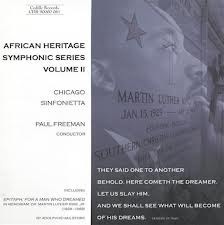
Building on the work he had begun with the Black Composers series for Columbia in the 1970s conductor Paul Freeman released three CDs in the Cedille series called ‘African Heritage Symphonic Series’. With the orchestra he founded Freeman presents music by Samuel Coleridge-Taylor, Fela Sowande, William Grant Still, Ulysses Kay, George Walker, Roque Cordero, Adolphus Hailstork, Hale Smith, David Abel’s, David Baker, William Banfield and Coleridge-Taylor Perkinson. Freeman released a CD dedicated exclusively to the music of Coleridge-Taylor Perkinson as well.

Violinist Rachel Barton-Pine released a disc of violin concertos by 18th and19th century black composers on Cedille and there is a disc of choral music which includes music by black composers.

Let’s turn now to the Albany www.albanyrecords.com label where you can find more of the artistry of Paul Freeman in 18 albums where he presents neglected music of the 20th century by a wide variety of composers black and white. Most of it is by American composers and much of that in styles related to the mid-century styles of the likes of William Schuman, Aaron Copland and their students. While these discs include music by many of the previously mentioned black composers there are no duplications of works or performances. I have heard but a few of these discs but what I have heard is enough to convince me to plan to purchase the others. Freeman, in addition to bringing the music of black composers to the listening audience has done a fine job of documenting many whose work has been little heard until now.

20130218-183122.jpg

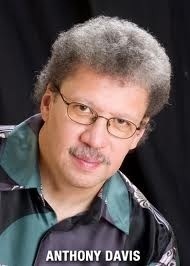
Another composer who fits more or less into the context of the conventions of the western concert traditions whose work has informed my listening is that of Anthony Davis (1951- ). While he has played with musicians from more experimental traditions the influence of the western concert traditions is more easily heard.

His study of jazz as well as western classical and eastern gamelan are all evident in his work (though not necessarily all at the same time). The New York City Opera produced his, ‘X, the Life and Times of Malcolm X’ in 1986 and the Lyric Opera of Chicago produced ‘Amistad’ in 1997. He has written concertos for piano and for violin as well as music for orchestra and smaller ensembles. At the time of this writing he is professor of music at the University of California San Diego.

So far the music we have discussed has been of the sort more commonly heard in concert halls these days. Freeman’s efforts have seemingly jump-started the recording industry to pay some attention to the music of black and other neglected composers. Certainly there is much more gold to be mined there. But we have yet to address the contemporary scene, the new and creative artists who are bringing innovative ideas and sounds and advancing the musical arts for subsequent generations. Following on the innovations of great jazz artists such as Charlie Parker, John Coltrane and Ornette Coleman (among many) there was increasing focus on techniques being used by contemporary “classical” composers

20130218-190530.jpg

To these ends there is no better place to start than with the AACM, the American Association of Creative Musicians. Founded in Chicago in 1965 this collective has strived to bring various elements of black culture in an incredibly eclectic and experimental milieu which has had and continues to have an influence on music, musicians and audiences. This collective was finally given a proper overview in George Lewis’ book, ‘A Power Stronger Than Itself’. Lewis, a trombonist, composer and currently professor of music at Columbia University in New York was a member of the AACM.

The AACM was not the only such collective but it was one of the most visible, at least to me. And it continues to develop and evolve bringing the complex and innovative musical ideas evolving from the black roots of jazz to a level of recognition and respect formerly accorded pretty much exclusively to European academic models. The AACM, dubbed “Great Black Music” also strives to retain the identity of black music by black peoples of the world looking to non-western models that predate European colonialism marrying them to the best of European models as absorbed by the diaspora. Many of their members now hold academic positions including Roscoe Mitchell, Anthony Braxton, Wadada Leo Smith and Nicole Mitchell.

20130218-190751.jpg

Perhaps the best known ensemble to come out of the AACM is the flexibly-membered Art Ensemble of Chicago. Their album ‘Third Decade’ released in 1984 is representative of their work and also marks a sort of end to one creative era for this flexibly-membered group. Most listeners will hear this as progressive jazz and it certainly has those elements. But repeated listenings reveal many layers to this work. And this is but one of a large catalog of albums as diverse as they are numerous (about 50 albums and still counting). More on their work at their website www.artensembleofchicago.com.

20130218-190928.jpg

Another prominent figure that was a member of AACM is Anthony Braxton, saxophonist, composer, chess master who dislikes the term ‘jazz’ in reference to his music. He is currently professor of music at Wesleyan University. And indeed his music which ranges from solo saxophone work to small ensemble and orchestral music and opera are difficult to classify. His experimentalism is related to but not derivative of the work of John Cage. It would be impossible to represent his musical output in a single album but the solo saxophone ‘For Alto’ (1968) and ‘Creative Orchestra Music’ (1976) are good places to start in his discography of well over 100 albums. His website tricentricfoundatio.org offers many of his recordings for sale and even offers free downloads of bootleg recordings.

20130218-185224.jpg

<a

For the sake of brevity I will discuss only one more artist in this blog entry, Julius Eastman (1940-1990). He was a composer, vocalist, pianist and dancer. As a vocalist he sang and recorded the music of Meredith Monk, Peter Gordon, Morton Feldman, Arthur Russell and Peter Maxwell-Davies. He was very much a part of the avant garde downtown scene in New York of the 1970s.

At the time of his sad death from a heart attack at the age of 49 there were but a few recordings of his work (collected in a nice 3 CD set on the New World label). And many of his scores were lost when he was unceremoniously evicted from his apartment. The composer Mary Jane Leach is attempting to collect and preserve his legacy and has made many of his extant scores on her website http://www.mjleach.com/eastman.htm.

Without a doubt there are many more black classical and avant-garde artists I have yet to discover. I welcome suggestions and I hope that the preceding ideas will stimulate and encourage others to explore these artists and works.

Black Classical Part Three


20130214-170052.jpg

For my third installment I have chosen to highlight that series of recordings by conductor Paul Freeman of music by black composers which I mentioned in a previous blog.

In 1974 Columbia Records issued 9 LPs (originally it was to be 12) over the next few years in a series called, ‘Music by Black Composers’. The music was chosen largely by Paul Freeman who also wrote the liner notes and conducted the performances. He was assisted by musicologist Dominique-Rene de Lerma who contributed his knowledge of pre 20th century black music and also edited some of the pieces for performance.

This set of records was featured by my local radio station (WFMT in Chicago) at the time of its release and opened my listening mind to to this cornucopia of fascinating classical concert music by black composers. The series was so titled in part because it included music from many countries and also because it was released before the term ‘African American’ became Le mot juste (but that is another story).

The series was apparently recorded and released 1974-78 and re-released in 1986 as a set under the Columbia Special Products label. Historically it was an important set of releases much like the series curated by David Behrman called ‘Music of Our Time’ which featured some truly cutting edge music by composers writing in the sixties and seventies. To be sure the black composer series was not cutting edge modernism like that series but gains its cutting edge from collecting in one set music from the 18th to the mid-20th century by a set of composers who, other than having been trained in the discipline of music performance and composition, held in common only a skin color darker than ‘white’.

Billboard announced the plan to issue these records in 1973 saying that they were the fruit of a collaboration between the Irwin-Sweeney Miller Foundation of Columbus, Indiana and, with the encouragement of Dominique-Rene de Lerma, the school of music at Indiana University in Bloomington. Citing “campus politics” professor de Lerma reported that Indiana had lost interest so he phoned Paul Freeman (conductor with the Detroit Symphony at the time) and advised him to contact the ‘Afro-American Music Opportunities Association’ whose support then helped launch this series. The original plan was to release four albums per year for at least three years but a great beginning soon slowed and the 9th album (pictured above) was the final release in the series.

Coming twenty some years after the voting rights act of 1965 it retained the some cachet of the civil rights movement and likely was produced at that time in the hopes that this might help sell the albums to consumers. I don’t know who ultimately bought these albums or what their total sales were but I know that some visionary producers at WFMT piqued my interest and that I bought many of these records and listened with interest when they were scheduled to play (I religiously perused the monthly program guide).

The original releases went out of print in a few years. There was a CD set (currently out of print) compiled by the Columbia University (Chicago) Center for Research in Black Music funded by the Ford Foundation that released a selection of the Detroit Symphony performances (now a pricey collector’s item) from that set as well as a reissue of the complete set on vinyl records with the original cover art and program notes which remains, I am happy to report, available by mail from the College Music Society in Missoula, Montana www.music.org.

The contents are:
Columbia M-32781 (1973); volume 1
Saint-Georges: Symphony concertante, op. 13 (ed. by Barry S. Brook; Miriam Fried, Jaime Laredo, violins; London Symphony Orchestra)
—–: Symphony no. 1 (ed. by D. de Lerma; London Symphony Orchestra)
—–: Scena from Ernestine (ed. by D. de Lerma; Faye Robinson, soprano; London Symphony Orchestra)
—–: String quartet no. 1 (ed. by D. de Lerma; Julliard Quartet)

Columbia M-32782 (1973); volume 2
William Grant Still: Afro-American symphony.
—-: 2 arias from Highway 1, U.S.A. (London Symphony Orchestra; William Brown, tenor)
Samuel Coleridge-Taylor: Danse nègre.
—–: “Onaway, awake, beloved” from Hiawatha’s wedding feast (William Brown, tenor; London Symphony Orchestra)

Columbia M-32783 (1974); volume 3
Ulysses Kay: Markings (London Symphony Orchestra)
George Walker: Trombone concerto (Denis Wick, trombone; London Symphony Orchestra)

Columbia M-32784 (1974); volume 4
Roque Cordero: Violin concerto (Sanford Allen, violin; Detroit Symphony Orchestra)
—–: Eight miniatures (Detroit Symphony Orchestra)

Columbia M-33421 (1975); volume 5
José Maurício Nunes-Garcia: Requiem Mass, M. 185 (ed. by D. de Lerma; Doralene Davis, soprano; Betty Allen, mezzo-soprano; William Brown, tenor; Matti Tuloisela, bass-baritone; Helsinki Philharmonic Orchestra; Morgan State University Choir [Nathan Carter, director])

Columbia M-33432 (1975); volume 6
José White: Violin concerto (ed. by Paul Glass and Kermit Moore; Aaron Rosand, violin; London Symphony Orchestra)
David Baker: Cello sonata (Janós Starker, cello; Alain Planès, piano)

Columbia M-33433 (1975); volume 7
William Grant Still: Sahdji (London Symphony Orchestra; Morgan State University Choir [Nathan Carter, director])
Fela Sowande: African suite (3 excerpts; London Symphony Orchestra)
George Walker: Lyric for strings (London Symphony Orchestra)

Columbia M-33434 (1975); volume 8
Olly Wilson: Akwan (Richard Bunger, piano; Baltimore Symphony Orchestra; Richard Bunger, piano)
Thomas Jefferson Anderson: Squares (Baltimore Symphony Orchestra)
Talib Rasul Hakim: Visions of Ishwara (Baltimore Symphony Orchestra)

Columbia M-34556 (1978); volume 9
George Walker: Piano concerto (Natalie Hinderas, piano; Detroit Symphony Orchestra)
Hale Smith: Ritual and incantations (Detroit Symphony Orchestra)
Adolphus Hailstork: Celebration! (Detroit Symphony Orchestra)

Later Freeman began a series on Chicago-based Cedille records that released three further volumes of black composers’ music with his wonderful Chicago Sinfonietta as well as several CDs dedicated entirely to single black composers (more about those and more in another post).

Perhaps an innovative label such as Naxos might some day bring these Columbia recordings back into circulation in their entirety in the CD format. Meanwhile I am pretty happy with my LPs with their copious notes and full-sized beautiful graphics. If you haven’t heard this set I would encourage you to avail yourself of some of this beautiful music.

Black Classical Part One


Adolphus Hailstork

Adolphus Hailstork

In honor of Black History Month I want to bring attention in this blog to black music that is not a part of popular culture. I want to highlight some of the black classical composers whose work I find most satisfying and accomplished.

I will begin with the music of Adophus Hailstork. I had been aware of some of this man’s work for some years but it was when I purchased the Naxos recording of his 2nd and 3rd Symphonies that I came to appreciate the power of his work.

Hailstork was born in 1941. He studied piano, organ, voice and violin. He is another of a long line of composers who studied with Nadia Boulanger in Paris. As one would expect, some of his music is concerned with significant events of the civil rights struggles of the 1960s and 70s. ‘American Guernica’ of 1983 is his response to the 1963 bombing of the 16th Street Baptist Church which killed four little girls. Similarly his 1979 composition, ‘Epitaph for a Man Who Dreamed’ is an homage to Dr. Martin Luther King, Jr. who was felled by an assassin’s bullet in 1968.

I purchased the Naxos disc to become more familiar with this man’s music. The first work on the disc is the 3rd Symphony of the late 1990s struck me as a highly entertaining and accomplished work that deserves a place in the symphonic repertoire. It is a joyous and inventive work which, to my ears, echoed the likes of orchestral masters such as William Schuman and Vincent Persichetti as well a hint of minimalist repetitive structures. It is a lavish neo-romantic work with a depth and complexity that demands several hearings but one which has an immediate appeal. The somber 2nd Symphony is imbued with the composer’s reactions to having visited the historical slave market areas of West Africa which, I imagine, must be not unlike visiting the death camps of the former Nazi Germany.

As time and finances permit I intend to pursue more of this American composer’s works. There is precious little reference material to be found on the Internet regarding this prolific masterful composer (as is the case with all the black classical composers i have so far encountered) though, thankfully, there are more recordings.

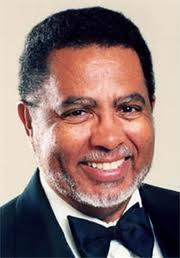
Paul Freeman

Paul Freeman

Africlassical.com and its related blog provide some information on about 50 composers and musicians. The now retired daring black conductor Paul Freeman recorded a significant series of music by black composers issued on 9 LPs for Columbia records in the 1970s. He recorded another 3CDs of music by black composers on Chicago-based Cedille records. He founded the Chicago Sinfonietta (billed as the world’s most diverse orchestra) and was its principal conductor for 24 years and continues in its mission of diversity presenting unusual concert repertoire.

More about some of the composers on those Columbia LPs and Cedille CDs as well as others to come in future blogs during this month.

RIP Elliott Carter


ElliottCarter (1908-2012)

Yesterday the music world lost one of it’s longest lived citizens.  Elliott Carter died aged 103.

Many obituaries and appreciations are being written at this moment for this man whose creative career spanned some 80+ years and includes two Pulitzer Prizes and numerous other awards as well as influence on a great deal of students.  Admittedly he is hardly easy listening and a book length conversation with Carter written by one Allen Edwards was appropriately titled, “Flawed Words and Stubborn Sounds”.    Outside of musicians and the limited audience of fans of new classical music such as myself are likely to be familiar with this man.  And a moments reflection told me that I cannot make him more familiar by citing any one of his musical works.

But his lack of familiarity is a product of his style and vision, not a commentary on his value as an artist.  That said I know of only a handful of friends and acquaintances who would be willing to sit through any performances of his music.  Like his contemporary Milton Babbitt (1916-2011) he pursued his own vision and succeeded very well in establishing himself as a major, if underappreciated, composer.

Carter whose early interest in music was encouraged by Charles Ives was present at the American premiere of Stravinsky’s ‘Rite of Spring’.  Along with a great deal of 20th century composers he studied with the venerable Nadia Boulanger in Paris of the 1930s.  Boulanger’s circle included the likes of Picasso, Gertrude Stein, Igor Stravinsky and numerous others of that fascinating period.

Curiously there is yet to be a comprehensive biography of this man and I look forward to reading one when it becomes available.  Anybody know of anyone working on this?

Born into a wealthy family Carter had little reason to be concerned about things financial.  Carter focused on the composing of music.  He was not a performer.  His style initially owed a great deal to Stravinsky and had a neo-romantic sound not unlike that of fellow Boulanger student Aaron Copland and Samuel Barber.

In the 1950s his style began to take on what would become his mature style.  It was characterized by methods related to Schoenberg’s twelve tone system and an idiosyncratic approach to tempo which he called “metric modulation”.  His style was challenging for both performers and listeners but this did not prevent him from twice winning the Pulitzer Prize (for the 2nd String Quartet in 1960 and the 3rd String Quartet in 1973).  His work has been embraced by many of the major performers and orchestras of our time and he was a fixture among the musical cognoscenti of New England.  He was appointed to the American Institute of Arts and Letters in 1981.

His 5 String Quartets (1951, 1959, 1971, 1984, 1995) are likely the most significant development in that genre since Bartok.  Those along with his Variations for Orchestra (1954-55), Concerto for Orchestra (1969), Piano Concerto (1964), Symphony of Three Orchestras (1976), Violin Concerto (1989), Piano Sonata (1945-6), Symphonia (1993-96) and Double Concerto (1959-61) all make my shortlist of his best work.

And there are a great deal more pieces with which I am less familiar which Carter wrote in his remarkably prolific later years.  He added about 54 new works to his catalog from age 90 until his death just short of his 104th birthday.  No doubt many of these will also claim a regular place in the repertoire.

Sometimes characterized as one of the “three C’s” of American music (Copland, Cage, Carter) he influenced many composers, performers and, in my case, listeners.  Though difficult at times I find his work ultimately rewarding.  His passing is truly the end of an era and his legacy is rich.

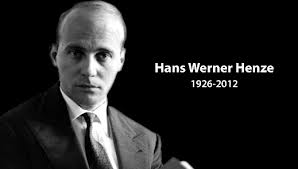
RIP Hans Werner Henze


I just learned last night that the great German composer Hans Werner Henze died on Saturday October 27th at the age of 86.  I have been fascinated by this man and his music since the mid 1970s.  While generally classified as a sort of neo-romantic these days I recall the man and the music of controversy.

Henze was, for me, one of the great political composers and stands with the likes of Luigi Nono, Hans Eisler.  His compositions like ‘Essay on Pigs’, ‘The Raft of the Frigate Medusa’, ‘El Cimmaron’, and the 6th Symphony stand out as some of the finest political commentary achieved in classical music.  The premiere of The Raft of the Frigate Medusa had to be cancelled due to political protests which broke out in the concert hall and among the musicians themselves.

Though he may be better known for his wonderful operas and film scores (which I like as well) I will always remember when DGG suddenly dropped Henze from their catalog in the 1970s due to how politically hot he was.  I recall his interview in Stereo Review, I believe, where he discussed his homosexuality and denigrated his German homeland for their discriminatory practices.  Henze had moved to Italy where he spent many productive years.

Much of his music has, for me, a sort of “in your face” quality that reminds me of the expressionism of Schoenberg and the sound world of Varese.  Pieces like the Essay on Pigs will still not fail to offend, repel and fascinate listeners because of it’s dissonant style and unusual extended vocal techniques as well as the political content of the text.  One of my favorite Henze pieces will always be the noisy and very dissonant 6th Symphony which he composed during a stay in Cuba.  And while his style mellowed somewhat after that his compositional approaches were frequently pushing the envelope using tape, spoken voices and dissonances that worked well in the context of his work.

The sweeping grandiose orchestral works include ballets, 10 symphonies, various concerti.  His operas are rather frequently performed.  And his chamber music, including 5 string quartets, deserve more attention.  It is clear as to why he is considered a sort of neo-romantic and I don’t think that that is at odds with his political convictions.  Henze seems to me to have been an idealist, supporting progressive and radical political ideas as a part of his grand and all embracing  style.  Harsh sounds did not need to be excluded from his sonic pallete.  He seems to have embraced a wide variety of techniques and sustained a long and productive career.  Perhaps he was the ideal post-modern romantic.

RIP, Hans.  We go on listening.  Thank you for the sounds.

henze


The Complete Works of Carl Ruggles (reissue)


At long last the 1980 CBS recording of The Complete Music of Carl Ruggles (1876-1971) has been reissued by Other Minds records (OM 1021/2-2).  I have owned the vinyl two disc set for many years having come across a review of it in a list of suggested recordings of American classical music in, of all places, The Whole Earth Catalog.  And it is definitely a vital part of any serious collection of American classical music.  Ruggles was one of a group collectively labeled, “The American Five”, a title intended to compare the group with the French “Le Six”, the “Russian Five” or the often cited “Three B’s” (Bach, Beethoven, Brahms).  The American group consists of Charles Ives, Henry Cowell, Wallingford Riegger, Carl Ruggles and John J. Becker who strove to define an American sound not beholden to the European models which had dominated the previous century.  Ruggles’ students included James Tenney and Merton Brown.

This album is a recording of Ruggles’ complete published works.  A recent recording of newly unearthed ephemera was recently released but the present record is everything that Ruggles acknowledged and approved.  It is a meager output for a man who lived to the age of 95 similar to the output of the equally important Edgard Varese whose complete works also fit on two vinyl records and the music is just as finely crafted.  The music here is likely not as familiar even to those who know the work of Ives and Cowell.  But make no mistake this is powerful and unique music that deserves more than just a casual listen.

It is thanks to the efforts of Michael Tilson Thomas, who first heard his teacher Ingolf Dahl conduct Ruggles’ three movement symphony, ‘Men and Mountains’ that inspired him to add Ruggles’ work to his repertoire.  But the connections do not stop there.  Thomas and producer Syrl Silberman of WGBH went to visit Ruggles in a rest home and introduced themselves by putting headphones on the composer and playing an air check of Thomas’ performance of Ruggles’ best known work, ‘Sun Treader’.  Thomas’  wonderful essay about that auspicious encounter is included in Wayne Smith’s beautifully designed booklet.  Also included are the original liner notes with Thomas’ essay, notes and analysis by pianist and Ives scholar John Kirkpatrick and an additional essay by Lou Harrison reprinted as well.  There is also an introduction written by Other Minds Associate Director Adam Fong, himself a student of James Tenney, which puts Ruggles in a wider historical perspective.

Executive producers Charles Amirkhanian and Adam Fong acquired permission from Sony Music to digitize the original master tapes working with a grant from the Aaron Copland Fund to bring this essential recording into the digital age.  And the performances by the acclaimed new music advocate Buffalo Philharmonic Orchestra (MTT was then its musical director), a brass ensemble led by Gerard Schwarz and none other than John Kirkpatrick on piano in the Four Evocations.  Michael Tilson Thomas accompanies soprano Judith Blegen in the little song, ‘Toys’ from 1919 which Ruggles wrote for his son.  Speculum Musicae accompany mezzo-soprano Beverly Morgan in ‘Vox Clamans in Deserto’ from 1923.  Trumpeter/conductor Gerard Schwarz leads a brass ensemble in the original 1921 version of ‘Angels’ for six trumpets as well as its 1940 revision for trumpets and trombones.  Even American choral music experts the Gregg Smith Singers come in to perform Ruggles’ last completed composition, ‘Exaltation’ from 1958, composed in memory of his late wife Charlotte.

The Buffalo Philharmonic with its long history of performing contemporary music under Lukas Foss and Michael Tilson Thomas does a wonderful job of handling the six orchestral works.  Best known of these is the tone poem ‘Sun Treader’ which Thomas had recorded earlier with the Boston Symphony in about 1970.  ‘Men’ from 1921, the three movement symphony ‘Men and Mountains’ from 1924, the orchestral version of the four ‘Evocations’ and the 1947 ‘Organum’ also receive very effective readings.  Michael Tilson Thomas is the conductor for all and he clearly knows and loves this music.

The sound is great and the performances are truly definitive coming from artists with varying levels of connection to the composer and  all clearly with a passion for this music.

In fact I can find only a handful of other recordings of Ruggles’ music.  Most are out of print and/or dated in sonic reproduction.  A notable exception is New World Records’, ‘The Uncovered Ruggles’, posthumous reconstructions done by John Kirkpatrick and performed and produced by Kirkpatrick student Donald Berman actually makes a nice companion to the release at hand here for the Ruggles fanatic. (I know they’re out there.)  And there are digital downloads of some out of print recordings as well.

So, as in their previous releases, OM records continues its traversal of sometimes difficult but always relevant music.  So order your copy today through Other Minds, Naxos Distribution or through Amazon.com.  You might be challenged but you won’t be disappointed.  This is a great recording.

Other Minds 17 Day 3


The final night of the 17th Other Minds Festival presented music by four composers and included two premieres of music commissioned by Other Minds.

The concert began with music by Finnish composer Lotte Wenakoski. This diminutive Finnish woman, who also sang quite beautifully during the panel discussion, works with barely audible sounds seeking inspiration ” on the borders of silence”. Her 2006-7 work Nosztalgiam (Hungarian for ‘my nostalgia’) was performed by the modular Magik*Magik Orchestra whose size varies according to the need of the pieces to be played. Tonight’s configuration for this piece consisted of 12 players playing woodwinds, brass and strings.

Fellow OM 17 composer John Kennedy, who is the conductor for the Spoleto Festival among others, conducted the chamber ensemble. Nosztalgiam (2007) is apparently a set of variations/deconstructions or meditations on two Hungarian folk songs (one of which she spiritedly sang during the preconcert discussion). The sometimes sparse and always delicate sounds expressed Wennakoski’s personal impressions of her time studying in Budapest in the late 1980s. It is difficult to assess this composer represented in this festival by a single work. But the sweet, delicate personally nostalgic sounds evoked by a variety of extended techniques suggest that seeking to hear more of her work would certainly be worth one’s effort. The sensitive and virtuosic performance was greeted warmly by audience and composer alike.

Next in this first half were two works by John Kennedy, conductor, composer, percussionist and promoter of New Music. Here is a man in a role similar to that of OM Festival director Charles Amirkhanian having a chance to be, so to speak, on the other side of the table. There are apparently no available commercial recordings of this man’s music but according to his web site (which does have some too brief sound samples) he has composed many works in all genres including theater, orchestral, solo and electronic. And he has received many commissions.

This night he was represented by two works, one of them an Other Minds commission. Both are hommages to the late John Cage. As I mentioned in an earlier blog Cage is also the inspiration/impetus behind Other Minds’ esthetic.

The first work, “First Deconstruction in Plastic” (the title a play on Cage’s First Construction in Metal), does double duty as an homage and as an environmental statement. Percussion duo Ryder Shelley and Andrew Myerson sat facing each other each with a collection of ‘found objects’ consisting of plastic buckets, bottles, shopping bags, etc. This well rehearsed duo gave an energetic and engaging performance which the audience clearly appreciated. But for this reviewer was left with the impression that this accomplished work, though no doubt intricate in it’s conception and satisfying to the musicians, failed to fully engage it’s audience. I was entertained but I did not particularly want to hear it again.

The second work, “Island in Time” (2012), was a world premiere. This, also dedicated to Cage, was a different matter. Scored for the unusual combination of bass clarinet, flute, cello and percussion (all members of Magik*Magik Orchestra) was an engaging though not derivative tribute to the influence of John Cage. The composer describes a process involving different types of temporal processes to structure the work. But the specifics of the processes are secondary here to the overall impact of the work. A meandering flow of sounds and tempi flowed beautifully reverently invoking the spirit and influence of Cage’s work. I have no doubt that the riches in this piece would continue to reveal themselves with repeated hearings. And though I have very little knowledge of this composer’s other work I have no doubt that it is likely to be quite compelling.

The musicians, clearly familiar with the work, gave a loving smooth reading of what appears to be a fairly complex work requiring serious concentration and collaboration. The audience, myself included, rewarded their efforts with enthusiastic applause.

In the second half of the program the next composer, who had performed the previous night in collaboration with Ikue Mori and Ken Ueno, was Tyshawn Sorey. This was to have been a solo performance as a percussionist but in the course of the discussion in last night’s pre-concert panel festival director Charles Amirkhanian mentioned that he had heard Sorey playing the piano earlier in the day. Amirkhanian remarked on the apparently eclectic nature of what he had played. Sorey responded saying that his piano playing is informed by the likes of Art Tatum, David Tudor, Cecil Taylor and Morton Feldman. He also mentioned deconstructing Boulez’ Second Piano Sonata (!) to inspire his compositional process. Eclectic indeed! And he easily consented to playing the piano in his segment of the program saying, “…if you are open to it, sure.”. Sorey exudes a sort of calm, friendly, matter of fact confidence in his skills.

So Sorey walked onto the stage which contained his percussion kit on one side and a concert grand piano on the other. He began with a percussion improvisation starting with a fortissimo strike on the side drum followed by some fevered loud work on tenor and snares as well. This then segued into some more delicate and complex soft sounds elicited from various cymbals and drums making frequent use of special techniques which brought forth some rich vibrant harmonics especially in the quieter moments. I couldn’t help being reminded at times of Han Benink’s performance at last years festival as he released a small sower of sticks onto a drum at one point. Sorey’s sheer energy and good humor were reminiscent (though not imitative). And, unlike Benink, Sorey never left the stage in the course of the performance.

Following the well received percussion set Sorey moved to the grand piano sitting confidently and commandingly at the keyboard and pausing as he focused on the task at hand. He started slowly with a few chords and before long launched into a dizzying and virtuosic flow of music reflecting the influences he mentioned. At first perhaps Morton Feldman, sometimes Pierre Boulez, a little Art Tatum, certainly some Cecil Taylor and then deftly playing sometimes inside the piano then back to the keyboard as part of the same unbroken musical phrase evoking the experimentalism of David Tudor. But the overall impression was not episodic imitation but rather an absorption and integration of all these techniques transcending genre and becoming, simply, inspired music making. The audience was transfixed and absorbed in the flow of the music and responded with cheers of “Bravo” and enthusiastic applause (I think they were pushing for an encore but time did not permit). Had I heard a recording of this without knowing the background I would have guessed this to have been an accomplished composed work by a master composer but this was an improvisation. I am surely going to seek recordings and follow this man’s career in the years to come.

The finale was another Other Minds commission this time from composer, vocalist and Berkeley music professor Ken Ueno. The piece, “Peradam” (2011) takes it’s title from the unfinished spiritual allegorical novel, “Mount Analogue” by the French surrealist writer and poet Rene Daumal (1908-1944). Peradam is a mythical diamond-like stone sought after on the similarly mythical mountain of the title.

Ueno’s work is scored, as is his practice, specifically for the skills of the formidably talented Del Sol Quartet who so ably played the Gloria Coates quartet the previous night. Specifically the specialized skill (in addition of course to their string playing) is the multiphonic throat singing capability of violist Charlton Lee. Ueno demonstrated his vocal skills on the previous night singing with the percussions of Ikue Mori and Tyshawn Sorey. In fact all the players were asked to sing as well as play their instruments for this performance. In addition there was video creatively projected onto the sound baffles at the rear of the stage.

The music was a post modern integrated amalgam of a wide variety of conventional and extended instrumental techniques along with singing at times (the throat singing is a strikingly unique timbre which commands attention when it emerges in the fabric of the piece). The quartet positioned themselves stage right to afford the audience a clear view of the projection across the three sound baffles at the back of the stage. They played with characteristic concentration and skill in what looks like a technically challenging piece of shifting moods and tempi to which the images responded.

The images, manipulated in real time and in coordination with the music with software written by video artist Johnny Dekam, were abstract mostly monochrome images that moved and transmuted hypnotically along with the music. Dekam, who has worked with a variety of pop acts like Eminem and Thomas Dolby, had collaborated with Ueno before. In the darkened theater the images dominated the visual field though the quartet could be seen as well.

It was a complex experience that could only be grasped, if at all, by going with the simultaneous flow of music and image. This piece will benefit from repeated listenings/viewings to more fully appreciate it’s intricacies. But this first performance clearly satisfied the mostly hard core new music fans audience. And while the direct John Cage associations were not as obvious it is clear that Ueno, Dekam and the Del Sols embody the open minded spirit of his work in this, his centennial year. This grand finale was appreciated in kind by the cheering audience successfully bringing to a conclusion the 17th always uncategorizably eclectic Other Minds Festival.

Other Minds 17. Day 2


The second night at Other Minds featured two different generations of composers. As is their practice Other Minds on this night featured two composers already established and fairly well known in new music circles as well as three up and coming artists.

The first performance was by San Francisco’s own champions of new music, the Del Sol Quartet. They performed the American premiere of American expatriate composer Gloria Coates’ String Quartet No. 5 composed in 1988. This and her 8 other quartets have been made available on the brave and progressive Naxos CD label. Coates also holds the record as the most prolific woman symphonist of all time with some 16 symphonies to her credit (many of those are available and well worth seeking on CD as Well).

String Quartet No. 5 is cast in three movements. By the composers description all of the movements are canons, a simple counterpoint form. But the result is hardly simple. Using microtonal glissandi, sometimes having instruments tuned a quarter tone apart and relying on creative ways of synchronizing the players individual tempos Coates achieved a complex sounding but friendly and approachable result. The quartet which lasted about 30 minutes would be a challenge for any ensemble but the Del Sol (which, except for the cellist, perform standing in a break with convention) clearly knew and liked the work and gave an intense and beautiful rendering sounding at times like there were more than four players. The piece has an almost romantic feel at times, cleverly incorporating melodies into a sound world uniquely the composer’s own (I am at a loss to identify a precedent). I sincerely hope that this work and her other works become better known in this, her native country. It is a tribute to the acumen of the Other Minds team that music like this is presented here. The audience greeted the performance very appreciatively.

Next up was Harold Budd on piano playing with Keith Lowe on double bass augmented with electronic effects. The piece, titled “It’s Only a Daydream” from 2011 is, by Budd’s description, entirely improvisational as is most of his music. Lowe began playing first with long sustained tones awash with rich harmonics. Budd’s piano then entered and we were transported to the familiar sound world which is Budd’s musical signature. Those who knew his collaborations with Brian Eno and his later solo works recognized his somber pretty ambient sounds. The two musicians were well matched and played a sort of jazz duet trading solos and accompaniments evoking a curiously nostalgic and hypnotic atmosphere of a strange dream-like lounge. Time seemed suspended and I don’t know exactly how long they played but when they finished the enthusiastic audience reception brought them back for a shorter encore, something I had never seen occur before at this festival.

Following intermission Ikue Mori took the stage sitting at her laptop which controls her various electronic sounds. She played the laptop solo for a few minutes and was then joined by UC Berkeley faculty composer Ken Ueno on vocals. But ah, what unusual vocals. His extended vocal techniques seem to come equally from Tuvan throat singing, Buddhist chanting, David Hykes (of the harmonic choir), Meredith Monk, Diamanda Galas, Kenji Suzuki (of the band Can), Tan Dun (on Taoism) and God knows what else. After another few minutes Tyshawn Sorey, a doctoral candidate in composition at Columbia, seated himself quietly at his drum/percussion kit, then with an assertive fortissimo bang on the side drum confidently entered the energetic fray. Mori sat intently gazing at her computer screen and entering the sound changes for her part while Ueno, holding the microphone to his mouth with both hands issued passionate wordless vocalizations of endless variety and Sorey executed a similar endless variety of high energy acoustic percussion sounds.

Mori calmly issued computer commands to perform her Japanese/New York/ punk/free jazz/Stockhausen expanded percussions while the academic Ueno improvised intense growling, multiphonic, wild vocals with few pauses and Sorey got in touch with his AACM ancestors producing a unified three ring circus of wonderful musical mayhem transcending any concept of genre. Three different traditions, separate but working together. Metaphorical? You decide.

Well deserved and enthusiastic applause greeted the intense but calm Mori and the sweaty and apparently exhausted but satisfied Ueno and Sorey.

The relative order of Coates followed by the ethereal calm improvisations of Budd were but a distant memory (albeit a pleasant one) after the ritual emotional exorcism of the second half. This is the rich variety that characterizes these concerts. And now anticipation builds for tomorrow’s finale.

Hello world! This is “New Music Buff”


Welcome to my music blog. I am an avid listener, collector and supporter of music in general. I am particularly interested in new and cutting edge music.

What I offer here are informed opinions about what is essentially one of my hobbies. The blog title “New Music Buff” is intended to connote a somewhat casual perspective by an educated consumer.

I offer personal opinions which I hope will provoke discussion but also stimulate interest.

Thank you for reading.

Allan J. Cronin