The Central Park Five (2019), a fine recording of Anthony Davis’ Powerfully Relevant, Pulitzer Prize Winning Opera


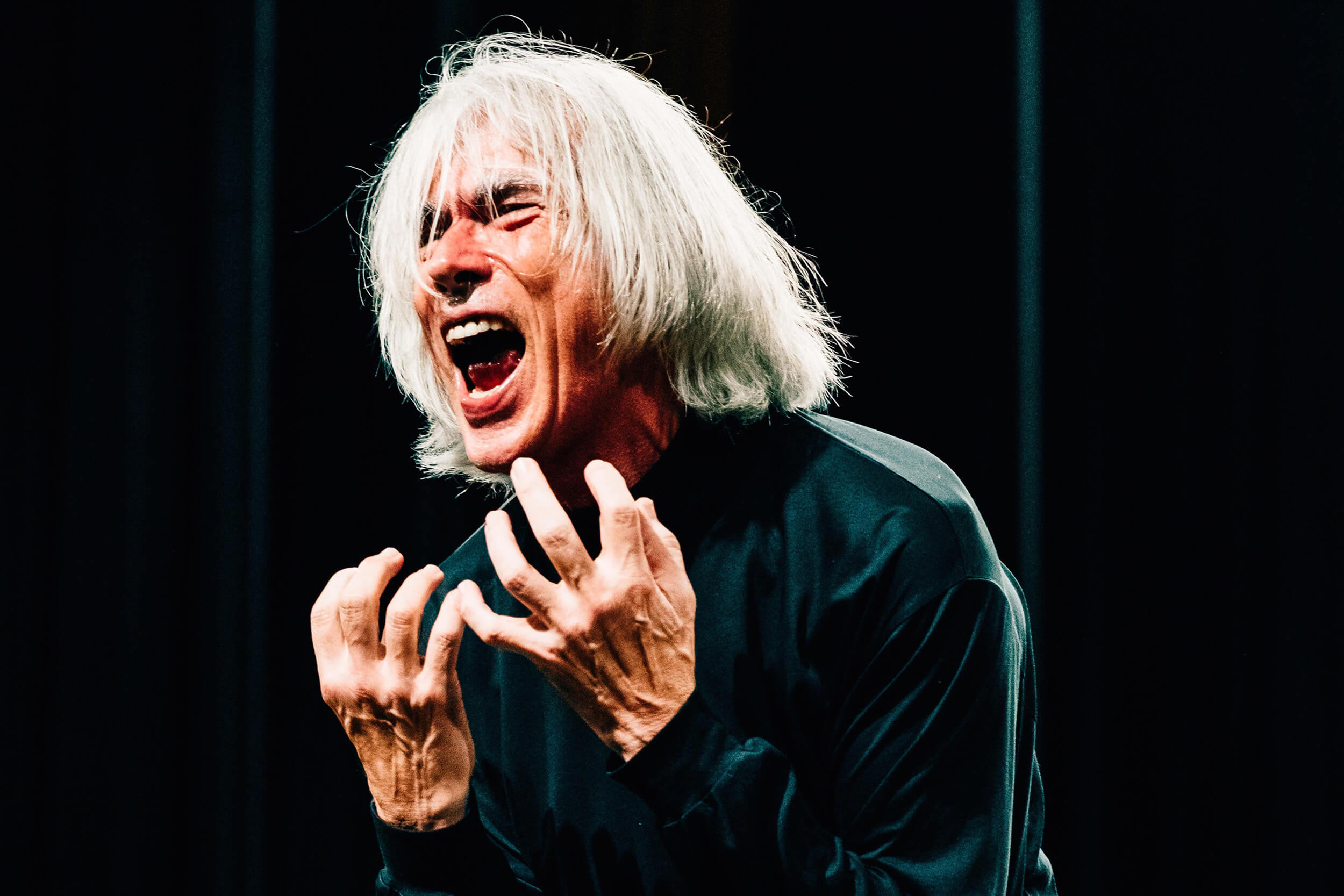
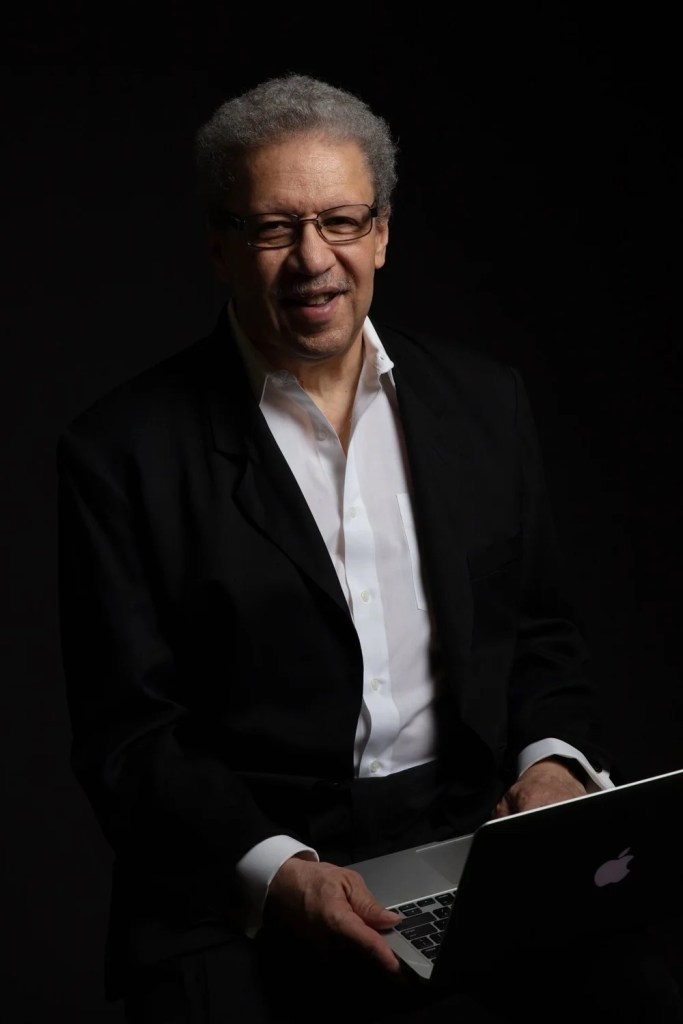
Composer Anthony Davis

Anthony Davis has never hesitated to share express his feelings and politics in his music. His operas “X: The Life and Times of Malcolm X” (1986) and “Amistad” (1997) are two recent shining examples.
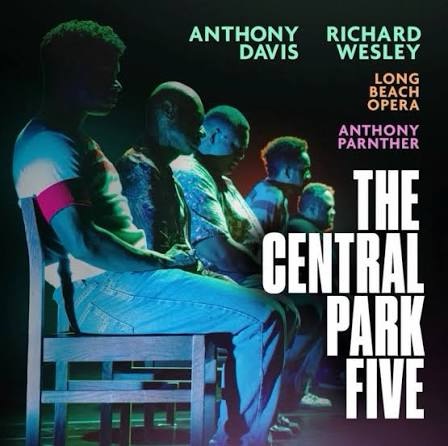
Album Cover

This most recent of his operas is also one that partakes of more recent political events than the previously mentioned works. It is, by my count, his 8th opera. And though all of Davis’ operas can be said to have some political content, “X”, “Amistad”, and now “The Central Park Five (2019), are most specifically focused on the transatlantic slave trade (ca. 1500- 1870) and subsequent black political history..
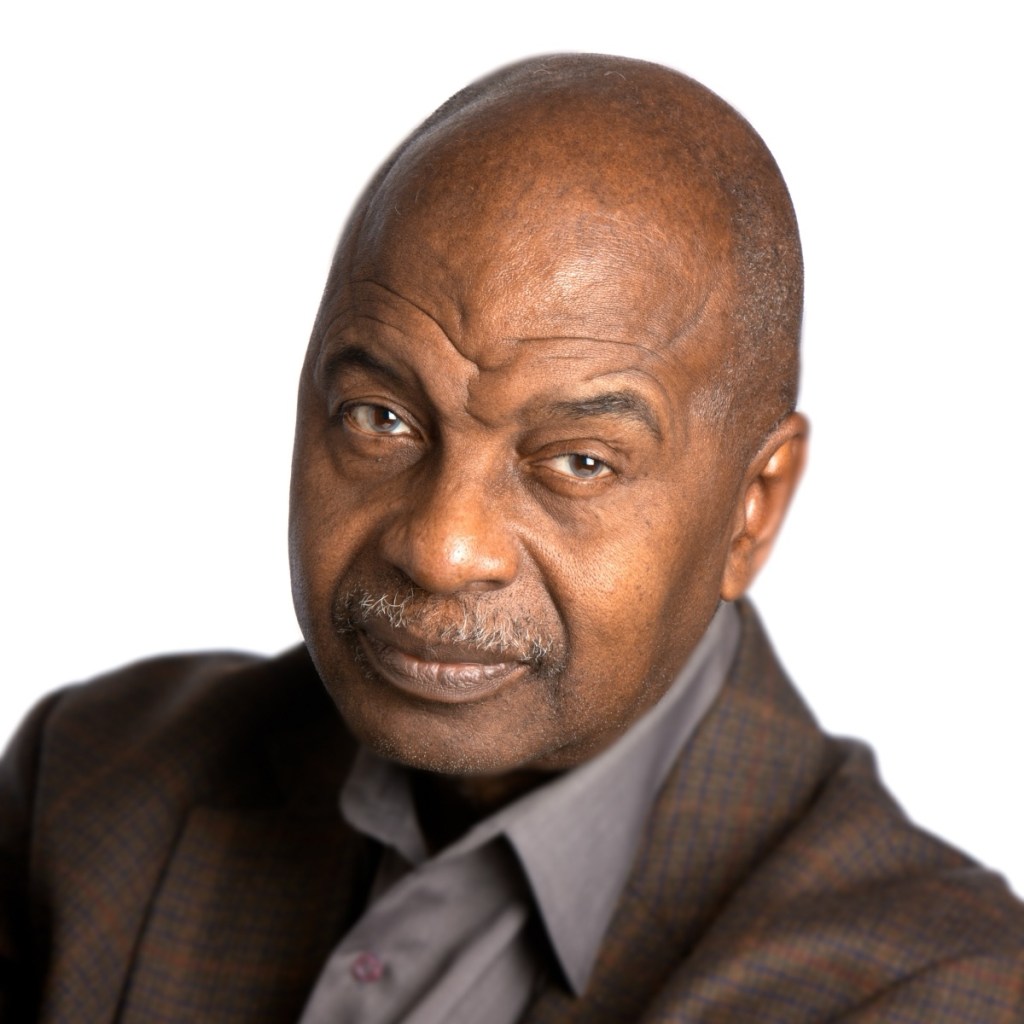
Librettist Richard Wesley

The story captured in the libretto by Richard Wesley made newspaper headlines and even motivated the pre presidential Donald Trump to take out full page ad in several media publications advocating their guilt and advocating for the death penalty.
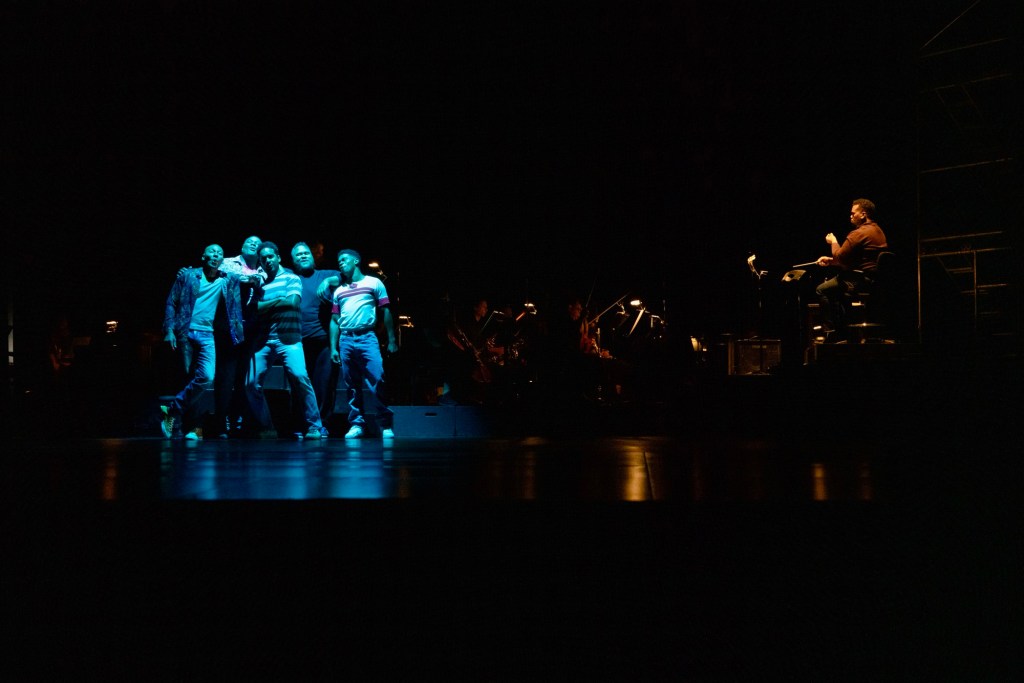
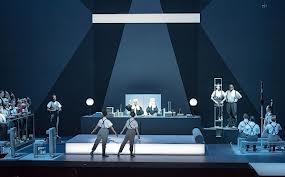
Performance photo by JJ Geiger

While I have had the pleasure of multiple hearings of this powerful and substantial work I have chosen to include the composer’s excellent essay which describes not only the story but also the some of the intricacies and references embedded in the music itself.

Notes on The Central Park Five

By Anthony Davis

1989. A group of predominantly Black and Hispanic teenagers enter Central Park in New York City. They turnover garbage cans, throw rocks, harass people on bicycles. A young woman is sexually assaulted in the Park and six teenagers are detained and questioned about the assault. Five of the teenagers, Kevin Richardson, Raymond Santana, Korey Wise, Yusef Salaam and Antron McCray become the center of a criminal case that would polarize New York City. The Exonerated Five were falsely accused and convicted of the crime with no physical evidence. Condemned publicly by the press, the Exonerated Five were victims in a culture war waged against  Black and Hispanic communities.  A politically ambitious real estate mogul condemns the teenagers with a full page add, proclaiming “Bring Back the Death Penalty. Bring Back Our Police!” The persecution of the Central Park Five marks the beginning of Donald Trump’s political career, built on racial animus and the exploitation of the deep rooted racial divide in America. 

Why? What accounts for what Johnny Cochran would later famously call, “The rush to judgement.” How could the court trust the coerced “confessions” of the five teenagers? How did we come to this moment that assumed guilt, blindly seeking revenge? What caused the deeply rooted anxiety of White Americans when confronted with Black-Hispanic culture  and people? 

1989. Spike Lee’s movie Do the Right Thing premieres, Quincy Jones’ album “Back on the Block” debuts, Black and Hispanic teenagers sing the Tone Loc song “Wild Thing” as they descend on the Park. The song becomes a label in the press as they describe the actions in the Park as “Wilding in the Park.” Did the persecution of the Five represent the White anxiety about Hip Hop entering mainstream American culture? Was the response to the Five a reflection of Tony in the Pizza restaurant smashing Radio Raheem’s boombox? The persecution of the Central Park Five, emblematic of other similar incidents of false accusations of Black and Hispanic men  across the country, demonstrates the devastating consequence of the culture war, as incarceration has become the new slavery.

As a composer, I have always been drawn to stories that intersect the political and cultural worlds. My operas, X: The Life and Times of Malcolm X, Amistad, Wakonda’s Dream, Tania and Pancho Rabbit and the Coyote, all explore political moments and movements that are reflected in the dynamic of music. In X, it is the evolution of creative music from the forties to the sixties, a revolutionary movement in music as well as in politics. In Amistad, it is the false balance of the Missouri Compromise and the untenable grounding of America’s birth in both the ideals of Democracy and the original sin of Slavery. In American music one must always understand the irony that slavery created our culture from the advent of the minstrel show to the “Birth of the Cool.” Music can capture the tensions and fissures in our cultural and political life and the hope of something better. Music can allow us to feel the powerful forces at play in our lives, forces that are at once destructive but yet in our cathartic engagement allow us to envision a kind of freedom.

The Prologue of The Central Park Five begins with the “Exonerated Five” today as they reflect on the past. The opening cross-fade with the Kurzweil texture signify a fissure, a break, the dark spectre of trauma. Each of the Five recalls the trauma of the past. Librettist Richard Wesley ends the Prologue with poignant simplicity, “They tell us in school how big the world is, but that’s their world. They crushed mine.”

Act One introduces a recurring theme and harmony that suggests the past world of Harlem. The lyric, “Harlem, a Black and Tan Fantasy,” of course, suggests Ellington’s Harlem. In fact, before the Masque’s aria, the descending minor 3rd in the baritone saxophone suggests Ellington’s famous Tone Parallel to Harlem from 1949. Ellington describes the descending 3rds that appear throughout the work as signifying and enunciating “Harlem.” The theme is introduced by the Baritone Saxophone and starts as a dirge with variations. The harmony in f minor recalls one of Charles Mingus’ most famous harmonic progressions loosely based on the standard, “You Don’t Know What Love Is,” a ballad made famous by Billie Holiday. The melody is then played by the trombone with a counter-melody inspired by the great Eric Dolphy, played by the Baritone Saxophone and the Bass Clarinet. The theme moves into swing with an iteration by the trumpet. This introduces the Masque’s aria, “Harlem, a Black and Tan Fantasy.” The Masque is a malevolent force in the opera. He is the skeptical reporter, who distrusts Black people. He’s the policeman who arrests and interrogates the five suspects. He is the judge who condemns them.

In Act One the five singers become their younger selves, before they arrive in Central Park. They are exuberant and recklessly free as they talk about their lives and aspirations. The music begins in a gamelan inspired texture with a 9 beat pattern in the vibraphone  and right hand of the piano and a 10 beat pattern in the left hand of the piano. This creates a repeating grid of 90 beats. As in my first opera, X, often I try to marry underlying rhythmic structures with dramatic intent. Every 90 beats something new can happen in the music and in the drama. The orchestra slowly reveals the inner harmonic working of the drone against the free flowing lines of the Five boys. The Masque disturbs and interrupts the Five’s music signaled by a series of cascading major thirds that play against the harmony of the drone establishing a 4 against 3 rhythmic tension, as the music evolves “off the grid.” This leads to a new tempo before the Masque proclaims  “They (Black people) are lost!” The opera explores rhythmic tension that is reinforced by the harmony. The Five defiantly sing “This is my world!” and later the anthem “The World is Ours!” The stable harmony of the anthem is eventually disturbed by the building polyrhythms as the Five become more excited culminating in the antiphonal rhythmic interplay between “This is no life. This ain’t living. This ain’t no life!” and “Time to bust out, time to break out, time break out, time to act out” This leads the Five into the Park. In the music, I tried to capture the exhilaration and exuberance of the Five and their illusion of freedom. As they enter the Park, the Five sing, “We are the freaks! We are the freaks who own the night!” The music in the Park is influenced by everything from Parliament Funkadelic to fusion Miles Davis and Jaco Pastorius with Weather Report. The music captures the exuberance and recklessness of the Park that quickly becomes out of control fueled by  groove and funk.

Music allows us to see different worlds and to shift perspective. As Kevin and Antron are initially detained we hear the echoes of the Blues and again the stop-time from Black and Tan Fantasy as the Masque declares falsely that “That is the end of that.” The anthem music, when it returns as the Assistant District Attorney and the Masque discuss the assault, becomes a distant, shattered memory. The interrogation scenes feature rhythmically driven music as if an ex-machina force is coercing the Five’s confessions. The words of the Masque and the Assistant D.A. are like weapons. The vocal writing is more angular with shifting harmonic centers emphasizing speech rhythms and repetition as the Masque and A.D.A, try to force the Five to implicate each other. This is in contrast with more reflective moments that are lyrical and harmonically grounded. The Five’s collective sense of apprehension and fear is expressed in passages drawn from the vocal ensemble tradition of close harmony from doo-wop, Motown and the street as if through a filter of Gil Evans’ arrangements in “My Ship” or Blues for Pablo. The hybridity of the music tells the story.

A friend once asked me, “How do you write for Donald Trump?” I replied, “First, he is a tenor. Second, he repeats himself in his violent sound bytes. Third, he never completes a sentence.” I tried to capture his use of short, repeating phrases that could be amplified by the chorus. “Wilding, Rampaging, Wilding, Rampaging Wolfpack!” What is Trump’s appeal? Like moths to flame, Trump says things that people may think and be afraid to express. In MAGA world Trump’s racism is somehow authentic and Trump has helped unleash the pathological racism that is both systemic and psychological.  I entertained these scary thoughts as I composed the opera.

Finally, the opera is an uplifting story of a community rising up against injustice, of the Five finally finding exoneration and vindication as the anthem returns with “The World is Ours!” But we know the cost, as Korey says, “They stole from me!” And we know this is a continuing story. The forces that implicated the Five are still with us.

Thank you to the librettist Richard Wesley who illuminated their story with humanity and emotion from Sheronne Salaam’s “They are trying to blame my son” to Korey’s “They stole from me.” None of this would happen without the love and support of my muse, Cynthia Aaronson-Davisuch passionate command. I must recognize the extraordinary work of Earl Howard who created the electro-acoustic world that shadows the opera. I need to call attention to the critical work of Andreas Mitisek who directed the first production in Long Beach and helped realize the dramatic possibilities of the opera. I am indebted to all the musicians and singers who brought this opera to life in Long Beach, Portland and Detroit and, of course, Long Beach Opera, particularly Jenny Rivera and Michelle Magaldi, who believed in the work and help produce this recording. I would also like to thank UCSD for its continued support of my work. None of this would happen without the love and support of my muse, Cynthia Aaronson-Davis.
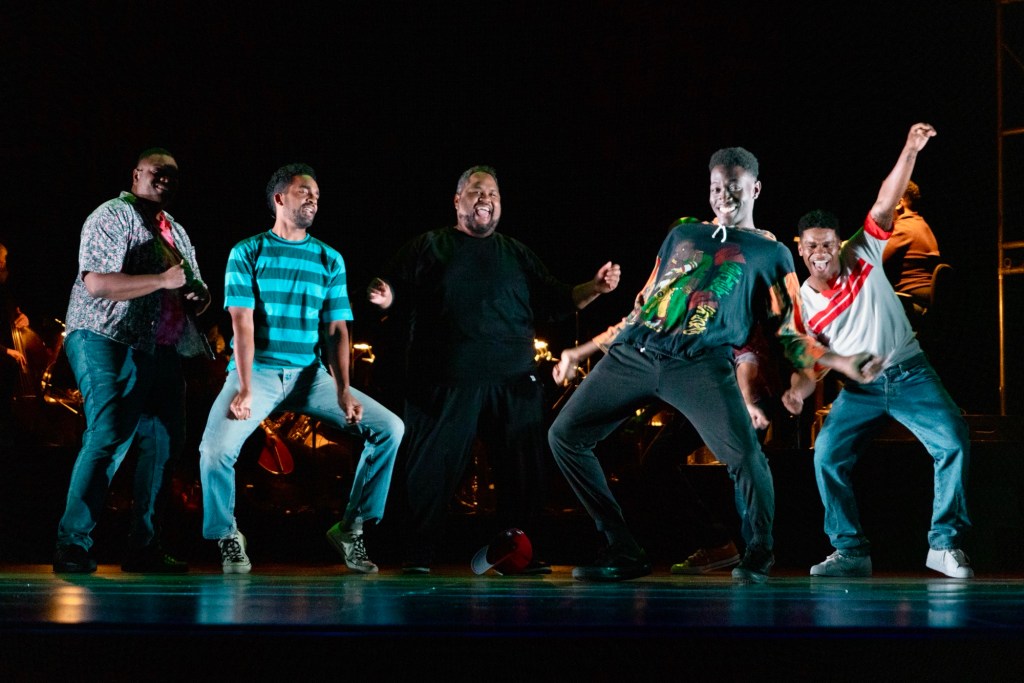
Another performance photo by JJ Geiger

The opera has received many performances since its premiere by The Long Beach Opera, who commissioned the work. It has since been performed in Detroit, New York, and is scheduled for another performance in Long Beach.

The music incorporates bebop and other jazz styles into a listener friendly melodic and harmonic constructions that set the beautiful libretto’s words effectively.

Davis himself identifies as a politically expressive composer. Even in his non-stage works like his meditation on the first of the so called Miranda Rights (You have the right to remain silent) cast in the classical form of a concerto for clarinet (2007). Arguably, Davis’ work cannot be separated from the experience of Black American culture. Davis, raised in the cultural lineage of transgressional innovators such as George Lewis and his many colleagues of the AACM (American Association of Creative Musicians), a group that still works to include the cultures and rituals of many African countries into the practice of so called western art music). Davis has been a defining figure in contemporary music since at least the 1970s. And now he is recognized as an exemplar of “American” music by virtue of the recognition of the Pulitzer Prize.

As a work of classical protest music, it functions (in Jeremy Eichler’s term) as “times echo”, a use of great art to frame a noxious historical event in a sort of time capsule that preserves memories and feelings of the story that lives again in performance. As such, The Central Park Five stands proudly alongside Hans Werner Henze’s “Essay on Pigs” (1968), Benjamin Britten’s “War Requiem” (1961), and composers as diverse as Dmitri Shostakovich, Luigi Nono, Arnold Schoenberg, Steve Reich, Wynton Marsalis, and Louis Andriessen (to name but a few).

But, as is the case with any artistic work of protest, the actual impact remains to be seen. The horrors of racism remain a defining part of western culture, of American culture now cast forever in this deeply felt drama. This is definitely not, in Toni Morrison’s phrase, “…music to entertain the master and soothe his blunted soul.” And in a time of the active attempts to suppress and deny this unsavory history, art can preserve memories both good and bad.. There is a noble beauty in that.

Achim Freyer meets Don Giovanni at Checkpoint Charlie: Alvin Curran’s Tribute


Achim Freyer (Photo from German Wikipedia)

Who? and Who? American composer Alvin Curran (1938- ) returns to his roots…well, some of his roots, in this streaming composition, a tribute to German dramaturge Achim Freyer (1934- ). Curran’s composition, a tribute to the dramatist/costume designer/stage director, is presented in streaming format via Deutschlandradio. and is available at the following link:

Streaming link: https://www.hoerspielundfeature.de/klangkunst-achim-freyer-trifft-100.html

I mention the link to allow my readers to access the program stream so as to be able to hear the work (obviously) but also because Maestro Curran has been at the forefront of adopting social media as both a medium for access and distribution for his compositions but also as a part of the the work (at least in the Mc Luhan-esque sense, “the medium is the message”). More details on Curran’s work can be found on his excellent website.

His Kristallnacht memorial work, “Crystal Psalms”, used multiple radio stations with performers in each location throughout northern Europe which Curran mixed live for the broadcast, the final mix released on CD format is a classic of the genre and a powerful sociopolitical statement. The point is that Curran continues to be at the forefront of integrating current technology in his art. His distinctly personal use of synthesizers, sampling keyboards, and other electronics continues to characterize his creative process.

Alvin Curran in San Francisco in 2016

Achim Freyer became known to me when I saw Michael Blackwood‘s film, “A Composer’s Notes…” (1985) which documented two simultaneous staging of Philip Glass’ opera “Akhnaten” by the geographically distant opera companies who co-commissioned the work. The Houston Opera production was designed by David Freeman, and the Stuttgart production by Achim Freyer. Freeman cast the work in a realistic historical tableau in ancient Egypt whereas Freyer’s designs evoked a sort of hallucinatory, dreamlike, mythical set of images. Both are beautiful and quite viable productions but they are very different visions. It is that very different vision that characterizes Freyer’s work and gets him the accolades that drive the commissioning of Curran’s tribute. This musical tribute now is added to the metaphorical mantle where Freyer’s accolades reside. You can also download an audio MP3 here.

When you listen to the streaming version or the conveniently downloadable MP3 you will be greeted by about 5 minutes of German language narration followed by approximately 35 minutes of Curran’s sound collage work incorporating the composer’s unique approach to the inclusion of digital sampling technologies along with his extensive knowledge of electronic sound production and manipulation.

Like any great work of art this work will have varying impacts and leave a variety of impressions. Beginning with the playful title it is doubtless full of referential quotes that probably rival Elgar’s “Enigma Variations” (1899) or the panoply of quotations in Luciano Berio’s “Sinfonia” (1968-9). Don’t get me wrong, this streamed work is very different than either of these predecessors. Rather it appears to be a sonic portrait using concrete sounds alongside musical sounds to create an impressionistic tableau of Herr Freyer. The composition is reflective of Curran’s “New Common Practice” concept in which the composer is free to use whatever sounds and techniques he or she chooses to complete a musical piece.

Even a cursory look at Alvin Curran’s oeuvre reveals the incredible diversity of his compositional sound sources. From conversations, to creaking doors, footsteps, musical snippets, and the sound of the ethnic/mythic shofar (the ram’s horn has become a signature sound for the composer). They are all mixed carefully (this sounds like a carefully crafted collage) to create a non-linear narrative or sonic poem in tribute to an artist and a mutually beneficial friendship between Curran and Freyer. Please forgive my admittedly clumsy appropriation of Friedrich Schiller (in turn via Beethoven) when I say, in my limited German, a phrase which can be said to characterize both the composer’s work and that of its subject Achim Freyer: The final embrace, the feeling at the end of Beethoven’s 9th symphony as the chorus sings: “Diese Kunst umfasst die ganze Welt” (This Art embraces the entire World).

Poul Ruders’ Fifth Opera is Another Gem from Bridge Records


Bridge 9257

Bridge records is an outstanding company which has taken on the production of several “complete works” sets of some of the finest 20th and 21st century composers (Elliott Carter, George Crumb, Harry Partch et al).  A combination of excellent scholarship, top notch musicians, and state of the art recording techniques virtually assures that these will be definitive productions.  Any Bridge release is a cause for celebration and this is a fine example of why that is so.

Poul  Ruders  (1949- ) is the subject of one of those complete works projects.  If you like modern classical and haven’t yet encountered this composer you are in for a treat. Ruders is a highly skilled composer with positively lucid orchestration skills. I first encountered his work on the 1988 album Manhattan Abstraction which led my hungry ears to the 1992 Bridge release Psalmodies, then Gong/Tundra on Chandos and now anything with Ruders’ name on it compels my attention.

This release contains Ruders’ fifth opera. It is a relatively brief (all on one disc) but very charming piece in which producers David Starobin and Becky Starobin play multiple roles including as librettists, conductor (David Starobin shares conducting duties with Benjamin Shwartz), and production design all done with loving attention to detail.

13th child

The opera is a charming little fairy tale which showcases Ruders’ facility with drama. Speaking of the composer’s style (this reviewer hears him, especially in his earlier works, as a sort of noisy modernist but one who has not abandoned lyricism) is ultimately a minor detail because his music engages (as opposed to challenges) the listener in the natural flow of the narrative.  This is a very listenable and entertaining little opera whose two acts fit on a single CD.  Included is a set of notes and the libretto in a beautifully designed slipcase.

The opera was a joint commission from the Odense Symphony and the wonderfully adventurous Santa Fe Opera.  It is a fairy tale opera with a happy ending.  I won’t go into detail as to the story except to say that it follows some of the more charming conventions of fantasy including kings, queens, princes, successors, family conflicts, and magical occurrences which move the story along.  The recording is wonderful as per the standards of the Bridge brand and the performances are heartfelt.  Any opera lover will likely love this release and anyone interested in contemporary composition, particularly of the wonderful Poul Ruders must have this record.


ICE Plays Music of Du Yun, a Powerful Collaboration


duyundino

New Focus/Tundra Recordings

This disc was this reviewer’s first hearing of music by the Chinese American composer Du Yun and OMG, as they say.  Just WOW on so many levels.  The ten tracks contain music written between 1999 and 2015.

It is truly a tour de force on many levels. No surprise that this artist has received so many accolades. This sampling of her work by the always interesting International Contemporary Ensemble released by the increasingly vital New Focus recordings (on their TUNDRA imprint).  There are no fewer than ten works on ten tracks.

This has been one of those “How could I have missed this…” experiences.  There is a wealth of music here ranging in style from free jazz to modernism (think Darmstadt perhaps) to world music and they blend well the style of this major Chinese-American composer.

She is the recipient of numerous prizes (including a Pulitzer for her opera Angel’s Bone in 2017).  She is the regular recipient of commissions from the Fromm Foundation, the Rockefeller Foundation, Opera America, and the Asian Cultural Council among others.  She is also a Guggenheim fellow.

The poetic, sometimes cryptic titles of her works and the liner notes are brief but succinct. The serious listener will want to know more about the composer and her wide ranging talents.  She writes for every genre and ensemble from opera to solo work and from intensely personal music to clever collaborations.

Add to this the fact that the performers are from the wonderful International Contemporary Ensemble (also known as “ICE”).  Anything they do is worth the adventurous listener’s attention and this album supports that contention most successfully.  The irony of  that acronym is hard to miss in the composer’s grant from the Carnegie Foundation’s “Great Immigrants” program.  Perhaps that can rescue the association of said acronym to art rather than regressive politics.

As usual with New Focus (the parent label of this TUNDRA release) the recording is lucid and does justice to the music.  The cover design alone is a striking portrait of the composer (another reason to lament the 12 x 12 format of LPs as a size standard).

It took this listener several listens to begin to grasp this music.  It is varied and sometimes complex but it is always compelling and seems to have depth and substance.  If you don’t know this composer this is a fine place to start and if you already know her work you will want to add this fine recording to your collection.


Contemporary Operatic Portraiture, Mason Bates’ The (R)evolution of Steve Jobs


I’m not sure who started the trend of so-called”portrait operas” but they seem to be on the increase.  Tech Icon Steve Jobs now has a portrait opera as well as a biopic, numerous documentaries, and at least one good biography.  And who better than music techie Mason Bates to write the opera?

So here we have what appears to have been a beautifully staged premiere of said work in a definitive performance by the always innovative Santa Fe Opera.  Steve Jobs is an icon of the tech industry and the business world and people want to hear about him even if it is a romanticization.

Bates is ideally suited to the task and this is likely to get multiple performances.  Of course a video would be a more ideal document but probably prohibited by cost.  This is an eminently listenable work and the enthusiasm of this live audience serves to underscore this reviewer’s personal response to this performance.

There are eight roles (one role is silent), a large orchestra augmented but never overwhelmed by electronics.  The electronics also serves in a metaphorical way to paint a sonic picture of this tech hero.  It also helps remind us that we are in the 21st century in every way.

The cast includes Kelly Markgraf, Edward Parks, Saha Cooke, Wei Wu, Maria Kaganskaya, Johah Sorenson, Garrett Sorensen, Jessica E. Jones, ensemble soloists (I’m guessing that means, “choir”) consisting of Adelaide Boedecker, Adam Bonanni, Kristen Choi, Thaddeus Ennen, Andrew Maughan, Corrie Stallings, and Tyler Zimmerman with the Santa Fe Opera Orchestra marvelously held together by conductor Michael Christie.

Librettist Mark Campbell has an impressive resume and this is an admirable addition to an already impressive list of dramatic successes. Photos of the production in the wonderful booklet which contains the libretto and background information show some visually a creative production. Computer screen shots of Jobs’ various products serve as background and the staging appears to make a few nods to Philip Glass’ Einstein on the Beach, its obvious progenitor.

Only time will tell the ultimate place this work will occupy historically but we can definitely enjoy this really entertaining piece.

In the Beginning Was the Word: Other Minds 23


OM202006

Charles Amirkhanian performing one of his spoken word compositions at Other Minds 20 in 2015

Other Minds has been the the darling of composer/producer Charles Amirkhanian since its founding in 1993.  Along with television producer and arts patron Jim Newman he has presided over the 25 years of this renowned festival which has consistently brought the finest new music composers and performers to San Francisco.

There is little doubt that this year’s festival has to be very close to Amirkhanian’s heart.  Words have been central to his career at least since 1969 when he began his work as a producer at KPFA.  In the 23 years he spent there he presented countless hours of musical programming and interviews.  He crossed paths with most of the major stars in contemporary classical music and many stars whose genre may not be captured by the classical label.  A look at his programming choices and interviews from his time there defined new music for the Bay Area and beyond.  After his tenure at KPFA ended in 1992 he continued exploring cutting edge music and musicians bringing them to San Francisco for live performances.

His work as producer and curator has tended to overshadow his work as a composer, sound poet, and spoken word artist.  This year’s OM festival is dedicated to speech, sound poetry, and the spoken word.  It is about both the history and the present state of the art.  In many ways Amirkhanian’s 1975 release “10 + 2: 12 American Text Sound Pieces” on 1750 Arch Records (now on an OM CD 1006-2) can be seen as sort of the starting point for this festival.  This masterful anthology includes works by Charles Amirkhanian (1945- ), Clark Coolidge (1939- ), John Cage (1912-1992), John Giorno (1936- ), Anthony Gnazzo (1936- ), Charles Dodge (1942- ), Robert Ashley (1930-2014), Beth Anderson (1950- ), Brion Gysin (1916-1986), Liam O’Gallagher (1917-2007), and Aram Saroyan (1943- ).


“Word! Thou word that I cannot speak!

At the end of the second (and last completed) act of Arnold Schoenberg’s powerful opera “Moses und Aron” (1932) Moses sings, or actually half speaks and half sings this text lamenting his expressive deficits.  Speech song or, in German, sprechgesang is an invention by Schoenberg in which the singers are asked to find a point between speech and music.  Perhaps this is a good example of some of the artistic thinking going on at about the time when speech music/sound poetry began to take shape.

bio_schwitters_kurt

Kurt Schwitters (1887-1948)

Some of the history of sound poetry is featured in this unprecedented 6 day festival (April 9-14).  Some of the earliest practitioners of this unusual genre include the German artist Kurt Schwitters whose composition Ursonate (1922-32) will be performed in its entirety, a rare event by itself.

Another early gem will be the Spoken Music (1930) by German-American composer Ernst Toch.  This three movement suite has been known for its last movement, the Geographical Fugue.  The other two movements, once thought lost, were discovered in sketches in 2006 and reconstructed by Christopher Caines.  The now complete version will be presented I believe on day 3.

Composer-Ernst-Toch-810

Ernst Toch (1887-1964)


It is beyond the scope of this blog post to tell the history of text sound so I will refer readers to the Other Minds website for further details.  Or you could come to the festival too I suppose.

With due respect given to the past the festival will move on to the present.  San Francisco Beat Poet Michael McClure (1932- ) will make an appearance as will post beat colleagues Anne Waldman (1945- ), Clark Coolidge (yeah the guy from that cool anthology), Aram Saroyan (another guy from the classic text sound disc).

curran20160010

Alvin Curran in conversation last year in Berkeley.

Other Minds alumnus Alvin Curran (1938- ) will be premiering his collaboration with Clark Coolidge entitled, Came Through in the Call Hold.  Curran’s eclectic sensibilities will doubtless result in an interesting composition.  This event alone, at least for this writer, is worth the price of admission.  And this is just the first day!

Other events include workshops, discussions of the history of the art, and even some curious variations on a theme.  Apparently the writer Lawrence Weschler is the grandson of Ernst Toch and has written a variation on the Geographical Fugue called, The Medical Fugue which will be premiered at this festival.

The increasingly ubiquitous pianist Sarah Cahill will be present to perform Virgil Thomson’s unusual but entertaining setting of a Gertrude Stein (a one time Oakland resident) text called Capital, Capitals.  She will accompany the men of the Other Minds Ensemble.  Jaap Blonk will be tasked with performing Schwitters’ Ursonate and, along with Enzo Miranelli will also perform other historical works including some by a couple of Italian Futurists.

Other Minds Administrative Director Randall Wong will end the evening by undertaking a performance of the late great Cathy Berberian’s Stripsody.  That promises to be a wild evening I think.

blonk_75_2500crop

Jaap Blonk (1953- )

Northern Europe, including the Netherlands and the Scandinavian countries will literally have their day.  As it turns out they are doing a great deal of creative work in this increasingly diverse genre of speech music.  Other Minds is at its best in introducing the new and the innovative from wherever Charles’ radar has tracked it down.  Indeed Mr. Amirkhanian and his wife, artist/photographer Carol Law traveled throughout these regions in the early 70s talking with and learning from these diverse artists.  (Amirkhanian’s work, Just was recorded in a Scandinavian studio during one of those trips).

As usual homage will be paid to the past with some recorded classics by Sten Hanson, Åke Hodell, and Lily Greenham.  Some new voices will be introduced including Tone Åse and Sten Sandell.  The Norwegian/Russian-American duo OTTARAS (consisting of visual poet Ottar Ormstad and composer Taras Mashtalir will also perform.   One can fully expect a mind expanding experience which will redefine the possibilities of the art form.

Auspiciously or perhaps dangerously Friday the 13th has been reserved for Bay Area talents.  First up will be the man of the hour, Charles Amirkhanian.  Hearing him do his work live is an uncommon but entirely enjoyable experience.  If that alone weren’t enough we will get to hear the even rarer public collaboration between him and his life partner Carol Law whose photography and collage work deserves wider recognition and will happily get that here.

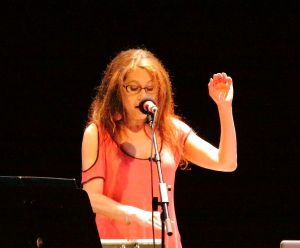
Amy X Neuberg

Amy X Neuberg.

Trained in both linguistics and music, Amy X Neuberg will be on hand to perform her indescribable electronic cabaret including the world premiere of “Say it like you mean” and other genre bending work.  She is another valued Other Minds alumnus having given numerous performances at the festivals.

Stanford professor Mark Applebaum, another alumnus will present “Three Unlikely Corporate Sponsors” which premiered at Stanford in 2016.  Enzo Miranelli will conclude the evening with his theatrical combination of movement and text in “Fame: What I Want to Say”.

20130218-132303.jpg

Pamela Z

The festival concludes on Saturday April 14th with Jaap Blonk followed by the wonderful San Francisco based Pamela Z who, like Neuberg uses electronics, but creates her own unique sound world.  She too is an alumnus of Other Minds.

Another composer from that great anthology, Beth Anderson, will make an appearance to perform “If I Were a Poet”, “I Can’t Stand It”, and “Ocean Mildew Minds”.

The finale will feature Susan Stone and Sheila Davies Sumner performing excerpts from two works, “House with a View” and “Loose Tongues” both dealing with the lives of working class southern women.

This will be both a feast and a marathon but it promises to be one of the finest Other Minds productions maybe ever.  Come to be entertained, come to be challenged, come to expand your mind.  You’ll never be the same.  See you there.

C’mon, There’s at Least Twenty Saints in There: A fine new recording of the Virgil Thomson opera, Four Saints in Three Acts


4s3a

BMOP/sound 1049

This recording is a fine example why I have come to love the work of Gil Rose and his Boston Modern Orchestra Project.  The scope of his musical choices ranges from intelligently selected new music projects by living composers and a fabulous survey of music by older composers that he considers worthy of attention again (and sometimes for the first time).  All BMOP recordings (even those on other labels) are consistently of the highest quality and the performances are definitive.  This series now on the orchestra’s own label is rapidly becoming a sort of canon defining modern music, or at least one vital vision of it.

There appear to be only two other recordings of this masterwork.  The first is a cobbled together mono version released on RCA with the composer conducting most of it and Leopold Stokowski conducting some numbers in this abridged performance.  The second is the very fine 1981 version by the Orchestra of Our Time under the able direction of Joel Thome.

The differences between these recordings is far less important than the fact that we now have three versions of this American operatic masterpiece for our listening enjoyment.  The BMOP recording is up to their usual high standards with wonderful sound and fine interpretation and musicianship.  

This 1934 opera premiered in Hartford, Connecticut and then opened on Broadway (yes, in New York) with an all black cast and ran for a record 48 performances.  Black music pioneer Eva Jessye conducted her choir and the production was directed by a young John Houseman who had just begun to turn his talents to the theater.

The libretto is by Gertrude Stein who later collaborated with Thomson on The Mother of Us All.  Her word play is more about sound than grammar (or mathematics for that matter).  It is in four acts and features more than four saints.  The music is classic Americana with the essences of folk musics and spirituals.

This is a gorgeous and fun piece which deserves to be in the canon of great American operas.  Want to make America great and celebrate Black History Month?  Then grab this recording and sit back for a wonderful listening experience.


Impossible, you say?


einsteintrain

The first scene


I had the pleasure of seeing the recent production of the Philip Glass/Robert Wilson “opera” ‘Einstein on the Beach’ in Berkeley on October 28th.  I had seen the production at the Brooklyn Academy of Music 20 years ago and have loved the music since I first bought the recording issued on the short-lived Tomato record label (this is the performance now available on Sony).  It is clearly a work which compels me and has insinuated itself into my world view.

The production was beautiful.  The musicians as always played well under the precise and confident direction of Michael Riesman who has apparently conducted every performance of the opera (that alone is an astonishing feat).  The dancers were spectacular in their execution of Lucinda Childs’ unusual choreography.  And the solo violin played in this production by violinist Jennifer Koh breathed a new virtuosic life into the familiar solo part.

Dance with spaceship

The set design and lighting were about as good as it gets and the performers appeared to be well rehearsed and operated as well oiled parts of the unified whole of the machine that is Einstein on the Beach.  It was a production that was loving and well received by the audience (a genuinely appreciative standing ovation followed the performance) in this, the west coast premiere of this landmark piece from 1976.   It is certainly worth noting that it took 36 years for this to be produced in even this most liberal of musical places.

I have hesitated to write about this performance partly because I didn’t want to simply report my attendance and geeky satisfaction.  I wondered if everything has already been said ad nauseam about this piece and adding yet another adoring review would be pointless and dull.  But the performance (all 4.5 hours of it) left me with a renewed appreciation for the music and the visuals.  It reinforced my belief that this is a truly significant work of art and that it will continue to be revived.  However it is likely that this is the last revival we will see which has been supervised  by the original creators.  Philip Glass is 75 and Robert Wilson is 71.  Lucinda Childs is 72.  And there is at the time of this writing no heir apparent for the Philip Glass Ensemble.

The vaguely apocalyptic themes provide a sort of commentary for our times.  Like any great work of art it continues to take on meaning for subsequent generations.  It is both a response to the milieu in which it was created and a mirror in which is reflected the present time of its performance.  Don’t get me wrong.  This avant-garde masterpiece is hardly easy listening or easy viewing.  In addition to its length it is non-linear, devoid of plot and devoid of most of the conventions by which we normally judge and appreciate both theater and music.

But it has been embraced by many.  Mark Jacobs’ Spring/Summer 2012 Fashion Show featured models walking up and down the runway to the sound of the opening “1, 2, 3, 4…” of the solo chorus which opens the work.  A Pepsi commercial from 2008 titled ‘Einstein’s Choice’ also featured that same chorus.  And the incidental music to any number of nature programs are frequently infused with the now familiar arpeggios endemic to Philip Glass’ compositional style.

Spaceship scene

Combine these things with the fact that revivals of this opera play to nearly or completely sold out houses in New York, France, Berkeley, Mexico City, Amsterdam and Ann Arbor, Michigan.  Granted the revivals are infrequent, the last being 20 years ago, but the draw of this work apparently remains strong suggesting that it is now and will likely remain in the repertoire.

I came away from this production with a sense of exhilaration that I feel when I encounter a great performance of a masterpiece by Mozart, Beethoven or John Coltrane, a sense of connection to a greater meaning such as one finds in all great works of art be they music, theater, painting, literature, film, etc.  And I don’t think I am alone in having felt that.

When I first began listening to this piece in the aforementioned Tomato recording I was both fascinated and perplexed.  I felt compelled to listen again and again and was perplexed at what I was hearing.  But history tells us that few seem to fully appreciate great art at the time of its emergence, that such appreciation takes time.  With time and repeated listenings I began to find the work grow on me, become familiar.

Seeing the 1992 revival in Brooklyn only further reinforced my sense that this is a very significant work and it remains one of my favorite pieces of music.  It is one of the pieces of music that feels to me like a personal discovery, one which I seem to have appreciated to some degree from my first encounter with it.  And my understanding as well as my affection for this work has only increased with time.

What remains to be seen is whether this work can continue to be successful in subsequent productions done by people whose connection to the work is less direct and whether it can continue to speak to subsequent generations.  The majority of the crowd at Zellerbach hall for this performance appeared to be in the 40 to 50+ category which may be in part due to the cost of a ticket.  I hope that it is not lack of interest.

For years, until the new recording was released on Nonesuch Records in 1993, I listened to the 1979 release which, due to the length of the music, abbreviated some of the repetitions to allow the recording to fit on 4 vinyl discs.  It is this recording which I know best and is most deeply imprinted on my memory.

Of course the experience is quite different with the accompanying visuals.  I had learned to appreciate the music alone with just of few still photos to kindle my imagination as to how the full production would appear.  And, not surprisingly, my first encounter with the full production in 1992 exceeded my expectations and provided a new and richer perspective on the meaning of this opera.

When I say “meaning” I am referring only to the meaning which I experience.  I don’t lay any claim to any special knowledge here.  And I think that this and all great works of art sustain their worth through their ability to mean and be associated with a variety of things.  Einstein has different meanings and associations for each individual and perhaps no ultimate “meaning”.

Even the texts associated with the piece are intentionally non-linear, make few concrete references to culture as a whole.  There is no story here, there are only visual images, sonic images and a variety of spoken words which, while in English, have mostly vague meanings.  The issue here is the emotional impact.

Epilogue (Knee Play 5)

‘Einstein’ has clearly affected me emotionally and I am witness to the its effect on the audiences of which I was a part.  When I tell people anything about the meaning of the work I invariably refer to it as “post-apocalyptic” metaphor which ends quite simply with a poignant little love story, if you will, a bedtime story for our times.  After some 4 hours of having presented it’s audience with a plethora of images the opera ends with two lovers on a park bench who sit silently while the bus driver, his vehicle moving slowly from stage right to stage center, narrates the scene.  The lovers sit quietly until, we are told, one speaks up and asks, “Do you love me, John?”  This other’s answer speaks from the throes of youthful optimism and love at first affirming his love and then, when asked, “How much do you love me?”, he answers, “Count the stars in the sky.    Measure the waters of the oceans with a teaspoon.  Number the grains of sand on the seashore.”

This epilogue seems to suggest that, in the end, all that matters is how we experience each other, how well we succeed in communicating on a one to one level.  And perhaps that is also a metaphor for the work’s ability to communicate with subsequent generations.  While we try to communicate we succeed only sometimes.  Great art succeeds only sometimes.  The salient issue is having tried.  Despite the difficulties in communication, in love, in life, we try.  The opera ends in that 1979 recording with the chorus, two speaking voices, violin and organ all ending softly and definitively at the same time as the narration,  “Impossible, you say?”