Not Just Another Black Composer Compilation: Kellen Gray Revives Neglected American Masterpieces


LINN CKD 731

For the humble listener, a musician’s technical and interpretive performance skills are one of the most compelling reasons to buy a concert ticket or a recording of said musician. But your humble reviewer has another, perhaps equally important reason for investing time and money in the work of a musician. And that skill is what I like to call “musical radar”. It is the (sometimes uncanny) ability of such gifted musicians to intelligently choose repertoire.

Conductor Kellen Gray demonstrates a keen sense of what music sounds good and also has the weight of substance. Following in the footsteps of incisive conductors like Leopold Stokowski (1882-1977), Dean Dixon (1915-1976), and Paul Freeman (1936-2015) Gray is clearly a champion for contemporary music and is now into the second volume of what this listener hopes will be many more releases of substantive music by black composers whose work has lain fallow for reasons unrelated to quality.

The first volume included early to mid twentieth century masterworks like William Levi Dawson’s 1934 “Negro Folksong Symphony”, William Grant Still’s First Symphony “Afro American” (1930), and George Walker’s “Lyric for Strings” (1946, orch 1990). These are certainly great and foundational works that deserve a place in concert programs but these works have had at least some exposure via recordings. Nonetheless they are fine foundation on which to build this series. Gray demonstrates a depth of understanding for these works and his skills as a conductor were displayed well here. But that was just the first volley in an exciting survey in progress.

In this second volume we see more deeply the acumen of this conductor’s musical radar. These are new commercial recordings of orchestral works by mid to late 20th century black composers, works of obvious substance that remain unjustly neglected. It is this “not the usual suspects” angle that finds this enterprising conductor demonstrating his personal perspective and respect for music history. And they are revelatory. Hearing these definitive performances will leave listeners wanting more as we get to hear some very exciting music that deserves at least a reckoning if not a place in the repertoire.

The four victims of the Birmingham Church bombing.

The disc begins with Margaret Bonds’ “Montgomery Variations” (1964), a classical set of variations, in this case on a gospel tune, “I want Jesus to walk with me”. But this work was “lost” and was only rediscovered in 2017. Its neglect was likely due both to the work being by a black woman, and the fact that it is a response to the 1963 Birmingham church bombing, a hate crime that killed four little girls. So, here it is, Bonds’ only surviving purely orchestral work getting a truly fine hearing. And what a great piece it is.

Margaret Bonds (1913-1972)

The work is structured in distinct sections with titles (Decision, Prayer Meeting, March, Dawn in Dixie, One Sunday in the South, Lament, Benediction). Each title is reflected in the musical mood of each section. It is an overt and powerful denunciation of a horrific hate crime. It is harrowing at times, somber and reverent at others, but Bonds’ composition is also effective in the metaphorical quality of the music itself. It is also very nearly a concerto for orchestra in its broad symphonic dimensions and clever orchestration most deftly handled in this recording.

The genre of “variations” is common throughout musical practice but only took on the guise of monolithic large orchestral works in the late 19th century. Well known examples include, Elgar’s “Enigma Variations”, Britten’s “Variations and Fugue on a theme of Henry Purcell”, Brahms’ “Haydn Variations”, etc. It’s hard to say if this work will find a place in the concert hall alongside those proven classics but Maestro Gray and the talented musicians of his Royal Scottish National Orchestra really make a strong case to do just that.

Ulysses Kay (1917-1995)

Next we are introduced to Ulysses Kay’s “Concerto for Orchestra” (1948). This work, first performed by the similarly incisive conductor, Leopold Stokowski has been sorely in need of a new recording and Maestro Gray serves up a taught and insightful performance that, like all the works on this release, stand as a challenge to performers, broadcasters, and listeners to not let this music fade into obscurity. The “Concerto for Orchestra” genre was first heard in a 1925 Hindemith work with that title and the work best known in the genre is without doubt Bartok’s 1943 “Concerto for Orchestra”. Where Kay’s work will stand in relation to other concerti for orchestra remains to be seen/heard (as with the Bonds work) but at least it now has a chance to be heard in all its glory.

It is one of Kay’s major works and it is of grand symphonic scale. This neoclassical work was written in 1948 and is cast in three movements. The work is eminently listenable but it puts challenges to the orchestra which this orchestra handles quite well.

Coleridge Taylor Perkinson (1932-2004)

The disc concludes with a rather brief work by a composer with whom even adventurous listeners (including myself) have limited familiarity. Coleridge Taylor-Perkinson. It is the only work here that comes from the 21st century. This 2001 Concert Overture subtitled, “Worship” reflects Perkinson’s exposure to black church music which he utilizes in this tone poem written for a sizable orchestra.

Gayle Murchison’s fine liner notes help guide the listener by providing context and by understandable descriptions of the compositional processes. This is an exciting release that builds nicely on the first volume and leaves this listener excitedly anticipating Kellen Gray’s next installment.
Black Classical Part Four


As promised in a previous blog I am here continuing a little personal survey of recordings of music by black classical composers in honor of Black History Month. I suppose it is worth adding that I pursue these recordings because they present interesting and exciting repertoire that has not gotten the circulation it deserves. Sadly this is most likely the result of the failure of producers, performers audiences and investors to look at the value of the art itself, looking instead through the lens of racial prejudice. I hope that readers of these blogs will avail themselves of this music, these performers, these recordings and maybe come to realize that those old prejudices serve only to limit one’s world view and prevent a rewarding artistic experience. Art, like people, must come to be valued by its own merits, not limited on the basis of skin color. MLK definitely phrased that more elegantly.

20130218-185316.jpg

And further proof of such valuable art can be found in a series of recordings on the Chicago-based label Cedille. In fact their website cedillerecords.org contains a link to the six albums of music by black composers they have thus far issued.

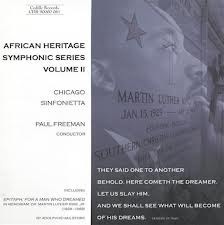
Building on the work he had begun with the Black Composers series for Columbia in the 1970s conductor Paul Freeman released three CDs in the Cedille series called ‘African Heritage Symphonic Series’. With the orchestra he founded Freeman presents music by Samuel Coleridge-Taylor, Fela Sowande, William Grant Still, Ulysses Kay, George Walker, Roque Cordero, Adolphus Hailstork, Hale Smith, David Abel’s, David Baker, William Banfield and Coleridge-Taylor Perkinson. Freeman released a CD dedicated exclusively to the music of Coleridge-Taylor Perkinson as well.

Violinist Rachel Barton-Pine released a disc of violin concertos by 18th and19th century black composers on Cedille and there is a disc of choral music which includes music by black composers.

Let’s turn now to the Albany www.albanyrecords.com label where you can find more of the artistry of Paul Freeman in 18 albums where he presents neglected music of the 20th century by a wide variety of composers black and white. Most of it is by American composers and much of that in styles related to the mid-century styles of the likes of William Schuman, Aaron Copland and their students. While these discs include music by many of the previously mentioned black composers there are no duplications of works or performances. I have heard but a few of these discs but what I have heard is enough to convince me to plan to purchase the others. Freeman, in addition to bringing the music of black composers to the listening audience has done a fine job of documenting many whose work has been little heard until now.

20130218-183122.jpg

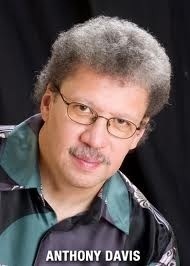
Another composer who fits more or less into the context of the conventions of the western concert traditions whose work has informed my listening is that of Anthony Davis (1951- ). While he has played with musicians from more experimental traditions the influence of the western concert traditions is more easily heard.

His study of jazz as well as western classical and eastern gamelan are all evident in his work (though not necessarily all at the same time). The New York City Opera produced his, ‘X, the Life and Times of Malcolm X’ in 1986 and the Lyric Opera of Chicago produced ‘Amistad’ in 1997. He has written concertos for piano and for violin as well as music for orchestra and smaller ensembles. At the time of this writing he is professor of music at the University of California San Diego.

So far the music we have discussed has been of the sort more commonly heard in concert halls these days. Freeman’s efforts have seemingly jump-started the recording industry to pay some attention to the music of black and other neglected composers. Certainly there is much more gold to be mined there. But we have yet to address the contemporary scene, the new and creative artists who are bringing innovative ideas and sounds and advancing the musical arts for subsequent generations. Following on the innovations of great jazz artists such as Charlie Parker, John Coltrane and Ornette Coleman (among many) there was increasing focus on techniques being used by contemporary “classical” composers

20130218-190530.jpg

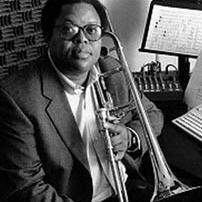
To these ends there is no better place to start than with the AACM, the American Association of Creative Musicians. Founded in Chicago in 1965 this collective has strived to bring various elements of black culture in an incredibly eclectic and experimental milieu which has had and continues to have an influence on music, musicians and audiences. This collective was finally given a proper overview in George Lewis’ book, ‘A Power Stronger Than Itself’. Lewis, a trombonist, composer and currently professor of music at Columbia University in New York was a member of the AACM.

The AACM was not the only such collective but it was one of the most visible, at least to me. And it continues to develop and evolve bringing the complex and innovative musical ideas evolving from the black roots of jazz to a level of recognition and respect formerly accorded pretty much exclusively to European academic models. The AACM, dubbed “Great Black Music” also strives to retain the identity of black music by black peoples of the world looking to non-western models that predate European colonialism marrying them to the best of European models as absorbed by the diaspora. Many of their members now hold academic positions including Roscoe Mitchell, Anthony Braxton, Wadada Leo Smith and Nicole Mitchell.

20130218-190751.jpg

Perhaps the best known ensemble to come out of the AACM is the flexibly-membered Art Ensemble of Chicago. Their album ‘Third Decade’ released in 1984 is representative of their work and also marks a sort of end to one creative era for this flexibly-membered group. Most listeners will hear this as progressive jazz and it certainly has those elements. But repeated listenings reveal many layers to this work. And this is but one of a large catalog of albums as diverse as they are numerous (about 50 albums and still counting). More on their work at their website www.artensembleofchicago.com.

20130218-190928.jpg

Another prominent figure that was a member of AACM is Anthony Braxton, saxophonist, composer, chess master who dislikes the term ‘jazz’ in reference to his music. He is currently professor of music at Wesleyan University. And indeed his music which ranges from solo saxophone work to small ensemble and orchestral music and opera are difficult to classify. His experimentalism is related to but not derivative of the work of John Cage. It would be impossible to represent his musical output in a single album but the solo saxophone ‘For Alto’ (1968) and ‘Creative Orchestra Music’ (1976) are good places to start in his discography of well over 100 albums. His website tricentricfoundatio.org offers many of his recordings for sale and even offers free downloads of bootleg recordings.

20130218-185224.jpg

<a

For the sake of brevity I will discuss only one more artist in this blog entry, Julius Eastman (1940-1990). He was a composer, vocalist, pianist and dancer. As a vocalist he sang and recorded the music of Meredith Monk, Peter Gordon, Morton Feldman, Arthur Russell and Peter Maxwell-Davies. He was very much a part of the avant garde downtown scene in New York of the 1970s.

At the time of his sad death from a heart attack at the age of 49 there were but a few recordings of his work (collected in a nice 3 CD set on the New World label). And many of his scores were lost when he was unceremoniously evicted from his apartment. The composer Mary Jane Leach is attempting to collect and preserve his legacy and has made many of his extant scores on her website http://www.mjleach.com/eastman.htm.

Without a doubt there are many more black classical and avant-garde artists I have yet to discover. I welcome suggestions and I hope that the preceding ideas will stimulate and encourage others to explore these artists and works.