Political Classical: Leonard Bernstein’s Mass, a Synthesis of Religion, Music Theater, and Politics


Leonard Bernstein‘s liberal political sympathies are well known. But they were never as clearly presented in his music as they were in his ‘Mass’ from 1971. The work was commissioned for the opening of the Kennedy Center for the Performing Arts in Washington, DC and dedicated to the memory of John F. Kennedy.

In using the structure of the Catholic Mass Bernstein echoes the embrace of Christianity of previous Jewish composers like Schoenberg and Mahler.  Mahler embraced Christianity at least partly to get work in the increasingly antisemitic atmosphere of late nineteenth century Europe. Schoenberg’s dalliance with Christianity was more that of an existential crisis as he watched the rise of the Nazi party and their genocidal horrors. Bernstein’s embrace of Christianity seems a combination of homage and disappointment. He knew well the glories of liturgical settings of the traditional texts by the likes of Bach, Haydn, Mozart and Beethoven and had himself made an a capella setting of the mass using music he had originally written for Jean Anouilh’s play, “The Lark”.

He also knew well the suffering and deaths occurring in the protests against the Vietnam war and the struggles of American citizens for equality in the Civil Rights movement as well as the struggles in the war itself and the failure of religious institutions to stem the tide of violence.

Bernstein had dealt with religious themes in his first Symphony from 1942, which set texts from the Biblical “Lamentations of Jeremiah” in the last movement. His Chichester Psalms of 1965 set three Psalms in Hebrew. And, his Third Symphony, “Kaddish” (1963) can be seen as a forerunner to the 1974 “Mass”. His final symphony became a post hoc requiem subsequently dedicated to John F. Kennedy when, just weeks before the premiere, he was assassinated in Dallas. The composer dedicated the work to the late president. He also performed Mahler’s “Resurrection” symphony the day after John F. Kennedy’s assassination presenting it as a peaceful response to the murder.

Bernstein was no stranger to politics and progressive ideas and his activism is central to his life and legacy.

The traditional mass is a ritual of sacrifice which the composer uses to talk about the sacrifices of lives and culture occurring during the ongoing Vietnam war. It laments the ineffectiveness of religion in dealing with sociopolitical crises.  The full title of the score at hand is ‘Mass, a piece for singers, players, and dancers’. It was commissioned by Jacqueline Kennedy as the inaugural work for the opening of the newly completed Kennedy Center for the Performing Arts in Washington D.C. The first performance took place at the new Kennedy Center on September 8, 1971.

Richard Nixon had declined to attend ostensibly to not draw focus from Jacqueline Kennedy Onassis but subsequent research has determined that he had been warned by FBI head J. Edgar Hoover of the possibility of “subversive” texts within the piece.  He was apparently referring to the latin texts of the mass.  So, for “security” reasons, Nixon stayed home that night.

The work continues to be revived and recorded.

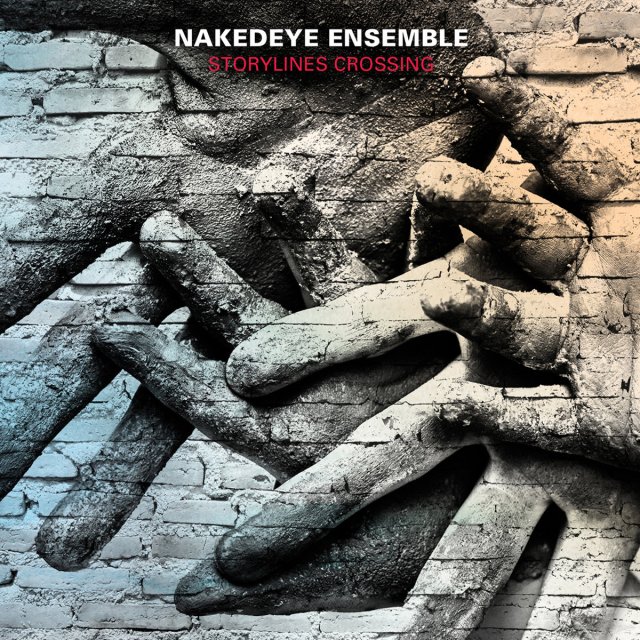
Nakedeye Ensemble: A Fine New Music Group Pays Homage to Past and Future


nakedeye

Starkland

It was only a few days after receiving this CD that I received a visit from a friend similarly interested in new music.  Shortly after that visit I discovered that the CD was missing.  My friend confessed to having taken it immediately when I asked but I already knew why he had taken it and why I might have done the same thing.  After all it’s a Starkland CD and this new performing ensemble have chosen for this, their debut recording, to do an arrangement of one of the finest pieces of political classical music ever.  It is their clever interpretation/homage of Frederic Rzewski’s Coming Together (1971) that provoked my friend’s larceny and laid bare my own moral weakness.  How could anyone resist that? (I told him took keep it and bought myself a new copy).

Nakedeye Ensemble was founded in 2011 with the intent of performing new music.  They were founded in Philadelphia

Curiously, of the six compositions featured on this release, three are “sociopolitical” and the other three I suppose come closer to a category like “absolute music”, the notion that music can be just about music.  While all art is a victim (or product) of its sociopolitical, geographical, and economic context one can at least say that there is a continuum in which some music actually depends on those contexts in a greater degree.  Sociopolitical music is a pet obsession with your humble reviewer.

The disc begins innocently enough with a fine rendition of Sextet (2010) by Jonathan Russell (1979).  This is a pleasant post-minimal work with rock influences and provides a gentle introduction to an apparently carefully constructed playlist designed to demonstrate some of the range of skills possessed by this group.  The influence of Steve Reich is present and functions almost like a framework for the post minimal music that emerges.  Another generation puts its stamp on this genre which is now older than anyone in this ensemble.

With the second track we get to one of those political pieces and to the second oldest composer represented.  Zack Browning‘s Decade of the Dragon (2015) was written to commemorate the 40th anniversary of the end of the Vietnam War and the 50th anniversary of its beginning.  Browning (1957- ) is professor emeritus at the University of Illinois and the director of the Salvatore Martirano Composition Award (Sal was also no stranger to politics).

Decade of the Dragon sounds like a post-modern sort of tone poem, evoking through musical quotation and development of original themes, the composer’s memories of the travesties that permeated those years formative to his development much as they were to your reviewer’s and doubtless many whom I imagine to be an ideal target audience for this music (and all the music on this disc actually).  And there is a sort of painful irony to hearing the artistic expressions of these sad historical events played (very effectively) by an ensemble for whom the events are solely history.

Rusty Banks‘ (1974-  ) “Surface Tensions” (2015) is another playful post-minimalist essay which is not afraid of a little experimentation.  Banks is among the younger composers here but this little sampling of his work suggests we will be hearing much more from his pen.

Randal Woolf  (1959) is a name which will likely be more familiar to listeners as he is a seasoned member of the so called “downtown” musicians.  He applies his considerable compositional skills to a politically infused work, “Punching the Clock” (2015).

There is a dedication and respect communicated by these musicians for their art, the artists whose work they interpret, and for the history that inspired some of them.  Nowhere is this better demonstrated than by the last track, Frederic Rzewski’s Coming Together (1971).

This piece has been done by many ensembles over the years but the only recording other than Rzewski’s original on Opus One records is one by the Hungarian ensemble “Amadinda”.  The text is spoken clearly, dramatically, and effectively and in English, albeit with a charming Hungarian accent.  There are also various lovely and interesting readings to be found on You Tube (including an uncharacteristically hesitant reading by rapper/actor Mos Def) but the arrangement by resident composer Richard Belcastro does a stunning (Am I too old to say “reboot”?) or reworking of the original.

Using different voices, intonations, and inflections this arrangement uses the voices in a sort of pointillistic counterpoint with voices having solos, sometimes answering each other, sometimes together.  Ranging from plain speech to whispers to various different vocal inflections this arrangement sort of democratizes the voices and creates a scenario in which the listener could envision their own voice and struggles.

The music here is great all the way through but the special joy of this release is the discovery of these youthful artists whose insights belie their age and whose technical skills suggest that Nakedeye can now take their place (alongside Eighth Blackbird, ICE,  Alarm Will Sound, Band on a Can All Stars, etc.)  Definitely a group that bears watching/listening.