The Next Chapter of East Meets West, John Pitts’ Raags for Piano


I recall with nostalgia my first hearing of Yehudi Menuhin’s collaboration with Ravi Shankar titled, “East Meets West”.  I was in high school and had not yet heard the exotic sound of the sitar.  Menuhin’s ability to grasp and communicate world music to an audience schooled in the Western European classical traditions is a treasured part of his legacy.

Along comes composer pianist John Pitts (1976- ) who encountered raga scales and Hindustani classical forms during a “gap year” in his musical studies in 1995.  This encounter subsequently spurred him to write the present book, a seemingly obvious idea but one that has not been attempted in quite this way as far as I can determine.  Pitts is a highly skilled pianist and composer.

This book assumes no more than a basic grounding in western classical music and at least a modicum of skill at the keyboard.  With that and the present text the interested reader/player will be brought to a fine introduction to Hindustani scales and forms and have a method by which at least some of these ideas can be applied to the ubiquitous piano thereby providing another perspective.

Of course the microtonal aspects of this music cannot be reproduced on a piano but the basic concepts of the scales and the improvisational methodology will surely enhance the imagination and skills of any interested musician.  The book introduces these concepts in a lucid manner and provides notation and methods enabling one to play a variety of ragas at the keyboard in a fairly short time.

I have lived with this book for several weeks now and find it endlessly fascinating.  Even with my limited keyboard skills I have been able to scratch the surface and begin to explore some of the essence of this ancient musical system.  Very likely this text will do much to enhance the compositional imagination as well as one’s keyboard skills.  Some may recall, for example, that Philip Glass developed his mature compositional style after his encounter with this musical system in his work with the same Ravi Shankar whose mastery inspired Sir Yehudi Menuhin to bring this music to a western audience.

Recordings have made so much world music with its varied scales, rhythmic structures and tuning systems available to a much wider audience but much less has been done to provide interested musicians with a more hands on experience.  This book does much to address this gap.  It does not pretend to be a definitive exposition of this musical system nor does it attempt to create more than a basic pedagogy which will encourage further exploration.  This book is very much a continuation of the interest begun by Menuhin, Glass and their followers.

Bravo, Mr. Pitts!

His very useful and interesting website can be accessed at: http://www.johnpitts.co.uk/

C’mon, There’s at Least Twenty Saints in There: A fine new recording of the Virgil Thomson opera, Four Saints in Three Acts


4s3a

BMOP/sound 1049

This recording is a fine example why I have come to love the work of Gil Rose and his Boston Modern Orchestra Project.  The scope of his musical choices ranges from intelligently selected new music projects by living composers and a fabulous survey of music by older composers that he considers worthy of attention again (and sometimes for the first time).  All BMOP recordings (even those on other labels) are consistently of the highest quality and the performances are definitive.  This series now on the orchestra’s own label is rapidly becoming a sort of canon defining modern music, or at least one vital vision of it.

There appear to be only two other recordings of this masterwork.  The first is a cobbled together mono version released on RCA with the composer conducting most of it and Leopold Stokowski conducting some numbers in this abridged performance.  The second is the very fine 1981 version by the Orchestra of Our Time under the able direction of Joel Thome.

The differences between these recordings is far less important than the fact that we now have three versions of this American operatic masterpiece for our listening enjoyment.  The BMOP recording is up to their usual high standards with wonderful sound and fine interpretation and musicianship.  

This 1934 opera premiered in Hartford, Connecticut and then opened on Broadway (yes, in New York) with an all black cast and ran for a record 48 performances.  Black music pioneer Eva Jessye conducted her choir and the production was directed by a young John Houseman who had just begun to turn his talents to the theater.

The libretto is by Gertrude Stein who later collaborated with Thomson on The Mother of Us All.  Her word play is more about sound than grammar (or mathematics for that matter).  It is in four acts and features more than four saints.  The music is classic Americana with the essences of folk musics and spirituals.

This is a gorgeous and fun piece which deserves to be in the canon of great American operas.  Want to make America great and celebrate Black History Month?  Then grab this recording and sit back for a wonderful listening experience.


When Politics and the Arts Clash, OM 22


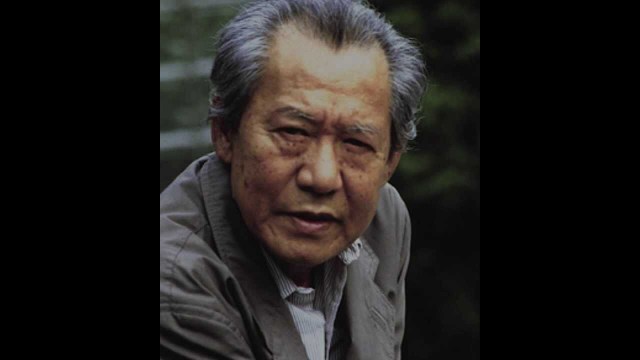
Isang Yun (1917-1995)


The relationship between politics and music is complex and varied.  There are many instances of clashes between these two disciplines from the politics of state and church sponsored music to its repression by those same institutions.

After centuries of Catholic church sponsored music a decision was made in 1903 to repress the performance of anything but Gregorian chant and any instruments except for the ubiquitous organ.  The reasons for this decree have been discussed but the end result was less work for musicians.

More recently the Nazi “degenerate art” concepts and the later proscriptions on “formalist music” in Soviet Russia similarly put artists and musicians out of work.  In fact many were jailed or killed.  Shostakovich and Prokofiev were high profile musicians who endured bans on performances of their music based ostensibly on claims that it brought (or potentially brought) harm to the state’s political visions.

Even more recently the blacklist created by Joseph McCarthy and his acolytes perpetrated a similar assault on actors, directors and writers like Dalton Trumbo (recently dramatized in the excellent film Trumbo with Bryan Cranston leading the fine cast).  This sad chapter of history did not completely end until the 1970s and only recently have efforts succeeded in restoring suppressed screen credits to these films.  Many lives were destroyed or irreparably harmed.  One hopes, of course, that such travesties will not be repeated but the recent efforts to eliminate the NEA suggest that such struggles remain with us.

On February 18th Other Minds will present a centennial celebration of two composers’ births.  Lou Harrison certainly expressed some political themes in some of his music but did not incur state sponsored political wrath.  Unfortunately this was not the case with the other honoree of Other Minds’ 22nd season.

In 1967 Korean composer Isang Yun was kidnapped by South Korean intelligence officers and taken to South Korea to face accusations of collaboration with the communist government of North Korea.  He was held for two years and was subjected to interrogation and torture based on information later acknowledged to have been fabricated.  Even so South Korea declined to allow the ailing composer’s request to visit his hometown in 1994.  He died the following year in his adoptive home in Berlin, Germany.

A petition signed by over 200 artists including composers Karlheinz Stockhausen, Hans Werner Henze, Gyorgy Ligeti and conductors Otto Klemperer and Joseph Keilberth among the many was sent to the South Korean government in protest.  A fine recent article by K. J. Noh, Republic of Terror, Republic of Torture puts the incident in larger political context. It is a lesson sadly relevant even now in our politically turbulent times.

The concert will feature works from various points in his career, both before and after the aforementioned incident.  It is a fine opportunity to hear the work of this too little known 20th century master.  Conductor and pianist Dennis Russell Davies knew and worked with both Harrison and Isang.  It is so fitting that he will participate along with his wife, justly famed new music pianist Maki Namekawa, in this tribute to the the late composer.  This can’t right the wrongs but what better way to honor a composer than by performing his music?

The performance is at 7:30 PM at the historic Mission Dolores Basilica at 3321 16th Street
San Francisco, CA 94114.  Tickets available (only $20) at Brown Paper Tickets.

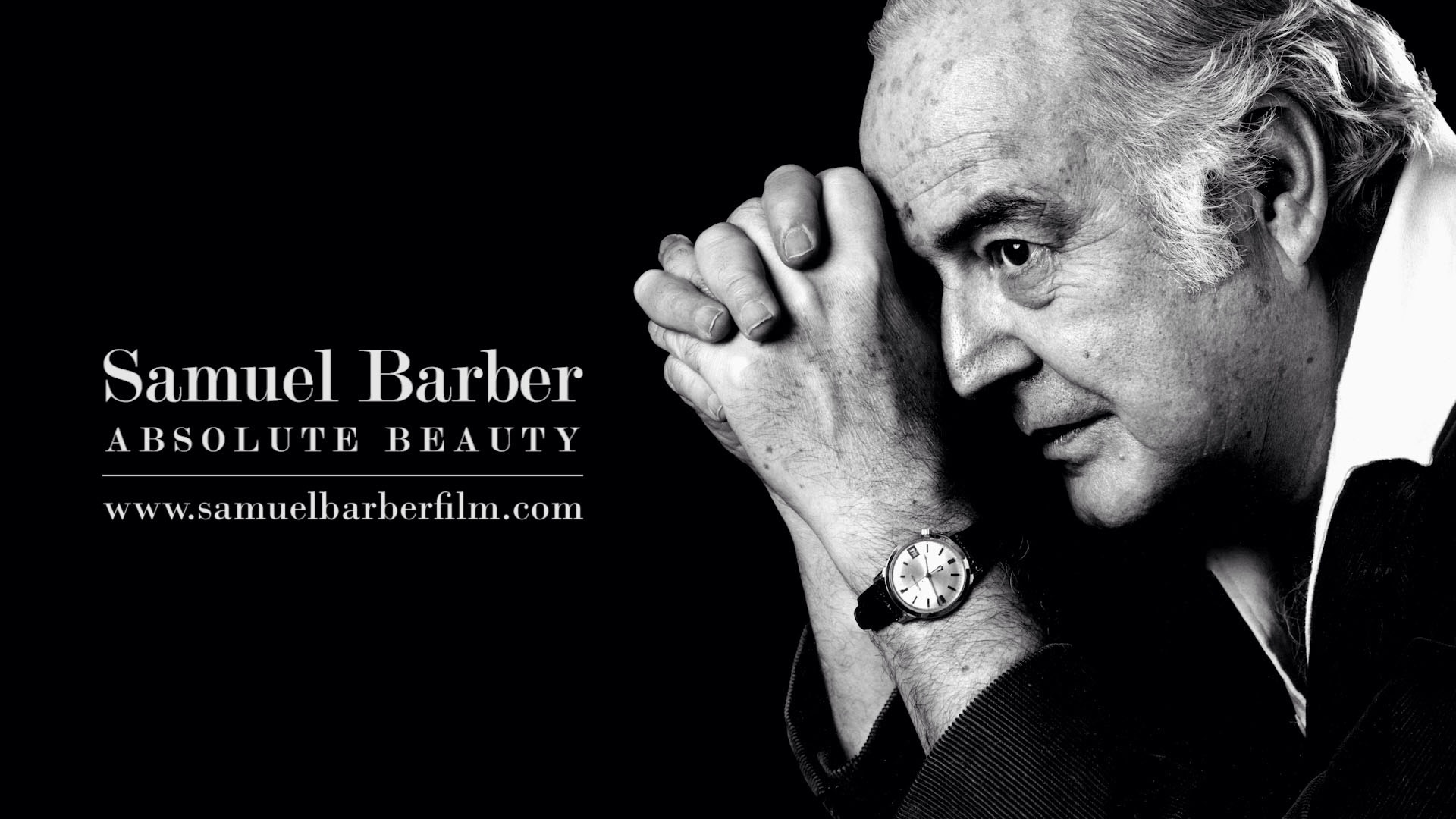
Samuel Barber in Perspective, A New Documentary


It is surprising that this first ever documentary on American composer Samuel Barber (1910-1981) comes some 36 years after his passing.  This two time Pulitzer Prize winner whose now ubiquitous Adagio for strings was first championed by Arturo Toscanini was much lauded and performed during his lifetime.  His two grand operas (Vanessa and Antony and Cleopatra) were performed at the Metropolitan Opera and his increasingly popular Violin Concerto was first recorded by Isaac Stern with Leonard Bernstein and the New York Philharmonic.

Barber’s music is a personal favorite of this writer.  This mid-century neo-romantic master is gaining greater recognition through an increasing number of performances and recordings so this release would seem to be a timely one.  

Filmmaker H. Paul Moon will be screening an discussing the film ahead of its March 23rd release on disc.  The screening will be at the Jarvis Conservatory at 1711 Main Street in Napa, CA at 7 PM on Friday, February 10. It will be preceded by a performance of the justly famed Adagio for Strings in its original form for string quartet.

The trailer is available for viewing at the website noted above and the site contains further info about rental and purchase.