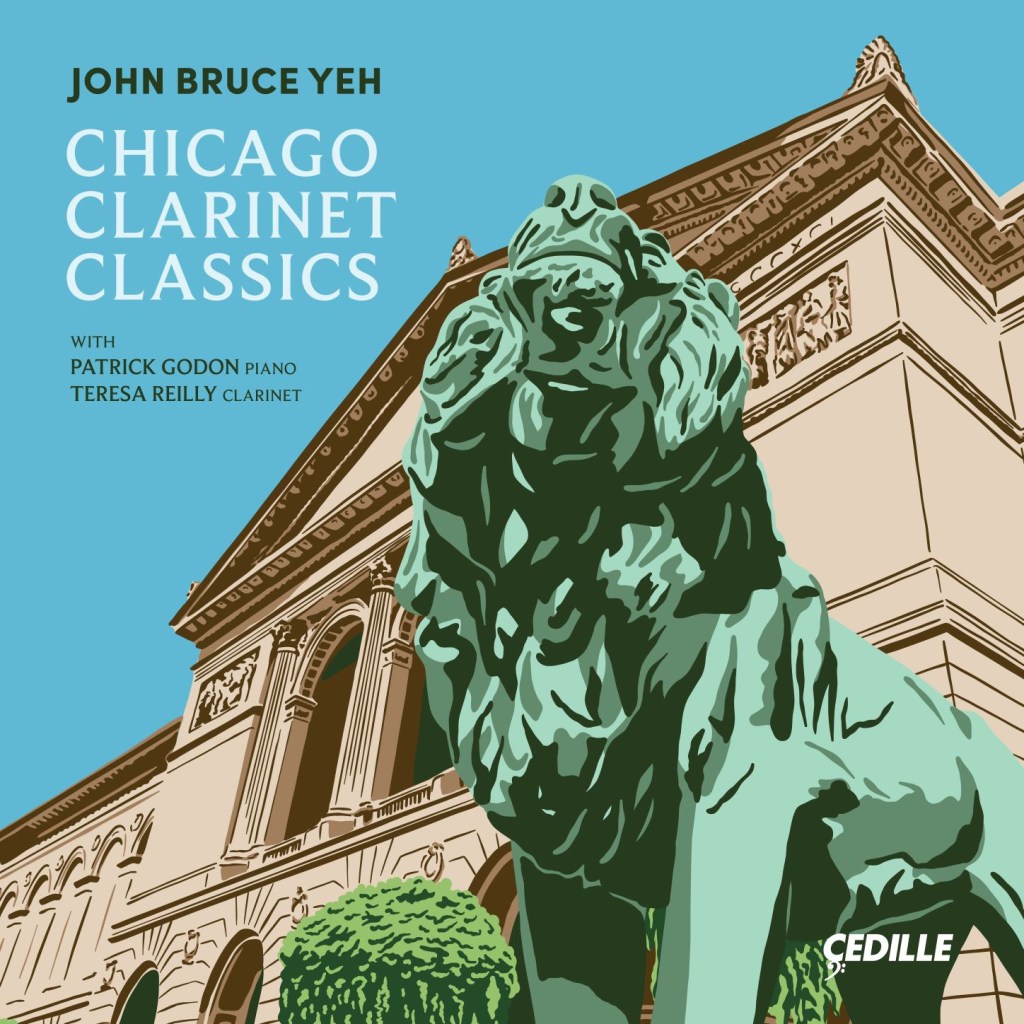
Professor Yeh has been assistant principal clarinet with the Chicago Symphony since 1977 when he was just 19. As a former Chicagoan I can recall that Yeh’s hiring seems to have marked a change in the more traditional image of an orchestral musician. In addition to being an inspiration to aspiring musicians of Asian heritage his media presence also drew interest from both listeners of Asian Heritage but also young listeners (I turned 21 when he was hired and was pleased to find an artist who communicated to me and my age group).
In addition to his duties with the CSO, he has actively supported music and music making in his adopted home town. It is his support for local composers that he showcases here. This disc features music by Alexander Tcherepnin (1899-1977), Stacy Garrop (1969- ), Leo Sowerby (1895-1968), Shulamit Ran (1949- ), Teresa Reilly (1976- ), and Robert Muczinski (1929-2010).
Alexander Tcherepnin, whose father Nikolai was a student of Rimsky-Korsakov, and whose sons, Serge and Ivan, along with grandsons Sergei and Stephan are all highly accomplished composers comprise a multigenerational artistic dynasty of sorts. Russian born Alexander taught in Chicago thus qualifying him for inclusion in Cedille recordings’ mission to promote artists with a “second city” connection. He is well represented in recordings but is less present in the concert hall these days. His brief Sonata in one movement for clarinet and piano (1939) takes the first track on this fine chamber music release. It is a deservedly popular recital piece with a style that sounds a bit like Shostakovich, one of his contemporaries.
Stacy Garrop is a favorite of this reviewer. Her work has been reviewed elsewhere in this blog. She is a freelance composer of immense talent and skill. Her work is featured on at least 12 Cedille albums as well as other labels. Phoenix Rising (2016-18) was originally for alto saxophone (subsequent versions were made for flute and for violin) is presented here in a world premiere transcription for clarinet. As with all her music, Garrop shows herself to be a master of color and texture. She uses both traditional and extended techniques to achieve her compositional visions. These can be challenging for performers but the end result is always worth the effort. Garrop derives inspiration, as she frequently does, from world mythology. Here, of course, the familiar Phoenix bird that lives some 500 years and rises again from the ashes of its funeral pyre.
Leo Sowerby, long associated with Chicago as an organist, composer, and teacher, is represented here by his 1944 clarinet sonata (here in its world premiere recording). Written in the year which saw him win the Pulitzer Prize for music (for Canticle of the Sun), this sonata takes on near symphonic dimensions in its four movements. Sowerby is generally well represented on recordings (8 discs on Cedille alone). His lyrical writing is expressive and accessible and it is perhaps just a matter of time before someone orchestrates this work to present it as a concerto. At just a bit under 30 minutes, it is the largest work on this release.
Shulamit Ran, Israeli/American composer and pianist, student of the great Ralph Shapey, 1991 Pulitzer Prize winner (for her 1989-90 Symphony), Andrew MacLeish Distinguished Service Professor Emerita at the University of Chicago is represented on this recording by her Spirit for solo clarinet (2017). The work is dedicated to the composer’s friend, clarinetist Laura Flax (1952-2017). This is its world premiere recording. Ran’s music has gotten some recordings but her large and substantial orchestral works like the Symphony and a fine Concerto for Orchestra remain unavailable on recordings (even more egregious is the general lack of representation of her mentor, Ralph Shapey’s music). This solo clarinet work is a testament to her compositional talents. Here’s hoping we get to hear more.
Teresa Reilly is a clarinetist, composer, and life partner of Mr. Yeh. The Forgiveness Train (2020) is described as, in part, a response to the COVID epidemic (Yeh notes that much of this album is similarly inspired). The three movement work is essentially a sonata with a loosely poetical program. It is a lyrical work with nods to minimalism and jazz. This is the world premiere recording.
The disc concludes with the four movement Time Pieces for clarinet and piano (1983). This work (the second longest on the disc) is, like the Sowerby piece, substantially a concerto that waits an orchestrator for the piano part. Robert Muczinski, Chicago born composer studied under Alexander Tcherepnin whose music opens this release. The Opus 43 work was commissioned and premiered by former CSO principal clarinet Mitchell Lurie with Muczinski at the piano.
Mr. Yeh is, as always, a joy to hear. He is most ably supported by pianist Patrick Godon on piano (tracks 1, 4-7, and 12-15) and, of course by (more properly with) Teresa Reilly (tracks 9-11). This release, from the Art Institute depicted in (Chicago artist) Steve Shanabruch’s distinctive cover art to the composers represented, is pure Chicago in the best ways.
NB, I have made corrections on errors very publicly posted on the composer’s website. The changes are factual corrections and copyright citations. My blog is intended to provide the perspective of an avid listener and to promote music which I believe deserves attention and I believe I have done that. I’m always happy to correct errors of fact but I retain the right to my opinion. To be clear, I like the album very much.
I hope that my flippant title for this review does not offend. But an artist who creates new acoustic instruments of unusual tunings which he plays and for which he has written music sounds a lot like spiritual progeny to Harry Partch. Partch had no children and even if he did it is unlikely they would have followed in his footsteps. Strictly speaking, Cris Forster may be more like “nephew of Partch” given that he is following his own distinct trajectory and is doing so in a very different time. But he embodies the ethic and has made it his life’s work to compose in non-standard tunings and to create instruments capable of playing those tunes accurately and effectively. Forster is, in a metaphorical sense, a sort of spiritual progeny, one that would have made daddy proud.
The instruments are themselves works of art. This is Chrysalis II. Chrysalis I is on the album cover. Photos from CD booklet.
Cris Forster (1948- ) was born in Brazil, became a US citizen in 1966, and earned a degree in history from UC Santa Cruz in 1970. After graduating in 1974 from Lone Mountain College (now the University of San Francisco) with a degree in piano performance, he began building his own instruments in 1975 and, in 1976 (two years after Partch died), he began a four year stint as curator, archivist, and performer for the Harry Partch Foundation. While there he maintained the original Partch instruments, created what I’m calling “Post Partch” instruments, and subsequently performing both Partch’s music and his own compositions. In 2000 he published “Musical Mathematics”, a comprehensive accounting of his researches.
Harmonic/Melodic Canon, another beautiful “post Partch” instrument.
Forster also wrote this nearly 1000 page tome to describe his work, available on Amazon. It is arguably a continuation of Harry Partch’s defining book, “Genesis of a New Music”. I guess that makes this a “post Partch” book.
It is fairly easy to write about Forster, his book, his CD. But it is extremely difficult to communicate meaningfully about the sound of his music and how these beautiful but odd looking instruments are played. To that end I will provide a few YouTube links so that readers can experience the music itself: “A child said What is the grass” (1986); “Blue Nights” (2013). These are from Forster’s YouTube channel where you can see/hear more. Don’t worry about the unusual tuning. After a few listens (at least for this listener) one begins to hear it as the beautiful music that it is, a worthy successor to the Partch legacy.
There are eleven tracks featuring selections from two large works, Song of Myself: Intoned Poems of Walt Whitman (1977) written for Chrysalis I, Harmonic/Melodic Canon, and Voice; and Ellis Island/Angel Island (1978-2023) for a larger ensemble but without voice consisting of four groups of instruments: Stringed instruments: Chrysalis I, Chrysalis II, Harmonic/Melodic Canon, Bass Canon, and Just Keys; percussion instruments: Diamond Marimba I, Diamond Marimba II, and Bass Marimba; friction instrument: Glassdance; and wind instruments: Simple Flutes. And the informative liner notes are by Heidi Forster who also plays in the ensemble.
1.Song of Myself: Intoned Poems of Walt Whitman Song of Myself (Excerpts): No. 2, “A Child Said What Is the Grass?” Cris Forster: voice, Chrysalis I
2. Ellis Island/Angel Island (Excerpts): X. Blue Nights David Boyden, Heidi Forster, Isabelle Jotterand, Benjamin Koscielak playing Glassdance, Just Keys, Bass Canon, and Bass Marimba
3. Ellis Island/Angel Island (Excerpts): IX. Dream Time Jacob Richards playing Diamond Marimba II
4. Song of Myself (Excerpts): No. 10, “The Past and Present Wilt – I Have Fill’d Them, Emptied Them” Voice and Harmonic/Melodic Canon played by David Boyden
5. Song of Myself (Excerpts): No. 11, “The Spotted Hawk Swoops by and Accuses Me, He Complains of My Gab and My Loitering Voice and Harmonic/Melodic Canon played by David Boyden
6. Ellis Island/Angel Island (Excerpts): “I. Good-Bye” Just Keys played by Isabelle Jotterand
7. Ellis Island/Angel Island (Excerpts): “II. Farewell” Just Keys played by Isabelle Jotterand
8. Ellis Island/Angel Island (Excerpts): “III. Far Away” Just Keys played by Cris Forster
9. Ellis Island/Angel Island (Excerpts): “VII. Lullaby” Glassdance played by Heidi Forster
10. Ellis Island/Angel Island (Excerpts): XI. Wild Flower Cris Forster and Benjamin Koscielak playing Diamond Marimba II and Bass Marimba
11. Ellis Island/Angel Island (Excerpts):“IV. The Harbor” Heidi Forster, Benjamin Koscielak, and Jacob Richards playing Glassdance, Bass Marimba, and Diamond Marimba II
The tuning sounds unusual at first but it grows on the listener. Happily there are plans to release the rest of the Whitman settings. Meanwhile we have this lovely release produced by John Schneider and Heidi Forster (with Cris Foster doing the recording and Scott Fraser the mastering) to listen to while we wait.
This album, largely a re-release of Barton’s groundbreaking recording of 1987 without the Violin Concerto No. 4 in D Major by CHEVALIER J.J.O. DE MEUDE-MONPAS (FL. C. 1786) but with the wonderful addition of Florence Price’s Second Violin Concerto of 1952. That alone is worth the price of this disc.
Rachel Barton
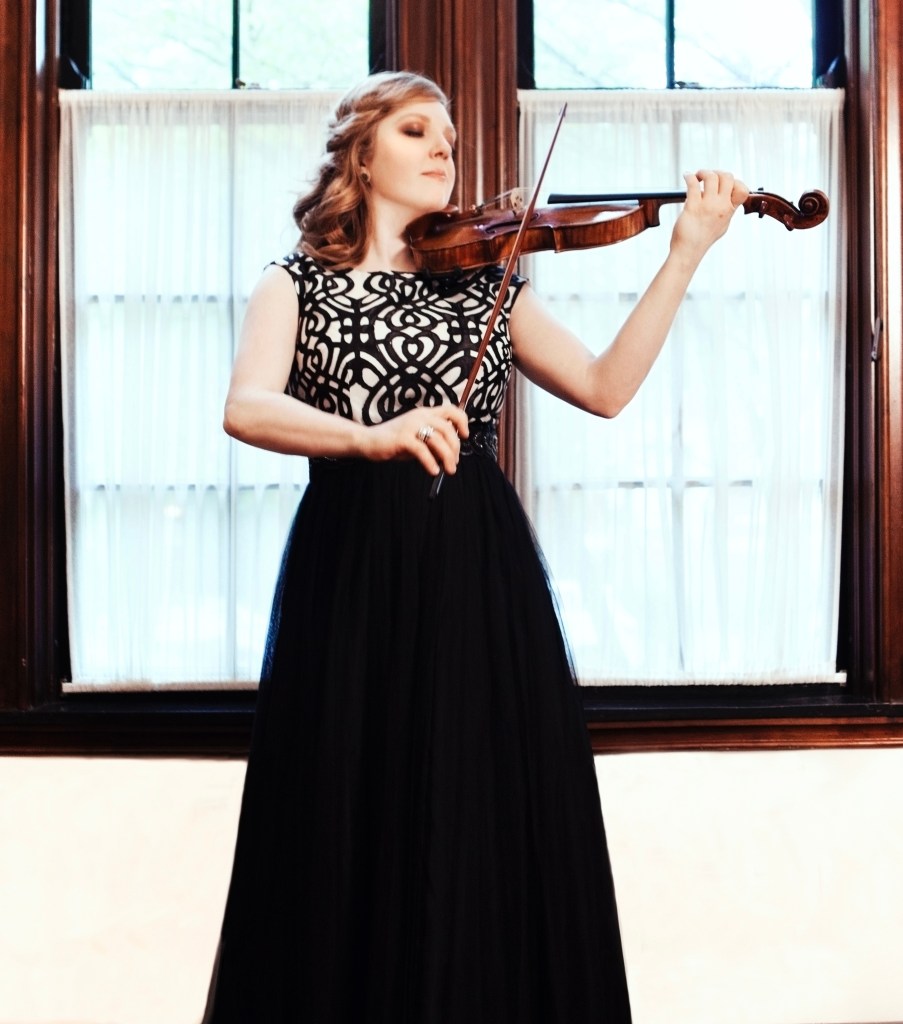
Rachel Barton Pine who made her debut at age 10 with the Chicago Symphony is a world renowned violinist and activist. With this, her 22nd release for Cedille she is clearly a darling of that fabulous hometown label. Her wide range of repertoire reflect a unique sensibility and a revelatory exploration of the work of black composers.
Cedille records has a pretty amazing history of paying attention to black composers. Four of their releases featured the late great black conductor Paul Freeman (1936-2015) whose groundbreaking survey of black composers for Columbia records remain indisputable evidence of their inexcusable neglect as artists. The Cedille recordings mentioned are an extension of Freeman’s original survey.
So let’s take a look at this new release.
JOSEPH BOLOGNE, CHEVALIER DE SAINT-GEORGES (1745-1799) Violin Concerto in A major, Op. 5, No. 2 (1775) (23:44) 1 Allegro moderato (10:22) 2 Largo (8:35) 3 Rondeau (4:35)
The new lavish biopic will happily reignite interest in this composer. The late conductor Paul Freeman (1936-2015) is the person who really first rescued this man’s work from oblivion. In the first volume of his landmark Black Composers series released March 8th, 1974. He devoted an entire disc to four works by this composer, a contemporary of Mozart and every bit the Austrian’s equal both as composer and performer. Freeman released recordings of his first (of two) symphonies, the first (of some 18) string quartets, one of the few surviving arias from his first opera, “Ernestine”, and the last of his eight symphonies concertante. Barton’s beautiful reading of the A major violin concerto of 1775 (he wrote 14) is her entry into this much needed and ongoing revival. Her reading is warm and very much up to the challenge of the virtuosity of the writing.
JOSÉ WHITE LAFITTE (1835–1918) Violin Concerto in F-sharp minor (21:32) 4 Allegro (11:39) 5 Adagio ma non troppo (4:50) 6 Allegro moderato (4:58)
This composer, also first brought to light by Maestro Freeman in its premiere recording in volume 7 of the Black Composers series released in June, 1975. The wonderful Aaron Rosand played the violin. Barton’s, released in 1997 is only the second recording of this little known Afro-Cuban composer. The concerto fits with her passion for the high romantic era where virtuosity was (nearly) all.
SAMUEL COLERIDGE-TAYLOR (1875–1912) Romance in G major for Violin and Orchestra, Op. 39 (12:32) Encore Chamber Orchestra Daniel Hege, conductor
This brief Romance for violin and orchestra mirrors similar works by Beethoven and Dvorak. Again her facility with high romanticism serves her well in one of this black English composer’s best known works.
FLORENCE PRICE (1887-1953) Violin Concerto No. 2 (1952) (14:42) Royal Scottish National Orchestra Jonathon Heyward, conductor
This, along with Price’s first concerto, fourth symphony we’re found in 2009 in a now abandoned house that once belonged to Price. The second concerto is presented in its second recording (both concerti were released on Albany Records in 2018. I haven’t heard that one but after hearing this performance from 2022 it’s hard to imagine it being done better.
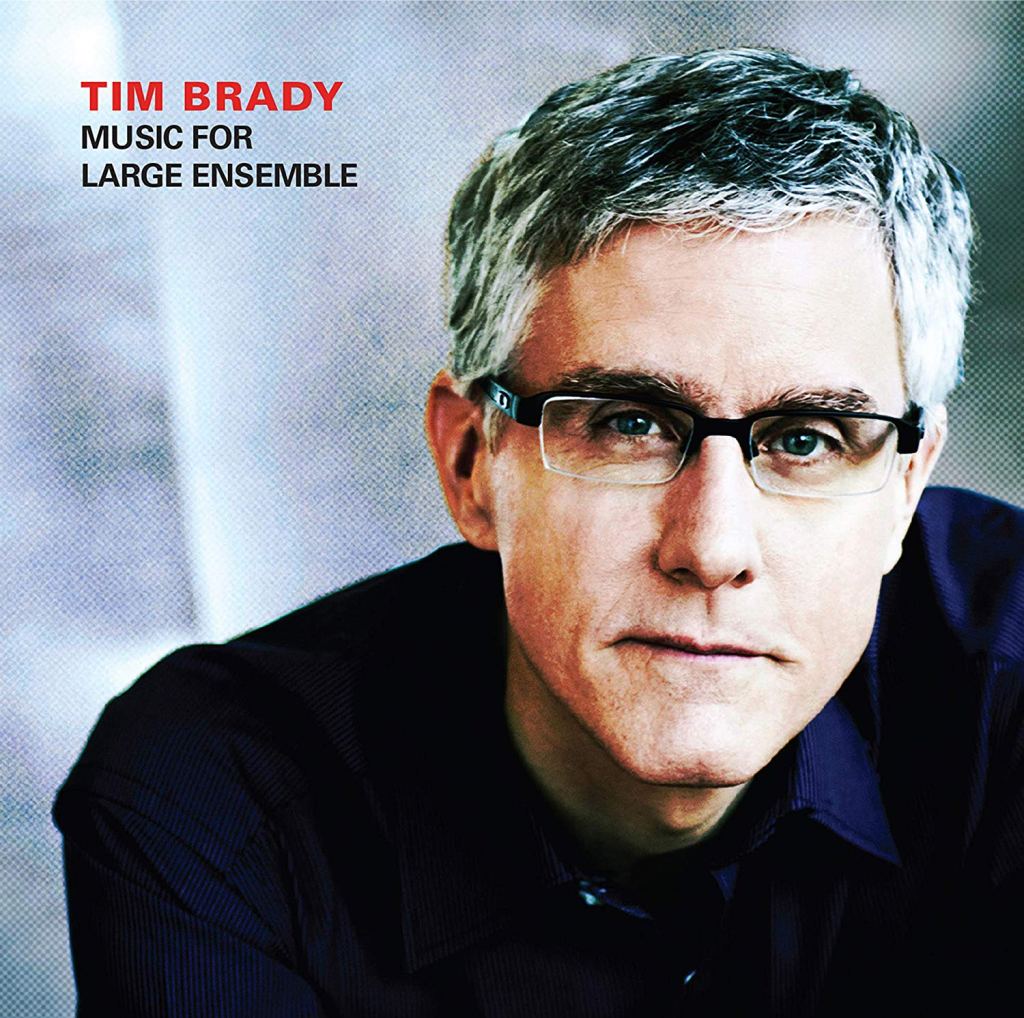
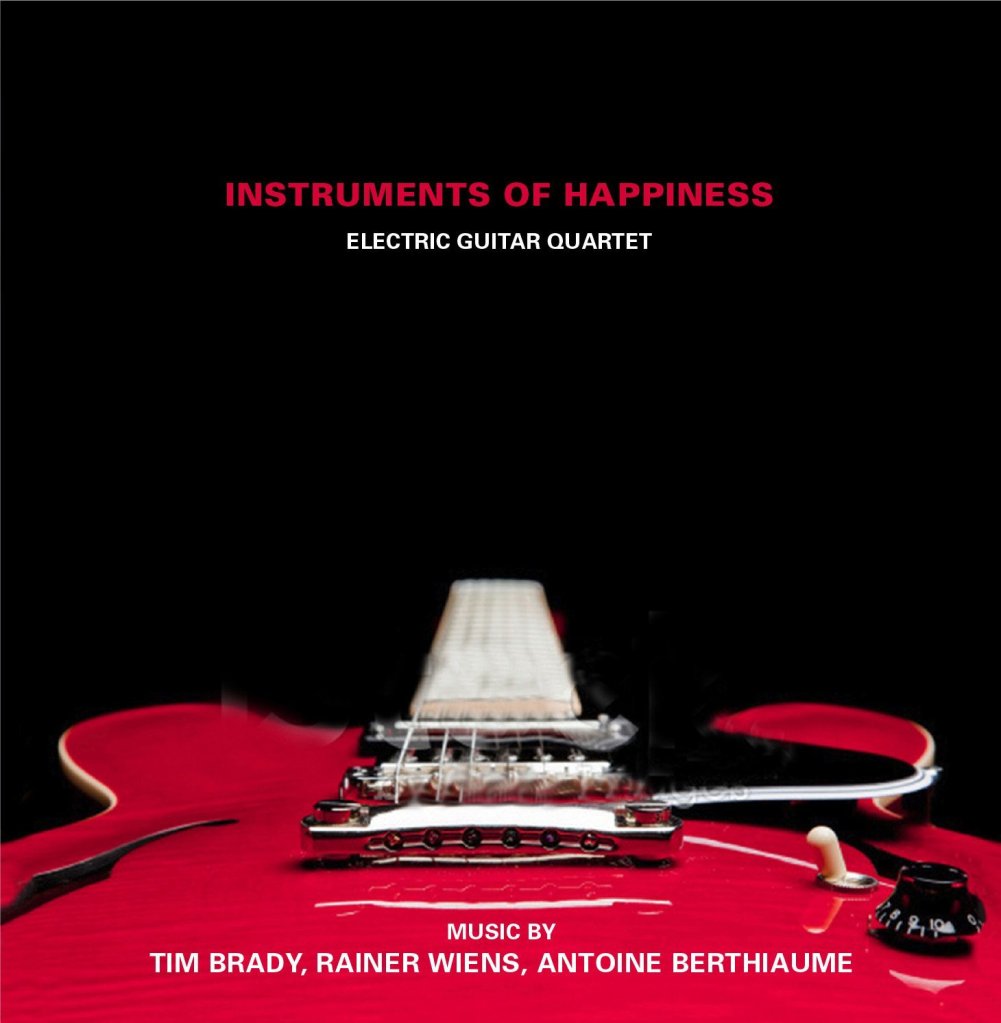
This is Tim Brady’s fourth Starkland release, a distinction shared by only two other composers, the late Tod Dockstader and (the delightfully very much living) Guy Klucevsek. And given the impressive track record of the Starkland label’s ability to find and promote innovative composers and performers who later achieve much wider recognition, this is an event that demands serious attention.
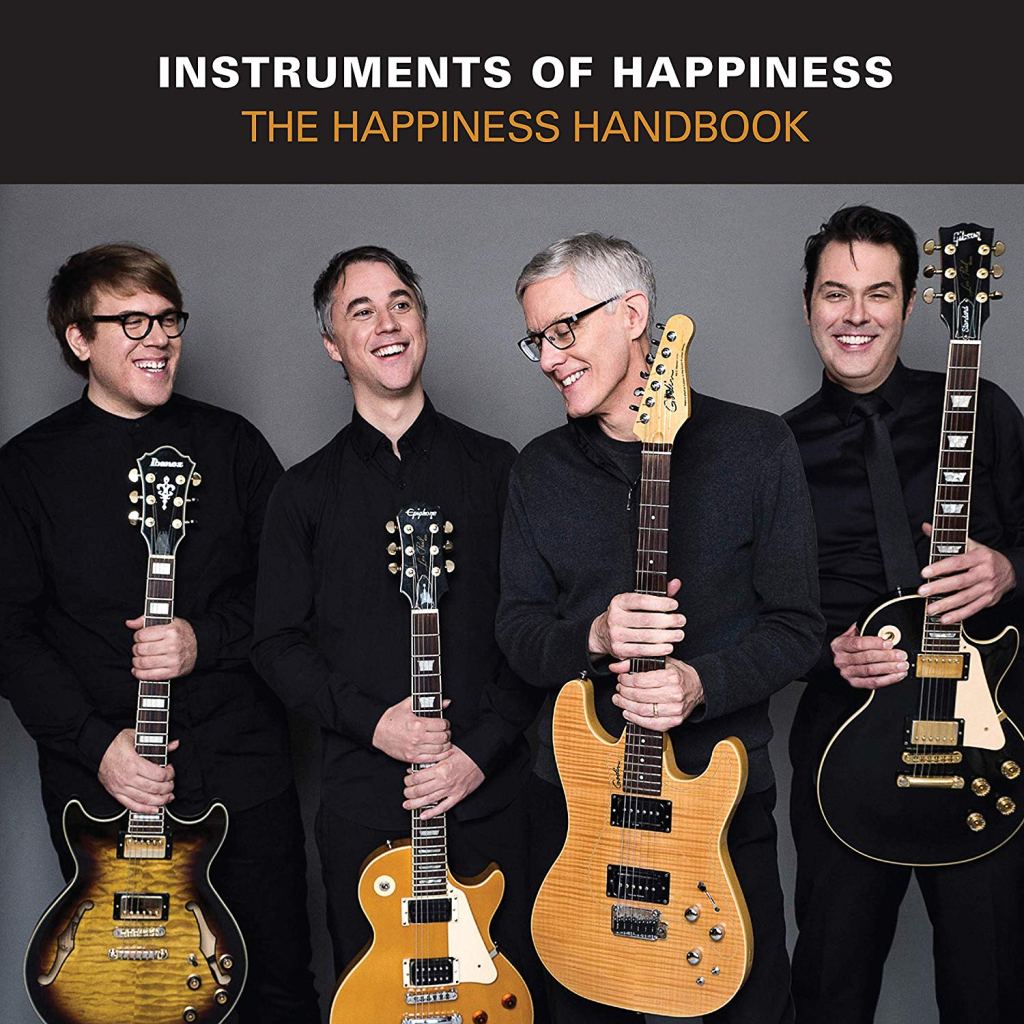
ST-232, released in 2019 contained works by Brady along with several associates from his “Instruments of Happiness” ensemble (and others) and is essentially a Brady album which features his “Instruments of Happiness” guitar quartet playing works by various Canadian composers.STS-230, also a 2019 release contained Brady’s Concerto for Electric Guitar and Chamber Ensemble along with Brady’s “Eight Songs for: Symphony No. 7”STS-224, a 2016 release, the recording premiere of this live performance guitar quartet, contained, along with a couple of shorter works by fellow Canadians, two versions of Brady’s Symphony 5.0, one for ensemble and a second version for solo guitar with electronics (arguably Brady’s first solo guitar symphony but the original version is for this guitar quartet).
With a catalog presently numbering some 39 plus CDs and a CV that boasts 4 operas and a massive catalog of compositions for ensembles ranging from solo to large orchestra, this proudly Canadian composer has mounted (metaphorically, of course) an invasion from the United State’s northern border of his distinctive artistic vision prompting this reviewer to suggest a comparison to the pop “invasion” of the Beatles in the early 60s.
Track listing
My admittedly tongue in cheek Beatles comparison is not meant to eclipse the incredible artistry of this obviously very industrious artist. My previous reviews compared his work to electric guitar giants like Rhys Chatham and the late Glenn Branca. But this only serves to illuminate a fraction of this man’s work. I invite listeners to peruse his well organized website to get a perspective.
But let me get back to this release. It is undoubtedly a bold move to use the term “symphony” to describe a work for a solo artist. Charles Valentine Alkan (1813-1888) wrote a symphony for solo piano (opus 39 nos. 4-10 from 1857) Kaikhosru Shapurji Sorabji (1892-1988) referred to his third piano sonata (1922) as a symphony and later wrote six more symphonies for solo piano between 1938 and 1976. And more recently the late Glenn Branca (1948-2018) wrote several works for various configurations of guitars he called symphonies. But this is the first symphony written expressly for solo guitar as far as I can determine.
“Symphony in 18 Parts for solo electric guitar (2021) – 50 minutes For solo electric guitar, FX pedals and looper, in 18 movements” as it is listed on the composer’s website is (if I counted correctly) his 8th Symphony. Brady apparently numbers his symphonies in order of composition without reference to instrumentation. While several of his symphonies involve one or more electric guitars, this is the first solo guitar work to which he gives the weighty title of “Symphony” (unless, as noted above, you count the solo version of Symphony No. 5).
The term “symphony” carries with it connotations, at least, of grandeur, painstaking structure, and serious music making. And this work is very serious and meticulously constructed. It is, of course, reflective of a mid career composer who has written a great deal and has learned from that experience. It has as much a right to be called a “symphony” as any similarly large and painstakingly written piece of music.
First, let me say that, other than a tendency to use one (or a lot more than one) electric guitar in his music, Brady’s music has relatively little in common with Glenn Branca and Rhys Chatham. In fact, Brady seems to have more in common with Steve Reich and Elliott Sharp. But while Chatham and Branca emerged from a music scene dominated by punk in all its iterations, Brady seems more connected to the Beatles and Les Paul.
The work is divided into 18 sections, each running a modest 1.5 to just under 5 minutes. It is a structure similar in this listeners mind to American composer Alan Hovhaness (1911-2008), whose Symphony No. 9 (1949-50) “St. Vartan”, a similarly epic masterpiece in no fewer than 24 short movements. It is the interrelatedness of those movements that make them a part of the whole symphony. And so it is with Brady’s Symphony. David Lang (Pulitzer Prize Winner and founding Bang on a Can” member) says essentially this in his segment of the liner notes that come with the recording. Tim Brady acknowledges much the same in his segment of the liner notes.
The cover art by fellow adventuring guitarist and composer Elliott Sharp is functionally an homage to Brady and his work. The recording by Tim Brady and Morris Apelbaum, mastered by Brady, Apelbaum, and John Klepko is lucid (and great on headphones especially when Brady pans the sounds across the stereo field).
The 18 movements all have titles which are metaphorically related to the music therein. David Lang aptly describes these varied and intense movements as sort of biographical statements about what the composer can do with his instrument. Each movement has both form and development much as one would expect of a symphonic movement.
On the one hand, this symphony is not easy listening. On the other hand it is likely catnip to electric guitarists as well as to new music enthusiasts including your humble reviewer. Brady’s Canadian invasion, far from a takeover, is simply a musician sharing his substantial art from across the northern border and presenting his latest efforts. Like the Beatles, Brady deserves to be welcomed. This prolific composer/performer/teacher/innovator has interesting things to say.
At first I attempted to write something about each of the 18 movements but I don’t think that would have added anything useful for prospective listeners. This piece taken as a whole most aptly deserves the descriptor “tour de force” as each movement seems to have its own character deriving from the composer’s use of various (apparently deeply studied and judiciously chosen) techniques and ideas which sometimes threaten to overwhelm the listener, sometimes with sheer volume, sometimes with dazzling virtuosity, sometimes with softness, sometimes with silence, and always with interesting ideas.
In some ways this is a collections of ideas and techniques the composer has amassed over some 50 + years of playing. Each movement seems to be a more or less self contained exposition of playing techniques and the composers own approach to harmony and invention. That sounds potentially very dull but this is not a collection of etudes didactically accounting for and crystallizing his ideas. It is the organic appropriation of personal achievements in developing his compositional style. And it is an homage to electric guitarists that preceded him. Not a textbook as much as perhaps a signpost defining his present stage of development even as he moves forward with other projects.
I suppose one could challenge the notion of calling this a work for solo guitar given the effects pedals, looping systems, etc. but the use of electronics and looping techniques as a compositional aid or method is so ubiquitous that point is moot. Call it what you like but just listen. Let the music flow over your ears. At the very least this is a defining milestone in Brady’s long and productive career. It’s hard to to imagine what he might do next but I’m sure he’ll think of something.
This is the third volume in the Catalyst Quartet’s wonderful and insightful survey of neglected works by black composers. The first focused on music by the black English composer Samuel Taylor Coleridge (1875-1912), the second on music of late nineteenth to mid-twentieth century American composer Florence Price (1887-1953). The present disc focuses on the works of three men whose musical careers were entirely in the twentieth century: William Grant Still (1895-1978), George Walker (1922-2018), and Coleridge-Taylor Perkinson (1932-2004).
William Grant Still is roughly contemporary with Aaron Copland (1900-1990). Copland has often been called the “Dean of American Composers” and Still has been called the “Dean of Afro-American Composers”. Such honorifics, while well intended, do nothing to describe the true depth and significance of either of these composers.
Similarly their best known works, Copland’s “Appalachian Spring” (1944), and Still’s “Afro-American Symphony” (1930) are fine pieces of music but cannot represent the whole of their respective authors’ outputs. Both produced quite a bit of music and went through stylistic changes as their artistic sensibilities evolved. Copland’s oeuvre is pretty well documented, allowing listeners to grasp its entirety while Still’s work has not enjoyed the same distinction. That is changing, slowly, and that is reason to celebrate.
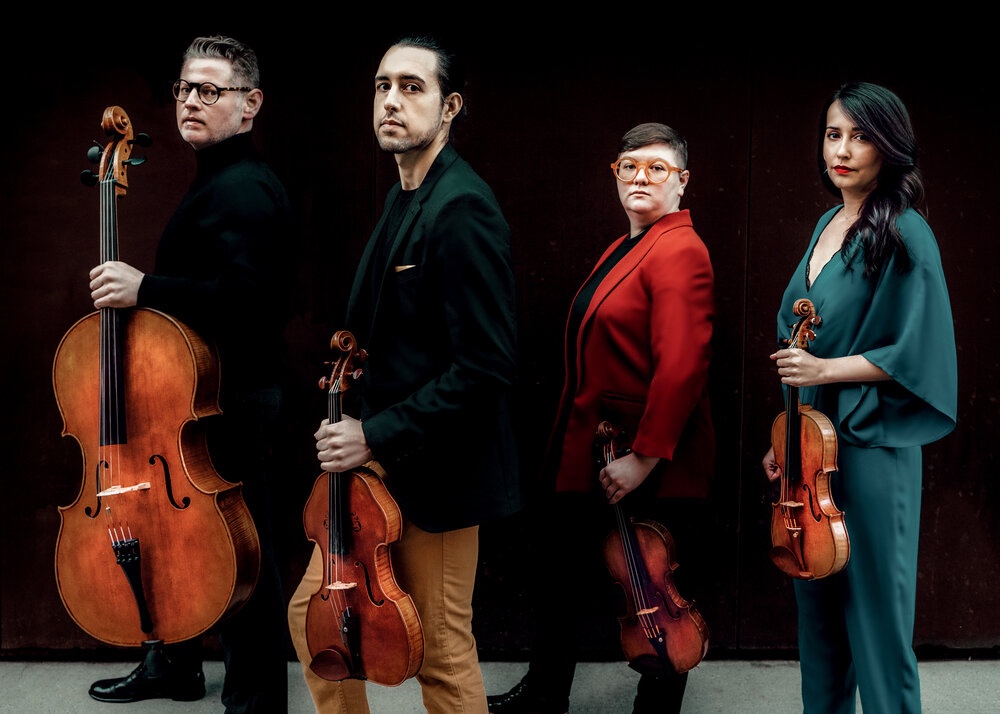
The Catalyst Quartet (Karla Donehew Perez, violin; Abi Fayette, violin; Paul Laraia, viola; and Karlos Rodriguez, cello) from their website
Still is represented here by his “Lyric Quartette” (published in 1960 but likely written 1939-1945). These three movements for string quartet are intended to represent a plantation, the mountains of Peru, and a pioneer settlement, respectively. This appears to be the first commercial recording of the work, a set of vignettes (Still never wrote a string quartet as such) seemingly published as an afterthought after looking back over his files. That’s not to denigrate the music. It is finely crafted and reflects a composer closer to the folk eclecticism of his contemporaries William L. Dawson (1899-1980) whose use of folk idioms resembles that of Aaron Copland (1900-1990) and Virgil Thomson (1896-1989), two white contemporaries (rather than his later more post romantic style). These composers’ use of folk idioms and the comforting tonal harmonies, very much in vogue when the music was first written, sound rather old fashioned in their year of the Lyric Quartette’s publication. Nonetheless, it is a vital work in understanding Still and his development as a composer. This would make for a great encore or second selection following a Haydn or Mozart Quartet.
George Walker was a sought after concert pianist and he forever holds the distinction of being the first Black American to be awarded the Pulitzer Prize in music (for his 1996 “Lilacs” for voice and orchestra). I learned from one of my personal favorite Chicago broadcasters that he, Bruce Duffie (WNIB host 1975-2001) played Walker’s “Lyric for Strings” (1946, orch. 1990) as the final sign off music at the closing of the beloved independent station (reportedly very satisfying to that terminal audience). The link provided is to a transcript of his subsequent conversation he had with Walker in 2001, worth your time to read.
So what does all this have to do with this release? Well, that, “Lyric for strings” is actually Walker’s orchestration for string orchestra of the second movement, “molto adagio“ of his three movement String Quartet No.1 (1946) “Lyric”. Samuel Barber garnered a great audience with his “Adagio for Strings” from the molto adagio of his String Quartet (1935-36).
The outer movements (1 and 3) of Walker’s quartet (carefully conceived and thoughtfully developed at length) frame the beautiful adagio with a passionate elaborately developed allegro and a high energy, virtuosic finale (much as in the Barber work). The quartet’s title, derived from the slow movement which was originally titled “lament” is dedicated to Walker’s grandmother, a former slave. A very different perspective of America, for sure, but a truly spectacular example of string quartet writing.
I wrote my review in chronological order to clarify my narrative but the actual track order is:
Allegro vivace Lyric Quartet William Grant Still (1895-1978)
The Sentimental One
The Quiet One
The Jovial One String Quartet No. 1 “Lyric” George Walker (1922-2018)
Allegro
Molto adagio
Allegro con fuoco
So String Quartet No. 1 “Calvary” (1956) by Coleridge-Taylor Perkinson is leaving the most recent for last. This work, shares with the other two it’s having been written fairly early in the composer’s career (he was about 24 when he wrote this piece, Still was in his 40s and Walker about 24 when they wrote their respective quartets). So Catalyst adheres to these important but early utterances from these three important artists. And for clarity the name permutations we encounter here comprise: Samuel Taylor Coleridge (1772-1834) is the English poet, Samuel Coleridge-Taylor (1875-1912) is the black English composer honorifically named after that poet, and Coleridge Taylor Perkinson (1932-2004) the black American composer honorifically named in honor of said English composer.
This is another outstanding but neglected American composer who happens to be black. This fine string quartet is defined by its serious tone and elaborate development in a passionate romantic tonal idiom. Of course the composer shares his prominent jazz (Perkins was nothing if not eclectic) influences in rhythms and harmonic structure. Based loosely on the hymn, “Calvary” from which it takes its name, it was actually premiered in Carnegie Hall as part of a memorial for composer and baritone Harry T. Burleigh (1866-1949). The opening allegro is a searching and unsettling matter followed by a calming slow movement characterized by an incessant pizzicato repeating figure. The finale, a touch more hopeful sounds almost improvisatory at times much in the manner of some jazz forms. Truly another outstanding example of good string quartet writing. This is powerful music!
These recordings are both beautifully done and, arguably, definitive in their interpretation of these delightful and essential additions to the quartet literature. The Catalyst does a fine and honorable job in their ongoing mission to reclaim forgotten gems such as these for present and future listeners. Thank you for that. Please keep working on this body of work lest it be lost to history.
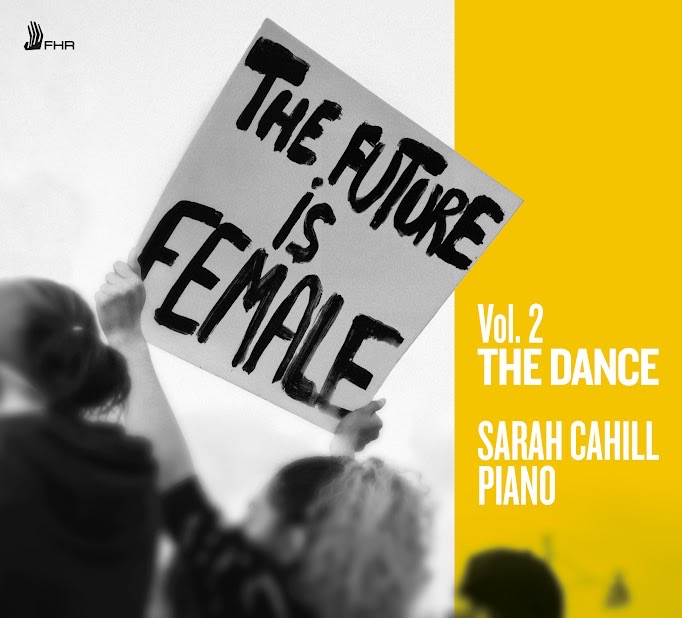
This release completes Sarah Cahill’s monumental survey of piano music written by women which saw its first two CD volumes last year.last year. This, the third volume titled “At Play”, follows the first two as seen below. This trilogy is not, of course, the last word, the end on the subject of piano works by women. There can be no last word but these selections are a reflection of Cahill’s perspective as a performer but also a producer/programmer whose scholarship and advocacy are well known and respected worldwide. These releases speak to women, certainly. But they also speak to audiences in general, producers, and fellow musicians. They comprise a careful sampling of some three hundred years of music which effectively demonstrates that “there’s gold in them thar hills” (after all Cahill is a Californian). Here’s hoping that this survey will help start a metaphorical gold rush to unearth the gold that can be found in this neglected music.
The first two volumes (both previously reviewed in this blog).
Other Minds OM 1022-2
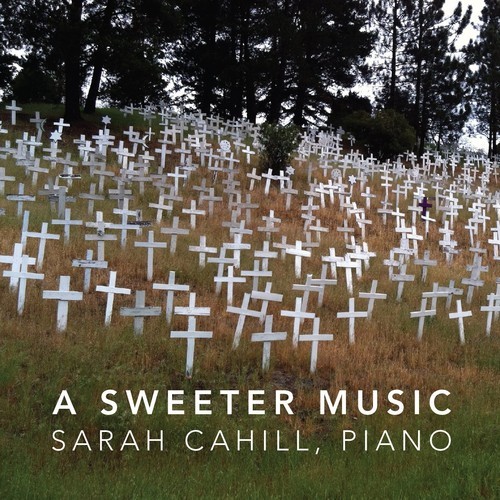
I recall my fascination with Cahill’s earlier commissioning project which resulted in her CD “A Sweeter Music” (2013). I recall attending a very preliminary recital at Mills College where she did brief run through of some of the compositions and spoke about the project. She later toured the music (sometimes with John Sanborn’s wonderful accompanying visuals, sometimes without). Little did Cahill know that she hit upon a genre of classical music dear to this listener’s heart, that of politically inflected classical music. As a result, my interest in her artistry and choices of repertoire escalated tremendously (I heard two of her Bay Area recitals of this music and reviewed the recording in the early incarnation of this very blog). So another project, this time supporting female composers, with even greater dimension than that earlier project has similarly grabbed my attention in this landmark collection of music by women composers which has largely been neglected by mainstream artists, producers, and programmers.
This trilogy of recordings hardly solves the egregious neglect of this music but it does contribute rather authoritatively to the canon (there is one now) of music by non-male composers. Cahill is not the first artist to do this, and there are multiple ongoing projects exploring the work of female composers, but this project deserves top billing as it casts a mighty wide net with its three volumes covering about 300 years (of neglect). These recordings of some 30 pieces are but a fraction of music by women composers in this pianist’s repertoire. But, more than simply righting wrongs, this is about celebrating a legacy of artists getting their due recognition. (The “bad idea” Biblical metaphor of hiding a lamp beneath a basket comes to mind). Just look, er, listen at/to what’s been under that basket!
Cahill playing at the Chapel of the Chimes Solstice Concerts in 2013, a major annual Bay Area event created and managed by her. (Photo by Allan Cronin Creative Commons License)
This now completed trilogy doubtless will not mark the end of Cahill’s advocacy but it will stand as a major manifesto of sorts and will hopefully bring more performers and producers to be open to performing and recording them. Simply hearing these recordings exposes the listener to music of stunning substance selected by an artist whose curatorial radar is finely tuned and whose choices will speak definitively to listeners (and likely fellow performing artists) for years to come. (N.B. Listeners would do well to check out Cahill’s YouTube channel where one can find a gold mine of music which reflects the scope of her performances and advocacy, not just for women composers, but for an amazing range of artists.)
This third volume is entitled, “At Play”. Like the previously released volumes, this collection gets a collective title that vaguely hints at the character of the music herein. The sequencing of the music is, like the previous two volumes, pretty much chronological. The essential program notes by Ms. Cahill (in all three volumes) provide just enough background to provide useful contexts for the listener. And you have to love the “Cahill and friends” photo galleries (on each volume) reflecting the deeply personal nature of this undertaking. That may sound hyperbolic but just listen to this music and feel the love, the passion, the connections, the sincerity, and the incisive playing. (Should I throw in a “Pied Piper” metaphor?) Listen and you’ll likely get hooked.
Track listings
There are 16 tracks comprising nine works by nine female composers over nearly three centuries. Four of the nine works receive here receive their first (or first commercial) recordings. As noted earlier, the track sequence is chronological. (N.B. That makes 30 + works over the 3 CDs), a little less than half of the total commissions.
We begin with the last of 9 sonatas by Hélène de Montgeroult (1764-1836). Her lifespan covers the classical to the early romantic eras in western musical history but recordings of her music didn’t begin to appear until about 2006 when Jérôme Dorival published a biography of her. Listeners will likely find this music similar to that of Mozart, Haydn, and early Beethoven but with a level of virtuosic writing that anticipates Chopin and Liszt. This three movement sonata was published in 1811. This is apparently the second recording of this work as another new music champion, Nicolas Horvath, released a recording of all nine of these in 2021, further testament that time has come for this composer (and perhaps women composers in general).
Next is the Thème varié, Op. 98 (1895) by Cécile CHAMINADE (1857–1944). This late romantic composer is probably the only name with which most listeners may be acquainted. A recording of her Concertino for flute and orchestra (1902) continues to receive attention by classical broadcasters but most of her work remains very little known. Cahill makes a strong case for this music with her interpretation of this virtuosic early romantic styled work. She is far better known in her native France. It is time we see what the French have been hiding.
Grażyna BACEWICZ (1909–1969), represented here by her Scherzo (1934), has gotten recognition in her native Poland but has only fairly recently become known internationally. This early work, less modernist than her later work, has apparently been recorded before but is new to this reviewer’s ears. Bacewicz was a prolific composer and this fine piece, a virtuosic showpiece, is likely to encourage listeners to further explore her extensive catalog which includes Symphonies, Concertos for violin, viola, cello, and for piano, 7 string quartets, symphonies, operas, songs, and much more.
Now Cahill brings us into present time, featuring living composers, beginning with the music of Chinese-American composer Chen YI (b. 1953). Guessing (1989) is a small piano piece which incorporates a Chinese folk song in a set of variations.
This is the first commercial recording of this music. To be honest, I am not familiar with much of this composer’s work (nor most of them here) save for Oliveros and Wong) but this piece as with all the selections here are sufficiently intriguing to prompt listeners to explore further. That is the point of an anthology such as this, to spark curiosity, suggest another path for the journey. Mission accomplished.
Franghiz ALI-ZADEH (b. 1947), born in Azerbaijan, incorporates elements from her ethnic heritage into modern classical idioms. Music for Piano (1989/1997) utilizes Cagean-like preparations, in this case a glass beaded necklace laid across the strings. The resulting sound, evoking Alan Hovhaness and/or Henry Cowell at times, is intended to evoke that of the traditional Azerbaijani string instrument called “tar” (not a reference to the recent film). The composers use of different scales also seems to derive from folk models. The piece is in several sections delineated by dynamics and by register in which is, I believe, an ingenious use of register used to control when to allow for those prepared strings to sound. The piece is by a composer with a wide expressive pallete and the ability to use those methods judiciously toward her unique creative ends.
Next, in the briefest entry at just over 4 minutes, we get one piece from a set of commissions (all by women composers) Cahill made to honor the 100th birthday of American composer Ruth Crawford (1901-1953). Pauline OLIVEROS (1932–2016) submitted this work (her first notated composition since the 60s) which uses her own unique approach to indeterminate composition in Quintuplets Play Pen: Homage to Ruth Crawford (2001), here in its world premiere recording. Oliveros, who exerted a profound influence on a generation of composers, performers, and listeners via her work in electronic music and improvisation, but most powerfully via her “Deep Listening” concepts which effectively define the role of the listener as being a part of the compositional process.
A clearly happy Pauline Oliveros acknowledges the warm applause of the Other Minds 20 audience after her performance at the SF Jazz Center in 2015. Her gentle spirit and powerful intellect preside over this trilogy and continue to influence all who knew her and her work. She would have loved these recordings. (Photo by Allan Cronin Creative Commons license)
I’m claiming fair use in publishing this lovely photo ad for an expensive perfume inspired by the same poem. Kinda Freudian, no?
Hannah KENDALL (b. 1984) is a black British composer whose three movement “On the Chequer’d Field Array’d” (2013) is based on the 1763 poem Caissa by Sir William Jones and depicts the three sections of a game of chess. The lengthy Elizabethan styled poem can easily be read as protofeminist given that the female chess piece heroically wins. Read it if you don’t believe me. And there are musical metaphors as well. It is these: mindplay, middlegame, and coda into which the work is divided. The music, like the poem is an intimate perspective which invites the reader (or hearer of the music) to create their own meanings here.
Aida SHIRAZI (b. 1987), an Iranian born composer, takes the performer inside the piano. Her blandly titled, “Albumblatt” (2017) belies her deep understanding of the piano and its possibilities. This is arguably the most avant garde (or modernist if you prefer) composition of the trilogy. Cahill’s choices reflect her eclectic approach to music programming.
In addition to a chronological approach, this trilogy is stylistically diverse. This music borrows from forbears such as John Cage and Morton Feldman as well as Henry Cowell. This meditative music only reveals itself fully to the focused listener. This is like an etude comprised of sounds you rarely hear (intentionally) from a piano. Played much of the time inside the piano but also at the keyboard more conventionally, the piece also demands close attention to dynamics (down to silence). Here is where the recordist’s art shines through. The subtleties of dynamics and the ability to capture the variety of harmonics evoked. Of course said performer had to accomplish rather large postural changes and do so silently if the performance adheres to the score, lol. And both are accomplished here in what sounds like a single take. This is a pretty great listen.
Regina HARRIS BAIOCCHI (b. 1956), a native Chicagoan poet and composer is given the last word with her, “Piano Poems” (2020). Last but not least by any means is a testament to Cahill’s singular but relevant choices as well as her advocacy of young composers as their stars begin to rise. This artist is new on my radar but one that will remain there. As both poet and composer, this young artist, commissioned by Cahill with a request that the music be about poetry, specifically by fellow (adopted) Chicagoans Gwendoline Brooks (one of this formerly Chicagoan reviewer’s personal faves) and Richard Wright.
The response was these 4 meditations on Brooks, Wright, and on the composer’s own poetical musings. The language here seemingly derives, appropriately, from 30s to 40s jazz of Ellington and Basie and a seemingly latter day version of that in the last two pieces describing the composer’s own literary utterances. Both virtuosic and apparently written by a composer very familiar with the instrument, a fitting and hopeful glimpse to the future.
Each of these discs contains at least one piece that reflects a deeper than average commitment by the performer. Cahill’s collaborative wok (with Dr. John DesMarteau) in the Agi Jambor sonata in volume I, her advocacy of Teresa Wong premiering the first performance of (She dances Naked…),the justly celebrated bay area artist’s selection on volume II. And her reaching out to Regina HARRIS BAIOCCHI for a commission (in volume III) all reflect another valued aspect of this performer.
The recording by Matt Carr is very listener friendly demonstrating serious skills at times in dealing with the many sonic challenges. This album and its two predecessors belong in any serious collector’s library. If the future is indeed female, then this is a fine soundtrack. Listeners, performers, Brava!!
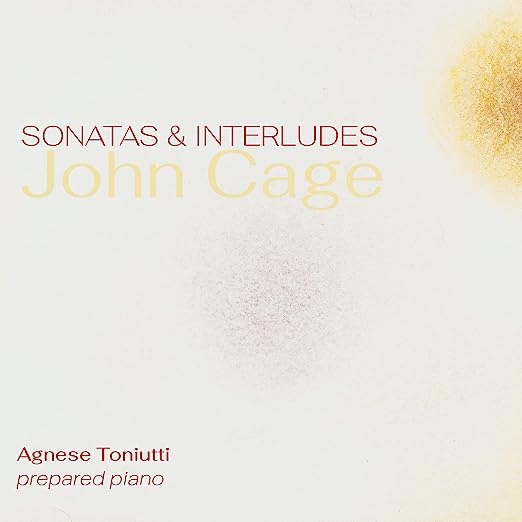
This is the most recent recording by Italian pianist Agnese Toniutti. (her third release by my research). It is also the most recent recording of John Cage’s masterful Sonatas and Interludes (1946-8) for prepared piano, a defining work for that unusual instrument. It has been recorded at least 30 times but is rather rarely heard in live performance.
John Cage is perhaps best known for his challenges to the philosophy and the very definition of music itself epitomized in his infamous silent piece titled 4’33” premiered in 1952. The composer eschewed the notion of a “masterpiece” but irony loving “fate” would hand him that title at least for this set of pieces.
Toniutti, a graduate of The Conservatory of Venice, seems to be as much a researcher and activist as she is a widely skilled pianist. While doubtless schooled in the commonly played repertoire for her instrument, she favors new music and music undeservedly neglected in her performances and recordings as well as the commissioning of new works and finding yet unplayed that strike her fancy.
The Sonatas and Interludes, now some 80 years old doesn’t really qualify as “new music” per se nor can it really be called neglected having been recorded 30+ times. In the context of this release this cycle of pieces seems to function much as a new recording of the Goldberg Variations or the late Beethoven Sonatas might function to introduce the skills of a musician whose trajectory was aimed at the conventional recital hall circuit. Toniutti clearly has other plans.
I won’t attempt to compare this most recent interpretation to the other available recordings. I believe this recording does much to validate the music as an essential work in the western canon of art music and to display the estimable understanding and widely skilled competence of the performer whose work is and will continue to embrace new music and advocate for that music to earn an esteemed place in the minds and hearts of listeners and other performers.
This is a very enjoyable recording whether it is to be a collector’s only recording of this music or one that stands most favorably in comparison to previous recordings. If this is to be your first recording of this work or if you simply want to hear another interpretation, you will not be disappointed. This is a wonderful performance.
Pianist Agnese Toniutti previously released a very forward looking recording on Neuma Records. The 2021 release pictured below is a collection of much more recent music. I listened numerous times and didn’t feel I “got it” well enough to say something reasonably intelligent (if not insightful) until this second release. And while I may not fully understand these “subtle matters” I now have a better context.
Neuma 138
This collection which I had yet to review represents Toniutti’s understanding and appreciation as well as her apparent mission to expand the experimental repertoire for piano. Here is a fascinating set of composers, each with a unique view of her instrument. Just listen, trust this artist. You’ll be glad you did.
Track listing
Keep your eyes and ears open for Agnese Toniutti, an advocate for and a master of the avant garde. And to Ms. Toniutti, I greet you at the beginning of a great career.
There were no percussion ensembles in Western music until the early twentieth century, at least not anything close to the size and instrumental diversity we see now, but since then there have been a variety of percussion ensembles which have popped up. some touring, some recording, but all investigating the possibilities of this collection of pitched and unpitched instruments. Notable examples from this writer’s memory include the Paul Price Percussion Ensemble, the Donald Knaack Percussion Ensemble, Amadinda, and the Canadian group, “Nexus”. Each of these ensembles (the list is not comprehensive) has put their own stamp on the flexibly nebulous group subsumed under the title, “Percussion Ensemble”.
All of these groups have chosen which instruments to include in their group, which to exclude, and they have done their own curation of music to expand their respective repertoires and the percussion group repertoire as a whole. And the present recording presents yet another Third Coast Percussion CD on Cedille Records for this busy Chicago based group. The relationship between this energetic ensemble and the equally energetic Cedille Records has been a mutually beneficial one artistically. this release is the fifth release for that label. They have at least nine other albums as a group and have collaborated on many more recordings.
As noted on the album this disc contains all world premiere recordings that reflect varying degrees of collaboration. One of the unifying threads of this CD is the variety of compositional approaches. The Elfman piece being perhaps the most traditionally notated and structured. The others involve different compositional methods which are not exactly traditional in classical music. It is the exploration of such non-traditional methods and the expansion of the definition of composition that is a characteristic of this always interesting classically trained group of musicians.
Let me just start by saying WOW!!!
The first work on the album is by Danny Elfman (1953- ) is best known for his work in movies and television as the composer of “The Simpsons” theme and similarly energetic scores for Tim Burton’s films among others. His roots were in his work with the unusual pop band “Oingo Boingo” whose manic style is still present in much of Elfman’s work. And this is not his first appearance in this new music blog either. His Violin Concerto was reviewed here. He manages to succeed in pop, film, and the concert hall, a feat that few can match.
Elfman’s rather blandly named, Percussion Quartet (2019) is appropriately described in the liner notes as the most conventional work here in terms of how it was written. It is fully notated in in traditional notation and consists of four movements ranging in length from about 4 minutes to about 6 and a half. The work resembles traditional sonata forms with Elfman’s energetic and sometimes quirky melodies that successfully draw the listener through the composer’s journey. That bland title is almost ironic as it belies the really entertaining qualities of this piece. Third Coast’s realization is definitive as one would hope for a world premiere recording.
The second composition is a transcription by Third Coast of a popular Philip Glass piano work, “Metamorphosis No. 1.” But this is a transcription influenced by another transcription, that of the Brazilian group, “Uakti”. So this can be said to be tantamount to a collaboration with another performing ensemble. Clocking in at nearly ten minutes this track is a familiar interlude that cleanses the aural pallet for what is to come.
Photo by Cary Huws
And what does come next is a collaboratively composed seven movement work entitled, “Perspective”. This more poetic title is the source of the album’s title. This work by Jlin (Jerrilynn Patton 1987- ) was originally written by first recording multiple tracks or layers and then working with the musicians of Third Coast to transcribe these ideas into traditional notation and into a form playable by the quartet of percussionists. This, of course, resembles the methodology that brought forth the wonderful Devonte Hynes album (also on Cedille) reviewed here.
The music is arguably entirely composed by Jlin with the orchestration creatively realized by Third Coast Percussion (doubtless in direct discussion with Jlin). What results is a dizzying and energetic set of movements whose styles derive in part from minimalism and from the rhythmic complexities of African drumming and contemporary dance music. Jlin, who hails from Gary, Indiana, works from a perspective of a DJ spinning dance music. But this is hardly your typical DJ. This is a fascinating musical mind who just happened to have started with DJ equipment.
Flutronix (photo from their website)
Another example of Third Coast Percussion’s creative collaborations has resulted in “Rubix”, a three movement work written (mostly) by Flutronix, a genre busting duo. Flutronix is Nathalie Joachim and Allison Loggins-Hull, both classically trained flautists who aren’t afraid to cross dated boundaries to create music that speaks their minds.
This is some high energy music which reflects a variety of styles but always demands much from all players involved. The duo, whose rendition of Steve Reich’s “Vermont Counterpoint” demonstrates their virtuosity and interpretive rigor. Rubix is essentially a chamber work for flutes and percussion but their defiance of categories seems to be as much a critical element of their music as is their virtuosity. Bottom line is that this is engaging, creative work that leaves the listener wanting more even as they may be unsure what they just heard. Kudos, all!
Make no mistake. This release, a long time in coming, is an essential document of the work of two Bay Area artists whose contributions (frequently behind the scenes) receives some richly deserved attention.
The dyad here consists of Carol Law and Charles Amirkhanian, partners in both life and art, collaborators in sound and image now release this collection of their collaborative works from 1973 to 1985 entitled, “Hypothetical Moments: Collaborative Works (1975-1985)”. This lovingly produced DVD brings together a series of performance art pieces demonstrating an intimate set of collaborations between these two Bay Area artists. Law is a photographer and visual artist whose art works have been displayed internationally in several galleries. Her designs can also be found in some of the striking wearable art she made as promotional/souvenir collectible items sold at concerts and online from the OM store. Amirkhanian is a composer and sound artist as well as a broadcaster and producer who has curated concerts and produced radio programs promoting new and innovative music in the bay area (and beyond) since about 1969.
Carol Law and Charles Amirkhanian acknowledging audience applause at OM 23 in 2018 (Photo by Allan Cronin, Creative Commons License)
Their respective artistic outputs include both individual and collaborative works but, until now, the only chance to experience their collaborative efforts has been in the rare occasions in which these works were performed live. The booklet accompanying this DVD gives a partial list of live performances the most recent of which was in 2018 when OM 23 “The Wages of Syntax” presented a 6 day series of concerts which was an international survey of linguistic sonic arts. Visual analogues and deconstructions of vocal sounds as practiced by artists inspired by language and the expansion of the very definition of art, music, and performance.
Dominic Murcott, peripatetic conductor/drummer about to lead a major new opus by Charles Amirkhanian. (Photo by Allan Cronin, Creative Commons license)
My tardiness in completing this review afforded me a unanticipated perspective on Amirkhanian’s art. The performance of his new composition, “Ratchet Attach It” (2021) at OM 26, pictured here integrates his roots as a percussionist with his penchant for spoken word and sound sampling.
Charles Amirkhanian performing in front of images by Carol Law at OM 23 in 2018 (Photo by Allan Cronin, Creative Commons License)
The collaborations here have roots going back at least to the early twentieth century with the experimental visual innovations of Vassily Kandinsky, Picasso, Miro, and the photographic experiments of Man Ray, etc. Their sonic antecedents include the work of Gertrude Stein, James Joyce, Antonin Artaud, Luigi Russolo, and a panoply of sound artists that Law and Amirkhanian visited in the late 1960s.
In addition to these early experiments one must understand that these creative meldings of sonic and visual art were flourishing in the Bay Area, most obviously in San Francisco where Allan Kaprow’s “happenings”, Bill Graham’s rock concert productions, and similar sound/light shows dominated the fare at performance venues like the Fillmore and similar spaces where innovation in pop/rock music mixed with innovation in visual light shows combined with bands performing for audiences immersing them in mind manifesting artistic assaults that drew crowds frequently also experimenting with not yet illegal psychedelic drugs (the word “psychedelic” is a neologism which means “mind manifesting”). The emblematic event here was the so called “Trips Festival“, a three day event held in 1966 at the Longshoreman’s Hall. I have elsewhere referred to Mr. Amirkhanian as the “Bill Graham of new music”, a comparison which still seems valid.
speaking is speaking (by Bay Area poet Richard Brautigan)
We repeat what we speak and then we are speaking again and that speaking is speaking. Tokyo June sometime, 1976
Well, drugs are not the issue here but mind expansion is. What is documented here is the multimedia collaboration of two essential Bay Area artists who, via their individual and collective efforts effectively expanded the possibilities of both visual and sonic media. These are innovative on many levels. Amirkhanian’s unique take on sound poetry (his anthology “10 + 2: 12 American Text Sound Pieces”) is an essential survey of that genre released on vinyl (now available on OM records ). And Law’s photographs, design, deconstruction and collage methods are integrated into her own unique style of visual art. The performances on this DVD constitute another uniquely San Francisco Bay Area chapter in multimedia, collaborative performance art now made available to a larger audience.
Other Minds (OM 1006-2)
This defining anthology of Law and Amirkhanian’s explorations of sound poetry (first released on vinyl in 1975 on the now defunct 1750 Arch Records) has defined the genre for many (this writer included). Aram Saroyan, Clark Coolidge and Beth Anderson would later appear live at Other Minds 23 in 2018 which outdid the aforementioned “Trips Festival” in a week long festival of sound poetry from an international roster of poets and sound artists.
Now keep in mind that the original presentations of these works from the early 80s utilized the technology of its era, analog recording, magnetic tape, and slide projectors (remember those?). So this 21st century rendition takes this work into contemporary technology and makes available for the first time since their premieres the original marriage of sound and image as intended by the artists. Without getting into McLuhan-esque analyses of the differences and subsequent meanings of the original media versus those on this DVD one need only celebrate the fact that listeners/viewers can now see these works with their originally intended melding of sound and image.
There are 12 tracks:
History of Collage (1981) (original audio release on Mental Radio CRI, 1985)
Audience (1978)
Tremolo Bank (1982)
Dog of Stravinsky (1982) (original audio release on Mental Radio CRI, 1985)
Maroa (1981) (original audio release on Mental Radio CRI, 1985)
Hypothetical Moments (in the intellectual life of southern California) (1981) (original audio release on Mental Radio CRI, 1985)
Awe (1973)
Andas (1982)
Dreams Freud Dreamed (1979)
Too True (1982)
The first nine tracks are the digital adaptation of sound and image accomplished by Dave Taylor. These are the pieces originally performed live in an era using equipment as distant from current technology as MP 3 files are now from magnetic tape. The last three bonus tracks are actual live performance videos (restored by Jim Petrillo) of three 1985 performances which give some of the flavor of the original experience of these works.
Several of these pieces have been released as audio only tracks on Amirkhanian’s CD releases (as noted) and, while they certainly work as audio only experiences, the images add a welcome dimension. The equally striking design by OM resident design master Mark Abramson add a deserving touch of class to the videos and the accompanying booklet which features informative texts on the works as well as a nostalgic collection of photographs featuring the dyadic duo.
I am honored to have a quote reprinted there from my blog review of OM 23 where I and a sizable audience were treated to a fabulous week long live experience of sound poetry featuring this duo’s work alongside that of exhilarating selections of other similar minds’ work. Of course nothing can take the place of the live experience but this production comes close.
This is a must have collectible document for anyone interested in sound poetry and Bay Area artists.
“Whereof one cannot speak, thereof one must remain silent.”- Ludwig Wittgenstein (1921)
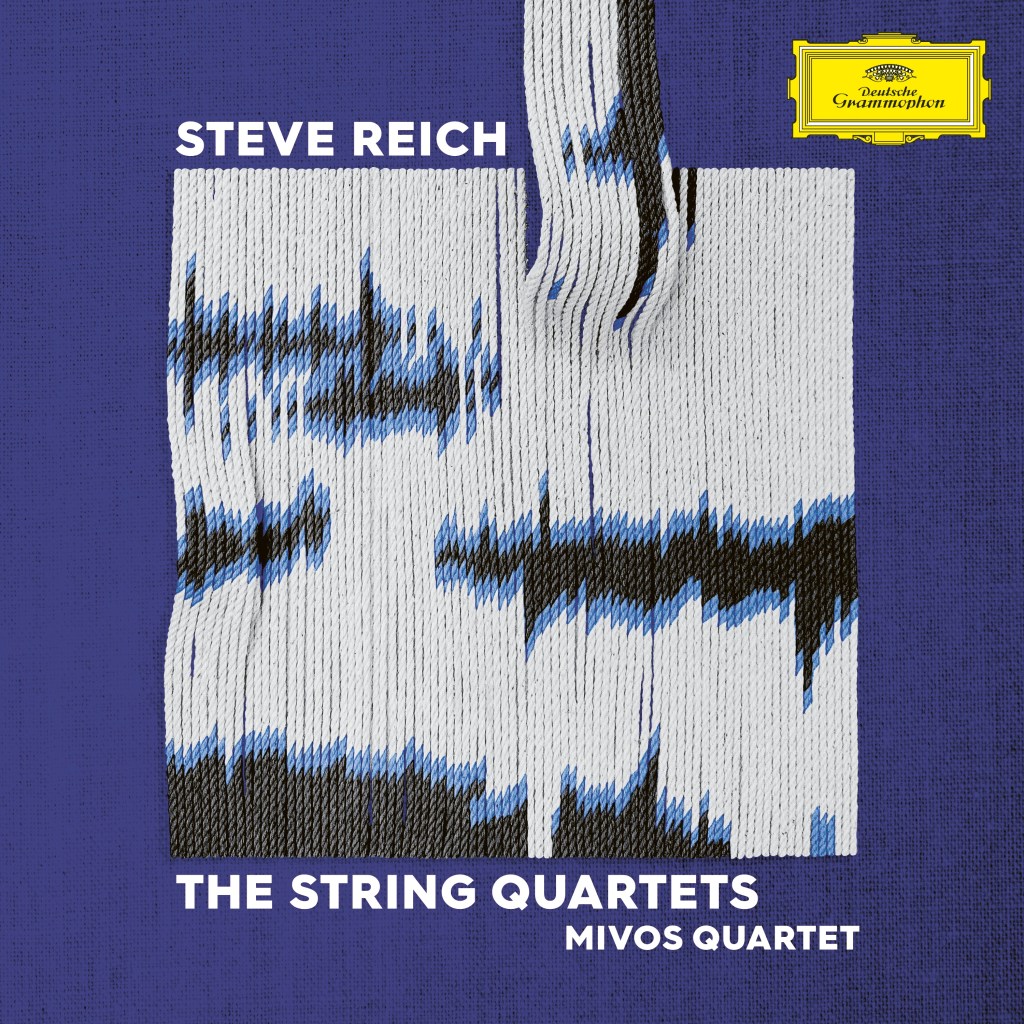
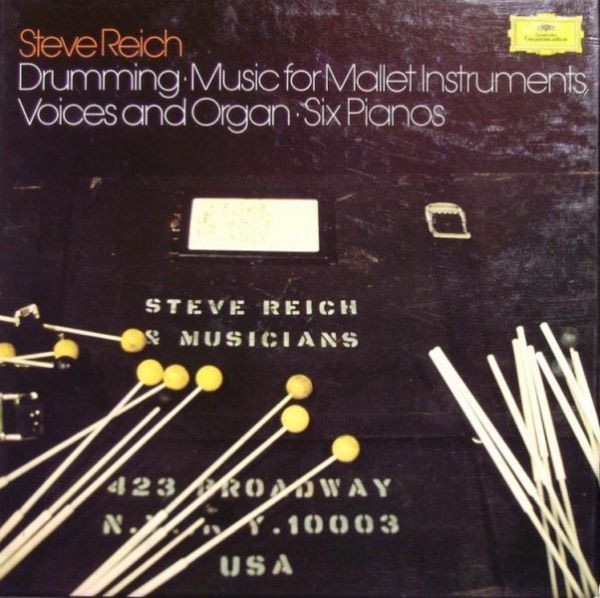
This album is satisfying on several levels. It is a return to the label that contained the composer’s his first big release, the three disc set on DG which contained “Drumming” (1971), “Six Pianos”, and “Music for Mallet Instruments, Voices, and Organ” (both from 1973). Of course it was the ECM release of “Music for 18 Musicians” (1974-6) that became his signature work incorporating the experimentation heard in the music in that DG box set into the composer’s now familiar mature compositional language. The present release, also available on vinyl, seemingly reflects the post experimental composer’s grappling with the oh, so classical form of the string quartet. It’s a truly fine release and an homage to the composer.
DG 2740 106
Like many of his peers, Reich eschewed many of the conventions of western art music. His work at the San Francisco Tape Music Center helped him discover “phasing” and use of the speaking voice as a compositional element. His study with master drummers in Ghana taught him about quasi improvisational large ensembles and his subsequent study of Hebrew cantillation further refined his understanding of speech and song in his compositional contexts.
As he is quoted in the accompanying booklet, Reich never thought of attempting to use the string quartet form in his work. But along came the delightfully forward looking and genre breaking Kronos Quartet. That collaboration brought forth his landmark, “Different Trains” (1988). And the rest is, as they say, history. “Triple Quartet” for string quartet and tape (but no voices) came in 1998 and his WTC 9/11 (2010) which used sampled voices much as he did in Different Trains.
To be fair, Reich never appears to have intended to engage with the classical form of the string quartet (or any other classical forms for that matter). He uses the convenient availability of musicians sympathetic and sufficiently skilled to perform his compositions. The fact that they happen to be in string quartets is incidental. Much as the inclusion of a singer (as Schoenberg did) bent the quartet to fit his compositional goals, many have subsequently done similar alterations and additions to that classical ensemble. The difference is that Schoenberg adding a soprano, Kirchner (among others) adding electronics, etc. did so but clearly defined their works as “string quartets”. Reich did not do this but this disengagement with classical forms (string quartet, concerto, symphony, etc.) does not detract from the absolute quality of his music.
It would be unfair and would miss the point to try to judge these works via comparison and contrast with Haydn, Beethoven, Bartok, etc. In fact these works are not a part of that canon. Ultimately they stand on their own as part of Reich’s unique vision as a composer and, as such, they succeed very well.
WTC 9/11 and Different Trains are political statements with specific spoken word samples entered into a musical counterpoint. They succeed very well as protest and memorial for the respective events they frame. Triple Quartet, however, is absolute music concerned solely with Reich’s largely contrapuntal techniques of shifting repeated patterns. All three works succeed very well in their ability to engage audiences. All three are finely wrought compositions by by a major composer true to his maverick, experimental beginnings, true to the artist’s personal vision.
The Mivos Quartet does a fine job of navigating these technically difficult works and produce a fitting homage to a wonderful composer and make a strong case for the deeply substantial nature of this music. This is a great release. Highly recommended.












 New Music Buff