The Big Piano Variations, a great new recording of Bach, Beethoven and Rzewski


71Dr+79MpxL._SL1200_

Let me start by saying that I specifically requested the opportunity to review this October, 2015 release because I was pleased and fascinated to see this representation of three major masterworks of the large variation form included in a single collection.  To my knowledge this is the first time that these three works have been represented in a single release.

Variation form is one of the staples of the composer’s arsenal of techniques for well over 400 years now but the form is most commonly used as one technique in one  of several movements of a larger work. Consequently these types of variations generally last a few minutes.  A favorite example is the variations movement from Schubert’s “Trout” Quintet, a set of variations on his song, “Die Forelle” (trout in English) which subsequently lends the title to the entire work for piano quintet. This variation movement runs about 7 minutes or so in performance.  The Goldberg Variations (1741) can run up to 2 hours if one includes all the repeats but generally performances take about an hour.

So, along comes Johann Sebastian Bach who is commissioned by one Count Herman Karl von Keyserling (1697-1764) to compose some music for harpsichord (the predominant keyboard instrument of the day) to be performed by his personal musician Johann Gottlieb Goldberg (1727-1756) to aid the count’s insomnia.  The original intent apparently was to have the player perform one or two of said variations as a sleep-inducing remedy upon the Count’s request.  The work, using a brief Sarabande from the Bach’s own Anna Magdalena Notebook collection of pieces, has since taken the performer’s name as the Goldberg Variations.

It is not clear when the practice of performing the work in it’s entirety began but there is little doubt that Glenn Gould’s 1955 recording for Columbia Records (now Sony Classical) placed this piece firmly in the repertoire and in the minds and hearts of musicians and the listening public.  The variations had been recorded before by Rudolf Serkin, Wanda Landowska, Claudio Arrau, Ralph Kirkpatrick, Gustav Leonhardt and Roslyn Tureck but Gould’s quirky interpretation apparently defined a moment.

In 1819 the publisher Anton Diabelli composed a waltz and sent it out to many composers of the time asking them to write a variation on his piece with the promise that the collection would then be published.  This was not an uncommon practice at the time and it is certainly a workable business plan.

Indeed Diabelli did publish a compendium of these 50 plus variations by many composers of the day (including Franz Schubert and the 11 year old Franz Liszt) as Vaterländischer Künstlerverein (the link will take you to the downloadable score of the non-Beethoven variations on the waltz) but these are largely now forgotten.  Beethoven apparently balked at the idea or simply saw a larger potential in Diabelli’s brief waltz because he chose to write not one but 33 variations on the theme which subsequently became Volume II of Diabelli’s project.

Unlike the Goldberg Variations the Diabelli Variations (1823) were intended as a concert piece to be performed in its entirety.  Like most of Beethoven’s music this piece found a place in the repertoire and remains a staple for many pianists.  It is not clear if Beethoven was familiar with Bach’s work but the gesture is certainly similar in creating a large cohesive set of variations.

In 1975 the fabulous pianist Ursula Oppens commissioned Frederic Rzewski to write a set of variations that could be a companion piece to the Diabelli Variations.  Rzewski composed the music and Oppens premiered it in 1976.  Her subsequent recording from 1979 was nominated for a Grammy Award.

Frederic Rzewski (1938- ) is a composer/performer as were Bach and Beethoven.  He is a highly virtuosic pianist and a prolific composer whose influence extends widely from his involvement in the European avant garde including his own innovative use of early electronics in his ensemble Musica Elletronica Viva with Alvin Curran, Richard Teitelbaum, Allan Bryant, Carol Plantamura and John Phetteplace.

Rzewski’s variations are based on a revolutionary song by Sergio Ortega called, “El Pueblo Unido Jamás Será Vencido” (The People United Will Never Be Defeated), a song popular during the Chilean revolution that deposed Salvador Allende.  Unlike Bach and Beethoven, Rzewski’s music frequently takes on political associations, usually pretty explicitly as seen in this piece.

There are  36 Variations (6 groups of 6) and, like the preceding pieces are a reflection of much of the performance practice of their respective times.  Various “extended techniques” include slamming the lid of the keyboard, whistling and others are carefully integrated into this very cohesive mostly tonal work.

This piece seems to be gaining ground as familiar repertoire in the concert hall and, whether by accident or design, the inclusion of this piece along with the other two by Sony (who, you will recall released the establishing version of the Goldberg Variations) in effect is a major acknowledgement of this piece as perhaps the foremost representation of the large variation form in the 20th century much as the Goldberg and Diabelli Variations represent the 18th and 19th.  Bravo, Sony!

The interest here too is the emergence of a new artist, the Russian pianist Igor Levit (1987- ). This is his third release on Sony Classical, the previous two being the 2 disc set of the Beethoven late piano sonatas and the 2 disc set of the Bach Partitas for keyboard.

I won’t go into the nuances of interpretation that distinguish Levit from other performers of these variations except to say that he has to my ears a lighter touch, more Chopin in spirit than Liszt perhaps.  His performances leave no doubt as to his virtuosity and interpretive abilities but, of course, there are always discussions of individual preferences for one or another pianist in such repertoire.  What is undeniable is his ability to grasp the larger picture and to perform these large masterpieces in such a way as to convince the listener of the integrity of each work and to hold the interest of the listener throughout the performances.  There is, in the end, no definitive recording of any music really but these are certainly candidates in the debate.

In short this is a fine set of discs, beautifully recorded, which would please anyone interested in classical music and piano music in general.  Over time one might want to hear other interpretations but these recordings are extremely satisfying and represent  their composers as well as any I’ve heard.

The Ensemble Formerly Known as Zeitgeist (?), Music by Scott Miller


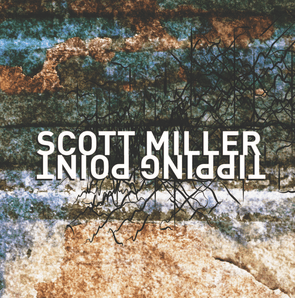
Scott Miller- Tipping Point (New Focus fcr 161)

Scott Miller- Tipping Point (New Focus fcr 161)

ADDENDUM:  Mr. Miller kindly supplied the correct composition dates for the pieces in this album and they have been placed in the text.  Also I was pleased to receive a link to their discography:(http://www.zeitgeistnewmusic.org/discography.html)  I hope that is a recent addition and not my oversight (apologies if it’s an oversight).


I was particularly pleased to receive this disc for review as I am a long time fan of the Minnesota based Zeitgeist ensemble.  This varied ensemble has been a vital part of the new music scene in Minnesota since about 1977 (I still have some of their vinyl LPs).  Happily they are in the process of making these out of print items available again on CDs via their website.

Curiously there is very little on the ensemble’s web site or on the internet in general on the history of this group prior to about the year 2000  A Google search yields few references to this group and Discogs does not have much listed in their discography of Zeitgeist.  Their Wikipedia page is also in serious need of updating. The Innova records site is perhaps the most useful in identifying the albums released by this group in its various configurations and solo or other collaborations by its members (though the re-release of the older discs are not distributed there).  I realize that this group began in the pre-internet era but perhaps it is time to clarify this and present a comprehensive history and discography of this significant new music ensemble.

Scott Miller

Scott Miller

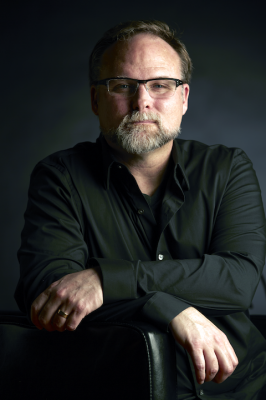
The present disc is a collection of recent works by Scott Miller, a Minnesota based composer and teacher whose association with Zeitgeist goes back to 1993.  He is currently the president of SEAMUS (Society for Electro Acoustic Music in the United States) and professor of music at St. Cloud State University.  You can find his work on youtube and Sound Cloud.

Now let me say here that it is my observation that electroacoustic music, while not an uncommon genre, seems to be a specialized one which, like Zeitgeist, is not consistently well-promoted.  At least that is my explanation (excuse perhaps) for my limited knowledge of Mr. Miller’s music up to this point.

The CD is a collection of six tracks with vocals by soprano Carrie Henneman Shaw on tracks  2, 4 and 6.  Each track is a separate work and they are listed in the proper order on the back of the CD case but are discussed out of order in the notes for some reason.

But now I must stop my whining and criticisms (and thinly veiled references to Prince) and turn to the actual music. This is really wonderful music, well-performed and well worth your attention.  And if the term “electroacoustic” puts you off don’t worry.  What we have here is an artist who has managed to integrate a variety of techniques into an effective musical language that transcends mere experimentalism to yield some really good music.

The first piece, the one from which the album receives its title, is Tipping Point (2010) and was originally included on the SEAMUS CD Volume 20 (EAAM-2011).  This is a remixed and remastered version of that recording from 2010.  This writer hears echoes and homages to (or influences by, you decide which) Terry Riley, Steve Reich as well as perhaps Morton Subotnick and even the thornier sound of Mario Davidovsky at times.  To my ears this is an integration of many ideas which work effectively together.

The second track, Forth and Back (2003) is the longest track and is a setting of the poem by Catalan poet Felip Costaglioli.  The setting is atmospheric, appropriate to the lovely texts and the vocal writing is simply beautiful.  Carrie Henneman Shaw delivers this work with the success of interpretation that one would expect of a musician who understands the composer’s intent.  Not an explicitly virtuosic piece it nonetheless challenges the performer with sotto voce passages that I imagine are quite a balancing act for a singer.  This is a beautiful piece and the fact of its electroacoustic aspects take on far less important place than the effectiveness of the setting.

Next up is Pure Pleasure (2008) is a percussion piece.  The composer goes into some detail in the notes as to the genesis of this piece and that is interesting but so is the act of listening to it.  This is one of the more obviously experimental works here.

Twilight (2008-13) is actually a portion of a larger work, a collaboration between Miller, Pat O’Keeffe and video artist Rosemary Williams called, The Cosmic Engine.  This is a multi-media chamber opera which premiered in 2008 and this section was revised in 2013.  The text is by Walt Whitman.  Again, Shaw does a lovely job with the lyrical vocal lines.

Funhouse (2003) is a marvelous use of electroacoustic methods.  It is a piece with rather complex origins as explained in the notes but, consistent with its title, this is a fun piece to hear and, I imagine, to play.  Along with the percussion piece it represents the more overtly experimental work of this artist.

The final track, Consortia (2013), as  with Twilight, is an outgrowth or by product of work on the multimedia opera, The Cosmic Engine.  Here the composer enlists computer processing to create a sort of live polyphony with live mixing of tracks of pre-recorded and live improvisational structures based on some renaissance tunes and techniques.  I will leave it to the listener to read through the technical details but the result is a pretty entertaining piece of music.

Zeitgeist does a wonderful job here playing with passion and dedication.  I can only hope that we hear more from both Zeitgeist and Mr. Miller.

The recording done at Wild Sound Recording Studio in Minneapolis (Mark Zimmerman, master engineer on tracks 1 and three; Steve Kaul, master engineer on tracks 2 and 4-6) is lucid and warm.  The art and design by Raul Keller makes for an attractive product.  This release from New Focus Recordings belongs in the collection of any new music fan and certainly every Zeitgeist fan.