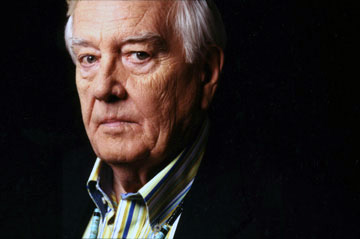
A Reason to Listen: Roger Reynolds’ Latest, “For a Reason”,new recordings on Neuma Records


Neuma 128

Roger Reynolds (1934- ) turns 90 next year. This prolific American artist’s work is being collected and preserved by the Library of Congress. The present recording is the most recent release documenting Reynolds’ music, now numbering about 30 CDs and DVDs. And this is but a fraction of his musical works.

I first encountered Reynolds’ music when I heard a broadcast of the first commercial recording of his music. The disc, released in 1969 on Nonesuch records documented performances of Frederic Myrow’s “Songs from the Japanese” (1964) paired with Reynolds’ “Quick are the Mouths of the Earth” (1965), a work that actually uses the text of the title to derive the music. I recall that the sound of this music sent chills up my spine and sent me to a record store to purchase a copy. This first encounter was a visceral experience, one of many I would encounter as I heard his subsequent music, and that of his contemporaries.

Reynolds has been a prolific composer, writer, and reader. His father was an architect, Roger would go on initially to study engineering and then also encountered some of the new interest in experimental music at the ONCE Festival in Ann Arbor, Michigan in the early 60s. His studies in music and literature continued to be wide ranging and the fine liner notes by Thomas May in “For a Reason” are extremely useful in grasping the range of inspirations that inform Reynolds’ music. This is one of those gorgeous new music releases that will likely become one of those odd but much sought after collectibles. The booklet jdesign by Karen Reynolds, Stacie Birky Greene, and producer Philip Blackburn is by itself, worth the price of this release.

While listeners can certainly appreciate Reynolds’ work without those details, they add a dimension of understanding and provide contexts as well. In some ways, Reynolds is unclassifiable but this writer finds him to be the consummate experimentalist and modernist, two aspects that appear to have been in his work from the very beginning. His work is rarely easy listening but, even if you don’t get it on first hearing, his compositions tend to reveal weight and substance with repeated listenings.

That said, Reynolds’ music produces sounds that might be heard as romantic, expressionist, and even classical at times. Much of his work, as is the case with most of this 2 CD set, is electroacoustic. It is not heavily dissonant or overly complex to the listener’s ear but his music presents unique challenges to performers. And, as mentioned, this beautifully designed set includes a decent set of liner notes to help navigate this voyage.

Three of the four works here are “electroacoustic”, meaning that some form of electronics interacts with the performer. The one work that does not fit that category pretty much needs it’s own category. Pieces for speaking pianist are getting more common in the last 20 years or so but pieces for speaking percussionist are far less common. Frederic Rzewski’s “To the Earth” for speaking percussionist playing on clay flower pots comes to mind. Of course John Cage also wrote in this genre but Reynolds’ essay is the longest, most complex work this listener has encountered for solo percussionist with speaking duties.

The first track is “Dream Mirror” (2010), the first of Reynolds’ “Sharespace” series of compositions in which an instrumental performer interacts in the shared performance space with a computer musician in a duet. This first sharespace work is for guitar and computer musician. It features the fine Mexican guitarist, Pablo Gomez Cano. The fact that Cano is not a familiar name is likely that his work has focused on challenging new music such as this. Dream Mirror is a big work, at over 20 minutes in performance, but it has a chamber music quality consistent with the composer’s focus on the interaction of this duet in their shared performance space.

The second track introduces listeners to the fourth in the Sharespace series, this time, for violin. “Shifting/Drifting” (2015) was written for Irvine Arditti, one of the finest working musicians of our time supporting new music via his solo efforts and his work with his esteemed “Arditti Quartet”. Like the preceding track, this big duet takes some 20+ minutes in performance.

On to CD 2 for the third offering, “Here and There” (2018), both the longest work and the most recent. This one is for solo percussionist with a substantial speaking part designed to be spoken by the percussionist (in this case, Steven Schick, one of Reynolds’ fellow faculty at UCSD). Solo percussion works are relatively uncommon, though readers will want to familiarize themselves with volume one of Mr. Schick’s ongoing series of the solo percussion repertoire Hard Rain.

This will likely become a showpiece but, at the time of this writing only Schick and the ubiquitous William Winant come to mind as being both willing and able to perform this work right now. And it is apparently a beast of a challenge for the performer but remarkably engaging for the listener. The texts, from Samuel Beckett, are referenced in the liner notes. Not surprisingly, Schick delivers a stunning performance, setting a bar for successive performers and performances. The texts are non-narrative and have a more musical than didactic or dramatic function.

Last but not least is the earliest work on the album, “Sketchbook”(1985), originally written for Joan LaBarbara but never performed. Here, singer, Liz Pearse effectively took a page from Irvine Arditti (whose doctoral studies resulted in research that culminated in John Cage being able to finish his partially completed solo violin work, “Freeman Etudes”). Pearse, also pursuing doctoral studies came upon this work and collaborated with Reynolds in creating a performance. His texts here come from Milan Kundera. The work, while dramatic and challenging, is not a species of opera or monodrama but, like the preceding works, a piece that, like Reynolds, thrives on collaboration. In addition to requiring some pianistic skills, the singer collaborates with interactive computer electronics.

These four works, despite their differences, clearly fit Reynolds’ interest in literature, collaboration, and in various technical aspects described in the well documented liner notes. Those notes provide technical detail and insights beyond the scope of your humble reviewer’s skills but what I can tell you is that this release is a marvelously engaging experience revealing fascinating aspects of this composer’s work.

The experience of listening and reading and the visual experience of the graphics was an immersive one and a delightful use of my time. Heads up to all my fellow new music aficionados. This is truly spectacular.
The Three Black Counter Tenors, An Historic First


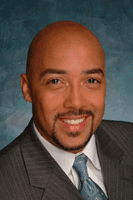
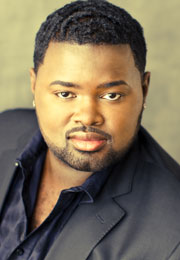
The original incarnation of three classical singers with the same range performing as an act was that of the late Luciano Pavarotti, Placido Domingo and Jose Carreras.  I seem to remember a similar act with three Irish tenors that followed on their model.  Well what we have here is a far more unusual and very historically significant collection of three counter tenors, that voice range of male falsettos roughly corresponding to mezzo-soprano in range.  This is certainly one of the least common type of vocal artist but what makes this a unique historical event is that all three are African-Americans (to use the currently politically correct term).  They’re not performing as an act, though.  They are all starring in a single opera which makes this event even more compelling.

Darryl Taylor

Darryl Taylor

This will happen in the context of performances of Henry Purcell’s 1689 opera, “Dido and Aeneas” in Los Angeles.  I include this in this new music blog because it is certainly a new occurrence and it fits well with my ongoing survey which has looked at black composers since the 1964 Civil Rights Act.  Of course this event puts the focus on black performers, an area which I have not attempted to explore.  But is is nice to see this happening in the 50th anniversary year of that landmark legislation.

I only came upon this information when a highly valued friend based in Oakland, Bill Doggett, who is acting as a consultant to the L.A. Opera alerted me to this historic first.  He recently curated a well received exhibition in the Grand Foyer at the San Francisco Opera at the performances of Porgy and Bess.  Bill is a concert producer, strategic marketer, consultant, arts advocate and lecturer whose work promotes black classical artists.  It was he that suggested that this event would fit with the themes developed in my previous blogs.  I did share with Mr. Doggett my experience seeing Mary Zimmerman’s beautiful production of Philip Glass’ Akhenaten in Chicago which featured a black counter tenor named Geoffrey Scott whose name, sadly, seems to have disappeared from the web except for that production.  What was curious about that is that I vividly recall the audience’s reaction when he first came on stage.  It is perhaps more historically accurate to cast a black man as an Egyptian Pharaoh but the audience seemed shocked by his appearance and I didn’t feel that it was just because of his vocal range.

John Holiday

John Holiday

The three singers in this new production include John Holiday, Darryl Taylor and G. Thomas Allen all of whom are making their début performances with L.A. Opera.  Holiday, who will sing the role of the sorceress was the third place winner in this year’s Operalia, a competition founded by  Placido Domingo for singers aged 18-32.  Taylor and Allen will sing the roles of the witches in a production which, as far as I can tell will be the first time three black counter tenors will be appearing on an opera stage  in  the history of the art form.  Taylor is a voice teacher on faculty at the University of Michigan at Ann Arbor  and Allen appears to be a rising star whose art we will see at an early point in his career.

Correction: Darryl Taylor is now Associate Professor of voice at Claire Trevor School of the Arts  University of California,Irvine.

G. Thomas Allen

G. Thomas Allen

This performance will be a double bill with the other half of the program being a production of Bartok’s Bluebeard’s Castle.  The productions will run from October 25th to November 15th.  Below I am sharing the press release of this historic event.  One hopes that this historic first will shed a more sympathetic light in these embattled times where, in spite of such wonderful historic performances, we endure a correspondingly negative series of news events like those in Ferguson, MO, New York and so many other places where the value of black lives seems to be at a very low ebb.3CountertenormediaNEW.doggett

The Feeling of the Idea of Robert Ashley: Kyle Gann’s Appreciation of the Composer


Kyle Gann Kyle Gann (Photo credit: Wikipedia)

I first encountered the work of Robert Ashley in the early 1980s when I purchased the Lovely Music vinyl LP titled ‘Private Parts: (the record)’. It contained two tracks, one on each side, called, respectively, ‘The Park’ and, ‘The Back Yard’ (which happen to be the first and last acts of ‘Perfect Lives’). I took to the music rather quickly listening to its various layers of musical sounds and Mr. Ashley’s unique voice intoning the equally unique and unusual texts.

That record earned a special place in my mental favorites library (iTunes had yet to be invented) and spurred me on to the purchase of more of Ashley’s music. But other than the liner notes (which I read closely and repeatedly) there was surprisingly little information on this mysterious and wonderful composer whose music and words so captured my sensibilities.  The publication of this volume, ‘Robert Ashley’ (one of a great series of books on contemporary composers from the University of Illinois Press) fills this long standing void in the realms of music scholarship and biography.

I encountered the author’s work at about the same time as I did Ashley’s.  He was writing fascinating and accessible reviews in the local (Chicago) free newspaper, ‘The Reader’. He would later be selected as classical music reporter for New York’s ‘Village Voice’. Kyle Gann, composer, critic, musicologist and new music raconteur contributes a most essential work to help fill that void. His biographical sketch, analysis, bibliographic and discographic references serve also as a much needed exegesis of Robert Ashley’s work.

As it happens, the author was involved in the premiere of ‘Perfect Lives’ when he was a student at Northwestern University in Illinois in 1979. He developed and maintained a close connection with the composer and his music.

Photo by Joanne Savio, 2006 Photo by Joanne Savio, 2006

Robert Ashley (1930- ) is an American composer born in Ann Arbor, Michigan. His experience growing up in the American Midwest informed his vision, speech and temperament affecting his compositional style. He spent the formative years of his youth in Ann Arbor.  He studied at the University of Michigan with Ross Lee Finney and at the Manhattan School of Music earning, respectively, undergraduate and graduate degrees in music.  Ashley declined an offer to pursue a doctorate in speech pathology (one of his many interests) to pursue music.  He organized and participated in the ONCE Festival of contemporary music in Ann Arbor from 1961 to 1969.  In 1972, he accepted an appointment at Mills College as director of the Center for Contemporary Music succeeding Pauline Oliveros, Lowell Cross and Anthony Gnazzo. In 1978 he left for New York which would become his new creative home base.

Ashley and his collaborators have performed internationally and a great deal of his music has been recorded.  His collaborators include Alvin Lucier, Gordon Mumma and David Behrman (who along with Ashley formed the performing group Sonic Arts Union), Roger Reynolds, “Blue Gene Tyrrany”(aka Robert Sheff), Pauline Oliveros, filmmaker George Manupelli and many more.  There were recent performances in New York and Miami of his early operas and a big new opera ‘Quicksand’is reportedly in progress and due to be premiered some time after this book was issued.

Gann acknowledges the limitations of his analyses saying quite correctly that Ashley’s work will require more time as well as access to the composer’s sound archive and consideration of his unrecorded works. He never pretends that this is more than a relatively brief treatment of a very large subject. Many works are not analyzed and little attention is given to either the ONCE Festival or the Sonic Arts Union.  His collaborations and influences get little space.  And George Manupelli’s films for which Ashley composed soundtracks deserve a book to themselves.  Nevertheless there is an awful lot accomplished in under 200 pages.

Gann discusses some of Ashley’s early works, his involvement in the too little known ‘ONCE festival‘ and his very important time teaching at Mills College where he became director of their Contemporary Music Center. But the real substance of this book comes in Gann’s analysis of Ashley’s operas which most certainly form the core of his creative output. It is the music that gets the closest attention here.   The author’s detailed analyses of the rhythmic schemes and harmonic structures that underlie the (mostly spoken or chanted) texts reveal the complexities of these deceptively simple sounding and seemingly impenetrable works and provide a means of appreciating and even understanding these unusual pieces that hardly fit any conventional definition of opera.

Gann also discusses some of the literary and intellectual ideas that permeate Ashley’s work.  The ideas come from a variety of sources including speech, speech pathology, geography, television, film, history, culture, the Tibetan Book of the Dead, writings of the Italian mystic and martyr Giordano Bruno and the writings of scholar Frances Yates in ‘The Art of Memory’ and ‘Giordano Bruno and the Hermetic Tradition‘ among many others.

Beginning with the earliest ‘Music With Roots in the Aether’ and then continuing with the most familiar ‘Perfect Lives’ the reader is treated to loving and insightful descriptions of the series of works which comprise his trilogy: ‘Atalanta’, ‘Perfect Lives’ and ‘Now Eleanor’s Idea’.  He proceeds to subsequent opera projects and “spin off” works.  At one point Ashley told Gann that he had figured out the structure for his “next 72 operas”.  This writer is eager for more on the man, his works and his wide artistic circle.

The electronic version of this book (unlike that of Gann’s ‘No Such Thing as Silence’) contains all the images in the hard copies and is formatted, for the most part, very skillfully.

If you already know and love the work of Robert Ashley this volume will deepen your appreciation and if you don’t know this man’s work this is the book which will tell you why you should.

Music 109, Alvin Lucier’s personal view of the post 50s avant garde


20130604-083336.jpg

This little volume is an endearing record of an undergraduate course, a music appreciation course designed for students with an interest in the music of the avant-garde of the 1960s, 70s and 80s taught by a man who was an integral part of that era as a composer, performer and teacher. The class, which he taught at Wesleyan University was reportedly very popular continues to be offered today. And this book is required reading for fans of new and experimental music.

In just over 200 pages Professor Lucier takes the virtual class of readers through a very personal journey of the music, experiments and performances of some of the highlights of some of the major works and composers of this time period. And he manages to navigate all this wildly experimental music in a way that is understandable to a general audience (remember that this is an undergraduate course for non music majors).

What makes this book so special and unique is its personal nature (Lucier was a composer, performer, organizer and interpreter of much of the music) and the particular networks to which he connects. Few historians save for Kyle Gann pay significant attention to the techniques which arose from the orbit of Ann Arbor, Michigan and composers like Robert Ashley, Gordon Mumma and Lucier himself among many others. But this group is indeed an orbit and not a universe unto itself. David Tudor, for example, crossed paths with these composers as well as, more famously, with John Cage and the New York School.

This delightfully readable volume narrates Lucier’s vast experience with and love for a variety of experimental trends. Lucier writes of his own works and places them within the contexts of fellow innovators including the above mentioned artists as well as diverse voices such as Pauline Oliveros, Philip Glass, Steve Reich, LaMonte Young, Roger Reynolds, Gordon Mumma, Robert Ashley, Earle Brown, Morton Feldman, John Cage, Christian Wolff, David Tudor, Karlheinz Stockhausen and many others. This personal inside view makes for entertaining and compelling reading which provides a historical context as well as insights to the “method behind the madness” of a diverse and innovative time in music history.

Except for Kyle Gann’s fine volume on Robert Ashley this is the only book length treatment (known to this reviewer) of artists connected with the ONCE festival and the Sonic Arts Union. Lucier’s place in music history is connected across east coast academia as well as far less academically connected groups like these. This book connects some of those dots placing an important perspective on this era.

Earlier this year I had the pleasure of speaking with Paula Matthusen, a composer who now teaches at Wesleyan. In fact she has inherited this delightful and inexplicably popular course. She told me that not only does the course continue to be popular, many of the students come in with some level of experience of this music and a desire to know more. How cool is that?

Matthusen shares many of her teacher (Lucier’s) concepts in her own work but she is clearly the next generation in experimental music reminding us that art of the era documented is receding into the past yet we hardly know it. And how can we appreciate the latest work without some understanding of how we got there? Lucier’s book provides a great introduction and hopefully will encourage more attention to this important and fascinating time in American music history.