
Being asked to review this retrospective of the work of this virtually uncategorizable dancer, singer, composer, dramatist is the telling of my personal experience of growing up nurtured by this artist. Monk is not, of course the only artist whose presence has nurtured me and so many friends but her work is a case where I learned how to tune my curious radar to find more of the music that touched me deeply.
I first discovered her work when I purchased her album, “Key” (1971), self released and marketed via the late lamented New Music Distribution Center in New York. That album, later released on the Lovely Music label along with two releases on the great German avant garde label Wergo (Our Lady of Late, 1973 and Songs from the Hill/Tablet, 1979), constitute the minimalist, SOHO loft music which characterizes her style even now. But with her first ECM release she clearly hit her stride. Those early albums are definitely worth hearing but her mature style blossomed on ECM. It was, in retrospect, a sort of quantum leap, if you will.
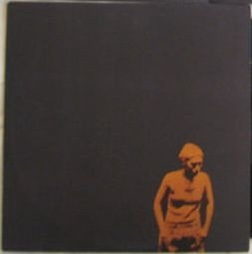


In that first album one can find Dick Higgins among the singers and Colin Walcott producing and playing percussion (as well as singing). Walcott, along with the yet to be known Julius Eastman would later participate in the Dolmen Music release. Monk, who studied dance at Sarah Lawrence College along with fellow student Alwyn Nikolais established “The House”, her flexible performing group in 1968 at a time which saw a great deal of artistic energy in and around Manhattan’s SOHO district where she encountered musicians like Philip Glass, Steve Reich, and performers sympathetic to new innovations and ideas. She also taught and continues to teach her characteristic extended vocal techniques. Monk, along with John Cage, Philip Glass, and Robert Ashley was featured in Peter Greenaway’s “Four American Composers (1983).
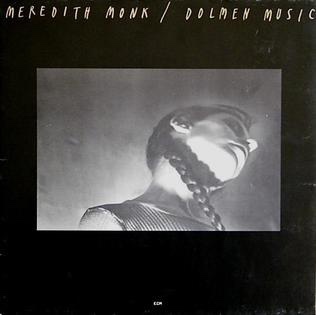
The release of her first ECM disc, “Dolmen Music” (1981) can now be seen as a sort of watershed event. It was followed by “Turtle Dreams” (1983) a work which was prominently featured at New Music America 1982 in Chicago along with Robert Ashley’s “Perfect Lives”. Monk’s appearance on ECM occurred at about the same time as Steve Reich’s masterful “Music for 18 Musicians”. Monk found her mature voice more or less at the same time that Steve Reich and Philip Glass had found theirs. And anyone following new music in those years will recall the flow of new musical ideas that established many now acknowledged masters as legitimate artists.
While the major masterpiece, “Dolmen Music” dominates the album, Monk’s quirky mix of humor and pathos in pieces like “Gotham Lullaby” and “Biography” remain signature pieces in her oeuvre. And Turtle Dreams was made into a performance film for public television by visual artist Ping Chong in 1983, now available on YouTube.


She followed with “Do You Be” (1987) and “Book of Days” (1990) which also exists in at least two film versions and the CD itself which has been described as a “film for the ears”.

Following “Facing North” (1992) Monk released her only opera (though she refers to much of her works as “operas” this is the only one that comes close to the more generic concept of western music operas) to date, “Atlas” (1993) which was commissioned and subsequently performed at the Houston Opera. This represented another phase in her artistic development as she utilized her structured improvisation techniques along with her now familiar extended vocal techniques with an expanded set of performers both vocal and instrumental. Atlas is arguably similarly creative (and transgressive) as Philip Glass’ 1976 “Einstein on the Beach”. Both were developed in an unconventional manner and uses a similar harmonic language with really none of the standard conventions of western music in opera. Would that we can some day see a filming of this work.

I was privileged to see Monk in person for the first time when she performed excerpts from “Volcano Songs” (1997) in Chicago. Those images involving, among other things, light sensitive areas where Monk lay down and left a ghostly shadow upon arising. In addition to her engaging minimalist inflected music, Monk is a master at creating compelling images.

“Mercy” (2002) was followed by “Impermanence” (2008) which I was thrilled to see at Stanford. “Songs of Ascension” (2011) was another landmark in this piece conceived and performed in conjunction with installation artist Ann Hamilton in her tower in Northern California. Attendees to this event were brought in by bus due to the lack of actual parking facilities in that tower. I wish I could have experienced this but hopefully a cohesive video release will be forthcoming. Excerpts are available for viewing on YouTube and on Monk’s website.
“Piano Songs” (2014) by the wonderful new music championing pianists Bruce Brubaker and Ursula Oppens filled an inexcusable gap in the documentation of Monk’s piano music. And following her receiving the National Medal for the Arts in 2015 she released “On Behalf of Nature”(2016).
Monk is a well documented artist largely due to her productive affiliation with Manfred Eicher and ECM and, while gaps remain these recordings represent a major artistic accomplishment and an enduring legacy for new music, for women composers, for western art music. This lovely box set is truly a joy to behold.


 New Music Buff