Right of Spring, Left of Spring but Not Necessarily in Spring


Disruptions, dissatisfactions and even stronger reactions are not actually that uncommon in classical concerts. But some of these disruptions have taken on a sort of mythical dimension while others remain lesser known. The significance of these disruptions is usually based on failure of expectation or fulfillment of a foregone conclusion. Either the audience is unpleasantly surprised by the music or they come with preconceived notions of the inherent difficulty and/or insignificance of modern music. I think that these events signal a revolution not so much in music as in hearing. Audiences’ horizons are being expanded and many rebel against being taken out of their comfort zones. It is much like the paradigm shifts in science delineated by Thomas Kuhn in ‘The Structure of Scientific Revolutions’. Indeed some of these concerts seem to signal aesthetic revolutions.

English: Kiss to the Earth. 2nd variant. Scene...

English: Kiss to the Earth. 2nd variant. Scenery sketch. 1912 (from a reproduction) For Diaghilev’s production, Théâtre des Champs-Élysées, Paris, 1913 (Photo credit: Wikipedia)

May 29th, 2013 will mark the 100th anniversary of the first performance of Igor Stravinsky’s ‘The Rite of Spring’ at the then newly constructed Champs-ÉlyséesTheatre in Paris. The performance was a dance concert with the Ballets Russe with the mercurial Vaclav Nijinsky and with choreography by Serge Dhiagalev and sets by Nicholas Roerich with Pierre Monteux conducting the orchestra. The audience reaction disrupting the performance and the composer subsequently sneaking out the back way is the stuff of legend now (if not strictly truth). The public and the news media love anniversaries so it is no surprise that a great deal of writing, lectures and concerts fill this, the year of that anniversary.

The score went through several revisions (1921, 1926, 1929 and 1943). It is the 1929 score that is the one most performances now follow. Curiously the 1943 revision of the Sacrificial Dance has never been performed as far as I can determine. The Paul Sacher Foundation is making the 1913 version of the score available for the first time in celebration of the centennial.

The first work on that concert was a performance of Les Sylphides, a ballet consisting of piano music by Frederic Chopin orchestrated by Alexander Glazounov. For this concert orchestrations were commissioned from Anatoly Liadov, Nicholas Tcherepnin, Sergey Taneyev and Igor Stravinsky. It was followed by the Hector Berlioz 1841 orchestration of Carl Maria von Weber’s piano piece,’Invitation to the Dance’ (1819). This certainly satisfied mainstream expectations but provided a stark contrast for the next work which was the now infamous Rite of Spring. In the tradition of well-trained professional performers the musicians and dancers continued in spite of the disruptions and even concluded with another tamer work, the ‘Polovetsian Dances’ from Alexander Borodin’s Opera ‘Prince Igor’ (1887).

Musikverein - Dumbastrasse - Innere Stadt -Vienna-

Musikverein – Dumbastrasse – Innere Stadt -Vienna- (Photo credit: Million Seven)

Almost two months before on March 31, 1913 there was a concert in the Musikverein in Vienna by the RSO Wien (Vienna Radio Symphony) under the direction of Arnold Schoenberg. Alex Ross brought this incident to my attention in his blog. The music on the concert was Anton Webern’s ‘Six Orchestral Pieces’ (1909-13), Alexander Zemlinsky’s ‘Four Songs on Poems by Maurice Maeterlinck’ (1913), Arnold Schoenberg’s ‘First Chamber Symphony in E major Opus 9’ (1906, played in version with an augmented string ensemble of 1913), two (out of five) of Alban Berg’s ‘Altenberg Lieder Opus 4’ of 1912 (“Sahst du nach dem Gewitterregen den Wald”, op. 4/2 and “Über die Grenzen des All”, op. 4/3) and the last programmed (but not played due to the police shutting the concert down) first of Gustav Mahler’s ‘Kindertotenlieder’ (1904).

Photo of Arnold Schoenberg in Los Angeles, bel...

Photo of Arnold Schoenberg in Los Angeles, believed to be taken in 1948. (Photo credit: Wikipedia)

Even before this there was the unwelcome reception of musicians and audiences to Claude Debussy’s 1902 opera ‘Pelleas and Mellisande’. Both the musical language and the frank treatment of sex in the libretto contributed to the initial hostile reception. Of course the work is now acknowledged as a masterpiece.

The 1926 première of George Antheil’s ‘Ballet Mecanique’ (1924) in Paris was promoted as radical new music seemingly to create another controversy like that of the Rite of Spring some 13 years before in the very same theater. As near as I can determine there was only one other work on the program (Symphony en fa) and it is not clear whether or not it was the first or last piece on the program (though I suspect it was last). The audience was clearly divided and perplexed by the music and likely also by the technical failures that occurred in this complex work whose demands on mechanically operated instruments wouldn’t actually be executable as the composer intended until the year 1999 . The première in Carnegie Hall New York in 1927, again a concert entirely of Antheil’s works also created controversy and supposedly the controversy continued outside the concert hall with some minor rioting in the street. This concert was duplicated by conductor/historian Maurice Peress and recorded on CD. That concert began with the 1925 Jazz Symphony (played by the W.C. Handy orchestra) followed by the 1923 Sonata for Violin, Piano and Drum and then the String Quartet of 1925. The second half of the concert contained the Ballet Mecanique. While both the Paris and New York premieres were significant and somewhat controversial they did not quite have the impact of the Rite of Spring.

English: Shiraz Art Festival: David Tudor (lef...

English: Shiraz Art Festival: David Tudor (left) and John Cage performing at the 1971 festival.(Photo courtesy Cunningham Dance Foundation archive) (Photo credit: Wikipedia)

On August 29th, 1952 pianist David Tudor performed one of the most controversial musical pieces of all time. In Woodstock, New York audiences sat (mostly perplexed) as Tudor opened and closed the lid of the piano and marked time with a stopwatch. It was the première of 4’33” by John Cage in the aptly named “Maverick” concert hall. Kyle Gann writes in his book, ‘No Such Thing as Silence’ (written in commemoration of the 50th anniversary of the première) that, like the Schoenberg concert, the program consisted of other contemporary pieces. Morton Feldman’s ‘Extensions 3’ (1952) began the program followed by one of the pieces from Christian Wolff’s ‘For Prepared Piano’ (1951) and then the very complex Piano Sonata no. 1 (1946) by Pierre Boulez.

Cage’s was the penultimate work which was followed by Henry Cowell’s ‘Banshee’ (1925). The concert was followed by a question and answer session. There was no riot in the cool intellectual atmosphere of this concert venue but Gann states that one artist exclaimed at one point, “Good people of Woodstock, let’s run these people out of town.”

John Cage would have a much more unpleasant experience at the hands of the New York Philharmonic with the première of his ‘Atlas Eclipticalis’ (1962). On February 9, 1964 under the baton of Leonard Bernstein this piece was performed as part of a series of contemporary pieces played by the orchestra that year. Concert programmers sandwiched the work between performances of Vivaldi’s ‘Four Seasons’ and the Tchaikovsky 6th Symphony.

Benjamin Piekut, in his excellent book, “Experimentalism Otherwise”, investigated the circumstances surrounding this concert attempting to separate history from legend by interviewing some of the musicians who participated. He reports that there were technical problems with contact microphones, mixing consoles and amplification. But there was also rebellion by the musicians some of whom destroyed the contact microphones and/or declined to play the notes provided. These technical issues which occurred seem similar to the Antheil concert in that technology was behind the composer’s intentions but the willful destruction and misuse of the technology by the musicians themselves suggests an added level of hostility which of course did not help the audience’s reaction which was anything but favorable.

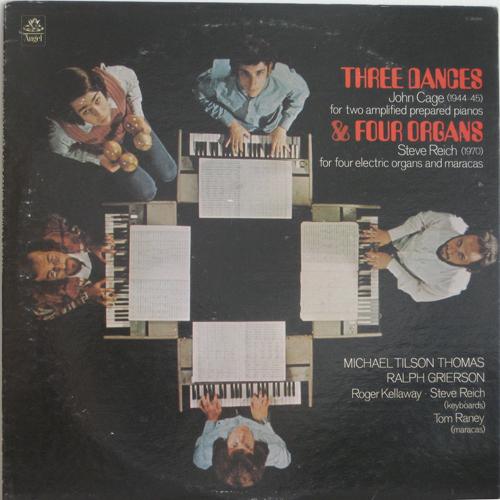
A 1971 concert by the Boston Symphony under Michael Tilson Thomas included a work for 4 organs and maracas by Steve Reich. The piece, titled simply ‘Four Organs’ (1970) is a study in ‘augmentation’ the lengthening of notes and musical phrases, stretching time as it were. The maracas simply play steady 8th notes creating a pulse that the musicians can count. They wind up having to count up to 120 beats at times and concentration is paramount in a successful performance of this music.
The first recording of Four Organs

The first recording of Four Organs

The piece had been premiered at the Guggenheim Museum in 1970 and was reportedly pretty well received. The context of a new music concert in a non-traditional venue no doubt contributed to the more favorable response because the audience was expecting a challenge. Reich was skeptical about the presentation of this music in a more traditional venue and indeed he was correct in assuming that it would receive a different response.

The theme of the concert was ‘multiples’. The first piece on the program was the Sinfonia for two orchestras by Johann Christian Bach (one of the sons of J.S. Bach). It was followed by Mozart’s Notturno for four orchestras and the Bartok Music for Strings, Percussion and Celesta of 1936. Again the newest and most controversial piece would hold the penultimate position followed by Franz Liszt’s Hexameron Variations for six pianos.

English: Michael Tilson Thomas

English: Michael Tilson Thomas (Photo credit: Wikipedia)

Michael Tilson Thomas, who was at one of the farfisa organs (along with the composer, Ayrton Pinto and Newton Wayland), reports that there were wide differences in the reactions to the music, a great deal of noisy reactions both pro and con. Thomas appeared to like the music (and likely the reaction to it) well enough to program the piece again in 1973 in New York’s Carnegie Hall to an even more hostile response which, according to Thomas, included a woman who came to the stage and banged her head against it saying, “Stop, please, I surrender”. Clearly the issue here in not one of technology but definitely one of failure to meet expectations of many listeners. It was a very different sound especially in the context of the concert hall and programmed with far more conservative music preceding and following it.

These are just a few of the most prominent such responses in the twentieth century. One is left to wonder when and where such a strong reaction might occur again. It is one of the joys, I believe, of going to concerts. The audience response is a valuable part of the experience.

So the Dead May Speak, a Function of Classical Political Music


English: Photograph of a Female Demonstrator O...

Photograph of a Female Demonstrator Offering a Flower to a Military Police Officer, 10/21/1967 (Photo credit: Wikipedia)

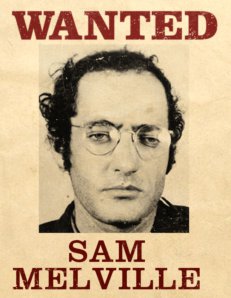
Giving a voice to the murdered, the martyrs, those who cannot speak for themselves is one of the ways in which sociopolitical music can function.  Witness the case of Sam Melville (born Samuel Joseph Grossman in 1934).  He worked as a draftsman for a company which assigned him to work on designing new offices for the Chase Manhattan Bank in the then apartheid Union of South Africa.  He became outraged at the inequality and quit his job there as a result.  He became involved in the anti-Vietnam War movement the Weather Underground and the Black Panther Party.  He was arrested in 1969 for his involvement in 8 bombings.  He was sentenced to 18 years in federal prison.

sam-melville

He was transferred to Attica prison in upstate New York where he continued to work as an activist attempting to improve prison conditions for him and his fellow inmates.  He is suspected of being involved in organizing the prison riots which erupted there in 1971 which the state’s response resulted in the deaths of 39 people of which Melville was one.  Subsequent lawsuits for violations of civil rights resulted in the payment of $12 million dollars by the state of New York to the families of the victims.

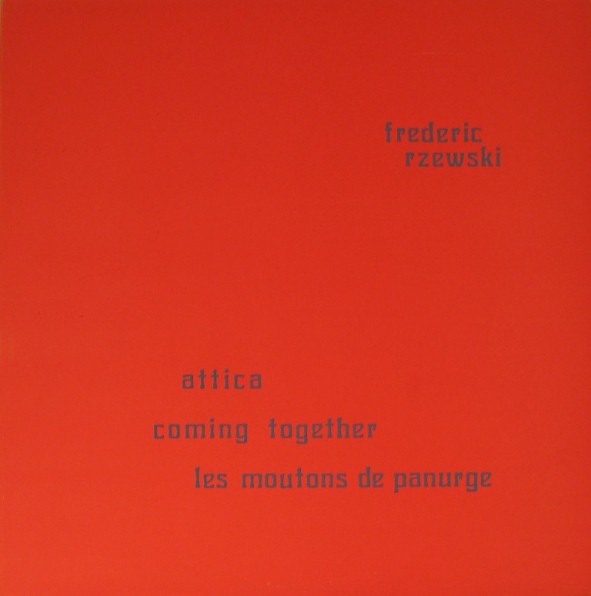
The first recording of both "Coming Together" and "Attica", an iconic record for this writer.

The first recording of both “Coming Together” and “Attica”, an iconic record for this writer.

Later that year Frederic Rzewski wrote his piece for speaker and ensemble (the score is open as to instrumentation) “Coming Together”.  The title and the words the speaker repeats are taken from one of Melville’s letters:

“I think the combination of age and the greater coming together is responsible for the speed of the passing time. it’s six months now and i can tell you truthfully few periods in my life have passed so quickly. i am in excellent physical and emotional health. there are doubtless subtle surprises ahead but i feel secure and ready. As lovers will contrast their emotions in times of crisis, so am i dealing with my environment. in the indifferent brutality, incessant noise, the experimental chemistry of food, the ravings of lost hysterical men, i can act with clarity and meaning. i am deliberate–sometimes even calculating–seldom employing histrionics except as a test of the reactions of others. i read much, exercise, talk to guards and inmates, feeling for the inevitable direction of my life.”

The text is repeated usually with dramatic license over a driving minimalist substrate which suggests the chaos that must have imbued that time.  The piece lasting about 20 minutes is a powerful experience, even more so when the listener comes to know the context.  It has been recorded at least four times.

A sort of companion piece, “Attica”, also written in 1971, uses the words of one of the survivors of that riot, Richard X. Clark, as he was being taken away from the prison:  “Attica is in front of me now.”  Mr. Clark, who was released from prison in 1972, wrote a book about his experiences and went on to work in social services as a case manager helping drug addicts recover.

This second piece (lasting about ten minutes) uses the minimalist style to create a calmer atmosphere, that of a man who is saddened but relieved to have this event over and to have survived.  This piece has also had several recordings and is frequently performed as a companion to “Coming Together”.

In future blogs I will include more music that speaks for the dead in this ongoing series of political classical music.

Black Classical Part One


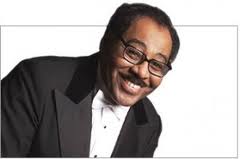
Adolphus Hailstork

Adolphus Hailstork

In honor of Black History Month I want to bring attention in this blog to black music that is not a part of popular culture. I want to highlight some of the black classical composers whose work I find most satisfying and accomplished.

I will begin with the music of Adophus Hailstork. I had been aware of some of this man’s work for some years but it was when I purchased the Naxos recording of his 2nd and 3rd Symphonies that I came to appreciate the power of his work.

Hailstork was born in 1941. He studied piano, organ, voice and violin. He is another of a long line of composers who studied with Nadia Boulanger in Paris. As one would expect, some of his music is concerned with significant events of the civil rights struggles of the 1960s and 70s. ‘American Guernica’ of 1983 is his response to the 1963 bombing of the 16th Street Baptist Church which killed four little girls. Similarly his 1979 composition, ‘Epitaph for a Man Who Dreamed’ is an homage to Dr. Martin Luther King, Jr. who was felled by an assassin’s bullet in 1968.

I purchased the Naxos disc to become more familiar with this man’s music. The first work on the disc is the 3rd Symphony of the late 1990s struck me as a highly entertaining and accomplished work that deserves a place in the symphonic repertoire. It is a joyous and inventive work which, to my ears, echoed the likes of orchestral masters such as William Schuman and Vincent Persichetti as well a hint of minimalist repetitive structures. It is a lavish neo-romantic work with a depth and complexity that demands several hearings but one which has an immediate appeal. The somber 2nd Symphony is imbued with the composer’s reactions to having visited the historical slave market areas of West Africa which, I imagine, must be not unlike visiting the death camps of the former Nazi Germany.

As time and finances permit I intend to pursue more of this American composer’s works. There is precious little reference material to be found on the Internet regarding this prolific masterful composer (as is the case with all the black classical composers i have so far encountered) though, thankfully, there are more recordings.

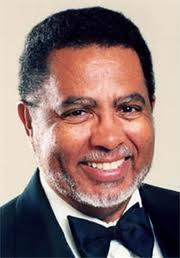
Paul Freeman

Paul Freeman

Africlassical.com and its related blog provide some information on about 50 composers and musicians. The now retired daring black conductor Paul Freeman recorded a significant series of music by black composers issued on 9 LPs for Columbia records in the 1970s. He recorded another 3CDs of music by black composers on Chicago-based Cedille records. He founded the Chicago Sinfonietta (billed as the world’s most diverse orchestra) and was its principal conductor for 24 years and continues in its mission of diversity presenting unusual concert repertoire.

More about some of the composers on those Columbia LPs and Cedille CDs as well as others to come in future blogs during this month.

Impossible, you say?


einsteintrain

The first scene


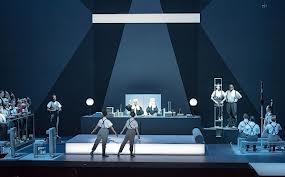
I had the pleasure of seeing the recent production of the Philip Glass/Robert Wilson “opera” ‘Einstein on the Beach’ in Berkeley on October 28th.  I had seen the production at the Brooklyn Academy of Music 20 years ago and have loved the music since I first bought the recording issued on the short-lived Tomato record label (this is the performance now available on Sony).  It is clearly a work which compels me and has insinuated itself into my world view.

The production was beautiful.  The musicians as always played well under the precise and confident direction of Michael Riesman who has apparently conducted every performance of the opera (that alone is an astonishing feat).  The dancers were spectacular in their execution of Lucinda Childs’ unusual choreography.  And the solo violin played in this production by violinist Jennifer Koh breathed a new virtuosic life into the familiar solo part.

Dance with spaceship

The set design and lighting were about as good as it gets and the performers appeared to be well rehearsed and operated as well oiled parts of the unified whole of the machine that is Einstein on the Beach.  It was a production that was loving and well received by the audience (a genuinely appreciative standing ovation followed the performance) in this, the west coast premiere of this landmark piece from 1976.   It is certainly worth noting that it took 36 years for this to be produced in even this most liberal of musical places.

I have hesitated to write about this performance partly because I didn’t want to simply report my attendance and geeky satisfaction.  I wondered if everything has already been said ad nauseam about this piece and adding yet another adoring review would be pointless and dull.  But the performance (all 4.5 hours of it) left me with a renewed appreciation for the music and the visuals.  It reinforced my belief that this is a truly significant work of art and that it will continue to be revived.  However it is likely that this is the last revival we will see which has been supervised  by the original creators.  Philip Glass is 75 and Robert Wilson is 71.  Lucinda Childs is 72.  And there is at the time of this writing no heir apparent for the Philip Glass Ensemble.

The vaguely apocalyptic themes provide a sort of commentary for our times.  Like any great work of art it continues to take on meaning for subsequent generations.  It is both a response to the milieu in which it was created and a mirror in which is reflected the present time of its performance.  Don’t get me wrong.  This avant-garde masterpiece is hardly easy listening or easy viewing.  In addition to its length it is non-linear, devoid of plot and devoid of most of the conventions by which we normally judge and appreciate both theater and music.

But it has been embraced by many.  Mark Jacobs’ Spring/Summer 2012 Fashion Show featured models walking up and down the runway to the sound of the opening “1, 2, 3, 4…” of the solo chorus which opens the work.  A Pepsi commercial from 2008 titled ‘Einstein’s Choice’ also featured that same chorus.  And the incidental music to any number of nature programs are frequently infused with the now familiar arpeggios endemic to Philip Glass’ compositional style.

Spaceship scene

Combine these things with the fact that revivals of this opera play to nearly or completely sold out houses in New York, France, Berkeley, Mexico City, Amsterdam and Ann Arbor, Michigan.  Granted the revivals are infrequent, the last being 20 years ago, but the draw of this work apparently remains strong suggesting that it is now and will likely remain in the repertoire.

I came away from this production with a sense of exhilaration that I feel when I encounter a great performance of a masterpiece by Mozart, Beethoven or John Coltrane, a sense of connection to a greater meaning such as one finds in all great works of art be they music, theater, painting, literature, film, etc.  And I don’t think I am alone in having felt that.

When I first began listening to this piece in the aforementioned Tomato recording I was both fascinated and perplexed.  I felt compelled to listen again and again and was perplexed at what I was hearing.  But history tells us that few seem to fully appreciate great art at the time of its emergence, that such appreciation takes time.  With time and repeated listenings I began to find the work grow on me, become familiar.

Seeing the 1992 revival in Brooklyn only further reinforced my sense that this is a very significant work and it remains one of my favorite pieces of music.  It is one of the pieces of music that feels to me like a personal discovery, one which I seem to have appreciated to some degree from my first encounter with it.  And my understanding as well as my affection for this work has only increased with time.

What remains to be seen is whether this work can continue to be successful in subsequent productions done by people whose connection to the work is less direct and whether it can continue to speak to subsequent generations.  The majority of the crowd at Zellerbach hall for this performance appeared to be in the 40 to 50+ category which may be in part due to the cost of a ticket.  I hope that it is not lack of interest.

For years, until the new recording was released on Nonesuch Records in 1993, I listened to the 1979 release which, due to the length of the music, abbreviated some of the repetitions to allow the recording to fit on 4 vinyl discs.  It is this recording which I know best and is most deeply imprinted on my memory.

Of course the experience is quite different with the accompanying visuals.  I had learned to appreciate the music alone with just of few still photos to kindle my imagination as to how the full production would appear.  And, not surprisingly, my first encounter with the full production in 1992 exceeded my expectations and provided a new and richer perspective on the meaning of this opera.

When I say “meaning” I am referring only to the meaning which I experience.  I don’t lay any claim to any special knowledge here.  And I think that this and all great works of art sustain their worth through their ability to mean and be associated with a variety of things.  Einstein has different meanings and associations for each individual and perhaps no ultimate “meaning”.

Even the texts associated with the piece are intentionally non-linear, make few concrete references to culture as a whole.  There is no story here, there are only visual images, sonic images and a variety of spoken words which, while in English, have mostly vague meanings.  The issue here is the emotional impact.

Epilogue (Knee Play 5)

‘Einstein’ has clearly affected me emotionally and I am witness to the its effect on the audiences of which I was a part.  When I tell people anything about the meaning of the work I invariably refer to it as “post-apocalyptic” metaphor which ends quite simply with a poignant little love story, if you will, a bedtime story for our times.  After some 4 hours of having presented it’s audience with a plethora of images the opera ends with two lovers on a park bench who sit silently while the bus driver, his vehicle moving slowly from stage right to stage center, narrates the scene.  The lovers sit quietly until, we are told, one speaks up and asks, “Do you love me, John?”  This other’s answer speaks from the throes of youthful optimism and love at first affirming his love and then, when asked, “How much do you love me?”, he answers, “Count the stars in the sky.    Measure the waters of the oceans with a teaspoon.  Number the grains of sand on the seashore.”

This epilogue seems to suggest that, in the end, all that matters is how we experience each other, how well we succeed in communicating on a one to one level.  And perhaps that is also a metaphor for the work’s ability to communicate with subsequent generations.  While we try to communicate we succeed only sometimes.  Great art succeeds only sometimes.  The salient issue is having tried.  Despite the difficulties in communication, in love, in life, we try.  The opera ends in that 1979 recording with the chorus, two speaking voices, violin and organ all ending softly and definitively at the same time as the narration,  “Impossible, you say?”