Other Minds 20 and Why You Shouldn’t Miss It


Official Other Minds Logo

Official Other Minds Logo

The three days of concerts scheduled for March 6, 7 and 8 of this year at the beautiful SF Jazz Center will mark the 20th anniversary of Other Minds opening the ears and minds of bay area new music audiences.  Previously composers could only appear once at this festival (thought performers frequently return) but the anniversary celebration is marked by the return of several alumni.  In fact the entire program consists of composer alums.

Other Minds is an annual festival of new and unusual music curated by bay area composer, producer, broadcaster Charles Amirkhanian and his crew at Other Minds.  Along with co-founder, now president emeritus Jim Newman and a varied and sometimes changing crew of talented and dedicated archivists, fund-raisers and coordinators this festival was born in 1993.

OLYMPUS DIGITAL CAMERA

Every year (though the actual month has changed for various reasons related to venue availability and funding) an international group of composers is brought together first at the Djerassi Arts Center just west of Palo Alto where they share their work and ideas with each other for a week in preparation for the performances of their work to come at the concert series.  This residency is a sort of private retreat open only to the composers and the staff of the center.  And given the range of musical styles it must be a fascinating thing to witness as composers largely unfamiliar with each others’ work gather to share and wonder at each others’ strange and innovative ideas.  Who knows what seeds may have been sown?

Sadly, Dr. Carl Djerassi who founded the center passed away on January 30, 2015.  His arts advocacy will live on through his beloved Djerassi Arts Center and this OM 20 will be a testament to that legacy.

What makes this festival so significant is the fine tuned and prescient nature of the selected composers.  Just a quick look at the list of composers and performers who have participated in the past looks almost like a who’s who of new music as practiced in the late 20th and early 21st centuries.  One of their commissions, Henry Brant’s (1913-2008)  won a Pulitzer Prize (Ice Field, 2001, Pulitzer Prize, 2002).  And it is programming with a uniquely west coast ethic, whatever that means.  I just know these programs are a different take on new music than that of the east coast.  Not a value judgement there, just a celebration of a different, equally important, point of view.


WHY YOU SHOULDN’T MISS OM 20

First you will find a generous (though hardly complete) selection of music by Charles Amirkhanian (1945- ) who has been at the helm of this festival from the beginning and was for 23 years the music director of KPFA radio where his programming and interviews with composers and performers of new music spanned a wide and eclectic gamut of styles and techniques.  Perhaps most significant has been his support of northern California composers whose work would otherwise have been poorly represented.  Amirkhanian’s keen ear has introduced a great deal of new and interesting music to bay area audiences and beyond.

Executive Director Charles Amirkhanian in his ...

Executive Director Charles Amirkhanian in his office with ASCAP award in background (Photo credit: Wikipedia)

In addition to his abilities as producer and interviewer Charles is also a noted composer.  Trained as a percussionist, he has written quite a bit of music which deserves recognition for its innovation.  His best known works are those with tape recording, sound poetry and the uses of language.   His music will be featured in several performances and will be a welcome and tantalizing complement to the overall diverse tone that characterizes OM programming.

Amirkhanian’s oeuvre will be represented by “Rippling the Lamp” (2007) for violin and tape, three short pieces for voice and tape, “Dumbek Bookache IV” (1988), “Ka Himeni” (1997), “Marathon” (1997) and, on the third concert, “Miatsoom” (1994-97), a piece based on sounds (vocal, ambient and musical) recorded during the only trip Charles and his father made to Armenia in 1994.  This approximately half hour work is typical of his ability to create a fascinating and meaningful sound collage.  Miatsoom is Armenian for reunion, indeed the apparent theme of OM 20.

In an uncharacteristically political expression this year’s festival is in commemoration of the 100th anniversary of the Armenian genocide.  Amirkhanian is the descendant (both he and his father Benjamin were born here) of Armenian immigrants and grew up in Fresno, California.  The genocide of 1915 (also the year of Benjamin’s birth) was in fact only the most infamous and fatal of the ongoing abuses by the Ottoman Turk government in response to Armenians seeking equal rights (a familiar social issue both then and still today).  Charles has been tactfully apolitical in his programming but his music at times has paid respectful homage to his ancestry and their struggles. It seems right to pay respect to one’s ancestors and perhaps acknowledge that we still have much to do and learn in our imperfect world.

Tigran Mansurian

Tigran Mansurian

Appropriately the esteemed Armenian composer Tigran Mansurian (1939-  ) has been welcomed back and will be represented by two major works.  Romance for Violin and Strings (2011) and Canti Paralleli (2007-8) for soprano and string orchestra are both scheduled for the third concert of the festival.  I was unable to find any details about these pieces but Mansurian’s work certainly deserves to be better known and these performances are a welcome opportunity to hear this major compositional voice.

Lou Harrison

Lou Harrison (Photo credit: Wikipedia)

Homage will be paid to two past masters who are no longer with us, American  composer Lou Harrison (1917-2003) and Australian composer Peter Sculthorpe (1929-2014).  Harrison was a beloved bay area figure whose work with gamelan and other world musics led him to experimentation with alternate tuning systems.  Harrison will be represented by his “Scenes from Nek Chand” (2001-2) played on a National Steel Guitar tuned in just intonation by the wonderful guitarist David Tannenbaum who will also play Sculthorpe’s “From Kakadu” (1993) for conventionally tuned classical guitar.  Sculthorpe, born in Tasmania, was one of Australia’s best known composers who essayed widely in chamber, choral and orchestral music. His 14th string quartet (with didgeridoo played by Stephen Kent) “Quamby” (1998), played by the amazing Del Sol Quartet (who recorded all 18 of the composer’s string quartets) is scheduled to conclude the first concert.

Peter Sculthorpe

Peter Sculthorpe


Pauline Oliveros

Pauline Oliveros

Pauline Oliveros (1932- ) is one of the grand ladies of new music.  Her theoretical work in defining music and the act of listening as partners in the creative process and her subsequent compositions including ground breaking work with early electronics with the San Francisco Tape Music Center and later at Mills College characterize her wide range of interests and her insights.  Her principal instrument, strangely enough, is an accordion and she will be performing as well.  OM has commissioned a new work from her, “Twins Peeking at a Koto” (2015, world premiere) for two accordions and koto.  to be presented at the second concert.  Playing the koto will be Miya Masaoka (1958-  ) whose second string quartet will receive its world première on the first night by the  Del Sol Quartet.  Masaoka, Japanese/American native of Washington D.C., is a New York based composer whose work brings her to the west coast frequently where she is a founding member of the Bay Area experimental improv trio Maybe Monday.  Her work involves improvisation and frequently uses unusual sound sources like bees and even cockroaches (not to worry, no insects are slated to perform) and creates site specific multi-disciplinary works in collaboration with musicians and dancers.

Miya Masaoka

Miya Masaoka

Errolyn Wallen (1958-  ) can be said to embody the OM ethic.  Born in Belize, Wallen  left the Dance Theater of Harlem to study composition in England and says of her work, “We don’t break down barriers in music…we don’t see any.”  Her Percussion Concerto (1994)  was the first work by a black woman to have been performed at the London Proms Concerts.   Her “London’s Burning and other songs” will be played on the second night by the SOTA string quartet and Wallen voice and piano.

Errollyn Wallen

Errollyn Wallen

Don Byron (1958- ) similarly states that he strives for “a sound beyond genre”.  Steeped in classical, jazz and folk musics, Byron’s quartet (Don Byron, clarinet; Aruán Ortiz, piano; Cameron Brown, bass; John Betsch, drums) is featured at the conclusion of the second night of the festival.

Don Byron

Don Byron

Maja S.K. Ratkje (1973- ) from Norway whose work is perhaps related to Mr. Amirkhanian’s  in her exploration of the possibilities of the human voice.  Her “Traces 2” (2014-5) will receive its U.S. premiere on the first night’s concert.

Maja Ratkje

Maja Ratkje

The third concert will be unusual for two reasons.  First it will take place beginning at 3PM and, second it will feature a full orchestra.  This night will conclude with U.S. premiere of the Second Symphony (2014) by Michael Nyman (1945- ) .  Nyman is perhaps best known for his numerous wonderful film scores but is also highly accomplished in his work in the concert hall.  In the past three years Nyman has turned for the first time to the Symphony form and has completed to date no fewer than 11  symphonies.  Quite a feat.

Michael Nyman in Sant Cugat del Vallès

Michael Nyman in Sant Cugat del Vallès (Photo credit: Wikipedia)

Tickets still available as low as $15/night.  Quite a festival!


Meredith Monk and Eric Salzman, a Labor of Love


Labor Records LAB 7094

Labor Records LAB 7094

New music aficionados in the 1970s had access to quite a bit of new and unusual music on the Nonesuch label under the watchful eye of Theresa Sterne.  In fact, Salzman was among the wonderful producers along with people like Joshua Rifkin who put that label at the forefront of contemporary music releases.

Two most unusual dramatic pieces, The Nude Paper Sermon (1969) and Civilization and Its Discontents (1977) caught my ear (yes, I have them on vinyl).  I was looking to see if these had ever been reissued (they have) and ran across this disc containing music by Eric Salzman (who was involved in both of the aforementioned discs) and by Meredith Monk.

Eric Salzman

Eric Salzman

Eric Salzman (1933- ) is a composer, scholar, broadcaster, producer and theorist.  He studied at Columbia University(BA 1954) with Jack Beeson, Lionel Trilling, Otto Luening and Vladimir Ussachevsky.  His graduate work at Princeton University (MFA 1956) was with Milton Babbitt, Roger Sessions, Earl Kim, Edward T. Cone, Arthur Mendel, Oliver Strunk and Nino Pirotta.  A 1956-8 Fulbright fellowship allowed him to work with Goffredo Petrassi and at Darmstätdter Ferienkurse with Karlheinz Stockhausen, Bruno Maderna and Luigi Nono.

He has written for various news media and wrote for the wonderful Stereo Review magazine from 1966.  His academic credits and publications are also highly regarded.  He was the music director at WBAI, a Pacifica Radio Station during the 60s and 70s.  In short he is a living treasure of American music.


His music, unfortunately, is less well-known I think than his writings but what little I have been able to hear of his work (you can hear excerpts of various pieces on his web site) has piqued my interest to seek out more.  He is uncompromisingly innovative and experimental which may put off the casual listener but has wonderful revelations to those who lend their ear.  This disc on Labor Records (who have also issued the aforementioned dramatic works) contains a new aural drama or radio drama if you prefer.

Now I doubt that anyone who actually seeks out a recording by the likes of Salzman and Monk will be put off by innovative and experimental ideas but these works are quite listener friendly and represent mature work by both artists.  This very welcome recording gives listeners an opportunity to hear the vibrant mature work of two clearly still vital living masters.

Salzman’s “Jukebox in the Tavern of Love” (2008) was written on commission from the Western Wind Vocal Ensemble and was performed in Brooklyn’s “Bargemusic” in 2009.  The libretto is by Valeria Vasileski and the action takes place in a New York bar during a power outage.  The cast of characters reminds this writer of any number of, “a man walks into a bar…” jokes.  We meet a nun, a Rabbi, a Broadway Dame, a poet, and a Con Ed worker all culled from the composer and librettists perceptions of the individuals that make up Western Wind.  And these characters comment on the subject of love in this re-visioning of the madrigal opera genre.


Meredith Monk

Meredith Monk

Meredith Monk (1942- ) is a dancer, composer, vocalist, choreographer, filmmaker and new music innovator in extended vocal techniques.  She is among the best known of the composers who comprised the loosely defined “downtown” new music scene in New York in the 1970s.  She graduated Sarah Lawrence College in 1964 having studied with Beverly Schmidt Blossom.  She is best known for her numerous recordings on Manfred Eicher’s ECM label.

Basket Rondo (2007), also written for the Western Wind Vocal Ensemble, is vintage Monk.  The eight movements take the listener through a series of extended vocal sound worlds.  Monk’s work is always more evocative than literal and this work could suggest whatever the listener perceives or could simply be appreciated as musical expression. Her creative vision that underlies this piece involves a pre-industrial society singing a sort of work song.  Monk’s ability to export her extended vocal techniques through her workshops made it possible for her to write in her idiomatic style for singers not otherwise familiar with these techniques.

The piece is cast in eight movements  suggesting the “rondo” I suppose.  And I’m guessing the baskets represent the fruits of their labors.  But the important thing is that Monk’s re-visioning of medieval history in these dream like dance/vocal dramas succeeds in creating mesmerizing aural theater regardless of what plays in your head when you hear it.

The Grammy nominated Western Wind Vocal Ensemble (much of whose work is with Medieval and Renaissance music) has a well-deserved reputation as being among the finest small vocal ensembles working today.  This disc allows them to demonstrate their ability to move easily into the contemporary music world.  Their performances here are superb and a very welcome addition to the discography of these two composers.  I cannot think of anyone who could have written this music other than the present composers.  Here are two works by composers whose idiosyncratic methods have produced music that identifies them much as a thumb print identifies a check writer (or a criminal, for that matter, I suppose).  That is a mark of true mastery. And it would be a crime to miss hearing these works.


Finding Angels, Energetic Eclecticism from Howard Hersh


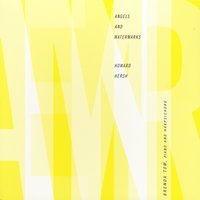
Angels and Watermarks

Angels and Watermarks

Howard Hersh (1940- ) studied music and earned Bachelor’s and Master’s degrees at Stanford University.  He is a California native and he succeeded Charles Amirkhanian as music director at KPFA.  His Pony Concerto (2005), Braided River Nights (2004) and Sonata for Violin and Percussion with String Bass obligato (2000) were released on Albany Records in 2007 and his Dancing at the Pink House (2006) is available as a free download on Bandcamp.

I had not been familiar with Mr. Hersh’s music when I agreed to review this disc but I found that liked it immediately and it made my  list of favorite releases for 2014. The  featured piece here is the Concerto for Piano and Ten Instruments (2008) and it is a tour de force.  Hersh writes in a tonal idiom that sounds to this reviewer’s ears like a mix of Conlon Nancarrow and Francis Poulenc.  This concerto is virtuosic in the extreme but not the empty virtuosity of the romantic composer pianists (Anton Rubinstein bores me to tears).  This work in three movements sounds very difficult to play but manages to remain playful and entertaining, never taking itself too seriously.  Pianist Brenda Tom does a fantastic job (she must have fingers of steel) and is very ably supported by the small ensemble conducted by Barbara Day Turner.  Rapid attacks, scales and arpeggios keep the soloist very busy and the ensemble clearly listens and collaborates in what is an electrifying performance.

The other pieces on the disc are a sort of strange contrast to the concerto.  First is a suite for harpsichord, Angels and Watermarks (2004) was composed during Hersh’s residency at the Djerassi Arts Center.  The piece is in five movements and is a significant contribution to the contemporary literature for that instrument.  Cast in the manner of a baroque suite, each movement plays on familiar forms.  The first movement is a ponderous prelude which is followed by a playful moto perpetuo, a gentle lullaby, then a spectacular jazz inflected toccata and finally a sort of non-literal recapitulation of the prelude.  Again we are treated to the dynamic keyboard work of Brenda Tom who executes each movement flawlessly and with great expressiveness.

The final work on the disc is Dream (2012)  which the composer (who wrote the liner notes) says is his exploration of how to incorporate tonal harmony in his work.  It is a soft, slow meandering piece in which he manages to make his explorations into a beautiful and restful work.  Brenda Tom is the dedicatee of both this and the harpsichord suite and she demonstrates her ability to work with soft expressive textures.

All in all a great CD which will delight any new music fan.  It is available from CD Baby and Amazon.  Highly recommended.

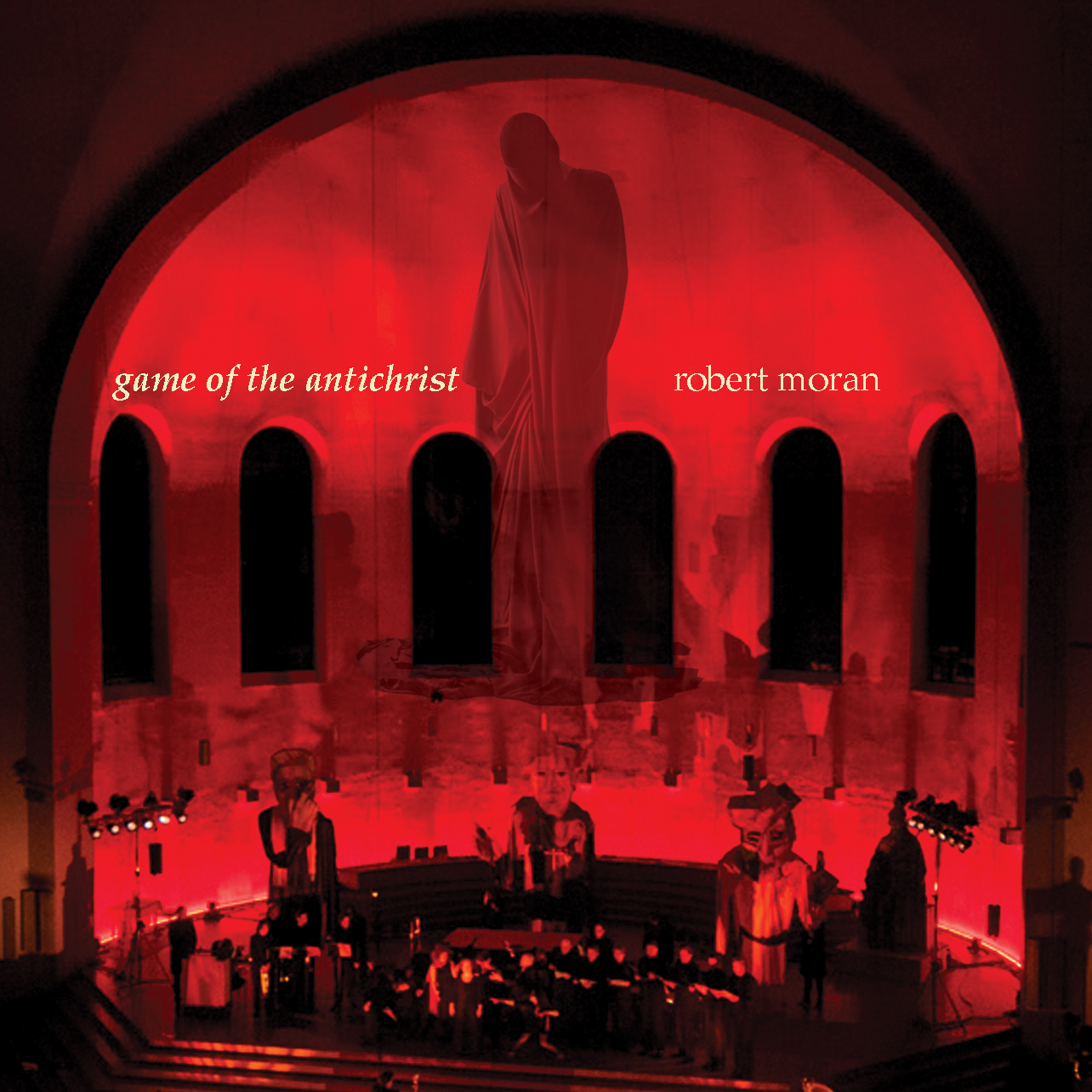
Game of the Antichrist, a spectacular new music drama by Robert Moran


Cover of Game of the Antichrist

Game of the Antichrist (Innova 251)

Despite the title, this is neither a Stephen King adaptation or that of a given miniseries.  This is an actual medieval mystery play which was performed to disseminate religious ideas during that period.  The medieval passion plays are better known but eclectic composer Robert Moran managed to find an actual drama and added to it his unique blend of experimentalism, minimalism, jazz and lyrical melodies to create this visually and musically striking (there is a Video here) setting of this forgotten little play.

Moran (1937- ) studied in Vienna with Hans Erich Apostel, a student of both Berg and Schoenberg.  He earned a master’s degree from Mills College having studied with Darius Milhaud and Luciano Berio.  He has produced everything from electronic music, to happenings involving whole cities and has written in musical styles derived from chance operations to minimalism and is not afraid to write beautiful melodies.  His collaboration with Philip Glass in The Juniper Tree (1985) is a fine example of his facility with vocal writing and music drama.

This drama is performed in a cathedral space and Moran takes advantage of the resonant space by the inclusion of Alphorns, harp and organ whose tones are transformed in part by that space.  Musical styles vary suited to the unfolding drama and work well with the staging of the piece.

Moran, who professes a love of opera since about the age of 9 or 10 has a great sense of the dramatic and for beautiful vocal writing.  He says he listens to operas all the time.  His 2011 Trinity Requiem was written for similar forces and performed in a similarly resonant space also to great effect.  And his sense of eclecticism allows him to select from a wide variety of musical styles and effects.

The end result is, for this reviewer, a very successful integration of the composer’s various skills and influences.  It would be hard to imagine a better setting of this piece.  He starts with an anonymous text from Quirinus Monastery Cloister Tegernsee in Bavaria ca. 1150 and, with Alexander Hermann, creates a realization for performance.  The piece is scored for children’s chorus, vocal ensemble, soprano, mezzo-soprano, counter-tenor, oboe, english horn, Alp horn, Bar piano and organ.  In addition there are two other defined ensembles consisting of harp (representing the Heathen and his Babylonian followers), guitar, recorders and synthesizer (representing the Synagogue and Jerusalem), trumpets, horn, trombone, bass trombone, tuba and percussion (representing the Church and its Devotees).

There are roles for dancers and, in the performance depicted on the CD cover, choreography by Jarkko Lehmus and Bettina Hermann design by George Veit and menacing puppets created by Fabian Vogel.  Unfortunately there are no current plans to release a DVD of this work but settling for the music alone is hardly a terrible sacrifice.  Moran brings his eclectic musical range, knowledge of opera and music theater combined with careful selection of dramatic text to create a piece that can work as aural theater as well.

The disc concludes with another piece, Within a Day (2014), of aural theater which, in this case, has no specified stage actions.  It is a collaboration with the Thingamajigs Performance Group, Edward Shocker’s improvisational ensemble.  It is an example of Moran’s ability to write less determined music as well as his ability to collaborate with other creative artists.  The piece premiered at San Francisco’s Center for New Music in January, 2014 and subsequently recorded in Lisser Hall at Mills College in May, 2014.  It is a collective improvisation based on what appears to be an indeterminate score by the composer.

This is a clearly different music with more abstract aims and it contrasts strangely with the music drama but this is a good example of Moran’s facility with the art of composition as well as collaboration (Can you get more collaborative as a composer than an indeterminate score?).  This more ambient sort of music is a little sonic theater for the mind based loosely on Moran’s interest in Tibetan texts invoking the gods and goddesses through their chants.

This disc made one of my best of 2014 and I highly recommend it for listeners interested in music drama and sound theater.

My 2014, a Summation and (sort of) “Best of…” List


The stage at Kanbar Hall stands ready to receive performers on opening night of OM 18

The stage at Kanbar Hall stands ready to receive performers on opening night of OM 18

As New Music Buff heads on into its fourth year in the online realm I find that I have a steadily increasing readership averaging 18 hits per day with an international reach of about 88 countries. I say readers, not followers because the stats provided have no way to track returning visitors but you know who you are.  And I thank WordPress for their entertaining summary published earlier here.


Last year I provided a list of my greatest hits (i.e. my most read articles in 2013) so here is a list of 2014’s top ten:

Black Classical Conductors (Black Classical Part Two)
This is a 2013 article which continues to be popular. I did an addendum called: Black Conductors, A Belated Addendum  and received a note from Tania Leon who remarked quite correctly that she is indeed a black American conductor.  Clearly I will need to expand this survey once again.

Maybe Music Remains Forever
This review of the excellent newly released Martin Bresnick CD went the equivalent of viral for my blog and I was pleased to have discovered the work of this wonderful American composer.

Primous Fountain World Tour Begins in Moldova
This relatively little known living black American composer was a child prodigy whose second symphony was commissioned by Quincy Jones had his sixth symphony premiered in Moldova in 2014.

Tawawa House in Modesto?
I was granted a comp ticket to see this really great performance of a little known 20th century opera by a black female American composer, Zenobia Powell Perry.  It was a great experience, a passionate, entertaining performance and put Modesto on the musical map for me.

Other Minds 18, Three Nights on the Leading Edge
Curiously this review was read more than the one about the 2014 Other Minds 19. More to come about the upcoming Other Minds 20.  For anyone who doesn’t know this is my favorite new music festival.

Far Famed Tim Rayborn Takes on the Vikings
This article about a 2013 performance by this very talented multi-instrumentalist, singer and scholar/historian continues to be popular. I’m hoping to catch another of his performances in 2015.

Black Composers Since the 1964 Civil Rights Act: Primous Fountain
I started in 2013 writing an occasional series of articles for Black History Month. I had no idea how popular this would become. The theme for the 2014 series is given in the title and you can rest assured that I will continue the series in 2015.

Tom Johnson and Samuel Vriezen, Great New Recording
A review of a crowd sourced recording project and one of my favorites of 2014.

Black Composers Since the 1964 Civil Rights Act
This is the introductory article for the 2014 series. Many thanks for the comments and support on this article and its successors.  I plan to give my summation of the various responses on this received both on and off the books.

Abraham Lincoln and the Avant Garde
This is one of an ongoing series of articles on political expression in music. It was after I friended Dorothy Martirano on Facebook and mentioned this piece that the article got a few new readers. Perhaps I should have mentioned the composer in my title.  Kudos to the late great Salvatore Martirano, gone too soon and too little known even now some twenty years after his passing.


SOME OF MY FAVORITES FROM 2014

Now regarding my personal favorite recordings of 2014 I have to insert a disclaimer to the effect that I make no claim whatsoever to this list being comprehensive or representing anything more than a few of my personal favorite recordings encountered in this past year. My apologies in advance to those I missed. I hope to catch up some day. So, in no particular order:

Mysterienspiel 2012

Game of the Antichrist by Robert Moran (Innova 251)
I promise a more comprehensive review soon but this is a great CD by a too little known American composer.  Mr. Moran recommended the disc to me after I wrote to him praising his wonderful “Trinity Requiem”.  I plan a more comprehensive article soon.  Meanwhile here is a link to a performance on Vimeo.

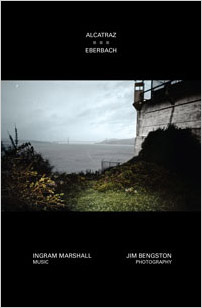
AZ spread

Alcatraz/Eberbach by Ingram Marshall and Jim Bengston  (Starkland S-2019)

This DVD is essentially the completion of a collaboration of photographer Jim Bengston and composer Ingram Marshall.  As such it is the most complete artistic statement superseding the audio only release (still worth having by the way) from some years ago.


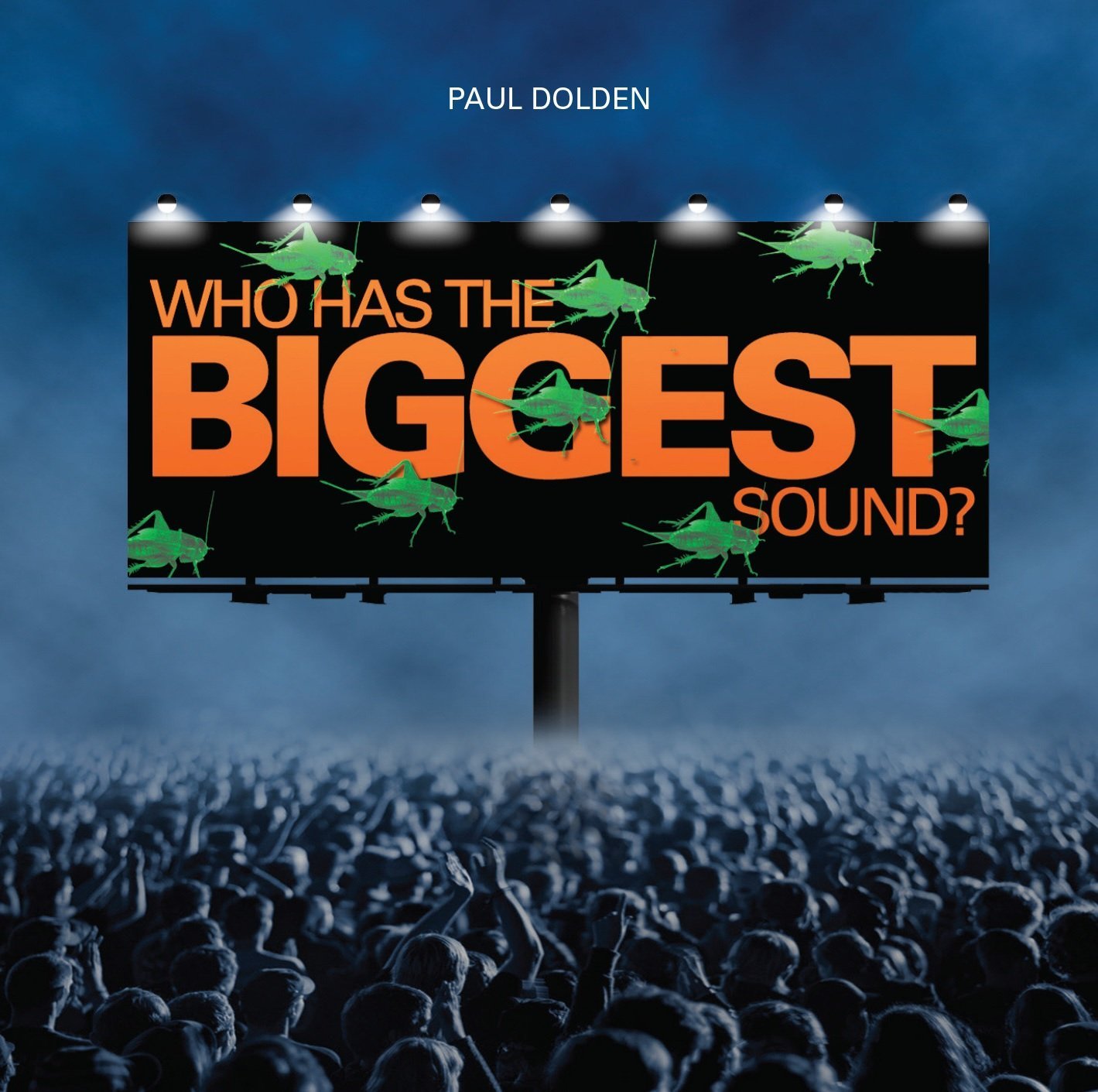
Who Has the Biggest Sound? by Paul Dolden. (Starkland ST-220)
A difficult to categorize recording that brings two major works by this (previously unknown to me) Canadian composer to the listening audience. I reviewed this disc here.  I am still working on absorbing its subtleties.

221CoverB

Prayers Remain Forever by Martin Bresnick (Starkland ST-221)
In addition to providing me with quite a few readers the opportunity to review this recording introduced me to the work of this too little known living American composer.  My review garnered quite an amazing amount of readers as well as an appreciative response from Mr. Bresnick himself.  And now I find myself buying his other recordings.  Really great music.


Album cover

Album cover

Notes from the Underground by Anthony Davis. (BMOP sound 1036)

I have been a fan on Anthony Davis and his music for some years now and I was pleased to be able to review this disc.   I  was later able to obtain an interview with Professor Davis which will be forthcoming later this year.

download

Tom Johnson/Samuel Vriezen Chord Catalog/Within Fourths, Within Fifths. (Edition Vandelweiser)

I eagerly reviewed this crowd sourced CD in which I was proud to be one of the contributors to its production.  It is only the second recording of Johnson’s landmark of minimalism and an opportunity to hear the work of the fine composer/performer Samuel Vriezen.

basketmonk

Basket Rondo/Jukebox in the Tavern of Love by Meredith Monk/Eric Salzman. (Labor LAB 7094)

This Labor Records release would have escaped my attention were it not for my having run across it while researching another new music article.  New music aficionados might remember Eric Salzman for earlier works such as “Civilization and It’s Discontents” and his involvement with Nonesuch records or one of his many other significant involvements in the new music scene over the last 40 years or so.  This disc is the première recording of Meredith Monk’s “Basket Rondo”, one of her best realized new works as well as the première of a great new sound/music drama by Salzman.  A more thorough review is in the works.

howardhersh2

Something by Howard Hersh ( Snow Leopard Music 888295062350)

Mr. Hersh kindly sent me this CD for review which will be forthcoming but it easily makes it to my favorites list for 2014.

webreaknonclass

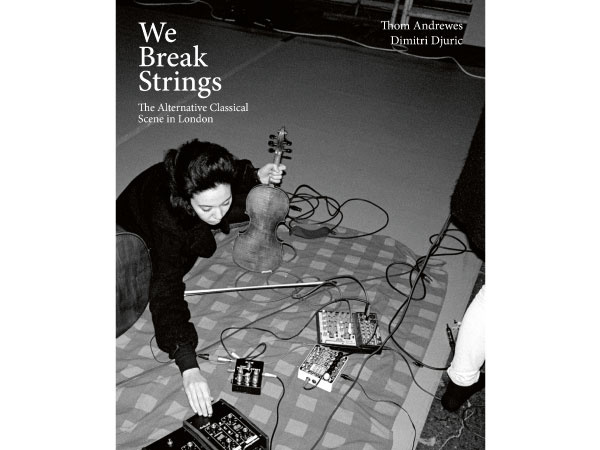
I also have to mention another crowd sourced project, “We Break Strings” by Thom Andrews and Dimitri Djuric, a book about the “alternative classical scene in London”.  The book which includes a CD sampler languishes in my “to be read” stack but my initial perusal left me with the impression of a beautifully conceived and executed volume which has much to offer the musically curious.  More about this book in a future blog.


2014 in review


The WordPress.com stats helper monkeys prepared a 2014 annual report for this blog.

Here’s an excerpt:

A New York City subway train holds 1,200 people. This blog was viewed about 6,400 times in 2014. If it were a NYC subway train, it would take about 5 trips to carry that many people.

Click here to see the complete report.

My Unexplained Absence Here Explained


20130604-093127.jpg

I thought it would be prudent to let my readers know what has been happening with me.
I haven’t posted anything here since July.
Happily I’ve found that I am still getting hits on my blog.

Well the fact is that I have been rather sidelined by a minor but rather debilitating back injury which has hampered many things in my life recently. But I am happy to report that I am on the mend and will very soon be resuming my posts here on a more regular basis.

Thank you to all who have read and commented in the last month or so. I hope you will find my future posts at least as compelling as the ones which preceded this brief hiatus.

Experimentalism Otherwise, a significant new book on the New York progressive music scene in thec1960’s


I posted my blog review of the Carl Ruggles CD release on Amazon so I decided it would be reasonable to take an earlier review from Amazon and post it to my blog. So having made this guilty disclaimer, here is my review of a great book I came across in the fall of 2011:

For those interested in contemporary music and the New York avant garde of the early to mid 1960’s this is a book that is hard to put down. Each of the first four chapters is devoted respectively to: The New York Philharmonic’s 1961 performance of John Cage’s ‘Atlas Eclipticalis’; Henry Flynt and his rejection of mainstream avant garde trends (Stockhausen, Boulez, etc.); The (short lived) Jazz Composer’s Guild; and the performances of cellist Charlotte Moorman. A final chapter is devoted to a summary analysis which further connects these performers and events to the work of the ONCE Festival, Sonic Arts Union and (surprisingly but most appropriately) to the influence of these avant gardists on the subsequent work of Iggy Pop.

Nearly every significant figure of the avant garde is mentioned or quoted and the views of the general public as well as more specialized critics (which, of course, includes various members of the avant garde) are included in the course of the discussion and analysis. In addition to John Cage we hear from the likes of Morton Feldman, Christian Wolff, David Tudor. The Henry Flynt chapter necessarily involves various figures associated with the Fluxus movement and related projects. The Jazz Composer’s Guild chapter includes Bill Dixon, Roswell Rudd, Michael Mantler, Carla Bley, Paul Bley, Amiri Baraka, George Lewis, the AACM. And the chapter on Moorman includes Nam Jun Paik as well as John Cage and various Fluxus artists. The final chapter connects to others not so closely associated with New York such as Robert Ashley, Gordon Mumma, the ONCE Festival, Sonic Arts Union and finally to MC5, John Sinclair and Iggy Pop.

While there is some musical analysis here the author seems primarily concerned with analyzing these events and people and placing them more clearly within the political, social and cultural contexts in which they existed and to which they reacted. And indeed he finds highly relevant connections to civil rights issues and political conflicts and social movements as well as musical and performance movements and practices.

The analysis in terms of the likes of Pierre Bordieu, Franzt Fanon and Michel Foucault may be a bit difficult for those who have no familiarity with their works but his analysis is fascinating and his writing style is very lucid. This is an intelligent book not aimed at a narrow specialist audience. I believe that he succeeds in producing a fresh, important and valuable perspective on the people, the music, the events and the responses to them which will continue to prove useful in present and future analyses of the state of contemporary music and performance.

Finally the book is full of references comprising at least a third of the volume which serve both to support and illustrate Mr. Piekut’s theses and also to provide easy access to further reading and research.

In the time since I published this review Mr. Piekut has come to the United States and is now an Assistant Professor at Cornell University. I will certainly continue to follow the work of this young scholar. And I eagerly anticipate his next project. Perhaps he will see fit to turn his analytical insights to more of America’s too little known avant garde music movements and provide some much needed documentation. And hopefully his students will be motivated to explore these as well.

It is worth noting that the ‘Other Minds’ people in San Francisco have recently chosen to make this book available at a discount on their website. They stock a small but carefully selected cache of books related to new music and their inclusion of this one suggests that they find it a significant volume. In addition they are also stocking local artist/composer/professor Luciano Chessa’s new book on Luigi Russolo, the early twentieth century Italian artist best known for his advocacy of the use of noise as a musical element. In fact I have it cued up in my reading list and plan a future review.

In the Mood for Shakuhachi, Man?


Last night I had the pleasure of attending another in the great occasional series of house concerts produced by vegan chef extraordinaire, Philip Gelb. Phil wears many hats. He is a fine shakuhachi player and, by his own students’ testimony, a great teacher as well. He is without doubt a wonderfully creative chef catering vegan cuisine to the bay area and beyond. And over the last six years he has hosted an occasional series of concerts at his loft in West Oakland modeled in part on the Creative Music Studio that flourished in Woodstock, New York in the seventies and early eighties. In fact some of the musicians Phil has hosted are alumni of that fine collective. His business is called, ‘In the Mood for Food’.

The dinner which is frequently tailored to the artist’s preference was a Thai/Japanese fusion of some five delicious courses. And customarily the performance occurs followed by the dessert course.

The musician was a shakuhachi player and instrument maker named John Kaizan Neptune, an American expatriate living in Japan since the seventies. Neptune is a surfer and surf board maker who has turned his carpentry skills and musical talent on the creation and/or modification of musical instruments after his interest in eastern philosophy drew him to Japan where he continues to live and perform.

Having heard traditional shakuhachi I was somewhat unprepared for the kaleidoscope of sounds and styles of music which followed our entree. Neptune, dressed in a head scarf and and Japanese style short vest jacket and blue jeans, looked the role of the American surfer/musician he describes himself to be. He had three shakuhachi of different lengths and he described some basic facts about the instruments in a most pleasant manner demonstrating his love and depth of knowledge of his medium.

He varied his program with a mix of traditional pieces and a sampling of some jazz/improvisational work which opened our ears to some amazing possibilities for this ancient instrument. He spoke casually of scales and playing techniques demonstrating by playing. At one point he displayed his skill by playing the opening of the Mozart G minor symphony quite in tune on an instrument designed to play a five tone scale. And if any of this sounds at all pedantic it is the fault of my writing, not the artist’s presentation. He was engaging in the manner of a skillful teacher able to meet his students’ needs at their level, neither condescending, nor opaque.

Neptune’s knowledge and respect for traditional Japanese music was evident but his own creative, dare I say American sensibility, has not been lost or subsumed. He performed music that paid homage to the traditions of its origin and kicked out some soulful jazz and blues jams that would do any ensemble proud. The effect was mind expanding and joyful evidenced by a very appreciative audience.

In addition to shakuhachi we were treated to an instrument of Neptune’s own creation, a two headed drum made entirely of bamboo. As in his shakuhachi playing there was a synthesis reflecting and integrating various cultural/musical influences into a new and worthy product embodying the influences of its ancestors as a child embodies the genetic heritage of its parents.

This drum produces four distinct sounds and was played strapped to the performer’s waist. And it could conceivably have great utility in a variety of musical settings. Mr. Neptune again demonstrated his swinging musical sensibilities in playing his new creation. It’s sounds evoked a variety of ethnomusical sounds ranging from South Asian and African to Latin and American. and he will soon be selling this instrument along with traditional and custom shakuhachi.

Following this good humored and spirited performance followed a great dessert and the almost obligatory selling of CDs which the audience, this writer included, consumed nearly as voraciously as the dessert. Many in the audience were Phil’s shakuhachi students and were freely invited to try Mr. Neptune’s instruments which they did with little hesitation.

House concerts generally convey a far greater sense of intimacy and connection than larger more traditional concert settings. And this was even more evident here due the persona of the performer and the receptivity of the audience many of whom were regular attendees at these events.

I happened to have brought a couple of guests to this event and the energy seemed to grab them as much as it did those more familiar with this series. It was a great evening in a great ongoing series at “In the Mood for Food’, a very special place on the east bay.

Avant Cake


Avant Cake is an occasional series of house concerts hosted and frequently featuring Amy X Neuberg, musician, singer, poet. She is a well recognized figure in the bay area music scene.

Today’s concert featured Ms. Neuberg, Guillermo Galindo and Paul Dresher.

The performance was preceded and followed by a casual reception featuring various snacks, drinks and, of course, cake.

Following the initial reception the attendees went down to Neuberg’s basement studio. The room, filled with electronic instruments, mixing boards and computers as well as posters of previous performances was set up with chairs for the audience, a quadrophonic sound system and video projection equipment.

First up Ms. Neuberg did an improvisation utilizing some new software. Her work is a unique combination of a beautiful well trained voice, extended vocal techniques, poetry (driven in part by her study of linguistics) and electronic looping which allows her to create soundscapes and accompaniments to her lyrics and well honed theatrics which connected well with her clearly appreciative and knowledgeable audience.

This performance was a sort of introduction to a developing larger collaborative project between some nine composers including today’s performers, Lisa Bielawa, bay area favorites Pamela Z and Carla Kihlstedt as well as Conrad Cummings, one of Neuberg’s teachers. The project is to involve both music and images. And this afternoon’s event is a kickoff to the fundraising bolstered by a matching grant from the bay area arts council.

Following the improvisation was another of Neuberg’s songs and the she introduced Guillermo Galindo, a composer, sound artist and visual artist who teaches at the California College of the Arts. Neuberg sang the lead character of Simone Weil in the 2001 production of Galindo’s opera “Re-creation”.

After some pesky technical difficulties with the quadraphonic sound system we were treated to live visual scenes created by Galindo using what looked like a lighted microphone but was in fact a microscope whose images were projected on a screen and which interacted with an electronic score. The piece, lasting perhaps 20 minutes, involved Galindo projecting a variety of magnified images of his own body (mouth, skin, hair, clothing) and an assortment of other objects which appeared to be insect parts, carpet fibers, a dollar bill, etc. The non-linear, non-narrative flow sometimes juxtaposed images and appeared to work well with the similarly post-Cagean sound score.
The performance had the feel of somewhat improvisatory performance art and was ostensibly an idea of how he planned to work on the developing collaborative work. The audience was appreciative in receiving this interesting little preview.

After a small pause to set up Paul Dresher’s computer into the projection system Mr. Dresher presented two photographs. One was of a movie screen in a drive-in theater in the desert near Las Vegas and another of an indoor theater in which the only light was from an illuminated blank screen. Both were the work of prominent photographers. But the point of showing these images was to show the audience what was given as a “homework” assignment by a woman who is a volunteer teacher at the prison in San Quentin and the response to that assignment by an incarcerated man 29 years old called Michael who, serving a life sentence for an unspecified crime, has been in jail since the age of 15. In addition to that sad story was added the fact that he wrote his assignment by hand with a small pen (too small to allow it to be used as a weapon) while he served time in solitary confinement for another unspecified offense.

Dresher passed out copies of the photos for the audience to see which provided a better resolution than that on screen and a copy of the actual assignment in Michael’s own hand. The assignment was to write an analysis of and reaction to the two photographs. Dresher played a recording of the young man reading his assignment.

The depth and perceptiveness of Michael’s essay beautifully read by its author were simply astounding. It was a personal and intelligent analysis of the images that put this writer in the mind of the likes of the accomplished art critic Robert Hughes. The essay illuminated very insightfully the two images and was clearly the product of a sensitive, intelligent human being.

The essay and the images are a starting point for Dresher’s portion of said project and, if this little segment is any indication, suggest that the finished project (planned for a possible premiere in 2014), may be formidable and beautiful.

Amy Neuberg again took the stage leading a singalong of her “Avant Cake Theme Song” and a delightful rendition of one of her earlier compositions. Following that the clearly pleased and impressed audience were invited back upstairs for more snacks and socializing.

All in all a truly delightful way to spend a Sunday afternoon and an auspicious beginning to a very promising project. Support for the project will shortly be accepting donations on Kickstarter (www.kickstarter.com). And this is a project very deserving of support.

The Complete Works of Carl Ruggles (reissue)


At long last the 1980 CBS recording of The Complete Music of Carl Ruggles (1876-1971) has been reissued by Other Minds records (OM 1021/2-2).  I have owned the vinyl two disc set for many years having come across a review of it in a list of suggested recordings of American classical music in, of all places, The Whole Earth Catalog.  And it is definitely a vital part of any serious collection of American classical music.  Ruggles was one of a group collectively labeled, “The American Five”, a title intended to compare the group with the French “Le Six”, the “Russian Five” or the often cited “Three B’s” (Bach, Beethoven, Brahms).  The American group consists of Charles Ives, Henry Cowell, Wallingford Riegger, Carl Ruggles and John J. Becker who strove to define an American sound not beholden to the European models which had dominated the previous century.  Ruggles’ students included James Tenney and Merton Brown.

This album is a recording of Ruggles’ complete published works.  A recent recording of newly unearthed ephemera was recently released but the present record is everything that Ruggles acknowledged and approved.  It is a meager output for a man who lived to the age of 95 similar to the output of the equally important Edgard Varese whose complete works also fit on two vinyl records and the music is just as finely crafted.  The music here is likely not as familiar even to those who know the work of Ives and Cowell.  But make no mistake this is powerful and unique music that deserves more than just a casual listen.

It is thanks to the efforts of Michael Tilson Thomas, who first heard his teacher Ingolf Dahl conduct Ruggles’ three movement symphony, ‘Men and Mountains’ that inspired him to add Ruggles’ work to his repertoire.  But the connections do not stop there.  Thomas and producer Syrl Silberman of WGBH went to visit Ruggles in a rest home and introduced themselves by putting headphones on the composer and playing an air check of Thomas’ performance of Ruggles’ best known work, ‘Sun Treader’.  Thomas’  wonderful essay about that auspicious encounter is included in Wayne Smith’s beautifully designed booklet.  Also included are the original liner notes with Thomas’ essay, notes and analysis by pianist and Ives scholar John Kirkpatrick and an additional essay by Lou Harrison reprinted as well.  There is also an introduction written by Other Minds Associate Director Adam Fong, himself a student of James Tenney, which puts Ruggles in a wider historical perspective.

Executive producers Charles Amirkhanian and Adam Fong acquired permission from Sony Music to digitize the original master tapes working with a grant from the Aaron Copland Fund to bring this essential recording into the digital age.  And the performances by the acclaimed new music advocate Buffalo Philharmonic Orchestra (MTT was then its musical director), a brass ensemble led by Gerard Schwarz and none other than John Kirkpatrick on piano in the Four Evocations.  Michael Tilson Thomas accompanies soprano Judith Blegen in the little song, ‘Toys’ from 1919 which Ruggles wrote for his son.  Speculum Musicae accompany mezzo-soprano Beverly Morgan in ‘Vox Clamans in Deserto’ from 1923.  Trumpeter/conductor Gerard Schwarz leads a brass ensemble in the original 1921 version of ‘Angels’ for six trumpets as well as its 1940 revision for trumpets and trombones.  Even American choral music experts the Gregg Smith Singers come in to perform Ruggles’ last completed composition, ‘Exaltation’ from 1958, composed in memory of his late wife Charlotte.

The Buffalo Philharmonic with its long history of performing contemporary music under Lukas Foss and Michael Tilson Thomas does a wonderful job of handling the six orchestral works.  Best known of these is the tone poem ‘Sun Treader’ which Thomas had recorded earlier with the Boston Symphony in about 1970.  ‘Men’ from 1921, the three movement symphony ‘Men and Mountains’ from 1924, the orchestral version of the four ‘Evocations’ and the 1947 ‘Organum’ also receive very effective readings.  Michael Tilson Thomas is the conductor for all and he clearly knows and loves this music.

The sound is great and the performances are truly definitive coming from artists with varying levels of connection to the composer and  all clearly with a passion for this music.

In fact I can find only a handful of other recordings of Ruggles’ music.  Most are out of print and/or dated in sonic reproduction.  A notable exception is New World Records’, ‘The Uncovered Ruggles’, posthumous reconstructions done by John Kirkpatrick and performed and produced by Kirkpatrick student Donald Berman actually makes a nice companion to the release at hand here for the Ruggles fanatic. (I know they’re out there.)  And there are digital downloads of some out of print recordings as well.

So, as in their previous releases, OM records continues its traversal of sometimes difficult but always relevant music.  So order your copy today through Other Minds, Naxos Distribution or through Amazon.com.  You might be challenged but you won’t be disappointed.  This is a great recording.

Other Minds 17 Day 3


The final night of the 17th Other Minds Festival presented music by four composers and included two premieres of music commissioned by Other Minds.

The concert began with music by Finnish composer Lotte Wenakoski. This diminutive Finnish woman, who also sang quite beautifully during the panel discussion, works with barely audible sounds seeking inspiration ” on the borders of silence”. Her 2006-7 work Nosztalgiam (Hungarian for ‘my nostalgia’) was performed by the modular Magik*Magik Orchestra whose size varies according to the need of the pieces to be played. Tonight’s configuration for this piece consisted of 12 players playing woodwinds, brass and strings.

Fellow OM 17 composer John Kennedy, who is the conductor for the Spoleto Festival among others, conducted the chamber ensemble. Nosztalgiam (2007) is apparently a set of variations/deconstructions or meditations on two Hungarian folk songs (one of which she spiritedly sang during the preconcert discussion). The sometimes sparse and always delicate sounds expressed Wennakoski’s personal impressions of her time studying in Budapest in the late 1980s. It is difficult to assess this composer represented in this festival by a single work. But the sweet, delicate personally nostalgic sounds evoked by a variety of extended techniques suggest that seeking to hear more of her work would certainly be worth one’s effort. The sensitive and virtuosic performance was greeted warmly by audience and composer alike.

Next in this first half were two works by John Kennedy, conductor, composer, percussionist and promoter of New Music. Here is a man in a role similar to that of OM Festival director Charles Amirkhanian having a chance to be, so to speak, on the other side of the table. There are apparently no available commercial recordings of this man’s music but according to his web site (which does have some too brief sound samples) he has composed many works in all genres including theater, orchestral, solo and electronic. And he has received many commissions.

This night he was represented by two works, one of them an Other Minds commission. Both are hommages to the late John Cage. As I mentioned in an earlier blog Cage is also the inspiration/impetus behind Other Minds’ esthetic.

The first work, “First Deconstruction in Plastic” (the title a play on Cage’s First Construction in Metal), does double duty as an homage and as an environmental statement. Percussion duo Ryder Shelley and Andrew Myerson sat facing each other each with a collection of ‘found objects’ consisting of plastic buckets, bottles, shopping bags, etc. This well rehearsed duo gave an energetic and engaging performance which the audience clearly appreciated. But for this reviewer was left with the impression that this accomplished work, though no doubt intricate in it’s conception and satisfying to the musicians, failed to fully engage it’s audience. I was entertained but I did not particularly want to hear it again.

The second work, “Island in Time” (2012), was a world premiere. This, also dedicated to Cage, was a different matter. Scored for the unusual combination of bass clarinet, flute, cello and percussion (all members of Magik*Magik Orchestra) was an engaging though not derivative tribute to the influence of John Cage. The composer describes a process involving different types of temporal processes to structure the work. But the specifics of the processes are secondary here to the overall impact of the work. A meandering flow of sounds and tempi flowed beautifully reverently invoking the spirit and influence of Cage’s work. I have no doubt that the riches in this piece would continue to reveal themselves with repeated hearings. And though I have very little knowledge of this composer’s other work I have no doubt that it is likely to be quite compelling.

The musicians, clearly familiar with the work, gave a loving smooth reading of what appears to be a fairly complex work requiring serious concentration and collaboration. The audience, myself included, rewarded their efforts with enthusiastic applause.

In the second half of the program the next composer, who had performed the previous night in collaboration with Ikue Mori and Ken Ueno, was Tyshawn Sorey. This was to have been a solo performance as a percussionist but in the course of the discussion in last night’s pre-concert panel festival director Charles Amirkhanian mentioned that he had heard Sorey playing the piano earlier in the day. Amirkhanian remarked on the apparently eclectic nature of what he had played. Sorey responded saying that his piano playing is informed by the likes of Art Tatum, David Tudor, Cecil Taylor and Morton Feldman. He also mentioned deconstructing Boulez’ Second Piano Sonata (!) to inspire his compositional process. Eclectic indeed! And he easily consented to playing the piano in his segment of the program saying, “…if you are open to it, sure.”. Sorey exudes a sort of calm, friendly, matter of fact confidence in his skills.

So Sorey walked onto the stage which contained his percussion kit on one side and a concert grand piano on the other. He began with a percussion improvisation starting with a fortissimo strike on the side drum followed by some fevered loud work on tenor and snares as well. This then segued into some more delicate and complex soft sounds elicited from various cymbals and drums making frequent use of special techniques which brought forth some rich vibrant harmonics especially in the quieter moments. I couldn’t help being reminded at times of Han Benink’s performance at last years festival as he released a small sower of sticks onto a drum at one point. Sorey’s sheer energy and good humor were reminiscent (though not imitative). And, unlike Benink, Sorey never left the stage in the course of the performance.

Following the well received percussion set Sorey moved to the grand piano sitting confidently and commandingly at the keyboard and pausing as he focused on the task at hand. He started slowly with a few chords and before long launched into a dizzying and virtuosic flow of music reflecting the influences he mentioned. At first perhaps Morton Feldman, sometimes Pierre Boulez, a little Art Tatum, certainly some Cecil Taylor and then deftly playing sometimes inside the piano then back to the keyboard as part of the same unbroken musical phrase evoking the experimentalism of David Tudor. But the overall impression was not episodic imitation but rather an absorption and integration of all these techniques transcending genre and becoming, simply, inspired music making. The audience was transfixed and absorbed in the flow of the music and responded with cheers of “Bravo” and enthusiastic applause (I think they were pushing for an encore but time did not permit). Had I heard a recording of this without knowing the background I would have guessed this to have been an accomplished composed work by a master composer but this was an improvisation. I am surely going to seek recordings and follow this man’s career in the years to come.

The finale was another Other Minds commission this time from composer, vocalist and Berkeley music professor Ken Ueno. The piece, “Peradam” (2011) takes it’s title from the unfinished spiritual allegorical novel, “Mount Analogue” by the French surrealist writer and poet Rene Daumal (1908-1944). Peradam is a mythical diamond-like stone sought after on the similarly mythical mountain of the title.

Ueno’s work is scored, as is his practice, specifically for the skills of the formidably talented Del Sol Quartet who so ably played the Gloria Coates quartet the previous night. Specifically the specialized skill (in addition of course to their string playing) is the multiphonic throat singing capability of violist Charlton Lee. Ueno demonstrated his vocal skills on the previous night singing with the percussions of Ikue Mori and Tyshawn Sorey. In fact all the players were asked to sing as well as play their instruments for this performance. In addition there was video creatively projected onto the sound baffles at the rear of the stage.

The music was a post modern integrated amalgam of a wide variety of conventional and extended instrumental techniques along with singing at times (the throat singing is a strikingly unique timbre which commands attention when it emerges in the fabric of the piece). The quartet positioned themselves stage right to afford the audience a clear view of the projection across the three sound baffles at the back of the stage. They played with characteristic concentration and skill in what looks like a technically challenging piece of shifting moods and tempi to which the images responded.

The images, manipulated in real time and in coordination with the music with software written by video artist Johnny Dekam, were abstract mostly monochrome images that moved and transmuted hypnotically along with the music. Dekam, who has worked with a variety of pop acts like Eminem and Thomas Dolby, had collaborated with Ueno before. In the darkened theater the images dominated the visual field though the quartet could be seen as well.

It was a complex experience that could only be grasped, if at all, by going with the simultaneous flow of music and image. This piece will benefit from repeated listenings/viewings to more fully appreciate it’s intricacies. But this first performance clearly satisfied the mostly hard core new music fans audience. And while the direct John Cage associations were not as obvious it is clear that Ueno, Dekam and the Del Sols embody the open minded spirit of his work in this, his centennial year. This grand finale was appreciated in kind by the cheering audience successfully bringing to a conclusion the 17th always uncategorizably eclectic Other Minds Festival.

Other Minds 17. Day 2


The second night at Other Minds featured two different generations of composers. As is their practice Other Minds on this night featured two composers already established and fairly well known in new music circles as well as three up and coming artists.

The first performance was by San Francisco’s own champions of new music, the Del Sol Quartet. They performed the American premiere of American expatriate composer Gloria Coates’ String Quartet No. 5 composed in 1988. This and her 8 other quartets have been made available on the brave and progressive Naxos CD label. Coates also holds the record as the most prolific woman symphonist of all time with some 16 symphonies to her credit (many of those are available and well worth seeking on CD as Well).

String Quartet No. 5 is cast in three movements. By the composers description all of the movements are canons, a simple counterpoint form. But the result is hardly simple. Using microtonal glissandi, sometimes having instruments tuned a quarter tone apart and relying on creative ways of synchronizing the players individual tempos Coates achieved a complex sounding but friendly and approachable result. The quartet which lasted about 30 minutes would be a challenge for any ensemble but the Del Sol (which, except for the cellist, perform standing in a break with convention) clearly knew and liked the work and gave an intense and beautiful rendering sounding at times like there were more than four players. The piece has an almost romantic feel at times, cleverly incorporating melodies into a sound world uniquely the composer’s own (I am at a loss to identify a precedent). I sincerely hope that this work and her other works become better known in this, her native country. It is a tribute to the acumen of the Other Minds team that music like this is presented here. The audience greeted the performance very appreciatively.

Next up was Harold Budd on piano playing with Keith Lowe on double bass augmented with electronic effects. The piece, titled “It’s Only a Daydream” from 2011 is, by Budd’s description, entirely improvisational as is most of his music. Lowe began playing first with long sustained tones awash with rich harmonics. Budd’s piano then entered and we were transported to the familiar sound world which is Budd’s musical signature. Those who knew his collaborations with Brian Eno and his later solo works recognized his somber pretty ambient sounds. The two musicians were well matched and played a sort of jazz duet trading solos and accompaniments evoking a curiously nostalgic and hypnotic atmosphere of a strange dream-like lounge. Time seemed suspended and I don’t know exactly how long they played but when they finished the enthusiastic audience reception brought them back for a shorter encore, something I had never seen occur before at this festival.

Following intermission Ikue Mori took the stage sitting at her laptop which controls her various electronic sounds. She played the laptop solo for a few minutes and was then joined by UC Berkeley faculty composer Ken Ueno on vocals. But ah, what unusual vocals. His extended vocal techniques seem to come equally from Tuvan throat singing, Buddhist chanting, David Hykes (of the harmonic choir), Meredith Monk, Diamanda Galas, Kenji Suzuki (of the band Can), Tan Dun (on Taoism) and God knows what else. After another few minutes Tyshawn Sorey, a doctoral candidate in composition at Columbia, seated himself quietly at his drum/percussion kit, then with an assertive fortissimo bang on the side drum confidently entered the energetic fray. Mori sat intently gazing at her computer screen and entering the sound changes for her part while Ueno, holding the microphone to his mouth with both hands issued passionate wordless vocalizations of endless variety and Sorey executed a similar endless variety of high energy acoustic percussion sounds.

Mori calmly issued computer commands to perform her Japanese/New York/ punk/free jazz/Stockhausen expanded percussions while the academic Ueno improvised intense growling, multiphonic, wild vocals with few pauses and Sorey got in touch with his AACM ancestors producing a unified three ring circus of wonderful musical mayhem transcending any concept of genre. Three different traditions, separate but working together. Metaphorical? You decide.

Well deserved and enthusiastic applause greeted the intense but calm Mori and the sweaty and apparently exhausted but satisfied Ueno and Sorey.

The relative order of Coates followed by the ethereal calm improvisations of Budd were but a distant memory (albeit a pleasant one) after the ritual emotional exorcism of the second half. This is the rich variety that characterizes these concerts. And now anticipation builds for tomorrow’s finale.

Other Minds Festival 17


Thursday night was the opening concert of Other Minds 17th annual series at the beautiful Kanbar Hall in the San Francisco Jewish Community Center which features a typically eclectic selection of new and recent music. Six countries are represented this year including the United States, Germany, Japan, Denmark, Norway and Finland.

This first night featured the palindromically named Norwegian ensemble Asamisimasa. They are a group of highly trained young musicians who dedicate themselves to the performance of post war avant garde and recent music (some written for them).

What makes them unique is their integration of traditional instruments with various types of electronics and techniques to modify and enhance their sound. They include standard video, digital processing and extended instrumental techniques as well as uncommon enhancements such as hand held megaphones and found sounds like tearing newspaper, spray cans and sliding blocks that rub on various surfaces.

The result was a wonderful embodiment of the post- Cagean musical esthetic which is the driving force behind Other Minds as they describe it in their mission statement. These dedicated skilled classical musicians played a program of a fellow Norwegian and a Danish composer. It was a performance that was adventurous, humorous and engaging.

The first half featured two works by Oivind Torvund. The first work from 2009 was “Neon Forest Space” for clarinet, cello, guitar/radio, percussion and pre-recorded media. Brief motivic segments, mostly by solo instruments, were strung together by a variety of sounds controlled by a musician who doubled as conductor. The overall impression was one of a spare impressionistic piece informed equally by the sound worlds of Pierre Boulez, Karlheinz Stockhausen and, according to the program, Black Flag.
The second piece was the world premiere of “Willibald Motor Landscape” written last year. This piece, using essentially the same instrumentation was built upon a recorded soundtrack of traffic sounds creating an impressionistic picture presumably of the road in the title.
The audience was very appreciative and we learned following intermission that all of the Oivind Torvund CDs had sold out! Welcome to America Mr. Torvund.

The second half of the night featured what was to have been a performance without pause of four pieces by Simon Steen-Andersen of Denmark. Unfortunately, following the performance of “Study for String Instrument #2” (for cello and whammy pedal, 2009), the cellist lost her footing on the darkened stage. The crashing sound seemed at first a part of the performance. But the lights were brought up quickly finding that the cellist was thankfully mostly unharmed and able to continue performing. However her cello had sustained a broken tuning peg. Charles Amirkhanian, the festival director tactfully asked the audience’s indulgence while another cello was obtained, a process which required only about 10 minutes (!). The cellist with the replacement cello returned to the stage to relieved and appreciative applause. Mr. Amirkhanian thanked the audience, who barely moved in the interim, for their patience.

The stage lights were darkened again and the ensemble restarted the piece which had been so briefly interrupted. From the microtonal glissandos duet of cello and whammy pedal they began the second piece, “Half a Bit of Nothing Integrated” (2007) for extremely amplified clarinet, percussion, cello and live video operated by the percussionist. In good humor and with professional showmanship the percussionist began by speaking, “Now where were we?”. And they performed with sounds of seemingly malfunctioning electronics evoking a post apocalyptic sound world which evoked worlds like that of “Blade Runner”.
This time there was no pause as they moved on with an illuminated stage to “On And Off And To And Fro” (2008). This piece featured megaphones operated by musicians who at times were miking the instrumentalists and at other times playing percussive effects with the microphones (blowing into them, scraping them, etc.) and playing quite skillfully with feedback created by holding the mikes various distances from the speakers. The sight of four musicians reading from scores and following a conductor with these megaphones evoked appreciative laughter from the audience. The final piece, “Study for String Instrument #3 (2011)”, was for cello and video. The cellist, Tanja Orning, played her instrument in non-melodic fashion with a bow which produced scraping sounds. Superimposed upon her was a video of her playing and the interest of the piece is a fascinating mostly visual duet between the live performer and the video. Her actions sometimes duplicated, sometimes opposed that of the video and the effect, sometimes humorously reminiscent of the Marx Brothers mirror routine, was an engaging and occasionally disturbing image (I’m not sure why it was disturbing actually).

Warm applause followed this lively and dedicated performance from this fine young group. All in all a very entertaining evening opening the always unpredictable and eclectic Other Minds Festival.

Hello world! This is “New Music Buff”


Welcome to my music blog. I am an avid listener, collector and supporter of music in general. I am particularly interested in new and cutting edge music.

What I offer here are informed opinions about what is essentially one of my hobbies. The blog title “New Music Buff” is intended to connote a somewhat casual perspective by an educated consumer.

I offer personal opinions which I hope will provoke discussion but also stimulate interest.

Thank you for reading.

Allan J. Cronin