Solo Percussion Manifesto Volume I: Steven Schick’s “A Hard Rain”


Islandia IMR 011

Steven Schick is a multi-talented and skilled musician. A quick look at his website demonstrates the sheer scope of his musical career. He is probably best known as a master percussionist having played with the San Diego Symphony and a host of others internationally. He is also a fine conductor and composer. His website is a must visit to grasp the scope of this man’s work.

Steven Schick (photo from composer’s website)

Now, solo percussionists are somewhat of a rarity even in the 21st century. Percussion is ostensibly the “junk drawer” of the orchestra by which I mean it becomes the home to pretty much anything that doesn’t fit into the categories of keyboards, strings, woodwinds, and brass instruments. Anyone who has studied any theoretical taxonomy knows that you have to have a “junk drawer” (so to speak) to place things that don’t fit elsewhere at least until you can find a useful category in which to place them. The point here is that a solo percussionist has a huge amount of instruments from which to choose and subsequently master (some of which might also fit other categories like piano, harp, etc. but also things like taxi horns, for example, which Gershwin used in his tone poem, “An American in Paris”). Add to that the artists who regularly add instruments to this group and the task of mastering these becomes even more daunting.

Percussion, aside from tympani and the occasional military drum is largely absent from western music. That began to change with the work of Henry Cowell, John Cage, and Lou Harrison in the early 20th century. As interest grew, so did repertoire.

Despite attending many contemporary music concerts I cannot recall any by a single percussionist. Percussion ensembles began to appear in the early 20th century including Paul Price (1921-1986), Donald Knaack, and Les Percussions de Strasbourg. After 1962 or so the number of percussion ensembles increased along with a rapidly growing repertoire.

With this release Steven Schick begins what appears to be the first of a multi-volume survey of works for solo percussion under the collective title of “Weather Systems”. This first volume is subtitled, “A Hard Rain”, a two disc set that is both manifesto and innovation. It is released by Bang on a Can cellist Maya Beiser’s Islandia Records, not to be confused with the pop music Island Records.

Schick’s book on percussion published in 2006 is a sort of precursor to this CD release.

Here, Schick appears to be doing two related things. First, he is establishing a repertoire for the solo percussionist. And, second, he is presenting his own insights and ideas to both define and expand that repertoire. Having already released definitive recordings of percussion music by Xenakis and Stockhausen, among others, he is apparently ready to blaze a trail that will increase the possibility of hearing a solo percussion concert and establishing a canon of music for those concerts.

There are 7 works (3 by German composers, 4 by American composers) on these two discs largely focused on mid 20th century works and presented (mostly) in chronological order:

1. John Cage (1912-1992) 27’10.554” for a percussionist (1956) arguably one of the must difficult of the pieces here. It is more like a set of tasks than a conventional score and may be the first great solo percussion piece.

2. Karlheinz Stockhausen (1928-2007) Zyklus (1959) experimenting differently from Cage but producing a similarly difficult and masterful work.

3. Morton Feldman (1926-1987) “The King of Denmark” (1964) the second name in the self defined “New York School” of composers, this is about soft sounds and, like the Cage work, unconventionally scored.

4. Charles Wourinen (1938-2020) “Jannissary Music” (1966) a lifelong devotee of post Schoebergian 12 tone music manages to be relevant. And this one of his earliest masterpieces.

5. Helmet Lachenmann (1935- ) “Intérieur I” (1966), this is among the earliest acknowledged works by this prolific German composer.

6. William Hibbard (1939-1989) “Parson’s Piece” (1968), an early work by an artist who died in mid career.

7. Kurt Schwitters (1887-1948) “Ursonate” (1922-1932). This realization of Schwitters’ spoken vocal score is a modern revisioning of this unusual dada-like work. Many recorded versions exist (including one by Schwitters) demonstrating a surprising diversity of interpretation, sometimes with visual components. This is actually pretty frequently performed but this is the first version explicitly designed with a percussionist in mind. It is here that Schick is at his most transgressional and creative. In addition to his percussion Schick includes his voice in the mix and teams with Sharokh Shadegari on electronics and voice. This is the only non-solo work on this set and it is a radically effective take on Schwitters’ strange opus.

All are engaging and all will thrill percussionists who work in new music as well as new music enthusiasts. It remains to be seen if solo percussion performances begin to proliferate but, after all, this is only volume one.

Avant L’Orage: Trios Between the Wars


Cedille CDR 900000 212

I recall reading a comment from Aaron Copland to the effect that he believed that there was undiscovered gems written in those years between the world wars 1 and 2 (roughly 1918 to 1939). And this release certainly confirms that assertion. The 7 pieces here (of which three are receiving their world premiere recordings) represent the years 1926 to 1939, the end of the period following the “War to End All Wars”. The French term “Avant L’Orage” is generally translated as “The Calm Before the Storm”. It is an apt metaphor for the time.

The string trio form, though common, does not seem to have produced the grand stature of some of the music for the more commonly heard ensemble, the string quartet. The trio of Violin, Viola, Cello can arguably be said to not have truly com of age until the twentieth century which would see major works by Schoenberg (1946), Krenek (1949), Wourinen (1968), and Schnittke (1985) to name a few highlights. But these charming little works on this 2 CD set can be thought of as stepping stones in the evolution of the form.

Now I know a lot of pretty obscure repertoire so I was a tad surprised to find that I had only heard of four of the composers represented here: Henri Tomasi (1901-1971), Jean Francaix (1912-1997), Robert Casadesus (1899-1972), and Gabriel Pierné (1863-1937). The other three: Jean Cras (1879-1932), Émile Goué (1904-1946), and Gustave Samazeuilh (1877-1967) were new to me.

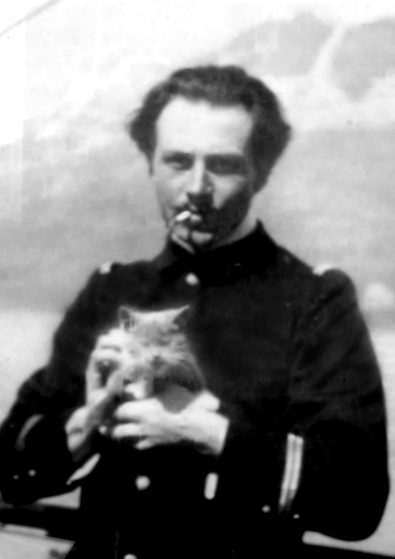
Henri Tomasi

Tomasi’s “Trio en forme de divertissement” (1938) is a four movement work with a lighthearted feel. It is structured in classical form. Largely neoclassical in sound. It opens with a Prelude followed by a gentle Nocturne, a pithy Scherzo, and a playful Final. This, surprisingly, is one of the world premieres on this collection. It reveals a composer who deserves a new reckoning and hopefully this recording will help launch it. It is the first of the three world premiere recordings in this set.

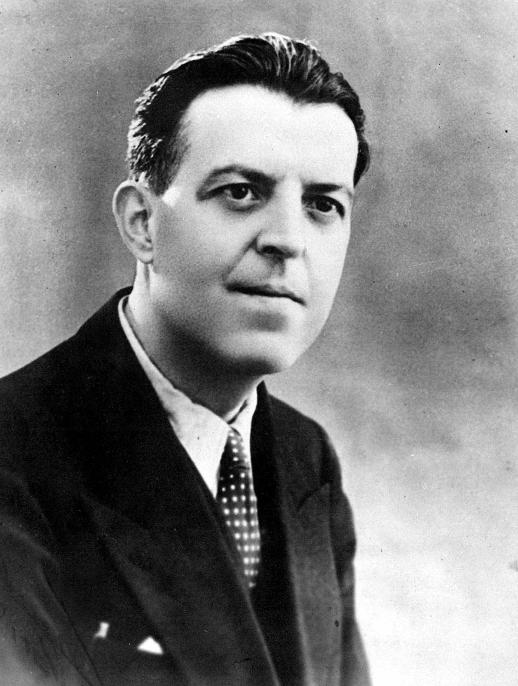
Jean Cras

The Jean Cras trio of 1926 also follows the four movement format. Cras is one of the names heretofore unknown to this writer.

This work, also in four movements as the previous piece, reveals a more deeply contemplative work Its harmonies are certainly post classical era but essentially familiar. The first movement strikes a serious tone and is followed by a beautiful and contemplative slow movement. The third movement is a playful scherzo like movement followed by a riotously playful and virtuosic finale. It is virtually a symphony for three instruments.

Émile Goué

Émile Goué is represented by a three movement work. This is also an unfamiliar name to this reviewer. Again we hear familiar romantic harmonies in a relatively brief (about 15 minutes) piece.

The classical forms of the first tow movements are followed by a scherzo like playful finale. Surprisingly this work as been recorded before.

Jean René Désiré Françaix

Jean René Désiré Françaix will be a familiar name to many. His four movement string trio which concludes the first disc is pretty characteristic of his style. He is the youngest of the composers featured here but he crossed paths with most of the prominent French composers of the twentieth century. Harmonically and melodically his work embodies much of the same sound as his older contemporaries. With the exception of the beautiful slow movement these rather hyperactive episodes hold much in common with his previous and subsequent work. Coming in at about 13 minutes this satisfying work whose complexities are subsumed into a friendly, appealing work.

Robert Casadesus

Robert Casadesus was the patriarch of one of the great piano dynasties of the twentieth century. along with his wife Gaby (1901–1999) and son Jean (1927–1972). Robert was also a prolific composer whose output includes seven symphonies and multiple works for piano and orchestra. His trio is a three movement work which opens the second disc on this epic anthology.

This work is among the world premiere recordings on this set. Its brevity relative to the composer’s larger works suggest that this might be a minor occasional piece but this is in fact a compact and deeply serious work. From the opening Allegro con brio we hear a substantive composition. The slow movement contains a playful scherzo like section in the middle before it returns to the more somber tone of its opening. The finale marked “allegro aperto” is, at first a playful finale as one would expect from a classical era symphony but it goes through various moods before it returns to reassert that playful opening. This one makes a case for the further exploration of this composer’s work.

Gustave Samazeuilh

The “Suite en Trio” (1937) is the outlier here, cast in no fewer than 6 movements. The composer, better known as a music critic, was admittedly heavily influenced by one of his mentors, Claude Debussy.

Gabriel Pierné

“Trois pieces en trio” (1937 ) concludes this fascinating survey of the string trio format as composed during the interwar period. This three movement work certainly reflects that influence but this is not mere imitation. This is a truly substantive work, the third of the three world premiere recordings here. Each of the relatively brief movements demonstrate a truly gifted composer. Once again the listener will be curious to hear more from this man’s work. We can only hope.

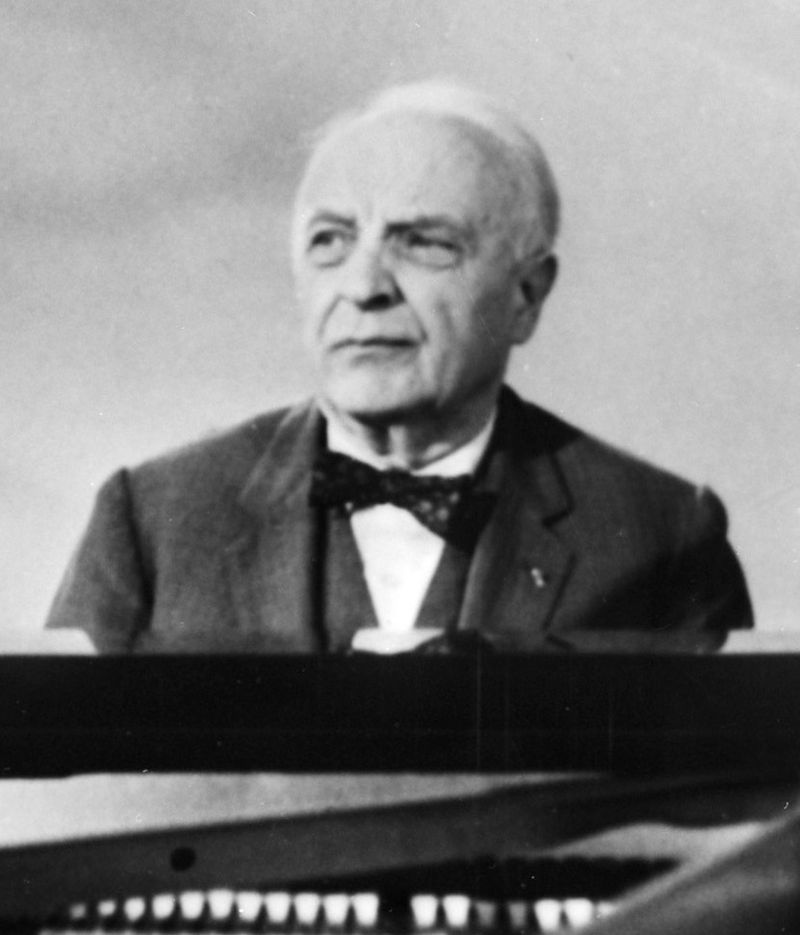
Last and certainly not least is the trio by Gabriel Pierne. He studied with Jules Massenet and was a contemporary of Claude Debussy. As both composer and conductor his profile loomed large on the French music scene. He is the oldest composer represented here and this is among the last of his works.

This trio is in three movements and, like the Casadeseus trio which opens the second disc of this fine collection, it is a weighty, slow moving, serious work. Once again the listener is given to wonder what other treasures ay undiscovered from this curious era of history when the world was awaiting the growing conflicts that resulted in the second world war.

The Black Oak Ensemble consists of Desirée Ruhstrat, violin; Aurélien Fort Pederzoli, viola; and David Cunliffe, cello.

The truly excellent liner notes are contributed by Dr. Elinor Olin, professor of music at Northern Illinois University. The recording by Bill Maylone is up to the usual high standards we have come to expect from producer James Ginsburg’s wonderful Cedille label. And the graphic design by Madeleine Richter echoes the era that gave birth to this great music. This is an epic anthology which fills a great gap in the history of recorded sound. I suppose one must acknowledge the irony of our present moment in history, hoping against hope that history will not repeat itself. Meanwhile much solace can be taken from this lovely collection. This one is a must have.