Tim Brady’s Canadian Classical Invasion


Starkland ST-237

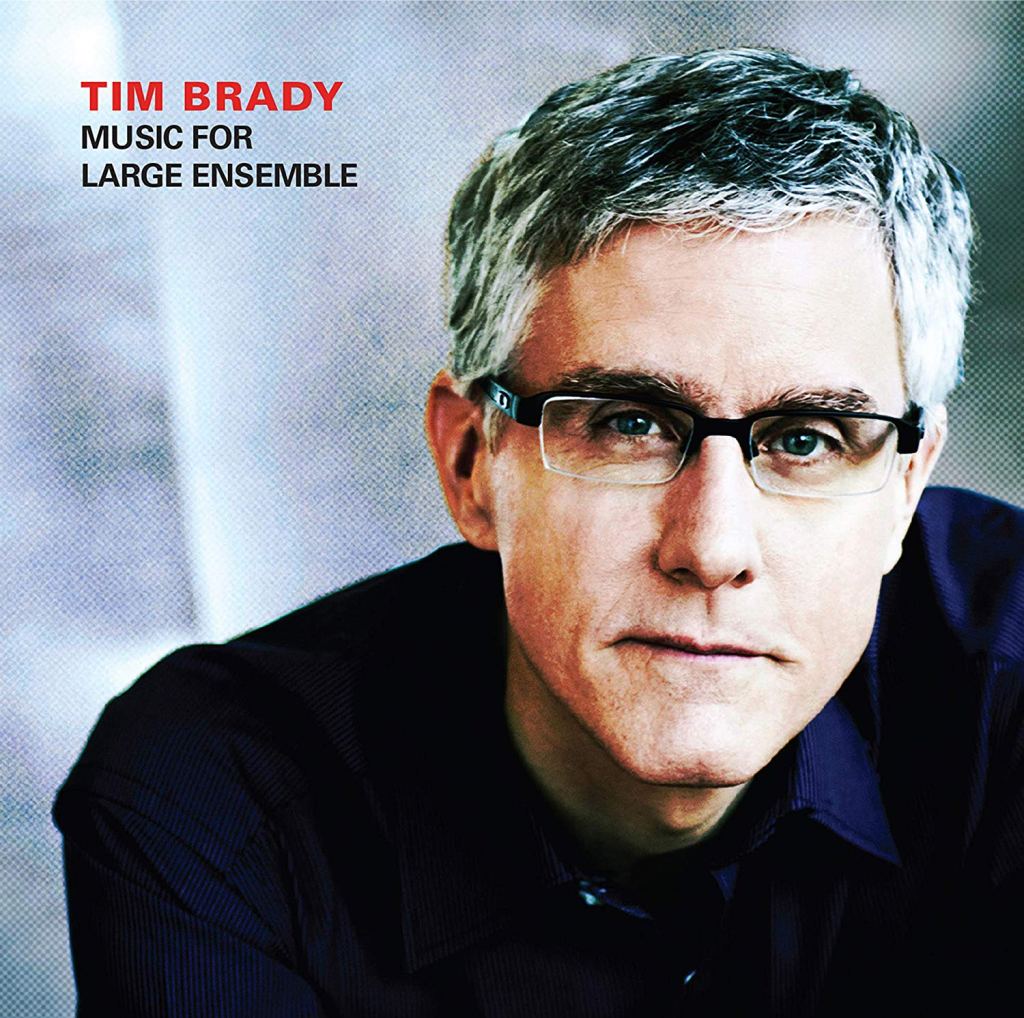
This is Tim Brady’s fourth Starkland release, a distinction shared by only two other composers, the late Tod Dockstader and (the delightfully very much living) Guy Klucevsek. And given the impressive track record of the Starkland label’s ability to find and promote innovative composers and performers who later achieve much wider recognition, this is an event that demands serious attention.
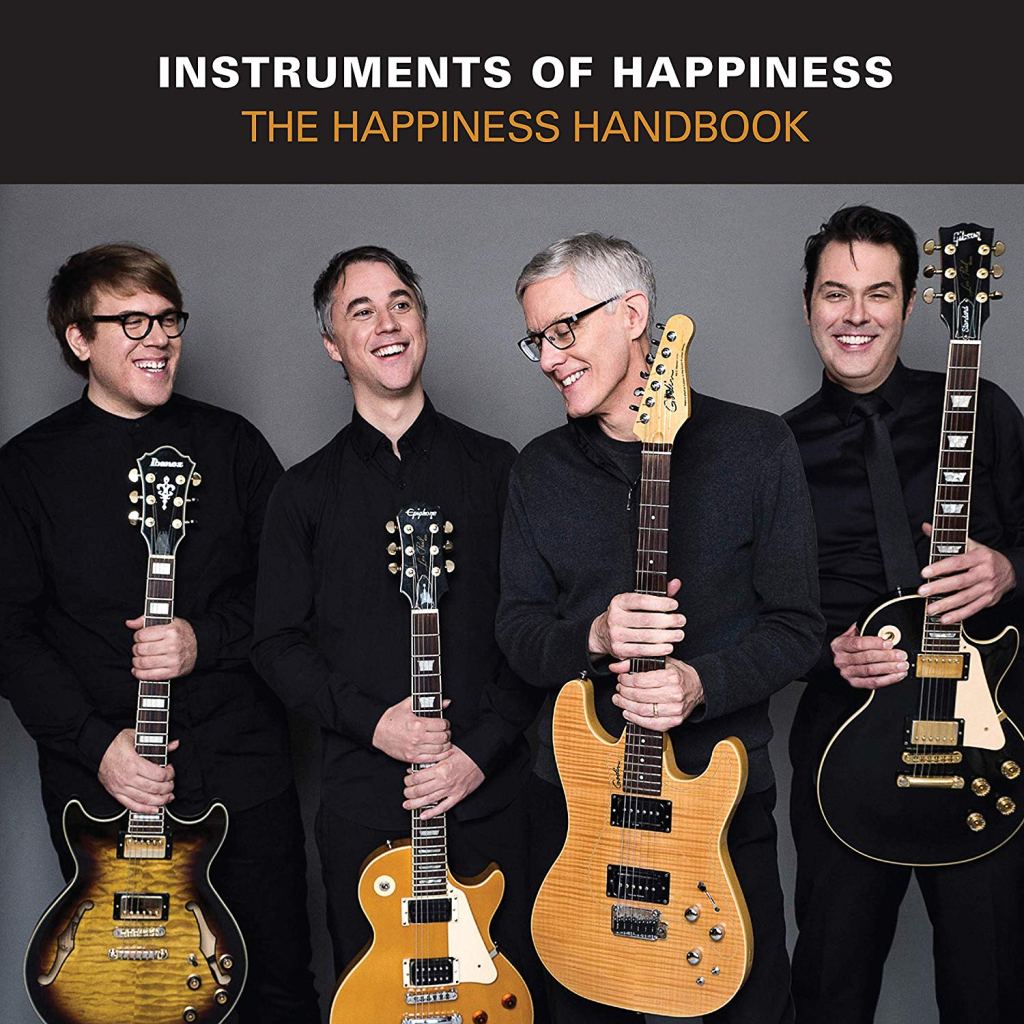
ST-232, released in 2019 contained works by Brady along with several associates from his “Instruments of Happiness” ensemble (and others) and is essentially a Brady album which features his “Instruments of Happiness” guitar quartet playing works by various Canadian composers.
STS-230, also a 2019 release contained Brady’s Concerto for Electric Guitar and Chamber Ensemble along with Brady’s “Eight Songs for: Symphony No. 7”
STS-224, a 2016 release, the recording premiere of this live performance guitar quartet, contained, along with a couple of shorter works by fellow Canadians, two versions of Brady’s Symphony 5.0, one for ensemble and a second version for solo guitar with electronics (arguably Brady’s first solo guitar symphony but the original version is for this guitar quartet).

With a catalog presently numbering some 39 plus CDs and a CV that boasts 4 operas and a massive catalog of compositions for ensembles ranging from solo to large orchestra, this proudly Canadian composer has mounted (metaphorically, of course) an invasion from the United State’s northern border of his distinctive artistic vision prompting this reviewer to suggest a comparison to the pop “invasion” of the Beatles in the early 60s.

Track listing

My admittedly tongue in cheek Beatles comparison is not meant to eclipse the incredible artistry of this obviously very industrious artist. My previous reviews compared his work to electric guitar giants like Rhys Chatham and the late Glenn Branca. But this only serves to illuminate a fraction of this man’s work. I invite listeners to peruse his well organized website to get a perspective.

But let me get back to this release. It is undoubtedly a bold move to use the term “symphony” to describe a work for a solo artist. Charles Valentine Alkan (1813-1888) wrote a symphony for solo piano (opus 39 nos. 4-10 from 1857) Kaikhosru Shapurji Sorabji (1892-1988) referred to his third piano sonata (1922) as a symphony and later wrote six more symphonies for solo piano between 1938 and 1976. And more recently the late Glenn Branca (1948-2018) wrote several works for various configurations of guitars he called symphonies. But this is the first symphony written expressly for solo guitar as far as I can determine.

“Symphony in 18 Parts for solo electric guitar (2021) – 50 minutes
For solo electric guitar, FX pedals and looper, in 18 movements” as it is listed on the composer’s website is (if I counted correctly) his 8th Symphony. Brady apparently numbers his symphonies in order of composition without reference to instrumentation. While several of his symphonies involve one or more electric guitars, this is the first solo guitar work to which he gives the weighty title of “Symphony” (unless, as noted above, you count the solo version of Symphony No. 5).

The term “symphony” carries with it connotations, at least, of grandeur, painstaking structure, and serious music making. And this work is very serious and meticulously constructed. It is, of course, reflective of a mid career composer who has written a great deal and has learned from that experience. It has as much a right to be called a “symphony” as any similarly large and painstakingly written piece of music.

First, let me say that, other than a tendency to use one (or a lot more than one) electric guitar in his music, Brady’s music has relatively little in common with Glenn Branca and Rhys Chatham. In fact, Brady seems to have more in common with Steve Reich and Elliott Sharp. But while Chatham and Branca emerged from a music scene dominated by punk in all its iterations, Brady seems more connected to the Beatles and Les Paul.

The work is divided into 18 sections, each running a modest 1.5 to just under 5 minutes. It is a structure similar in this listeners mind to American composer Alan Hovhaness (1911-2008), whose Symphony No. 9 (1949-50) “St. Vartan”, a similarly epic masterpiece in no fewer than 24 short movements. It is the interrelatedness of those movements that make them a part of the whole symphony. And so it is with Brady’s Symphony. David Lang (Pulitzer Prize Winner and founding Bang on a Can” member) says essentially this in his segment of the liner notes that come with the recording. Tim Brady acknowledges much the same in his segment of the liner notes.

The cover art by fellow adventuring guitarist and composer Elliott Sharp is functionally an homage to Brady and his work. The recording by Tim Brady and Morris Apelbaum, mastered by Brady, Apelbaum, and John Klepko is lucid (and great on headphones especially when Brady pans the sounds across the stereo field).

The 18 movements all have titles which are metaphorically related to the music therein. David Lang aptly describes these varied and intense movements as sort of biographical statements about what the composer can do with his instrument. Each movement has both form and development much as one would expect of a symphonic movement.

On the one hand, this symphony is not easy listening. On the other hand it is likely catnip to electric guitarists as well as to new music enthusiasts including your humble reviewer. Brady’s Canadian invasion, far from a takeover, is simply a musician sharing his substantial art from across the northern border and presenting his latest efforts. Like the Beatles, Brady deserves to be welcomed. This prolific composer/performer/teacher/innovator has interesting things to say.

At first I attempted to write something about each of the 18 movements but I don’t think that would have added anything useful for prospective listeners. This piece taken as a whole most aptly deserves the descriptor “tour de force” as each movement seems to have its own character deriving from the composer’s use of various (apparently deeply studied and judiciously chosen) techniques and ideas which sometimes threaten to overwhelm the listener, sometimes with sheer volume, sometimes with dazzling virtuosity, sometimes with softness, sometimes with silence, and always with interesting ideas.

In some ways this is a collections of ideas and techniques the composer has amassed over some 50 + years of playing. Each movement seems to be a more or less self contained exposition of playing techniques and the composers own approach to harmony and invention. That sounds potentially very dull but this is not a collection of etudes didactically accounting for and crystallizing his ideas. It is the organic appropriation of personal achievements in developing his compositional style. And it is an homage to electric guitarists that preceded him. Not a textbook as much as perhaps a signpost defining his present stage of development even as he moves forward with other projects.

I suppose one could challenge the notion of calling this a work for solo guitar given the effects pedals, looping systems, etc. but the use of electronics and looping techniques as a compositional aid or method is so ubiquitous that point is moot. Call it what you like but just listen. Let the music flow over your ears. At the very least this is a defining milestone in Brady’s long and productive career. It’s hard to to imagine what he might do next but I’m sure he’ll think of something.
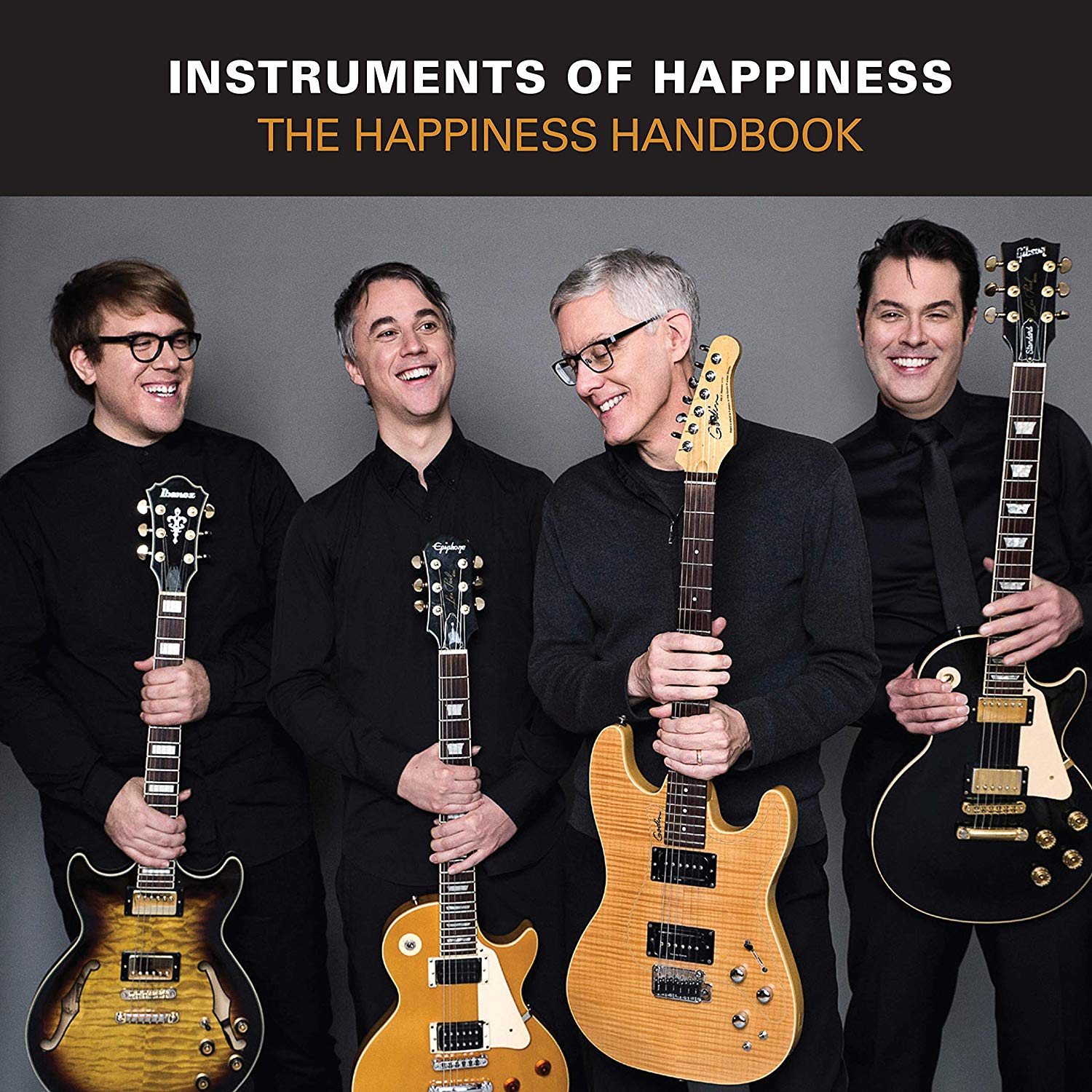
Tim Brady’s Happiness Handbook, massed guitars, massed invention


happinesshandbook

Starkland ST-232

This is, by my count, the third Tim Brady CD released by Starkland.  The other two, Instruments of Happiness and Music for Large Ensemble, represent only a small portion of his output and I highly recommend exploring his other releases.  You can find a listing on his web page here.  Since being introduced to Brady’s work in the Instruments of Happiness album I have purchased and enjoyed several of his earlier CDs.  Initially one necessarily wants to lump Brady in with the massed guitar masters such as Glenn Branca, Jeffrey Lohn, and Rhys Chatham.  That’s a fine starting point but as one listens to Brady’s work it becomes clear that he has his own vision and that vision is shared with like minded artists.  Some of those like minded artists are on this fine CD.

In some ways this is a sequel or a volume two to the Instruments of Happiness CD of 2016.  Despite this being chamber music with only four musicians the nature of electric guitars is to make a bigger sound.  It is always interesting to see how different artists work with a given ensemble configuration and that is the real thrill here.  One track features Brady’s music and the other tracks feature Scott Godin, Jordan Nobles, Maxime McKinley, Gordon Fitzell , and Emily Hall.  All are individual creations commissioned for this quartet.  The liner notes are definitely useful but there is much to be gleaned from the ‘composers’ web sites as well, trust me.

The disc contains six works on 10 tracks and, like the earlier Instruments of Happiness release on Starkland, this is an interesting and revelatory sampling of the marvelous invention of these composers and the amazing range and utility of the electric guitar.  If anyone questions the place of electric guitars in classical music this is a fine example of some of the potential and a teaser for the future as well.  The vision is more like that of a string quartet (another ensemble that has managed to establish itself) seeking innovative composers for some portable music making.

Familiarity with the composers mentioned earlier (Branca, Lohn, Chatham) will provide the listener with a context but the work here is seemingly almost unrelated to their work excepting that they used electric guitars.  This is a new generation of composers to whom, electric guitars were a given, not a new invention and whose use, increasingly ubiquitous in classical music, is simply one of their compositional options.

And now the music.  The album opens with an homage to the late British composer Steve Martland (1959-2013) whose rhythmic, driving music resembles that of Michael Nyman but closer to a rock aesthetic.  Martlandia (2016) by Scott Godin engages the listener (and will likely send him/her in search of Steve Martland CDs) with its long tone meditative beginning that acts like a slow introduction to a symphony of the classical era and then moves into faster quasi-minimalist sections that remind this listener favorably of some of Steve Reich’s work.  This is practically a miniature symphony.  It is an engaging piece and a loving tribute to the late composer.

Equal and Opposite Reaction (2016) is Mr. Brady’s submission to the album.  It also opens with a slow section and then goes into the manic virtuosity that is typical of Brady’s work.  I’m not saying he can’t write a decent slow movement, he can and does, but much of his work moves rather quickly and with a variety of guitar techniques in his expanded palette of sounds.  Like all the works here the harmonic language is largely tonal and the development of thematic material owes much to classical compositional techniques though his rhythmic choices owe something to rock and jazz.

Jordan Nobles’ Deep Field (2016) is a tribute the the iconic Hubble Telescope.  (If you haven’t seen at least one photo from Hubble’s catalog then you may have been in suspended animation for the last 20 years.)  Suffice it to say that the Hubble’s images have inspired a great deal of artists and this is yet another example.  This is one of the more meditative pieces on the album at its opening but, like the other pieces there are several contiguous sections.

Reflets de Francesca Woodman (2017) by Maxime McKinley is another homage.  This time the subject is an American photographer Francesca Stern Woodman (1958-1981) who took her own life in 1981 and left a posthumous legacy.  Aptly this is one of the more somber and disturbing tracks on the album. I’m sorry to say I don’t know her work but this tribute certainly sparks interest.

Going with that melancholy theme is the next track, Gordon Fitzell’s Bomb Crater Garden (2016) is the most avant garde sounding track (as well as the longest at 11:16) and the most exquisitely disturbing in its post apocalyptic vision.  The piece has optional narration and video but the music gives the listener a pretty good idea of what those images and ideas are.  So much for happiness.

Finally we have The Happiness Handbook (2016) by Emily Hall.  Like Brady’s flexibly peopled ensemble of the same name the theme of happiness comes to the fore once again.  As explained in the liner notes the notion of guitars as instruments associated with happiness is the concern.  There are five movements varied in style that make this piece function like a little symphony.  It is a celebration of the plethora of techniques and compositional possibilities of this modern guitar ensemble and will leave the astute listener ultimately in a happy place.


Tim Brady: Music for Large Ensemble


tbrady

Starkland ST-230

Two years ago Starkland released Instruments of Happiness which was this writer’s introduction to this artist.  As a result I traversed the wall of artistic apartheid and ordered more of his work through the Canadian Music Centre.  This is an important and well organized site for anyone interested in Canadian classical artists.  (Hint: there are a lot of good composers up that way.)

Tim Brady (1956- ) is a Canadian composer and musician who is best known for his work with multiple guitar ensembles (from 4 to 200).  Of course knowledgeable listeners will logically place him in the category of “composers who write for lots of guitars” category.  Rhys Chatham and the late Glenn Branca come to mind as probably the best known in this genre.  What is important is that, in the same way that Branca sounds very different from Chatham, Brady has his own sound developed over years of playing and composing.  In addition to his compositions for guitar ensembles he writes for more traditional classical ensembles including chamber music, concerti and symphonies.

This latest release to storm the bastion of artistic apartheid known as the US/Canadian border is Brady’s second release on an American label and it appears to be a quantum leap.  Here we get to hear Brady’s chops in handling a large orchestra.  He can no longer fit only into the category of “composers who write for lots of guitars”.  The two works on this disc are Desír (2016-17), a concerto for electric guitar and orchestra and Songs About Symphony No. 7 (2016-17).  Both works were written for the Victoriaville Festival.  Both reflect his development as a composer.  And that is why you want this disc.

The concerto Desír is in a pretty standard three movement format.  This is not his first concerto for the instrument.  Perusing his substantial list of works one finds two other concerti for electric guitar and ensemble.  It is Brady’s principal instrument and one he clearly knows from it’s acoustic components to all its electric extensions.  What is a revelation for this listener is hearing how skilled Brady is at writing for traditional classical instruments as well.  At one time the electric guitar was pretty much anathema in the classical world but Brady and his ilk have pretty much made it into simply another addition to the orchestra by creating a large and fascinating repertoire.

Desír presents a challenge for both orchestra and soloist but manages to be both contemporary and eminently listenable.  Brady’s palette is basically tonal with nods to rock and minimalism as well as references to the larger classical world.  And it is the larger classical world with which Brady is concerned in the second work on the album, Songs About Symphony No. 7.  No, this is not about Brady’s 7th (it looks like he is on his 8th, going on 9th symphonies himself) this is about Dmitri Shostakovitch’s 7th and its first performance in Leningrad on August 9, 1942.  It was the Leningrad premiere and it took place in the midst of the actual siege of Leningrad.

doug-smith-web-300x450

Poet Douglas Burnet Smith

The text is by one Douglas Burnet Smith (1949-), a Canadian poet.  His text reflects the thoughts and impressions of various people in reaction to the Leningrad premiere of this major work.  This work demonstrates Brady’s extreme facility for vocal writing.  A quick perusal of Brady’s works list confirms that he has produced operatic works before and his skill in this area is unquestionable.

This piece is essentially an orchestral song cycle and can be favorably compared to works such as Mahler’s Das Lied von der Erde and Zemlinsky’s Lyric Symphony.  The major difference is that the text of this work is clearly anti-war.  The various characters describe the horrors of war from their various perspectives and what holds these commentaries together is that they all make reference to the performance which took place in the midst of the awful siege of Leningrad.  The “Bradyworks Large Ensemble is ably conducted by Cristian Gort.  This is complex music but he manages to make it all work as a listenable whole.

gort

Cristian Gort

Shostakovitch’s work, despite it’s lack of vocal settings, is clearly an anti-war piece and, like many of his works, is concerned with social justice and human rights.  Brady’s work uses that historical performance as a context to share the various characters’ impressions in a sort of kaleidoscopic fashion and his writing here is stunningly good (meaning both text and music).  The two soloists, soprano Sarah Albu and baritone Vincent Ranallo, are clearly up to the task from spoken word to full blown operatic power.  It is not clear if the arts can affect social justice but this is one damn good try.

Having listened to Instruments of Happiness and a few more of Brady’s Canadian CDs it is fascinating to hear his development as a composer.  It is not clear if he has reached his peak but he is certainly up there showing no signs of anything but the progress of a major artist.  Bravo, Mr. Brady!  Keep it coming.

Guitar Gods Go Classical? Give them a ‘Secret Rose’


Cover of "Crimson Grail"

Cover of Crimson Grail

The implicitly condescending appellation “Guitar God” has been perhaps somewhat jealously applied to virtuosic guitarists in various popular rock bands. Whether your taste runs to Eric Clapton, Jimmy Page, Jimi Hendrix or Eddie Van Halen you cannot discount the technical skill of these and so many other rock/pop guitar players.

Rock and pop artists have distanced themselves from the classical music circles who initially disdained and even condemned their work. But that did not and does not mean that they eschew classical music. Many were initially schooled in classical performance technique and/or were provided a favorable view of some classical masterpieces.

Ian Anderson’s group ‘Jethro Tull’ utilized a movement from a Bach Lute Suite (taking a few rhythmic liberties) in their piece, ‘Bouree’. Roger McGuinn of ‘The Byrds’ acknowledged channeling Bach when he created the now instantly recognizable intro to their version of Bob Dylan’sMr. Tambourine Man‘. Rick Wakeman, keyboardist of the band ‘Yes’ as well as a solo artist peppers his work with snippets of classical melodies no doubt learned in his piano lessons that served him so well. Keith Emerson of ‘Emerson, Lake and Palmer‘ went as far as to write a piano concerto.

From the classical side of the aisle there have been composers who wanted to utilize some of the techniques and ideas of rock and pop within the context of their classical training. Stanley Silverman wrote an opera titled, ‘Elephant Steps’ which was championed by the ever eclectic Michael Tilson Thomas. (This piece deserves at least a second hearing and I hope that Columbia will some day release it as a CD.)

Leonard Bernstein, no stranger to popular musical theater, embraced rock and blues including such ensembles alongside the orchestra in major works such as his ‘Mass’. Similar, though less successful collaborations occurred when symphony orchestras were added to the production of albums by the likes of ‘Deep Purple and, more notably, ‘The Moody Blues’.

Many such collaborations have been and occasionally continue to be attempted but the end result most often appears to keep the division between classical and ‘pop’ rather separate. That is not necessarily a bad thing either. Philip Glass‘ work appears to have been pretty heavily informed by rock music. He played piano in a couple of tracks on one of the New York punk rock band, ‘Polyrock’. The driving rhythms of rock are endemic to much of Glass’ music. Steve Reich’s work as a jazz drummer seems to be evidenced in his intricate use of rhythm patterns in his music.

So while ‘pop’ musicians incorporated some of their classical training and influences and ‘classical’ musicians acknowledged and collaborated with their pop counterparts the classical aspects remained for better or worse more decorative than organic. Jazz became an organic part of many classical works starting in the 1920s. And, as mentioned before, rock influences have certainly found an organic role in the music of Philip Glass and, more recently in the music of Michael Daugherty.

Along came Glenn Branca, Rhys Chatham, Jeffery Lohn and their various collaborators. These musicians with strong roots in rock music began to explore what has become, in this writer’s opinion, the epitome of the organic implementation of classical music into the ‘pop’ medium. Using primarily guitars (in ever-increasing numbers) as well as drum kits and the usual accoutrements of rock bands these musicians began writing music that is definitely not pop or rock (neither does it actually resemble classical at times).

English: A self-portrait photograph by and of ...

English: A self-portrait photograph by and of Rhys Chatham. (Photo credit: Wikipedia)

Branca who had worked with Jeffrey Lohn began writing his Symphonies in the 1970s. They now number 12 or 13. Working with multiples of guitars, modified keyboard instruments, alternate tunings and basking in the glory of loud he has created an arguably classical set of works grown out of clearly rock/pop beginnings.

Rhys Chatham, a trumpet player initially, worked with Branca and Lohn for a while and began to develop his own classical path within the rock ethic. Beginning with Guitar Trio (1977).   And continuing into increasingly massive multiple guitar works he has created another distinct set of works that are clearly not rock or pop. He does not use the classical form titles like ‘symphony’ favored by Branca but these pieces like, ‘An Angel Moves Too Fast to See’ and ‘Crimson Grail‘ feature large numbers of guitarists which by necessity must be locally sourced. Even without classical form or titles these are clearly not pop or rock pieces. And perhaps they can’t be called classical either but they are certainly of symphonic proportion.

Both Branca’s and Chatham’s works have been recorded and I highly recommend the recordings. But these musics cannot be fully captured by current recording technology. The acoustics of the space in which they’re performed and the volume levels which elicit their own effects are best experienced live because of the volume levels and also because of the overtones which are elicited by the instruments in the performing space and more audible because of the overall volume and the characteristics of the listening space.

Such a rare opportunity awaits Bay Area audiences this November when Rhys Chatham comes to town under auspices of ‘Other Minds’ and the delightfully insightful and eclectic producer Charles Amirkhanian. They have engaged the architecturally and sonically fascinating space of the Crane Pavilion in Richmond (a few miles north of Berkeley and Oakland) with sweeping views if San Francisco Bay and enlisted many locally sourced musicians to produce the west coast premiere of Chatham’s “A Secret Rose” (2011) for 100 guitarists.

Official Other Minds logo

Official Other Minds logo (Photo credit: Wikipedia)

Tickets can be purchased through the Other Minds website (www.otherminds.org).

This is a rare opportunity to hear a uniquely different music in a visually stunning and acoustically interesting space.  Hope to see you there.