Charles in Charge, Composer/Producer/Impresario Charles Amirkhanian at 80


Charles Amirkhanian (photo by Carol Law, all rights reserved)

An overflow crowd packed the lovely auditorium at Berkeley’s David Brower Center this past January 19th. Octogenarians (and younger folks as well) populated both stage and audience in a show of appreciation for a man whose work as music director of KPFA (1969- 1992) and subsequently as an arts promoter and curator of new music in California’s Bay Area continues to enhance the artistic reputation of the Bay Area.

A rare and exciting aspect of this evening were the rare opportunities to hear Charles’ music, including representative sound poetry classics and a recent major opus capped off by a world premiere of a new work.
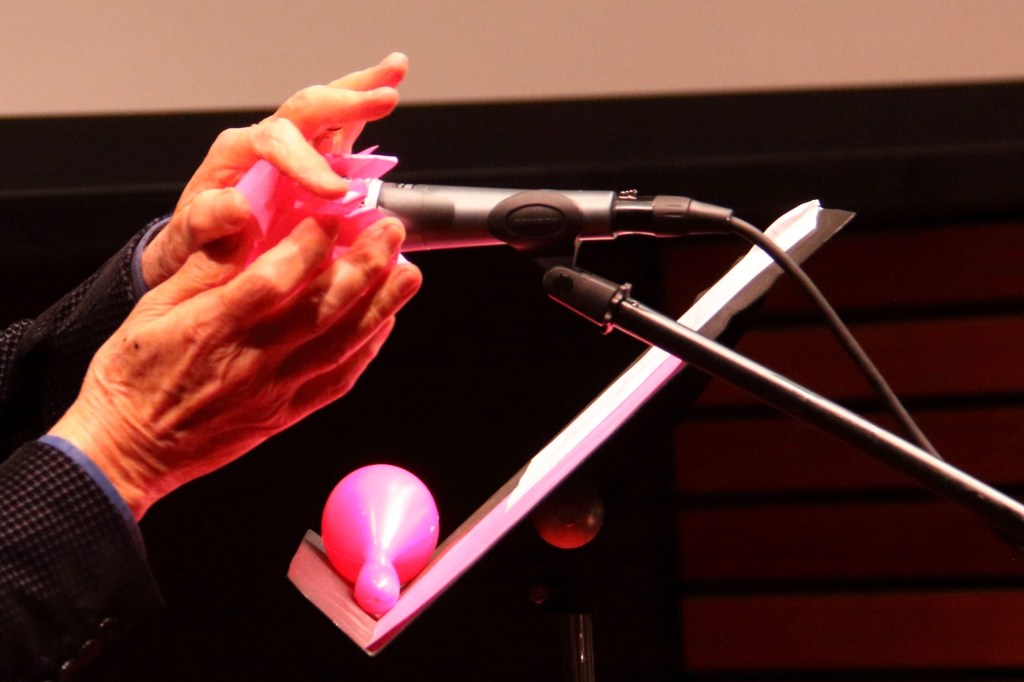
The hands of the artist. Photo by Allan J. Cronin

The genuine affection, appreciation, and respect was palpable as the honored guest demonstrated his skill at hosting when a couple of technical glitches slowed (but did not stop) the amiable birthday celebration. The audience waited calmly and quietly.

Both the guest of honor and the host (Liam Herb) used a well honed, self effacing humor used most skillfully to entertain the sympathetic audience while the technical difficulties were surmounted in real time.

Panel discussion featuring (left to right) Susan Stone, Anthony Gnazzo, Paul Dresher, Charles Amirkhanian, Sarah Cahill, and Liam Herb (Photo by Allan J. Cronin, Creative Commons license)

Herb, a composer and performer, introduced himself in the midst of the technical resolutions, graciously announcing that, as producer, he accepts responsibility for the glitches. Charles maintained his familiar master of ceremonies crowd pleasing good humor as Herb worked goodnauturedly (if that’s a word) with the rest of the crew to resolve the issues and get on with the show.

The formal opening remarks were given by Other Minds’ associate director, Blaine Todd. And the evening began in force.

Blaine Todd (photo by Allan J. Cronin, Creative Commons license)

The program glided past the initial hiccup to present a film about our guest of honor. The bevy of fans and bona fide new music professionals sat with rapt attention as the film, featuring the familiar faces of several “Bang on a Can” artists.
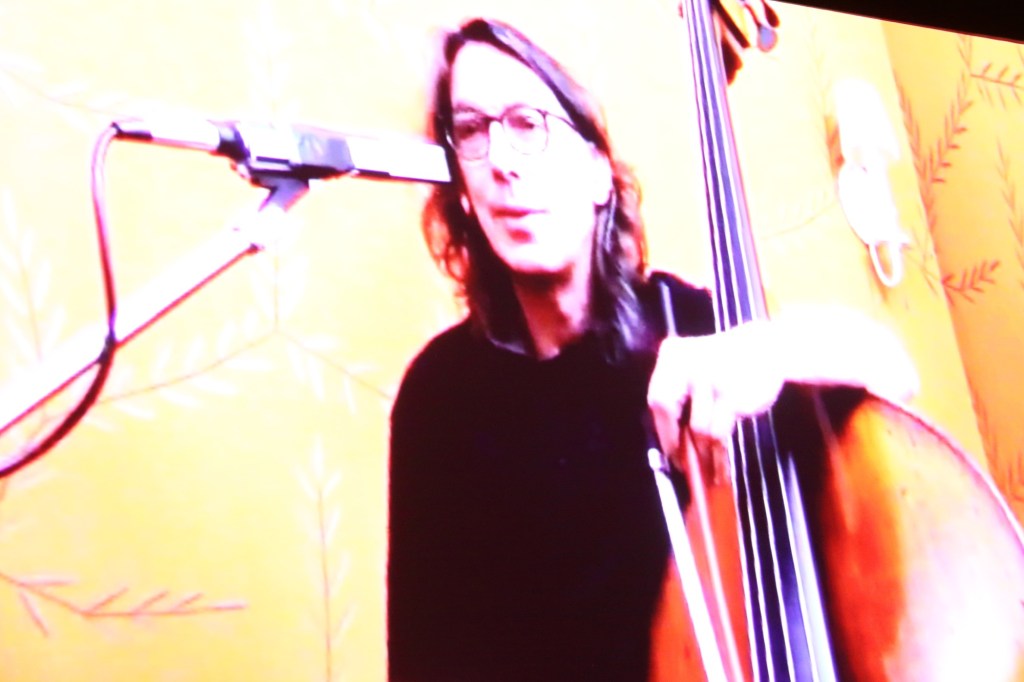
The late great Robert Black interviewed by Amirkhanian in the streaming premiere of Audible Autopsy. (Photo of film appearance by Allan J. Cronin)

Excerpts from the 2015 Other Minds 20 documentary featured Julia Wolfe, David Lang, and Peter Gordon (now, it seems elder statesmen (and women) in their own right.

Production manager Liam Herb then served as moderator for a conversation or live interview (with Amirkhanian) for the next segment. This was followed by some videos with music by the guest of honor:

Real Time/T.V. Time Video with Amirkhanian’s “Muchrooms”

The film, presented in its entirety was accompanied by “Muchrooms”, from the CD recording of that standalone work.

Next was Amirkhanian’s and Carol Law’s classic collaboration: History of Collage (1981). This is a major work and a great collaboration with his partner in life and arts. I’m pleased to add my own shot from the performance at the Other Minds 23 experience, my favorite OM festival(so far).

History of Collage (1981) photo by Allan J. Cronin taken at the Other Minds 23 wonderful live performance of this work (Photo by Allan J. Cronin is Creative Commons license 2015)

We also heard and saw Audience (1978) with photography by Law and music/poetry by Amirkhanian followed by Chairs with photography by James Petrillo and music/poetry by Amirkhanian (excerpts from Seat Belt, Seat Belt (1973).

There followed a panel discussion led by Carol Law with Betsy Davids discussing David’s’ work and her connections via her work as a book artist. These two embody the experimental visual arts that characterize the skills of these fellow artists both onstage and off tonight. In fact, interactive collaboration and both respect and friendship were everywhere to be seen in this warm and pleasantly nostalgic evening.
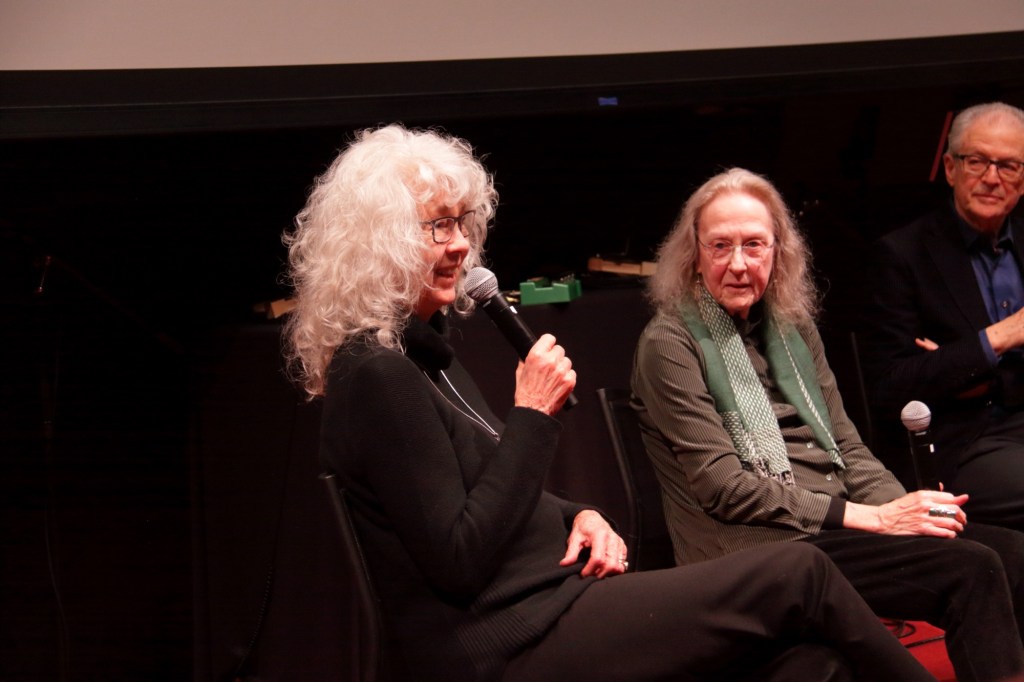
Carol Law speaking with Betsy Davids (Photo by Allan J. Cronin, Creative Commons license)

This was followed by a recording of a major opus, Ratchet Attach It (2021) recently played at one of the (still ongoing) Other Minds Festival. This work is a major opus by Mr. Amirkhanian, one I’m pleased to say I heard live at the Chinese Theater in San Francisco a few years ago. Scored for a huge percussion ensemble, with audio recordings, and a conductor who moves between the podium and a space among the performers playing with the ensemble. It is perhaps one of his most integrated and evolved compositions. Stunning to hear it live. Glad to hear the (always too short) excerpts.

In fact Mr. Amirkhanian, a fixture in the arts of the Bay Area, continues to influence musical taste and present new and interesting music as he has for well over 50 years. His work as Executive Director of Other Minds includes the fabulous OM Records as well as the annual Other Minds Festival and a continual flow of carefully curated concert events by luminaries (or soon to be luminaries) throughout the Bay Area and beyond. There is also the huge archive of thousands of hours of interviews and concerts that are available in streaming audio and video via the Other Minds website.

Many of the artists featured in the Other Minds concert series continue to work, innovate, and expand musical concepts. An Other Minds commission, Henry Brant’s Organ Concerto, Ice Field, earned him a Pulitzer Prize. Many have gone on to greater achievements in their respective careers. Of course not every composer started their musical careers at Other Minds concerts. Many mid or late career musicians have joyfully been represented over the years. Its one of those festivals that innovative musicians seek to participate.

Such achievements reflect on Amirkhanian’s leadership and curatorial acumen, but more importantly his relationships with his fellow artists. Charles has earned a reputation for his support and his collaborative nature. Arguably, everyone in the house (and the overflow in the lobby) all have a degree of connection to Charles and his guests. It is why we’re all here tonight.

Charles Amirkhanian and Joseph Bohigian performing with Liam Herb’s electronics (Photo by Allan J. Cronin, Creative Commons license)

Following a brief intermission we were treated to a world premiere of a new work by our guest of honor, Noose Ratchet (2025) for two percussionists and electronics. Amirkhanian performing and/or promoting his own music is a relatively rare event and this alone was certainly worth the trip.

The work is arguably a trio for two percussionists playing ratchets, a curious instrument whose sound, if not entirely ubiquitous, is familiar. And the two play interactively with the electronics (the third member of the trio). Extended techniques and other duties get assigned (when in doubt it’s responsibility of the percussion section, right)?

There followed a lively and friendly panel discussion amongst frequent and past collaborators Susan Stone, Anthony Gnazzo, Paul Dresher, Sarah Cahill, and Liam Herb. This truly felt like a gathering of friends.

Happy Birthday, Charles.
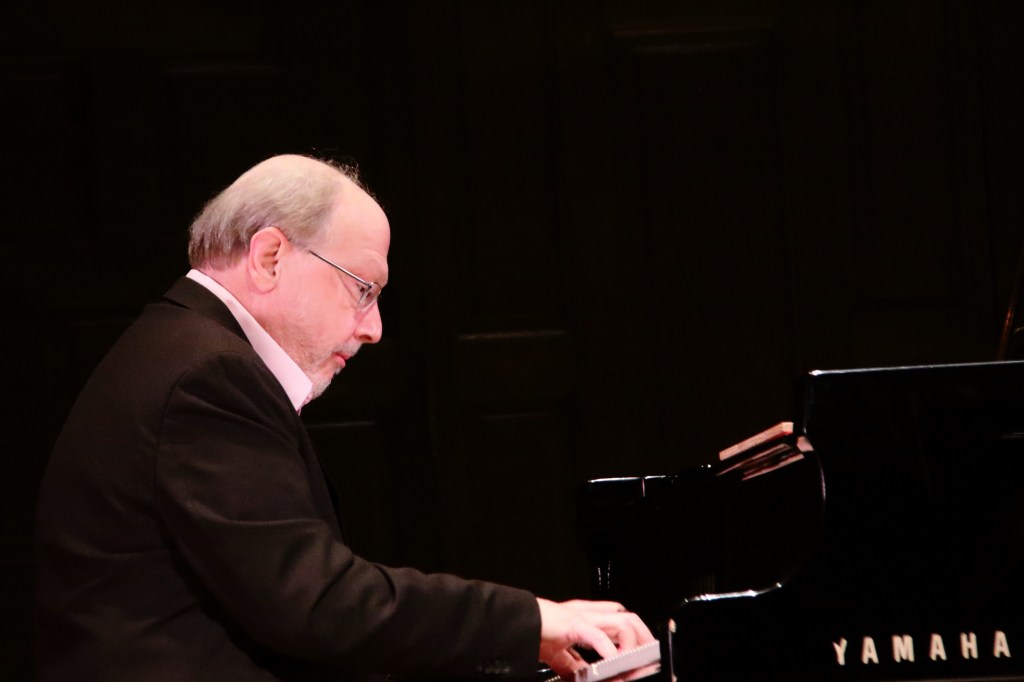
Marc-Andre Hamelin Plays Charles Ives’ “Concord Sonata” in Honor of Other Minds’ 30th Anniversary


Hamelin begins his focused Ives journey

The late, great British science fiction writer Arthur C. Clarke once asserted that “any sufficiently advanced technology is indistinguishable from magic (to those who don’t know the technology)”. A similar assertion can be said to be true of music. New music is a large and diverse repertoire that is difficult to navigate without some sort of guide to put those new sounds in context. And Charles Amirkhanian has, via his years as music director of KPFA and his stewardship as Executive and Artistic Director of Other Minds (among the many hats he wears) has provided such guidance for interested listeners to new music since at least 1969.

In an unanticipated gesture of magnanimity there was, at the will call table, not the usual “items for sale”, rather there was a lovely free tote bag and a large selection of OM CDs there for the taking. Suffice it to say, I and many others went home heavier than we had arrived.

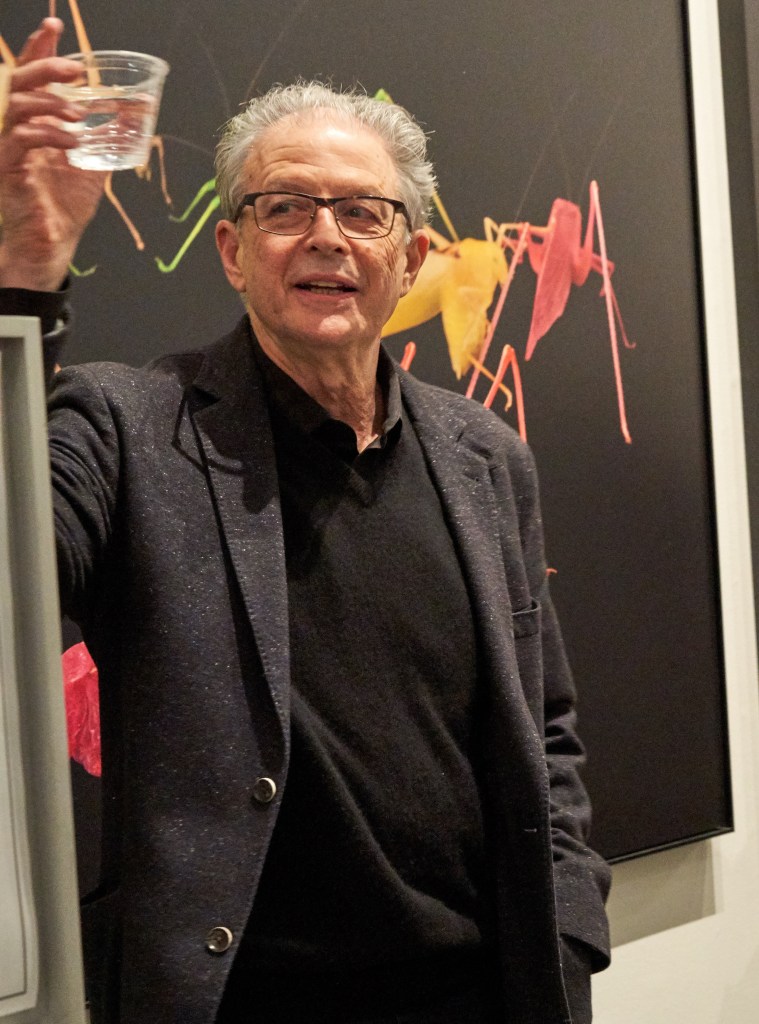
Charles Amirkhanian raising a toast at his 75th birthday celebration ( in which Kyle Gann was host and discussant)

He and his hard working team (Blaine Todd, Associate Director; Mark Abramson, Creative Director; Liam Herb, Production Director; Adrienne Cardwell, Archivist; Andrew Weathers, Recordings Director; Jenny Maxwell, Business Manager; and Joseph Bohigian, Program Associate) have provided guides for adventurous listeners that have included interviews with musicians and composers, a record label dedicated to new music, and live lectures and performances of creative new music from all over the world. The annual Other Minds Festival (the 26th was presented earlier this year) has brought in a cornucopia of stellar performers with a knack for finding stars at the outset of their careers. Other Minds at 30 is truly one of the great joys of San Francisco and it’s environs.

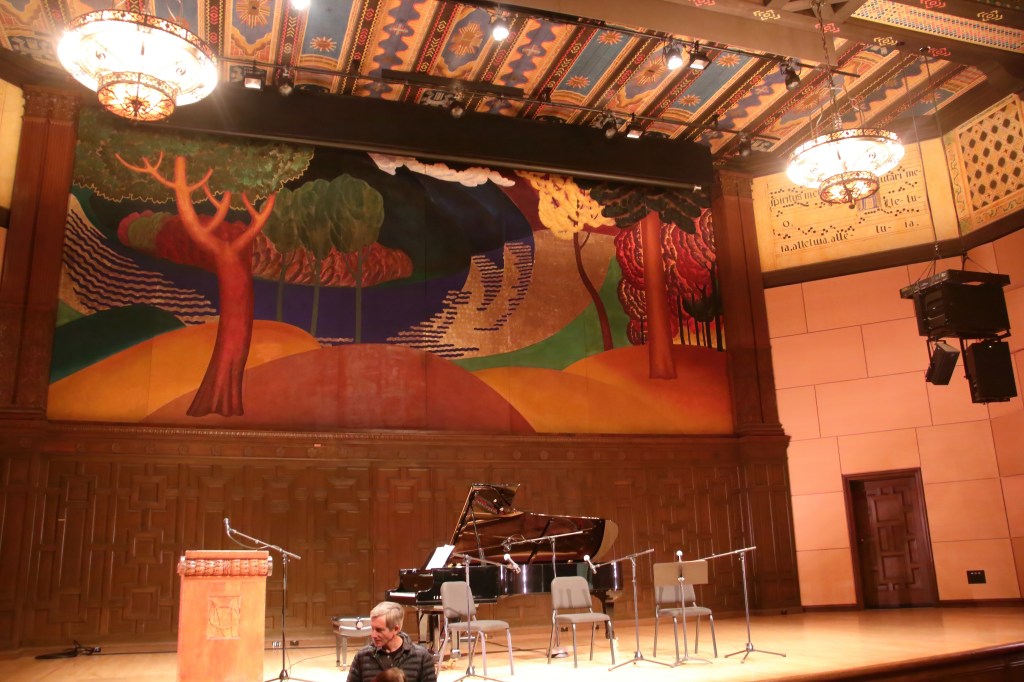
This evening was one of the lecture recital variety. Kyle Gann, composer, writer, critic, musicologist, OM alum, and vice president of the Charles Ives Society was brought in to provide the lecture portion of the evening. In addition, this event was held at a major temple of new music in the Bay Area, Mills College (actually Amirkhanian’s alma mater). The beautiful Littlefield Concert Hall itself displays the striking work of California architect, Julia Morgan. Artistic spirits past and present were undoubtedly here this night in the history of this place as well as those artistic spirits present in the audience.

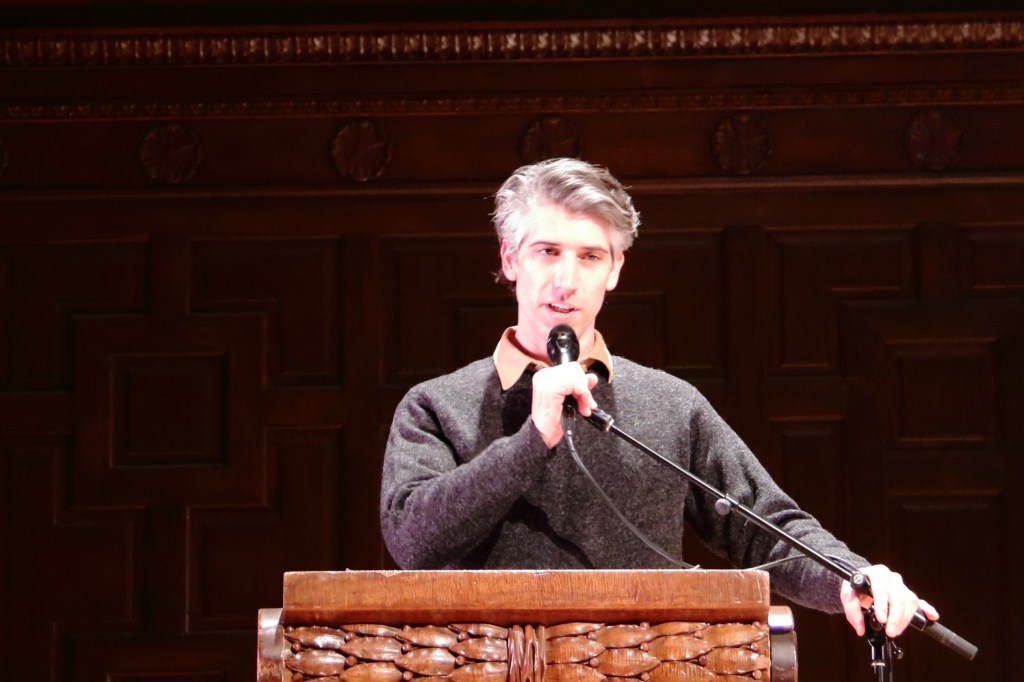
Blaine Todd officiated the preliminaries by introducing tonight’s stars.

The program began with a brief discussion among Mr. Amirkhanian, Professor Gann, and maestro Hamelin. Then Gann took his place at the lectern and Hamelin took a seat at the piano where he had graciously agreed to perform musical excerpts to illustrate Gann’s lecture. Actually Gann has written a definitive and very readable book on the work destined for performance on this night. “Essays After a Sonata” (2017), the title a gentle pun in homage to composer Charles Ives who (in an unprecedented move) wrote a little book titled “Essays Before a Sonata” as a means of introducing his landmark Second Piano Sonata.

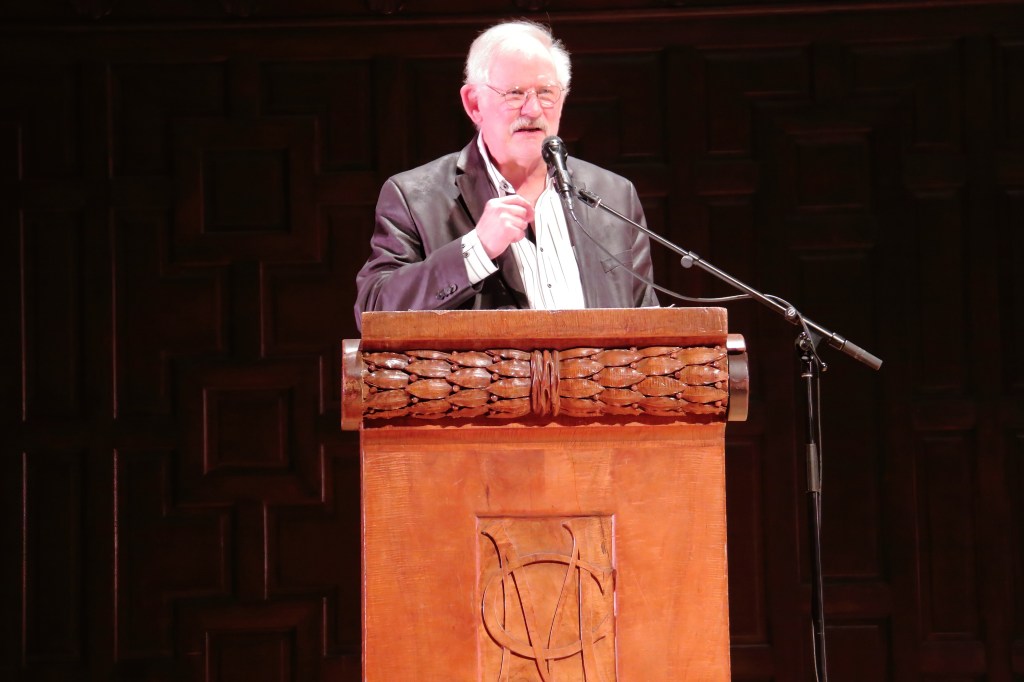
Professor Gann providing a context.

In addition to his wonderful book, Gann has had a long interest in the literature of the so called “Transcendentalists” who are the subject (or at least subtext) of this music. He even went as far as to suggest specific literary references implied in the music. The Second Sonata “Concord, Mass., 1840-60, (written 1904 to 1915 with several subsequent revisions) is in four movements titled, “Emerson”, “Hawthorne”, “The Alcotts”, and “Thoreau”. Gann provided a few concise illustrations in a rather brief talk that provided just enough context to assuage the uninitiated (if there were any in the audience, lol). Hamelin coordinated most amicably and then there was a short intermission.

Marc-Andre Hamelin (http://www.marcandrehamelin.com) was born in Montreal and is now based in Boston. His discography consists of over 80 albums. My own introduction to his artistry was his first release in 1988 of William Bolcom’s Pulitzer Prize winning, Twelve New Etudes (1977-1986) and Stefan Wolpe’s “Battle Piece” (1943-47). His web site is worth your time and gives an idea of the sheer scope and acumen of his repertory choices. In fact his most recent releases include more from William Bolcom and a disc of his own compositions. In fact he gives fine performances of music from Mozart and Haydn to the present. Hamelin has performed the Concord Sonata numerous times and has recorded it twice. He performed this gargantuan work entirely from memory.

Maestro Hamelin taking a moment to savor his fine performance and return his focus to the standing ovation that greeted him.

Hamelin gave an extremely focused and convincing performance, an exercise of both intellectual and physical stamina. The audience, due to their reverence for Ives, Hamelin, and the spirits present in the hall, sat in rapt attention with nary a squirm nor a cough (well, maybe one cough) to interrupt the flow of this landmark work of American modernism. Such was Hamelin’s thrall. The piece goes through a wide dynamic range and the soft pianissimo resonances could be heard as clearly as the Beethoven-esque heroic fortes. Hamelin took two curtain calls to a standing ovation of a very appreciative audience. Gann quipped at one point that he uses Hamelin’s Hyperion recording of the Sonata in his classes. It was easy to see why.