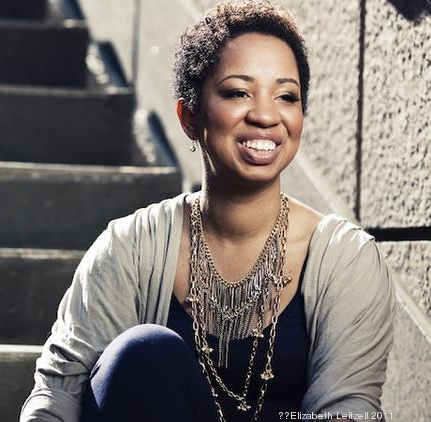
Opus 961, Violist Noémie Chemali’s Auspicious Debut: New Music Activism From Emerging Lebanese Composers


There are many ways to debut on the world stage and there are many ways to represent political activism. Violist Noémie Chemali has chosen, as her important first impression in her recorded debut, a selection of music from young composers whose heritage includes political oppression. The albums profits are promised to MSF, also known as Doctors Without Borders. These works are not directly political, rather they are a carefully curated selection of new works produced by composers who, in varying degrees, have experiences of dealing with or having friends and family whose lives are negatively impacted by political conflicts and oppression. This is gorgeous music by emerging talents.

The good news is that these wonderfully creative artists persevere in creating great art and it is the celebration of that creative drive that lies at the heart of this fine release. While the pieces here variously reference tunings, rhythms, and melodies representative of their individual ethnic heritages, they are not confrontational. Rather the music here stands as evidence of the beauty of artistic invention which stands defiantly in contrast to the cruelty of oppression and warfare. That gentle activism casts a kinder and gentler image of people more commonly represented in the media as terrorists (actually a numerical minority) in a culture with ancient roots and a powerful artistic soul (the better descriptor of the actual majority).

Links to the composers’ web sites can be accessed by clicking the names of said composers.

The album’s contents are as follows:

Wajdi Abou Diab (1991- )

1. “The Moraba’ Dance” (2020)

This, the composer’s Opus 13C, is based on an Arabic rhythm called “Al Mouraba”. It is for solo viola and is cast in the unusual meter of 13/4, using an Arabic scale. The music imitates traditional music which ostensibly enticed horses to dance in times past.

Sami Seif (1998- )

2. “La’ib an-nard / The Dice Player” (2019)

This musical impression of a poem of the same name by Mahmoud Darwish. It is, in the composer’s description, a meditation on the random elements that affect our lives. It is scored for viola, cello, and double bass.

Layale Chaker (1990- )

3. Cadenza from “The Brown Texts”; movement one (2017-2020)

4. Cadenza from “The Brown Texts”;movement two

The term “cadenza” derives from the word “cadence” and it generally refers to the improvisations (by the soloist) in a concerto. The notion of a solo cadenza does not appear, as far as this listener’s encounters, until the mid to late twentieth century. Penderecki’s Cadenza for Viola is the only example that immediately comes to mind. Though that work is sometimes performed separate from the viola concerto from which it derives, its origin is in the classical/romantic tradition of a virtuoso work that displays the skills of the soloist. As with the previous work, this one is a musical rendition of originally poetic ideas, those of the late Nadia Tueni. And, unlike any other cadenza I’ve known, it is cast in two separate movements. The piece is a fine showcase for Ms. Chemali’s technical and interpretive skills.

Noemie Chemali:

5. “Kadishat” (2021)

Delightfully, Ms. Chemali has chosen to include one of her own compositions. She describes this as a set of variations on the ancient Aramaic Trisagion “Qadishat aloho”, a tune which has been firmly ensconced in the composer/performer’s consciousness from having heard it since her childhood. One could characterize it as one of the greatest hits of the Eastern Orthodox Church and one of its most deeply felt pieces. Chemali casts this work for violin, viola, and cello. This writer is reminded of another fine example of the incorporation of sacred hymns into the classical music tradition, that of Carolyn Shaw’s fine “In Manus Tuas” which mines that composer’s memory of hearing a sacred chant. Both works reflect the composer’s internal process of hearing and attempt to convey that spiritual experience to the listener.

Mary Kouyoumdjian (1983- ):

6. “The Revolt of the Stars” (2018/2020)

This piece, another musical expression of a literary work, namely, the Armenian fable that provides the title for this work which is cast for cello, voice, and electronics. It is presented here in a transcription for viola by the soloist. The fable deals with the strength in numbers that rise up against those in positions of power. It is a delightful work with dark implications.

Saad Haddad (1992- ):

7. “Dohree” (movements 1&2)

8. “Dohree” (movement 3)

This work, scored for viola, harp, and flute is cleverly written in three movements which, in turn, each give a solo to each of the musicians who are, in turn, accompanied by the others in the group. “Dohree” is an Arabic word which translates as “my turn”.

Six pieces over eight tracks with chamber groups ranging from solo viola to viola with electronics (in the Kouyoumdjian work) and small chamber groupings in the others. All in all a fine and engaging selection of music that bear witness to the beauty and creativity of people living with oppression. This music reflects the human experience that can get erased by merely identifying ethnicity.

In addition to Ms. Chemali this recording includes the following musicians: Shaleah Feinstein, violin; Raffi Boden, violoncello; Kebra-Seyoun Charles, double bass; Lauren Scanio, flute; Deanna Cirielli, harp. They really do honor to the spirit of this music and this album is beautifully recorded as well.

Kouyoumdjian was the only composer known to this reviewer prior to hearing this album but she is apparently in very good company here and listeners would do well to make note of these rising stars. We will doubtless hear from them again. Here’s hoping.

Noemi Chemali (from the Orchestra of St. Luke’s web page)

This is the artist’s biography as it appears on her website (linked above):

French-Lebanese-American violist Noémie Chemali received her Bachelor’s degree from McGill  University’s Schulich School of Music, her Artist Diploma from the Robert McDuffie Center for Strings at Mercer University, and her Master’s Degree from The Juilliard School. Her principal teachers include Becca Albers, Hsin-Yun Huang, and Carol Rodland.

During her time at Juilliard, she made her Carnegie Weill Hall solo debut in the UN Chamber Music Society’s Arabic Language Day concert and collaborated with dancers of the New York City Ballet. During her time at the McDuffie Center for Strings, she performed alongside faculty members of the Cavani and Ehnes String Quartets. In 2019, she also performed in “A Night of Georgia Music,” a tour the American South with violinist Robert McDuffie,  guitarist Mike Mills of the band R.E.M., and pianist Chuck Leavell of the Allman Brothers Band/Rolling Stones. Some performance highlights from McGill include playing a concert with clarinetist David Krakauer in a program of Klezmer music, being selected to perform a chamber work by John Rea in a concert presented by the Société de musique contemporaine du Québec (SMCQ) alongside Schulich faculty and students, and participating in the 2018 Musical Chairs Chamber Music Festival, where she collaborated with students from the Mozarteum (Austria) and the Yong Siew Toh Conservatory of Music (Singapore).

Noemie has spent her summers at music festivals such as The Music Academy of the West, Sarasota Music Festival,  Orford Musique, The Lunenburg Academy of Music Performance (LAMP), Scotia Festival of Music, Manhattan in the Mountains, and Green Mountain music festivals. While Ms. Chemali was a fellow at the Music Academy of the West, she played under the baton of esteemed conductors Larry Rachleff, Stéphane Denève, Gustavo Dudamel, and James Conlon. While at Sarasota Music Festival, she served as principal violist of the festival orchestra under the baton of Jeffrey Kahane and performed in a faculty concert as a member of a quintet with bassoonist Frank Morelli. She has, throughout the years, participated in various masterclasses with artists such as Joseph Silverstein, Ida Kavafian, Cynthia Phelps, Karen Dreyfus, Richard O’Neill, James Dunham, Jutta Puchhammer and the Pacifica String Quartet.

Passionate about diversifying musical audiences, she co-founded the Hildegard Project, which aims to bring music written by women composers to women’s shelters in the greater Montreal area and was invited to speak about her work at the Classical Evolution/Revolution Conference in Santa Barbara, CA. Most recently, she founded Music@Daybreak, an interdisciplinary performance and research project which features performances at homeless shelters in collaboration with the Sociology department at Mercer University.

Noémie is the recipient of a Juilliard Career Grant, George J. Jakob Global Enrichment Grant, Gluck Community Engagement Fellowship, Juilliard Entrepreneurship Grant, Barenboim-Said Foundation (USA) Grant, and a Lower Manhattan Cultural Council Creative Engagement Grant. In January 2024, she will be releasing Opus 961, her debut album of music written by contemporary Lebanese composers.

Her website includes some YouTube videos reflecting the artist’s fascinating choices of repertory. Along with fervent activism, she demonstrates a pretty unique take on what she chooses to play. Her biography evidences an eclectic group of collaborators and influences that will likely characterize her career.

This is quite an impressive first impression from an artist who greets us at the beginnings of what this reviewer believes will be a long and interesting career representing a new generation of musicians with a unique and (hopefully more effective) approach to the ills of our age. Great art inspires, if not action, at least hope. And we desperately need hope. Thanks for that Ms. Chemali.
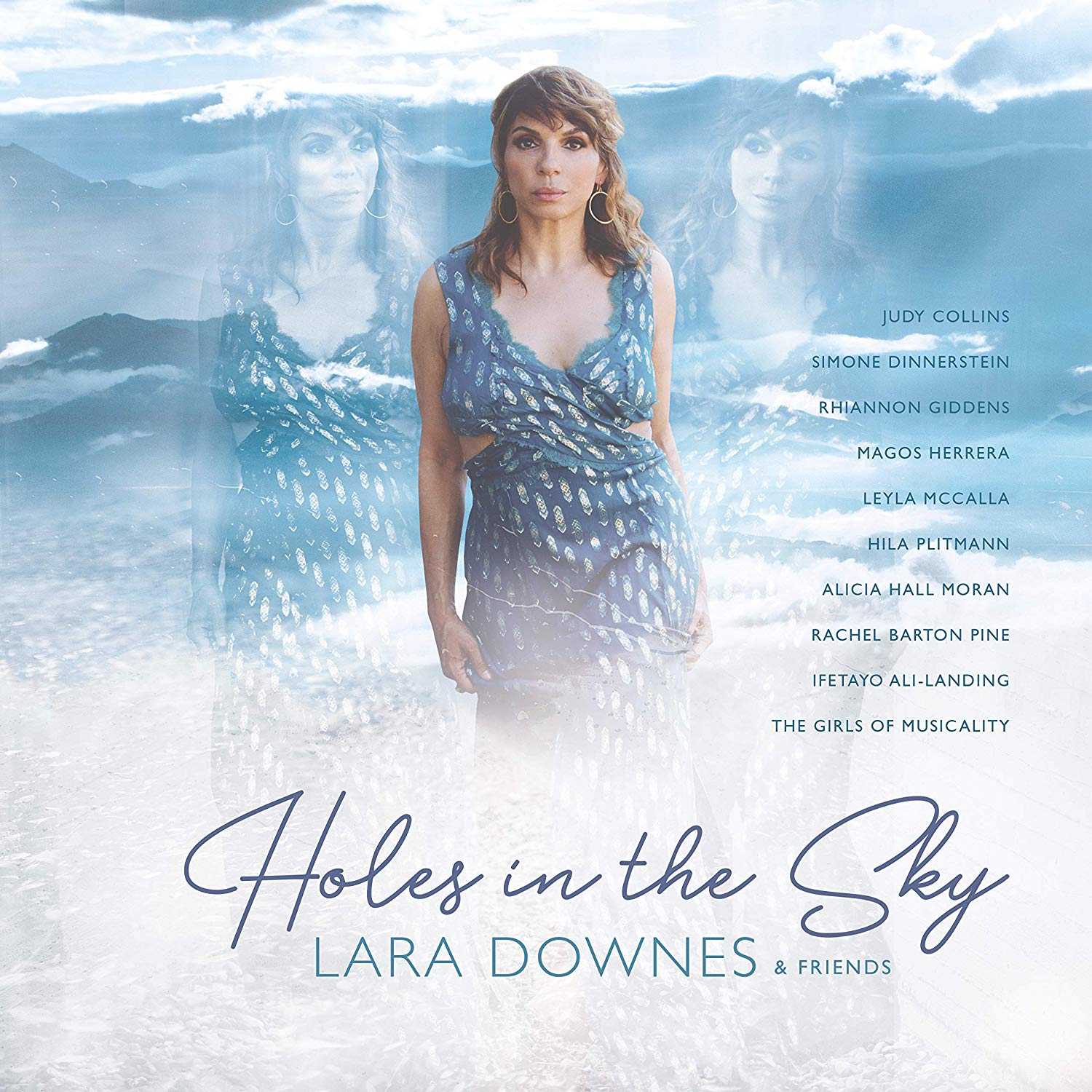
Holes in the Sky, Lara Downes Channels the Collective Artistry of the Feminine


downesholes

Sony/Portrait

Lara Downes has proven herself as a virtuoso pianist in solo, chamber, and with orchestra.  She has demonstrated facility with standard repertoire as well as an intelligent selection of contemporary composers.  In this sort of mid-career place she has begun releasing a more personal kind of album of which this is the third incarnation.  The “series’ to which I refer is the perception of this reviewer, not one defined as such by Ms. Downes but stick with me. Her previous releases have been organized on one level or another on themes just like most album of any stripe.  The difference is a more sociopolitical focus.

One look at the eclectic musical choices here and one sees Downes sharing her spotlight with kindred spirits (composers and performers both) while her themes take on more socially conscious ideas.  The first of these was America Again (2016) which is a beautiful collection of short piano pieces predominantly though not exclusively by black composers.  It is a very personal choice of repertoire reflecting her profound knowledge of the repertoire as well as the neglect of black composers.  The second was Lenny (2018), a tribute to Leonard Bernstein.  It includes a marvelously varied group of guest artists and, much as Lenny did, blurs the line between the “classical” and the “vernacular”.  It was a love song to a cherished artist (this writer included in the cherishing).

She does something similar here in this album whose title is taken, appropriately enough, from Georgia O’Keefe, “I want real things, live people to take hold of, to see, and talk to, music that makes holes in the sky, I want to love as hard as I can.”  In the essay that opens the program booklet Downes speaks briefly of her relationship with women in general and women as composers and as performers.

The album opens with a 1949 piece by Florence Price, a black American composer much of whose whose work has recently been rediscovered and recorded.  Her work was also featured on the America Again album.  This is a mid-century romantic piece for solo piano.

The second track, and the one that hooked this listener big time is this recording of Judy Collins early song, Albatross (1966) which appeared on her album Wildflowers which in turn provided some of the design elements of the album.  The liner notes to the present album also note this connection.

In place of detailed liner notes there is a fascinating conversation between two of the women involved with this album, Lara Downes and Judy Collins.  A lovely black and white portrait is included in the liner notes.  Their discussion centers primarily on the Albatross song but also touches on the nature of political activism in which Downes laments not being active in marches.  Collins tells her (and this writer agrees wholeheartedly) she belongs at the piano.  Indeed her activism, though of a gentler nature, gets ideas out most effectively utilizing her incredible talents as a pianist, historian, and fellow musician.

Rather than go through an analysis of each of these pieces I am simply going to provide a track list.  It appears that this album is designed to be heard and contemplated as a sonic document first and as a research project at a later time (one hopes for more detail at some point because these are interesting pieces).

1. Memory Mist (1949) by Florence Price

2. Albatross (1967) by Judy Collins

3. A Tale of Living Water (2010) by Clarice Assad

4. Dream Variation with Rhiannon Giddens (1959) by Margaret Bonds and Langston     Hughes

5. Ellis Island with Simone Dinnerstein (1981) by Meredith Monk

6. Don’t Explain with Leyla McCalla (1944) by Billie Holiday

7. Willow Weep for Me (1932) by Ann Ronel (arr. by Hyungin Choi)

8. Venus Projection (1990) by Paula Kimper

9. Morning on the Limpopo: Matlou Women (2005) by Paola Prestini

10. Farther from The Heart with Hila Pittman (2016) by Eve Beglarian and Jane Bowles

11. Favorite Color (1965) by Joni Mitchell (arr. by Nora Kroll-Rosenbaum)

12. Noises of Gratitude (2017) by Jennifer Higdon

13. Arroyo, Mi Niña with Mogos Herrera (2018) trad. arr. by Lara Downes

14. Music Pink and Blue (2018) by Elena Ruehr

15. Idyll (1946) by Hazel Scott

16. Blue Piece with Rachel Barton Pine (2010) by Libby Larsen

17. Bloom (2018) by Marika Takeuchi

18. Just for a Thrill with Alicia Hall Moran (1936) by Lil Hardin-Armstrong (arr. by               Hyungin Choi)

19. Agwani (Doves) (2009) by Mary Kouyoumdjian

20. What Lips My Lips Have Kissed (2014) by Georgia Stitt

21. Rainbow (n.d.) by Abbey Lincoln and Melba Liston (arr. by Laura Karpman)

22. All the Pretty Little Horses with Ifetayo Ali-Landing and The Girls of Musicality (Trad. arr. by Lara Downes and Laura Karpman)

In these 22 tracks all the music is by women composers and, most charmingly a selection of women performers who appear as sort of cameos on different tracks.  The music ranges from the mid-twentieth century to the present and embraces a variety of genres (classical, folk, blues, etc.).  The end result is a charming and very intimate document but also one which is somehow gently subversive as it presents the best in musical and performance quality as an acknowledgement of the accomplishments of women in general, (to paraphrase Ms. O’Keefe) making music as hard as they can.


Duo Noire, Guitar Duo Revisioned


unnamed

New Focus FCR 210

Duo Noire consists of Thomas Flippin and Christopher Mallet.  These guitarists are graduates of the Yale School of Music.  For this, their debut album, they have chosen to feature a program of all women composers.  Add to that the fact that these fine emerging artists are African-American (also the first African American graduates of Yale School of Music) and you have a glorious celebration of gender/cultural diversity as well as some mind blowing compositional efforts ably handled by these visionary musicians.

duonoir

The demographics are necessarily prominent especially in these contentious times when racial and gender discrimination are, sadly, huge and difficult issues that remain largely unresolved.  But the real story here is creative music and musicians.  This duo seems to have a unique sound and are clearly schooled in their instruments to the point that they even seem to be expanding the very possibilities of a guitar duo.  Above all this is an intelligent album.

The composers Clarice Assad (1978- ), Mary Kouyoumdjian (1983- ), Courtney Bryan (1982- ), Golfam Khayam (1983- ), Gity Razaz (1986- ), and Gabriella Smith (1991- ) are mostly unfamiliar names to this writer and, likely, to most listeners.  But don’t let that put you off.  This is a highly inventive set of compositions and these performers are doing the job of discovering these compositional talents.

There on six compositions on this thirteen track CD which has over an hour of music on it and it appears to be a landmark release for identifying new composers contributing to the guitar duo genre.  Guitar duos are not an unusual instrumental grouping but this collection suggests fresh new directions that extend the possibilities of this instrumental configuration.

assad

Clarice Assad

Of course the guitar duo is hardly a new idea.  On the more pop side we have had Les Paul and Mary Ford and on the classical side many listeners will be familiar with Sergio and Odair Assad.  And that brings us to Clarice Assad who is the daughter of Sergio Assad.  Her composition,  Hocus Pocus (2016) is in three movements, each ostensibly describing an aspect of magic.  Clearly Assad is familiar with both traditional and extended techniques of composition for guitar.  This is a sort of impressionistic work which calls upon the musicians to utilize a variety of techniques to evoke moods and images of each of the three movements, Abracadabra!, Shamans, and Klutzy Witches.

kouyoumdjian-headshot-web-quality_orig

Mary Kouyoumdjian


Byblos (2017) by Mary Kouyoumdjian embraces her Persian roots as well as the conflicts which have plagued this area of the world.  Here she is evoking an ancient town in Lebanon.  This is the most extended single movement on the disc and demonstrates the composer’s mastery of form while it challenges the instrumentalists to evoke the ancient and mystical sounds of her classical culture.


bryan

Courtney Bryan

The only African-American composer featured on this recording is Courtney Bryan.  Her “Solo Dei Gloria” (2017) which was commissioned by Duo Noire takes the listener on a sonic journey through the composer’s impression of the inner process of prayer.  That’s a mighty abstract concept and she manages accomplish it with just the two guitars (and, of course, two talented musicians).


The three movement, “Night Triptych” (2017) was also written for Duo Noire and has the honor of being the title track for this truly eclectic and innovative album.  This has more the feel of an abstract musical work than the others featured but one does hear the influences of her ethnic origin (Persian/Iranian).  Despite the more extended nature of this composition this work, like all the works presented here, is a sampling of the composer’s work and the astute listener will have many reasons to seek out more of this young composer’s work.

golfam

Golfam Kayam


Gity_228-1-8x10

Gity Razaz


Four Haikus (2017) was also written for Duo Noire.  This Iranian born composer is rapidly becoming established internationally as an accomplished composer.  Like the previous work these four short movements are of a more abstract nature.  Another sampling that will prompt listeners to seek out more of this emerging composer’s work.

gsmith

Gabriella Smith

Last but not least is the second most extended work here by the youngest of the composers represented.  “Loop the Fractal Hold of Rain” (2017) is another Duo Noire commission.  This is probably the most abstract and modern composition on the disc.

Many works here have at least the suggestion of dealing with politics, conflict, and the impact of such things on individuals.

It is admittedly unusual (though clearly not risky) to program compositions by all women composers.  This is a wonderful collection with performances that are incisive and intriguing enough to leave their listeners wanting more.  This is a group to watch/listen to.