Captain Kirk and the Buddha Speak Esperanto: Other Minds 22 Commemmorates Lou Silver Harrison at 100


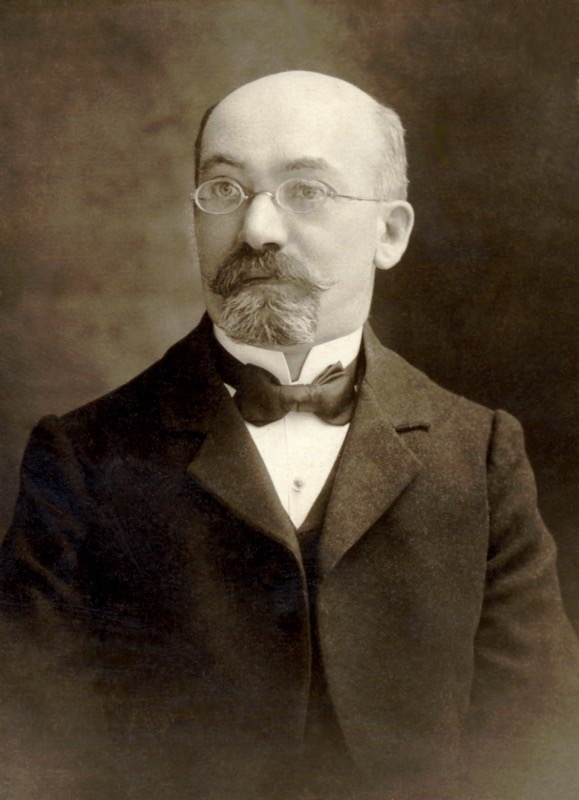
Esperanto is a constructed language brought into being in an 1887 book by a Polish-Jewish doctor by the name of L. L. Zamenhof (1861-1917).  This constructed language was intended in part as an intellectual exercise which might contribute to greater international discourse and perhaps understanding.  He outlined his intentions as follows:

  1. “To render the study of the language so easy as to make its acquisition mere play to the learner.”
  2. “To enable the learner to make direct use of his knowledge with persons of any nationality, whether the language be universally accepted or not; in other words, the language is to be directly a means of international communication.”
  3. “To find some means of overcoming the natural indifference of mankind, and disposing them, in the quickest manner possible, and en masse, to learn and use the proposed language as a living one, and not only in last extremities, and with the key at hand.

Esperanto did gain a great deal of popularity and there are still adherents today (an estimated 2 million people worldwide).  Lou Harrison was one of the users of this language (users are known as “Esperantists”).

L. L. Zamenhof (1859-1917)

In 1966 a horror film, “Incubus”, written and directed by Leslie Stevens (of Outer Limits fame) was released starring the just pre-Star Trek William Shatner.  Once thought lost, this film was restored from a copy found in a French film library.  It was only the second (and apparently last) feature film done entirely in Esperanto (the first being the 1964 French production, “Angoroj” or Agonies).  It was thought that the use of Esperanto would add a mysterious dimension to the production though detractors challenged the actors’ ability to properly pronounce the dialogue.  A link to a Shatner scene is here.  https://www.youtube.com/watch?v=accFmyaOj7o

And if you want to sit through the entire film (definitely a cult film experience) you can find it here: https://www.youtube.com/watch?v=LHUfHj2lTaM

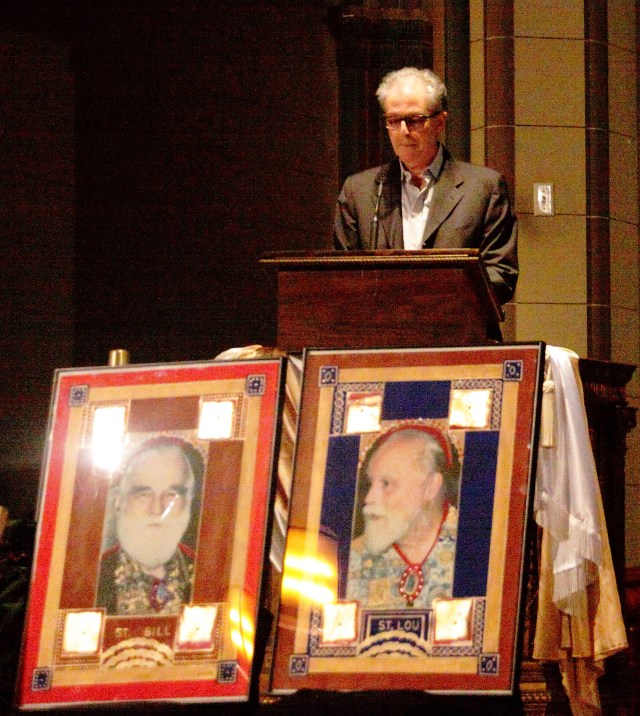
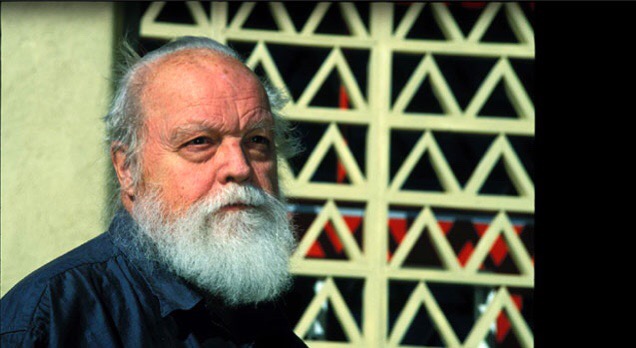
Curiously 1917, the year of Dr. Zamenhof’s death, is also the birth year of Lou Harrison, the principal subject of this essay.  This patriarch of 20th century modernism was a composer, conductor, musicologist, performer, teacher, dancer, calligrapher, and Esperantist.  He used Esperanto to title many of his works and set some Esperanto texts to music.

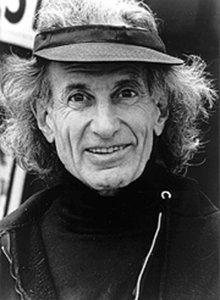
Lou Silver Harrison

And the Buddha Becomes an Esperantist

In his masterful big composition, La Koro Sutro (1972) translated portions of the text of the Buddhist Heart Sutra (into Esperanto) are set for mixed chorus and American Gamelan.  Gamelan is an Indonesian mostly percussion orchestra which Harrison studied extensively following the example of pioneering Canadian ethnomusicologist and composer Colin McPhee (1900-1964).

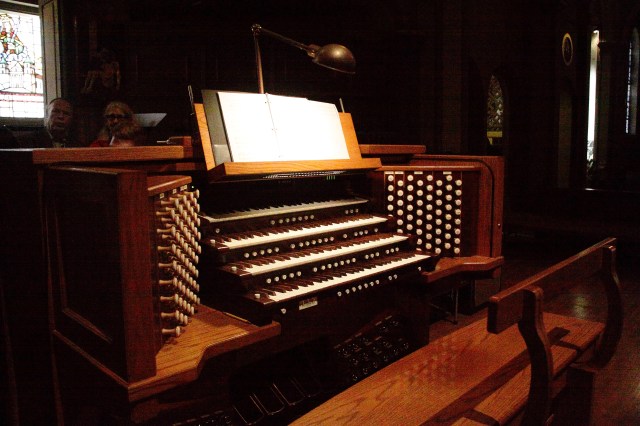
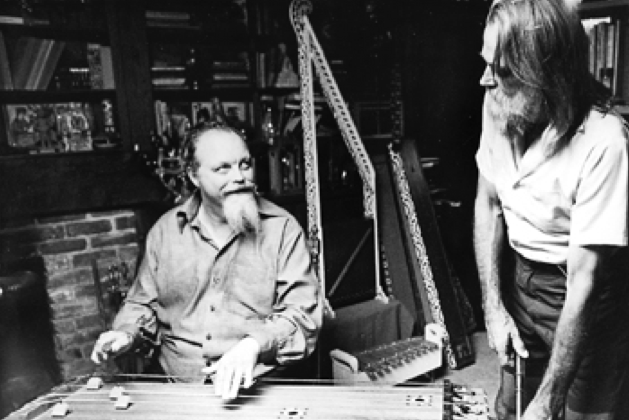
Gamelan was first introduced to western audiences at the 1889 Paris World’s Fair where composers such as Claude Debussy and Erik Satie heard the instruments and later incorporated some of those sounds in their music.  (That Gamelan now resides in Chicago’s Field Museum of Natural History.) Harrison’s life partner Bill Colvig, an instrument maker, constructed a percussion ensemble which they called the American Gamelan to differentiate it from the traditional Indonesian ensemble.  The American Gamelan, consisting of five percussion instruments (augmented with organ, harp, and chorus) was first used in the cantata La Koro Sutro.

Harriso (left) with Bill Colvig

This composition is very much a synthesis of the composer’s musical and philosophical ideas.  Harrison was an avowed pacifist and the Heart Sutra is a key Buddhist scripture which supports introspection and non-violence.  Here he uses his expertise as an esperantist, his knowledge of Indonesian as well as western classical music to create one of his largest and finest works.

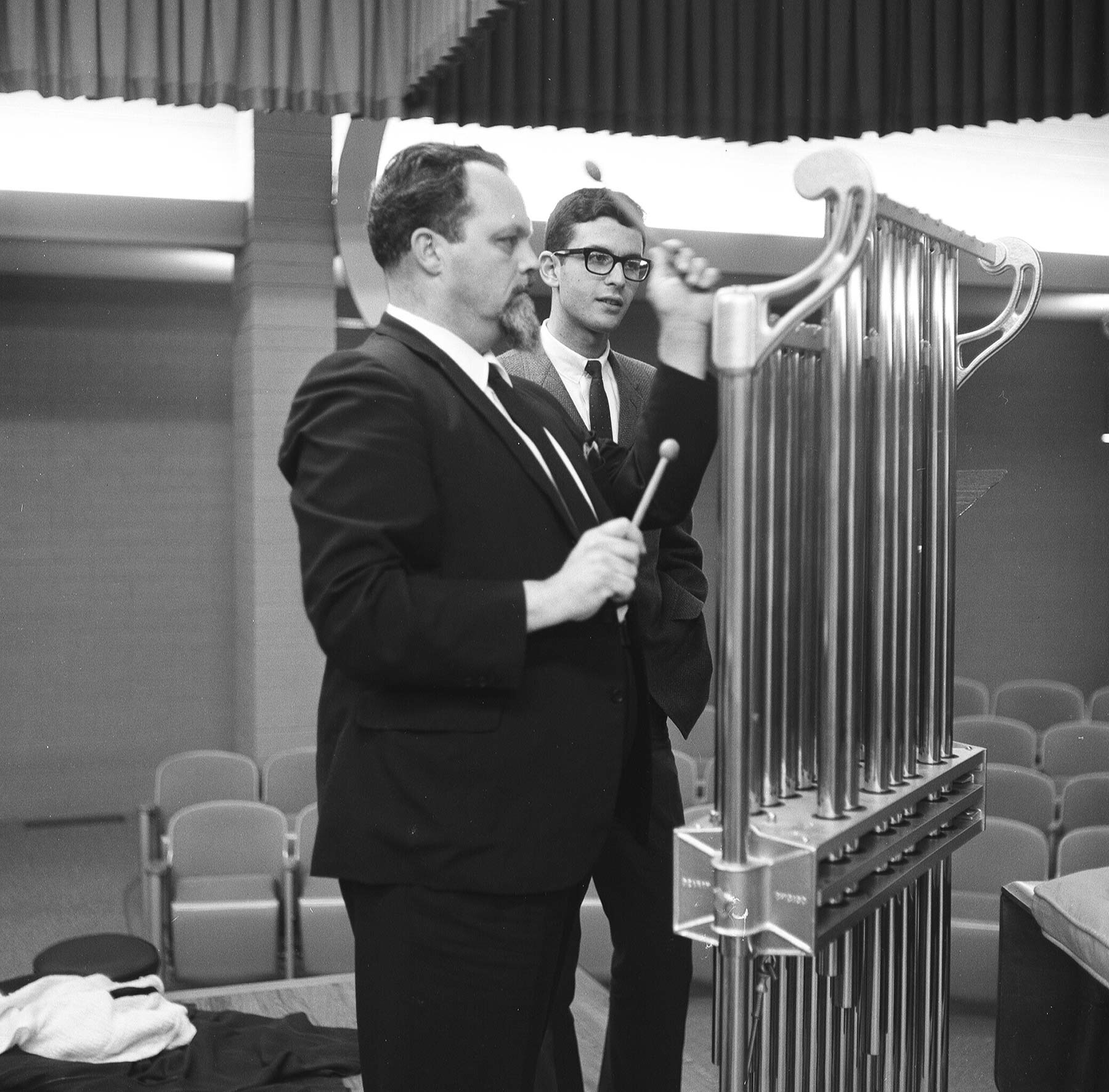
Lou Harrison with Charles Amirkhanian (curator of this concert series) in 1966

It is a testament to Harrison’s influence that this is the fourth performance of La Koro Sutro in the Bay Area.  It was written for an Esperanto conference in Seattle in 1972 with a translation by fellow esperantist Bruce Kennedy and was premiered that same year at Lone Mountain College  in San Francisco (now part of the University of San Francisco).  Additional performances (available on You Tube) were staged in Berkeley in 1973 and again in 2012.  This is truly an American masterpiece as well as a prayer for our times.

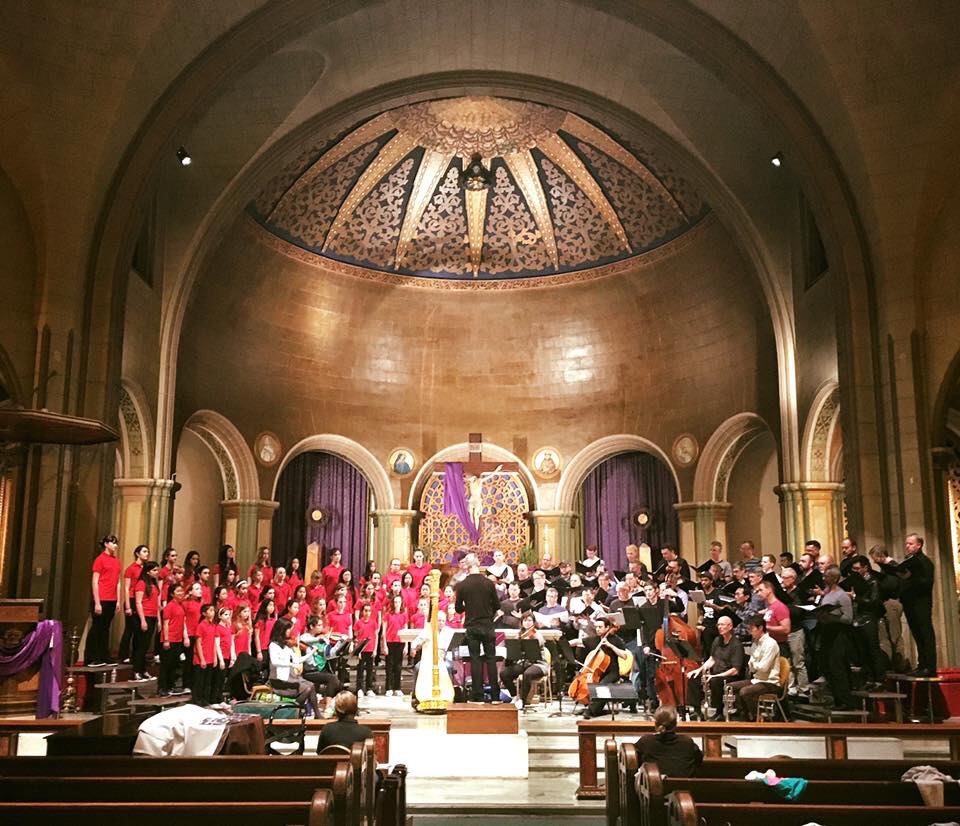
The performances will take place in the Mission San Francisco de Asís Basilica, better known as Mission Dolores.  The mission was founded in 1776 and the still active small adobe church next to the Basilica, built in 1791, is the oldest surviving building in San Francisco.  The much larger Basilica next to the adobe church (and the actual location of said concert) was dedicated in 1918.

Interior of the historic Mission Dolores Basilica

For the record, a Basilica is a reference to both architectural and spiritual aspects of any church so designated.  In the Catholic Church a Basilica is a pilgrimage site, a place to which the faithful travel in a spiritual quest.  I don’t believe it is too much of a stretch to view this event as a musico-spiritual pilgrimage open to all ears and minds, and hearts.  You won’t come out speaking Esperanto but you will never forget what you’ve heard.
The program will include:


Threnody for Oliver Daniel for harp (1990) 

Suite for Cello & Harp (1948)

Meredith Clark, harp

Emil Miland, cello

Pedal Sonata for Organ (1987/1989) Praises for Michael the Archangel (1946-47)

Jerome Lenk, organ

Suite for Violin & American Gamelan (1974, composed with Richard Dee) 

Shalini Vijayan, violin

William Winant Percussion Group

La Koro Sutro (The Heart Sutra, 1972)

For large mixed chorus, organ, harp, and American Gamelan

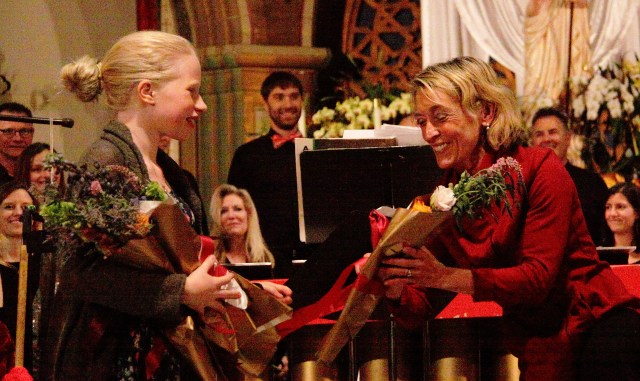
The Mission Dolores Choir, Resound, Jerome Lenk, organ, Meredith Clark, harp, and the William Winant Percussion Group conducted by Nicole Paiement.
Saturday, May 20, 2017- 7:30 p.m. 

Mission Dolores Basilica

3321 16th St.

San Francisco, CA
The very affordable tickets ($12-$20) are available at:

http://om22concerttwo.brownpapertickets.com/

Revido tie. (See you there.)
 

When Politics and the Arts Clash, OM 22


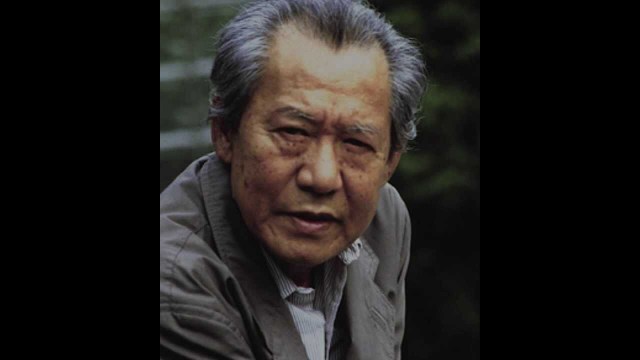
Isang Yun (1917-1995)


The relationship between politics and music is complex and varied.  There are many instances of clashes between these two disciplines from the politics of state and church sponsored music to its repression by those same institutions.

After centuries of Catholic church sponsored music a decision was made in 1903 to repress the performance of anything but Gregorian chant and any instruments except for the ubiquitous organ.  The reasons for this decree have been discussed but the end result was less work for musicians.

More recently the Nazi “degenerate art” concepts and the later proscriptions on “formalist music” in Soviet Russia similarly put artists and musicians out of work.  In fact many were jailed or killed.  Shostakovich and Prokofiev were high profile musicians who endured bans on performances of their music based ostensibly on claims that it brought (or potentially brought) harm to the state’s political visions.

Even more recently the blacklist created by Joseph McCarthy and his acolytes perpetrated a similar assault on actors, directors and writers like Dalton Trumbo (recently dramatized in the excellent film Trumbo with Bryan Cranston leading the fine cast).  This sad chapter of history did not completely end until the 1970s and only recently have efforts succeeded in restoring suppressed screen credits to these films.  Many lives were destroyed or irreparably harmed.  One hopes, of course, that such travesties will not be repeated but the recent efforts to eliminate the NEA suggest that such struggles remain with us.

On February 18th Other Minds will present a centennial celebration of two composers’ births.  Lou Harrison certainly expressed some political themes in some of his music but did not incur state sponsored political wrath.  Unfortunately this was not the case with the other honoree of Other Minds’ 22nd season.

In 1967 Korean composer Isang Yun was kidnapped by South Korean intelligence officers and taken to South Korea to face accusations of collaboration with the communist government of North Korea.  He was held for two years and was subjected to interrogation and torture based on information later acknowledged to have been fabricated.  Even so South Korea declined to allow the ailing composer’s request to visit his hometown in 1994.  He died the following year in his adoptive home in Berlin, Germany.

A petition signed by over 200 artists including composers Karlheinz Stockhausen, Hans Werner Henze, Gyorgy Ligeti and conductors Otto Klemperer and Joseph Keilberth among the many was sent to the South Korean government in protest.  A fine recent article by K. J. Noh, Republic of Terror, Republic of Torture puts the incident in larger political context. It is a lesson sadly relevant even now in our politically turbulent times.

The concert will feature works from various points in his career, both before and after the aforementioned incident.  It is a fine opportunity to hear the work of this too little known 20th century master.  Conductor and pianist Dennis Russell Davies knew and worked with both Harrison and Isang.  It is so fitting that he will participate along with his wife, justly famed new music pianist Maki Namekawa, in this tribute to the the late composer.  This can’t right the wrongs but what better way to honor a composer than by performing his music?

The performance is at 7:30 PM at the historic Mission Dolores Basilica at 3321 16th Street
San Francisco, CA 94114.  Tickets available (only $20) at Brown Paper Tickets.

February 18th, Mark Your Calendars: Other Minds 22, A Must Hear


OMDI1Harrison

Lou Harrison (1917-2003)

The American composer Lou Harrison (1917-2003) and Korean composer Isang Yun (1917-1995) turn 100 this year and Other Minds 22 has a wonderful celebration that is not to be missed.  On February 18th at 7:30 PM in the beautiful, historic Mission Dolores Basilica in San Francisco’s famed Mission District.  This is actually only the first of two concerts which will comprise the Other Minds season 22 which is subtitled, “Pacific Rim Centennials”.  It is curated by Charles Amirkhanian, the reliable arbiter of modern musical tastes in the Bay Area and beyond.  (The second concert, scheduled for May 20, will be an all Lou Harrison concert closer to the composer’s May 14th birthday.)

yun_isang

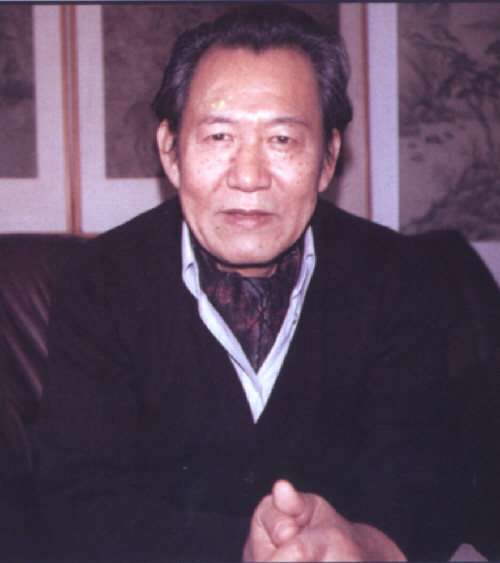
Yun Isang (1917-1995)

Harrison is well known to new music aficionados, especially on the west coast for his compositions as well as his scholarship and teaching.  His extensive catalog contains symphonies, concertos, sonatas and other such traditional classical forms as well as some of the finest of what we now call “world music” featuring instruments from non-western cultures including the Indonesian gamelan.  He is also the man responsible for the preparation and premiere of Charles Ives’ Third Symphony in 1946 which was subsequently awarded a Pulitzer Prize.

Yun is perhaps less of a household name but is known for his many finely crafted compositions in the modern western classical tradition and, later, incorporating instruments and techniques from his native Korea.  He was infamously kidnapped by South Korean intelligence officers in 1967 and taken from his Berlin home to South Korea where he was held and tortured due to allegations (later proven fabricated) of collaboration with North Korea.  Over two hundred composers and other artists signed a petition for his release.  After several years he was returned to his adopted home in Berlin in 1969 where he continued to compose prolifically and teach until his death in 1995.

dennis-russell-davies

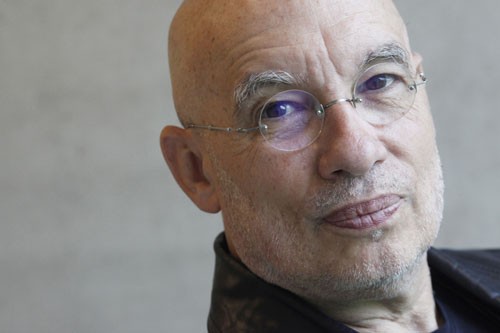
                              Dennis Russell Davies (from the American Composers Orchestra site)

This celebratory and memorial concert will feature world renowned artists including Grammy Award winning conductor and pianist Dennis Russell Davies who knew and collaborated with both Harrison and Isang.  Other artists will include pianist Maki Namekawa, violinist Yumi Hwang-Williams, percussionist William Winant (with his percussion group), and the Other Minds Ensemble.

The program is slated to consist of:

Sonata No. 3 for Piano

(1938, Lou Harrison)

Dennis Russell Davies

Kontraste I for Solo Violin

(1987, Isang Yun)

Yumi Hwang-Williams

Gasa, for Violin & Piano

(1963, Isang Yun)

Yumi Hwang-Williams, Dennis Russell Davies

Grand Duo for Violin and Piano (excerpts)

(1988, Lou Harrison)

IIII. Air
II. Stampede

Yumi Hwang-Williams, Dennis Russell Davies

Intermission

Canticle No. 3

(1941, Lou Harrison)

William Winant Percussion Group
Joanna Martin, ocarina
Brian Baumbusch, guitar
Dan Kennedy, Loren Mach, Ben Paysen, William Winant, Nick Woodbury, percussion
Dennis Russell Davies, conductor

Interludium A

(1982, Isang Yun)

Maki Namekawa, piano

Suite for Violin, Piano & Small Orchestra

(1951, Lou Harrison)

I. Overture
II. Elegy
III. First Gamelan
IIII. Aria
V. Second Gamelan
VI. Chorale

Yumi Hwang-Williams, violin
Maki Namekawa, piano
The Other Minds Ensemble:
Joanna Martin and Janet Woodhans, flute
Kyle Bruckman, oboe
Meredith Clark, harp
Evelyn Davis, celesta
Andrew Jamieson, tack piano
Emil Miland and Crystal Pascucci, cello
Scott Padden, bass
William Winant, percussion
Dennis Russell Davies, conductor

Other Minds is also co-sponsoring (with the Berkeley Art Museum/Pacific Film Archive) a screening of the 2015 German television produced film, Isang Yun: In Between North and South Korea on February 19th (4:15PM) at the Pacific Film Archive in Berkeley.  Dennis Russell Davies and composer Charles Boone will also be present to discuss the film.

If you do know these composers you probably already have your tickets but if you don’t know them you owe it to yourself to check out these performances.


David Toub’s Ataraxia, a unique compositional vision


ataraxia

World Edition 0029

David Toub is a composer whose name is known to perhaps relatively few right now but whose star is clearly rising.  Born on the east coast he studied at Mannes College and at Julliard with Bruce Adolphe and others but his musical education reached maturity when he was studying at the University of Chicago and running the contemporary music programming at the college radio station.  While he had written some twelve tone and freely atonal music it was his encounter with a 1979 WKCR broadcast of Einstein on the Beach that changed his compositional vision.  The musics of Philip Glass, Steve Reich, Terry Riley, and protominimalist Morton Feldman would henceforth infuse his style.

drtoub

David Toub

He is also what I have termed a composer with a day job.  Like Charles Ives (who sold insurance) and Alexander Borodin (who was a chemist, physician and surgeon) he makes his livelihood in the decidedly non-musical world of gynecologic surgery.  Another analog for people like David would have to be William Carlos Williams, a pediatrician whose place in American letters is assured by his poetry and novels.

I personally discovered David’s music via his website where one can find a great deal of his scores and (very helpful) sound files of many of his works.  It is definitely worth your time to browse these scores and sounds if only to get an idea of the scope of the composer’s visions.  By his own admission his music resembles that of Philip Glass, Steve Reich and Morton Feldman but perhaps it is more accurate to say that one may be reminded of these composers since his music is anything but derivative.

Some of his music has been championed by the fabulous Monacan pianist Nicolas Horvath whose You Tube Channel is a feast for new music aficionados.  In fact Horvath’s reading of “for four” (2012) can be heard and seen there.  David also has a You Tube Channel with some live performances that are well worth your time.

Many of David’s scores do fit the more conventional (ca. 20 min) time frame of most concert music but some of his most interesting scores lean toward the extended time frames common to Morton Feldman’s late work (in the liner notes he refers to a recent piano piece which lasts four hours).  These require a bit more concentration and multiple hearings to be able to perceive the compositional unity but, having done that, I can tell you that my time was well spent.

ginsburgh-de-face

Stephane Ginsburgh (from the pianist’s web page)

Stephane Ginsburgh is a Belgian new music pianist whose repertoire traverses some of the work of Morton Feldman as well as Frederic Rzewski and others.  He, along with Alessandra Celetti and Louis Goldstein were the dedicatees of the “quartet for piano”.   Having been already familiar with Toub’s work I was pleased to find that Mr. Ginsburg’s interpretive skills both do justice and provide insight to these scores which on paper (or in a PDF file) are difficult to grasp.  In fact these performances are mesmerizing.

“quartet for piano” (2010) comes in at 46:48 and the second track “for four” (2012) comes in at 22:58 but the timings are ultimately superfluous once the listener allows themselves to be taken by the collaborative adventure of this composer and performer.  I don’t think I can do justice speaking of the structure of this music except to say that, in this listener, it was like listening to the slow ringing changes of Zen Temple bells in a distant dream.  I have had the opportunity to play this CD without distraction a few times and each time found it transporting with the music taking on almost symphonic dimensions despite it’s outward simplicity.

This is a crowd funded effort in which I was a willing participant.  The lovely graphic design is by faberludens utilizing detail from a mysterious photograph by Richard Friedman (long time host of Music from Other Minds) and provides an apt visual metaphor for the music therein.  The conversation between the composer and Udo Moll dominate the liner notes and provide very useful insights to the origins and intents behind the composer’s work.

The sonorous piano is a Bösendorfer 225 and the recording was done by Daniel Léon with mastering by Reinhard Kobialka.  CD production curated by Udo Moll on Maria de Alvear’s World Edition label.  Soon to be available on iTunes and Amazon.

The other supporters named include: Maria de Alvear, Sergio Cervetti, Carson Cooman, Chris Creighton, Kathie Elliott, Paul Epstein, Sue Fischer, Alex Freeman, Richard Friedman, Stephane Ginsburgh, Louie Goldstein, Matthew Greenbaum, Hazem Hallak, Barnabas Helmajer, Christian Hertzog, Robert Kass, Harry Kwan, Steve Layton, Connie Lindenbaum, Richard Malkin, Shadi Mallak, Leah Mayes, Kirk McElhearn, Juhani Nuorvala, Rebecca Pechefsky, Lou Poulain, John Prokop, Simon Rackham, David Reppert, Larry Roche, Larry Rocke, Dave Seidel, Kel Smith, Beth Sussman, Eliyahu Ungar-Sargon, Samuel Vriezen, and Ann Wheeler.  The composer also includes his family, Debbie Bernstein, Arielle Toub and Isaac Toub for their emotional support and (in his typical self-effacing humor) “tolerance” of what he calls his “odd compositional habit”.  As habits go this one appears to be a winner.


Paula Matthusen’s Pieces for People


matthusen

This is the first disc devoted entirely to the music of Paula Matthusen who as of July is a newly minted associate professor at Wesleyan University where she walks at least partly in the footsteps of emeritus professor Alvin Lucier whose course Music 109 she inherited from him.  I had the pleasure of meeting Ms. Matthusen at Other Minds 18 where she was one of the featured composers.  In our all too brief conversation she was affable and unpretentious but certainly passionate about music.

Paula Matthusen

Paula Matthusen performing her work, ‘…and believing in…’ at Other Minds in 2013


She holds a B.M. from the University of Wisconsin and an M.A. and PhD. from New York University.  She announced her recent promotion to associate professor on Facebook as is, I suppose, customary for people of her generation.  It is on Facebook that I contacted her to request a review copy of this CD to which she quickly and graciously agreed.

This CD contains 9 tracks representing 8 works.  They range from solo to small ensemble works, some with electronics as well.  Her musical ideas seem to have much in common with her emeritus colleague Alvin Lucier but her sound world is her own despite some similarities in techniques, especially her attention to sonic spaces and her use of electronics to amplify sonic micro-events which might even include her heartbeat.


sparrows in supermarkets (2011) for recorder looks at the sound of birds in the acoustic space of a supermarket and their melodic repetition.  It is for recorder (Terri Hron) and electronics

limerance (2008) is another solo work, this time for banjo (James Moore) with electronics.  She says she is working with the concept of reciprocation here but that seems rather a subjective construct.  Like the previous piece this is a contemplative and spare work with some spectral sounds as well.

the days are nouns (2013) is for soprano and percussion ensemble and electronics.  Here she is concerned with resonances within the vibrators of the instruments as well as the acoustics of the room.  It is a dreamy, impressionistic setting of a poem by Naomi Shihab Nye whose poem supplies the title but the text is fragments of a Norwegian table prayer.  A very subtle and effective work.

AEG (2011) is represented by two movements (of four?) all of which were written for the Estonian ballet.  It is similarly concerned with resonances and words at times.  Of course it would be interesting to hear those other movements but perhaps another time.

of architecture and accumulation (2012) is the first of two purely acoustic compositions on this disc.  This one is for organ solo (Will Smith) and explores long tones within the acoustic space.  It is a very satisfying work even if one doesn’t go into the underlying complexities.

corpo/Cage (2009) is  the longest and largest work here and is the second purely acoustic piece on this recording.  It has echoes of Stravinsky at and it is an enticing example of Matthusen’s writing for orchestra.  This reviewer certainly looks forward to hearing more of this composer’s works for larger ensembles.  Very effective writing.

in absentia (2008) is the earliest work here.  It is written for violin, piano, glasses and miniature electronics (not quite sure what that means).  Like many of the works on this disc the concern or focus seems to be on small events and sounds.  This is a rather contemplative piece that nicely rounds out the recording.

Matthusen resembles Lucier in some of her techniques and focus on small sounds otherwise missed and she certainly owes a debt to people like Pauline Oliveros.  But in truth she sounds like no one as much as Paula Matthusen.  The composer presents a strong and intelligent voice and one wishes for more from this interesting artist.  Thank you for the opportunity to review this.

Composers of Northern California, Other Minds 19


OM 19, the final bow.  Left to right: Charles Amirkhanian, Charles Celeste Hutchins, Joseph Byrd, Wendy Reid, Myra Melford, Roscoe Mitchell, John Schott, Mark Applebaum, John Bischoff, Don Buchla

OM 19, the final bow. Left to right: Charles Amirkhanian, Charles Celeste Hutchins, Joseph Byrd, Wendy Reid, Myra Melford, Roscoe Mitchell, John Schott, Mark Applebaum, John Bischoff, Don Buchla

This past Friday and Saturday the San Francisco Jazz Center hosted the 19th annual Other Minds Festival concerts.  This is the first year not to feature an international roster.  Instead the focus was on composers from northern California.  (Strictly speaking these composers’ creative years and present residence is northern California.)  It was not a shift in policy but a focus on a less generally well known group of artists who have not enjoyed the exposure of east coast composers but have produced a formidable body of work that deserves at least a fair assessment.  In fact these concerts presented a fascinating roster of composers from essentially three generations.

The first generation represented was one which came of age in the fabled 1960s and included electronic music pioneer Don Buchla, AACM founding member Roscoe Mitchell and proto-minimalist Joseph Byrd.  The second was represented by Wendy Reid, Myra Melford and John Bischoff.  And the youngest generation by Mark Applebaum and Charles Celeste Hutchins.

The program opened on Friday night with a sort of pantomime work by Stanford associate professor of music Mark Applebaum.  The piece, called Aphasia (2010) consists of an electronic score to which the composer, seated in a chair, responds with a variety of carefully choreographed gestures.  The result was both strange and humorous.  The audience was both amused and appreciative.

Applebaum's Metaphysics of Notation (2008) performed by the Other Minds Ensemble.  Left to right: Myra Melford, John Bischoff, Wendy Reid, John Schott, Joseph Byrd, Charles Amirkhanian and Charles Celeste Hutchins

Applebaum’s Metaphysics of Notation (2008) performed by the Other Minds Ensemble. Left to right: Myra Melford, John Bischoff, Wendy Reid, John Schott, Joseph Byrd, Charles Amirkhanian and Charles Celeste Hutchins

Applebaum’s graphic score Metaphysics of Notation (2008) was projected overhead while the ensemble played their interpretations of that score.  The ensemble, dubbed the Other Minds Ensemble, consisted of most of the composers who participated in the festival including Mr. Amirkhanian displaying his facility with  a percussion battery among other things.  (Presumably Roscoe Mitchell, who was reportedly not feeling well, would have joined the ensemble as well.)  Mr. Applebaum was conspicuously absent perhaps so as to not unduly influence the proceedings.

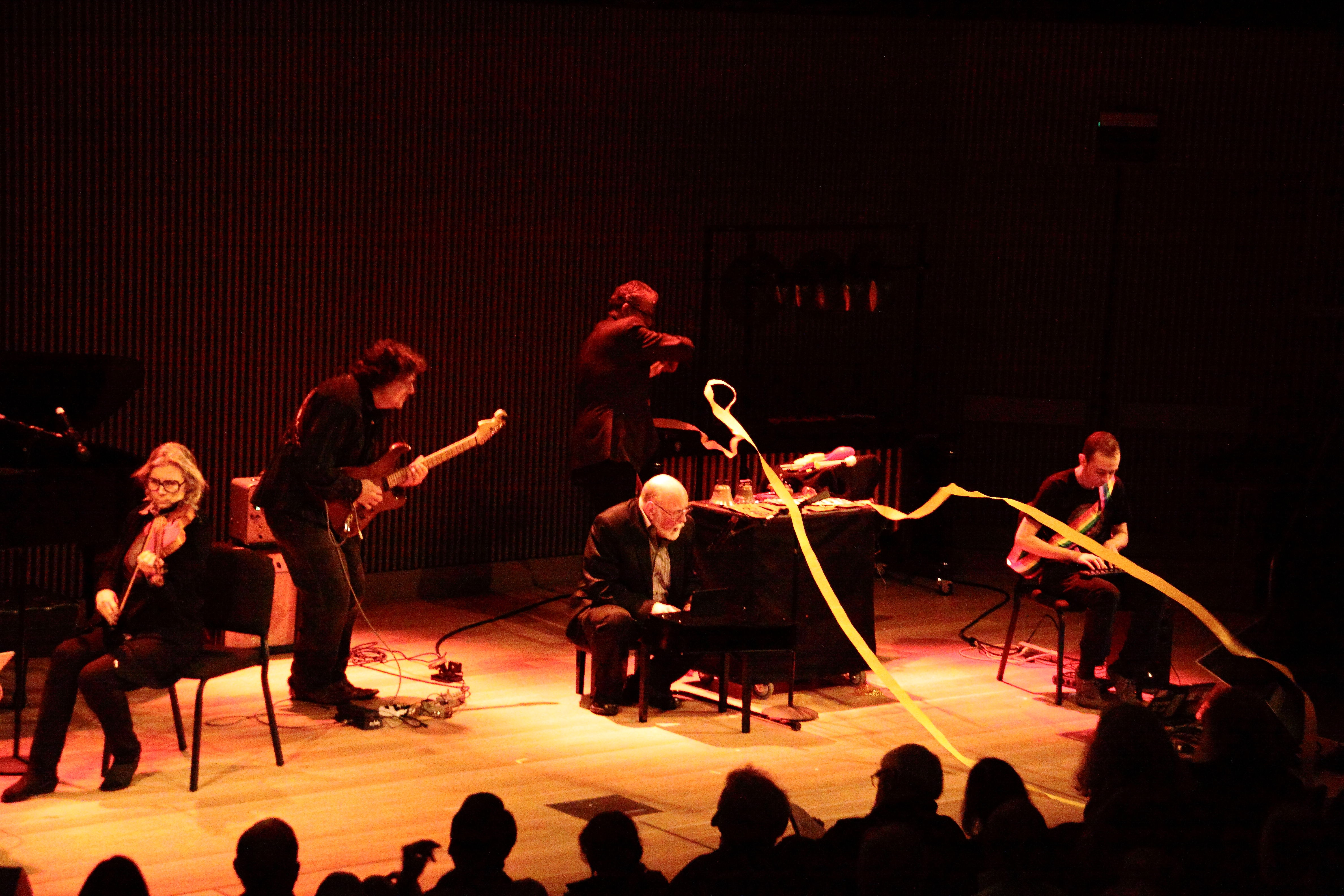
Ribbons strewn across the stage, a part of the Other Minds Ensemble's interpretation of the Metaphysics of Notation

Ribbons strewn across the stage, a part of the Other Minds Ensemble’s interpretation of the Metaphysics of Notation

The piece was full of minimal musical gestures, humorous events like ribbons strewn across the stage and the popping of little party favors that emitted streamers.  The ensemble appeared to have a great deal of fun with this essentially indeterminate score which they are instructed to interpret in their own individual  ways.  It was a rare opportunity to see and hear Mr. Amirkhanian (who is a percussionist by training) as well as an opportunity for the other composer/performers to demonstrate their skills and their apparent affinity for this type of musical performance.  Again the audience was both amused and appreciative.

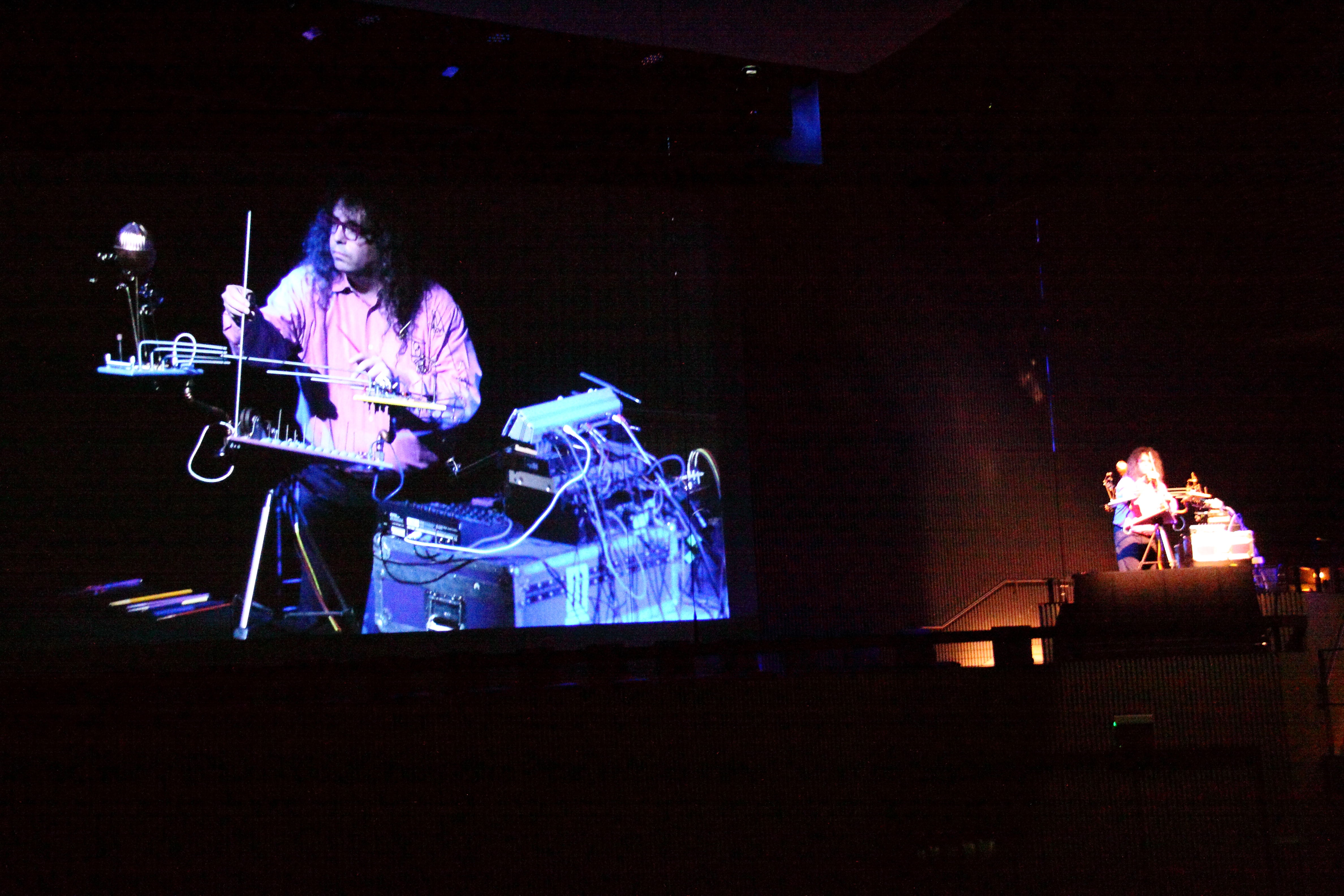
Mark Applebaum performing on his invented instrument.

Mark Applebaum performing on his invented instrument.

Projection of Applebaum performing with view of the composer/performer stage right as well.

Projection of Applebaum performing with view of the composer/performer stage right as well.

The third piece by Applebaum featured the composer with his invented instrument and electronics playing on a balcony stage right with a projection of himself on the big screen.  He produced a wide variety of sounds from his fanciful computer controlled contraption that seemed to please the audience.  This is the kind of unusual genre-breaking events which tend to characterize an Other Minds concert.

The second composer of the night was the elusive Joseph Byrd who is perhaps best known for his cult classic album The American Metaphysical Circus by Joe Byrd and the Field Hippies from 1969.  A previous band, The United States of America released a self-titled album which received critical acclaim in 1968.  Both are apparently out of print but available through Amazon.

Joe Byrd studied music with Barney Childs and worked with La Monte Young, cellist Charlotte Moorman, Yoko Ono and Jackson Mac Low.  Byrd went on to produce a great deal of music by others and also wrote music for films and television but his own compositions have only come to light again recently with the release of a New World CD released in 2013 which presents his work from 1960-63.  Mr. Amirkhanian said that it was this disc that got him interested in inviting Byrd to Other Minds (Byrd also taught at the College of the Redwoods in Eureka, California.).

This is the sort of musical archeology for which Other Minds has become known.  Amirkhanian is known for his ability to find and bring to performance and recordings music which has been unjustly neglected.  Hopefully this appearance will be followed by more releases of Byrd’s other music as well.

Byrd was represented here by performances of Water Music (1963) for percussionist and tape with Alan Zimmerman (who was one of the producers of the New World album) played the spare percussion part which integrated well with the analog electronic tape.

Alan Zimmerman performing Joe Byrd's Water Music.

Alan Zimmerman performing Joe Byrd’s Water Music.

A second piece, Animals (1961) was performed by the brilliant and eclectic bay area pianist Sarah Cahill with Alan Zimmerman and Robert Lopez on percussion and the fiercely talented Del Sol String Quartet (Kate Stenberg and Richard Shinozaki, violins, Charlton Lee, viola and Kathryn Bates Williams, cello).  This was another piece with soft, mostly gentle musical gestures involving a prepared piano and predominantly percussive use of the string players.  It was interesting to contemplate how this long unheard music must have sounded in 1961 but it was clear that it communicated well with the audience on this night.

Animals (1961)

Animals (1961)

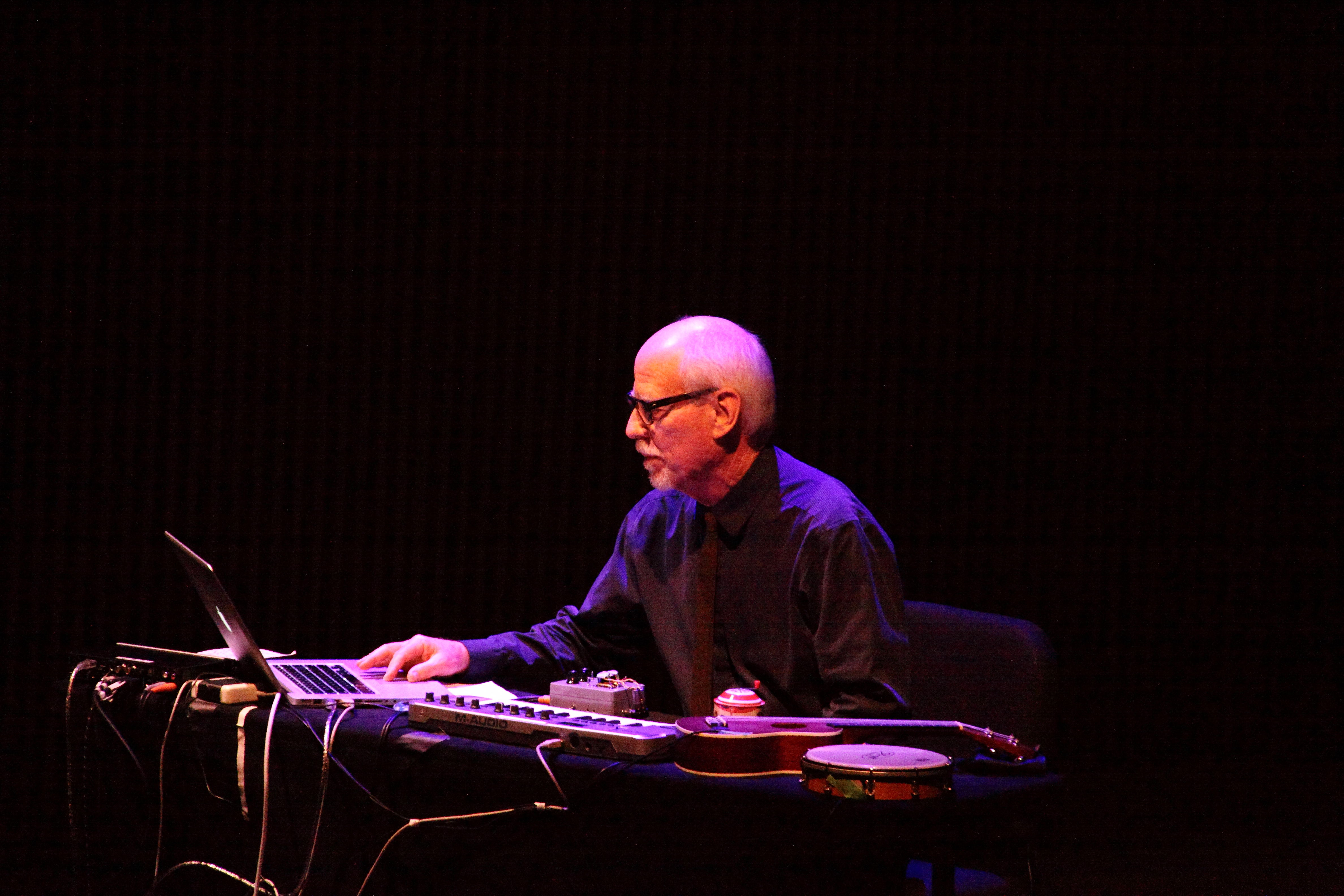
John Bischoff performing his work Audio Combine (2009)

John Bischoff performing his work Audio Combine (2009)

Following intermission we heard two pieces by Mills composer/performer John Bischoff.  The first was Audio Combine (2009) which featured Bischoff on this laptop producing a variety of digitally manipulated sounds.  It was followed by Surface Effect (2011) with creative lighting effects/animations that nicely complemented the laptop controlled analog circuitry.  Bischoff’s music is generally gentle and clear.  It belies the complexity of its genesis in state of the art computer composition and performance for which he is so well known.

John Bischoff performing Surace Effect (2011)

John Bischoff performing Surace Effect (2011)

All this led to the final performance of the evening by Don Buchla whose modular synthesizers were developed in the early 1960s with input from Ramon Sender, Morton Subotnick, Pauline Oliveros and Terry Riley at the legendary San Francisco Tape Music Center (which later became the Mills Center for Contemporary Music).  Buchla also designed the sound system for Ken Kesey’s bus “Furthur” which featured in the Electric Kool-Aid Acid Test.

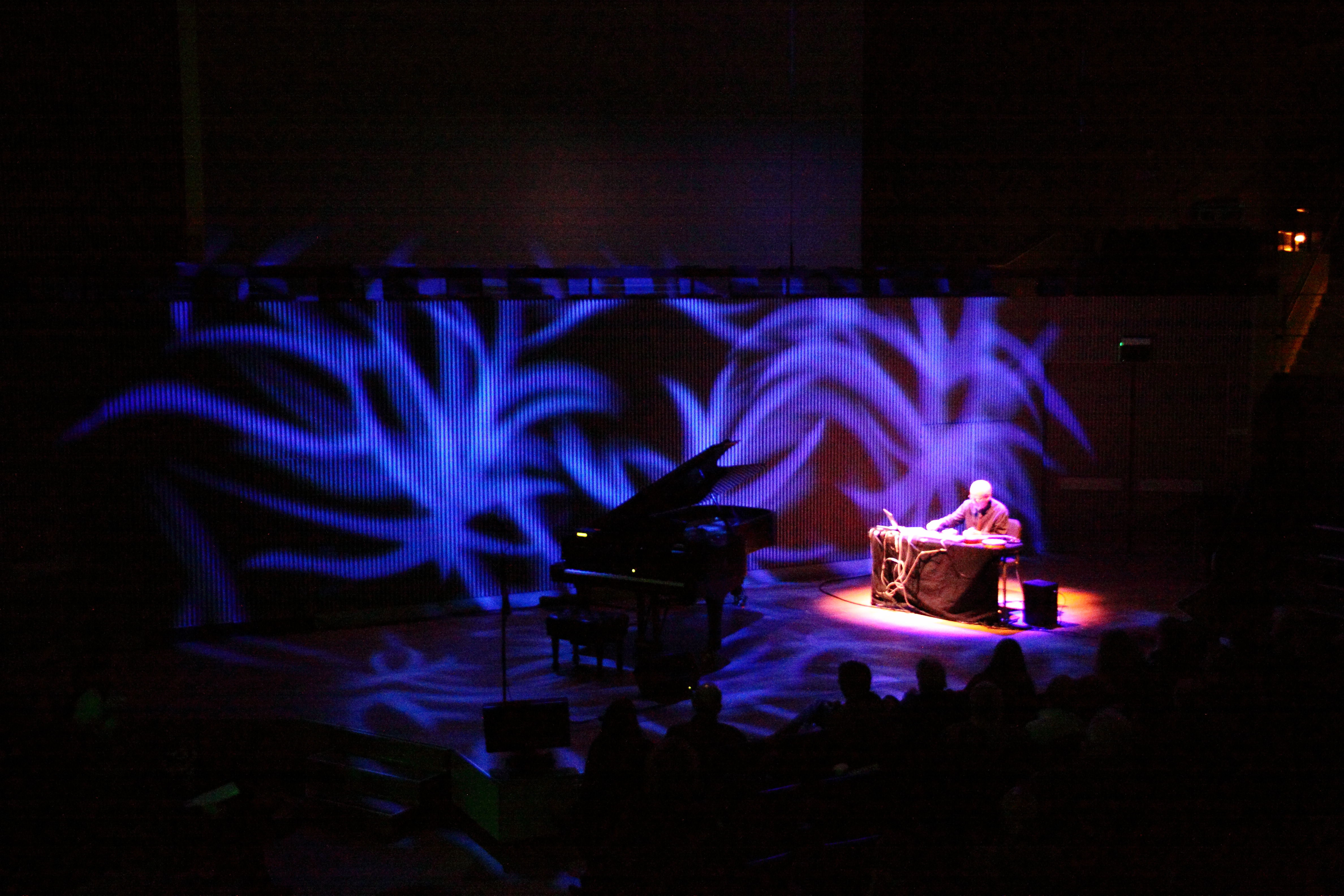
Don Buchla on the Buchla Bos and Nannick Buchla on the piano with film projection performing Drop by Drop (2012) in its American premiere.

Don Buchla on the Buchla Bos and Nannick Buchla on the piano with film projection performing Drop by Drop (2012) in its American premiere.

The conclusion of Friday’s program consisted of the American premiere of a Drop by drop by Don Buchla for Buchla 200e, electronically controlled “piano bar”  (another Buchla invention) and film projection.  The film was made in collaboration with bay area film maker Sylvia Matheus.  The sequence of images began with a dripping faucet and proceeded to a waterfall and then to emerging pictures of birds all the while accompanied by the various sounds from the synthesizer and the piano.

OM190028

Nannick and Donald Buchla receiving warm applause from the audience.

The Saturday night performances began with Charles Celeste Hutchins and his laptop improvising system.  Hutchins, a San Jose native, describes his system as related to Iannis Xenakis’ UPIC system and utilizes a live graphic interface which the computer uses to trigger sound events.

Charles Celeste Hutchins at his laptop performing Cloud Drawings (2006-9)

Charles Celeste Hutchins at his laptop performing Cloud Drawings (2006-9)

The drawings were projected onto the overhead screen.  There seemed to be a somewhat indirect correlation between the drawings and the resultant sounds and much of the tension of this performance derived from wondering what sounds would result when the cursor reached that particular drawing object.  The audience is basically watching the score as it is being written, a rather unique experience and the Other Minds audience clearly appreciated the uniqueness.

The projected graphic score for Cloud Drawings.

The projected graphic score for Cloud Drawings.

The Actual Trio: John Schott, guitar, Dan Seamans, bass, John Hanes, drums.

The Actual Trio: John Schott, guitar, Dan Seamans, bass, John Hanes, drums.

John Schott and his Actual Trio then took the stage to perform his own brand of jazz which seemed to be a combination of free jazz, Larry Coryell and perhaps even Jerry Garcia.  But these descriptions are merely fleeting impressions and are not intended to detract from some really solid and inspired music making.  After the conclusion of the set this listener half expected an encore.

But the program moved on toWendy Reid’s performance as we watched the stage being set up with music stands, some electronic equipment and a parrot in a cage.

Tree Piece #55 "lulu variations" with Tom Dambly, trumpet, Wendy Reid, violin and electronics and Lulu Reid on vocals.

Tree Piece #55 “lulu variations” with Tom Dambly, trumpet, Wendy Reid, violin and electronics and Lulu Reid on vocals.

Reid’s Tree Pieces are an ongoing set of compositions incorporating nature sounds with live performance.  This is not unlike some of Pauline Oliveros’ work in that it involves careful listening by the musicians who react within defined parameters to these sounds.

Lulu the parrot appeared nervous and did a lot of preening but did appear to respond at times.  The musicians responded with spare notes on violin and muted trumpet.  It was a whimsical experience which stood in stark contrast to the more declarative music of the previous trio but at least some of  the audience, apparently prepared for such contrasts, was appreciative.

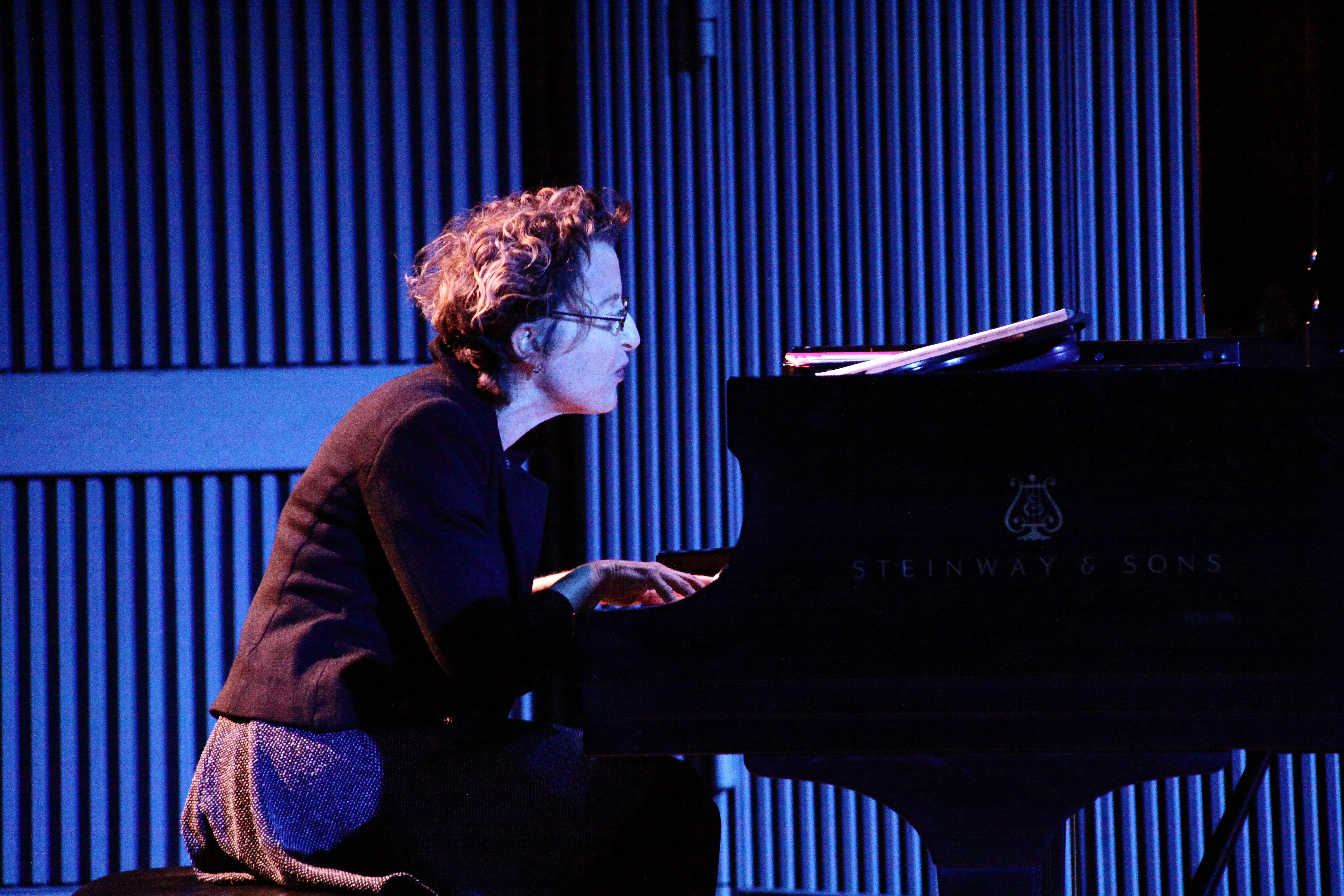
Myra Melford performing selections from Life Carries Me This Way (2013)

Myra Melford performing selections from Life Carries Me This Way (2013)

The diminutive figure of Myra Melford took command of the piano and the hearts of the audience in her rendition of several pieces from her recent CD.  She played sometimes forcefully with thunderous forearm cluster chords and sometimes with extreme delicacy but always with rapt attention to her music.  Her set received a spontaneous standing ovation from a clearly roused audience.  She is a powerful but unpretentious musician who clearly communicates well with her audience.

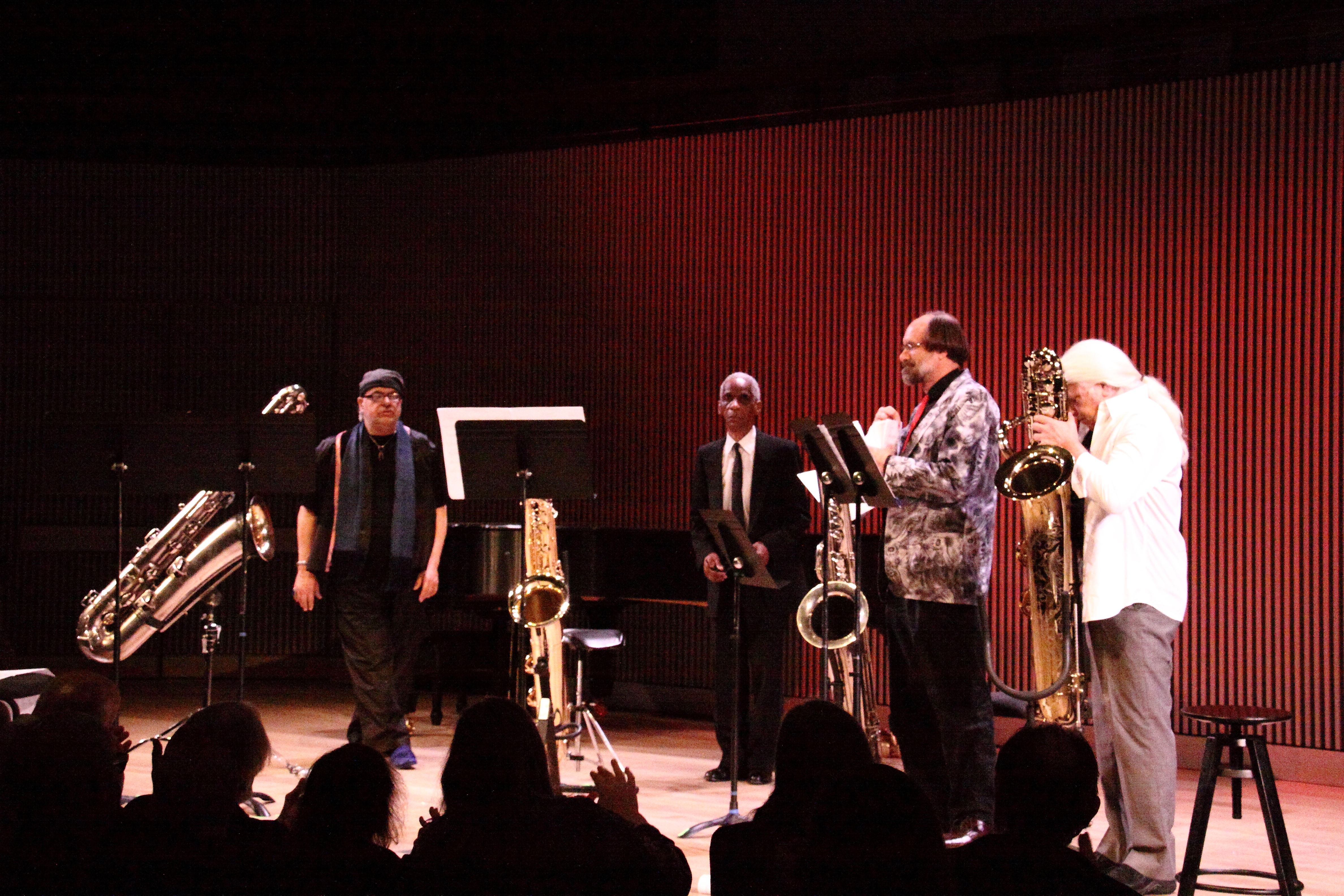
Roscoe Mitchell, Vinny Golia, Scott Robinson and J.D. Parran  following their performance of Noonah (2013)

Roscoe Mitchell, Vinny Golia, Scott Robinson and J.D. Parran following their performance of Noonah (2013)

The finale of OM 19 was the world premiere of an Other Minds commission, the version for four bass saxophones of Roscoe Mitchell’s Noonah (pronounced no nay ah).  It is the latest incarnation of a piece of music that Mitchell describes as having taken on a life of its own.  It exists now in several different versions from chamber groups to orchestra.

The piece is vintage Roscoe Mitchell, a combination of free jazz and sometimes inscrutable compositional techniques which clearly enthralled the very focused performers.  What the piece seemed to lack in immediate emotional impact it made up in mysterious invention which was brought out grandly by the very experienced and committed players.

Mitchell, who was not able to attend on the previous night, appeared rather tired but played with a focus and enthusiasm that matched his fellow musicians.  Like all of Mitchell’s music there is a depth and complexity that is not always immediately evident but does come with repeated listenings and performances.

Thus concluded another very successful edition of Other Minds.  Now we look forward to the gala 20th anniversary coming up in March, 2015.


Enhanced by Zemanta

Coming Up, Other Minds 19 at the SF Jazz Center


Official Other Minds logo

Official Other Minds logo (Photo credit: Wikipedia)

On February 28 and March 1 the SF Jazz Center will host Other Minds for the first time.  OM 19 is the latest incarnation of this annual festival which presents an amazing range of new music.

The Other Minds Festival, brainchild of filmmaker/producer Jim Newman and musician, composer and broadcaster Charles Amirkhanian, was first heard in 1993 and, except for the years 1994, 1998 and  2007, has been an annual event in San Francisco  gathering mostly new but  always innovative composers to share their inspirations and innovations with each other and with bay area audiences.  Being curious about those apparent gaps in this festival I sent a query to the Other Minds office and received a prompt reply from none other than Charles Amirkhanian.  He stated as follows:

Executive Director Charles Amirkhanian in his ...

Executive Director Charles Amirkhanian in his office with ASCAP award in background (Photo credit: Wikipedia)

“Hi Allan,
Here’s the story:
After our first festival in November 1993, we needed time to raise more funds to produce OM 2 and get back on the Yerba Buena Center’s schedule. So we postponed until March 1995, the next available spot in the Djerassi schedule. Our timing for the festival is determined by when we have access to empty rooms at DRAP, so we need to be there either in Feb/March or November.
In 1997, once again, we needed time to raise more funds and simply postponed to the next available Djerassi time. Same for OM 13.
In each case, the delay was about eight months (for a November event) or four months (for a March event), giving us a festival in succeeding concert seasons, but not “annual” events. (A concert season is Fall ’07 through Spring ’08, for example.)
Thus the mysterious gaps.
Charles”

This internationally known festival is not just a series of concerts.  The diverse selection of composers gathers first for an artistic residency at the Djerassi Resident Artist Program (DRAP in Mr. Amirkhanian’s note), a pastoral setting nestled between the Pacific coastline and the hills west of Palo Alto, where the invited composers live, work and share ideas for a week prior to the public concerts. The Djerassi Foundation for the Arts was founded by biochemist Carl Djerassi whose daughter, an artist, committed suicide in 1978.  The area is a sculpture park and the facility operates all year round with residencies for artists of all media.  Charles Amirkhanian is one of the former directors of this venerable artist colony and is now the executive and artistic director of Other Minds. The selection process for OM artists is based on the incredible range of interests of the Other Minds Operating Board and in consultation with their advisory board which are very open to suggestions from the general public.  Just e-mail them.  They actually read all their e-mails and respond. This along with New Music America, the ONCE festival, the Telluride Festival (also one of Amirkhanian’s efforts) are among the important music festivals which have yet to receive adequate treatment and exposition of their histories. This year’s OM 19 (which also looks forward with eager anticipation to a very promising gala OM 20) includes Mark Applebaum, John Bischoff, Donald Buchla, Joseph Byrd, Charles Celeste Hutchins, Myra Melford, Roscoe Mitchell, Wendy Reid and John Schott.  For the first time in the history of the festival all the composers will be from northern California.  The dates for the festival, which moves this year to the new SF Jazz Center, are Friday February 28 and Saturday March 1. One might think that limiting the selection of composers would be limiting in the variety of artistic efforts to be had but one would be quite wrong.  In fact it would not be difficult to argue that music by musicians from northern California have been unjustly neglected in favor of the more dominant musical cultures of New York City, Chicago and Los Angeles.  A quick look at the roster for OM 19 reveals a great deal of variety:

Mark Applebaum at TEDx Stanford

Mark Applebaum at TEDx Stanford (Photo credit: Tamer Shabani Photography)

The Chicago born Mark Applebaum is currently associate professor of composition and theory at Stanford University.  He counts Brian Ferneyhough, Joji Yuasa, Rand Steiger, Roger Reynolds and Philip Rhodes among his teachers.  He also performs as a jazz pianist. He appears to be the first composer at these concerts to have given a TED talk.  In this talk he speaks of being “bored with music”, at least with traditional music and how he used that boredom to break through to another level of creativity creating new instruments and elaborate scores.  He is an engaging speaker and his presentation will no doubt be fascinating.

John Bischoff (1949- )

John Bischoff (1949- )

John Bischoff studied at the California Institute of the Arts and Mills College.  His teachers include Robert Moran, James Tenney and Robert Ashley.  He is currently visiting professor and composer at Mills College. He is one of the pioneers of live computer performance and he is a frequent performer at the Garden of Memory concerts held annually on the summer solstice at Oakland’s beautiful Chapel of the Chimes. Mills College with its Center for Contemporary Music can be said to be the primary life blood of northern California composers.  Bischoff is part of a long line of composers who  have guided musical pedagogy in the Bay Area and have included Chris Brown, Luciano Berio, Darius Milhaud, Lou Harrison, Steve Reich, Terry Riley, Pauline Oliveros, Morton Subotnick, Ramon Sender, John Cage, Chris Brown, Maryann Amacher, Maggie Payne, Larry Polansky, Robert Ashley, and many others. Bischoff has released 16 albums and numerous publications.  He founded the League of Automatic Composers, the first computer network band and continues to be a driving force in the computer music scene. Don_Buchla_and_200e

Donald Buchla is one of the elder statesmen of new music in California.  His collaboration with Ramon Sender and Morton Subotnick produced one of the first modular synthesizers in 1963.  He continues to develop synthesizers with his Buchla and Associates corporation (founded in Berkeley in 1962) . He studied physics, physiology and music.  His importance in the field of electronic music and music synthesis cannot be underestimated.  His electronics have driven many classical, rock and jazz music.  He and his corporation continue to make new electronic instruments such as the marimba lumina and the piano bar and has made available again some of the classic analog electronics which first made his name familiar to musicians worldwide. I was able to find very little about his musical compositions but it is worth noting that his electronics will power the performances of several of the artists in this concert series in addition to his own.

Joe Byrd in 1968

Joe Byrd in 1968

Kentucky born Joseph Byrd is an electronic musician, composer and producer.  His album, “The American Metaphysical Circus” (1969) is legendary and considered a cult album which has been reissued on CD and can also be heard on You Tube.  His band, Joe Byrd and the Field Hippies never performed live but this work of 60s psychedelia has established itself as a landmark recording and a cult classic.  He also did an album of synthesized Christmas Carols in 1975. Byrd has also been a producer with estimable credits such as producer and arranger of Ry Cooder’s amazing ‘Jazz’ album from 1978.

I can’t imagine how his latest work sounds but I am looking forward to it.

Charles Céleste Hutchins at SOUNDkitchen

Charles Céleste Hutchins at SOUNDkitchen (Photo credit: hellocatfood)

Charles Celeste Hutchins is, as far as I can tell, the first instance in which an Other Minds operating board member has been featured as a composer in this series.  The advisory board consists largely of composers who have already been featured on OM concerts.  Until this booking I was not aware of this man’s work.

Hutchins worked in the dot com business for a time and is now working on his musical interests.  His work involves the digital music program called Supercollider which he uses to manipulate sounds.  Discogs lists an MP3 compilation of some of his work in this area.

Melford in Helsinki, 1993

Melford in Helsinki, 1993

Myra Melford is an internationally known jazz pianist and composer with some 17 albums and some 20 years of playing.  Melford is originally from Illinois.

She has played with AACM musicians like Leroy Jenkins, Joseph Jarman and other musicians including Marty Ehrlich, Henry Threadgill, Mark Dresser, OM alumni Han Benink and Tyshawn Sorey.  Currently she teaches at the University of California Berkeley.

saxophonist Roscoe Mitchell at the Pomigliano ...

saxophonist Roscoe Mitchell at the Pomigliano Jazz Festival (Photo credit: Wikipedia)

Roscoe Mitchell is one of the founding members of the venerable AACM (American Association of Creative Musicians) which redefined both jazz and contemporary classical music from its founding in 1965 to the present.  Other notable members include Anthony Braxton, Lester Bowie, Malachi Favors, George Lewis and Lester Bowie among others.  Mitchell is currently professor of music at Mills College where he holds the Darius Milhaud chair.  He has collaborated with Frederic Rzewski, George Lewis, Anthony Braxton, Joseph Jarman, Malachi Favors, Muhal Richard Abrams, Albert Ayler, Henry Threadgill, Thomas Buckner and many others.

Mitchell is one of the acknowledged living masters of American music and he plays and teaches widely.  In 2012 her performed at the “All Tomorrow’s Parties” festival in Minehead, England.  Any performance by this musician is an event.

Wendy Reid is a new name for me.  She is a composer who works with nature sounds.  I did buy her CD entitled “Tree Music” which features 5 of her Tree Pieces with various combinations of violin, percussion, piano, mandolin, oboe and Don Buchla on “thunder” interacting with nature sounds.  For her OM performance she will be sharing the stage with a parrot.  Yes, it does sound like a Monty Python sketch, but this promises to be interesting if not revelatory.  Her work is clearly concerned with the sounds of nature and is at least distantly related to the work of Pauline Oliveros whose album ‘Troglodyte’s Delight’ involves musicians responding to the sounds of water in a limestone cave.

John Schott is another name with which I am not familiar.  But lack of familiarity spells adventure in this series of concerts.  A quick internet search reveals that he is a Berkeley based composer, guitar player and banjo player.  His web site is a blog which reveals his interest in a wide range of musical styles and literary interests.  He lists 8 CDs which feature his work.  He also lists his “compositions in the classical grain”.  It’s anyone’s guess as to what he will present at Other Minds but if the preceding artists are any indication it will be unique and interesting.

All in all this promises to be a very exciting event with the ‘revelatory’ music which Other Minds uses as a tag line in their publicity materials. I won’t miss it and neither should you.

Enhanced by Zemanta

The Petals of the Secret Rose


Even before I saw the impressive response to my last post I had decided to do an addendum for the main purpose of showing some pictures that didn’t make the cut in the original article.  No, really, I did.

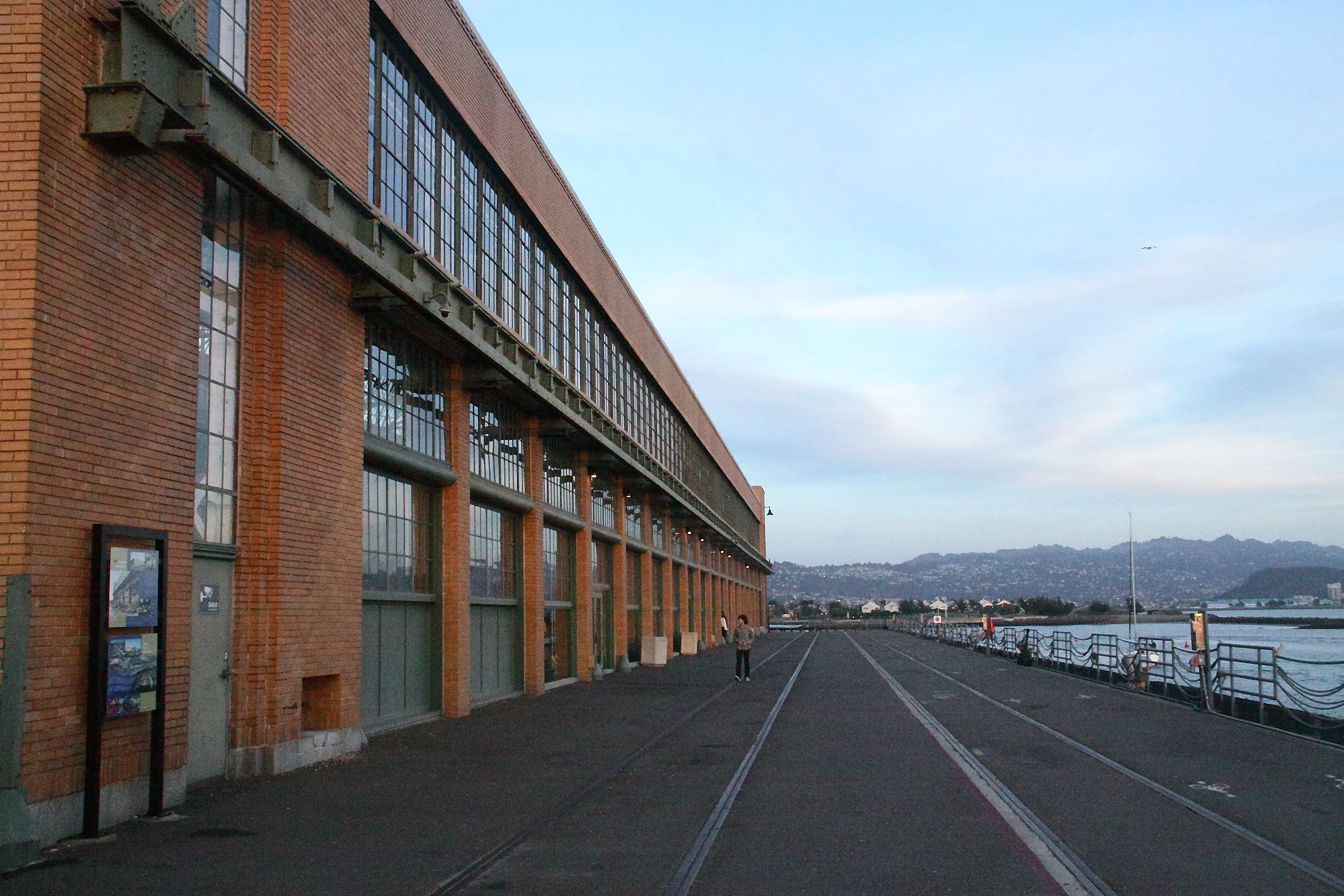
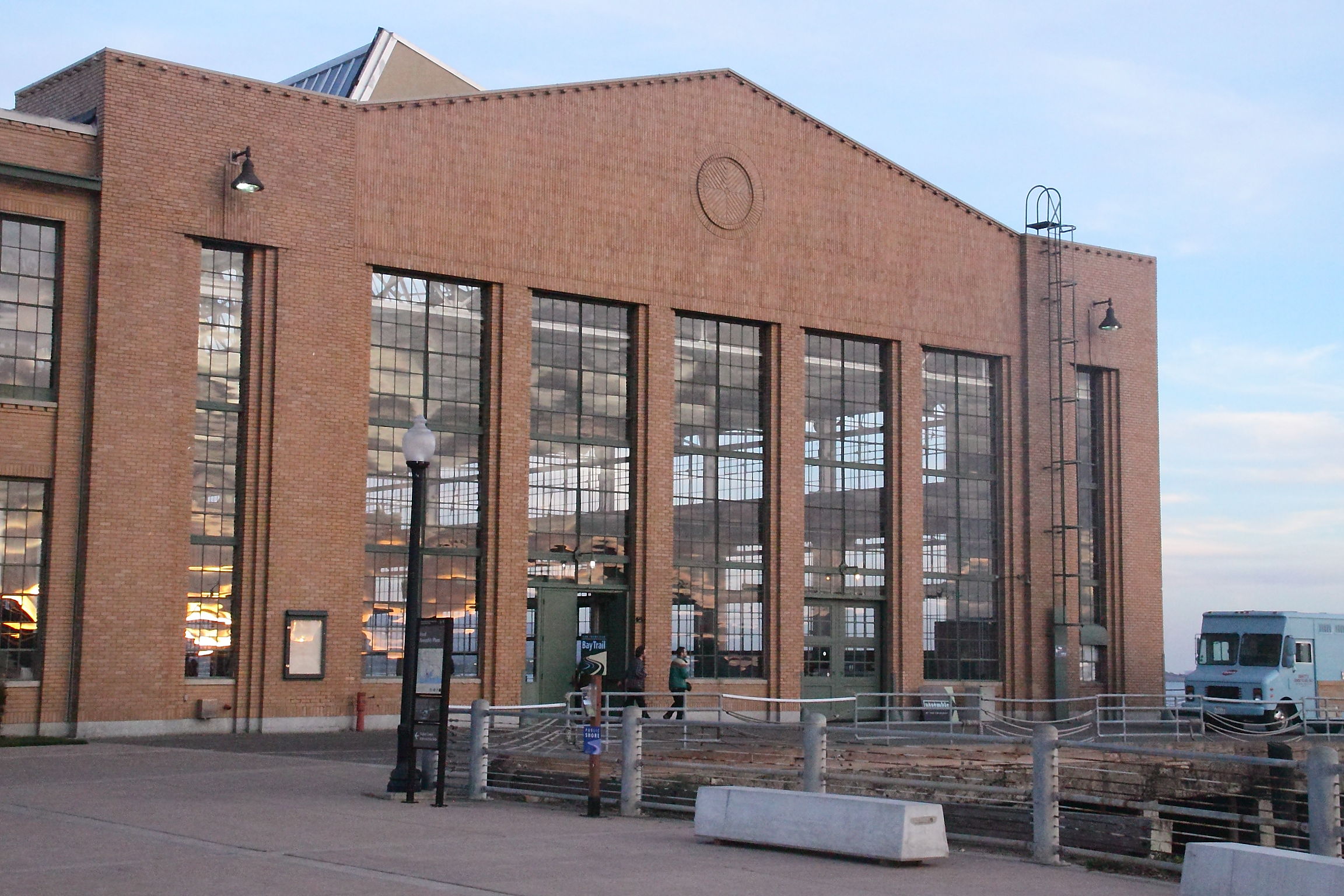
I arrived at the Craneway Pavilion in Richmond, CA at about 4:30PM.  The performance wasn’t til 7PM so that gave me some time to survey the scene.

OMChathfinal0003OMChathfinal0002

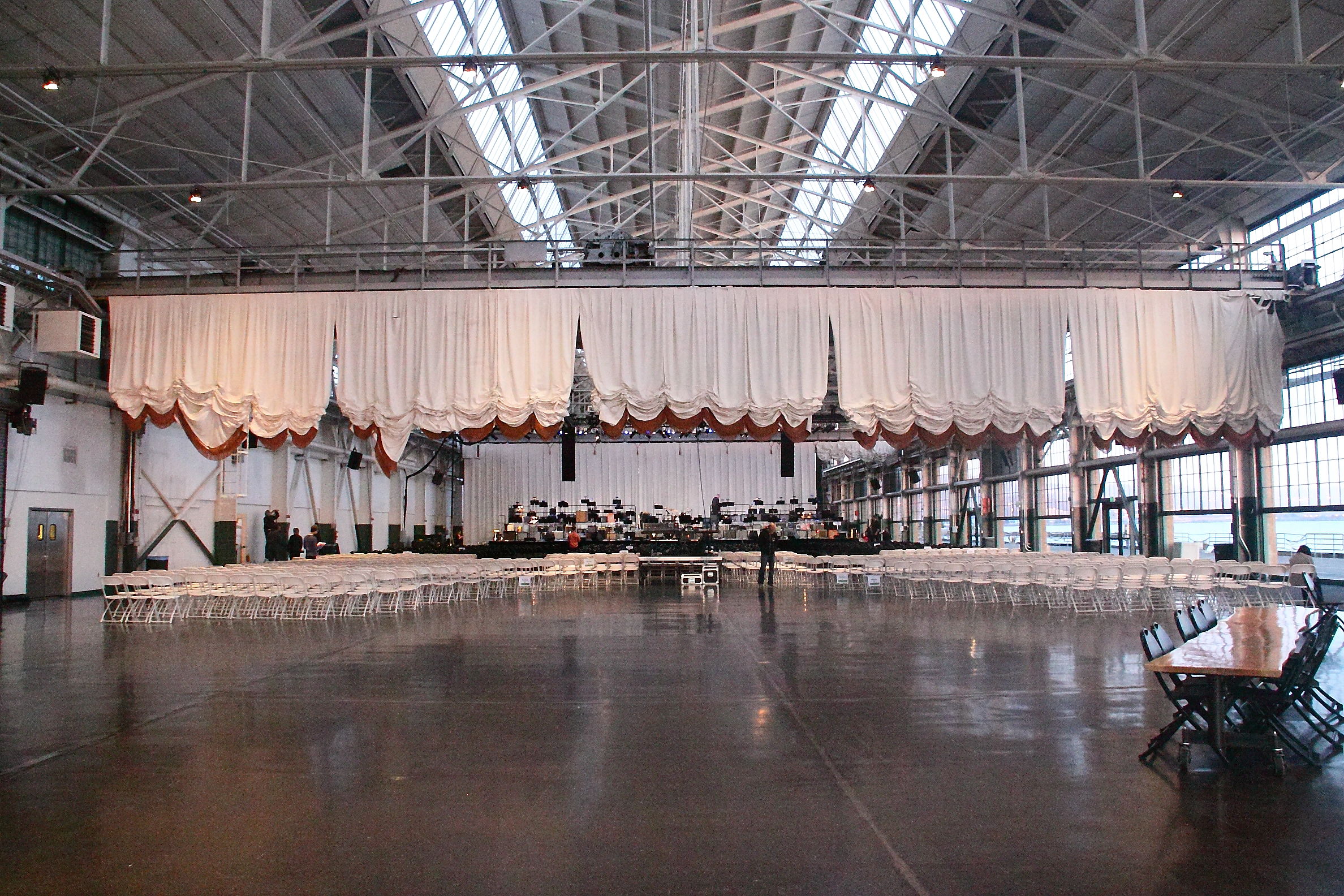
It was open so I went inside.

Looking toward the seating and the stage in the performance space at Craneway Pavilion.

Looking toward the seating and the stage in the performance space at Craneway Pavilion.

OMChathfinal0018There was an opportunity to check backstage.

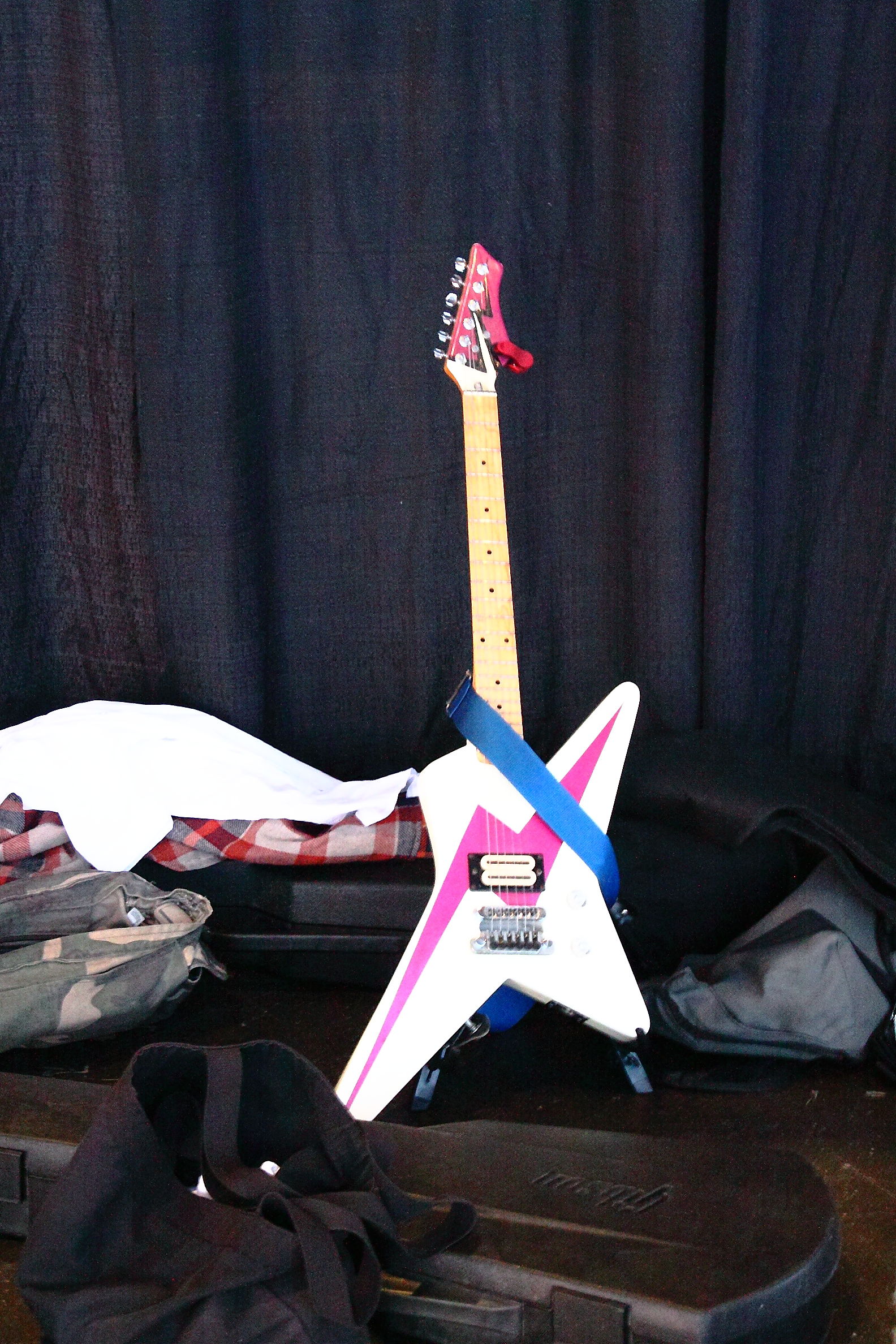
Lo and behold, the petals of the Secret Rose:

OMChathfinal0014

OMChathfinal0015

OMChathfinal0016

OMChathfinal0017

OMChathfinal0019

OMChathfinal0021

OMChathfinal0022

OMChathfinal0023

OMChathfinal0025

OMChathfinal0026

OMChathfinal0027

OMChathfinal0028

OMChathfinal0029

OMChathfinal0030

OMChathfinal0031

OMChathfinal0032

OMChathfinal0033

OMChathfinal0034

OMChathfinal0035

OMChathfinal0037

OMChathfinal0038

OMChathfinal0040

OMChathfinal0045

OMChathfinal0049

OMChathfinal0044

OMChathfinal0074

As the sun set it was time to find my seat.

OMChathfinal0077

OMChathfinal0071

Henry Brant?…never heard of him: A Centennial Sketch


Aerial photo: Santa Barbara, California

Aerial photo: Santa Barbara, California (Photo credit: Wikipedia)

I was sitting in the Sojourner Cafe, my favorite little restaurant/hangout just off downtown in Santa Barbara, California.  I was having one of many conversations with the great and interesting staff and patrons when I mentioned the name of Henry Brant, saying he lived in Santa Barbara.  “I never heard of him” came the response from Chris, a musician when not serving at the restaurant.  No one else showed any signs of recognition either.  I proceeded to tell him about the Pulitzer Prize winning composer.  It was then that flicker of recognition came across his face.  He told me that the frail figure using his walker was a familiar sight in the neighborhood, his eyes widened with interest as I told him about this major American musician.

Henry Brant

Henry Brant (1913-2008) was born in Montreal, Quebec, Canada to American parents.  His father was a professional musician. Henry played violin, flute, tin whistle, piano, organ, and percussion at a professional level and was fluent with the playing techniques for all of the standard orchestral instruments.   Henry went on to study at McGill University and later in New York at a school later named Julliard.  He was the youngest composer mentioned in Henry Cowell’s anthology, “American Composers on American Music” to which Brant contributed an article on what he called “oblique harmony”.

Brant, who had an early connection and affinity with the American experimental music tradition, would go on to develop “spatial music” in which musicians were scattered around the performance space as an essential part of the composition and performance.  He began writing music in the sort of post modern style of the time as in his Symphony No. 1 (1945 rev. 1950) and pithy little jazz inflected pieces like Whoopee In D (1938, Rev. 1984), Jazz Toccata On A Bach Theme (Toccata On “Wachet Auf”) (1940) and Double-Crank Hand Organ Music (1933, Rev. 1984).

He would write for unusual combinations of instruments such as Angels And Devils (1931), a concerto for flute and orchestra of flutes, Ghosts and Gargoyles (2002) also for flute and flute orchestra or Orbits (1979) for 80 trombones, organ and sopranino voice.  His first spatial composition, Rural Antiphonies (1953) predates Stockhausen’s famed experimental opus, Gruppen (1955-7).  In all he composed over 100 “spatial” works along with chamber music such as Homeless People (1997) for piano and string quartet.  His composition Ice Field (2001) commissioned by Other Minds and performed in Michael Tilson Thomas‘ “American Mavericks” series won him the 2002 Pulitzer Prize for music.

Brant had worked as an orchestrator and conductor in Hollywood assisting with scores by Alex North and with the likes of Virgil Thomson, Aaron Copland, George Antheil, Douglas Moore and Gordon Parks.  His extensive knowledge of orchestration led him to write his textbook (published posthumously) ‘Textures and Timbres’.  And one of his last musical works was the orchestration of Charles Ives‘ massive and complex Second Piano Sonata which Brant titled the “Concord Symphony”.  This major opus has been performed several times and recorded twice.  A series of recordings on the Innova label have begun to release new recordings, many of them first recordings, of Brant’s huge catalog of compositions.

Brant was a member of the American Academy of Arts and Letters and the recipient several prizes and honorary degrees.  He was and continues to be a great force in music as well as a connection the American experimental traditions of Ives, Cowell and their contemporaries.  There is much to do in researching and documenting the work of this now past master who would have been 100 years old on September 15th.  His archive of over 300 scores is now in the venerable archives of the Paul Sacher Institute in Basel, Switzerland.   But I am left with the image of the frail figure walking the streets of Santa Barbara no doubt followed by more of his industrious efforts when he got back home to his studio.  Happy Birthday, Henry!

Other Minds 18, three nights on the leading edge


The stage at Kanbar Hall stands ready to receive performers on opening night of OM 18

The stage at Kanbar Hall stands ready to receive performers on opening night of OM 18

OM 18 has been my fifth experience at the Other Minds festival.  The most amazing thing about Other Minds is their ability to find new music by casting a wide net in the search for new, unusual and always interesting music.  As I said in my preview blog for these concerts this year’s selection of composers was largely unfamiliar to me.  Now I am no expert but my own listening interests casts a pretty wide net.  Well this year I had the pleasure of being introduced to many of these composers and performers with no introduction save for the little research I did just before writing the preview blog (part of my motivation for doing the preview blog was to learn something about what I was soon to hear).

Gáman

Danish folk trio Gáman

The first night of the series consisted of what is generally classified as “folk” or “traditional” music.  Not surprisingly these terms fail to describe what the audience heard on Thursday night.

First up was the Danish folk trio ‘Gáman’ consisting of violin, accordion and recorder.  This is not a typical folk trio but rather one which uses the creative forces of three virtuosic musicians arranging traditional musics for this unusual ensemble.  On recorder was Bolette Roed who played various sizes of recorders from sopranino to bass recorder.  Andreas Borregaard played accordion.  And Rune Tonsgaard Sørensen was on violin.

The first piece, ‘Brestiskvædi’ was their rendering of this traditional song from the Faroe Islands (a group of islands which is under the general administration of Denmark but which has its own identity and a significant degree of independence).  It struck my ears as similar in sound to the music of Scotland and Ireland, lilting beautiful melodies with a curiously nostalgic quality.

Next was a piece by Faroese composer Sunleif Rasmussen.  It was the U.S. premiere of his ‘Accvire’ from 2008, a name derived from the two first letters of the instruments for which it was written (as we learned in the always interesting pre-concert panel).  It was commissioned by this ensemble.  The work reflected the composer’s facility with instrumentation and retained some suggestion of folk roots as well.  It employed a rich harmonic language within a tonal framework in what sounded almost like a post-minimalist piece.  The trio met the challenges of the music and delivered a lucid reading of this music which seemed to satisfy both the musicians and the audience.

The trio followed this with three more folk arrangements, two more from the Faroe Islands and one from Denmark.  Like the first piece they played these had a similar ambience of calm nostalgia.

The Danish folk piece set the stage for the next work, a world premiere by one of Denmark’s best known living composers, Pelle Gudmunsen-Holmgreen.  The piece ‘Together or Not’ from 2013 is an Other Minds commission.  The composer, who was not present, wrote to Other Minds director Charles Amirkhanian saying, “the title is the program note”.  While the statement was rather cryptic the music was not.  This was less overtly tonal than the Rasmussen work and was filled with extended instrumental techniques and good humor.  Again the instrumentalists demonstrated a comfortable facility with the technical challenges of the music and delivered a fine reading of this entertaining piece.

The nicely framed program continued with two traditional drum songs from Greenland (the violinist, holding his instrument rather like a guitar produced a sort of modified pizzicato technique which played the drum part).  These haunting melodies seemed to evoke the desolate landscape of their origin.

The program ended with a Swedish polka and, in response to a very appreciative audience, an encore of another spirited polka.  These were upbeat dance music that all but got the audience up and dancing.  The audience seemed uplifted by their positive energy.

Sachdev

G.S. Sachdev (left) and Swapan Chaudhuri.

The second half of the first night’s concert consisted of two traditional Hindustani Ragas.  These pieces are structured in aspects of the the music but allow for a great deal of repetition and improvisation in which the musicians bring the music to life.  Hindustani music is deeply rooted in culture and spirituality.  The ragas are associated with yogic chakras, moods and time of day.  Their performance is intended to enhance the audience esthetically and spiritually.

G.S. Sachdev is a bansuri player.  The bansuri is a wooden flute common in this type of music (though Sachdev’s level of mastery is hardly common).  He was accompanied by the familiar tanpura drone produced by digital drone boxes instead of the actual instruments which produce the familiar drone sound that underlies Hindustani music performances.  Swapan Chaudhuri played tabla.  It is difficult to see the tabla as an “accompanying” instrument as much as it is a complementary instruments especially when played by a master such as he.  Chaudhuri is the head of the percussion department at the Ali Akbar Khan school in San Rafael in the north bay.  Sachdev has also taught there.  Both men have ties to the bay area.

The musicians performed Raga Shyam Kalyaan followed by Raga Bahar.  Originally I had thought of trying to describe these ragas in their technical aspects but my knowledge of Hindustani music cannot do justice to such an analysis.  Rather I will focus on the performances.

Raga Shyam Kalyaan was first and received an extended reading.  How long?  Well I’m not sure but this music does create a sort of suspended sense of timelessness when performed well.  Indeed that was the effect on this listener.  The whole performance of both ragas could not have exceeded one hour  but the performances by these master musicians achieved the height of their art in producing riveting performances of this beautiful music.  Sachdev’s mastery certainly has virtuosity but his genius lies in being able to infuse his performance with spirituality from within himself and to impart that spiritual resonance to his audience.  He was ably aided in that endeavor by Chaudhuri who, clearly a master of his instrument and connected with Sachdev, channeled his connection with the infinite.

The audience responded with great warmth and appreciation concluding the first day of the festival.

D. Lee OM18

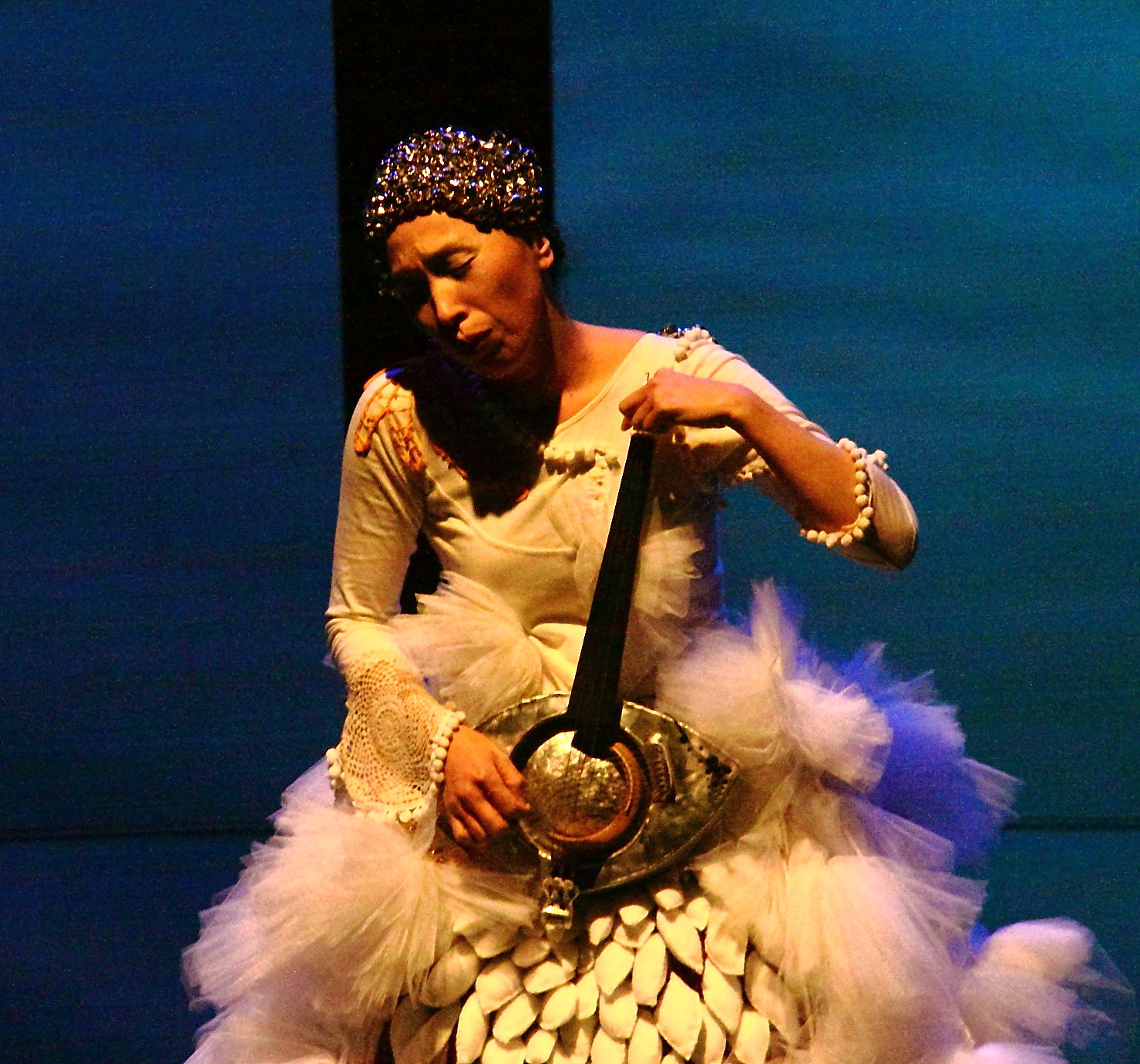
Composer, performer, designer, shaman Dohee Lee performing her work, ‘ARA’.

Friday night began with the world premiere of the music theater performance piece, ‘ARA’ by Korean-American artist Dohee Lee.  Continuing with the spiritual tone set by yesterday’s Raga performances Lee introduced her multi-disciplinary art derived from her study of Korean music, dance and shamanism as well as costume design and music performance.

She was aided in her efforts by the unique instrument designed for her by sculptor and multi-disciplinary artist Colin Ernst.  The Eye Harp (seen in the above photo) is an instrument that is played by bowing and plucking strings and is connected to electronics as well.

The art of lighting designer David Robertson, whose work subtly enhanced all the performances, was clearly in evidence here.  This was  a feast for the eyes, ears and souls.  Dohee Lee’s creative costume design was integrated with the visually striking Eye Harp instrument.  And the music with sound design processing her instrument nicely complimented her vocalizations.  All were lit so as to enhance the visual design and create a unified whole of this performance.

Dohee Lee on the carefully lit stage off Kanbar Hall.

Dohee Lee on the carefully lit stage off Kanbar Hall.

Her performance began slowly with Lee in her beautiful costume took on the role of a modern shaman conjuring glossolalia in shamanic trance along with choreographed movement and accompanied by her Eye Harp and electronic sounds through the theater’s great sound system.   Like the raga performances of the previous night I wasn’t aware of how long this timeless performance lasted (the program said it was 10 minutes) .  But I wished it would have gone on longer.  Even with photographs the experience here is difficult to articulate.  The sound enveloped the audience who viewed the carefully lit stage in the otherwise darkened hall as the sounds communicated a connection with the sacred.

I am still trying to digest what I saw and heard on this Friday night.  I don’t know how most of the audience experienced this piece but they seemed to have connected with it and responded with grateful applause.  She seemed to connect as both artist and shaman.

Anna Petrini performing with her Paetzold contrabass recorder.

Anna Petrini performing with her Paetzold contrabass recorder.

Following Dohee Lee were three pieces for an instrument called the Paetzold contrabass recorder (two before intermission and one after).  Paetzold is the manufacturer who specializes in the manufacture of recorders, forerunner of the modern flute.  The square contrabass recorder is a modern design of this woodwind instrument.  However, knowing the sound of the recorder in music of Bach and his contemporaries, gives the listener no useful clues as to what to expect from the unusual looking instrument pictured above.

Anna Petrini is a Swedish recorder virtuoso who specializes in baroque and modern music written for the recorder.  At this performance she played her contrabass instrument augmented variously by modifications, additions of microphones, little speakers and electronic processing.  These pieces were perhaps the most avant-garde and the most abstract music in this festival.

Anna Petrini performing on the stage of Kanbar Hall at the Other Minds festival.

Anna Petrini performing on the stage of Kanbar Hall at the Other Minds festival.

The creative stage lighting provided a useful visual counterpoint to the music.  The first piece, ‘Split Rudder’ (2011) by fellow Swede Malin Bang was here given it’s U.S. premiere.  This piece is concerned with the sounds made inside the instrument captured by small microphones inserted into the instrument.  The resulting sounds were unlike any recorder sound that this listener has heard.  The piece created percussive sounds and wind sounds.

The next piece, ‘Seascape’ (1994) by the late Italian composer Fausto Rominelli (1963-2004) used amplification but no electronic processing.  These abstract works were received well by the audience.

‘SinewOod’ (2008) by Mattias Petersson involved introducing sound into the body of the  instrument as well as miking it internally and setting up electronic processing with which the performer interacts.  Like the two pieces that preceded it this was a complex exercise in the interaction between music and technology which is to my ears more opaque and requires repeated listenings to fully appreciate.

Taborn

Craig Taborn performing on the stage of Kanbar Hall at the 2013

The second concert was brought to its conclusion by the young jazz pianist and ECM recording artist Craig Taborn.  Detroit born, Taborn came under the influence of Roscoe Mitchell (of AACM fame) and began developing his unique style.  Here the term jazz does little to describe what the audience was about to hear.

Taborn sat at the keyboard with a look of intense concentration and began slowly playing rather sparse and disconnected sounding notes.  Gradually his playing became more complex.  I listened searching for a context to help me understand what he was doing.  Am I hearing influences of Cecil Taylor?  Thelonius Monk?  Keith Jarrett maybe?

Well comparisons have their limits.  As Taborn played on his music became more complex and incredibly virtuosic.  He demonstrated a highly acute sense of dynamics and used this to add to his style of playing.  I was unprepared for the density and power of this music. Despite the complexity it never became muddy.  All the lines were distinct and clear.  And despite his powerful and sustained hammering at that keyboard the piano sustained no damage.  But the audience clearly picked up on the raw energy of the performance.

This is very difficult music to describe except to say that it had power and presence and the performer is a creative virtuoso whose work I intend to follow.

Amy X Neuberg along with the William Winant percussion group playing Aaron Gervais.

Amy X Neuberg along with the William Winant percussion group playing Aaron Gervais.

The final concert on Saturday began with the world premiere of another Other Minds commissioned work, ‘Work Around the World’ (2012) for live voice with looping electronics and percussion ensemble.  This, we learned in the pre-concert panel is another iteration in a series of language based works, this one featuring the word ‘work’ in 12 different languages.

Amy X Neuberg singing at the premiere of Aaron Gervais' 'Work Around the World'.

Amy X Neuberg singing at the premiere of Aaron Gervais’ ‘Work Around the World’.

Language is an essential part of the work of local vocal/techno diva Amy X Neuberg’s compositions and performance work.  With her live looping electronics she was one instrument, if you will, in the orchestra of this rhythmically complex work.  William Winant presided over the complexity leading all successfully in the performance which the musicians appeared to enjoy.  The audience was also apparently pleased with the great musicianship and the novelty of the work.  Its complexities would no doubt reveal more on repeated listenings but the piece definitely spoke to the audience which seemed to have absorbed some of the incredible energy of the performance.

Michala Petri performing Sunleif Rasmussen's 'Vogelstimmung'.

Michala Petri performing Sunleif Rasmussen’s ‘Vogelstimmung’.

Back to the recorder again but this time to the more familiar instrument if not to more familiar repertoire.  Recorder virtuoso Michala Petri whose work was first made known to the record buying public some years ago is familiar to most (this writer as well) for her fine performances of the baroque repertoire.

Tonight she shared her passion for contemporary music.  First she played Sunleif Rasmussen’s ‘Vogelstimmung’ (2011) which he wrote for her.  It was the U.S. premiere of this solo recorder piece.  Vogelstimmung is inspired by pictures of birds and is a technically challenging piece that Petri performed with confidence.  At 17 minutes it was virtually a solo concerto.

And then back to electronics, this time with Paula Matthusen who now teaches at Wesleyan holding the position once held by the now emeritus professor Alvin Lucier.  Her piece for recorder and electronics, ‘sparrows in supermarkets’ (2011) was performed by Ms. Petri with Ms. Matthusen on live electronic processing.  This was a multi-channel work with speakers surrounding the audience immersing all in a complex but not unfriendly soundfield.

Michael Straus (left) with Charles Amirkhanian

Michael Straus (left) with Charles Amirkhanian


Some technical difficulties plagued the beginning of the first piece after intermission so the always resourceful emcee, Other Minds executive director Charles Amirkhanian took the opportunity to introduce the new Operations Director Michael Straus.  Straus replaces Adam Fong who has gone on to head a new music center elsewhere in San Francisco.

Mr. Amirkhanian also spoke of big plans in the works for the 20th Other Minds concert scheduled for 2015 which will reportedly bring back some of the previous composers in celebration of 20 years of this cutting edge festival.  No doubt Mr. Straus has his work cut out for him in the coming months.


Ström, part of the video projection

Ström, part of the video projection

With the difficulties sufficiently resolved it was time to see and hear Mattias Petersson’s ‘Ström’ (2011) for live electronics and interactive video in its U.S. premiere.  Petersson collaborated with video artist Frederik Olofsson to produce this work in which the video responds to the 5 channels of electronics which are manipulated live by the composer and the five lines on the video respond to the sounds made.  The hall was darkened so that just about all the audience could see was the large projected video screen whilst surrounded by the electronic sounds.

The work started at first with silence, then a few scratching sounds, clicks and pops.  By the end the sound was loud and driving and all-encompassing.  It ended rather abruptly.  The audience which was no doubt skeptical at the beginning warmed to the piece and gave an appreciative round of applause.

Paula Matthusen performing her work, '...and believing in...'

Paula Matthusen performing her work, ‘…and believing in…’

Next up, again in a darkened hall was a piece for solo performer and electronics.  Composer Paula Matthusen came out on stage and assumed the posture in the above photograph all the while holding a stethoscope to her heart.  The details of this work were not given in the program but this appears to be related to the work of Alvin Lucier and his biofeedback work on the 1970s.  Again the sounds surrounded the audience as the lonely crouching figure remained apparently motionless on stage providing a curious visual to accompany the again complex but not unfriendly sounds.  Again the audience was appreciative of this rather meditative piece.

Pamela Z (left) improvising with Paula Matthusen

Pamela Z (left) improvising with Paula Matthusen

Following that Ms. Mathussen joined another bay area singer and electronics diva, Pamela Z for a joint improvisation.  Ms. Z, using her proximity triggered devices and a computer looped her voice creating familiar sounds for those who know her work while the diminutive academic sat at her desk stage right manipulating her electronics.  It was an interesting collaboration which the musicians seemed to enjoy and which the audience also clearly appreciated.

Pamela Z performing Meredith Monk's 'Scared Song'

Pamela Z performing Meredith Monk’s ‘Scared Song’

For the finale Pamela Z performed her 2009 arrangement of Meredith Monk’s ‘Scared Song’ 1986) which appeared on a crowd sourced CD curated by another Other Minds alum, DJ Spooky.  Z effectively imitated Monks complex vocalizations and multi-tracked her voice as accompaniment providing a fitting tribute to yet another vocal diva and Other Minds alumnus.  The audience showed their appreciation with long and sustained applause.

All the composers of Other Minds 18

All the composers of Other Minds 18

Left Coast Classical


20130218-134428.jpg

Dear friends of new music,

The annual Other Minds concert series is coming up on February 28, March 1 and 2. Now in its 18th iteration the festival seems to constantly be able to find new and interesting music from all over the world. And it gives every season’s musicians a week’s retreat at the Djerassi Resident Artists program during which they perform and discuss their music with each other sharing what must be a wonderful mind-expanding experience for them.

Kanbar Hall at the Jewish Community Center of San Francisco provides a comfortable venue that is both visually and acoustically well-suited to the marvelously diverse collections of composers and musicians that come together for three nights following their week-long workshop/retreat. Under the direction of Charles Amirkhanian who was music director at KPFA radio from 1969 to 1992 this concert series threatens to invade the musical consciousness and tastes of Northern California and beyond. At the very least it holds off the danger of the music scene becoming stuck in a rut. And at best it cross pollinates the DNA of the musical world to yield as yet unknown artistic mutations.

For die hard fans of new music like myself the festival provides an opportunity to hear some exciting artists whose work has interested me as well as an opportunity to widen my horizons and hear younger artists whose work is yet known only to a smaller audience. There are world and local premieres every year. And one of the thrills, at least for me, is the chance to hear artists who later rise to greater fame, “I remember when I first heard…”

This year’s line up is no less varied than previous years. Casting its usual wide net composers are included from Denmark, India, South Korea, Sweden, Canada and the United States. For me it will be the first time in which I will have had practically no knowledge before hand of these composers. But some of the performers are known to me including electronic diva gurus Amy X Neuberg and Pamela Z, two Bay Area artists with distinctly different approaches to the ‘voice with electronics’ genre. Having appeared previously in the ‘Other Minds’ concerts presenting their own compositions (composers thus far have only been allowed a single appearance presumably to make room for the new) they are engaged to perform music by other composers.

20130218-132045.jpg

Neuberg recently appeared doing her own arrangement of Joni Mitchell’s ‘California’ in a well-received performance with 9 other bands playing their arrangements of the other nine tracks from Mitchell’s classic album, ‘Blue’. This wonderful concert was reviewed in a previous blog. She will perform along with virtuoso percussionist William Winant and his percussion group in the world premiere of Canadian American Aaron Gervais ‘Work Around the World’.

20130218-132303.jpg

Pamela Z is also well known and is pictured above in a performance at the annual Chapel of the Chimes Summer Solstice concert. The world premiere of her Kronos Quartet commission, ‘And the Movement of the Tongue’ for string quartet and electronics occurs on February 20 and 21 at San Francisco’s Yerba Buena Center. She will be performing an improvisation with another soloist with electronics performer, Paula Matthusen as well as her own arrangement of Meredith Monk’s ‘Scared Song’ on the last day (Saturday).

While I had been aware of recorder player Michala Petri I am only familiar with her recordings of baroque music. But we will get to hear her artistry in performances of fellow Danes Sunlief Rasmussen and Paula Matthusen in contemporary pieces, one a U.S. premiere.

In addition there will be performances by Danish folk trio (recorder, accordion, violin) and Indian Bansuri master G.S. Sachdev as well as a performance by jazz pianist and ECM recording artist Craig Taborn.

Swedish contrabass recorder artist Anna Petrini will perform three works for contrabass recorder and electronics (an unusual combination to say the least) by three Scandinavian composers. Mattias Petersson is featured in a performance with video and electronics of his work ‘Strom’ from 2006 in its U.S. premiere.

And the second (of three) nights will feature the world premiere of a theatrical work, ‘ARA’ by the South Korean vocalist Dohee Lee featuring video and multi-channel electronics. I’m betting that this may be a major premiere.

If, as most biologists now believe, diversity is crucial to the survival of a species then the Other Minds festival appears to be mixing enough artistic DNA to keep new music alive for a couple of hundred years. I don’t know how many friends and acquaintances will be awed in 5-10 years when I tell them I was at the premiere of ‘ARA’ or ‘Work Around the World’ or try to describe the sound of a contrabass recorder with electronic enhancement but even the blank stares with some scratching their heads won’t detract from my own self satisfaction of having been there.

Hoping to see you at Other Minds,

Allan

Other Minds Festival 17


Thursday night was the opening concert of Other Minds 17th annual series at the beautiful Kanbar Hall in the San Francisco Jewish Community Center which features a typically eclectic selection of new and recent music. Six countries are represented this year including the United States, Germany, Japan, Denmark, Norway and Finland.

This first night featured the palindromically named Norwegian ensemble Asamisimasa. They are a group of highly trained young musicians who dedicate themselves to the performance of post war avant garde and recent music (some written for them).

What makes them unique is their integration of traditional instruments with various types of electronics and techniques to modify and enhance their sound. They include standard video, digital processing and extended instrumental techniques as well as uncommon enhancements such as hand held megaphones and found sounds like tearing newspaper, spray cans and sliding blocks that rub on various surfaces.

The result was a wonderful embodiment of the post- Cagean musical esthetic which is the driving force behind Other Minds as they describe it in their mission statement. These dedicated skilled classical musicians played a program of a fellow Norwegian and a Danish composer. It was a performance that was adventurous, humorous and engaging.

The first half featured two works by Oivind Torvund. The first work from 2009 was “Neon Forest Space” for clarinet, cello, guitar/radio, percussion and pre-recorded media. Brief motivic segments, mostly by solo instruments, were strung together by a variety of sounds controlled by a musician who doubled as conductor. The overall impression was one of a spare impressionistic piece informed equally by the sound worlds of Pierre Boulez, Karlheinz Stockhausen and, according to the program, Black Flag.
The second piece was the world premiere of “Willibald Motor Landscape” written last year. This piece, using essentially the same instrumentation was built upon a recorded soundtrack of traffic sounds creating an impressionistic picture presumably of the road in the title.
The audience was very appreciative and we learned following intermission that all of the Oivind Torvund CDs had sold out! Welcome to America Mr. Torvund.

The second half of the night featured what was to have been a performance without pause of four pieces by Simon Steen-Andersen of Denmark. Unfortunately, following the performance of “Study for String Instrument #2” (for cello and whammy pedal, 2009), the cellist lost her footing on the darkened stage. The crashing sound seemed at first a part of the performance. But the lights were brought up quickly finding that the cellist was thankfully mostly unharmed and able to continue performing. However her cello had sustained a broken tuning peg. Charles Amirkhanian, the festival director tactfully asked the audience’s indulgence while another cello was obtained, a process which required only about 10 minutes (!). The cellist with the replacement cello returned to the stage to relieved and appreciative applause. Mr. Amirkhanian thanked the audience, who barely moved in the interim, for their patience.

The stage lights were darkened again and the ensemble restarted the piece which had been so briefly interrupted. From the microtonal glissandos duet of cello and whammy pedal they began the second piece, “Half a Bit of Nothing Integrated” (2007) for extremely amplified clarinet, percussion, cello and live video operated by the percussionist. In good humor and with professional showmanship the percussionist began by speaking, “Now where were we?”. And they performed with sounds of seemingly malfunctioning electronics evoking a post apocalyptic sound world which evoked worlds like that of “Blade Runner”.
This time there was no pause as they moved on with an illuminated stage to “On And Off And To And Fro” (2008). This piece featured megaphones operated by musicians who at times were miking the instrumentalists and at other times playing percussive effects with the microphones (blowing into them, scraping them, etc.) and playing quite skillfully with feedback created by holding the mikes various distances from the speakers. The sight of four musicians reading from scores and following a conductor with these megaphones evoked appreciative laughter from the audience. The final piece, “Study for String Instrument #3 (2011)”, was for cello and video. The cellist, Tanja Orning, played her instrument in non-melodic fashion with a bow which produced scraping sounds. Superimposed upon her was a video of her playing and the interest of the piece is a fascinating mostly visual duet between the live performer and the video. Her actions sometimes duplicated, sometimes opposed that of the video and the effect, sometimes humorously reminiscent of the Marx Brothers mirror routine, was an engaging and occasionally disturbing image (I’m not sure why it was disturbing actually).

Warm applause followed this lively and dedicated performance from this fine young group. All in all a very entertaining evening opening the always unpredictable and eclectic Other Minds Festival.

Hello world! This is “New Music Buff”


Welcome to my music blog. I am an avid listener, collector and supporter of music in general. I am particularly interested in new and cutting edge music.

What I offer here are informed opinions about what is essentially one of my hobbies. The blog title “New Music Buff” is intended to connote a somewhat casual perspective by an educated consumer.

I offer personal opinions which I hope will provoke discussion but also stimulate interest.

Thank you for reading.

Allan J. Cronin