A Stunning Recital by Pianist Bruce Liu at the Music Academy of the West


Canadian Pianist Bruce Liu (from Wikipedia)

Elon Musk’s rockets could be said to rise more slowly in contrast to this fabulous young artist’s career. His local debut occurred some 50 miles south of that Vandenburg Space X launch pad.

Born to Chinese parents in the waning years of the 20th century in Montreal, this intensely focused man was in command of the stage (and the piano) from the very beginning at the beautiful Hahn Hall of the Music Academy of the West this past May 16th. He continues the launch of one promising career.

Liu’s command of the stage is a combination of dignity, focus, and confidence in his (admirable) skill set that suggests that he can handle anything that he chooses to play. His intensity and focus (along with some challenging tempi) will likely trigger memories of fellow countryman, Glenn Gould. And, while maestro Liu’s skills are his own, he embodies the dignity of grand virtuosi of old who communicate by their artistry, connecting wordlessly but clearly and decisively with their audience.

The selection of music also defined an astute and individual curatorial choice. Yes, this 2021 winner of the Warsaw Chopin competition included Chopin on his program. But he also chose a Haydn Piano Sonata (a too little explored segment of the repertory), classical (Haydn, rather than Mozart), baroque with (Jean Phillips Rameau, rather than Bach, (romantic (Chopin, of course), and 20th century (Prokofiev and Kapustin).

The hall was about 2/3 full by my estimate but the audience seemed quite attentive and appropriately respectful. That’s a good start but adding a soloist such as this cemented a bond with these sympathetic listeners with an auspicious debut by this (just barely pre-millennial) musician.

He became one with that gorgeous Steinway as he introduced the piano sonata Hob XVI:32 by Franz Josef Haydn (1732 to1809). This little gem seemed to echo both the keyboard works of Domenico Scarlatti and the much younger Wolfgang Amadeus Mozart (1756-1791). Haydn wrote some 50? Keyboard sonatas (compared to Mozart’s 17) but Haydn’s are curiously less frequently programmed than those of Mozart.

He continued with another piano sonata, Chopin’s second piano sonata Op.35 (the one with the oft quoted “funeral march”). Liu’s virtuosity and meticulous performance made it clear as to why he won that 2021 Chopin competition in Warsaw.

This writer was not familiar with most of the music on the program. Save for that “Funeral March” and the Rameau “La Poule” the works on this recital were Liu’s intelligent choices of works that have not been frequent visitors to the concert hall. But the works , very personal choices that showcase this artist’s strengths, range, and passions.

The first half of the program concluded Nikolai Kapustin’s (1932-2020) Variations Op. 41. From 1984. The work owes a great deal to the influence of jazz and Liu’s makes a compelling case that this work deserves to be heard with more frequency. The late composer was quite prolific (including 20 Piano Sonatas and a catalog that includes a catalog of some 161 opuses). A standing ovation with multiple curtain calls preceded the brief intermission.

Maestro Liu returned to the stage and delighted the audience with a selection of Jean Phillipe Rameau (1683-1764) from his Pièces de clavecin en concerts (1741), a major set of baroque keyboard works. Rameau was a contemporary of Bach but his work is not commonly featured in recitals. Liu effectively made a case that this work get more hearings.

After the well received performance of the Rameau pieces Liu brought us back to the twentieth century with a performance of Sergei Prokofiev’s (1891-1953) 7th Piano Sonata (1942), the middle work of the composer’s trilogy of the so called “War” Sonatas. It is an outstanding work into which Liu infused his virtuosity, interpretive skill, and sheer energy.

Another 3 curtain calls prompted Mr. Liu to grace us with some lovely encores including a hauntingly beautiful rendition of Johann Sebastian Bach’s prelude in E minor (triggering this listener to think again of Glenn Gould’s unique take on Bach). Liu then followed with a real crowd pleaser, the so called “minute waltz” by Chopin. I didn’t clock his performance but it was as full of the same life and energy as in the preceding works on this fine evening.

This was truly an exciting evening and I advise listeners to seek out anything this artist does. He does not disappoint.
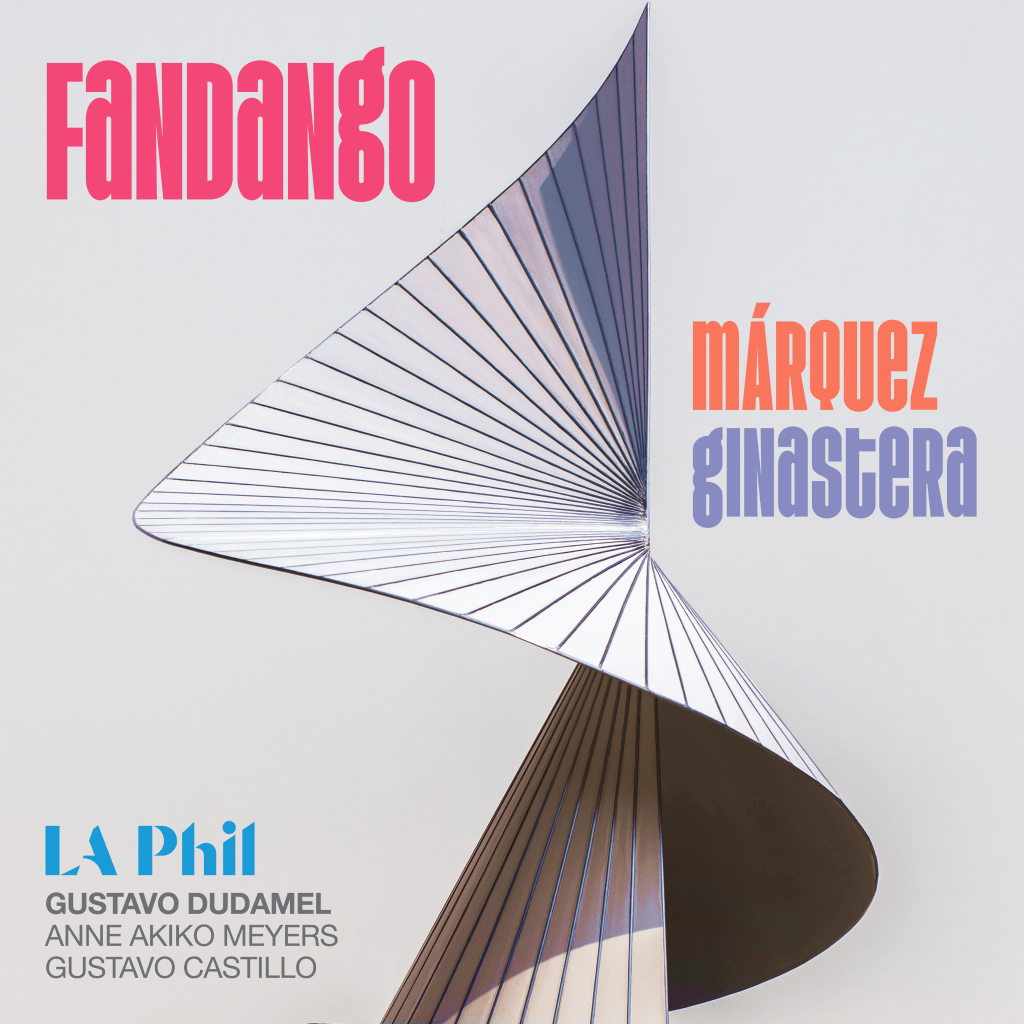
Fandango! Diversity Within Identities


Avie AV 2386

The primary importance of this new release is, of course, the presentation of these two major works but it also an exposition of the diversity (or do you prefer, “heterogeneity”?) that can become obscured by well intended terms like, “Latino” and “Hispanic”, or even conductor Gustavo Dudamel’s “Pan American”. All are well intended but racial, nationalist, and other categories are insufficient on their own in recognizing the rich diversity inherent in their cultures. Here we go, just in time for Latin History Month.

The concise liner notes tell us that even the album’s title, “Fandango” has multiple meanings depending on cultural contexts. The fact is that no single style or genre can be said to be representative of the marvelous diversity that exists within their intended scope which attempts to represent practically the whole of the western hemisphere as is the case with this release. So, while Fandango is certainly about the musical works presented, it also touches on the issue of diversity by the choice of two major works separated chronologically by some 80 years and representing composers from Argentina on the one hand, and Mexico on the other. Two different cultures that share a language in both words and , to some extent, music.

The centerpiece of this album is, of courses, the concerto that Maestra Akiko-Meyers commissioned from Mexican composer Arturo Márquez Navarro (1950- ). I’m sad to say that I am only now learning of this composer but delighted in his mastery of the orchestra and the grand romantic gestures of a past era along with an acute and personal appreciation of the folk idioms of his culture. At first I was skeptical of a “mariachi” inspired concerto because such attempts, even the most sincere, don’t always seem to work. Well, that is certainly not the case here. This is a strong contender for regular inclusion in the current canon of widely performed violin concertos. This one is a masterpiece which poses challenges to the soloist (which give her a chance to show her virtuosity) and surround it with rich, subtly, ultimately beautiful orchestral textures that support the soloist but which demand much of the orchestra and its conductor as well.

The concerto (written in 2020) is in the traditional three movements. The first, entitled “Folia Tropical” (tropical leaves) embraces the spirit of late romantic concerti like those of Bruch and Brahms. It is an extended movement that introduces and develops many moods and themes. It is a big symphonic movement worthy of a symphony and it gives the soloist much to do and upon which to demonstrate her musical and interpretive skills all the while with a very busy orchestra accompanying her.

The second movement, “Plegaria” (prayer) is a hugely substantive chaconne, the baroque contrapuntal variation form with a repeating bass line and thematic variations over the harmonic structures supported by those notes.. At least that is my listener’s understanding. But what is not necessary to “understand” technically is the emotional impact of this movement. This is an amazing use of the form. The soloist moves into different roles, sometimes very much upstage, sometimes an adjunct to the orchestra, sometimes not there at all. There is a slow, meditative beauty in this movement which is also characteristic of the romantic idiom in which this is written.

The third movement, “Fandanguito” (little Fandango) is a somewhat lighter and very energetic finale one might expect in a movement following the previous deeply emotional ones. And the composer does not disappoint. He writes a joyous, energetic finale which nonetheless stands up as substantially as its predecessors.

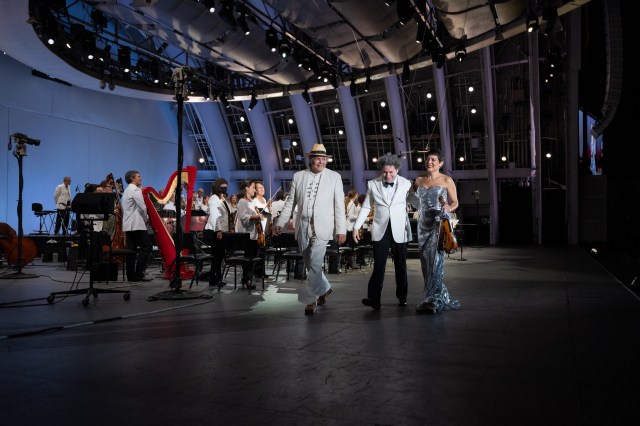
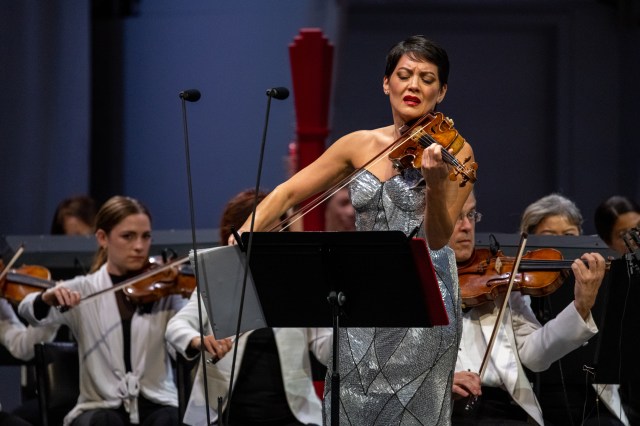
The composer Arturo Marquez with Maestro Dudamel and Anne Akiko-Meyers leaving the stage after a successful performance.

The joy, to this listener, is to hear a master composer in collaboration with a fine soloist both technically and interpretively. The composer has integrated his experiences and study of his own cultural folk musics and infuses the spirit of the music into his grand romantic idiom. That is, the concerto does not, for the most part use direct quotation from folk sources but uses structural elements in his composition. Maestra Akiko Meyers discharges her soloist duties with both startling facility and a deep understanding of the music and the composer’s intent.

Gustavo Dudamel is a joyfully rising star who brings his cultural proclivities and his own lens on western orchestral music. He is an exciting and incisive conductor. I don’t know the extent of Dudamel’s study of Latin folk musics but he really gets this work and brings out the composer’s subtleties in this gorgeous and exciting concerto.

The “B side” as they used to be called is no mere filler, it is the entirety of the Alberto Ginastera (1916-1983) ballet, “Estancia” Op. 8 (1941). Here, 15 separate movements are used in a five scene scenario. The work, usually heard in its four movement suite format and, even more frequently, just the spectacular finale, the Malambo.

In addition to its large orchestra, the ballet calls for a singer/speaker soloist who acts as both narrator and as soloist with orchestra. In this performance the challenge is admirably met by baritone GUSTAVO CASTILLO, another shining light cultivated by El Sistema. He performs well in both his baritone vocal duties and his narrator task in which he speaks Spanish in an elegant and, I’d say, almost Shakespearean grasp of the beauty of the language. The man understands drama as well as music.

This ballet is clearly a masterpiece. It reminds this listener of Prokofiev if he was born in Argentina. Nothing derivative here though. This is an intensely entertaining work, as substantial as Romeo and Juliet, similarly constructed in relatively brief musical segments designed to accompany a dance whose scenario is the story of the “gaucho” or cowboy that lived and worked hard lives, lives that were romanticized into a poem by Argentinian poet José Hernández (1834-1886). (click on the word “poem” for a link to an English translation of the poem).

All that to say that this is a truly enjoyable and important release. A valuable addition to the discography of Latin classical music.

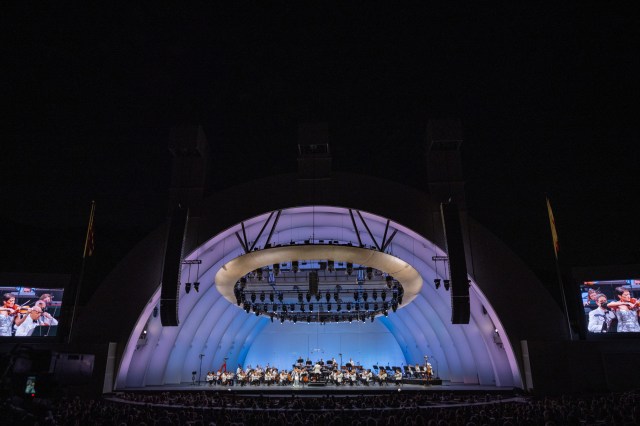
Dudamel and his LA Philharmonic at the Hollywood Bowl.

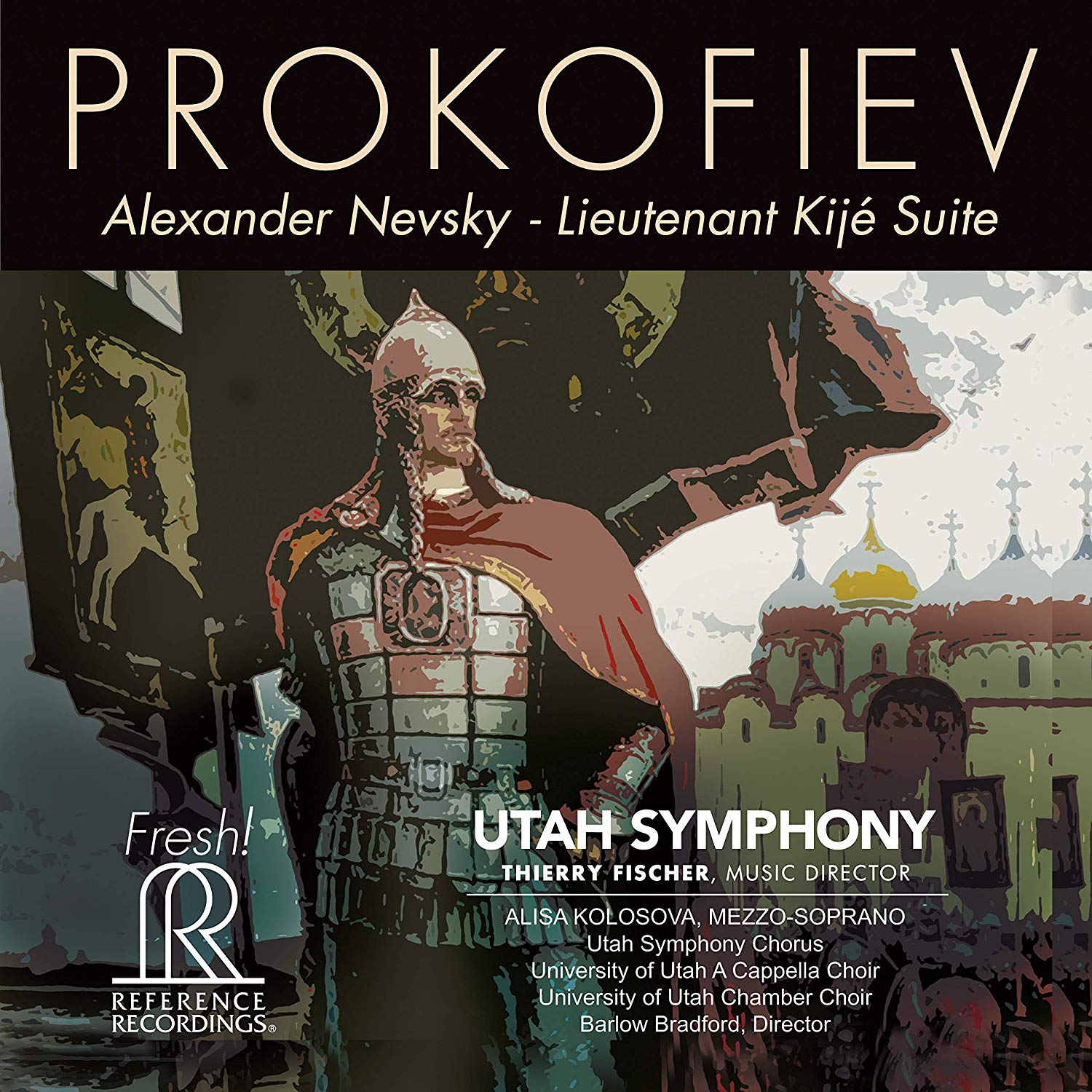
Prokofiev, Classic Film Scores


91AmrDoJiiL._SL1500_

Reference FR-73SSACD

Strictly speaking this is a recording a a film score suite and a cantata derived from a film score but these are perhaps among the finest examples of film score music.  The earliest piece here is actually Prokofiev’s first commission, the 1934 Lieutenant Kije.  This film (released in the US under the title of “The Czar Sleeps”) is a satire/comedy film based on a novella.  The score is by itself very tuneful and entertaining and deserves to be heard more often.

The larger work here, Alexander Nevsky (1938), the cantata extracted one year later from the film score by the composer is of course the score to one of the early masterpieces of cinema.  The film is the slightly fictionalized account of the reign and military prowess of one Alexander Nevsky (1200-1263).  It is without doubt one of the most successful pairings of image and sound at its time.  One need only listen to a snippet of John Williams’ score for the battle on the ice planet in the Star Wars series to hear the homage he gives to this score.

Both works here receive a very fine performance and recording by the Utah Symphony conducted by Thierry Fischer.  He is assisted by the Utah Symphony Chorus, the University of Utah A Capella Choir, and the University of Utah Chamber Choir under the direction of Barlow Bradford as well as soloist, mezzo soprano Alisa Koslova.  Fischer’s tenure would seem to be the surest and most successful since that of the much lauded and beloved Maurice Abravanel.  In addition we have here a recording by the reliably high quality Reference Recordings label.

Many collectors will already have a recording of Alexander Nevsky but this performance and recording, along with the inclusion of the earlier film score make this a marvelous addition to any library.  And if you have one of those fabulous sound systems you will hear the intricate detail of the recording and feel those bass drum thumps most viscerally.  This is an exciting release of exceptional quality on all fronts.

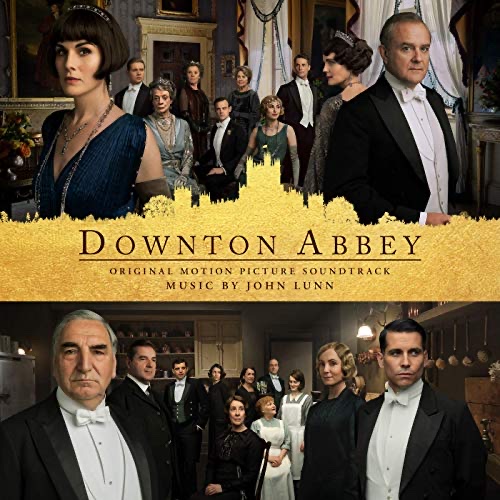
Downton Abbey, the Music


I have little expertise in the area of soundtrack music. It is my opinion that they largely serve as comforting souvenirs almost regardless of their quality.

John Lunn’s score does rise above the ordinary with its quasi post minimalist gentle music for this mini cult film. He is not Prokofiev or Herman but that level is not what is needed to support what is in the end a well written and well acted/directed costume drama.

Lunn does not burden his audience with obtuse or even obvious references to British music (folk or classical). No quotes from Nimrod or Rule Britannia (thank God). Just competent and unobtrusive incidental music for a decent film. Doubtless there will be a few live orchestra performances concurrent with screening the film in a concert setting. Enjoy the memories.

Kenji Bunch’s Snow Queen


Kenji Bunch (1973- ) is a musician whose name has made it to my personal orbit many times but this is my first encounter with his music and what an encounter it is!  This two disc set comprises a full length ballet commissioned and performed by the Eugene (Oregon) Ballet.

bunch

Kenj Bunch

Bunch is an American composer who hails from Portland, Oregon the child of a Japanese mother and a Scottish father.  He studied at Julliard and this is approximately the 18th CD release to contain his music (if I counted correctly).  A prolific composer, one can find a decent listing of his compositions on his website.  And he was a violist performing with the esteemed Portland Youth Philharmonic from 1986-1991/

There are at least two symphonies, numerous soloists and orchestra pieces as well as solo instrumental music.  Though I’ve heard just snippets of his music aside from the disc under review here I think I can safely say that his style can be described as essentially tonal, even perhaps somewhat conservative, but the accessible qualities of his music do not translate into mediocrity. Quite the contrary, he is a very exciting composer and his style seems very well suited to an undertaking such as this ballet.  Bunch appears to be a master of orchestral color and he uses it to great effect here.

The two discs comprise 23 tracks much like one would expect of most classical ballets. The individual movements are 3-10 minutes approximately and they correspond to specific scenes that tell the classic story of the classic Hans Christian Andersen story.  No doubt cost is the barrier which precluded a DVD release which looks like it was a gorgeous production.

It is at least this writer’s impression that much of classical ballet music does not do well without the visuals of the dance.  I am referring to 19th century models such as Coppelia whose music might be best performed in excerpted suites if dancers are not a part of the performance.  Bunch’s ballet is more in the spirit of perhaps Prokofiev or Stravinsky wherein the music stands quite well on its own and even does a great job of evoking the images of the given scenes.  Basically the music stands on its own as a narrative.

Orchestra NEXT  is a training orchestra and resident ensemble with the Eugene Ballet Company.  They handle this complex and musically challenging score with seeming ease under music director Brian McWhorter.

There is little doubt that those who were fortunate enough to see this fully staged production will appreciate the opportunity to relive their memories by hearing again the recorded score.  But this will likely appeal to most fans of new music as well.  It is a major work by a composer who deserves serious attention.  This writer will certainly be listening.