Political Classical: Leonard Bernstein’s Mass, a Synthesis of Religion, Music Theater, and Politics


Leonard Bernstein‘s liberal political sympathies are well known. But they were never as clearly presented in his music as they were in his ‘Mass’ from 1971. The work was commissioned for the opening of the Kennedy Center for the Performing Arts in Washington, DC and dedicated to the memory of John F. Kennedy.

In using the structure of the Catholic Mass Bernstein echoes the embrace of Christianity of previous Jewish composers like Schoenberg and Mahler.  Mahler embraced Christianity at least partly to get work in the increasingly antisemitic atmosphere of late nineteenth century Europe. Schoenberg’s dalliance with Christianity was more that of an existential crisis as he watched the rise of the Nazi party and their genocidal horrors. Bernstein’s embrace of Christianity seems a combination of homage and disappointment. He knew well the glories of liturgical settings of the traditional texts by the likes of Bach, Haydn, Mozart and Beethoven and had himself made an a capella setting of the mass using music he had originally written for Jean Anouilh’s play, “The Lark”.

He also knew well the suffering and deaths occurring in the protests against the Vietnam war and the struggles of American citizens for equality in the Civil Rights movement as well as the struggles in the war itself and the failure of religious institutions to stem the tide of violence.

Bernstein had dealt with religious themes in his first Symphony from 1942, which set texts from the Biblical “Lamentations of Jeremiah” in the last movement. His Chichester Psalms of 1965 set three Psalms in Hebrew. And, his Third Symphony, “Kaddish” (1963) can be seen as a forerunner to the 1974 “Mass”. His final symphony became a post hoc requiem subsequently dedicated to John F. Kennedy when, just weeks before the premiere, he was assassinated in Dallas. The composer dedicated the work to the late president. He also performed Mahler’s “Resurrection” symphony the day after John F. Kennedy’s assassination presenting it as a peaceful response to the murder.

Bernstein was no stranger to politics and progressive ideas and his activism is central to his life and legacy.

The traditional mass is a ritual of sacrifice which the composer uses to talk about the sacrifices of lives and culture occurring during the ongoing Vietnam war. It laments the ineffectiveness of religion in dealing with sociopolitical crises.  The full title of the score at hand is ‘Mass, a piece for singers, players, and dancers’. It was commissioned by Jacqueline Kennedy as the inaugural work for the opening of the newly completed Kennedy Center for the Performing Arts in Washington D.C. The first performance took place at the new Kennedy Center on September 8, 1971.

Richard Nixon had declined to attend ostensibly to not draw focus from Jacqueline Kennedy Onassis but subsequent research has determined that he had been warned by FBI head J. Edgar Hoover of the possibility of “subversive” texts within the piece.  He was apparently referring to the latin texts of the mass.  So, for “security” reasons, Nixon stayed home that night.

The work continues to be revived and recorded.

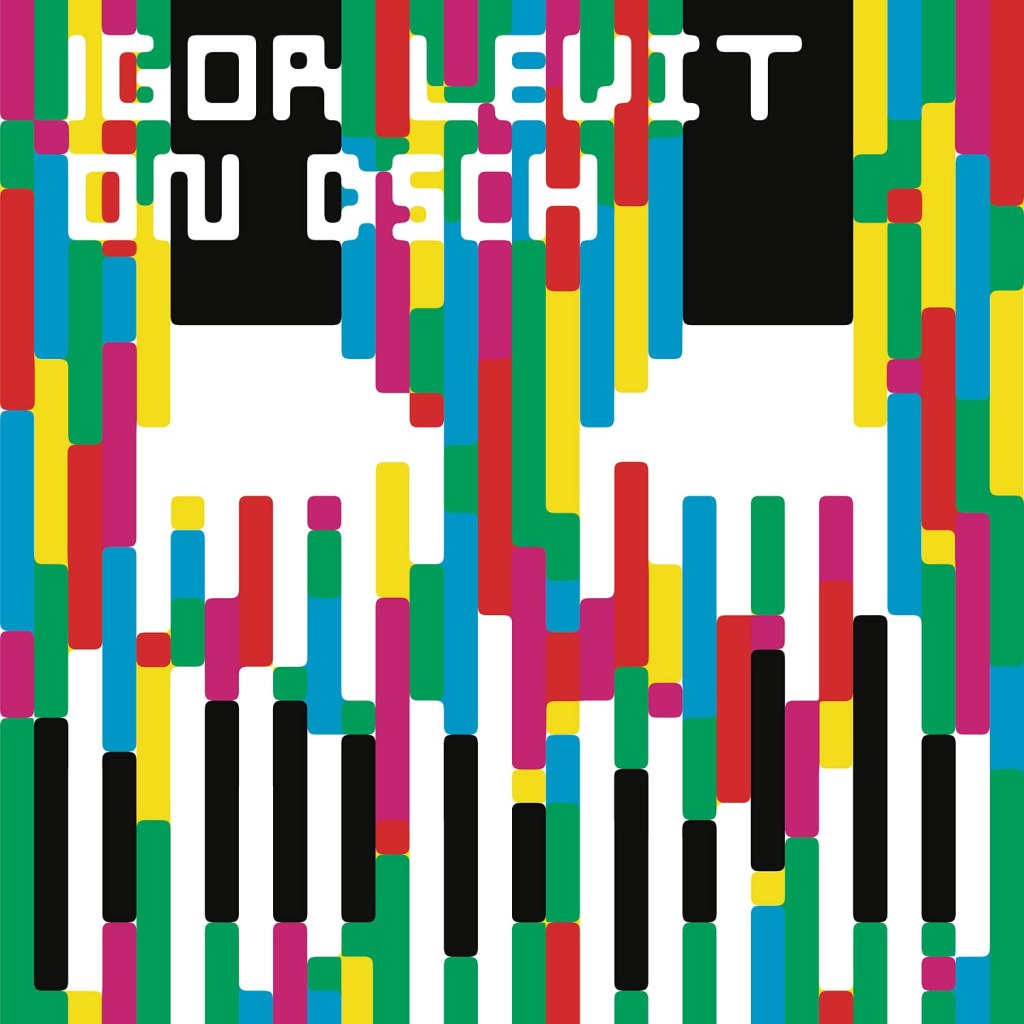
Vision, Virtuosity, and Interpretive Skill: Igor Levit’s “On DSCH”


Sony Classical 19439809212

I first came to know these Shostakovich Preludes and Fugues Op. 87 (1950-1) in the recording by Keith Jarrett on ECM some years ago (1992). At the time I was not familiar with this post-Bach set of compositions (one might even call it a “meme”) written to showcase the newly codified “Well Tempered Tuning” but I was intrigued by Jarrett’s choices of repertoire. Not surprisingly, I immediately liked this gargantuan undertaking. I appreciated these pieces as listenable, stimulating musical compositions and a good choice of repertoire by the always interesting Mr. Jarrett. Many pianists have recorded this cycle of works though I can’t recall a recital of the entire set being performed live as occurs fairly frequently with the Bach cycles (he wrote two sets of 24 preludes and fugues in each of the 24 keys of the western musical scale).

Readers of this blog may recall my fawning over an earlier Levit release, a 3 disc set of piano variations containing Bach’s “Goldberg Variations” (1741), Beethoven’s “Diabelli Variations” (1819-23), and Frederic Rzewski’s “The People United Will Never Be Defeated” (1975). I asserted that Sony, whose recording (1955) of Glenn Gould playing the Goldberg Variations helped elevate that work into the popular repertoire, had at least implied that these three large sets of variations are musically on the same level of significance thus potentially elevating the Rzewski piece to the more mainstream repertory.

Now comes yet another 3 disc set from this fine Russian/German pianist who seems to be possessed of vision as well as virtuosity and interpretive skills. Levit is clearly comfortable with the “usual suspects”, the common repertoire of live piano recitals (Beethoven’s Sonatas, Schubert, Schumann, Debussy, Liszt, etc.) but is clearly interested in expanding the general repertoire by discovering lesser known works that he finds deserve to be heard more often. A quick look at the pianists other releases reveals a similar pattern even in works of a less grand scale than those discussed in this essay.

Anselm Cybinski’s fine liner notes derive from his reading of history, Shostakovich’s and Stevenson’s biographies, and his conversations with Mr. Levit. Here he describes what Shostakovich was enduring in the years when he brought forth these compositions, post WWII, life in the repressive Stalinist regime, recent censure by said regime, and his attempts to be return from this censure and be allowed to have his works performed again. He relates the story of the then 21 year old Tatiana Nikolayeva who premiered this work and played it before the committee. He also sketches the impact of various historical events on Shostakovich and his music.

The preludes are described as emotional responses to these varied events, a sort of exorcising of the emotional turmoil these events had on the composer. He describes in these notes the contexts which clearly impact the pianist in his understanding and subsequent interpretation of this music, contexts which help the listener grasp the deeper levels of meaning inherent (or at least implied) in these works.

He does the same with the Stevenson work, itself a response to the sufferings of a fellow artist, a sort of artistic dialogue analogous to that of songwriters and other musicians who used their art to make a point (Lynyrd Skynyrd writing, “Sweet Home Alabama” in response to Neil Young’s, “Southern Man” or Leonard Bernstein’s performance of Haydn’s “Mass in Time of War” concurrently with the second inaugural concert for Richard Nixon as a political counterpoint are two such examples), not the same situations perhaps but artistic dialogues nonetheless.

Apparently Ronald Stevenson (1928-1915) wrote his gargantuan “Passacaglia on DSCH” in 1960 as a tribute to his fellow composer. There are many examples of Shostakovich using the German note spelling of “D”, “Es” (pronounced, “S”), “C”, “H” (German notation for “B”) all of which translates to the actual notes of D, E flat, C, B as a motif in his work so Stevenson’s use of it is quite apt.

This Passacaglia is a work which I had “known of” but never heard before hearing this recording. It is a marvelous work, not exactly easy listening but a very satisfying work which improves with subsequent hearings, revealing itself as a multi-layered masterpiece. And it is Levit’s vision that effectively gives this work, and the Shostakovich cycle a significant and, thanks again to Sony, a very large public nudge to get this music heard and played more often.

No doubt many reviewers will spend time comparing the various recordings of the Shostakovich Preludes and Fugues and the Stevenson Passacaglia. For the record I did a quick search and found four recordings of the Stevenson work and at least 12 complete recordings of the Shostakovich. However, for the purposes of this review I will leave discussion of the merits and shortcomings of the various interpretations to people better qualified than I. The takeaway I hope to share with my readers is, “Get this set and enjoy it” and to musicians and producers, “Pay attention to Igor Levit’s artistic radar”.