I first met Lara St. John as an artist…well, not exactly. I first came to know this fabulous musician via her recordings of the Bach Violin Concerti and the Solo Violin Music. It was much later that I began to read of her revelations abuse at the hands of her teachers, trusted adults.
For over 40 years I have worked as a psychiatric nurse (still do). During that time I have worked with many people with similar trauma from such abuse. And, yes, I have worked with perpetrators too. It is not pretty. And the most heinous revelation we get to learn in this film is the years of administrators blaming the victim, further exacerbating the trauma for the victims. It is rare that I have the opportunity to write about music as well as psychiatric issues but St. John’s sensitive approach hits all the right emotional notes and reaches out to all who have experienced such trauma. It is an excellent work.
As a long time fan of classical music, I find that the art, really expressive only in performance, feeds my soul and soothes my ills. It is saddening, and a certain fall from grace or destruction of my naïveté to hear of the crimes against artists described in this documentary. The rampant sexual abuse perpetrated by artists I once revered shakes my faith and taints the art I love. I guess that’s one of the reasons the subject of sexual predators being basically accepted by members of the power elite has been allowed to go on so long. More importantly, this film is an affirmation of St. John and the other victims known and unknown whose belief in themselves as artists has damaged but not destroyed their art.
While shocked and angry myself, I know I will recover to a point where I can enjoy the art of beautiful performance without it triggering anger and disgust. But the victims do continue to suffer. This film rather masterfully tells the story of personal betrayal and, ultimately, is a landmark in the progress of eradicating such criminal behavior and giving victims the voice they deserve. In fact the film gives voice to a number of other victims, many inspired by St. John’s work.
“Dear Lara” is ultimately a wonderfully hopeful film that documents Maestra St. John’s struggles but also, the successes of having had an astounding number of sexual predators fired, some even jailed as a result of her revelations and subsequent advocacy. It is a success story that will have no end until these criminal practices find their end. And this film also succeeds in defining this writer/director’s role as a powerful activist for the struggle. This is a celebration of these efforts.
This documentary is certainly not the first film to address these issues. Others have tread the path of Lara’s journey and a movement gains momentum. No, it’s not the first but it is one of the finest and a film that needs to be seen so that the struggles it documents might be better understood and the perpetrators removed.
I’m a great fan of the Santa Barbara Film Festival and was delighted to meet the artist who now adds documentary filmmaker (and composer) to her artistic accomplishments.
Thanks, Lara, for this fine documentary. It was an honor to meet you in person. Keep up the good fight and I look forward to your upcoming musical projects as well.
Lara St. John with New Music Buff at the premiere.
The first volume of this Bridge Records landmark series focused on Harry Partch’s (1901-1974) most likely best known works, a fine way to introduce this man’s unusual and brilliantly experimental music.
Bridge 9349
From this first volume, it is clear that great care was taken to produce the most authentic and complete versions of this music in dedicated, authentic performances on faithfully constructed copies of Partch’s unusual (and visually beautiful) instruments. The instruments themselves deserve a history and analysis but that is beyond the scope of this review. This is a great disc to introduce listeners to this man’s work.
Bridge 9149A/C
This second volume won a Grammy for the best classical compilation. It is largely a spoken word album, the title taken from Partch’s journal documenting his itinerant adventures and musical experiments. This is essentially an audio “Complete Works” edition in which the scholarship of text and performance are refined to represent as accurate a representation of this unique composer’s work as possible. Not as easy listening as the first volume but truly a gift to fans and performers.
Bridge 9525
The third volume, reviewed here, includes a heretofore unknown work by Partch gleaned from that careful reading of the “Bitter Music” diaries (along with other gems). This was actually my introduction to this recording project as Mr. Schneider graciously sent me a copy for review. This rekindled my romance with Partch’s music begun in about 1970 when I heard a 7” promotional disc which was bundled with my copy of Wendy Carlos’ Switched on Bach. That disc contained an excerpt from Partch’s Castor and Pollux among other composers.
Volume Four
Track listing
Now comes Volume 4 and it is loaded with Partchian glory in that it presents the first complete recording of these interrelated works, a sort of cycle of song cycles which, together make up a larger work, a “Meta-song cycle” titled, “The Wayward”. It is arguably his first large scale dramatic work, presented here in aggregate as once planned but never realized until now.
Each volume in this series truly does homage to Harry Partch and assures that his music will continue to have listeners well into this 21st century. There is no question in this listener’s mind, that this complete works cycle will stand for a long time as THE definitive and most complete version of Partch’s oeuvre for many years.
Even as a long time fan of Partch’s work such as myself continues to find delight in the care and attention to detail found in all of these releases. Enthusiasts will still enjoy the various prior media incarnations by the composer himself from releases on his own Gate 5 label and others which are still available as are subsequent recordings by Dean Drummond and others. But the present series features newly fashioned copies of Partch’s original instrument designs. Those instruments and their visually beautiful and imposing designs themselves become characters along with the musicians in staged live performances. This represents a major step in his artistic development which led to larger scale music theater and film scores later in his career.
It is hard to imagine this being done better and this series effectively situates Partch not simply as the obscure outsider experimentalist, but as a unique artist whose work informs and inspires the next generation of composers and performers. It also clarifies his music theater aspirations and sets the tone for the (hopefully upcoming) larger dramatic works in this ongoing series such as The Revelation in Courthouse Park (1960), The Bewiched (1955), and Delusion of the Fury (1968).
Indeed, Partch had an eye and an ear for the theatrical. His palette was the drama of the dispossessed, the hobo, riding the rails in a sort of proto-beat ethic that later gave rise to Jack Kerouac et al, whose Everyman tales in his novels shaped the subsequent artistic generation. Partch, with his exotic tuning theories broke free from the straight jacket of western music’s conventional tunings (and western concepts of drama) to tunings reconceived from their Pythagorean ideals of ancient practice to a modern alternative with the goal of finding new ways of expression. Kerouac experimented with writing and Partch with tuning. But both men struggled in at least partly voluntary exile from the mainstream of the society within which they found themselves. Partch’s dramatic backdrop was the railroad which unintentionally created a new social sphere of the dispossessed who rode the trains in search of sustenance both physical and intellectual. That dramatic backdrop was one of hopped trains and thumbed rides. Kerouac used his thumb to hitchhike or rode along in trains (he was a brakeman), and (sometimes) in stolen cars courtesy of his muse Neal Cassidy. All this couched in a modern descendant of literature’s great Greek dramas, Japanese Noh dramas, and Ethiopian drama, Partch tells the heroic adventures of his, the generation that followed the “jazz age” and preceded the beat generation much as Kerouac helped evolved literature from the early twentieth century American romanticism of Thomas Wolfe eventually to the “Beat Generation”.
There are six tracks on this release comprising six works. The last “bonus” track is a speculatively realized version suggested but never realized in Partch’s lifetime and it is more than just filler. Like the prior releases, this one speaks to the fans and enthusiasts who seek a complete rendering of every last note the composer wrote.
The Cloud Chamber Bowls, the Chromelodeon, the plectra and percussion instruments, and the characteristic wooden xylophones announce the first work and provide the listener a context in no uncertain terms that this is an expansion of the musician’s harmonic palette. It signifies that performers and audience are now in a very distinctly different world.
The Eight settings that comprise Barstow went through several revisions (1941, 1954, 1968). On this release we are presented with the most recent revisions of the eight inscriptions. The original version of 1941 for voice and guitar is available on the first volume and I believe this is the version that Maestro Schneider performed at an Other Minds concert in San Francisco some years ago.
This present version utilizes a chamber sized ensemble and adds solo and other voices that act like a Greek chorus describing the unfolding drama. If you’ve only heard the version on previous recordings, you’re in for a treat. Both male and female voices are used as appropriate to the gender of the writer of the text. This final version of Barstow here takes on a much grander form, in a larger dramatic splendor which fleshes out, as much as possible, the people (or at least the memories of the people) behind these lonely evanescent texts.
The second and third tracks, clocking in at just over three minutes and just under three minutes respectively are also more elegantly “dressed” with a more elaborate and dramatically effective presentation depicting news headlines (San Francisco) as they once sounded with paper boys hawking their wares and then the text of a letter (The Letter) from one hobo to another, a message to the composer of the work that serve to establish a context. There is some marvelous instrumental music that drives these dramatic segments in a very cinematic, impressionistic manner.
The fourth track, U.S. Highball, in this 1955 revision is a much longer (nearly 30 minutes) description of a train trip which Partch actually traveled. The vocal writing reflects the composer’s mature style and this movement is arguably the heart of this music dramatic foray. The instrumental sections imitate train whistles (with Doppler effects convincingly achieved due to the uniquely non-western tunings). Disembodied voices accompanied by the ever present and imposing musical instruments tell a surreal narrative of a journey as relevant to the ever evolving state of the art that resonates deeply with the feel of the era much as “On the Road” resonated with the esthetic vibe of the following generation. It is essentially brief narratives that are woven into a compelling story and a beautiful example of music drama revisioned to a generational esthetic.
Track five is in effect a sort of humorous postlude. Here, in addition to Partch’s unique instruments, the composer added parts for saxophone and trumpet. These choices were inspired by the composer’s appreciation of the artistry of Chet Baker and Gerry Mulligan (with whom he had wished to collaborate). “Ulysses at the Edge” concludes the drama…
But wait…we have an encore. Here, the scholarship and deep respect for Harry Partch’s work gets a sort of little after party of its own here. It is an ingenious version of that same little postlude we just heard with some improvisatory passages driven by a desire to do honor to a collaboration which never occurred…until now.
I refer interested listeners to the very fine liner notes booklet for details on the army of scholars, musicians, and other artists but let me just list the performers:
Erin Barnes, Paul Berkolds, Alison Bjorkedal, Tim Feeney, Dustin Donahue, Aron Kallay, Vicky Ray, John Schneider, Derek Stein, Nick Terry, and Alex Wand played the Partch instruments. Dan Rosenboom played trumpet and Brian Walsh played baritone saxophone.
The instruments heard included:
Diamond Marimba, Spoils of War, Kithara II, Cloud Chamber Bowls, Canon, Bass Marimba, Chromelodeon, and Surrogate Kithara. These may not be sentient but their presence suggests otherwise.
Composer/musicologist Robert Carl gives his perspective of the “new common practice”, a term which attempts to describe the current state of compositional and performance practices. I first heard that term from Alvin Curran, a composer who indulges (most successfully) in a wide variety of musical practices. And the term appears now to be generally accepted by contemporary musicians and music journalists as a way to give a name to this historical moment in music history.
That’s great but Carl’s book goes beyond mere academic musical history and invites listeners of all stripes to experience and engage with these interesting, increasingly divergent practices. His lucid writing gave this reviewer marvelous insights into the current “scene”, the variety of music and performances that adventurous listeners will encounter.
Professor Carl’s earlier publication presented a comprehensive analysis (the last word in this writer’s opinion) of Terry Riley’s manifesto of minimalism, “In C”. That book provided me with insights to a work I thought I knew well. Well, I like it even more after reading that book. And his friendly, knowledgeable writing is very much evident in this most recent tome from one of the finest writers on the subject.
Robert Carl (1954- ) is a prolific composer and a wonderfully readable scholar of music. His music partakes creatively from a wide variety of musical practices so, in that time honored adage, he “writes what he knows”. His passion for new music feeds directly to my insatiable curiosity for what the heck they’re all doing these days. It is an adventure worth your time and Carl is a dutiful docent, offering context and analysis for the eternally curious. You will not be disappointed.
This photo was taken by me on my iPhone. What caught my eye was the effects caused by the raindrops, and the lighting on this commercial mural just off State Street in Santa Barbara. This (mostly) epitomizes the spirit of the title of this speculative essay.
The embattled National Public Radio in the United States happily (in spite of draconian funding cuts) still pursues intelligent discussions on a huge variety of relevant issues present, past, and evolving. Such is the case with a recent series of discussions (some shorter, some longer) that have focused on AI generated music. Of course the primary genre in these discussions is that of “pop” (read “economically viable”). But what of all the music that makes no money? Like mine, lol, but they make me happy.
My point here is not to denigrate NPR, rather to append a perspective on my musings about new classical music and AI. Since I am hardly an expert on this, all I can reasonably do is provide an interesting example that I have stumbled upon.
Henry Lowengard “Living Large”
OK, this is probably my first encounter with AI in music, at least as far as I am aware. It is an album on Bandcamp by a friend of mine. Henry Lowengard is a musician, actor, instrument builder, programmer, hacker, and performer. He was interviewed by another friend of mine who has a radio program out of Kingston, New York. Here is the fascinating program that aired last year in which program host Peter Wetzler interviewed Mr. Lowengard about this album.
Peter Wetzler in his studio
Peter is a composer, pianist, and a driving force in the arts community that is Kingston. His weekly show features music from all times and all places. He frequently plays new music and has introduced this writer to a great deal of music.
So, to the album at hand. Give it a listen. It’s a fascinating album that puts this listener in the mind of composers like Ken Nordine, Robert Ashley, Pamela Z, Charles Amirkhanian, and Laurie Anderson. Not that other listeners will have the same experience.
Henry Lowengard
Give a listen to that broadcast in which Henry talks about how he made the album. That helped me to grasp what was going on. It reminded me of the free floating improvisational texts that comprise Ashley’s operas, in particular, Perfect Lives. The pieces on Lowengard’s album are stream of consciousness. But whose consciousness? Henry’s or AI’s?
Apparently, Henry uses various programs and programs via the large language model of AI. His commands instruct it to produce some kind of music with some kind of texts. He is not actually writing the music or the texts. Rather he is asking AI to interpret his very linguistic ideas to produce both text and sound.
This album surely has its antecedents but, in many ways it also sounds like nothing I’ve heard before. If you like creative experimentation, give this a listen. It is but one incarnation of AI non-pop music. I doubt it will crack the Billboard charts but it made it into my listening queue and I’m glad it did.
…tell the old story for our modern times. Find the beginning.
-Homer, The Odyssey (Emily Wilson translation)
When I first got the email notice of this concert, I was, to say the least, intrigued. A two piano concert at Littlefield Concert Hall on the campus of Mills College featuring two composer/performers who figured prominently in that Temple of new music and in my personal listening life. Alas, I live some 350 miles from that location. But further intrigue came from the featured artists: Sarah Cahill and Joseph Kubera, two of the finest working new music pianists anywhere and both worked with the evening’s composers. This was just too compelling and I decided that I would regret missing this if I failed to go hear it.
So it was, I planned my little odyssey, leaving at about 9AM from Santa Barbara on a nice lightly trafficked trip, more a pilgrimage than an odyssey. A pilgrimage, frequently defined as a personal spiritual journey ostensibly in search of insight or enlightenment is how I’ve come to identify my listener’s adventure to the secular temple of Mills College featuring music of former Mills faculty Robert Ashley (1930-2014) and Robert Sheff (1945-2020), better known by his stage name, “Blue Gene Tyrrany”.
Robert Ashley (copyright unknown)
“Bob and Blue” (copyright by Other Minds)
The two featured composers had a strong connection to the Bay Area, mostly via their work at Mills College. This intelligent but modest production left little room to print program notes so the performers spoke of the music at various points during the concert and the excellent liner notes were made available by a QR code in the program book.
Sarah Cahill, pianist, radio host, producer, tireless advocate for new music (photo copyright by Other Minds)
Joseph Kubera, pianist, member of the SEM ensemble, Downtown Music, and countless collaborations promoting new music with many fine recordings to his name. (Photo copyright by Other Minds)
Our two performers are no strangers to each other or the composers on the program, having collaborated on numerous performances and recordings. The well rehearsed duo turned in riveting performances of this largely unknown repertoire which made a strong case that it be better known. Their playing and choice of repertoire compelled this listener’s attention such that I forgot to take all but a few performance shots. See those program notes for further biographical info on these two fine musical celebrants.
Entrance to Littlefield Concert Hall (copyright by author)
Mills College has long been a temple, a Mecca for new music in the Bay Area of California. Its roster of faculty and students comprises some of the finest post 1945 composers and performers. Darius Milhaud (1892-1974) and Luciano Berio (1925-2003) and students as diverse as Terry Riley (1935- ), Steve Reich (1936- ), and Dave Brubeck (1920-2012) to name but a few. Many artistic spirits musical and otherwise, exert their presence here. It’s a perfect destination for a pilgrimage.
A bust of frequent Mills visitor Lou Silver Harrison (1917-2003) in the lobby, a persistent benevolent spirit. (photo copright by author)
The concert was organized by Charles Amirkhanian and his Other Minds organization, another guiding light in the San Francisco/Oakland new music scene. Pianists Sarah Cahill and Joseph Kubera were to be the celebrants in the concert ritual paying homage to “Bob and Blue” as well as to the oracular Mills College.
Scene from the lobby (photo copyright by author)
Let me tell you about this concert hall. It is the work of legendary California architect Julia Morgan (1872-1957) who famously also worked on Hearst Castle. This is one of her several architectural gems on campus. Her spirit was also witness to this celebration by virtue of her fine architecture.
Stage at Littlefield Hall showing the ornate, colorful detailed designs (photo copyright by the author)
Look at that ceiling and those chandeliers (photo copyright by the author)
Two pianos, a new Steinway stage left and a slightly worn Baldwin stage right were placed such that the pianists seated at their respective keyboards could see each other. The Steinway with its lid open to reflect the sound to the audience and that well worn Baldwin with no lid at all (for reasons to be revealed later). The sonics of the hall and tuning of those pianos were excellent.
Unseen Worlds’ wonderful survey of Blue’s ensemble works.
The concert opened with Blue Gene Tyrrany’s peaen to old Route 66 in his “Decertified Highway of Dreams” (1999) for two pianos. It was clear from this first selection, that our performers were well rehearsed and in sync despite rhythmic complexities inherent in this quite beautiful work. It is cinematic and sweetly nostalgic, a fine example of “Blue”’s genius. The performance was riveting and worthy as the first performance ritual of the evening.
This was followed by a real rarity, a performance of Robert Ashley’s Piano Sonata (1959, 1979, 1985). In fact, it appears to have been the first complete performance of the two piano version of this impressive serially structured piece. Previous recordings are available, one with the composer performing the first movement at the ONCE Festival from 1966, the other by Blue Gene Tyrrany on his album, “Just for the Record”. This writer also found some useful analysis by musicologist Kyle Gann on his website. Gann worked with Ashley and later published a fine survey of Ashley’s music that is well worth your time. The result was a convincing, almost romantic sounding performance of this foundational work in Ashley’s oeuvre.
This was followed by a solo rendition by Joe Kubera of Tyrrany’s “The Drifter” (1994), which was written for Mr. Kubera. He spoke briefly about the structure of this work (which he also recorded on his recent “Horizons” album). This piece has a meandering quality created by the intricate evolving structure. Kubera’s performance was hypnotic and a fine tribute.
The second half began with Ms. Cahill solo at that stage left Steinway playing first Tyranny’s “Nocturne With and Without Memory” (1989), one of his better known works. Then she played his “Spirit” (1996/2002), a piece that is a sort of homage to the experimental composer/performer Henry Cowell (1897-1965). It was rather unusual in that it involved harmonics over which the pianist plays. The title is an homage to Cowell’s famous piano piece, “The Banshee”, a malevolent spirit in Irish mythology. Both were vintage Blue Gene pieces.
Two pianists, one piano.
Then Kubera returned, taking a seat at the blemished Baldwin with Cahill standing at that same piano, at a 90 degree angle to Kubera. Here, in these two obscure Ashley pieces, Viva’s Boy (1991), and “Details” (2b, 1962), Cahill played like a chef at a chef’s table, playing the strings inside the piano while Kubera manned the keyboard. These true rarities getting perhaps their first performance, were certainly a highlight of the concert.
It was Blue Gene Tyrrany’s spirit that was the final ritual celebration on this magical night with both pianists at their respective pianos to give a heartfelt reading of his, “A Letter From Home” (2002). This brought this learned, well rehearsed, beautifully collaborative evening’s ritual to a satisfying close.
The modest, self selected audience, applauded warmly and gave an extended, much deserved ovation and seemed as enthralled as this listener whose musico-spiritual pilgrimage found an ecstatic height. I drove home that same night, blessedly lifted, if only briefly, from the chaos of the world by this wonderful artistic ritual. They will now take this great program to New York.
Denise Burt’s beautiful design effectively encompasses the scope and meaning of this album in arresting images
Maya Beiser, cellist, Bang on a Can member, listener, composer, innovator, interpreter, and producer. Beiser’s hats are many and each new album traces the musings of a truly interesting artist, ever evolving, revisioning, thinking, growing. She cuts a singular, intelligent, and deeply felt path that is both monolithic and definitive.
Looking back and forward
This latest release on her own Islandia label is another exposition of a powerful musical mind bringing fascinating perspectives, the artist’s singular take on music spanning some 500 years. Beiser is not about “authentic” interpretation (mostly) but rather about lucidly sharing her perspective, her musical visions.
Previous releases gave us her take on living musical icons like Philip Glass and Terry Riley. She also dares to look back upon some of the “sacred cows” of the repertoire like the Bach Cello Suites and Riley’s seminal “In C” among others. Her revisionings are respectful homages and insightful performances that challenge and inform her listeners to maybe hear in a new way. As T.S. Eliot said,
“We shall not cease from exploration And the end of all our exploring Will be to arrive where we started And know the place (or the piece) for the first time”
So it is with the carefully curated selections on this disc. Beginning with a Missy Mazzoli composition featuring vocalist and performance artist Helga Davis (featured most visibly in the most recent iteration of Glass’ “Einstein on the Beach”). Her vocal skills drive these settings of texts by Erin Cressida Wilson. And this piece sets the tone for this album which is both lament and celebration for the experiences of women in history, mythology, and memory.
The first five tracks contain the bittersweet song cycle, Salt, from which the album takes its name. Here the listener is brought into the context of the Biblical story of Lot’s wife, forever imprisoned in a pillar of salt. But, rather than a pedestrian retelling of the tale, this cycle appropriates the context of the story to establish, with painful directness, the tone and direction of what will follow.
Helga Davis (photo from WNYC)
From her mineral prison, a mineral ironically known for its preserving properties, she sings of her crime of looking and remembering. She sings of pain, anger, and sadness, but never with remorse for her “crime”. It is an image that Beiser says lives powerfully in her personal memory. Mazzoli, Davis, and Beiser recontextualize the prisoner as victim, not criminal.
The ghostly images of the women we meet on this album are lamented as well as celebrated for their stories which burn deeply into our collective mythology, into our personal memories. Beiser lovingly dedicates this release first to her daughter, Aurielle Kaminsky, then to the principals whose creativity and energy pervade this album: Missy Mazzoli, Clarice Jensen, Meredith Monk, Erin Cressida Wilson, Helga Davis, Odeya Nani, Beth Morrison, and Christina Jensen.
In Lament to Phaedra, a work by the late British composer John Tavener is heard in an arrangement by Beiser. The 1995 work is sung by Phaedra’s sister Ariadne in response to Phaedra’s suicide by hanging. But here we have a wordless arrangement for cello and electronics that focuses on Tavener’s unique harmonic style and lyrical melodic construction. The result is effectively an affirmation of the lament for her fate.
Then we are treated to yet another transcription of a curiously difficult but very effective use of the early music concept of “hocket”, an interactive counterpoint of two voices. The eponymous Hocket, though vocal in its original form is, like much of Meredith Monk’s work, without a text. Monk’s work is about the voice, or the voices. And her revisioned operatic creations are fed by the mythological streams of women’s stories. This creative arrangement by this artist is an homage to Monk and, by extension, to the women she so beautifully celebrates in her work.
Meredith Monk with Allison Sniffin after a performance of Hocket at the Other Minds Festival in San Francisco (copyright Allan J. Cronin)
Another arrangement follows. It is a Melody from Orfeo ed Euridice, from the late baroque opera by Christopher Willibald Gluck. It is, of course, another ill fated relationship ended by the same infraction of looking and remembering that sealed the fate of Lot’s wife. Here Beiser chooses the gorgeous “Dance of the Blessed Spirits”, another wordless homage that imprints on the listener most effectively.
Next up is yet another wordless work, this one by fellow cellist and composer, Clarice Jensen, whose work has graced these blog pages before in reviews of her singular, drone, minimalist, meditative albums. Whether you call her work “drone” or “minimalism” or whatever you choose, your ears will bask in her meditative sonic ministrations. Jensen’s work, while related by its medium (that of cello and electronics), is a distinctly different style, immersive, meditative, evocative, a sound bath for the listener.
Clarice Jensen (from Jensen Artists page)
From the 21st century we are now transported to 17th century Venice and the work of the early baroque master Claudio Monteverdi. In the only surviving music from his second opera, we hear Ariadne, sister of Phaedra, singing the lament for the sister who had taken her life in shame and sadness.
The penultimate track brings us to this artist’s cultural roots with a song by Yedidya Admon to lyrics by Yitzchak Shenhar.
My Field (Shedemati)
My field, At dawn I sowed it in tears, Let the prayer of the farmer be heard! My field, It is saturated with dew, It is intoxicated by the light of the sun. The grain bends low in front of the reaper. The strides are long, The burnished scythe is raised high.
Odeya Nini provides the voice in this “reimagining“ of this classic song of sadness and lament by the lowly farmer imagined by the poet.
Odeya Nini (unknown copyright)
Fittingly, this last track is about death, endings. It is Beiser’s arrangement of Henry Purcell’s “When I am laid in the earth” from his opera, Dido and Aeneas. The text:
When I am laid, am laid in earth, May my wrongs create No trouble, no trouble in thy breast; Remember me, remember me, but ah! forget my fate. Remember me, but ah! forget my fate.
But forgetting is not allowed here. Beiser begs us to remember. And we cannot avert our ears or eyes.
I am grateful for this music review aggregator Feedspot. They have declared my blog New Music Buff to be among the top 35 new music blogs. I made number 20 this year.
Here is their review:
20. New Music Buff » Experimental Music
Blog https://newmusicbuff.com/category/experimenta.. Indulge perspectives from an informed new music fan. Enjoy nuanced takes and some amusing anecdotes from artists of Experimental Music. New Music Buff envisages the musical interest and preferences of a long-time listener with a fervent interest in all music new and old.
I am grateful to have achieved this ranking but I am also delighted to be able to see the perceived context of my peers in this area. New Music Buff is a solo effort now going into its 14th year of publication. And that description does a fine job of characterizing my work. I’m grateful to get to see my competitors (though competition is hardly the point).
With the relative demise of print magazines that carried reviews of new releases, listeners now tend to rely upon the blogosphere to find new music to suit their interests. The problem is that the meanings of words like “new music”, “experimental”, “avant garde”, etc. can steer the reader to a great deal of music and not necessarily music that satisfies their thirsts. So this blog aggregator attempts to collect sites and provide brief descriptions that help hungry listeners find items to satisfy their tastes.
One of the very useful aspects of this aggregator is also to provide bloggers a context by defining a purported peer group which I can tell you, has enlightened this blogger/listener. This site is designed in part to provide mailing lists and contacts for musicians, promoters, and publishers. There are various useful products but listeners can find low or no cost items here that can really help searchers find their way.
Any release by composer/musicologist Peter Garland is a reason to take notice. The same can be said for organist Carson Cooman and, for that matter, Cold Blue recordings. Add to that the inspiration gleaned from poet Robert Creeley and I dare say we have a major event begging to sound from your favorite speakers or headphones.
Cold Blue is a visionary record label from Southern California. You owe it to yourself to peruse their releases available from various sources. But I digress.
Carson Cooman is an organist and composer whose lovely recordings of new music for organ appear regularly in my YouTube feed. It is most fitting that he has commissioned these fine works.
Peter Garland is known both as a musicologist (most famously known for his scholarship on the music of Mexican composer Silvestre Revueltas) and a composer with a varied and unique body of work that might be described as “gently avant-garde”. His work definitely deserves your attention.
These seven tracks ranging in length from about 5-8 minutes are inspired by the poetry of Robert Creeley. These are not vocal settings, they are musical impressions or perhaps reactions to his work. As such these “tone poems” are characteristic of Garland’s deeply felt and personal style.
Adding this disc to the Cold Blue catalog is yet another “brick in the wall” in the overall sonic tapestry that defines the vision of this label and the loosely defined group of California composers generically categorized as “ambient”. And while that term carries connotations of mediocrity, Garland, Cold Blue, and Cooman are anything but mediocre. This is a lovely production and a valuable addition to the recorded repertoire.
I’ve listened to this utterly charming debut album from this flute and marimba duo several times. It is an engaging and charming selection of music by composers all unfamiliar to this listener but all seem to have the gift of substance.
I will not attempt to survey each of these composers’ works or even their biographies except to provide references for listeners who wish to explore these composers more in depth. Many do not (yet?) have web pages. They are:
They all contribute compositions delightfully suited to this combination of instruments. Many were written for this duo.
All the compositions have characteristics ranging from jazz to light classical chamber music. And when I say “light” I simply mean basically friendly works with tonal melodic content but the music here has depth and substance.
There is a clear and wonderful synergy of just really good dedicated musicians whose interpretive skills that flatter the composers’ works. Rather than attempt to describe each of the pieces on this album, I am choosing in this brief review to simply report the experience of this reviewer’s multiple listenings.
I have played this through many times, each time in varying contexts, some with no distraction, focused listens, sometimes in the background letting the music draw its gentle spell in the background, and all revealed joyful, seductive musicianship of music with creative substance. I will leave further analysis to those trained far better than me. I’m just a happy listener. As Shakespeare said, “…play on”!
Chandos is one of my favorite classical labels with an intelligent selection of repertoire. The Neave Trio consisting of violinist Anna Williams, cellist Mikhail Veselov, and pianist Eri Nakamura is clearly a fit for Chandos. This trio’s releases have been consistently interesting and creative. This most recent release is a perfect example.
The recording includes three works by three composers (and a brilliant arranger) for piano trio. The first is by the venerable Brahmsian Charles-Camille Saint-Saens, his second Piano Trio Op. 92 (1892). I am not familiar with the chamber music portion of this prolific, virtuoso pianist/composer’s oeuvre but I’ve yet to have heard anything by him that failed to impress. Indeed, this 5 movement trio is a gloriously engaging fin de siècle salon music. Cast in 5 movements, it is a handsome piece of chamber music that deserves more hearings. And The Neave Trio clearly make a case for that in a lively execution of this virtuosic music.
The next work is a fine example of the curiosity and vision of these artists. These two movements for piano trio entitled “Soir-Matin” Op. 76 (1907) are by a composer wholly unknown, even to your eclectically curious reviewer. Mélanie Hélène“Mel” Bonis(1858-1937) is a new name to this listener and likely to most listeners. The lack of recognition of female composers is slowly being remedied by artists such as these who have here found a composer whose reputation deserves at least a little boost. I mean, she was a student of Cesar Franck and her music was lauded by no less than Saint-Saens. She was also a classmate of Debussy at the Paris Conservatoire. And this leads us to…
As if these first two entries alone weren’t enough to recommend this fine release, behold the ear opening arrangement (yes, for piano trio) of the masterful La Mer (1905) by Claude Debussy. The arrangement is by one Sally Beamish from 2013.
As a listener, I have frequently been amazed by the power of the long tradition of “arrangements” of music generally better known in a different form. Some use reduced forces to allow music to be performed more affordably (chamber ensemble vs. orchestra). Take Maurice Ravel’s brilliant orchestration of Modest Mussorgsky’s “Pictures at an Exhibition”, or the two piano arrangement of Igor Stravinsky’s seminal “Rite of Spring” ballet (1913) as examples. Comparatively few people even know that Pictures at an Exhibition was originally a solo piano piece. But both versions each have their charms, and each communicate the musical message differently. And though audiences are doubtless more familiar with the colorful orchestral original, The Rite of Spring, reduced to the work of four busy hands on two keyboards is a more portable experience. Especially before the flourishing of the recording industry, it made this music accessible to more listeners at less cost (2 musicians instead of a whole orchestra).
In both cases, the one vastly and gloriously expanding the evoked pictures described in sound, the other compacting a big orchestral tapestry into a more intimate “salon” experience. Each carries its own message and provides its own insights.
And it is here in the last three tracks of this fine album that we hear the ultimate glory, the real reason you want to add this disc to your collection. I have not heard any but the original orchestration (requiring an orchestra of some 60 musicians) of this French impressionist masterpiece. I could not imagine how one could squeeze these fully orchestrated harmonies and have that make sense to a listener using but three instruments. But the Neaves (if I may mint a friendly collective noun), with this arrangement by Beamish, provided this listener with a revelatory experience comparable to Joshua Rifkin’s brilliant arrangement of Joni Mitchell’s “Clouds” sung by the equally brilliant Judy Collins. Or, even more eclectic, the Anton Webern orchestration of the J.S. Bach Ricercar from his Musical Offering. The point here is that great performances of great arrangements have the effect of opening your ears and mind.
So let the “The Neaves” open your ears and mind with this delightfully unusual and very effective recording.
I’ve written before (and likely will again) about the disturbing lack of attention given to new classical composers from Canada. Nova Pon (1983- ) is a Canadian born and educated artist who was awarded an “Emerging Composer” award back in 2015 here, in this release, shows herself to be a composer who has emerged and continues to develop substantial works that are easily approached yet quite original. The two works on this disc (released just last year) are the work of a mature and evolving artist from my neighbor to the north (not the 51st U.S. State).
The disc begins with World Within (2015), a chamber work of a brief but symphonic dimension that provides the listener with a sonic taste of the composer’s work at the time of that emerging composer award. It is scored for a modestly sized chamber orchestra. The composer describes the work as a musical metaphor describing the visuals of staring into a little sphere (like a terrarium) as well as a metaphor for the experience of deep emotion. It appears to be a set of variations in more or less classical tradition, This concern with visual, emotional, and musical metaphor develop much more substantially in the five movement Symphonies of Mother and Child (2022), the featured work on this fine Redshift Records release.
Ms. Pon shares, in the concise liner notes, the intended metaphorical underpinnings of both works on the disc, and describes each of the five movements of this symphony. The composer invokes the same metaphor that Luciano Berio did in titling his masterful “Sinfonia” of 1968, the original meaning of “sounding together”. In doing so she invokes her connection to the past and the evolving meaning of “symphony”. She also returns to her focus on her internal world contemplating her experiences as a mother. It is ,perhaps, a world known more completely to women who have borne children, but the music does speak universally.
The performance duties are discharged most enthusiastically by Vancouver’s Turning Point Ensemble under the able guidance of Owen Underhill. This music, I suspect, may not be easy to play but it is a delight to hear. Whether the listener connects with the intended metaphors, their own metaphors, the music, or both, the music and performance here are likely to connect with listeners. This is quite a spectacular release and puts Nova Pon on my musical radar which I will monitor eagerly awaiting this artist’s next effort.
I must also comment on the beautiful album art work by Kathryn Beals which seems to evoke the very images that inspired the composer. No surprise that both album design and liner notes were also the work of Ms. Pon. This is a very personal album that explores themes not often considered in the classical western music traditions, a trend that this writer has noticed lately. As the emerging composer was born and crowned, she now shares her personal experiences of pregnancy, childbirth, and nurturing even as she gives birth to some amazing new music. Give a listen. You will be glad you did.
What a gut punch! I’ve been seeing this man in concert, buying his albums, reviewing his albums and imagining in some way that this artist, whose work has become a constant in my life, would always be there. But along comes the inevitable finale and the gut punch that this wonderful artist is also a human being. One takes for granted sometimes that in some way they will always be there, that another concert or recording will be there. And then it isn’t.
There is great comfort in the fact that his art will live on. It will live on in his 23 or so albums but, more importantly, he lives on in the experience of his audience. The delight of his inventiveness, his humor, his genial presence will always live in my heart and in the soundtrack that plays in my head.
I generally don’t feel obliged to write eulogies but for some reason (or reasons) I find his passing to be rather marvelously impactful. Thank you to all of his collaborators, friends, and family. Thank you to the producers who have lovingly preserved his legacy in a bunch of great recordings. And thank you to the anonymous fellow audience members and music buyers and listeners who supported this wonderful artist over the years.
An overflow crowd packed the lovely auditorium at Berkeley’s David Brower Center this past January 19th. Octogenarians (and younger folks as well) populated both stage and audience in a show of appreciation for a man whose work as music director of KPFA (1969- 1992) and subsequently as an arts promoter and curator of new music in California’s Bay Area continues to enhance the artistic reputation of the Bay Area.
A rare and exciting aspect of this evening were the rare opportunities to hear Charles’ music, including representative sound poetry classics and a recent major opus capped off by a world premiere of a new work.
The hands of the artist. Photo by Allan J. Cronin
The genuine affection, appreciation, and respect was palpable as the honored guest demonstrated his skill at hosting when a couple of technical glitches slowed (but did not stop) the amiable birthday celebration. The audience waited calmly and quietly.
Both the guest of honor and the host (Liam Herb) used a well honed, self effacing humor used most skillfully to entertain the sympathetic audience while the technical difficulties were surmounted in real time.
Panel discussion featuring (left to right) Susan Stone, Anthony Gnazzo, Paul Dresher, Charles Amirkhanian, Sarah Cahill, and Liam Herb (Photo by Allan J. Cronin, Creative Commons license)
Herb, a composer and performer, introduced himself in the midst of the technical resolutions, graciously announcing that, as producer, he accepts responsibility for the glitches. Charles maintained his familiar master of ceremonies crowd pleasing good humor as Herb worked goodnauturedly (if that’s a word) with the rest of the crew to resolve the issues and get on with the show.
The formal opening remarks were given by Other Minds’ associate director, Blaine Todd. And the evening began in force.
Blaine Todd (photo by Allan J. Cronin, Creative Commons license)
The program glided past the initial hiccup to present a film about our guest of honor. The bevy of fans and bona fide new music professionals sat with rapt attention as the film, featuring the familiar faces of several “Bang on a Can” artists.
The late great Robert Black interviewed by Amirkhanian in the streaming premiere of Audible Autopsy. (Photo of film appearance by Allan J. Cronin)
Excerpts from the 2015 Other Minds 20 documentary featured Julia Wolfe, David Lang, and Peter Gordon (now, it seems elder statesmen (and women) in their own right.
Production manager Liam Herb then served as moderator for a conversation or live interview (with Amirkhanian) for the next segment. This was followed by some videos with music by the guest of honor:
Real Time/T.V. Time Video with Amirkhanian’s “Muchrooms”
The film, presented in its entirety was accompanied by “Muchrooms”, from the CD recording of that standalone work.
Next was Amirkhanian’s and Carol Law’s classic collaboration: History of Collage (1981). This is a major work and a great collaboration with his partner in life and arts. I’m pleased to add my own shot from the performance at the Other Minds 23 experience, my favorite OM festival(so far).
History of Collage (1981) photo by Allan J. Cronin taken at the Other Minds 23 wonderful live performance of this work (Photo by Allan J. Cronin is Creative Commons license 2015)
We also heard and saw Audience (1978) with photography by Law and music/poetry by Amirkhanian followed by Chairs with photography by James Petrillo and music/poetry by Amirkhanian (excerpts from Seat Belt, Seat Belt (1973).
There followed a panel discussion led by Carol Law with Betsy Davids discussing David’s’ work and her connections via her work as a book artist. These two embody the experimental visual arts that characterize the skills of these fellow artists both onstage and off tonight. In fact, interactive collaboration and both respect and friendship were everywhere to be seen in this warm and pleasantly nostalgic evening.
Carol Law speaking with Betsy Davids (Photo by Allan J. Cronin, Creative Commons license)
This was followed by a recording of a major opus, Ratchet Attach It (2021) recently played at one of the (still ongoing) Other Minds Festival. This work is a major opus by Mr. Amirkhanian, one I’m pleased to say I heard live at the Chinese Theater in San Francisco a few years ago. Scored for a huge percussion ensemble, with audio recordings, and a conductor who moves between the podium and a space among the performers playing with the ensemble. It is perhaps one of his most integrated and evolved compositions. Stunning to hear it live. Glad to hear the (always too short) excerpts.
In fact Mr. Amirkhanian, a fixture in the arts of the Bay Area, continues to influence musical taste and present new and interesting music as he has for well over 50 years. His work as Executive Director of Other Minds includes the fabulous OM Records as well as the annual Other Minds Festival and a continual flow of carefully curated concert events by luminaries (or soon to be luminaries) throughout the Bay Area and beyond. There is also the huge archive of thousands of hours of interviews and concerts that are available in streaming audio and video via the Other Minds website.
Many of the artists featured in the Other Minds concert series continue to work, innovate, and expand musical concepts. An Other Minds commission, Henry Brant’s Organ Concerto, Ice Field, earned him a Pulitzer Prize. Many have gone on to greater achievements in their respective careers. Of course not every composer started their musical careers at Other Minds concerts. Many mid or late career musicians have joyfully been represented over the years. Its one of those festivals that innovative musicians seek to participate.
Such achievements reflect on Amirkhanian’s leadership and curatorial acumen, but more importantly his relationships with his fellow artists. Charles has earned a reputation for his support and his collaborative nature. Arguably, everyone in the house (and the overflow in the lobby) all have a degree of connection to Charles and his guests. It is why we’re all here tonight.
Charles Amirkhanian and Joseph Bohigian performing with Liam Herb’s electronics (Photo by Allan J. Cronin, Creative Commons license)
Following a brief intermission we were treated to a world premiere of a new work by our guest of honor, Noose Ratchet (2025) for two percussionists and electronics. Amirkhanian performing and/or promoting his own music is a relatively rare event and this alone was certainly worth the trip.
The work is arguably a trio for two percussionists playing ratchets, a curious instrument whose sound, if not entirely ubiquitous, is familiar. And the two play interactively with the electronics (the third member of the trio). Extended techniques and other duties get assigned (when in doubt it’s responsibility of the percussion section, right)?
There followed a lively and friendly panel discussion amongst frequent and past collaborators Susan Stone, Anthony Gnazzo, Paul Dresher, Sarah Cahill, and Liam Herb. This truly felt like a gathering of friends.
Program Berio:Wasserklavier Schubert: Fantasia in F minor for Four Hands Cage:Experiences No. 1 Nancarrow (arr. Thomas Adès): Study No. 6 John Adams:Hallelujah Junction Arvo Pärt:Hymn to a Great City Rachmaninoff:Symphonic Dances
From the very beginning this concert defied convention in so many ways. The Granada Theater hosted a sold out crowd for these two distinctly different rock stars. The two pianos were arranged so that the artists were sitting next to each other, Wang was seated slightly upstage and stage right while Òlafsson was stage left and a bit downstage (the conventional staging for two piano concerts has the pianists facing each other and equally center stage). Also noted was Wang using the iPad score reader whilst Òlafsson had a page turner for the hard copy paper score.
On the surface these two artists have distinctly different personas. Both are possessed of a high level of technical skill along with interpretive abilities that communicate with their audiences. But the juxtaposition of these two pianists is a pairing that had this listener wonder if they could occupy the same space. Òlafsson the contemplative man in the dapper blue suit and the introspective facade contrasted just a bit with Wang’s more extroverted showmanship. And Wang’s fashionable but characteristically flashy outfit (which was even “flashier” after intermission).
The concert began with a brief and generally lesser known piece by the great Italian composer, Luciano Berio (1925-2003), his Wasserklavier (1965). This short, contemplative work functioned as an appetizer as the duo segued directly to Franz Schubert’s (1797-1828) gorgeous Fantasy in F minor (1828). This work originally written for one piano, four hands, was played here on two pianos. The work, written in the year of Schubert’s death is of symphonic dimension. The duo played rather uptempo but delivered a very convincing performance.
After acknowledging applause they gave us a sort of brief palate cleanser, John Cage’s (1918-1997) Experiences No. 1 (1945-8), a work for two pianos. The soft and sparse texture segued to Thomas Adès arrangement of Conlon Nancarrow’s Player Piano Study No. 6 (ca. 1962). This study, one of about 50 studies, sounds gentle and bluesy but belies the actual rhythmic complexities which characterize all the studies. This team handled the complexities most deftly.
This was followed by another work of symphonic dimension, that of John Adams’ (1960- ) Hallelujah Junction (1996). It was this writer’s first hearing of the work and it was a charming and engaging post minimalist work that challenged the virtuosity of the artists and gave ample evidence of how well they performed together. The rousing ovation then took us to intermission.
(Photo by David Bazemore, all rights reserved)
The second half included Wang in a more revealing outfit more characteristic of much of the publicity photos I’ve lately seen of her. But most important is the artist’s virtuosity and interpretive power. She is a force of nature. Òlafsson is just a gentler expression that managed to link most successfully with his upstage partner on this night.
They began with Arvo Pärt’s (1955- ) Hymn to a Great City (1984-2004). This ca. 3 minute work (the city of greatness is not named) was a soft meditative work, perhaps echoing the Berio work which opened the concert.
It led without pause into Rachmaninoff’s (1873-1943) Symphonic Dances (1940) I had only been familiar with the lovely version for large orchestra (apparently written concurrently with the orchestral version) so it took a bit to grasp the intricacies that suggest that this music was written for two skilled pianists. Òlafsson and Wang traded moments to shine in this truly symphonic work but it worked very successfully with these two artists in their respective driver’s seats.
A standing ovation brought the two back to the stage where they sat next to each other for a rendition of Schubert’s bouncy Marche Militaire. A second encore two dances, by Dvorák and Brahms, eased into a calmer Brahms’ familiar Waltz in A-flat Major capped off a truly fine concert, not a union of opposites but rather a collaboration of genius.
A Photography Experiment done during this self imposed “sabbatical” (Creative Commons License by Allan J. Cronin
I am not an academic but I use the term “sabbatical” to denote the two and a half month break I’ve taken from writing this blog. My reasons for the break don’t really matter but I decided I owe it to myself to make an accounting of what I have done during this time.
Well, in addition to catching up on reading, I managed to attend many films at the 40th anniversary of the Santa Barbara International Film Festival in February. Several of the 20+ films I saw will get at least brief reviews to share the amazing artistic wealth from these films.
The new home of the film festival on upper state in Santa Barbara. (Street photography by yours truly)
The old cineplex known as “Fiesta Five” is going to undergo major renovation including new air conditioning, projection systems, and sound systems. These five little theaters hosted many of this year’s films along with the (already fabulous) indie film center at the Riviera Theater as well as the 2000 seat Arlington and smaller venues like the Marjorie Luke Theater and others.
Temporally nestled between the just completed Sundance Festival and preceding the Oscars, the festival is conveniently set to attract stars and visitors to this historically low tourism portion of the year. And the newly acquired theater complex is set in a less traveled segment of State Street.
Meanwhile I have been adjusting to a new work assignment (still within the county system). The adjustment has more to do with the learning curve for a new department and related protocols. Not a horrible stress actually, but a time eater for sure.
As I move into my thirteenth year of this blog (I am also approaching my 40th year as a Registered Nurse) I have made some decisions regarding this blog and have some interesting plans (at least to me). Please do stay tuned.
One of the things I did not expect, but pleases me, is the fact that I’m still averaging about a thousand hits per month even though I haven’t published anything new lately. WordPress tracks visitors and view counts along with the countries from which the views are coming. So it’s impossible to tell if my viewers are new or long time readers just checking to see when something new is published. At any rate I am pleased to have a following of people interested in a rather lesser known musical genre, that of new, mostly recent, and sometimes decided difficult listening. Thanks to you all.
In addition to the film festival I did attend some events more in line with the general theme of this blog which will appear in forthcoming reviews. One of the most important to me was the 80th birthday of composer, producer, musician, broadcaster, and promoter of new music and executive producer of Other Minds (an annual new music festival held in San Francisco). My brief volunteer tenure at Other Minds prompted me to start this blog. There are mountains of new music articles, interviews, concert recordings, interviews, etc. on their website.
So, my apologies to those who came here for new material and had to go nearly three months without. This is the first of many concert and CD reviews to come.
This listener hears the influence, or at least some common elements of Morton Feldman, La Monte Young, and a too little known David Toub. What are those common elements? The long, frequently slow development of Feldman and Toub along with long held tones of La Monte Young.
Emilie Cecilia Lebel (photo from composer’s website)
What we have here are two solo piano pieces by Canadian composer Emilie Cecilia Lebel (1983- ). After reviewing her nicely organized website I came to the conclusion that this composer works in drones, long held tones, and long form works that not infrequently bleed into sound installation and ambient musics categories. She writes for piano and other instruments including works that are suitable for traditional concert stages as well as works that function in a more ambient mode like gallery installations or site specific sound design.
These two works are best heard in an environment that allows the listener to focus on the slow development of ideas that both these works share. That environment can be a recital hall or, as in this listener’s case, a CD player attached to some good headphones, reclining with eyes closed. Despite said slow development, these pieces compelled this listener to stay put and really enjoy the way this music unfolds as the initially perceived sparseness gives way to allow the structure and logic to emerge.
Despite the perceived similarities to the sound world of other composers as mentioned above, these pieces have a unique and developed voice. In a sense they are the next generation containing the musical DNA of their predecessors.
One of the things I had to look up was the “e bow drone”. This little electromagnetic device is more commonly found in jazz and fusion, perhaps rock bands as well. Primarily used with electric guitars and basses, this device excites a targeted string on a given instrument to produce long held tones. Exactly how it is used by the performers is doubtless indicated in the score but, suffice it to say that it works well here. These held tone fades from foreground to background and back again as the music relates always to the anchor of the drone.
Both pieces utilize this drone apparently as both a structural and sonic tool. By that I mean that the music unfolds partly via its relationship to the drone tone. Within that framework the pianist plays a variety of chords, arpeggios and near melodic lines that produce cadences which delineate the structure. And here I’m only relating this listener’s experience. I do not have the knowledge to attempt a more sophisticated analysis but I guess the point is that such analysis, while doubtless interesting, is not essential to the appreciation of this music and I respectfully leave this to those with more sophisticated training than I.
The two works presented are here performed by the artists who commissioned them. Technical concerns aside, these works are satisfying to the listener able to focus on the flow of the music. These are well developed, engaging pieces that conceivably could be successful as a concert performance or an ambient sound installation.
This release is another valuable feather in the cap of the Vancouver based Redshift Records. This label celebrates Canadian Composers new and old (mostly new). Interested listeners would do well also to check out Riparian Acoustics, a marketing organization with some fascinating curatorial radar. (N.B. This reviewer has published at least two other Redshift productions reviews here and here).
This is a composer I’m delighted to have made it onto my personal radar. She deserves to be a person of interest for successful artistic transgressions, so to speak. Enjoy!
Terry Riley with a t-shirt displaying the entire score of “In C” (photo from Facebook, copyright unknown)
November 4th, 2024 marks the 60th anniversary of the premiere of Terry Riley’s seminal masterpiece, “In C”. After having completed a variety of respectable compositional efforts, Terry Riley (1935- ) was jolted by the Muse to write this defining work that charted a path very different from that of the western classical mold of the composer’s formal education. It premiered in the very unconventional venue of a house in San Francisco, not in an auditorium designed for concerts. And it’s one of those pieces that now marks the transition from almost purely experimental writing to a style later dubbed “minimalism” (though many composers whose music is subsumed under this title eschew it in varying degrees). And whether you call it minimalism, trance music, drone, etc., the style would come to dominate a huge portion of concert works and recordings.
The score consists of 53 short musical phrases with no specified instrumentation and with no conductor’s score, just parts with a seemingly simple set of instructions. One page is what one might expect of a sketch of a larger work to be, not a complete score but, that’s it, One page with the instruction for the musician to repeat each cell or phrase ad libitum and then move on to the next. It was ostensibly the suggestion of composer/performer Steve Reich to have a pianist play eighth note repetitions of the top two highest octaves on the keyboard. In addition to this “click track” like strategy, the playing of those high “C”s also serves to anchor the tonality much as continuo does in that quasi improvisational baroque practice.
There is simply no finer account and analysis of this music than that of Robert Carl’s “In C”. Robert Carl (1954- ) is a teacher, composer, performer, and musicologist. I do not presume to have as extensive an analysis as he does but I’m interested here in providing a celebratory perspective from where I sit (and have been seated).
This music (as does all art) stands in a context with concurrent and recent events surrounding its conception and performance. Temporally it stands along with other notable compositions from 1964: Witold Lutoslawski- String Quartet, John Coltrane (admittedly one of Riley’s influences)- the albums, “Bessie’s Blues” and “Lonnie’s Lament”, Igor Stravinsky- Elegy for JFK and Variations in Memoriam Aldous Huxley (both men died on November 23rd, 1963), Roger Sessions- Symphony No. 5 and his opera, “Montezuma”, Milton Babbitt- Philomel, Karlheinz Stockhausen- Mixtur, Ben Johnston- Sonata for Microtonal Piano, Luciano Berio- Folksongs (written and premiered at Mills College, the later home of the Tape Music Center where Berio was teaching then), Olivier Messiaen- Et Expecto Ressurectionem Mortuorum, Iannis Xenakis- Eonta, and La Monte Young- (the first iteration of his masterpiece), The Well Tuned Piano.
My little list here is just a sampling of the western classical and jazz works that graced the natal year of “In C”. Admittedly, it is a cornucopia of some more experimental, some less so music that lie in this historical orbit. But, among the works in this list, it is the work of John Coltrane and La Monte Young that shares musical DNA with Riley’s aesthetic in this music. The other works contemporary mentioned represent a sort of “Garden of Forking Paths“ to a panoply of styles very different from the work at hand.
At a time when the style of American pop music had just recently met The Beatles, this work was a sort of coalescence of experiments done by La Monte Young, Steve Reich, and others. “In C” seems to have come out fully formed in its way. It was seemingly influenced by pop, jazz, and blues (whose use of repetition is endemic). 60 years later it is performed frequently and there exists at least 40 or so recordings of the work.
When I began writing this article I realized that Robert Carl’s book on this work fully covers the history and provides a definitive analysis to which I cannot contribute anything additionally useful. I then considered eliciting commentary from musicians and listeners about this music but found little interest because that has been well covered by several previous anniversary essays. So I decided to share a discography and photos of some the recordings I could find that have given me further insights into this touchstone work.
This discography is not comprehensive but my intent here is to celebrate this anniversary with the cover artwork that adorns the ever increasing documenting of this landmark of western art music. I will present what I believe is a representative selection of some 40+ versions.
Your humble author was 8 at the time of this work’s premiere. And my first hearing of ‘In C’ was in 1976 when my local radio station, the great WFMT in Chicago, aired a program curated by Raymond Wilding-White, a composer and professor of music at De Paul University. His task was to present representative works of American music, one for each day of the nation’s bicentennial year. ‘in C’ was one of them.
Since then I have heard many interpretations of this work. The original performance was at 321 Divisadero Street in San Francisco, California on November 4th, 1964. The original performers were: Terry Riley, Steve Reich, Jon Gibson, Pauline Oliveros, Stuart Dempster, Morton Subotnick, Warner Jepson, Tony Martin, William Maginnis, and Ramon Sender (who celebrated his 90th birthday this past week). This venue was the second and last home of the San Francisco Tape Music Center before it relocated and was renamed The Mills College Center for Contemporary Music in 1966 in Oakland.
Here, with brief commentaries, are my favorites. There are at least 38 versions according to the Wikipedia article. Here are my personal favorites in chronological order of release date:
The original Columbia Records release (1968)
If you only have one recording this is probably the one you want. Recorded in 1968, this brought the work effectively to a wide audience via international distribution. The instrumentation (some overdubbed) includes: saxophone, oboe, bassoon, trumpet, clarinet, flute, viola, trombone, vibraphone, marimbaphone.
Riley with the Chinese Film Orchestra (1989)
This important recording was made in China around the time of the Tiananmen Square uprising and the tapes were in effect smuggled out of the country in the aftermath of that incident. It stands as a fascinating document of eastern musicians encountering and interpreting this masterpiece.
The 25th anniversary release on New Albion (1990)
Don’t you just love anniversaries? By the time of this release (1989), this work had been disseminated into wide geographic regions and cultures. This version includes many of the musicians who premiered the work and this “traditional” reading is a loving homage to Riley’s work.
The Bang on a Can release (1998)
The Bang on a Can All Stars are among the finest ambassadors of new music. They have earned the right to put their stamp on any new work they choose and subsequently bring it anew to another generation of listeners.
Prog Rock does homage to Terry Riley (2001)
If you want to hear the wide range of musicians who have chosen to pay homage to this work this is a fine place to start.
The Africa Express release (2015)
Another fine example of the way this work can sound from a Central African perspective. This performance from Mali is absolutely electrifying.
Another fine culturally tinged version (2017)
This album is a personal favorite from the Brooklyn based collective featuring instruments from Hindustani traditions and others alongside western instruments. You can read my enthusiastic review here.
There are probably at least 50 recordings of this work. Some are private, maybe even bootleg versions. Clearly this work continues to become more and more essential and influential piece of music. It is not unlike a musical version of the Iconic monolith from the movie 2001: A Space Odyssey. The anomalous structure was of alien origin and was purported to accelerate the evolution of species who encounter it.
Riley’s work is most .definitely of terrestrial origin (well, San Francisco anyway) but, clearly this work continues to intrigue musicians worldwide and has arguably influenced the development of music itself.
After agonizing about writing a “best of” blog and publishing it before January 1, I decided to take a pause and enjoy the holidays. So here I look back on my 2023 in the rear view mirror but with memories still pretty fresh.
Regular readers of this blog likely already know of my oft shared opinion of the superfluous nature of “best of” lists and of my acquiescence in producing such on an annual basis. I certainly don’t think of this as a meaningless exercise and I think the process has grown on me. It is a chance to achieve a perspective which would be missed by simply plowing on ahead with the usual flow of reviews and articles. But drawing down that 12 month perspective is an opportunity to evaluate those months, to see where we’ve been and to hopefully get a smidgen of insight into where I/we are likely headed.
My Facebook friends will recognize the representative meme at the head of this article which is one of the more cloying aspects of “AI”, whatever that is. So indulge me for a moment to look at this seemingly new intrusion into the reality we thought we knew. So, what is “AI” and what will it do to us? Ultimately I’m not the one to answer that question but I’d like to throw some ideas to add to the speculation.
First, the choices a composer makes, like the choices of a painter, a writer, etc. are the stuff of the mystery of creation itself. Why “A major”, or why that tuning, or scale, or rhythm, or orchestration, etc? So along comes the notion of removing, or at least distancing, the artist from their creative product. That notion started not with famed proponent John Cage but rather with Johannes Chrysostymous Wolfgang Amadeus Mozart in his K. 516f musical dice game. Voila! Algorithmic composition (actually fairly common practice in the classical era). An early manifestation of “AI”? Perhaps.
Lejaren Hiller (1924-1994) was the first composer to employ electronic data processing in a musical work in his Fourth String Quartet subtitled “Iliac Suite” in 1957. There followed similar experiments with various iterations of electronic creations at music centers worldwide including The University of Illinois at Champaign, Columbia-Princeton, Stanford, The University of California Berkeley and San Diego, The San Francisco Tape Music Center (later subsumed into the Mills College Center for Contemporary Music, IRCAM in Paris, Israel Electronic Music Studio, and counterparts in the Nordic countries, Germany, Belgium, etc. Proto “AI”?
While historically interesting I raise this issue to say that, as far as I can tell, “AI” has not made this writer’s greatest hits list but it is interesting and maybe even useful. With that, my concern for the subject officially goes to the back burner for a later time.
2023 has been a year of great personal changes for the writer of this blog. A job change, a geographical relocation, and many things unrelated to this blog characterized a busy year for New Music Buff. So here in a sort of holiday tradition I present my “Best of 2023” from my little listener’s corner of the world. For the sake of simplicity I present a more or less chronological exposition of my sonic adventures. (N.B. Not one portion of this article made use of “AI”).
I begin with not with my 20 most read posts, a practice that characterized previous iterations of this annual exercise. Instead I am providing my top 20 favorite releases that were reviewed in 2023. Please note a couple of caveats. First, I receive a lot of review requests, more than I can even listen to, much less give a reasonably intelligent review. Albums that I’ve not reviewed should not be assumed to be bad or insignificant and my reviews are personal observations. I really only review albums that interest me anyway. Second, this article is only one reviewer’s opinion and not intended to be definitive or to supersede anyone else’s opinions. Third, this is not the end of my attention to music that was released in 2023. Some releases require more time to give a fair listen and a respectful review. There are more to come in 2024.
First a few stats: 2023 saw the publication of some 45 blog posts on New Music Buff, earning me 9693 views for the year. I rarely get comments on my posts (though I welcome and invite comments both positive and negative). Not bad, I think, for the overall less appreciated musical styles that fuel my desire to write about.
Now, in chronological order (of publication) are my personal favorites as a listener:
Neuma 158
Binaural Beats in the Tudor Rainforeststarted my new year with a bang. Reviewing this disc required me to take a closer look at the astounding work of David Tudor and his unique contributions to new music. This important release is a recording of a work which, by its own concept cannot receive a “definitive” performance. But this recording comes mighty close, involving “binaural” recording utilizing a mobile set of binaural microphones which are worn by the recordist. In addition this recording involved a collaboration with Pauline Oliveros and a group called, “Composers Inside Electronics”. The recording was done during Oliveros’ tenure at UCSD. Rainforest IV is so called because it is the fourth iteration of the instructions that form the original concepts of Tudor’s composition, “Rainforest”. It is an immersive sonic experience heard on headphones but actually not bad even heard on stereo speakers. A rich and wonderful release.
Starkland S-236
From a 1960s electroacoustic to a budding 21st Century composer Kotoka Suzuki released on the reliably interesting and even visionary Starkland label. Next Gen Electroacoustic: Kotoka Suzukiwill introduce the listener to this rising star who doubtless will produce more of her compelling compositions.
Sony 194399434826
Igor Levit is a fine concert pianist whose albums are effectively redefining the way we, as listeners, perceive the western classical oeuvre. Igor Levit: Defining Tristandoes for the various musical pieces inspired by the Tristan legend what Levit did for the concept of the great keyboard variations in which he selected Beethoven’s “Diabelli Variations” and Frederic Rzewski’s “El Pueblo Unido Variations” to join his recording of the Bach “Goldberg Variations” in a 3 disc package placing these three large sets of variations as emblematic of the genre in three different centuries (18th, 19th, and 20th). Levit, by his recorded output, is providing a valuable perspective which may influence repertory choices for years to come.
Levit’s traversal of the Tristan legend here ranges from the second recording of Hans Werner Henze’s too seldom heard “Tristan Preludes” back to works by Wagner (of course) and Liszt. He even slips in his wonderful solo piano transcription of the Adagio of Mahler’s unfinished 10th Symphony into the mix. This is a very compelling Tristan anthology by a deservedly still rising star.
Cantaloupe
This Cantaloupe release by Bang on a Can composer and master clarinetist Evan Ziporyn is both masterful and great fun. Evan Ziporyn: Bang on a Popconsists of transcriptions of “pop” songs for multiple clarinets all played by Ziporyn via his very effective multi-track recordings. The album is very personal and pretty much cliche free with these engaging and insightful transcriptions. It is an homage to the songwriters as well as a showcase for Ziporyn both as composer and as performer.
Microfest MF 23
The Young Person’s Guide to Ben Johnston is an ideal way to introduce listeners to the wonderful world of the late Ben Johnston’s music. Johnston, a student and colleague of Harry Partch shows his compositional skills utilizing non-traditional western tunings in these representative works. Johnston here does for some quasi pop tunes what Evan Ziporyn did with his clarinetist perspective for the tunes on Pop Matters. But Johnston’s pretty, accessible work belies fascinating complexities that don’t actually sound complex to the listener. This disc contains Johnston’s last completed work, “Ashokan Farewell” (which Johnston took to be a public domain folk tune but is in fact a piece written by Jay Ungar). It is paired with the 4th String Quartet (a set of ingenious variations on “Amazing Grace”) from 1982 and the 9th String Quartet of 1997. Profound, lovely to listen to, and a great homage.
DVD OM 4001
This DVD is a major addition to the discography of Charles Amirkhanian’s sound poetry as fine sampling of one aspect of Carol Law’s (Amirkhanian’s life partner) complementary visual art. These collaborations are also important contributions to the visual and performative aspect of these collaborative works. Amirkhanian has been a fine curator and promoter of the work of others but he has rather seldom stepped into the spotlight himself. This quirky genre got some fabulous exposure at the 7 day Other Minds 23 festival in 2018 in which Amirkhanian’s work was presented in the (surprisingly varied) context of sound poetry of the amazing international collection of artists who were hosted at those events. This DVD should be in the collection of anyone interested in new music sound poetry and performance art. It is both entertaining and mind bending featuring a juxtaposition of images and sound reviewed in greater detail in the post “Dyadic Dreams”. But words cannot do justice to these works. You really have to see them.
Cedille CDR 90000 210
Readers of this blog know my fondness for the Chicago based label Cedille and their promotion of Chicago based musicians. This disc stands out in this group’s embrace of non-traditional composers alongside more traditional works. The inclusion of works by DJ composer Jlin and the academy based genre defying duo Flutronics alongside composers like Danny Elfman and Philip Glass demonstrate the wide ranging repertoire of Third Coast Percussion. Much more information can be found in Perspectives: Spectacular World Premiere Recordings from Third Coast Percussionon my blog. This one reimagines the percussion ensemble.
Neuma 176
This disc is a good example of why listeners and collectors should pay attention to the Neuma record label. Philip Blackburn, who had been the very successful curator of Innova records, took over the defunct Neuma label which was founded with the intention of promoting largely electroacoustic music though not exclusively.
Agnese Toniutti‘s New Music Visionis actually a review of two discs by this rising star, a dedicated new music pianist that needs to be on your radar. The other Neuma disc contains Toniutti’s traversal of John Cage’s reluctant masterpiece, “Sonatas and Interludes for prepared piano”.
The disc pictured here is Toniutti’s vision beyond the Cage work. This one focuses on mostly living composers Lucia Dlugoszewski, Tan Dun, Philip Corner, and Toniutti’s herself. Basically, if Toniutti plays it, you should probably at least give a listen.
2023 saw the completion of Bay Area pianist Sarah Cahill’s epic survey of piano music by female composers. Cahill is another (predominantly) new music focused pianist about whom I would also assert that, if she plays it, you should probably give at least one listen.
The End of the Beginning: Sarah Cahill’s “The Future is Female” Trilogy Completedwill tell you all you need to know about this trilogy which encompasses about 300 years of music history and sheds light on some fascinating and substantial music written by women. Most of the works on this trilogy of albums are, in fact, world premieres but, fear not, even the pieces which are not premieres are likely not in your collection. This is a brilliant selection of music that effectively throws down the gauntlet to challenge other artists to explore this repertory. This trilogy is a true landmark and a joy to the ears.
This third volume in the wonderful Catalyst Quartet’s survey of another unjustly neglected group of composers focuses on the music of three black Americans of the twentieth century. Catalyzing Blackness, Volume Three: The Catalyst Quartet plays 20th Century music by Black Americans was nominated (but didn’t win) for a Grammy Award and, happily, I’m told that more volumes are in preparation. Again, this music is a pleasant revelation that does for black composers what Sarah Cahill has done for women composers (N.B. The first volume by the Catalyst Quartet focused on the black female composer Florence Price). And here’s hoping that Coleridge Taylor Perkinson, George Walker and William Grant Still will become household names in the concert hall.
Microfest MF 21
Son of Partch, Carrying on a Traditionis a really wonderful disc which, though I reviewed it in exceedingly positive terms, provoked a strongly negative reaction from the artist. The reaction apparently also provoked enough interest to have made this review one of my most read of 2023.
But, aside from the unfortunate negative reaction, I still maintain that this is a fine release worthy of attention from anyone who likes new music, microtonality, and the music of Harry Partch. Cris Forster is a composer, theoretician, and instrument builder clearly descended from the Partch tradition. His work deserves attention and this disc is a very satisfying experience.
Islandia IMR 011
Steven Schick is a master percussionist and conductor. This release is the first volume of his personal choices of solo percussion repertoire. Solo Percussion Manifesto Volume I: Steven Schick’s “A Hard Rain” is a manifesto of sorts and does for solo percussion music what Sarah Cahill has done for women composers and the Catalyst Quartet is doing for black composers. There are not many recordings of solo percussion music and Maestro Schick essentially presents his favorite works in definitive performances on a label produced by Bang on a Can cellist Maya Beiser. The second volume is in my review queue and, if this first volume is any indication, it will be a landmark survey.
Cedille
Rising Star Seth Parker Woods’ “Difficult Grace” is a Classic in the Making. Here’sanother Grammy nominee that did not win but, this second album by this fine American new music cellist is a winner in my book (er, blog). This is actually the audio of what was developed as a staged performance but the music speaks for itself. Keep an eye/ear out for this rising star who, even now, is storming the new music cello scene in invigorating ways.
Neuma 128
A Reason to Listen: Roger Reynolds’ Latest, “For a Reason”,new recordings on Neuma Records. Here we see Neuma following its original electroacoustic mission with this remarkable set in celebration of Roger Reynolds’s 90th year. This is a lavish 2 CD box set with a beautiful booklet and lucid liner notes. It is a worthy production which showcases recent works by this prolific and important American composer.
Readers of this blog likely are aware of my interest in music that is suppressed and/or neglected so this disc grabbed my attention immediately. Israel does a great job of funding the arts and this can be seen in the proliferation of truly fine performers nurtured by that funding. Less well known are the composers who have flourished in the art healthy politics of this country. Some 50 years of history are represented here. This is but a sampling, albeit finely curated, of several generations of composers displaying a plurality of styles with substantial results. This entertaining disc will whet the appetites of intelligent and curious listeners and, hopefully, bring about more recognition of the world class composers who deserve an audience.
Santa Barbara conductor Nir Kabaretti (photo copyright David Bazemore)
It was the day before Passover and all through the lovely acoustics of the Granada Theater, nostalgia was afoot. It came in the form of a Mozart Overture, a Mahler Symphony, and some new music for clarinet, the klezmer clarinet of David Krakauer. (N.B. Klezmer is a style of playing common to the Ashkenazi Jewish communities of Eastern Europe and Russia).
Maestro Kabaretti’s thoughtfully crafted program featured the integration on non-western vernacular (folk) musics into the western classical idiom. The incorporation of an age’s popular music into the newly written concert music of that era is a time honored tradition in music history.
Today’s concert would feature Wolfgang Amadeus Mozart’s imitation of the exotic music (to Viennese audiences) of Turkish Janissary music in the overture to his opera, “The Abduction from the Seraglio”. The plot consists of a story that involves a Turkish Pasha who has kidnapped the lover of the leading man. (Spoiler: He rescues her).
There was a personal nostalgia in that the first opera recording I bought was the budget LP of the Josef Krips conducted performance of that opera. The overture quotes some of the music of the opera and sets the exotic locale with the imitation of Turkish music.
The relative exoticism of Turkish music was imitated by Mozart in his 5th Violin Concerto, subtitled “Turkish”, as well. Listeners may recall the imitation of Turkish martial music in the finale of Beethoven’s 9th Symphony (just after the cherub stands before God). Mozart’s inclusion of piccolo, triangle, big drum, and cymbals (rarely seen in classical era orchestras) typify the European imitation of this ethnic music.
Mozart’s overture works well as a standalone piece and Kabaretti’s Santa Barbarans stimulated at least this listener’s sense of nostalgia in a beautifully crafted reading of this music. From the familiar opening notes this overture this listener was transported to nostalgic reverie and simultaneously enthralled by the energetic reading of the work. It was a delightful balance of both nostalgia and an opportunity to somehow hear this work anew.
Clarinetist David Krakauer (c)Linus Lintner Fotografie
What followed that delightful overture brought featured performer David Krakauer to the stage for a performance of a new (2018) concerto for klezmer clarinet. But before that, we were treated to what Krakauer described as “an arrangement” of a classic klezmer wedding tune. The affably chatty Krakauer is apparently possessed of a genuine humility here because this was virtually a mini concerto for clarinet and string orchestra whose style had some resemblance to the Mahler Symphony programmed post intermission.
Krakauer is a seriously accomplished musician, composer, musicologist, and teacher. His technical and interpretive skills are of Olympian dimension and his ability to relate to fellow musicians and the audience were a joy to behold. Readers of this blog might recall an earlier review of yet another klezmer concerto also championed by Krakauer. You can read that blog entry here.
The youngest music by the youngest composer on the program was next. Wlad Marhulets (1986- ) is a Polish born and educated composer. His name had been unfamiliar to me but a quick look at his website and a few listens on YouTube revealed this man to be a marvelously skilled and creative composer. Put this man’s name on your listener’s radar.
Doubtless our soloist had some input on the performance of this concerto but Marhulets appears to have an in depth understanding of klezmer performance along with a solid grounding in western classical music and a marvelously nuanced skill at orchestration. This is a substantial concerto and a great addition to the repertory.
Like the Mahler Symphony which would follow in the second half of the concert, Mr. Marhulets demonstrated a range of compositional skills. He can evoke humor, terror, nostalgia, joy. He handles a large orchestra augmented by an electric bass guitar and a drum kit. And he has a subtle but effective sense of orchestral color. The soloist, who has a lot to do, winds in and out of passages that pit his clarinet variously against the full orchestra and in duet pairings, sometimes fleetingly, that suggest images of pub, dance hall, and street concerts. All of these the natural milieu of Klezmer music.
The concerto began loudly, raucously, and assertively. The soloist navigated the complex rhythms and subtle balances of texture as only a master musician can do. Kabaretti and his fine orchestra were clearly up to the significant challenges of this music and clearly enjoyed their labors.
The loud, declarative, opening gave way to a lovely and lyrical slow movement followed by a long and engaging cadenza, sometimes punctuated briefly at times by the orchestra. It then led into a really fun (though hardly trite) finale.
Following a richly deserved standing ovation, Krakauer and the orchestra gifted the audience with an encore. Echoes of klezmer in the many moods evoked by this afternoon’s music making left this listener reflecting on the chaos in our world here, in this beautiful hall, in this beautiful city, on the eve of Passover. I fancy that there is a gentle activism here, one in which the sharing of the beauty of a culture’s esteemed artists (composers and performers) acts as a proud display of some of the best that that culture has to offer. The quality of the music and the music making can’t fix the world’s problems but they can give us hope and joy. Great art elevates the soul. At least that’s what this reviewer felt.
The intermission was needed to replenish listeners’ emotional reserves for the second half. No doubt the musicians needed to recharge as well.
The Mahler First Symphony (1888) triggers more personal nostalgia for two reasons. One, my first Mahler purchase was the Bruno Walter reading of this and the ninth symphony. Second, I will forever associate that first movement depicting dawn in its opening. Astute listeners may recognize television and film composer Alexander Courage’s appropriation of this music in his now iconic theme for the original Star Trek series (which debuted in 1964 when your humble reviewer was 9 years old). I would encounter Mahler some years later.
It is difficult over 100 years after the symphony’s premiere to understand how radical this music seemed to players and listeners. Its Budapest premiere has been described as a disaster mediated by uncooperative musicians in the orchestra and an unsympathetic audience. After his death in 1911, Mahler’s compositional star rose to new heights when the late, great Leonard Bernstein championed his work during his long and fruitful career, even reintroducing Mahler’s music to the Vienna of its beginnings. This is the Vienna where Maestro Kabaretti was trained. And he gets this music deeply.
To be fair, this piece presents many challenges for players and conductors but, when it is well done, it thrills audiences. Maestro Kabaretti and his Santa Barbarans delivered as fine a performance of this symphony that this reviewer has heard. It was positively thrilling and, unlike the musicians who played in the disastrous premiere, the Santa Barbara Symphony clearly enjoyed their hard work and respected their leader.
This was a thrilling and invigorating concert experience. The hometown orchestra put in a world class performance and our esteemed soloist was matched in his expertise by their skills. The nearly full house was most obviously pleased as was this reviewer.
There are many ways to debut on the world stage and there are many ways to represent political activism. Violist Noémie Chemali has chosen, as her important first impression in her recorded debut, a selection of music from young composers whose heritage includes political oppression. The albums profits are promised to MSF, also known as Doctors Without Borders. These works are not directly political, rather they are a carefully curated selection of new works produced by composers who, in varying degrees, have experiences of dealing with or having friends and family whose lives are negatively impacted by political conflicts and oppression. This is gorgeous music by emerging talents.
The good news is that these wonderfully creative artists persevere in creating great art and it is the celebration of that creative drive that lies at the heart of this fine release. While the pieces here variously reference tunings, rhythms, and melodies representative of their individual ethnic heritages, they are not confrontational. Rather the music here stands as evidence of the beauty of artistic invention which stands defiantly in contrast to the cruelty of oppression and warfare. That gentle activism casts a kinder and gentler image of people more commonly represented in the media as terrorists (actually a numerical minority) in a culture with ancient roots and a powerful artistic soul (the better descriptor of the actual majority).
Links to the composers’ web sites can be accessed by clicking the names of said composers.
This, the composer’s Opus 13C, is based on an Arabic rhythm called “Al Mouraba”. It is for solo viola and is cast in the unusual meter of 13/4, using an Arabic scale. The music imitates traditional music which ostensibly enticed horses to dance in times past.
This musical impression of a poem of the same name by Mahmoud Darwish. It is, in the composer’s description, a meditation on the random elements that affect our lives. It is scored for viola, cello, and double bass.
3. Cadenza from “The Brown Texts”; movement one (2017-2020)
4. Cadenza from “The Brown Texts”;movement two
The term “cadenza” derives from the word “cadence” and it generally refers to the improvisations (by the soloist) in a concerto. The notion of a solo cadenza does not appear, as far as this listener’s encounters, until the mid to late twentieth century. Penderecki’s Cadenza for Viola is the only example that immediately comes to mind. Though that work is sometimes performed separate from the viola concerto from which it derives, its origin is in the classical/romantic tradition of a virtuoso work that displays the skills of the soloist. As with the previous work, this one is a musical rendition of originally poetic ideas, those of the late Nadia Tueni. And, unlike any other cadenza I’ve known, it is cast in two separate movements. The piece is a fine showcase for Ms. Chemali’s technical and interpretive skills.
Noemie Chemali:
5. “Kadishat” (2021)
Delightfully, Ms. Chemali has chosen to include one of her own compositions. She describes this as a set of variations on the ancient Aramaic Trisagion “Qadishat aloho”, a tune which has been firmly ensconced in the composer/performer’s consciousness from having heard it since her childhood. One could characterize it as one of the greatest hits of the Eastern Orthodox Church and one of its most deeply felt pieces. Chemali casts this work for violin, viola, and cello. This writer is reminded of another fine example of the incorporation of sacred hymns into the classical music tradition, that of Carolyn Shaw’s fine “In Manus Tuas” which mines that composer’s memory of hearing a sacred chant. Both works reflect the composer’s internal process of hearing and attempt to convey that spiritual experience to the listener.
This piece, another musical expression of a literary work, namely, the Armenian fable that provides the title for this work which is cast for cello, voice, and electronics. It is presented here in a transcription for viola by the soloist. The fable deals with the strength in numbers that rise up against those in positions of power. It is a delightful work with dark implications.
This work, scored for viola, harp, and flute is cleverly written in three movements which, in turn, each give a solo to each of the musicians who are, in turn, accompanied by the others in the group. “Dohree” is an Arabic word which translates as “my turn”.
Six pieces over eight tracks with chamber groups ranging from solo viola to viola with electronics (in the Kouyoumdjian work) and small chamber groupings in the others. All in all a fine and engaging selection of music that bear witness to the beauty and creativity of people living with oppression. This music reflects the human experience that can get erased by merely identifying ethnicity.
In addition to Ms. Chemali this recording includes the following musicians: Shaleah Feinstein, violin; Raffi Boden, violoncello; Kebra-Seyoun Charles, double bass; Lauren Scanio, flute; Deanna Cirielli, harp. They really do honor to the spirit of this music and this album is beautifully recorded as well.
Kouyoumdjian was the only composer known to this reviewer prior to hearing this album but she is apparently in very good company here and listeners would do well to make note of these rising stars. We will doubtless hear from them again. Here’s hoping.
Noemi Chemali (from the Orchestra of St. Luke’s web page)
This is the artist’s biography as it appears on her website (linked above):
French-Lebanese-American violist Noémie Chemali received her Bachelor’s degree from McGill University’s Schulich School of Music, her Artist Diploma from the Robert McDuffie Center for Strings at Mercer University, and her Master’s Degree from The Juilliard School. Her principal teachers include Becca Albers, Hsin-Yun Huang, and Carol Rodland.
During her time at Juilliard, she made her Carnegie Weill Hall solo debut in the UN Chamber Music Society’s Arabic Language Day concert and collaborated with dancers of the New York City Ballet. During her time at the McDuffie Center for Strings, she performed alongside faculty members of the Cavani and Ehnes String Quartets. In 2019, she also performed in “A Night of Georgia Music,” a tour the American South with violinist Robert McDuffie, guitarist Mike Mills of the band R.E.M., and pianist Chuck Leavell of the Allman Brothers Band/Rolling Stones. Some performance highlights from McGill include playing a concert with clarinetist David Krakauer in a program of Klezmer music, being selected to perform a chamber work by John Rea in a concert presented by the Société de musique contemporaine du Québec (SMCQ) alongside Schulich faculty and students, and participating in the 2018 Musical Chairs Chamber Music Festival, where she collaborated with students from the Mozarteum (Austria) and the Yong Siew Toh Conservatory of Music (Singapore).
Noemie has spent her summers at music festivals such as The Music Academy of the West, Sarasota Music Festival, Orford Musique, The Lunenburg Academy of Music Performance (LAMP), Scotia Festival of Music, Manhattan in the Mountains, and Green Mountain music festivals. While Ms. Chemali was a fellow at the Music Academy of the West, she played under the baton of esteemed conductors Larry Rachleff, Stéphane Denève, Gustavo Dudamel, and James Conlon. While at Sarasota Music Festival, she served as principal violist of the festival orchestra under the baton of Jeffrey Kahane and performed in a faculty concert as a member of a quintet with bassoonist Frank Morelli. She has, throughout the years, participated in various masterclasses with artists such as Joseph Silverstein, Ida Kavafian, Cynthia Phelps, Karen Dreyfus, Richard O’Neill, James Dunham, Jutta Puchhammer and the Pacifica String Quartet.
Passionate about diversifying musical audiences, she co-founded the Hildegard Project, which aims to bring music written by women composers to women’s shelters in the greater Montreal area and was invited to speak about her work at the Classical Evolution/Revolution Conference in Santa Barbara, CA. Most recently, she founded Music@Daybreak, an interdisciplinary performance and research project which features performances at homeless shelters in collaboration with the Sociology department at Mercer University.
Noémie is the recipient of a Juilliard Career Grant, George J. Jakob Global Enrichment Grant, Gluck Community Engagement Fellowship, Juilliard Entrepreneurship Grant, Barenboim-Said Foundation (USA) Grant, and a Lower Manhattan Cultural Council Creative Engagement Grant. In January 2024, she will be releasing Opus 961, her debut album of music written by contemporary Lebanese composers.
Her website includes some YouTube videos reflecting the artist’s fascinating choices of repertory. Along with fervent activism, she demonstrates a pretty unique take on what she chooses to play. Her biography evidences an eclectic group of collaborators and influences that will likely characterize her career.
This is quite an impressive first impression from an artist who greets us at the beginnings of what this reviewer believes will be a long and interesting career representing a new generation of musicians with a unique and (hopefully more effective) approach to the ills of our age. Great art inspires, if not action, at least hope. And we desperately need hope. Thanks for that Ms. Chemali.
It is the duty of performers to infuse their performance with their nuances of interpretive skills until they (and, hopefully, composer and audience) are satisfied that they are doing justice to the music. When the music at hand challenges established norms and expectations that task becomes quite large. One need only look at the plethora of performances of Terry Riley’s seminal “In C” to realize that the nature and structure of this piece invites, by design as it were, experimentation with instrumentation and experimentation with the music itself which consists of 51 short notated cells.
This is the whole score
The original release in 1968 has been followed by at least 40 recordings reflecting choices made related to tempo, instrumentation, etc. In an earlier review of the “In C” version by Brooklyn Raga Massive, I addressed the inherently heretical nature of this music in light of the etymology of the term “heresy” (derived from “hairesis”, the Greek word for decision or choice). And this music demands intelligent choices.
This 1964 composition has been definitively analyzed in Robert Carl’s fine volume, “Terry Riley’s in C” so interested readers should seek out this book for definitive analytical detail. My main point here is that the musics elicits the making of choices much more so than the traditional western classical notated score. And the present release says nearly as much about the performer/producer, as it does about the composer. It is Maya Beiser’s expertise on her instrument, certainly. It is her experience performing at the center of the new music performance scene to have a definitive grasp of the pluralities that are the nature of new music. And, finally, it is her daring to make choices that threaten to make her not merely a performer but virtually a co-composer. All that with managing to flatter the composer and engage adventurous listeners. She did something similar in her Philip Glass album. She even did it with her recording of the Bach cello suites. Now that’s heresy at its best.
There can never be a definitive recording of this work. That is a huge part of this music’s charms as well as its importance as a challenge to the very nature of western classical music. The music itself is heretical.
Not all listeners may appreciate this significantly new, innovative, and very personal performance but the composer shared an appreciative blurb on the album’s back cover and the reviews this writer has seen have been unanimously positive.
Beiser’s use of harmonics and, indeed, quite a few of her instrument’s extended capabilities (pizzicati, harmonics, etc) all conspire to her revisioning of this music. On top of that she even uses her own voice and employs two percussionists to round out her orchestration of the work.
The percussion accentuates the ritual nature of the music. The harmonics and multiphonics place this version in the spectral realm of new music and even suggested to this listener the Phil Spector “wall of sound”, another hallmark of some ritual musics.
It is an album that invites repeated hearings to grasp the subtleties and insights of this interpretation. Beiser here, even at her most transgressive, is not seeking to supplant other interpretations, rather she simply shows the power of this landmark work to inspire another generation of talented performers (and enlightened listeners, for that matter) to experience the enduring cultural significance of this masterpiece. Brava, Maya! And sincere thanks, Terry.
When Bassist Robert Black (1956-2023) succumbed to colon cancer this past June, the music world lost one of its finest advocates, performers, and teachers. This posthumous release of composer John Luther Adams’ (1953- ) works for solo and multiple bassists receive definitively beautiful renditions here in this satisfying release in which Maestro Black plays all parts (two works are for solo double bass and one work is for 5 double basses). It strikes this listener as a fitting eulogy for Robert Black and his fine performance legacy.
Robert Alan Black (1956-2023)
First, let me say that the Cold Blue label has defined its own take on post minimalist experimentation, it’s one of those labels that I recommend you just buy anything they choose to release. So this chamber music by John Luther Adams fits most comfortably within the little niche that Cold Blue defines (sort of). In fact this is Adams’ 9th CD on this label. And Robert Black is perhaps the ideal musician to plumb the sonic depths of this “other John Adams”. This listener can’t imagine these works having been done better. These performances are definitive, an example of interpretation with which all subsequent performers will have to contend.
The opening work, “Those High Places” (2007) is a work in three movements, originally for solo violin, played here for the first time on a double bass. Black pretty much reimagines Adams’ piece for his instrument. This is not mere transcription. This version is virtually a new work in the soloist’s sensitive and insightful hands.
Those three movements serve, as do the last three tracks on this album, as bookends, nicely framing the centerpiece, “Darkness and Scattered Light” (2023). Unlike those bookends, this work is in one large movement and is scored for 5 double basses. This multitrack recording is an essential and very effectively produced effort that does as much justice to the composer’s intent as does the effort of the performer.
The last three tracks are, in their compositional processes, intimately linked to that first three tracks. Both rely on special tunings to produce the intended effects.
This release is also a fine example of the artistic style that characterizes the look that accompanies the sounds within. The photography, the overall design, visually pleasing, creating a metaphor for the sound of the recording, and paying respectful homage to composer and performer. This just fires on all cylinders for me. This is Cold Blue at their best.
This is, by my count, the fifth Starkland release of Guy Klucevsek’s work. Klucevsek has happily been one of Starkland’s favorite artists. Though he officially retired from performing in 2018, he continues to compose, collaborate, and record.
“Hope Dies Last” consists of several new compositions from this (hardly retired) man. And if you don’t know his work, this is a fine place to start. Klucevsek is a unique composer/performer who has defined his brand as one of the finest accordion players in new and experimental music. Through years of composing, performing, and collaborating, Klucevsek has taken the accordion to places it never dreamed of going and still manages to do honor to the history and significance of his chosen instrument.
NB: This reviewer is biased, having had a long admiration for this artist. The “vernacular” idioms of the accordion had been very familiar to me from my childhood on with my exposure to rituals of some of my Eastern European ancestors (polka bands, Lawrence Welk, Myron Florence, etc). Because of Klucevsek I will never hear the accordion in the same way ever again.
Having, ostensibly, “retired” (at least from performing), we find his creative juices still flowing in these recent compositions. This album is largely representative of his more lyrical writing as heard in releases like, “Citrus, My Love” but Klucevsek is seldom far from parody (in an honorific sense) and both humor and pathos infuse this music in ways that sneak up on the listener. This recording stems in part from music written by Klucevsek and performed by many of his friends, but not always on accordion, on a concert in celebration of his 75th birthday.
We hear, on this album, compositional genius distilled from the composer’s broad knowledge and understanding of music in general, and of his ability to incorporate classical and vernacular idioms into his personal style. The valuable liner notes by the composer reveal how his work belies the complexity which underlies his very approachable style. There is a depth in these works that lies, tantalizingly, just below the surface.
One of the most rewarding aspects of this album is hearing all these fine collaborators play Klucevsek’s music. The dedication and enthusiasm of these performances are a fitting celebration of this unique artist who brings his 19th century folk instrument (and its milieu) very successfully into the 21st century. Participating artists include: Jenny Lin, pianos; Todd Reynolds, violins; Jeff Gauthier, violin; Margaret Parkins, cello and whistling; Will Holshouser, accordion; Alan Bern, accordion; Nathan Koci, accordion; Bachtopus Accordion Ensemble (Robert Duncan, Peter Flint, Mayumi Miyaoka, and Jeanne Velonis); Jerome Kitzke, heavy breather and toy piano schlepper; and, of course, Guy Klucevsek, accordion and piano. Starkland founder Tom Steenland’s steady producer’s hand is a guiding spirit here as well.
The last six tracks, “Industrious Angels” (2010) were written on commission by Laurie McCants for her dramatic presentation of the same name, a work inspired by the poems of Emily Dickinson. Collaborations such as this, with non-musician artists, are well represented in Klucevsek’s career. These are the oldest compositions here.
The first 13 tracks, with the exception of the 2022 transcription (of the 1988 original classic), “Flying Vegetables of the Apocalypse”, were all composed from 2015 to 2021. And they serve to characterize Klucevsek’s wide ranging musical interests whose further elucidation in the aforementioned liner notes provide valuable insights into his compositional processes. Really fascinating on that technical level as well as in the resulting sound of the compositions. This album just works well on so many levels.
In many ways, this release, with so much recently composed music, feels like an apotheosis, an artist’s very satisfying and nostalgic perspective looking back on a very successful career (I’m thinking like Wild Strawberries, maybe, but happier). It is a contemporary journey that will likely send listeners to hear more of this man’s work. And so they should.
More Klucevsek at Starkland Starkland has previously released five other Klucevsek CDs:
Transylvanian Softwear with works by William Duckworth, Fred Frith, Klucevsek, and John Zorn. Awarded a “Recording of Special Merit” by Stereo Review.
Free Range Accordion with works by Burt Bacharach, Lars Hollmer, Aaron Jay Kernis, Jerome Kitzke, Klucevsek, Stephen Montague, Somei Satoh, and Lois V Vierk. “A rebel with an accordion… Klucevsek combines poker-faced wit and imagination with command of his instrument, forcing you to re-think the accordion’s limitations” (Downbeat).
Polka From The Fringe A double-CD re-release presenting the most comprehensive edition of this major project conceived and shepherded by Klucevsek. Works by Mary Ellen Childs, Anthony Coleman, Dick Connette, William Duckworth, Carl Finch (of Brave Combo), Fred Frith, David Garland, Peter Garland, Phillip Johnston, Aaron Jay Kernis, John King, Mary Jane Leach, Bobby Previte, Elliott Sharp, Carl Stone, Lois V Vierk, William Obrecht, and more. “A long-overdue reissue” (John Schaefer, WNYC New Sounds). “A two-CD collection of new polkas he got from a wide range of classical new music, jazz and indie pop composers. It’s a riot, and an addictive one at that” (Los Angeles Times).
Teetering on the Verge of Normalcy with works exclusively by Klucevsek. With violinist Todd Reynolds, soprano Kamala Sankaram, and pianist Alan Bern. “This heartfelt album has an especially elegiac quality” (Sarah Cahill).
Citrus, My Love offers two substantial works composed for dance, Citrus, My Love (1990) and Passage North (1990), separated by another piece Patience and Thyme (1991). A “strikingly beautiful” CD (AllMusic Review) that is “generously imbued with melodic charm and grace” (The Wire).
Joseph Lulloff (1960- ) is an internationally known artist with at least 10 CDs currently available. He is on the woodwind faculty of Michigan State University. Lulloff reportedly started playing saxophone in part to deal with asthma (a useful adjunct to pharmaceutical treatment) and has made quite a career since. Lulloff is a new name to this writer but, after hearing this latest release, a name that will trigger alerts on my listening radar. He, like most saxophone soloists working today, is equally comfortable and competent in both jazz and classical idioms for his instrument.
The present release is a collection of works, all written for the Joseph Lulloff. Four works are presented by four composers, two of which (Dorothy Chang and David Biedenbender) are new names to this listener. Overall this is one exciting release with deeply substantive music which makes a case that tonality and quasi romantic writing are not dead, just evolving.
Pianist Yu-Liien The is a fellow faculty at Michigan State and one who is clearly a sympathetic collaborator. The Netherlands born pianist has a wide range of international performances to her credit and is a major asset in the interpretation of the works on this CD. Their friendly collaboration is reflected well in the album cover photo by Nick Zoulek.
The recording itself is lucidly captured by producer/engineer Sergei Kvitko. Subtlties of both the saxophone and the piano come across clearly and this album is rife with subtle but very effective inflections of tone. It is a warm listening experience.
tracklist
Dorothy Chang contributes the work from which the album derives its title. New Stories (2013) is a four movement work that is major opus, practically a concerto in all but name. At ca. 20 minutes total duration it reveals several moods and many challenges for the performer. This American composer writes in the useful liner notes that she attempts to utilize Chinese elements in her composition. These are not immediately apparent to this listener’s ears but what is apparent is the composer’s ability to create a very compelling listening experience.
The four movements include: “Floating Worlds”, an ethereal melodic/impressionistic movement which demonstrate the soloist’s fine and nuanced breath control and ability to integrate microtonal and multiphonic inflections in this relaxing movement punctuated with mildly dissonant piano chords. It is followed by “Tall Tale”, a scherzo-like movement which demands intricate interplay between the saxophone and the piano. The third movement, “Reflection”, is a somber solo for the saxophone, almost a cadenza. It is a lyrical slow movement that is relaxing for the listener but a challenge for the soloist, one that Lulloff handles effortlessly. The last movement, titled “Folksong” is a playful, busy movement that also incorporates a solo cadenza-like passage. It is a challenging interplay between saxophone and piano with rhythmic intricacies that sound difficult to execute. All in all a large and substantial work that almost begs to be orchestrated. But it stands clearly on its own very satisfyingly as a chamber work.
David Biedenbender is a composer new to these ears. His “Detroit Steel” is a solo saxophone work, a paean of sorts to the workers of the steel industry. This is the shortest work on the album but Biedenberger manages to create a cohesive soliloquy that sustains attention for the entirety of its 6 minute duration. Doubtless there are references in the work that were not immediately obvious to this reviewer but, like its companions on this release, it is an appealing sonic document.
Stacy Garrop, whose work has received praise in several reviews on this blog, again does not disappoint in her three movement, “Wrath” (2019), another concerto like work which is, according to the composer’s liner notes, is a sort of reimagining of an earlier work, “Tantrum” (2000), also for saxophone and piano. Written for Mr. Lulloff, Wrath is perhaps a representation of the composer’s evolving style and maturity.
The work is is three movements (Menace, Shock, and Amok). The sinister first movement gives way to the second, “Shock” which is more like a post shock experience (PTSD perhaps) seemingly reflecting some resolution of said shock presumably from the encounters in that sinister first movement. The finale, “Amok” picks up in a way from the menace of the first movement in a sort of return to that first movement in a cohesive transformation of that makes for a very satisfying finale. Garrop’s work seems to these ears to have a cinematic dimension and that is also the case here.
The album concludes with a large work by Carter Pann, an American composer whose star is steadily rising. The work, “Sonata for Alto Saxophone and Piano” (2016) is a four movement work which, despite its ordinary sounding title, is quite a fascinating piece. It shares a similar sound world to that of Paul Creston and mid 20th century neoromantics. The four movements (the second broken into three separate songs without words) are:
Black Cat, apparently a set of variations which give the saxophone time to shine.
Songs Without Words, three separate songs ranging from the melodic, romantic “Reverie” to the “Soaring”, a faster piece, and “Consolation”, a slow contemplative piece.
Cuppa Joe, fast virtuosic scale work with manic piano accompaniment, sort of a scherzo.
Epilogue Lacrimosa (In memoriam Joel Hastings), a somber homage to the Canadian pianist who championed Pann’s work.
This is a very exciting release by two fine musicians whom listeners will want to keep on their radar. This album is a significant contribution to the chamber literature for saxophone and a pretty wild listening experience.
The primary importance of this new release is, of course, the presentation of these two major works but it also an exposition of the diversity (or do you prefer, “heterogeneity”?) that can become obscured by well intended terms like, “Latino” and “Hispanic”, or even conductor Gustavo Dudamel’s “Pan American”. All are well intended but racial, nationalist, and other categories are insufficient on their own in recognizing the rich diversity inherent in their cultures. Here we go, just in time for Latin History Month.
The concise liner notes tell us that even the album’s title, “Fandango” has multiple meanings depending on cultural contexts. The fact is that no single style or genre can be said to be representative of the marvelous diversity that exists within their intended scope which attempts to represent practically the whole of the western hemisphere as is the case with this release. So, while Fandango is certainly about the musical works presented, it also touches on the issue of diversity by the choice of two major works separated chronologically by some 80 years and representing composers from Argentina on the one hand, and Mexico on the other. Two different cultures that share a language in both words and , to some extent, music.
The centerpiece of this album is, of courses, the concerto that Maestra Akiko-Meyers commissioned from Mexican composer Arturo Márquez Navarro (1950- ). I’m sad to say that I am only now learning of this composer but delighted in his mastery of the orchestra and the grand romantic gestures of a past era along with an acute and personal appreciation of the folk idioms of his culture. At first I was skeptical of a “mariachi” inspired concerto because such attempts, even the most sincere, don’t always seem to work. Well, that is certainly not the case here. This is a strong contender for regular inclusion in the current canon of widely performed violin concertos. This one is a masterpiece which poses challenges to the soloist (which give her a chance to show her virtuosity) and surround it with rich, subtly, ultimately beautiful orchestral textures that support the soloist but which demand much of the orchestra and its conductor as well.
The concerto (written in 2020) is in the traditional three movements. The first, entitled “Folia Tropical” (tropical leaves) embraces the spirit of late romantic concerti like those of Bruch and Brahms. It is an extended movement that introduces and develops many moods and themes. It is a big symphonic movement worthy of a symphony and it gives the soloist much to do and upon which to demonstrate her musical and interpretive skills all the while with a very busy orchestra accompanying her.
The second movement, “Plegaria” (prayer) is a hugely substantive chaconne, the baroque contrapuntal variation form with a repeating bass line and thematic variations over the harmonic structures supported by those notes.. At least that is my listener’s understanding. But what is not necessary to “understand” technically is the emotional impact of this movement. This is an amazing use of the form. The soloist moves into different roles, sometimes very much upstage, sometimes an adjunct to the orchestra, sometimes not there at all. There is a slow, meditative beauty in this movement which is also characteristic of the romantic idiom in which this is written.
The third movement, “Fandanguito” (little Fandango) is a somewhat lighter and very energetic finale one might expect in a movement following the previous deeply emotional ones. And the composer does not disappoint. He writes a joyous, energetic finale which nonetheless stands up as substantially as its predecessors.
The composer Arturo Marquez with Maestro Dudamel and Anne Akiko-Meyers leaving the stage after a successful performance.
The joy, to this listener, is to hear a master composer in collaboration with a fine soloist both technically and interpretively. The composer has integrated his experiences and study of his own cultural folk musics and infuses the spirit of the music into his grand romantic idiom. That is, the concerto does not, for the most part use direct quotation from folk sources but uses structural elements in his composition. Maestra Akiko Meyers discharges her soloist duties with both startling facility and a deep understanding of the music and the composer’s intent.
Gustavo Dudamel is a joyfully rising star who brings his cultural proclivities and his own lens on western orchestral music. He is an exciting and incisive conductor. I don’t know the extent of Dudamel’s study of Latin folk musics but he really gets this work and brings out the composer’s subtleties in this gorgeous and exciting concerto.
The “B side” as they used to be called is no mere filler, it is the entirety of the Alberto Ginastera (1916-1983) ballet, “Estancia” Op. 8 (1941). Here, 15 separate movements are used in a five scene scenario. The work, usually heard in its four movement suite format and, even more frequently, just the spectacular finale, the Malambo.
In addition to its large orchestra, the ballet calls for a singer/speaker soloist who acts as both narrator and as soloist with orchestra. In this performance the challenge is admirably met by baritone GUSTAVO CASTILLO, another shining light cultivated by El Sistema. He performs well in both his baritone vocal duties and his narrator task in which he speaks Spanish in an elegant and, I’d say, almost Shakespearean grasp of the beauty of the language. The man understands drama as well as music.
This ballet is clearly a masterpiece. It reminds this listener of Prokofiev if he was born in Argentina. Nothing derivative here though. This is an intensely entertaining work, as substantial as Romeo and Juliet, similarly constructed in relatively brief musical segments designed to accompany a dance whose scenario is the story of the “gaucho” or cowboy that lived and worked hard lives, lives that were romanticized into a poem by Argentinian poet José Hernández (1834-1886). (click on the word “poem” for a link to an English translation of the poem).
All that to say that this is a truly enjoyable and important release. A valuable addition to the discography of Latin classical music.
Dudamel and his LA Philharmonic at the Hollywood Bowl.
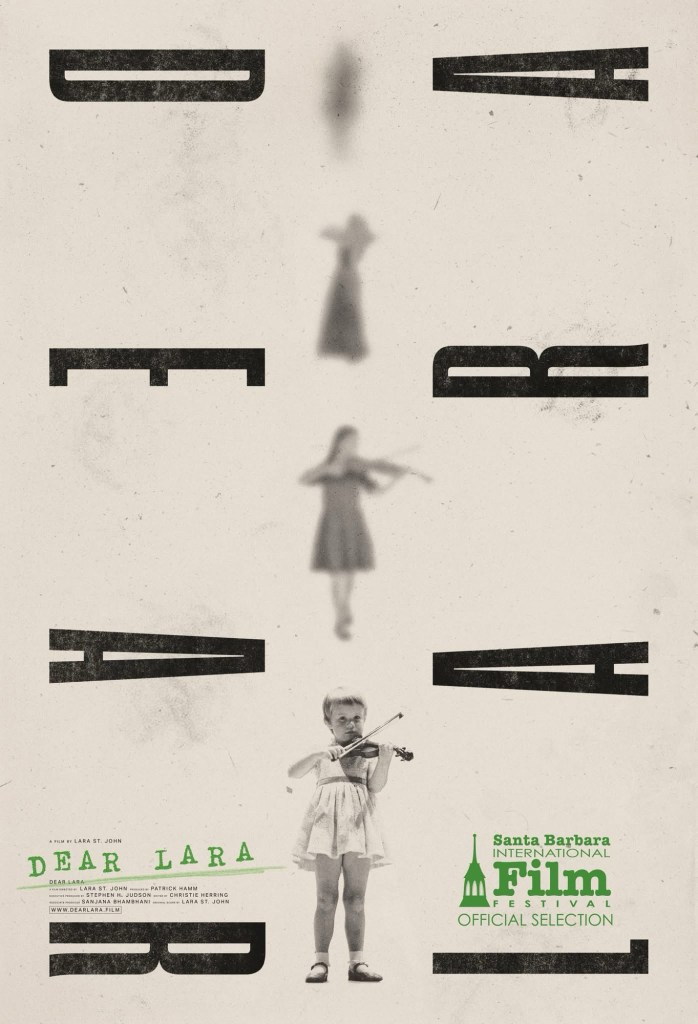
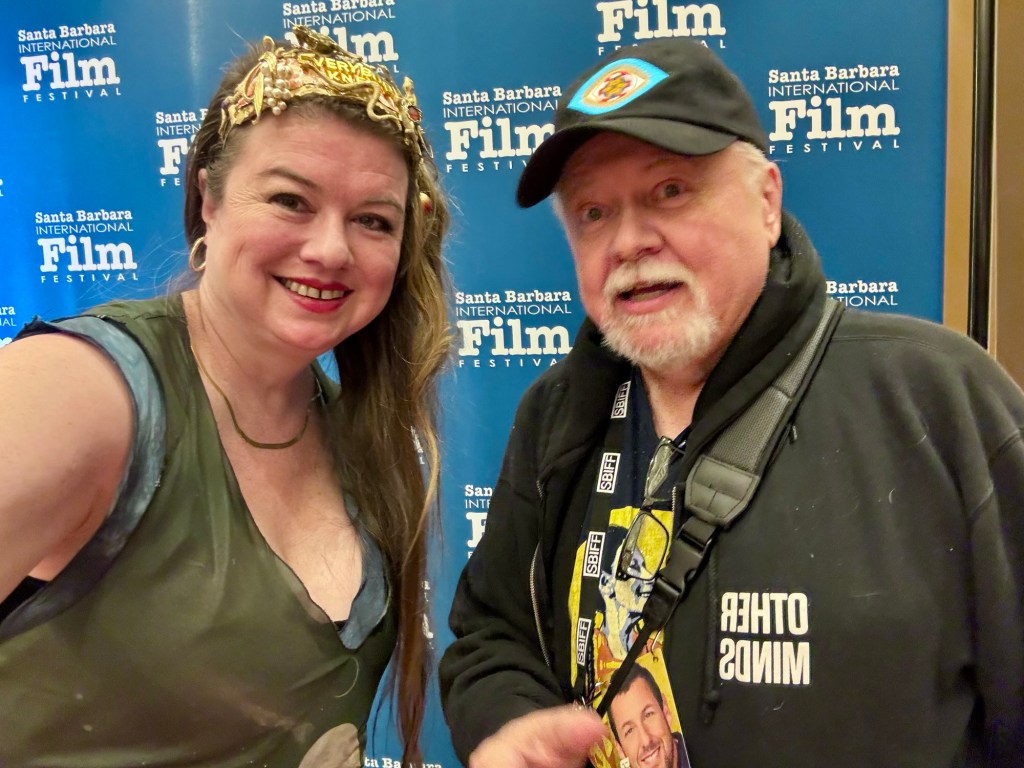
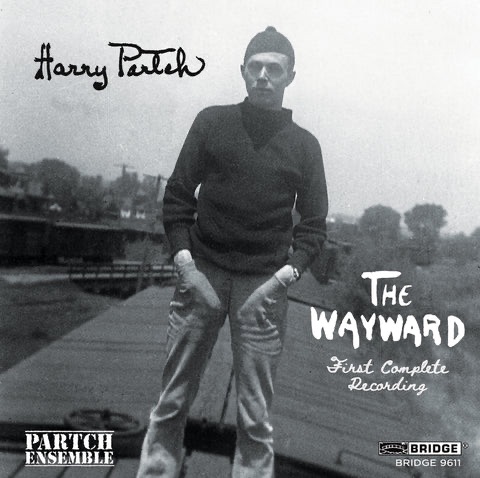
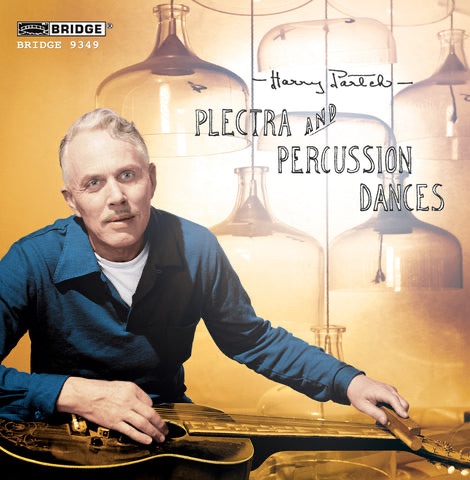
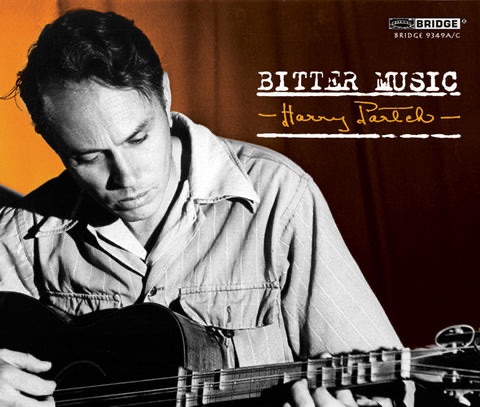
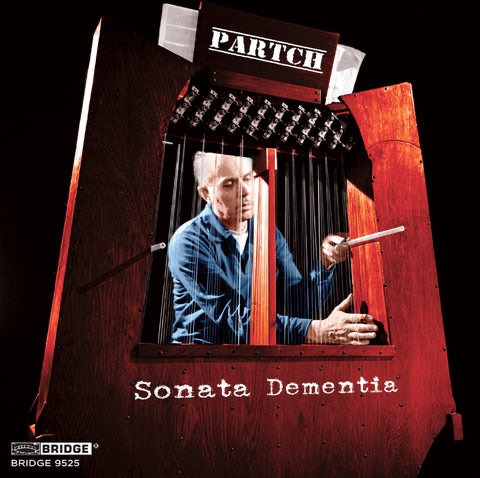
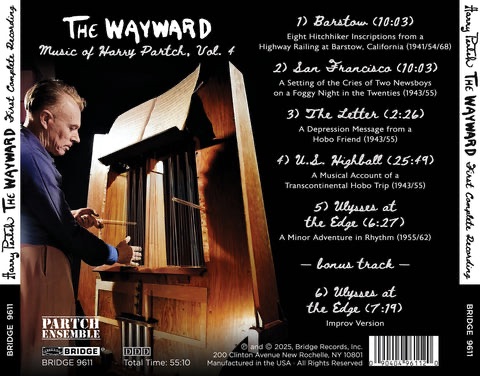
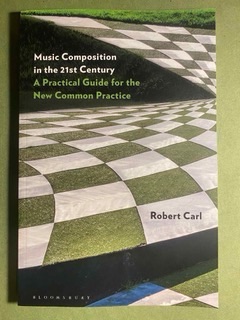
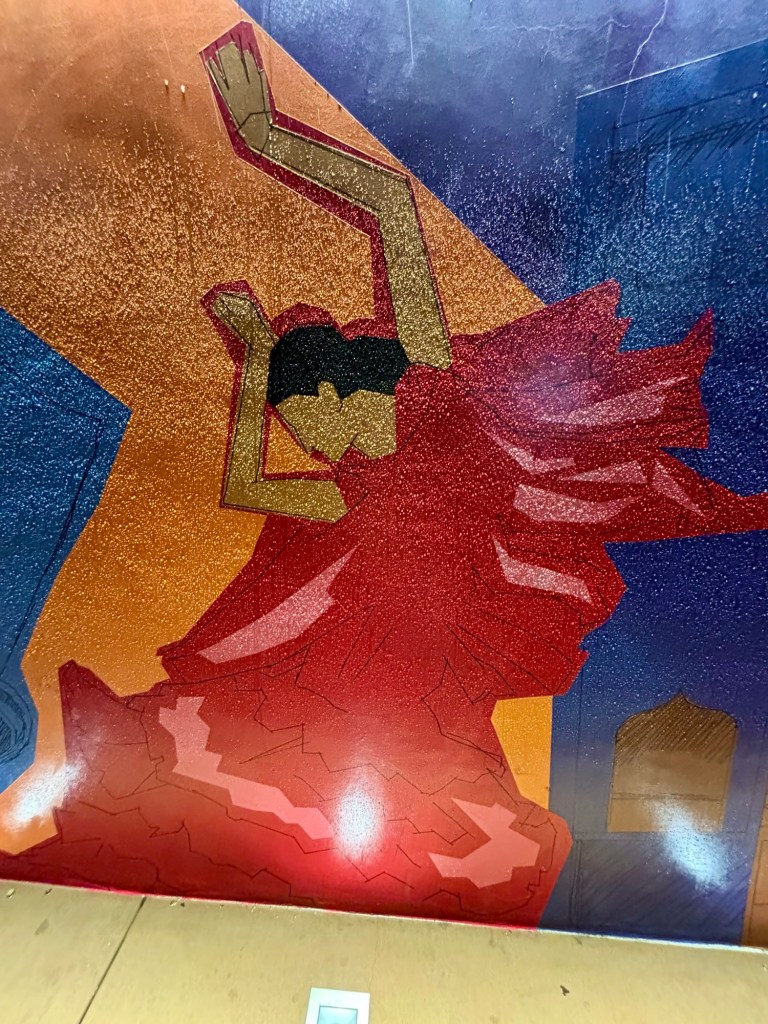


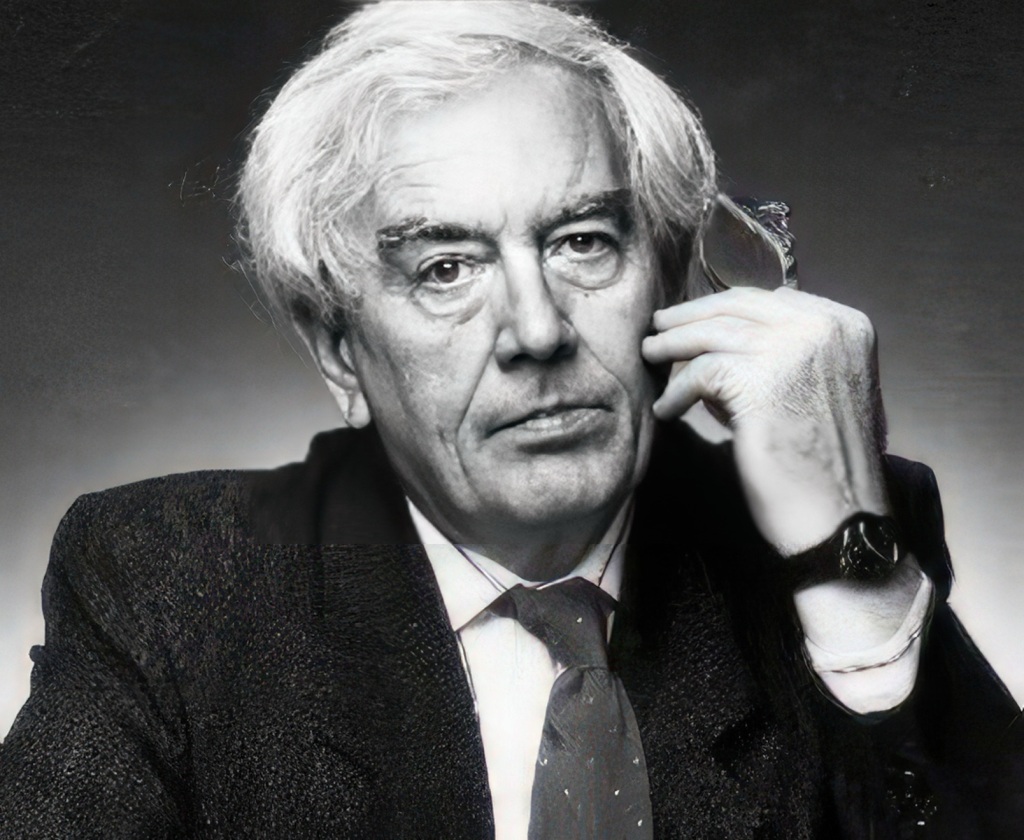


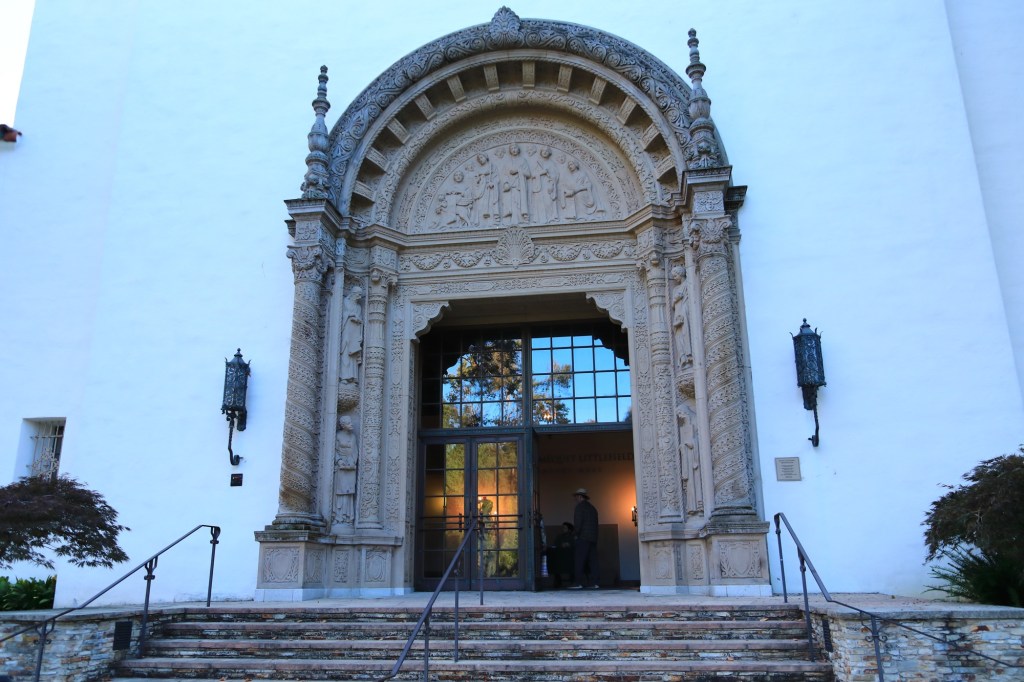


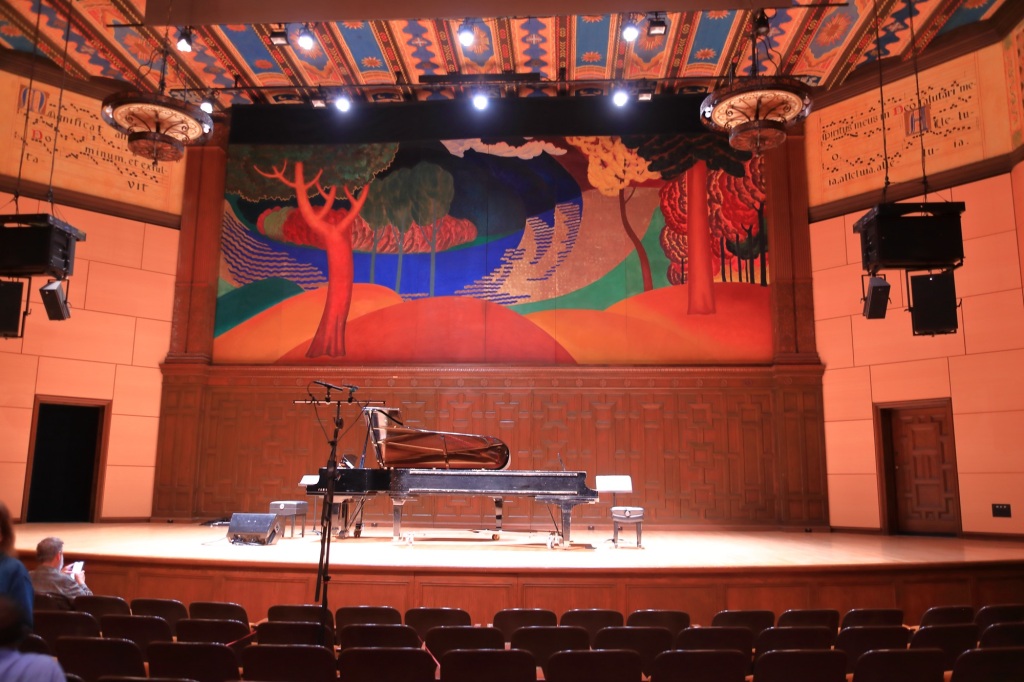
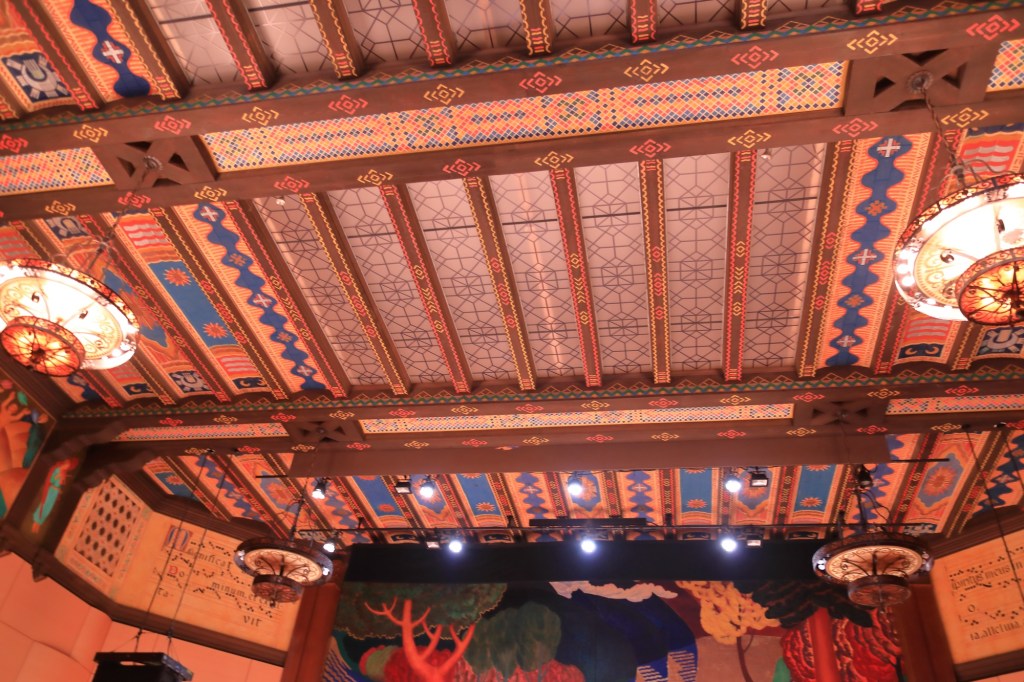
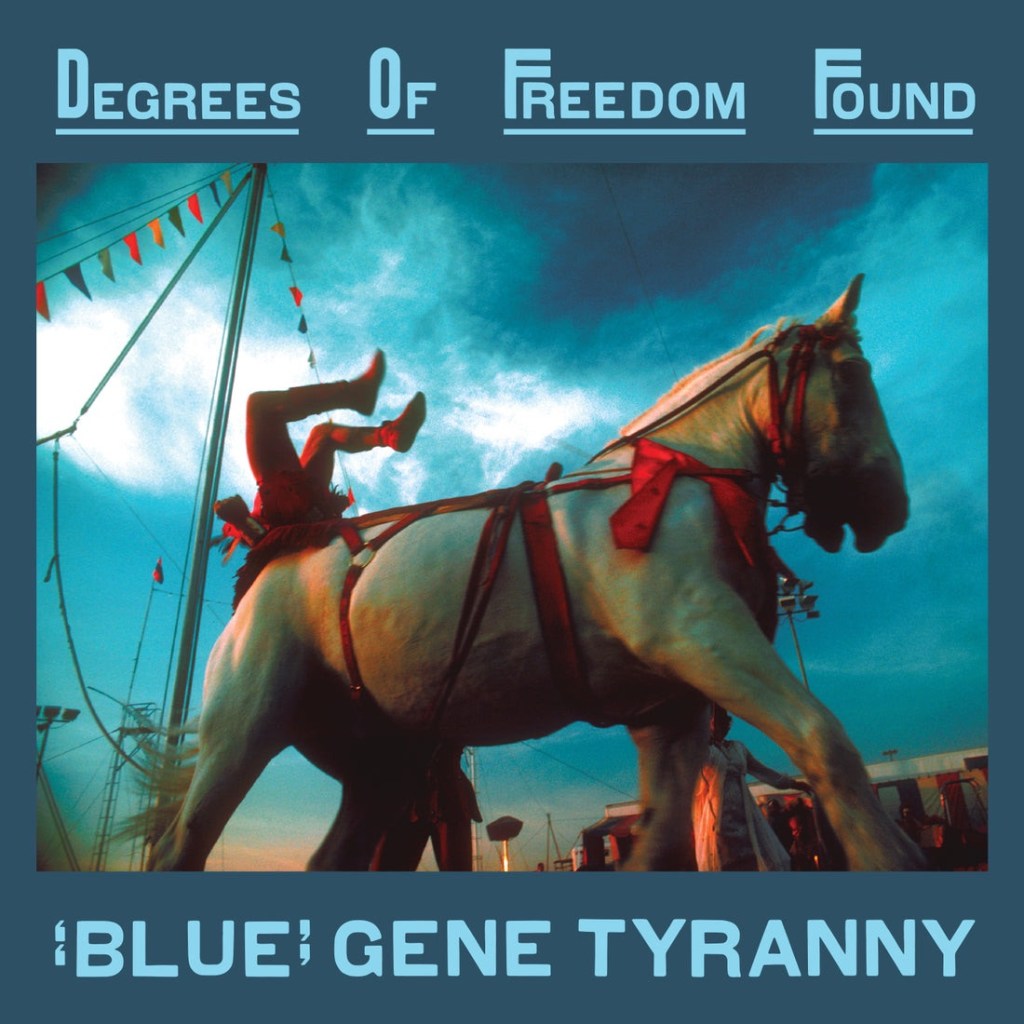






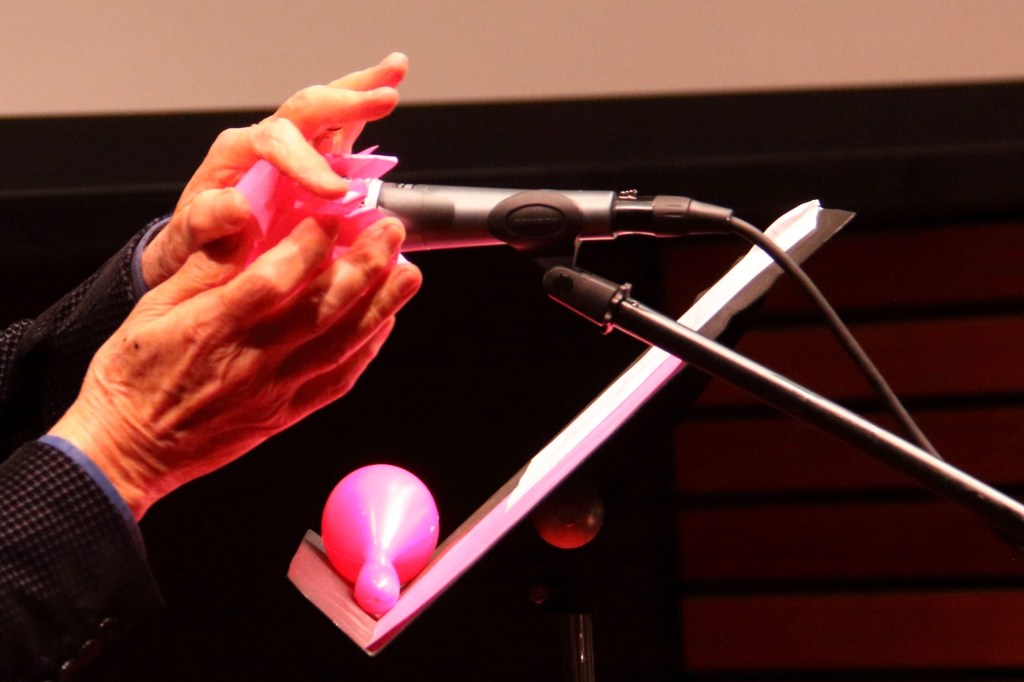




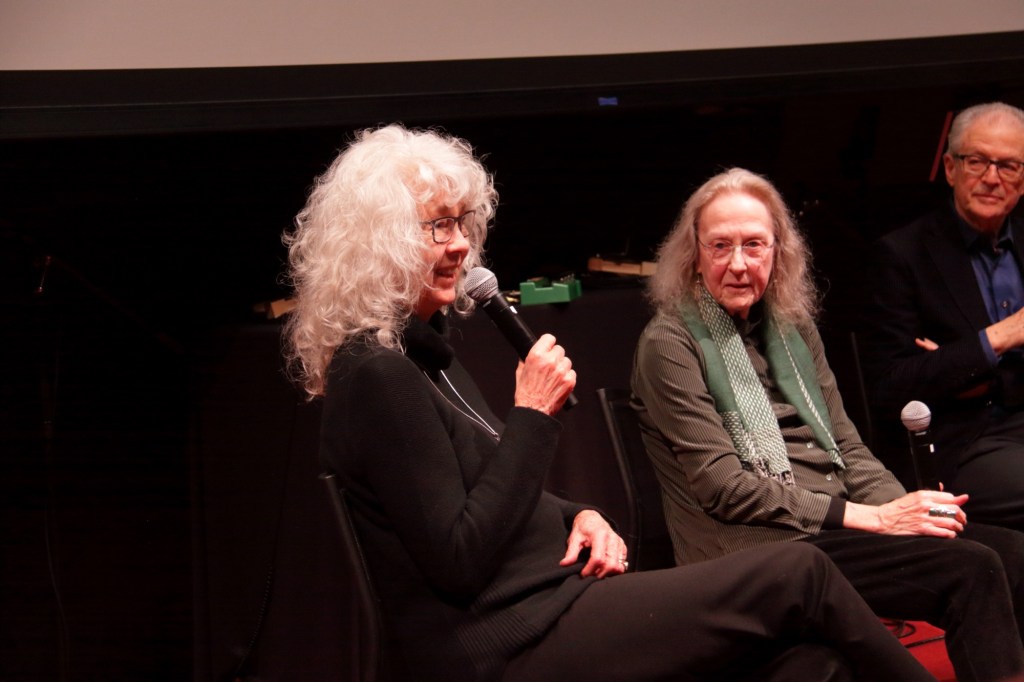


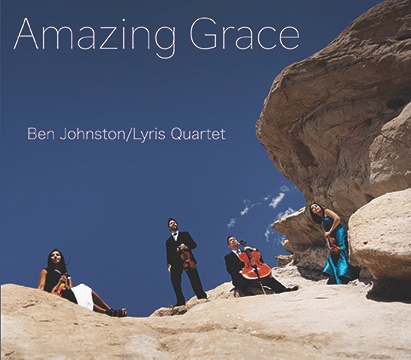


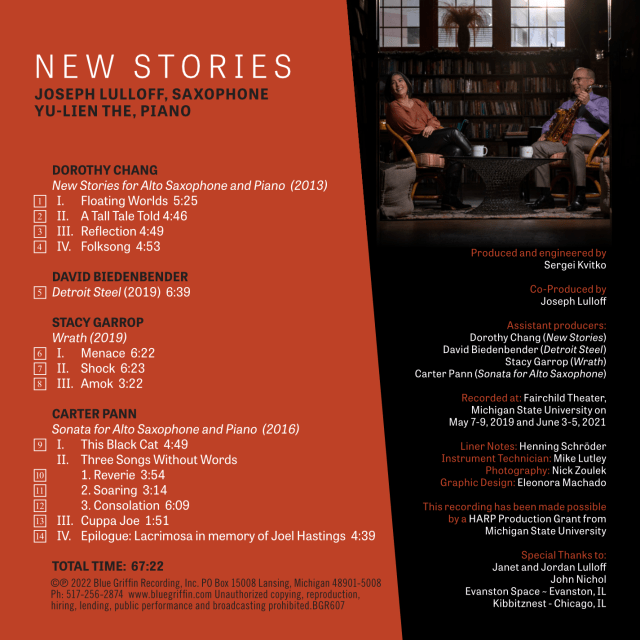
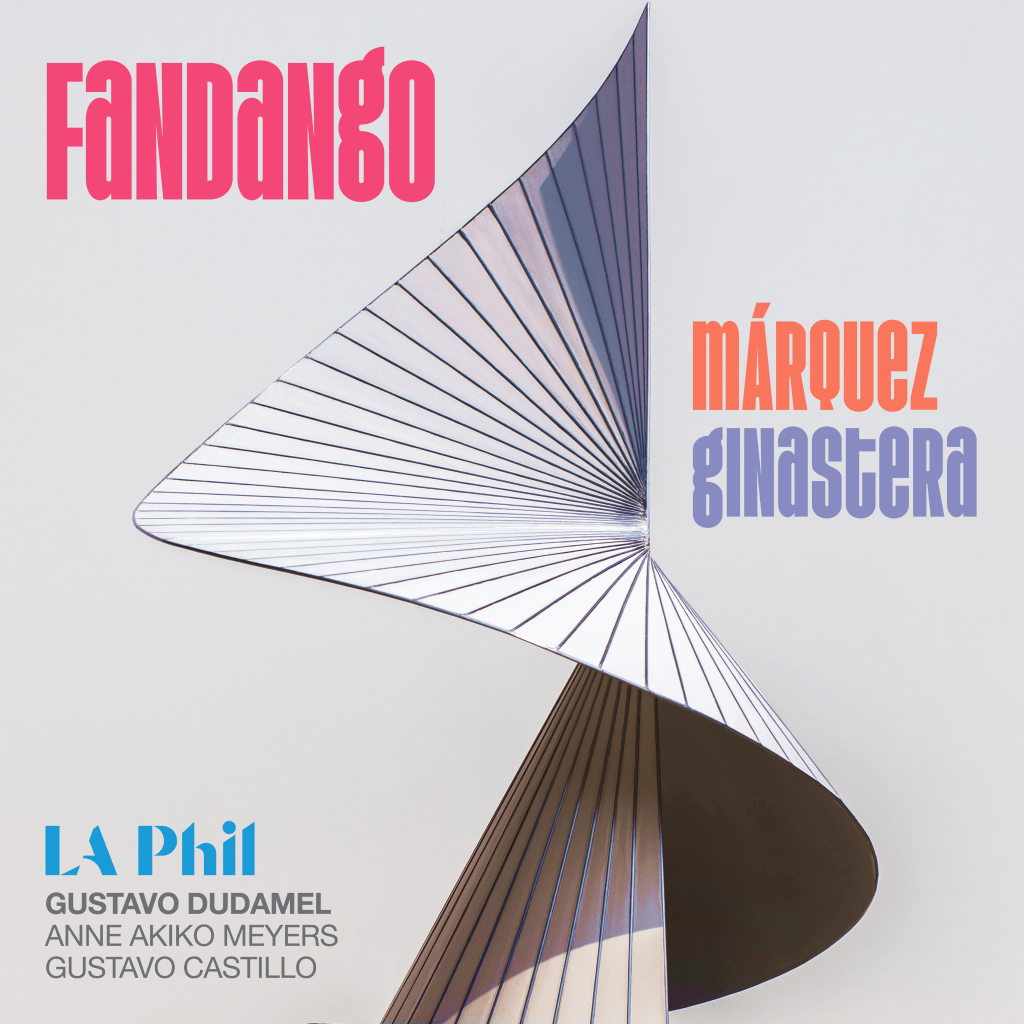
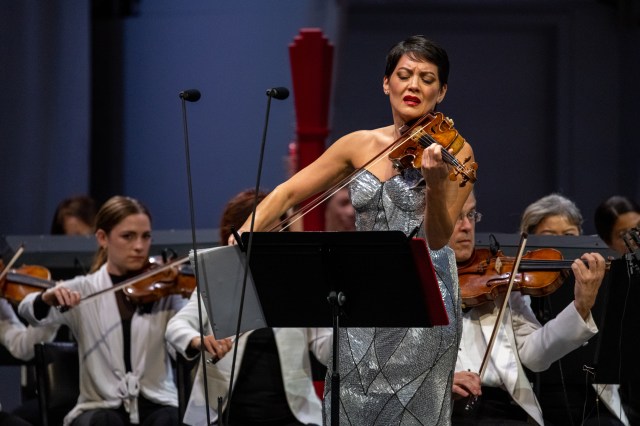
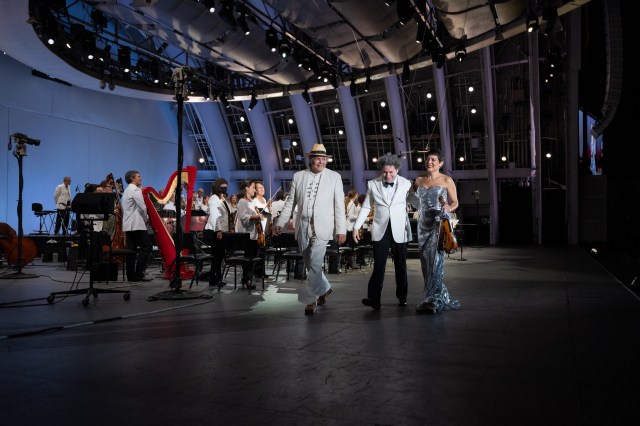

 New Music Buff