The Central Park Five (2019), a fine recording of Anthony Davis’ Powerfully Relevant, Pulitzer Prize Winning Opera


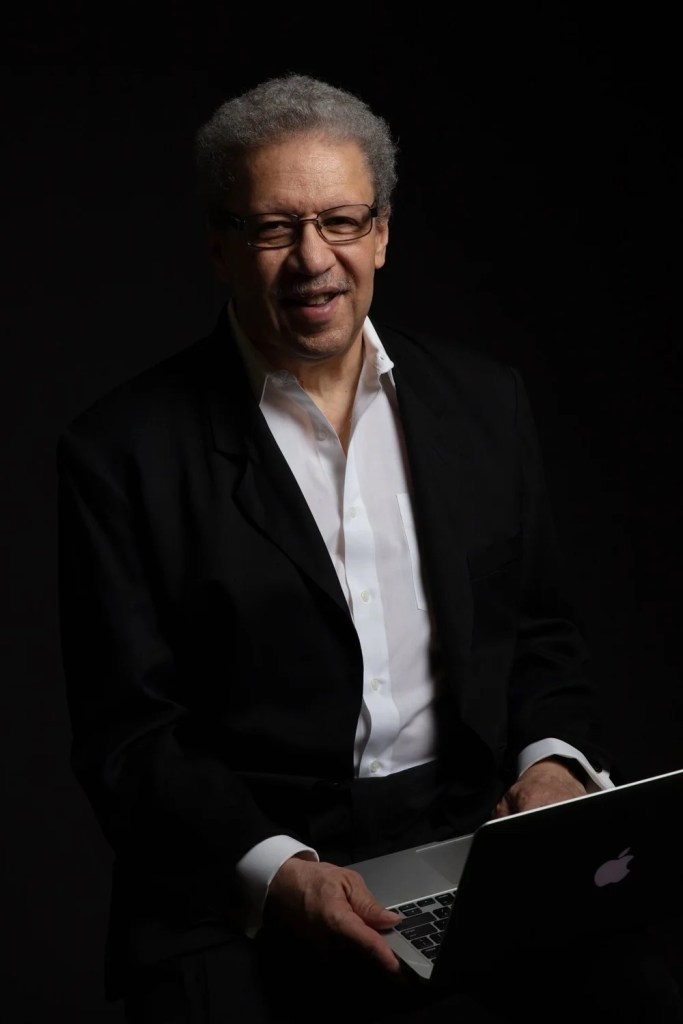
Composer Anthony Davis

Anthony Davis has never hesitated to share express his feelings and politics in his music. His operas “X: The Life and Times of Malcolm X” (1986) and “Amistad” (1997) are two recent shining examples.
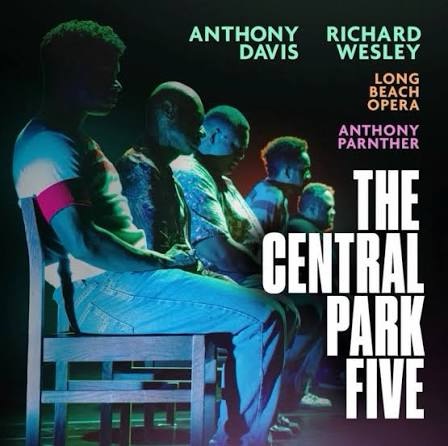
Album Cover

This most recent of his operas is also one that partakes of more recent political events than the previously mentioned works. It is, by my count, his 8th opera. And though all of Davis’ operas can be said to have some political content, “X”, “Amistad”, and now “The Central Park Five (2019), are most specifically focused on the transatlantic slave trade (ca. 1500- 1870) and subsequent black political history..
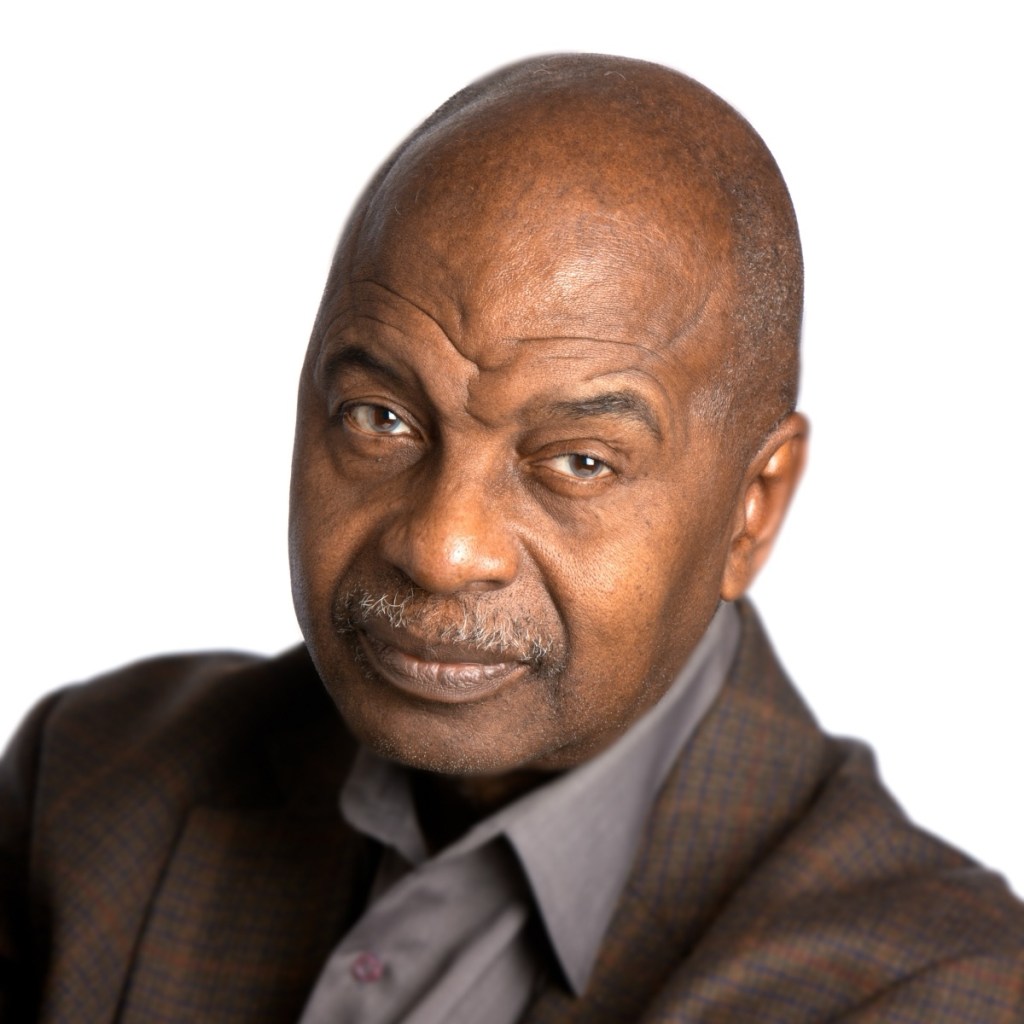
Librettist Richard Wesley

The story captured in the libretto by Richard Wesley made newspaper headlines and even motivated the pre presidential Donald Trump to take out full page ad in several media publications advocating their guilt and advocating for the death penalty.
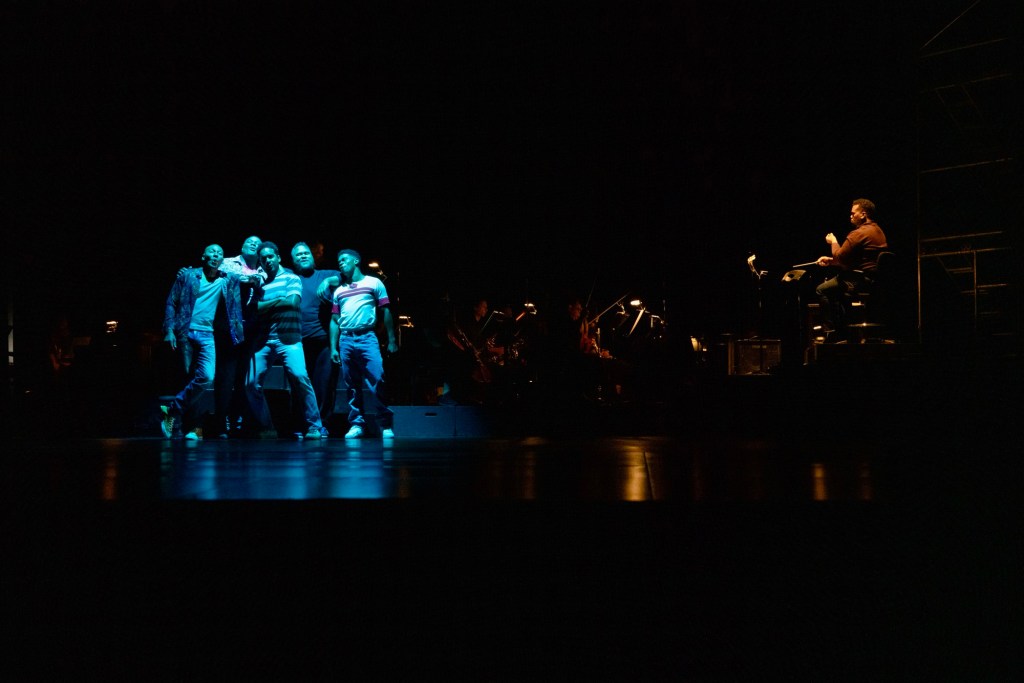
Performance photo by JJ Geiger

While I have had the pleasure of multiple hearings of this powerful and substantial work I have chosen to include the composer’s excellent essay which describes not only the story but also the some of the intricacies and references embedded in the music itself.

Notes on The Central Park Five

By Anthony Davis

1989. A group of predominantly Black and Hispanic teenagers enter Central Park in New York City. They turnover garbage cans, throw rocks, harass people on bicycles. A young woman is sexually assaulted in the Park and six teenagers are detained and questioned about the assault. Five of the teenagers, Kevin Richardson, Raymond Santana, Korey Wise, Yusef Salaam and Antron McCray become the center of a criminal case that would polarize New York City. The Exonerated Five were falsely accused and convicted of the crime with no physical evidence. Condemned publicly by the press, the Exonerated Five were victims in a culture war waged against  Black and Hispanic communities.  A politically ambitious real estate mogul condemns the teenagers with a full page add, proclaiming “Bring Back the Death Penalty. Bring Back Our Police!” The persecution of the Central Park Five marks the beginning of Donald Trump’s political career, built on racial animus and the exploitation of the deep rooted racial divide in America. 

Why? What accounts for what Johnny Cochran would later famously call, “The rush to judgement.” How could the court trust the coerced “confessions” of the five teenagers? How did we come to this moment that assumed guilt, blindly seeking revenge? What caused the deeply rooted anxiety of White Americans when confronted with Black-Hispanic culture  and people? 

1989. Spike Lee’s movie Do the Right Thing premieres, Quincy Jones’ album “Back on the Block” debuts, Black and Hispanic teenagers sing the Tone Loc song “Wild Thing” as they descend on the Park. The song becomes a label in the press as they describe the actions in the Park as “Wilding in the Park.” Did the persecution of the Five represent the White anxiety about Hip Hop entering mainstream American culture? Was the response to the Five a reflection of Tony in the Pizza restaurant smashing Radio Raheem’s boombox? The persecution of the Central Park Five, emblematic of other similar incidents of false accusations of Black and Hispanic men  across the country, demonstrates the devastating consequence of the culture war, as incarceration has become the new slavery.

As a composer, I have always been drawn to stories that intersect the political and cultural worlds. My operas, X: The Life and Times of Malcolm X, Amistad, Wakonda’s Dream, Tania and Pancho Rabbit and the Coyote, all explore political moments and movements that are reflected in the dynamic of music. In X, it is the evolution of creative music from the forties to the sixties, a revolutionary movement in music as well as in politics. In Amistad, it is the false balance of the Missouri Compromise and the untenable grounding of America’s birth in both the ideals of Democracy and the original sin of Slavery. In American music one must always understand the irony that slavery created our culture from the advent of the minstrel show to the “Birth of the Cool.” Music can capture the tensions and fissures in our cultural and political life and the hope of something better. Music can allow us to feel the powerful forces at play in our lives, forces that are at once destructive but yet in our cathartic engagement allow us to envision a kind of freedom.

The Prologue of The Central Park Five begins with the “Exonerated Five” today as they reflect on the past. The opening cross-fade with the Kurzweil texture signify a fissure, a break, the dark spectre of trauma. Each of the Five recalls the trauma of the past. Librettist Richard Wesley ends the Prologue with poignant simplicity, “They tell us in school how big the world is, but that’s their world. They crushed mine.”

Act One introduces a recurring theme and harmony that suggests the past world of Harlem. The lyric, “Harlem, a Black and Tan Fantasy,” of course, suggests Ellington’s Harlem. In fact, before the Masque’s aria, the descending minor 3rd in the baritone saxophone suggests Ellington’s famous Tone Parallel to Harlem from 1949. Ellington describes the descending 3rds that appear throughout the work as signifying and enunciating “Harlem.” The theme is introduced by the Baritone Saxophone and starts as a dirge with variations. The harmony in f minor recalls one of Charles Mingus’ most famous harmonic progressions loosely based on the standard, “You Don’t Know What Love Is,” a ballad made famous by Billie Holiday. The melody is then played by the trombone with a counter-melody inspired by the great Eric Dolphy, played by the Baritone Saxophone and the Bass Clarinet. The theme moves into swing with an iteration by the trumpet. This introduces the Masque’s aria, “Harlem, a Black and Tan Fantasy.” The Masque is a malevolent force in the opera. He is the skeptical reporter, who distrusts Black people. He’s the policeman who arrests and interrogates the five suspects. He is the judge who condemns them.

In Act One the five singers become their younger selves, before they arrive in Central Park. They are exuberant and recklessly free as they talk about their lives and aspirations. The music begins in a gamelan inspired texture with a 9 beat pattern in the vibraphone  and right hand of the piano and a 10 beat pattern in the left hand of the piano. This creates a repeating grid of 90 beats. As in my first opera, X, often I try to marry underlying rhythmic structures with dramatic intent. Every 90 beats something new can happen in the music and in the drama. The orchestra slowly reveals the inner harmonic working of the drone against the free flowing lines of the Five boys. The Masque disturbs and interrupts the Five’s music signaled by a series of cascading major thirds that play against the harmony of the drone establishing a 4 against 3 rhythmic tension, as the music evolves “off the grid.” This leads to a new tempo before the Masque proclaims  “They (Black people) are lost!” The opera explores rhythmic tension that is reinforced by the harmony. The Five defiantly sing “This is my world!” and later the anthem “The World is Ours!” The stable harmony of the anthem is eventually disturbed by the building polyrhythms as the Five become more excited culminating in the antiphonal rhythmic interplay between “This is no life. This ain’t living. This ain’t no life!” and “Time to bust out, time to break out, time break out, time to act out” This leads the Five into the Park. In the music, I tried to capture the exhilaration and exuberance of the Five and their illusion of freedom. As they enter the Park, the Five sing, “We are the freaks! We are the freaks who own the night!” The music in the Park is influenced by everything from Parliament Funkadelic to fusion Miles Davis and Jaco Pastorius with Weather Report. The music captures the exuberance and recklessness of the Park that quickly becomes out of control fueled by  groove and funk.

Music allows us to see different worlds and to shift perspective. As Kevin and Antron are initially detained we hear the echoes of the Blues and again the stop-time from Black and Tan Fantasy as the Masque declares falsely that “That is the end of that.” The anthem music, when it returns as the Assistant District Attorney and the Masque discuss the assault, becomes a distant, shattered memory. The interrogation scenes feature rhythmically driven music as if an ex-machina force is coercing the Five’s confessions. The words of the Masque and the Assistant D.A. are like weapons. The vocal writing is more angular with shifting harmonic centers emphasizing speech rhythms and repetition as the Masque and A.D.A, try to force the Five to implicate each other. This is in contrast with more reflective moments that are lyrical and harmonically grounded. The Five’s collective sense of apprehension and fear is expressed in passages drawn from the vocal ensemble tradition of close harmony from doo-wop, Motown and the street as if through a filter of Gil Evans’ arrangements in “My Ship” or Blues for Pablo. The hybridity of the music tells the story.

A friend once asked me, “How do you write for Donald Trump?” I replied, “First, he is a tenor. Second, he repeats himself in his violent sound bytes. Third, he never completes a sentence.” I tried to capture his use of short, repeating phrases that could be amplified by the chorus. “Wilding, Rampaging, Wilding, Rampaging Wolfpack!” What is Trump’s appeal? Like moths to flame, Trump says things that people may think and be afraid to express. In MAGA world Trump’s racism is somehow authentic and Trump has helped unleash the pathological racism that is both systemic and psychological.  I entertained these scary thoughts as I composed the opera.

Finally, the opera is an uplifting story of a community rising up against injustice, of the Five finally finding exoneration and vindication as the anthem returns with “The World is Ours!” But we know the cost, as Korey says, “They stole from me!” And we know this is a continuing story. The forces that implicated the Five are still with us.

Thank you to the librettist Richard Wesley who illuminated their story with humanity and emotion from Sheronne Salaam’s “They are trying to blame my son” to Korey’s “They stole from me.” None of this would happen without the love and support of my muse, Cynthia Aaronson-Davisuch passionate command. I must recognize the extraordinary work of Earl Howard who created the electro-acoustic world that shadows the opera. I need to call attention to the critical work of Andreas Mitisek who directed the first production in Long Beach and helped realize the dramatic possibilities of the opera. I am indebted to all the musicians and singers who brought this opera to life in Long Beach, Portland and Detroit and, of course, Long Beach Opera, particularly Jenny Rivera and Michelle Magaldi, who believed in the work and help produce this recording. I would also like to thank UCSD for its continued support of my work. None of this would happen without the love and support of my muse, Cynthia Aaronson-Davis.
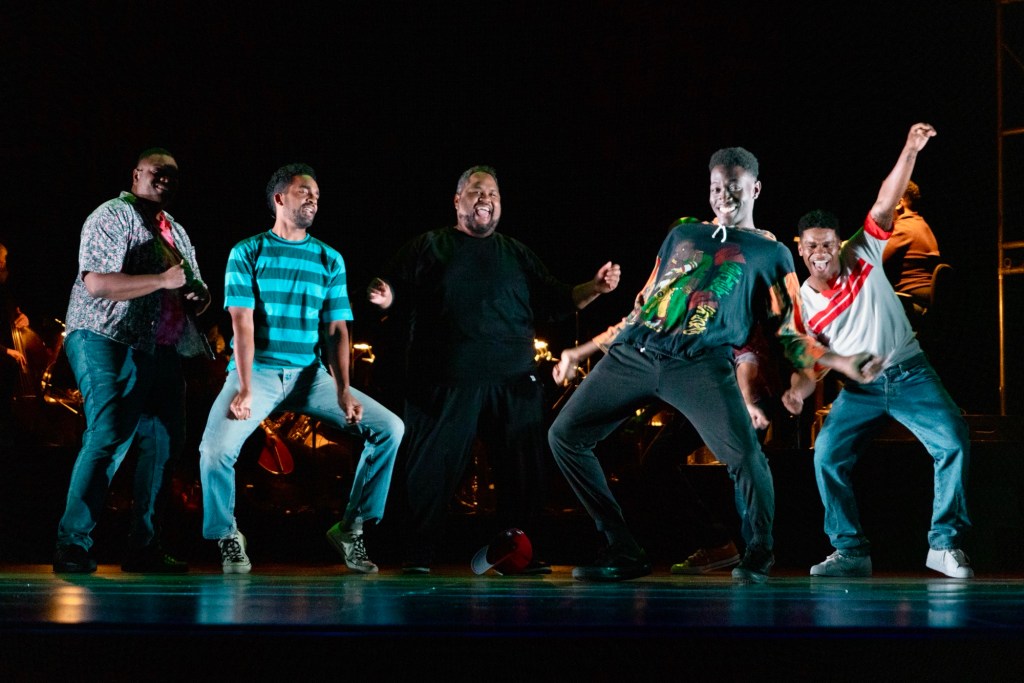
Another performance photo by JJ Geiger

The opera has received many performances since its premiere by The Long Beach Opera, who commissioned the work. It has since been performed in Detroit, New York, and is scheduled for another performance in Long Beach.

The music incorporates bebop and other jazz styles into a listener friendly melodic and harmonic constructions that set the beautiful libretto’s words effectively.

Davis himself identifies as a politically expressive composer. Even in his non-stage works like his meditation on the first of the so called Miranda Rights (You have the right to remain silent) cast in the classical form of a concerto for clarinet (2007). Arguably, Davis’ work cannot be separated from the experience of Black American culture. Davis, raised in the cultural lineage of transgressional innovators such as George Lewis and his many colleagues of the AACM (American Association of Creative Musicians), a group that still works to include the cultures and rituals of many African countries into the practice of so called western art music). Davis has been a defining figure in contemporary music since at least the 1970s. And now he is recognized as an exemplar of “American” music by virtue of the recognition of the Pulitzer Prize.

As a work of classical protest music, it functions (in Jeremy Eichler’s term) as “times echo”, a use of great art to frame a noxious historical event in a sort of time capsule that preserves memories and feelings of the story that lives again in performance. As such, The Central Park Five stands proudly alongside Hans Werner Henze’s “Essay on Pigs” (1968), Benjamin Britten’s “War Requiem” (1961), and composers as diverse as Dmitri Shostakovich, Luigi Nono, Arnold Schoenberg, Steve Reich, Wynton Marsalis, and Louis Andriessen (to name but a few).

But, as is the case with any artistic work of protest, the actual impact remains to be seen. The horrors of racism remain a defining part of western culture, of American culture now cast forever in this deeply felt drama. This is definitely not, in Toni Morrison’s phrase, “…music to entertain the master and soothe his blunted soul.” And in a time of the active attempts to suppress and deny this unsavory history, art can preserve memories both good and bad.. There is a noble beauty in that.

Salt, the Residue of Looking Back. Maya Beiser Casts Her Unique Gaze


Denise Burt’s beautiful design effectively encompasses the scope and meaning of this album in arresting images

Maya Beiser, cellist, Bang on a Can member, listener, composer, innovator, interpreter, and producer. Beiser’s hats are many and each new album traces the musings of a truly interesting artist, ever evolving, revisioning, thinking, growing. She cuts a singular, intelligent, and deeply felt path that is both monolithic and definitive.

Looking back and forward

This latest release on her own Islandia label is another exposition of a powerful musical mind bringing fascinating perspectives, the artist’s singular take on music spanning some 500 years. Beiser is not about “authentic” interpretation (mostly) but rather about lucidly sharing her perspective, her musical visions.

Previous releases gave us her take on living musical icons like Philip Glass and Terry Riley. She also dares to look back upon some of the “sacred cows” of the repertoire like the Bach Cello Suites and Riley’s seminal “In C” among others. Her revisionings are respectful homages and insightful performances that challenge and inform her listeners to maybe hear in a new way. As T.S. Eliot said,

“We shall not cease from exploration
And the end of all our exploring
Will be to arrive where we started
And know the place (or the piece) for the first time”

So it is with the carefully curated selections on this disc. Beginning with a Missy Mazzoli composition featuring vocalist and performance artist Helga Davis (featured most visibly in the most recent iteration of Glass’ “Einstein on the Beach”). Her vocal skills drive these settings of texts by Erin Cressida Wilson. And this piece sets the tone for this album which is both lament and celebration for the experiences of women in history, mythology, and memory.

The first five tracks contain the bittersweet song cycle, Salt, from which the album takes its name. Here the listener is brought into the context of the Biblical story of Lot’s wife, forever imprisoned in a pillar of salt. But, rather than a pedestrian retelling of the tale, this cycle appropriates the context of the story to establish, with painful directness, the tone and direction of what will follow.

Helga Davis (photo from WNYC)

From her mineral prison, a mineral ironically known for its preserving properties, she sings of her crime of looking and remembering. She sings of pain, anger, and sadness, but never with remorse for her “crime”. It is an image that Beiser says lives powerfully in her personal memory. Mazzoli, Davis, and Beiser recontextualize the prisoner as victim, not criminal.

The ghostly images of the women we meet on this album are lamented as well as celebrated for their stories which burn deeply into our collective mythology, into our personal memories. Beiser lovingly dedicates this release first to her daughter, Aurielle Kaminsky, then to the principals whose creativity and energy pervade this album: Missy Mazzoli, Clarice Jensen, Meredith Monk, Erin Cressida Wilson, Helga Davis, Odeya Nani, Beth Morrison, and Christina Jensen.

In Lament to Phaedra, a work by the late British composer John Tavener is heard in an arrangement by Beiser. The 1995 work is sung by Phaedra’s sister Ariadne in response to Phaedra’s suicide by hanging. But here we have a wordless arrangement for cello and electronics that focuses on Tavener’s unique harmonic style and lyrical melodic construction. The result is effectively an affirmation of the lament for her fate.

Then we are treated to yet another transcription of a curiously difficult but very effective use of the early music concept of “hocket”, an interactive counterpoint of two voices. The eponymous Hocket, though vocal in its original form is, like much of Meredith Monk’s work, without a text. Monk’s work is about the voice, or the voices. And her revisioned operatic creations are fed by the mythological streams of women’s stories. This creative arrangement by this artist is an homage to Monk and, by extension, to the women she so beautifully celebrates in her work.

Meredith Monk with Allison Sniffin after a performance of Hocket at the Other Minds Festival in San Francisco (copyright Allan J. Cronin)

Another arrangement follows. It is a Melody from Orfeo ed Euridice, from the late baroque opera by Christopher Willibald Gluck. It is, of course, another ill fated relationship ended by the same infraction of looking and remembering that sealed the fate of Lot’s wife. Here Beiser chooses the gorgeous “Dance of the Blessed Spirits”, another wordless homage that imprints on the listener most effectively.

Next up is yet another wordless work, this one by fellow cellist and composer, Clarice Jensen, whose work has graced these blog pages before in reviews of her singular, drone, minimalist, meditative albums. Whether you call her work “drone” or “minimalism” or whatever you choose, your ears will bask in her meditative sonic ministrations. Jensen’s work, while related by its medium (that of cello and electronics), is a distinctly different style, immersive, meditative, evocative, a sound bath for the listener.

Clarice Jensen (from Jensen Artists page)

From the 21st century we are now transported to 17th century Venice and the work of the early baroque master Claudio Monteverdi. In the only surviving music from his second opera, we hear Ariadne, sister of Phaedra, singing the lament for the sister who had taken her life in shame and sadness.

The penultimate track brings us to this artist’s cultural roots with a song by Yedidya Admon to lyrics by Yitzchak Shenhar.

My Field (Shedemati)

My field,
At dawn I sowed it in tears,
Let the prayer of the farmer be heard!
My field,
It is saturated with dew,
It is intoxicated by the light of the sun.
The grain bends low in front of the reaper.
The strides are long,
The burnished scythe is raised high.

Odeya Nini provides the voice in this “reimagining“ of this classic song of sadness and lament by the lowly farmer imagined by the poet.

Odeya Nini (unknown copyright)

Fittingly, this last track is about death, endings. It is Beiser’s arrangement of Henry Purcell’s “When I am laid in the earth” from his opera, Dido and Aeneas. The text:

When I am laid, am laid in earth, May my wrongs create
No trouble, no trouble in thy breast;
Remember me, remember me, but ah! forget my fate.
Remember me, but ah! forget my fate.

But forgetting is not allowed here. Beiser begs us to remember. And we cannot avert our ears or eyes.

Putting Schoenberg in Context: Harvey Sachs’ “Schoenberg, Why He Matters”


There is an aptness that accompanies the publication of my first blog of the new year. Much as we aspire to review our past year and resolve improvements for the next, this book effectively plays a similar role.

Arnold Schoenberg (1874-1951) was born into tumultuous times. His life intersected with political change, social changes, two world wars, and huge changes in the way music would be written and heard. His life and the above mentioned changes in the world are the subjects of Harvey Sachs’ relatively brief review of Schoenberg’s life and career. But the relative brevity does not sacrifice the apparent aim of presenting this composer’s work in the context of the times thereby providing the reader/listener with a perspective that aids an understanding of the man, his music, and his (arguably still evolving) place in history.

“You can see it isn’t easy to get on with me. But don’t lose heart because of that.”- Arnold Schoenberg

At 272 pages this book wisely focuses on the composer’s published work and the drama of its performance along with critical and audience responses. This is not a comprehensive review of all things Schoenberg. While Sachs makes references to the composer’s earlier works, he focuses primarily on the published music and the responses of musicians, critics, and audiences. More importantly he focuses on the massive socio-political changes that paralleled the music thereby providing a useful context for future listeners and performers to better understand Schoenberg and his place in musical history.

Sachs places less emphasis on the composer’s paintings and even his writings. What the author achieves is a very readable and understandable essay that listeners (your humble reviewer included) can use to take another look/listen and to come to a new reckoning of Schoenberg and his place in the world. To, as the subtitle suggests, better understand, “Why he matters.”

I must admit that I did not understand and appreciate the music of Arnold Schoenberg immediately, and even when I ventured to read this volume, I found that my familiarity with this composer was limited primarily to “Transfigured Night”, “Pierrot Lunaire”, the “Second String Quartet”, Moses und Aron” (the Solti recording), Piano Concerto, Violin Concerto, the String Trio, and a fleeting listen or two to the piano music.

The joy of this book was in its chronological exposition of all of the composer’s major works and their historical and political contexts. As a result I found myself listening for the first time (or at least the first in many years) to the two chamber symphonies, the other string quartets, etc. It was an opportunity to reset my perceptions/misperceptions and acquire a better understanding and appreciation of his oeuvre.

As Sachs concludes:

“There are cycles in the arts. Perhaps we have reached the end of one great, centuries long cycle of individualistic European Art Music and its global offshoots. We cannot know. But, in the unlikely case that the subspecies Homo Sapiens Sapiens doesn’t destroy itself in the meantime, there is good reason to expect that sooner or later a new cycle will begin. And, for now, we have an enormous treasure of outstanding creations that continue to speak to anyone who is willing to listen to them.”

Treemonisha Wasn’t the Only One, James P. Johnson’s Lost Operas.


Naxos 8.669041

Regular readers of this blog are doubtless aware of my “underdog” interests. Whether suppressed by fascist regime, (as in London Records “Entartete Musik” series and Chandos “ARC”ensemble recordings), or just somehow eclipsed by more “spectacular” (by which I mean, “producing a spectacle” like Stravinsky’s Rite of Spring) but, as exemplified by Cedille Records’ “Avant L’ Orage”, music can be oppressed, disliked, or overlooked and such music, in my humble opinion, deserves another listen, a second chance. With this release, NAXOS puts forward a second chance on these stage works by a man better known for his stride piano and ragtime works. No, it’s not Scott Joplin. Guess again.

Esoteric as this my interests have ranged, I couldn’t have guessed that I refer here to James Price Johnson (1894-1955), so don’t feel bad if you guessed wrong. Johnson’s burial site is in Queens, New York. His grave, unmarked since his burial, didn’t get a headstone until 2009. And this is the man whose composition, “Charleston” (1923) became ubiquitous and emblematic of the so called “Jazz Age”.

Apparently Johnson had a fair amount of success as a composer of stage works. And he collaborated and/or influenced people like William Grant Still, Duke Ellington, Count Basie, Jelly Roll Morton, Willie “The Lion” Smith, Art Tatum, and Thelonius Monk, among many others. Fats Waller was one of his students.

Johnson is arguably an artistic descendant of Scott Joplin whose work Johnson both performed and recorded. And in addition to his solo piano work he apparently also wrote stage works. The works presented on this release are short operas, lovingly reconstructed by the late James Dapogny (1940-2019), a composer, pianist, and jazz musicologist. Dapogny provided an accounting of his work reviving these historically and culturally significant works that also happen to be well written and very entertaining.

The liner notes written by University of Michigan doctoral candidate Cody M. Jones provide a very useful context for understanding both the music and it’s unreasonable neglect. Jones identifies these works as part of the “shadow culture” (a concept made by opera historian Naomi André referring to art produced by black artists which was willfully neglected during the “Jim Crow” era).

Jones writes that these works may have been inspired by George Gershwin’s Porgy and Bess (1936). It appears that The Dreamy Kid (1937) was Johnson’s first stage work and De Organizer (ca. 1938-9) was his second (and last) work for the stage.

The Dreamy Kid was written to an existing play by Eugene O’Neill but apparently was never completed. Its fragments were found during Dapogny’s research on De Organizer. So that makes this a world premiere recording of this piece.

Track listing

Two stage works with libretti, one by the estimable hero of the Harlem Renaissance, Langston Hughes, and the other (actually a stage play, not a libretto) by Eugene O’Neill. These recordings owe a debt to the conductor Kenneth Kiesler (1953- ) and the late James Dapogny (1940-2019), composer, musicologist, and jazz musician. Dapogny and Kiesler also contribute the brief but useful program notes.

“De Organizer” (ca. 1930) received acclaimed revival performances in Michigan, New York, and Chicago in 2002. Both the New York Times and the Chicago Tribune featured strongly positive reviews.

“De Organizer” is an apparently complete recording Its libretto was written by the Harlem Renaissance writer Langston Hughes (1902-1967). The work received only one performance in Carnegie Hall in 1941 as a benefit for the International Ladies Garment Workers Union. This work shares a similar fate with that of Marc Blitzstein’s “The Cradle Will Rock” (1937), famously suppressed for its pro union themes.

The second work is a set of excerpts of an incomplete opera called, “The Dreamy Kid” based on a stage play by the great American playwright, Eugene O’Neill (1888-1953) and its tale of racial violence at the hands of police is sadly a timely theme and a precursor of sorts for the politically infused operas of the Pulitzer Prize winning Anthony Davis.

Both works make use of jazz and blues forms (both distinctly African American art forms) and will remind the listener of Gershwin’s admiring appropriation of these forms. Jazz and Blues ubiquitously informed western classical worldwide as seen in the work of Gershwin, Aaron Copland, and Maurice Ravel, among others so the reconstruction and revival of Johnson’s theater works fill a gap in the history of western music as a whole. This is a very entertaining recording of some truly substantial music that can now take its place with Joplin’s “Treemonisha” as great American music.