Putting Schoenberg in Context: Harvey Sachs’ “Schoenberg, Why He Matters”


There is an aptness that accompanies the publication of my first blog of the new year. Much as we aspire to review our past year and resolve improvements for the next, this book effectively plays a similar role.

Arnold Schoenberg (1874-1951) was born into tumultuous times. His life intersected with political change, social changes, two world wars, and huge changes in the way music would be written and heard. His life and the above mentioned changes in the world are the subjects of Harvey Sachs’ relatively brief review of Schoenberg’s life and career. But the relative brevity does not sacrifice the apparent aim of presenting this composer’s work in the context of the times thereby providing the reader/listener with a perspective that aids an understanding of the man, his music, and his (arguably still evolving) place in history.

“You can see it isn’t easy to get on with me. But don’t lose heart because of that.”- Arnold Schoenberg

At 272 pages this book wisely focuses on the composer’s published work and the drama of its performance along with critical and audience responses. This is not a comprehensive review of all things Schoenberg. While Sachs makes references to the composer’s earlier works, he focuses primarily on the published music and the responses of musicians, critics, and audiences. More importantly he focuses on the massive socio-political changes that paralleled the music thereby providing a useful context for future listeners and performers to better understand Schoenberg and his place in musical history.

Sachs places less emphasis on the composer’s paintings and even his writings. What the author achieves is a very readable and understandable essay that listeners (your humble reviewer included) can use to take another look/listen and to come to a new reckoning of Schoenberg and his place in the world. To, as the subtitle suggests, better understand, “Why he matters.”

I must admit that I did not understand and appreciate the music of Arnold Schoenberg immediately, and even when I ventured to read this volume, I found that my familiarity with this composer was limited primarily to “Transfigured Night”, “Pierrot Lunaire”, the “Second String Quartet”, Moses und Aron” (the Solti recording), Piano Concerto, Violin Concerto, the String Trio, and a fleeting listen or two to the piano music.

The joy of this book was in its chronological exposition of all of the composer’s major works and their historical and political contexts. As a result I found myself listening for the first time (or at least the first in many years) to the two chamber symphonies, the other string quartets, etc. It was an opportunity to reset my perceptions/misperceptions and acquire a better understanding and appreciation of his oeuvre.

As Sachs concludes:

“There are cycles in the arts. Perhaps we have reached the end of one great, centuries long cycle of individualistic European Art Music and its global offshoots. We cannot know. But, in the unlikely case that the subspecies Homo Sapiens Sapiens doesn’t destroy itself in the meantime, there is good reason to expect that sooner or later a new cycle will begin. And, for now, we have an enormous treasure of outstanding creations that continue to speak to anyone who is willing to listen to them.”

To Dance and Sing, Meredith Monk on ECM


Meredith Monk on ECM

Being asked to review this retrospective of the work of this virtually uncategorizable dancer, singer, composer, dramatist is the telling of my personal experience of growing up nurtured by this artist. Monk is not, of course the only artist whose presence has nurtured me and so many friends but her work is a case where I learned how to tune my curious radar to find more of the music that touched me deeply.

I first discovered her work when I purchased her album, “Key” (1971), self released and marketed via the late lamented New Music Distribution Center in New York. That album, later released on the Lovely Music label along with two releases on the great German avant garde label Wergo (Our Lady of Late, 1973 and Songs from the Hill/Tablet, 1979), constitute the minimalist, SOHO loft music which characterizes her style even now. But with her first ECM release she clearly hit her stride. Those early albums are definitely worth hearing but her mature style blossomed on ECM. It was, in retrospect, a sort of quantum leap, if you will.

LP album cover of “Key”
“Our Lady of Late”
“Songs from The Hill”

In that first album one can find Dick Higgins among the singers and Colin Walcott producing and playing percussion (as well as singing). Walcott, along with the yet to be known Julius Eastman would later participate in the Dolmen Music release. Monk, who studied dance at Sarah Lawrence College along with fellow student Alwyn Nikolais established “The House”, her flexible performing group in 1968 at a time which saw a great deal of artistic energy in and around Manhattan’s SOHO district where she encountered musicians like Philip Glass, Steve Reich, and performers sympathetic to new innovations and ideas. She also taught and continues to teach her characteristic extended vocal techniques. Monk, along with John Cage, Philip Glass, and Robert Ashley was featured in Peter Greenaway’s “Four American Composers (1983).

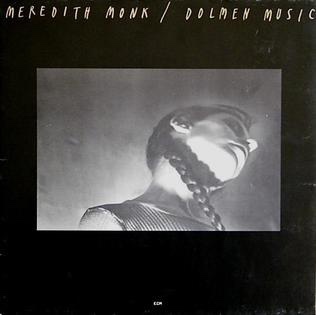
The release of her first ECM disc, “Dolmen Music” (1981) can now be seen as a sort of watershed event. It was followed by “Turtle Dreams” (1983) a work which was prominently featured at New Music America 1982 in Chicago along with Robert Ashley’s “Perfect Lives”. Monk’s appearance on ECM occurred at about the same time as Steve Reich’s masterful “Music for 18 Musicians”. Monk found her mature voice more or less at the same time that Steve Reich and Philip Glass had found theirs. And anyone following new music in those years will recall the flow of new musical ideas that established many now acknowledged masters as legitimate artists.

While the major masterpiece, “Dolmen Music” dominates the album, Monk’s quirky mix of humor and pathos in pieces like “Gotham Lullaby” and “Biography” remain signature pieces in her oeuvre. And Turtle Dreams was made into a performance film for public television by visual artist Ping Chong in 1983, now available on YouTube.

She followed with “Do You Be” (1987) and “Book of Days” (1990) which also exists in at least two film versions and the CD itself which has been described as a “film for the ears”.

Following “Facing North” (1992) Monk released her only opera (though she refers to much of her works as “operas” this is the only one that comes close to the more generic concept of western music operas) to date, “Atlas” (1993) which was commissioned and subsequently performed at the Houston Opera. This represented another phase in her artistic development as she utilized her structured improvisation techniques along with her now familiar extended vocal techniques with an expanded set of performers both vocal and instrumental. Atlas is arguably similarly creative (and transgressive) as Philip Glass’ 1976 “Einstein on the Beach”. Both were developed in an unconventional manner and uses a similar harmonic language with really none of the standard conventions of western music in opera. Would that we can some day see a filming of this work.

I was privileged to see Monk in person for the first time when she performed excerpts from “Volcano Songs” (1997) in Chicago. Those images involving, among other things, light sensitive areas where Monk lay down and left a ghostly shadow upon arising. In addition to her engaging minimalist inflected music, Monk is a master at creating compelling images.

“Mercy” (2002) was followed by “Impermanence” (2008) which I was thrilled to see at Stanford. “Songs of Ascension” (2011) was another landmark in this piece conceived and performed in conjunction with installation artist Ann Hamilton in her tower in Northern California. Attendees to this event were brought in by bus due to the lack of actual parking facilities in that tower. I wish I could have experienced this but hopefully a cohesive video release will be forthcoming. Excerpts are available for viewing on YouTube and on Monk’s website.

“Piano Songs” (2014) by the wonderful new music championing pianists Bruce Brubaker and Ursula Oppens filled an inexcusable gap in the documentation of Monk’s piano music. And following her receiving the National Medal for the Arts in 2015 she released “On Behalf of Nature”(2016).

Monk is a well documented artist largely due to her productive affiliation with Manfred Eicher and ECM and, while gaps remain these recordings represent a major artistic accomplishment and an enduring legacy for new music, for women composers, for western art music. This lovely box set is truly a joy to behold.

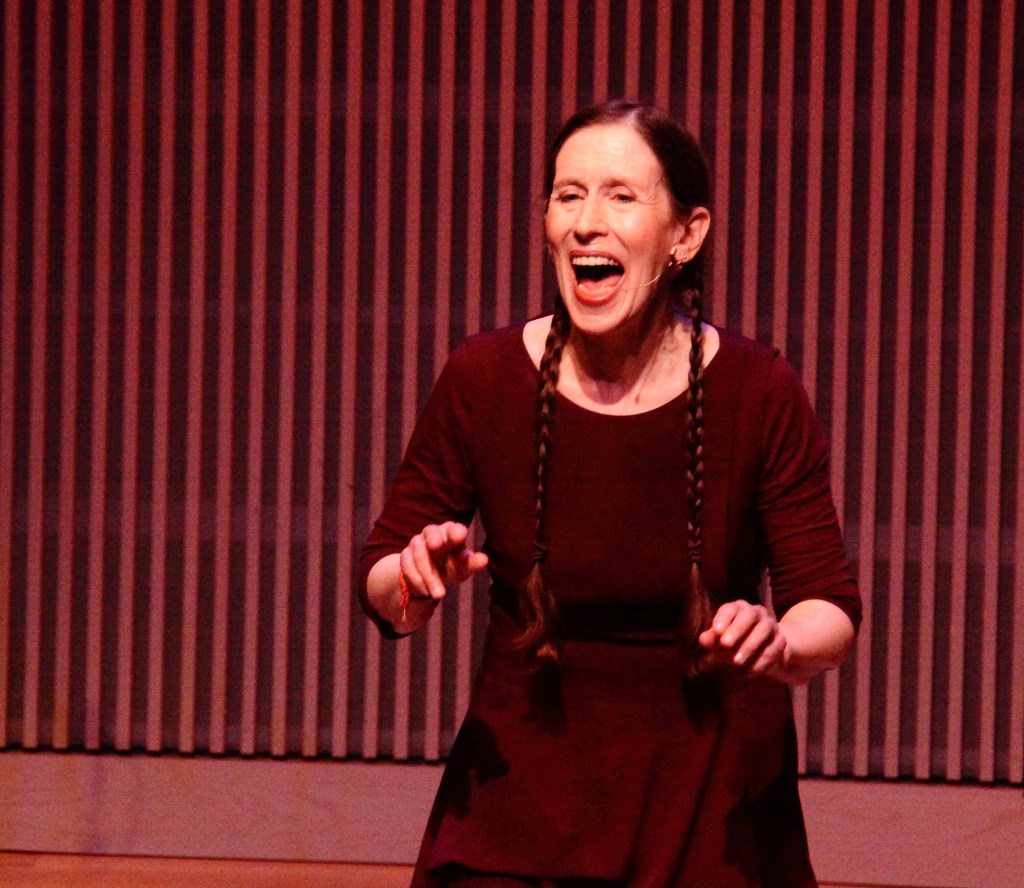
Meredith Monk performing an encore at the final concert of OM 21 (2016) in San Francisco

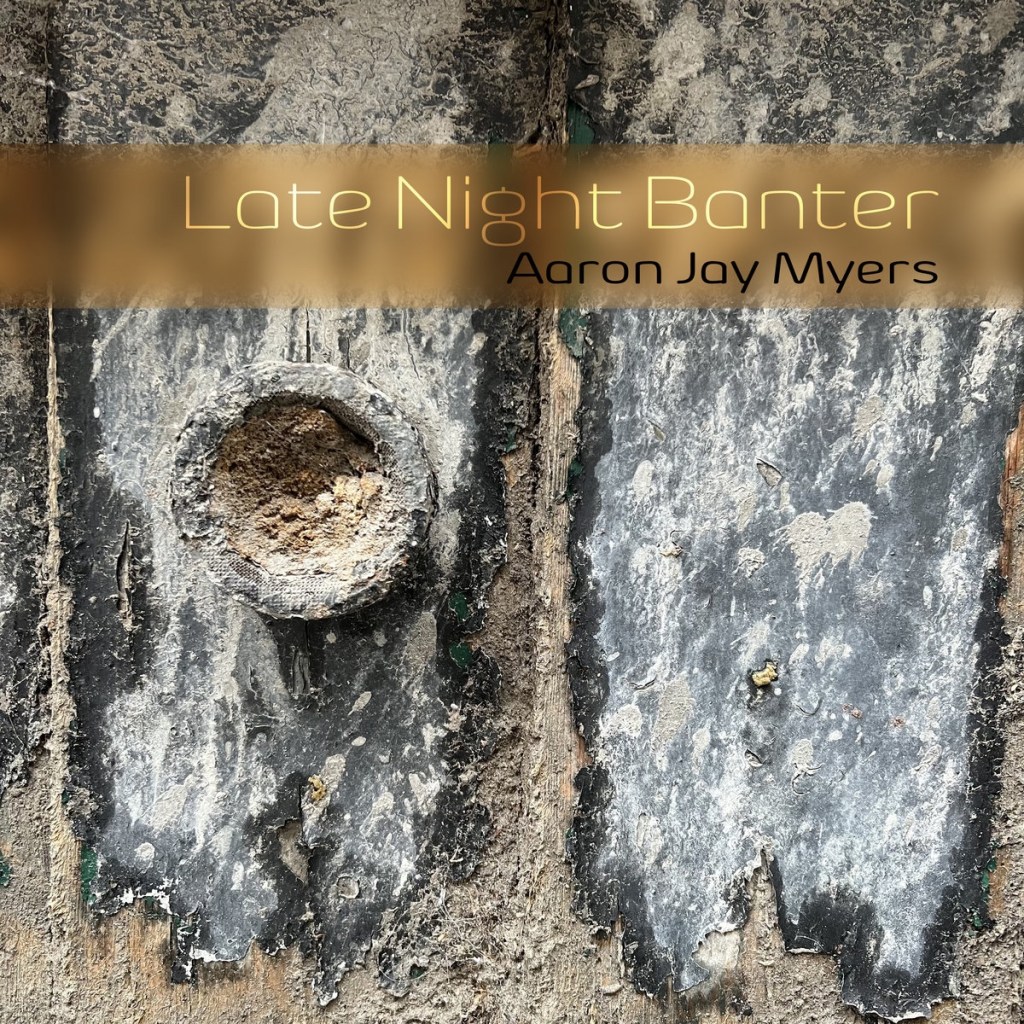
Aaron Jay Myers, Superbly Integrated Eclecticism in “Late Night Banter”


Neuma 175

Aaron Jay Myers’ third album grabbed my attention immediately and didn’t let go til the album ended. Working un-self consciously in a stunning plurality of styles (this guy clearly paid attention to his 20th century music history classes) he has produced some mighty substantial works. His ability to integrate a wide variety of techniques and styles into his artistic persona is simply astounding. His references to other composers’ works, rather than sounding derivative, evoke nostalgic homage, at least in this listeners ears. Indeed there seem to be more references per square inch than in a Thomas Pynchon novel. And the fact that he shares this writer’s passion for Star Trek, Deep Space Nine only endeared him more to me (more on that later).

His very listenable music seemingly embraces the whole of the twentieth century stylistically and his very judicious use of extended techniques for pretty much all instruments including voice demonstrate a firm understanding of where those techniques best serve his artistic vision. Fortunately he has managed to find performers who both meet his technical demands and have a real grasp of his musical vision. This Neuma release is truly something special.

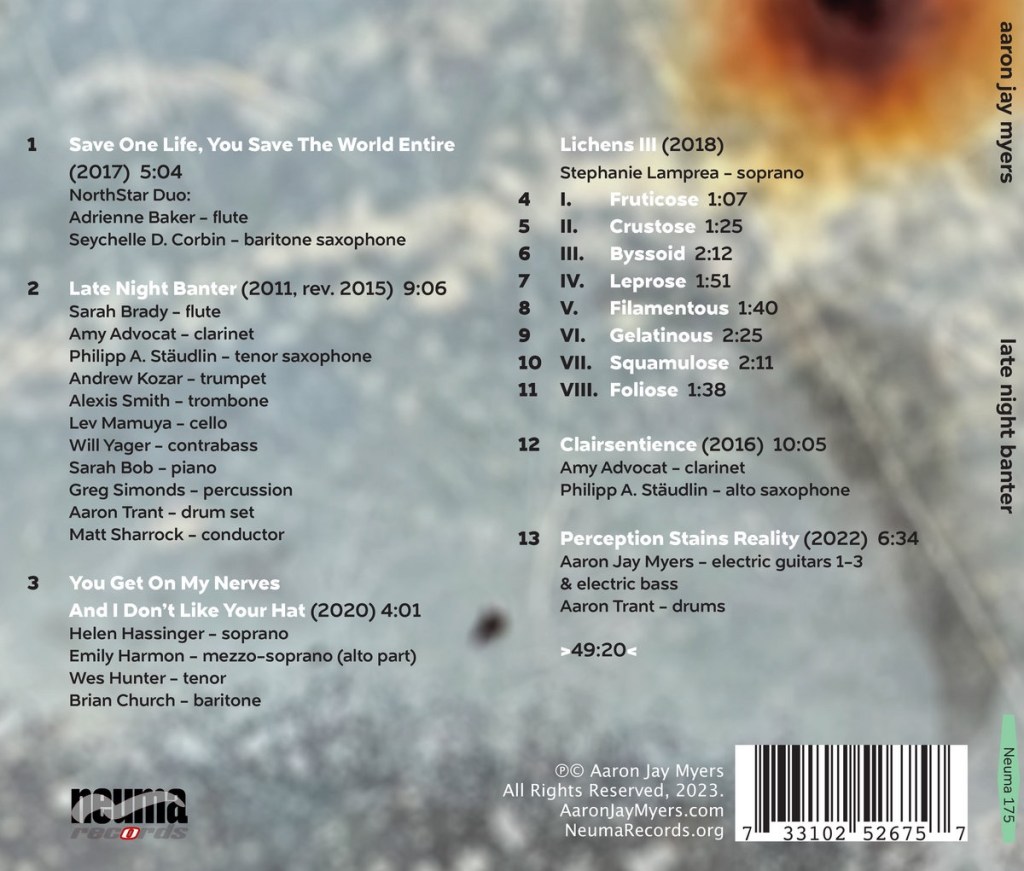
There are six works divided among the thirteen tracks. These chamber works were written between 2011 and 2021. None require more than ten minutes or so of your time and left this listener satisfied with the music and optimistic for the future of classical music in general.

“Save One Life, You Save the World Entire” (2017) for the unusual combination of flute and baritone saxophone opens this album with a surprisingly engaging work. It sounds like a challenge for the musicians who handle those challenges seamlessly and engage the listener in this rather brief essay.

When I listen to “Late Night Banter” (2011 rev. 2015) now, I do so in bare feet (it knocks my socks off). This piece for ten musicians with a conductor is a finely crafted piece that grabbed this listener’s attention by that craftsmanship but also by what seem to be a plethora of sonic references to 20th century music. The style of Stravinsky, an homage to Luciano Berio, etc. These brief references evoked emotional responses which led me to recall similar emotions I had attached to the apparent (at least to me) object of said reference. Even minimalist references occur matter of factly. Such efforts can sound derivative or at least imitative but not so in this piece. Rather it had the quality of a tour of the twentieth century in respectful jogs of memory. But even if you don’t get the references, this is a substantial and entertaining work. The evanescence of those references had me questioning whether they were actually there or just my mental figment. (I guess I’ll just have to listen again). Either way I was thrillingly engaged.

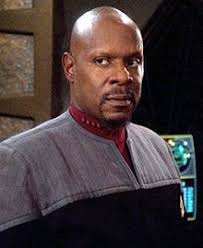
Avery Brooks as Captain Benjamin Sisko, commander of Deep Space Nine

“You Get On My Nerves, And I Don’t Like Your Hat” (2020) is the Deep Space Nine reference mentioned at the beginning of this review. If you haven’t seen this series I highly recommend it. And so, apparently, does Aaron Michael Myers. This work for vocal quartet (SATB) takes its title from a witty utterance by Captain Sisko (my fave Star Trek Captain). Of course you don’t have to know Star Trek lore to appreciate this work, but it helps. It is a challenging work for four unaccompanied soloists which reflects the composer’s sense of humor as well as his connection to pop culture.

Aaron Jay Myers

“Lichens III” (2018) is scored for soprano voice but the singer also does the work of a percussionist. In addition to the vocal challenges the singer is asked to perform on “body percussion”, the various sounds one can make by percussing (pounding) on one’s body. It is more commonly an idiom of folk and blues but soloist Stephanie Lamprea handles both the singing and the percussing as though it is her everyday practice accomplished with ease.

Clairsentience (2016) is another wind instrument duo, this time for clarinet and alto saxophone, a similarly unusual choice of instruments. This one is about twice the duration of that first piece and every bit as engaging as well as challenging.

The last track is a marvel of multitasking. Other than Aaron Trant (who does a fine job) on drums, all of the parts (three electric guitars, and bass) are handled by the composer. “Perception Stains Reality” (2002) is a tour de force consistent with the other works on this disc. Here he shows his rock/pop sensibilities, clearly as essential a part of his artistic endeavors as his “classical” training.

Myers is one to put on your hot list. He is certainly on mine. If you can hear a performance of his work, whether live or recorded, you would do well to check it out.

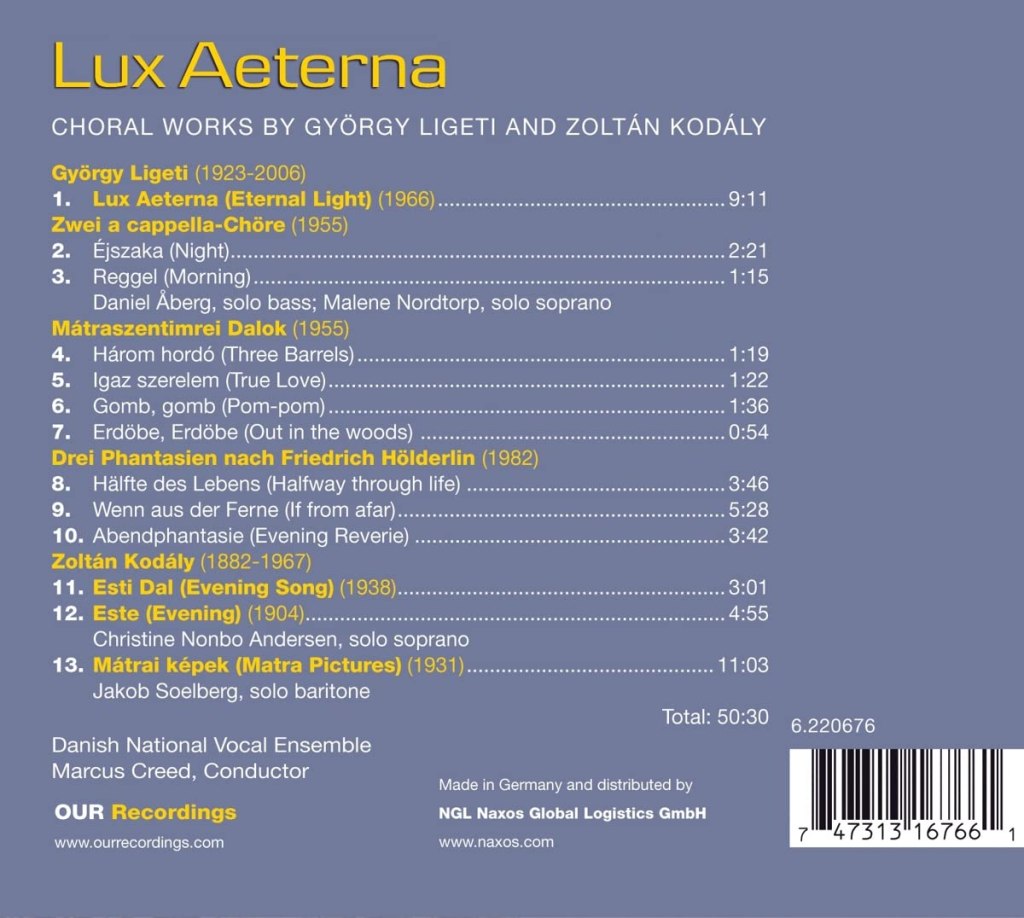
Lux Aeterna, 20th Century Choral Music of Ligeti and Kodaly According to Marcus Creed


OUR Recordings 6.220676

I thought I knew this music. After falling in love with György Ligeti’s (1923-2006) work having heard it so aptly used in Stanley Kubrick’s, “2001: A Space Odyssey” I eagerly purchased both of the complete works surveys on Sony and Telefunken but these fresh, insightful performances by the Danish National Vocal Ensemble under conductor Marcus Creed have made me fall in love again. And, while I have some familiarity with Zoltán Kodály’s (1882-1967) music (he is underappreciated) I did not know his unaccompanied choral works. So this encounter was an absolute revelation.

This release succeeds on several levels. First, it is one of the always reliably fine productions from Lars Hannibal’s OUR Recordings. So, from the physical design to and the the choices of repertoire and performers as well as the sound of the recording, this is a thoroughly enjoyable experience for the listener.

But what brings this release from competent to outstanding is the interpretive skillset of conductor Marcus Creed and the disciplined Danish National Vocal Ensemble. These are fresh, insightful readings that shed new light on these masterful composers and their work. Looking at Creed’s extensive discography it is clear that he commands a wide range of repertoire with a penchant for the twentieth century and beyond. His reading of Ernst Krenek’s massive 12 tone contrapuntal a capella masterpiece from 1941-2, “Lamentatio Jeremiae Prophetae” Op. 93 remains perhaps this challenging work’s finest interpretation in the 1995 Harmonia Mundi recording and a personal favorite of this reviewer. So it should come as no surprise that he is able to breathe new life into these works.

The opening work is probably the most familiar here. Ligeti’s “Lux Aeterna” (1966) was first thrust into the spotlight via its (unpermitted at the time) inclusion is the Kubrick film. This is mid-career Ligeti and one of the most effective uses of his “micropolyphony” and cluster chord harmonies. It is first heard in the Clavius Moonbase scene fairly early in the film. It accompanies the otherwise silent animation of a sort of space shuttle bus as it glides along the lunar surface. Along with the Kyrie of Ligeti’s 1965 Requiem and his orchestral “Atmospheres” (1961) work beautifully in telling the story in this film with its well known paucity of dialogue.

This opening track grabbed my attention immediately. The text, which appears in the traditional Catholic Mass and Requiem Mass is a communion hymn with the following words:

May light eternal shine upon them, O Lord,
with Thy Saints for evermore:
for Thou art gracious.
Eternal rest give to them, O Lord,
and let perpetual light shine upon them:
With Thy Saints for evermore,
for Thou art gracious.

But the experience of this music is positively otherworldly. Its wall of sound ambiance belies a rather complex construction which has become a landmark in the development of compositional practice. And it is vitally that this music, now nearly synonymous with the film, be heard as originally intended. It exists in both worlds now and this reading helps reaffirm it as the masterpiece it is.

The next six tracks are by Ligeti but this is the Ligeti still composing under the powerful spell of Bela Bartok. All date from 1955 but are a quantum leap back from the sound world of the first track. The two brief a capella choruses (the second includes solos for bass and soprano voices) are settings of words by Hungarian poet Sándor Weöres (1913-1989). These settings are ostensibly influenced by the composer’s early encounter with modern music in Vienna (Ligeti ultimately relocated from the artistically and socially oppressive Hungary to Austria). The second of these choruses had to wait until 1968 for a performance which provides some notion of how oppressive the Hungarian regime had been.

Those brief choruses are followed by four folksong settings which take the listener back into the sound world of Bartok and Kodaly with their respective folksong transcriptions. These are very enjoyable travels into Ligeti’s excellent but markedly more conservative beginnings.

Next is another Ligeti work but one from his later years demonstrating that he never stopped evolving as a composer. The “Three Fantasies after Friederich Holderlin” (1982) are themselves a quantum leap stylistically from the 1966 Lux Aeterna. These are also more complex settings and, suffice it to say, they are a powerful experience. What was micropolyphony in the earlier work is replaced by a more traditional style of polyphonic writing but one that could not exist were it not for those earlier efforts.

And then we come further back again to early and mid-career Kodaly in three a capella works, “Evening Song” (1938), “Evening” (1904), and “Matra Pictures” (1931). I say at the beginning of this review that I believe Kodaly’s music to be underappreciated. Indeed but I find myself with no excuse given the easy availability of so much music on You Tube and other online sources. And this is why the inclusion of this fascinating selection of the composer’s significant cache of a capella choral music is so very welcome.

Like, I suppose, many listeners I mostly know Kodaly’s work via his Peacock Variations and excerpts from his opera, “Hary Janos”. Of course I had also been aware of Kodaly’s pedagogy and his methods for learning music (and I was aware even before I saw it in “Close Encounters).

But my encounter with these fine choral works revealed to me the depth of the composer’s skills. This is marvelously written music by a composer intimately familiar with this medium and it has already sent me to exploring more of this composer’s work in all genres. It is not difficult to see Kodaly’s work as a logical predecessor to that of Ligeti. he same skill and invention the same ability to convincingly set text to music. This is a terrific release, highly recommended to lovers of choral music in general and, of course, of these two composers.