Rising Star Seth Parker Woods’ “Difficult Grace” is a Classic in the Making


Cedille CDR 90000 019

Every solo artist, regardless of what instrument they play seeks to define themselves. Generally that means setting limits. Some set limits by specializing in an era (baroque, classical, etc.). Some specialize in working with electronics, some with jazz, some with experimental music, some with standard recital repertoire, etc. Seth Parker Woods (1984- ) seems almost unaware of such limits. He plays what he chooses. And, oh, what choices. From standard classics to the leading edge of musical creativity woods is poised at the beginning of a very promising career.

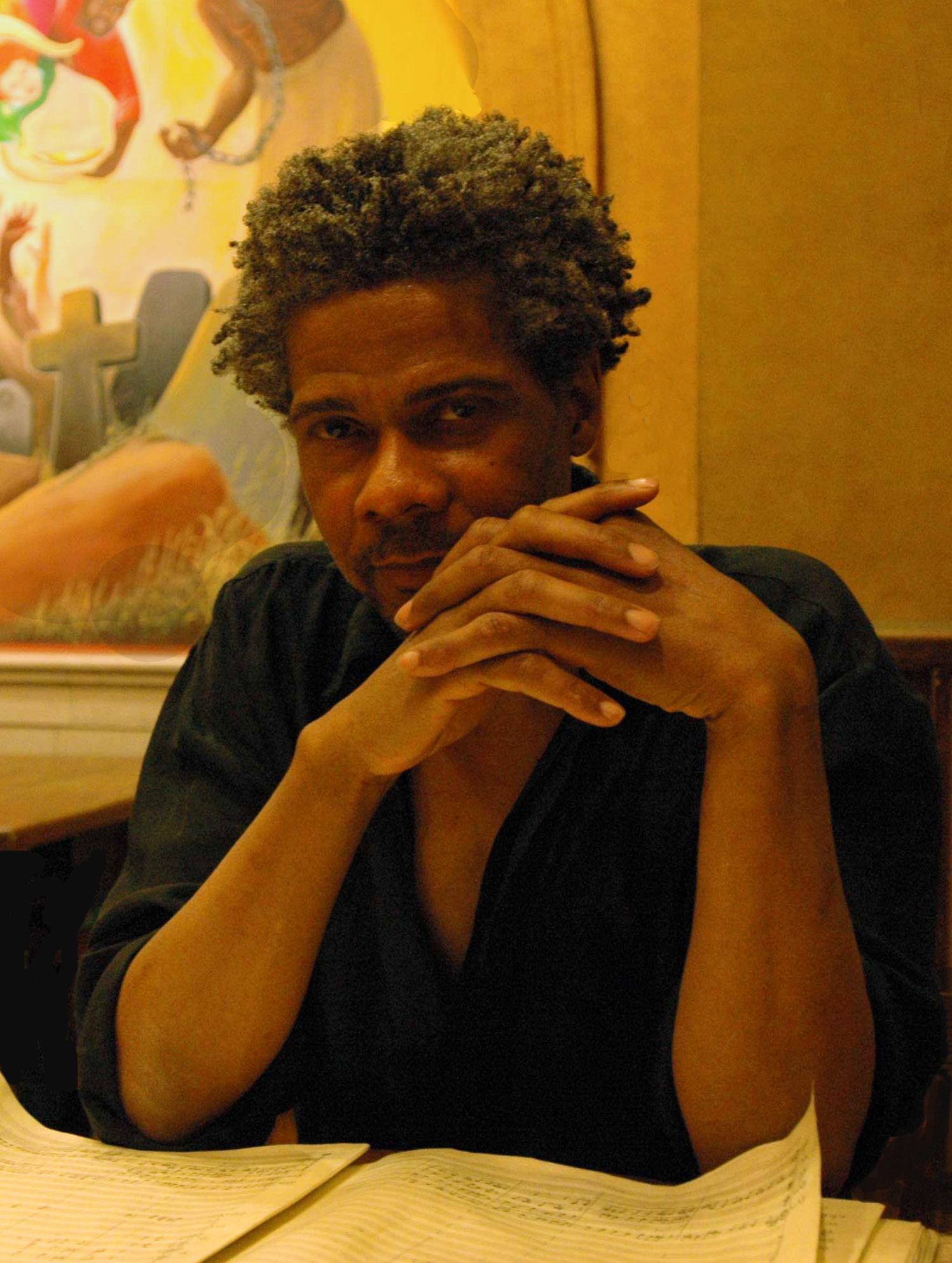
Seth Parker Woods (photo from his faculty page at USC Thornton School of Music)

This album is in fact the musical portions of what was produced as a staged presentation with Woods playing, singing, talking. No doubt something is lost without the staging but Woods’ asserts himself with great clarity on the sonic aspect alone. Think of this as a sort of cast album, though it is more than just a souvenir. It is Woods’ second album and it has this writer enthralled at where he may go next. You will be too.

Parker’s first solo release “asinglewordisnotenough” available on bandcamp reveals his dedication to new and recent music.

I feel privileged to have known this artist via digital media and to have watched with increasing interest his development as a true rising star in the new music world. I only recently acquired his first album via bandcamp. It was released “across the pond” when he was completing his Ph.D. at the University of Huddersfield.

Born in Houston, his father, a jazz and gospel singer, Woods was exposed to a great deal of music. He rehearsed in a home studio and somehow came to a fascination and deep appreciation for a wide variety of repertory.

His affiliations continue to be wide ranging from Peter Gabriel to George Lewis. He has appeared on many recordings but this is only the second disc dedicated entirely to Woods as performer and the first such solo efforts on a US label. Woods is apparently able and willing to tackle music of all eras and genres including the wildly experimental, like his “Ice Cello” homage to Charlotte Moorman and the theatrical, which brings to the the album at hand.

Track listing.

Four of the seven works presented are world premieres. And, despite this being a sort of “cast album” which lacks the visuals, this is a major release that presents a characteristic variety of musical choices and is a fine calling card for the artist. This is one classy production.
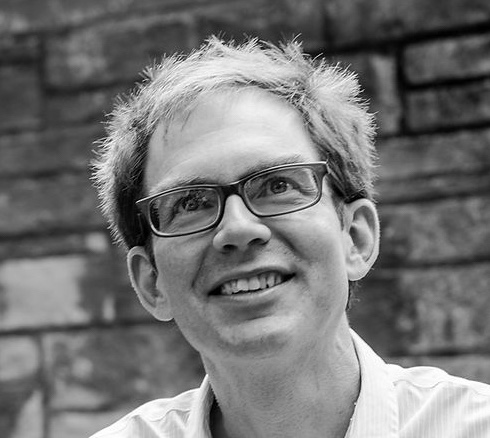
Frederic Gifford (photo from composer’s website)

He begins with the title track, “Difficult Grace” by Chicago based composer Frederic Gifford (1972- ). It is a setting of poetry by Dudley Randall subjected to some Cageian mesostic like manipulation. This first track tells us we are dealing with modern music and sort of sets the tone of this project. This is a complex work in concept (lucidly described in the composer’s notes) and involves projections of the texts onto the performer as well as electronics which, by careful use of both the sounds and the spoken text (spoken by the cellist) which then contributes to the musical structure. Photographs in the booklet show some of the striking visual design for this project.
Coleridge Taylor Perkinson (photo from Wikipedia)

Woods follows with what is to this listener a stunningly beautiful piece, “Calvary Ostinato” (1973) by the late, sadly neglected Coleridge Taylor Perkinson (1932-2004), a black American composer (actually represented admirably in a fine earlier Cedille release CDR 90000 087). The Ostinato is one movement from Perkinson’s “Lamentations: Black/Folk Song Suite For Solo Cello” (1973). Woods’ performance is available on YouTube. It’s truly enthralling. One gets the feeling that Woods really gets inside the music he performs and that deep feel for the music is delightfully obvious in this track, the second oldest work on the disc and one that is for the solo cello sans electronics or vocals but using a dazzling variety of extended instrumental techniques, none involving a bow.

Monty Adkins (photo from electro cd website)

Then we hear Monty Adkins’ (y. 1972- ) “Winter Tendrils” (2019) written for cellist who, in addition to playing his instrument, is asked to use his voice and work with electronics, albeit in a different manner than the title track. Adkins worked closely with Woods on the creation of this work. The work essentially an impressionistic piece with clever use of counterpoint to depict fresh fallen snow on the branches of a tree.

Nathalie Joachim (photo from Elysian Magazine)

Nathalie Joachim (1983- ), a Haitian-American vocalist, flautist, and composer, is represented by two works. The first, “The Race 1915” (2019), a work that contributes to the Chicago centered Cedille label by its use of historical quotations from The Defender, a major and influential black newspaper in Chicago. Woods is again asked to use his vocal skills in this work which celebrates efforts to undo social inequalities.

The multitalented Joachim lends her vocal skills to Woods’ performance in Joachim’s second piece on the album, “Dam Men Yo” (2017). The title is Haitian Creole for “they are my ladies”. It is a sort of black feminist peaen celebrating the strength of the women with whom the composer was raised in her native Haiti. (NB: Haiti is the site of the only successful slave revolt in history, a fact that continues to be reflected in their turbulent politics).

Alvin Singleton (photo from Schott website)

In between those two pieces we get to hear perhaps the best known composer in this mix, Alvin Singleton (1940- ). Singleton is represented by “Argoru II” (1970) for solo cello (the Argoru series is a set of pieces for solo instruments akin to Luciano Berio’s “Sequenza” series). The title is from the Twi language (spoken in Ghana) and translates as “to play”. It is a virtuosic piece employing extended instrumental techniques which Woods accomplishes with almost supernatural ease. He does honor to this living elder statesman of American music.

Ted Hearne (photo by Jen Rosenstein from composer’s website)

And here we are back in Chicago now with Maestro Woods’ performance of a work by Chicago born composer Ted Hearne (1982- ), a name which did make it to this writer’s musical radar but one whose work I have just begun to explore. But this is a fine example of one of the reasons for my admiration for Woods’ scope of musical interest. I think he is one of those artists to whom I will turn to look for good new music. His instincts for repertory choices are amazing.

This is perhaps the most unusual entry on this disc as well as one that, if any controversy is forthcoming, it will likely originate with this set of songs to poetry by Keri Alabi. A casual listen to some of Hearne’s music on YouTube suggests a sort of post minimalist ethic but this last work is not discernibly minimal. Like the music that preceded it, this cycle is overtly about politics and equality.

Hearne’s little 6 movement song cycle is a combination of poetry, electronics, cello (of course), and the voice of said cellist. Hearne’s expletive title, “free fucked”, is apparently very much in line with the composer’s assertive and playfully humorous style.

We return in these tracks to the avant garde and complex with which the album opened. Again we have a multitasking role for the cellist demanding his vocal participation and working in a distinctly electroacoustic genre. Hearne lends his voice to the final track of this unusual work.

While political themes and references abound in this release it is as much about black politics and civil rights as well as feminist, gender, and global equality issues. But ultimately this recording is a landmark in the career of this fine young musician who works fearlessly with a variety of composers, poets, designers, political activists, progressive ideas, and new music in general.

Cedille is one of my top favorite new music record labels and has been since they first started in 1987. Their releases (not limited to new music) are consistently well recorded and produced but producer James Ginsburg really pulls out all the stops on this one. From concept to recording, from lucid liner notes to gorgeous package design this has all the marks of a classic and collectible release. I mean, the music is great, but the whole package is something you’ll want to own. That’s right, I’m calling for “collector’s item” status here. Now is the time to get your copy.

The End of the Beginning: Sarah Cahill’s “The Future is Female” Trilogy Completed


First Hand Records FHR 133

This release completes Sarah Cahill’s monumental survey of piano music written by women which saw its first two CD volumes last year.last year. This, the third volume titled “At Play”, follows the first two as seen below. This trilogy is not, of course, the last word, the end on the subject of piano works by women. There can be no last word but these selections are a reflection of Cahill’s perspective as a performer but also a producer/programmer whose scholarship and advocacy are well known and respected worldwide. These releases speak to women, certainly. But they also speak to audiences in general, producers, and fellow musicians. They comprise a careful sampling of some three hundred years of music which effectively demonstrates that “there’s gold in them thar hills” (after all Cahill is a Californian). Here’s hoping that this survey will help start a metaphorical gold rush to unearth the gold that can be found in this neglected music.

Other Minds OM 1022-2

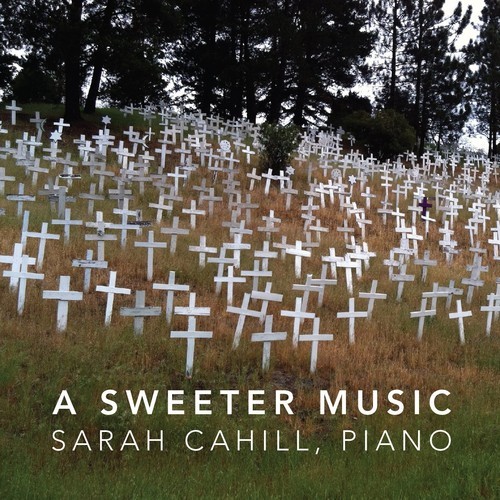
I recall my fascination with Cahill’s earlier commissioning project which resulted in her CD “A Sweeter Music” (2013). I recall attending a very preliminary recital at Mills College where she did brief run through of some of the compositions and spoke about the project. She later toured the music (sometimes with John Sanborn’s wonderful accompanying visuals, sometimes without). Little did Cahill know that she hit upon a genre of classical music dear to this listener’s heart, that of politically inflected classical music. As a result, my interest in her artistry and choices of repertoire escalated tremendously (I heard two of her Bay Area recitals of this music and reviewed the recording in the early incarnation of this very blog). So another project, this time supporting female composers, with even greater dimension than that earlier project has similarly grabbed my attention in this landmark collection of music by women composers which has largely been neglected by mainstream artists, producers, and programmers.

This trilogy of recordings hardly solves the egregious neglect of this music but it does contribute rather authoritatively to the canon (there is one now) of music by non-male composers. Cahill is not the first artist to do this, and there are multiple ongoing projects exploring the work of female composers, but this project deserves top billing as it casts a mighty wide net with its three volumes covering about 300 years (of neglect). These recordings of some 30 pieces are but a fraction of music by women composers in this pianist’s repertoire. But, more than simply righting wrongs, this is about celebrating a legacy of artists getting their due recognition. (The “bad idea” Biblical metaphor of hiding a lamp beneath a basket comes to mind). Just look, er, listen at/to what’s been under that basket!

Cahill playing at the Chapel of the Chimes Solstice Concerts in 2013, a major annual Bay Area event created and managed by her. (Photo by Allan Cronin Creative Commons License)

This now completed trilogy doubtless will not mark the end of Cahill’s advocacy but it will stand as a major manifesto of sorts and will hopefully bring more performers and producers to be open to performing and recording them. Simply hearing these recordings exposes the listener to music of stunning substance selected by an artist whose curatorial radar is finely tuned and whose choices will speak definitively to listeners (and likely fellow performing artists) for years to come. (N.B. Listeners would do well to check out Cahill’s YouTube channel where one can find a gold mine of music which reflects the scope of her performances and advocacy, not just for women composers, but for an amazing range of artists.)

This third volume is entitled, “At Play”. Like the previously released volumes, this collection gets a collective title that vaguely hints at the character of the music herein. The sequencing of the music is, like the previous two volumes, pretty much chronological. The essential program notes by Ms. Cahill (in all three volumes) provide just enough background to provide useful contexts for the listener. And you have to love the “Cahill and friends” photo galleries (on each volume) reflecting the deeply personal nature of this undertaking. That may sound hyperbolic but just listen to this music and feel the love, the passion, the connections, the sincerity, and the incisive playing. (Should I throw in a “Pied Piper” metaphor?) Listen and you’ll likely get hooked.

Track listings

There are 16 tracks comprising nine works by nine female composers over nearly three centuries. Four of the nine works receive here receive their first (or first commercial) recordings. As noted earlier, the track sequence is chronological. (N.B. That makes 30 + works over the 3 CDs), a little less than half of the total commissions.

We begin with the last of 9 sonatas by Hélène de Montgeroult (1764-1836). Her lifespan covers the classical to the early romantic eras in western musical history but recordings of her music didn’t begin to appear until about 2006 when Jérôme Dorival published a biography of her. Listeners will likely find this music similar to that of Mozart, Haydn, and early Beethoven but with a level of virtuosic writing that anticipates Chopin and Liszt. This three movement sonata was published in 1811. This is apparently the second recording of this work as another new music champion, Nicolas Horvath, released a recording of all nine of these in 2021, further testament that time has come for this composer (and perhaps women composers in general).

Next is the Thème varié, Op. 98 (1895) by Cécile CHAMINADE (1857–1944). This late romantic composer is probably the only name with which most listeners may be acquainted. A recording of her Concertino for flute and orchestra (1902) continues to receive attention by classical broadcasters but most of her work remains very little known. Cahill makes a strong case for this music with her interpretation of this virtuosic early romantic styled work. She is far better known in her native France. It is time we see what the French have been hiding.

Grażyna BACEWICZ (1909–1969), represented here by her Scherzo (1934), has gotten recognition in her native Poland but has only fairly recently become known internationally. This early work, less modernist than her later work, has apparently been recorded before but is new to this reviewer’s ears. Bacewicz was a prolific composer and this fine piece, a virtuosic showpiece, is likely to encourage listeners to further explore her extensive catalog which includes Symphonies, Concertos for violin, viola, cello, and for piano, 7 string quartets, symphonies, operas, songs, and much more.

Now Cahill brings us into present time, featuring living composers, beginning with the music of Chinese-American composer Chen YI (b. 1953). Guessing (1989) is a small piano piece which incorporates a Chinese folk song in a set of variations.

This is the first commercial recording of this music. To be honest, I am not familiar with much of this composer’s work (nor most of them here) save for Oliveros and Wong) but this piece as with all the selections here are sufficiently intriguing to prompt listeners to explore further. That is the point of an anthology such as this, to spark curiosity, suggest another path for the journey. Mission accomplished.

Franghiz ALI-ZADEH (b. 1947), born in Azerbaijan, incorporates elements from her ethnic heritage into modern classical idioms. Music for Piano (1989/1997) utilizes Cagean-like preparations, in this case a glass beaded necklace laid across the strings. The resulting sound, evoking Alan Hovhaness and/or Henry Cowell at times, is intended to evoke that of the traditional Azerbaijani string instrument called “tar” (not a reference to the recent film). The composers use of different scales also seems to derive from folk models. The piece is in several sections delineated by dynamics and by register in which is, I believe, an ingenious use of register used to control when to allow for those prepared strings to sound. The piece is by a composer with a wide expressive pallete and the ability to use those methods judiciously toward her unique creative ends.

Next, in the briefest entry at just over 4 minutes, we get one piece from a set of commissions (all by women composers) Cahill made to honor the 100th birthday of American composer Ruth Crawford (1901-1953). Pauline OLIVEROS (1932–2016) submitted this work (her first notated composition since the 60s) which uses her own unique approach to indeterminate composition in Quintuplets Play Pen: Homage to Ruth Crawford (2001), here in its world premiere recording. Oliveros, who exerted a profound influence on a generation of composers, performers, and listeners via her work in electronic music and improvisation, but most powerfully via her “Deep Listening” concepts which effectively define the role of the listener as being a part of the compositional process.

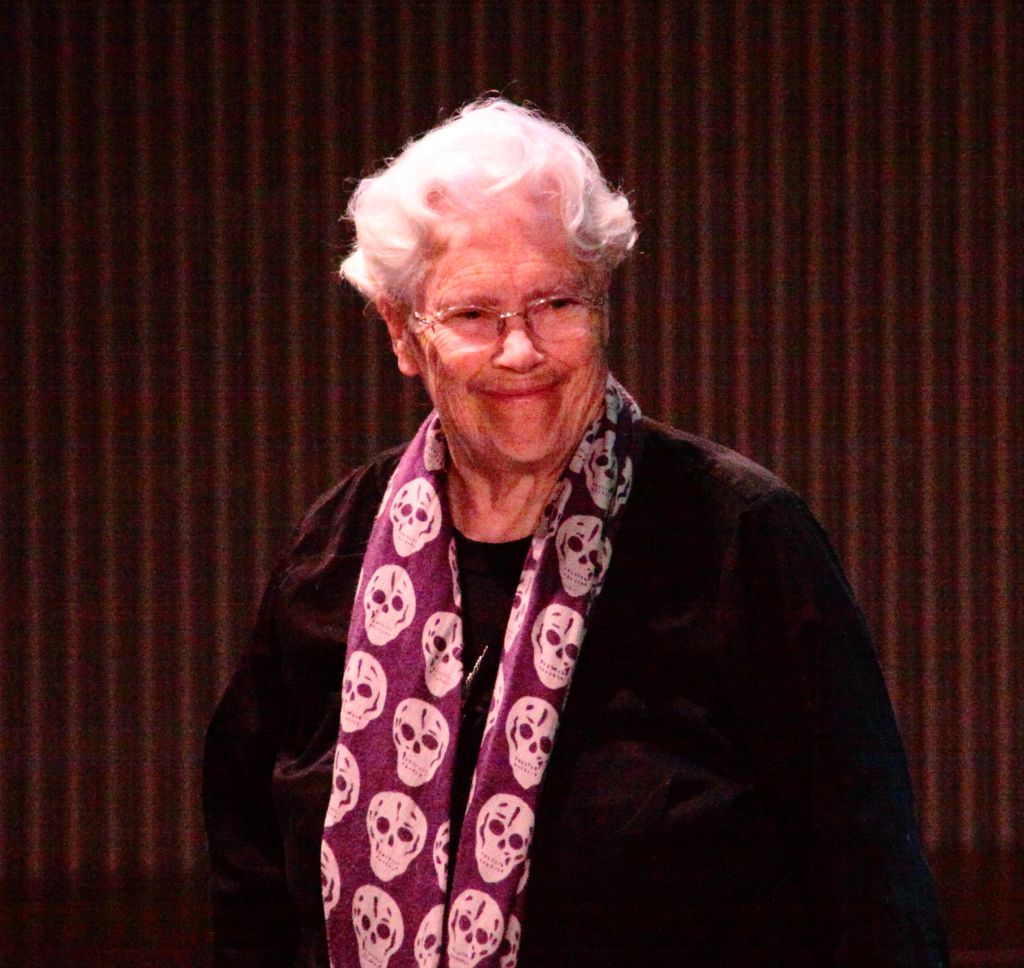
A clearly happy Pauline Oliveros acknowledges the warm applause of the Other Minds 20 audience after her performance at the SF Jazz Center in 2015. Her gentle spirit and powerful intellect preside over this trilogy and continue to influence all who knew her and her work. She would have loved these recordings. (Photo by Allan Cronin Creative Commons license)
I’m claiming fair use in publishing this lovely photo ad for an expensive perfume inspired by the same poem. Kinda Freudian, no?

Hannah KENDALL (b. 1984) is a black British composer whose three movement “On the Chequer’d Field Array’d” (2013) is based on the 1763 poem Caissa by Sir William Jones and depicts the three sections
of a game of chess. The lengthy Elizabethan styled poem can easily be read as protofeminist given that the female chess piece heroically wins. Read it if you don’t believe me. And there are musical metaphors as well. It is these: mindplay, middlegame, and coda into which the work is divided. The music, like the poem is an intimate perspective which invites the reader (or hearer of the music) to create their own meanings here.

Aida SHIRAZI (b. 1987), an Iranian born composer, takes the performer inside the piano. Her blandly titled, “Albumblatt” (2017) belies her deep understanding of the piano and its possibilities. This is arguably the most avant garde (or modernist if you prefer) composition of the trilogy. Cahill’s choices reflect her eclectic approach to music programming.

In addition to a chronological approach, this trilogy is stylistically diverse. This music borrows from forbears such as John Cage and Morton Feldman as well as Henry Cowell. This meditative music only reveals itself fully to the focused listener. This is like an etude comprised of sounds you rarely hear (intentionally) from a piano. Played much of the time inside the piano but also at the keyboard more conventionally, the piece also demands close attention to dynamics (down to silence). Here is where the recordist’s art shines through. The subtleties of dynamics and the ability to capture the variety of harmonics evoked. Of course said performer had to accomplish rather large postural changes and do so silently if the performance adheres to the score, lol. And both are accomplished here in what sounds like a single take. This is a pretty great listen.

Regina HARRIS BAIOCCHI (b. 1956), a native Chicagoan poet and composer is given the last word with her, “Piano Poems” (2020). Last but not least by any means is a testament to Cahill’s singular but relevant choices as well as her advocacy of young composers as their stars begin to rise. This artist is new on my radar but one that will remain there. As both poet and composer, this young artist, commissioned by Cahill with a request that the music be about poetry, specifically by fellow (adopted) Chicagoans Gwendoline Brooks (one of this formerly Chicagoan reviewer’s personal faves) and Richard Wright.

The response was these 4 meditations on Brooks, Wright, and on the composer’s own poetical musings. The language here seemingly derives, appropriately, from 30s to 40s jazz of Ellington and Basie and a seemingly latter day version of that in the last two pieces describing the composer’s own literary utterances. Both virtuosic and apparently written by a composer very familiar with the instrument, a fitting and hopeful glimpse to the future.

Each of these discs contains at least one piece that reflects a deeper than average commitment by the performer. Cahill’s collaborative wok (with Dr. John DesMarteau) in the Agi Jambor sonata in volume I, her advocacy of Teresa Wong premiering the first performance of (She dances Naked…),the justly celebrated bay area artist’s selection on volume II. And her reaching out to Regina HARRIS BAIOCCHI for a commission (in volume III) all reflect another valued aspect of this performer.

The recording by Matt Carr is very listener friendly demonstrating serious skills at times in dealing with the many sonic challenges. This album and its two predecessors belong in any serious collector’s library. If the future is indeed female, then this is a fine soundtrack. Listeners, performers, Brava!!

Sarah Cahill’s “The Future is Female” Volume 2: The Dance


First Hand Records FHR 132

The fanciful subtitle of this release, “The Dance” is a follow up to the first volume titled, “In Nature” (a third volume titled, “At Play” is due out in March, 2023). These vague titles are fanciful and more connotative than specific. They seem to reflect the nature of the project and the nature of Sarah Cahill‘s style of conceptualizing what must be an overwhelming undertaking, Beginning with the simple concept of female composers (the term “neglected” would be redundant here) Cahill has produced a sweeping survey ranging from the baroque era (the earliest piece so far in this anthology is from 1687) to the present and her survey seems to know few geographical boundaries in this representative survey of keyboard music. Of course we are talking about basically the paradigm of western classical music but non-western influences are of course included via the composers’ individual talents. Many of these works were presented in Cahill’s fine YouTube series which can give listeners further clues to the pianist’s varied interests.

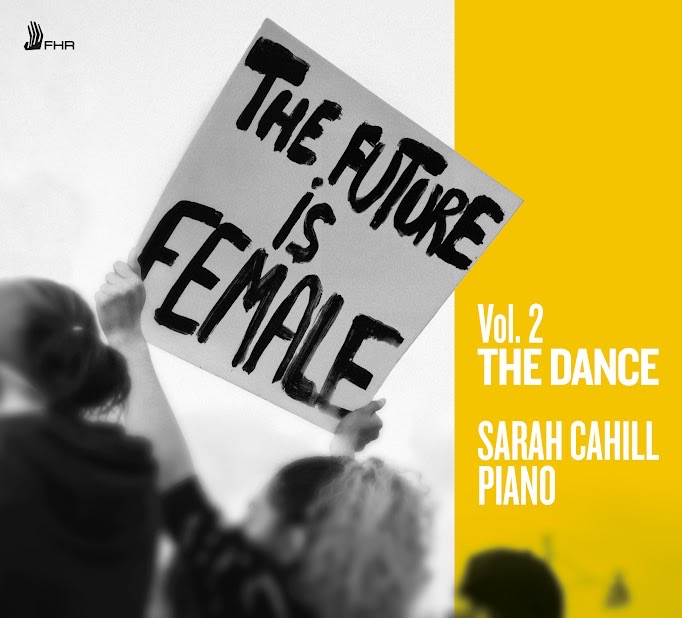
The cover art (which I had described as “drab” in the first review) now seems to aptly reflect the struggle for equality and now nicely represents this project in an iconic way with the same monochrome cover photo on each of the three volumes and a primary color panel with the disc title. Green for Volume I, Yellow for Volume II (I’m guessing “red” for Vol III?). This survey is shaping up to be an influential as well as hugely entertaining anthology.

What struck this listener is Cahill’s facility with both technique and interpretation of a mighty diverse set of pieces. Known primarily for her work with music written after 1950, she demonstrates in these recordings an impressive command of baroque, classical, romantic, and modern idioms. I have never heard her play Bach but I wouldn’t miss an opportunity to hear her do the Goldberg Variations.

This was particularly striking in her reading of the keyboard suite that opens this release. This is apparently not the first recording of Elisabeth JACQUET DE LA GUERRE‘s (1665-1729) Suite no. 1 in d minor (the complete suites for harpsichord were recorded by harpsichordist Carol Cerasi in 1998) but Cahill seems to channel the spirits of the pioneering efforts of Wanda Landowska and Rosalyn Tureck whose abilities to play harpsichord music effectively on the modern piano helped set the standard for this practice in the twentieth century and beyond. This late French baroque suite is a thoroughly engaging way to draw the listener in. With echoes of Bach and Couperin this virtually unknown composer is seriously engaging and substantive. This recording includes five (of nine) movements of the suite. One hopes to hear more of this woman’s music and Cahill is very much up to the task of providing a definitive performance.

With the next track we hear the music of Clara SCHUMANN (1819-1896), better known as the wife of Robert Schumann (1810-1856). Clara was in fact a highly accomplished virtuoso and composer whose works are only now getting the recognition they deserve. The piece chosen here is her Variations on a Theme of Robert Schumann Op. 20. These seven variations were a gift for her husband on his 43rd birthday in 1853. Sadly it was to be the last birthday he would celebrate with his family. Robert Schumann was infamously institutionalized in 1854 and died in 1856. The work has all the splendor of high romanticism with the virtuosity associated with the great composer/pianists (Brahms, Schumann, Liszt, Rubinstein, et al). And, as with the previous piece, Cahill seems very at home in her reading of this wonderful set of variations.

Germaine TAILLEFERE (1892-1983) is next up with her three movement partita of 1957. The title “Partita” suggests a connection with the baroque suite which opens this collection. The connection is one of form, not harmony or melody. The three movements here are “Perpetuum Mobile”, “Notturno”, and “Allegramente”. Taillefere, who is perhaps best known for her lively Harp Concertino of 1927, was the only female member of France’s celebrated “Les Six” (the other members were, Louis Durey, Georges Auric, Arthur Honneger, Darius Milhaud, and Francis Poulenc). This largely neoclassical group of composers developed their styles in the shadow of Debussy and Ravel. Cahill’s first album was a fine reading of Ravel’s piano music and she is very much in her element with this delightful three movement work which echoes Ravel to some degree,

Zenobia POWELL PERRY (1908-2004) is the first composer in this collection to be born in the twentieth century. She was a black composer/conductor/pianist and teacher. Her work appeared before in this blog in coverage of her opera “Tarawa House” which was given a revival in Modesto, CA in 2014. Her “Rhapsody” (1960) is in a sort of Neo-romantic style with some challenging virtuosity required. This is a fine introduction to her work which deserves serious reassessment and more performances. Musicologist Jeannie Gayle Pool continues to publish, preserve, and advocate for this neglected American artist. Pool maintains the website for this composer and is a useful, informative site,

Madeleine DRING (1923-1977), a British composer/pianist, a new name to this writer, is characterized by her use of popular and jazz idioms. Cahill here plays two (of five) movements of her “Color Suite” (1963). This whets the listener’s appetite for more of this interesting composer whose work was well known during her career but whose star has dimmed since her passing. Dring is one of many women composers of that era whose work, though influential, has not been incorporated into the repertory of contemporary classical musicians.

Betsy JOLAS (1926- ), a French born American composer whose career has included work as a composer, pianist, and teacher. No stranger to the Bay Area, Jolas taught at UC Berkeley and Mills College as well as Harvard and Yale. The listener accessible nature of her music belies the innovation and complexities it contains. Though she has been recognized throughout her career her work is due for a new reckoning. Her brief “Tango Si” (1984) is entertaining and sufficiently compelling to spark interest in her work going forward.

Elena KATS-CHERNIN (1957- ) hails from Uzbekistan and migrated to Australia where she studied at the New South Wales Conservatorium and subsequently with Helmut Lachenmann in Germany. Kats-Chernin has been a prolific composer and is now perhaps mid-career and, happily, pretty well known. “Peggy’s Rag” (1996) is one of a set of several rags written between 1995 and 1999. This work is dedicated to Australian composer Peggy Glanville-Hicks (1912-1990), another artist, another female composer deserving of a revival.

Meredith MONK (1942- ) has long been one of this reviewer’s favorite “downtown” composers whose initial musical ventures were first heard in her New York SOHO loft. She, along with other rising stars, including Philip Glass, Steve Reich, Phill Klein, Rhys Chatham, etc., are now the historically recognized mavericks who’s creative ideas formed in contrast to the power elite of the “uptown” composers heard commonly at Lincoln Center.

Monk was initially trained as a dancer and that has been evident in most of her output. But she is perhaps best known for her exploration of extended vocal techniques (which she also teaches). It is fitting that her “St. Petersburg Waltz” (1997) is included in this dance themed installment of music by women composers. Despite being an “east coast” composer initially, Monk has achieved international recognition and has a particularly large following in the Bay Area. No surprise then that our pianist guide in this journey has a long standing familiarity with Monk’s work. Cahill demonstrates her grasp of Monk’s minimalist inflected style most admirably and, as in the preceding tracks, leaves the listener wanting more.

Gabriela ORTIZ (1964) is a Mexican composer. Born in Mexico, trained in England, and now teaching in Mexico. Her light shines brightly even in the glare of the heavily politicized immigration issues that dominate the media and is another in a long line of world class composers from that underrated country. Ortiz, in addition to her academic appointments, has produced a large number of works in multiple formats from piano and chamber music, to orchestral, dance, and opera. Her work draws in part on the folk music traditions she absorbed in her childhood and she has amassed a significant number of international commissions and recordings.

Ortiz is also an accomplished pianist and the work chosen here is “Preludio y Estudio No. 3″(2011), one of four two part compositions. Cahill’s brief but useful notes provide the listener with her personal insights to the underlying complexities that drive this music. The incorporation of folk and non-classical elements has been embraced by composers for hundreds of years and Ortiz succeeds in incorporating such elements into her personal style,. As with all of these works, Cahill produces interpretations that, if not absolutely definitive (there are always detractors) stand as a challenge to subsequent interpreters, a necessary element in such a grand project.

This volume ends with the most recently composed work by the youngest composer of the lot, Theresa WONG (1976- ). Wong, a graduate of Mills College, is cherished performer in the Bay Area and beyond, As both composer and performer she has maintained an active schedule and has produced a great deal of music documented in a large and growing discography. Her collaborations have included many of the established Bay Area artistic royalty (including Ms. Cahill, of course).

“She Dances Naked Under the Palm Trees” (2019) is a composition for which the backstory (provided in Cahill’s notes) is particularly useful for the listener. It is the incorporation of extramusical ideas and musical. quotation that drive the drama here to some extent.. The music certainly stands on its own but the addition of the technical insights will send the listener back for repeated hearings and the music will guide the listener to seek more of the work of this wonderful artist whose star continues to rise.

The last disc in this landmark anthology (due next year) will ultimately contain only a portion of the approximately 70 pieces which Cahill has chosen. Like her previous anthology (of politically influenced music) “A Sweeter Music” released in 2013, the limitations of time and money prevent a more complete vision of said anthologist but there is more than enough to provoke further interest by listeners and artists and isn’t that the point?

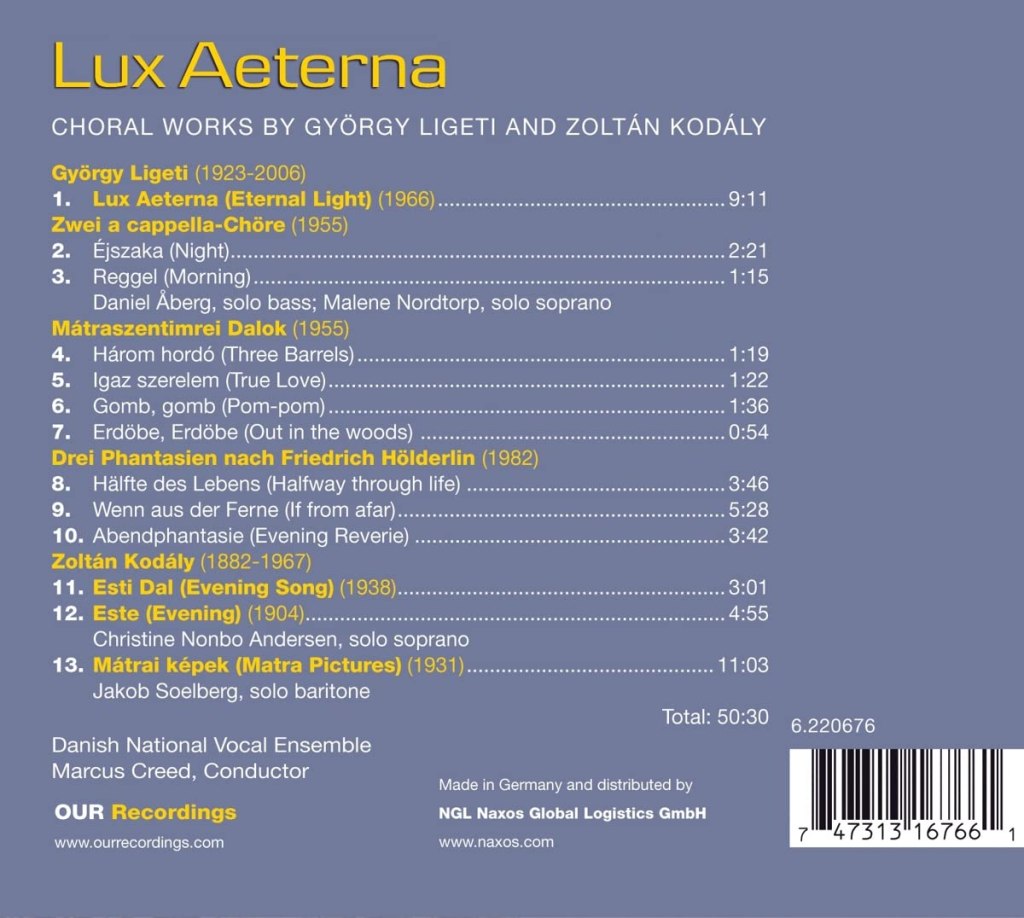
Lux Aeterna, 20th Century Choral Music of Ligeti and Kodaly According to Marcus Creed


OUR Recordings 6.220676

I thought I knew this music. After falling in love with György Ligeti’s (1923-2006) work having heard it so aptly used in Stanley Kubrick’s, “2001: A Space Odyssey” I eagerly purchased both of the complete works surveys on Sony and Telefunken but these fresh, insightful performances by the Danish National Vocal Ensemble under conductor Marcus Creed have made me fall in love again. And, while I have some familiarity with Zoltán Kodály’s (1882-1967) music (he is underappreciated) I did not know his unaccompanied choral works. So this encounter was an absolute revelation.

This release succeeds on several levels. First, it is one of the always reliably fine productions from Lars Hannibal’s OUR Recordings. So, from the physical design to and the the choices of repertoire and performers as well as the sound of the recording, this is a thoroughly enjoyable experience for the listener.

But what brings this release from competent to outstanding is the interpretive skillset of conductor Marcus Creed and the disciplined Danish National Vocal Ensemble. These are fresh, insightful readings that shed new light on these masterful composers and their work. Looking at Creed’s extensive discography it is clear that he commands a wide range of repertoire with a penchant for the twentieth century and beyond. His reading of Ernst Krenek’s massive 12 tone contrapuntal a capella masterpiece from 1941-2, “Lamentatio Jeremiae Prophetae” Op. 93 remains perhaps this challenging work’s finest interpretation in the 1995 Harmonia Mundi recording and a personal favorite of this reviewer. So it should come as no surprise that he is able to breathe new life into these works.

The opening work is probably the most familiar here. Ligeti’s “Lux Aeterna” (1966) was first thrust into the spotlight via its (unpermitted at the time) inclusion is the Kubrick film. This is mid-career Ligeti and one of the most effective uses of his “micropolyphony” and cluster chord harmonies. It is first heard in the Clavius Moonbase scene fairly early in the film. It accompanies the otherwise silent animation of a sort of space shuttle bus as it glides along the lunar surface. Along with the Kyrie of Ligeti’s 1965 Requiem and his orchestral “Atmospheres” (1961) work beautifully in telling the story in this film with its well known paucity of dialogue.

This opening track grabbed my attention immediately. The text, which appears in the traditional Catholic Mass and Requiem Mass is a communion hymn with the following words:

May light eternal shine upon them, O Lord,
with Thy Saints for evermore:
for Thou art gracious.
Eternal rest give to them, O Lord,
and let perpetual light shine upon them:
With Thy Saints for evermore,
for Thou art gracious.

But the experience of this music is positively otherworldly. Its wall of sound ambiance belies a rather complex construction which has become a landmark in the development of compositional practice. And it is vitally that this music, now nearly synonymous with the film, be heard as originally intended. It exists in both worlds now and this reading helps reaffirm it as the masterpiece it is.

The next six tracks are by Ligeti but this is the Ligeti still composing under the powerful spell of Bela Bartok. All date from 1955 but are a quantum leap back from the sound world of the first track. The two brief a capella choruses (the second includes solos for bass and soprano voices) are settings of words by Hungarian poet Sándor Weöres (1913-1989). These settings are ostensibly influenced by the composer’s early encounter with modern music in Vienna (Ligeti ultimately relocated from the artistically and socially oppressive Hungary to Austria). The second of these choruses had to wait until 1968 for a performance which provides some notion of how oppressive the Hungarian regime had been.

Those brief choruses are followed by four folksong settings which take the listener back into the sound world of Bartok and Kodaly with their respective folksong transcriptions. These are very enjoyable travels into Ligeti’s excellent but markedly more conservative beginnings.

Next is another Ligeti work but one from his later years demonstrating that he never stopped evolving as a composer. The “Three Fantasies after Friederich Holderlin” (1982) are themselves a quantum leap stylistically from the 1966 Lux Aeterna. These are also more complex settings and, suffice it to say, they are a powerful experience. What was micropolyphony in the earlier work is replaced by a more traditional style of polyphonic writing but one that could not exist were it not for those earlier efforts.

And then we come further back again to early and mid-career Kodaly in three a capella works, “Evening Song” (1938), “Evening” (1904), and “Matra Pictures” (1931). I say at the beginning of this review that I believe Kodaly’s music to be underappreciated. Indeed but I find myself with no excuse given the easy availability of so much music on You Tube and other online sources. And this is why the inclusion of this fascinating selection of the composer’s significant cache of a capella choral music is so very welcome.

Like, I suppose, many listeners I mostly know Kodaly’s work via his Peacock Variations and excerpts from his opera, “Hary Janos”. Of course I had also been aware of Kodaly’s pedagogy and his methods for learning music (and I was aware even before I saw it in “Close Encounters).

But my encounter with these fine choral works revealed to me the depth of the composer’s skills. This is marvelously written music by a composer intimately familiar with this medium and it has already sent me to exploring more of this composer’s work in all genres. It is not difficult to see Kodaly’s work as a logical predecessor to that of Ligeti. he same skill and invention the same ability to convincingly set text to music. This is a terrific release, highly recommended to lovers of choral music in general and, of course, of these two composers.

Dennis Weijers: Skill and Nostalgia in an Auspicious Debut Album


I feel as though this artist is a personal discovery for me. Whilst surfing You Tube I found a series of his videos which greatly appealed to me and I contacted him via email. I learned that he was about to release his debut as a solo artist. The logistics of sending CDs by mail “across the pond” as the saying goes are fraught with financial and logistical hurdles so I was glad to find that he was releasing via Bandcamp, a music vendor and streaming service whose business model appeals more to me every day. This album is also available on Amazon music and probably other streaming sites as well.

Let me first issue a disclaimer, to wit: that I am an unreformed and unashamed Glass groupie whose live performances with his ensemble will doubtless comfort me well into my waning years. Those memories echo in my head even now.

Dennis Weijers describes himself on his web page as follows:

“Dennis Weijers is a Dutch musician and composer. He followed a traditional education at the conservatories of Rotterdam and Enschede, and got in touch with experimental electroacoustic music after moving to Berlin. Dennis started to merge his accordion with electronics.
Dennis works with a variety of instruments and gear (from accordions and modular synths up to a 1948 wire recorder, tape machines and more curiosities). In 2018 he did a concert series in which he performed the complete version of Philip Glass’ Glassworks. In 2021, his debut album Accordion + Modular Synthesizer was released.”

The present disc is apparently one of those “crowd sourced” deals which allows public funding for a given project not easily funded otherwise. I missed this project but I will be on board for his next release. So I delved into his online presence and found a young highly skilled man whose primary instrument is the accordion and whose interests take his composing and transcribing skills into the electroacoustic and sound installation realms. His choice of accordion as primary instrument puts him in the company of other innovators such as Pauline Oliveros, Guy Klucevsek, William Schimmel, Miloš Katanić, and others to whom I apologize for not naming here. Do click on his You Tube link (provided above) to get an idea of his creative foci. They include a excerpts from a couple of sound installation works as well as a bit of Terry Riley’s “Rainbow in Curved Air”.

Dennis Weijers in his studio

But let’s get to the album at hand. This recently release contains a complete performance of Philip Glass’ “Glassworks” arranged for accordion and electronics. This could have been done purely as a recording but it seems clear that Weijers is enamored of live performance so these arrangements can be done live (which is apparently how he developed them).

The “Opening” begins with apparently with a brief section with (apparently to these ears) a lo fi/hi pass filter which sounds like a glitch and shortly morphs into a full spectrum sound for the rest of the performance. In fact compositional notions like glitch, sampling, looping, etc. appear strategically in other movements but I will leave that to the listener to discover. Don’t get me wrong, this is not a recomposition but rather a recasting in which the artist provides a context and uses a few effects judiciously providing a personal touch much as a painter signs a painting.

This faithful, loving rendition segues into the second movement, called “Floe”. For those who have heard Glass’ ensemble do this live (as I did in 1980) you will likely feel nostalgia. The experience is one of a good transcription of a familiar piece and the nostalgia likely comes from the life memories attached to that first hearing.

The third movement, “Islands” is a glorious minimalist slow movement which serves as much to relax the listener as it does to provide a significant contrast in anticipation of the next movement.

Movement 4, “Rubric” is a manic masterpiece which I recall playing so much that I wore out those grooves on my vinyl copy. Weijers really shows his interpretive musical chops here. He makes the piece rock and his rhythmic sensibility suggest a fondness and familiarity with jazz.

Movement 5, “Facades” is one of Glass’ early hits and, as I recall, was liked even by folks who didn’t like his other music. My recollection is that this piece had originally been written for the Godfrey Reggio film, “Koyaanisqatsi” but not used. Like any good composer does it was repurposed into the present multi-movement work. This movement triggers sadness with my nostalgia as I recall reveling in the beautiful playing of the now late Jon Gibson.

“Closing” is basically a reworking, an orchestration of the “Opening” section which kind of opens the door to inviting transcriptions. It is a full orchestration of what had been a solo piano piece at the beginning. Weijers seals the deal on nostalgia when he ends this movement by reintroducing that high pass filter and adding a little vinyl groove scratches at the fade out. That brought a bit of a tear to my eye.

I don’t know Weijers age but I doubt that he was even a twinkle in his parents’ eyes at the time I saw those performances but he has clearly absorbed this music this music completely and shows a deep love and affinity for it. It is a mark, perhaps of genius, that he frames his performance of the complete work with the lo fi/glitch at the opening and vinyl crackles at the end. It was a reminder to this age denying listener that this was indeed long ago. (Over 40 years).

The major work on this album is the following track. It is the performance (excerpted on You Tube) which first gave me that delightful twinge I feel when I believe I have discovered something new and meaningful. It was a performance of a too little known work by Steve Reich (Variations for Winds, Strings, and Keyboards, 1979), another minimalist composer who was a frequent visitor to my turntable. The work, roughly contemporary with Glassworks, was only recorded once by the San Francisco Symphony under Edo De Waart, is an overlooked masterpiece.

It’s impossible to miss the Dutch connections with Glass (whose 1979 opera “Satyagraha” was commissioned by the city of Rotterdam) and the only recorded performance of Reich’s Variations performed by the prominent Dutch conductor Edo de Waart. Well now comes Mr. Weijers delivers a beautiful transcription and spectacular performance which very well might raise this work out of its languished state. At the very least this is a tribute to Reich.

It is wonderful to hear this Reich piece again. I have never heard it live and, as far as I know, Reich never attempted to recast it in a new orchestration (as he did with the “Octet” orchestrated and played more commonly now as “Eight Lines”). The point is that we have a younger generation encountering, appreciating, and celebrating what is now “old school” minimalism. Whether you are encountering these pieces for the first time or basking in the nostalgia of rediscovery through creative and dedicated new performances this is a truly auspicious debut of a musician who has given new life to music which clearly has endured and will likely continue to endure into further generations. Bravo, Mr. Weijers.

As if this weren’t enough the curious collector gets two extra bonus tracks if you download via Bandcamp. They are two brief pieces that provide a peek at Weijers’ other musical efforts. The first is a beautiful meditative tribute to minimalism, a gentle elegiac piece for accordion and electronics. The second, a collaboration with Koen Dijkman, a musician who appears on other releases along with Weijers. This piece has a more prog rock/improv feel.

If old school minimalism appeals to you or contemporary accordion, you will want to hear this album. But regardless I’m willing to bet that you will be hearing more from this wonderful artist. And I bristle with anticipation.

The Piano is Calling Me: Nicolas Horvath’s New Music Pilgrimages


Nicolas Horvath Lyon

Nicolas Horvath at the piano in Lyon

I first heard of this young Monacan pianist and composer when a composer friend, David Toub, told me that he was going to program one of this piano pieces.  That piece along with quite a few other performances are available on Nicolas Horvath’s You Tube video channel here.

Horvath developed a strong interest in contemporary music from Gerard Frémy among others and has been programming a great deal of new music ranging from the more familiar such as Philip Glass to a host of others including quite a few pieces written for or premiered by him as well as his own transcriptions and reconstructions.  He is known for his concerts in non-traditional venues with very non-traditional lengths of performance as well as traditional concerts.

His current projects include Night of Minimalism in which he performs continuously for 10-15 hours with a wide variety of minimalist and post-minimalist pieces and Glass Worlds in which he performs the complete solo piano works of Philip Glass (approximately 15 hours) along with pieces by an international list of composers written in tribute to Glass.  He is also an electroacoustic composer (he counts Francois Bayle among his teachers) and a visual artist all with a passion for contemporary works.

inside my own exhibit

The artist standing in one of his installations.

We had corresponded via e-mail over the last year or so and when I suggested the idea of interviewing him he responded by arranging time after a (traditional length) concert he gave in Minsk, Belarus on December 1, 2014.  I prepared for what I anticipated would be a one hour interview after which I imagined he would probably need to get to sleep.  But when I attempted to wrap up our conversation (at a couple of points) he immediately asked, “Don’t you have any more questions?”.  What followed resulted in approximately three and an half hours of delightful and wide-ranging conversation about this man and his art which he ended with the comment, “I must go, the piano is calling me.”  It appears that his seemingly boundless energy extends well beyond the stage.  The following January (2015) he gave the world premiere performance of all of Philip Glass’ 20 Etudes in none other than Carnegie Hall.

Nicolas Horvath (c) Jean Thierry Boisseau

Horvath with spent score pages as he traverses one of his extended performance ventures. (copyright Jean Therry Boisseau)

Since that time we have continued our correspondence and this affable, patient young artist continues on various projects and no sign of his interest or energy waning.  He recently sent me various photos of him in various settings pursuing his varied artistic interests for this article.

SONY DSC

Composer as well as performer in an electroacoustic performance without piano.

Horvath was born in Monaco in 1977.  He studied piano at the Académie de Musique Rainier III de Monaco and the École  Normale de Musique de Paris.  At 16, Lawrence Foster took notice of him in a concert and, securing a three year scholarship for him from the Princess Grace Foundation, was able to invite him to the Aspen Music Festival. After his studies in the École Normale de Musique in Paris, he worked for three years with
Bruno-Léonardo Gelber, Gérard Frémy who instilled in him a sensitivity to music of our time as well as Eric Heidsieck, Gabriel Tacchino, Nelson Delle-Vigne, Philippe Entremont and Oxana Yablonskaya. Leslie Howard got to know him and invited him to perform before the Liszt Society in the United Kingdom. He has been playing professionally for 7 years and puts his own characteristic style into his productions and performances.

In a move reminiscent of Terry Riley’s all night solo improv fests Horvath has performed several lengthy programs.  He has performed Erik Satie’s proto-minimalist Vexations (1893) in performances that ranged widely in length. One notable performance at the Palais de Tokyo lasted 35 hours, the longest solo piano performance on record as far as I can determine.  Previously this piece has been performed by tag teams of pianists (the first in 1967 in New York was curated by John Cage) to perform the 840 repetitions of the piece whose tempo or recommended duration is not specified.  Horvath, taking on a musicological mantle is preparing his own edition of this unique work.  He has published an 24 hour version on his You Tube channel here.

Given his intense schedule and vast repertoire he has been remarkably responsive and has an irrepressibly strong appetite for new music.  He tells me that he had worked on a project in which he planned to play all the piano music of the French composer Jean Catoire (1923-2005),  some 35 hours of material (in a single program, of course). Unfortunately that composer’s relative obscurity seems to have resulted  in insufficient support for the project which is, for now, on hold.  Here’s hoping that this can be realized sometime soon.

Horvath’s fascination with authenticity, completeness and performances of unconventional lengths uninterrupted by applause where audiences are invited to lay on the floor with blankets and sleeping bags and approach the piano seems unusual but he has been getting enthusiastic audiences and has enjoyed overflow crowds.  Like Terry Riley and perhaps even some of Keith Jarrett’s solo concerts there is a ritual feel to these marathon performances.  Regrettably I have not yet been able to attend one but I would love to partake in what must be a powerful shared experience.  He invites people to come to the piano and to watch, look at the score.  It is unlike the conventional recital and therein lies some of its charm.  At least one of his videos features a small sign which reads, “Don’t feed the pianist” and attests to his warmth and wonderful sense of humor.

His passion has parallels in his spirituality and he has pursued sacred pilgrimages which require a great deal of time and energy but without doubt fill a very deep and sincere need. More details and photos are available on his blog.  And, as with music, he is very open to discussing this very personal aspect of his life.

SONY DSC

The artist braving the elements on one of his pilgrimages.

There are conventional two hour with intermission style recitals in more conventional concert venues that he has played and Horvath also enjoys playing with an orchestra.  His performances of both of Philip Glass’ piano concertos can be viewed on You Tube and you can see the intensity of his execution.  This came through in the course of our interview as well when Mr. Horvath would speak of the music and then verbally imitate the rhythms (no doubt endlessly practiced) which drive his enthusiasm.  The music seems to be deeply integrated into his very being.

His first solo commercial recording was released in 2012.  It consists of Franz Liszt’s ‘Christus’, an oratorio composed in 1862-66 for narrator, soloists, chorus and orchestra.  Horvath plays a piano reduction done by the composer.  This is the first known recording of this unique and virtuosic set of piano works.  It is certainly an unusual choice for a debut recording but it is consistent with his very personal tastes.  (He lists Scriabin and Chopin as among his favorite composers.).   He is in the process of recording all of Philip Glass’ piano music for Grand Piano records distributed by Naxos.  At the time of this writing four well-received volumes have been released.  He is also planning to record all of Satie’s piano music and he has just recently released his rendition of Cornelius Cardew’s indeterminate masterpiece, Treatise.

I have seldom encountered a musician with such intensity and drive.  He is also one of the most skilled in using the internet to promote himself and his projects.  And though this is no doubt a man with a considerable ego he is in fact very unpretentious and very genuinely turned on, driven by the music itself.  Don’t get me wrong, he is concerned with developing his image and career but he seems happy to be doing the work he has been doing and he is, like any really good musician, self-critical and a perfectionist.

A quick look at his YouTube channel here reveals some of the range of his interests which include the standard repertoire along with interest in contemporary works.  Just released is a creative video with Horvath playing Glass’ Morning Passages while he apparently experiences a reverie involving a beautiful woman which could have been on MTV at its height.  Perhaps he is even channeling Oscar Levant who embraced roles in films along with his pianistic talents.  His website is a good resource for updates on his various projects and performances.

c _______ ______

Focused concentration at the keyboard.

As of the time of this writing his discography includes:

horvathchristus

Hortus Records 100 (2012)

A very unusual choice for a debut recording.  Nonetheless this is a distinctive recording which reflects the virtuosity as well as the careful scholarship which continues to characterize his work.  He managed to locate a couple of previously lost pieces in this set of composer transcriptions.  One also can’t miss the spiritual dimension here, as close to his heart as music and an equally important aspect of his personality.

glassw1

Grand Piano GP 677 (2015)

This first disc in the series manages to provide the listener with truly inspired interpretations of Glass’ keyboard oeuvre and gives us a world premiere recording of How Now as well.

glassw2

Grand Piano GP 690 (2015)

The complete Piano Etudes by the man who premiered the set at Carnegie Hall.  These etudes were also recorded by the wonderful Maki Namekawa and the opportunity to hear these really different takes is positively revelatory.

glassw3

Grand Piano GP 691 (2016)

The third disc in the traversal of Glass’ piano music (original and transcribed) also offers world premieres.  Horvath’s inclusion of Glass’ early Sonatina No. 2 reflects his work under the tutelage of Darius Milhaud and provides insight into the composer’s early development before he developed his more familiar mature style.

glassw4

Grand Piano GP 692 (2016)

Haven’t yet heard this disc but I have in queued for ordering in the next few weeks.

acedia

Demerara Records (2016)

Haven’t heard this one yet either but, again, it’s in my Amazon shopping cart.


horvathcardewtreat

Horvath’s interpretation of this important work by Cornelius Cardew

Cornelius Cardew (1936-1981) was sort of England’s John Cage, a major voice in 20th Century experimental music.  Scholarship has yet to do justice to the late composer’s work but this disc is an important contribution toward that end..

Horvath’s career is characterized by innovation and passion combined with astute scholarship and a keen sense of what is new and interesting in music  while clearly being schooled in the classic repertoire.  The piano calls him as do his other passions and I highly recommend paying attention as he answers those calls.  He is truly an artist to watch.
N.B.  Mr. Horvath generously read and approved an advance draft of this article shortly after arriving in the United States for concerts at Steinway Hall in Rockville with a Chopin program and a recital at The Spectrum in New York City which will include two pieces written for him by Michael Vincent Waller along with some Chopin pieces.

Certitude and Joy, the World of Wold


MinMax 019

MinMax 019

This is one of those operas whose title evokes irony right at the start.  Like Ruggero Leoncavallo‘s “Cavalleria Rusticana” (Rustic Chivalry) and Virgil Thomson‘s “Four Saints in Three Acts” the title Certitude and Joy hardly seems to evoke the right emotions in this harrowing story taken right from the headlines of a case in 2005 in which a mother kills her children and dumps their bodies in San Francisco Bay.  This is contrasted with the biblical story of Abraham and Isaac in which God tells Abraham to slay his son.  Of course God stopped Abraham in the bible story but that was not the case with the more recent story.

English: portrait of composer Erling Wold, pai...

English: portrait of composer Erling Wold, painted by Lynne Rutter. oil on panel, 2002 (Photo credit: Wikipedia)

Erling Wold (1958- ) is a composer of whom I had been only distantly aware.  He is a California native and has studied with Andrew Imbrie, Gerard Grisey and John Chowning.  That right there gives you a clue to this man’s compositional range and skills.  He completed a Ph.D. from the University of California Berkeley in 1987 and has worked for Yamaha creating new synthesizer programs in addition to pursuing his musical interests.

The San Francisco Bay Area has such a rich and varied musical culture that it is not all that surprising to me that I hadn’t come to know this fascinating composer.  And it’s taken me a while to absorb enough about Mr. Wold to feel that I could write something intelligent about this CD.

The composer’s web site (click here) contains a plethora of scores and sound recordings of this prolific and interesting composer.  And there are numerous offerings on You Tube and there is a blog linked on his web site in which he discusses a variety of topics not the least of which is his own music.  It seems that he has created several operas including one based on William S. Burroughs’ early but long suppressed novel, Queer.  His chamber operas, A Little Girl Contemplates Taking the Veil and his opera on Pontius Pilate illustrate his interest in both religious and political themes.

I won’t even try to get into his orchestral, chamber and solo piano works.  That is the job of a future blog which I can assure you will happen.  But the main point of this blog is to look at this most recent offering of his chamber opera Certitude and Joy.

As best as I can describe in words, Wold’s accompaniment figures remind me of Philip Glass or John Adams at times but he is not a simple derivative  of these composers.  His vocal lines, almost all sung as opposed to spoken, are more like recitatives than arias and  suggest a more ensemble feel as opposed to the grand opera style of arias, duets, etc.

Aldous Huxley, Famous Last Words

Aldous Huxley, Famous Last Words (Photo credit: Wikipedia)

His libretto, ripped from the headlines so to speak, is a combination of philosophical musings, imagined dialogue and commentary from texts as diverse as Aldous Huxley’s writings on psychedelics and the more pedestrian musings of newspaper columns.  I think there is some affinity for Robert Ashley’s mysterious texts but again nothing derivative.  The work is perhaps political as social commentary but not as social protest.

What is important is that this work, thinly scored (though hardly thin in sound) for two pianos and a cast of singers, speaks directly and affectingly to the audience.  He manages to tell this tale in a fairly straightforward manner with occasional digressions for philosophical commentary.  But he never loses control of the narrative which flows on drawing you in to this sad story and leaves you with the questions he raises, albeit rhetorically, about the nature of religious revelation, mental  illness and the current state of our society and our world.  This is a tall order but Wold manages to fill it with just the right amount of drama and music that leaves the listener (and viewer if you see it live in person or on You Tube) seemingly with exactly the emotions I think the composer wrestled with in writing it.

Like the aforementioned Four Saints and Cavalleria, Certitude and Joy is a listener friendly opera with messages that are disturbing and go to the core of what it means to be human.  The performances by the fine duo piano team of Keisuke Nakagoshi and Eva-Maria Zimmerman (ZOFO) and singers Laura Bohn, Talya Patrick, Jo Vincent Parks, Kerry Mehling, Tranvis Santell Rowland with Bob Ernst, speaker and a cameo by the composer (I’ll leave that for listeners to find).  The beautiful recording on Paul Dresher’s MinMax label is distributed by Starkland and is available on Amazon and other outlets.  A worthwhile experience for all lovers of contemporary opera and drama.

Other Minds 20 and Why You Shouldn’t Miss It


Official Other Minds Logo

Official Other Minds Logo

The three days of concerts scheduled for March 6, 7 and 8 of this year at the beautiful SF Jazz Center will mark the 20th anniversary of Other Minds opening the ears and minds of bay area new music audiences.  Previously composers could only appear once at this festival (thought performers frequently return) but the anniversary celebration is marked by the return of several alumni.  In fact the entire program consists of composer alums.

Other Minds is an annual festival of new and unusual music curated by bay area composer, producer, broadcaster Charles Amirkhanian and his crew at Other Minds.  Along with co-founder, now president emeritus Jim Newman and a varied and sometimes changing crew of talented and dedicated archivists, fund-raisers and coordinators this festival was born in 1993.

OLYMPUS DIGITAL CAMERA

Every year (though the actual month has changed for various reasons related to venue availability and funding) an international group of composers is brought together first at the Djerassi Arts Center just west of Palo Alto where they share their work and ideas with each other for a week in preparation for the performances of their work to come at the concert series.  This residency is a sort of private retreat open only to the composers and the staff of the center.  And given the range of musical styles it must be a fascinating thing to witness as composers largely unfamiliar with each others’ work gather to share and wonder at each others’ strange and innovative ideas.  Who knows what seeds may have been sown?

Sadly, Dr. Carl Djerassi who founded the center passed away on January 30, 2015.  His arts advocacy will live on through his beloved Djerassi Arts Center and this OM 20 will be a testament to that legacy.

What makes this festival so significant is the fine tuned and prescient nature of the selected composers.  Just a quick look at the list of composers and performers who have participated in the past looks almost like a who’s who of new music as practiced in the late 20th and early 21st centuries.  One of their commissions, Henry Brant’s (1913-2008)  won a Pulitzer Prize (Ice Field, 2001, Pulitzer Prize, 2002).  And it is programming with a uniquely west coast ethic, whatever that means.  I just know these programs are a different take on new music than that of the east coast.  Not a value judgement there, just a celebration of a different, equally important, point of view.


WHY YOU SHOULDN’T MISS OM 20

First you will find a generous (though hardly complete) selection of music by Charles Amirkhanian (1945- ) who has been at the helm of this festival from the beginning and was for 23 years the music director of KPFA radio where his programming and interviews with composers and performers of new music spanned a wide and eclectic gamut of styles and techniques.  Perhaps most significant has been his support of northern California composers whose work would otherwise have been poorly represented.  Amirkhanian’s keen ear has introduced a great deal of new and interesting music to bay area audiences and beyond.

Executive Director Charles Amirkhanian in his ...

Executive Director Charles Amirkhanian in his office with ASCAP award in background (Photo credit: Wikipedia)

In addition to his abilities as producer and interviewer Charles is also a noted composer.  Trained as a percussionist, he has written quite a bit of music which deserves recognition for its innovation.  His best known works are those with tape recording, sound poetry and the uses of language.   His music will be featured in several performances and will be a welcome and tantalizing complement to the overall diverse tone that characterizes OM programming.

Amirkhanian’s oeuvre will be represented by “Rippling the Lamp” (2007) for violin and tape, three short pieces for voice and tape, “Dumbek Bookache IV” (1988), “Ka Himeni” (1997), “Marathon” (1997) and, on the third concert, “Miatsoom” (1994-97), a piece based on sounds (vocal, ambient and musical) recorded during the only trip Charles and his father made to Armenia in 1994.  This approximately half hour work is typical of his ability to create a fascinating and meaningful sound collage.  Miatsoom is Armenian for reunion, indeed the apparent theme of OM 20.

In an uncharacteristically political expression this year’s festival is in commemoration of the 100th anniversary of the Armenian genocide.  Amirkhanian is the descendant (both he and his father Benjamin were born here) of Armenian immigrants and grew up in Fresno, California.  The genocide of 1915 (also the year of Benjamin’s birth) was in fact only the most infamous and fatal of the ongoing abuses by the Ottoman Turk government in response to Armenians seeking equal rights (a familiar social issue both then and still today).  Charles has been tactfully apolitical in his programming but his music at times has paid respectful homage to his ancestry and their struggles. It seems right to pay respect to one’s ancestors and perhaps acknowledge that we still have much to do and learn in our imperfect world.

Tigran Mansurian

Tigran Mansurian

Appropriately the esteemed Armenian composer Tigran Mansurian (1939-  ) has been welcomed back and will be represented by two major works.  Romance for Violin and Strings (2011) and Canti Paralleli (2007-8) for soprano and string orchestra are both scheduled for the third concert of the festival.  I was unable to find any details about these pieces but Mansurian’s work certainly deserves to be better known and these performances are a welcome opportunity to hear this major compositional voice.

Lou Harrison

Lou Harrison (Photo credit: Wikipedia)

Homage will be paid to two past masters who are no longer with us, American  composer Lou Harrison (1917-2003) and Australian composer Peter Sculthorpe (1929-2014).  Harrison was a beloved bay area figure whose work with gamelan and other world musics led him to experimentation with alternate tuning systems.  Harrison will be represented by his “Scenes from Nek Chand” (2001-2) played on a National Steel Guitar tuned in just intonation by the wonderful guitarist David Tannenbaum who will also play Sculthorpe’s “From Kakadu” (1993) for conventionally tuned classical guitar.  Sculthorpe, born in Tasmania, was one of Australia’s best known composers who essayed widely in chamber, choral and orchestral music. His 14th string quartet (with didgeridoo played by Stephen Kent) “Quamby” (1998), played by the amazing Del Sol Quartet (who recorded all 18 of the composer’s string quartets) is scheduled to conclude the first concert.

Peter Sculthorpe

Peter Sculthorpe


Pauline Oliveros

Pauline Oliveros

Pauline Oliveros (1932- ) is one of the grand ladies of new music.  Her theoretical work in defining music and the act of listening as partners in the creative process and her subsequent compositions including ground breaking work with early electronics with the San Francisco Tape Music Center and later at Mills College characterize her wide range of interests and her insights.  Her principal instrument, strangely enough, is an accordion and she will be performing as well.  OM has commissioned a new work from her, “Twins Peeking at a Koto” (2015, world premiere) for two accordions and koto.  to be presented at the second concert.  Playing the koto will be Miya Masaoka (1958-  ) whose second string quartet will receive its world première on the first night by the  Del Sol Quartet.  Masaoka, Japanese/American native of Washington D.C., is a New York based composer whose work brings her to the west coast frequently where she is a founding member of the Bay Area experimental improv trio Maybe Monday.  Her work involves improvisation and frequently uses unusual sound sources like bees and even cockroaches (not to worry, no insects are slated to perform) and creates site specific multi-disciplinary works in collaboration with musicians and dancers.

Miya Masaoka

Miya Masaoka

Errolyn Wallen (1958-  ) can be said to embody the OM ethic.  Born in Belize, Wallen  left the Dance Theater of Harlem to study composition in England and says of her work, “We don’t break down barriers in music…we don’t see any.”  Her Percussion Concerto (1994)  was the first work by a black woman to have been performed at the London Proms Concerts.   Her “London’s Burning and other songs” will be played on the second night by the SOTA string quartet and Wallen voice and piano.

Errollyn Wallen

Errollyn Wallen

Don Byron (1958- ) similarly states that he strives for “a sound beyond genre”.  Steeped in classical, jazz and folk musics, Byron’s quartet (Don Byron, clarinet; Aruán Ortiz, piano; Cameron Brown, bass; John Betsch, drums) is featured at the conclusion of the second night of the festival.

Don Byron

Don Byron

Maja S.K. Ratkje (1973- ) from Norway whose work is perhaps related to Mr. Amirkhanian’s  in her exploration of the possibilities of the human voice.  Her “Traces 2” (2014-5) will receive its U.S. premiere on the first night’s concert.

Maja Ratkje

Maja Ratkje

The third concert will be unusual for two reasons.  First it will take place beginning at 3PM and, second it will feature a full orchestra.  This night will conclude with U.S. premiere of the Second Symphony (2014) by Michael Nyman (1945- ) .  Nyman is perhaps best known for his numerous wonderful film scores but is also highly accomplished in his work in the concert hall.  In the past three years Nyman has turned for the first time to the Symphony form and has completed to date no fewer than 11  symphonies.  Quite a feat.

Michael Nyman in Sant Cugat del Vallès

Michael Nyman in Sant Cugat del Vallès (Photo credit: Wikipedia)

Tickets still available as low as $15/night.  Quite a festival!


Primous Fountain World Music Tour Begins in Moldova


Primous Fountain arrives in Moldova to oversee the performances of his music.

Primous Fountain arrives in Moldova to oversee the performances of his music.

There has been quite a bit of interest in my earlier post on this composer.  Since then I have had the pleasure of exchanging quite a few e-mails with Mr. Fountain in which he has generously shared more details about himself and his work.  It turns out that he had been preparing for a tour of concerts of his music the first of which will occur in Chisinau, Moldova on May 19th.

Mr. Fountain has now completed 6 symphonies in addition to other orchestral and chamber works.  His first orchestral work, Manifestation (1969) was premiered by the Chicago Symphony when the composer was just 19.  He is a graduate of Wendell Phillips High School in Chicago and studied at De Paul University and the New England Conservatory with Gunther Schuller.  His Second Symphony was commissioned by Quincy Jones and it was a performance of this work that caught the interest of Gheorghes Mustea, a composer, conductor and cultural icon in Moldova who later agreed to this all Primous Fountain concert.

Maestro Gheorghes Mustea with his Orchestra of Teleradio Moldova Corporation.

Maestro Gheorghes Mustea with his Orchestra of Teleradio Moldova Corporation.

The 6th Symphony received its world première at this concert along with movements 7 and 8 of his composition, String Orchestra and an arrangement for trumpet and strings of a portion of his 2nd Symphony.  The concert will be recorded on video for later broadcast.  It was broadcast live on Radio Moldova and streamed on the internet.

Primous Fountain in the Radio Moldova Studio for his interview.

Primous Fountain with Maestro Gheorghes Mustea in the Radio Moldova Studio for his interview.

This was apparently the first time this orchestra had done a world première by a living American composer and I spoke with the very helpful orchestra manager Vasile Oleinic who told me that the conductor and musicians are very excited about this opportunity.  Mr. Oleinic has been sending me the photographs which illustrate this post.

This is the first of a planned series of concerts to be announced at a later date in what is billed as the Primous Fountain World Music Tour.  Mr. Fountain kindly sent me a copy of a promotional flyer which you can access here: PrimousFountainTour

This is the first article in what I hope to be a series devoted to Mr. Fountain’s concert series.  Stay tuned.

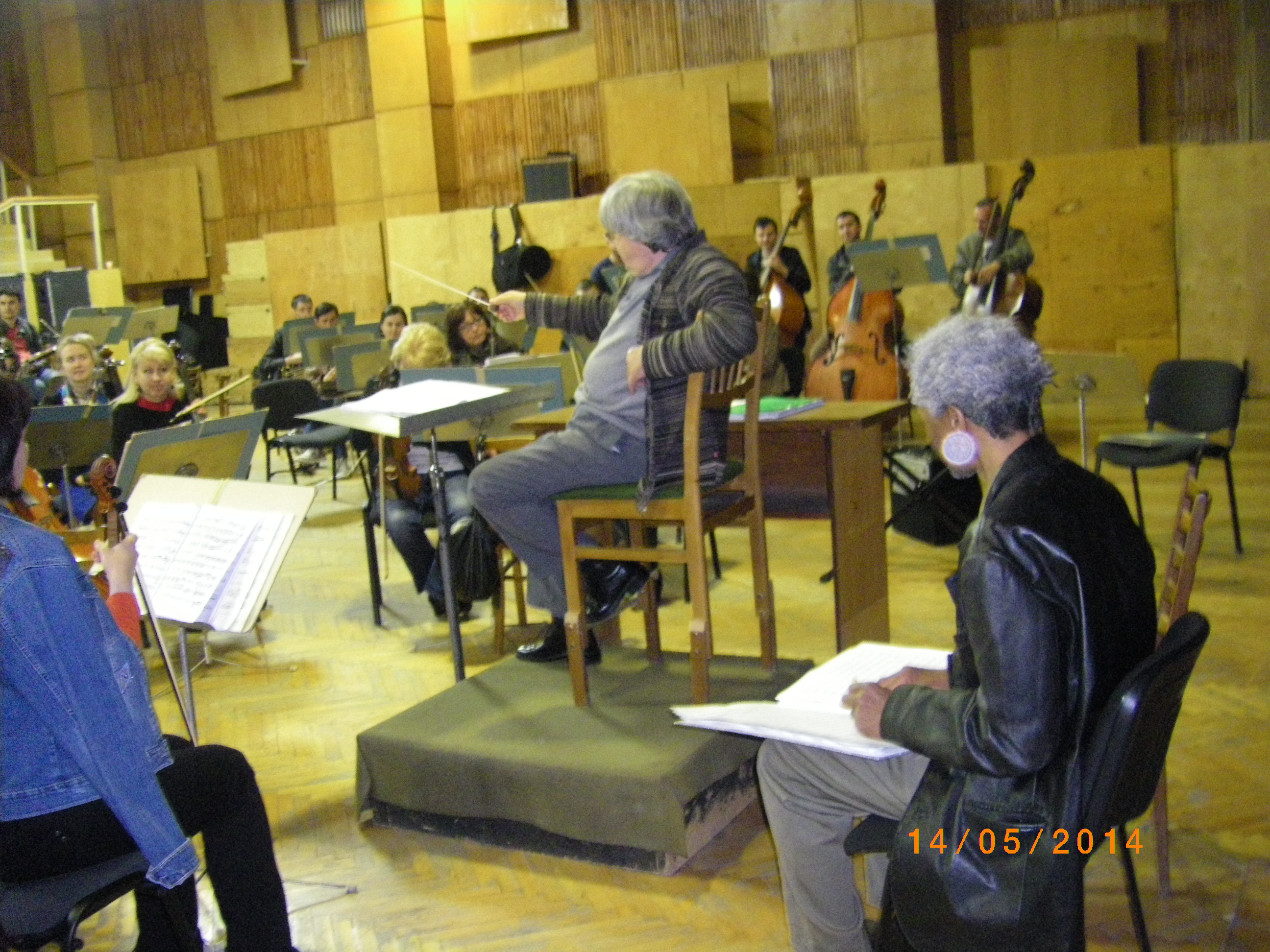
Primous Fountain working with the conductor at rehearsal.

Primous Fountain working with the conductor at rehearsal.


Enhanced by Zemanta

Black Composers Since 1964: Primous Fountain


Primjous Fountain (1949- )

Primjous Fountain (1949- )

I first encountered the work of this composer in 1982 in a broadcast concert of the Milwaukee Symphony that featured his Symphony No. 1. He was billed then as, “Primous Fountain III”.  I listened and, as was my obsessive practice, I recorded the work on a cassette tape so that I could listen again and not have the experience fade into obscurity.  I have listened many times to this wonderful piece and now in the age of social media one can find more of his music on his web page and his Facebook page.

Fountain was born in Chicago in 1949 where he attended Wendell Phillips High School and after graduation completed an orchestral piece Manifestation (1967) which was performed by the Chicago Symphony.  He has also had performances by the Boston Symphony and the New England Conservatory under Gunther Schuller.  I was fortunate recently to make the acquaintance of Mr. Bill Doggett who is a lecturer and marketing representative for black composers who is in touch with Mr. Fountain.  He informs me that Mr. Fountain is alive and well and living in his native Chicago.

Fountain with Hans Werner Henze

Fountain with Hans Werner Henze

Though largely self-taught he later studied with Hans Werner Henze and Gunther Schuller and these experiences seem to have been absorbed into the composer’s palette. In a 1972 interview with Charles Amirkhanian, conductor Harold Farberman and composer Charles Shere the then 20 something Fountain seems to react with disinterest to the apparently sincere  but rather uncomfortable efforts to address racial issues in music.  He speaks as though he feels his music to be so natural a part of his life that he reports his amazing abilities are simply normal to him. He seems unconcerned with the political aspects of being a “black composer”.   His instinct for complex things like orchestration are like walking or breathing, second nature.  His identity is in his music.

Fountain with Gunther Schuller

Fountain with Gunther Schuller

After hearing his youthful work Manifestation none other than Quincy Jones commissioned Fountain’s Symphony No. 2.  There is a performance by the Lugansk Symphony Orchestra of the Ukraine under the baton of Miran Vaupotic available for listening on the composer’s web site as well as on You Tube which now sports a performance of the first two movements of his fourth symphony along with the second movement of his Cello Concerto and selections from other orchestral works.

His idiom might be called conservative in that it incorporates a standard orchestra and uses well-known forms such as Symphony and Concerto but his skill at writing is the point much as it is with other composers trained in schools like Julliard, Curtis, Berklee and the New England Conservatory.

His work sounds at times like a latter day Stravinsky with jagged rhythms and rich orchestration.  There is a passionate post-romantic intensity to the pieces I have heard.  I definitely want to hear more.

Fortunately there is now a YouTube channel dedicated to this composer’s work.  There are, however, no commercial recordings of this man’s music that I was able to find.  Here we see a prodigy who was embraced by many in the world of serious music and whose star appeared to have been rising.

But for all the love and attention that prodigies sometimes get it hardly guarantees exposure beyond their youth.  Fountain is not well-known but that has nothing to do with the quality of his music from what I have been able to hear.  And as sincere as the performances are in the MP3 and YouTube selections they are hardly the pinnacle of musical interpretation.  His music is complex and challenging to performers and I have no doubt that a major symphony orchestra with an insightful conductor could better demonstrate the power of his music.

One hopes that the body of music of this American composer will find an audience in his native country some day but limitations of arts funding and the plight of the black minority composer suggest that this will not be an easy path.  I hope that some enterprising young musicology student might take on the cataloging and analysis of his work to help this process.  Any takers?

Maybe the people at Naxos records or one of the many fine and creative independent labels who have recorded so much neglected music might take on the task of bringing some of this music to classical audiences.  It would be a loss to allow it to languish under-appreciated and largely unheard.  We truly don’t know what we’re missing and I think that is a terrible shame.

Enhanced by Zemanta