Anne Akiko Meyers’ Romantic Post Minimalism Enthralls


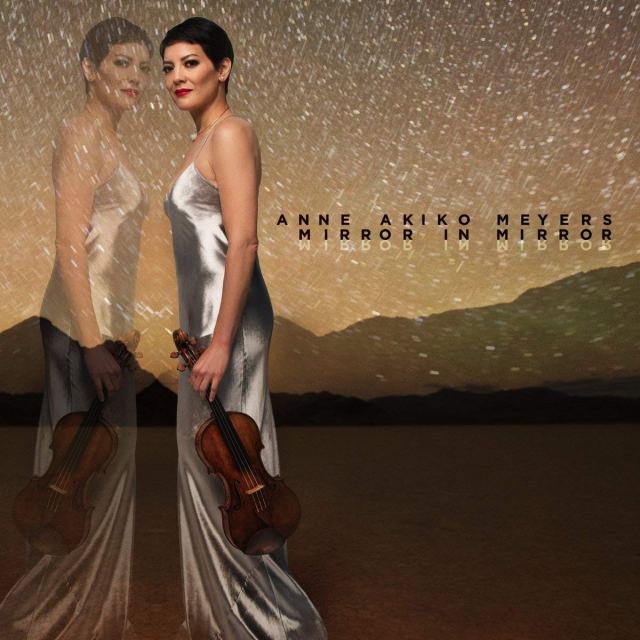
aameyers

Avie AV 2386

Admittedly I am a sucker for nearly all things minimalist and post-minimalist.  Such programming can lead to some potentially dull or cloying experiences.  Not so with this lovely collection of miniatures though.  While minimalists like Glass and Pärt make their appearances the concept here seems to reach for larger goals.  We have a mix of relatively simple chamber compositions along with electroacoustic works, a revelatory take on Ravel’s Tzigane and and arrangement for violin and orchestra of a solemn choral piece by Morten Lauridsen.

This eclecticism seems to flow from the artist’s choices rather than choices imposed by a producer.  In this respect she reminds this reviewer of pianist Lara Downes whose repertoire choices are similarly eclectic but born very personally from the artists’ experiences and preferences.

The opening Philip Glass Metamorphosis Two (1988) is presented in an arrangement by none other than Glass’ long time champion Michael Riesman.  It is followed by two violin and piano pieces by Arvo Pärt, Fratres (1977) and Spiegel im Spiegel (1978).  These lovely works serve to draw the listener in most pleasantly.  Akira Eguchi is the fine pianist who plays on all but tracks 4, 7, and 8.

Next up is a piece of musical archaeology.  Tzigane (1924) was originally written for violin and piano.  It was later orchestrated and it is that version which is best known and probably most recorded.  Well it turns out that Ravel had made a version for a now defunct instrument called a Luthéal which is an instrument invented in the early 20th century (patented 1919).  It’s actually not so much an instrument as an add on.  It modifies the sound of a piano.  The device now exists in museums but that hasn’t stopped innovative producers from utilizing an electroacoustic version.  Elizabeth Pridgen plays the keyboard to which the lutheal is virtually attached.

Apparently this version has been recorded before but this writer encountered it first in this release.  It is a very different sound than the piano or orchestral versions and is a lovely take on the music.  Many may buy the album for this track alone.

This is followed by a charming lullaby written for Meyers’ youngest daughter.  John Corigliano has absorbed only a small bit of the minimalism bug (maybe his 1985 Fantasy on an Ostinato  qualifies) but he is one of our finest living composers and he appears to infuse this violin and piano miniature, Lullaby for Natalie (2010) with a tender romanticism that is both sweet and touching.  In the notes we learn that it did seem to put her daughter to sleep but I doubt it will do that to most listeners.

The next two tracks are works by one Jakub Ciupinski  (1981- ) who also has a stage persona under the name Jakub Ζak under which he performs live electronic music.  This Polish born composer is now based in New York and works with various forms of electronics including a theremin.  Both “Edo Lullaby” (2018) and “Wreck of the Umbria” (2009) come from a similar place musically.  Both use electronics in varying degrees to enhance and accompany the solo violin.  Both are delightful little gems that give a nod to some minimalist roots but stand on their own merit and prompt this listener to keep an eye/ear out for more of this composer’s work.

The concluding piece is an arrangement by the composer Morten Lauridsen (1943-  ).  The performer states she pursued Lauridsen for a new piece and when he finally acquiesced he presented this lovely arrangement of his well known choral piece, “O Magnum Mysterium”.  The arrangement is for string orchestra and violin and orchestra here given its world premiere performance.  It should come as no surprise to new music fanciers that the Philharmonia Orchestra is conducted by none other than Kristjan Järvi, a fine conductor, composer, and avid new music advocate who can always be found near some interesting musical projects.

This album stands out in that the choices of the musical selections and the personal connections between the composers and the soloist are clearly collaborative and  inspired.  This is substance rather than fluff but it may appeal to a wider audience.  This one can be said to have crossover hopes but it does not pander.  This is a wonderful album and will likely prompt listeners who, like this writer, have yet to know this soloist to go and seek more of her recordings and live performances.  Brava!


Tesla Quartet Debut Pleases


teslaqr

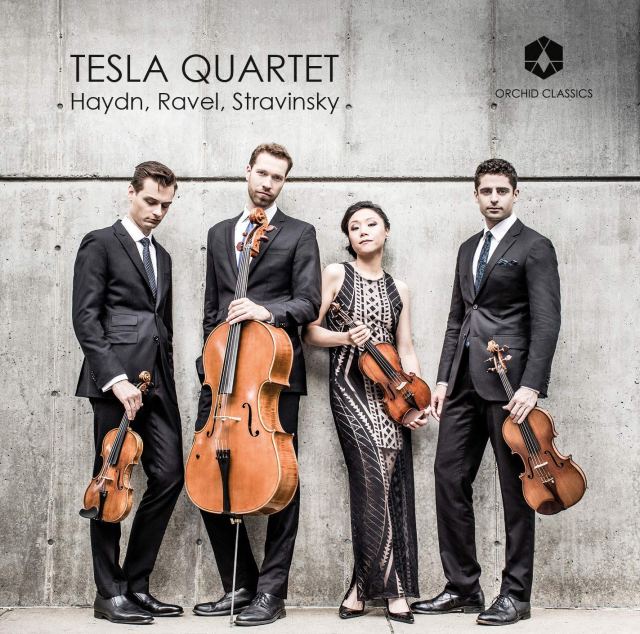
Most recordings of the wonderful Ravel String Quartet of 1902-3 is most frequently paired with the similarly masterful Debussy String Quartet (1893) or with another of Ravel’s fine chamber works.  Not here though.  For their debut recording this quartet has apparently chosen to demonstrate their skills by programming which spans the 18th to the early 20th century along with a selection of transcriptions of lesser known Ravel pieces.  After ten years playing together they have chosen to lay down some recorded tracks for posterity.

The disc opens with the Ravel Quartet which is handled most ably.  It is ostensibly this quartet that inspired first violin Ross Snyder to dedicate his career to the string quartet.  The bonuses here are transcriptions by first violin, Ross Snyder, of three lesser known Ravel piano pieces.  They are, in order of appearance on the album, the brief Menuet sur la nom d’ Haydn (1909), the more familiar Menuet Antique (1895), and the Menuet in C sharp minor (1904) are heard in transcriptions for string quartet.

By contrast the Teslas have chosen to feature Haydn’s String Quartet in C major Op. 54 No. 2.  It is the first one of the first set of so called “Tost” Quartets written in 1788 and named for a violinist (Johann Tost) of the Esterhazy orchestra.  This is mid-career Haydn who is justly known as the father of the string quartet.

The larger works are punctuated by the short transcriptions.  The Menuet sur le nom d’ Haydn follows the Ravel and leads us neatly to the Haydn.  The Menuet Antique follows next.  It is one of the more ubiquitous compositions of Ravel and listeners familiar with the composer’s work will doubtless recognize it as it appears in the Sonatine and the piano suite (later orchestrated), Le Tombeau de Couperin.

We then get to hear a lesser known masterwork by Igor Stravinsky (1882-1971), his Concertino for String Quartet (1920).  This is early Stravinsky but he clearly thought highly of this piece as he later orchestrated it in 1953 for small ensemble.  It is only about six and a  half minutes long but listeners will be able to discern this as a masterful work by the composer who had already produced his three great ballets, The Firebird, Petrushka and The Rite of Spring.  Nothing that earth shaking here but the hand of the artist can clearly be heard.

The disc ends rather enigmatically perhaps with a transcription of the very brief Menuet in C sharp minor which clocks in at under a minute.  The end result is a tasty little resume of an emerging chamber group that one hopes will bring another interesting perspective on the genre of the string quartet.  This is an auspicious and most listenable debut.

Gourmet Vegan with Solo Bass


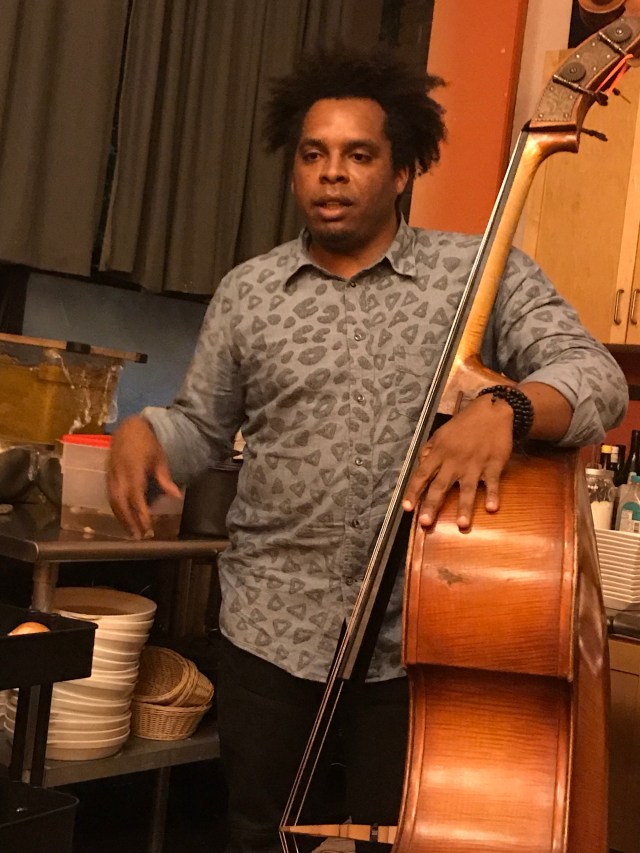
Chef and host Philip Gelb (left) introduces Rashaan Carter

Friday August 17th was one of the last of Mr. Gelb’s famed Masumoto peach dinners incorporating the incredible peak of the harvest peaches into his magical vegan creations.  It is ostensibly among the last of his famed dinner concert series which has now run about 13 years.  Whether the series is ending remains to be seen but the opportunity to partake of Gelb’s culinary art should never be missed and this night we had the opportunity to hear a fine young musician as well.

img_0277

Phil started me with this tasty IPA, perhaps the only item that was not peach related.

img_0278

Dinner for about twenty happy diners began with this delicious corn soup.  Gelb has an eye for artistic presentation.

img_0279

A little peach based salsa added a bit of fire for those of us who enjoy spicy things.

img_0281

And on to the Baiganee (eggplant fritters) with peach kuchela and peach chutney.

img_0283

The main course was Jerk Stewed Tempeh, Rice, and Peas Calaloo.  Unfortunately my eating got a bit ahead of my picture taking but you get the idea.

Peaches are, as I said earlier, from the Masumoto family farm near Fresno where three generations have been producing some of the finest fruit in the state.  The tempeh is also locally sourced from Rhizocali Tempeh of Oakland.  It doesn’t get better than this.

img_0289

The tradition here puts the musician on stage just before dessert.  Rashaan Carter is an American musician from Washington D.C. who now resides in New York.  He was passing through the bay area and Philip Gelb extended an invitation which he graciously accepted.

He began with an improvisation which he had initially done for a dance piece depicting the lynching of a black American woman Laura Nelson and her son in Oklahoma in 1911.  Now this could really bring down the mood of the evening but for the fact that Carter spoke of and subsequently played this piece with such passion that all one could really feel is the tragedy of the act and the heroic expression of what is essentially protest music dedicated to her memory.

img_0290

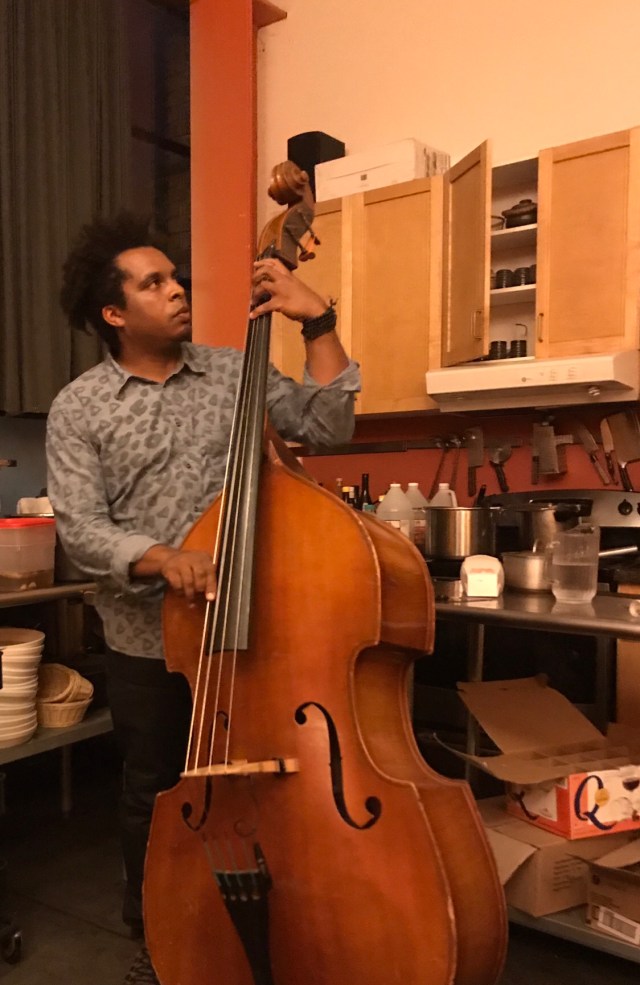
Rashaan has no small bit of the Blarney.  His running commentary during the performance was as entertaining as that of a stand up comic as he engaged most thoughtfully with the evening’s clearly appreciative audience.

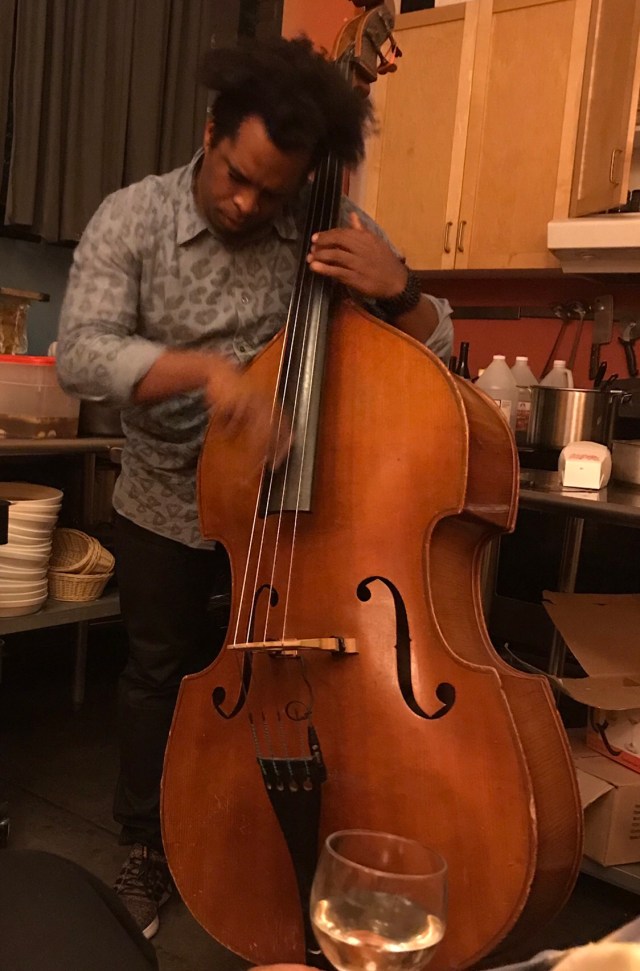
He graced us with what he said was originally intended to be a performance of a Charlie Haden piece but decided he wanted to do his own piece as a sort of homage.  Indeed he captured Haden’s spirit oh so well in another virtuosic and passionate performance.

img_0286

He ended with another sort of tribute, this time to Henry Threadgill.  Again his gift of gab provided just the right segue into the next piece and his familiarity with Threadgill was immediately apparent.  His facility with the acoustic bass produced nearly vocal sounding lines in a performance that did honor to Threadgill and left the evening’s audience very pleased.

We concluded with Blueberry polenta cake with peach ice cream and blueberry raspberry sauce, all vegan, all absolutely delicious.

img_0288

And we will all keep an ear out for Rashaan Carter from this point on.  Bravo!

Nakedeye Ensemble: A Fine New Music Group Pays Homage to Past and Future


nakedeye

Starkland

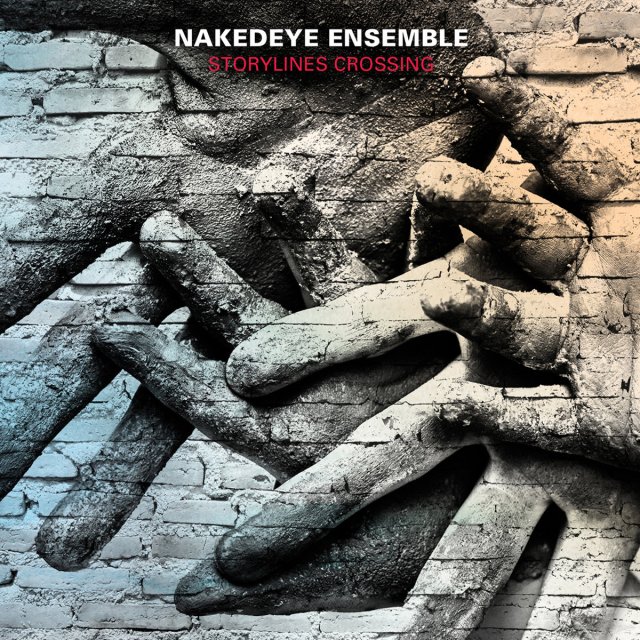
It was only a few days after receiving this CD that I received a visit from a friend similarly interested in new music.  Shortly after that visit I discovered that the CD was missing.  My friend confessed to having taken it immediately when I asked but I already knew why he had taken it and why I might have done the same thing.  After all it’s a Starkland CD and this new performing ensemble have chosen for this, their debut recording, to do an arrangement of one of the finest pieces of political classical music ever.  It is their clever interpretation/homage of Frederic Rzewski’s Coming Together (1971) that provoked my friend’s larceny and laid bare my own moral weakness.  How could anyone resist that? (I told him took keep it and bought myself a new copy).

Nakedeye Ensemble was founded in 2011 with the intent of performing new music.  They were founded in Philadelphia

Curiously, of the six compositions featured on this release, three are “sociopolitical” and the other three I suppose come closer to a category like “absolute music”, the notion that music can be just about music.  While all art is a victim (or product) of its sociopolitical, geographical, and economic context one can at least say that there is a continuum in which some music actually depends on those contexts in a greater degree.  Sociopolitical music is a pet obsession with your humble reviewer.

The disc begins innocently enough with a fine rendition of Sextet (2010) by Jonathan Russell (1979).  This is a pleasant post-minimal work with rock influences and provides a gentle introduction to an apparently carefully constructed playlist designed to demonstrate some of the range of skills possessed by this group.  The influence of Steve Reich is present and functions almost like a framework for the post minimal music that emerges.  Another generation puts its stamp on this genre which is now older than anyone in this ensemble.

With the second track we get to one of those political pieces and to the second oldest composer represented.  Zack Browning‘s Decade of the Dragon (2015) was written to commemorate the 40th anniversary of the end of the Vietnam War and the 50th anniversary of its beginning.  Browning (1957- ) is professor emeritus at the University of Illinois and the director of the Salvatore Martirano Composition Award (Sal was also no stranger to politics).

Decade of the Dragon sounds like a post-modern sort of tone poem, evoking through musical quotation and development of original themes, the composer’s memories of the travesties that permeated those years formative to his development much as they were to your reviewer’s and doubtless many whom I imagine to be an ideal target audience for this music (and all the music on this disc actually).  And there is a sort of painful irony to hearing the artistic expressions of these sad historical events played (very effectively) by an ensemble for whom the events are solely history.

Rusty Banks‘ (1974-  ) “Surface Tensions” (2015) is another playful post-minimalist essay which is not afraid of a little experimentation.  Banks is among the younger composers here but this little sampling of his work suggests we will be hearing much more from his pen.

Randal Woolf  (1959) is a name which will likely be more familiar to listeners as he is a seasoned member of the so called “downtown” musicians.  He applies his considerable compositional skills to a politically infused work, “Punching the Clock” (2015).

There is a dedication and respect communicated by these musicians for their art, the artists whose work they interpret, and for the history that inspired some of them.  Nowhere is this better demonstrated than by the last track, Frederic Rzewski’s Coming Together (1971).

This piece has been done by many ensembles over the years but the only recording other than Rzewski’s original on Opus One records is one by the Hungarian ensemble “Amadinda”.  The text is spoken clearly, dramatically, and effectively and in English, albeit with a charming Hungarian accent.  There are also various lovely and interesting readings to be found on You Tube (including an uncharacteristically hesitant reading by rapper/actor Mos Def) but the arrangement by resident composer Richard Belcastro does a stunning (Am I too old to say “reboot”?) or reworking of the original.

Using different voices, intonations, and inflections this arrangement uses the voices in a sort of pointillistic counterpoint with voices having solos, sometimes answering each other, sometimes together.  Ranging from plain speech to whispers to various different vocal inflections this arrangement sort of democratizes the voices and creates a scenario in which the listener could envision their own voice and struggles.

The music here is great all the way through but the special joy of this release is the discovery of these youthful artists whose insights belie their age and whose technical skills suggest that Nakedeye can now take their place (alongside Eighth Blackbird, ICE,  Alarm Will Sound, Band on a Can All Stars, etc.)  Definitely a group that bears watching/listening.


Duo Noire, Guitar Duo Revisioned


unnamed

New Focus FCR 210

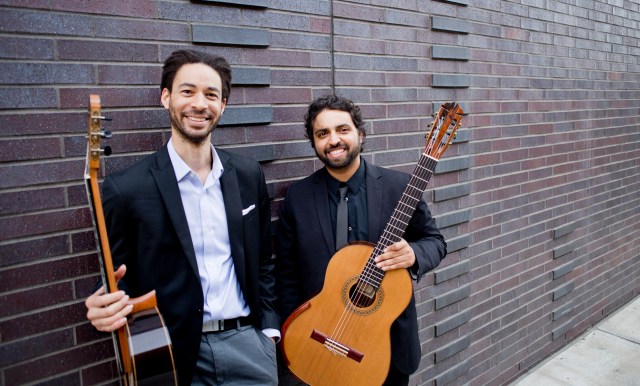
Duo Noire consists of Thomas Flippin and Christopher Mallet.  These guitarists are graduates of the Yale School of Music.  For this, their debut album, they have chosen to feature a program of all women composers.  Add to that the fact that these fine emerging artists are African-American (also the first African American graduates of Yale School of Music) and you have a glorious celebration of gender/cultural diversity as well as some mind blowing compositional efforts ably handled by these visionary musicians.

duonoir

The demographics are necessarily prominent especially in these contentious times when racial and gender discrimination are, sadly, huge and difficult issues that remain largely unresolved.  But the real story here is creative music and musicians.  This duo seems to have a unique sound and are clearly schooled in their instruments to the point that they even seem to be expanding the very possibilities of a guitar duo.  Above all this is an intelligent album.

The composers Clarice Assad (1978- ), Mary Kouyoumdjian (1983- ), Courtney Bryan (1982- ), Golfam Khayam (1983- ), Gity Razaz (1986- ), and Gabriella Smith (1991- ) are mostly unfamiliar names to this writer and, likely, to most listeners.  But don’t let that put you off.  This is a highly inventive set of compositions and these performers are doing the job of discovering these compositional talents.

There on six compositions on this thirteen track CD which has over an hour of music on it and it appears to be a landmark release for identifying new composers contributing to the guitar duo genre.  Guitar duos are not an unusual instrumental grouping but this collection suggests fresh new directions that extend the possibilities of this instrumental configuration.

assad

Clarice Assad

Of course the guitar duo is hardly a new idea.  On the more pop side we have had Les Paul and Mary Ford and on the classical side many listeners will be familiar with Sergio and Odair Assad.  And that brings us to Clarice Assad who is the daughter of Sergio Assad.  Her composition,  Hocus Pocus (2016) is in three movements, each ostensibly describing an aspect of magic.  Clearly Assad is familiar with both traditional and extended techniques of composition for guitar.  This is a sort of impressionistic work which calls upon the musicians to utilize a variety of techniques to evoke moods and images of each of the three movements, Abracadabra!, Shamans, and Klutzy Witches.

kouyoumdjian-headshot-web-quality_orig

Mary Kouyoumdjian


Byblos (2017) by Mary Kouyoumdjian embraces her Persian roots as well as the conflicts which have plagued this area of the world.  Here she is evoking an ancient town in Lebanon.  This is the most extended single movement on the disc and demonstrates the composer’s mastery of form while it challenges the instrumentalists to evoke the ancient and mystical sounds of her classical culture.


bryan

Courtney Bryan

The only African-American composer featured on this recording is Courtney Bryan.  Her “Solo Dei Gloria” (2017) which was commissioned by Duo Noire takes the listener on a sonic journey through the composer’s impression of the inner process of prayer.  That’s a mighty abstract concept and she manages accomplish it with just the two guitars (and, of course, two talented musicians).


The three movement, “Night Triptych” (2017) was also written for Duo Noire and has the honor of being the title track for this truly eclectic and innovative album.  This has more the feel of an abstract musical work than the others featured but one does hear the influences of her ethnic origin (Persian/Iranian).  Despite the more extended nature of this composition this work, like all the works presented here, is a sampling of the composer’s work and the astute listener will have many reasons to seek out more of this young composer’s work.

golfam

Golfam Kayam


Gity_228-1-8x10

Gity Razaz


Four Haikus (2017) was also written for Duo Noire.  This Iranian born composer is rapidly becoming established internationally as an accomplished composer.  Like the previous work these four short movements are of a more abstract nature.  Another sampling that will prompt listeners to seek out more of this emerging composer’s work.

gsmith

Gabriella Smith

Last but not least is the second most extended work here by the youngest of the composers represented.  “Loop the Fractal Hold of Rain” (2017) is another Duo Noire commission.  This is probably the most abstract and modern composition on the disc.

Many works here have at least the suggestion of dealing with politics, conflict, and the impact of such things on individuals.

It is admittedly unusual (though clearly not risky) to program compositions by all women composers.  This is a wonderful collection with performances that are incisive and intriguing enough to leave their listeners wanting more.  This is a group to watch/listen to.


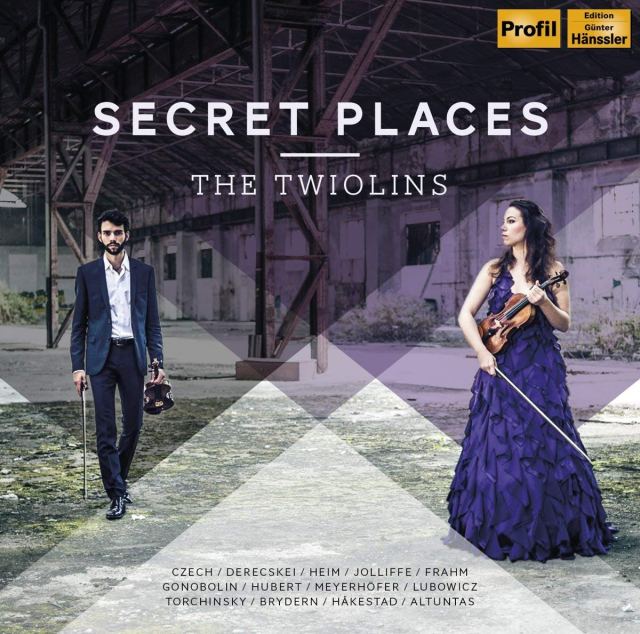
The Twiolins: Secret Places


twiolinssecret

Hännsler PHI 7002

Wow!  What a discovery.  This album was kindly sent to me by a friend, one of his most recent discoveries.  And from the moment I put this in the CD player I was entranced.  Despite the appearance of yet another cute musical duo these are two amazingly talented musicians playing some of the best post-minimal pieces this writer has heard in years.

Twiolins is are violinists with a wide range of interests (their repertoire as reported on their web site is impressive) but with a clear love for post-minimalist music.  In fact they are brother and sister, Marie-Luise Dingler and Christopher Dingler.  Unlike acts that seem to be designed to reach an audience with mediocre pop-inflected classical music Twiolins here presents 13 works by composers completely unfamiliar to this writer but astoundingly fresh and inventive.

My first impression reminded me of the music of the late great violinist and composer Michael Galasso.  There is a remarkable similarity in styles between the composers represented here but all seem to fall basically into a post-minimalist category.  The difference is that this music went right to my head (so to speak) and I found this music invaded my nervous system in the same delightful way that my first encounters with minimalism did.  My linear thinking was impaired and I found myself carried away, willing to follow wherever the music led me.  It was a curious mix of nostalgia and revelation.

There are 13 relatively brief tracks (ranging from 2:13 to 6:46) representing 13 compositions.  Once I put the disc in the CD player I just had to hear the whole thing.  No pause allowed.  There is a consistency of styles with these pieces and the ordering on the disc promotes a nice flow from faster to slower pieces, then faster ones again.  And adding to the basic quality of the compositions is a clear sense that these musicians are able to bring out details in the phrasing of their playing that make these compositions shine in ways that would flatter any composer.

Tracklist:

Rebecca Czech, Germany: Ich glaub´, es gibt Regen

András Derecskei, Hungary: Balkanoid

Benjamin Heim, Australia: Trance No.1

Edmund Jolliffe, UK: Waltz Diabolique

Jens Hubert, Germany: Rock you vs. Ballerina

Johannes Meyerhöfer, Germany: Atem • Licht

Nils Frahm, Germany: Hammers

Aleksander Gonobolin, Ukraine: Metamorphosis

Dawid Lubowicz, Poland: Carpathian

Vladimir Torchinsky, Russia: Eight Strings

Benedikt Brydern, USA: Schillers Nachtflug

Andreas Håkestad, Norway: Three Moods, I

Levent Altuntas, Germany: Chasma^2

This is apparently their third album (their first was released in 2011 and another in 2014).  It was released in late 2017.  I picked these up at Amazon as digital downloads for comparison.  It would appear that these musicians have been carefully cultivating their sound and selecting their repertoire.

Granted there is a slightly populist feel here but none of these composers are known to this reviewer so it’s difficult to say if this is typical of their work.  These are strong, well-wrought pieces that will delight and move the listener.  The term “populist” here is not intended to imply simplicity or lower quality, just a nod to the fact that it will likely have an immediate appeal to listeners.  The composers are a nationally diverse set and doubtless have other compositions of interest in their catalogs.  Listeners can doubtless anticipate more tasty little miniatures as well as (hopefully) selections from their repertoire of concerti and the like.

This is not a mind bending or taxing album but neither is it negligible.  The liner notes give little info about the pieces but that doesn’t really matter because they’re relatively brief and you will either like them or not but this writer is betting on “like”.