Donut Robot! Post-Haste Duo


OK, so I go to the post-office, to my little PO Box and I find one of those nice flat envelopes with the bubble wrap inside. Nothing unusual so far. When I pull out the disc I see post-apocalyptic cover art that could have come from the pen of Matt Groening (that is a compliment). And looking at the inside I recognize none of the musicians and none of the composers (also not unusual). Bassoon and Saxophone? Sounds iffy at best. And these folks hail from Idaho. Idaho? The last time I heard the name of this state in relation to classical music La Monte Young was being discussed (he was born in Idaho). They now hail from Portland.

Sean Fredenburg

But when I put this disc in my CD player while on one of my longish drives (we drive a lot in California) I was delighted and mesmerized. These two musicians, both professors at Idaho university, seem to have cast their net into minimalist waters. The variety within that definition of a musical style demonstrates the apparently boundless creative ways of working within that style and the limitations of the term in helping listeners know what to expect.

Well, expect virtuosity, expect clever invention, and expect to be entertained. Despite the pop art cover (the entire production will be my exhibit A when I propose a law requiring a minimum 12 x 12 packaging for all music and video releases) the music consists of some really solid compositions which send quite a challenge to the artists while leaving the listener enthralled (no easy task). The only mistake is putting the liner notes one line. Die hards like yours truly will seek out and read these (actually very useful notes) but I think most listeners will not make the effort. Ah, well.

Usually these solo instruments are accompanied by a piano or a guitar when they are not a part of a larger ensemble. When these two instruments play together one might choose a strategy of having one instrument accompany the other. The compositions here utilized a variety of strategies, many of which place some serious physical demands on the musicians. What all these compositions manage to do is to sound as though they were intended to come out exactly as you hear them in this recording (also a daunting and frequently unaccomplished task).

These machinations stem from the efforts of the Post-Haste Reed Duo consisting of Sean Fredenburg on saxophone and Javier Rodriguez on bassoon. These works are commissions written for them (who else?) and presented here in their world premiere recordings.

The composers (Ruby Fulton, Drew Baker, Michael Johanson, Edward J Hines, Andrea Reinkemeyer, and Takuma Itoh) presented me with yet another research task (also not uncommon with the unusual music that comes my way), that of finding out who these people are and, frankly, if I should file these names away in my future successes file, keep them on the radar in the hopes that they will continue to produce work of this quality. I’d say odds are good.

Isang Yun: Sunrise Falling


PTC 5186-693

2018 marks the 100th birth anniversary of Korea’s best known composer, Isang Yun (1918-1995). His work has received many performances and recordings but he is not exactly a household name and live performances are still not very common.

Yun is well known for his having been kidnapped by the South Korean secret service from his home in Germany in 1967 due to alleged espionage. He remained a prisoner for two years and was subjected to torture and forced interrogations. It took intervention from the artistic community to secure his release and the petition included signatures of Igor Stravinsky, Herbert von Karajan, Luigi Dallapiccola, Hans Werner Henze, Heinz Holliger, Mauricio Kagel, Joseph Keilberth, Otto Klemperer, György Ligeti, Arne Mellnäs, Per Nørgård, Karlheinz Stockhausen, and Bernd Alois Zimmermann. He was held for the better part of two years and never again returned to South Korea.

This fine 2 CD set is the first release in what this writer hopes will be a series of recordings of Yun’s major works. Dennis Russell Davies has demonstrated both knowledge and mastery of new and unusual repertoire as well as that of established works of the western canon. Despite many recordings of his work in the past those recordings were (and still are) notoriously difficult to find so this set is especially welcome.

Here Davies joins forces with the Bruckner Orchestra Linz and the talents of soloists Matt Haimovitz, Yumi Hwang-Williams, and Maki Namekawa to record a sampling of Yun’s works. In addition to the first (of three) Violin concerto (1981), the Cello concerto (1976), and a sampling of chamber works including Interludium in A (1982) for piano, Glisees (1970) for solo cello, Kontraste (1987) for solo violin, Gasa (1965) for violin and piano (probably the composer’s best known piece), and a short orchestral piece, Fanfare and Memorial (1979).

If you don’t know Yun’s work this is a fine place to start. If you already know his work you will want to hear these performances.  These are definitive and will set the standard for all that follows.

The concertos are somewhat thorny and dissonant but deeply substantive affairs that challenge both orchestra and soloist. Yun’s style draws more from modernist (think Darmstadt) than romanticism but he is capable of great beauty within that context.  In both concertos the soloists must deal with virtuosic challenges but each concerto provides a marvelous showcase for their skills.  Hearing them played by musicians of this caliber they are shown to be masterpieces of the genre.

The chamber music is similarly thorny at times but always interesting. This composer deserves to be better known and recordings like this with quality performances and recordings makes a great step in that direction. Yun was a prolific composer of pretty consistent quality so even a two disc retrospective such as this can only be a brief sampling.  The choices of what to record can’t avoid taking on a personal dimension. Intelligent choices of repertoire combined with defining performances such as these will send the listener on a quest to explore more of his work.

Political Classical: Frank Horvat’s “For Those Who Died Trying”


horvatdiedtrying

Atma ACD2 2788

Frank Horvat (1974- )is a Canadian composer and musician with a profound interest in social justice and human rights.  In this 35 movement string quartet he is concerned with memorializing the lives of 35 activists who died while furthering the cause of human rights.  This work is made even more compelling by including photos from a photo essay of the subjects taken by Luke Duggleby, a Thai-based photographer and journalist.

Without a doubt this is a shining example of what I have termed, “Political Classical”, a genre of protest music which seems to have emerged in the twentieth century.  This work takes its place now with Frederic Rzewski’s Pueblo Unido Variations, and works by composers like Luigi Nono, Hans Werner Henze, and countless others who have chosen to use their expertise in the classical genre to write works analogous to the folk protest music which is perhaps better known to the listening public.

With songs one has the words which can directly or indirectly evoke the particular issue being addressed.  But, other than a dedication in the program notes, how does one imbue their music with the intended meaning for a given protest work.  Well, Mr. Horvat has chosen to utilize only the letters from these victims’ names to form the musical material for each portrait.  That is he uses the letters which correspond to musical notes.  Most famously this practice is known through the B, A, C, H (corresponding in German notation as B flat, A, C, B) theme which is the basis for Bach’s Art of Fugue.

By itself this can be a bland and meaningless exercise but Horvat manages to work within this carefully limited framework to create 35 very convincing portraits of these Human Rights Heroes.  The 35 movements are relatively brief and put this listener in the mind of composers who have  succeeded quite well with such a format such as Alan Hovhaness and Lou Harrison.  Both of these composers and the man in discussion here work in a basically tonal framework with a balanced and judicious use of dissonance.  What is curious is how he seems to succeed in evoking these people purely through sound.

In comes the Mivos Quartet whose job it is to make sense of the composer’s intentions and breath life into the notes on the page.  This New York based string quartet consists of Olivia de Prato, violin; Maya Bennardo, violin; Victor Lowrie Tafoya, viola; and Tyler J. Borden, cello.  And let’s just say they are up to the task.  Each movement takes on its individual character but retains a larger connection to the work as a whole.  Perhaps this is also a metaphor for the nature of individuality as part of the larger concept of humanity and why each perspective is vital to our collective survival.

Before I wax too philosophical let me just say that, at least in terms of this recording, this is a document of classical string quartet which also serves as a memorial to the victims it references and, hopefully, as a sort of wake up call to those who, for whatever reason, are unaware of these atrocities.  Ultimately, I suppose, the goal is the amelioration of inhumane practices.  But until then we may find comfort in the beauty which this composer has brought to this work.  This would seem to be a stab at acknowledgement of sacrifice in the name of human rights seeking justice but, for now, we must settle for beauty even if it brings tears which are a mix of both sadness and joy.

Collectif9: No Time for Chamber Music or Mahler Lite


Collectif9 based in Montreal bills themselves, aptly, as a “string band”. This is their second album and I haven’t heard the first but this one is a hoot!

Drawing on the age old practice of transcribing music for chamber groups which used to be common in taverns and such back in the 18th and 19th  centuries they create delightful riffs on the music they chose.  Here they chose Gustav Mahler. If the appellation of my title, “Mahler Lite” seems pejorative fear not.  This album is sheer delight.

There are 8 tracks drawing variously from the first, second, and fifth symphonies as well as Das Lied and the Wayfarer Songs.  The last track is a fantasy by Philip Hersant on themes of Mahler.  Nine musicians, all on bowed string instruments, do a marvelous job of evoking a big sound out of their ensemble.

Transcription is a true art and this is a shining example.  Anyone familiar with Mahler’s work will find a comforting familiarity in these pieces.  What struck this listener was their ability to evoke the orchestral instruments with some clever extended techniques.  Tympani, trumpets, trombones, tympani, etc. are all slyly and successfully implied in their playing.

While the liner notes don’t go into much technical detail they are all the average listener will need.  The charming thing here is the reproduction of the painting (apparently common in nurseries in Austria) which inspired the third movement of his first symphony.  If you don’t know the painting it depicts a bunch of animals carrying a dead hunter which, perhaps, they have killed.  And it is printed on the fold out liner notes.  Mahler uses Brother John (in a minor key) as a starting place for a set of variations with the intent of evoking this image.

The design by Kanelloscob.com deserves mention.  It deserves a closer look.  They manage to integrate a group photo, a track list, credits, commentary, and a large reproduction of that nursery art.  And they do it all with paper, no plastic to crack and become unusable.  It’s low key but a really beautiful production.

Collectif9 is John Corban, Yubin Kim, Robert Margaryam, and Elizabeth Skinner on violins; Xavier Lepage-Brault and Jennifer Thiessen on violas; Jérémie Cloutier and Andrea Stewart on celli; and Thibault Bertin-Maghit on double bass (who actually did these wonderful transcriptions).

Of course the music is the main point and that is the best reason to buy this disc.  Who knows? Maybe we’ll start seeing/hearing chamber groups like this in our coffee shops. Wouldn’t that be cool?

Alan Courtis’ “Buchla Guitar”, an Homage of Sorts


Firework Edition Records FER 1122

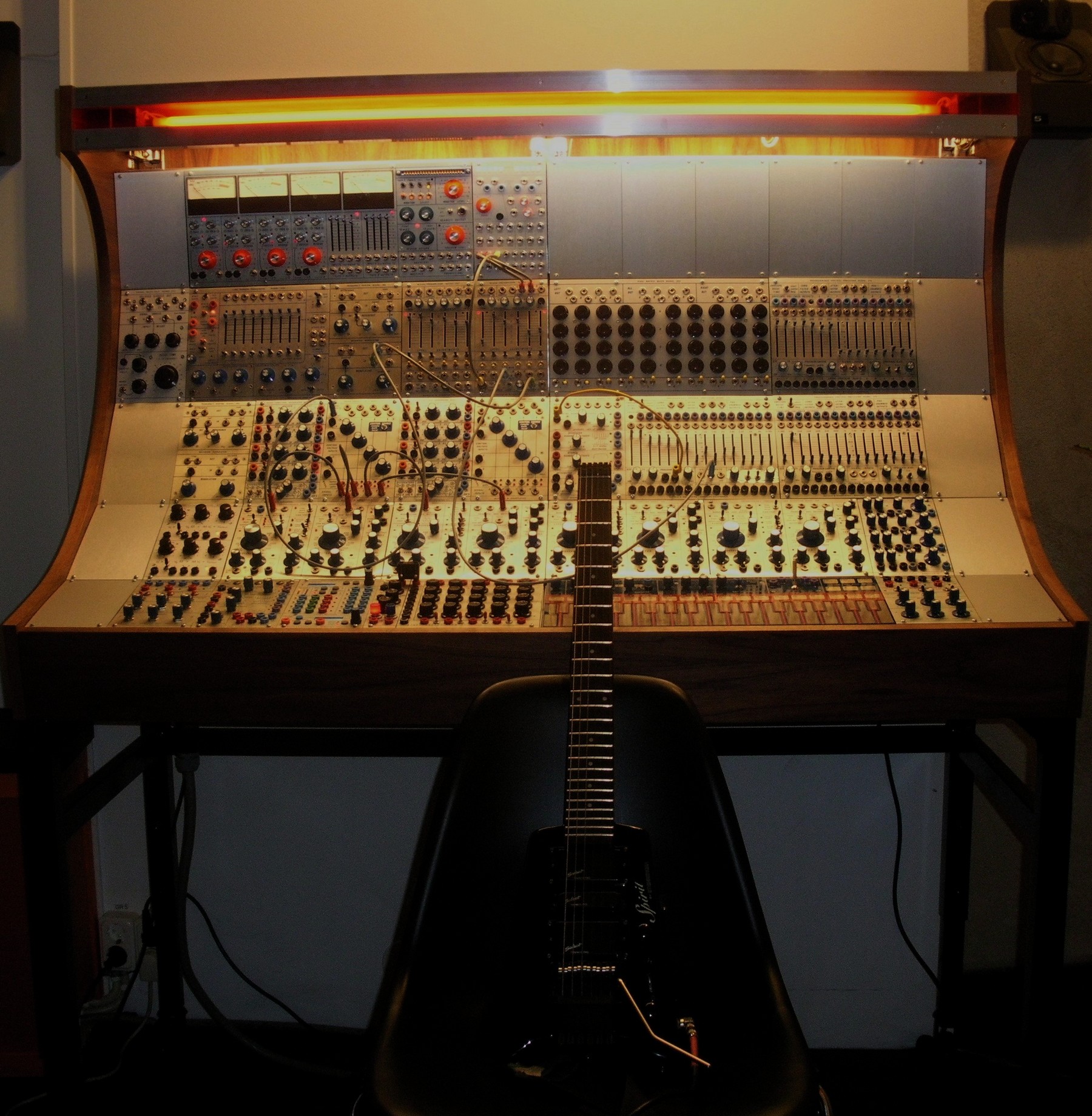
The late Donald Buchla (1937-2016) Invented many instruments from his keyboardless Model 100 (pictured here is a Buchla 200), the Marimba Lumina, but no guitar. So along comes one Alan Courtis and he creates what Buchla did not live to invent.

Courtis is an Argentine guitarist who was the founder of the group Reynols who collaborated in recordings with Pauline Oliveros. Oliveros was one of the composer/design consultants with whom Donald Buchla collaborated along with Ramon Sender and Morton Subotnick. So this album returns this busy, eclectic musician to his roots back to the days of the Tape Music Center.

Well, it surely doesn’t sound like a guitar for much of the time but the star here (or maybe co-star is more accurate) is the Buchla 200 which is the instrument through which the composer processes his guitar and which widens the range of what he can do with his instrument immeasurably. This album will remind listeners of the work of Morton Subotnick and perhaps early Pauline Oliveros.

There are four tracks, no titles, just absolute music. Courtis is clearly skilled and schooled in the operation of the Buchla 200, so much so that his guitar playing is rather eclipsed. This is likely by design. This is in many ways a tribute to Buchla and peaen to the heady days of radical invention that was the Tape Music Center (later moved to Mills College) and its luminaries

This is not easy listening but it it is a must for anyone interested in the various orbits which surround this historic and creative enclave. I don’t know if this album will appeal to many listeners but it is a huge effort and is, in effect, another brick in the wall as far as the history of electronic music on the west coast of the United States (and its dissemination to Argentina and points beyond)..

While this album came to me as a digital download (something which tests the limits of my technical skills) it does contain at least a little bit of liner notes. More would be nice but Courtis and Reynols seem more concerned with making interesting sounds and compositions and seem rather unconcerned with telling us how they got there except in the most general ways. Bravo Mr. Courtis.

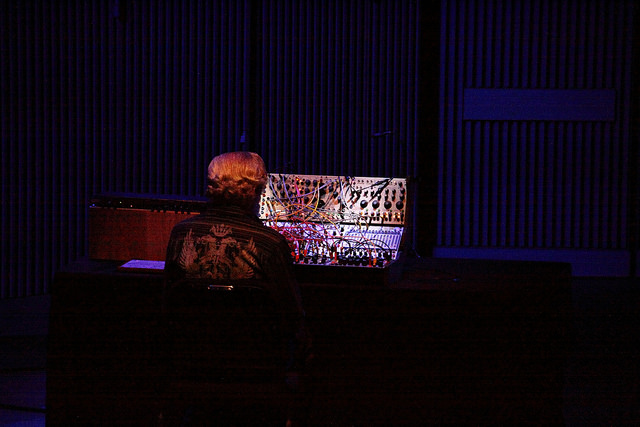
Don Buchla in his last major appearance performing at Other Minds 20.
Don Buchla at a Buchla 100 at the Other Minds Festival 20 in 2015

Clarice Jensen Solo Debut Album


jensenmiasmah

Miasmah Records MIA041 

Another refugee from one of those new music groups comes forth with a debut album.  This time it is cellist Clarice Jensen who also serves as artistic director of the American Contemporary Music Ensemble (ACME).  And what amazes this listener is the sheer diversity one can find in solo cello recordings.

This recording focuses on the special tunings by La Monte Young student Michael Harrison who has carved his own unique compositional style as well as some interesting work by the late Johan Johannson and by the soloist herself.  

There are 4 tracks: 
bc by Clarice Jensen and Jóhann Jóhannsson
Cello Constellations by Michael Harrison 
For this from that will be filled (a) by Clarice Jensen
For this from that will be filled (b) by Clarice Jensen

While there are consistencies between the sound world of these pieces they have their own identity.  Johansson’s work opens the disc and sets the tone for all that comes after.  This is not simply a cellist with a set of cool effects pedals.  Rather this is a soloist seeking to become one with her instrument (which includes the electronics).

Michael Harrison’s work is heard too infrequently.  The former student of La Monte Young carries on the tradition of exploring new tunings in a manner one might expect of the next generation of this practice.  Harrison (no relation to Lou) creates dream like worlds with the psychological  effects of these tunings and this work is a stunning example.

Jensen plays the two parts of the title track, “For this from that will be fulfilled”.  Multiple generations beyond the kitschy “one man band” novelty concept, Jensen’s playing must be a mesmerizing live experience.  This track was originally designed to accompany visuals by one Jonathan Turner who did the striking photography of the album’s cover.

The review copy lacked liner notes (a personal bugaboo) and the press release and notes on the soloist’s site and that of Bandcamp also tell precious little.  Fortunately this is music which speaks pretty directly and can easily be  enjoyed with no knowledge of whence it came.  Just sit back, relax, and enjoy.  Jensen’s playing is magical.

Jensen in performance (photo from web site)

The Shostakovich Fourth, the Symphony That Almost Wasn’t


Shostakovich dealt with a great deal of adversity as a result of wars, the revolution, and Stalinism. That is sad but it makes for some really amazing stories. So it is with this symphony.

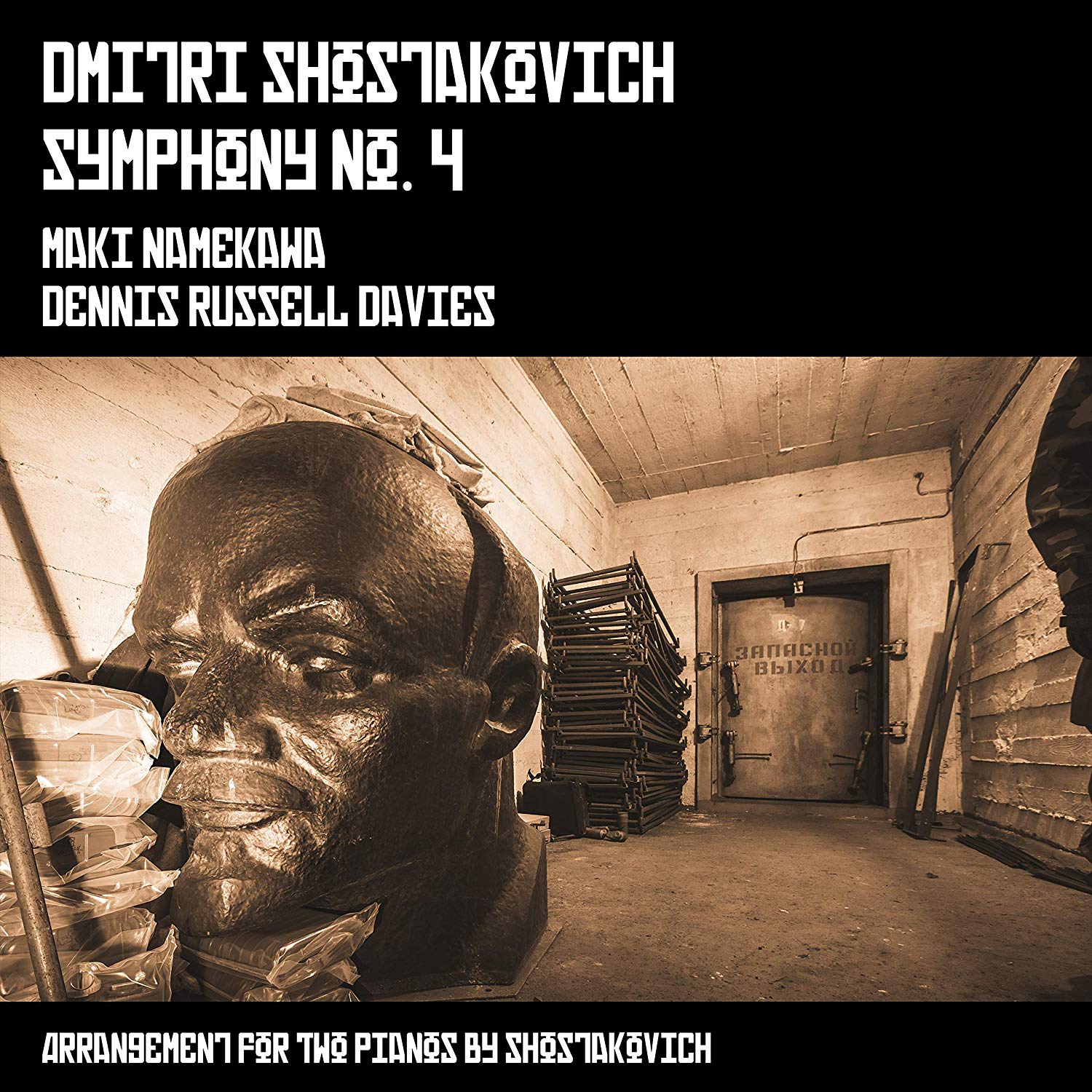
It was composed in 1936 and would mark the entry of more post-romantic elements into the composer’s work which gives it a Mahler-like cast at times. Unfortunately the politics resulted in the composer withdrawing the symphony. During WWII the score was lost and reconstructed from surviving orchestral parts and the present two piano transcription by the composer. The world premiere occurred in 1961 under Kiril Kondrashin.

It is the two piano “reduction” which is featured here. Reduction refers to the transcription of the piece for two pianos but the grand symphonic nature shines through with amazing lucidity. Of course this is as much due to the skill of the transcription but also of the artists. If you have never heard a great transcription this will amaze you.

Davies and Namekawa have established quite a name for themselves as a duo piano team. Davies, the long established conductor and his life partner Namekawa, herself a dazzling pianist have collaborated for some time now as a duo and this recording is testament to what they can do. Here they joyfully share their interests and insights on this masterpiece. Even if you have and know the orchestral version you will want to hear this.

There are three movements here. The outer movements are long extended compositions with a small(but amazing) interlude in between. This is not the Shostakovich of the famed 5th symphony. Rather it is a sort of transitional piece between the student work of the first symphony and the social realism of the second and third symphonies. While deeply intelligent the work has no intended program and one could almost pass this off stylistically as a lost Mahler work.

Fear not, though, the composer’s fingerprint is here. After all this is his 4th essay in the symphony genre. Unfortunately a perfect storm of politics conspired to almost destroy this work. Fortunately both this reduction and the reconstruction make the work available. It is especially curious for the Shostakovich enthusiast to listen to this work and imagine the care that must have been taken to avoid being associated with non state-approved music. It’s a good example of how politics places additional meaning on a piece of music that originally had none.

The recordings is lucid and is due for release on February 8th. One added sort of irony. The work is scheduled for its west coast premiere in San Francisco on February 10th.

Rachel Barton Pine: Black and Blue


Cedille CDR 9000 182


Rachel Barton Pine is one of the brightest lights of the solo violin in Chicago and worldwide. Her partnership with Cedille records (also a venerable Chicago based institution) has been both fruitful and revelatory.

In addition to the standard virtuoso repertoire such as Brahms and Beethoven this soloist has demonstrated a passion and a genuine interpretive feel for music by black composers. Were we living in a less racially charged time this focus would be of minor interest. But the fact remains that music by black composers, regardless of the composer’s national origin or the quality of the music, have been seriously neglected.

Indeed this soloist has become a sort of shepherd of the lost and neglected. Her recorded catalog is testament to her achievements in a really wide range of repertoire from the Bach solo violin music to neglected concertos and occasional pieces ranging from the 17th century to the present.

The present disc was an October, 2018 release I am reviewing for Black History Month. And it is a gem. No fewer than 11 composers, 5 of whom are still living. It is both an acknowledgement of some of the classics produced by black composers over the last 100 years and an introduction to new and emerging voices.

The recently deceased David N. Baker (1931-2016) is represented here in the first track, Blues (Deliver My Soul ) and provides a context immediately. The word “blues” is used to refer to the uniquely black musical form which consists of a poetic form in which the first line is repeated. The vocal styles that are the blues are probably the most recognizable aspect of this musical form. But one can’t miss the persistent subtext of the neglect of such fine music as yet another insult to widen the racial divide.

In fact many of these pieces are not, strictly speaking, blues. But that is not the main point here. Pine, along with her quite able accompanist Matthew Hagle, present a beautiful and wide ranging selection which presents some wonderful music and, for those with a conscience, illustrate what can be lost when listening choices are hampered by prejudice.

The Baker piece helps to create a context. It is followed by Coleridge-TaylorPerkinson’s (1932-2004) Blue/s Forms for solo violin. This man’s career alone is worth a book at least. His eclectic and learned musical style found him writing music for movies, television, and the concert hall. He was also versed in jazz and blues and even played drums with Max Roach for a while. These solo violin songs are a beautiful example of the composer’s melodic gifts. One can easily imagine these pieces programmed alongside the Bach solo music.

William Grant Still (1895-1978), truly the dean of black American composers, is next. His Suite for Violin and Piano is happily performed with some frequency and deserves to be recognized as one of the masterpieces by this really still too little known composer. The piece is in three movements, each a representation in music of a painting.

Noel Da Costa (1929-2002) is a new name to this writer. He hails originally from Nigeria but made his career in New York City. His “Set of Dance Tunes for Solo Violin” makes a nice companion to the Perkinson pieces. This is one of the world premieres on the disc. Here’s hoping we get to hear more of this man’s work.

Clarence Cameron White (1880-1960) is another unfamiliar name. His Levee Dance is next. He was one of the lesser known of the group of early twentieth century black composers which included R. Nathaniel Dett, Dorothy Rudd Moore, Florence Price, and Samuel Coleridge-Taylor.

By far the best known name here is Edward Kennedy “Duke” Ellington (1899-1974). One out of eleven here has “household name” status. He is represented by Wendell Logan’s arrangement of, “In a Sentimental Mood”. This is the premiere of this arrangement.

Now to the living black composers. This is a forward looking recording which pays homage to the past but also acknowledges a living tradition. Dolores White (1932- ). Her “Blues Dialogues for Solo Violin” add admirably to the solo violin repertoire.

Belize born Errollyn Warren is next with her brief, “Boogie Woogie”. Warren is a composer with a wide range and, while this is a fun piece, she has composed a wealth of music for various sized ensembles including orchestra. She was the first black composer to be represented at the famed Proms concerts. Wallen was a featured composer at Other Minds in San Francisco.

A slightly longer piece by Billy Childs (1957- ), “Incident a Larpenteur Avenue” gives the listener a taste of the work of this prolific composer. This is a world premiere which was written for the soloist. Childs won a Grammy for his jazz album, “Rebirth” in 2018.

Daniel Bernard Roumain is of Haitian roots and works in New York City where he works with turntables and digital sampling to augment his classical compositions. His work, “Filter for Unaccompanied Violin” is given its world premiere recording here.

Charles S. Brown (1940- ) concludes this amazing recital with, “A Song Without Words”.

This is a rich and rewarding recital which will take the interested listener into wonderful new territories. Listen, read about these composers, enjoy their artistry. This is just a beginning.