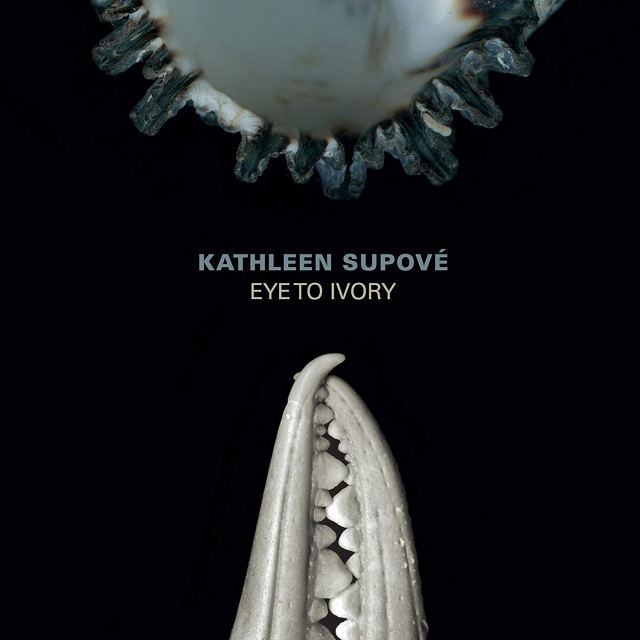
Starkland ST- 233
Kathleen Supové is one of a handful of new music pianists whose repertoire choices are such that anything she does is worthy of at least one listen and most frequently many more. (She was previously reviewed on this blog for her wonderful The Debussy Effect album from 2017 on New Focus recordings.) Starkland, analogously, is a label whose choices of both repertoire and artists is similarly reliable. So it is with this most recent release.
Five composers are represented on 16 tracks. All but one utilize some form of electronics (computer, sampler, etc.). It is difficult to characterize the sort of choices Supové makes except to say that she leans toward the experimental but includes a variety of genres that run the gamut from minimalism to obtuse and complex experimentalism. The issue here is not the genres but the quality of the performer’s choices and that is what makes this release so compelling.
The title track is by the still too little known Mary Ellen Childs (1957- ). Eye to Ivory (2005) is a commission written for Supové is described in the brief but useful program notes as a composition focused on the sound densities of the various ranges of the keyboard and one which requires a variety of movements by the pianist (including sitting standing, etc.). Obviously the visual component is not captured here but the sound clusters, no doubt analogous in some way with the movements, make for compelling listening.
Talkback IV (2010/12) by one Guy Barash, a composer new to this reviewer’s ears. It is described as one of a series of pieces exploring the interaction between the piano and a computer in real time (i.e. the computer responds to what the piano is playing. Barash does the real time digital processing. Here is some of the edgy, perhaps even somewhat obtuse (to the casual listener I think) music where Supové and Starkland excel. Its not easy listening but it is substantial enough to prompt this reviewer to bookmark the composer’s internet page (you should too).
It is with Rama Broom (2000) by Nick Didkovsky aka Dr. Nerve (1958- ) that we begin to hear a more intimate music making via the use of the performer’s voice speaking a text of her own composition. Written for this artist, the piece is an opportunity to showcase her dramatic abilities both as a writer and as a vocal performer. There are algorithmic composition processes here but the music belies these complexities and what comes through is the drama in music, text, and performance. Play this one on Halloween (that’s all I’m gonna say).
Also of 2000 vintage and continuing the intimate aspects of this album is the next selection, “In the Privacy of My Own Home” written by the Bang on a Can composer Randall Woolf. He is also Supové’s husband and a composer of serious note. If you haven’t yet encountered his work then you owe it to yourself to do so.
The intimacy of the work involves Woolf’s sampling of the pianist’s various types of laughter and playing the laughter on a sampling keyboard more or less simultaneously with the piano. This twelve movement work has got to be this writer’s favorite of the group both for its melodic invention and the novel use of what is basically involuntary sounds made by or provoke from the pianist. It’s like, “tickle me, I want to play piano” and it is a piece full of good humor and also deeply personal, even kind of sweet actually. Will this be played by other artists using Supové’s sampled laugh or will they need to be tickled and sampled? It is a delightful work.
Dafna Naphtali is yet another composer unfamiliar to this reviewer, also one with a fascinating, now bookmarked, internet page. Her work Landmine (1999-2017) is another work written for Supové and another work involving real time interaction between a computer (which alters the timbre of the piano). Its four movements are named with computer code (which adds a curious dimension especially to the tech challenged such as I). And yes, this is probably one of the more obtuse and complex works but one which, with the curation of this artist, demands at least a listen or two.
Enjoy this album for its sonic beauties (Silas Brown’s mastering is always an event in itself) but also as a sort of advance guard suggesting the path of music yet to come. It is in some ways similar to the CRI SD 288 recordings discs by the late Robert Helps from 1971 which helped guide this writer into the realms of new music. It is a rich realm.
 New Music Buff