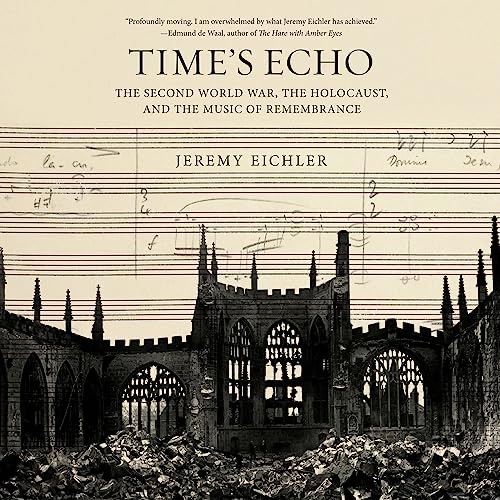
Art as a voice of protest: Jeremy Eichler’s compelling micro history, “Time’s Echo”


Though the author’s scope ranges from the early 19th century to the present day, it is not a comprehensive history, rather it is a sort of micro history of a musical genre born of sadness, hate, anger, and political dominance. It is a genre I have chosen to call “classical protest music”. And, for the sake of this review, I am referring to the incorporation of protest as a valid and effective modality for the contemporary composer.of so called “western art music”, Until the very late 19th century, music served mostly entertainment, celebration, worship, and memorial functions. But this is about a new, if frequently discomforting voice for this art form.

Music, like drama, and sometimes poetry are art forms that burn most brightly in performance. They exist on a page or even simply within the artist’s mind but come fully alive only in the temporal realm of performance. They then come to exist in the memories of the individuals who experience it. And those memories also exist concurrently within the overall social reality. Politics, philosophy, economics, and spirituality which ultimately frame art are now incorporated into the art form as it talks back to history.

The function of protest music in the popular or vernacular genre, one that arguably has had a greater impact in fomenting political change than protest music in the guise of the western classical tradition, has been well documented. Not so with music of the concert hall classical format.

Jeremy Eichler’s beautifully researched and written micro history makes a case for this art form framing (or reframing) history. Of course, not all expressions of protest hit the target of actually influencing history, but this book is not about that. It is about the birth of a concept little known in music until the late 19th and early 20th century. It is a genre which persists today in the so called political classical genre.

The book is filled with historical facts and people which become metaphors as the author elucidates the historical contexts that, in retrospect, can be seen as the genesis of art not just passively responding to historical events. They are attempts to use art to comment about and, hopefully influence history and to express outrage, sadness, and to call for change.

Music, ever the realm of entertainment and celebration, now increasingly finds purpose and mechanism to participate, not only as a supplier of entertainment and homage, but also as “a voice crying in the wilderness” in dialogue with the social/political milieu.

Eichler chooses four musical pieces by four different composers from four different time periods to tell the story of the evolution of western art music to speak with in an informed, publicly intellectual voice. In its ideal presentation, it succeeds best when it resonates with the hearts and minds of the audience. That can and sometimes does “go viral” (in common parlance) and subsequently influences public opinion.

The musical exemplars the author chooses includes:

Richard Strauss (1864-1949) “Metamorphosen” (1946)

Arnold Schoenberg (1874-1951) “A Survivor from Warsaw” (1947)

Benjamin Britten (1913-1976) “War Requiem”(1962)

Dimitri Shostakovich (1906-1975) “Symphony No. 13 ‘Babi Yar’” (1962)

Each composer, each work is subjected to historical, philosophical, and (I would say) spiritual/mystical analysis. And, to accomplish this, he goes back first to the early 19th century to discuss the rise of the idealized German gconcept of “Bildung” and the subsequent rise of antisemitism famously touted as a necessary fact by Richard Wagner (1813-1883) and subsequently amplified to the extreme of The Shoah.

Many musical works are referenced here, but John Foulds “A World Requiem” (1923), which is a large grandiose work of post romantic grandeur that seems to embody many of the elements that have come to characterize classical protest music. The work, written for large forces incorporates both liturgical and non-liturgical texts from disparate sources (not just western literature). It was conceived seemingly as a sort of final statement, a “requiem to end all requiems”, so to speak. Though popular in its day, it no more succeeded in preventing violence and hatred than Alexander Scriabin (1872-1915) in his unfinished Mysterium” succeeded in making the composer an immortal in a transcendent realm described from the spiritual imagination of Theosophical writings. But it did make a huge impact on protest as a valid modality for the artist. Protest in any modality doesn’t always have the intended impact. The point is the statement itself.

Foulds’ work can be seen as a sort of precursor, if not template for Britten’s “War Requiem”. More importantly the success of Foulds’work revealed a sympathetic audience who doubtless saw in it a clarion call, a grandly hopeful expression to an audience hungry to resolve the hatred, anger, and sadness of the increasingly divided and chaotic world as it evolved post 1919. It spoke to a fervent hope for healing and transcendence and remains a historically significant work of musical art.

Doubtless, many composers were delighted to identify this burgeoning need. Countless works followed Foulds’ noble effort and continue to this day in larger and smaller forces. Protest music, visual art, poetry, and drama are born of pain, sorrow, and hope derived from a sometimes pleading, sometimes shouting optimism. Much like audience engagement in sing alongs, audiences are invited to participate politically, emotionally and share the pain, sadness, and outrage as art speaks back to society rather than simply decorating it or celebrating it. Now, art embraces critique, not simply memorial.

Eichler discusses each composer and work, contextualizing them historically, geographically, emotionally, and philosophically/spiritually.
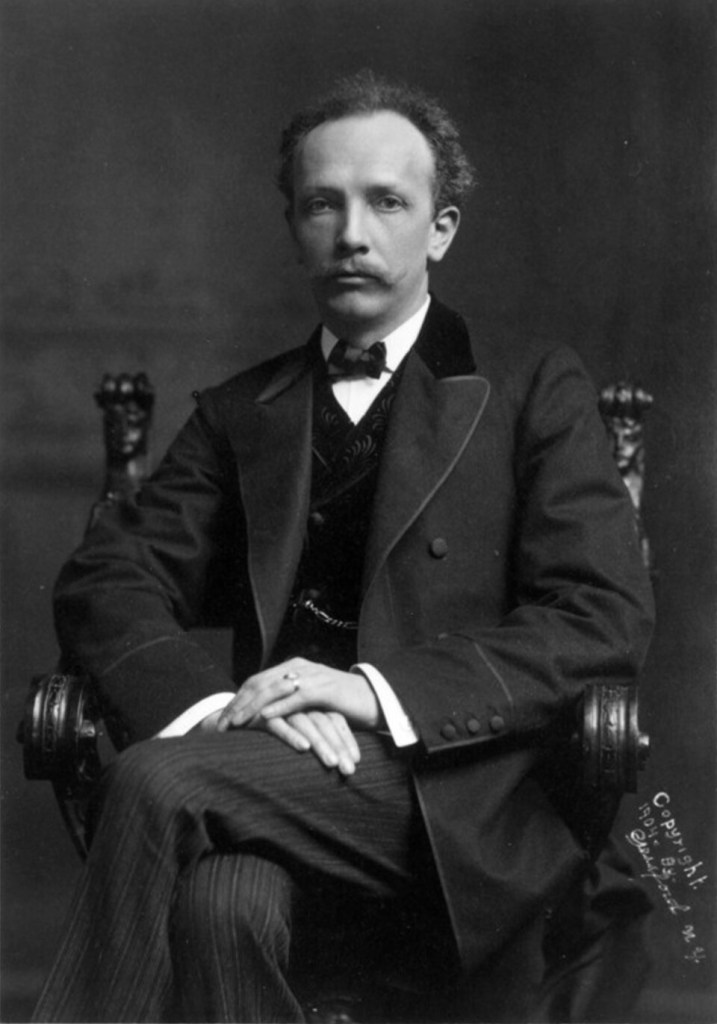
Richard Strauss

He begins then, with Richard Strauss (1864-1949) and the only work cited here that does not have a vocal component or a text. It is also more a personal reaction rather than an a work explicitly engaging with politics and history. It remains the most unique and enigmatic piece in the oeuvre of a man who remained, if not always happily, employed from the late nineteenth century, through two world wars and horrific historical events and wildly differing leaders. To this listener’s ears, it seems more of a catharsis, a musical processing of the composer’s emotions and possibly exorcizing them and containing them in this music. It is truly a powerful piece but it does not rise to the more explicit protest works that would follow in the mid twentieth century.
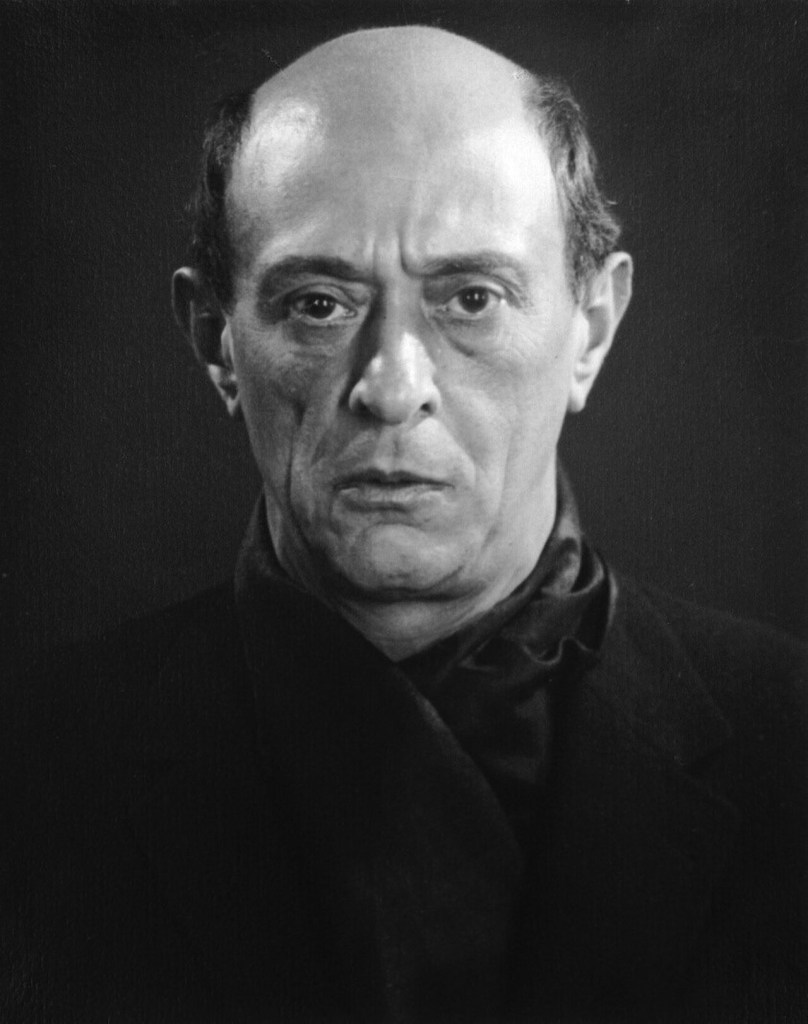
Arnold Schoenberg

A very convincing and insightful analysis is made of the next exemplar of the genre. Eichler’s biographical, historical, and philosophical/spiritual contextualizing of “A Survivor from Warsaw” (1947) seems an unusual choice. But, the fact that this brief monodrama is probably the first major public utterance of the rising awareness of the atrocities described by the narrator and focused attention in a way that only art can. It was also the development of the composer’s revolutionary serially organized music which was, perhaps ironically, very well suited to express the horrors of this age of “great wars”.

This section of the book is a masterful integration of political, historical, spiritual elements that provide a compelling mini history, linking individuals and events that shed a fascinating (and devastating) light on this era in musical history. It also places the composer most definitely as a protester, a would be agent of progressive political change. It led this listener to seek to experience more of Schoenberg’s music and was gratified to hear it forever differently and, more so than ever, more essential within western art music.

The work was a resounding success at its world premiere in, of all places, New Mexico. The Albuquerque Civic Symphony conducted by Kurt Frederick. 1600 people crowded into the Carlisle Gymnasium on November 4, 1948 were so pleased that the work was repeated, in full, to a deeply moved audience.

Hearing this music now, available in many fine interpretations on CD and in video formats, it is all the more stunning that this hardly easy listening tale about horrific events played so well and hit so deeply. And I will never again think of this as one of the composer’s lesser works.
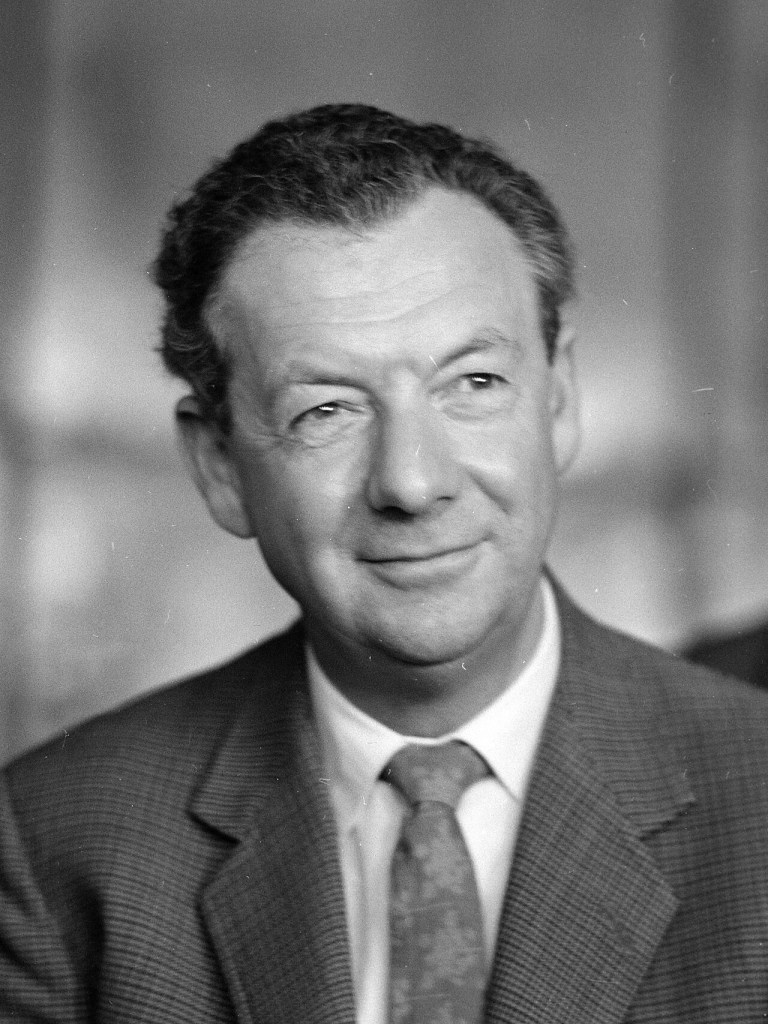
Benjamin Britten

Moving on to Benjamin Britten and his 1962 “War Requiem”. This music has a prominent place for this writer, having heard a performance by the Chicago Symphony conducted by Mstislav Rostropovich. The cellist, turned conductor was a lifelong progressive political advocate who facilitated a meeting which would become a friendship between Britten and Dmitri Shostakovich among his accomplishments.

But, I digress. Eichler’s framing of this composer and music shows a true pacifist composer who encountered the horrors of the First World War as well as subsequent atrocities perhaps one step removed geographically and culturally from the experience of Strauss and Schoenberg. He was a student, then a composer/pianist much admired and supported by the British as he steadily earned his place on the world stage.

Early in his rising successes, he managed to insinuate himself to play piano in a series of concerts with Yehudi Menuhin, that toured through war torn Europe to great acclaim. And it is here that the composer encountered first hand, the sights, the stories, the emotions that would forever inform and transform him and his music.

This experience is likely one of the seeds that led to the 1962 requiem. Britten utilized the form and Latin texts of the “Missa Pro Defunctis” , the Roman Catholic funeral rites. And he adds a chamber group that plays onstage in front of the full orchestra and chorus (I recall seeing a children’s chorus singing from the topmost seats in Orchestra Hall). The chamber group supports a tenor and a baritone who sing Britten’s settings from the late soldier, then poet/activist Wilfred Owen’s vividly sad and angry poetry. This is a guise not unlike what Leonard Bernstein would do in his anti war “Mass” some 12 years later.

Notably, the premiere was to have included tenor Peter Pears (Britten’s life and musical partner), baritone Dietrich Fischer-Dieskau, and soprano Galina Vishnevskaya (later the wife of Mstislav Rostropovich). However the Soviet government prevented her from performing this politically hot work. The hope of symbolically including British, German, and Russian artists was to further emphasize the message of the work. Though Vishnevskaya did participate in the glorious 1963 DECCA recording, she was replaced (most successfully) by the fine British soprano Heather Harper for the premiere. Britten himself conducted the chamber group at the premiere with Meredith Davies leading the large orchestra, choir and soloists.
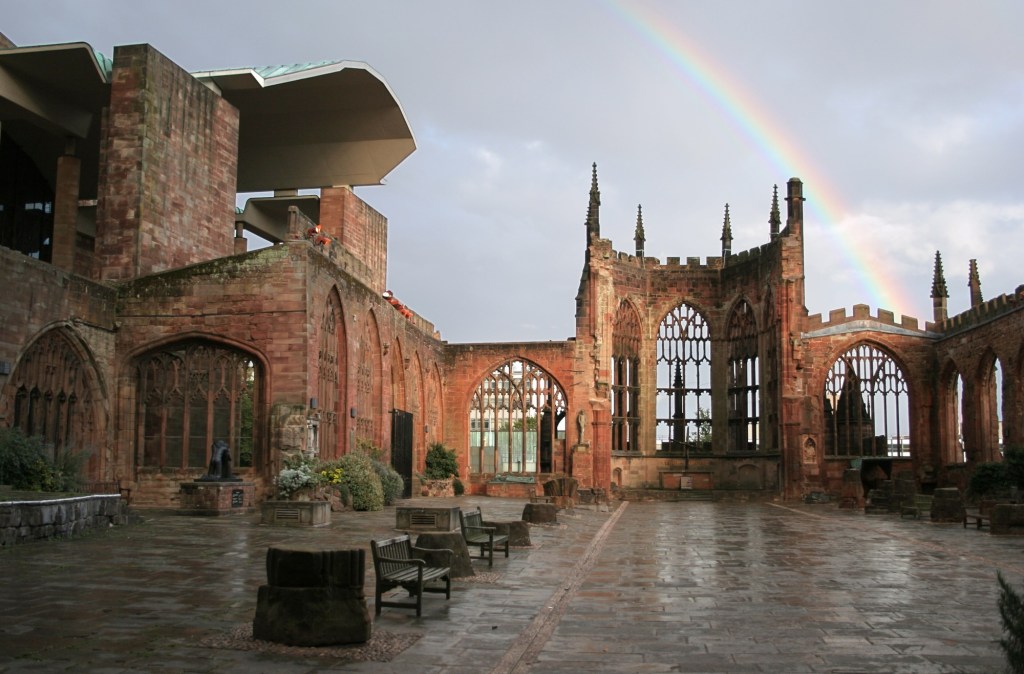
The roofless remains of the original Coventry Cathedral

In discussing the War Requiem, Eichler recounts his pilgrimage to the site of the newly rebuilt Coventry Cathedral which had been very badly damaged in the war and the work was commissioned to celebrate the consecration of the new edifice which was built next to the 14th century ruins, ruins through which the audience passed following the very successful premiere on July 27th, 1962. Eichler reports that his own experience walking through the ruins was a powerful experience even now, but especially when one knows this history.
Dmitri Shostakovich

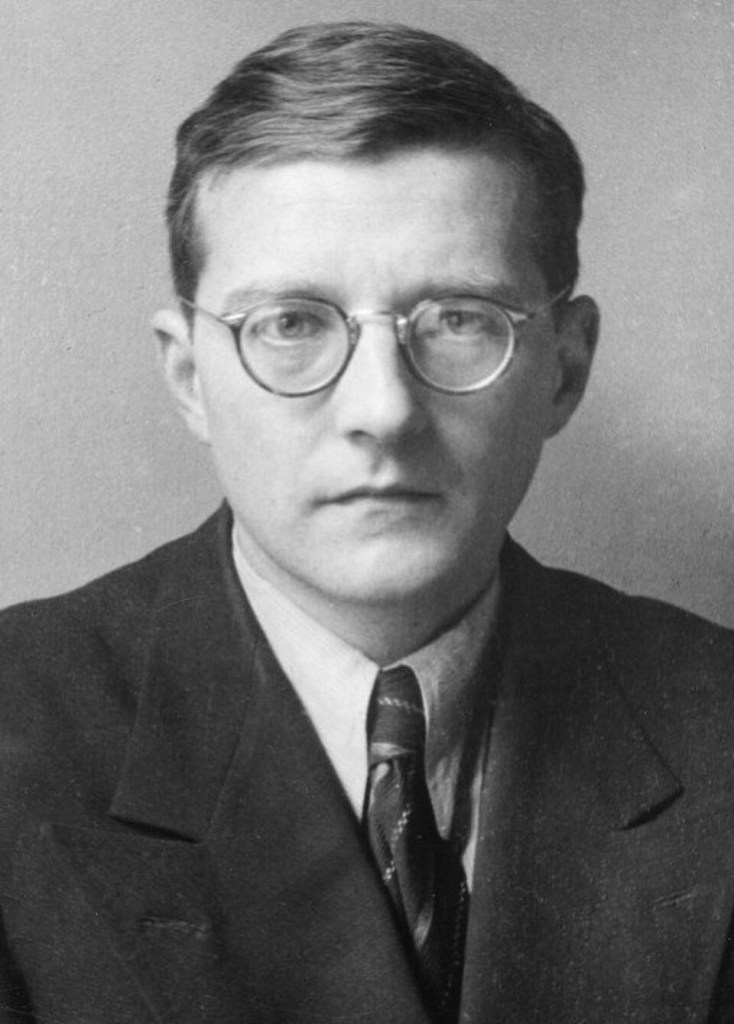
For the book’s finale, Eichler chose a too little known Shostakovich Symphony, his 13th (1962) ( later titled “Babi Yar”). The composer had worked under the repression of the Soviet Empire at least since his opera “Lady Macbeth of the Mtsensk District” disturbed the Soviet leadership in the 1930s. But he managed to get in a few significant political punches during his long career and continued to produce substantial and fresh new music until his death in 1975.

His 5th Symphony won him favor again with the Soviets and the composer’s 7th Symphony “Leningrad”, a paean to the ultimate victory over Nazi forces in 1944 is the stuff of legend, being performed on March 29th of 1942, literally during the siege of Leningrad. Musician soldiers were relieved of their war duties in order to have enough musicians to perform it and strategic bombing raids were done to redirect Nazi bombings and ensure that the music would be heard at its embattled premiere.

Eichler’s choice of the 13th Symphony is an apt choice to fit the author’s thesis. The work is a cri de couer, an angry lament raising the awareness of a genocidal slaughter, the evidence of which survived multiple efforts to erase the facts and the evidence from history. It sets the words of the fine Russian poet Yevgeny Yevtushenko (1932-2017) in his poem “Babi Yar” that provided the words. It refers, of course to the genocidal mass murders of Jews, dissidents, and others deemed not worthy of being allowed to live in the Nazi regime at the ravine so named. Accounts vary and much had been done to cover up the murders which numbered up to 30, 000 a day. In fact, there did not exist a memorial for some 100, 000 killed at Babi Yar until 1992.

The 13th Symphony premiered on December 18, 1962 in the Great Hall of the Moscow Conservatory. Kiril Kondrashin conducted. Despite controversy and attempts to tamper with the words, pressure to stop the premiere, it was a rousing success. This was only some seven months after the premiere of the Britten War Requiem.

Eichler’s account could have ended here but for the fact that, in addition to facilitating a meeting between Britten and Shostakovich, Mistislav Rostropovich smuggled a copy of the 1963 DECCA recording of the War Requiem and a score so that Shostakovich could hear it. And listen he did, with enthusiasm such that Shostakovich was inspired to respond in what would become the composer’s 14th Symphony which was dedicated to Britten. Hence the arts had a conversation about the atrocities of war like never before.

The work, incorporating poems by various poets on the subject of death was premiered officially on September 29th, 1969 in Leningrad by the Moscow Chamber Orchestra conducted by Rudolph Barshai. It appears to be inspired in part by the composer’s 1962 orchestration of Modest Mussorgsky’s song cycle, “Songs and Dances of Death” (ca. 1875) and perhaps Gustav Mahler’s “Kindertotenlieder” (1904).

The response at the premiere, hardly devoid of criticism, was another resounding success for the aging, ailing composer. The UK premiere was conducted at Aldeburgh by its dedicatee, Benjamin Britten, also to great acclaim.

Eichler’s book elegantly describes the genesis of these five works inspired by the history of very real and very shameful atrocities of some 50 years of conflicts which, though they may never be resolved, are truly “Time’s Echo” encased in artistic amber as it were. The memory of this reviewer’s experience of witnessing Maestro Rostrpovich’s reading of Britten’s Requiem so many years later and indeed all subsequent performances of the music chosen here by Eichler hold out a glimmer of hope that these echoes of their time will preserve both the memories of the atrocities themselves as well as the just outrage of the artist’s products in sound for posterity.

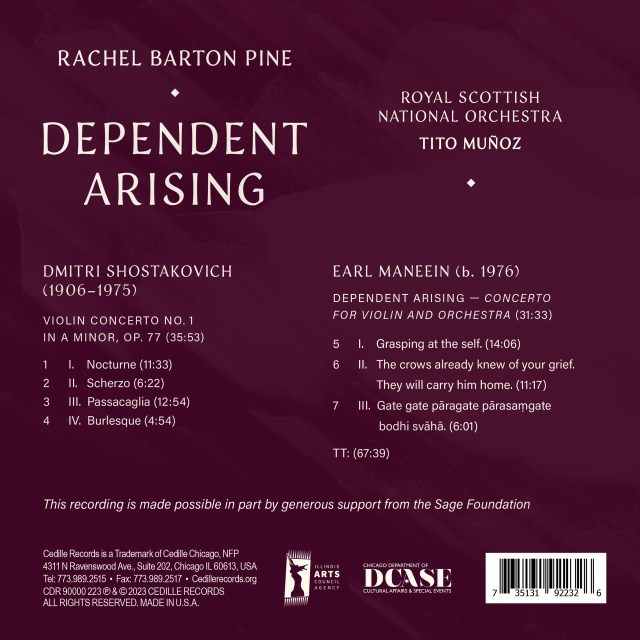
The Metallurgy of Sadness: Rachel Barton Pine’s “Dependent Arising”


Dependent Arising

Rachel Barton Pine (1974- ) appears to have an incredibly wide range of musical interests and has managed to successfully integrate those into her musical career. Ranging from early, frequently little known, baroque composers to an expanded appreciation of grand romantic works, an intelligent selection of post 1900 composers (many little known) and some remarkable works commissioned by and for her, and heavy metal rock. And the single thread that seems to characterize, in this listener’s ear, her strength is the ability to choose music of substance and to then create insightful performances of those works.

Here she explores the sonic geography of angst and redemption in these two violin concertos written some . And this album embodies some of the qualities that make this violinist one that stands out distinctly in the crowd but in a way that is about identity rather than hierarchy. Her wide ranging musical interests are a part of her sonic autobiography. Here she reveals her interest and engagement with “heavy metal” music, a rock genre that began around 1970. In her liner notes she discusses this and manages to convincingly demonstrate a sort of “proto-metal” aspect in the first selection, the Shostakovich (1906-1975) First Violin Concerto of 1947-8 , a work notorious for its censure (the second of several such denunciations of the composer’s career) under the Zhdanov Doctrine. It was not premiered until 1955.

This somber masterpiece was written in the shadow of the horrors of the Second World War (ended only about three years before he completed this work) and reflects the composer’s deeply felt emotional memories. It was not remotely in compliance with the strictures enforced by the oppressive regime. tThey didn’t want to be reminded, much less honor, the atrocities and horrors of the war. Its premiere in 1955 (some two years after Josef Stalin’s death) by its dedicatee, the great David Oistrakh, saw the concerto earn a place in the respected repertoire of violin concertos. The four movement work is not what you want at a party unless you’re trying create a funereal vibe but it is quite beautiful in a modernist tinged, grand romantic idiom with all the hallmarks of the composer’s wry humor and his profound empathy.

Earl Maneein

The second selection, written some 80 years after the Shostakovich concerto, is a commission from a self described, “heavy metal” violinist named Earl Maneein. His is a name new to these ears but one clearly steeped with expertise in classical composition and heavy metal music both inflected with his spiritual practice of Buddhism.

Here is music from a composer who truly understands classical composition and his integration of “metal” elements is an expansion of classical composition, not a parody or an amateurish effort. This is a major concerto which gives the soloist an opportunity to show their technical and interpretive skills. I don’t know this musician and I’m not quite sure of the meaning of “metal music” as practiced now but I am positively enthralled by this work.

So we have another typical Rachel Barton Pine album, a fine reading of a classic (the Shostakovich one a bit under appreciated still) and a new work which strives to become a part of that repertoire and is likely to get their. Rachel’s virtuosity and interpretive skills are clearly evident as always and he journeys are effectively rethinking the canon of works for violin. Brava!

Politics and Its Discontents: Sirius Quartet’s New World


siriusnewworld

ZOHO ZM 201908

This is a marvelous disc which functions well on several levels.  First it is a fine disc of new string quartet music played by wonderful musicians (who wrote most of the music here as well).  Second it is a disc of music which is designed to put forth sociopolitical reactions/opinions.  This Zoho label production succeeds quite well in these areas.

Starting with the lovely cover art by Aodán Collins, this Sirius Quartet album is their first full album since 2016.  It is, above all, a political statement, or rather, a series of political statements in the form of inventive compositions by these wonderfully talented musicians.  Each track is incredibly entertaining and each has a closely associated subtext of sorts reflecting a variety of sociopolitical issues.  The Sirius Quartet consists of Fung Chern Hwei and Gregor Huebner, violins; Ron Lawrence, viola; and Jeremy Harman, cello.

This disc contains ten works on ten tracks, each with an underlying political component.  All appear to have been written from 2016 to the present though the composition dates are not given explicitly.

The first work, Beside the Point, is by first violinist Fung Chern Hwei and it is a friendly scherzo-like piece which sets the tone for what is to come.  The composer describes this piece as his statement against discrimination and it is a plea for equality.  It is a relatively brief but very compelling work.

Next up is a track written by cellist Jeremy Harman called Currents.  It is another scherzo-like affair, slightly longer than the first piece and its political subtext is described by the composer as evoking currents of elements both dark and light whose powers affect us daily.  Another well-written and very exciting piece.

The eponymous New World, November 9, 2016 is essentially an angry lament in response to the election of Donald Trump as president on that date.  The work quotes judiciously and effectively from Dvorak and Shostakovich in the longest work here coming in at 10:16.  It relies on some extended techniques at times but is an essentially tonal work as are its companions on this disc.  This piece is also distinguished as having won the 2017 New York Philharmonic’s “New World Initiative” competition’s grand prize and it is acknowledged as the seed work which eventually spawned this entire album.

#Still by second violinist Gregor Huebner is perhaps the most gut wrenching piece here.  It’s based on the Abel Meeropol song, Strange Fruit (whose title refers to lynched bodies hanging from trees) iconically recorded by Billie Holiday in 1939.  Sadly its themes remain painfully relevant today and this heartfelt plea for peace and equality is a strikingly powerful work with an adagio section which rivals the Barber Adagio in its beauty.

Huebner’s cover of the Beatles song, Eleanor Rigby occupies the next track.  It is very much in keeping with the political theme of the album with the song’s words about a sad individual “buried along with her name”.  As such it is also one of the finest transcriptions/covers for string quartet that this reviewer has heard.  This is some seriously interesting writing which elevates this to a well crafted piece in it’s own right and not merely a “this string quartet plays…” generic piece.  Jazz inflections seem to invoke Stephane Grapelli and Django Reinhardt at times and a few extended techniques remind us that we are listening in the 21st century.

More Than We Are by cellist Jeremy Harman is described as an “aspirational” composition which was written after the birth of the composer’s son, Silas.  It is an emotional piece, perhaps a paean to hope.

To a New Day by Fung Chern Hwei is, of all things, a celebration of hope for healing politics in the composer’s native country of Malaysia (politics outside of the US and Europe are important too after all).  May 9, 2018 was the date of an election whose result will hopefully heal political wounds and put that country on a more humane and progressive agenda.  There may be more specific references embedded in the music here but that must be left for listeners and musicologists to debate in the future.  It is another gorgeous example of good string quartet writing.

Hwei describes this next piece, “30th Night, Worshiping Heaven and Earth” as a “repurposed prayer”.  It is, he says, an “unapologetically Chinese/Malaysian piece” which uses a combination of Chinese folk melody and specific attention to language to suggest a subversive theme which seeks to encourage a humane approach from a traditionally oppressive government.  It is the only track with vocals.

The penultimate track is another brilliant arrangement (by Huebner) of a rock/pop song, Radio Head’s “Knives Out”.  The political content is expressed by reference to the song’s lyrics and also by musical references which are inserted throughout.  Again an experience of the cover genre that rises above the ordinary.

The album ends with an arrangement by Fung Chern Hwei of the late Stanley Myers’ lovely Cavatina from his score to “The Deer Hunter”.  Like the previous covers this one stands head and shoulders above the usual level of musical discourse for this genre.

All in all an immensely satisfying album.  Kudos to Grammy winning producer and writer (he wrote the wonderful liner notes here) Kabir Seghal and, of course, to the musicianship of this fine ensemble of composer/musicians.  Art continues to struggle in these uncertain times but its struggle can bring forth some amazing creativity and this one sounds like a winner.


The Shostakovich Fourth, the Symphony That Almost Wasn’t


Shostakovich dealt with a great deal of adversity as a result of wars, the revolution, and Stalinism. That is sad but it makes for some really amazing stories. So it is with this symphony.

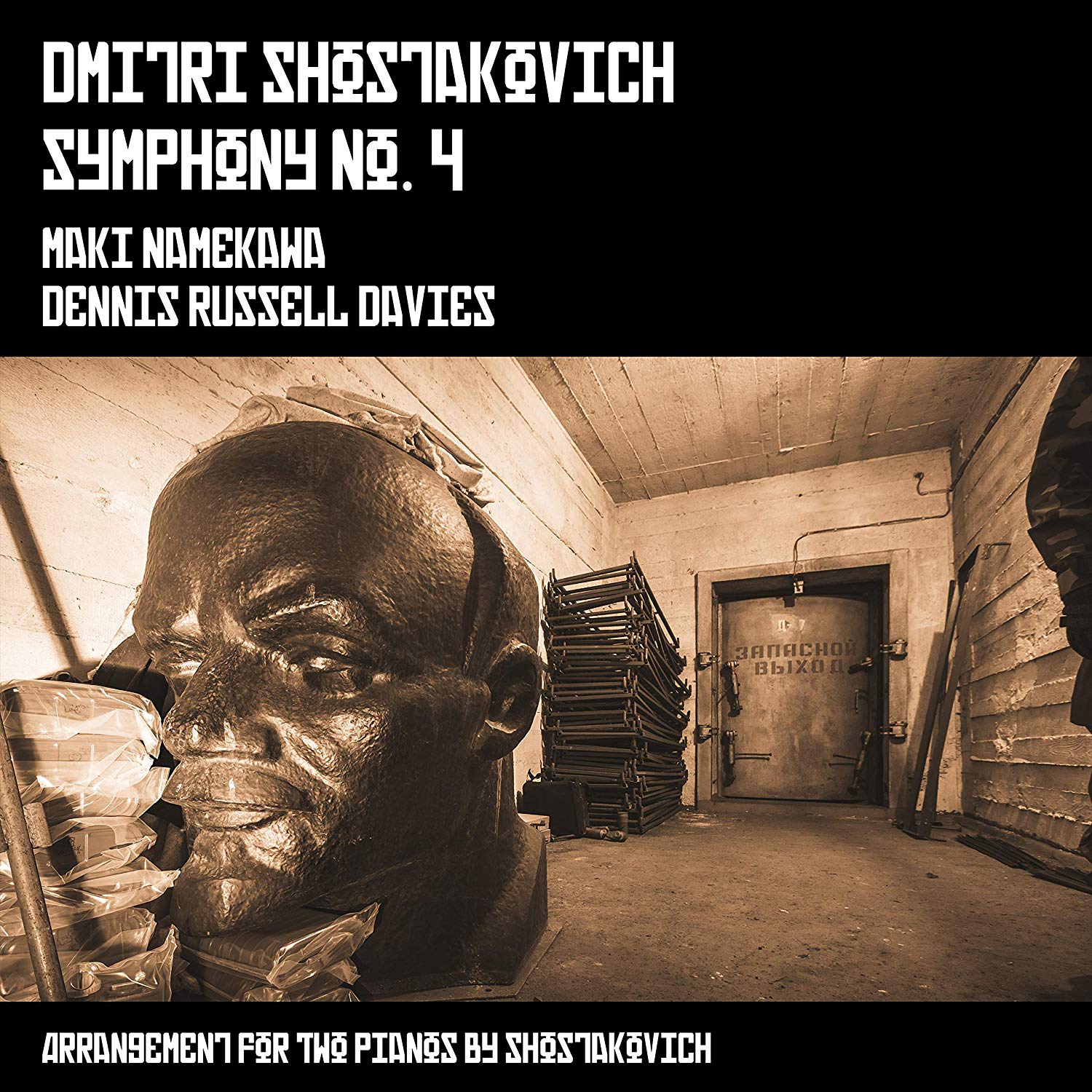
It was composed in 1936 and would mark the entry of more post-romantic elements into the composer’s work which gives it a Mahler-like cast at times. Unfortunately the politics resulted in the composer withdrawing the symphony. During WWII the score was lost and reconstructed from surviving orchestral parts and the present two piano transcription by the composer. The world premiere occurred in 1961 under Kiril Kondrashin.

It is the two piano “reduction” which is featured here. Reduction refers to the transcription of the piece for two pianos but the grand symphonic nature shines through with amazing lucidity. Of course this is as much due to the skill of the transcription but also of the artists. If you have never heard a great transcription this will amaze you.

Davies and Namekawa have established quite a name for themselves as a duo piano team. Davies, the long established conductor and his life partner Namekawa, herself a dazzling pianist have collaborated for some time now as a duo and this recording is testament to what they can do. Here they joyfully share their interests and insights on this masterpiece. Even if you have and know the orchestral version you will want to hear this.

There are three movements here. The outer movements are long extended compositions with a small(but amazing) interlude in between. This is not the Shostakovich of the famed 5th symphony. Rather it is a sort of transitional piece between the student work of the first symphony and the social realism of the second and third symphonies. While deeply intelligent the work has no intended program and one could almost pass this off stylistically as a lost Mahler work.

Fear not, though, the composer’s fingerprint is here. After all this is his 4th essay in the symphony genre. Unfortunately a perfect storm of politics conspired to almost destroy this work. Fortunately both this reduction and the reconstruction make the work available. It is especially curious for the Shostakovich enthusiast to listen to this work and imagine the care that must have been taken to avoid being associated with non state-approved music. It’s a good example of how politics places additional meaning on a piece of music that originally had none.

The recordings is lucid and is due for release on February 8th. One added sort of irony. The work is scheduled for its west coast premiere in San Francisco on February 10th.

BMOP Opening Concert Commemorates Armenian Genocide


BMOP20_logo

ADDENDUM:  Unfortunately the pianist Nareh Arghamanyan will not be able to perform.  BMOP informs me that they are substituting a piece by the wonder.ful Israeli composer Betty Olivero called Neharot Neharot (2006-7) for two string orchestras, accordion, percussion, tape and viola.  It will feature none other than violist extraordinaire Kim Kashkashian.  

The Boston Modern Orchestra Project begins it 20th season on Sunday October 18th with a concert in honor of the 1915 Armenian genocide with a celebration of that country’s artistic heritage.  Titled Resilient Voices 1915-2015, the concert will feature works by Komitas (1869-1935), Alan Hovhaness (1911-2000), Dmitri Shostakovich (1906-1975) and Tigran Mansurian (1939- ).

Komitas_1902

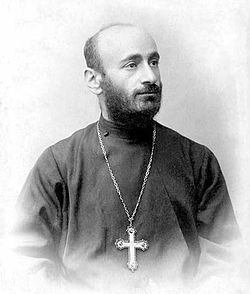
Komitas, born Soghomon Soghomonian, is generally regarded as the foundational composer for Armenian classical music in the 20th and 21st centuries.  Like Bartok and Kodaly, he collected and transcribed folk music from his country.  He is considered an early founder of the practice of ethnomusicology collecting Armenian and Kurdish folk music.  He was ordained a priest in the Armenian rite church and took the name Komitas.  The impact of the genocide affected him deeply and he spent the last 20 years of his life in a psychiatric facility where he died in 1935.

Alan Hovhaness

Alan Hovhaness

American composer Alan Hovhaness also embraced a musicological approach to his composition by including Armenian folk songs and that of other musical cultures he had explored including Korean and South Asian. He also acknowledges a debt to Komitas (Hovhaness released a recording on his own Poseidon label of him performing Komitas’ complete piano music).

Hovhaness remains less well-represented than he deserves in the concert hall so this performance of Khrimian Hairig (1944, rev 1948) is a welcome one.  The piece is in three continuous movements titled, “Chalice of Holiness”, “Wings of Compassion” and “Triumph of Faith”.  It is scored for string orchestra with solo trumpet.  The solo here will be played by prominent new music trumpeter Terry Everson (whose talents are to be required in the next piece on the program).  Hairig was a prominent Armenian cleric and mystic of the 19th century.

This work is early in Hovhaness’ prolific output and is characteristic of his Armenian period utilizing Armenian folk melodies and writing on Armenian themes.  He would later gain wider fame when Leopold Stokowski premiered his 2nd Symphony “Mysterious Mountain” in 1955 on NBC television.  Hovhaness died in 2001 leaving over 400 compositions of which 67 are symphonies.

Arghamanyan_Nareh

Nareh Arghamanyan

The Armenian connection to the next piece is apparently the BMOP début of the young Armenian pianist, Nareh Arghamanyan (1989- ) in the First Piano Concerto Op. 35 (1933) of Dmitri Shostakovich.  This unusual piece is scored for piano, string orchestra and trumpet (I told you Everson would be back).  It is one of those neo-baroque experiments and quotes from well-known classical pieces.  It is quite challenge for a pianist and the début of this rising artist will doubtless be one of the highlights of the concert.

The title of the concert is Resilient Voices 1915-2015 and is given in commemoration of the Armenian Genocide (1915-1923) but more so in celebration of the voices and the talents that have endured.  Controversy remains evidenced by the fact that Azerbaijan and Turkey continue to deny the genocide but the estimated death toll was 1.5 million and this is the event for which the term “genocide” was first used.

Artistic Director and Conductor Gil Rose

Artistic Director and Conductor Gil Rose

It is the genius of Gil Rose, conductor and artistic director whose creative vision in a couple of releases  I recently reviewed ( Anthony Davis and Irving Fine) that first alerted me to the work of this fine ensemble (a little late, I know).  But I discovered a great orchestra with some of the most innovative programming with attention to new and recent music.  I was graciously offered a seat at this concert but it will have to be one of my regrets.  This sounds like a fantastic program.

Tigran Mansurian

Tigran Mansurian

How very appropriate then to have the BMOP premiere of the Requiem (2009) by Tigran Mansurian (1930- ) by far Armenia’s best known living composer.  The Requiem was written in memory of the holocaust and is scored for large orchestra, chorus and soprano and baritone soloists (not announced when last I checked yesterday).  Gil Rose conducts the Harvard-Radcliffe Collegium Musicum with the Boston University Marsh Chapel Choir.  This is indeed a species of political music and BMOP is to be applauded for this as a contribution to the recognition of human rights. through music.

Tigran Mansurian at the piano at Other Minds in San Francisco.

Tigran Mansurian at the piano at Other Minds in San Francisco.

Mansurian previously appeared at the Other Minds 20th Anniversary concert (also dedicated to the holocaust) in March of 2015 in San Francisco.  At that concert I captured a moment from the pre-concert discussion in which Mansurian agreed to sing a traditional Armenian song accompanying himself at the piano, a very personal moment from a composer whose art is deeply felt.

Please, BMOP, record this.  Thanks in advance!!!