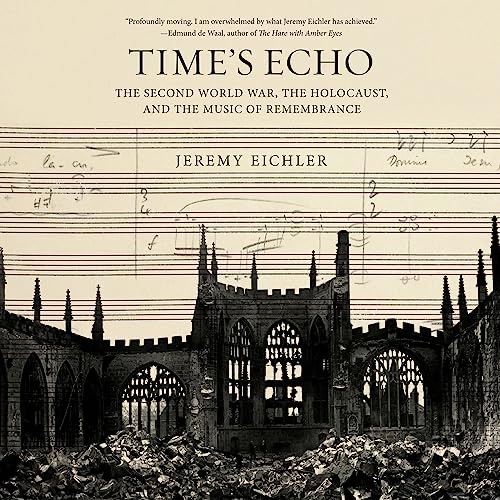
Art as a voice of protest: Jeremy Eichler’s compelling micro history, “Time’s Echo”


Though the author’s scope ranges from the early 19th century to the present day, it is not a comprehensive history, rather it is a sort of micro history of a musical genre born of sadness, hate, anger, and political dominance. It is a genre I have chosen to call “classical protest music”. And, for the sake of this review, I am referring to the incorporation of protest as a valid and effective modality for the contemporary composer.of so called “western art music”, Until the very late 19th century, music served mostly entertainment, celebration, worship, and memorial functions. But this is about a new, if frequently discomforting voice for this art form.

Music, like drama, and sometimes poetry are art forms that burn most brightly in performance. They exist on a page or even simply within the artist’s mind but come fully alive only in the temporal realm of performance. They then come to exist in the memories of the individuals who experience it. And those memories also exist concurrently within the overall social reality. Politics, philosophy, economics, and spirituality which ultimately frame art are now incorporated into the art form as it talks back to history.

The function of protest music in the popular or vernacular genre, one that arguably has had a greater impact in fomenting political change than protest music in the guise of the western classical tradition, has been well documented. Not so with music of the concert hall classical format.

Jeremy Eichler’s beautifully researched and written micro history makes a case for this art form framing (or reframing) history. Of course, not all expressions of protest hit the target of actually influencing history, but this book is not about that. It is about the birth of a concept little known in music until the late 19th and early 20th century. It is a genre which persists today in the so called political classical genre.

The book is filled with historical facts and people which become metaphors as the author elucidates the historical contexts that, in retrospect, can be seen as the genesis of art not just passively responding to historical events. They are attempts to use art to comment about and, hopefully influence history and to express outrage, sadness, and to call for change.

Music, ever the realm of entertainment and celebration, now increasingly finds purpose and mechanism to participate, not only as a supplier of entertainment and homage, but also as “a voice crying in the wilderness” in dialogue with the social/political milieu.

Eichler chooses four musical pieces by four different composers from four different time periods to tell the story of the evolution of western art music to speak with in an informed, publicly intellectual voice. In its ideal presentation, it succeeds best when it resonates with the hearts and minds of the audience. That can and sometimes does “go viral” (in common parlance) and subsequently influences public opinion.

The musical exemplars the author chooses includes:

Richard Strauss (1864-1949) “Metamorphosen” (1946)

Arnold Schoenberg (1874-1951) “A Survivor from Warsaw” (1947)

Benjamin Britten (1913-1976) “War Requiem”(1962)

Dimitri Shostakovich (1906-1975) “Symphony No. 13 ‘Babi Yar’” (1962)

Each composer, each work is subjected to historical, philosophical, and (I would say) spiritual/mystical analysis. And, to accomplish this, he goes back first to the early 19th century to discuss the rise of the idealized German gconcept of “Bildung” and the subsequent rise of antisemitism famously touted as a necessary fact by Richard Wagner (1813-1883) and subsequently amplified to the extreme of The Shoah.

Many musical works are referenced here, but John Foulds “A World Requiem” (1923), which is a large grandiose work of post romantic grandeur that seems to embody many of the elements that have come to characterize classical protest music. The work, written for large forces incorporates both liturgical and non-liturgical texts from disparate sources (not just western literature). It was conceived seemingly as a sort of final statement, a “requiem to end all requiems”, so to speak. Though popular in its day, it no more succeeded in preventing violence and hatred than Alexander Scriabin (1872-1915) in his unfinished Mysterium” succeeded in making the composer an immortal in a transcendent realm described from the spiritual imagination of Theosophical writings. But it did make a huge impact on protest as a valid modality for the artist. Protest in any modality doesn’t always have the intended impact. The point is the statement itself.

Foulds’ work can be seen as a sort of precursor, if not template for Britten’s “War Requiem”. More importantly the success of Foulds’work revealed a sympathetic audience who doubtless saw in it a clarion call, a grandly hopeful expression to an audience hungry to resolve the hatred, anger, and sadness of the increasingly divided and chaotic world as it evolved post 1919. It spoke to a fervent hope for healing and transcendence and remains a historically significant work of musical art.

Doubtless, many composers were delighted to identify this burgeoning need. Countless works followed Foulds’ noble effort and continue to this day in larger and smaller forces. Protest music, visual art, poetry, and drama are born of pain, sorrow, and hope derived from a sometimes pleading, sometimes shouting optimism. Much like audience engagement in sing alongs, audiences are invited to participate politically, emotionally and share the pain, sadness, and outrage as art speaks back to society rather than simply decorating it or celebrating it. Now, art embraces critique, not simply memorial.

Eichler discusses each composer and work, contextualizing them historically, geographically, emotionally, and philosophically/spiritually.
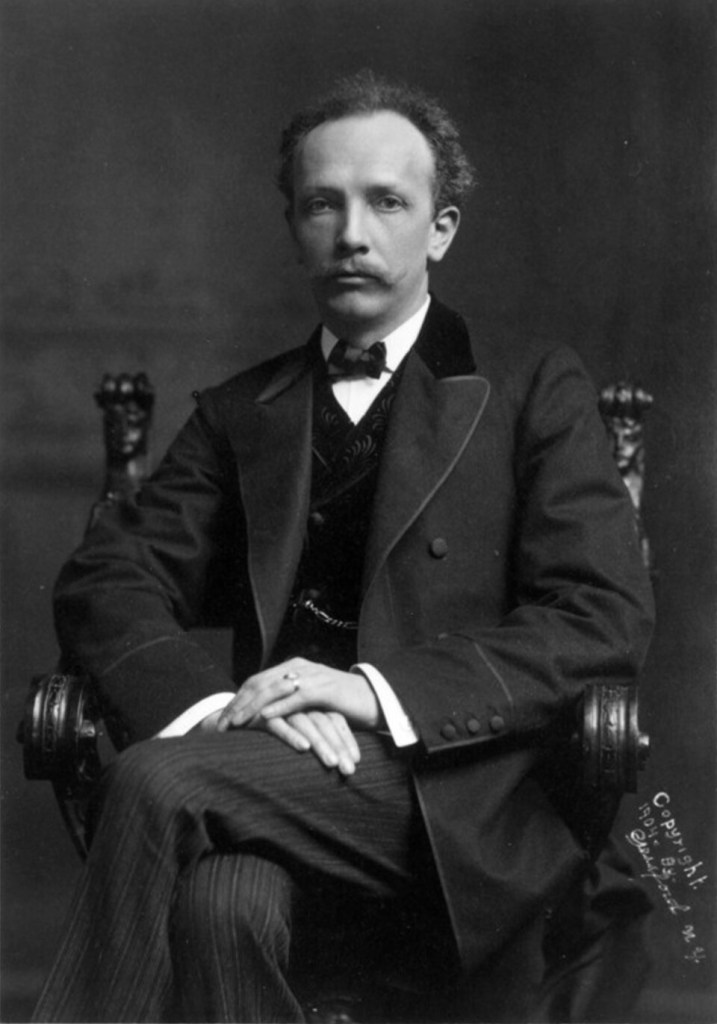
Richard Strauss

He begins then, with Richard Strauss (1864-1949) and the only work cited here that does not have a vocal component or a text. It is also more a personal reaction rather than an a work explicitly engaging with politics and history. It remains the most unique and enigmatic piece in the oeuvre of a man who remained, if not always happily, employed from the late nineteenth century, through two world wars and horrific historical events and wildly differing leaders. To this listener’s ears, it seems more of a catharsis, a musical processing of the composer’s emotions and possibly exorcizing them and containing them in this music. It is truly a powerful piece but it does not rise to the more explicit protest works that would follow in the mid twentieth century.
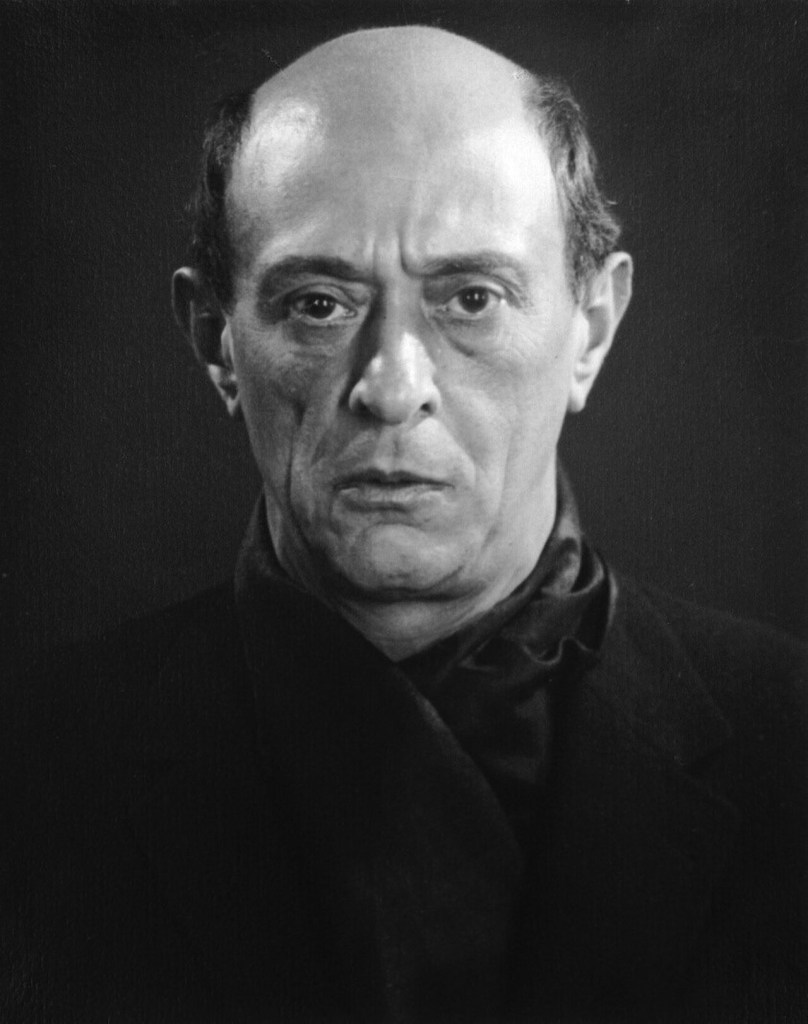
Arnold Schoenberg

A very convincing and insightful analysis is made of the next exemplar of the genre. Eichler’s biographical, historical, and philosophical/spiritual contextualizing of “A Survivor from Warsaw” (1947) seems an unusual choice. But, the fact that this brief monodrama is probably the first major public utterance of the rising awareness of the atrocities described by the narrator and focused attention in a way that only art can. It was also the development of the composer’s revolutionary serially organized music which was, perhaps ironically, very well suited to express the horrors of this age of “great wars”.

This section of the book is a masterful integration of political, historical, spiritual elements that provide a compelling mini history, linking individuals and events that shed a fascinating (and devastating) light on this era in musical history. It also places the composer most definitely as a protester, a would be agent of progressive political change. It led this listener to seek to experience more of Schoenberg’s music and was gratified to hear it forever differently and, more so than ever, more essential within western art music.

The work was a resounding success at its world premiere in, of all places, New Mexico. The Albuquerque Civic Symphony conducted by Kurt Frederick. 1600 people crowded into the Carlisle Gymnasium on November 4, 1948 were so pleased that the work was repeated, in full, to a deeply moved audience.

Hearing this music now, available in many fine interpretations on CD and in video formats, it is all the more stunning that this hardly easy listening tale about horrific events played so well and hit so deeply. And I will never again think of this as one of the composer’s lesser works.
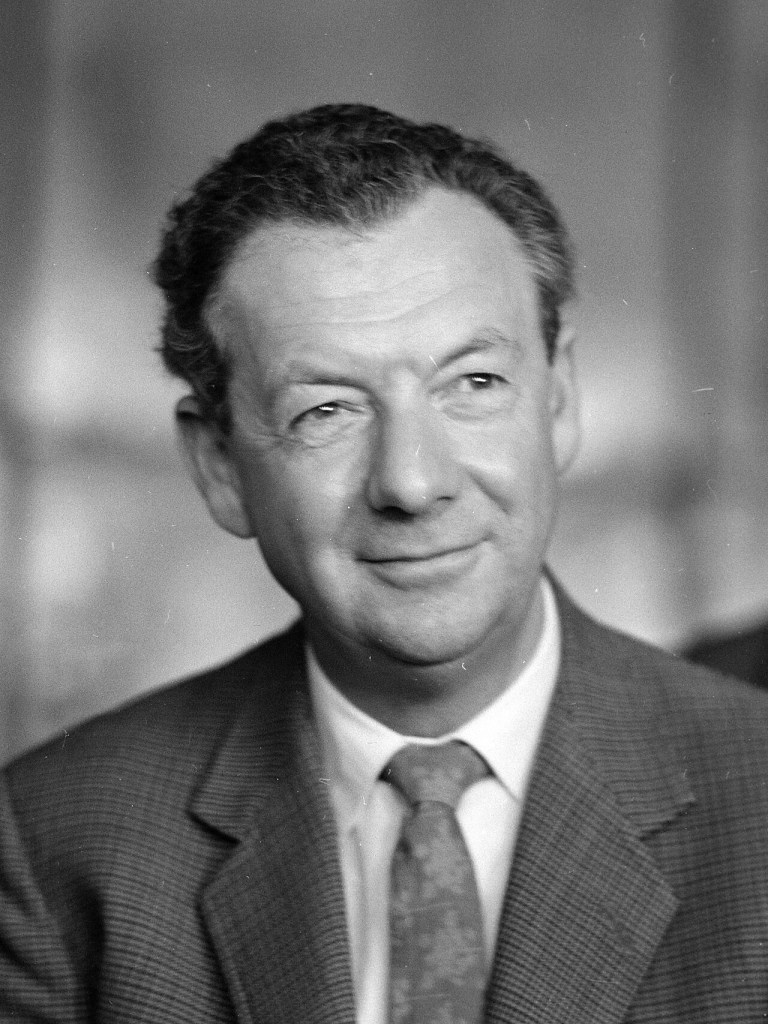
Benjamin Britten

Moving on to Benjamin Britten and his 1962 “War Requiem”. This music has a prominent place for this writer, having heard a performance by the Chicago Symphony conducted by Mstislav Rostropovich. The cellist, turned conductor was a lifelong progressive political advocate who facilitated a meeting which would become a friendship between Britten and Dmitri Shostakovich among his accomplishments.

But, I digress. Eichler’s framing of this composer and music shows a true pacifist composer who encountered the horrors of the First World War as well as subsequent atrocities perhaps one step removed geographically and culturally from the experience of Strauss and Schoenberg. He was a student, then a composer/pianist much admired and supported by the British as he steadily earned his place on the world stage.

Early in his rising successes, he managed to insinuate himself to play piano in a series of concerts with Yehudi Menuhin, that toured through war torn Europe to great acclaim. And it is here that the composer encountered first hand, the sights, the stories, the emotions that would forever inform and transform him and his music.

This experience is likely one of the seeds that led to the 1962 requiem. Britten utilized the form and Latin texts of the “Missa Pro Defunctis” , the Roman Catholic funeral rites. And he adds a chamber group that plays onstage in front of the full orchestra and chorus (I recall seeing a children’s chorus singing from the topmost seats in Orchestra Hall). The chamber group supports a tenor and a baritone who sing Britten’s settings from the late soldier, then poet/activist Wilfred Owen’s vividly sad and angry poetry. This is a guise not unlike what Leonard Bernstein would do in his anti war “Mass” some 12 years later.

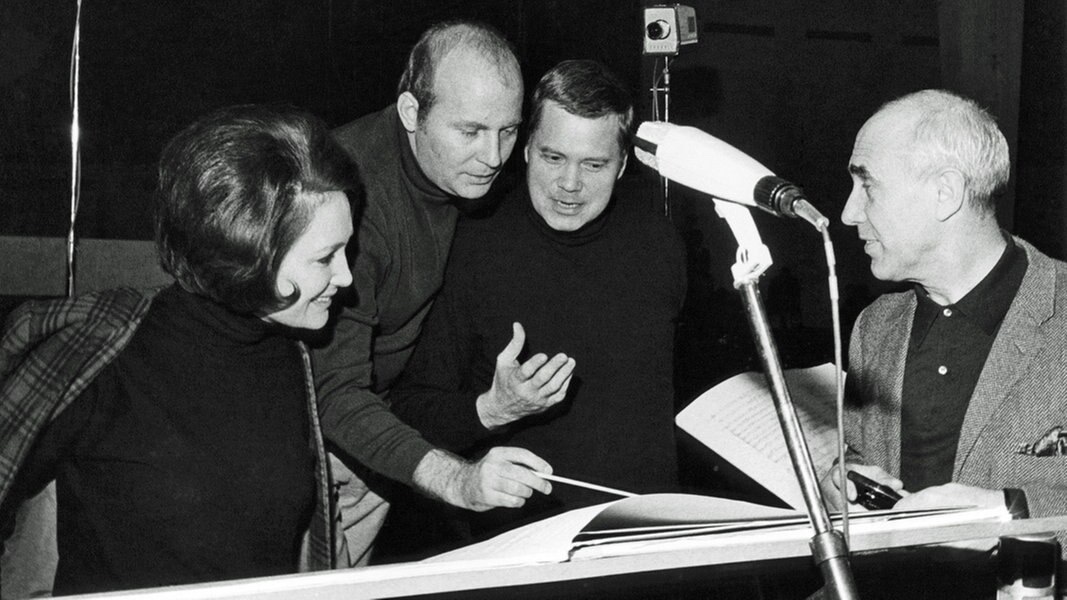
Notably, the premiere was to have included tenor Peter Pears (Britten’s life and musical partner), baritone Dietrich Fischer-Dieskau, and soprano Galina Vishnevskaya (later the wife of Mstislav Rostropovich). However the Soviet government prevented her from performing this politically hot work. The hope of symbolically including British, German, and Russian artists was to further emphasize the message of the work. Though Vishnevskaya did participate in the glorious 1963 DECCA recording, she was replaced (most successfully) by the fine British soprano Heather Harper for the premiere. Britten himself conducted the chamber group at the premiere with Meredith Davies leading the large orchestra, choir and soloists.
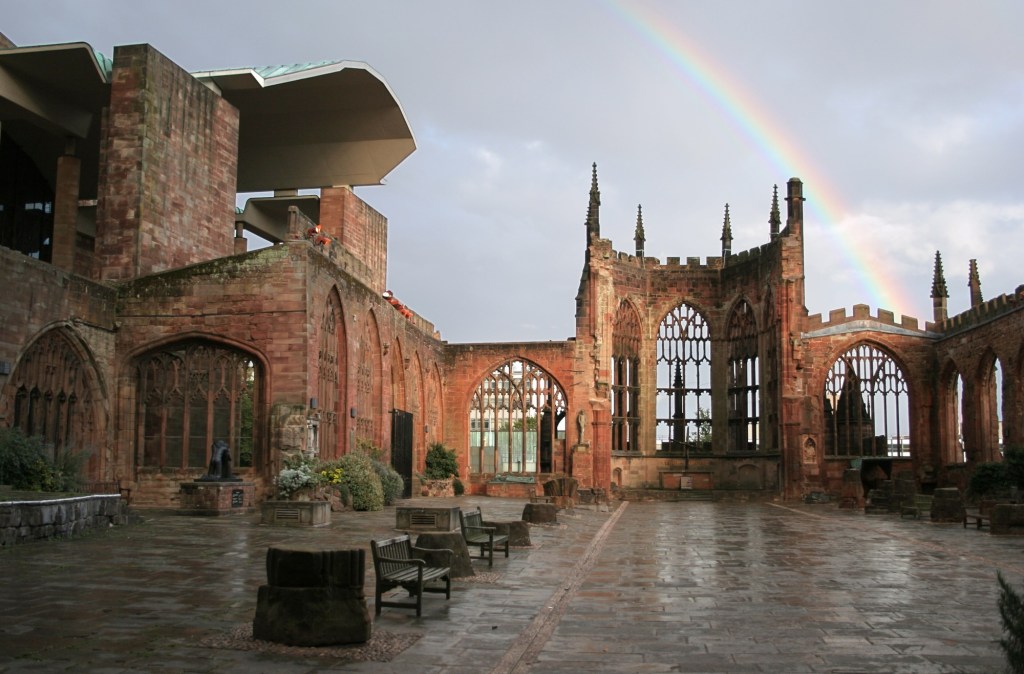
The roofless remains of the original Coventry Cathedral

In discussing the War Requiem, Eichler recounts his pilgrimage to the site of the newly rebuilt Coventry Cathedral which had been very badly damaged in the war and the work was commissioned to celebrate the consecration of the new edifice which was built next to the 14th century ruins, ruins through which the audience passed following the very successful premiere on July 27th, 1962. Eichler reports that his own experience walking through the ruins was a powerful experience even now, but especially when one knows this history.
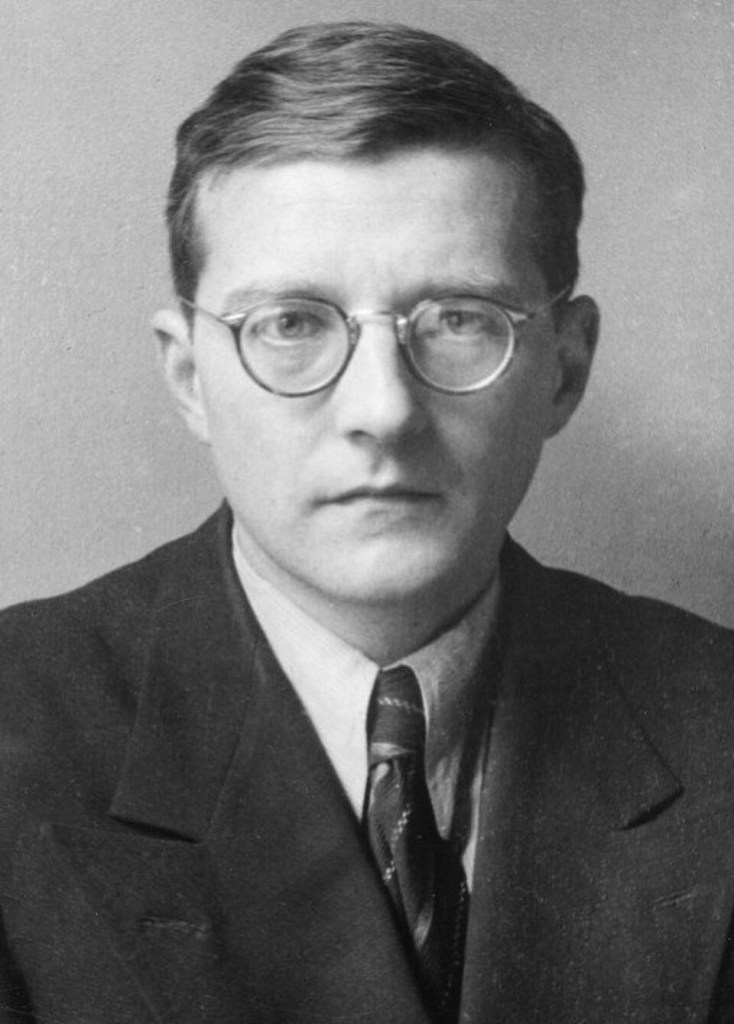
Dmitri Shostakovich

For the book’s finale, Eichler chose a too little known Shostakovich Symphony, his 13th (1962) ( later titled “Babi Yar”). The composer had worked under the repression of the Soviet Empire at least since his opera “Lady Macbeth of the Mtsensk District” disturbed the Soviet leadership in the 1930s. But he managed to get in a few significant political punches during his long career and continued to produce substantial and fresh new music until his death in 1975.

His 5th Symphony won him favor again with the Soviets and the composer’s 7th Symphony “Leningrad”, a paean to the ultimate victory over Nazi forces in 1944 is the stuff of legend, being performed on March 29th of 1942, literally during the siege of Leningrad. Musician soldiers were relieved of their war duties in order to have enough musicians to perform it and strategic bombing raids were done to redirect Nazi bombings and ensure that the music would be heard at its embattled premiere.

Eichler’s choice of the 13th Symphony is an apt choice to fit the author’s thesis. The work is a cri de couer, an angry lament raising the awareness of a genocidal slaughter, the evidence of which survived multiple efforts to erase the facts and the evidence from history. It sets the words of the fine Russian poet Yevgeny Yevtushenko (1932-2017) in his poem “Babi Yar” that provided the words. It refers, of course to the genocidal mass murders of Jews, dissidents, and others deemed not worthy of being allowed to live in the Nazi regime at the ravine so named. Accounts vary and much had been done to cover up the murders which numbered up to 30, 000 a day. In fact, there did not exist a memorial for some 100, 000 killed at Babi Yar until 1992.

The 13th Symphony premiered on December 18, 1962 in the Great Hall of the Moscow Conservatory. Kiril Kondrashin conducted. Despite controversy and attempts to tamper with the words, pressure to stop the premiere, it was a rousing success. This was only some seven months after the premiere of the Britten War Requiem.

Eichler’s account could have ended here but for the fact that, in addition to facilitating a meeting between Britten and Shostakovich, Mistislav Rostropovich smuggled a copy of the 1963 DECCA recording of the War Requiem and a score so that Shostakovich could hear it. And listen he did, with enthusiasm such that Shostakovich was inspired to respond in what would become the composer’s 14th Symphony which was dedicated to Britten. Hence the arts had a conversation about the atrocities of war like never before.

The work, incorporating poems by various poets on the subject of death was premiered officially on September 29th, 1969 in Leningrad by the Moscow Chamber Orchestra conducted by Rudolph Barshai. It appears to be inspired in part by the composer’s 1962 orchestration of Modest Mussorgsky’s song cycle, “Songs and Dances of Death” (ca. 1875) and perhaps Gustav Mahler’s “Kindertotenlieder” (1904).

The response at the premiere, hardly devoid of criticism, was another resounding success for the aging, ailing composer. The UK premiere was conducted at Aldeburgh by its dedicatee, Benjamin Britten, also to great acclaim.

Eichler’s book elegantly describes the genesis of these five works inspired by the history of very real and very shameful atrocities of some 50 years of conflicts which, though they may never be resolved, are truly “Time’s Echo” encased in artistic amber as it were. The memory of this reviewer’s experience of witnessing Maestro Rostrpovich’s reading of Britten’s Requiem so many years later and indeed all subsequent performances of the music chosen here by Eichler hold out a glimmer of hope that these echoes of their time will preserve both the memories of the atrocities themselves as well as the just outrage of the artist’s products in sound for posterity.

Political Classical: Conflict in the Concert Hall, Hans Werner Henze’s “Das Floß der Medusa” (1968), then and since then.


Cover of the original vinyl release of “Der Floss der Medusa”

The 1913 riotous premiere of Stravinsky’s “Rite of Spring” is pretty well known in classical music history. Sandwiching the premiere of his masterpiece of modernism between well known conservative chestnuts such as “Les Sylphides” (an orchestration by Alexander Glazunov of piano music by Chopin, 1907-9) which opened the concert along with Carl Maria von Weber’s “Les Spectre de la Rose” (an 1841 Berlioz orchestration of Weber’s 1819 piano piece, “Invitation to the Dance”) and Alexander Borodin’s “Polovtsian Dances” from his opera “Prince Igor” (1887-1890) which were programmed to follow it. Combine these (familiar to audiences) conservative works with the Rite’s original choreography by Vaclav Nijinsky and the subject of pagan ritual that form the scenario played before an audience consisting of elite concert goers seeking a familiar easy experience along with a burgeoning group of bohemian leaning audience members (who loved the Rite’s loud, subversive nature of both music and staging) and you have a formula for conflict. Speculation is that Stravinsky and/or his producers planned this event to create a contrast for his new modernist work but more likely it was a largely a product of its time and of human nature.

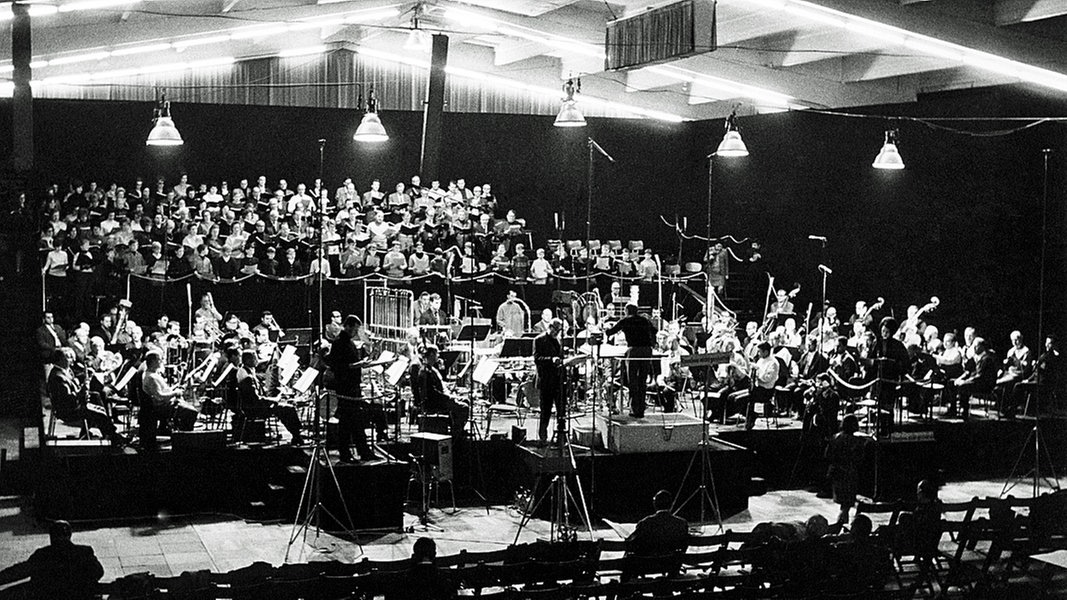
Fifty two years later, Hans Werner Henze appears to have had nothing in mind (at least initially) other than the premiere of his new work, “Das Floß der Medusa” (The Raft of the Medusa) on December 9, 1968 in Hamburg’s “Planten und Blomen” Hall. The recording which was later released on DGG LPs had been done sans audience on the previous days, December 4-8th, and preparations were being made for that night’s world premiere performance before an audience.

An article would later run in the German magazine Der Spiegel describing the event. I present the text of that article in my own translation:

Der Spiegel, December 12, 1968

“What is necessary”, says Hans Werner Henze, 42, “are not museums, opera houses and world premieres … What is necessary is the creation of mankind’s greatest work of art: the world revolution.”

Last Monday, Henze’s “Das Floss der Medusa,” an “Oratorio volgare e militare, in due parti” commissioned by the NDR, was to be premiered in Hamburg — instead, there was a revolution in the hall.

The 1060 seats in Hall B by Planten un Blomen were fully occupied, the NDR Symphony Orchestra was already tuning the instruments, on the podium were ready: Edda Moser (soprano), Dietrich Fischer-Dieskau (baritone) and Charles Regnier (speaker) , the North German Radio Choir, the RIAS Chamber Choir and the St. Nikolai Boys’ Choir. The game could begin, and it began — a duo volgare e militare between NDR and SDS.

Because the Berlin SDS friends under Gaston Salvatore, summoned by Henze, didn’t want to do without this premiere of the APO (Außerparlamentarische Opposition) man Henze any more than the socialist students of the Hamburg Music Academy — albeit for different reasons: The Hamburgers cared about Henze’s music as reactionary to expose the Berliners, to bring their Hamburg colleagues to reason and to divert attention to the middle-class audience. Action against Henze, argued the Berlin “Project Group Culture and Revolution,” would only benefit the bourgeois enemy.

Che Guevara (1928-1967)

After three days of palaver, the Hamburg wing was lame. For example, the intention to ask the composer to explain the structures of his music when he played Medusa was abandoned, as was the plan to intervene in the choral singing, and the attempt to expose Henze’s listeners to Henze as culinary Henze consumers.

On Monday evening, Berliners and Hamburgers moved in socialist harmony to Planten un Blomen, the premiere location that Henze claims to have confused with Blohm & Voss. At least that’s how the Berlin SDS had informed the Hamburg SDS.

NDR program director Franz Reinholz, to whom Henze owes the “Medusa” commission, knows otherwise: “Henze,” Reinholz assures, “inspected the hall himself beforehand. He was also informed about the audience.” shipyard workers, it was, the socialist students recognized once again, an audience of “rich bastards.”

Shortly before 8 p.m. the squad was ready for action in Hall B. And before the conductor Henze stepped out of the artist’s room, Che was already in the hall: the agitators had pinned a Che Guevara portrait to the desk; it was intended to remind us of what had been concealed in the program with Henze’s approval: the oratorio is dedicated to the Latin American freedom fighter.

NDR program director Franz Reinholz didn’t appreciate this memento at all – he tore down the poster. He felt that politics and art did not go together.

The students didn’t think so. They put up a new poster and hoisted the red flag, and a team of anarchists, who had come with duck decoys and other hunting instruments, hung a black one next to it. Then the radio hit, the police joined in, the RIAS Chamber Choir began, but not in unison. “Lower the red flag,” demanded one singer, two singers left sobbing: “We are Berliners and have had enough of red flags.” to whose honor they should sing, left the stage and never came back.

The composer, however, was determined to prove his revolutionary sentiment to his comrades for the first time by saying, “The red flag,” said Henze, “it stays.”

While NDR director Gerhard Schröder (SPD), long since in the safe broadcasting van, stopped the live tumult at 8:19 p.m. and radioed his listeners a recording of the dress rehearsal, his deputy, Freiherr von Hammerstein-Equord (CDU), countered in the hall the resistance of the demonstrators banners and placards; A little later, a squad of 25 police officers, visors on combat helmets, broke into the hall. “Nazis!” “Fascists!” shouted the audience. One artist yelled enthusiastically, “Down with the Reds!”

“The police,” Hammerstein explained, “were ready at the request of the NDR, which considered demonstrations possible and had to ensure the safety of its employees, the audience and valuable instruments.”

Ernst Schnabel, librettist

NDR employee Ernst Schnabel, librettist of “Medusa”, felt the precautions thoroughly. Several police officers threw him through a glass door, expedited him with six other delinquents to police headquarters, took his fingerprints, and locked him in cell 7 until midnight. Schnabel to Hammerstein-Equord: “We don’t have breakfast together anymore.”

Meanwhile, Hammerstein kept order in Planten un Blomen. When Henze informed the audience: “The intervention of the police prevented the discussion,” Hammerstein snatched the microphone from his hand. The hands in the stalls responded with rhythmic Ho Chi Minh clapping, and Henze clapped along — three times. Then he disappeared through a back door.

At that time the “raft of the Medusa” was already well advanced in the ether waves — on the usual counter-revolutionary course.

“Wherever”, the “Süddeutsche Zeitung” judged, “the choirs sang, there was the old, floating, iridescent Henze sound, which doesn’t hurt anyone and never becomes distinctive. The orchestra … strangely often reminded of Richard Strauss.”

The music critic Heinrich von Lüttwitz saw “Medusa” as a “tragi-comic absurdity” full of “romantic colours”, with “sometimes clumsy, sometimes fussy recitatives and melodramas”.

Henze biographer Klaus Geitel saw the “raft” in the “ocean of an emotional but overly extended, lyrically colored monotony”.

It may be that, as Henze puts it, this evening “brought him a little further” politically. But the Henze fans in the APO have failed — that’s how the currently most thoroughly analyzing music theorist Heinz-Klaus Metzger, who identifies with the “anti-authoritarian wing of the SDS,” puts it.

‘The APO, Metzger predicts, ‘will only have created meaningful conditions when German musicians no longer refuse to perform under a red or even a black flag, but instead perform a work by Henze. And for strictly musical reasons. Unfortunately, not even Tucholsky’s bon mot applies to this composer: “Because of bad weather, the German revolution took place in music.”

______________________________________

——————————————————–

So it went in 1968. The Oratorio performance was cancelled and the world premiere had to wait until January 29, 1971 when it was performed in Vienna by the ORF Orchestra conducted by Miltiades Carides. The recording of the first performance was achieved prior to the performance with the audience. That recording was released in 1969.

Many more performances followed but one of those performances, in 2001, was attended by a former chorister, Henning Sidow. He was twelve years old at that 1968 non-concert. And the following article on his experiences of that attempted performance was published in Der Spiegel in 2013.

————————————————–

__________________________________

Blaze at the choral-concert. How the “Raft of the Medusa” went down.

He was anxiously awaiting the big performance: when he was twelve, Henning Sidow was supposed to perform on stage with the NDR boys’ choir in Hamburg. And indeed, the live performance of the oratorio was exciting – but for completely unexpected reasons.

The boys’ choir was founded in 1960 as the choir of the North German Radio and has been connected to the main church of St. Nikolai since 1967.

“As a twelve-year-old in 1968, I had only vague ideas about the political and social turmoil of the time. But on December 9th, as a member of the St. Nikolai boys’ choir, they became tangible experiences for me as a result of the unsuccessful premiere of the oratorio “Das Raft der Medusa” by composer Hans Werner Henze in Hall B in Hamburg’s Planten un Blomen Park.

I had been in the boys’ choir for four years, which belonged to the NDR until 1967 and was then taken over by the St. Nikolai parish in Hamburg. We “experienced” boys felt quite up to the task of taking part in Henze’s musically demanding oratorio and also appearing in a world premiere that was to be broadcast live on the radio.

The play tells the tragic story of the French frigate “Medusa”, which ran aground as the only ship in a convoy on the way to Senegal in 1816. Since there were not enough lifeboats for the 400 people on board, the crew built a raft that could accommodate around 150 men, women and children and which was to be pulled ashore by the boats. But the officers fled in the boats, leaving the people on the raft to fend for themselves. On the day of the accidental rescue 13 days later, there were only 15 survivors. The others fell victim to starvation, lack of water or cannibalism.”

Hide and seek in the empty hall

“Our boys’ choir was supposed to portray the children on the raft – first as living, then as dead. A difficult piece with a socially critical background, this “Raft of the Medusa”, we knew that. It meant not only intensive rehearsals, but also many afternoons and evenings of rehearsals. What we didn’t know was that the premiere was never to take place.

The location of the event and the preparations fascinated me. The hall seemed huge to me as a child. Large platforms were set up here for the performance, with countless instruments on them. There were people everywhere: stagehands, technicians, orchestra musicians, choristers and soloists – it was just teeming. Now we guys were added.

We had a lot of waiting time and were able to explore everything. So we crawled under the stage construction, played hide and seek, crawled under the platforms and shimmied over wooden struts until we got too many splinters in our fingers. And right next door there was another hall, several stories high – a gigantic glass box. There was no event taking place at the time, so the hall was yawning and unlit. We strolled through them, hearts in our pants because of the darkness and the eerie acoustics of the room.”

Protest in the concert hall

“Then things got serious, rehearsals began. In my memory, Hans Werner Henze was a small man who was already a bit bald at the time, but incredibly energetic. He radiated a mixture of warmth, ingenious artistry and normality. We boys found him sympathetic, but he had no airs and graces and met everyone completely naturally, friendly and patiently. He treated us as if we were adults, which I found very beneficial. When I was a child, I was used to other well-known personalities whom we had met here and there through our performances to be treated and professionally not taken very seriously.

Henze was excellent at conveying his music to the participants, it was lively, colorful and exciting like the story itself. The dramatic story and the historical background that he and the music told us captivated me even then. Conducting, however, was not his thing, I remember his somewhat awkward gestures. But that’s not so important in a professional ensemble, as long as the right impulses and cues come. In any case, we children liked and admired him and his music.

On December 9, 1968, as far as I can remember, the hall was filled to the last seat with an audience. There was talk of more than 1000 guests. Henze was already at the desk. But just before it started, there was a small crowd in front of the stage. A few protesting students stood directly in front of the podium and hung red flags to the left and right of Henze’s desk. It was not clear whether the master just put up with this or whether it had been agreed with him, as was later speculated. In any case, he didn’t seem to put up much resistance to the activities.”

The situation is escalating

“Shortly thereafter, the audience and the choir became restless. Because one of the choirs, the RIAS Chamber Choir, came from Berlin, the enclosed city. Red flags were literally a red rag for many who lived there. At first I – and I’m sure my fellow boys too – didn’t understand much of what was happening down there. But when voices from the Berlin choir grew louder and louder, refusing to sing under “the red flag”, I understood what it was all about. The adults feared that they and the music would be exploited by demonstrating communist students. In addition, a large portrait of Ché Guevara has now been erected, to which the work is dedicated.

Henze’s efforts to get the performance started were nipped in the bud by the boycott of the Berlin singers. The removal of the communist symbols was demanded louder and louder from the podium, before they would refuse to sing a single note. In the meantime it was getting more and more restless in the auditorium and in front of the stage there were small scuffles between the demonstrators and some spectators who got involved. Negotiations between the choir and the composer were taking place behind the scenes as to the conditions under which the performance could still take place.

We boys watched the whole thing with suspense, since the circumstances had now reversed: the auditorium had become the stage, and we on the podium had a box view of this live cultural scandal. Music was out of the question. In the back of the hall, the doors flew open and police officers in full riot gear marched in. Like a horde of ants, they came down the aisles from several sides to the podium. I don’t remember how many there were, maybe a hundred. They looked particularly martial with their helmets with full visors and the shields they – to protect against what actually: a few students, musicians and false notes? – carried in front of them.”

A dark chapter

“Henze had meanwhile disappeared unnoticed and downstairs young people were having their arms twisted behind their backs in order to be taken away. Among them was Ernst Schnabel, who wrote the text of the play. He was later charged with “resisting the authority of the state”. On the other hand, part of the audience did not like the actions of the police and protested, which did not prevent the state authorities from their plan to convict the “perpetrators” in flagrante delicto.

I can’t remember exactly how long the commotion lasted. In any case, it never came to a performance, and at some point we left the stage disappointed. It was incomprehensible to us children why a few red flags and the likeness of a bearded South American led to such an uproar. For us it was about art, about music. We felt cheated of our work.

The newspapers reported extensively on this event in the following days. Some tabloids insisted on turning it into a real political scandal. To this day it is unclear to me what the state authorities were thinking when they made this appearance. That’s for sure

That she was thin-skinned in those times and liked to overreact on such occasions. The fear that the ideology that prevailed behind the Iron Curtain could also spread to the West was too great.

For Hans Werner Henze, who died in 2012, this scandal is said to have been a dark chapter in his artistic career. Later, it is said, he did not want to be reminded of it.

My own memories of that evening only surfaced again years later: at the much delayed premiere in June 2001 in Hamburg’s Laeiszhalle. After 33 years I experienced “The Raft of the Medusa” a second time. The fact that I was still able to silently speak and sing along to the lyrics and the music showed how much the piece and the story it was based on had impressed me at the time. None of it was lost. I left the performance deeply touched.”

___________________________________________________

So, here we are some 46 years after the riotous non-premiere of Henze’s fine oratorio/requiem, 111 years since the famed “riots at the Rite”. The Stravinsky has since firmly taken its place in the commonly performed orchestral and ballet repertory. The Henze work, never laying any claim to the seminal and visionary compositional methods that characterize Stravinsky’s landmark work, continues to receive performances and recordings having established itself as a substantial work, and himself as a significant composer with a rich and varied career.

NB: All translations are my own efforts. Historical photos are included under fair use terms.