An overflow crowd packed the lovely auditorium at Berkeley’s David Brower Center this past January 19th. Octogenarians (and younger folks as well) populated both stage and audience in a show of appreciation for a man whose work as music director of KPFA (1969- 1992) and subsequently as an arts promoter and curator of new music in California’s Bay Area continues to enhance the artistic reputation of the Bay Area.
A rare and exciting aspect of this evening were the rare opportunities to hear Charles’ music, including representative sound poetry classics and a recent major opus capped off by a world premiere of a new work.
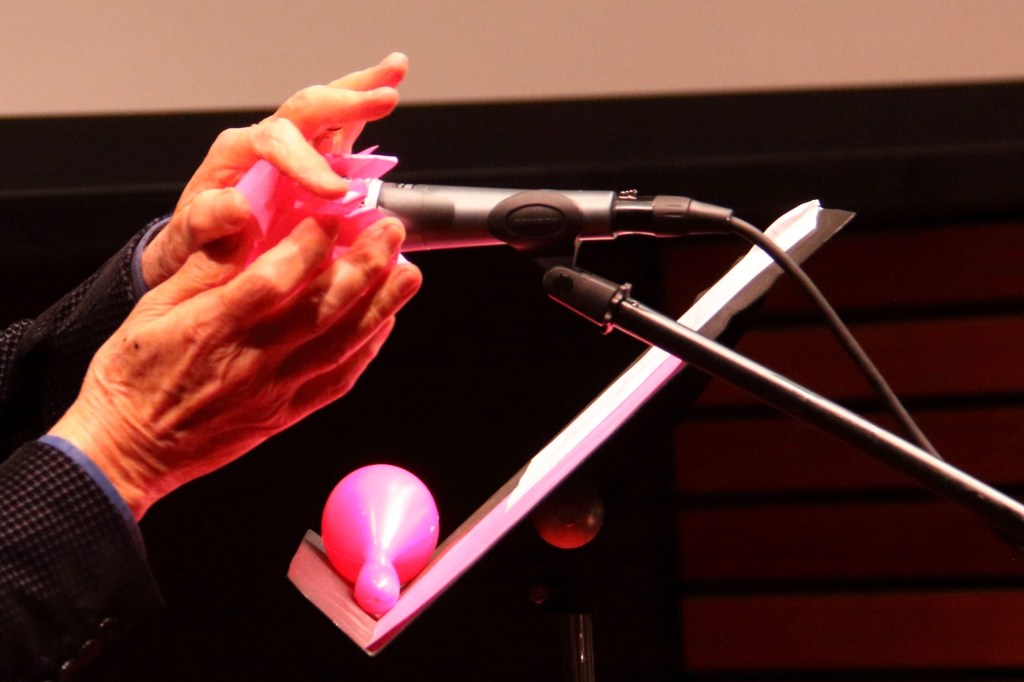
The hands of the artist. Photo by Allan J. Cronin
The genuine affection, appreciation, and respect was palpable as the honored guest demonstrated his skill at hosting when a couple of technical glitches slowed (but did not stop) the amiable birthday celebration. The audience waited calmly and quietly.
Both the guest of honor and the host (Liam Herb) used a well honed, self effacing humor used most skillfully to entertain the sympathetic audience while the technical difficulties were surmounted in real time.
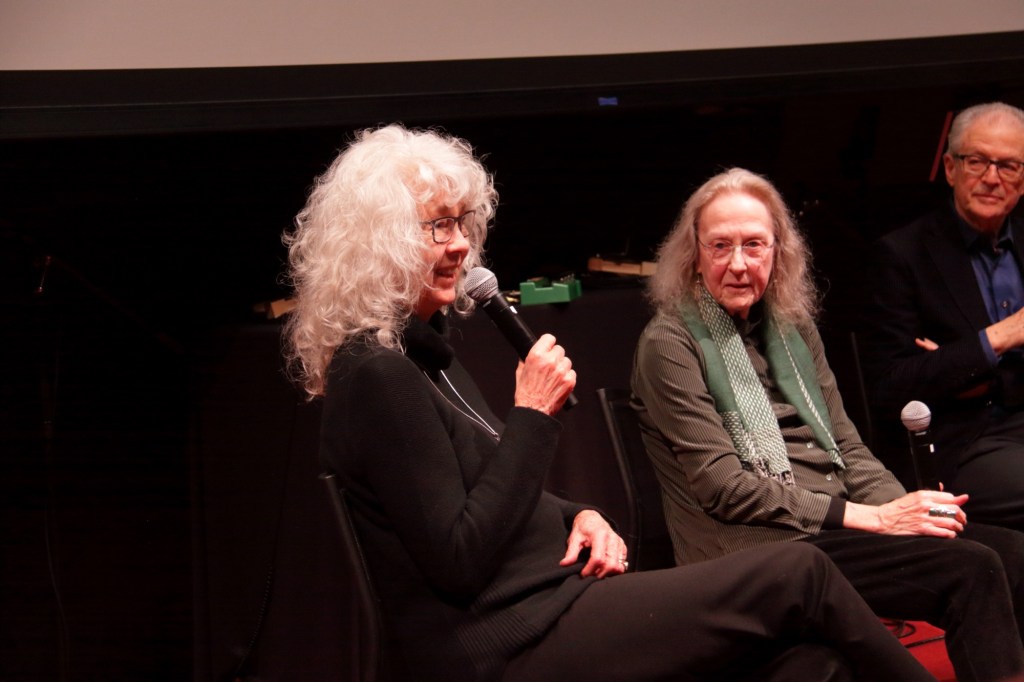
Panel discussion featuring (left to right) Susan Stone, Anthony Gnazzo, Paul Dresher, Charles Amirkhanian, Sarah Cahill, and Liam Herb (Photo by Allan J. Cronin, Creative Commons license)
Herb, a composer and performer, introduced himself in the midst of the technical resolutions, graciously announcing that, as producer, he accepts responsibility for the glitches. Charles maintained his familiar master of ceremonies crowd pleasing good humor as Herb worked goodnauturedly (if that’s a word) with the rest of the crew to resolve the issues and get on with the show.
The formal opening remarks were given by Other Minds’ associate director, Blaine Todd. And the evening began in force.
Blaine Todd (photo by Allan J. Cronin, Creative Commons license)
The program glided past the initial hiccup to present a film about our guest of honor. The bevy of fans and bona fide new music professionals sat with rapt attention as the film, featuring the familiar faces of several “Bang on a Can” artists.
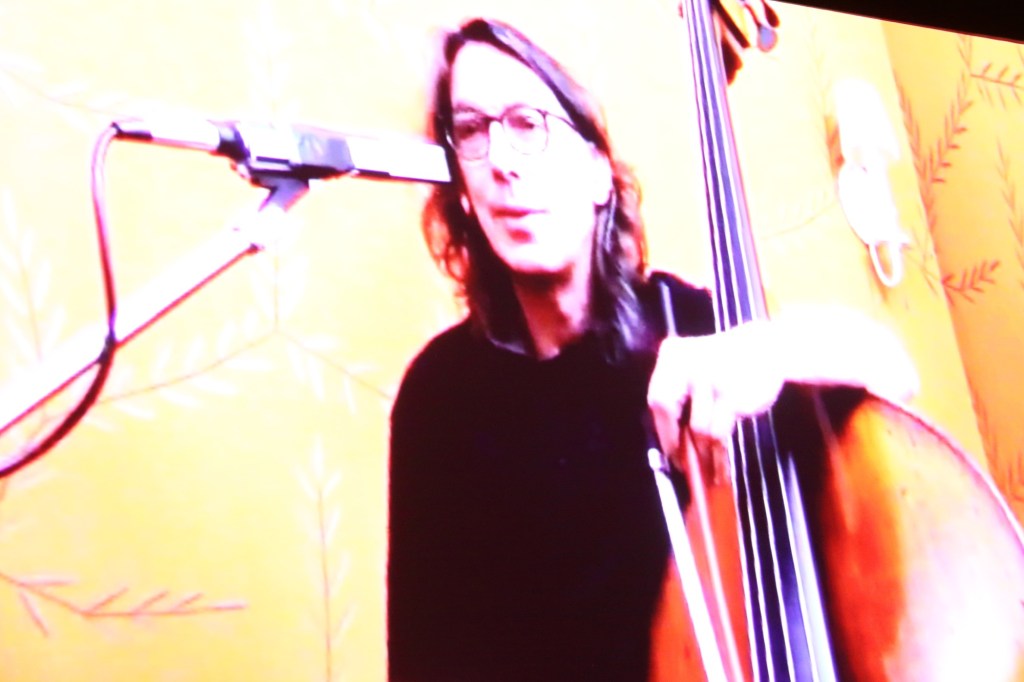
The late great Robert Black interviewed by Amirkhanian in the streaming premiere of Audible Autopsy. (Photo of film appearance by Allan J. Cronin)
Excerpts from the 2015 Other Minds 20 documentary featured Julia Wolfe, David Lang, and Peter Gordon (now, it seems elder statesmen (and women) in their own right.
Production manager Liam Herb then served as moderator for a conversation or live interview (with Amirkhanian) for the next segment. This was followed by some videos with music by the guest of honor:
Real Time/T.V. Time Video with Amirkhanian’s “Muchrooms”
The film, presented in its entirety was accompanied by “Muchrooms”, from the CD recording of that standalone work.
Next was Amirkhanian’s and Carol Law’s classic collaboration: History of Collage (1981). This is a major work and a great collaboration with his partner in life and arts. I’m pleased to add my own shot from the performance at the Other Minds 23 experience, my favorite OM festival(so far).
History of Collage (1981) photo by Allan J. Cronin taken at the Other Minds 23 wonderful live performance of this work (Photo by Allan J. Cronin is Creative Commons license 2015)
We also heard and saw Audience (1978) with photography by Law and music/poetry by Amirkhanian followed by Chairs with photography by James Petrillo and music/poetry by Amirkhanian (excerpts from Seat Belt, Seat Belt (1973).
There followed a panel discussion led by Carol Law with Betsy Davids discussing David’s’ work and her connections via her work as a book artist. These two embody the experimental visual arts that characterize the skills of these fellow artists both onstage and off tonight. In fact, interactive collaboration and both respect and friendship were everywhere to be seen in this warm and pleasantly nostalgic evening.
Carol Law speaking with Betsy Davids (Photo by Allan J. Cronin, Creative Commons license)
This was followed by a recording of a major opus, Ratchet Attach It (2021) recently played at one of the (still ongoing) Other Minds Festival. This work is a major opus by Mr. Amirkhanian, one I’m pleased to say I heard live at the Chinese Theater in San Francisco a few years ago. Scored for a huge percussion ensemble, with audio recordings, and a conductor who moves between the podium and a space among the performers playing with the ensemble. It is perhaps one of his most integrated and evolved compositions. Stunning to hear it live. Glad to hear the (always too short) excerpts.
In fact Mr. Amirkhanian, a fixture in the arts of the Bay Area, continues to influence musical taste and present new and interesting music as he has for well over 50 years. His work as Executive Director of Other Minds includes the fabulous OM Records as well as the annual Other Minds Festival and a continual flow of carefully curated concert events by luminaries (or soon to be luminaries) throughout the Bay Area and beyond. There is also the huge archive of thousands of hours of interviews and concerts that are available in streaming audio and video via the Other Minds website.
Many of the artists featured in the Other Minds concert series continue to work, innovate, and expand musical concepts. An Other Minds commission, Henry Brant’s Organ Concerto, Ice Field, earned him a Pulitzer Prize. Many have gone on to greater achievements in their respective careers. Of course not every composer started their musical careers at Other Minds concerts. Many mid or late career musicians have joyfully been represented over the years. Its one of those festivals that innovative musicians seek to participate.
Such achievements reflect on Amirkhanian’s leadership and curatorial acumen, but more importantly his relationships with his fellow artists. Charles has earned a reputation for his support and his collaborative nature. Arguably, everyone in the house (and the overflow in the lobby) all have a degree of connection to Charles and his guests. It is why we’re all here tonight.
Charles Amirkhanian and Joseph Bohigian performing with Liam Herb’s electronics (Photo by Allan J. Cronin, Creative Commons license)
Following a brief intermission we were treated to a world premiere of a new work by our guest of honor, Noose Ratchet (2025) for two percussionists and electronics. Amirkhanian performing and/or promoting his own music is a relatively rare event and this alone was certainly worth the trip.
The work is arguably a trio for two percussionists playing ratchets, a curious instrument whose sound, if not entirely ubiquitous, is familiar. And the two play interactively with the electronics (the third member of the trio). Extended techniques and other duties get assigned (when in doubt it’s responsibility of the percussion section, right)?
There followed a lively and friendly panel discussion amongst frequent and past collaborators Susan Stone, Anthony Gnazzo, Paul Dresher, Sarah Cahill, and Liam Herb. This truly felt like a gathering of friends.
After agonizing about writing a “best of” blog and publishing it before January 1, I decided to take a pause and enjoy the holidays. So here I look back on my 2023 in the rear view mirror but with memories still pretty fresh.
Regular readers of this blog likely already know of my oft shared opinion of the superfluous nature of “best of” lists and of my acquiescence in producing such on an annual basis. I certainly don’t think of this as a meaningless exercise and I think the process has grown on me. It is a chance to achieve a perspective which would be missed by simply plowing on ahead with the usual flow of reviews and articles. But drawing down that 12 month perspective is an opportunity to evaluate those months, to see where we’ve been and to hopefully get a smidgen of insight into where I/we are likely headed.
My Facebook friends will recognize the representative meme at the head of this article which is one of the more cloying aspects of “AI”, whatever that is. So indulge me for a moment to look at this seemingly new intrusion into the reality we thought we knew. So, what is “AI” and what will it do to us? Ultimately I’m not the one to answer that question but I’d like to throw some ideas to add to the speculation.
First, the choices a composer makes, like the choices of a painter, a writer, etc. are the stuff of the mystery of creation itself. Why “A major”, or why that tuning, or scale, or rhythm, or orchestration, etc? So along comes the notion of removing, or at least distancing, the artist from their creative product. That notion started not with famed proponent John Cage but rather with Johannes Chrysostymous Wolfgang Amadeus Mozart in his K. 516f musical dice game. Voila! Algorithmic composition (actually fairly common practice in the classical era). An early manifestation of “AI”? Perhaps.
Lejaren Hiller (1924-1994) was the first composer to employ electronic data processing in a musical work in his Fourth String Quartet subtitled “Iliac Suite” in 1957. There followed similar experiments with various iterations of electronic creations at music centers worldwide including The University of Illinois at Champaign, Columbia-Princeton, Stanford, The University of California Berkeley and San Diego, The San Francisco Tape Music Center (later subsumed into the Mills College Center for Contemporary Music, IRCAM in Paris, Israel Electronic Music Studio, and counterparts in the Nordic countries, Germany, Belgium, etc. Proto “AI”?
While historically interesting I raise this issue to say that, as far as I can tell, “AI” has not made this writer’s greatest hits list but it is interesting and maybe even useful. With that, my concern for the subject officially goes to the back burner for a later time.
2023 has been a year of great personal changes for the writer of this blog. A job change, a geographical relocation, and many things unrelated to this blog characterized a busy year for New Music Buff. So here in a sort of holiday tradition I present my “Best of 2023” from my little listener’s corner of the world. For the sake of simplicity I present a more or less chronological exposition of my sonic adventures. (N.B. Not one portion of this article made use of “AI”).
I begin with not with my 20 most read posts, a practice that characterized previous iterations of this annual exercise. Instead I am providing my top 20 favorite releases that were reviewed in 2023. Please note a couple of caveats. First, I receive a lot of review requests, more than I can even listen to, much less give a reasonably intelligent review. Albums that I’ve not reviewed should not be assumed to be bad or insignificant and my reviews are personal observations. I really only review albums that interest me anyway. Second, this article is only one reviewer’s opinion and not intended to be definitive or to supersede anyone else’s opinions. Third, this is not the end of my attention to music that was released in 2023. Some releases require more time to give a fair listen and a respectful review. There are more to come in 2024.
First a few stats: 2023 saw the publication of some 45 blog posts on New Music Buff, earning me 9693 views for the year. I rarely get comments on my posts (though I welcome and invite comments both positive and negative). Not bad, I think, for the overall less appreciated musical styles that fuel my desire to write about.
Now, in chronological order (of publication) are my personal favorites as a listener:
Neuma 158
Binaural Beats in the Tudor Rainforeststarted my new year with a bang. Reviewing this disc required me to take a closer look at the astounding work of David Tudor and his unique contributions to new music. This important release is a recording of a work which, by its own concept cannot receive a “definitive” performance. But this recording comes mighty close, involving “binaural” recording utilizing a mobile set of binaural microphones which are worn by the recordist. In addition this recording involved a collaboration with Pauline Oliveros and a group called, “Composers Inside Electronics”. The recording was done during Oliveros’ tenure at UCSD. Rainforest IV is so called because it is the fourth iteration of the instructions that form the original concepts of Tudor’s composition, “Rainforest”. It is an immersive sonic experience heard on headphones but actually not bad even heard on stereo speakers. A rich and wonderful release.
Starkland S-236
From a 1960s electroacoustic to a budding 21st Century composer Kotoka Suzuki released on the reliably interesting and even visionary Starkland label. Next Gen Electroacoustic: Kotoka Suzukiwill introduce the listener to this rising star who doubtless will produce more of her compelling compositions.
Sony 194399434826
Igor Levit is a fine concert pianist whose albums are effectively redefining the way we, as listeners, perceive the western classical oeuvre. Igor Levit: Defining Tristandoes for the various musical pieces inspired by the Tristan legend what Levit did for the concept of the great keyboard variations in which he selected Beethoven’s “Diabelli Variations” and Frederic Rzewski’s “El Pueblo Unido Variations” to join his recording of the Bach “Goldberg Variations” in a 3 disc package placing these three large sets of variations as emblematic of the genre in three different centuries (18th, 19th, and 20th). Levit, by his recorded output, is providing a valuable perspective which may influence repertory choices for years to come.
Levit’s traversal of the Tristan legend here ranges from the second recording of Hans Werner Henze’s too seldom heard “Tristan Preludes” back to works by Wagner (of course) and Liszt. He even slips in his wonderful solo piano transcription of the Adagio of Mahler’s unfinished 10th Symphony into the mix. This is a very compelling Tristan anthology by a deservedly still rising star.
Cantaloupe
This Cantaloupe release by Bang on a Can composer and master clarinetist Evan Ziporyn is both masterful and great fun. Evan Ziporyn: Bang on a Popconsists of transcriptions of “pop” songs for multiple clarinets all played by Ziporyn via his very effective multi-track recordings. The album is very personal and pretty much cliche free with these engaging and insightful transcriptions. It is an homage to the songwriters as well as a showcase for Ziporyn both as composer and as performer.
Microfest MF 23
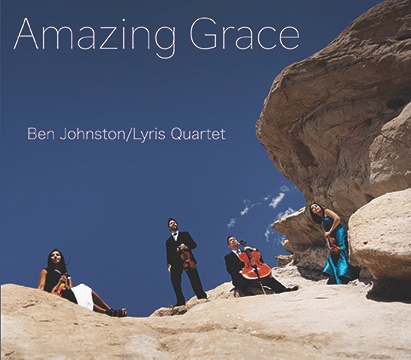
The Young Person’s Guide to Ben Johnston is an ideal way to introduce listeners to the wonderful world of the late Ben Johnston’s music. Johnston, a student and colleague of Harry Partch shows his compositional skills utilizing non-traditional western tunings in these representative works. Johnston here does for some quasi pop tunes what Evan Ziporyn did with his clarinetist perspective for the tunes on Pop Matters. But Johnston’s pretty, accessible work belies fascinating complexities that don’t actually sound complex to the listener. This disc contains Johnston’s last completed work, “Ashokan Farewell” (which Johnston took to be a public domain folk tune but is in fact a piece written by Jay Ungar). It is paired with the 4th String Quartet (a set of ingenious variations on “Amazing Grace”) from 1982 and the 9th String Quartet of 1997. Profound, lovely to listen to, and a great homage.
DVD OM 4001
This DVD is a major addition to the discography of Charles Amirkhanian’s sound poetry as fine sampling of one aspect of Carol Law’s (Amirkhanian’s life partner) complementary visual art. These collaborations are also important contributions to the visual and performative aspect of these collaborative works. Amirkhanian has been a fine curator and promoter of the work of others but he has rather seldom stepped into the spotlight himself. This quirky genre got some fabulous exposure at the 7 day Other Minds 23 festival in 2018 in which Amirkhanian’s work was presented in the (surprisingly varied) context of sound poetry of the amazing international collection of artists who were hosted at those events. This DVD should be in the collection of anyone interested in new music sound poetry and performance art. It is both entertaining and mind bending featuring a juxtaposition of images and sound reviewed in greater detail in the post “Dyadic Dreams”. But words cannot do justice to these works. You really have to see them.
Cedille CDR 90000 210
Readers of this blog know my fondness for the Chicago based label Cedille and their promotion of Chicago based musicians. This disc stands out in this group’s embrace of non-traditional composers alongside more traditional works. The inclusion of works by DJ composer Jlin and the academy based genre defying duo Flutronics alongside composers like Danny Elfman and Philip Glass demonstrate the wide ranging repertoire of Third Coast Percussion. Much more information can be found in Perspectives: Spectacular World Premiere Recordings from Third Coast Percussionon my blog. This one reimagines the percussion ensemble.
Neuma 176
This disc is a good example of why listeners and collectors should pay attention to the Neuma record label. Philip Blackburn, who had been the very successful curator of Innova records, took over the defunct Neuma label which was founded with the intention of promoting largely electroacoustic music though not exclusively.
Agnese Toniutti‘s New Music Visionis actually a review of two discs by this rising star, a dedicated new music pianist that needs to be on your radar. The other Neuma disc contains Toniutti’s traversal of John Cage’s reluctant masterpiece, “Sonatas and Interludes for prepared piano”.
The disc pictured here is Toniutti’s vision beyond the Cage work. This one focuses on mostly living composers Lucia Dlugoszewski, Tan Dun, Philip Corner, and Toniutti’s herself. Basically, if Toniutti plays it, you should probably at least give a listen.
2023 saw the completion of Bay Area pianist Sarah Cahill’s epic survey of piano music by female composers. Cahill is another (predominantly) new music focused pianist about whom I would also assert that, if she plays it, you should probably give at least one listen.
The End of the Beginning: Sarah Cahill’s “The Future is Female” Trilogy Completedwill tell you all you need to know about this trilogy which encompasses about 300 years of music history and sheds light on some fascinating and substantial music written by women. Most of the works on this trilogy of albums are, in fact, world premieres but, fear not, even the pieces which are not premieres are likely not in your collection. This is a brilliant selection of music that effectively throws down the gauntlet to challenge other artists to explore this repertory. This trilogy is a true landmark and a joy to the ears.
This third volume in the wonderful Catalyst Quartet’s survey of another unjustly neglected group of composers focuses on the music of three black Americans of the twentieth century. Catalyzing Blackness, Volume Three: The Catalyst Quartet plays 20th Century music by Black Americans was nominated (but didn’t win) for a Grammy Award and, happily, I’m told that more volumes are in preparation. Again, this music is a pleasant revelation that does for black composers what Sarah Cahill has done for women composers (N.B. The first volume by the Catalyst Quartet focused on the black female composer Florence Price). And here’s hoping that Coleridge Taylor Perkinson, George Walker and William Grant Still will become household names in the concert hall.
Microfest MF 21
Son of Partch, Carrying on a Traditionis a really wonderful disc which, though I reviewed it in exceedingly positive terms, provoked a strongly negative reaction from the artist. The reaction apparently also provoked enough interest to have made this review one of my most read of 2023.
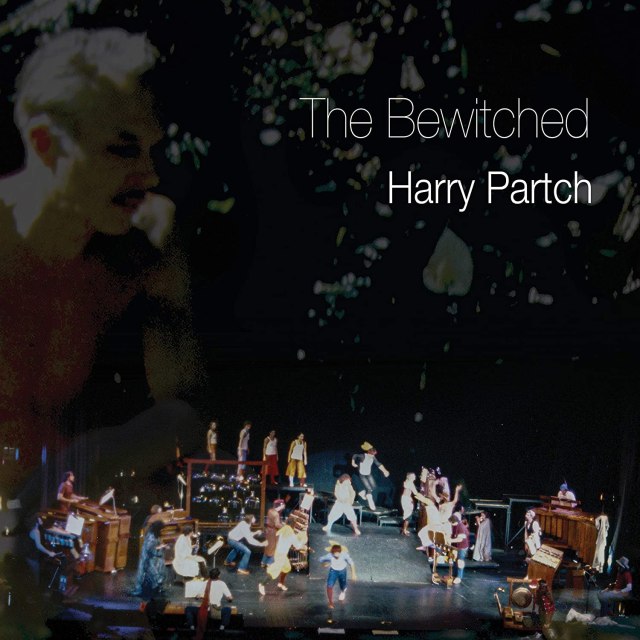
But, aside from the unfortunate negative reaction, I still maintain that this is a fine release worthy of attention from anyone who likes new music, microtonality, and the music of Harry Partch. Cris Forster is a composer, theoretician, and instrument builder clearly descended from the Partch tradition. His work deserves attention and this disc is a very satisfying experience.
Islandia IMR 011
Steven Schick is a master percussionist and conductor. This release is the first volume of his personal choices of solo percussion repertoire. Solo Percussion Manifesto Volume I: Steven Schick’s “A Hard Rain” is a manifesto of sorts and does for solo percussion music what Sarah Cahill has done for women composers and the Catalyst Quartet is doing for black composers. There are not many recordings of solo percussion music and Maestro Schick essentially presents his favorite works in definitive performances on a label produced by Bang on a Can cellist Maya Beiser. The second volume is in my review queue and, if this first volume is any indication, it will be a landmark survey.
Cedille
Rising Star Seth Parker Woods’ “Difficult Grace” is a Classic in the Making. Here’sanother Grammy nominee that did not win but, this second album by this fine American new music cellist is a winner in my book (er, blog). This is actually the audio of what was developed as a staged performance but the music speaks for itself. Keep an eye/ear out for this rising star who, even now, is storming the new music cello scene in invigorating ways.
Neuma 128
A Reason to Listen: Roger Reynolds’ Latest, “For a Reason”,new recordings on Neuma Records. Here we see Neuma following its original electroacoustic mission with this remarkable set in celebration of Roger Reynolds’s 90th year. This is a lavish 2 CD box set with a beautiful booklet and lucid liner notes. It is a worthy production which showcases recent works by this prolific and important American composer.
Readers of this blog likely are aware of my interest in music that is suppressed and/or neglected so this disc grabbed my attention immediately. Israel does a great job of funding the arts and this can be seen in the proliferation of truly fine performers nurtured by that funding. Less well known are the composers who have flourished in the art healthy politics of this country. Some 50 years of history are represented here. This is but a sampling, albeit finely curated, of several generations of composers displaying a plurality of styles with substantial results. This entertaining disc will whet the appetites of intelligent and curious listeners and, hopefully, bring about more recognition of the world class composers who deserve an audience.
There are many ways to debut on the world stage and there are many ways to represent political activism. Violist Noémie Chemali has chosen, as her important first impression in her recorded debut, a selection of music from young composers whose heritage includes political oppression. The albums profits are promised to MSF, also known as Doctors Without Borders. These works are not directly political, rather they are a carefully curated selection of new works produced by composers who, in varying degrees, have experiences of dealing with or having friends and family whose lives are negatively impacted by political conflicts and oppression. This is gorgeous music by emerging talents.
The good news is that these wonderfully creative artists persevere in creating great art and it is the celebration of that creative drive that lies at the heart of this fine release. While the pieces here variously reference tunings, rhythms, and melodies representative of their individual ethnic heritages, they are not confrontational. Rather the music here stands as evidence of the beauty of artistic invention which stands defiantly in contrast to the cruelty of oppression and warfare. That gentle activism casts a kinder and gentler image of people more commonly represented in the media as terrorists (actually a numerical minority) in a culture with ancient roots and a powerful artistic soul (the better descriptor of the actual majority).
Links to the composers’ web sites can be accessed by clicking the names of said composers.
This, the composer’s Opus 13C, is based on an Arabic rhythm called “Al Mouraba”. It is for solo viola and is cast in the unusual meter of 13/4, using an Arabic scale. The music imitates traditional music which ostensibly enticed horses to dance in times past.
This musical impression of a poem of the same name by Mahmoud Darwish. It is, in the composer’s description, a meditation on the random elements that affect our lives. It is scored for viola, cello, and double bass.
3. Cadenza from “The Brown Texts”; movement one (2017-2020)
4. Cadenza from “The Brown Texts”;movement two
The term “cadenza” derives from the word “cadence” and it generally refers to the improvisations (by the soloist) in a concerto. The notion of a solo cadenza does not appear, as far as this listener’s encounters, until the mid to late twentieth century. Penderecki’s Cadenza for Viola is the only example that immediately comes to mind. Though that work is sometimes performed separate from the viola concerto from which it derives, its origin is in the classical/romantic tradition of a virtuoso work that displays the skills of the soloist. As with the previous work, this one is a musical rendition of originally poetic ideas, those of the late Nadia Tueni. And, unlike any other cadenza I’ve known, it is cast in two separate movements. The piece is a fine showcase for Ms. Chemali’s technical and interpretive skills.
Noemie Chemali:
5. “Kadishat” (2021)
Delightfully, Ms. Chemali has chosen to include one of her own compositions. She describes this as a set of variations on the ancient Aramaic Trisagion “Qadishat aloho”, a tune which has been firmly ensconced in the composer/performer’s consciousness from having heard it since her childhood. One could characterize it as one of the greatest hits of the Eastern Orthodox Church and one of its most deeply felt pieces. Chemali casts this work for violin, viola, and cello. This writer is reminded of another fine example of the incorporation of sacred hymns into the classical music tradition, that of Carolyn Shaw’s fine “In Manus Tuas” which mines that composer’s memory of hearing a sacred chant. Both works reflect the composer’s internal process of hearing and attempt to convey that spiritual experience to the listener.
This piece, another musical expression of a literary work, namely, the Armenian fable that provides the title for this work which is cast for cello, voice, and electronics. It is presented here in a transcription for viola by the soloist. The fable deals with the strength in numbers that rise up against those in positions of power. It is a delightful work with dark implications.
This work, scored for viola, harp, and flute is cleverly written in three movements which, in turn, each give a solo to each of the musicians who are, in turn, accompanied by the others in the group. “Dohree” is an Arabic word which translates as “my turn”.
Six pieces over eight tracks with chamber groups ranging from solo viola to viola with electronics (in the Kouyoumdjian work) and small chamber groupings in the others. All in all a fine and engaging selection of music that bear witness to the beauty and creativity of people living with oppression. This music reflects the human experience that can get erased by merely identifying ethnicity.
In addition to Ms. Chemali this recording includes the following musicians: Shaleah Feinstein, violin; Raffi Boden, violoncello; Kebra-Seyoun Charles, double bass; Lauren Scanio, flute; Deanna Cirielli, harp. They really do honor to the spirit of this music and this album is beautifully recorded as well.
Kouyoumdjian was the only composer known to this reviewer prior to hearing this album but she is apparently in very good company here and listeners would do well to make note of these rising stars. We will doubtless hear from them again. Here’s hoping.
Noemi Chemali (from the Orchestra of St. Luke’s web page)
This is the artist’s biography as it appears on her website (linked above):
French-Lebanese-American violist Noémie Chemali received her Bachelor’s degree from McGill University’s Schulich School of Music, her Artist Diploma from the Robert McDuffie Center for Strings at Mercer University, and her Master’s Degree from The Juilliard School. Her principal teachers include Becca Albers, Hsin-Yun Huang, and Carol Rodland.
During her time at Juilliard, she made her Carnegie Weill Hall solo debut in the UN Chamber Music Society’s Arabic Language Day concert and collaborated with dancers of the New York City Ballet. During her time at the McDuffie Center for Strings, she performed alongside faculty members of the Cavani and Ehnes String Quartets. In 2019, she also performed in “A Night of Georgia Music,” a tour the American South with violinist Robert McDuffie, guitarist Mike Mills of the band R.E.M., and pianist Chuck Leavell of the Allman Brothers Band/Rolling Stones. Some performance highlights from McGill include playing a concert with clarinetist David Krakauer in a program of Klezmer music, being selected to perform a chamber work by John Rea in a concert presented by the Société de musique contemporaine du Québec (SMCQ) alongside Schulich faculty and students, and participating in the 2018 Musical Chairs Chamber Music Festival, where she collaborated with students from the Mozarteum (Austria) and the Yong Siew Toh Conservatory of Music (Singapore).
Noemie has spent her summers at music festivals such as The Music Academy of the West, Sarasota Music Festival, Orford Musique, The Lunenburg Academy of Music Performance (LAMP), Scotia Festival of Music, Manhattan in the Mountains, and Green Mountain music festivals. While Ms. Chemali was a fellow at the Music Academy of the West, she played under the baton of esteemed conductors Larry Rachleff, Stéphane Denève, Gustavo Dudamel, and James Conlon. While at Sarasota Music Festival, she served as principal violist of the festival orchestra under the baton of Jeffrey Kahane and performed in a faculty concert as a member of a quintet with bassoonist Frank Morelli. She has, throughout the years, participated in various masterclasses with artists such as Joseph Silverstein, Ida Kavafian, Cynthia Phelps, Karen Dreyfus, Richard O’Neill, James Dunham, Jutta Puchhammer and the Pacifica String Quartet.
Passionate about diversifying musical audiences, she co-founded the Hildegard Project, which aims to bring music written by women composers to women’s shelters in the greater Montreal area and was invited to speak about her work at the Classical Evolution/Revolution Conference in Santa Barbara, CA. Most recently, she founded Music@Daybreak, an interdisciplinary performance and research project which features performances at homeless shelters in collaboration with the Sociology department at Mercer University.
Noémie is the recipient of a Juilliard Career Grant, George J. Jakob Global Enrichment Grant, Gluck Community Engagement Fellowship, Juilliard Entrepreneurship Grant, Barenboim-Said Foundation (USA) Grant, and a Lower Manhattan Cultural Council Creative Engagement Grant. In January 2024, she will be releasing Opus 961, her debut album of music written by contemporary Lebanese composers.
Her website includes some YouTube videos reflecting the artist’s fascinating choices of repertory. Along with fervent activism, she demonstrates a pretty unique take on what she chooses to play. Her biography evidences an eclectic group of collaborators and influences that will likely characterize her career.
This is quite an impressive first impression from an artist who greets us at the beginnings of what this reviewer believes will be a long and interesting career representing a new generation of musicians with a unique and (hopefully more effective) approach to the ills of our age. Great art inspires, if not action, at least hope. And we desperately need hope. Thanks for that Ms. Chemali.
Listeners of a certain age and those versed in recent classical music history will recall another fine pair of Armenian American musicians (also sisters) whose performances and recordings introduced many to the work of Armenian American composer Alan Hovhaness (1911-2001) as well as John Cage, Aram Khachaturian, and others. I am speaking of pianist Maro Ajemian (1921-1978) and her sister, violinist Anahid Ajemian (1924-2016). And these fine musicians (pianist Marta Aznavoorian and cellist Ani Aznavoorian) carry on some generations later along a similar path, honoring their heritage and promoting its art.
The disc under consideration is this beautiful sampling of Armenian composers of the past 100 years (or so) beginning with Komitas Vartabed (1869-1935), a monk, composer, historian, and ethnomusicologist. Armenian music enters modernism and the twentieth century via Komitas. This is followed by music of four Soviet era composers and three contemporary era composers.
The liner notes are by local historian and producer Gary Peter Rejebian and the Aznavoorian sisters. In this ,their debut album, they speak of their connectedness to Armenian culture personally and musically. In fact Ani’s cello was made in Chicago by her father Peter Aznavoorian. This album is an auspicious debut and an homage to this rich culture.
They begin with five pieces by Soghomon Soghomonian (1869-1935), better known as Komitas Vartabed, the name bestowed upon him after his ordination as a priest in 1894. These are lyrical and beautiful folksong arrangements that grasp the listener immediately. These five pieces ranging in duration from about 1 1/2 minutes to about 4 minutes. These five pieces, four for cello and piano are punctuated by a sad lament for solo piano played as the third track. Komitas, after witnessing 1915 the Armenian genocide, composed no more and, in fact, spent his remaining years in a sanitarium until he died in 1935.
The next two pieces are by one of the best known Armenian composers of the twentieth century, Aram Khachaturian. Though long subsumed into the Soviet straightjacket his individual voice produced many substantial works and his work has done much to preserve and rejuvenate his Armenian culture. These two pieces are not among his best known work but demonstrate his ability to write in smaller forms and, at least in these brief pieces, display his personal style and his love for his native culture.
These are followed by three pieces of another Soviet era composer whose voice is less well known in the United States, Arno Babajanian. Elegy (among the composer’s last works, written in homage after the passing of Aram Khachaturian) is one of two tracks for solo piano on the album and it is followed by Babajanian’s “Aria and Dance” for Cello and Piano. Certainly this is a composer whose works deserve a proper hearing and evaluation. These pieces suggest a composer with a strong voice, another to come out from the Stalinist/Soviet oversight to be heard now with new ears.
Avet Terterian is another Soviet era name whose work is virtually unknown in the west, another whose work deserves at least a second listen. His large three movement sonata for cello and piano (1956) is a major work both in duration and in content. The style is a friendly mid-twentieth century post romantic one that very well may become a regular repertoire item after hearing the powerful and convincing performance documented here.
With the next track we hear the first of the “recent” works on this recording, Serj Kradjian’s transcription of a traditional song, “Sari Siroun Yar”.
The all too brief experience of this small work by another major Soviet era composer, Alexander Arutiunian, this charming Impromptu (1948, one of his earliest compositions) is a beautiful piece but it is a mere appetizer to lead a listener to hear more from this composer who has produced work in pretty much all genres big and small. Arutiunian’s work deserves some new attention. Best known for his 1950 Trumpet Concerto, his output was large and he composed in large and small forms that demand the attention of post Soviet ears.
Back to the 21 st century with this next track, Vache Sharafyan’s Petrified Dance (2017). Sharafyan was a student of Terterian and this work was adapted from a film score.
The Aznavoorians end with the world premiere recording of “Mount Ararat”, a paean to the Holy Mountain that dominates the landscape in the Armenian capitol city of Yerevan. It is the mountain upon which Noah’s Ark was said to have come to rest after the flood. Like Mount Fuji to the Japanese, Mount Everest to the Tibetans, and “Tahoma”, (better known now as Mount Rainier) to the Puyallup and other Native American tribes of the Pacific Northwest, Mount Ararat is considered a holy mountain.
Peter Boyer‘s “Mount Ararat” (2021) was written for the Aznavoorian Duo. Boyer is the only non-Armenian represented here but his composition embraces the spirit of Armenian music and this is a dramatic and heartfelt love song both to the holy mountain and these musicians whose performance provides an ecstatic and virtuosic finale to this fine disc.
Were it not for the wishes of some of my valued readers I would not produce such a list. It has no more validity other than, “These are my personal choices”. But there is some joy to be had in contemplating these past 12 months as I have lived them on this blog. So here goes.
My home base is in California, about 90 miles north of Los Angeles though I sometimes travel for work
First I have to tell everyone that March, 2022 will mark the 10th anniversary of this blog, a venture which has been a rich and exciting one. Future blogs will soon include, in addition to album/concert reviews, some articles on subjects which I hope will be of interest to the select group of people who read this material and who share my interest in this music (which I know can be anywhere from difficult to repulsive to many ears). But I have deduced that my readers are my community, a community of kindred spirits freed from the boundaries of geography, a number rather larger than I had imagined was possible and one that I’ve come to cherish. Bravo to all of you out there.
Since February of 2021 I have worked periodically in Washington State, not in a cabin in Mt. Rainier National Park but in Tacoma, just south of Seattle.
COVID 19 has reduced the number of live performances worldwide and I have not attended a live performance since early 2020. But, happily, musicians have continued to produce some amazing work, some of which gets sent to me, and a portion of that gets to be subjected to the analytic scrutiny of my blog.
My lack of attention to any music should never be construed as deprecatory, rather it is simply a matter of limited time to listen. So if I have provided a modicum of understanding or even just alerted someone to something new I am pleased and if ever I have offended, I apologize. All this is my personal celebration of art which has enhanced my spirit and which I want to share with others. Look what Ive found!!!
So, to the task at hand (the “best of” part):
The formula I’ve developed to generate this “favorites retrospective” has been to utilize WordPress’ useful statistics and look at the top viewed posts. From these most visited (and presumably most read) articles I produce a list of ten or so of my greatest hits from there. Please note that there are posts which have had and continue to have a fairly large readership from previous years and they’re not necessarily the ones I might have expected but the stats demand their inclusion here.
Following that I then toss in a few which are my personal faves (please read them) to produce what I hope is a reasonably cogent and readable list. Following my own description of my guiding principles I endeavor to present the perspective of person whose day job and energies are spent in decidedly non-musical efforts but whose interest and passion for new music drives this blog where I share those interests.
As a largely self taught writer (and sometime composer) I qualify my opinions as being those of an educated listener whose allegiances are to what I perceive as pleasing and artistically ideal based on my personal perception of the composer’s/performer’s intent. I am not a voting member for the Grammys and I receive no compensation for favorable reviews. I have the hope/belief that my blogs will ultimately garner a few more listens or performances of art that I hope brings my readers at least some of the joy I feel.
New Music Buff’s Best of 2021
As of this writing I have published 37 blog posts in 2021. COVID, job and personal stressors have resulted in my failing to post at all in December, 2020, January, June, and July of 2021. And only one post in February, 2021. Surprisingly I have managed to get just over 9300 views so far this year (a little more views than last year actually) and it is my plan to publish 4-5 blogs per month going forward into my tenth year.
Me with my listening buddy, Clyde
Not surprisingly, most of my readers are from the United States but I’m pleased to say that I’ve had hits from 192 countries at last count. Thanks to all my readers, apologies to the many countries who didn’t make the cut this year (you’re all welcome to try again in 2022). So, following the United States here are the subsequent top 25 countries who have viewed the blog:
Canada, United Kingdom, Germany, China, France, Netherlands, Spain, Australia, Ireland, India, Italy, Turkey, Nigeria, Japan, Brazil, South Korea, Denmark, Belgium, Sweden, Finland, Russia, Poland, Philippines, Ghana, Norway.
Top Ten Most Read of 2021
The following are the most seen articles of 2021. Some of these are articles whose popularity surprise me as they were written some time ago and are not necessarily, in my opinion, my best work. But readership is readership and I am grateful for that.
Top article, Linda Twine, a Musician You Should Know. Twine is a musician and composer who has worked for some years in New York theater. I chose to profile her and I guess she is well liked because this article from 2018 is one of my top performers. Kudos, Ms. Twine.
Next up is, The Three Black Countertenors, an article suggested by my friend Bill Doggett whose website is a must visit for anyone interested in black classical musicians. This one, from 2014, continues to find readers. It is about the first time three black countertenors appeared on the same stage. Countertenors are themselves a vocal minority when considered in the company of sopranos, baritones, tenors, contraltos, and basses. Being black adds another level of minority in the world of operatic voices so this was indeed historic.
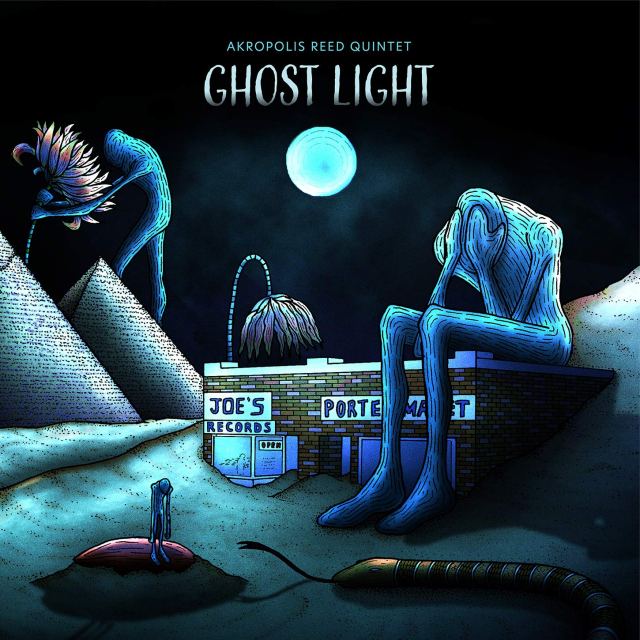
Art and the Reclamation of History is the first of the articles written this year to make the top ten most read. It is about a fabulous album and I hope more people read about it. This Detroit based reed quintet is doing something truly innovative. You really need to hear this.
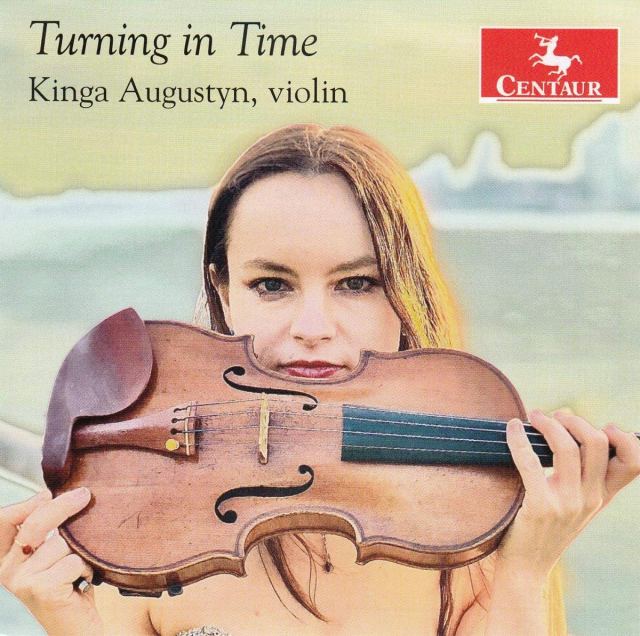
Centaur CRC 3836
Number four is another from this past year, Kinga Augustyn Tackles the Moderns. This album, kindly sent to me by the artist is worth your time if you like modern music. This young Polish/American violinist has both technique and vision. She is definitely an artist to watch.
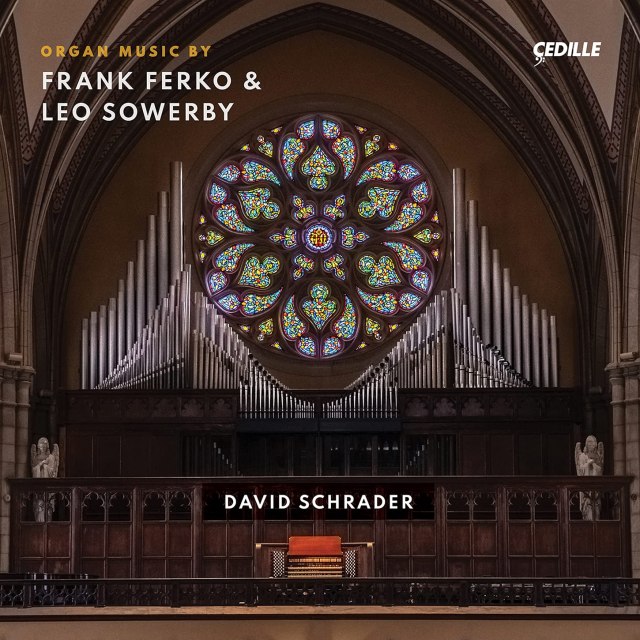
Number five is a truly fabulous album from Cedille records, David Schrader Plays Sowerby and Ferko. This double CD just fires on all cylinders, a fine artist, excellent recording, interesting and engaging repertoire, amazing photography, excellent liner notes, and love for all things Chicago. This one is a major classic release.
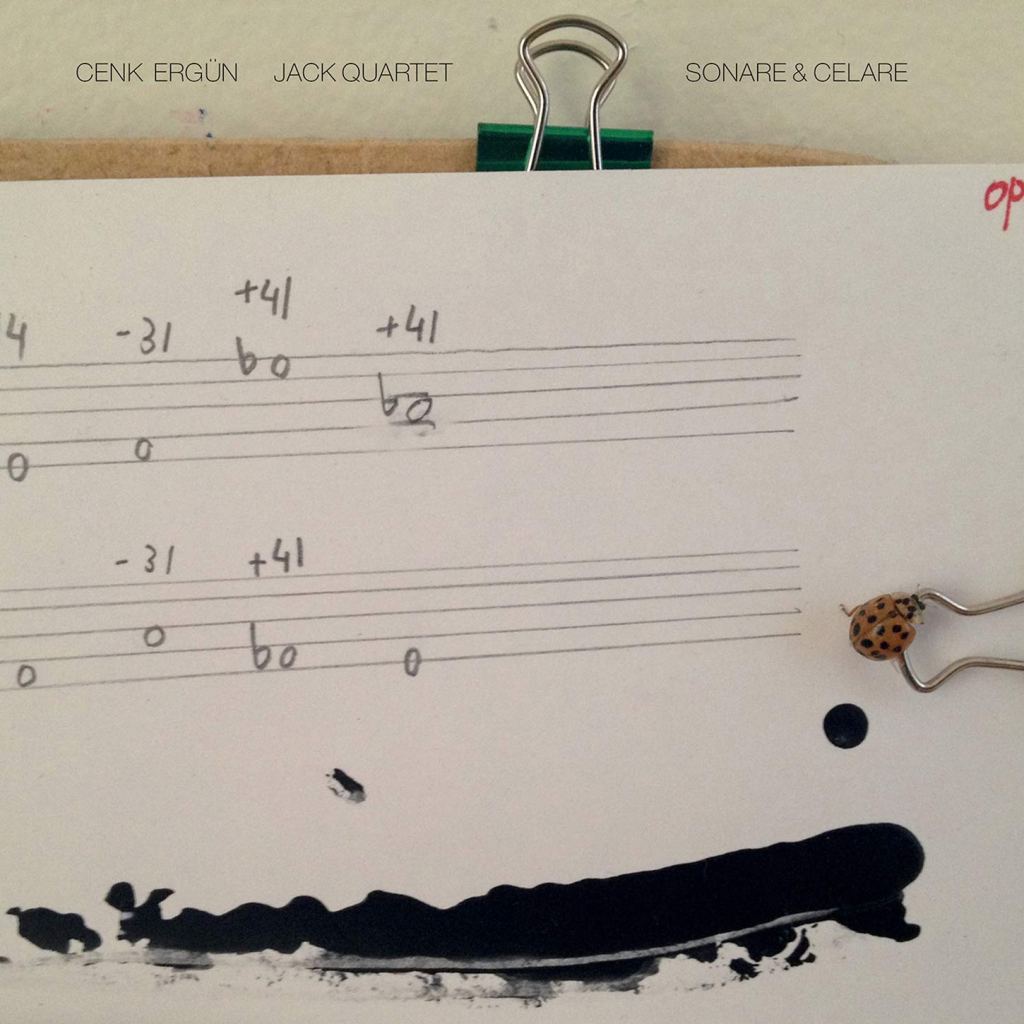
The Jack Quartet Plays Cenk Ergun was a pleasant surprise to this blogger. The Jack Quartet has chosen wisely in deciding to release this recording of new string quartet music by this young Turkish composer of serious substance. I’m glad that many folks read it.
Number seven on this years hit list among my readers is another album sent directly to me by the artist, one whose work I had reviewed before.
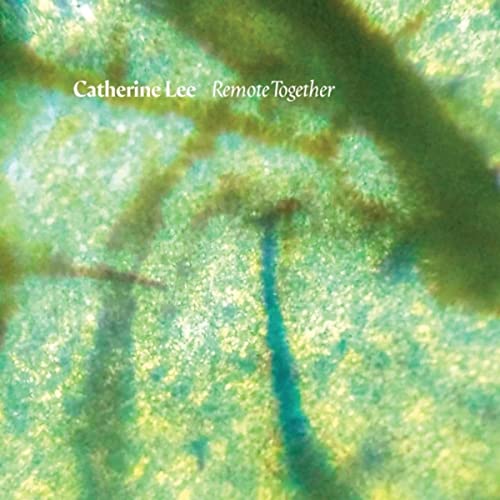
Catherine’s Oboe: Catherine Lee’s New Solo Album, “Alone Together” is among the best of the COVID lockdown inspired releases that flooded the market this year. It is also one of the finest examples of the emerging latest generation of “west coast” composers. Dr. Lee is a master of the oboe and related instruments and she has been nurtured on the artistic ideas/styles that seem to be endemic among composers on the west coast of the United States. She deserves to be heard.
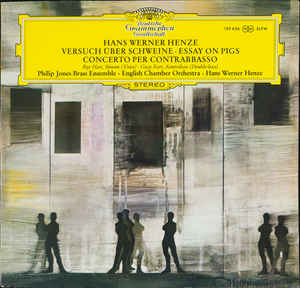
Number Eight is an article from 2014, Classical Protest Music: Hans Werner Henze’s “Essay on Pigs” (Versuch uber Schweine). This 1968 noisy modernist setting of leftist political poetry combines incredible extended vocal techniques with the dissonant modernism of Hans Werner Henze’s work of that era. Also of note is that his use of a Hammond Organ and electric bass guitar was allegedly inspired by his having heard the Rolling Stones. It’s a classic but warn anyone within earshot lest they be terrified.
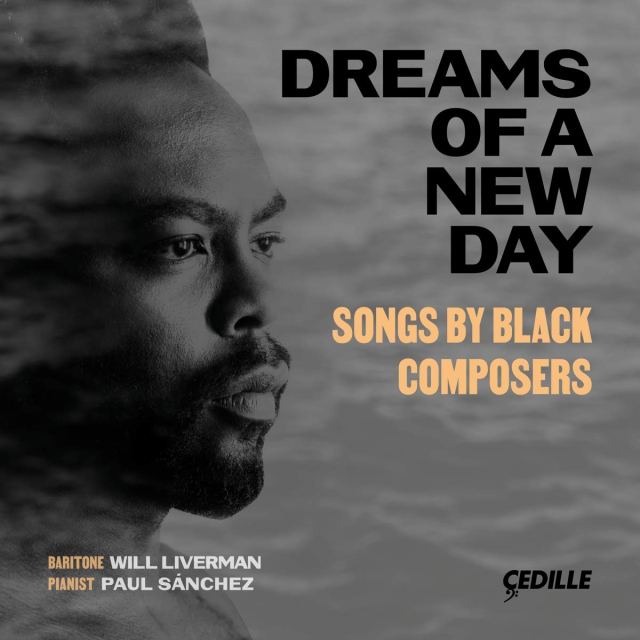
“Dreams of a New Day”, a Landmark Recording Project from Cedille is a virtual manifesto/survey of art song by black composers. Liverman is an amazing singer and the recording by my favorite Chicago record company is pure beauty. This 2021 release ranks ninth among my most read blogs from the past 12 months.
As it happens there is a three way tie for the number ten spot:
Black Composers Since 1964: Primous Fountain is one of a short series of articles I wrote in 2014. I used the date 1964, 50 years prior to the date of the blog post, because it was the year of the passing of the (still controversial) voting rights act. As a result of this and a few related articles I have found myself on occasion categorized as a sort of de facto expert on black music and musicians. I am no expert there but I have personally discovered a lot of really amazing music by black composers which is way too little known and deserves an audience.
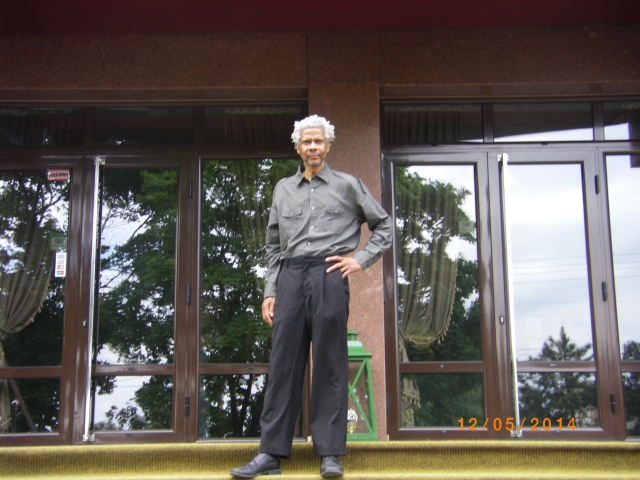
Primous Fountain arrives in Moldova to oversee the performances of his music.
I am pleased to tell you that this too little known composer (and fellow Chicagoan) is being recognized by no less than Michael Tilson Thomas who will conduct an entire program of his works in Miami next year. If my blog has helped in any way then I am pleased but the real honors go, of course, to Mr. Fountain and Mr. Thomas (who first conducted this composer’s music many years ago). Stay tuned.
My “comeback blog”, The Loneliness of the Long Distance Blogger was written to sort of reintroduce myself to the blogosphere and provide some background (excuses?) for my absence. I guess it was a decent read.
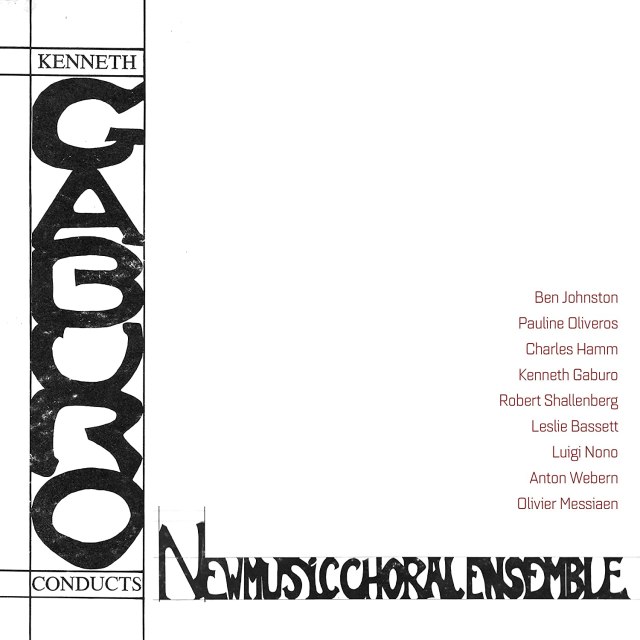
And the third contender for my tenth most read of 2021 is, Kenneth Gaburo, the Avant-Garde in the Summer of Love. This is among the first volley of releases on the revived Neuma label with Philip Blackburn at the helm. Blackburn’s instincts guided Innova records to release many wonderful recordings of music rarely on the radar of larger record companies and this first volley was a harbinger of even more wonderful releases to come. Just do a Neuma search and see what I mean.
The Ones That Didn’t Make the Top Ten
I would be negligent and boringly formulaic to simply report on these top ten. This is not a democratic blog after all, lol. So here are my choices for the ones that many of my dear readers may have missed and should definitely check out. It is anything but objective. They are, in no particular order:
Solo Artist Pamela Z releases “a secret code”. This is another Neuma release, one of a truly original and interesting artist who pretty much defies categories but the territory she explores will amaze you.
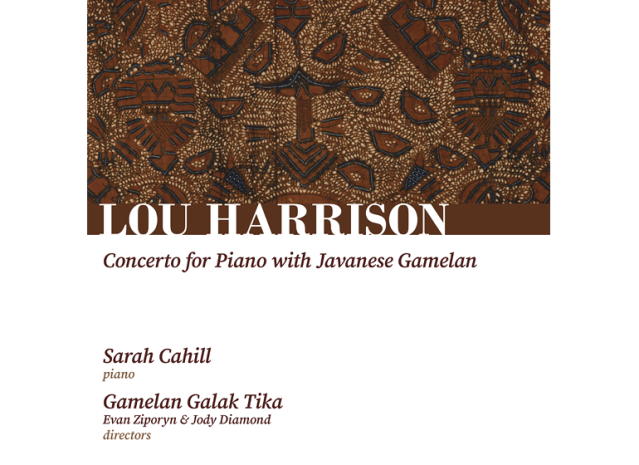
Lou Harrison: Concerto for Piano with Javanese Gamelan, a very special performance of an underappreciated masterpiece is just unabashedly excellent. It is a recording of a 2017 performance (in honor of the composer’s 100th birthday anniversary) in Cleveland by performers who have had a close relationship with this major American composer. I love the music. I love the performers. It’s a digital only release but you can get a download of the album and the fine liner notes from Bandcamp.
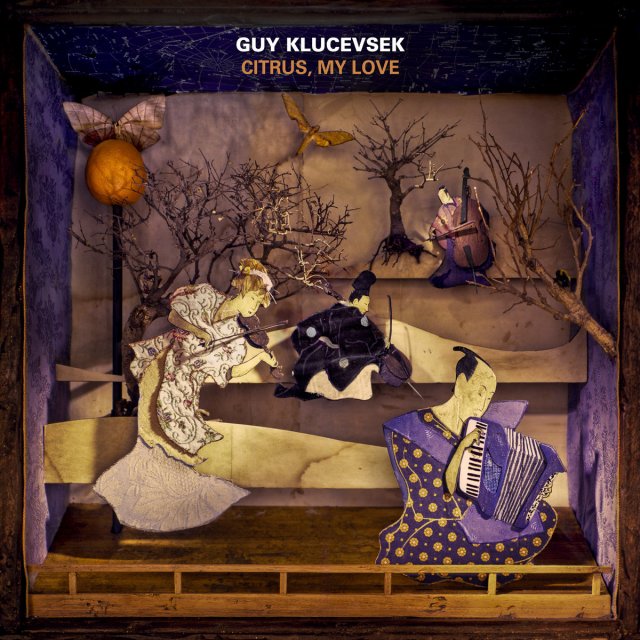
Fixing a Hole to Keep the Music Playing: Starkland brings back Guy Klucevsek’s “Citrus, My Love” is also a digital only release, also available on Bandcamp of an album long out of print but essential to the oeuvre of Guy Klucevsek. Like Philip Blackburn, Tom Steenland (who heads Starkland records) is a musical visionary who has released some of my personal favorite albums. If Tom (or Philip) likes it I will at least give it a listen.
Dennis Weijers: Skill and Nostalgia in an Auspicious Debut Album is a sort of personal discovery for me. This reworking of Philip Glass’ “Glassworks” and Steve Reich’s “Variations for Winds, Strings, and Keyboards” scored for solo accordion and electronics pretty much knocked me over as soon as I heard it. Read the blog to see why but you have to hear this. This is NOT your granddaddy’s accordion.
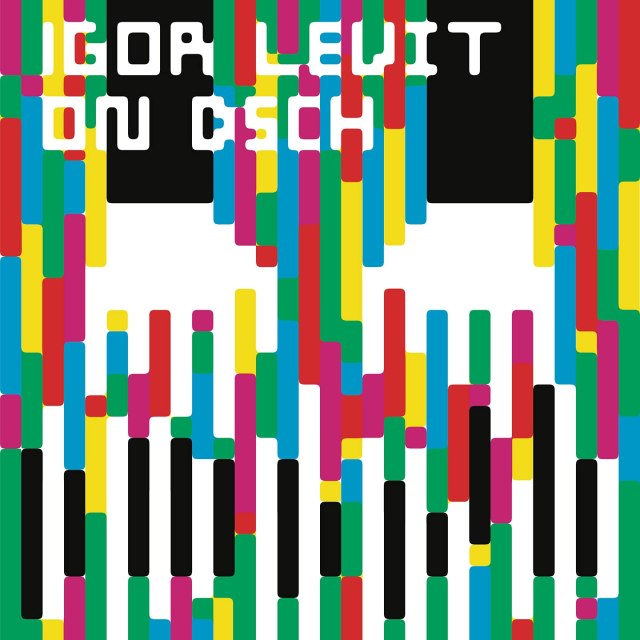
Vision, Virtuosity, and Interpretive Skill: Igor Levit’s “On DSCH” is an album I just can’t stop listening to. I raved about his earlier set of piano variations by Bach, Beethoven, and the late Frederic Rzewski and I look forward to this man’s musical vision as he expands the concert repertoire with works you probably haven’t heard or at least haven’t heard much. You owe it to yourself to watch this artist.
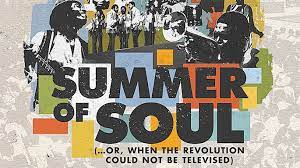
Black Artists Matter: The Resurrection of the Harlem Arts Festival, 1969 is one of the relatively few times when I write about so called “pop” music. It is wholly unconscionable that these filmed performances from 1969 (many of which predated Woodstock) languished for 50 years in the filmmaker’s basement and were nearly lost. One of the recurring themes in this blog is the lament over unjustly neglected music and this is a glaring example. I was delighted to see that the filmmaker Questlove received an award at the Sundance Festival for his work on this essential documentary of American music.
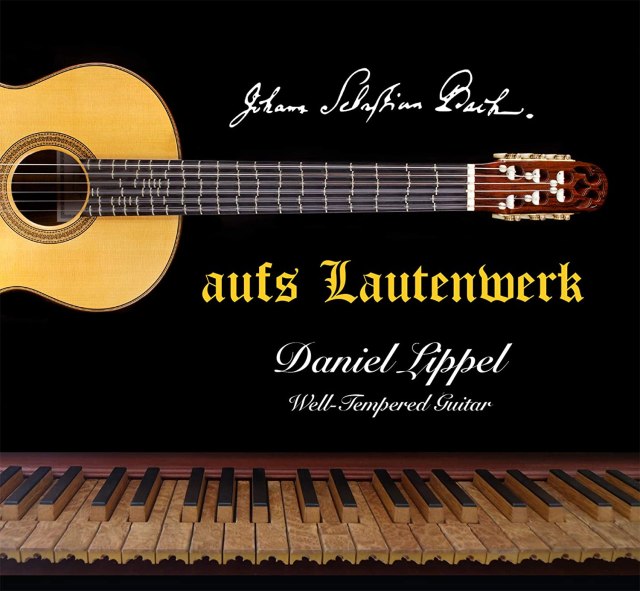
Less “flashy” but sublimely beautiful is Modern Tuning Scholarship, Authentic Bach Performance: Daniel Lippel’s “Aufs Lautenwerk”. This is a masterpiece of scholarship and a gorgeous recording on a specially made Well-Tempered Guitar played with serious passion and interpretive genius by a man who is essential to the productions of New Focus recordings as well as being a fine musician himself. Read the review or the liner notes for details but just listen. This is another one that I can’t stop listening to.
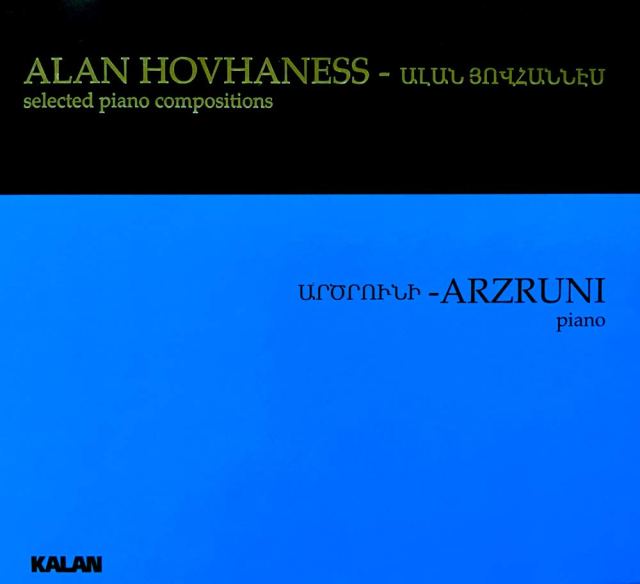
Unheard Hovhaness, this Sahan Arzruni album really rocked my geeky world. Arzruni, a frequent collaborator with Hovhaness turns in definitive performances of these previously unheard gems from the late American composer. A gorgeous physical production and a lucid recording make this another disc that lives on my “frequently played” shelf.
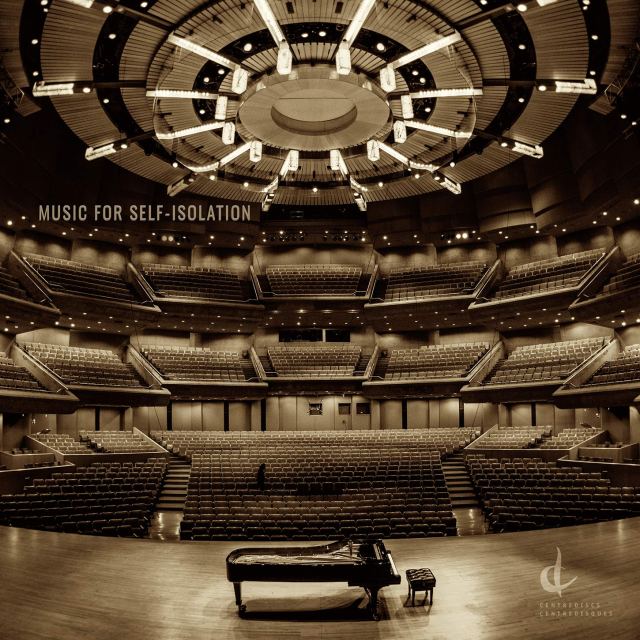
Only the Lonely, Frank Horvat’s “Music for Self Isolation” is yet another release from this emerging Canadian composer. This is one of my favorite COVID Isolation albums, a unique response to this pandemic from an eminently listenable and endlessly creative composer.
OUR 6.220674
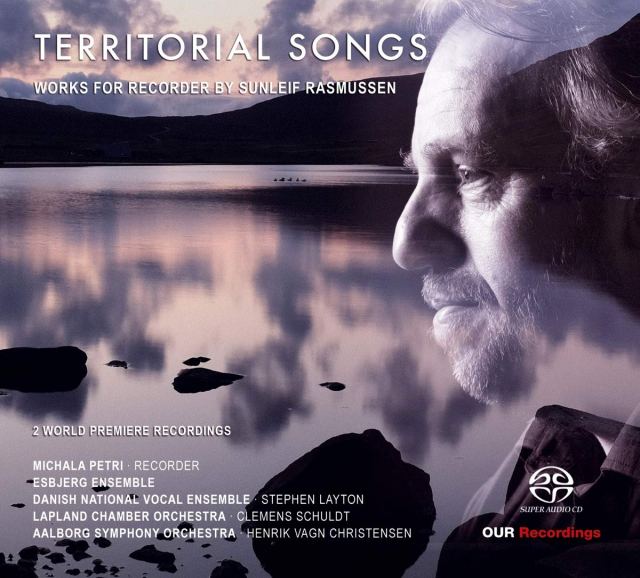
New Music from Faroese Master Sunleif Rasmussen with soloist Michala Petri is an album of world premieres by this master composer from the Faroe Islands. It is also a tribute to the enduring artistry of Michala Petri. I had the honor and pleasure of meeting both of these artists some years ago in San Francisco and anything they do will demand my attention, they’re that good.
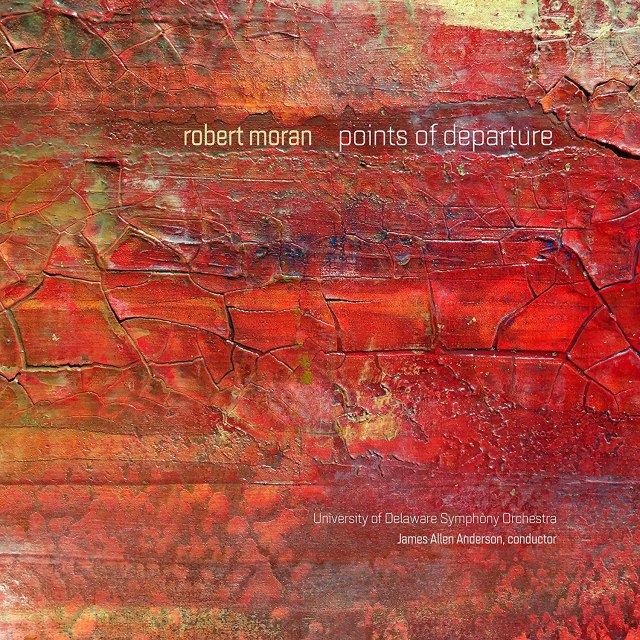
Last but not least, as they say, Robert Moran: Points of Departure is another triumph of Philip Blackburn’s curation on Neuma records. I have personally been a fan of Moran’s music since I first heard his work at the Chicago iteration of New Music America in 1982. Blackburn’s service to this composer’s work can be likened to similar service done by David Starobin at Bridge Records (who have embarked on complete works projects with several contemporary composers) and Tom Steenland’s work with Guy Klucevsek and Tod Dockstader at Starkland records. Blackburn had previously released the out of print Argo recordings of Moran’s work and now, at Neuma has released this and a few other new recordings of this major American composer’s work.
My apologies to the albums I’ve reviewed which didn’t make it to this year’s end blog but I have to draw a line somewhere. Peace, health, and music. And thank you for reading.
This welcome recording presents music by five contemporary Armenian composers: Artur Avanesov (1980- ), Ashot Zohrabyan (1945- ), Michel Petrossian (1973- ), Artashes Kartalyan (1961- ), and Ashot Kartalyan (1985- ). All of these are new names to this writer and, most likely, to the majority of listeners. That is what makes this disc such an exciting prospect. This post WW2 generation of composers are writing music from the perspective of their generations, one which is qualitatively different than that of previous generations but all owe a debt to the man who is arguably Armenia’s first truly modern composer, Tigran Mansurian (1939- ) whose brave integration of modern trends in western music distinguish him from previous generations of classical composers whose focus was either nationalistic (as Copland was to American music) or traditional religious music for the Armenian Orthodox Christian rites. Mansurian, in addition to embracing European modernism also returned to embrace the traditional religious compositions of Komitas. Spirituality is a frequent and revered aspect of Armenian classical music.
Tigran Mansurian in San Francisco at the Other Minds 20 concert in 2015
One must, of course, acknowledge the “elephant in the room” issue of the Armenian genocide of 1915 (only now in 2021 finally acknowledged by the United States) as a factor in some degree in the artistic output of this small nation. There are no obvious references as such in the compositions recorded here but the selection of texts which either inspire or are literally set to be sung are notably somber whether hat be the Latin title of the first work on the disc, Artur Avanesov’s “Quasi Harema Maris” taken from the Book of Job or the beautiful but lonely poetry of Vahan Tekayan set in Artashes Katalyan’s “Tekayan Triptych”. Horrors such as this affect generations after all.
Movses Pogossian performing the US premiere of Tigran Mansurian’s “Romance for Violin and Strings (2011) at the Other Minds Festival in 2015. The concert was in honor of the 100th anniversary of the 1915 Armenian genocide at the hands of the Ottoman Empire.
It was Maestro Movses Pogossian who kindly sent me a review copy of this album. He played a large role in the conceptualization and production of this album. He also plays violin on the first track. The Armenian born Pogossian, a world renowned violinist, is also the head of the Armenian Music Program at UCLA’s Herb Alpert School of Music. He is also the artistic director of the Dilijan Chamber Music Series and artistic director of the VEM Ensemble, a group of graduate musicians in residence at UCLA. His involvement is yet another reason to get this disc. It is clearly a project close to his heart and one upon which he has invested a great deal of artistic energy.
This album was recorded in May, 2019 and released in 2020 where it ran up against the pandemic shutdowns which affected performing musicians and temporarily stifled this reviewer as well. So here is my very appreciative review perhaps a year later than intended.
There are 18 tracks containing pieces by five Armenian composers, all of whom took part in this production.
The first track contains a piece for piano quintet in one movement (Movses Pogossian and Ji Eun Hwang, violins; Morgan O’Shaughnessey, viola; Niall Ferguson, cello; and the composer Artur Avanesov at the piano). “Quasi Harena Maris” (2016) takes its Latin name from the Biblical Book of Job. The title in English reads, “Like the Sand of the Sea”. It is a metaphor spoken by Job as he compares his grief to the sand of the sea sinking in its heaviness. The piece is described by the composer as a set of variations. Microtonal gestures evoke a choir interacting in a sort of call and response strategy with the piano. This is a powerful piece sometimes meditative, sometimes declamatory, but always evoking pain and sadness such as that described by the Biblical Job. While embracing modernism in his compositional methods Avanesov embraces spirituality as well.
The second track contains another single movement work, Novelette (2010) by Ashot Zohrabyan. It is scored for piano quartet (Varty Manouelian, violin; Scott St. John, viola; Antonio Lysy, cello; and Artur Avanesov once again at the piano. This work seems to have much in common with the first in that it embraces modernist techniques with spiritual references to suggest longing and separation. It is another powerful expression which engages the listener with clever invention while evoking a post apocalyptic sadness.
Now we move from quintet through quartet and on to, of course, trio. This work, also in a single movement, is scored for piano trio (Varty Manouelian, violin; Charles Tyler, cello; and Artur Avanesov on piano. Michel Petrossian’s, “A Fiery Flame, a Flaming Fire” (2017), the title a contrasting of two different translations of the biblical event in which the Angel of God appears to Moses in a burning bush. The composer describes this piece as an investigation of identity (his own being variously of “Armenian by birth, Russian by education, and French by culture”). It is also an homage to Mr. Pogossian. More kinetic and varied than the previous two pieces, this tour de force nonetheless also knows pain.
Tracks 4-6 contain the “Tekeyan Triptych” by Artashes Kartalyan showcases the poetry of Vahan Tekeyan in an English translation by Vatsche Barsoumian. The UCLA VEM Ensemble (Danielle Segen, mezzo-soprano; Ji Eun Hwang and Aiko Richter, violins; Morgan O’Shaughnessey, viola; and Jason Pegis, cello). This is a beautifully lyric setting of some mighty somber poetry which is very much in keeping with the tone of this recording. The VEM Ensemble handles this lyricism with ease and professionalism.
We now move on to music for something other than strings and piano, namely the “Suite for Saxophone and Percussion” (2015) by Ashot Kartalyan. This five movement suite puts this writer in the mind of similar works by American composer Alan Hovhaness, the composer whose immersion in Armenian culture introduced many (this writer included) to the splendors of Armenian art music. This piece uses instrumental choices similar to Hovhaness and utilizes contrapuntal writing as well. but one cannot miss the jazz inflections doubtless gleaned from Kartalyan’s exposure to the work of his jazz musician father. This suite is also a more animated piece providing relief from the intense and somber music on the first half of the disc.
The final seven tracks are given to a selection from a series of works by the hard working pianist/composer who performed in the first three works on the disc. And it is here that we can solve the mystery of the title of the album as well. These brief works seem to be etudes, experimental compositional efforts which doubtless become material in some way for later works. The third piece presented here is titled “Modulation Necklace”. This selection comes from what the composers says are some seventy similar works under the title “Feux Follets” (frenzied flames in English). They are said to have no singe unifying aspect but it appears that these are an insight to some of the composer’s compositional methods. They provide a calm and curiously speculative little journey which leaves the listener wanting more.
This is a delightful disc made with serious scholarship and dedication which introduces audiences to the splendors of contemporary Armenian art music. One hopes that this well lead to more and larger works being recorded.
















 New Music Buff