This photo was taken by me on my iPhone. What caught my eye was the effects caused by the raindrops, and the lighting on this commercial mural just off State Street in Santa Barbara. This (mostly) epitomizes the spirit of the title of this speculative essay.
The embattled National Public Radio in the United States happily (in spite of draconian funding cuts) still pursues intelligent discussions on a huge variety of relevant issues present, past, and evolving. Such is the case with a recent series of discussions (some shorter, some longer) that have focused on AI generated music. Of course the primary genre in these discussions is that of “pop” (read “economically viable”). But what of all the music that makes no money? Like mine, lol, but they make me happy.
My point here is not to denigrate NPR, rather to append a perspective on my musings about new classical music and AI. Since I am hardly an expert on this, all I can reasonably do is provide an interesting example that I have stumbled upon.
Henry Lowengard “Living Large”
OK, this is probably my first encounter with AI in music, at least as far as I am aware. It is an album on Bandcamp by a friend of mine. Henry Lowengard is a musician, actor, instrument builder, programmer, hacker, and performer. He was interviewed by another friend of mine who has a radio program out of Kingston, New York. Here is the fascinating program that aired last year in which program host Peter Wetzler interviewed Mr. Lowengard about this album.
Peter Wetzler in his studio
Peter is a composer, pianist, and a driving force in the arts community that is Kingston. His weekly show features music from all times and all places. He frequently plays new music and has introduced this writer to a great deal of music.
So, to the album at hand. Give it a listen. It’s a fascinating album that puts this listener in the mind of composers like Ken Nordine, Robert Ashley, Pamela Z, Charles Amirkhanian, and Laurie Anderson. Not that other listeners will have the same experience.
Henry Lowengard
Give a listen to that broadcast in which Henry talks about how he made the album. That helped me to grasp what was going on. It reminded me of the free floating improvisational texts that comprise Ashley’s operas, in particular, Perfect Lives. The pieces on Lowengard’s album are stream of consciousness. But whose consciousness? Henry’s or AI’s?
Apparently, Henry uses various programs and programs via the large language model of AI. His commands instruct it to produce some kind of music with some kind of texts. He is not actually writing the music or the texts. Rather he is asking AI to interpret his very linguistic ideas to produce both text and sound.
This album surely has its antecedents but, in many ways it also sounds like nothing I’ve heard before. If you like creative experimentation, give this a listen. It is but one incarnation of AI non-pop music. I doubt it will crack the Billboard charts but it made it into my listening queue and I’m glad it did.
Chandos is one of my favorite classical labels with an intelligent selection of repertoire. The Neave Trio consisting of violinist Anna Williams, cellist Mikhail Veselov, and pianist Eri Nakamura is clearly a fit for Chandos. This trio’s releases have been consistently interesting and creative. This most recent release is a perfect example.
The recording includes three works by three composers (and a brilliant arranger) for piano trio. The first is by the venerable Brahmsian Charles-Camille Saint-Saens, his second Piano Trio Op. 92 (1892). I am not familiar with the chamber music portion of this prolific, virtuoso pianist/composer’s oeuvre but I’ve yet to have heard anything by him that failed to impress. Indeed, this 5 movement trio is a gloriously engaging fin de siècle salon music. Cast in 5 movements, it is a handsome piece of chamber music that deserves more hearings. And The Neave Trio clearly make a case for that in a lively execution of this virtuosic music.
The next work is a fine example of the curiosity and vision of these artists. These two movements for piano trio entitled “Soir-Matin” Op. 76 (1907) are by a composer wholly unknown, even to your eclectically curious reviewer. Mélanie Hélène“Mel” Bonis(1858-1937) is a new name to this listener and likely to most listeners. The lack of recognition of female composers is slowly being remedied by artists such as these who have here found a composer whose reputation deserves at least a little boost. I mean, she was a student of Cesar Franck and her music was lauded by no less than Saint-Saens. She was also a classmate of Debussy at the Paris Conservatoire. And this leads us to…
As if these first two entries alone weren’t enough to recommend this fine release, behold the ear opening arrangement (yes, for piano trio) of the masterful La Mer (1905) by Claude Debussy. The arrangement is by one Sally Beamish from 2013.
As a listener, I have frequently been amazed by the power of the long tradition of “arrangements” of music generally better known in a different form. Some use reduced forces to allow music to be performed more affordably (chamber ensemble vs. orchestra). Take Maurice Ravel’s brilliant orchestration of Modest Mussorgsky’s “Pictures at an Exhibition”, or the two piano arrangement of Igor Stravinsky’s seminal “Rite of Spring” ballet (1913) as examples. Comparatively few people even know that Pictures at an Exhibition was originally a solo piano piece. But both versions each have their charms, and each communicate the musical message differently. And though audiences are doubtless more familiar with the colorful orchestral original, The Rite of Spring, reduced to the work of four busy hands on two keyboards is a more portable experience. Especially before the flourishing of the recording industry, it made this music accessible to more listeners at less cost (2 musicians instead of a whole orchestra).
In both cases, the one vastly and gloriously expanding the evoked pictures described in sound, the other compacting a big orchestral tapestry into a more intimate “salon” experience. Each carries its own message and provides its own insights.
And it is here in the last three tracks of this fine album that we hear the ultimate glory, the real reason you want to add this disc to your collection. I have not heard any but the original orchestration (requiring an orchestra of some 60 musicians) of this French impressionist masterpiece. I could not imagine how one could squeeze these fully orchestrated harmonies and have that make sense to a listener using but three instruments. But the Neaves (if I may mint a friendly collective noun), with this arrangement by Beamish, provided this listener with a revelatory experience comparable to Joshua Rifkin’s brilliant arrangement of Joni Mitchell’s “Clouds” sung by the equally brilliant Judy Collins. Or, even more eclectic, the Anton Webern orchestration of the J.S. Bach Ricercar from his Musical Offering. The point here is that great performances of great arrangements have the effect of opening your ears and mind.
So let the “The Neaves” open your ears and mind with this delightfully unusual and very effective recording.
This listener hears the influence, or at least some common elements of Morton Feldman, La Monte Young, and a too little known David Toub. What are those common elements? The long, frequently slow development of Feldman and Toub along with long held tones of La Monte Young.
Emilie Cecilia Lebel (photo from composer’s website)
What we have here are two solo piano pieces by Canadian composer Emilie Cecilia Lebel (1983- ). After reviewing her nicely organized website I came to the conclusion that this composer works in drones, long held tones, and long form works that not infrequently bleed into sound installation and ambient musics categories. She writes for piano and other instruments including works that are suitable for traditional concert stages as well as works that function in a more ambient mode like gallery installations or site specific sound design.
These two works are best heard in an environment that allows the listener to focus on the slow development of ideas that both these works share. That environment can be a recital hall or, as in this listener’s case, a CD player attached to some good headphones, reclining with eyes closed. Despite said slow development, these pieces compelled this listener to stay put and really enjoy the way this music unfolds as the initially perceived sparseness gives way to allow the structure and logic to emerge.
Despite the perceived similarities to the sound world of other composers as mentioned above, these pieces have a unique and developed voice. In a sense they are the next generation containing the musical DNA of their predecessors.
One of the things I had to look up was the “e bow drone”. This little electromagnetic device is more commonly found in jazz and fusion, perhaps rock bands as well. Primarily used with electric guitars and basses, this device excites a targeted string on a given instrument to produce long held tones. Exactly how it is used by the performers is doubtless indicated in the score but, suffice it to say that it works well here. These held tone fades from foreground to background and back again as the music relates always to the anchor of the drone.
Both pieces utilize this drone apparently as both a structural and sonic tool. By that I mean that the music unfolds partly via its relationship to the drone tone. Within that framework the pianist plays a variety of chords, arpeggios and near melodic lines that produce cadences which delineate the structure. And here I’m only relating this listener’s experience. I do not have the knowledge to attempt a more sophisticated analysis but I guess the point is that such analysis, while doubtless interesting, is not essential to the appreciation of this music and I respectfully leave this to those with more sophisticated training than I.
The two works presented are here performed by the artists who commissioned them. Technical concerns aside, these works are satisfying to the listener able to focus on the flow of the music. These are well developed, engaging pieces that conceivably could be successful as a concert performance or an ambient sound installation.
This release is another valuable feather in the cap of the Vancouver based Redshift Records. This label celebrates Canadian Composers new and old (mostly new). Interested listeners would do well also to check out Riparian Acoustics, a marketing organization with some fascinating curatorial radar. (N.B. This reviewer has published at least two other Redshift productions reviews here and here).
This is a composer I’m delighted to have made it onto my personal radar. She deserves to be a person of interest for successful artistic transgressions, so to speak. Enjoy!
Elon Musk’s rockets could be said to rise more slowly in contrast to this fabulous young artist’s career. His local debut occurred some 50 miles south of that Vandenburg Space X launch pad.
Born to Chinese parents in the waning years of the 20th century in Montreal, this intensely focused man was in command of the stage (and the piano) from the very beginning at the beautiful Hahn Hall of the Music Academy of the West this past May 16th. He continues the launch of one promising career.
Liu’s command of the stage is a combination of dignity, focus, and confidence in his (admirable) skill set that suggests that he can handle anything that he chooses to play. His intensity and focus (along with some challenging tempi) will likely trigger memories of fellow countryman, Glenn Gould. And, while maestro Liu’s skills are his own, he embodies the dignity of grand virtuosi of old who communicate by their artistry, connecting wordlessly but clearly and decisively with their audience.
The selection of music also defined an astute and individual curatorial choice. Yes, this 2021 winner of the Warsaw Chopin competition included Chopin on his program. But he also chose a Haydn Piano Sonata (a too little explored segment of the repertory), classical (Haydn, rather than Mozart), baroque with (Jean Phillips Rameau, rather than Bach, (romantic (Chopin, of course), and 20th century (Prokofiev and Kapustin).
The hall was about 2/3 full by my estimate but the audience seemed quite attentive and appropriately respectful. That’s a good start but adding a soloist such as this cemented a bond with these sympathetic listeners with an auspicious debut by this (just barely pre-millennial) musician.
He became one with that gorgeous Steinway as he introduced the piano sonata Hob XVI:32 by Franz Josef Haydn (1732 to1809). This little gem seemed to echo both the keyboard works of Domenico Scarlatti and the much younger Wolfgang Amadeus Mozart (1756-1791). Haydn wrote some 50? Keyboard sonatas (compared to Mozart’s 17) but Haydn’s are curiously less frequently programmed than those of Mozart.
He continued with another piano sonata, Chopin’s second piano sonata Op.35 (the one with the oft quoted “funeral march”). Liu’s virtuosity and meticulous performance made it clear as to why he won that 2021 Chopin competition in Warsaw.
This writer was not familiar with most of the music on the program. Save for that “Funeral March” and the Rameau “La Poule” the works on this recital were Liu’s intelligent choices of works that have not been frequent visitors to the concert hall. But the works , very personal choices that showcase this artist’s strengths, range, and passions.
The first half of the program concluded Nikolai Kapustin’s (1932-2020) Variations Op. 41. From 1984. The work owes a great deal to the influence of jazz and Liu’s makes a compelling case that this work deserves to be heard with more frequency. The late composer was quite prolific (including 20 Piano Sonatas and a catalog that includes a catalog of some 161 opuses). A standing ovation with multiple curtain calls preceded the brief intermission.
Maestro Liu returned to the stage and delighted the audience with a selection of Jean Phillipe Rameau (1683-1764) from his Pièces de clavecin en concerts (1741), a major set of baroque keyboard works. Rameau was a contemporary of Bach but his work is not commonly featured in recitals. Liu effectively made a case that this work get more hearings.
After the well received performance of the Rameau pieces Liu brought us back to the twentieth century with a performance of Sergei Prokofiev’s (1891-1953) 7th Piano Sonata (1942), the middle work of the composer’s trilogy of the so called “War” Sonatas. It is an outstanding work into which Liu infused his virtuosity, interpretive skill, and sheer energy.
Another 3 curtain calls prompted Mr. Liu to grace us with some lovely encores including a hauntingly beautiful rendition of Johann Sebastian Bach’s prelude in E minor (triggering this listener to think again of Glenn Gould’s unique take on Bach). Liu then followed with a real crowd pleaser, the so called “minute waltz” by Chopin. I didn’t clock his performance but it was as full of the same life and energy as in the preceding works on this fine evening.
This was truly an exciting evening and I advise listeners to seek out anything this artist does. He does not disappoint.
Though this was ostensibly Randall Goosby ’s show, the music making was a wonderfully integrated duo with pianist Zhu Wang, These two fine young musicians shared the virtuosic duties that the music in this concert demands. Both are clearly hard working and dedicated artists. Both have technical and interpretive prowess. And they clearly embody a mutual respect for each other.
Pianist Zhu Wang
The music on the program served to demonstrate the duo’s creative selection of music:
Coleridge-Taylor: Suite for Violin and Piano, op. 3 Brahms: Violin Sonata No. 2 in A Major, op. 100 (“Thun”) Still: Suite for Violin and Piano Price:Two Fantasies Strauss: Violin Sonata in E-flat Major, op. 18
Curiously, due to this reviewer’s lack of familiarity with the violin and piano repertoire and having written some recent reviews of black composers’ music, the only familiar pieces were two of the three pieces by black composers. Now, overall, this is a marvelously chosen set of pieces that reflect the eclecticism and technical skill of both of these musicians.
The classic Paul Freeman conducted set of music by black composers.
The Brahms was perhaps the most familiar to audiences but the other works were equally substantive and worthy of being heard. It is these rather visionary choices that characterizes this duo as fresh and innovative. In addition their obvious knowledge of the music along with their enthusiasm and affection for it conspired to make for a delightful evening and even nudged this reviewer to try to become more familiar with the violin and piano repertory in general.
Samuel Coleridge-Taylor (1875-1912) was a black British composer who has of late had a much needed revival of his music. He was named in honor of the celebrated British poet Samuel Taylor-Coleridge (1772-1834). During his rather brief lifetime, Samuel had been hailed as “the British Mahler but, after his death, his music lay largely fallow until revived by the late, great American black conductor, Paul Freeman (1935-2015). His revelatory series for Columbia records (now Sony) opened listeners’ ears to a fascinating selection of music by black composers internationally.
The Coleridge-Taylor opus 3 Suite for violin and piano (1893) is an early work cast in the high romantic late 19th century style of broad melodies and virtuosic demands. It served as the introduction to an intoxicating evening of (partly) seldom performed works alongside some fairly established works in the repertoire.
The Johannes Brahms (1833-1897) second violin sonata (of three) was written in 1879 and was named “Thun” after the Swiss city where he composed it. The three movements follow the classical fast, slow, fast structure common to this genre.
It is a product of high romanticism and it remains a staple of the repertoire. It, as with most of this composer’s music, is technically challenging for both instrumentalists. It was a fine vehicle to confirm the incredible technical skills of these young artists.
William Grant Still (1895-1978) was one of the finest composers of the early to mid twentieth century. Like Coleridge-Taylor and Florence Price (1887-1953), his music was lauded during his lifetime but was neglected until fairly recently in the aforementioned Black Composers set. These musical choices revealed another aspect of this delightful pair of musicians, that of being essentially musical archeologists uncovering forgotten gems much as Lord Carnarvan’s work availed the world to the marvelous Egyptian art of King Tut’s tomb.
Still’s Suite for Violin and Piano was inspired by three sculptures–Richmond Barthé’s African Dancer, Sargent Johnson’s Mother and Child, and Augusta Savage’s Gamin. Written in 1943, it synthesizes elements of blues, pop, and classical music to create musical description of this ethnically inflected visual art.
Richmond Barthé’s African Dancer
Sargent Claude Johnson’s Mother and Child (ca. 1932)
Augusta Savage’s Gamin
The three movements comprise essentially tone poems based on the visual artwork. It was after the second piece, depicting the Mother and Child sculpture that the spell cast by the duo’s that revealed the “Thrall” of this blog’s title.
Goosby embodies a calm and casual confidence and he let the audience know early on that it is OK to applaud after a single movement if you are so inclined. He has a warmth that put the audience at ease, embracing us in a most genial manner. There is, of course, nothing wrong with musicians who might seem more aloof but Goosby’s warmth was both generous and welcome. However, it became clear that this audience, after hearing that gorgeous second movement so beautifully played, paused in a seemingly hypnotic response to the impassioned performance that captured the beauty of the music. It felt as though we had become collectively and deeply engaged. That is the meaning of “thrall” and that was a beautiful experience that spoke of connections between composer, performers, and audience that represent the pinnacle of the art of chamber music performance. All three movements were wonderfully executed but that moment and the collective reaction was a truly moving experience.
Following a brief intermission we got to hear both of Florence Price’s two Fantasies for Violin and Piano (1933, 1940). Though I’ve become familiar with much of Price’s work (her three surviving symphonies and Goosby’s own reading of her two violin concerti have been released in the last couple of years) I had not heard these fantasies before.
Though written only seven years apart, the works embody distinctively different qualities. Both are certainly “capricious”, embodying a variety of moods, but the second is a bit longer and seemed to reflect the composer’s maturing style. Both works were enjoyable and seemed to please the audience.
This led us to the final work on the program, the Violin and Piano Sonata (1888) by Richard Strauss (1864-1949). Best known for his big orchestral tone poems and his grand operas, this was an early work which has found an audience due to its lyrical and friendly character.
It is cast in three movements, and it was at the end of the slow movement that we again saw/heard a sort of “agreed upon” silence in which the audience seemed to have shared a deep impact from that lovely movement played so passionately. No one applauded as a reverent silence came upon us.
The much busier third movement again presented the virtuosity and broad melodies of high romanticism. And there was applause and, much deserved standing ovations. It was a joy to have heard these talented and hard working musicians in an ecstatic night of chamber music.
It is the duty of performers to infuse their performance with their nuances of interpretive skills until they (and, hopefully, composer and audience) are satisfied that they are doing justice to the music. When the music at hand challenges established norms and expectations that task becomes quite large. One need only look at the plethora of performances of Terry Riley’s seminal “In C” to realize that the nature and structure of this piece invites, by design as it were, experimentation with instrumentation and experimentation with the music itself which consists of 51 short notated cells.
This is the whole score
The original release in 1968 has been followed by at least 40 recordings reflecting choices made related to tempo, instrumentation, etc. In an earlier review of the “In C” version by Brooklyn Raga Massive, I addressed the inherently heretical nature of this music in light of the etymology of the term “heresy” (derived from “hairesis”, the Greek word for decision or choice). And this music demands intelligent choices.
This 1964 composition has been definitively analyzed in Robert Carl’s fine volume, “Terry Riley’s in C” so interested readers should seek out this book for definitive analytical detail. My main point here is that the musics elicits the making of choices much more so than the traditional western classical notated score. And the present release says nearly as much about the performer/producer, as it does about the composer. It is Maya Beiser’s expertise on her instrument, certainly. It is her experience performing at the center of the new music performance scene to have a definitive grasp of the pluralities that are the nature of new music. And, finally, it is her daring to make choices that threaten to make her not merely a performer but virtually a co-composer. All that with managing to flatter the composer and engage adventurous listeners. She did something similar in her Philip Glass album. She even did it with her recording of the Bach cello suites. Now that’s heresy at its best.
There can never be a definitive recording of this work. That is a huge part of this music’s charms as well as its importance as a challenge to the very nature of western classical music. The music itself is heretical.
Not all listeners may appreciate this significantly new, innovative, and very personal performance but the composer shared an appreciative blurb on the album’s back cover and the reviews this writer has seen have been unanimously positive.
Beiser’s use of harmonics and, indeed, quite a few of her instrument’s extended capabilities (pizzicati, harmonics, etc) all conspire to her revisioning of this music. On top of that she even uses her own voice and employs two percussionists to round out her orchestration of the work.
The percussion accentuates the ritual nature of the music. The harmonics and multiphonics place this version in the spectral realm of new music and even suggested to this listener the Phil Spector “wall of sound”, another hallmark of some ritual musics.
It is an album that invites repeated hearings to grasp the subtleties and insights of this interpretation. Beiser here, even at her most transgressive, is not seeking to supplant other interpretations, rather she simply shows the power of this landmark work to inspire another generation of talented performers (and enlightened listeners, for that matter) to experience the enduring cultural significance of this masterpiece. Brava, Maya! And sincere thanks, Terry.
Roger Reynolds (1934- ) turns 90 next year. This prolific American artist’s work is being collected and preserved by the Library of Congress. The present recording is the most recent release documenting Reynolds’ music, now numbering about 30 CDs and DVDs. And this is but a fraction of his musical works.
I first encountered Reynolds’ music when I heard a broadcast of the first commercial recording of his music. The disc, released in 1969 on Nonesuch records documented performances of Frederic Myrow’s “Songs from the Japanese” (1964) paired with Reynolds’ “Quick are the Mouths of the Earth” (1965), a work that actually uses the text of the title to derive the music. I recall that the sound of this music sent chills up my spine and sent me to a record store to purchase a copy. This first encounter was a visceral experience, one of many I would encounter as I heard his subsequent music, and that of his contemporaries.
Reynolds has been a prolific composer, writer, and reader. His father was an architect, Roger would go on initially to study engineering and then also encountered some of the new interest in experimental music at the ONCE Festival in Ann Arbor, Michigan in the early 60s. His studies in music and literature continued to be wide ranging and the fine liner notes by Thomas May in “For a Reason” are extremely useful in grasping the range of inspirations that inform Reynolds’ music. This is one of those gorgeous new music releases that will likely become one of those odd but much sought after collectibles. The booklet jdesign by Karen Reynolds, Stacie Birky Greene, and producer Philip Blackburn is by itself, worth the price of this release.
While listeners can certainly appreciate Reynolds’ work without those details, they add a dimension of understanding and provide contexts as well. In some ways, Reynolds is unclassifiable but this writer finds him to be the consummate experimentalist and modernist, two aspects that appear to have been in his work from the very beginning. His work is rarely easy listening but, even if you don’t get it on first hearing, his compositions tend to reveal weight and substance with repeated listenings.
That said, Reynolds’ music produces sounds that might be heard as romantic, expressionist, and even classical at times. Much of his work, as is the case with most of this 2 CD set, is electroacoustic. It is not heavily dissonant or overly complex to the listener’s ear but his music presents unique challenges to performers. And, as mentioned, this beautifully designed set includes a decent set of liner notes to help navigate this voyage.
Three of the four works here are “electroacoustic”, meaning that some form of electronics interacts with the performer. The one work that does not fit that category pretty much needs it’s own category. Pieces for speaking pianist are getting more common in the last 20 years or so but pieces for speaking percussionist are far less common. Frederic Rzewski’s “To the Earth” for speaking percussionist playing on clay flower pots comes to mind. Of course John Cage also wrote in this genre but Reynolds’ essay is the longest, most complex work this listener has encountered for solo percussionist with speaking duties.
The first track is “Dream Mirror” (2010), the first of Reynolds’ “Sharespace” series of compositions in which an instrumental performer interacts in the shared performance space with a computer musician in a duet. This first sharespace work is for guitar and computer musician. It features the fine Mexican guitarist, Pablo Gomez Cano. The fact that Cano is not a familiar name is likely that his work has focused on challenging new music such as this. Dream Mirror is a big work, at over 20 minutes in performance, but it has a chamber music quality consistent with the composer’s focus on the interaction of this duet in their shared performance space.
The second track introduces listeners to the fourth in the Sharespace series, this time, for violin. “Shifting/Drifting” (2015) was written for Irvine Arditti, one of the finest working musicians of our time supporting new music via his solo efforts and his work with his esteemed “Arditti Quartet”. Like the preceding track, this big duet takes some 20+ minutes in performance.
On to CD 2 for the third offering, “Here and There” (2018), both the longest work and the most recent. This one is for solo percussionist with a substantial speaking part designed to be spoken by the percussionist (in this case, Steven Schick, one of Reynolds’ fellow faculty at UCSD). Solo percussion works are relatively uncommon, though readers will want to familiarize themselves with volume one of Mr. Schick’s ongoing series of the solo percussion repertoire Hard Rain.
This will likely become a showpiece but, at the time of this writing only Schick and the ubiquitous William Winant come to mind as being both willing and able to perform this work right now. And it is apparently a beast of a challenge for the performer but remarkably engaging for the listener. The texts, from Samuel Beckett, are referenced in the liner notes. Not surprisingly, Schick delivers a stunning performance, setting a bar for successive performers and performances. The texts are non-narrative and have a more musical than didactic or dramatic function.
Last but not least is the earliest work on the album, “Sketchbook”(1985), originally written for Joan LaBarbara but never performed. Here, singer, Liz Pearse effectively took a page from Irvine Arditti (whose doctoral studies resulted in research that culminated in John Cage being able to finish his partially completed solo violin work, “Freeman Etudes”). Pearse, also pursuing doctoral studies came upon this work and collaborated with Reynolds in creating a performance. His texts here come from Milan Kundera. The work, while dramatic and challenging, is not a species of opera or monodrama but, like the preceding works, a piece that, like Reynolds, thrives on collaboration. In addition to requiring some pianistic skills, the singer collaborates with interactive computer electronics.
These four works, despite their differences, clearly fit Reynolds’ interest in literature, collaboration, and in various technical aspects described in the well documented liner notes. Those notes provide technical detail and insights beyond the scope of your humble reviewer’s skills but what I can tell you is that this release is a marvelously engaging experience revealing fascinating aspects of this composer’s work.
The experience of listening and reading and the visual experience of the graphics was an immersive one and a delightful use of my time. Heads up to all my fellow new music aficionados. This is truly spectacular.
“Music in Exile” is but one of many projects that are attempting to find, perform, and in many cases publish music neglected for many reasons, mostly political. Alberto Hemsi (1898-1975) is not a familiar name to this reviewer and will likely not be familiar to the average listener. But such are the hazards of resurrecting neglected music. This release in the 6th in the Music in Exile series and, like it’s predecessors, it is a loving adventure of discovery.
The ARC (artists of the royal conservatory) Ensemble here bring to a CD player near you an (apparently representative selection) of the extant works of this composer and ethnomusicologist. Hemsi spent 17 years collecting and publishing harmonizations of Sephardic Melodie’s he collected throughout the countries of the former Ottoman Empire.
Alberto Hemsi (photo from University of Michigan website fair use)
The composer’s widow donated his manuscripts to the European Institute of Jewish Music in 2004 where The Hemsi Collection has become a significant part of one the largest collections of Judeo-Spanish music. Spain, in 1492, famously funded Christopher Columbus’ expedition of discovery and, infamously in that same year, officially exiled all of the Jews in Spain. Now some 500 years later the work of Hemsi is helping to preserve some of that culture.
Of course, like Bartok, Kodaly, Copland, and sundry like minded composers who incorporated similar song collecting ventures into the late romantic nationalist traditions in the late 19th and early to mid 20th century classical compositions. But this disc is actually more about Hemsi’s own compositions.
Track listing
The two works that comprise the first six tracks of this recording, the “Danzi Nuziali Greche” Op. 37 bis (1957) for cello and piano, and the “Tre Arie Antiche” Op. 30 (ca. 1945) for string quartet are fine examples of Hemsi’s direct incorporation of his collected folk musics into these charming chamber works.
But, for this listener, the pre 1945 works provide a compelling insight to this fine composer’s works that are not explicitly expositions of folk songs. Don’t get me wrong. All of these works are receiving world premiere recordings in this release, making them valuable additions to the history of music. But this listener was pleasantly drawn to Hemsi’s contributions to the western classical canon.
The three movement Violin and Piano Sonata Op. 27 (1942) is the longest work here and demonstrates the composer’s facility with larger compositional architectures. The same can be said of the “Quintet for Viola and String Quartet Op. 28 (ca. 1943). This very substantial music, composed in the shadow of the Second World War reveal a hopeful and talented composer producing music that would not see public performance in his lifetime.
The album concludes with the Meditation Op. 16 (ca. 1930). It Carrie’s the subtitle “in Armenian Style”. Hemsi’s folk song documentation also included Armenian Melodie’s, music of yet another culture of exile. It is doubtless influenced by some sense of the reality of the Armenian genocide which was vehemently denied until the 21st century.
We have yet another album of suppressed, oppressed, neglected music to add to an important and growing collection of music that arguably began with that of the Nazi declared “Entartete Musik” where music and composers were vilified viciously and directly. But this collection reminds listeners that the neglect and marginalization of art neither began or ended with “The Third Reich” and that there remains a great deal of research to be done and much joy to be derived from bringing such music to light as this disc does admirably.
Kudos to Chandos records and the fine Canadians of the ARC Ensemble for the joyful presentations of music that needs no longer languish in obscurity.
Being asked to review this retrospective of the work of this virtually uncategorizable dancer, singer, composer, dramatist is the telling of my personal experience of growing up nurtured by this artist. Monk is not, of course the only artist whose presence has nurtured me and so many friends but her work is a case where I learned how to tune my curious radar to find more of the music that touched me deeply.
I first discovered her work when I purchased her album, “Key” (1971), self released and marketed via the late lamented New Music Distribution Center in New York. That album, later released on the Lovely Music label along with two releases on the great German avant garde label Wergo (Our Lady of Late, 1973 and Songs from the Hill/Tablet, 1979), constitute the minimalist, SOHO loft music which characterizes her style even now. But with her first ECM release she clearly hit her stride. Those early albums are definitely worth hearing but her mature style blossomed on ECM. It was, in retrospect, a sort of quantum leap, if you will.
LP album cover of “Key”“Our Lady of Late”“Songs from The Hill”
In that first album one can find Dick Higgins among the singers and Colin Walcott producing and playing percussion (as well as singing). Walcott, along with the yet to be known Julius Eastman would later participate in the Dolmen Music release. Monk, who studied dance at Sarah Lawrence College along with fellow student Alwyn Nikolais established “The House”, her flexible performing group in 1968 at a time which saw a great deal of artistic energy in and around Manhattan’s SOHO district where she encountered musicians like Philip Glass, Steve Reich, and performers sympathetic to new innovations and ideas. She also taught and continues to teach her characteristic extended vocal techniques. Monk, along with John Cage, Philip Glass, and Robert Ashley was featured in Peter Greenaway’s “Four American Composers (1983).
The release of her first ECM disc, “Dolmen Music” (1981) can now be seen as a sort of watershed event. It was followed by “Turtle Dreams” (1983) a work which was prominently featured at New Music America 1982 in Chicago along with Robert Ashley’s “Perfect Lives”. Monk’s appearance on ECM occurred at about the same time as Steve Reich’s masterful “Music for 18 Musicians”. Monk found her mature voice more or less at the same time that Steve Reich and Philip Glass had found theirs. And anyone following new music in those years will recall the flow of new musical ideas that established many now acknowledged masters as legitimate artists.
While the major masterpiece, “Dolmen Music” dominates the album, Monk’s quirky mix of humor and pathos in pieces like “Gotham Lullaby” and “Biography” remain signature pieces in her oeuvre. And Turtle Dreams was made into a performance film for public television by visual artist Ping Chong in 1983, now available on YouTube.
She followed with “Do You Be” (1987) and “Book of Days” (1990) which also exists in at least two film versions and the CD itself which has been described as a “film for the ears”.
Following “Facing North” (1992) Monk released her only opera (though she refers to much of her works as “operas” this is the only one that comes close to the more generic concept of western music operas) to date, “Atlas” (1993) which was commissioned and subsequently performed at the Houston Opera. This represented another phase in her artistic development as she utilized her structured improvisation techniques along with her now familiar extended vocal techniques with an expanded set of performers both vocal and instrumental. Atlas is arguably similarly creative (and transgressive) as Philip Glass’ 1976 “Einstein on the Beach”. Both were developed in an unconventional manner and uses a similar harmonic language with really none of the standard conventions of western music in opera. Would that we can some day see a filming of this work.
I was privileged to see Monk in person for the first time when she performed excerpts from “Volcano Songs” (1997) in Chicago. Those images involving, among other things, light sensitive areas where Monk lay down and left a ghostly shadow upon arising. In addition to her engaging minimalist inflected music, Monk is a master at creating compelling images.
“Mercy” (2002) was followed by “Impermanence” (2008) which I was thrilled to see at Stanford. “Songs of Ascension” (2011) was another landmark in this piece conceived and performed in conjunction with installation artist Ann Hamilton in her tower in Northern California. Attendees to this event were brought in by bus due to the lack of actual parking facilities in that tower. I wish I could have experienced this but hopefully a cohesive video release will be forthcoming. Excerpts are available for viewing on YouTube and on Monk’s website.
“Piano Songs” (2014) by the wonderful new music championing pianists Bruce Brubaker and Ursula Oppens filled an inexcusable gap in the documentation of Monk’s piano music. And following her receiving the National Medal for the Arts in 2015 she released “On Behalf of Nature”(2016).
Monk is a well documented artist largely due to her productive affiliation with Manfred Eicher and ECM and, while gaps remain these recordings represent a major artistic accomplishment and an enduring legacy for new music, for women composers, for western art music. This lovely box set is truly a joy to behold.
Meredith Monk performing an encore at the final concert of OM 21 (2016) in San Francisco
Anthony McGill’s star rises rapidly higher with the release of this new album. His previous Cedille release was music for woodwind soloists and orchestra and featured Anthony’s brother, flautist Demarre McGill as well. And this one is a real gem that introduces listeners to four composers whose work defines to significant degree the current state of American music. From the very well known work of Richard Danielpour to three less familiar names listeners will want to know better, this is one fine chamber music recording.
I was first introduced to the clarinet and string quartet genre via the 1957 RCA recording of Mozart’s A major Clarinet Quartet played by Benny Goodman with the Boston String Quartet (paired with Mozart’s Clarinet Concerto and this disc was my first hearing of both works). I later heard the Brahms Clarinet Quintet (McGill recorded both of these on a 2014 Cedille release) and other essays in this genre but the Mozart and Brahms are forever my reference point as I imagine they are for most listeners.
Anthony McGill (photo copyright 2014 by Chris Lee)
All of these works are essentially clarinet quintets though only one bears that specific title. All but one work are recorded premieres but all are fulfilling listening experiences beautifully performed by Mr. McGill and the fabulous Pacifica Quartet . This album is almost as much an homage to the clarinet quintet genre as it is to the people and historical events that provided inspiration for the music. This is music with messages for all who want to hear them.
Pacifica Quartet (photo from their website)
All four works here are inspired by “American Stories”, as Maestro McGill says in his introductory notes, “Through music we connect with our stories.” The music here is about pain, struggle, memorial, and hope. It is more elegy than lamentation and, ultimately more music than history. But, as music, it succeeds very well and one hopes that these works will help preserve the histories described. This is beautiful and lyrical music with immediate appeal and substance that demands repeated hearings.
Richard Danielpour
Richard Danielpour’s “Four Angels” (2020) is in one movement divided into four sections, each lamenting the death of four little girls (Addie May Collins, Carol Denise McNair, Cynthia Wesley, Carole Rosamond Robertson) who were killed in the bombing of the 16th Street Baptist Church in 1963 by Ku Klux Klan members. Danielpour says in his notes, “This music also stands as a small testament to the choice for a better path, one consisting of the compassion and understanding that we must have for one another.”, a statement that could be applied to all the works herein.
James Lee III (photo from composer’s website)
James Lee III is represented by his four movement “Clarinet Quintet”(2019) here in its premiere recording. This rising star states in his liner notes that this quintet is inspired by his reading of the experiences of Native Americans. It is also, via quotation in the first movement, homage to Black American composers who preceded him. The scherzo movement is named “Awashoha”, a Choctaw word meaning, “play here”. The metaphors he attaches to his classical forms are gentle impressionistic clues to his compositional processes. It is a deeply felt work and listeners are advised to explore his well organized website.
Ben Shirley (Photo from composer’s website)
Ben Shirley’s “High Sierra Sonata” (2019) is in three movements and, according to the composer, is somewhat autobiographical, inspired by his fall into addiction and subsequent recovery. He specifically references his experience as a volunteer for an athletic event in the Eastern Sierra Mountains in eastern California where the unpredictable changes in weather provided him with a metaphor for life’s unpredictable nature, both in his life and others.
Valerie Coleman (Photo by Matthew Murphy from the composer’s website)
The recording concludes with “Shotgun Houses” (2000) by Valerie Coleman. This work, the only one on this release that is not a premiere recording, is an homage to fellow Louisville resident Muhammad Ali and references the architectural style known as “shotgun houses” known to both Ali and Coleman when they resided there. She states that the opening movement is a general homage to southern black culture, the second an homage to Ali’s mother, and the third a celebration of Ali’s triumph in the 1960 Olympics which essentially launched his fame.
Professor Yeh has been assistant principal clarinet with the Chicago Symphony since 1977 when he was just 19. As a former Chicagoan I can recall that Yeh’s hiring seems to have marked a change in the more traditional image of an orchestral musician. In addition to being an inspiration to aspiring musicians of Asian heritage his media presence also drew interest from both listeners of Asian Heritage but also young listeners (I turned 21 when he was hired and was pleased to find an artist who communicated to me and my age group).
In addition to his duties with the CSO, he has actively supported music and music making in his adopted home town. It is his support for local composers that he showcases here. This disc features music by Alexander Tcherepnin (1899-1977), Stacy Garrop (1969- ), Leo Sowerby (1895-1968), Shulamit Ran (1949- ), Teresa Reilly (1976- ), and Robert Muczinski (1929-2010).
Alexander Tcherepnin, whose father Nikolai was a student of Rimsky-Korsakov, and whose sons, Serge and Ivan, along with grandsons Sergei and Stephan are all highly accomplished composers comprise a multigenerational artistic dynasty of sorts. Russian born Alexander taught in Chicago thus qualifying him for inclusion in Cedille recordings’ mission to promote artists with a “second city” connection. He is well represented in recordings but is less present in the concert hall these days. His brief Sonata in one movement for clarinet and piano (1939) takes the first track on this fine chamber music release. It is a deservedly popular recital piece with a style that sounds a bit like Shostakovich, one of his contemporaries.
Stacy Garrop is a favorite of this reviewer. Her work has been reviewed elsewhere in this blog. She is a freelance composer of immense talent and skill. Her work is featured on at least 12 Cedille albums as well as other labels. Phoenix Rising (2016-18) was originally for alto saxophone (subsequent versions were made for flute and for violin) is presented here in a world premiere transcription for clarinet. As with all her music, Garrop shows herself to be a master of color and texture. She uses both traditional and extended techniques to achieve her compositional visions. These can be challenging for performers but the end result is always worth the effort. Garrop derives inspiration, as she frequently does, from world mythology. Here, of course, the familiar Phoenix bird that lives some 500 years and rises again from the ashes of its funeral pyre.
Leo Sowerby, long associated with Chicago as an organist, composer, and teacher, is represented here by his 1944 clarinet sonata (here in its world premiere recording). Written in the year which saw him win the Pulitzer Prize for music (for Canticle of the Sun), this sonata takes on near symphonic dimensions in its four movements. Sowerby is generally well represented on recordings (8 discs on Cedille alone). His lyrical writing is expressive and accessible and it is perhaps just a matter of time before someone orchestrates this work to present it as a concerto. At just a bit under 30 minutes, it is the largest work on this release.
Shulamit Ran, Israeli/American composer and pianist, student of the great Ralph Shapey, 1991 Pulitzer Prize winner (for her 1989-90 Symphony), Andrew MacLeish Distinguished Service Professor Emerita at the University of Chicago is represented on this recording by her Spirit for solo clarinet (2017). The work is dedicated to the composer’s friend, clarinetist Laura Flax (1952-2017). This is its world premiere recording. Ran’s music has gotten some recordings but her large and substantial orchestral works like the Symphony and a fine Concerto for Orchestra remain unavailable on recordings (even more egregious is the general lack of representation of her mentor, Ralph Shapey’s music). This solo clarinet work is a testament to her compositional talents. Here’s hoping we get to hear more.
Teresa Reilly is a clarinetist, composer, and life partner of Mr. Yeh. The Forgiveness Train (2020) is described as, in part, a response to the COVID epidemic (Yeh notes that much of this album is similarly inspired). The three movement work is essentially a sonata with a loosely poetical program. It is a lyrical work with nods to minimalism and jazz. This is the world premiere recording.
The disc concludes with the four movement Time Pieces for clarinet and piano (1983). This work (the second longest on the disc) is, like the Sowerby piece, substantially a concerto that waits an orchestrator for the piano part. Robert Muczinski, Chicago born composer studied under Alexander Tcherepnin whose music opens this release. The Opus 43 work was commissioned and premiered by former CSO principal clarinet Mitchell Lurie with Muczinski at the piano.
Mr. Yeh is, as always, a joy to hear. He is most ably supported by pianist Patrick Godon on piano (tracks 1, 4-7, and 12-15) and, of course by (more properly with) Teresa Reilly (tracks 9-11). This release, from the Art Institute depicted in (Chicago artist) Steve Shanabruch’s distinctive cover art to the composers represented, is pure Chicago in the best ways.
This release completes Sarah Cahill’s monumental survey of piano music written by women which saw its first two CD volumes last year.last year. This, the third volume titled “At Play”, follows the first two as seen below. This trilogy is not, of course, the last word, the end on the subject of piano works by women. There can be no last word but these selections are a reflection of Cahill’s perspective as a performer but also a producer/programmer whose scholarship and advocacy are well known and respected worldwide. These releases speak to women, certainly. But they also speak to audiences in general, producers, and fellow musicians. They comprise a careful sampling of some three hundred years of music which effectively demonstrates that “there’s gold in them thar hills” (after all Cahill is a Californian). Here’s hoping that this survey will help start a metaphorical gold rush to unearth the gold that can be found in this neglected music.
The first two volumes (both previously reviewed in this blog).
Other Minds OM 1022-2
I recall my fascination with Cahill’s earlier commissioning project which resulted in her CD “A Sweeter Music” (2013). I recall attending a very preliminary recital at Mills College where she did brief run through of some of the compositions and spoke about the project. She later toured the music (sometimes with John Sanborn’s wonderful accompanying visuals, sometimes without). Little did Cahill know that she hit upon a genre of classical music dear to this listener’s heart, that of politically inflected classical music. As a result, my interest in her artistry and choices of repertoire escalated tremendously (I heard two of her Bay Area recitals of this music and reviewed the recording in the early incarnation of this very blog). So another project, this time supporting female composers, with even greater dimension than that earlier project has similarly grabbed my attention in this landmark collection of music by women composers which has largely been neglected by mainstream artists, producers, and programmers.
This trilogy of recordings hardly solves the egregious neglect of this music but it does contribute rather authoritatively to the canon (there is one now) of music by non-male composers. Cahill is not the first artist to do this, and there are multiple ongoing projects exploring the work of female composers, but this project deserves top billing as it casts a mighty wide net with its three volumes covering about 300 years (of neglect). These recordings of some 30 pieces are but a fraction of music by women composers in this pianist’s repertoire. But, more than simply righting wrongs, this is about celebrating a legacy of artists getting their due recognition. (The “bad idea” Biblical metaphor of hiding a lamp beneath a basket comes to mind). Just look, er, listen at/to what’s been under that basket!
Cahill playing at the Chapel of the Chimes Solstice Concerts in 2013, a major annual Bay Area event created and managed by her. (Photo by Allan Cronin Creative Commons License)
This now completed trilogy doubtless will not mark the end of Cahill’s advocacy but it will stand as a major manifesto of sorts and will hopefully bring more performers and producers to be open to performing and recording them. Simply hearing these recordings exposes the listener to music of stunning substance selected by an artist whose curatorial radar is finely tuned and whose choices will speak definitively to listeners (and likely fellow performing artists) for years to come. (N.B. Listeners would do well to check out Cahill’s YouTube channel where one can find a gold mine of music which reflects the scope of her performances and advocacy, not just for women composers, but for an amazing range of artists.)
This third volume is entitled, “At Play”. Like the previously released volumes, this collection gets a collective title that vaguely hints at the character of the music herein. The sequencing of the music is, like the previous two volumes, pretty much chronological. The essential program notes by Ms. Cahill (in all three volumes) provide just enough background to provide useful contexts for the listener. And you have to love the “Cahill and friends” photo galleries (on each volume) reflecting the deeply personal nature of this undertaking. That may sound hyperbolic but just listen to this music and feel the love, the passion, the connections, the sincerity, and the incisive playing. (Should I throw in a “Pied Piper” metaphor?) Listen and you’ll likely get hooked.
Track listings
There are 16 tracks comprising nine works by nine female composers over nearly three centuries. Four of the nine works receive here receive their first (or first commercial) recordings. As noted earlier, the track sequence is chronological. (N.B. That makes 30 + works over the 3 CDs), a little less than half of the total commissions.
We begin with the last of 9 sonatas by Hélène de Montgeroult (1764-1836). Her lifespan covers the classical to the early romantic eras in western musical history but recordings of her music didn’t begin to appear until about 2006 when Jérôme Dorival published a biography of her. Listeners will likely find this music similar to that of Mozart, Haydn, and early Beethoven but with a level of virtuosic writing that anticipates Chopin and Liszt. This three movement sonata was published in 1811. This is apparently the second recording of this work as another new music champion, Nicolas Horvath, released a recording of all nine of these in 2021, further testament that time has come for this composer (and perhaps women composers in general).
Next is the Thème varié, Op. 98 (1895) by Cécile CHAMINADE (1857–1944). This late romantic composer is probably the only name with which most listeners may be acquainted. A recording of her Concertino for flute and orchestra (1902) continues to receive attention by classical broadcasters but most of her work remains very little known. Cahill makes a strong case for this music with her interpretation of this virtuosic early romantic styled work. She is far better known in her native France. It is time we see what the French have been hiding.
Grażyna BACEWICZ (1909–1969), represented here by her Scherzo (1934), has gotten recognition in her native Poland but has only fairly recently become known internationally. This early work, less modernist than her later work, has apparently been recorded before but is new to this reviewer’s ears. Bacewicz was a prolific composer and this fine piece, a virtuosic showpiece, is likely to encourage listeners to further explore her extensive catalog which includes Symphonies, Concertos for violin, viola, cello, and for piano, 7 string quartets, symphonies, operas, songs, and much more.
Now Cahill brings us into present time, featuring living composers, beginning with the music of Chinese-American composer Chen YI (b. 1953). Guessing (1989) is a small piano piece which incorporates a Chinese folk song in a set of variations.
This is the first commercial recording of this music. To be honest, I am not familiar with much of this composer’s work (nor most of them here) save for Oliveros and Wong) but this piece as with all the selections here are sufficiently intriguing to prompt listeners to explore further. That is the point of an anthology such as this, to spark curiosity, suggest another path for the journey. Mission accomplished.
Franghiz ALI-ZADEH (b. 1947), born in Azerbaijan, incorporates elements from her ethnic heritage into modern classical idioms. Music for Piano (1989/1997) utilizes Cagean-like preparations, in this case a glass beaded necklace laid across the strings. The resulting sound, evoking Alan Hovhaness and/or Henry Cowell at times, is intended to evoke that of the traditional Azerbaijani string instrument called “tar” (not a reference to the recent film). The composers use of different scales also seems to derive from folk models. The piece is in several sections delineated by dynamics and by register in which is, I believe, an ingenious use of register used to control when to allow for those prepared strings to sound. The piece is by a composer with a wide expressive pallete and the ability to use those methods judiciously toward her unique creative ends.
Next, in the briefest entry at just over 4 minutes, we get one piece from a set of commissions (all by women composers) Cahill made to honor the 100th birthday of American composer Ruth Crawford (1901-1953). Pauline OLIVEROS (1932–2016) submitted this work (her first notated composition since the 60s) which uses her own unique approach to indeterminate composition in Quintuplets Play Pen: Homage to Ruth Crawford (2001), here in its world premiere recording. Oliveros, who exerted a profound influence on a generation of composers, performers, and listeners via her work in electronic music and improvisation, but most powerfully via her “Deep Listening” concepts which effectively define the role of the listener as being a part of the compositional process.
A clearly happy Pauline Oliveros acknowledges the warm applause of the Other Minds 20 audience after her performance at the SF Jazz Center in 2015. Her gentle spirit and powerful intellect preside over this trilogy and continue to influence all who knew her and her work. She would have loved these recordings. (Photo by Allan Cronin Creative Commons license)
I’m claiming fair use in publishing this lovely photo ad for an expensive perfume inspired by the same poem. Kinda Freudian, no?
Hannah KENDALL (b. 1984) is a black British composer whose three movement “On the Chequer’d Field Array’d” (2013) is based on the 1763 poem Caissa by Sir William Jones and depicts the three sections of a game of chess. The lengthy Elizabethan styled poem can easily be read as protofeminist given that the female chess piece heroically wins. Read it if you don’t believe me. And there are musical metaphors as well. It is these: mindplay, middlegame, and coda into which the work is divided. The music, like the poem is an intimate perspective which invites the reader (or hearer of the music) to create their own meanings here.
Aida SHIRAZI (b. 1987), an Iranian born composer, takes the performer inside the piano. Her blandly titled, “Albumblatt” (2017) belies her deep understanding of the piano and its possibilities. This is arguably the most avant garde (or modernist if you prefer) composition of the trilogy. Cahill’s choices reflect her eclectic approach to music programming.
In addition to a chronological approach, this trilogy is stylistically diverse. This music borrows from forbears such as John Cage and Morton Feldman as well as Henry Cowell. This meditative music only reveals itself fully to the focused listener. This is like an etude comprised of sounds you rarely hear (intentionally) from a piano. Played much of the time inside the piano but also at the keyboard more conventionally, the piece also demands close attention to dynamics (down to silence). Here is where the recordist’s art shines through. The subtleties of dynamics and the ability to capture the variety of harmonics evoked. Of course said performer had to accomplish rather large postural changes and do so silently if the performance adheres to the score, lol. And both are accomplished here in what sounds like a single take. This is a pretty great listen.
Regina HARRIS BAIOCCHI (b. 1956), a native Chicagoan poet and composer is given the last word with her, “Piano Poems” (2020). Last but not least by any means is a testament to Cahill’s singular but relevant choices as well as her advocacy of young composers as their stars begin to rise. This artist is new on my radar but one that will remain there. As both poet and composer, this young artist, commissioned by Cahill with a request that the music be about poetry, specifically by fellow (adopted) Chicagoans Gwendoline Brooks (one of this formerly Chicagoan reviewer’s personal faves) and Richard Wright.
The response was these 4 meditations on Brooks, Wright, and on the composer’s own poetical musings. The language here seemingly derives, appropriately, from 30s to 40s jazz of Ellington and Basie and a seemingly latter day version of that in the last two pieces describing the composer’s own literary utterances. Both virtuosic and apparently written by a composer very familiar with the instrument, a fitting and hopeful glimpse to the future.
Each of these discs contains at least one piece that reflects a deeper than average commitment by the performer. Cahill’s collaborative wok (with Dr. John DesMarteau) in the Agi Jambor sonata in volume I, her advocacy of Teresa Wong premiering the first performance of (She dances Naked…),the justly celebrated bay area artist’s selection on volume II. And her reaching out to Regina HARRIS BAIOCCHI for a commission (in volume III) all reflect another valued aspect of this performer.
The recording by Matt Carr is very listener friendly demonstrating serious skills at times in dealing with the many sonic challenges. This album and its two predecessors belong in any serious collector’s library. If the future is indeed female, then this is a fine soundtrack. Listeners, performers, Brava!!
This is the most recent recording by Italian pianist Agnese Toniutti. (her third release by my research). It is also the most recent recording of John Cage’s masterful Sonatas and Interludes (1946-8) for prepared piano, a defining work for that unusual instrument. It has been recorded at least 30 times but is rather rarely heard in live performance.
John Cage is perhaps best known for his challenges to the philosophy and the very definition of music itself epitomized in his infamous silent piece titled 4’33” premiered in 1952. The composer eschewed the notion of a “masterpiece” but irony loving “fate” would hand him that title at least for this set of pieces.
Toniutti, a graduate of The Conservatory of Venice, seems to be as much a researcher and activist as she is a widely skilled pianist. While doubtless schooled in the commonly played repertoire for her instrument, she favors new music and music undeservedly neglected in her performances and recordings as well as the commissioning of new works and finding yet unplayed that strike her fancy.
The Sonatas and Interludes, now some 80 years old doesn’t really qualify as “new music” per se nor can it really be called neglected having been recorded 30+ times. In the context of this release this cycle of pieces seems to function much as a new recording of the Goldberg Variations or the late Beethoven Sonatas might function to introduce the skills of a musician whose trajectory was aimed at the conventional recital hall circuit. Toniutti clearly has other plans.
I won’t attempt to compare this most recent interpretation to the other available recordings. I believe this recording does much to validate the music as an essential work in the western canon of art music and to display the estimable understanding and widely skilled competence of the performer whose work is and will continue to embrace new music and advocate for that music to earn an esteemed place in the minds and hearts of listeners and other performers.
This is a very enjoyable recording whether it is to be a collector’s only recording of this music or one that stands most favorably in comparison to previous recordings. If this is to be your first recording of this work or if you simply want to hear another interpretation, you will not be disappointed. This is a wonderful performance.
Pianist Agnese Toniutti previously released a very forward looking recording on Neuma Records. The 2021 release pictured below is a collection of much more recent music. I listened numerous times and didn’t feel I “got it” well enough to say something reasonably intelligent (if not insightful) until this second release. And while I may not fully understand these “subtle matters” I now have a better context.
Neuma 138
This collection which I had yet to review represents Toniutti’s understanding and appreciation as well as her apparent mission to expand the experimental repertoire for piano. Here is a fascinating set of composers, each with a unique view of her instrument. Just listen, trust this artist. You’ll be glad you did.
Track listing
Keep your eyes and ears open for Agnese Toniutti, an advocate for and a master of the avant garde. And to Ms. Toniutti, I greet you at the beginning of a great career.
There were no percussion ensembles in Western music until the early twentieth century, at least not anything close to the size and instrumental diversity we see now, but since then there have been a variety of percussion ensembles which have popped up. some touring, some recording, but all investigating the possibilities of this collection of pitched and unpitched instruments. Notable examples from this writer’s memory include the Paul Price Percussion Ensemble, the Donald Knaack Percussion Ensemble, Amadinda, and the Canadian group, “Nexus”. Each of these ensembles (the list is not comprehensive) has put their own stamp on the flexibly nebulous group subsumed under the title, “Percussion Ensemble”.
All of these groups have chosen which instruments to include in their group, which to exclude, and they have done their own curation of music to expand their respective repertoires and the percussion group repertoire as a whole. And the present recording presents yet another Third Coast Percussion CD on Cedille Records for this busy Chicago based group. The relationship between this energetic ensemble and the equally energetic Cedille Records has been a mutually beneficial one artistically. this release is the fifth release for that label. They have at least nine other albums as a group and have collaborated on many more recordings.
As noted on the album this disc contains all world premiere recordings that reflect varying degrees of collaboration. One of the unifying threads of this CD is the variety of compositional approaches. The Elfman piece being perhaps the most traditionally notated and structured. The others involve different compositional methods which are not exactly traditional in classical music. It is the exploration of such non-traditional methods and the expansion of the definition of composition that is a characteristic of this always interesting classically trained group of musicians.
Let me just start by saying WOW!!!
The first work on the album is by Danny Elfman (1953- ) is best known for his work in movies and television as the composer of “The Simpsons” theme and similarly energetic scores for Tim Burton’s films among others. His roots were in his work with the unusual pop band “Oingo Boingo” whose manic style is still present in much of Elfman’s work. And this is not his first appearance in this new music blog either. His Violin Concerto was reviewed here. He manages to succeed in pop, film, and the concert hall, a feat that few can match.
Elfman’s rather blandly named, Percussion Quartet (2019) is appropriately described in the liner notes as the most conventional work here in terms of how it was written. It is fully notated in in traditional notation and consists of four movements ranging in length from about 4 minutes to about 6 and a half. The work resembles traditional sonata forms with Elfman’s energetic and sometimes quirky melodies that successfully draw the listener through the composer’s journey. That bland title is almost ironic as it belies the really entertaining qualities of this piece. Third Coast’s realization is definitive as one would hope for a world premiere recording.
The second composition is a transcription by Third Coast of a popular Philip Glass piano work, “Metamorphosis No. 1.” But this is a transcription influenced by another transcription, that of the Brazilian group, “Uakti”. So this can be said to be tantamount to a collaboration with another performing ensemble. Clocking in at nearly ten minutes this track is a familiar interlude that cleanses the aural pallet for what is to come.
Photo by Cary Huws
And what does come next is a collaboratively composed seven movement work entitled, “Perspective”. This more poetic title is the source of the album’s title. This work by Jlin (Jerrilynn Patton 1987- ) was originally written by first recording multiple tracks or layers and then working with the musicians of Third Coast to transcribe these ideas into traditional notation and into a form playable by the quartet of percussionists. This, of course, resembles the methodology that brought forth the wonderful Devonte Hynes album (also on Cedille) reviewed here.
The music is arguably entirely composed by Jlin with the orchestration creatively realized by Third Coast Percussion (doubtless in direct discussion with Jlin). What results is a dizzying and energetic set of movements whose styles derive in part from minimalism and from the rhythmic complexities of African drumming and contemporary dance music. Jlin, who hails from Gary, Indiana, works from a perspective of a DJ spinning dance music. But this is hardly your typical DJ. This is a fascinating musical mind who just happened to have started with DJ equipment.
Flutronix (photo from their website)
Another example of Third Coast Percussion’s creative collaborations has resulted in “Rubix”, a three movement work written (mostly) by Flutronix, a genre busting duo. Flutronix is Nathalie Joachim and Allison Loggins-Hull, both classically trained flautists who aren’t afraid to cross dated boundaries to create music that speaks their minds.
This is some high energy music which reflects a variety of styles but always demands much from all players involved. The duo, whose rendition of Steve Reich’s “Vermont Counterpoint” demonstrates their virtuosity and interpretive rigor. Rubix is essentially a chamber work for flutes and percussion but their defiance of categories seems to be as much a critical element of their music as is their virtuosity. Bottom line is that this is engaging, creative work that leaves the listener wanting more even as they may be unsure what they just heard. Kudos, all!
Make no mistake. This release, a long time in coming, is an essential document of the work of two Bay Area artists whose contributions (frequently behind the scenes) receives some richly deserved attention.
The dyad here consists of Carol Law and Charles Amirkhanian, partners in both life and art, collaborators in sound and image now release this collection of their collaborative works from 1973 to 1985 entitled, “Hypothetical Moments: Collaborative Works (1975-1985)”. This lovingly produced DVD brings together a series of performance art pieces demonstrating an intimate set of collaborations between these two Bay Area artists. Law is a photographer and visual artist whose art works have been displayed internationally in several galleries. Her designs can also be found in some of the striking wearable art she made as promotional/souvenir collectible items sold at concerts and online from the OM store. Amirkhanian is a composer and sound artist as well as a broadcaster and producer who has curated concerts and produced radio programs promoting new and innovative music in the bay area (and beyond) since about 1969.
Carol Law and Charles Amirkhanian acknowledging audience applause at OM 23 in 2018 (Photo by Allan Cronin, Creative Commons License)
Their respective artistic outputs include both individual and collaborative works but, until now, the only chance to experience their collaborative efforts has been in the rare occasions in which these works were performed live. The booklet accompanying this DVD gives a partial list of live performances the most recent of which was in 2018 when OM 23 “The Wages of Syntax” presented a 6 day series of concerts which was an international survey of linguistic sonic arts. Visual analogues and deconstructions of vocal sounds as practiced by artists inspired by language and the expansion of the very definition of art, music, and performance.
Dominic Murcott, peripatetic conductor/drummer about to lead a major new opus by Charles Amirkhanian. (Photo by Allan Cronin, Creative Commons license)
My tardiness in completing this review afforded me a unanticipated perspective on Amirkhanian’s art. The performance of his new composition, “Ratchet Attach It” (2021) at OM 26, pictured here integrates his roots as a percussionist with his penchant for spoken word and sound sampling.
Charles Amirkhanian performing in front of images by Carol Law at OM 23 in 2018 (Photo by Allan Cronin, Creative Commons License)
The collaborations here have roots going back at least to the early twentieth century with the experimental visual innovations of Vassily Kandinsky, Picasso, Miro, and the photographic experiments of Man Ray, etc. Their sonic antecedents include the work of Gertrude Stein, James Joyce, Antonin Artaud, Luigi Russolo, and a panoply of sound artists that Law and Amirkhanian visited in the late 1960s.
In addition to these early experiments one must understand that these creative meldings of sonic and visual art were flourishing in the Bay Area, most obviously in San Francisco where Allan Kaprow’s “happenings”, Bill Graham’s rock concert productions, and similar sound/light shows dominated the fare at performance venues like the Fillmore and similar spaces where innovation in pop/rock music mixed with innovation in visual light shows combined with bands performing for audiences immersing them in mind manifesting artistic assaults that drew crowds frequently also experimenting with not yet illegal psychedelic drugs (the word “psychedelic” is a neologism which means “mind manifesting”). The emblematic event here was the so called “Trips Festival“, a three day event held in 1966 at the Longshoreman’s Hall. I have elsewhere referred to Mr. Amirkhanian as the “Bill Graham of new music”, a comparison which still seems valid.
speaking is speaking (by Bay Area poet Richard Brautigan)
We repeat what we speak and then we are speaking again and that speaking is speaking. Tokyo June sometime, 1976
Well, drugs are not the issue here but mind expansion is. What is documented here is the multimedia collaboration of two essential Bay Area artists who, via their individual and collective efforts effectively expanded the possibilities of both visual and sonic media. These are innovative on many levels. Amirkhanian’s unique take on sound poetry (his anthology “10 + 2: 12 American Text Sound Pieces”) is an essential survey of that genre released on vinyl (now available on OM records ). And Law’s photographs, design, deconstruction and collage methods are integrated into her own unique style of visual art. The performances on this DVD constitute another uniquely San Francisco Bay Area chapter in multimedia, collaborative performance art now made available to a larger audience.
Other Minds (OM 1006-2)
This defining anthology of Law and Amirkhanian’s explorations of sound poetry (first released on vinyl in 1975 on the now defunct 1750 Arch Records) has defined the genre for many (this writer included). Aram Saroyan, Clark Coolidge and Beth Anderson would later appear live at Other Minds 23 in 2018 which outdid the aforementioned “Trips Festival” in a week long festival of sound poetry from an international roster of poets and sound artists.
Now keep in mind that the original presentations of these works from the early 80s utilized the technology of its era, analog recording, magnetic tape, and slide projectors (remember those?). So this 21st century rendition takes this work into contemporary technology and makes available for the first time since their premieres the original marriage of sound and image as intended by the artists. Without getting into McLuhan-esque analyses of the differences and subsequent meanings of the original media versus those on this DVD one need only celebrate the fact that listeners/viewers can now see these works with their originally intended melding of sound and image.
There are 12 tracks:
History of Collage (1981) (original audio release on Mental Radio CRI, 1985)
Audience (1978)
Tremolo Bank (1982)
Dog of Stravinsky (1982) (original audio release on Mental Radio CRI, 1985)
Maroa (1981) (original audio release on Mental Radio CRI, 1985)
Hypothetical Moments (in the intellectual life of southern California) (1981) (original audio release on Mental Radio CRI, 1985)
Awe (1973)
Andas (1982)
Dreams Freud Dreamed (1979)
Too True (1982)
The first nine tracks are the digital adaptation of sound and image accomplished by Dave Taylor. These are the pieces originally performed live in an era using equipment as distant from current technology as MP 3 files are now from magnetic tape. The last three bonus tracks are actual live performance videos (restored by Jim Petrillo) of three 1985 performances which give some of the flavor of the original experience of these works.
Several of these pieces have been released as audio only tracks on Amirkhanian’s CD releases (as noted) and, while they certainly work as audio only experiences, the images add a welcome dimension. The equally striking design by OM resident design master Mark Abramson add a deserving touch of class to the videos and the accompanying booklet which features informative texts on the works as well as a nostalgic collection of photographs featuring the dyadic duo.
I am honored to have a quote reprinted there from my blog review of OM 23 where I and a sizable audience were treated to a fabulous week long live experience of sound poetry featuring this duo’s work alongside that of exhilarating selections of other similar minds’ work. Of course nothing can take the place of the live experience but this production comes close.
This is a must have collectible document for anyone interested in sound poetry and Bay Area artists.
“Whereof one cannot speak, thereof one must remain silent.”- Ludwig Wittgenstein (1921)
I had previously reviewed an Innova release by this fine Italian pianist whose compelling musical choices and interpretive skills make him one of the bright lights on the current musical scene. And his European perspective (and affinity for) American composers provide an extremely valuable perspective for both listeners and performers.
It comes as no surprise that that Innova album was produced during Philip Blackburn’s tenure and this release is another illuminating journey guided by Arciuli’s finely tuned curatorial and interpretive skills. The journey here focuses on the late post-minimalist William Duckworth (1943-2012).
The first 12 tracks comprise book I (of two) of Duckworth’s genre defining work, “The Time Curve Preludes” (1977-8). These have been recorded three times, first in 1983 by Neely Bruce (who premiered them in 1979 at Wesleyan). Bruce Brubaker recorded Book I in 2009 and R. Andrew Lee recorded the entire set in 2011.
In addition to Arciuli’s take on this composition (I expect a future release will contain Arciuli’s interpretation of Book II) we get a previously unrecorded set of songs for voice and piano, “Simple Songs About Sex and War” (1983-4) to texts by Hayden Carruth. Here Arciuli is joined by Costanza Savarese, a classical guitarist and vocalist, an artist new to this writer. Here she displays her vocal prowess in these pithy little songs reminiscent in some ways of Barber’s “Hermit Songs”.
Track list
Duckworth deserves more exposure and Arciuli’s work is always revelatory. So what Duckworth will be paired with the Book II recording? Delighted listeners want to know.
This release appears to be as much about the musician as it is about the music. Ives’ second piano sonata has had numerous recordings since John Kirkpatrick’s landmark recording of 1948. It is a gargantuan work that requires formidable technical skills simply to play it and interpretive skills at a very high level. Here is a recording by an artist who certainly possesses the skill sets required.
Philip Bush
Pianist Philip Bush has spent over twenty years playing, teaching and recording. He is well known in new music circles as a versatile and committed artist very familiar with Charles Ives’ music. Doubtless many have heard his work but his name is far better known among his peers than his listeners. Why? Well despite at least 24 releases his role as accompanist or ensemble member leaves his name recognition to his fellow artists and to fans who read credit listings on those recordings. This writer is reminded of another artist of a previous generation whose skills were unquestioned but his name less known. I’m talking about the wonderful Gerald Moore whose work as an accompanist graced many recordings of the 50s, 60s, and 70s where he worked alongside many different instrumentalists and singers. Moore’s charming album, “The Unashamed Accompanist” (1955) is a good humored tour of the hard work of the accompanist, the unsung hero. I don’t mean to suggest that Mr. Bush is an exact match for this analogy, but this album certainly puts him more in that soloist spotlight than any other he has done.
Despite many recordings of this masterpiece, ostensibly a landmark of American modernist composition, this work has yet to achieve the prominence it deserves in the recital hall. Bush’s performance along with his very clever inclusion of lesser known Ives contemporary, Marion Bauer’s Six Preludes for Piano, Op. 15 (1922) helps to provide context for the listener. Bauer was later the first American to study with Nadia Boulanger whose pedagogy would shape the careers of many of the great composers of the 20th century in many countries. The preludes are apparently included here as representing American music played more commonly in recitals of that time.
Kyle Gann’s perspectives on the Concord
For a thorough summary and perspective on the Concord Sonata I have found Kyle Gann’s recent book on the subject to be illuminating. Ives himself felt the need to “explain himself” when he wrote a little book to be published concurrently with the sonata. Ives’ title for his book “Essays Before a Sonata” provide the inspiration for Gann’s subtitle (Essays After a Sonata). Ives’ near constant revisions add to the difficulties in even determining a final version of the score itself. The composer’s revisions and the partial recordings he did of the work add to the performer’s burden in the performance of the work. There’s even optional parts for flute (included in Bush’s recording played by Jennifer Parker-Harley) and for viola (not in Bush’s recording).
Track listing.
The Bauer preludes are far more conservative musically than the Ives of course but one could argue that nearly everything contemporary with the Concord Sonata sounds conservative by contrast. Bauer’s Op, 15 are relatively early works in her output. She lived and worked another 33 years after these little works which were apparently influenced by French Impressionism. There is no indication that Bauer and Ives ever met or discussed music but her work was the new music more commonly heard than that of the roughly concurrent work of Ives. The use of the stereopticon style slide on the album cover, a current technology of the time, also serves to provide a charming nostalgic reference to an era about to experience many rapid changes historically, technically, and conceptually in which the Concord becomes an American work analogous to The Rite of Spring (1913) as a signpost of the beginning of another era.
Despite the complexities, Bush’s reading of the Concord and the Bauer preludes are eminently listenable. That clarity is ultimately the value of this release. This recording is a wonderful opportunity to hear the artistry of a dedicated artist and academic. It helps make a case for the Concord to be recognized as an important work whose complexities are made clearer with each interpretation. Bravo, Professor Bush!
Let me start with a positive image from a brief photography trip which I managed this year. It was one of the highlights of what has been a difficult year for many of us. Weather, politics, COVID, itinerant employment issues, financial, and personal difficulties were an encumbrance but now stand in relief to the many positive aspects of 2022.
First, let me say that nothing musical fell into the category of “worst of” so fear not, what follows is essentially my “best of” from 2022. In my head I blame the aforementioned encumbrances for delays and sheer lack of production on my part. Whether that is the ultimate truth does not matter really so here, for better or worse, is my celebration of the positive experiences enumerated in this music blog in 2022.
This is one of the albums that stoked my interest.
My first post for the year struck a sad note. It was my personal tribute to a composer, A Belated Fan Letter: Homage to George Crumb described George Crumb, who had been one of my “gateway drugs”, so to speak, which helped put me on the exciting roads of new music upon with I continue to travel with great joy. Recordings of his complete works are still being released on the visionary Bridge Records.
Hannah Collins debut on Sono Luminus was a compelling offering from this rising star.
Carolyn Shaw’s striking and much performed “In Manus Tuas” (on solo viola as well as solo cello) was originally written for Collins. Her selections on this album, including that Shaw work, suggest to this writer/listener that she has both vision and an encyclopedic knowledge of music, especially that written for her instrument. She will be among the major shapers of this repertoire via her vision as well as her interpretive talents. And Sono Luminus’ superb sonics certainly helps make this a great release.
The first volume of Sarah Cahill’s landmark trilogy of piano music by women composers.
I have followed the work of Sarah Cahill since her first solo CD (music of Ravel). Like Collins, she has been an artist who, by her intelligent selection of repertoire, serves as a guide to listeners (and musicians) as well. She has championed many composers as a pianist and as a broadcaster on her weekly KALW broadcasts. Her curation of concerts throughout the Bay Area, such as her solstice concerts at Oakland’s Chapel of the Chimes, have showcased a large variety of creative performers.
As she focuses her lens on women composers (neglected is implied) she embraces a stunning range of styles from the baroque era to the present and it seems as though she can play anything she chooses well. She is also collaborative with an amazing ability to discern the substance in the works she chooses to play. And she has discovered (or rescued?) much music from obscurity via scholarship and intelligent collaboration. Can’t wait for the next release. She is consistently interesting and relevant.
This release on Lars Hannibal’s OUR records was a brilliant new recording of some of Ligeti’s music and introduced me to Kodaly’s solo choral works.
This album was sent to me by a friend. I knew the Ligeti pieces but heard them with new ears in this release and I was amazed by the Kodaly works too. Marcus Creed may not be as well known in the U.S. as he is across the pond but he should be.
Another debut album by a cellist.
This album was kindly sent to me for review by John Schneider of Microfest records. Read the review. Listen to this album. And watch for more from Chris Votek, another rising star in 2022.
Dan Lippel’s virtual manifesto displaying his vision and skill as he furthers the mission of the guitarist in all their guises.
Dan Lippel is one of the founders of the fabulous new music label, New Focus Recordings. Here he is acoustic, electric, conventional, and experimental but always interesting. Keep his name on your radar.
Languishing no longer.
This is a gorgeously designed, very collectible art object. It is a beautiful hard cover, full color book which also contains a CD of a recording (from acetate masters) which had languished in the archives of the Eastman/Rochester Music School where Harry Partch gave this lucid lecture/performance in 1942. Mr. Schneider, who sent me the Votek release as well, fronts an ensemble called PARTCH which, in addition to performing Harry Partch ‘s work, is recording Partch’s complete works for David and Becky Starobin’s Bridge label. This one is both eye and ear candy to my ears.
Rescuing those acetate masters from obscurity is a major find that rises in significance (in the musical sense) almost to the level of the archeological discovery of Tut’s Tomb. Schneider is a musician, a composer, a radio broadcaster, and an archivist and now a sonic archeologist I suppose. He also sports a collection of authentic copies of Partch’s curious instruments which were built to play the microtonal scales required. Partch is a major American composer whose work is now gaining its rightful place among the best of American classical music.
Seminal work by an American post minimalist composer.
I first discovered Mr. Susman’s work when I was asked to review a performance of another composer’s work. I heard one of his works played by the remarkable San Jose Chamber Orchestra on that same concert. Here we have another multi volume release of these lovely and significant piano works. The remarkable pianist (mentioned often in these pages) has contracted to record all 4 books of this sort of “Well Tempered Clavier” type gesture which effectively provides much insight to this composer. Nicolas Horvath, known for marathon concerts performing (and subsequently recording) all of Philip Glass’ piano music, among others. (We’re talking 15 hours or so. There is also a 35 hour live rendition of Erik Satie’s “Vexations” on you tube.) Who better to record these? The remaining three volumes are due some time this year. Who better to take on this post minimalist set of pieces? Can’t wait for the next volume.
Kondonassis’ new music manifesto for the Harp (and the earth).
Yolanda Kondonassis is about as household a name that you can find among harpists. These five minute (more or less) pieces are a significant addition to the solo harp repertoire. They are forward looking works for her instrument. Very interesting work, excellently performed.
New piano music written for Jacob Greenberg
I remain in awe at the curatorial and historically aware work of this truly fine pianist. Greenberg helped me grasp the historical context of the Second Viennese School in a new way with his earlier release “Book of the Hanging Gardens”. In that release he played all the Debussy Preludes along with Schoenberg’s pre twelve tone song cycle, Webern’s Variations, and the Berg Sonata which helped this listener to better grasp the historical context of this music. This small collection of works written for him reflects a collaborative and visionary ethic akin to that of Sarah Cahill’s. Keep an ear out for this guy.
Lou Harrison’s brief Solo Violin Sonata
I have received some good natured teasing about the fact that this, one of my longer reviews, is of a 15 minute piece of music. But this act of musical archeology by the bay area’s Kate Stenberg (who is a regular collaborator with Sarah Cahill BTW) has made the first recording of this little work. It’s Webernian duration belies a style very much in character with this beloved composer’s other work. My review was as much about the music and the recording as it was about the dedication of Stenberg to new music. This release is from Other Minds, another shining example of advocacy of new music and collaboration among composers and performers. Get it. Listen to it. And don’t miss a chance to hear Stenberg live performances or to hear anything Harrison has written.
Music between the wars
The Chicago based Cedille label is one of my favorite classical music labels. Producer James Ginsburg has a golden ear and Cedille is the finest Chicago based classical label since the justly fabled Mercury records. All their releases deserve attention but this two disc set of little known works for String Trio written between the world wars is a feast of substantive, if slightly conservative, voices. This one is a great listen and, trust me, none of this music is in your collection.
Other Minds Executive and Artistic Director of Other Minds Charles Amirkhanian applauds a rare performance of his own music at OM 26.
While circumstances conspired to limit my attendance to only one of the three days of OM 26, I would be loathe to leave this world class music festival off my “best of” list. My first published blog of 2023 was of the 30th anniversary celebration which showcased Marc-Andre Hamelin’s stunning reading of Charles Ives’ massive Concord Sonata. Anything OM does deserves your attention but the roughly annual festival continues to present composers and performers from around the world. Not to be missed.
Volume two of three
Another exciting release of Cahill’s visionary series. Like the previous volume (and the aforementioned Cedille release) the consumer will suffer no unnecessary duplications if the music herein. Fascinating and expertly done. This set (the third volume due this year) is a testament to Cahill’s encyclopedic knowledge of piano music as well as her collaborative nature and, of course, her skills as a pianist.
A new voice in electroacoustic composition Kataro Suzuki.
I’m cheating a bit here since I wasn’t able to complete my review until 2023 but this Starkland disc was released in 2022 and definitely earns its place in my “best of” list. This rising star is another one to watch. Starkland, run by the dynamic Tom Steenland is one of those labels that reliably finds interesting and substantive new music. This one is no exception. It goes a long way to alleviating my skepticism of the electroacoustic genre.
DVD OM 4001
And, in order to be fair I must cheat equitably. Charles Amirkhanian kindly sent me this exciting and excellent DVD of his collaboration with his partner in life and in artistic crimes, Carol Law. My more extensive review will appear shortly but this was a major release in 2022. Amirkhanian spends far less time promoting and performing his own unique compositions so this is an especially welcome release.
Neuma
Last but not least of my best of 2022 is this wonderful Neuma release which, when I began my research to write a cogent and informed review, left me stunned at how little I actually knew about composer David Tudor and the astounding dimensions of this unusual piece that evolves with every performance. After gathering a whole ton of data I finally decided that I could not write a comprehensive review without more research so I settled on a tasteful (I hope) summary with the expectation that I will write a larger piece on Tudor and his work. The review will be out very shortly. This is an amazing and significant release.
Happy 2023 to all my readers and thanks to those who kept reading my blog during more fallow times. I have many blogs currently in preparation that I look forward to sharing in the months to come. Peace, health, and music to all.
The late, great British science fiction writer Arthur C. Clarke once asserted that “any sufficiently advanced technology is indistinguishable from magic (to those who don’t know the technology)”. A similar assertion can be said to be true of music. New music is a large and diverse repertoire that is difficult to navigate without some sort of guide to put those new sounds in context. And Charles Amirkhanian has, via his years as music director of KPFA and his stewardship as Executive and Artistic Director of Other Minds (among the many hats he wears) has provided such guidance for interested listeners to new music since at least 1969.
In an unanticipated gesture of magnanimity there was, at the will call table, not the usual “items for sale”, rather there was a lovely free tote bag and a large selection of OM CDs there for the taking. Suffice it to say, I and many others went home heavier than we had arrived.
Charles Amirkhanian raising a toast at his 75th birthday celebration ( in which Kyle Gann was host and discussant)
He and his hard working team (Blaine Todd, Associate Director; Mark Abramson, Creative Director; Liam Herb, Production Director; Adrienne Cardwell, Archivist; Andrew Weathers, Recordings Director; Jenny Maxwell, Business Manager; and Joseph Bohigian, Program Associate) have provided guides for adventurous listeners that have included interviews with musicians and composers, a record label dedicated to new music, and live lectures and performances of creative new music from all over the world. The annual Other Minds Festival (the 26th was presented earlier this year) has brought in a cornucopia of stellar performers with a knack for finding stars at the outset of their careers. Other Minds at 30 is truly one of the great joys of San Francisco and it’s environs.
This evening was one of the lecture recital variety. Kyle Gann, composer, writer, critic, musicologist, OM alum, and vice president of the Charles Ives Society was brought in to provide the lecture portion of the evening. In addition, this event was held at a major temple of new music in the Bay Area, Mills College (actually Amirkhanian’s alma mater). The beautiful Littlefield Concert Hall itself displays the striking work of California architect, Julia Morgan. Artistic spirits past and present were undoubtedly here this night in the history of this place as well as those artistic spirits present in the audience.
Blaine Todd officiated the preliminaries by introducing tonight’s stars.
The program began with a brief discussion among Mr. Amirkhanian, Professor Gann, and maestro Hamelin. Then Gann took his place at the lectern and Hamelin took a seat at the piano where he had graciously agreed to perform musical excerpts to illustrate Gann’s lecture. Actually Gann has written a definitive and very readable book on the work destined for performance on this night. “Essays After a Sonata” (2017), the title a gentle pun in homage to composer Charles Ives who (in an unprecedented move) wrote a little book titled “Essays Before a Sonata” as a means of introducing his landmark Second Piano Sonata.
Professor Gann providing a context.
In addition to his wonderful book, Gann has had a long interest in the literature of the so called “Transcendentalists” who are the subject (or at least subtext) of this music. He even went as far as to suggest specific literary references implied in the music. The Second Sonata “Concord, Mass., 1840-60, (written 1904 to 1915 with several subsequent revisions) is in four movements titled, “Emerson”, “Hawthorne”, “The Alcotts”, and “Thoreau”. Gann provided a few concise illustrations in a rather brief talk that provided just enough context to assuage the uninitiated (if there were any in the audience, lol). Hamelin coordinated most amicably and then there was a short intermission.
Marc-Andre Hamelin (http://www.marcandrehamelin.com) was born in Montreal and is now based in Boston. His discography consists of over 80 albums. My own introduction to his artistry was his first release in 1988 of William Bolcom’s Pulitzer Prize winning, Twelve New Etudes (1977-1986) and Stefan Wolpe’s “Battle Piece” (1943-47). His web site is worth your time and gives an idea of the sheer scope and acumen of his repertory choices. In fact his most recent releases include more from William Bolcom and a disc of his own compositions. In fact he gives fine performances of music from Mozart and Haydn to the present. Hamelin has performed the Concord Sonata numerous times and has recorded it twice. He performed this gargantuan work entirely from memory.
Maestro Hamelin taking a moment to savor his fine performance and return his focus to the standing ovation that greeted him.
Hamelin gave an extremely focused and convincing performance, an exercise of both intellectual and physical stamina. The audience, due to their reverence for Ives, Hamelin, and the spirits present in the hall, sat in rapt attention with nary a squirm nor a cough (well, maybe one cough) to interrupt the flow of this landmark work of American modernism. Such was Hamelin’s thrall. The piece goes through a wide dynamic range and the soft pianissimo resonances could be heard as clearly as the Beethoven-esque heroic fortes. Hamelin took two curtain calls to a standing ovation of a very appreciative audience. Gann quipped at one point that he uses Hamelin’s Hyperion recording of the Sonata in his classes. It was easy to see why.
The displacements of war, genocide, and oppressive politics has condemned legions of composers and their music to languish in obscurity until resurrected by later generations. I recall Aaron Copland opining in an interview that there are likely more than a few masterpieces to be found from the years between the great wars (about 1918 to 1945). This album is a shining example which seems to validate Copland’s assertion.
Karl Rathaus (1895-1954) was born in the eastern Austro-Hungarian Empire. Like many (primarily) Jewish composers. He emigrated to the United States to avoid the rising fascist regime. Not all such emigres were able to make a living in the Hollywood film industry and Rathaus labored in relative obscurity in the academy, namely Queens College.
Along comes the enterprising Polish-Canadian pianist Daniel Wnukowski whose knowledge of and affinity for Rathaus’ music brings us the present disc. This is virtuosic music that he seems born to play. The music seems to embody elements of Impressionism, Expressionism, Modernism (of the Rudhyar and Cowell variety), and doubtless others not immediately apparent to your humble reviewer.Wnukowski breathes life into these heretofore forgotten works.
Certainly this is a genre disc that takes its place alongside Decca/London’s “Entartete Musik” and their ilk but it also stands out with a distinctive, powerful, and entertaining voice which serves to illuminate the folly and destructiveness of fascist politics.This is music that deserves serious attention and would likely enthralling a recital audience.
This is a loving set of interpretations that will probably have listeners anxiously awaiting the next volume in this important series.That is definitely true for this reviewer.
The combination of Gil Rose and his Boston Modern Orchestra Project alone are reasons to buy this disc. The process of discovering new music can be an arduous task with few hints along the way. However certain musical gurus have been very helpful to this writer and one of the finest is Mr. Rose and his orchestra. His curation and the dedication of these incredible musicians pretty much guarantees a satisfying listening experience. The useful liner notes by Bay Area music maven Sarah Cahill also serve to recommend this disc.
If those accolades are not enough for you let me tell you that this was my first encounter with this composer so I went in with few expectations and no negative prejudices. What I found was a hugely entertaining work of deep substance which grows on the listener with each run through.
The work is in four movements, each concerned with each focused upon one theme or idea related to the life of Robert Millikan, the composer’s brother. The movements are, “science”, “animals”, “rowing”, and “violin”. Each one describes an aspect of his life and, while elegy is a part of the intent in this music (which it does well), each one stands on its own musically and the work entertains on a purely musical level as well.
That last movement is virtually a violin concerto and seems among the most personal of the four. No doubt there are many personal references but the overall feeling is celebratory, the step just past mourning.
All in all a great listening experience which will send this listener on a quest for more of this composer’s work.
Kenji Bunch (1973- ) is a musician whose name has made it to my personal orbit many times but this is my first encounter with his music and what an encounter it is! This two disc set comprises a full length ballet commissioned and performed by the Eugene (Oregon) Ballet.
Kenj Bunch
Bunch is an American composer who hails from Portland, Oregon the child of a Japanese mother and a Scottish father. He studied at Julliard and this is approximately the 18th CD release to contain his music (if I counted correctly). A prolific composer, one can find a decent listing of his compositions on his website. And he was a violist performing with the esteemed Portland Youth Philharmonic from 1986-1991/
There are at least two symphonies, numerous soloists and orchestra pieces as well as solo instrumental music. Though I’ve heard just snippets of his music aside from the disc under review here I think I can safely say that his style can be described as essentially tonal, even perhaps somewhat conservative, but the accessible qualities of his music do not translate into mediocrity. Quite the contrary, he is a very exciting composer and his style seems very well suited to an undertaking such as this ballet. Bunch appears to be a master of orchestral color and he uses it to great effect here.
The two discs comprise 23 tracks much like one would expect of most classical ballets. The individual movements are 3-10 minutes approximately and they correspond to specific scenes that tell the classic story of the classic Hans Christian Andersen story. No doubt cost is the barrier which precluded a DVD release which looks like it was a gorgeous production.
It is at least this writer’s impression that much of classical ballet music does not do well without the visuals of the dance. I am referring to 19th century models such as Coppelia whose music might be best performed in excerpted suites if dancers are not a part of the performance. Bunch’s ballet is more in the spirit of perhaps Prokofiev or Stravinsky wherein the music stands quite well on its own and even does a great job of evoking the images of the given scenes. Basically the music stands on its own as a narrative.
Orchestra NEXT is a training orchestra and resident ensemble with the Eugene Ballet Company. They handle this complex and musically challenging score with seeming ease under music director Brian McWhorter.
There is little doubt that those who were fortunate enough to see this fully staged production will appreciate the opportunity to relive their memories by hearing again the recorded score. But this will likely appeal to most fans of new music as well. It is a major work by a composer who deserves serious attention. This writer will certainly be listening.
This one wins the prize for the most charming and unusual presentation of a review copy that this writer has ever seen. I received this rather plain looking slip case and contained therein was a little data card glued to a saxophone reed. Fortunately I have just enough tech skills to find the little data card slot on my laptop and was able to then burn a CDr.
It was well worth the effort. Ryan Muncy is a saxophone player with the increasingly venerable ICE. (That is the International Contemporary Ensemble and not the less venerable immigration and customs enforcement by the way.) He here takes the opportunity to demonstrate his considerable fluency on his instrument. The deceptively simple cover belies some serious complexity in this release.
Beginning with James Tenney’s too seldom heard Saxony (1978) Muncy decisively lets the listener know that this is a hard core saxophone album with music that demands a level of skills and interpretive ability within the reach of only the finest musicians. Tenney’s piece is a multitracked composition concerned with acoustic phenomena produced by different tunings as do many of his works. This piece is a species of minimalism, drone, even meditative music. It’s slow unfolding demands and then rewards patience as it envelops the listener in lovely, trippy sound masses. At over 20 minutes it is the biggest piece here and alone justifies purchasing this album.
What follows are 5 more tracks of similarly extreme experimental music with various extended techniques albeit on a much smaller scale. Each is like a little study focusing on one or more extended techniques. All but one are recent compositions by composers yet unknown to this reviewer. The last piece is by the late great Lee Hyla (1952-2014) and is from 1979, making it contemporary with the opening Tenney piece. Muncy demonstrates his facility with tuning, multiphonics and other creative techniques demanded by these composers.
Here is the track list:
James Tenney-Saxony (1978)
Erin Gee-Mouthpiece XXIV (2015)
David Reminick- Gray Faces (2011)
Morgan Krauss- masked by likeness (2014)
Evan Johnson- Largo caligrafico (2012)
Lee Hyla- Pre-Amnesia (1979)
Each of these pieces is seemingly a self contained universe and repeated listenings reveal more than simple experimentalism.
This is a disc for serious saxophone aficianados with an appreciation for free jazz and cutting edge instrumental techniques. Truly a wonderful release.
The choice of repertoire, performers, and the quality of their recordings make any BIS records release worthy of attention. This two disc set is a fine example. Three major choral/orchestral works which celebrate the justly proud Finnish culture are given very fine performances in this live recording from 2016.
The earliest work, Jean Sibelius’ Kullervo Op. 7 (1892) is one of the less recognized masterpieces by Finland’s best known composer. Based on the Finnish national epic, The Kalevala, this massive symphony has acquired a bit of its own mythology. Though several recordings of this work now exist the world world premiere recording by the late Paavo Berglund (1929-2012) from the early 1970s brought this neglected masterpiece to a larger listening audience. The intelligent liner notes by Andrew Barnett (and Olli Kortekangas) document and dispel the myths that Sibelius suppressed all or portions of this work which was premiered in 1892 yet had to wait until after the composer’s death in 1957 to receive its first twentieth century performance.
In fact it seems more likely that the large forces required along with programmers’ preference for the composer’s later masterpieces were responsible for the unfortunate neglect of the present work. It was the more romantically inclined myth of mysterious oppression that greeted Berglund’s triumphant premiere recording and this reviewer recalls being both charmed and intrigued by it. Whatever the story the music is now a recognized early triumph by its creator and it is given a gorgeous reading by Finnish conductor Osmo Vänskä, (principal conductor of the Minnesota Orchestra which plays powerfully and definitively.
So why a second disc? Well, Maestro Vänskä saw fit to commission a new work by contemporary Finnish composer Olli Kortekangas to serve as a companion piece to Kullervo and, then include a version with chorus of Sibelius’ best known work, Finlandia. Together these three works would very satisfyingly fill an entire concert program.
Olli Kortekangas (1955- ) chose poetry by Finnish-American poet Sheila Packa and composed a 7 movement work (three are interludes for orchestra alone) in celebration of the 150th anniversary of modern Finnish migration to the United States. The work, Migration (2014), is similar in orchestration with its use of male chorus and two soloists backed by a large orchestra. The composer’s style is a sort of 21st century romantic style with tasteful modern touches.
The focus of this fine new work is an affirmation of Finnish culture and its impact on the United States. It seems both fitting and satisfying then that this program conclude with the landmark work of Finnish pride and nationalism, Sibelius’ best known work, Finlandia (1899). But rather than just another reading of this classic of the concert hall Vänskä chooses to do a version with chorus. This was not the composer’s original intent but this version fits remarkably well in the context of this album.
This is a very enjoyable album, well conceived and executed in every way. Soloists Lilli Paasikivi and Tommi Hakala sing their roles with skill and passion as does the YL Male Voice Choir. The applause track at the end of the Finlandia performance echoed the emotional experience of this reviewer and will likely do so for anyone who chooses to avail themselves of this fine example of recording art.
ADDENDUM: Unfortunately the pianist Nareh Arghamanyan will not be able to perform. BMOP informs me that they are substituting a piece by the wonder.ful Israeli composer Betty Olivero called Neharot Neharot (2006-7) for two string orchestras, accordion, percussion, tape and viola. It will feature none other than violist extraordinaire Kim Kashkashian.
The Boston Modern Orchestra Project begins it 20th season on Sunday October 18th with a concert in honor of the 1915 Armenian genocide with a celebration of that country’s artistic heritage. Titled Resilient Voices 1915-2015, the concert will feature works by Komitas (1869-1935), Alan Hovhaness (1911-2000), Dmitri Shostakovich (1906-1975) and Tigran Mansurian (1939- ).
Komitas, born Soghomon Soghomonian, is generally regarded as the foundational composer for Armenian classical music in the 20th and 21st centuries. Like Bartok and Kodaly, he collected and transcribed folk music from his country. He is considered an early founder of the practice of ethnomusicology collecting Armenian and Kurdish folk music. He was ordained a priest in the Armenian rite church and took the name Komitas. The impact of the genocide affected him deeply and he spent the last 20 years of his life in a psychiatric facility where he died in 1935.
Alan Hovhaness
American composer Alan Hovhaness also embraced a musicological approach to his composition by including Armenian folk songs and that of other musical cultures he had explored including Korean and South Asian. He also acknowledges a debt to Komitas (Hovhaness released a recording on his own Poseidon label of him performing Komitas’ complete piano music).
Hovhaness remains less well-represented than he deserves in the concert hall so this performance of Khrimian Hairig (1944, rev 1948) is a welcome one. The piece is in three continuous movements titled, “Chalice of Holiness”, “Wings of Compassion” and “Triumph of Faith”. It is scored for string orchestra with solo trumpet. The solo here will be played by prominent new music trumpeter Terry Everson (whose talents are to be required in the next piece on the program). Hairig was a prominent Armenian cleric and mystic of the 19th century.
This work is early in Hovhaness’ prolific output and is characteristic of his Armenian period utilizing Armenian folk melodies and writing on Armenian themes. He would later gain wider fame when Leopold Stokowski premiered his 2nd Symphony “Mysterious Mountain” in 1955 on NBC television. Hovhaness died in 2001 leaving over 400 compositions of which 67 are symphonies.
Nareh Arghamanyan
The Armenian connection to the next piece is apparently the BMOP début of the young Armenian pianist, Nareh Arghamanyan (1989- ) in the First Piano Concerto Op. 35 (1933) of Dmitri Shostakovich. This unusual piece is scored for piano, string orchestra and trumpet (I told you Everson would be back). It is one of those neo-baroque experiments and quotes from well-known classical pieces. It is quite challenge for a pianist and the début of this rising artist will doubtless be one of the highlights of the concert.
The title of the concert is Resilient Voices 1915-2015 and is given in commemoration of the Armenian Genocide (1915-1923) but more so in celebration of the voices and the talents that have endured. Controversy remains evidenced by the fact that Azerbaijan and Turkey continue to deny the genocide but the estimated death toll was 1.5 million and this is the event for which the term “genocide” was first used.
Artistic Director and Conductor Gil Rose
It is the genius of Gil Rose, conductor and artistic director whose creative vision in a couple of releases I recently reviewed ( Anthony Davis and Irving Fine) that first alerted me to the work of this fine ensemble (a little late, I know). But I discovered a great orchestra with some of the most innovative programming with attention to new and recent music. I was graciously offered a seat at this concert but it will have to be one of my regrets. This sounds like a fantastic program.
Tigran Mansurian
How very appropriate then to have the BMOP premiere of the Requiem (2009) by Tigran Mansurian (1930- ) by far Armenia’s best known living composer. The Requiem was written in memory of the holocaust and is scored for large orchestra, chorus and soprano and baritone soloists (not announced when last I checked yesterday). Gil Rose conducts the Harvard-Radcliffe Collegium Musicum with the Boston University Marsh Chapel Choir. This is indeed a species of political music and BMOP is to be applauded for this as a contribution to the recognition of human rights. through music.
Tigran Mansurian at the piano at Other Minds in San Francisco.
Mansurian previously appeared at the Other Minds 20th Anniversary concert (also dedicated to the holocaust) in March of 2015 in San Francisco. At that concert I captured a moment from the pre-concert discussion in which Mansurian agreed to sing a traditional Armenian song accompanying himself at the piano, a very personal moment from a composer whose art is deeply felt.
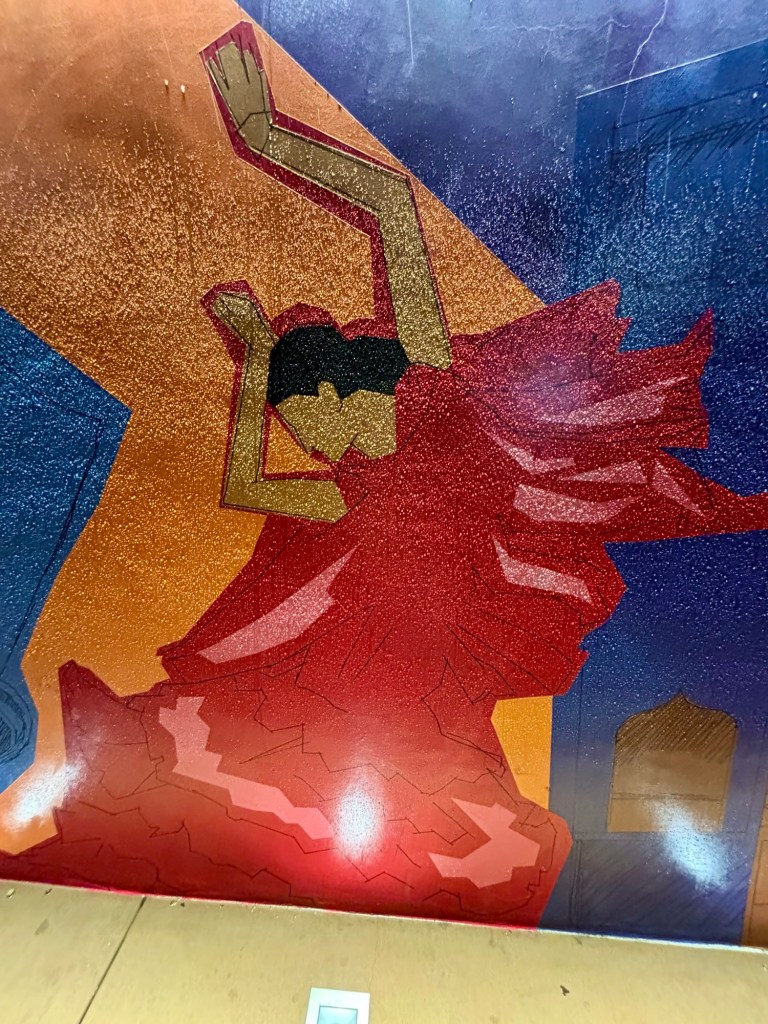


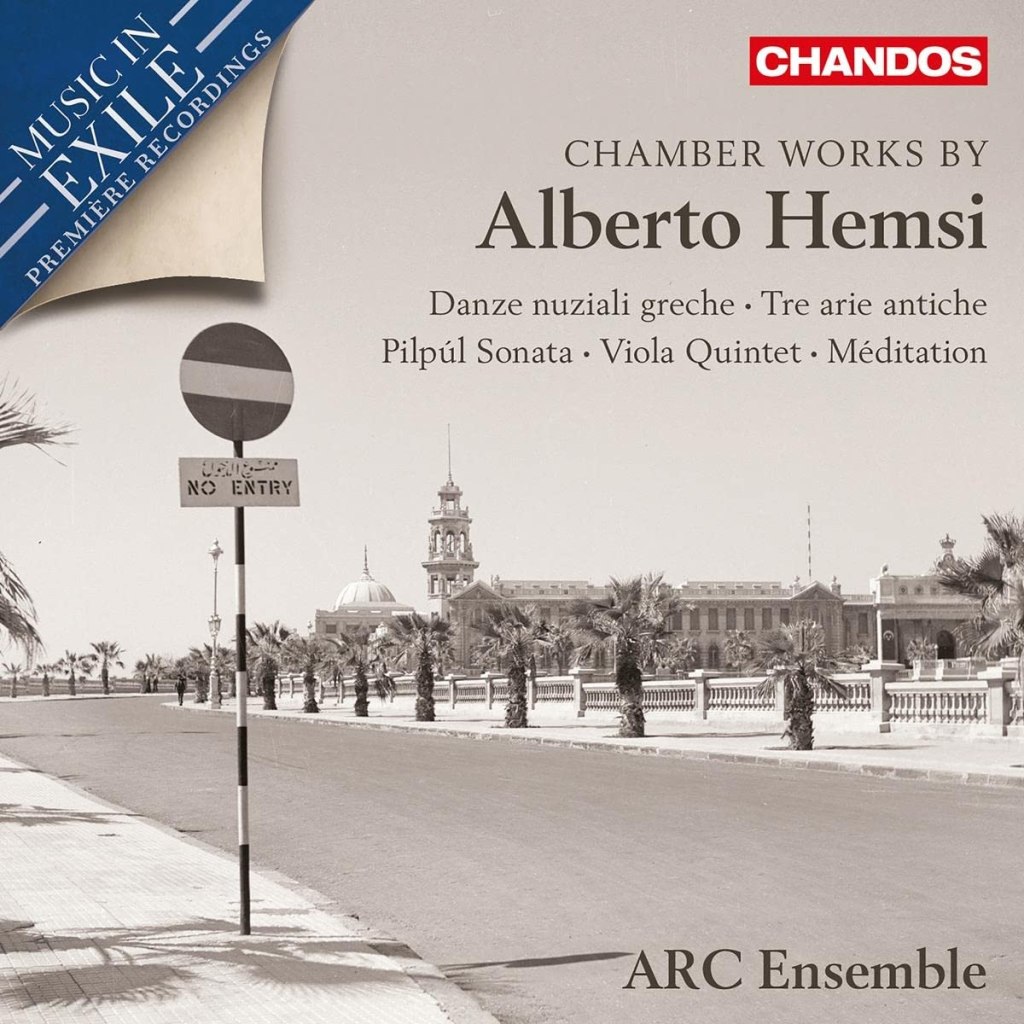
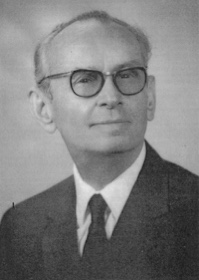




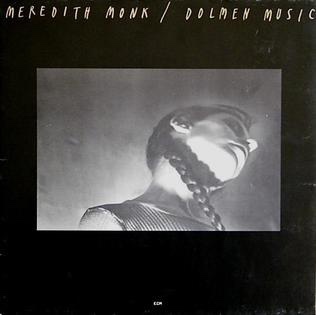


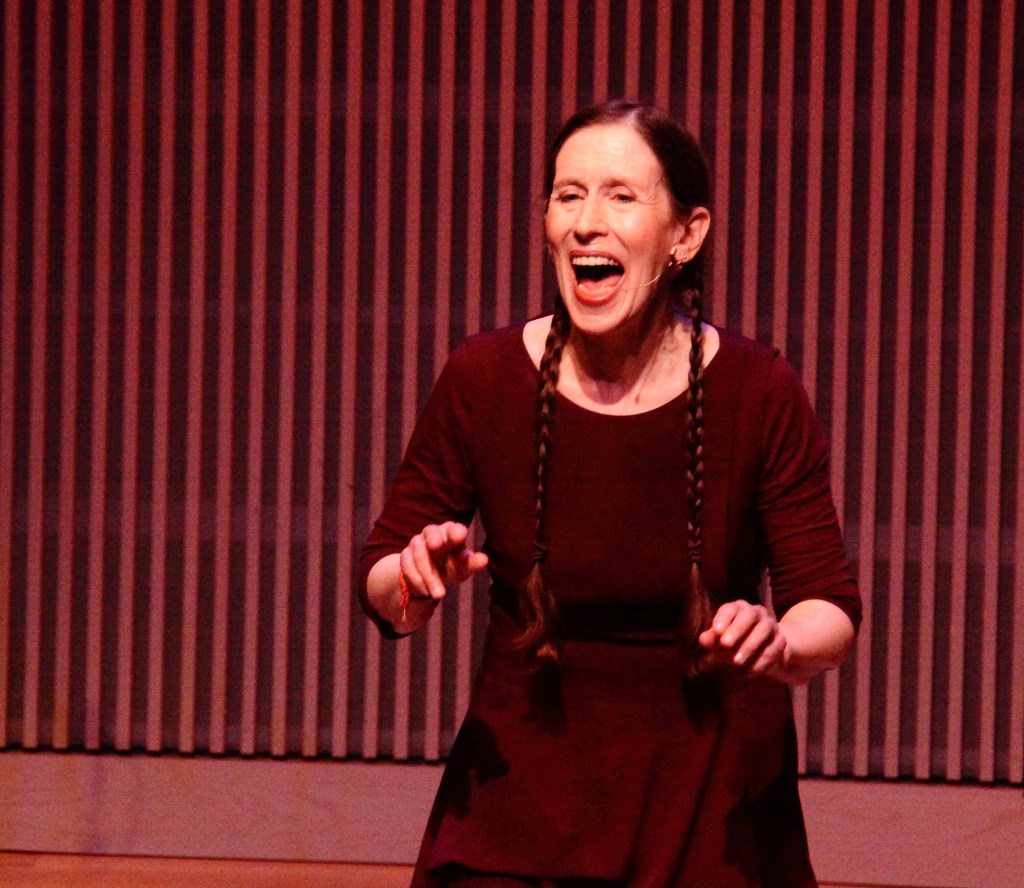
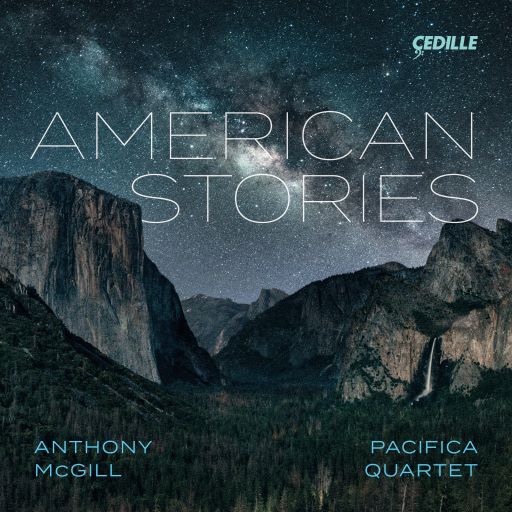


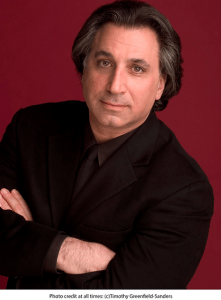


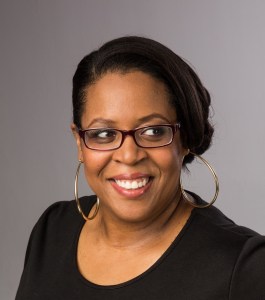
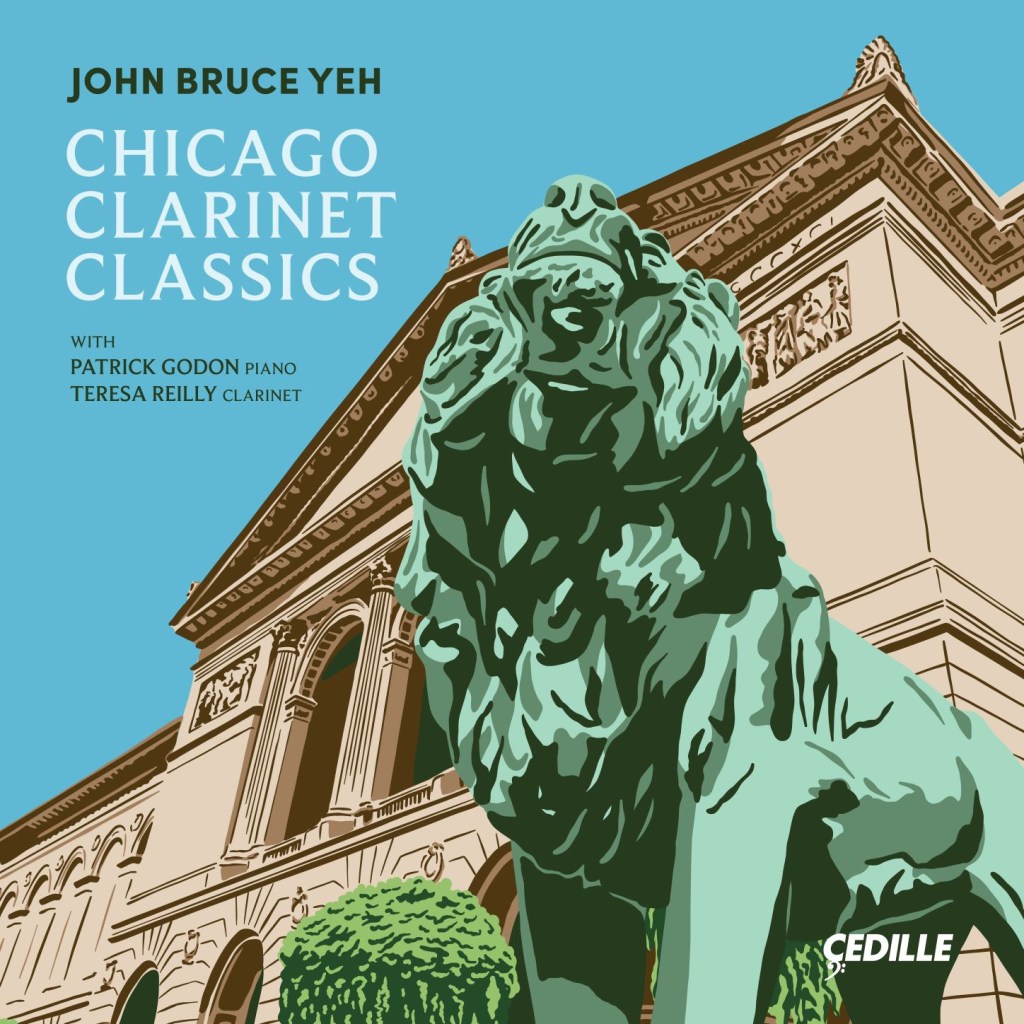

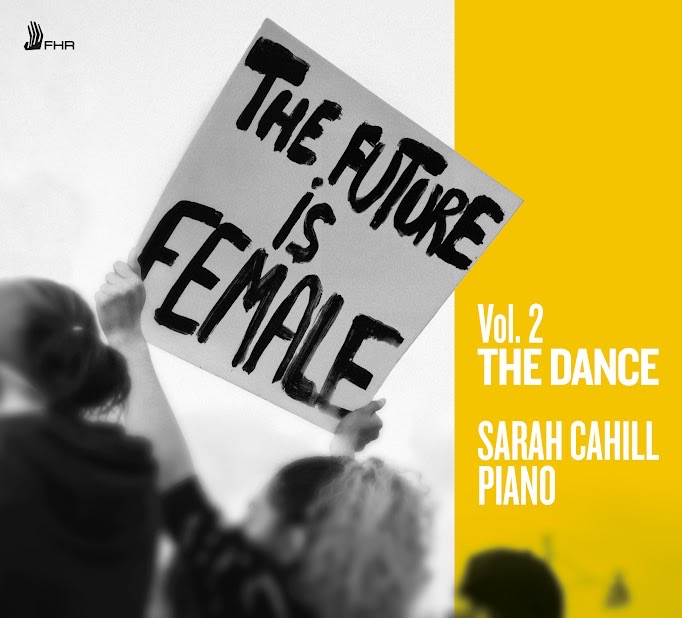

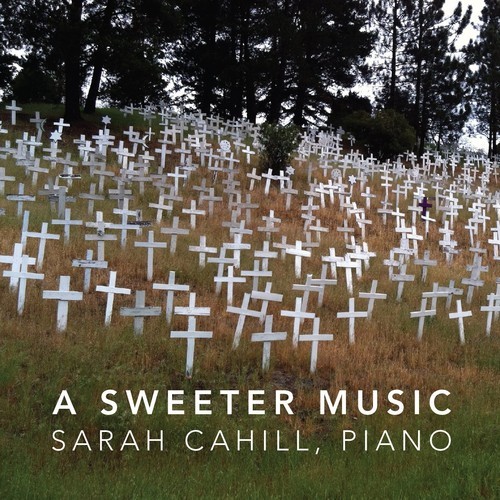


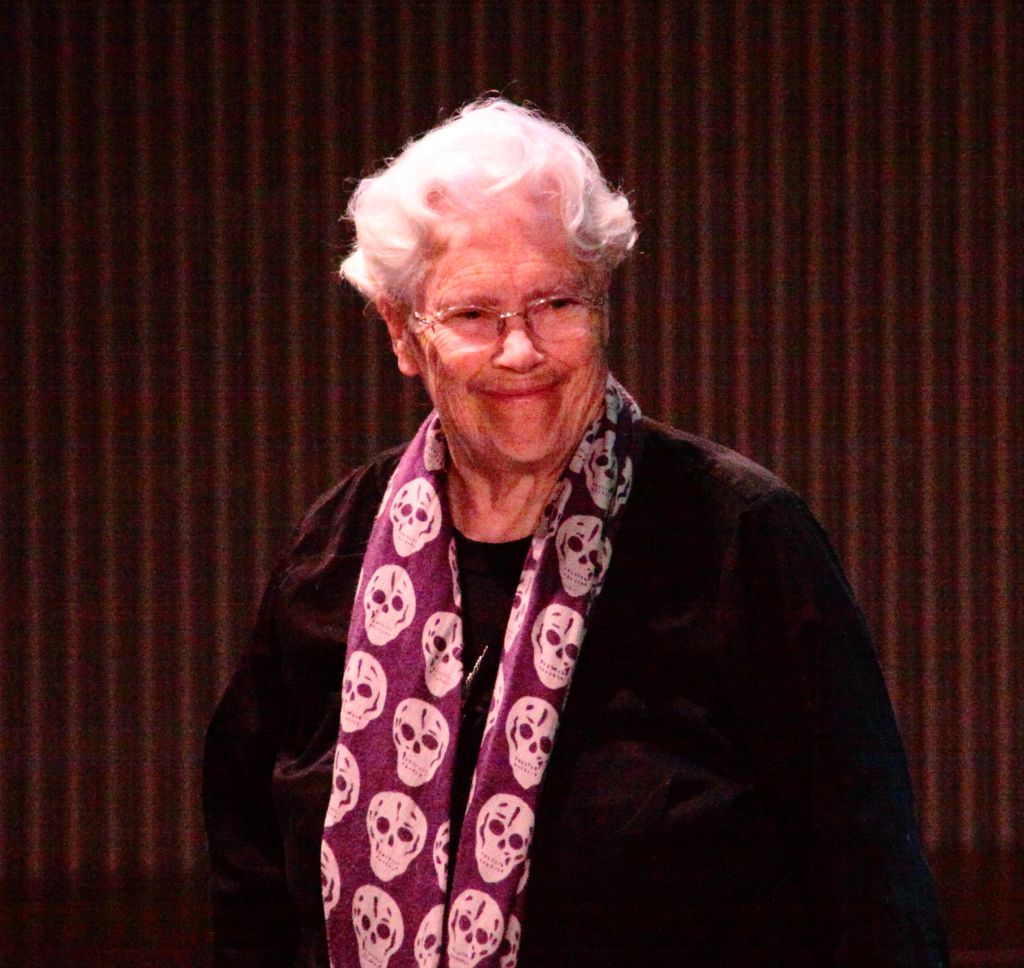

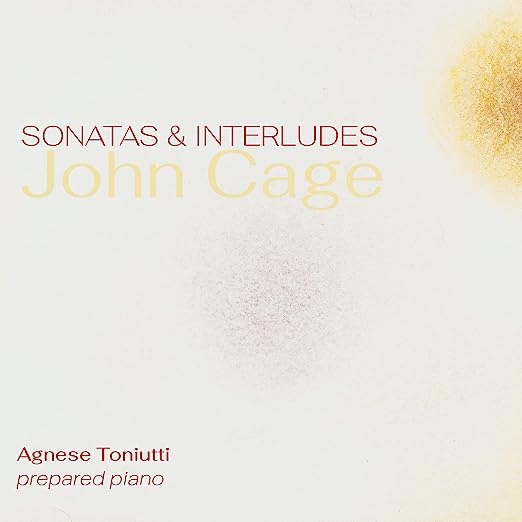


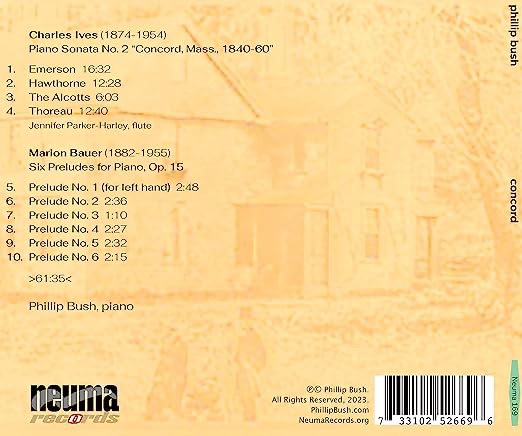




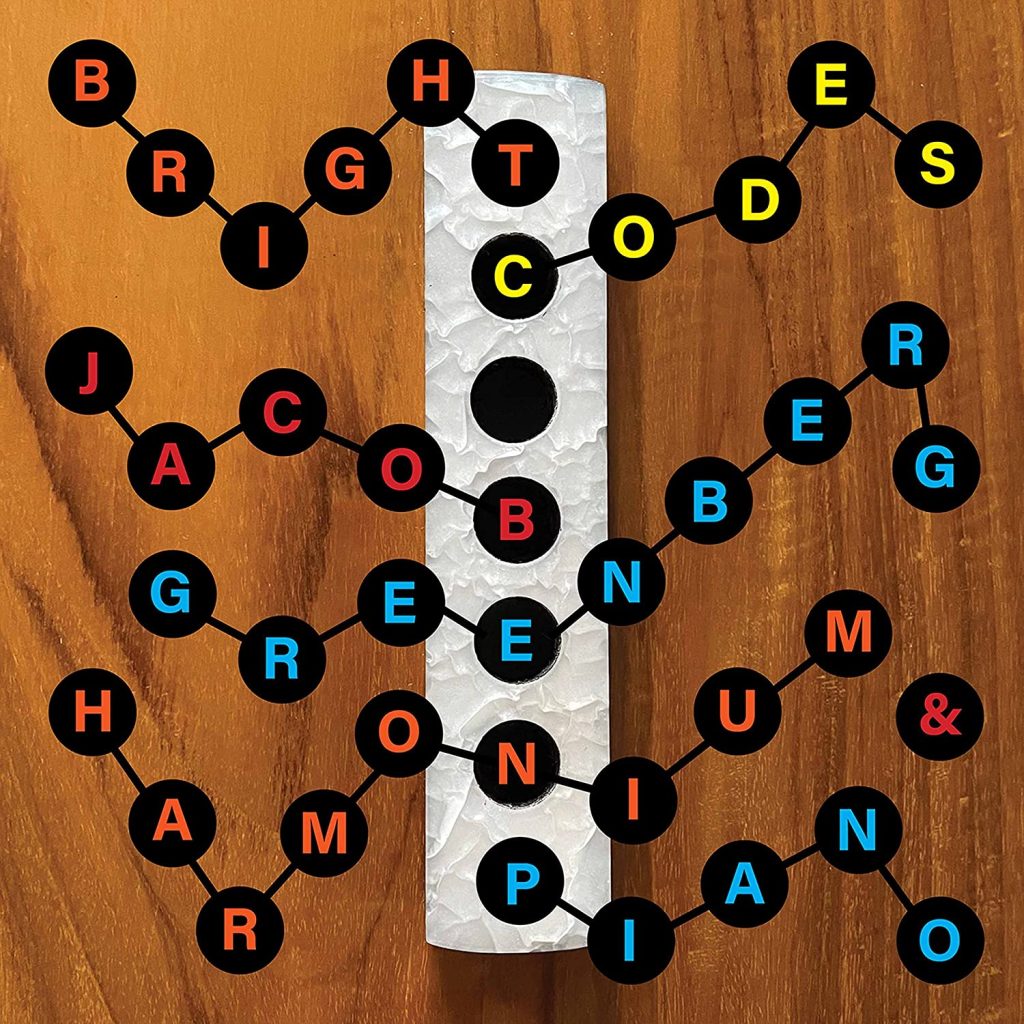


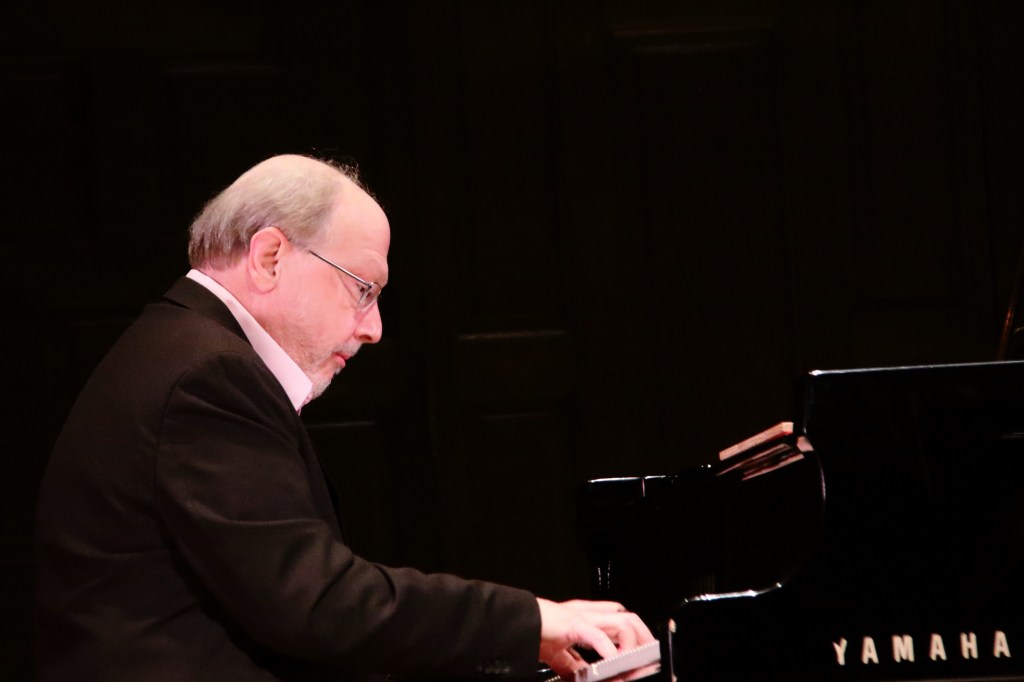
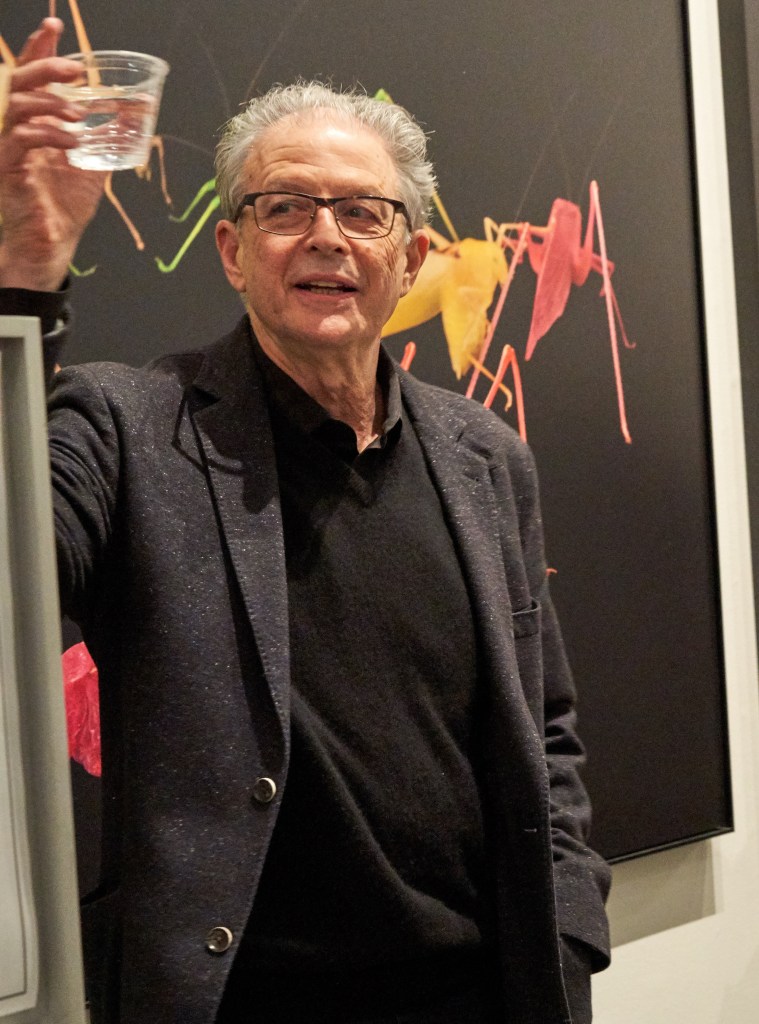
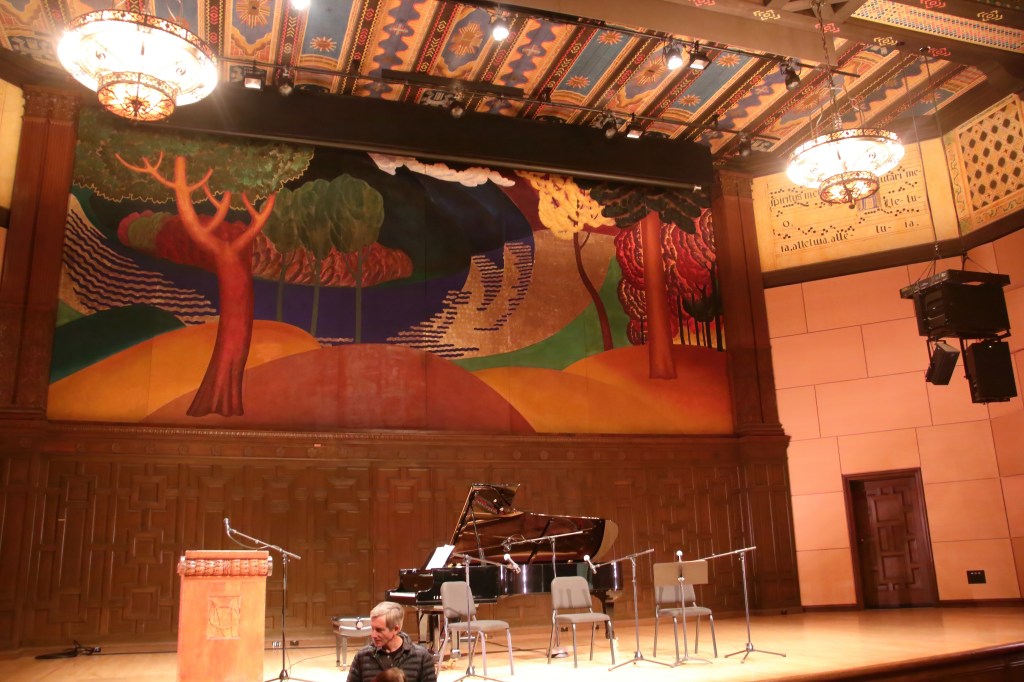


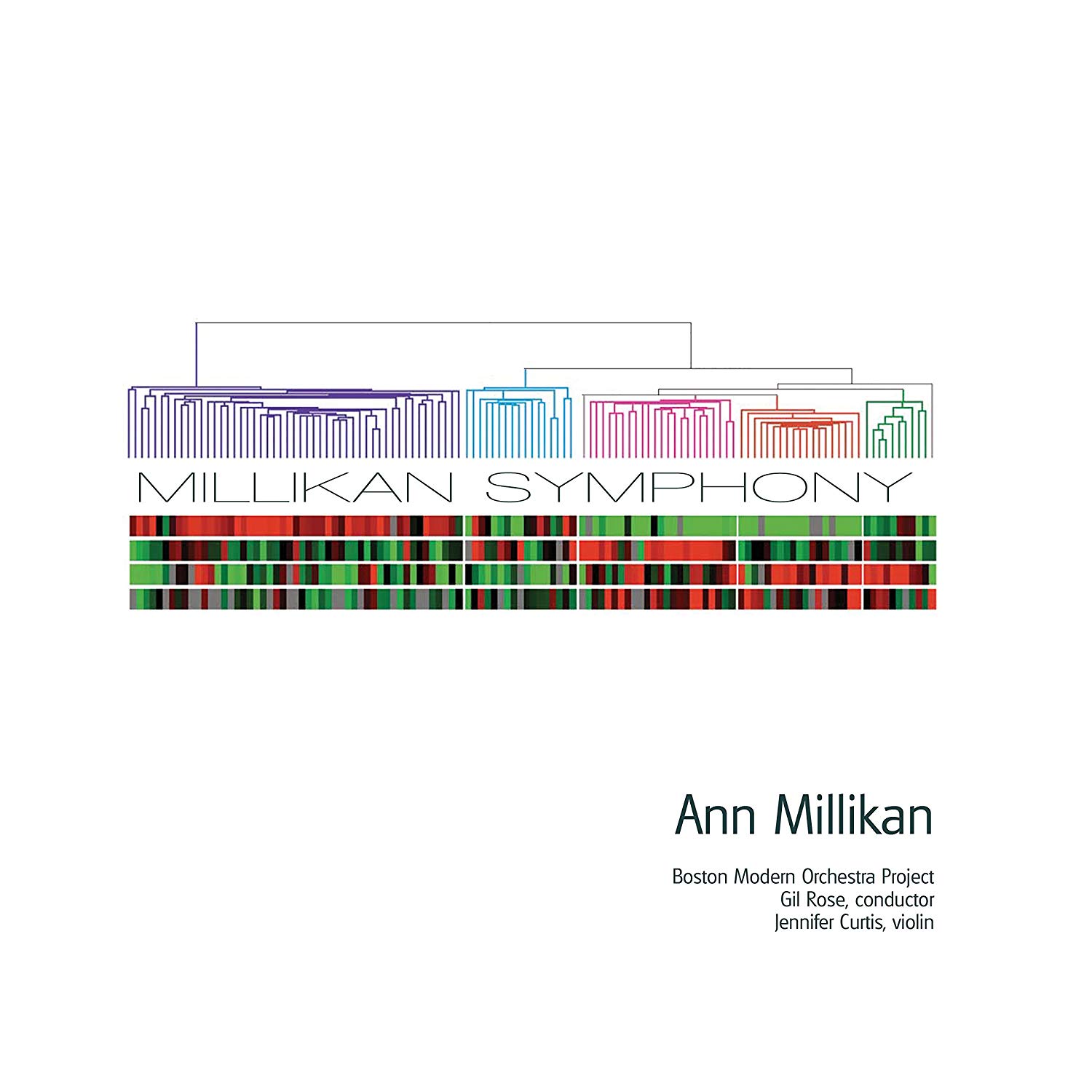




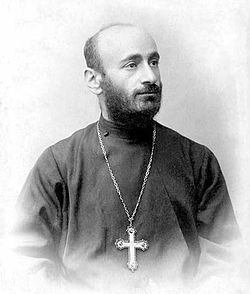


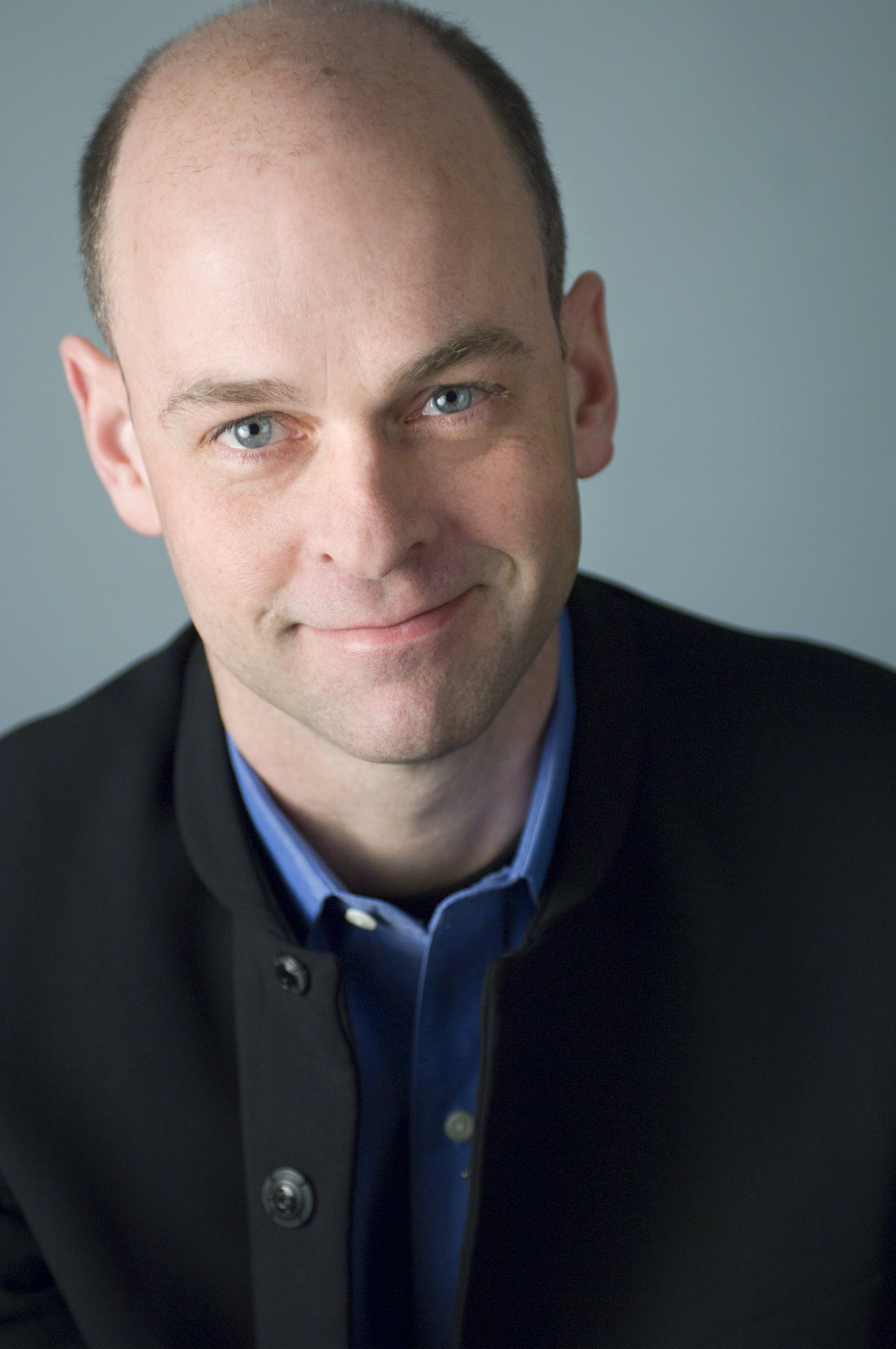


 New Music Buff