Denise Burt’s beautiful design effectively encompasses the scope and meaning of this album in arresting images
Maya Beiser, cellist, Bang on a Can member, listener, composer, innovator, interpreter, and producer. Beiser’s hats are many and each new album traces the musings of a truly interesting artist, ever evolving, revisioning, thinking, growing. She cuts a singular, intelligent, and deeply felt path that is both monolithic and definitive.
Looking back and forward
This latest release on her own Islandia label is another exposition of a powerful musical mind bringing fascinating perspectives, the artist’s singular take on music spanning some 500 years. Beiser is not about “authentic” interpretation (mostly) but rather about lucidly sharing her perspective, her musical visions.
Previous releases gave us her take on living musical icons like Philip Glass and Terry Riley. She also dares to look back upon some of the “sacred cows” of the repertoire like the Bach Cello Suites and Riley’s seminal “In C” among others. Her revisionings are respectful homages and insightful performances that challenge and inform her listeners to maybe hear in a new way. As T.S. Eliot said,
“We shall not cease from exploration And the end of all our exploring Will be to arrive where we started And know the place (or the piece) for the first time”
So it is with the carefully curated selections on this disc. Beginning with a Missy Mazzoli composition featuring vocalist and performance artist Helga Davis (featured most visibly in the most recent iteration of Glass’ “Einstein on the Beach”). Her vocal skills drive these settings of texts by Erin Cressida Wilson. And this piece sets the tone for this album which is both lament and celebration for the experiences of women in history, mythology, and memory.
The first five tracks contain the bittersweet song cycle, Salt, from which the album takes its name. Here the listener is brought into the context of the Biblical story of Lot’s wife, forever imprisoned in a pillar of salt. But, rather than a pedestrian retelling of the tale, this cycle appropriates the context of the story to establish, with painful directness, the tone and direction of what will follow.
Helga Davis (photo from WNYC)
From her mineral prison, a mineral ironically known for its preserving properties, she sings of her crime of looking and remembering. She sings of pain, anger, and sadness, but never with remorse for her “crime”. It is an image that Beiser says lives powerfully in her personal memory. Mazzoli, Davis, and Beiser recontextualize the prisoner as victim, not criminal.
The ghostly images of the women we meet on this album are lamented as well as celebrated for their stories which burn deeply into our collective mythology, into our personal memories. Beiser lovingly dedicates this release first to her daughter, Aurielle Kaminsky, then to the principals whose creativity and energy pervade this album: Missy Mazzoli, Clarice Jensen, Meredith Monk, Erin Cressida Wilson, Helga Davis, Odeya Nani, Beth Morrison, and Christina Jensen.
In Lament to Phaedra, a work by the late British composer John Tavener is heard in an arrangement by Beiser. The 1995 work is sung by Phaedra’s sister Ariadne in response to Phaedra’s suicide by hanging. But here we have a wordless arrangement for cello and electronics that focuses on Tavener’s unique harmonic style and lyrical melodic construction. The result is effectively an affirmation of the lament for her fate.
Then we are treated to yet another transcription of a curiously difficult but very effective use of the early music concept of “hocket”, an interactive counterpoint of two voices. The eponymous Hocket, though vocal in its original form is, like much of Meredith Monk’s work, without a text. Monk’s work is about the voice, or the voices. And her revisioned operatic creations are fed by the mythological streams of women’s stories. This creative arrangement by this artist is an homage to Monk and, by extension, to the women she so beautifully celebrates in her work.
Meredith Monk with Allison Sniffin after a performance of Hocket at the Other Minds Festival in San Francisco (copyright Allan J. Cronin)
Another arrangement follows. It is a Melody from Orfeo ed Euridice, from the late baroque opera by Christopher Willibald Gluck. It is, of course, another ill fated relationship ended by the same infraction of looking and remembering that sealed the fate of Lot’s wife. Here Beiser chooses the gorgeous “Dance of the Blessed Spirits”, another wordless homage that imprints on the listener most effectively.
Next up is yet another wordless work, this one by fellow cellist and composer, Clarice Jensen, whose work has graced these blog pages before in reviews of her singular, drone, minimalist, meditative albums. Whether you call her work “drone” or “minimalism” or whatever you choose, your ears will bask in her meditative sonic ministrations. Jensen’s work, while related by its medium (that of cello and electronics), is a distinctly different style, immersive, meditative, evocative, a sound bath for the listener.
Clarice Jensen (from Jensen Artists page)
From the 21st century we are now transported to 17th century Venice and the work of the early baroque master Claudio Monteverdi. In the only surviving music from his second opera, we hear Ariadne, sister of Phaedra, singing the lament for the sister who had taken her life in shame and sadness.
The penultimate track brings us to this artist’s cultural roots with a song by Yedidya Admon to lyrics by Yitzchak Shenhar.
My Field (Shedemati)
My field, At dawn I sowed it in tears, Let the prayer of the farmer be heard! My field, It is saturated with dew, It is intoxicated by the light of the sun. The grain bends low in front of the reaper. The strides are long, The burnished scythe is raised high.
Odeya Nini provides the voice in this “reimagining“ of this classic song of sadness and lament by the lowly farmer imagined by the poet.
Odeya Nini (unknown copyright)
Fittingly, this last track is about death, endings. It is Beiser’s arrangement of Henry Purcell’s “When I am laid in the earth” from his opera, Dido and Aeneas. The text:
When I am laid, am laid in earth, May my wrongs create No trouble, no trouble in thy breast; Remember me, remember me, but ah! forget my fate. Remember me, but ah! forget my fate.
But forgetting is not allowed here. Beiser begs us to remember. And we cannot avert our ears or eyes.
Santa Barbara conductor Nir Kabaretti (photo copyright David Bazemore)
It was the day before Passover and all through the lovely acoustics of the Granada Theater, nostalgia was afoot. It came in the form of a Mozart Overture, a Mahler Symphony, and some new music for clarinet, the klezmer clarinet of David Krakauer. (N.B. Klezmer is a style of playing common to the Ashkenazi Jewish communities of Eastern Europe and Russia).
Maestro Kabaretti’s thoughtfully crafted program featured the integration on non-western vernacular (folk) musics into the western classical idiom. The incorporation of an age’s popular music into the newly written concert music of that era is a time honored tradition in music history.
Today’s concert would feature Wolfgang Amadeus Mozart’s imitation of the exotic music (to Viennese audiences) of Turkish Janissary music in the overture to his opera, “The Abduction from the Seraglio”. The plot consists of a story that involves a Turkish Pasha who has kidnapped the lover of the leading man. (Spoiler: He rescues her).
There was a personal nostalgia in that the first opera recording I bought was the budget LP of the Josef Krips conducted performance of that opera. The overture quotes some of the music of the opera and sets the exotic locale with the imitation of Turkish music.
The relative exoticism of Turkish music was imitated by Mozart in his 5th Violin Concerto, subtitled “Turkish”, as well. Listeners may recall the imitation of Turkish martial music in the finale of Beethoven’s 9th Symphony (just after the cherub stands before God). Mozart’s inclusion of piccolo, triangle, big drum, and cymbals (rarely seen in classical era orchestras) typify the European imitation of this ethnic music.
Mozart’s overture works well as a standalone piece and Kabaretti’s Santa Barbarans stimulated at least this listener’s sense of nostalgia in a beautifully crafted reading of this music. From the familiar opening notes this overture this listener was transported to nostalgic reverie and simultaneously enthralled by the energetic reading of the work. It was a delightful balance of both nostalgia and an opportunity to somehow hear this work anew.
Clarinetist David Krakauer (c)Linus Lintner Fotografie
What followed that delightful overture brought featured performer David Krakauer to the stage for a performance of a new (2018) concerto for klezmer clarinet. But before that, we were treated to what Krakauer described as “an arrangement” of a classic klezmer wedding tune. The affably chatty Krakauer is apparently possessed of a genuine humility here because this was virtually a mini concerto for clarinet and string orchestra whose style had some resemblance to the Mahler Symphony programmed post intermission.
Krakauer is a seriously accomplished musician, composer, musicologist, and teacher. His technical and interpretive skills are of Olympian dimension and his ability to relate to fellow musicians and the audience were a joy to behold. Readers of this blog might recall an earlier review of yet another klezmer concerto also championed by Krakauer. You can read that blog entry here.
The youngest music by the youngest composer on the program was next. Wlad Marhulets (1986- ) is a Polish born and educated composer. His name had been unfamiliar to me but a quick look at his website and a few listens on YouTube revealed this man to be a marvelously skilled and creative composer. Put this man’s name on your listener’s radar.
Doubtless our soloist had some input on the performance of this concerto but Marhulets appears to have an in depth understanding of klezmer performance along with a solid grounding in western classical music and a marvelously nuanced skill at orchestration. This is a substantial concerto and a great addition to the repertory.
Like the Mahler Symphony which would follow in the second half of the concert, Mr. Marhulets demonstrated a range of compositional skills. He can evoke humor, terror, nostalgia, joy. He handles a large orchestra augmented by an electric bass guitar and a drum kit. And he has a subtle but effective sense of orchestral color. The soloist, who has a lot to do, winds in and out of passages that pit his clarinet variously against the full orchestra and in duet pairings, sometimes fleetingly, that suggest images of pub, dance hall, and street concerts. All of these the natural milieu of Klezmer music.
The concerto began loudly, raucously, and assertively. The soloist navigated the complex rhythms and subtle balances of texture as only a master musician can do. Kabaretti and his fine orchestra were clearly up to the significant challenges of this music and clearly enjoyed their labors.
The loud, declarative, opening gave way to a lovely and lyrical slow movement followed by a long and engaging cadenza, sometimes punctuated briefly at times by the orchestra. It then led into a really fun (though hardly trite) finale.
Following a richly deserved standing ovation, Krakauer and the orchestra gifted the audience with an encore. Echoes of klezmer in the many moods evoked by this afternoon’s music making left this listener reflecting on the chaos in our world here, in this beautiful hall, in this beautiful city, on the eve of Passover. I fancy that there is a gentle activism here, one in which the sharing of the beauty of a culture’s esteemed artists (composers and performers) acts as a proud display of some of the best that that culture has to offer. The quality of the music and the music making can’t fix the world’s problems but they can give us hope and joy. Great art elevates the soul. At least that’s what this reviewer felt.
The intermission was needed to replenish listeners’ emotional reserves for the second half. No doubt the musicians needed to recharge as well.
The Mahler First Symphony (1888) triggers more personal nostalgia for two reasons. One, my first Mahler purchase was the Bruno Walter reading of this and the ninth symphony. Second, I will forever associate that first movement depicting dawn in its opening. Astute listeners may recognize television and film composer Alexander Courage’s appropriation of this music in his now iconic theme for the original Star Trek series (which debuted in 1964 when your humble reviewer was 9 years old). I would encounter Mahler some years later.
It is difficult over 100 years after the symphony’s premiere to understand how radical this music seemed to players and listeners. Its Budapest premiere has been described as a disaster mediated by uncooperative musicians in the orchestra and an unsympathetic audience. After his death in 1911, Mahler’s compositional star rose to new heights when the late, great Leonard Bernstein championed his work during his long and fruitful career, even reintroducing Mahler’s music to the Vienna of its beginnings. This is the Vienna where Maestro Kabaretti was trained. And he gets this music deeply.
To be fair, this piece presents many challenges for players and conductors but, when it is well done, it thrills audiences. Maestro Kabaretti and his Santa Barbarans delivered as fine a performance of this symphony that this reviewer has heard. It was positively thrilling and, unlike the musicians who played in the disastrous premiere, the Santa Barbara Symphony clearly enjoyed their hard work and respected their leader.
This was a thrilling and invigorating concert experience. The hometown orchestra put in a world class performance and our esteemed soloist was matched in his expertise by their skills. The nearly full house was most obviously pleased as was this reviewer.
It is the duty of performers to infuse their performance with their nuances of interpretive skills until they (and, hopefully, composer and audience) are satisfied that they are doing justice to the music. When the music at hand challenges established norms and expectations that task becomes quite large. One need only look at the plethora of performances of Terry Riley’s seminal “In C” to realize that the nature and structure of this piece invites, by design as it were, experimentation with instrumentation and experimentation with the music itself which consists of 51 short notated cells.
This is the whole score
The original release in 1968 has been followed by at least 40 recordings reflecting choices made related to tempo, instrumentation, etc. In an earlier review of the “In C” version by Brooklyn Raga Massive, I addressed the inherently heretical nature of this music in light of the etymology of the term “heresy” (derived from “hairesis”, the Greek word for decision or choice). And this music demands intelligent choices.
This 1964 composition has been definitively analyzed in Robert Carl’s fine volume, “Terry Riley’s in C” so interested readers should seek out this book for definitive analytical detail. My main point here is that the musics elicits the making of choices much more so than the traditional western classical notated score. And the present release says nearly as much about the performer/producer, as it does about the composer. It is Maya Beiser’s expertise on her instrument, certainly. It is her experience performing at the center of the new music performance scene to have a definitive grasp of the pluralities that are the nature of new music. And, finally, it is her daring to make choices that threaten to make her not merely a performer but virtually a co-composer. All that with managing to flatter the composer and engage adventurous listeners. She did something similar in her Philip Glass album. She even did it with her recording of the Bach cello suites. Now that’s heresy at its best.
There can never be a definitive recording of this work. That is a huge part of this music’s charms as well as its importance as a challenge to the very nature of western classical music. The music itself is heretical.
Not all listeners may appreciate this significantly new, innovative, and very personal performance but the composer shared an appreciative blurb on the album’s back cover and the reviews this writer has seen have been unanimously positive.
Beiser’s use of harmonics and, indeed, quite a few of her instrument’s extended capabilities (pizzicati, harmonics, etc) all conspire to her revisioning of this music. On top of that she even uses her own voice and employs two percussionists to round out her orchestration of the work.
The percussion accentuates the ritual nature of the music. The harmonics and multiphonics place this version in the spectral realm of new music and even suggested to this listener the Phil Spector “wall of sound”, another hallmark of some ritual musics.
It is an album that invites repeated hearings to grasp the subtleties and insights of this interpretation. Beiser here, even at her most transgressive, is not seeking to supplant other interpretations, rather she simply shows the power of this landmark work to inspire another generation of talented performers (and enlightened listeners, for that matter) to experience the enduring cultural significance of this masterpiece. Brava, Maya! And sincere thanks, Terry.
Attempts to meld pop, jazz, and classical music are abundant but many, like some of the poorly done string quartet transcriptions (there are a few good ones but most are guaranteed to offend pop and classical audiences alike). But this set of chamber group incorporations of essentially “pop” music is among the most engaging and convincing.
Here the truly fabulous Reed player, composer, conductor, and Bang on a Can member Evan Ziporyn takes listeners on a journey which, to this listener, are a modern equivalent of Aaron Copland’s “Old American Songs” and, for that matter, Luciano Berio’s “Folksongs”. It is a personal selection with (sometimes) quirky but ultimately convincing transcriptions which rise to the level of full blown compositions that function as an homage to the chosen songs.
Actually these “chamber transcriptions” are for multiple clarinets, all played by Maestro Ziporyn. Doubtless many will hear echoes of Steve Reich’s multitracked instrument pieces in his “counterpoint” series. In that sense this is also a set of pieces that does homage to Reich’s work as well.
Tracks 01 UNCLE ALBERT/ADMIRAL HALSEY (5:05) (Wings) Paul & Linda McCartney 02 RIDE CAPTAIN RIDE (5:07) (Blues Image) Mike Pinera, Frank Konte 03 WOODSTOCK (5:32) (Joni Mitchell) Joni Mitchell 04 ALONG COMES MARY (3:00) (The Association) Tandyn Almer 05 WOODSTOCK IMPROVISATION/VILLANOVA JUNCTION (6:42) 06 SHINING STAR (2:17) (Earth Wind & Fire) P. Bailey, L. Dunn, V. White, M. White, S. Burke 07 THAT’S THE WAY OF THE WORLD (5:56) (Earth Wind & Fire) C.Stepney, V. White, M. White 08 PORTRAIT OF TRACY (2:23) (Jaco Pastorius) Jaco Pastorius 09 I LIVE ABOVE THE HOBBY SHOP (3:43) (McFabulous) Benjamin McFadden 10 DEADBEAT CLUB (4:12) (B-52s) C. Wilson, F. Schneider, K. Strickland, K. Pierson 11 STRAWBERRY LETTER #23 (5:24) (Brothers Johnson) Shuggie Otis 12 YOUR GOLD TEETH II (4:03) (Steely Dan) Walter Becker & Donald Fagen
Ziporyn, born in 1959, played in Reich’s ensemble and that sound world is a surprisingly effective one for Ziporyn to share the pop music of his era. Certainly this music can benefit from musicological analysis but it speaks clearly and entertainingly as well to the casual listener. It is helpful but not absolutely necessary that listeners know the music upon which these pieces are based but this may have significant nostalgia for those who do.
Mr. Ziporyn’s familiarity with a wide variety of music ranging from avant garde classical to jazz and pop along with his composer’s acumen of form combine to make this one of, at least for this writer, most convincing and satisfying efforts to appropriate (or perhaps more like simply incorporate) some familiar pop standards. This is a marvelously entertaining album.
Listeners of a certain age and those versed in recent classical music history will recall another fine pair of Armenian American musicians (also sisters) whose performances and recordings introduced many to the work of Armenian American composer Alan Hovhaness (1911-2001) as well as John Cage, Aram Khachaturian, and others. I am speaking of pianist Maro Ajemian (1921-1978) and her sister, violinist Anahid Ajemian (1924-2016). And these fine musicians (pianist Marta Aznavoorian and cellist Ani Aznavoorian) carry on some generations later along a similar path, honoring their heritage and promoting its art.
The disc under consideration is this beautiful sampling of Armenian composers of the past 100 years (or so) beginning with Komitas Vartabed (1869-1935), a monk, composer, historian, and ethnomusicologist. Armenian music enters modernism and the twentieth century via Komitas. This is followed by music of four Soviet era composers and three contemporary era composers.
The liner notes are by local historian and producer Gary Peter Rejebian and the Aznavoorian sisters. In this ,their debut album, they speak of their connectedness to Armenian culture personally and musically. In fact Ani’s cello was made in Chicago by her father Peter Aznavoorian. This album is an auspicious debut and an homage to this rich culture.
They begin with five pieces by Soghomon Soghomonian (1869-1935), better known as Komitas Vartabed, the name bestowed upon him after his ordination as a priest in 1894. These are lyrical and beautiful folksong arrangements that grasp the listener immediately. These five pieces ranging in duration from about 1 1/2 minutes to about 4 minutes. These five pieces, four for cello and piano are punctuated by a sad lament for solo piano played as the third track. Komitas, after witnessing 1915 the Armenian genocide, composed no more and, in fact, spent his remaining years in a sanitarium until he died in 1935.
The next two pieces are by one of the best known Armenian composers of the twentieth century, Aram Khachaturian. Though long subsumed into the Soviet straightjacket his individual voice produced many substantial works and his work has done much to preserve and rejuvenate his Armenian culture. These two pieces are not among his best known work but demonstrate his ability to write in smaller forms and, at least in these brief pieces, display his personal style and his love for his native culture.
These are followed by three pieces of another Soviet era composer whose voice is less well known in the United States, Arno Babajanian. Elegy (among the composer’s last works, written in homage after the passing of Aram Khachaturian) is one of two tracks for solo piano on the album and it is followed by Babajanian’s “Aria and Dance” for Cello and Piano. Certainly this is a composer whose works deserve a proper hearing and evaluation. These pieces suggest a composer with a strong voice, another to come out from the Stalinist/Soviet oversight to be heard now with new ears.
Avet Terterian is another Soviet era name whose work is virtually unknown in the west, another whose work deserves at least a second listen. His large three movement sonata for cello and piano (1956) is a major work both in duration and in content. The style is a friendly mid-twentieth century post romantic one that very well may become a regular repertoire item after hearing the powerful and convincing performance documented here.
With the next track we hear the first of the “recent” works on this recording, Serj Kradjian’s transcription of a traditional song, “Sari Siroun Yar”.
The all too brief experience of this small work by another major Soviet era composer, Alexander Arutiunian, this charming Impromptu (1948, one of his earliest compositions) is a beautiful piece but it is a mere appetizer to lead a listener to hear more from this composer who has produced work in pretty much all genres big and small. Arutiunian’s work deserves some new attention. Best known for his 1950 Trumpet Concerto, his output was large and he composed in large and small forms that demand the attention of post Soviet ears.
Back to the 21 st century with this next track, Vache Sharafyan’s Petrified Dance (2017). Sharafyan was a student of Terterian and this work was adapted from a film score.
The Aznavoorians end with the world premiere recording of “Mount Ararat”, a paean to the Holy Mountain that dominates the landscape in the Armenian capitol city of Yerevan. It is the mountain upon which Noah’s Ark was said to have come to rest after the flood. Like Mount Fuji to the Japanese, Mount Everest to the Tibetans, and “Tahoma”, (better known now as Mount Rainier) to the Puyallup and other Native American tribes of the Pacific Northwest, Mount Ararat is considered a holy mountain.
Peter Boyer‘s “Mount Ararat” (2021) was written for the Aznavoorian Duo. Boyer is the only non-Armenian represented here but his composition embraces the spirit of Armenian music and this is a dramatic and heartfelt love song both to the holy mountain and these musicians whose performance provides an ecstatic and virtuosic finale to this fine disc.
Microtones and alternate tuning systems are increasingly one of the most significant streams in new classical music as well as in the revisioning of old classical music to capture the sound of the music in its original milieu, which is not current performance practice. In the liner notes John Schneider says that hearing Bach in 12 tone equal temperament (current performance practice) is analogous to “exhibiting Rembrandt paintings with wax paper taped over them.”
That image conjures for me a childhood memory of my mother bringing home some of the promotional gimmicks by one of the Chicago based supermarkets. It involved prints of famous paintings with a wax textured surface to imitate the look of oil paint on canvas. It’s a tortured metaphor for the present recording but it speaks of “cheesy imitation”. The present recording is one of an increasing number of recordings done with the scholarship of the very complex area of tuning, the surprisingly varied types of scales devised to solve harmonic complexities that occur due to the physics of sound itself. And by so doing, placing earlier efforts as “cheesy” by contrast.
In fact, Schneider (who kindly sent this disc to me), is one of the scholars at the forefront of recreating the musical scales as they existed at the time of the compositions so to get a clearer idea of how it must have sounded at the time. Toward that end one can now obtain guitars capable of being tuned to the subtleties of the scales. Another such disc was reviewed here. In fact guitarist Dan Lippel, in that recording played one of Mr. Schneider’s guitars.
I am working to learn more about the fascinating field of alternate tuning systems to better understand the various tunings in the flow of new music that comes to my desk. But listeners need not concern themselves with these details. The curious fact for this listener is that, on first hearing, the subtle differences in tunings were not immediately obvious (Well Tempered Kirnberger III on this recording). A better trained musical ear would doubtless hear these differences much sooner than I had but I have noticed that I have begun to hear these subtleties having been listening to this disc and some of the similar efforts on the aforementioned Lippel recordings and other titles on Mr. Schneider’s fine Microfest label. It seems like a sort of learning curve in which my brain learns to process these sounds and to hear them as more natural rather than altered.
I apologize for all this chatter but this album is not just about Bach, it is about hearing Bach as he heard it, freed from the shackles of the dominant western paradigms of how to tune a scale. It is a revelation but a gentle one whose radiance is clearer in the light of the retuning of the scale, removing the “wax paper” of the familiar western tuning to reveal a clarity not heard since the composer’s time. It is analogous to the 2018 restoration of the Rose Window (1210) in Chartres Cathedral bringing light in ways not seen in a very long time.
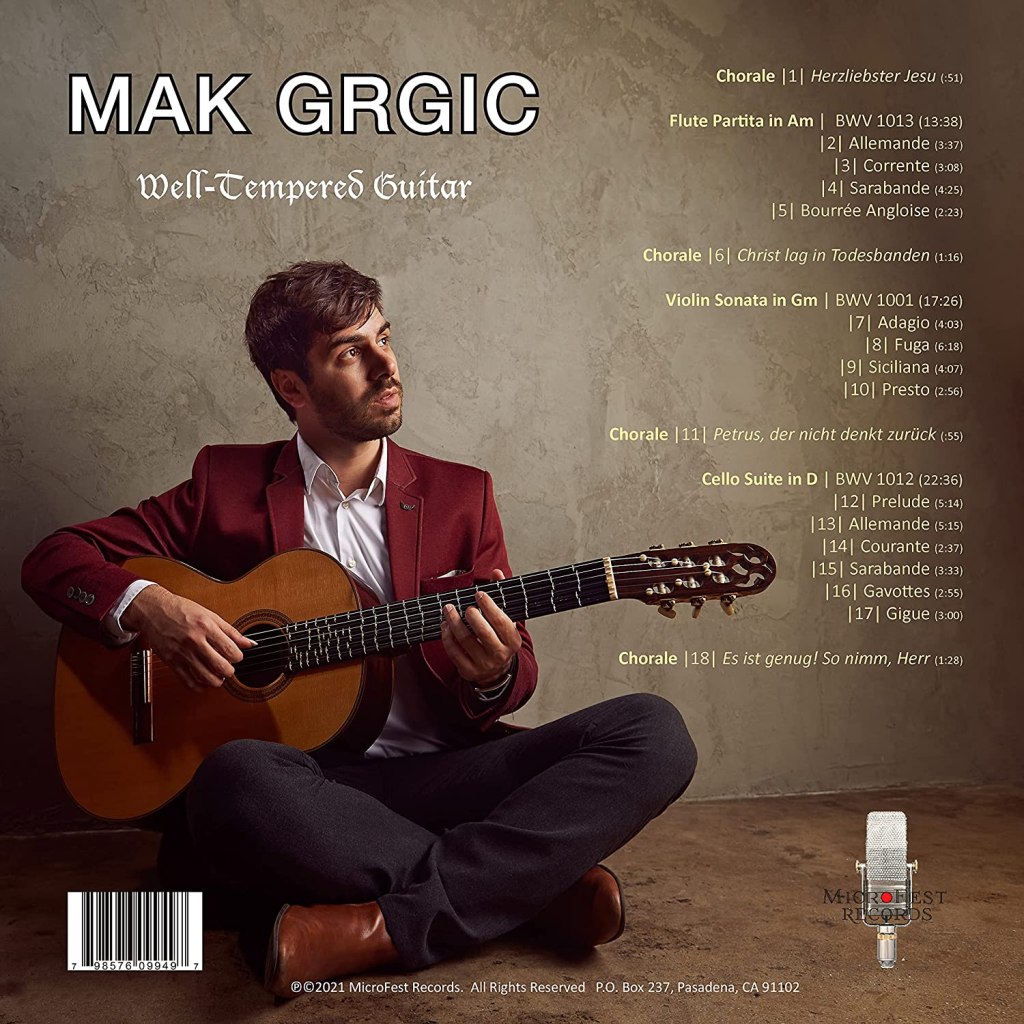
The fine Slovenian guitarist, Mak Grgic is a new name to this writer but one I hope to hear from again. In his selection of repertoire as well as his distinctive playing he makes a compelling and loving case for this music. His well organized web site details his work as musician, teacher, musicologist, composer, and international performer. This release is (by discogs) his seventh appearance on CD and his second recording for Microfest Records.
These are apparently Grgic’s transcriptions, not the “usual suspects” one might expect from a new Bach recording with the exception of the Cello Suite in D. This is apparently a very personal selection of music chosen with curational care. I’ve included a photo of the back cover to show the unique selections.
The Rose Window depicts the revelation and the final judgement of mankind. The present audio document is a gentle revelation but doubtless not the final word on Bach. But the scholarship is fascinating and the sound simply gorgeous. The wax paper has been removed.
Were it not for the wishes of some of my valued readers I would not produce such a list. It has no more validity other than, “These are my personal choices”. But there is some joy to be had in contemplating these past 12 months as I have lived them on this blog. So here goes.
My home base is in California, about 90 miles north of Los Angeles though I sometimes travel for work
First I have to tell everyone that March, 2022 will mark the 10th anniversary of this blog, a venture which has been a rich and exciting one. Future blogs will soon include, in addition to album/concert reviews, some articles on subjects which I hope will be of interest to the select group of people who read this material and who share my interest in this music (which I know can be anywhere from difficult to repulsive to many ears). But I have deduced that my readers are my community, a community of kindred spirits freed from the boundaries of geography, a number rather larger than I had imagined was possible and one that I’ve come to cherish. Bravo to all of you out there.
Since February of 2021 I have worked periodically in Washington State, not in a cabin in Mt. Rainier National Park but in Tacoma, just south of Seattle.
COVID 19 has reduced the number of live performances worldwide and I have not attended a live performance since early 2020. But, happily, musicians have continued to produce some amazing work, some of which gets sent to me, and a portion of that gets to be subjected to the analytic scrutiny of my blog.
My lack of attention to any music should never be construed as deprecatory, rather it is simply a matter of limited time to listen. So if I have provided a modicum of understanding or even just alerted someone to something new I am pleased and if ever I have offended, I apologize. All this is my personal celebration of art which has enhanced my spirit and which I want to share with others. Look what Ive found!!!
So, to the task at hand (the “best of” part):
The formula I’ve developed to generate this “favorites retrospective” has been to utilize WordPress’ useful statistics and look at the top viewed posts. From these most visited (and presumably most read) articles I produce a list of ten or so of my greatest hits from there. Please note that there are posts which have had and continue to have a fairly large readership from previous years and they’re not necessarily the ones I might have expected but the stats demand their inclusion here.
Following that I then toss in a few which are my personal faves (please read them) to produce what I hope is a reasonably cogent and readable list. Following my own description of my guiding principles I endeavor to present the perspective of person whose day job and energies are spent in decidedly non-musical efforts but whose interest and passion for new music drives this blog where I share those interests.
As a largely self taught writer (and sometime composer) I qualify my opinions as being those of an educated listener whose allegiances are to what I perceive as pleasing and artistically ideal based on my personal perception of the composer’s/performer’s intent. I am not a voting member for the Grammys and I receive no compensation for favorable reviews. I have the hope/belief that my blogs will ultimately garner a few more listens or performances of art that I hope brings my readers at least some of the joy I feel.
New Music Buff’s Best of 2021
As of this writing I have published 37 blog posts in 2021. COVID, job and personal stressors have resulted in my failing to post at all in December, 2020, January, June, and July of 2021. And only one post in February, 2021. Surprisingly I have managed to get just over 9300 views so far this year (a little more views than last year actually) and it is my plan to publish 4-5 blogs per month going forward into my tenth year.
Me with my listening buddy, Clyde
Not surprisingly, most of my readers are from the United States but I’m pleased to say that I’ve had hits from 192 countries at last count. Thanks to all my readers, apologies to the many countries who didn’t make the cut this year (you’re all welcome to try again in 2022). So, following the United States here are the subsequent top 25 countries who have viewed the blog:
Canada, United Kingdom, Germany, China, France, Netherlands, Spain, Australia, Ireland, India, Italy, Turkey, Nigeria, Japan, Brazil, South Korea, Denmark, Belgium, Sweden, Finland, Russia, Poland, Philippines, Ghana, Norway.
Top Ten Most Read of 2021
The following are the most seen articles of 2021. Some of these are articles whose popularity surprise me as they were written some time ago and are not necessarily, in my opinion, my best work. But readership is readership and I am grateful for that.
Top article, Linda Twine, a Musician You Should Know. Twine is a musician and composer who has worked for some years in New York theater. I chose to profile her and I guess she is well liked because this article from 2018 is one of my top performers. Kudos, Ms. Twine.
Next up is, The Three Black Countertenors, an article suggested by my friend Bill Doggett whose website is a must visit for anyone interested in black classical musicians. This one, from 2014, continues to find readers. It is about the first time three black countertenors appeared on the same stage. Countertenors are themselves a vocal minority when considered in the company of sopranos, baritones, tenors, contraltos, and basses. Being black adds another level of minority in the world of operatic voices so this was indeed historic.
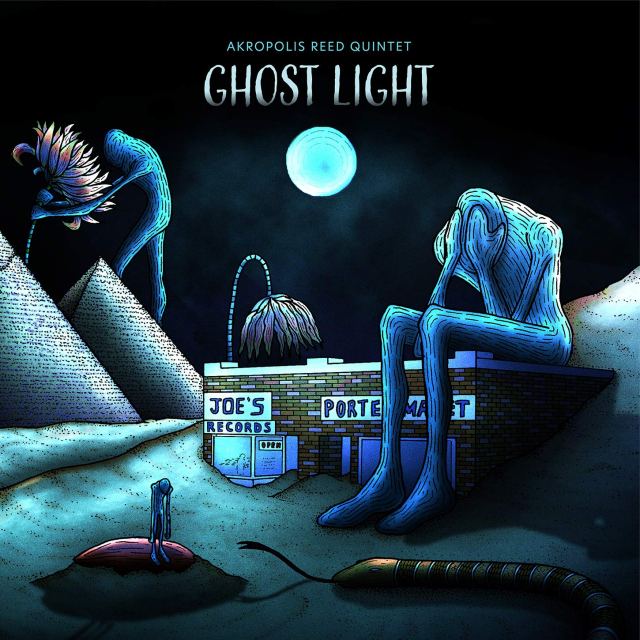
Art and the Reclamation of History is the first of the articles written this year to make the top ten most read. It is about a fabulous album and I hope more people read about it. This Detroit based reed quintet is doing something truly innovative. You really need to hear this.
Centaur CRC 3836
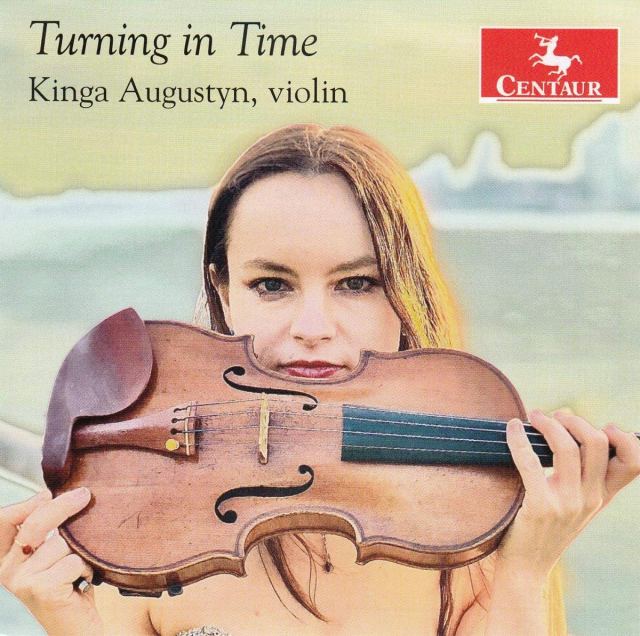
Number four is another from this past year, Kinga Augustyn Tackles the Moderns. This album, kindly sent to me by the artist is worth your time if you like modern music. This young Polish/American violinist has both technique and vision. She is definitely an artist to watch.
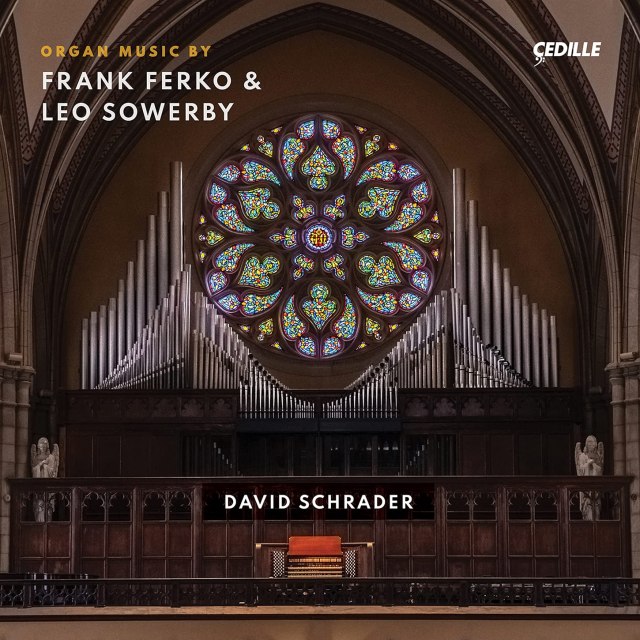
Number five is a truly fabulous album from Cedille records, David Schrader Plays Sowerby and Ferko. This double CD just fires on all cylinders, a fine artist, excellent recording, interesting and engaging repertoire, amazing photography, excellent liner notes, and love for all things Chicago. This one is a major classic release.
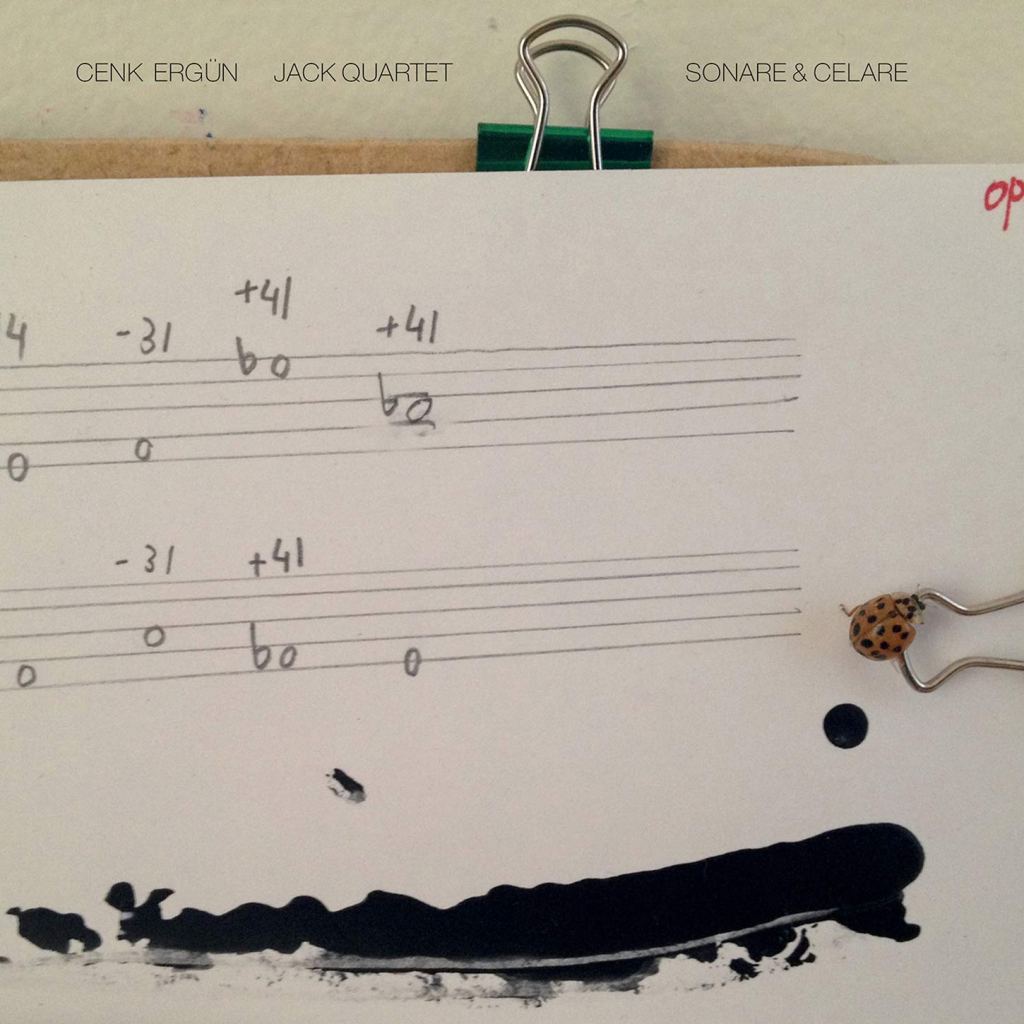
The Jack Quartet Plays Cenk Ergun was a pleasant surprise to this blogger. The Jack Quartet has chosen wisely in deciding to release this recording of new string quartet music by this young Turkish composer of serious substance. I’m glad that many folks read it.
Number seven on this years hit list among my readers is another album sent directly to me by the artist, one whose work I had reviewed before.
Catherine’s Oboe: Catherine Lee’s New Solo Album, “Alone Together” is among the best of the COVID lockdown inspired releases that flooded the market this year. It is also one of the finest examples of the emerging latest generation of “west coast” composers. Dr. Lee is a master of the oboe and related instruments and she has been nurtured on the artistic ideas/styles that seem to be endemic among composers on the west coast of the United States. She deserves to be heard.
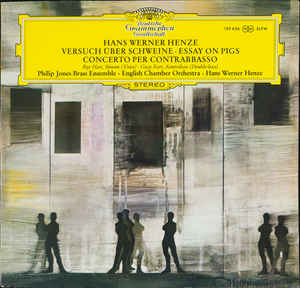
Number Eight is an article from 2014, Classical Protest Music: Hans Werner Henze’s “Essay on Pigs” (Versuch uber Schweine). This 1968 noisy modernist setting of leftist political poetry combines incredible extended vocal techniques with the dissonant modernism of Hans Werner Henze’s work of that era. Also of note is that his use of a Hammond Organ and electric bass guitar was allegedly inspired by his having heard the Rolling Stones. It’s a classic but warn anyone within earshot lest they be terrified.
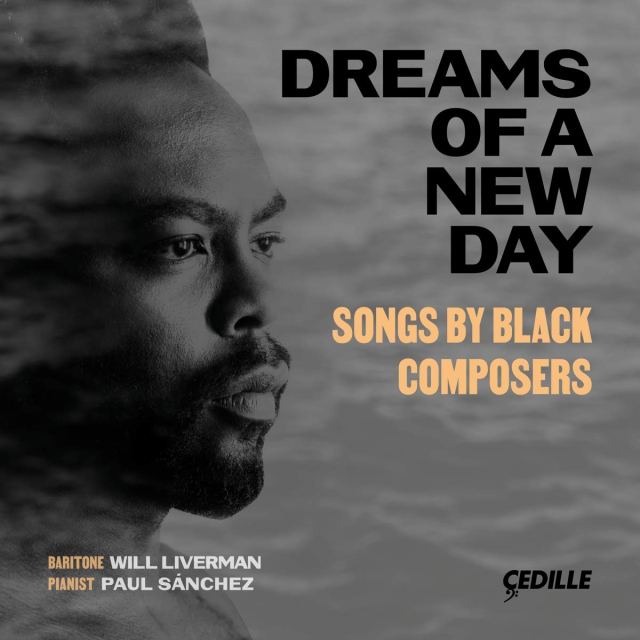
“Dreams of a New Day”, a Landmark Recording Project from Cedille is a virtual manifesto/survey of art song by black composers. Liverman is an amazing singer and the recording by my favorite Chicago record company is pure beauty. This 2021 release ranks ninth among my most read blogs from the past 12 months.
As it happens there is a three way tie for the number ten spot:
Black Composers Since 1964: Primous Fountain is one of a short series of articles I wrote in 2014. I used the date 1964, 50 years prior to the date of the blog post, because it was the year of the passing of the (still controversial) voting rights act. As a result of this and a few related articles I have found myself on occasion categorized as a sort of de facto expert on black music and musicians. I am no expert there but I have personally discovered a lot of really amazing music by black composers which is way too little known and deserves an audience.
Primous Fountain arrives in Moldova to oversee the performances of his music.
I am pleased to tell you that this too little known composer (and fellow Chicagoan) is being recognized by no less than Michael Tilson Thomas who will conduct an entire program of his works in Miami next year. If my blog has helped in any way then I am pleased but the real honors go, of course, to Mr. Fountain and Mr. Thomas (who first conducted this composer’s music many years ago). Stay tuned.
My “comeback blog”, The Loneliness of the Long Distance Blogger was written to sort of reintroduce myself to the blogosphere and provide some background (excuses?) for my absence. I guess it was a decent read.
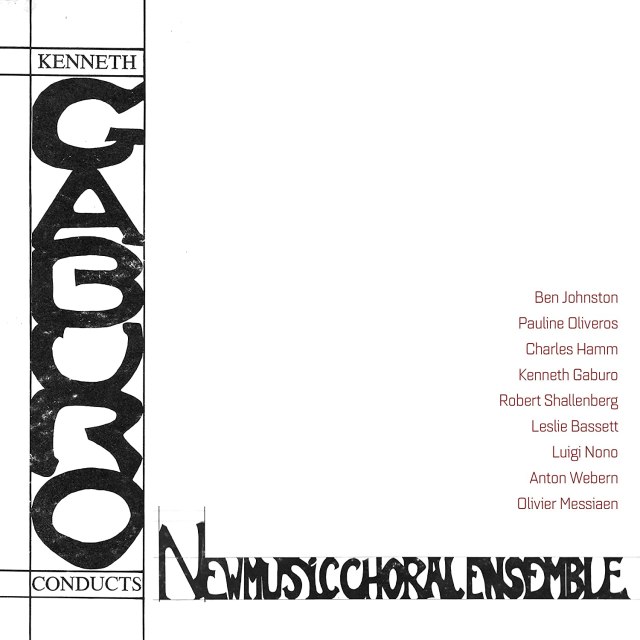
And the third contender for my tenth most read of 2021 is, Kenneth Gaburo, the Avant-Garde in the Summer of Love. This is among the first volley of releases on the revived Neuma label with Philip Blackburn at the helm. Blackburn’s instincts guided Innova records to release many wonderful recordings of music rarely on the radar of larger record companies and this first volley was a harbinger of even more wonderful releases to come. Just do a Neuma search and see what I mean.
The Ones That Didn’t Make the Top Ten
I would be negligent and boringly formulaic to simply report on these top ten. This is not a democratic blog after all, lol. So here are my choices for the ones that many of my dear readers may have missed and should definitely check out. It is anything but objective. They are, in no particular order:
Solo Artist Pamela Z releases “a secret code”. This is another Neuma release, one of a truly original and interesting artist who pretty much defies categories but the territory she explores will amaze you.
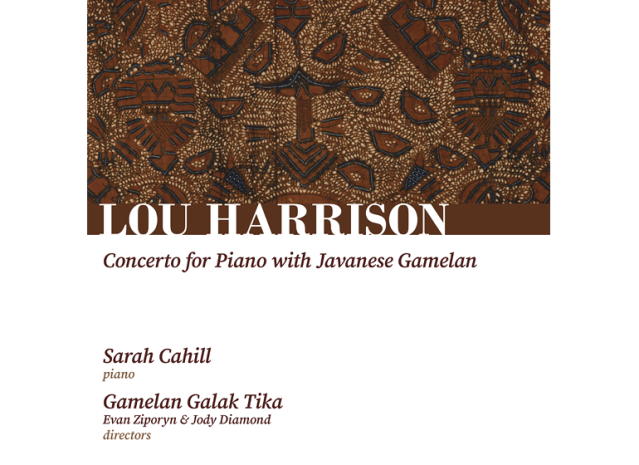
Lou Harrison: Concerto for Piano with Javanese Gamelan, a very special performance of an underappreciated masterpiece is just unabashedly excellent. It is a recording of a 2017 performance (in honor of the composer’s 100th birthday anniversary) in Cleveland by performers who have had a close relationship with this major American composer. I love the music. I love the performers. It’s a digital only release but you can get a download of the album and the fine liner notes from Bandcamp.
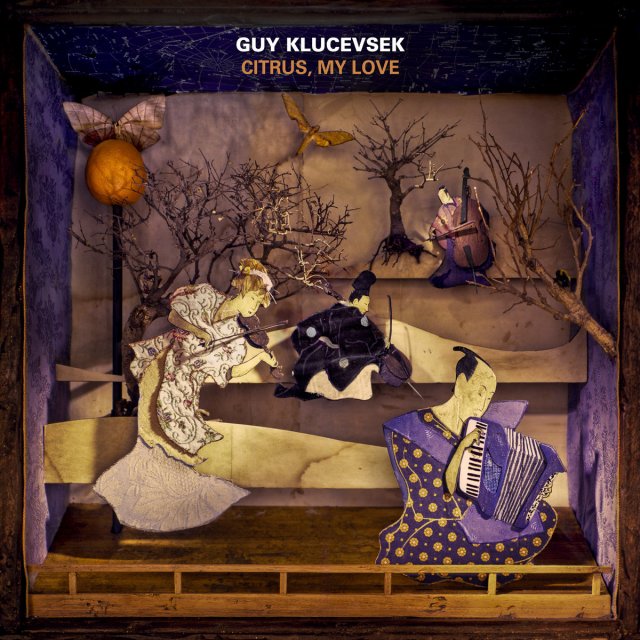
Fixing a Hole to Keep the Music Playing: Starkland brings back Guy Klucevsek’s “Citrus, My Love” is also a digital only release, also available on Bandcamp of an album long out of print but essential to the oeuvre of Guy Klucevsek. Like Philip Blackburn, Tom Steenland (who heads Starkland records) is a musical visionary who has released some of my personal favorite albums. If Tom (or Philip) likes it I will at least give it a listen.
Dennis Weijers: Skill and Nostalgia in an Auspicious Debut Album is a sort of personal discovery for me. This reworking of Philip Glass’ “Glassworks” and Steve Reich’s “Variations for Winds, Strings, and Keyboards” scored for solo accordion and electronics pretty much knocked me over as soon as I heard it. Read the blog to see why but you have to hear this. This is NOT your granddaddy’s accordion.
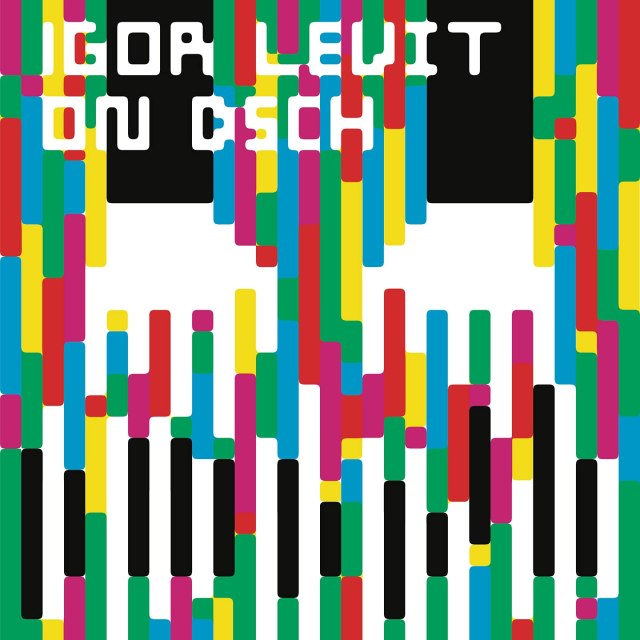
Vision, Virtuosity, and Interpretive Skill: Igor Levit’s “On DSCH” is an album I just can’t stop listening to. I raved about his earlier set of piano variations by Bach, Beethoven, and the late Frederic Rzewski and I look forward to this man’s musical vision as he expands the concert repertoire with works you probably haven’t heard or at least haven’t heard much. You owe it to yourself to watch this artist.
Black Artists Matter: The Resurrection of the Harlem Arts Festival, 1969 is one of the relatively few times when I write about so called “pop” music. It is wholly unconscionable that these filmed performances from 1969 (many of which predated Woodstock) languished for 50 years in the filmmaker’s basement and were nearly lost. One of the recurring themes in this blog is the lament over unjustly neglected music and this is a glaring example. I was delighted to see that the filmmaker Questlove received an award at the Sundance Festival for his work on this essential documentary of American music.
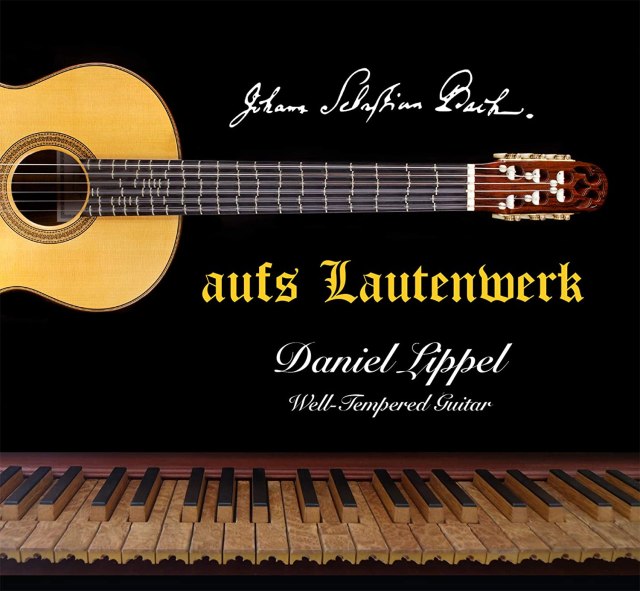
Less “flashy” but sublimely beautiful is Modern Tuning Scholarship, Authentic Bach Performance: Daniel Lippel’s “Aufs Lautenwerk”. This is a masterpiece of scholarship and a gorgeous recording on a specially made Well-Tempered Guitar played with serious passion and interpretive genius by a man who is essential to the productions of New Focus recordings as well as being a fine musician himself. Read the review or the liner notes for details but just listen. This is another one that I can’t stop listening to.
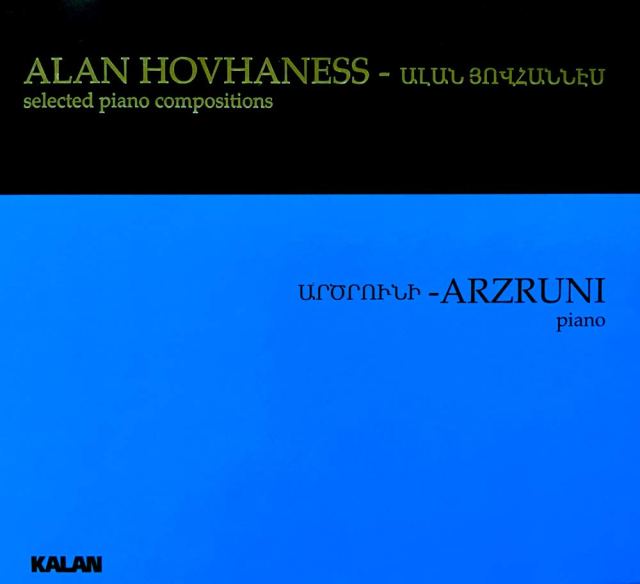
Unheard Hovhaness, this Sahan Arzruni album really rocked my geeky world. Arzruni, a frequent collaborator with Hovhaness turns in definitive performances of these previously unheard gems from the late American composer. A gorgeous physical production and a lucid recording make this another disc that lives on my “frequently played” shelf.
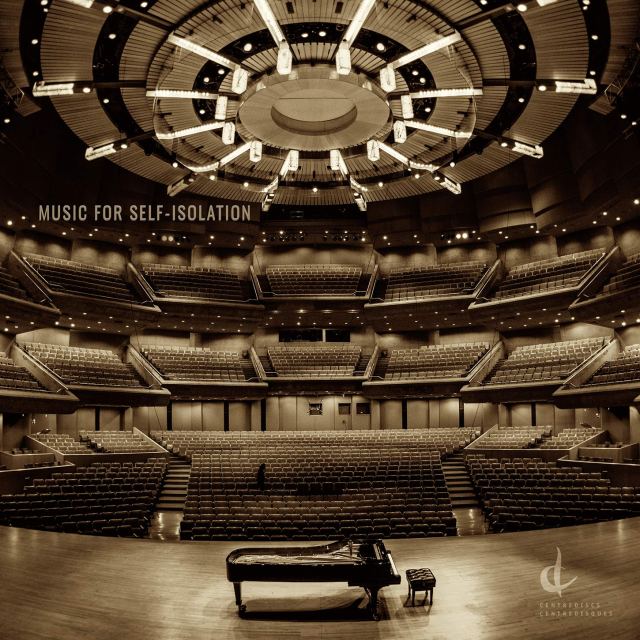
Only the Lonely, Frank Horvat’s “Music for Self Isolation” is yet another release from this emerging Canadian composer. This is one of my favorite COVID Isolation albums, a unique response to this pandemic from an eminently listenable and endlessly creative composer.
OUR 6.220674
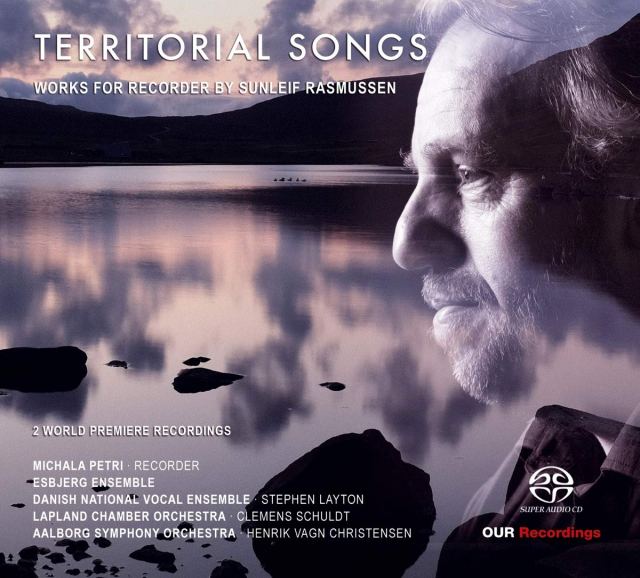
New Music from Faroese Master Sunleif Rasmussen with soloist Michala Petri is an album of world premieres by this master composer from the Faroe Islands. It is also a tribute to the enduring artistry of Michala Petri. I had the honor and pleasure of meeting both of these artists some years ago in San Francisco and anything they do will demand my attention, they’re that good.
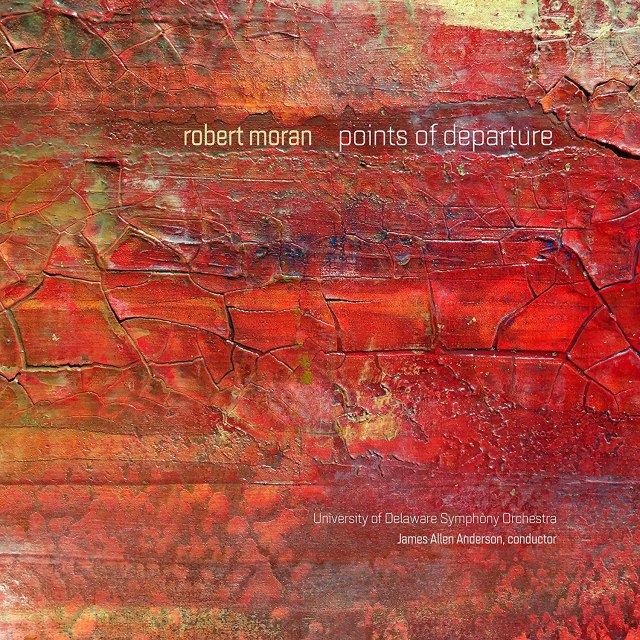
Last but not least, as they say, Robert Moran: Points of Departure is another triumph of Philip Blackburn’s curation on Neuma records. I have personally been a fan of Moran’s music since I first heard his work at the Chicago iteration of New Music America in 1982. Blackburn’s service to this composer’s work can be likened to similar service done by David Starobin at Bridge Records (who have embarked on complete works projects with several contemporary composers) and Tom Steenland’s work with Guy Klucevsek and Tod Dockstader at Starkland records. Blackburn had previously released the out of print Argo recordings of Moran’s work and now, at Neuma has released this and a few other new recordings of this major American composer’s work.
My apologies to the albums I’ve reviewed which didn’t make it to this year’s end blog but I have to draw a line somewhere. Peace, health, and music. And thank you for reading.
This is not a Philip Glass album. This is also not a tortured Magritte metaphor. It is a Maya Beiser album. Yes, she is playing her transcriptions of several of Philip Glass’ pieces: (Piano) Etude No. 5, Etude No. 2, Mad Rush, Music in Similar Motion, and four movements from Glass’ score to the third of Godfrey Reggio’s trilogy (Koyaanisqatsi, Powaaqatsi, Naqoyqatsi): Naqoyqatsi, Massman, New World, and Old World.
It was after my second hearing of the disc that it occurred to me that Beiser’s transcriptions for cello with electronic looping and layering are in fact her own recompositions of these works in her own image, so to speak. Think Stravinsky’s Tchaikovsky transcriptions in “The Fairy’s Kiss” or Henze’s reworking of Telemann in his Telemanniana (other examples abound). Of course Beiser is working on a smaller scale but she is recomposing these works from a very personal perspective much as those composers did. I had been expecting to not like this album but once heard…
Beiser, a founding and long time member of the Bang on a Can All Stars, cut an elegant figure even when she was at the back of that venerable performing ensemble (got to be good looking cuz she’s so hard to see?). She has always been a highly skilled and accomplished cellist and a thoughtful, intelligent musician. That is true of all the members of the All Stars who started as highly skilled musicians with an interest in new music. Beiser is certainly also a member of the “glam classical” musicians following in the traditions of performers like Nigel Kennedy, Yuja Wang and, well… back at least to Liberace and perhaps Chopin and Liszt. The appellation, “glam classical” is descriptive rather than pejorative in intent. The reality is that all the aforementioned artists remained fine musicians throughout their careers. An imposing physical presence, after all, does not necessarily detract from the music. Quite the opposite sometimes.
Amazon lists this release as Beiser’s 14th album and she comes out strong on all fronts. Her playing, her interpretive skills, and her arrangements make for a very strong, complex, but listenable album. The first two etudes will be familiar to most listeners and are perhaps the most methodical with clear structures though very different from the piano originals. “Mad Rush” (also originally a piano piece) and “Music in Similar Motion” (originally for the Philip Glass Ensemble) both come off as driving ritual symphonic pieces, thrilling new readings of the original compositions (Music in Similar Motion a personal favorite for this writer and this version really rocks). The last four excerpts from Naqoyqatsi are the most lyrical and easy listening works, but again Beiser creates the music in her own personal context, glamorous but authentic and with a warmth that lasts long after the last tones fade. Fabulous album!
















 New Music Buff