Philip Gelb’s Gourmet Vegan with Joelle Leandre in the East Bay


The door is open to the underground restaurant.

The door is open to the underground restaurant.

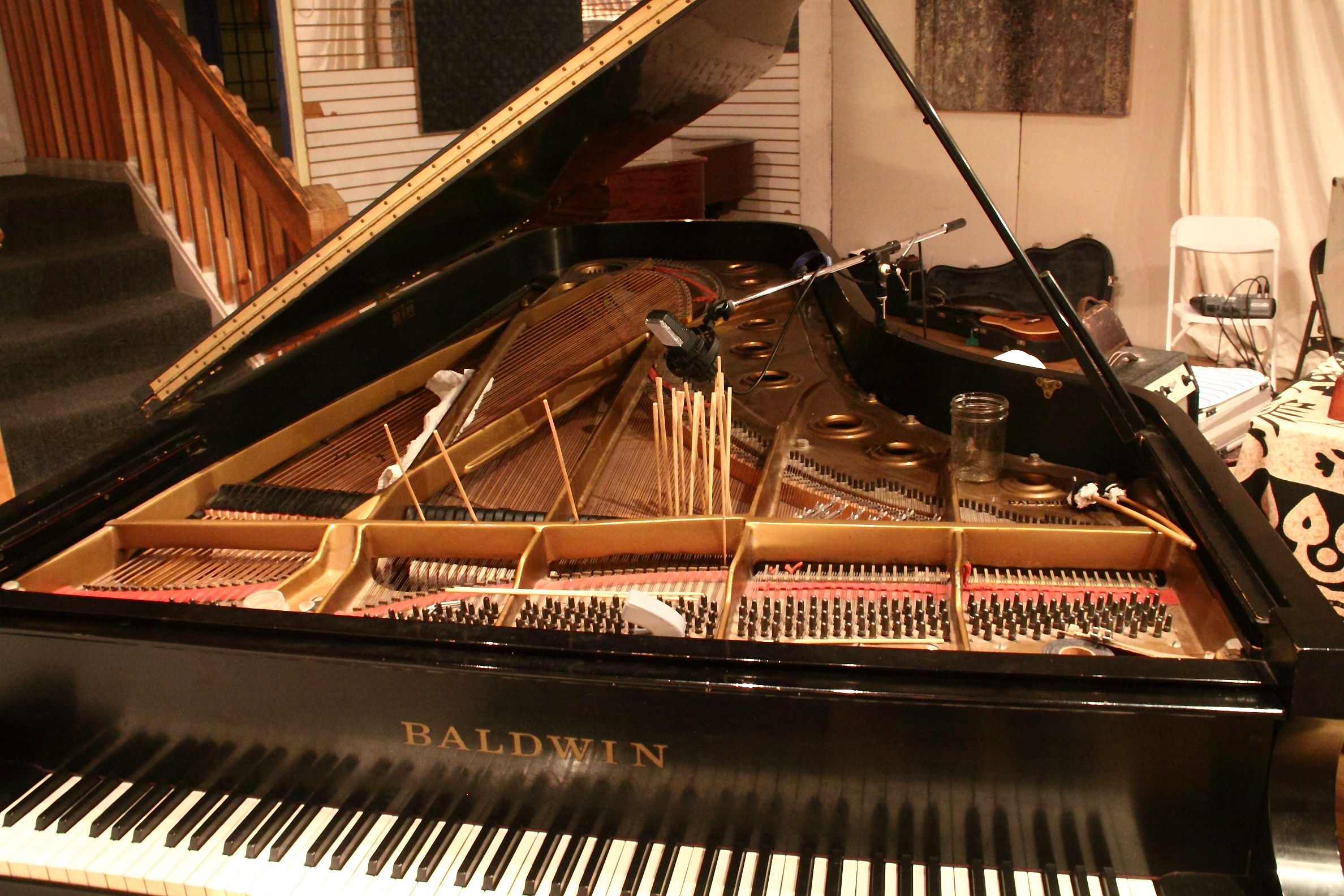
On Sunday February 15th I had the pleasure of attending one of my favorite underground restaurant/performance venues in West Oakland.  In a nondescript neighborhood of light industry, warehouses and loft spaces Philip Gelb has been running “In the Mood for Food” (a take of the title of one of his favorite films, “In the Mood for Love”) his occasional dinner/concert series since 2005.

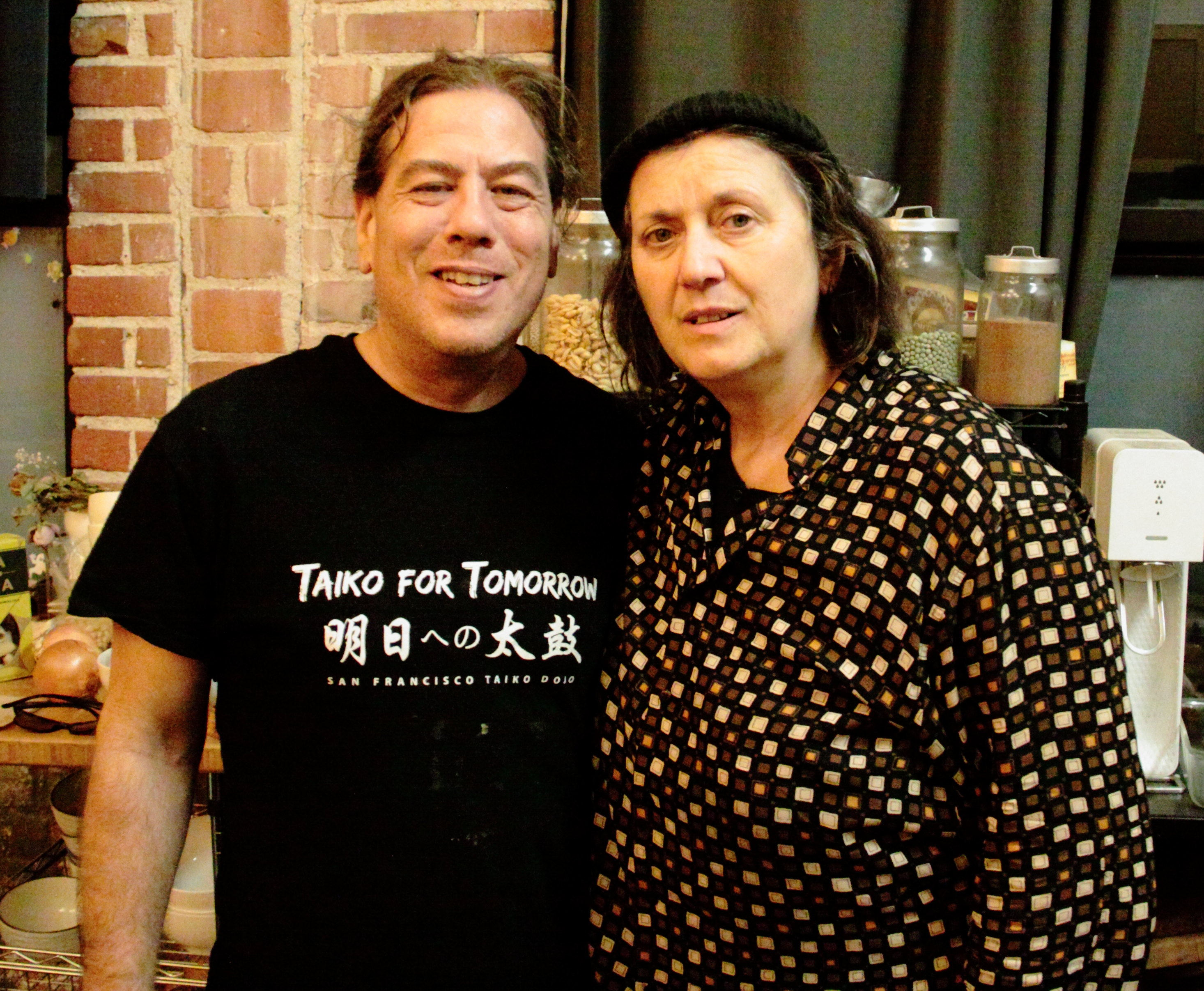
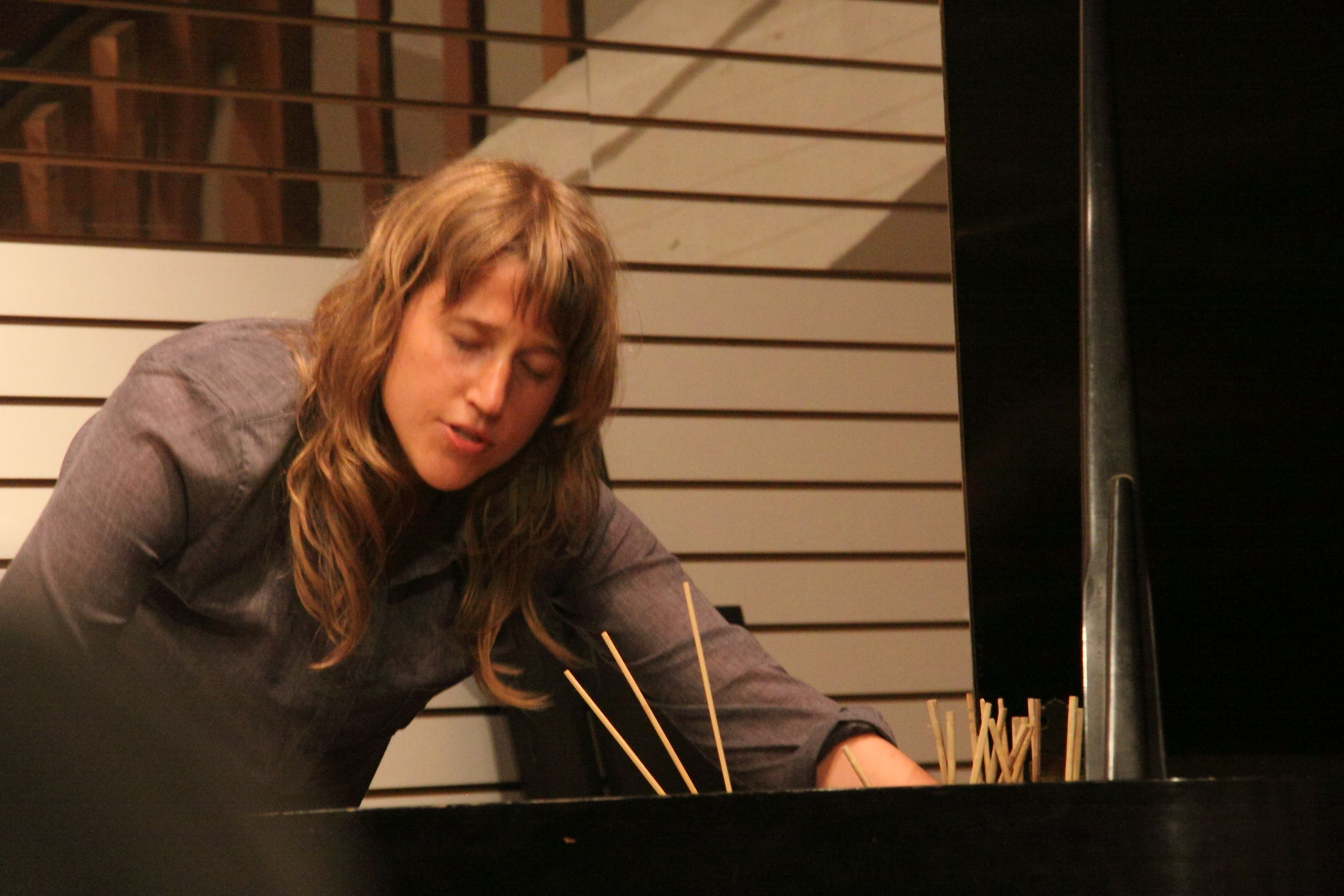
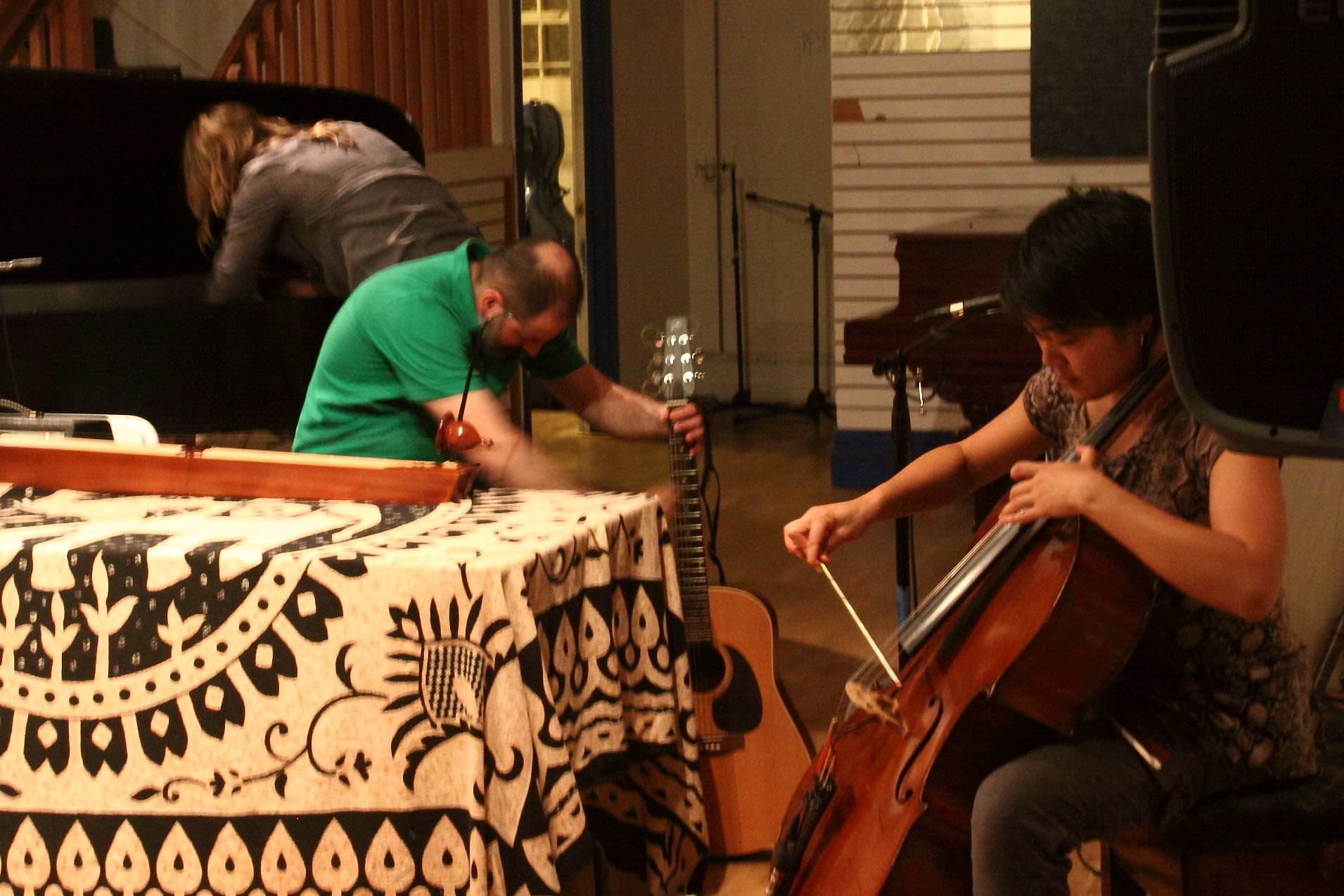
Philip Gelb with Joelle Leandre

Philip Gelb with Joelle Leandre

Philip is an amazing vegan chef as well as a shakuhachi player/teacher whose cuisine is known to a fortunate group of people which includes this writer.  Combining incredibly creative dishes sometimes at the behest of a given artist (Amy X Neuberg requested a “purple” theme and got it when she appeared ) with his wide network of artist friends, many of whom he has performed with.  Phil has been doing these occasional events with a maximum audience of about 20 people (including the featured performer) at a rate of at least once every month or two.

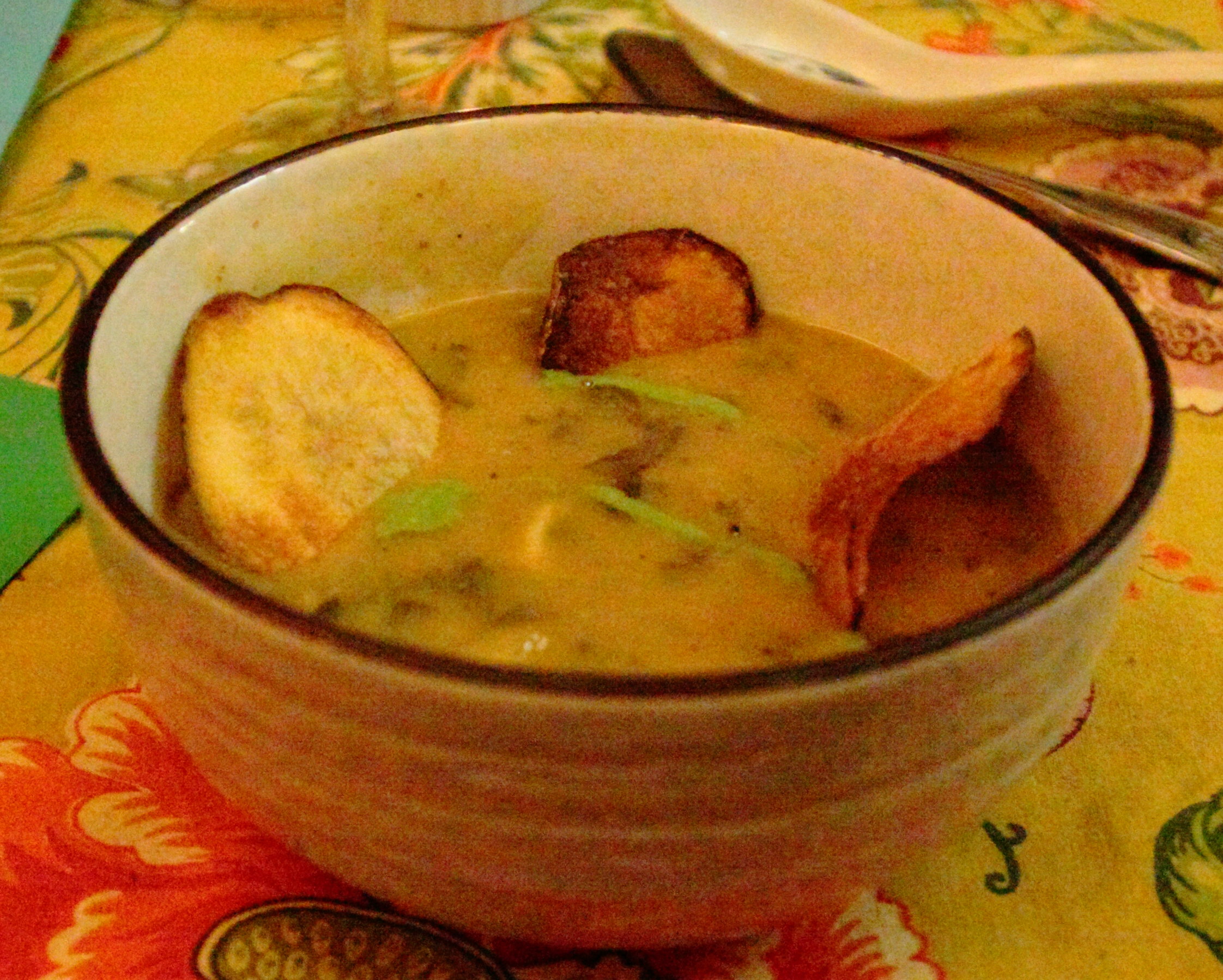
Potato Sorrel Soup

Potato Sorrel Soup

First let me say that I am not a vegan but if vegan fare always tasted this good I could easily make the transition (OK, I would have a hard time giving up pizza) to vegan fare.  Phil’s fresh locally shopped ingredients are transformed by his gustatory alchemy into a variety of delectable dishes in a wide range of cuisines.  His network in gourmet vegan food practitioners is rivaled only by his musical network.  Japanese is one of his specialties but I have personally partaken of various middle eastern and Caribbean cuisines with equal satisfaction.

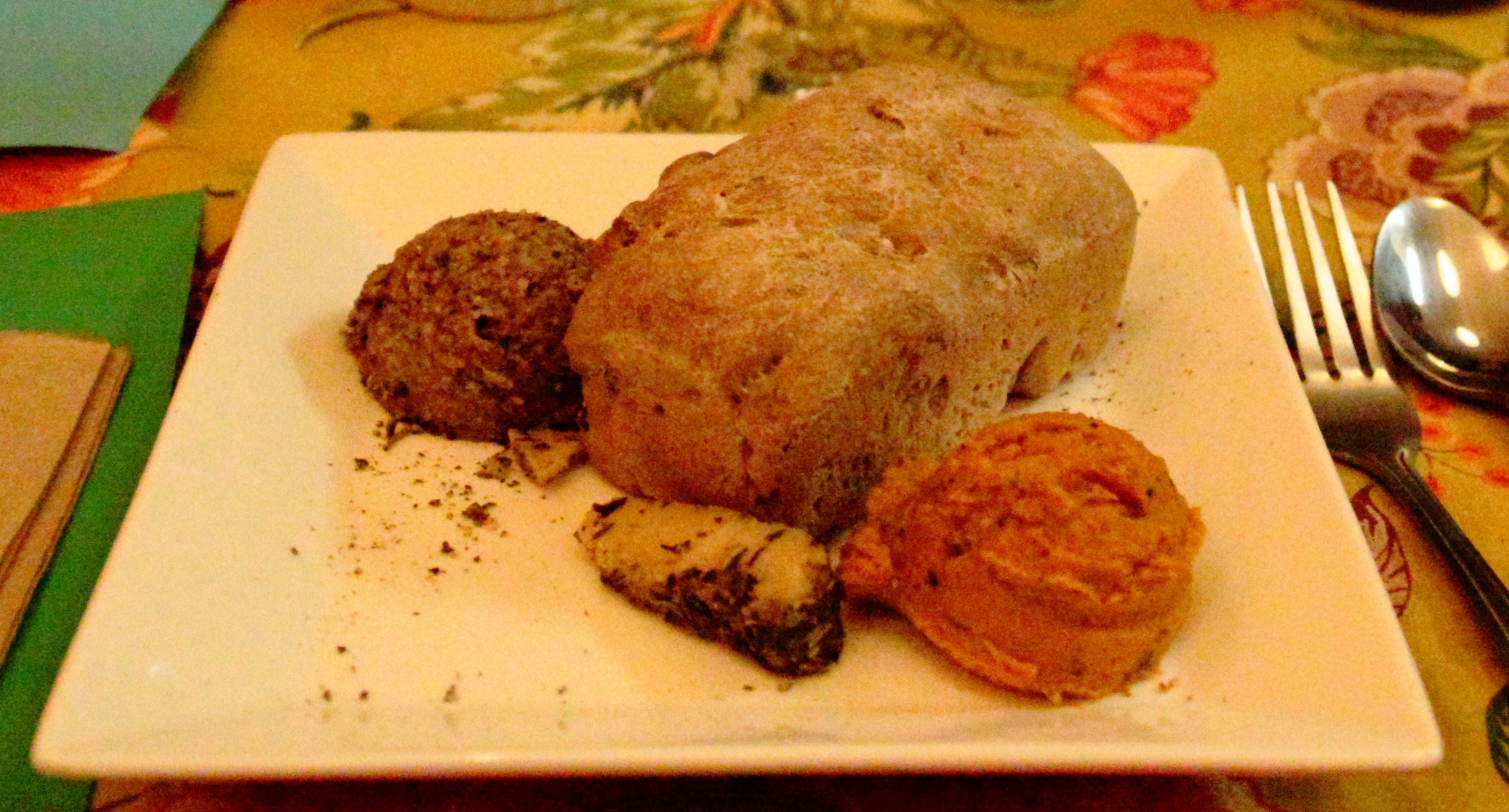
Mushroom Pate, Carrot Walnut Pate and Rosemary Bread, didn't get a picture of the fresh salad greens.

Mushroom Pate, Carrot Walnut Pate and Rosemary Bread, didn’t get a picture of the fresh salad greens.

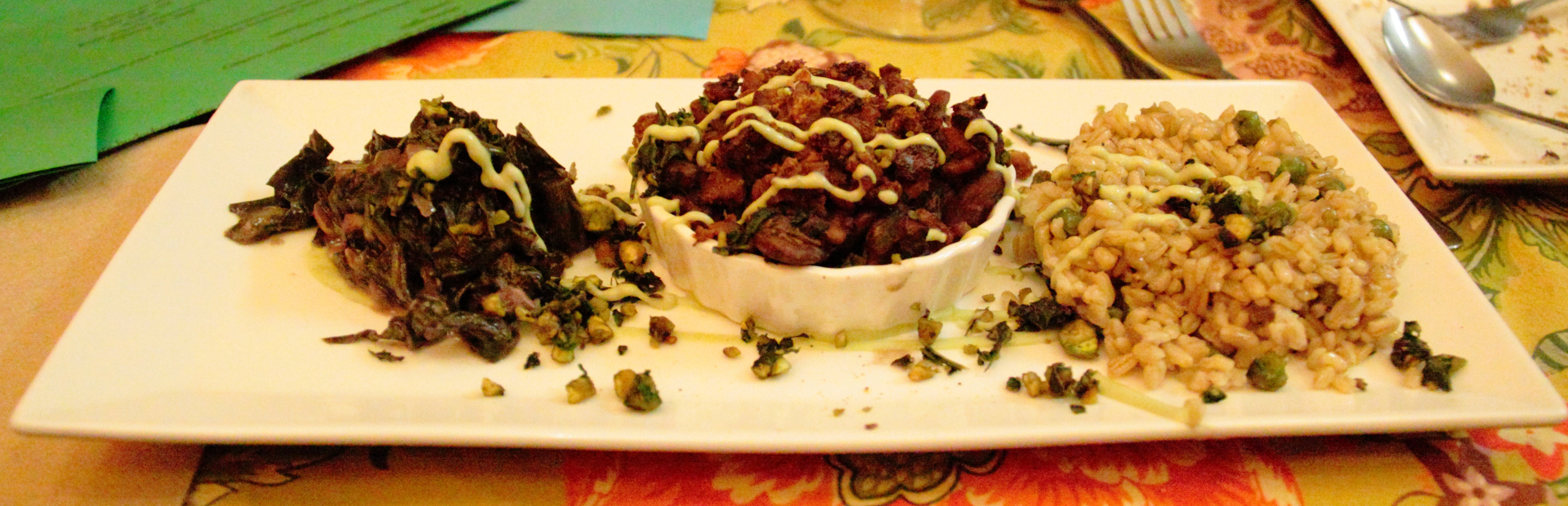
This night’s selection featured a creamy Potato Sorrel Soup followed by a salad plate consisting of rich Mushroom Pate, Carrot Walnut Pate, a freshly baked Homemade Rosemary Bread with Salad Greens and a tart Citrus Dressing. The main course consisted of Cassoulet, Oat Pilaf and Herbed Collards, all very tasty and very filling.

The main course of Cassoulet, Oat Pilaf and Herbed Collards.  It tastes even better than it looks in Phil's characteristically beautiful presentations, trust me.

The main course of Cassoulet, Oat Pilaf and Herbed Collards. It tastes even better than it looks in Phil’s characteristically beautiful presentations, trust me.

A feast such as this could not easily be upstaged but, in the little break before the dessert course, we were treated to a wonderful performance by Joëlle Léandre, the French Double Bass virtuoso, singer and composer whose work traverses a wide range of musical genre from John Cage to free jazz and categories that defy easy classification.  She has amassed a discography of over 100 albums to date and has performed with artists including Pierre Boulez, John Cage, Giacinto Scelsi, Derek Bailey, Barre Phillips (who appeared at this series a couple of years ago), Anthony Braxton, George Lewis, India Cooke (also one of Phil’s previous guest artists), Evan Parker, Irene Schweizer, Steve Lacy, Maggie Nicols, Fred Frith, Carlos Zingaro, John Zorn, Susie Ibarra, J.D. Parran, Kevin Norton, Sylvie Courvoisier and Pauline Oliveros (another recently appearing artist at this series).  Oh, and she has also performed and recorded with Mr. Gelb.

Leandre is a friendly and engaging person both in her playing and in conversation and we all had opportunities to speak with her and experience her charming personality as she related various observations and anecdotes.  These dinner/concerts are a uniquely intimate experience which you cannot get in the average concert setting.

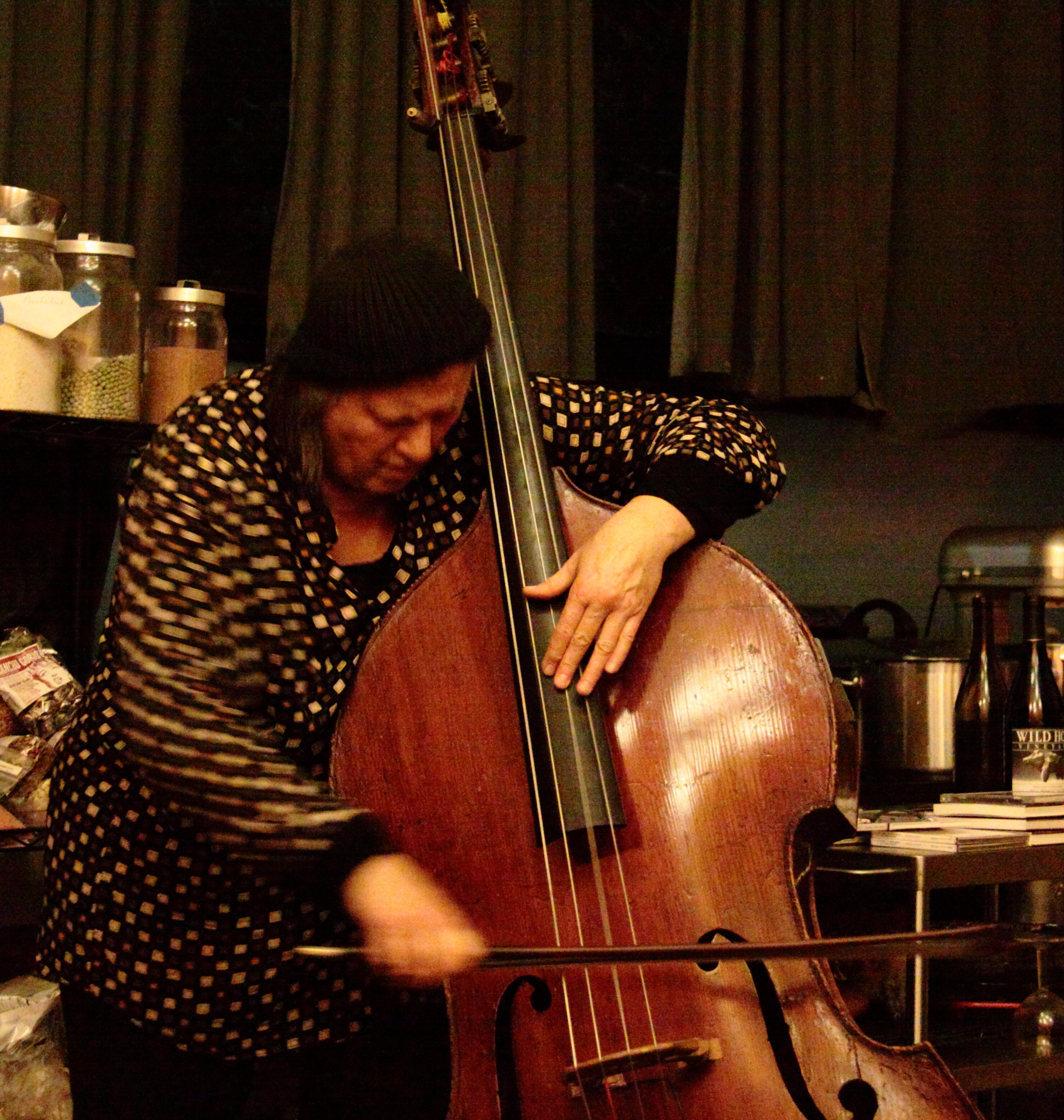
Leandre embraced and nearly danced with her instrument.

Leandre embraced and nearly danced with her instrument.

Ms. Léandre treated us with three separate improvisations in which she demonstrated her facility with a wide range of double bass techniques including various bowing techniques, pizzicati, percussive techniques and wordless vocals that mixed seamlessly with her very intense and passionate performances.  Unfortunately it is nearly impossible to really describe with any accuracy the music we experienced this night.  But suffice it to say that it was played in a manner that communicated very effectively with the very appreciative audience.  I asked her if she always plays with such passion and she rather matter of factly simply said, “yes”.

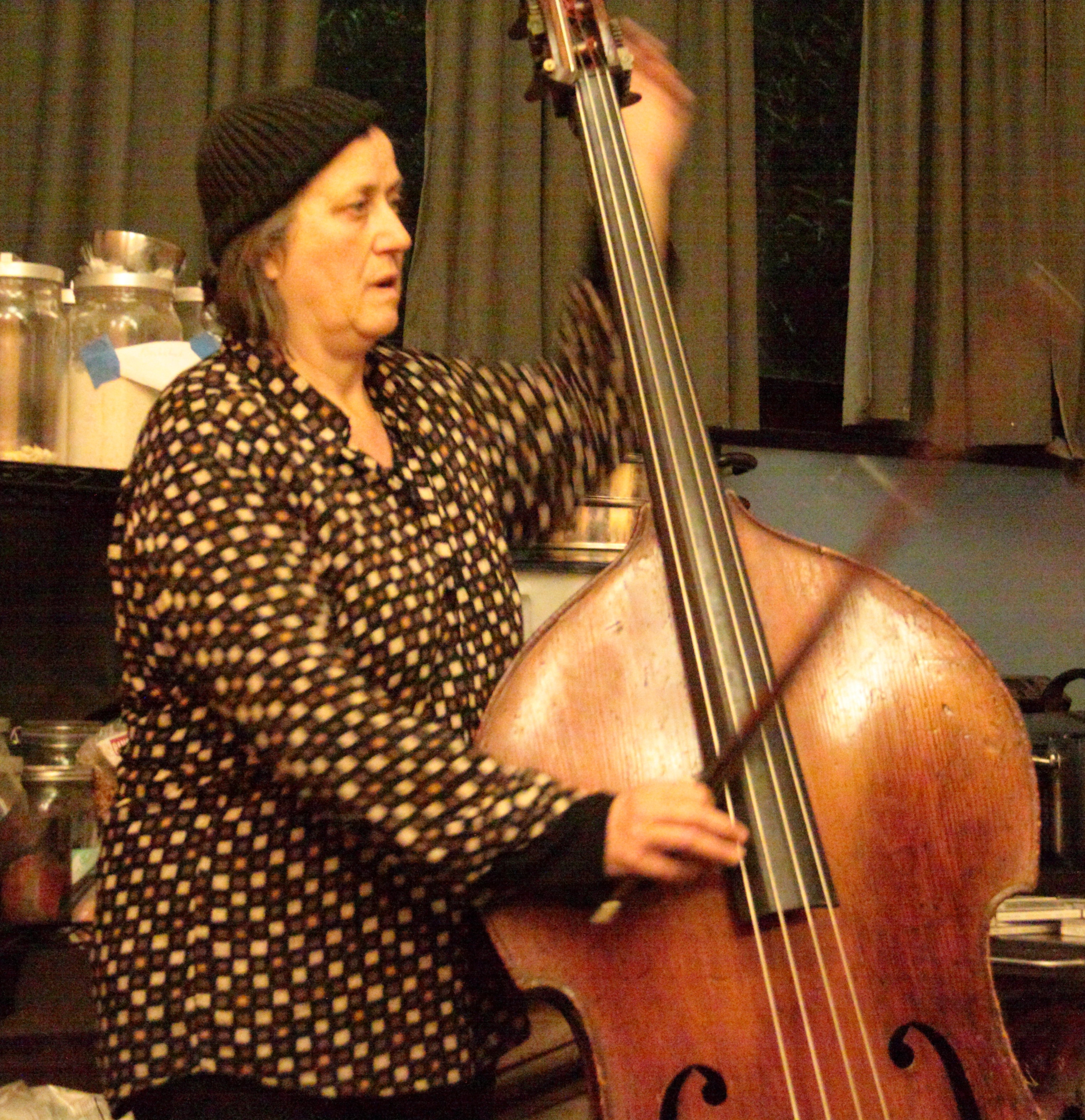
Her command of a wide variety of playing techniques blended together with her voice in an almost orchestral sound  tapestry driven by Joelle's passionate playing.

Her command of a wide variety of playing techniques blended together with her voice in an almost orchestral sound tapestry driven by Joelle’s passionate playing.

I was so taken with the performances that I failed to get a photo of the delicious dessert course which consisted of a Waffle Sundae comprised of a very fresh chocolate-buckwheat waffle covered with chocolate pistachio ice cream, maple walnuts and chocolate port sauce.  An amazing vegan sweet treat enjoyed by all.

The clearly happy audience lingered to talk with each other, with Phil and sous chef Cori as well as with Ms. Leandre who had a great selection of recent CDs and a couple of books available for purchase which she graciously signed.  Overall this was an extremely satisfying evening, certainly for this blogger and clearly for the other guests but also for our wonderful performer who left to get some sleep before her scheduled performances tomorrow at the Berkeley Arts Festival.

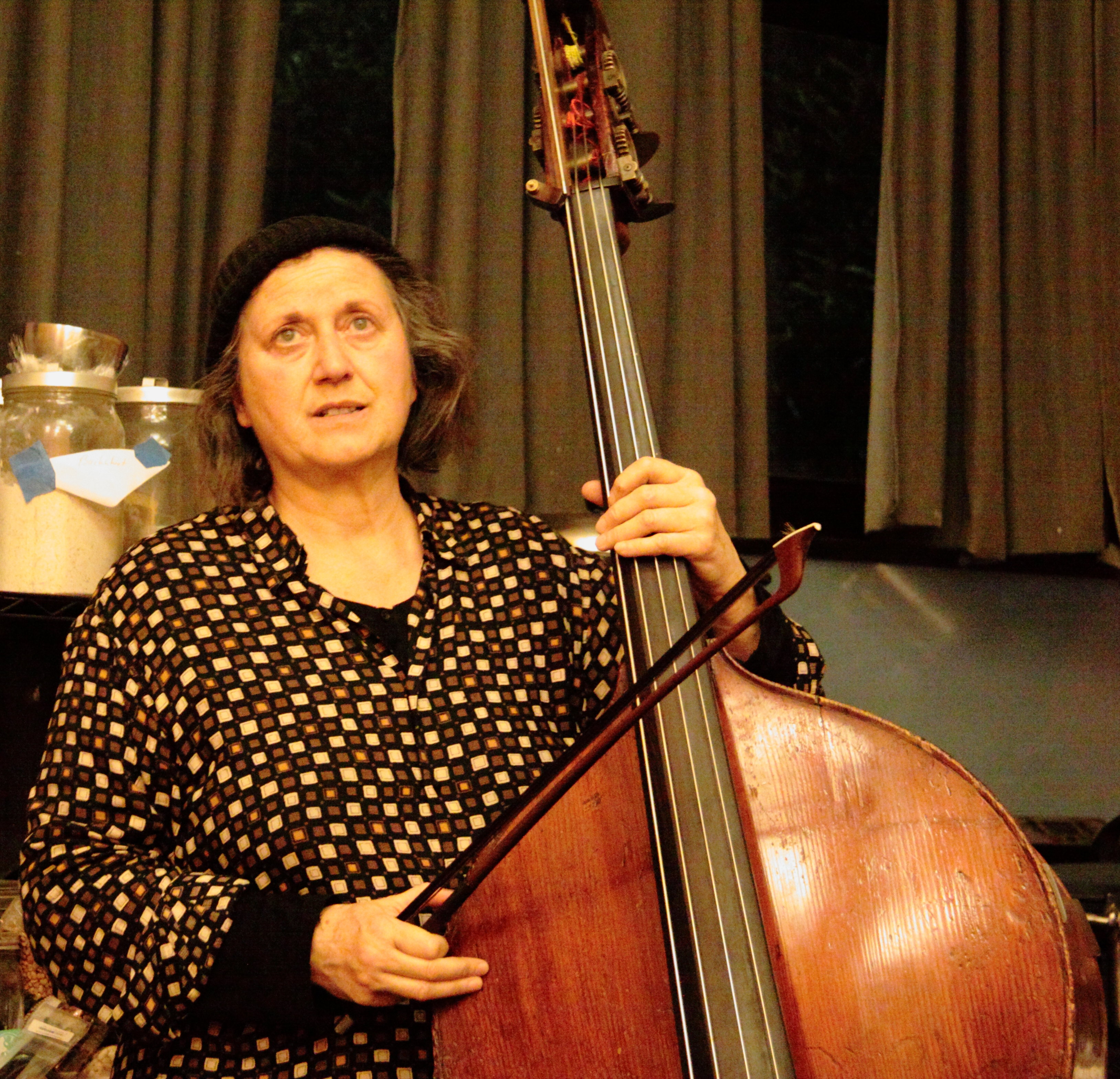
The performer pauses looking wistfully as the muse descends upon her.

The performer pauses looking wistfully as the muse descends upon her.


My 2014, a Summation and (sort of) “Best of…” List


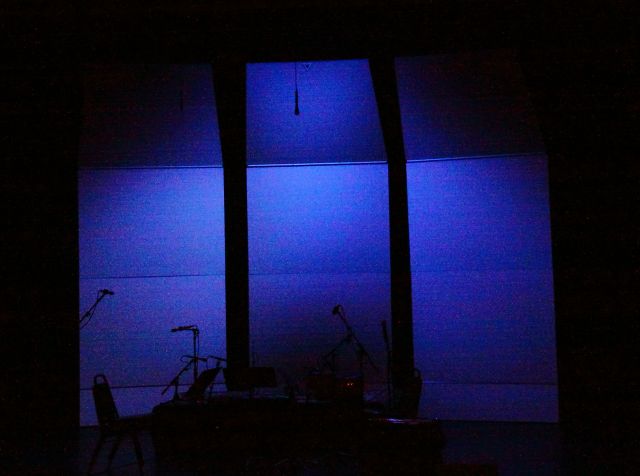
The stage at Kanbar Hall stands ready to receive performers on opening night of OM 18

The stage at Kanbar Hall stands ready to receive performers on opening night of OM 18

As New Music Buff heads on into its fourth year in the online realm I find that I have a steadily increasing readership averaging 18 hits per day with an international reach of about 88 countries. I say readers, not followers because the stats provided have no way to track returning visitors but you know who you are.  And I thank WordPress for their entertaining summary published earlier here.


Last year I provided a list of my greatest hits (i.e. my most read articles in 2013) so here is a list of 2014’s top ten:

Black Classical Conductors (Black Classical Part Two)
This is a 2013 article which continues to be popular. I did an addendum called: Black Conductors, A Belated Addendum  and received a note from Tania Leon who remarked quite correctly that she is indeed a black American conductor.  Clearly I will need to expand this survey once again.

Maybe Music Remains Forever
This review of the excellent newly released Martin Bresnick CD went the equivalent of viral for my blog and I was pleased to have discovered the work of this wonderful American composer.

Primous Fountain World Tour Begins in Moldova
This relatively little known living black American composer was a child prodigy whose second symphony was commissioned by Quincy Jones had his sixth symphony premiered in Moldova in 2014.

Tawawa House in Modesto?
I was granted a comp ticket to see this really great performance of a little known 20th century opera by a black female American composer, Zenobia Powell Perry.  It was a great experience, a passionate, entertaining performance and put Modesto on the musical map for me.

Other Minds 18, Three Nights on the Leading Edge
Curiously this review was read more than the one about the 2014 Other Minds 19. More to come about the upcoming Other Minds 20.  For anyone who doesn’t know this is my favorite new music festival.

Far Famed Tim Rayborn Takes on the Vikings
This article about a 2013 performance by this very talented multi-instrumentalist, singer and scholar/historian continues to be popular. I’m hoping to catch another of his performances in 2015.

Black Composers Since the 1964 Civil Rights Act: Primous Fountain
I started in 2013 writing an occasional series of articles for Black History Month. I had no idea how popular this would become. The theme for the 2014 series is given in the title and you can rest assured that I will continue the series in 2015.

Tom Johnson and Samuel Vriezen, Great New Recording
A review of a crowd sourced recording project and one of my favorites of 2014.

Black Composers Since the 1964 Civil Rights Act
This is the introductory article for the 2014 series. Many thanks for the comments and support on this article and its successors.  I plan to give my summation of the various responses on this received both on and off the books.

Abraham Lincoln and the Avant Garde
This is one of an ongoing series of articles on political expression in music. It was after I friended Dorothy Martirano on Facebook and mentioned this piece that the article got a few new readers. Perhaps I should have mentioned the composer in my title.  Kudos to the late great Salvatore Martirano, gone too soon and too little known even now some twenty years after his passing.


SOME OF MY FAVORITES FROM 2014

Now regarding my personal favorite recordings of 2014 I have to insert a disclaimer to the effect that I make no claim whatsoever to this list being comprehensive or representing anything more than a few of my personal favorite recordings encountered in this past year. My apologies in advance to those I missed. I hope to catch up some day. So, in no particular order:

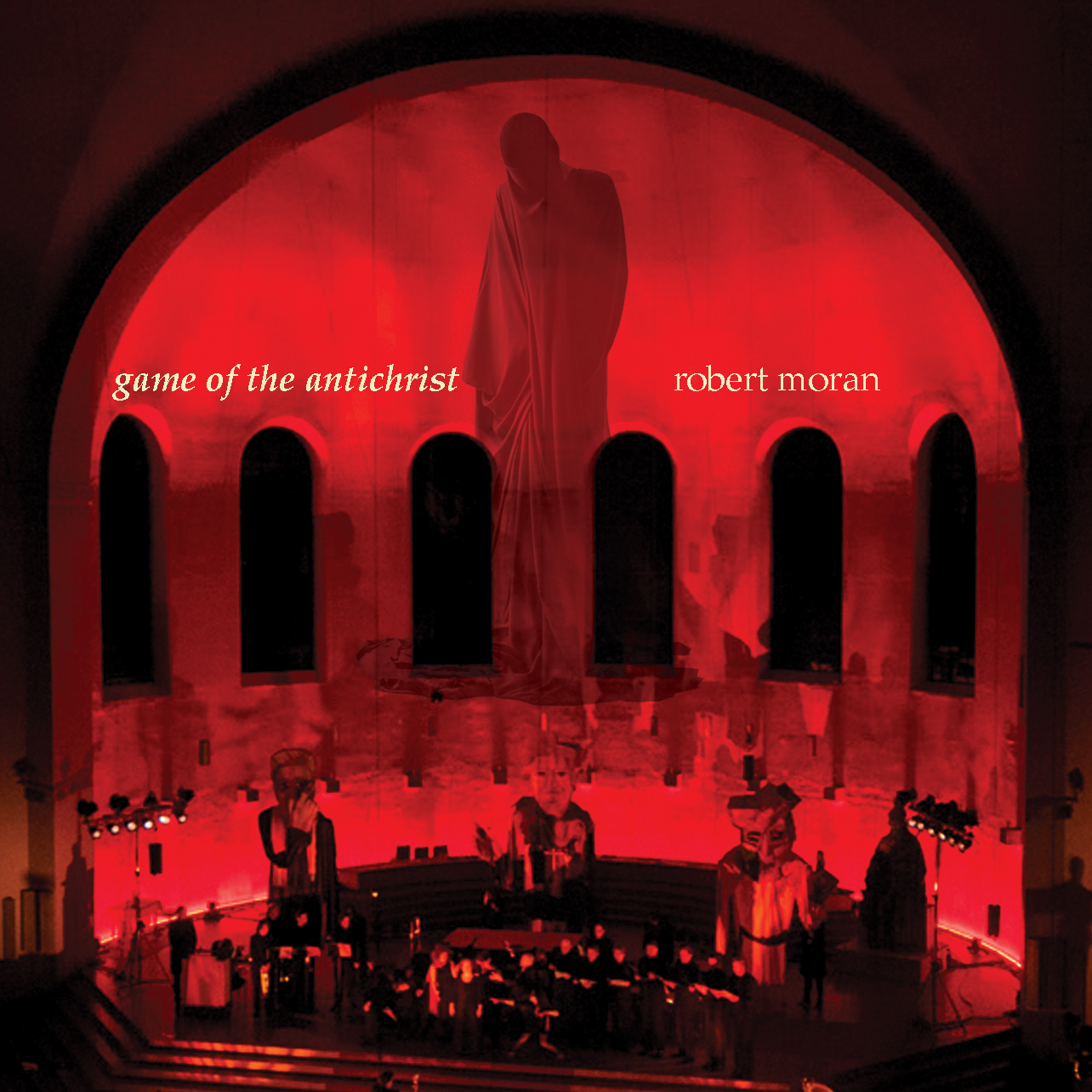
Mysterienspiel 2012

Game of the Antichrist by Robert Moran (Innova 251)
I promise a more comprehensive review soon but this is a great CD by a too little known American composer.  Mr. Moran recommended the disc to me after I wrote to him praising his wonderful “Trinity Requiem”.  I plan a more comprehensive article soon.  Meanwhile here is a link to a performance on Vimeo.

AZ spread

Alcatraz/Eberbach by Ingram Marshall and Jim Bengston  (Starkland S-2019)

This DVD is essentially the completion of a collaboration of photographer Jim Bengston and composer Ingram Marshall.  As such it is the most complete artistic statement superseding the audio only release (still worth having by the way) from some years ago.


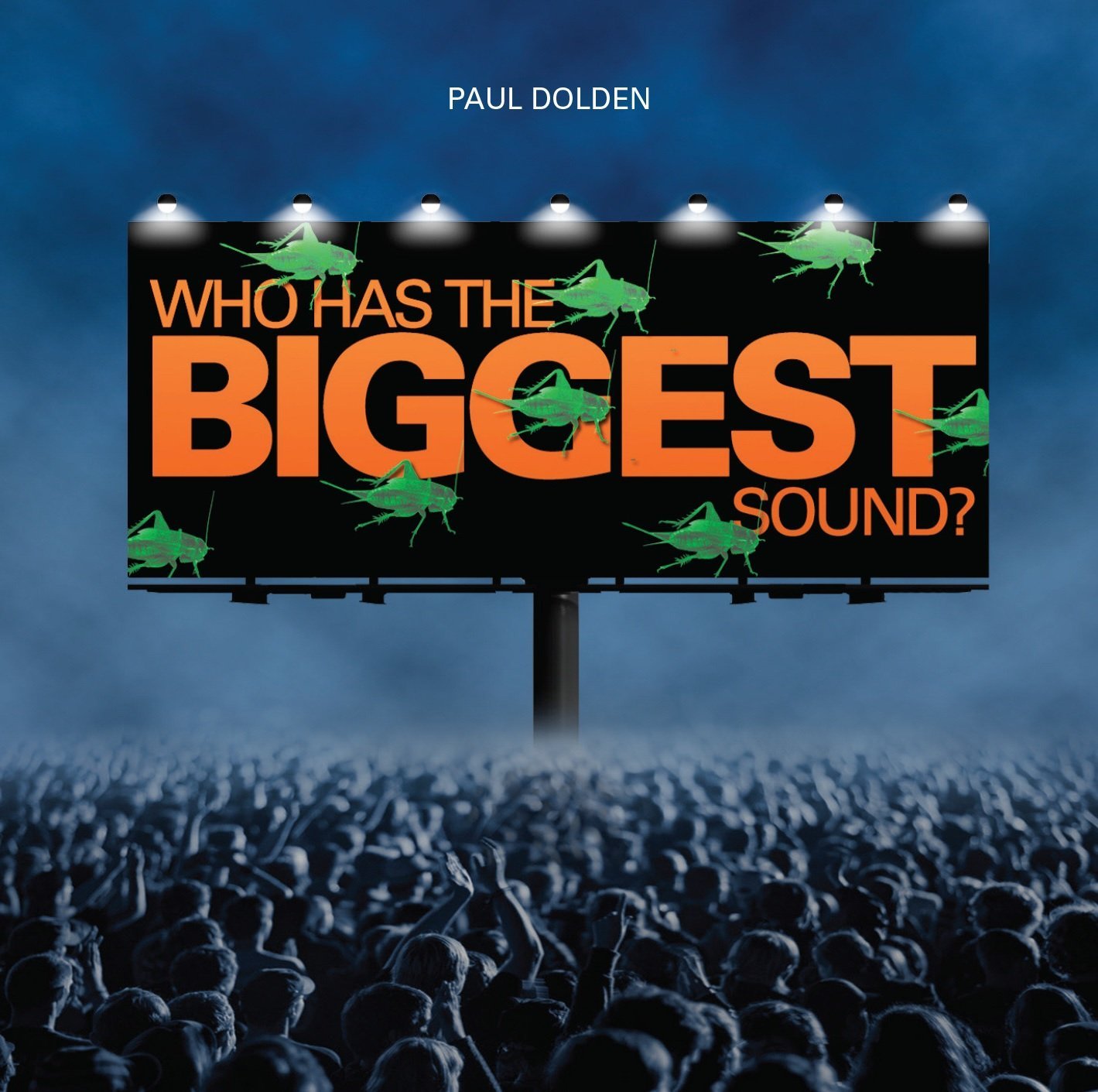
Who Has the Biggest Sound? by Paul Dolden. (Starkland ST-220)
A difficult to categorize recording that brings two major works by this (previously unknown to me) Canadian composer to the listening audience. I reviewed this disc here.  I am still working on absorbing its subtleties.

221CoverB

Prayers Remain Forever by Martin Bresnick (Starkland ST-221)
In addition to providing me with quite a few readers the opportunity to review this recording introduced me to the work of this too little known living American composer.  My review garnered quite an amazing amount of readers as well as an appreciative response from Mr. Bresnick himself.  And now I find myself buying his other recordings.  Really great music.


Album cover

Album cover

Notes from the Underground by Anthony Davis. (BMOP sound 1036)

I have been a fan on Anthony Davis and his music for some years now and I was pleased to be able to review this disc.   I  was later able to obtain an interview with Professor Davis which will be forthcoming later this year.

download

Tom Johnson/Samuel Vriezen Chord Catalog/Within Fourths, Within Fifths. (Edition Vandelweiser)

I eagerly reviewed this crowd sourced CD in which I was proud to be one of the contributors to its production.  It is only the second recording of Johnson’s landmark of minimalism and an opportunity to hear the work of the fine composer/performer Samuel Vriezen.

basketmonk

Basket Rondo/Jukebox in the Tavern of Love by Meredith Monk/Eric Salzman. (Labor LAB 7094)

This Labor Records release would have escaped my attention were it not for my having run across it while researching another new music article.  New music aficionados might remember Eric Salzman for earlier works such as “Civilization and It’s Discontents” and his involvement with Nonesuch records or one of his many other significant involvements in the new music scene over the last 40 years or so.  This disc is the première recording of Meredith Monk’s “Basket Rondo”, one of her best realized new works as well as the première of a great new sound/music drama by Salzman.  A more thorough review is in the works.

howardhersh2

Something by Howard Hersh ( Snow Leopard Music 888295062350)

Mr. Hersh kindly sent me this CD for review which will be forthcoming but it easily makes it to my favorites list for 2014.

webreaknonclass

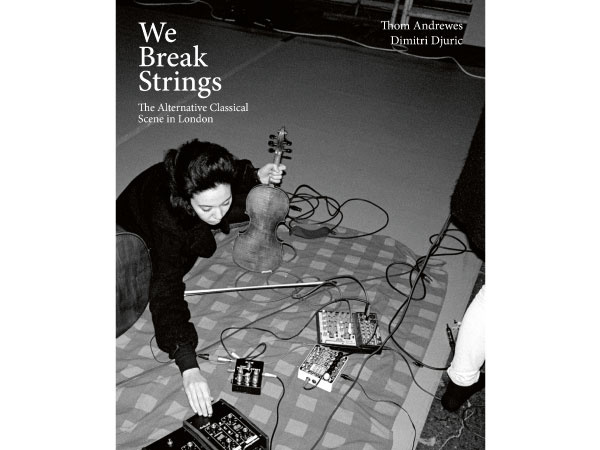
I also have to mention another crowd sourced project, “We Break Strings” by Thom Andrews and Dimitri Djuric, a book about the “alternative classical scene in London”.  The book which includes a CD sampler languishes in my “to be read” stack but my initial perusal left me with the impression of a beautifully conceived and executed volume which has much to offer the musically curious.  More about this book in a future blog.


Alvin Curran at 75, Experimentalism with an Ethnic and Social Conscience


English: The American composer Alvin Curran pl...

English: The American composer Alvin Curran playing the shofar in his composition “Shofar 3,” for shofar and live electronics (2007). Photo taken at a concert of Curran’s music in Warner Concert Hall, Oberlin Conservatory of Music, Oberlin College, Oberlin, Ohio, United States. (Photo credit: Wikipedia

Alvin Curran (1938- ) is an American composer currently living and teaching in Rome whose career began as an expatriate artist working with the cutting edge improv electronics group Musica Elletronica Viva (MEV) in 1966. He turns 75 on December 13, 2013.

Curran was born in Providence, Rhode Island.  His father was a musician in a dance band and he learned to play piano and trombone early on.  He was exposed to big band music, jazz, traditional Jewish music and western classical music during his formative years.  Following his father’s example he also played in dance bands during boat crossings of the Atlantic.  He earned a B.A. in music from Brown University in 1960 where he studied composition with Ron Nelson.  He went on to complete his M.M. at Yale in 1963 were he studied with Elliott Carter and Mel Powell.

A 1964 Ford Foundation grant allowed him to go study in Darmstadt where he met the likes of Stravinsky, Xenakis, Berio, Yuji Takahashi, Andriessen, Remo Remotti, and above all Frederic Rzewski.  He joined with Rzewski,  Richard Teitelbaum and Allan Bryant, all fellow expatriate American musician/composers, with whom he formed the legendary ‘Musica Elettronica Viva‘ or MEV.  This was in early 1966 where their use of largely home made electronics in their improvisational ensemble live performances preceded the days of easily obtainable and operated electronic musical instruments. That wouldn’t begin to happen until about 1964 when Don Buchla, in collaboration with Ramon Sender, Morton Subotnick and the San Franciso Tape Music Center created the first modular instrument, the “music easel” later known as the ‘Buchla Box’ and Robert Moog on the east coast developed the “Moog” synthesizer.  Curran crossed paths with many of these people during his tenure teaching (1999-2006) at Mills College in Oakland where the San Francisco Tape Music Center had been integrated into the Mills Center for Contemporary Music.

Curran says that during all his years in Rome he met and interacted with many in the Italian avantgarde and new music circles like Franco Donatoni and Guiseppe Chiari.  He was mentored by the reclusive (think Thomas Pynchon) Giacinto Scelsi who held regular salons at his villa.  It was in these days that Curran developed his individual style further.  He lived and taught in Rome from 1966 to 1999 and was very active on the European scene.  After his teaching stint at Mills College Curran returned again to Rome.

Buchla 100 series modular synthesizer at NYU

Buchla 100 series modular synthesizer at NYU (Photo credit: Wikipedia)

In addition to electronics he uses acoustic instruments ranging from conventional instruments such as piano, strings, woodwinds, voices, etc. to the ancient shofar and environmental sounds including site-specific sound installations, multi-media works and film scores.  His works include the massive set of piano pieces ‘Inner Cities’ (1993-2010) which lasts about 6 hours in a complete performance, the early multi-media Songs and Views from the Magnetic Garden (1973), Maritime Rites (1984) written to be played by musicians in boats in various harbors incorporating, of course, the ambience of the given harbor’s acoustic properties.  Maritime Rites has been performed in its various incarnations in Central Park in New York as well as Philadelphia, Berlin and Sydney.

In a wonderful interview from 2003 with the ever vigilant composer/journalist Frank Oteri (published online at New Music Box) he was asked about the political and ethnic/religious content of his music.  Curran replied that he did not set out to express these things as aspects of himself, that the pieces  just happened due to an inspiration at the time.  He says that he is composing all the time and his influences are as wide ranging as his teachers and his milieu.  His style varies widely in part due to his many influences but also because a given style seems to work for the piece.  It sounds as though music is channeled through him.

Unfortunately, as with most expatriate composers, his music is generally less well known in his native country but there are quite a few recordings including some recent releases of some out of print recordings.  In addition there are quite a few videos on YouTube including pianist Kurt Jordan’s live performance of Inner Cities 1-13 from 2009 at Azusa Pacific University which is more than the previously complete recording by Daan Vandewalle who recorded 1-11 (as of 2010 there are 14 parts according  to Curran’s official web site).   As is frequently the case with much contemporary music YouTube provides a great resource, especially for the casual and/or cash-strapped listener.  It is a really good way to get familiar with this man’s diverse and fascinating music.

Not infrequently his music takes on sociopolitical issues as well as inspiration from the composer’s Jewish heritage.  His Schtetl Variations (1987), dedicated to Morton Feldman is an improvisatory meditation on these poor villages of eastern Europe and Russia (think of Fiddler on the Roof) which became the settings for the notorious anti-semitic pogroms. A later piano piece called 11 Schtetl Settings (1988) continues his exploration of this part of his ancestry.  Animal Behavior (1992) for sampler keyboard and optional percussion is a pretty transparent indictment of 1990s American politics.  And the list goes on.

His “Nineteen Eighty Five: Piece for Peace” (1985) involved three ensembles performing at 3 different radio stations in Venice, Amsterdam and Frankfurt (which was simulcast by all three countries) is a a sort of precursor to what is perhaps his most integrated and powerful political composition, his ‘Crystal Psalms’ of 1988.  Here the historical, sociopolitical, ethnic and even geographical are joined to the avant garde in a stunning sonic commemoration and condemnation of the fascism and genocide that characterized the horrors of the second world war.

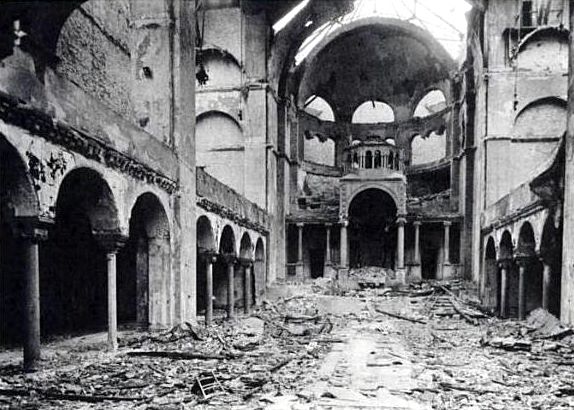
Interior of a Berlin Synagogue after Kristallnacht

Interior of a Berlin Synagogue after Kristallnacht

Seventy Five years ago this November (9th and 10th) Jewish shops and synagogues were vandalized and looted over those two nights throughout much of Nazi Germany and Austria in a most extreme incarnation of the “pogroms” that became known as “Kristallnacht” or the “Night of Broken Glass“.  It was one of the first major and overt expressions of Hitler’s genocidal plans then still being formulated. Unfortunately this event continues to be imitated by like-minded hateful individuals and groups worldwide. So the sociopolitical context of this musical work written for the 50th anniversary of that event sadly has an ongoing relevance for our contemporary world even 25 years after its creation.

At its most basic level this piece is a sort of concerto for six instrumental ensembles playing in radio stations in six different countries live mixed by the composer and broadcast throughout Northern Europe on October 20th of 1988. There is no text as such but the sounds of people praying and the apparently random Hebrew letters and German numbers are scattered throughout the piece along with environmental and found sounds on the tape Curran prepared which plays throughout the performance as a sort of political pedal point.

English: "Hebrew alphabet" in Hebrew...

English: “Hebrew alphabet” in Hebrew, modern serif typeface. (Photo credit: Wikipedia)

The liner notes of the recording describe the piece as “radio concert for six choruses; six sextets each including a quartet (violas, cellos, bass clarinets, bass flutes, trombones, tenor sax/tuba) plus accordion and percussion; tape.”  All were individually conducted with the conductors coordinated by a click track and mixed live by the composer. The recording on New World records is the document of that broadcast.

The effect is that of a collage connected by the electronic nervous system, the radio stations, which link the various performances.  The program is largely implicit here and listening to this piece evokes images that can vary from one listener to the next as any great piece of art provokes different experiences. The sound images here are not pretty and the work is very emotionally intense. Those images are guided by the tone of the music and fueled by the cryptic words and sounds mixed in with the live performances.  It is, in effect, his Mitzvah to the memories of the fallen.  You will not come away unmoved.

Kristallnacht occurred in November of 1938, a month before Curran was born but  the impact of that action continues to resound from that generation to this.  As a politically aware artist he was compelled to respond and he did so in a most emphatic, creative and powerful manner.  Perhaps it is the inherited duty of one generation to exorcise the demons and the atrocities of the previous ones.  Curran has certainly contributed most memorably to such an effort with this work.

Thank you, Mr. Curran, for your prolific and varied contributions to music and your efforts through your art to exorcise the demons of our collective past.  I wish you a happy 75th birthday and wishes for many more creative years to come.

Other Minds 18, three nights on the leading edge


The stage at Kanbar Hall stands ready to receive performers on opening night of OM 18

The stage at Kanbar Hall stands ready to receive performers on opening night of OM 18

OM 18 has been my fifth experience at the Other Minds festival.  The most amazing thing about Other Minds is their ability to find new music by casting a wide net in the search for new, unusual and always interesting music.  As I said in my preview blog for these concerts this year’s selection of composers was largely unfamiliar to me.  Now I am no expert but my own listening interests casts a pretty wide net.  Well this year I had the pleasure of being introduced to many of these composers and performers with no introduction save for the little research I did just before writing the preview blog (part of my motivation for doing the preview blog was to learn something about what I was soon to hear).
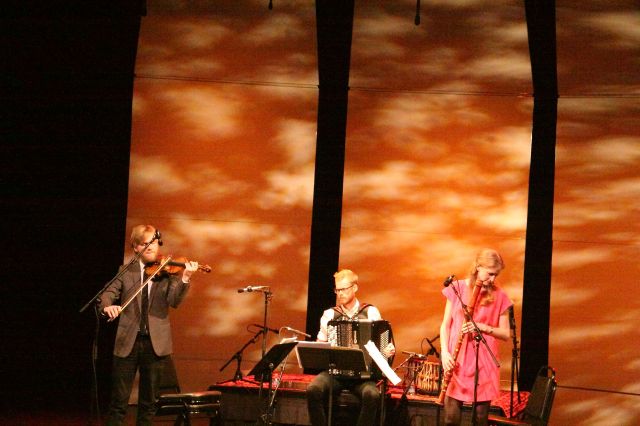
Gáman

Danish folk trio Gáman

The first night of the series consisted of what is generally classified as “folk” or “traditional” music.  Not surprisingly these terms fail to describe what the audience heard on Thursday night.

First up was the Danish folk trio ‘Gáman’ consisting of violin, accordion and recorder.  This is not a typical folk trio but rather one which uses the creative forces of three virtuosic musicians arranging traditional musics for this unusual ensemble.  On recorder was Bolette Roed who played various sizes of recorders from sopranino to bass recorder.  Andreas Borregaard played accordion.  And Rune Tonsgaard Sørensen was on violin.

The first piece, ‘Brestiskvædi’ was their rendering of this traditional song from the Faroe Islands (a group of islands which is under the general administration of Denmark but which has its own identity and a significant degree of independence).  It struck my ears as similar in sound to the music of Scotland and Ireland, lilting beautiful melodies with a curiously nostalgic quality.

Next was a piece by Faroese composer Sunleif Rasmussen.  It was the U.S. premiere of his ‘Accvire’ from 2008, a name derived from the two first letters of the instruments for which it was written (as we learned in the always interesting pre-concert panel).  It was commissioned by this ensemble.  The work reflected the composer’s facility with instrumentation and retained some suggestion of folk roots as well.  It employed a rich harmonic language within a tonal framework in what sounded almost like a post-minimalist piece.  The trio met the challenges of the music and delivered a lucid reading of this music which seemed to satisfy both the musicians and the audience.

The trio followed this with three more folk arrangements, two more from the Faroe Islands and one from Denmark.  Like the first piece they played these had a similar ambience of calm nostalgia.

The Danish folk piece set the stage for the next work, a world premiere by one of Denmark’s best known living composers, Pelle Gudmunsen-Holmgreen.  The piece ‘Together or Not’ from 2013 is an Other Minds commission.  The composer, who was not present, wrote to Other Minds director Charles Amirkhanian saying, “the title is the program note”.  While the statement was rather cryptic the music was not.  This was less overtly tonal than the Rasmussen work and was filled with extended instrumental techniques and good humor.  Again the instrumentalists demonstrated a comfortable facility with the technical challenges of the music and delivered a fine reading of this entertaining piece.

The nicely framed program continued with two traditional drum songs from Greenland (the violinist, holding his instrument rather like a guitar produced a sort of modified pizzicato technique which played the drum part).  These haunting melodies seemed to evoke the desolate landscape of their origin.

The program ended with a Swedish polka and, in response to a very appreciative audience, an encore of another spirited polka.  These were upbeat dance music that all but got the audience up and dancing.  The audience seemed uplifted by their positive energy.
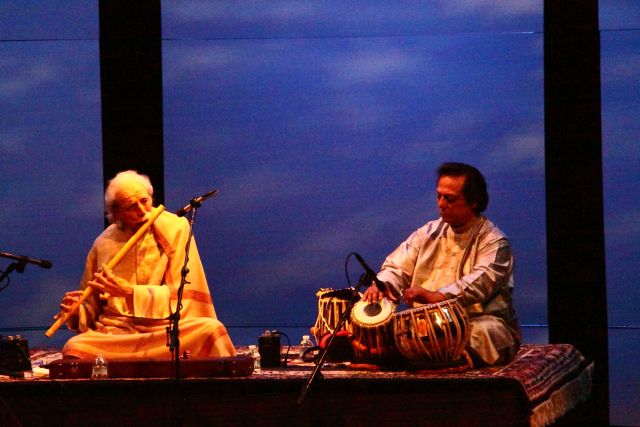
Sachdev

G.S. Sachdev (left) and Swapan Chaudhuri.

The second half of the first night’s concert consisted of two traditional Hindustani Ragas.  These pieces are structured in aspects of the the music but allow for a great deal of repetition and improvisation in which the musicians bring the music to life.  Hindustani music is deeply rooted in culture and spirituality.  The ragas are associated with yogic chakras, moods and time of day.  Their performance is intended to enhance the audience esthetically and spiritually.

G.S. Sachdev is a bansuri player.  The bansuri is a wooden flute common in this type of music (though Sachdev’s level of mastery is hardly common).  He was accompanied by the familiar tanpura drone produced by digital drone boxes instead of the actual instruments which produce the familiar drone sound that underlies Hindustani music performances.  Swapan Chaudhuri played tabla.  It is difficult to see the tabla as an “accompanying” instrument as much as it is a complementary instruments especially when played by a master such as he.  Chaudhuri is the head of the percussion department at the Ali Akbar Khan school in San Rafael in the north bay.  Sachdev has also taught there.  Both men have ties to the bay area.

The musicians performed Raga Shyam Kalyaan followed by Raga Bahar.  Originally I had thought of trying to describe these ragas in their technical aspects but my knowledge of Hindustani music cannot do justice to such an analysis.  Rather I will focus on the performances.

Raga Shyam Kalyaan was first and received an extended reading.  How long?  Well I’m not sure but this music does create a sort of suspended sense of timelessness when performed well.  Indeed that was the effect on this listener.  The whole performance of both ragas could not have exceeded one hour  but the performances by these master musicians achieved the height of their art in producing riveting performances of this beautiful music.  Sachdev’s mastery certainly has virtuosity but his genius lies in being able to infuse his performance with spirituality from within himself and to impart that spiritual resonance to his audience.  He was ably aided in that endeavor by Chaudhuri who, clearly a master of his instrument and connected with Sachdev, channeled his connection with the infinite.

The audience responded with great warmth and appreciation concluding the first day of the festival.

D. Lee OM18

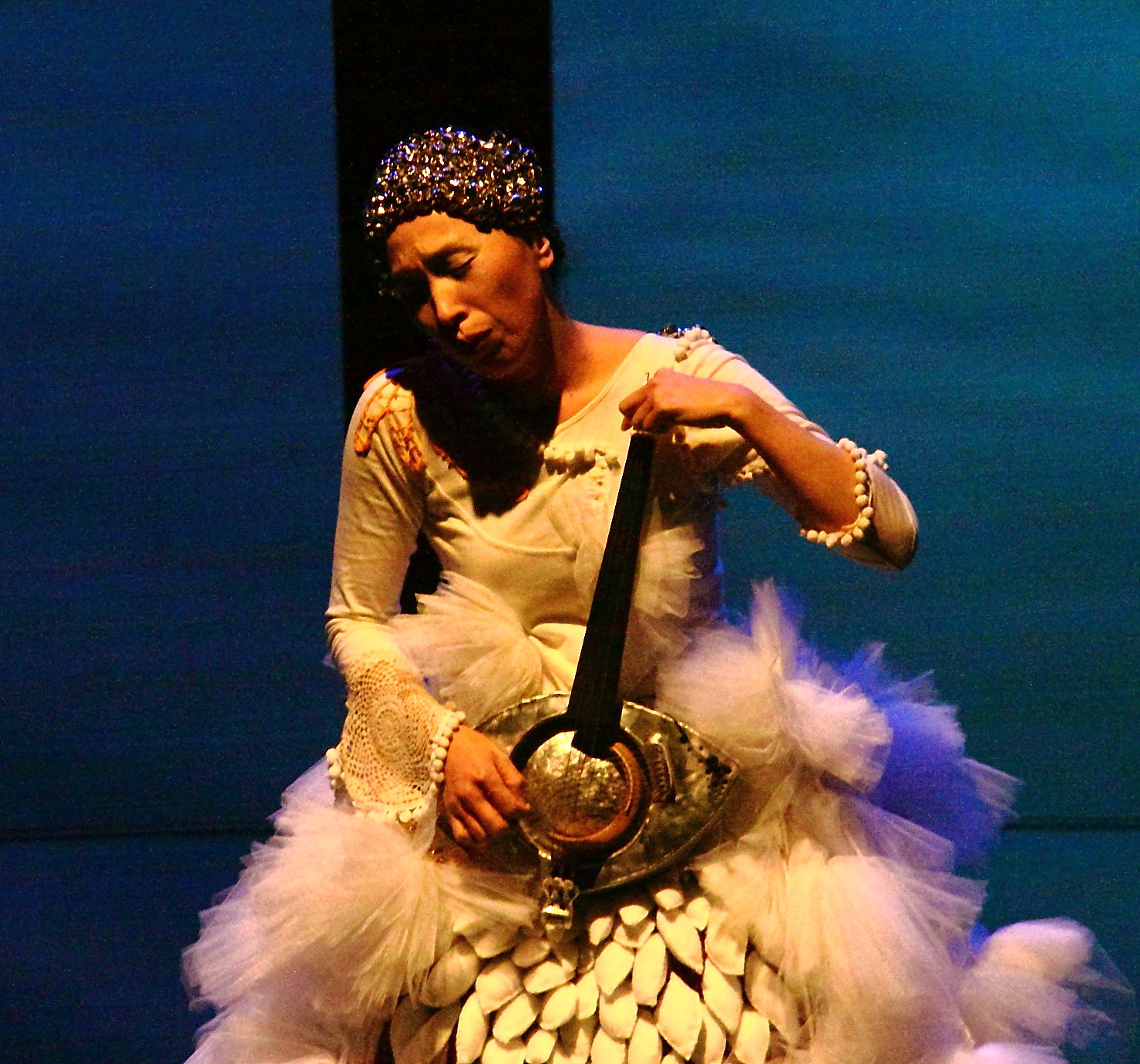
Composer, performer, designer, shaman Dohee Lee performing her work, ‘ARA’.

Friday night began with the world premiere of the music theater performance piece, ‘ARA’ by Korean-American artist Dohee Lee.  Continuing with the spiritual tone set by yesterday’s Raga performances Lee introduced her multi-disciplinary art derived from her study of Korean music, dance and shamanism as well as costume design and music performance.

She was aided in her efforts by the unique instrument designed for her by sculptor and multi-disciplinary artist Colin Ernst.  The Eye Harp (seen in the above photo) is an instrument that is played by bowing and plucking strings and is connected to electronics as well.

The art of lighting designer David Robertson, whose work subtly enhanced all the performances, was clearly in evidence here.  This was  a feast for the eyes, ears and souls.  Dohee Lee’s creative costume design was integrated with the visually striking Eye Harp instrument.  And the music with sound design processing her instrument nicely complimented her vocalizations.  All were lit so as to enhance the visual design and create a unified whole of this performance.
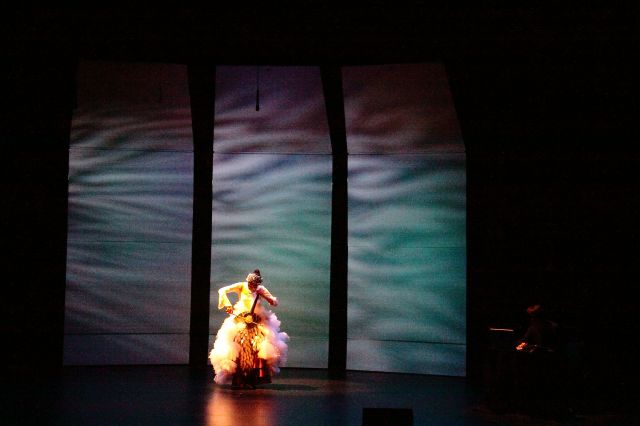
Dohee Lee on the carefully lit stage off Kanbar Hall.

Dohee Lee on the carefully lit stage off Kanbar Hall.

Her performance began slowly with Lee in her beautiful costume took on the role of a modern shaman conjuring glossolalia in shamanic trance along with choreographed movement and accompanied by her Eye Harp and electronic sounds through the theater’s great sound system.   Like the raga performances of the previous night I wasn’t aware of how long this timeless performance lasted (the program said it was 10 minutes) .  But I wished it would have gone on longer.  Even with photographs the experience here is difficult to articulate.  The sound enveloped the audience who viewed the carefully lit stage in the otherwise darkened hall as the sounds communicated a connection with the sacred.

I am still trying to digest what I saw and heard on this Friday night.  I don’t know how most of the audience experienced this piece but they seemed to have connected with it and responded with grateful applause.  She seemed to connect as both artist and shaman.
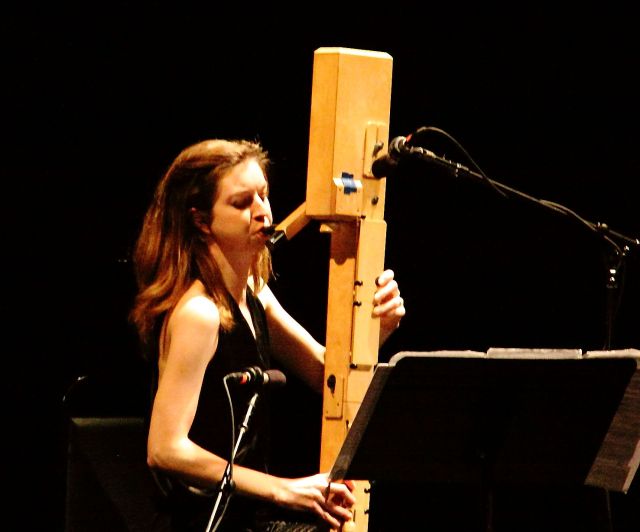
Anna Petrini performing with her Paetzold contrabass recorder.

Anna Petrini performing with her Paetzold contrabass recorder.

Following Dohee Lee were three pieces for an instrument called the Paetzold contrabass recorder (two before intermission and one after).  Paetzold is the manufacturer who specializes in the manufacture of recorders, forerunner of the modern flute.  The square contrabass recorder is a modern design of this woodwind instrument.  However, knowing the sound of the recorder in music of Bach and his contemporaries, gives the listener no useful clues as to what to expect from the unusual looking instrument pictured above.

Anna Petrini is a Swedish recorder virtuoso who specializes in baroque and modern music written for the recorder.  At this performance she played her contrabass instrument augmented variously by modifications, additions of microphones, little speakers and electronic processing.  These pieces were perhaps the most avant-garde and the most abstract music in this festival.

Anna Petrini performing on the stage of Kanbar Hall at the Other Minds festival.

Anna Petrini performing on the stage of Kanbar Hall at the Other Minds festival.

The creative stage lighting provided a useful visual counterpoint to the music.  The first piece, ‘Split Rudder’ (2011) by fellow Swede Malin Bang was here given it’s U.S. premiere.  This piece is concerned with the sounds made inside the instrument captured by small microphones inserted into the instrument.  The resulting sounds were unlike any recorder sound that this listener has heard.  The piece created percussive sounds and wind sounds.

The next piece, ‘Seascape’ (1994) by the late Italian composer Fausto Rominelli (1963-2004) used amplification but no electronic processing.  These abstract works were received well by the audience.

‘SinewOod’ (2008) by Mattias Petersson involved introducing sound into the body of the  instrument as well as miking it internally and setting up electronic processing with which the performer interacts.  Like the two pieces that preceded it this was a complex exercise in the interaction between music and technology which is to my ears more opaque and requires repeated listenings to fully appreciate.
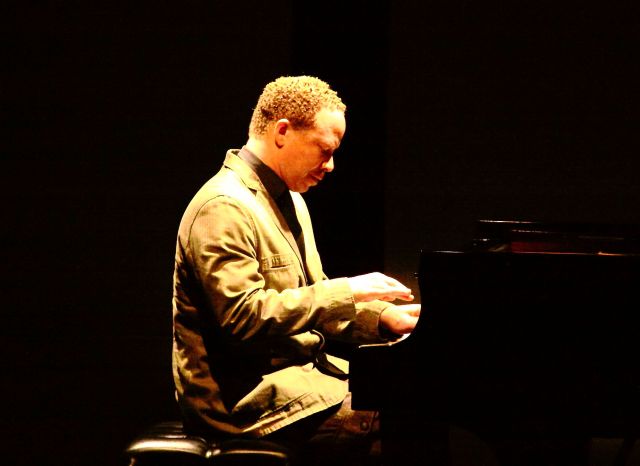
Taborn

Craig Taborn performing on the stage of Kanbar Hall at the 2013

The second concert was brought to its conclusion by the young jazz pianist and ECM recording artist Craig Taborn.  Detroit born, Taborn came under the influence of Roscoe Mitchell (of AACM fame) and began developing his unique style.  Here the term jazz does little to describe what the audience was about to hear.

Taborn sat at the keyboard with a look of intense concentration and began slowly playing rather sparse and disconnected sounding notes.  Gradually his playing became more complex.  I listened searching for a context to help me understand what he was doing.  Am I hearing influences of Cecil Taylor?  Thelonius Monk?  Keith Jarrett maybe?

Well comparisons have their limits.  As Taborn played on his music became more complex and incredibly virtuosic.  He demonstrated a highly acute sense of dynamics and used this to add to his style of playing.  I was unprepared for the density and power of this music. Despite the complexity it never became muddy.  All the lines were distinct and clear.  And despite his powerful and sustained hammering at that keyboard the piano sustained no damage.  But the audience clearly picked up on the raw energy of the performance.

This is very difficult music to describe except to say that it had power and presence and the performer is a creative virtuoso whose work I intend to follow.
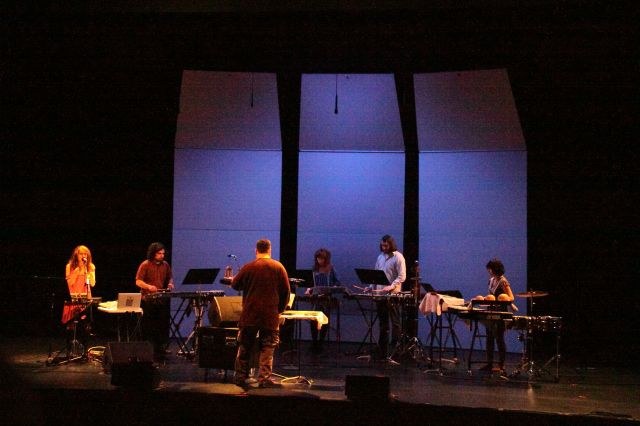
Amy X Neuberg along with the William Winant percussion group playing Aaron Gervais.

Amy X Neuberg along with the William Winant percussion group playing Aaron Gervais.

The final concert on Saturday began with the world premiere of another Other Minds commissioned work, ‘Work Around the World’ (2012) for live voice with looping electronics and percussion ensemble.  This, we learned in the pre-concert panel is another iteration in a series of language based works, this one featuring the word ‘work’ in 12 different languages.

Amy X Neuberg singing at the premiere of Aaron Gervais' 'Work Around the World'.

Amy X Neuberg singing at the premiere of Aaron Gervais’ ‘Work Around the World’.

Language is an essential part of the work of local vocal/techno diva Amy X Neuberg’s compositions and performance work.  With her live looping electronics she was one instrument, if you will, in the orchestra of this rhythmically complex work.  William Winant presided over the complexity leading all successfully in the performance which the musicians appeared to enjoy.  The audience was also apparently pleased with the great musicianship and the novelty of the work.  Its complexities would no doubt reveal more on repeated listenings but the piece definitely spoke to the audience which seemed to have absorbed some of the incredible energy of the performance.
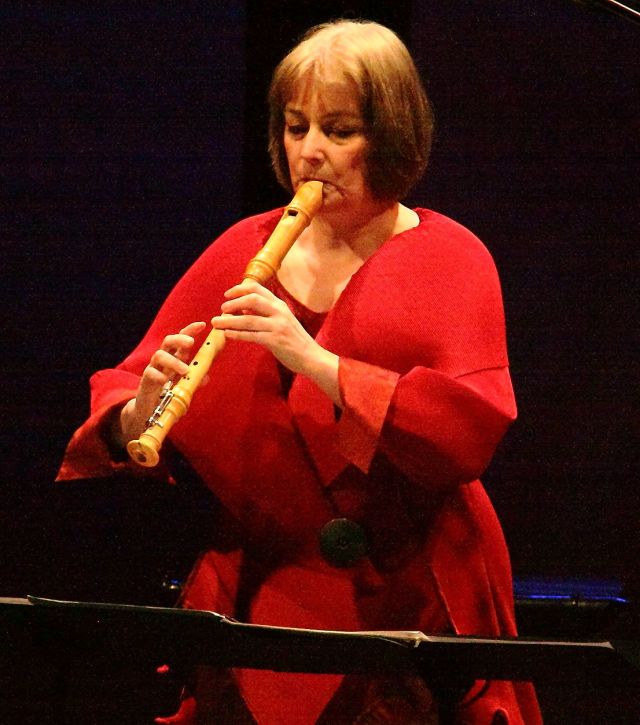
Michala Petri performing Sunleif Rasmussen's 'Vogelstimmung'.

Michala Petri performing Sunleif Rasmussen’s ‘Vogelstimmung’.

Back to the recorder again but this time to the more familiar instrument if not to more familiar repertoire.  Recorder virtuoso Michala Petri whose work was first made known to the record buying public some years ago is familiar to most (this writer as well) for her fine performances of the baroque repertoire.

Tonight she shared her passion for contemporary music.  First she played Sunleif Rasmussen’s ‘Vogelstimmung’ (2011) which he wrote for her.  It was the U.S. premiere of this solo recorder piece.  Vogelstimmung is inspired by pictures of birds and is a technically challenging piece that Petri performed with confidence.  At 17 minutes it was virtually a solo concerto.

And then back to electronics, this time with Paula Matthusen who now teaches at Wesleyan holding the position once held by the now emeritus professor Alvin Lucier.  Her piece for recorder and electronics, ‘sparrows in supermarkets’ (2011) was performed by Ms. Petri with Ms. Matthusen on live electronic processing.  This was a multi-channel work with speakers surrounding the audience immersing all in a complex but not unfriendly soundfield.
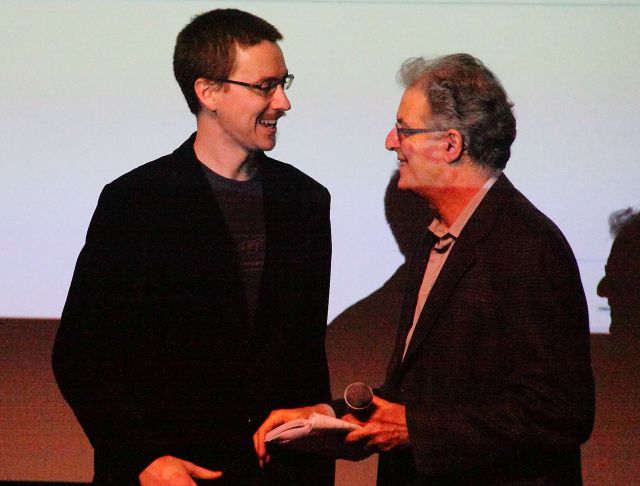
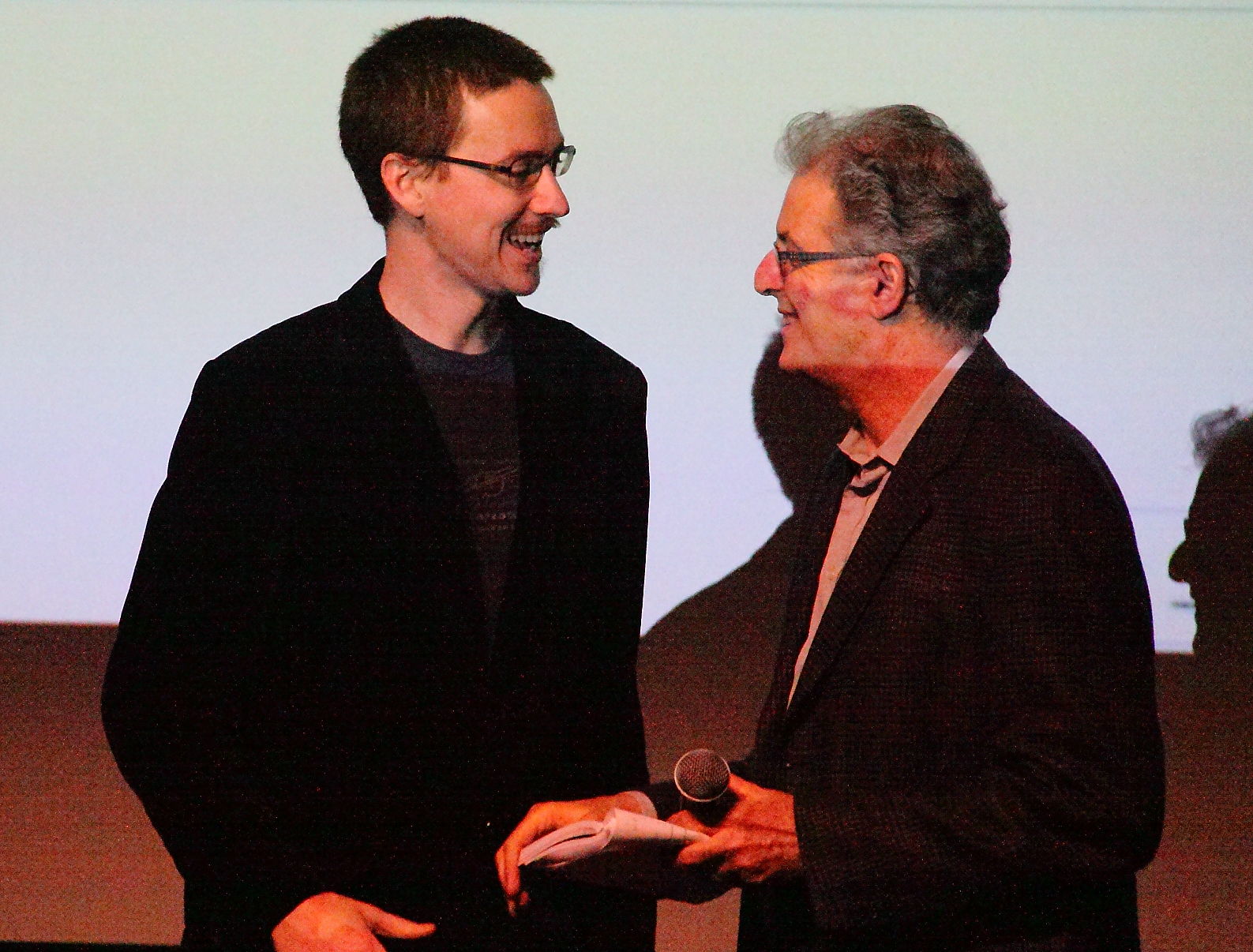
Michael Straus (left) with Charles Amirkhanian

Michael Straus (left) with Charles Amirkhanian


Some technical difficulties plagued the beginning of the first piece after intermission so the always resourceful emcee, Other Minds executive director Charles Amirkhanian took the opportunity to introduce the new Operations Director Michael Straus.  Straus replaces Adam Fong who has gone on to head a new music center elsewhere in San Francisco.

Mr. Amirkhanian also spoke of big plans in the works for the 20th Other Minds concert scheduled for 2015 which will reportedly bring back some of the previous composers in celebration of 20 years of this cutting edge festival.  No doubt Mr. Straus has his work cut out for him in the coming months.


Ström, part of the video projection

Ström, part of the video projection

With the difficulties sufficiently resolved it was time to see and hear Mattias Petersson’s ‘Ström’ (2011) for live electronics and interactive video in its U.S. premiere.  Petersson collaborated with video artist Frederik Olofsson to produce this work in which the video responds to the 5 channels of electronics which are manipulated live by the composer and the five lines on the video respond to the sounds made.  The hall was darkened so that just about all the audience could see was the large projected video screen whilst surrounded by the electronic sounds.

The work started at first with silence, then a few scratching sounds, clicks and pops.  By the end the sound was loud and driving and all-encompassing.  It ended rather abruptly.  The audience which was no doubt skeptical at the beginning warmed to the piece and gave an appreciative round of applause.

Paula Matthusen performing her work, '...and believing in...'

Paula Matthusen performing her work, ‘…and believing in…’

Next up, again in a darkened hall was a piece for solo performer and electronics.  Composer Paula Matthusen came out on stage and assumed the posture in the above photograph all the while holding a stethoscope to her heart.  The details of this work were not given in the program but this appears to be related to the work of Alvin Lucier and his biofeedback work on the 1970s.  Again the sounds surrounded the audience as the lonely crouching figure remained apparently motionless on stage providing a curious visual to accompany the again complex but not unfriendly sounds.  Again the audience was appreciative of this rather meditative piece.
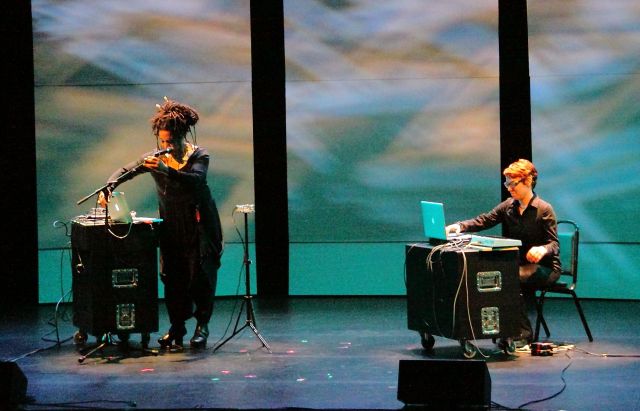
Pamela Z (left) improvising with Paula Matthusen

Pamela Z (left) improvising with Paula Matthusen

Following that Ms. Mathussen joined another bay area singer and electronics diva, Pamela Z for a joint improvisation.  Ms. Z, using her proximity triggered devices and a computer looped her voice creating familiar sounds for those who know her work while the diminutive academic sat at her desk stage right manipulating her electronics.  It was an interesting collaboration which the musicians seemed to enjoy and which the audience also clearly appreciated.

Pamela Z performing Meredith Monk's 'Scared Song'

Pamela Z performing Meredith Monk’s ‘Scared Song’

For the finale Pamela Z performed her 2009 arrangement of Meredith Monk’s ‘Scared Song’ 1986) which appeared on a crowd sourced CD curated by another Other Minds alum, DJ Spooky.  Z effectively imitated Monks complex vocalizations and multi-tracked her voice as accompaniment providing a fitting tribute to yet another vocal diva and Other Minds alumnus.  The audience showed their appreciation with long and sustained applause.
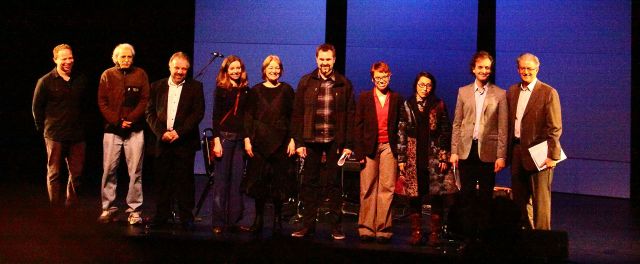
All the composers of Other Minds 18

All the composers of Other Minds 18

Impossible, you say?


einsteintrain

The first scene


I had the pleasure of seeing the recent production of the Philip Glass/Robert Wilson “opera” ‘Einstein on the Beach’ in Berkeley on October 28th.  I had seen the production at the Brooklyn Academy of Music 20 years ago and have loved the music since I first bought the recording issued on the short-lived Tomato record label (this is the performance now available on Sony).  It is clearly a work which compels me and has insinuated itself into my world view.

The production was beautiful.  The musicians as always played well under the precise and confident direction of Michael Riesman who has apparently conducted every performance of the opera (that alone is an astonishing feat).  The dancers were spectacular in their execution of Lucinda Childs’ unusual choreography.  And the solo violin played in this production by violinist Jennifer Koh breathed a new virtuosic life into the familiar solo part.

Dance with spaceship

The set design and lighting were about as good as it gets and the performers appeared to be well rehearsed and operated as well oiled parts of the unified whole of the machine that is Einstein on the Beach.  It was a production that was loving and well received by the audience (a genuinely appreciative standing ovation followed the performance) in this, the west coast premiere of this landmark piece from 1976.   It is certainly worth noting that it took 36 years for this to be produced in even this most liberal of musical places.
I have hesitated to write about this performance partly because I didn’t want to simply report my attendance and geeky satisfaction.  I wondered if everything has already been said ad nauseam about this piece and adding yet another adoring review would be pointless and dull.  But the performance (all 4.5 hours of it) left me with a renewed appreciation for the music and the visuals.  It reinforced my belief that this is a truly significant work of art and that it will continue to be revived.  However it is likely that this is the last revival we will see which has been supervised  by the original creators.  Philip Glass is 75 and Robert Wilson is 71.  Lucinda Childs is 72.  And there is at the time of this writing no heir apparent for the Philip Glass Ensemble.

The vaguely apocalyptic themes provide a sort of commentary for our times.  Like any great work of art it continues to take on meaning for subsequent generations.  It is both a response to the milieu in which it was created and a mirror in which is reflected the present time of its performance.  Don’t get me wrong.  This avant-garde masterpiece is hardly easy listening or easy viewing.  In addition to its length it is non-linear, devoid of plot and devoid of most of the conventions by which we normally judge and appreciate both theater and music.

But it has been embraced by many.  Mark Jacobs’ Spring/Summer 2012 Fashion Show featured models walking up and down the runway to the sound of the opening “1, 2, 3, 4…” of the solo chorus which opens the work.  A Pepsi commercial from 2008 titled ‘Einstein’s Choice’ also featured that same chorus.  And the incidental music to any number of nature programs are frequently infused with the now familiar arpeggios endemic to Philip Glass’ compositional style.

Spaceship scene

Combine these things with the fact that revivals of this opera play to nearly or completely sold out houses in New York, France, Berkeley, Mexico City, Amsterdam and Ann Arbor, Michigan.  Granted the revivals are infrequent, the last being 20 years ago, but the draw of this work apparently remains strong suggesting that it is now and will likely remain in the repertoire.

I came away from this production with a sense of exhilaration that I feel when I encounter a great performance of a masterpiece by Mozart, Beethoven or John Coltrane, a sense of connection to a greater meaning such as one finds in all great works of art be they music, theater, painting, literature, film, etc.  And I don’t think I am alone in having felt that.

When I first began listening to this piece in the aforementioned Tomato recording I was both fascinated and perplexed.  I felt compelled to listen again and again and was perplexed at what I was hearing.  But history tells us that few seem to fully appreciate great art at the time of its emergence, that such appreciation takes time.  With time and repeated listenings I began to find the work grow on me, become familiar.

Seeing the 1992 revival in Brooklyn only further reinforced my sense that this is a very significant work and it remains one of my favorite pieces of music.  It is one of the pieces of music that feels to me like a personal discovery, one which I seem to have appreciated to some degree from my first encounter with it.  And my understanding as well as my affection for this work has only increased with time.

What remains to be seen is whether this work can continue to be successful in subsequent productions done by people whose connection to the work is less direct and whether it can continue to speak to subsequent generations.  The majority of the crowd at Zellerbach hall for this performance appeared to be in the 40 to 50+ category which may be in part due to the cost of a ticket.  I hope that it is not lack of interest.

For years, until the new recording was released on Nonesuch Records in 1993, I listened to the 1979 release which, due to the length of the music, abbreviated some of the repetitions to allow the recording to fit on 4 vinyl discs.  It is this recording which I know best and is most deeply imprinted on my memory.

Of course the experience is quite different with the accompanying visuals.  I had learned to appreciate the music alone with just of few still photos to kindle my imagination as to how the full production would appear.  And, not surprisingly, my first encounter with the full production in 1992 exceeded my expectations and provided a new and richer perspective on the meaning of this opera.

When I say “meaning” I am referring only to the meaning which I experience.  I don’t lay any claim to any special knowledge here.  And I think that this and all great works of art sustain their worth through their ability to mean and be associated with a variety of things.  Einstein has different meanings and associations for each individual and perhaps no ultimate “meaning”.

Even the texts associated with the piece are intentionally non-linear, make few concrete references to culture as a whole.  There is no story here, there are only visual images, sonic images and a variety of spoken words which, while in English, have mostly vague meanings.  The issue here is the emotional impact.

Epilogue (Knee Play 5)

‘Einstein’ has clearly affected me emotionally and I am witness to the its effect on the audiences of which I was a part.  When I tell people anything about the meaning of the work I invariably refer to it as “post-apocalyptic” metaphor which ends quite simply with a poignant little love story, if you will, a bedtime story for our times.  After some 4 hours of having presented it’s audience with a plethora of images the opera ends with two lovers on a park bench who sit silently while the bus driver, his vehicle moving slowly from stage right to stage center, narrates the scene.  The lovers sit quietly until, we are told, one speaks up and asks, “Do you love me, John?”  This other’s answer speaks from the throes of youthful optimism and love at first affirming his love and then, when asked, “How much do you love me?”, he answers, “Count the stars in the sky.    Measure the waters of the oceans with a teaspoon.  Number the grains of sand on the seashore.”

This epilogue seems to suggest that, in the end, all that matters is how we experience each other, how well we succeed in communicating on a one to one level.  And perhaps that is also a metaphor for the work’s ability to communicate with subsequent generations.  While we try to communicate we succeed only sometimes.  Great art succeeds only sometimes.  The salient issue is having tried.  Despite the difficulties in communication, in love, in life, we try.  The opera ends in that 1979 recording with the chorus, two speaking voices, violin and organ all ending softly and definitively at the same time as the narration,  “Impossible, you say?”

Annie Lewandowski, Luciano Chessa, Theresa Wong in Berkeley


Lewandowski piano

A view of the inside of the piano showing Lewandowski’s alterations.

It is easy to miss the nondescript storefront on University Avenue where this performance took place. And the promotion of this concert appeared to be mostly through Facebook and the Bay Area improvisers web site which resulted in a small but appreciative audience interested in hearing the work of Annie Lewandowski, now a music lecturer at Cornell. She is a graduate of Mills College. She has a varied resume ranging from classical piano to progressive rock bands and she presented tonight her work with extended piano techniques much like those of John Cage but with some distinctly personal twists extending Cage’s methods further. Ms. Lewandowski was hosted by Theresa Wong (also a Mills graduate), bay area composer, cellist and singer who organized the event and Luciano Chessa, San Francisco Conservatory professor, composer, musicologist, historian and performer and producer who played a couple of different roles in this evening.

performance of La Barbara's 'Hear What I Feel'

Luciano Chessa performing Joan La Barbara’s ‘Hear What I Feel’

The first performance was introduced by Ms. Wong who informed us that Luciano Chessa had been kept in isolation for the last hour while the preparations were done for his performance. The piece being performed was Joan LaBarbara’s ‘Hear What I Feel’ from 1974. It consists of a table upon which there are several plates each containing some object or substance. The performer, who is blindfolded, is seated at the table and the performance consists of the performers reactions to the substances and/or objects he examines with his hands alone. It is performance art that would be perfectly at home with other Dada and Fluxus-like scores.

Wong led Chessa carefully from the back of the performance space to the table containing six plates. After seating him she positioned the microphone carefully in front of him. Chessa spent several minutes with each object examining three predominantly with his left hand and three with his right. All the while during his tactile adventure he vocalized a variety of sounds evoking (presumably) his emotional response to each object or creating an audio analog for them.

As with all such scores the result leaves a wide range of possibilities to the performer. And this performance was suitably humorous and engaging. Following his examination of the last of the objects Chessa removed the blindfold and reacted to each of the objects (without vocalizing) as he examined them visually. There was an effective combination of (mockingly?) serious concentration and idiosyncratic responses that left the audience genially amused and entertained.

Lewandowski piano

Annie Lewandowski playing in the piano, on the keyboard and singing.

Wong cello

Theresa Wong playing her carefully altered and electronically enhanced cello and singing.

This was followed by a duet between Lewandowski and Wong. Both performers utilized various ways of altering the sounds of their instruments by adding objects to the strings or by exciting the strings with objects. Wong also made use of a foot pedal controlling some electronics. Lewandowski’s piano was miked and amplified somewhat.

The improvisation was started by Lewandowski with some percussive like sounds elicited at the keyboard. Wong responded sparely at first and the two seemed to trade ideas which became richer as the performance went on. Again the serious concentration was present as the performers carefully heard and responded to each others’ music making. While satisfying it was a sort of introduction or first taste of what was to come in the second half.

A brief intermission saw the performers mingling with audience members, many of whom were acquaintances and other musicians.

Annie Lewandoski, Luciano Chessa and Theresa Wong in a trio improvisation

Annie Lewandoski, Luciano Chessa and Theresa Wong in a trio improvisation

What concluded this unusual program was a trio for all three performers. Lewandowski with her prepared piano, Wong with her altered cello, Chessa with his signature Vietnamese Dan Bau and guitar. All three also sang. The performance started sparely as each introduced suggestions or themes for the improvisation and reacted to them.

Lewandowski gave a much fuller exposition of the possibilities of her instrument playing the keyboard, inside and all around the piano as well as singing. Wong also seemed to use a wider amount of sound possibilities in her playing. Chessa played the traditional Vietnamese folk instrument in all but traditional ways using devices to excite the strings and focusing on tuning and even some percussive possibilities. At one point he left the table where he was performing to pick up an acoustic guitar. After picking a few notes he walked to the back of the stage area and ascended a stair case leading to a sort of balcony that surrounded the performance space. It was at this point that he began softly singing what sounded like an Italian folk tune as he played the guitar in a most traditional manner. This gave a collage effect to the performance juxtaposing the most traditional kind of music making with the extended and experimental sounds.

Chessa remained on the balcony for a bit, then descended the staircase again and returned to the more unusual playing methods at first on the guitar and then back at the table on the Dan Bau. Following this Lewandowski began vocalizing a melody with sparse accompaniment that would have been perfectly at home in a scene from ‘Eraserhead’ at times. She was echoed by Wong’s extended vocal techniques at first and then Lewandowski and Wong began singing a more traditional sounding melody with beautiful harmonizations interpolating this singing at different points while still traversing their freely improvised instrumental playing supported by Chessa on the Dan Bau.

This made for a rather tranquil mood as they ended the second half of the concert. The audience was appreciative. And this writer was pleased to have found a gem of a concert experience by young, serious (but good-humored) and accomplished musicians in the eclectic world of the east bay.

Ilhan Mimaroglu, a Personal Appreciation


I remember first coming across the music of Ilhan Mimaroglu on a Turnabout LP of electronic music in the 1970s. The unusual sounding name stuck in my head. And as I continued exploring and collecting contemporary music I would occasionally run across his name.

In the 1980s I came across tantalizing descriptions of his work in various record catalogs like one which stated that the music included a recording of Che Guevara’s autopsy (To Kill a Sunrise). I remained intrigued.

It wasn’t until the 1990s that I resolved to get a more comprehensive take on his music and to obtain as much of his it as I could find. At that time I had to rely on e-bay where I was able to find a couple of CD compilations and a copy of the anti-war LP “Sing Me a Song of Songmy”, a collaboration of sorts between Mimaroglu and the Freddie Hubbard Quintet. A good representative selection of his work can currently be found on the Ubu web site as well as the Avant Garde Project. And according to the discogs web site (which lists about 58 albums in which he was involved) his LPs are selling for any where from about $10 to about $80.

Born in 1926 in Istanbul he earned a degree in law before coming to the United States. Mimaroglu studied with (among others) electronic music pioneer Vladimir Ussachevsky at the Columbia-Princeton Electronic Music Center, the prominent east coast workshop where Milton Babbitt created some of his masterpieces and where Edgar Varese, Luciano Berio, Mario Davidovsky, Charles Wourinen and other luminaries worked and studied.

Through his work at the venerable Atlantic Records, along with fellow émigrés Ahmet and Nesuhi Ertegun he produced jazz and blues albums, most notably with Charles Mingus. Here he was able to establish his own record label, Finnadar. He released his own music and that of other avant garde composers such as Luciano Berio, Anthony Braxton, Henry Cowell, Morton Feldman, Pierre Boulez, Frederic Rzewski and others. One of my favorites and a classic, in my humble opinion, is The Adoration of the Clash, a recording by pianist Doris Hays of music by Hays, Feldman and others. In short he strove to promote some difficult listening by avant garde composers of the day.

He had an interest in agitprop, art that expresses political views. (The term is a portmanteau of agitation and propaganda and was coined in the 1930s in communist philosophical circles.) Indeed much of Mimaroglu’s work has overtly political themes. In a 1975 interview with Charles Amirkhanian he expressed his distaste for folk music, particularly that of his native Turkey and that region of the world, because he says it supports oppressive regimes.

In addition to his work with Charles Mingus he is noted for having some of his music grace the soundtrack of Frederico Fellini’s ‘Satyricon’. But his music understandably reached a limited audience. His music can be harsh and is intentionally disturbing dealing with disturbing themes. But it is well crafted and has a distinctive sound. Fans of the avant garde should definitely seek out his work.

In the course of collecting his music I came to learn that Mimaroglu was also a writer along with being a composer, producer and teacher (Ingram Marshall is among his students). He died July 17th of 2012 in Manhattan. And, though anyone’s passing is a time for sorrow, it is a time for reflection and frequently resurrection by renewed interest. I hope that more of this important figure’s work will come to light in the months and years to come. RIP.

Experimentalism Otherwise, a significant new book on the New York progressive music scene in thec1960’s


I posted my blog review of the Carl Ruggles CD release on Amazon so I decided it would be reasonable to take an earlier review from Amazon and post it to my blog. So having made this guilty disclaimer, here is my review of a great book I came across in the fall of 2011:

For those interested in contemporary music and the New York avant garde of the early to mid 1960’s this is a book that is hard to put down. Each of the first four chapters is devoted respectively to: The New York Philharmonic’s 1961 performance of John Cage’s ‘Atlas Eclipticalis’; Henry Flynt and his rejection of mainstream avant garde trends (Stockhausen, Boulez, etc.); The (short lived) Jazz Composer’s Guild; and the performances of cellist Charlotte Moorman. A final chapter is devoted to a summary analysis which further connects these performers and events to the work of the ONCE Festival, Sonic Arts Union and (surprisingly but most appropriately) to the influence of these avant gardists on the subsequent work of Iggy Pop.

Nearly every significant figure of the avant garde is mentioned or quoted and the views of the general public as well as more specialized critics (which, of course, includes various members of the avant garde) are included in the course of the discussion and analysis. In addition to John Cage we hear from the likes of Morton Feldman, Christian Wolff, David Tudor. The Henry Flynt chapter necessarily involves various figures associated with the Fluxus movement and related projects. The Jazz Composer’s Guild chapter includes Bill Dixon, Roswell Rudd, Michael Mantler, Carla Bley, Paul Bley, Amiri Baraka, George Lewis, the AACM. And the chapter on Moorman includes Nam Jun Paik as well as John Cage and various Fluxus artists. The final chapter connects to others not so closely associated with New York such as Robert Ashley, Gordon Mumma, the ONCE Festival, Sonic Arts Union and finally to MC5, John Sinclair and Iggy Pop.

While there is some musical analysis here the author seems primarily concerned with analyzing these events and people and placing them more clearly within the political, social and cultural contexts in which they existed and to which they reacted. And indeed he finds highly relevant connections to civil rights issues and political conflicts and social movements as well as musical and performance movements and practices.

The analysis in terms of the likes of Pierre Bordieu, Franzt Fanon and Michel Foucault may be a bit difficult for those who have no familiarity with their works but his analysis is fascinating and his writing style is very lucid. This is an intelligent book not aimed at a narrow specialist audience. I believe that he succeeds in producing a fresh, important and valuable perspective on the people, the music, the events and the responses to them which will continue to prove useful in present and future analyses of the state of contemporary music and performance.

Finally the book is full of references comprising at least a third of the volume which serve both to support and illustrate Mr. Piekut’s theses and also to provide easy access to further reading and research.

In the time since I published this review Mr. Piekut has come to the United States and is now an Assistant Professor at Cornell University. I will certainly continue to follow the work of this young scholar. And I eagerly anticipate his next project. Perhaps he will see fit to turn his analytical insights to more of America’s too little known avant garde music movements and provide some much needed documentation. And hopefully his students will be motivated to explore these as well.

It is worth noting that the ‘Other Minds’ people in San Francisco have recently chosen to make this book available at a discount on their website. They stock a small but carefully selected cache of books related to new music and their inclusion of this one suggests that they find it a significant volume. In addition they are also stocking local artist/composer/professor Luciano Chessa’s new book on Luigi Russolo, the early twentieth century Italian artist best known for his advocacy of the use of noise as a musical element. In fact I have it cued up in my reading list and plan a future review.