Denise Burt’s beautiful design effectively encompasses the scope and meaning of this album in arresting images
Maya Beiser, cellist, Bang on a Can member, listener, composer, innovator, interpreter, and producer. Beiser’s hats are many and each new album traces the musings of a truly interesting artist, ever evolving, revisioning, thinking, growing. She cuts a singular, intelligent, and deeply felt path that is both monolithic and definitive.
Looking back and forward
This latest release on her own Islandia label is another exposition of a powerful musical mind bringing fascinating perspectives, the artist’s singular take on music spanning some 500 years. Beiser is not about “authentic” interpretation (mostly) but rather about lucidly sharing her perspective, her musical visions.
Previous releases gave us her take on living musical icons like Philip Glass and Terry Riley. She also dares to look back upon some of the “sacred cows” of the repertoire like the Bach Cello Suites and Riley’s seminal “In C” among others. Her revisionings are respectful homages and insightful performances that challenge and inform her listeners to maybe hear in a new way. As T.S. Eliot said,
“We shall not cease from exploration And the end of all our exploring Will be to arrive where we started And know the place (or the piece) for the first time”
So it is with the carefully curated selections on this disc. Beginning with a Missy Mazzoli composition featuring vocalist and performance artist Helga Davis (featured most visibly in the most recent iteration of Glass’ “Einstein on the Beach”). Her vocal skills drive these settings of texts by Erin Cressida Wilson. And this piece sets the tone for this album which is both lament and celebration for the experiences of women in history, mythology, and memory.
The first five tracks contain the bittersweet song cycle, Salt, from which the album takes its name. Here the listener is brought into the context of the Biblical story of Lot’s wife, forever imprisoned in a pillar of salt. But, rather than a pedestrian retelling of the tale, this cycle appropriates the context of the story to establish, with painful directness, the tone and direction of what will follow.
Helga Davis (photo from WNYC)
From her mineral prison, a mineral ironically known for its preserving properties, she sings of her crime of looking and remembering. She sings of pain, anger, and sadness, but never with remorse for her “crime”. It is an image that Beiser says lives powerfully in her personal memory. Mazzoli, Davis, and Beiser recontextualize the prisoner as victim, not criminal.
The ghostly images of the women we meet on this album are lamented as well as celebrated for their stories which burn deeply into our collective mythology, into our personal memories. Beiser lovingly dedicates this release first to her daughter, Aurielle Kaminsky, then to the principals whose creativity and energy pervade this album: Missy Mazzoli, Clarice Jensen, Meredith Monk, Erin Cressida Wilson, Helga Davis, Odeya Nani, Beth Morrison, and Christina Jensen.
In Lament to Phaedra, a work by the late British composer John Tavener is heard in an arrangement by Beiser. The 1995 work is sung by Phaedra’s sister Ariadne in response to Phaedra’s suicide by hanging. But here we have a wordless arrangement for cello and electronics that focuses on Tavener’s unique harmonic style and lyrical melodic construction. The result is effectively an affirmation of the lament for her fate.
Then we are treated to yet another transcription of a curiously difficult but very effective use of the early music concept of “hocket”, an interactive counterpoint of two voices. The eponymous Hocket, though vocal in its original form is, like much of Meredith Monk’s work, without a text. Monk’s work is about the voice, or the voices. And her revisioned operatic creations are fed by the mythological streams of women’s stories. This creative arrangement by this artist is an homage to Monk and, by extension, to the women she so beautifully celebrates in her work.
Meredith Monk with Allison Sniffin after a performance of Hocket at the Other Minds Festival in San Francisco (copyright Allan J. Cronin)
Another arrangement follows. It is a Melody from Orfeo ed Euridice, from the late baroque opera by Christopher Willibald Gluck. It is, of course, another ill fated relationship ended by the same infraction of looking and remembering that sealed the fate of Lot’s wife. Here Beiser chooses the gorgeous “Dance of the Blessed Spirits”, another wordless homage that imprints on the listener most effectively.
Next up is yet another wordless work, this one by fellow cellist and composer, Clarice Jensen, whose work has graced these blog pages before in reviews of her singular, drone, minimalist, meditative albums. Whether you call her work “drone” or “minimalism” or whatever you choose, your ears will bask in her meditative sonic ministrations. Jensen’s work, while related by its medium (that of cello and electronics), is a distinctly different style, immersive, meditative, evocative, a sound bath for the listener.
Clarice Jensen (from Jensen Artists page)
From the 21st century we are now transported to 17th century Venice and the work of the early baroque master Claudio Monteverdi. In the only surviving music from his second opera, we hear Ariadne, sister of Phaedra, singing the lament for the sister who had taken her life in shame and sadness.
The penultimate track brings us to this artist’s cultural roots with a song by Yedidya Admon to lyrics by Yitzchak Shenhar.
My Field (Shedemati)
My field, At dawn I sowed it in tears, Let the prayer of the farmer be heard! My field, It is saturated with dew, It is intoxicated by the light of the sun. The grain bends low in front of the reaper. The strides are long, The burnished scythe is raised high.
Odeya Nini provides the voice in this “reimagining“ of this classic song of sadness and lament by the lowly farmer imagined by the poet.
Odeya Nini (unknown copyright)
Fittingly, this last track is about death, endings. It is Beiser’s arrangement of Henry Purcell’s “When I am laid in the earth” from his opera, Dido and Aeneas. The text:
When I am laid, am laid in earth, May my wrongs create No trouble, no trouble in thy breast; Remember me, remember me, but ah! forget my fate. Remember me, but ah! forget my fate.
But forgetting is not allowed here. Beiser begs us to remember. And we cannot avert our ears or eyes.
What a gut punch! I’ve been seeing this man in concert, buying his albums, reviewing his albums and imagining in some way that this artist, whose work has become a constant in my life, would always be there. But along comes the inevitable finale and the gut punch that this wonderful artist is also a human being. One takes for granted sometimes that in some way they will always be there, that another concert or recording will be there. And then it isn’t.
There is great comfort in the fact that his art will live on. It will live on in his 23 or so albums but, more importantly, he lives on in the experience of his audience. The delight of his inventiveness, his humor, his genial presence will always live in my heart and in the soundtrack that plays in my head.
I generally don’t feel obliged to write eulogies but for some reason (or reasons) I find his passing to be rather marvelously impactful. Thank you to all of his collaborators, friends, and family. Thank you to the producers who have lovingly preserved his legacy in a bunch of great recordings. And thank you to the anonymous fellow audience members and music buyers and listeners who supported this wonderful artist over the years.
A Photography Experiment done during this self imposed “sabbatical” (Creative Commons License by Allan J. Cronin
I am not an academic but I use the term “sabbatical” to denote the two and a half month break I’ve taken from writing this blog. My reasons for the break don’t really matter but I decided I owe it to myself to make an accounting of what I have done during this time.
Well, in addition to catching up on reading, I managed to attend many films at the 40th anniversary of the Santa Barbara International Film Festival in February. Several of the 20+ films I saw will get at least brief reviews to share the amazing artistic wealth from these films.
The new home of the film festival on upper state in Santa Barbara. (Street photography by yours truly)
The old cineplex known as “Fiesta Five” is going to undergo major renovation including new air conditioning, projection systems, and sound systems. These five little theaters hosted many of this year’s films along with the (already fabulous) indie film center at the Riviera Theater as well as the 2000 seat Arlington and smaller venues like the Marjorie Luke Theater and others.
Temporally nestled between the just completed Sundance Festival and preceding the Oscars, the festival is conveniently set to attract stars and visitors to this historically low tourism portion of the year. And the newly acquired theater complex is set in a less traveled segment of State Street.
Meanwhile I have been adjusting to a new work assignment (still within the county system). The adjustment has more to do with the learning curve for a new department and related protocols. Not a horrible stress actually, but a time eater for sure.
As I move into my thirteenth year of this blog (I am also approaching my 40th year as a Registered Nurse) I have made some decisions regarding this blog and have some interesting plans (at least to me). Please do stay tuned.
One of the things I did not expect, but pleases me, is the fact that I’m still averaging about a thousand hits per month even though I haven’t published anything new lately. WordPress tracks visitors and view counts along with the countries from which the views are coming. So it’s impossible to tell if my viewers are new or long time readers just checking to see when something new is published. At any rate I am pleased to have a following of people interested in a rather lesser known musical genre, that of new, mostly recent, and sometimes decided difficult listening. Thanks to you all.
In addition to the film festival I did attend some events more in line with the general theme of this blog which will appear in forthcoming reviews. One of the most important to me was the 80th birthday of composer, producer, musician, broadcaster, and promoter of new music and executive producer of Other Minds (an annual new music festival held in San Francisco). My brief volunteer tenure at Other Minds prompted me to start this blog. There are mountains of new music articles, interviews, concert recordings, interviews, etc. on their website.
So, my apologies to those who came here for new material and had to go nearly three months without. This is the first of many concert and CD reviews to come.
After agonizing about writing a “best of” blog and publishing it before January 1, I decided to take a pause and enjoy the holidays. So here I look back on my 2023 in the rear view mirror but with memories still pretty fresh.
Regular readers of this blog likely already know of my oft shared opinion of the superfluous nature of “best of” lists and of my acquiescence in producing such on an annual basis. I certainly don’t think of this as a meaningless exercise and I think the process has grown on me. It is a chance to achieve a perspective which would be missed by simply plowing on ahead with the usual flow of reviews and articles. But drawing down that 12 month perspective is an opportunity to evaluate those months, to see where we’ve been and to hopefully get a smidgen of insight into where I/we are likely headed.
My Facebook friends will recognize the representative meme at the head of this article which is one of the more cloying aspects of “AI”, whatever that is. So indulge me for a moment to look at this seemingly new intrusion into the reality we thought we knew. So, what is “AI” and what will it do to us? Ultimately I’m not the one to answer that question but I’d like to throw some ideas to add to the speculation.
First, the choices a composer makes, like the choices of a painter, a writer, etc. are the stuff of the mystery of creation itself. Why “A major”, or why that tuning, or scale, or rhythm, or orchestration, etc? So along comes the notion of removing, or at least distancing, the artist from their creative product. That notion started not with famed proponent John Cage but rather with Johannes Chrysostymous Wolfgang Amadeus Mozart in his K. 516f musical dice game. Voila! Algorithmic composition (actually fairly common practice in the classical era). An early manifestation of “AI”? Perhaps.
Lejaren Hiller (1924-1994) was the first composer to employ electronic data processing in a musical work in his Fourth String Quartet subtitled “Iliac Suite” in 1957. There followed similar experiments with various iterations of electronic creations at music centers worldwide including The University of Illinois at Champaign, Columbia-Princeton, Stanford, The University of California Berkeley and San Diego, The San Francisco Tape Music Center (later subsumed into the Mills College Center for Contemporary Music, IRCAM in Paris, Israel Electronic Music Studio, and counterparts in the Nordic countries, Germany, Belgium, etc. Proto “AI”?
While historically interesting I raise this issue to say that, as far as I can tell, “AI” has not made this writer’s greatest hits list but it is interesting and maybe even useful. With that, my concern for the subject officially goes to the back burner for a later time.
2023 has been a year of great personal changes for the writer of this blog. A job change, a geographical relocation, and many things unrelated to this blog characterized a busy year for New Music Buff. So here in a sort of holiday tradition I present my “Best of 2023” from my little listener’s corner of the world. For the sake of simplicity I present a more or less chronological exposition of my sonic adventures. (N.B. Not one portion of this article made use of “AI”).
I begin with not with my 20 most read posts, a practice that characterized previous iterations of this annual exercise. Instead I am providing my top 20 favorite releases that were reviewed in 2023. Please note a couple of caveats. First, I receive a lot of review requests, more than I can even listen to, much less give a reasonably intelligent review. Albums that I’ve not reviewed should not be assumed to be bad or insignificant and my reviews are personal observations. I really only review albums that interest me anyway. Second, this article is only one reviewer’s opinion and not intended to be definitive or to supersede anyone else’s opinions. Third, this is not the end of my attention to music that was released in 2023. Some releases require more time to give a fair listen and a respectful review. There are more to come in 2024.
First a few stats: 2023 saw the publication of some 45 blog posts on New Music Buff, earning me 9693 views for the year. I rarely get comments on my posts (though I welcome and invite comments both positive and negative). Not bad, I think, for the overall less appreciated musical styles that fuel my desire to write about.
Now, in chronological order (of publication) are my personal favorites as a listener:
Neuma 158
Binaural Beats in the Tudor Rainforeststarted my new year with a bang. Reviewing this disc required me to take a closer look at the astounding work of David Tudor and his unique contributions to new music. This important release is a recording of a work which, by its own concept cannot receive a “definitive” performance. But this recording comes mighty close, involving “binaural” recording utilizing a mobile set of binaural microphones which are worn by the recordist. In addition this recording involved a collaboration with Pauline Oliveros and a group called, “Composers Inside Electronics”. The recording was done during Oliveros’ tenure at UCSD. Rainforest IV is so called because it is the fourth iteration of the instructions that form the original concepts of Tudor’s composition, “Rainforest”. It is an immersive sonic experience heard on headphones but actually not bad even heard on stereo speakers. A rich and wonderful release.
Starkland S-236
From a 1960s electroacoustic to a budding 21st Century composer Kotoka Suzuki released on the reliably interesting and even visionary Starkland label. Next Gen Electroacoustic: Kotoka Suzukiwill introduce the listener to this rising star who doubtless will produce more of her compelling compositions.
Sony 194399434826
Igor Levit is a fine concert pianist whose albums are effectively redefining the way we, as listeners, perceive the western classical oeuvre. Igor Levit: Defining Tristandoes for the various musical pieces inspired by the Tristan legend what Levit did for the concept of the great keyboard variations in which he selected Beethoven’s “Diabelli Variations” and Frederic Rzewski’s “El Pueblo Unido Variations” to join his recording of the Bach “Goldberg Variations” in a 3 disc package placing these three large sets of variations as emblematic of the genre in three different centuries (18th, 19th, and 20th). Levit, by his recorded output, is providing a valuable perspective which may influence repertory choices for years to come.
Levit’s traversal of the Tristan legend here ranges from the second recording of Hans Werner Henze’s too seldom heard “Tristan Preludes” back to works by Wagner (of course) and Liszt. He even slips in his wonderful solo piano transcription of the Adagio of Mahler’s unfinished 10th Symphony into the mix. This is a very compelling Tristan anthology by a deservedly still rising star.
Cantaloupe
This Cantaloupe release by Bang on a Can composer and master clarinetist Evan Ziporyn is both masterful and great fun. Evan Ziporyn: Bang on a Popconsists of transcriptions of “pop” songs for multiple clarinets all played by Ziporyn via his very effective multi-track recordings. The album is very personal and pretty much cliche free with these engaging and insightful transcriptions. It is an homage to the songwriters as well as a showcase for Ziporyn both as composer and as performer.
Microfest MF 23
The Young Person’s Guide to Ben Johnston is an ideal way to introduce listeners to the wonderful world of the late Ben Johnston’s music. Johnston, a student and colleague of Harry Partch shows his compositional skills utilizing non-traditional western tunings in these representative works. Johnston here does for some quasi pop tunes what Evan Ziporyn did with his clarinetist perspective for the tunes on Pop Matters. But Johnston’s pretty, accessible work belies fascinating complexities that don’t actually sound complex to the listener. This disc contains Johnston’s last completed work, “Ashokan Farewell” (which Johnston took to be a public domain folk tune but is in fact a piece written by Jay Ungar). It is paired with the 4th String Quartet (a set of ingenious variations on “Amazing Grace”) from 1982 and the 9th String Quartet of 1997. Profound, lovely to listen to, and a great homage.
DVD OM 4001
This DVD is a major addition to the discography of Charles Amirkhanian’s sound poetry as fine sampling of one aspect of Carol Law’s (Amirkhanian’s life partner) complementary visual art. These collaborations are also important contributions to the visual and performative aspect of these collaborative works. Amirkhanian has been a fine curator and promoter of the work of others but he has rather seldom stepped into the spotlight himself. This quirky genre got some fabulous exposure at the 7 day Other Minds 23 festival in 2018 in which Amirkhanian’s work was presented in the (surprisingly varied) context of sound poetry of the amazing international collection of artists who were hosted at those events. This DVD should be in the collection of anyone interested in new music sound poetry and performance art. It is both entertaining and mind bending featuring a juxtaposition of images and sound reviewed in greater detail in the post “Dyadic Dreams”. But words cannot do justice to these works. You really have to see them.
Cedille CDR 90000 210
Readers of this blog know my fondness for the Chicago based label Cedille and their promotion of Chicago based musicians. This disc stands out in this group’s embrace of non-traditional composers alongside more traditional works. The inclusion of works by DJ composer Jlin and the academy based genre defying duo Flutronics alongside composers like Danny Elfman and Philip Glass demonstrate the wide ranging repertoire of Third Coast Percussion. Much more information can be found in Perspectives: Spectacular World Premiere Recordings from Third Coast Percussionon my blog. This one reimagines the percussion ensemble.
Neuma 176
This disc is a good example of why listeners and collectors should pay attention to the Neuma record label. Philip Blackburn, who had been the very successful curator of Innova records, took over the defunct Neuma label which was founded with the intention of promoting largely electroacoustic music though not exclusively.
Agnese Toniutti‘s New Music Visionis actually a review of two discs by this rising star, a dedicated new music pianist that needs to be on your radar. The other Neuma disc contains Toniutti’s traversal of John Cage’s reluctant masterpiece, “Sonatas and Interludes for prepared piano”.
The disc pictured here is Toniutti’s vision beyond the Cage work. This one focuses on mostly living composers Lucia Dlugoszewski, Tan Dun, Philip Corner, and Toniutti’s herself. Basically, if Toniutti plays it, you should probably at least give a listen.
2023 saw the completion of Bay Area pianist Sarah Cahill’s epic survey of piano music by female composers. Cahill is another (predominantly) new music focused pianist about whom I would also assert that, if she plays it, you should probably give at least one listen.
The End of the Beginning: Sarah Cahill’s “The Future is Female” Trilogy Completedwill tell you all you need to know about this trilogy which encompasses about 300 years of music history and sheds light on some fascinating and substantial music written by women. Most of the works on this trilogy of albums are, in fact, world premieres but, fear not, even the pieces which are not premieres are likely not in your collection. This is a brilliant selection of music that effectively throws down the gauntlet to challenge other artists to explore this repertory. This trilogy is a true landmark and a joy to the ears.
This third volume in the wonderful Catalyst Quartet’s survey of another unjustly neglected group of composers focuses on the music of three black Americans of the twentieth century. Catalyzing Blackness, Volume Three: The Catalyst Quartet plays 20th Century music by Black Americans was nominated (but didn’t win) for a Grammy Award and, happily, I’m told that more volumes are in preparation. Again, this music is a pleasant revelation that does for black composers what Sarah Cahill has done for women composers (N.B. The first volume by the Catalyst Quartet focused on the black female composer Florence Price). And here’s hoping that Coleridge Taylor Perkinson, George Walker and William Grant Still will become household names in the concert hall.
Microfest MF 21
Son of Partch, Carrying on a Traditionis a really wonderful disc which, though I reviewed it in exceedingly positive terms, provoked a strongly negative reaction from the artist. The reaction apparently also provoked enough interest to have made this review one of my most read of 2023.
But, aside from the unfortunate negative reaction, I still maintain that this is a fine release worthy of attention from anyone who likes new music, microtonality, and the music of Harry Partch. Cris Forster is a composer, theoretician, and instrument builder clearly descended from the Partch tradition. His work deserves attention and this disc is a very satisfying experience.
Islandia IMR 011
Steven Schick is a master percussionist and conductor. This release is the first volume of his personal choices of solo percussion repertoire. Solo Percussion Manifesto Volume I: Steven Schick’s “A Hard Rain” is a manifesto of sorts and does for solo percussion music what Sarah Cahill has done for women composers and the Catalyst Quartet is doing for black composers. There are not many recordings of solo percussion music and Maestro Schick essentially presents his favorite works in definitive performances on a label produced by Bang on a Can cellist Maya Beiser. The second volume is in my review queue and, if this first volume is any indication, it will be a landmark survey.
Cedille
Rising Star Seth Parker Woods’ “Difficult Grace” is a Classic in the Making. Here’sanother Grammy nominee that did not win but, this second album by this fine American new music cellist is a winner in my book (er, blog). This is actually the audio of what was developed as a staged performance but the music speaks for itself. Keep an eye/ear out for this rising star who, even now, is storming the new music cello scene in invigorating ways.
Neuma 128
A Reason to Listen: Roger Reynolds’ Latest, “For a Reason”,new recordings on Neuma Records. Here we see Neuma following its original electroacoustic mission with this remarkable set in celebration of Roger Reynolds’s 90th year. This is a lavish 2 CD box set with a beautiful booklet and lucid liner notes. It is a worthy production which showcases recent works by this prolific and important American composer.
Readers of this blog likely are aware of my interest in music that is suppressed and/or neglected so this disc grabbed my attention immediately. Israel does a great job of funding the arts and this can be seen in the proliferation of truly fine performers nurtured by that funding. Less well known are the composers who have flourished in the art healthy politics of this country. Some 50 years of history are represented here. This is but a sampling, albeit finely curated, of several generations of composers displaying a plurality of styles with substantial results. This entertaining disc will whet the appetites of intelligent and curious listeners and, hopefully, bring about more recognition of the world class composers who deserve an audience.
Though this was ostensibly Randall Goosby ’s show, the music making was a wonderfully integrated duo with pianist Zhu Wang, These two fine young musicians shared the virtuosic duties that the music in this concert demands. Both are clearly hard working and dedicated artists. Both have technical and interpretive prowess. And they clearly embody a mutual respect for each other.
Pianist Zhu Wang
The music on the program served to demonstrate the duo’s creative selection of music:
Coleridge-Taylor: Suite for Violin and Piano, op. 3 Brahms: Violin Sonata No. 2 in A Major, op. 100 (“Thun”) Still: Suite for Violin and Piano Price:Two Fantasies Strauss: Violin Sonata in E-flat Major, op. 18
Curiously, due to this reviewer’s lack of familiarity with the violin and piano repertoire and having written some recent reviews of black composers’ music, the only familiar pieces were two of the three pieces by black composers. Now, overall, this is a marvelously chosen set of pieces that reflect the eclecticism and technical skill of both of these musicians.
The classic Paul Freeman conducted set of music by black composers.
The Brahms was perhaps the most familiar to audiences but the other works were equally substantive and worthy of being heard. It is these rather visionary choices that characterizes this duo as fresh and innovative. In addition their obvious knowledge of the music along with their enthusiasm and affection for it conspired to make for a delightful evening and even nudged this reviewer to try to become more familiar with the violin and piano repertory in general.
Samuel Coleridge-Taylor (1875-1912) was a black British composer who has of late had a much needed revival of his music. He was named in honor of the celebrated British poet Samuel Taylor-Coleridge (1772-1834). During his rather brief lifetime, Samuel had been hailed as “the British Mahler but, after his death, his music lay largely fallow until revived by the late, great American black conductor, Paul Freeman (1935-2015). His revelatory series for Columbia records (now Sony) opened listeners’ ears to a fascinating selection of music by black composers internationally.
The Coleridge-Taylor opus 3 Suite for violin and piano (1893) is an early work cast in the high romantic late 19th century style of broad melodies and virtuosic demands. It served as the introduction to an intoxicating evening of (partly) seldom performed works alongside some fairly established works in the repertoire.
The Johannes Brahms (1833-1897) second violin sonata (of three) was written in 1879 and was named “Thun” after the Swiss city where he composed it. The three movements follow the classical fast, slow, fast structure common to this genre.
It is a product of high romanticism and it remains a staple of the repertoire. It, as with most of this composer’s music, is technically challenging for both instrumentalists. It was a fine vehicle to confirm the incredible technical skills of these young artists.
William Grant Still (1895-1978) was one of the finest composers of the early to mid twentieth century. Like Coleridge-Taylor and Florence Price (1887-1953), his music was lauded during his lifetime but was neglected until fairly recently in the aforementioned Black Composers set. These musical choices revealed another aspect of this delightful pair of musicians, that of being essentially musical archeologists uncovering forgotten gems much as Lord Carnarvan’s work availed the world to the marvelous Egyptian art of King Tut’s tomb.
Still’s Suite for Violin and Piano was inspired by three sculptures–Richmond Barthé’s African Dancer, Sargent Johnson’s Mother and Child, and Augusta Savage’s Gamin. Written in 1943, it synthesizes elements of blues, pop, and classical music to create musical description of this ethnically inflected visual art.
Richmond Barthé’s African Dancer
Sargent Claude Johnson’s Mother and Child (ca. 1932)
Augusta Savage’s Gamin
The three movements comprise essentially tone poems based on the visual artwork. It was after the second piece, depicting the Mother and Child sculpture that the spell cast by the duo’s that revealed the “Thrall” of this blog’s title.
Goosby embodies a calm and casual confidence and he let the audience know early on that it is OK to applaud after a single movement if you are so inclined. He has a warmth that put the audience at ease, embracing us in a most genial manner. There is, of course, nothing wrong with musicians who might seem more aloof but Goosby’s warmth was both generous and welcome. However, it became clear that this audience, after hearing that gorgeous second movement so beautifully played, paused in a seemingly hypnotic response to the impassioned performance that captured the beauty of the music. It felt as though we had become collectively and deeply engaged. That is the meaning of “thrall” and that was a beautiful experience that spoke of connections between composer, performers, and audience that represent the pinnacle of the art of chamber music performance. All three movements were wonderfully executed but that moment and the collective reaction was a truly moving experience.
Following a brief intermission we got to hear both of Florence Price’s two Fantasies for Violin and Piano (1933, 1940). Though I’ve become familiar with much of Price’s work (her three surviving symphonies and Goosby’s own reading of her two violin concerti have been released in the last couple of years) I had not heard these fantasies before.
Though written only seven years apart, the works embody distinctively different qualities. Both are certainly “capricious”, embodying a variety of moods, but the second is a bit longer and seemed to reflect the composer’s maturing style. Both works were enjoyable and seemed to please the audience.
This led us to the final work on the program, the Violin and Piano Sonata (1888) by Richard Strauss (1864-1949). Best known for his big orchestral tone poems and his grand operas, this was an early work which has found an audience due to its lyrical and friendly character.
It is cast in three movements, and it was at the end of the slow movement that we again saw/heard a sort of “agreed upon” silence in which the audience seemed to have shared a deep impact from that lovely movement played so passionately. No one applauded as a reverent silence came upon us.
The much busier third movement again presented the virtuosity and broad melodies of high romanticism. And there was applause and, much deserved standing ovations. It was a joy to have heard these talented and hard working musicians in an ecstatic night of chamber music.
Santa Barbara conductor Nir Kabaretti (photo copyright David Bazemore)
It was the day before Passover and all through the lovely acoustics of the Granada Theater, nostalgia was afoot. It came in the form of a Mozart Overture, a Mahler Symphony, and some new music for clarinet, the klezmer clarinet of David Krakauer. (N.B. Klezmer is a style of playing common to the Ashkenazi Jewish communities of Eastern Europe and Russia).
Maestro Kabaretti’s thoughtfully crafted program featured the integration on non-western vernacular (folk) musics into the western classical idiom. The incorporation of an age’s popular music into the newly written concert music of that era is a time honored tradition in music history.
Today’s concert would feature Wolfgang Amadeus Mozart’s imitation of the exotic music (to Viennese audiences) of Turkish Janissary music in the overture to his opera, “The Abduction from the Seraglio”. The plot consists of a story that involves a Turkish Pasha who has kidnapped the lover of the leading man. (Spoiler: He rescues her).
There was a personal nostalgia in that the first opera recording I bought was the budget LP of the Josef Krips conducted performance of that opera. The overture quotes some of the music of the opera and sets the exotic locale with the imitation of Turkish music.
The relative exoticism of Turkish music was imitated by Mozart in his 5th Violin Concerto, subtitled “Turkish”, as well. Listeners may recall the imitation of Turkish martial music in the finale of Beethoven’s 9th Symphony (just after the cherub stands before God). Mozart’s inclusion of piccolo, triangle, big drum, and cymbals (rarely seen in classical era orchestras) typify the European imitation of this ethnic music.
Mozart’s overture works well as a standalone piece and Kabaretti’s Santa Barbarans stimulated at least this listener’s sense of nostalgia in a beautifully crafted reading of this music. From the familiar opening notes this overture this listener was transported to nostalgic reverie and simultaneously enthralled by the energetic reading of the work. It was a delightful balance of both nostalgia and an opportunity to somehow hear this work anew.
Clarinetist David Krakauer (c)Linus Lintner Fotografie
What followed that delightful overture brought featured performer David Krakauer to the stage for a performance of a new (2018) concerto for klezmer clarinet. But before that, we were treated to what Krakauer described as “an arrangement” of a classic klezmer wedding tune. The affably chatty Krakauer is apparently possessed of a genuine humility here because this was virtually a mini concerto for clarinet and string orchestra whose style had some resemblance to the Mahler Symphony programmed post intermission.
Krakauer is a seriously accomplished musician, composer, musicologist, and teacher. His technical and interpretive skills are of Olympian dimension and his ability to relate to fellow musicians and the audience were a joy to behold. Readers of this blog might recall an earlier review of yet another klezmer concerto also championed by Krakauer. You can read that blog entry here.
The youngest music by the youngest composer on the program was next. Wlad Marhulets (1986- ) is a Polish born and educated composer. His name had been unfamiliar to me but a quick look at his website and a few listens on YouTube revealed this man to be a marvelously skilled and creative composer. Put this man’s name on your listener’s radar.
Doubtless our soloist had some input on the performance of this concerto but Marhulets appears to have an in depth understanding of klezmer performance along with a solid grounding in western classical music and a marvelously nuanced skill at orchestration. This is a substantial concerto and a great addition to the repertory.
Like the Mahler Symphony which would follow in the second half of the concert, Mr. Marhulets demonstrated a range of compositional skills. He can evoke humor, terror, nostalgia, joy. He handles a large orchestra augmented by an electric bass guitar and a drum kit. And he has a subtle but effective sense of orchestral color. The soloist, who has a lot to do, winds in and out of passages that pit his clarinet variously against the full orchestra and in duet pairings, sometimes fleetingly, that suggest images of pub, dance hall, and street concerts. All of these the natural milieu of Klezmer music.
The concerto began loudly, raucously, and assertively. The soloist navigated the complex rhythms and subtle balances of texture as only a master musician can do. Kabaretti and his fine orchestra were clearly up to the significant challenges of this music and clearly enjoyed their labors.
The loud, declarative, opening gave way to a lovely and lyrical slow movement followed by a long and engaging cadenza, sometimes punctuated briefly at times by the orchestra. It then led into a really fun (though hardly trite) finale.
Following a richly deserved standing ovation, Krakauer and the orchestra gifted the audience with an encore. Echoes of klezmer in the many moods evoked by this afternoon’s music making left this listener reflecting on the chaos in our world here, in this beautiful hall, in this beautiful city, on the eve of Passover. I fancy that there is a gentle activism here, one in which the sharing of the beauty of a culture’s esteemed artists (composers and performers) acts as a proud display of some of the best that that culture has to offer. The quality of the music and the music making can’t fix the world’s problems but they can give us hope and joy. Great art elevates the soul. At least that’s what this reviewer felt.
The intermission was needed to replenish listeners’ emotional reserves for the second half. No doubt the musicians needed to recharge as well.
The Mahler First Symphony (1888) triggers more personal nostalgia for two reasons. One, my first Mahler purchase was the Bruno Walter reading of this and the ninth symphony. Second, I will forever associate that first movement depicting dawn in its opening. Astute listeners may recognize television and film composer Alexander Courage’s appropriation of this music in his now iconic theme for the original Star Trek series (which debuted in 1964 when your humble reviewer was 9 years old). I would encounter Mahler some years later.
It is difficult over 100 years after the symphony’s premiere to understand how radical this music seemed to players and listeners. Its Budapest premiere has been described as a disaster mediated by uncooperative musicians in the orchestra and an unsympathetic audience. After his death in 1911, Mahler’s compositional star rose to new heights when the late, great Leonard Bernstein championed his work during his long and fruitful career, even reintroducing Mahler’s music to the Vienna of its beginnings. This is the Vienna where Maestro Kabaretti was trained. And he gets this music deeply.
To be fair, this piece presents many challenges for players and conductors but, when it is well done, it thrills audiences. Maestro Kabaretti and his Santa Barbarans delivered as fine a performance of this symphony that this reviewer has heard. It was positively thrilling and, unlike the musicians who played in the disastrous premiere, the Santa Barbara Symphony clearly enjoyed their hard work and respected their leader.
This was a thrilling and invigorating concert experience. The hometown orchestra put in a world class performance and our esteemed soloist was matched in his expertise by their skills. The nearly full house was most obviously pleased as was this reviewer.
The primary importance of this new release is, of course, the presentation of these two major works but it also an exposition of the diversity (or do you prefer, “heterogeneity”?) that can become obscured by well intended terms like, “Latino” and “Hispanic”, or even conductor Gustavo Dudamel’s “Pan American”. All are well intended but racial, nationalist, and other categories are insufficient on their own in recognizing the rich diversity inherent in their cultures. Here we go, just in time for Latin History Month.
The concise liner notes tell us that even the album’s title, “Fandango” has multiple meanings depending on cultural contexts. The fact is that no single style or genre can be said to be representative of the marvelous diversity that exists within their intended scope which attempts to represent practically the whole of the western hemisphere as is the case with this release. So, while Fandango is certainly about the musical works presented, it also touches on the issue of diversity by the choice of two major works separated chronologically by some 80 years and representing composers from Argentina on the one hand, and Mexico on the other. Two different cultures that share a language in both words and , to some extent, music.
The centerpiece of this album is, of courses, the concerto that Maestra Akiko-Meyers commissioned from Mexican composer Arturo Márquez Navarro (1950- ). I’m sad to say that I am only now learning of this composer but delighted in his mastery of the orchestra and the grand romantic gestures of a past era along with an acute and personal appreciation of the folk idioms of his culture. At first I was skeptical of a “mariachi” inspired concerto because such attempts, even the most sincere, don’t always seem to work. Well, that is certainly not the case here. This is a strong contender for regular inclusion in the current canon of widely performed violin concertos. This one is a masterpiece which poses challenges to the soloist (which give her a chance to show her virtuosity) and surround it with rich, subtly, ultimately beautiful orchestral textures that support the soloist but which demand much of the orchestra and its conductor as well.
The concerto (written in 2020) is in the traditional three movements. The first, entitled “Folia Tropical” (tropical leaves) embraces the spirit of late romantic concerti like those of Bruch and Brahms. It is an extended movement that introduces and develops many moods and themes. It is a big symphonic movement worthy of a symphony and it gives the soloist much to do and upon which to demonstrate her musical and interpretive skills all the while with a very busy orchestra accompanying her.
The second movement, “Plegaria” (prayer) is a hugely substantive chaconne, the baroque contrapuntal variation form with a repeating bass line and thematic variations over the harmonic structures supported by those notes.. At least that is my listener’s understanding. But what is not necessary to “understand” technically is the emotional impact of this movement. This is an amazing use of the form. The soloist moves into different roles, sometimes very much upstage, sometimes an adjunct to the orchestra, sometimes not there at all. There is a slow, meditative beauty in this movement which is also characteristic of the romantic idiom in which this is written.
The third movement, “Fandanguito” (little Fandango) is a somewhat lighter and very energetic finale one might expect in a movement following the previous deeply emotional ones. And the composer does not disappoint. He writes a joyous, energetic finale which nonetheless stands up as substantially as its predecessors.
The composer Arturo Marquez with Maestro Dudamel and Anne Akiko-Meyers leaving the stage after a successful performance.
The joy, to this listener, is to hear a master composer in collaboration with a fine soloist both technically and interpretively. The composer has integrated his experiences and study of his own cultural folk musics and infuses the spirit of the music into his grand romantic idiom. That is, the concerto does not, for the most part use direct quotation from folk sources but uses structural elements in his composition. Maestra Akiko Meyers discharges her soloist duties with both startling facility and a deep understanding of the music and the composer’s intent.
Gustavo Dudamel is a joyfully rising star who brings his cultural proclivities and his own lens on western orchestral music. He is an exciting and incisive conductor. I don’t know the extent of Dudamel’s study of Latin folk musics but he really gets this work and brings out the composer’s subtleties in this gorgeous and exciting concerto.
The “B side” as they used to be called is no mere filler, it is the entirety of the Alberto Ginastera (1916-1983) ballet, “Estancia” Op. 8 (1941). Here, 15 separate movements are used in a five scene scenario. The work, usually heard in its four movement suite format and, even more frequently, just the spectacular finale, the Malambo.
In addition to its large orchestra, the ballet calls for a singer/speaker soloist who acts as both narrator and as soloist with orchestra. In this performance the challenge is admirably met by baritone GUSTAVO CASTILLO, another shining light cultivated by El Sistema. He performs well in both his baritone vocal duties and his narrator task in which he speaks Spanish in an elegant and, I’d say, almost Shakespearean grasp of the beauty of the language. The man understands drama as well as music.
This ballet is clearly a masterpiece. It reminds this listener of Prokofiev if he was born in Argentina. Nothing derivative here though. This is an intensely entertaining work, as substantial as Romeo and Juliet, similarly constructed in relatively brief musical segments designed to accompany a dance whose scenario is the story of the “gaucho” or cowboy that lived and worked hard lives, lives that were romanticized into a poem by Argentinian poet José Hernández (1834-1886). (click on the word “poem” for a link to an English translation of the poem).
All that to say that this is a truly enjoyable and important release. A valuable addition to the discography of Latin classical music.
Dudamel and his LA Philharmonic at the Hollywood Bowl.
Utter the name “Israel” and probably only a handful of people will think, “classical music”. As a lifelong new music fan I’ve made many wonderful discoveries by looking at work done by composers in countries that aren’t part of the typical America, Germany, Italy, France, Russia nexus. Throw in the Nordic countries, Canada, and Australia more recently and you have perhaps 90% of what is marketed (even if not efficiently distributed) as new classical music. Israel, at 75, remains a young country but its participation with world class classical composers and musicians is among their proudest contributions to the world at large and those contributions are both extensive and interesting.
Neuma 177
This fine release gives only the briefest taste with a curious selection of pieces that will likely lead listeners to the “more where that came from” path to discover a huge trove of music that really needs to be heard. The only problem with this release is that it’s not a 20 or 30 CD box set of representative western classical music from a comparatively new country in a very old artistic/cultural hotbed.
This fine Neuma release is actually a very nice taste whetting collection of three generations of Israeli composers. I wish I could call it “representative” but that would be a tall order. It is an intelligent selection that will hopefully inspire further exploration of Israel’s classical music artistic legacy. Israel is, in many ways, a country of challenges and this release is, similarly, an extension of this country’s challenges to the canon of western art music in its way and a gentle nudge to curious listeners.
Professor Robert Fleisher (photo: Darsha Primich, courtesy Navona Records)
This project began with a 1986 Israel residency by American composer/musicologist (now Professor Emeritus at NIU) Robert Fleisher. The culmination of this residency resulted in his marvelous book, “Twenty Israeli Composers” (1997) and all but one track on this disc from an earlier concert at NIU in 1987. which was fortunately recorded rather nicely. You can download the book for free by clicking on the title above. Fleisher wrote the very useful liner notes which are also available as a free download. Those two sources can help guide the avid listener to a wider range of music from Israel’s first 75 years.
Track list
German refugee Paul Frankenburger (1897-1984), better known as Paul Ben-Haim is doubtless the one name in this collection that listeners may have heard. He emigrated to the (then British Mandate of Palestine) in 1933 just ahead of the onslaught of the Third Reich in Germany. He Hebraicized his name when he became an Israeli citizen at that country’s inception in 1948. Truly, he was there at the beginning.
His pupils Tvi Avni, Eliahu Inbal, Henri Lazarof, Ami Maayani, Ben-Zion Orgad, and Shulamit Ran (to name just a few) all went on to make significant impacts on the musical world. Some made their careers in Israel, others established the Israeli artistic diaspora but that is another story.
The disc opens with one of Ben-Haim’s finest and best known compositions, his 1943 protominimal “Toccata” for piano. This brief piece is a virtuoso showpiece that this listener found immediately appealing having heard it played as an encore after a concerto performance. Here, a wonderful rendition by Liora Ziv-Li makes a strong case for this piece to be heard more often. This first release of this live performance is, happily, not the only recording of the work. Ben-Haim whose style is of a post romantic/nationalistic style somewhat like an Israeli Aaron Copland, creative and nationalist with just a dash of liturgical. His work is fairly well represented on recordings and on YouTube but he is far less known outside his adopted country where his pedagogy also sowed further seeds.
This second track is one of two (with Tsippi Fleischer’s “The Gown of Night”) that did not appear on the 1987 concert referenced in the intro. Bashrav (2004) by Betty Olivero (the first Israeli born composer represented on this recording) was recorded in Tel Aviv in 2020. The inclusion of this work can stand as a challenge to get listeners to hear one of the finest living composers from Israel. Olivero (1954- ) is very well known in Israel but less so elsewhere despite the fact that some major American orchestras have embraced her work. She is a lyrical and substantive composer whose work is quite appealing. Bashrav is an instrumental chamber orchestra piece based on a Turkish/Iranian musical form from which the work’s title is drawn. It was commissioned and first performed by the San Francisco Contemporary Chamber Players. This is the first commercial recording.
Now we come to another name changer. Tzvi Avni (1927- ) was born Hermann Jakob Steinke in Saarbrucken, Germany. He, like Ben-Haim (with whom he later studied) fled Germany (in 1935) for the safety of the British Mandate of Palestine and took a name reflecting his adopted national alliance. Avni is probably the second best known Israeli composer outside of Israel. His somewhat Stravinskian (to this listener’s ears) neoclassicism is another voice seriously in need of a wider hearing. His brief Capriccio (1955/1975) for piano has had several recordings and performances and the release of this live recording provides an opportunity to hear the work as well as the opportunity to hear another artist’s interpretation of the work. Avni had the foresight to tap into the emerging world of electronic and computer music and added a stint at the justly famed Columbia Princeton Electronic Music Studio to his musical training. Sadly, though he may have name recognition, his representation in recordings is nothing short of abysmal.
Ami Maayani (1936-2019) is, in this writer’s opinion, the third best known composer of those represented here outside of Israel. He was the founder of several fine Israeli music ensembles including the Israel Youth Orchestra. Like Avni, he chose to supplement his traditional music studies at the fledgling Columbia Princeton Electronic Music Center. He also counts Paul Ben-Haim among his teachers. His musical style derives from Arabic traditional music (one of the few folk musics routinely incorporating the microtonal quarter tone) as well as Ashkenazi and Sephardic folk music. In addition to training in music, he studied architecture and has written several books.
While he has written more experimental work, the majority of his available music sounds basically tonal with folk and sometimes electronic elements. Maayani was a prolific composer who, like his “best known” colleagues, suffers from a distribution problem. His architectural work is represented in several portions of Israel’s infrastructure. His three volume study in Hebrew of Richard Wagner challenged Israel’s (understandable) dislike of Wagner’s music. And now time is nigh for a fair reckoning of Maayani’s own music. This is not the first recording of his Arabesque No. 2 (1973) scored for flute and harp. His sister Ruth Maayani (1948-1921), herself an accomplished musician plays the harp in this 1987 performance. His orchestral work, “Qumran” (1970) was the first Israeli composition to be performed in Germany after World War II (even that took nearly thirty years to achieve).
Now we come to another refugee from early to mid century European fascism. Abel Ehrlich (1915-2003) was born in east Prussia and took a more circuitous route to Israel, arriving in the Palestine Mandate in 1939. Unlike some of his predecessors he made no changes to his name. He did study at the Eretz-Israel Conservatory in Jerusalem and went on to write music and teach at Israel Conservatory, the Rubin Academy of Music, Jerusalem; the Rubin Academy of Music, Tel Aviv; Bar-Ilan University and Oranim Academic College. He was of an age that didn’t create a web page but even Wikipedia has very little to say about him except that he was recognized during his lifetime with various prizes and I was able to find this laudatory 2004 concert review in Ha’aretz which reports a count of some 3500 compositions (sic)! It also makes mention of one of his best known compositions, his 1953 “Bashrav” for solo violin. This is a piece based on the Arabic musical form for which it is named. Astute listeners/readers will recognize the name from the earlier Betty Olivero work with which it shares both its name and structure. Would that a performance could have been included here but listeners can easily find several recordings of that other Bashrav on YouTube.
Abel is represented on this recording by two works, both from 1986 and both world premiere recordings from the 1987 concert that forms the core of this album. Track five documents a piano work called, “The Death of Dan Pagis”. It is a sort of lament for Pagis (1930-1986) some of whose poetry Abel set musically but was sadly never heard by the poet. Track eight gives us a hearing of Ehrlich’s “The Dream About Strange Terrors” for two flutes. Both are brief but effective works and, like much of the music here (and a lot of art) seem to be a form of sublimation, a Freudian derived term which refers to an adaptive psychological mechanism, a transformation of pain, anxiety, anger, etc. into something positive. The otherwise informative liner notes say little about these two works but given the composer’s history, both works would seem to fall into that category. Both are in a sort of mid century post romantic style that challenge the performers but speak pretty directly, in a musical sense, to the listener.
Track six introduces us to another native born Israeli composer, Tsippi Fleischer (1948- ). This one is a graphic score which is realized electronically. “The Gown of Night” (1988) is a setting of a poem. It is performed in the original Arabic. The English translation is below.
THE GOWN OF NIGHT Muhammad Ghana’im
The gown of night Envelops the desert Engulfing tent and well From the boundaries of night The howling of jackals descends To raise the dawn Engulfing tent and well Then came the dawn …
A portion of the graphic score is reproduced in both physical and digital formats of the album. It is one of the pieces that has actually been released before but those releases on small limited distribution independent labels has likely remained obscure to all but the most tenacious listeners and collectors. It is a fine example of purely electronic music and was composed using recordings of Bedouin children reciting the poem.
I was astounded and oh so pleased to learn that all of Fleischer’s recorded output (including liner notes) is available for free downloads via her website the link for which can be accessed by clicking on the composer’s name in this review. Well, brava Maestra Fleischer for striking a blow against obscurity.
Arie Shapira (1915-2013) is another substantial and prolific composer with no personal website, no government generated website, no publisher generated website, and a way too brief Wikipedia page. In fact Professor Fleisher’s book remains the “go to” resource for this man’s work. A quick look on the discogs site, not surprisingly, list only two CD releases.
He is represented in this collection by “Off Piano” (1984) written for the Michal Tal who performs it here. The 1984 premiere was broadcast by Israeli media. This all too brief work immediately suggested the pianistic fireworks of Frederic Rzewski.
Tracks nine, ten, and eleven comprise the second largest offering by time of all the composers on this album. The “Three Romances” (1986) for piano by Ari Ben-Shabetai (1954- )The works, premiered in 1986 and were written for Liora Ziv-Li whose 1987 performance are on the present disc. Ostensibly an homage to Robert Schumann’s similarly titled work are a modernist and highly virtuosic set of pieces.
Lastly we have by far the longest offering of music of all the represented composers with Oded Zehavi’s “Wire” (1986) for chamber orchestra and soprano (Zehavi plays the piano part in the ensemble). Born in 1961, he is by far the youngest composer this collection. Wire is a setting of a poem in Hebrew by Chaya Shenhav, English text given below.
In those awful shadowless minutes before sunset when greenish lights rise from the valley When the trees on the slopes glow with a sudden great light but beingless, perhaps, And the children slowly climb the path, their faces shining with a strange brightness . . . Call out to them quickly, “speak,” “shout,” like the partridges screaming in the valley scream, You see, you know, don’t you? that they are moving away
This release is a testament to Professor Fleisher’s musicological efforts that help raise awareness that Israel has some truly world class composers of new classical music. It is also a fine place for listeners to begin their explorations of this repertoire.
Every solo artist, regardless of what instrument they play seeks to define themselves. Generally that means setting limits. Some set limits by specializing in an era (baroque, classical, etc.). Some specialize in working with electronics, some with jazz, some with experimental music, some with standard recital repertoire, etc. Seth Parker Woods (1984- ) seems almost unaware of such limits. He plays what he chooses. And, oh, what choices. From standard classics to the leading edge of musical creativity woods is poised at the beginning of a very promising career.
Seth Parker Woods (photo from his faculty page at USC Thornton School of Music)
This album is in fact the musical portions of what was produced as a staged presentation with Woods playing, singing, talking. No doubt something is lost without the staging but Woods’ asserts himself with great clarity on the sonic aspect alone. Think of this as a sort of cast album, though it is more than just a souvenir. It is Woods’ second album and it has this writer enthralled at where he may go next. You will be too.
Parker’s first solo release “asinglewordisnotenough” available on bandcamp reveals his dedication to new and recent music.
I feel privileged to have known this artist via digital media and to have watched with increasing interest his development as a true rising star in the new music world. I only recently acquired his first album via bandcamp. It was released “across the pond” when he was completing his Ph.D. at the University of Huddersfield.
Born in Houston, his father, a jazz and gospel singer, Woods was exposed to a great deal of music. He rehearsed in a home studio and somehow came to a fascination and deep appreciation for a wide variety of repertory.
His affiliations continue to be wide ranging from Peter Gabriel to George Lewis. He has appeared on many recordings but this is only the second disc dedicated entirely to Woods as performer and the first such solo efforts on a US label. Woods is apparently able and willing to tackle music of all eras and genres including the wildly experimental, like his “Ice Cello” homage to Charlotte Moorman and the theatrical, which brings to the the album at hand.
Track listing.
Four of the seven works presented are world premieres. And, despite this being a sort of “cast album” which lacks the visuals, this is a major release that presents a characteristic variety of musical choices and is a fine calling card for the artist. This is one classy production.
Frederic Gifford (photo from composer’s website)
He begins with the title track, “Difficult Grace” by Chicago based composer Frederic Gifford (1972- ). It is a setting of poetry by Dudley Randall subjected to some Cageian mesostic like manipulation. This first track tells us we are dealing with modern music and sort of sets the tone of this project. This is a complex work in concept (lucidly described in the composer’s notes) and involves projections of the texts onto the performer as well as electronics which, by careful use of both the sounds and the spoken text (spoken by the cellist) which then contributes to the musical structure. Photographs in the booklet show some of the striking visual design for this project.
Coleridge Taylor Perkinson (photo from Wikipedia)
Woods follows with what is to this listener a stunningly beautiful piece, “Calvary Ostinato” (1973) by the late, sadly neglected Coleridge Taylor Perkinson (1932-2004), a black American composer (actually represented admirably in a fine earlier Cedille release CDR 90000 087). The Ostinato is one movement from Perkinson’s “Lamentations: Black/Folk Song Suite For Solo Cello” (1973). Woods’ performance is available on YouTube. It’s truly enthralling. One gets the feeling that Woods really gets inside the music he performs and that deep feel for the music is delightfully obvious in this track, the second oldest work on the disc and one that is for the solo cello sans electronics or vocals but using a dazzling variety of extended instrumental techniques, none involving a bow.
Monty Adkins (photo from electro cd website)
Then we hear Monty Adkins’ (y. 1972- ) “Winter Tendrils” (2019) written for cellist who, in addition to playing his instrument, is asked to use his voice and work with electronics, albeit in a different manner than the title track. Adkins worked closely with Woods on the creation of this work. The work essentially an impressionistic piece with clever use of counterpoint to depict fresh fallen snow on the branches of a tree.
Nathalie Joachim (1983- ), a Haitian-American vocalist, flautist, and composer, is represented by two works. The first, “The Race 1915” (2019), a work that contributes to the Chicago centered Cedille label by its use of historical quotations from The Defender, a major and influential black newspaper in Chicago. Woods is again asked to use his vocal skills in this work which celebrates efforts to undo social inequalities.
The multitalented Joachim lends her vocal skills to Woods’ performance in Joachim’s second piece on the album, “Dam Men Yo” (2017). The title is Haitian Creole for “they are my ladies”. It is a sort of black feminist peaen celebrating the strength of the women with whom the composer was raised in her native Haiti. (NB: Haiti is the site of the only successful slave revolt in history, a fact that continues to be reflected in their turbulent politics).
Alvin Singleton (photo from Schott website)
In between those two pieces we get to hear perhaps the best known composer in this mix, Alvin Singleton (1940- ). Singleton is represented by “Argoru II” (1970) for solo cello (the Argoru series is a set of pieces for solo instruments akin to Luciano Berio’s “Sequenza” series). The title is from the Twi language (spoken in Ghana) and translates as “to play”. It is a virtuosic piece employing extended instrumental techniques which Woods accomplishes with almost supernatural ease. He does honor to this living elder statesman of American music.
Ted Hearne (photo by Jen Rosenstein from composer’s website)
And here we are back in Chicago now with Maestro Woods’ performance of a work by Chicago born composer Ted Hearne (1982- ), a name which did make it to this writer’s musical radar but one whose work I have just begun to explore. But this is a fine example of one of the reasons for my admiration for Woods’ scope of musical interest. I think he is one of those artists to whom I will turn to look for good new music. His instincts for repertory choices are amazing.
This is perhaps the most unusual entry on this disc as well as one that, if any controversy is forthcoming, it will likely originate with this set of songs to poetry by Keri Alabi. A casual listen to some of Hearne’s music on YouTube suggests a sort of post minimalist ethic but this last work is not discernibly minimal. Like the music that preceded it, this cycle is overtly about politics and equality.
Hearne’s little 6 movement song cycle is a combination of poetry, electronics, cello (of course), and the voice of said cellist. Hearne’s expletive title, “free fucked”, is apparently very much in line with the composer’s assertive and playfully humorous style.
We return in these tracks to the avant garde and complex with which the album opened. Again we have a multitasking role for the cellist demanding his vocal participation and working in a distinctly electroacoustic genre. Hearne lends his voice to the final track of this unusual work.
While political themes and references abound in this release it is as much about black politics and civil rights as well as feminist, gender, and global equality issues. But ultimately this recording is a landmark in the career of this fine young musician who works fearlessly with a variety of composers, poets, designers, political activists, progressive ideas, and new music in general.
Cedille is one of my top favorite new music record labels and has been since they first started in 1987. Their releases (not limited to new music) are consistently well recorded and produced but producer James Ginsburg really pulls out all the stops on this one. From concept to recording, from lucid liner notes to gorgeous package design this has all the marks of a classic and collectible release. I mean, the music is great, but the whole package is something you’ll want to own. That’s right, I’m calling for “collector’s item” status here. Now is the time to get your copy.
This release completes Sarah Cahill’s monumental survey of piano music written by women which saw its first two CD volumes last year.last year. This, the third volume titled “At Play”, follows the first two as seen below. This trilogy is not, of course, the last word, the end on the subject of piano works by women. There can be no last word but these selections are a reflection of Cahill’s perspective as a performer but also a producer/programmer whose scholarship and advocacy are well known and respected worldwide. These releases speak to women, certainly. But they also speak to audiences in general, producers, and fellow musicians. They comprise a careful sampling of some three hundred years of music which effectively demonstrates that “there’s gold in them thar hills” (after all Cahill is a Californian). Here’s hoping that this survey will help start a metaphorical gold rush to unearth the gold that can be found in this neglected music.
The first two volumes (both previously reviewed in this blog).
Other Minds OM 1022-2
I recall my fascination with Cahill’s earlier commissioning project which resulted in her CD “A Sweeter Music” (2013). I recall attending a very preliminary recital at Mills College where she did brief run through of some of the compositions and spoke about the project. She later toured the music (sometimes with John Sanborn’s wonderful accompanying visuals, sometimes without). Little did Cahill know that she hit upon a genre of classical music dear to this listener’s heart, that of politically inflected classical music. As a result, my interest in her artistry and choices of repertoire escalated tremendously (I heard two of her Bay Area recitals of this music and reviewed the recording in the early incarnation of this very blog). So another project, this time supporting female composers, with even greater dimension than that earlier project has similarly grabbed my attention in this landmark collection of music by women composers which has largely been neglected by mainstream artists, producers, and programmers.
This trilogy of recordings hardly solves the egregious neglect of this music but it does contribute rather authoritatively to the canon (there is one now) of music by non-male composers. Cahill is not the first artist to do this, and there are multiple ongoing projects exploring the work of female composers, but this project deserves top billing as it casts a mighty wide net with its three volumes covering about 300 years (of neglect). These recordings of some 30 pieces are but a fraction of music by women composers in this pianist’s repertoire. But, more than simply righting wrongs, this is about celebrating a legacy of artists getting their due recognition. (The “bad idea” Biblical metaphor of hiding a lamp beneath a basket comes to mind). Just look, er, listen at/to what’s been under that basket!
Cahill playing at the Chapel of the Chimes Solstice Concerts in 2013, a major annual Bay Area event created and managed by her. (Photo by Allan Cronin Creative Commons License)
This now completed trilogy doubtless will not mark the end of Cahill’s advocacy but it will stand as a major manifesto of sorts and will hopefully bring more performers and producers to be open to performing and recording them. Simply hearing these recordings exposes the listener to music of stunning substance selected by an artist whose curatorial radar is finely tuned and whose choices will speak definitively to listeners (and likely fellow performing artists) for years to come. (N.B. Listeners would do well to check out Cahill’s YouTube channel where one can find a gold mine of music which reflects the scope of her performances and advocacy, not just for women composers, but for an amazing range of artists.)
This third volume is entitled, “At Play”. Like the previously released volumes, this collection gets a collective title that vaguely hints at the character of the music herein. The sequencing of the music is, like the previous two volumes, pretty much chronological. The essential program notes by Ms. Cahill (in all three volumes) provide just enough background to provide useful contexts for the listener. And you have to love the “Cahill and friends” photo galleries (on each volume) reflecting the deeply personal nature of this undertaking. That may sound hyperbolic but just listen to this music and feel the love, the passion, the connections, the sincerity, and the incisive playing. (Should I throw in a “Pied Piper” metaphor?) Listen and you’ll likely get hooked.
Track listings
There are 16 tracks comprising nine works by nine female composers over nearly three centuries. Four of the nine works receive here receive their first (or first commercial) recordings. As noted earlier, the track sequence is chronological. (N.B. That makes 30 + works over the 3 CDs), a little less than half of the total commissions.
We begin with the last of 9 sonatas by Hélène de Montgeroult (1764-1836). Her lifespan covers the classical to the early romantic eras in western musical history but recordings of her music didn’t begin to appear until about 2006 when Jérôme Dorival published a biography of her. Listeners will likely find this music similar to that of Mozart, Haydn, and early Beethoven but with a level of virtuosic writing that anticipates Chopin and Liszt. This three movement sonata was published in 1811. This is apparently the second recording of this work as another new music champion, Nicolas Horvath, released a recording of all nine of these in 2021, further testament that time has come for this composer (and perhaps women composers in general).
Next is the Thème varié, Op. 98 (1895) by Cécile CHAMINADE (1857–1944). This late romantic composer is probably the only name with which most listeners may be acquainted. A recording of her Concertino for flute and orchestra (1902) continues to receive attention by classical broadcasters but most of her work remains very little known. Cahill makes a strong case for this music with her interpretation of this virtuosic early romantic styled work. She is far better known in her native France. It is time we see what the French have been hiding.
Grażyna BACEWICZ (1909–1969), represented here by her Scherzo (1934), has gotten recognition in her native Poland but has only fairly recently become known internationally. This early work, less modernist than her later work, has apparently been recorded before but is new to this reviewer’s ears. Bacewicz was a prolific composer and this fine piece, a virtuosic showpiece, is likely to encourage listeners to further explore her extensive catalog which includes Symphonies, Concertos for violin, viola, cello, and for piano, 7 string quartets, symphonies, operas, songs, and much more.
Now Cahill brings us into present time, featuring living composers, beginning with the music of Chinese-American composer Chen YI (b. 1953). Guessing (1989) is a small piano piece which incorporates a Chinese folk song in a set of variations.
This is the first commercial recording of this music. To be honest, I am not familiar with much of this composer’s work (nor most of them here) save for Oliveros and Wong) but this piece as with all the selections here are sufficiently intriguing to prompt listeners to explore further. That is the point of an anthology such as this, to spark curiosity, suggest another path for the journey. Mission accomplished.
Franghiz ALI-ZADEH (b. 1947), born in Azerbaijan, incorporates elements from her ethnic heritage into modern classical idioms. Music for Piano (1989/1997) utilizes Cagean-like preparations, in this case a glass beaded necklace laid across the strings. The resulting sound, evoking Alan Hovhaness and/or Henry Cowell at times, is intended to evoke that of the traditional Azerbaijani string instrument called “tar” (not a reference to the recent film). The composers use of different scales also seems to derive from folk models. The piece is in several sections delineated by dynamics and by register in which is, I believe, an ingenious use of register used to control when to allow for those prepared strings to sound. The piece is by a composer with a wide expressive pallete and the ability to use those methods judiciously toward her unique creative ends.
Next, in the briefest entry at just over 4 minutes, we get one piece from a set of commissions (all by women composers) Cahill made to honor the 100th birthday of American composer Ruth Crawford (1901-1953). Pauline OLIVEROS (1932–2016) submitted this work (her first notated composition since the 60s) which uses her own unique approach to indeterminate composition in Quintuplets Play Pen: Homage to Ruth Crawford (2001), here in its world premiere recording. Oliveros, who exerted a profound influence on a generation of composers, performers, and listeners via her work in electronic music and improvisation, but most powerfully via her “Deep Listening” concepts which effectively define the role of the listener as being a part of the compositional process.
A clearly happy Pauline Oliveros acknowledges the warm applause of the Other Minds 20 audience after her performance at the SF Jazz Center in 2015. Her gentle spirit and powerful intellect preside over this trilogy and continue to influence all who knew her and her work. She would have loved these recordings. (Photo by Allan Cronin Creative Commons license)
I’m claiming fair use in publishing this lovely photo ad for an expensive perfume inspired by the same poem. Kinda Freudian, no?
Hannah KENDALL (b. 1984) is a black British composer whose three movement “On the Chequer’d Field Array’d” (2013) is based on the 1763 poem Caissa by Sir William Jones and depicts the three sections of a game of chess. The lengthy Elizabethan styled poem can easily be read as protofeminist given that the female chess piece heroically wins. Read it if you don’t believe me. And there are musical metaphors as well. It is these: mindplay, middlegame, and coda into which the work is divided. The music, like the poem is an intimate perspective which invites the reader (or hearer of the music) to create their own meanings here.
Aida SHIRAZI (b. 1987), an Iranian born composer, takes the performer inside the piano. Her blandly titled, “Albumblatt” (2017) belies her deep understanding of the piano and its possibilities. This is arguably the most avant garde (or modernist if you prefer) composition of the trilogy. Cahill’s choices reflect her eclectic approach to music programming.
In addition to a chronological approach, this trilogy is stylistically diverse. This music borrows from forbears such as John Cage and Morton Feldman as well as Henry Cowell. This meditative music only reveals itself fully to the focused listener. This is like an etude comprised of sounds you rarely hear (intentionally) from a piano. Played much of the time inside the piano but also at the keyboard more conventionally, the piece also demands close attention to dynamics (down to silence). Here is where the recordist’s art shines through. The subtleties of dynamics and the ability to capture the variety of harmonics evoked. Of course said performer had to accomplish rather large postural changes and do so silently if the performance adheres to the score, lol. And both are accomplished here in what sounds like a single take. This is a pretty great listen.
Regina HARRIS BAIOCCHI (b. 1956), a native Chicagoan poet and composer is given the last word with her, “Piano Poems” (2020). Last but not least by any means is a testament to Cahill’s singular but relevant choices as well as her advocacy of young composers as their stars begin to rise. This artist is new on my radar but one that will remain there. As both poet and composer, this young artist, commissioned by Cahill with a request that the music be about poetry, specifically by fellow (adopted) Chicagoans Gwendoline Brooks (one of this formerly Chicagoan reviewer’s personal faves) and Richard Wright.
The response was these 4 meditations on Brooks, Wright, and on the composer’s own poetical musings. The language here seemingly derives, appropriately, from 30s to 40s jazz of Ellington and Basie and a seemingly latter day version of that in the last two pieces describing the composer’s own literary utterances. Both virtuosic and apparently written by a composer very familiar with the instrument, a fitting and hopeful glimpse to the future.
Each of these discs contains at least one piece that reflects a deeper than average commitment by the performer. Cahill’s collaborative wok (with Dr. John DesMarteau) in the Agi Jambor sonata in volume I, her advocacy of Teresa Wong premiering the first performance of (She dances Naked…),the justly celebrated bay area artist’s selection on volume II. And her reaching out to Regina HARRIS BAIOCCHI for a commission (in volume III) all reflect another valued aspect of this performer.
The recording by Matt Carr is very listener friendly demonstrating serious skills at times in dealing with the many sonic challenges. This album and its two predecessors belong in any serious collector’s library. If the future is indeed female, then this is a fine soundtrack. Listeners, performers, Brava!!
Alan Hovhaness (1911-2000) is among the most prolific of American composers. He has written so much music that even now, over twenty years since he exited the earthly plane, there remains much music that has not been recorded and manuscripts that await editing and publication. This beautiful recording fills some of those gaps.
First I must say that Hovhaness holds a special place for me personally as his music has always felt like a personal discovery. In my early teens I was immediately hooked when I first heard a recording of his second symphony, better known as “Mysterious Mountain” (in the Chicago Symphony/Reiner recording). It would be years before I attempted to grapple with the structure of his music but I knew it spoke to me.. Another piece which caught my still forming musical ear was his Allegro on a Pakistan Lute Tune from pianist Robert Helps’ classic survey of American piano music on CRI recordings from 1966. And in 1976 Hovhaness’ “Achtamar” was included in radio station WFMT’s bicentennial survey of American Music curated by composer/educator Raymond Wilding-White.
I later heard a broadcast performance from Oberlin of his Visionary Landscapes for piano which also grabbed my attention. I would later hear this in the recording and at a live recital in 2011 performed by Sahan Arzruni in Berkeley, California in celebration of the composer’s centennial (curated by legendary Bay Area Armenian-American composer/producer/educator/broadcaster Charles Amirkhanian). I later purchased the two wonderful discs of piano music by equally legendary pianist/broadcaster/educator/new music advocate Marvin Rosen as well as a disc or two with the composer himself at the keyboard.
That brief personal history serves to illustrate some of why this disc is so exciting to me. This new recording is a sumptuous production that came in a little cardboard CD box with a distinctive design and gold stamped lettering. Inside is a CD in a matching cardboard slipcase and a high gloss paper booklet in three languages (Turkish, Armenian, and English). These useful notes describe the nature and sources of these compositions which are recorded for the first time, some from manuscripts which remain unpublished.
Arzruni is himself of Armenian extraction (born in Istanbul in 1943) and has been active as a pianist for many years as soloist and as a chamber music partner in a wide range of music. Some will recall him as the straight man playing in some of Victor Borge’s humorous recitals. Arzruni is a multifaceted artist whose knowledge and affinity for Turkish and Armenian music along with his firm grounding in the traditional western classical repertoire make him one of the finest interpreters of Hovhaness’ music. The pianists discography is diverse and interesting encompassing classical repertoire as well as fascinating niches of contemporary music from Turkey, Armenia, and their diaspora.
Sahan Arzruni with composer Alan Hovhaness
There are 34 tracks which contain 10 compositions. Some of the tracks require a percussionist (Adam Rosenblatt). All tracks are vintage Hovhaness. Though he is an American composer, born in Massachusetts, Hovhaness, in the tradition of learning non-western musics that traces to composers like Henry Cowell, Lou Harrison, McPhee, Georges Enescu, and other proto-world music scholars who incorporated non-western scales, tunings, and compositional methods in their work. Hovhaness studied variously Armenian traditional music as well as Korean, Chinese, Japanese, Indian, Javanese, and Balinese musics.
The first piece on this disc is the five movement “Invocations to Vahakn” (1945-6). Vahakn is, in Armenian mythology, a god who symbolizes martial victory. According to legend he saved the earth by slaying savage black dragons in pre-Christian Armenia. The first movement is for solo piano. The remaining four augment the piano with various percussion instruments including a thunder sheet, Chinese drums, a conch shell, Burmese gongs, and cymbals. This piece appears to have been recorded only once before in an excellent performance by the Abel/Steinberg/Winant Trio on New Albion records.
Next up is another five (originally seven) movement suite for piano (this time without percussion), “Yenovk” (1951). This work went through several revisions ultimately culminating in it being renamed, “Madras Sonata” (1960). These five movements reveal various aspects of his compositional style including his imitation of non-western instruments and the use of various western and non-western forms. The five movements in the world premiere of this version of the work are: Fantasy, Canzona, Jhala, Canzona, Ballata, and Fugue. Hovhaness was a master of counterpoint and fugue as can be heard here. This was dedicated to Yenovk Der Hagopian, a singer and friend of the composer who introduced him to Armenian traditional folk music.
Lalezar (1947) is for solo piano. The title is a Farsi word for “field of tulips” and, like many of Hovhaness’ works, it went through later transformations culminating in it becoming a song in the 1971 song cycle (The flute Player of the Armenian Mountains) written for the great Armenian bass singer, Ara Berberian.
The next three tracks contain the “Suite on Greek Tunes” (1949). It is dedicated to the Greek-American pianist William Masselos (1920-1992) whose performing repertoire included a great deal of American music. This appears to tbe the first recording of it. The three movements, wedding song, grapeyard song, and dance in seven tala. The last movement reflects Hovhaness’ interest in Hindustani music. Tala is a rhythmic form in that musical system.
Mystic Flute (1937) is a brief piece which is also based on tala. It was a frequent encore played by none other than Sergei Rachmaninoff. The 1962 revision, given the Opus number 22 has been recorded but this is the premiere recording of the 1937 version originally published in 1942.
Journey into Dawn (1954) was originally titled, “Piano Suite No. 2”. This second of four piano suites composed in 1954 is cast in five movements: Hymn, Fugue, Jhala, Aria, Alleluia. Again we hear the eclectic nature of the composer’s interests with elements here of sacred music, western art music, and Hindustani forms.
Laona (1956) was originally titled, “Genesee River” after the river which runs through Rochester, New York. Hovhaness was fond of the views of the river. He later changed the name of the piece in reference to the city in New York state where the Spiritualist Movement established a center in the mid-19th century. This is an impressionistic piece rather unlike Hovhaness’ other works in style but certainly of the same quality. This is its recording premiere.
The three movement “Lake of Van Sonata” (1946, rev 1959). The title refers to Lake Van, the largest body of water in Anatolia and was the center of the Armenian kingdom or Ararat. It was populated predominantly by Armenians from about 1000 B.C. until the Armenian genocide of 1915. In his liner notes Arzruni reports that he has abridged the first movement in collaboration with the composer. This sonata has been recorded at least twice before this release.
Vijag (1946) is a composition for two pianos. The title refers to the traditional Armenian fortune telling festival. Though the notes do not specify, it appears that Arzruni plays both parts. It is a world premiere recording.
The disc ends with a fairly large work, the eight movement “Hakhpat Sonata” (1948-51). It is scored for piano and percussion (apparently the only Hovhaness piano sonata that uses percussion). The percussion consists of a large Tam Tam and a kettle drum tuned to the note “G”.
This is the first recording of this piece whose title refers to a large monastic complex built in 976 CE. The monastery has been placed on UNESCO’s World Heritage List as of 1996.
This is a major release, a gorgeously recorded and produced CD album which fills essential gaps in Alan Hovhaness’ recorded legacy. The liner notes by Mr. Arzruni reflect his depth of knowledge of the music and his thorough research. All collectors of American Music, Armenian Music and lovers of piano music in general will want to have this disc. It is a gem.
Shot of the stage of Hahn Hall at Santa Barbara’s historic Music Academy of the West (Photo by author)
The beautiful and acoustically excellent Hahn Hall at the Music Academy of the West in Santa Barbara was the venue for a powerful chamber music concert on Saturday, January 25th. The not too common combination of violin and cello played respectively by violinist extraordinaire Patricia Kopatchinskaja and the equally matched musicianship of cellist Jay Campbell delighted a near full house with a carefully chosen set of pieces from the 642 CE to the present. Who knew that there was so much music for this combination of instruments and that it would be so marvelously engaging?
Patricia Kopatchinskaja and Jay Campbell in Massachusetts (Photo from Patricia’s web site)
This concert was part of the UC Santa Barbara’s always excellent Arts and Lectures series. Kopatchinskaja was clearly the big name on the marquee for this event but Campbell was clearly a match both in skill and enthusiasm for this night’s event.
A slight change in the program was announced at the beginning which, if this reviewer heard correctly placed a piece originally slated for the second half of the program in the number two slot on the first half.
The concert opened with an anonymous “Alleluia” from a collection of works only recently (the past 50 years or so) deciphered by scholars. The slow melismatic voice lines transcribed here for these string instruments was played with the sort of approximate intonation common to so called “period performances” which attempt to provide as much as possible some sense of how the music may have sounded in its time. It was a slow piece rich in harmonics and reverent in execution.
The next piece, a clearly modern piece from the look of the oversized score on the music stand, was (again if this reviewer heard this correctly) by Hungarian composer Márton Illés (1975- ). It was the world premiere of “Én-kör III”, a piece that brought us nearly 1500 years forward and evoked the modernist sound world of Darmstadt and the sort of modernism that dominated the 1950s in Europe. It was a challenging piece for both listeners and players involving special techniques of playing that doubtless made for a fascinating looking score. On sheer virtuosity and powerful performance alone the piece was well received. It is complex music that doubtless benefits from repeated hearings and this premiere suggests that that will be the case. The interested listener would do well to explore the web site of this fascinating composer whose name and music was new to this writer’s ears.
Next up, music by another modernist composer, the German, Jörg Widmann (1973- ). Two selections (numbers 21 and 24) from his 24 duos for violin and cello (2008) were also of the Darmstadt style modernism mentioned earlier. The Valse Bavaroise (Bavarian Waltz) had echoes of the 19th century Viennese traditions while the Toccatina all’inglese which followed it was a finger busting virtuosic showpiece, another audience pleaser actually.
Then, as if to cleanse our aural pallets the duo played Orlando Gibbons’ (1583-1625) Fantasia a 2, No. 4 for two “viols”. As in the opening piece these are transcriptions since the violin and cello as we know them today did not exist. This little instrumental miniature was a charming and relaxing interlude.
The final piece on the first half of this concert was the too seldom heard Sonata for Violin and Cello (1920) by French composer Maurice Ravel (1875-1937). This again set the mood to virtuosic modernism. Even people in the audience familiar with Ravel’s better known works were astounded at the modern sound. According to the program notes this work was written in the shadow of both the death of his esteemed fellow French luminary Claude Debussy (1862-1918) and the end of the First World War (also 1918). Indeed there were angry dissonances to be heard but this four movement sonata remains an astounding work and this performance was a powerful and forceful reading conveying the respect that this masterpiece deserves. It is filled with both jazz influences as well as gypsy music (no doubt dear to the Moldovan born Kopatchinskaja). And were it not for the visual cues that only two instruments were actually playing one might guess that there were certainly more. At this point we all needed an intermission just to breathe.
The second half of the concert consisted of (with one exception) music from the region of Kopatchinskaja’s birth. The Romanian born Iannis Xenakis (1922-2001) produced a great deal of music in the high modernism and experimental traditions but the work which opened the second half of this concert was an early work “Dhipli Zyia” (1951) which sounded much like the work of (also Romanian born) Hungarian composer Bela Bartok (1881-1945) with whom Xenakis had familiarity and, apparently, affection.
The program continued without the punctuation of applause into the 14th century with a work by the French composer Guillaume de Machaut (ca.1300-1377), his Ballade 4. This is apparently originally a vocal work and was played in transcription for tonight’s soloists.
Again without the transition signal of applause the duo launched into another work which, like the Xenakis, is atypical of his largely modernist oeuvre. György Ligeti (1923-2006) is perhaps best know for his music’s (unapproved) inclusion in Stanley Kubrick’s 2001: A Space Odyssey (1968). The work played on this night was “Hommage à Hilding Rosenberg” (1982). Hilding Rosenberg (1892-1985) was among the earliest Swedish modernist composers and this work was written on the occasion of his 90th birthday. The piece echoed Ligeti’s affection for the aforementioned Bela Bartok and folk tunes predominated this brief but lovely score.
The duo launched with little pause into a piece by Bartok’s contemporary Zoltán Kodály (1882-1967). His “Duo for Violin and Cello” Op. 7 (1914) sounded almost like a model for the later Ravel piece heard at the conclusion of the first half of the concert. This three movement work is unusual in this composer’s catalog in that it is more aggressively modern than much of his more folk inflected pieces (Bartok and Kodaly were early pioneers in ethnomusicology and they collected and recorded a great deal of folk music from the region of Hungary, Romania, etc.) It was a fantastic finale which garnered the artists an enthusiastic standing ovation. The smiling and obviously satisfied performers received the traditional bouquets of flowers and returned for a brief little piece (didn’t catch the name) which was a little token of thanks to the equally satisfied and smiling audience.
The attention paid to women composers remains much less than it should be but releases like this latest on Cedille features the Chicago Sinfonietta (Chicago’s second professional orchestra established in 1987 and sporting programs distinctly different from that of the Chicago Symphony) are incrementally correcting that error. Here for your listening pleasure is a disc with five world premieres, all by female composers, and a world class orchestra conducted by a female conductor, Mei-Ann Chen. (They also boast that on average the Sinfonietta is 47% women. Is there an orchestra that can match that?).
Florence Price
With the exception of Florence Price (1887-1953) all are living composers on this release. The others (who were commissioned by the Sinfonietta to write these pieces) include Clarice Assad (1978- ), Jessie Montgomery (1981- ), Reena Esmail (1983- ), and Jennifer Higdon (1962- ). Montgomery and Esmail are new names to this reviewer. Assad and Higdon are generally well known and very accomplished. Higdon is the second woman to receive a Pulitzer Prize in music (the first was Ellen Taafe Zwilich) and Florence Price is enjoying something of a posthumous revival with recent recordings of several of her larger works and the recent discovery of some of her scores long thought lost.
This disc is pretty much representative of Cedille’s mission to record new music and a selection of older music featuring largely Chicago musicians. This label has done great service in promoting the music of women and other minority groups and has exposed the record buying/listening public to musical gems that otherwise would languish in that minority wasteland of music which remains unperformed due to sociopolitical rather than aesthetic reasons.
Mei-Ann Chen
This is one of their finest releases. It is a nice survey of 20/21st century women composers (just a small sampling but an intelligent one) from the early twentieth century to the present. The works are given definitive readings by a fine ensemble and a clearly accomplished insightful conductor.
The late great Paul Freeman (from Chicago Symphony web site)
The disc opens with music which serves both the theme of presenting women composers and the desire to do honor to the Chicago Sinfonietta’s founding conductor, the late Dr. Paul Freeman. His advocacy of the music of black composers began with the groundbreaking Columbia release (now Sony) of music by black composers and continued the series on Cedille (African Heritage Symphonic Series: CDR 90000 055, CDR 90000 061, CDR 90000 066 followed by the Coleridge Taylor-Perkinson disc CDR 90000 087). The disc opens with a set of piano pieces by Ms. Price (Dances in the Canebreaks, 1952) which were orchestrated by no less than the dean of Black American composers, William Grant Still. These three friendly, light hearted dances will remind listeners of the sort of fare that characterized the jazz inflected classical idioms of the time, a tradition which also gave birth to Rhapsody in Blue.
Clarice Assad (from composer’s web site)
Next up is Sin Fronteras (2017) by the Brazilian-American composer Clarice Assad. She comes from the well known musical family which includes her father, guitarist and composer Sergio Assad. Her work has a tinge of Aaron Copland and works well as a follow up to the opening track. She, like Still, seems to have an impressive command of the orchestra which she handles with tremendous skill in this overall light hearted piece.
Jessie Montgomery (from the composer’s web site)
Jessie Montgomery (1981- ) is a new name to this reviewer but a look at her well organized web page reveals an astoundingly accomplished young musician. Her Coincident Dreams (2017) follows in the American traditions of including folk music in her compositions. Here her material includes non-American folk musics blended into a lucid listenable score that marks her as a musician worth watching.
As with Assad we hear a composer who is comfortable with the sprawling pallet of the modern orchestra where she manages to make the best use of her materials in an entertaining orchestral work.
Reena Esmail (from composer’s web site)
Reena Esmail (1983- ) is another name new to this reviewer. She is the only artist here to have two works on this CD. The first is a traditional Hindustani piece called Charukeshi Bandish in which she sings the vocal part. Like many of the composers here she draws on her own cultural heritage and has managed to incorporate these traditions into her more (western) classically oriented works. In fact she does so in the next track with #metoo (2017), a piece in which she expresses both solidarity and rage at the mistreatment of women worldwide. Here’s some uncomfortable activism for the concert hall whose time is certainly due.
Jennifer Higdon (NYT photo)
The disc concludes with perhaps the best known living American woman composer, Jennifer Higdon. In addition to being a recipient of the Pulitzer Prize in music, Higdon is a prolific composer whose work has been heard in concert and opera houses world wide. Her post-romantic style has made her work popular in concert halls and the depth of her musical invention continues to amaze. Her five movement “Dance Card” (2017) harkens back to the lighthearted dance music which opened this recording. But it is tinged with a depth of emotion which reflects not only her personal vision but her solidarity with women world wide, people who would not need a special feature release but for their gender and racial differences which have marginalized them historically. This release goes a long way to shifting that trend. It’s a gorgeous record.
Keane Southard (1987- ) is a composer and pianist whose work is influenced by a variety of styles including standard classical and pop and folk influences. This major debut disc is a fine sampling of his work though it is important to realize that his work is for diverse ensembles of pretty much every description and the present sampling is of music for wind ensemble.
Just like every specialized grouping, be it string quartet, string orchestra, wind quintet, solo piano, full orchestra, etc., one encounters composers with varying degrees of facility in each configuration. Southard seems very much at home with the wind ensemble/band and its possibilities. A quick look through his extensive works list at his site suggests a hugely prolific musician with a wide variety of skill sets in a variety of musical configurations. Wind ensemble is clearly one of his strengths and the Northeastern State University Wind Ensemble of Oklahoma under conductor Norman Wika are up to the challenges. Southard playfully refers to this grouping as a “wind powered” ensemble using it as a metaphor for ecologically sustainable power systems.
There are nine tracks of which three are transcriptions of other composers’ work and the remaining six are by Southard. His metaphors are as eclectic as his musical choices but fear not, his choices are friendly ones. The first track, Waltzing Dervish sets the tone as an original and substantial composition of some ten minutes duration in which he takes on the waltz and its various meanings both public and personal to create an original band composition concerned as much with ecological metaphor as with a striving for multicultural diversity in an optimistic and thoughtful exploration of what can easily be a tired dance form.
The second piece is an arrangement of a piece by Francisco Mignone (1897-1986), one of the composers whose music he encountered during his 2013 Fulbright Fellowship in Brazil. The piece is scored for optional choir (not used in this recording) and band, an arrangement Southard made with the intention of sharing this music as a highly viable selection for concert band. It is indeed a joyous affair and one could easily imagine this being adopted as a staple in the rarefied realm of concert band music.
Do You Know How Many You Are? is the composer’s 2013 band arrangement of a 2010 choral piece which he describes as having basically come to him in a dream.
Claude Debussy’s Menuet (ca. 1890) was originally a piano piece which Southard envisioned in this orchestrated form during the course of his studies of orchestration. That sort of inspiration is not uncommon for a composer but the result is not always as ideal as the composer imagined. Fortunately this orchestration works quite well and again would proudly fit in a given band’s repertoire as an audience pleasing piece.
The next piece, originally an orchestral piece from 2013 is presented in the composer’s own arrangement for band. No Interior Do Rio De Janeiro (2013/15) is another of the inspirations from the composer’s 2013 Fulbright Fellowship and was inspired by his work with “Orquestrando a Vida”, a Brazilian music project inspired by Venezuela’s famed “El Sistema”. The band version was written on a commission from the present NSU Wind Ensemble. Here is perhaps a departure from the dance theme of the first three tracks. It seems to be a thesis or musical diary entry reflecting his personal take on the experience of working with this project though the spirit of the dance remains throughout.
Carousel (2008/2010) is the arrangement for band of the third movement of a mini-symphony (perhaps a scherzo?) for orchestra. Curiously he describes his inspiration as coming from the sound of the calliope, a sort of steam driven organ common in circuses of the late 19th and early 20th centuries.
Cortège et Litanie (1922) by French composer and organist Marcel Dupré (1886-1971) is a bit of a departure. Neither a dance nor derived from Brazilian sources this piece was originally written for organ. The organ (like the calliope in the previous piece) is arguably a wind instrument and this transcription retains some of the ambiance of that grand instrument. It is among Dupré’s better known pieces and seems a natural for band.
Uma Pasacalha Brasiliera (2015) is a commission from a the Arrowhead Union High School Wind Ensemble and conductor Jacob T. Polancich. The composer describes various influences in the circuitous path the the completion of this work but it is basically a sort of homage to the baroque form of the pasacaglia (variations over a repeating bass line) as well as to some of the great folk song influenced composers such as Percy Grainger. Brazilian influences dominate much of the composer’s work from this period and they combine with the aforementioned baroque and folk influences to form a wonderfully creative take on that form of baroque counterpoint.
Finally the big finale is presented in another transcription, this time of a concerto for piano and organ from 2008. Of course the organ again lends it’s sound easily to a band transcription and we have this Concertino for Piano and Wind Band (2008 rev. 2015) which allows us to hear the considerable keyboard skills of the composer. This is the most substantial work on the disc and provides a satisfying finale to this portrait of a prolific and optimistic young composer at the very successful beginnings of what this writer (optimistically) hopes will be a long and productive career.
This is a really pretty album. It is apparently one of the passions of Cedille to release folk musics from middle eastern and Mediterranean sources. What distinguishes this release is its thoughtful, tasteful arrangements. This writer is tempted to compare it to Berio’s Folksongs or Copland’s Old American Songs to capture the ideas behind the creative arrangements done by the four composers involved. I don’t think this is quite the same undertaking as those works but this album is a serious musical effort by some marvelously talented musicians and is recorded with the lucidity one comes to expect from this unique Chicago based label.
Nedudim is the Hebrew word for wanderings and this is a great title for this album which takes the listener on a journey through the middle east and its musical riches. This is the second album that the Fifth House Ensemble, here joined by Baladino, has released on Cedille and it will leave the listener wanting more.
Various traditional instruments are mixed with classical instruments and gorgeous vocals in this song cycle. It is a journey which reveals the diverse energies to be found in these local song traditions. They are entertaining and even infectious in their joy.
This recording is a fine example why I have come to love the work of Gil Rose and his Boston Modern Orchestra Project. The scope of his musical choices ranges from intelligently selected new music projects by living composers and a fabulous survey of music by older composers that he considers worthy of attention again (and sometimes for the first time). All BMOP recordings (even those on other labels) are consistently of the highest quality and the performances are definitive. This series now on the orchestra’s own label is rapidly becoming a sort of canon defining modern music, or at least one vital vision of it.
There appear to be only two other recordings of this masterwork. The first is a cobbled together mono version released on RCA with the composer conducting most of it and Leopold Stokowski conducting some numbers in this abridged performance. The second is the very fine 1981 version by the Orchestra of Our Time under the able direction of Joel Thome.
The differences between these recordings is far less important than the fact that we now have three versions of this American operatic masterpiece for our listening enjoyment. The BMOP recording is up to their usual high standards with wonderful sound and fine interpretation and musicianship.
This 1934 opera premiered in Hartford, Connecticut and then opened on Broadway (yes, in New York) with an all black cast and ran for a record 48 performances. Black music pioneer Eva Jessye conducted her choir and the production was directed by a young John Houseman who had just begun to turn his talents to the theater.
The libretto is by Gertrude Stein who later collaborated with Thomson on The Mother of Us All. Her word play is more about sound than grammar (or mathematics for that matter). It is in four acts and features more than four saints. The music is classic Americana with the essences of folk musics and spirituals.
This is a gorgeous and fun piece which deserves to be in the canon of great American operas. Want to make America great and celebrate Black History Month? Then grab this recording and sit back for a wonderful listening experience.
Let me start by saying that the only thing wrong with this album is that it is only one CD. Alberto Ginastera (1916-1983) is without doubt one of the finest composers of the twentieth century. Stylistically he holds much in common with composers like his contemporaries Aaron Copland (with whom he studied), Carlos Chavez, Leonard Bernstein and others who incorporated the spirit if not always the literal music of his homeland’s folk culture into his music. In additional to these nationalist works he wrote a substantial amount of traditional concert music which touched on the edges of modernistic trends.
He wrote three operas, two ballets. two piano concertos, two cello concertos, a harp concerto, three string quartets, a bevy of piano music and sundry other items. It is simply not possible to contain a fair representation of his work on a single CD. Despite that this disc is not a bad retrospective. It is lovingly played and recorded and if it does not represent the whole of Ginastera’s oeuvre it is a nice sampling.
The disc begins with the wonderful Harp Concerto Op. 25 (1956, rev. 1968). Though originally commissioned by Edna Phillips (principal harp of the Philadelphia Orchestra) she had retired before she could perform it and it was premiered in 1965 by the amazing Spanish harpist Nicanor Zabaleta. This three movement work is certainly one of the composer’s finest works and is beautifully played by Yolanda Kondonassis with the Oberlin Orchestra under Raphael Jiménez. This piece is one of the finest modern harp concertos and is representative of the composer’s international style with perhaps just a taste of modernism.
Next up is the single movement Pampeana Op. 16 (1947) with the great Gil Shaham on violin and his sister Orli Shaham on piano. This is a sort of window on Ginastera’s earliest nationalist style full of melody and virtuosity.
The next work is the Sonata for Guitar Op. 47 (1976) played by Grammy winning virtuoso Jason Vieaux. I had not heard this work and my first hearing was indeed a revelation. This is a major work for guitar and a wonderful sonata in the classical form. I gave these four tracks a few listens in an attempt to digest some of their beauty and complexity and I will doubtless give them many more listens. This is a major piece that belongs in the repertory.
And, finally, we move to the earliest utterance here with the Danzas Argentinas Op. 2 (1937) in an exciting and dedicated performance from Orli Shaham.
The sound is wonderful and there are a geekily satisfying set of liner notes which include a useful analysis by James O’Leary, Frederick B. Selch Assistant Professor of Musicology, Oberlin Conservatory of Music. All in all a beautiful production and a great introduction to Ginastera’s work but please, don’t stop here. Make sure you get to hear his other work and perhaps the wonderful folks at Oberlin will consider a volume two?
The annual Other Minds concert series is coming up on February 28, March 1 and 2. Now in its 18th iteration the festival seems to constantly be able to find new and interesting music from all over the world. And it gives every season’s musicians a week’s retreat at the Djerassi Resident Artists program during which they perform and discuss their music with each other sharing what must be a wonderful mind-expanding experience for them.
Kanbar Hall at the Jewish Community Center of San Francisco provides a comfortable venue that is both visually and acoustically well-suited to the marvelously diverse collections of composers and musicians that come together for three nights following their week-long workshop/retreat. Under the direction of Charles Amirkhanian who was music director at KPFA radio from 1969 to 1992 this concert series threatens to invade the musical consciousness and tastes of Northern California and beyond. At the very least it holds off the danger of the music scene becoming stuck in a rut. And at best it cross pollinates the DNA of the musical world to yield as yet unknown artistic mutations.
For die hard fans of new music like myself the festival provides an opportunity to hear some exciting artists whose work has interested me as well as an opportunity to widen my horizons and hear younger artists whose work is yet known only to a smaller audience. There are world and local premieres every year. And one of the thrills, at least for me, is the chance to hear artists who later rise to greater fame, “I remember when I first heard…”
This year’s line up is no less varied than previous years. Casting its usual wide net composers are included from Denmark, India, South Korea, Sweden, Canada and the United States. For me it will be the first time in which I will have had practically no knowledge before hand of these composers. But some of the performers are known to me including electronic diva gurus Amy X Neuberg and Pamela Z, two Bay Area artists with distinctly different approaches to the ‘voice with electronics’ genre. Having appeared previously in the ‘Other Minds’ concerts presenting their own compositions (composers thus far have only been allowed a single appearance presumably to make room for the new) they are engaged to perform music by other composers.
Neuberg recently appeared doing her own arrangement of Joni Mitchell’s ‘California’ in a well-received performance with 9 other bands playing their arrangements of the other nine tracks from Mitchell’s classic album, ‘Blue’. This wonderful concert was reviewed in a previous blog. She will perform along with virtuoso percussionist William Winant and his percussion group in the world premiere of Canadian American Aaron Gervais ‘Work Around the World’.
Pamela Z is also well known and is pictured above in a performance at the annual Chapel of the Chimes Summer Solstice concert. The world premiere of her Kronos Quartet commission, ‘And the Movement of the Tongue’ for string quartet and electronics occurs on February 20 and 21 at San Francisco’s Yerba Buena Center. She will be performing an improvisation with another soloist with electronics performer, Paula Matthusen as well as her own arrangement of Meredith Monk’s ‘Scared Song’ on the last day (Saturday).
While I had been aware of recorder player Michala Petri I am only familiar with her recordings of baroque music. But we will get to hear her artistry in performances of fellow Danes Sunlief Rasmussen and Paula Matthusen in contemporary pieces, one a U.S. premiere.
In addition there will be performances by Danish folk trio (recorder, accordion, violin) and Indian Bansuri master G.S. Sachdev as well as a performance by jazz pianist and ECM recording artist Craig Taborn.
Swedish contrabass recorder artist Anna Petrini will perform three works for contrabass recorder and electronics (an unusual combination to say the least) by three Scandinavian composers. Mattias Petersson is featured in a performance with video and electronics of his work ‘Strom’ from 2006 in its U.S. premiere.
And the second (of three) nights will feature the world premiere of a theatrical work, ‘ARA’ by the South Korean vocalist Dohee Lee featuring video and multi-channel electronics. I’m betting that this may be a major premiere.
If, as most biologists now believe, diversity is crucial to the survival of a species then the Other Minds festival appears to be mixing enough artistic DNA to keep new music alive for a couple of hundred years. I don’t know how many friends and acquaintances will be awed in 5-10 years when I tell them I was at the premiere of ‘ARA’ or ‘Work Around the World’ or try to describe the sound of a contrabass recorder with electronic enhancement but even the blank stares with some scratching their heads won’t detract from my own self satisfaction of having been there.
Last night, local early music ensemble Cançonièr performed in what was their last appearance until next year. In the somewhat noisy parish hall of St. Mark’s Episcopal Church this four member ensemble played a slightly condensed version of a program they have been touring for the last year or so. It was a program called ‘Black Dragon’ with music from the first half of the 15th century, the time of the reign of Count Vlad Dracula, the historical antecedent of the vampire character.
Cançonièr is a four member ensemble co-directed by Tim Rayborn and Annette Bauer. The other two regulars are Shira Kammen and Phoebe Jevtovic. All are amazing instrumentalists and scholars in their own right and all play in other ensembles and groupings.
Tim Rayborn is a medieval scholar , multi-instrumentalist, singer and performer. Annette Bauer is a recorder virtuoso, multi-instrumentalist and singer. Shira Kammen plays vielle (antecedent of the violin/viola), medieval harp and sings. And Phoebe Jevtovic is a singer who also does double duty by playing a small bell set in some of the pieces.
Annette Bauer demonstrates her virtuosity on the recorder.
Tim Rayborn providing context and performing.
The group goes beyond their scholarship (which is excellent) and puts their performances in context. They provide translations of the words they sing (frequently in dead or antiquated languages) and they connect with their audience with a pleasant sense of humor as well as drama.
Shira Kammen playing the vielle.
They clearly enjoy playing together and seem very connected, deriving great pleasure from making music. And they produce a beautiful sound with their intricately crafted replicas of the instruments of the time.
Phoebe Jevtovic sings accompanied by Tim Rayborn on the lute.
One complaint. The location of this church at Bancroft and Ellsworth makes for a bit of urban distraction provided by sirens and traffic. And there were apparently other activities going on in the church complex which could be occasionally heard. But the musicians and audience handled the distractions in a good-natured manner consistent with the rest of their performances.
They began and ended their intermissionless program with a narrative drama with music partly sung, partly spoken or intoned but performed with characteristic flair by Tim Rayborn accompanied by himself on frame drum and the ensemble. This was a jaunty upbeat sounding piece at the outset that gives way to the narrative talking/singing about the infamous subject of this performance here called Dracula of Wallachia. The language here sounded like an old German dialect and after the brief but harrowing telling of the story in speech and song (the speech gratefully rendered in English) the jaunty music of the beginning returns to conclude the piece. One can imagine this being performed in a tavern or inn by a troubadour or group of musicians for the guests.
Rayborn then spoke to the audience providing more context by explaining that tonight’s music is from the time of the Count’s reign but that it is not known if he indeed had musicians in his court. And for those who do not know the story of ‘Vlad the impaler’, as he was known, this is pretty grisly stuff. Reality programming from the dark ages if you will.
There followed two more composed songs, a folk song, a traditional Romanian dance, a heart-rending Moldavian chant passionately sung by Jevtovic and a traditional Bulgarian dance.
I have not bothered to mention the composers’ names (which were listed in the printed program) because they are very little know and would likely clutter this little narrative. My apologies to the composers and the scholars if I have offended in my omissions.
Left to right: Shira Kammen, Annette Bauer and Phoebe Jevtovic demonstrating their vocal collaboration.
But the next piece was by a composer familiar to anyone who has taken a course in western music history, Guillame Dufay (1397-1474). The work of this composer, who provided a lot of sacred music for the church as well as secular pieces, was so successful that his work and his name have survived the ravages of history. The ‘Lamentio Sanctae Matris Ecclesiae Constantinopolitanae’ required the vocal skills of all four in the group as well as instrumental accompaniment. And they did so beautifully singing, we were told, in two different languages as the piece is originally written.
There followed an Italian dance, a Byzantine secular court piece called a “kratima” (spell check is practically useless here), a medieval Russian pilgrim song and an Ottoman Turkish piece followed by a very spirited reprise of the first piece.
The ensemble clearly enjoys their music making.
All in all a very satisfying evening and a clearly appreciative audience sent this writer out into the Berkeley night not with nightmarish images but with the tunes of this joyful performance ringing in his head (medieval earworms?). And I popped one of their CDs in my car stereo for the ride home. I could easily hear this again.


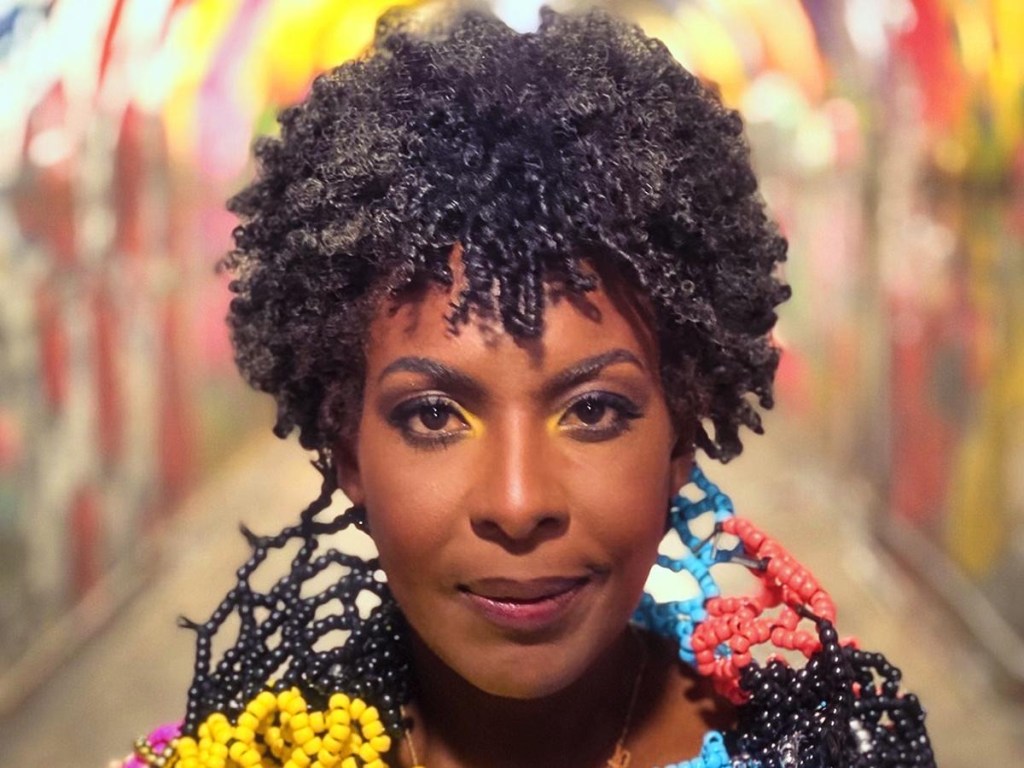




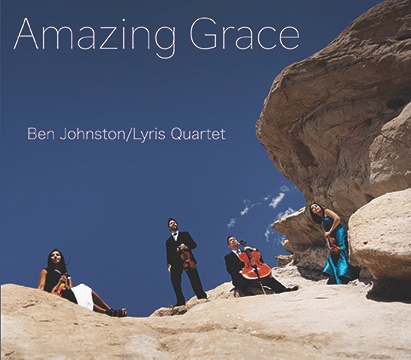


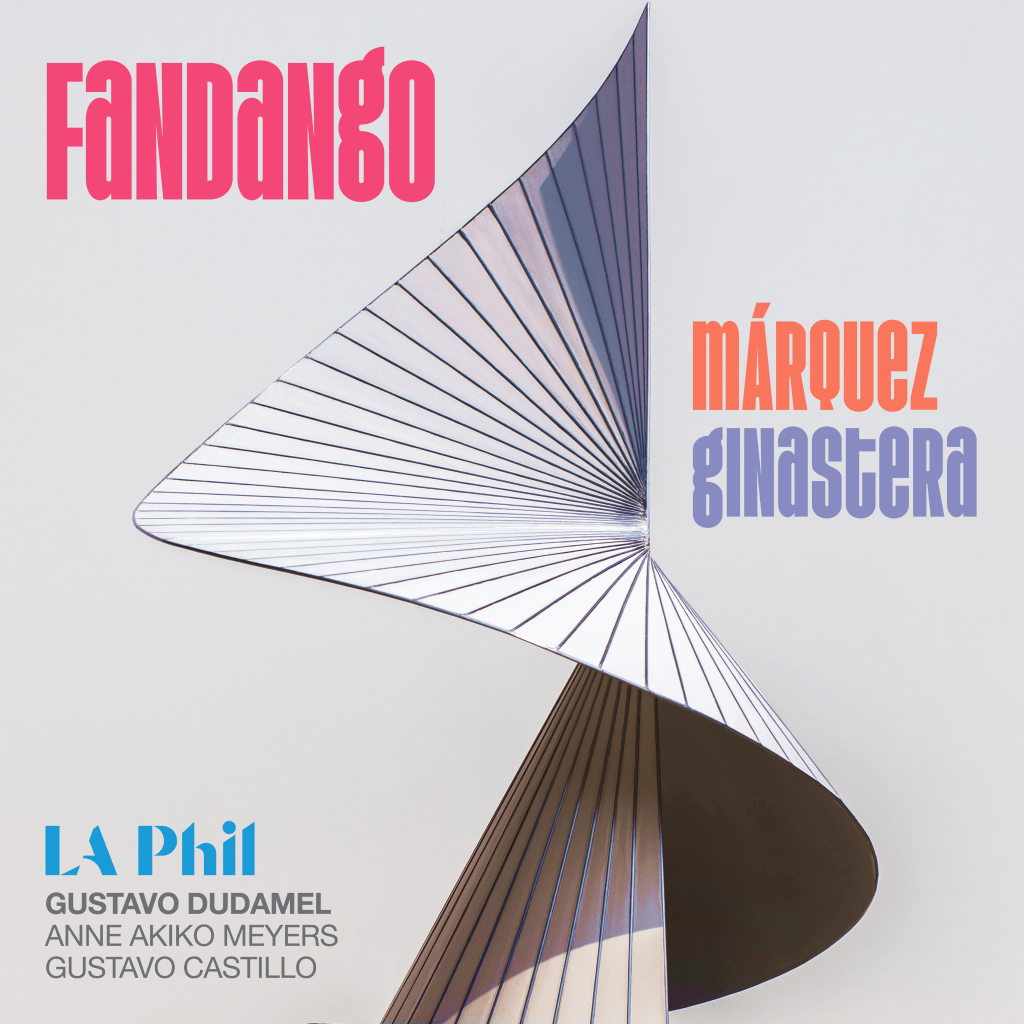
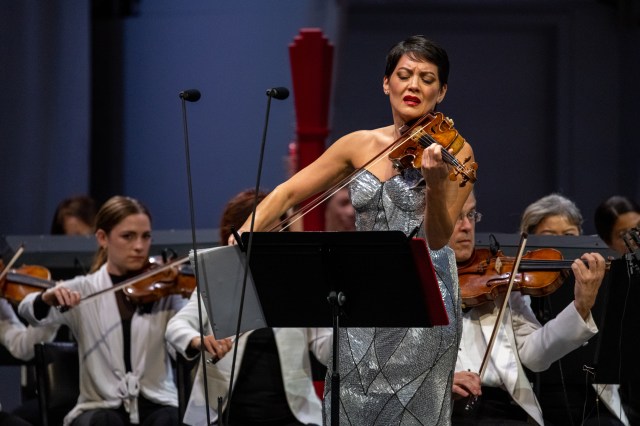
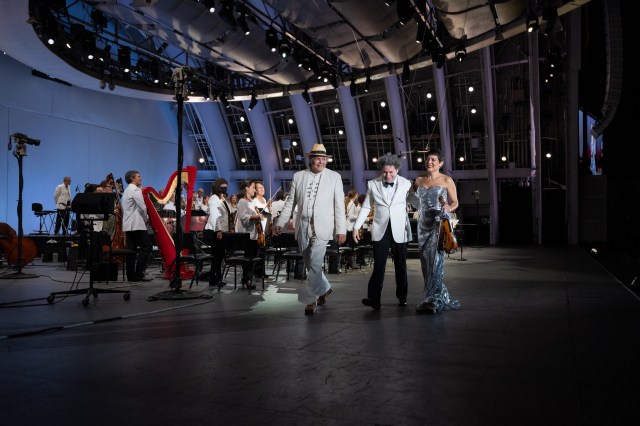

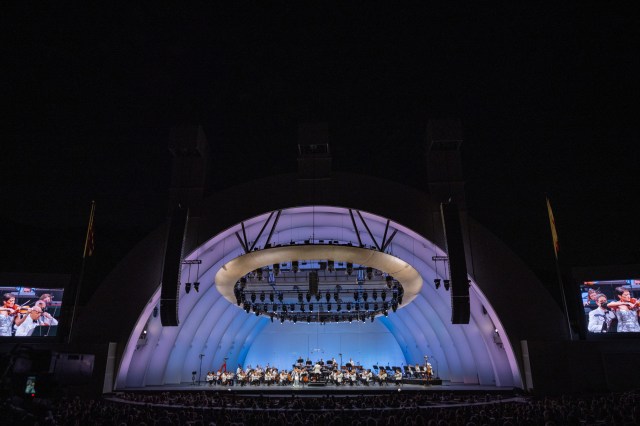


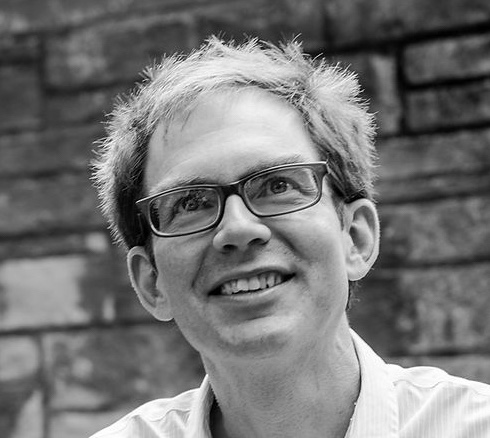


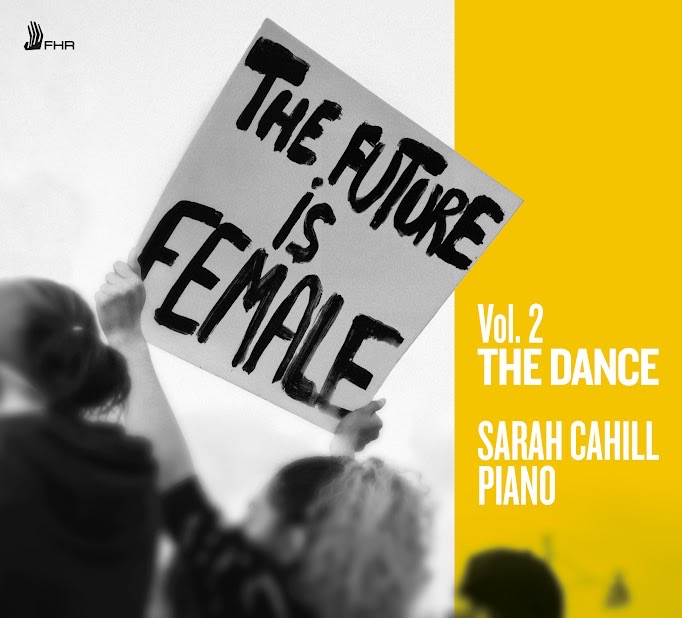

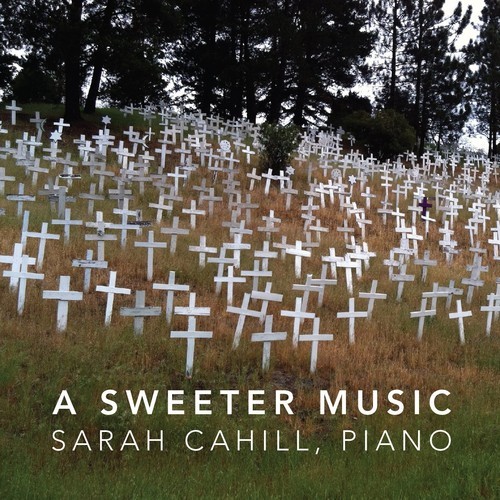


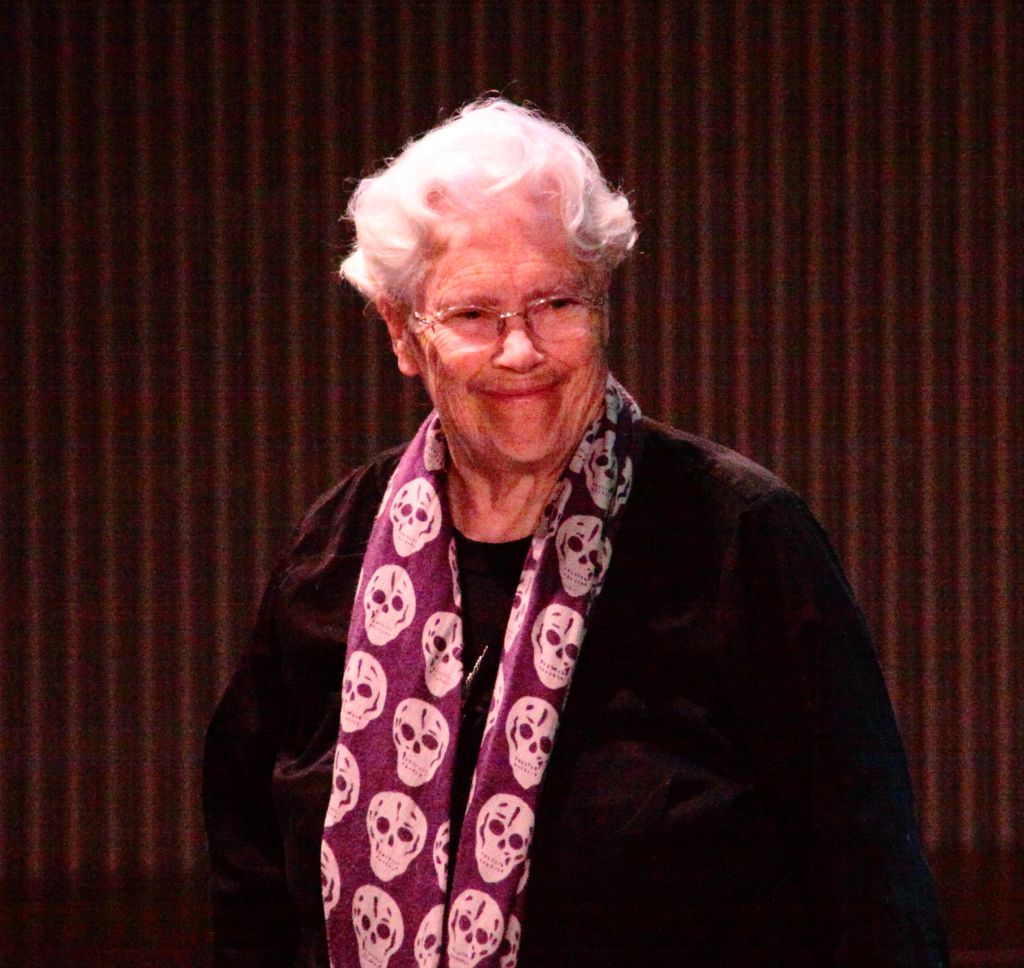



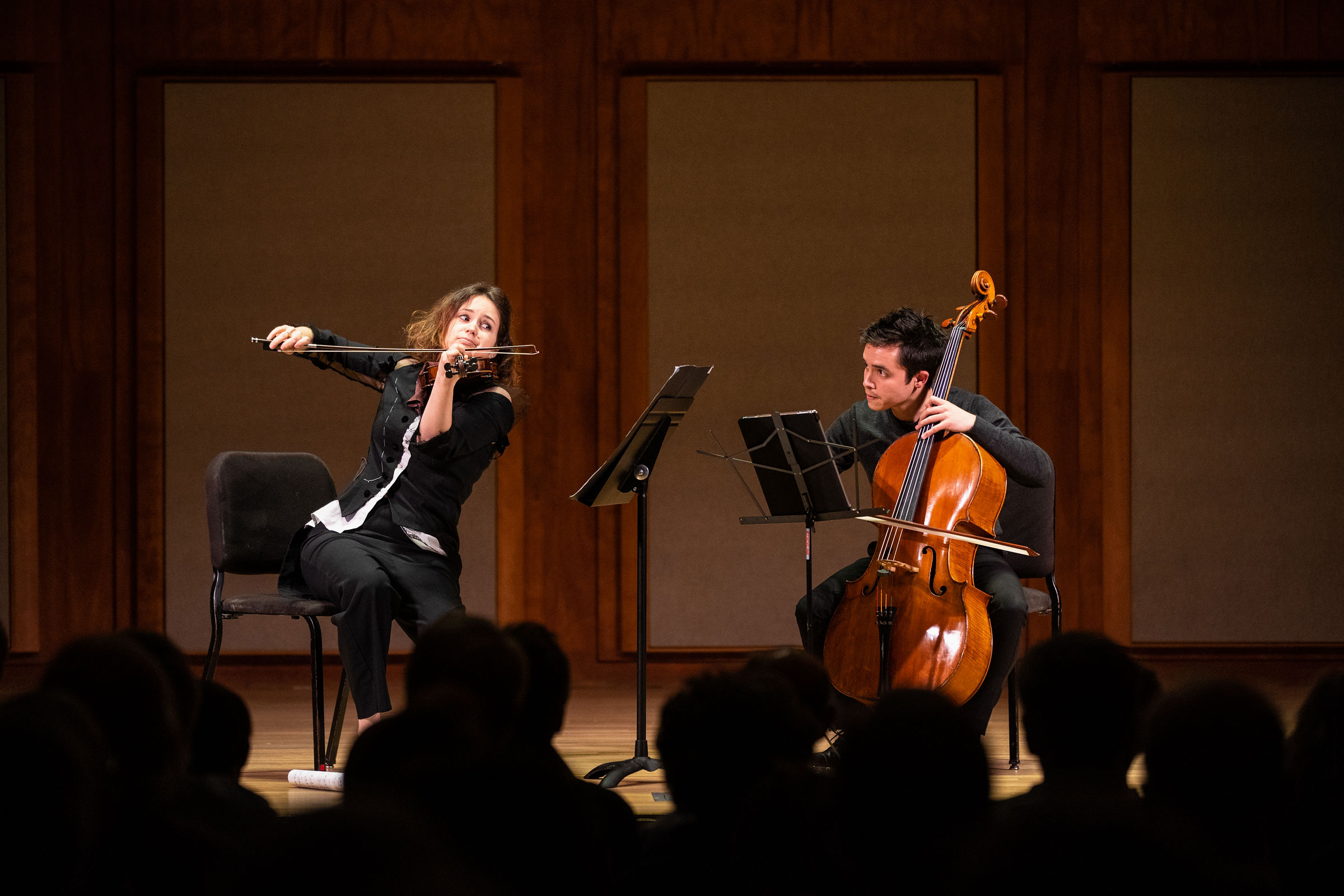


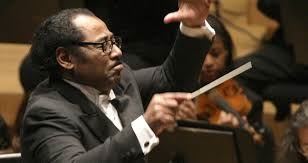


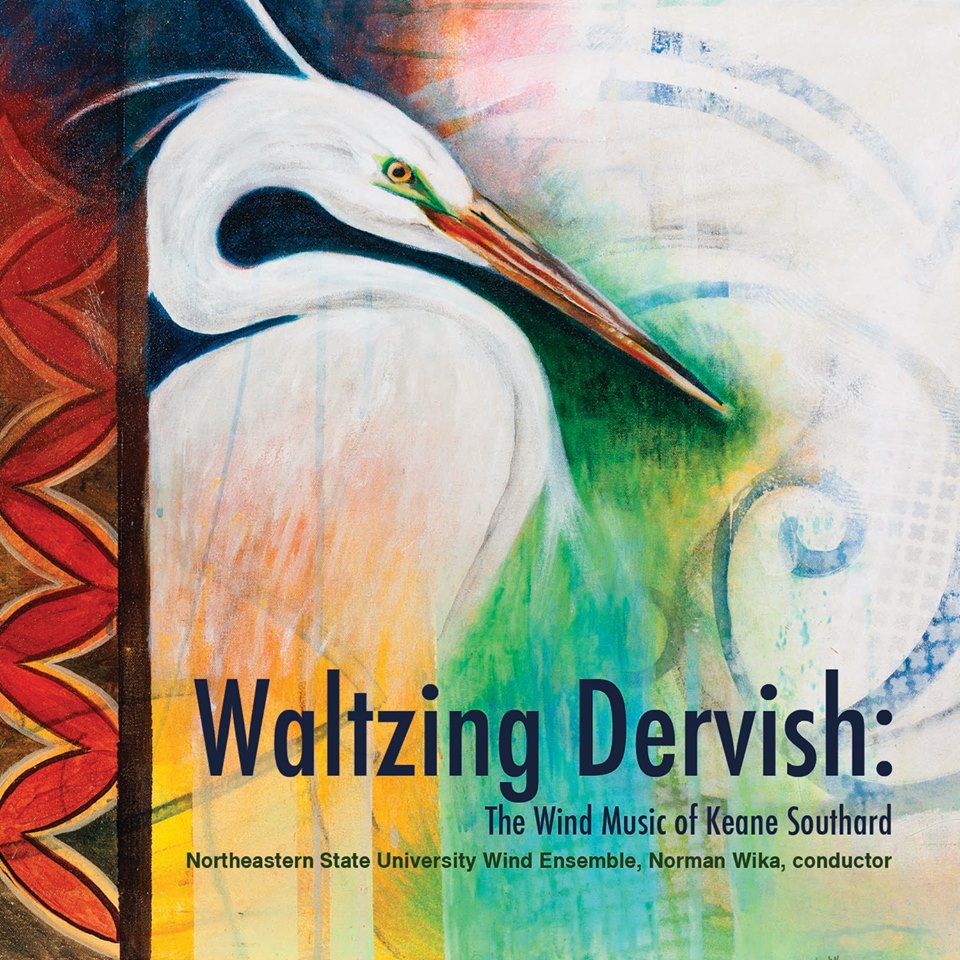


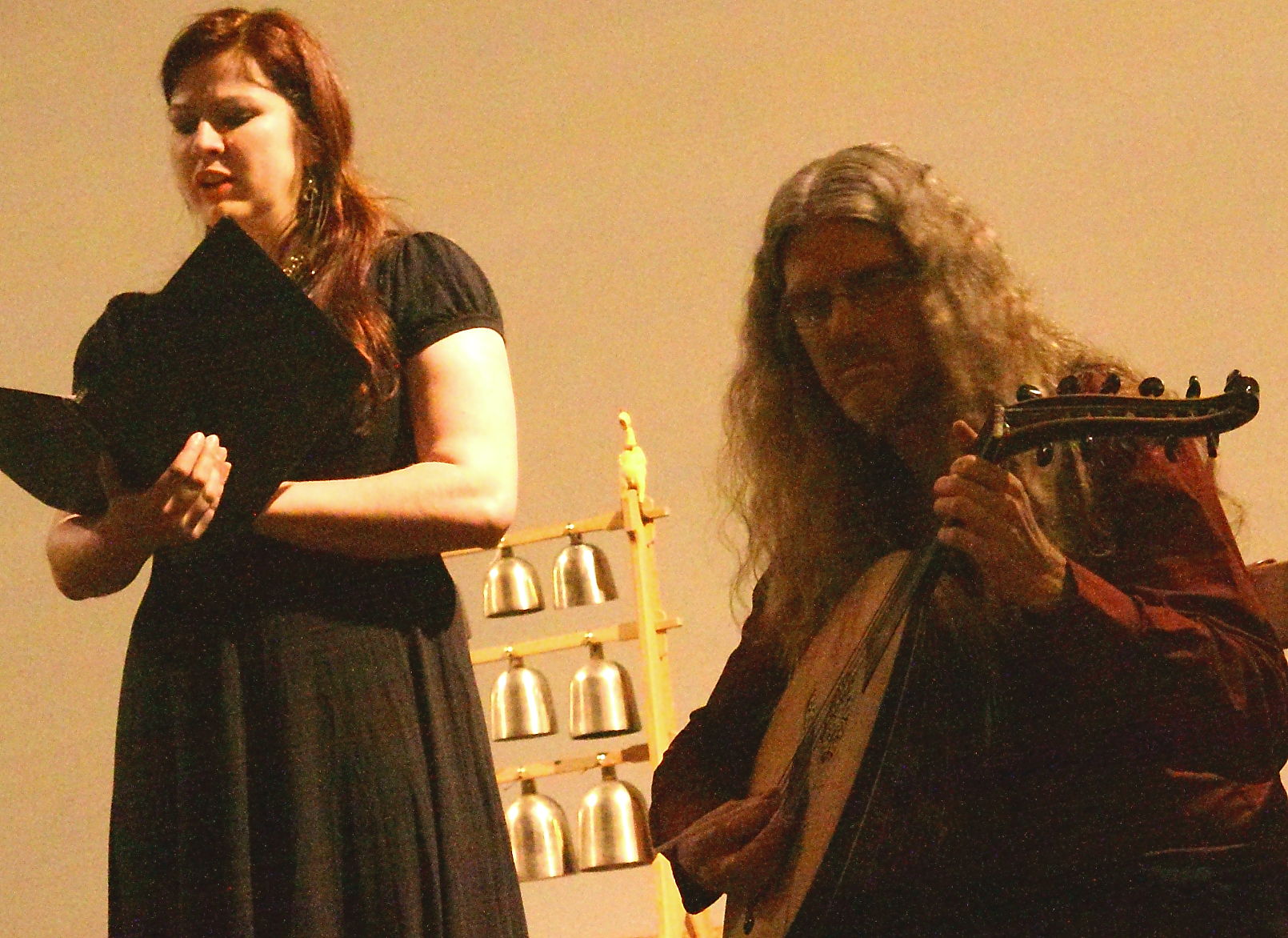


 New Music Buff