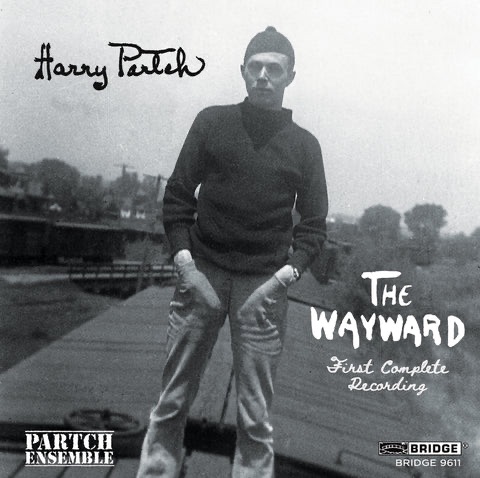
The Complete Harry Partch, Volume 4


Bridge 9611

The first volume of this Bridge Records landmark series focused on Harry Partch’s (1901-1974) most likely best known works, a fine way to introduce this man’s unusual and brilliantly experimental music.
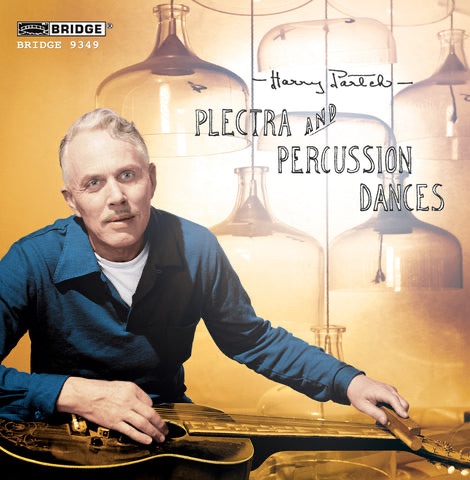
Bridge 9349

From this first volume, it is clear that great care was taken to produce the most authentic and complete versions of this music in dedicated, authentic performances on faithfully constructed copies of Partch’s unusual (and visually beautiful) instruments. The instruments themselves deserve a history and analysis but that is beyond the scope of this review. This is a great disc to introduce listeners to this man’s work.
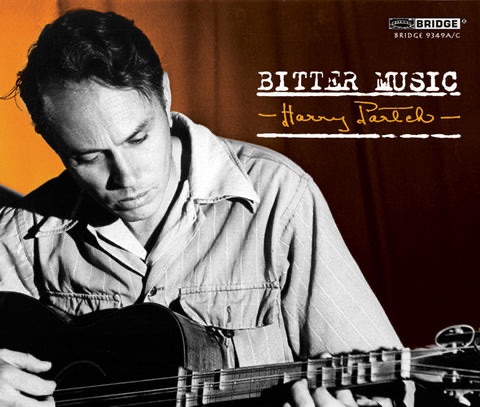
Bridge 9149A/C

This second volume won a Grammy for the best classical compilation. It is largely a spoken word album, the title taken from Partch’s journal documenting his itinerant adventures and musical experiments. This is essentially an audio “Complete Works” edition in which the scholarship of text and performance are refined to represent as accurate a representation of this unique composer’s work as possible. Not as easy listening as the first volume but truly a gift to fans and performers.
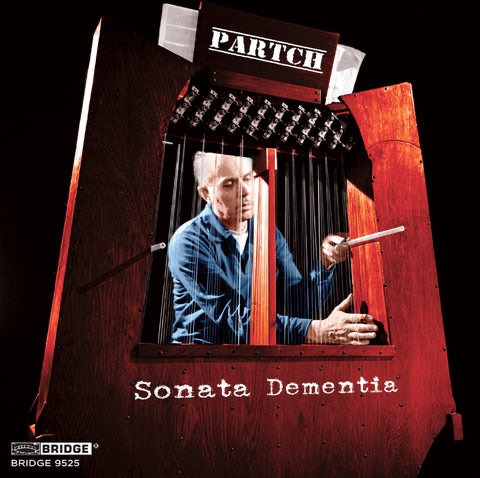
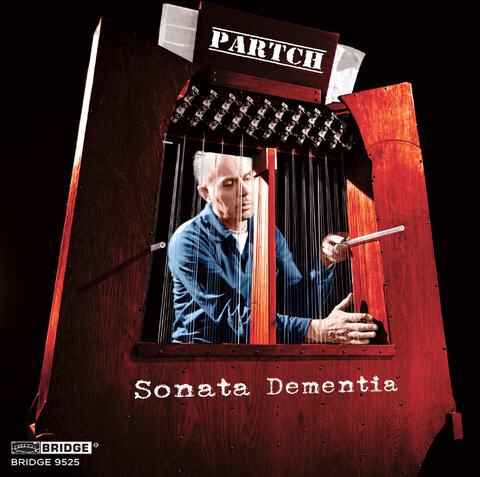
Bridge 9525

The third volume, reviewed here, includes a heretofore unknown work by Partch gleaned from that careful reading of the “Bitter Music” diaries (along with other gems). This was actually my introduction to this recording project as Mr. Schneider graciously sent me a copy for review. This rekindled my romance with Partch’s music begun in about 1970 when I heard a 7” promotional disc which was bundled with my copy of Wendy Carlos’ Switched on Bach. That disc contained an excerpt from Partch’s Castor and Pollux among other composers.

Volume Four
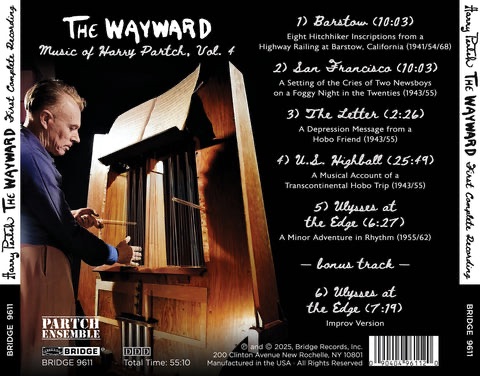
Track listing

Now comes Volume 4 and it is loaded with Partchian glory in that it presents the first complete recording of these interrelated works, a sort of cycle of song cycles which, together make up a larger work, a “Meta-song cycle” titled, “The Wayward”. It is arguably his first large scale dramatic work, presented here in aggregate as once planned but never realized until now.

Each volume in this series truly does homage to Harry Partch and assures that his music will continue to have listeners well into this 21st century. There is no question in this listener’s mind, that this complete works cycle will stand for a long time as THE definitive and most complete version of Partch’s oeuvre for many years.

Even as a long time fan of Partch’s work such as myself continues to find delight in the care and attention to detail found in all of these releases. Enthusiasts will still enjoy the various prior media incarnations by the composer himself from releases on his own Gate 5 label and others which are still available as are subsequent recordings by Dean Drummond and others. But the present series features newly fashioned copies of Partch’s original instrument designs. Those instruments and their visually beautiful and imposing designs themselves become characters along with the musicians in staged live performances. This represents a major step in his artistic development which led to larger scale music theater and film scores later in his career.

It is hard to imagine this being done better and this series effectively situates Partch not simply as the obscure outsider experimentalist, but as a unique artist whose work informs and inspires the next generation of composers and performers. It also clarifies his music theater aspirations and sets the tone for the (hopefully upcoming) larger dramatic works in this ongoing series such as The Revelation in Courthouse Park (1960), The Bewiched (1955), and Delusion of the Fury (1968).

Indeed, Partch had an eye and an ear for the theatrical. His palette was the drama of the dispossessed, the hobo, riding the rails in a sort of proto-beat ethic that later gave rise to Jack Kerouac et al, whose Everyman tales in his novels shaped the subsequent artistic generation. Partch, with his exotic tuning theories broke free from the straight jacket of western music’s conventional tunings (and western concepts of drama) to tunings reconceived from their Pythagorean ideals of ancient practice to a modern alternative with the goal of finding new ways of expression. Kerouac experimented with writing and Partch with tuning. But both men struggled in at least partly voluntary exile from the mainstream of the society within which they found themselves. Partch’s dramatic backdrop was the railroad which unintentionally created a new social sphere of the dispossessed who rode the trains in search of sustenance both physical and intellectual. That dramatic backdrop was one of hopped trains and thumbed rides. Kerouac used his thumb to hitchhike or rode along in trains (he was a brakeman), and (sometimes) in stolen cars courtesy of his muse Neal Cassidy. All this couched in a modern descendant of literature’s great Greek dramas, Japanese Noh dramas, and Ethiopian drama, Partch tells the heroic adventures of his, the generation that followed the “jazz age” and preceded the beat generation much as Kerouac helped evolved literature from the early twentieth century American romanticism of Thomas Wolfe eventually to the “Beat Generation”.

There are six tracks on this release comprising six works. The last “bonus” track is a speculatively realized version suggested but never realized in Partch’s lifetime and it is more than just filler. Like the prior releases, this one speaks to the fans and enthusiasts who seek a complete rendering of every last note the composer wrote.

The Cloud Chamber Bowls, the Chromelodeon, the plectra and percussion instruments, and the characteristic wooden xylophones announce the first work and provide the listener a context in no uncertain terms that this is an expansion of the musician’s harmonic palette. It signifies that performers and audience are now in a very distinctly different world.

The Eight settings that comprise Barstow went through several revisions (1941, 1954, 1968). On this release we are presented with the most recent revisions of the eight inscriptions. The original version of 1941 for voice and guitar is available on the first volume and I believe this is the version that Maestro Schneider performed at an Other Minds concert in San Francisco some years ago.

This present version utilizes a chamber sized ensemble and adds solo and other voices that act like a Greek chorus describing the unfolding drama. If you’ve only heard the version on previous recordings, you’re in for a treat. Both male and female voices are used as appropriate to the gender of the writer of the text. This final version of Barstow here takes on a much grander form, in a larger dramatic splendor which fleshes out, as much as possible, the people (or at least the memories of the people) behind these lonely evanescent texts.

The second and third tracks, clocking in at just over three minutes and just under three minutes respectively are also more elegantly “dressed” with a more elaborate and dramatically effective presentation depicting news headlines (San Francisco) as they once sounded with paper boys hawking their wares and then the text of a letter (The Letter) from one hobo to another, a message to the composer of the work that serve to establish a context. There is some marvelous instrumental music that drives these dramatic segments in a very cinematic, impressionistic manner.

The fourth track, U.S. Highball, in this 1955 revision is a much longer (nearly 30 minutes) description of a train trip which Partch actually traveled. The vocal writing reflects the composer’s mature style and this movement is arguably the heart of this music dramatic foray. The instrumental sections imitate train whistles (with Doppler effects convincingly achieved due to the uniquely non-western tunings). Disembodied voices accompanied by the ever present and imposing musical instruments tell a surreal narrative of a journey as relevant to the ever evolving state of the art that resonates deeply with the feel of the era much as “On the Road” resonated with the esthetic vibe of the following generation. It is essentially brief narratives that are woven into a compelling story and a beautiful example of music drama revisioned to a generational esthetic.

Track five is in effect a sort of humorous postlude. Here, in addition to Partch’s unique instruments, the composer added parts for saxophone and trumpet. These choices were inspired by the composer’s appreciation of the artistry of Chet Baker and Gerry Mulligan (with whom he had wished to collaborate). “Ulysses at the Edge” concludes the drama…

But wait…we have an encore. Here, the scholarship and deep respect for Harry Partch’s work gets a sort of little after party of its own here. It is an ingenious version of that same little postlude we just heard with some improvisatory passages driven by a desire to do honor to a collaboration which never occurred…until now.

I refer interested listeners to the very fine liner notes booklet for details on the army of scholars, musicians, and other artists but let me just list the performers:

Erin Barnes, Paul Berkolds, Alison Bjorkedal, Tim Feeney, Dustin Donahue, Aron Kallay, Vicky Ray, John Schneider, Derek Stein, Nick Terry, and Alex Wand played the Partch instruments. Dan Rosenboom played trumpet and Brian Walsh played baritone saxophone.

The instruments heard included:

Diamond Marimba, Spoils of War, Kithara II, Cloud Chamber Bowls, Canon, Bass Marimba, Chromelodeon, and Surrogate Kithara. These may not be sentient but their presence suggests otherwise.

BMOP: Music of American Composer Gail Kubik


BMOP/sound 1085

Gail Thompson Kubik (1914-1984) was born in Oklahoma, educated at the Eastman School of Music, Chicago’s American Conservatory (where he studied with Leo Sowerby), and Harvard (where he studied with Walter Piston). He is also among the long list of composers who studied with Nadia Boulanger.

Gail Kubik

Kubik joined NBC radio in 1940 and was music director for the Office of War Information where he composed and conducted music for their Motion Picture Bureau. He taught at Monmouth College, Columbia Teacher’s College (now Columbia University), and Scripps College.

To this writer’s ears his style is similar to that of Aaron Copland (14 years his senior) and contemporaries who included jazz influences in a mid-century post romantic tonal fabric. The pieces recorded here are roughly contemporary with Stravinsky’s neoclassical era and similar gestures can be heard in them. Carl Stalling’s music is also a likely influence.

Doubtless Kubik’s film work for the war department helped contribute to his success in a basically populist style which served him well. And also like Copland, he wrote for the concert hall producing 3 Symphonies, Violin Concertos for Jascha Heifetz and Ruggiero Ricci along with other orchestral works, chamber music, and two operas.

The present recording is focused on his post war concert music. Four works are presented here, from his Dr. Seuss collaboration of 1950 for narrator, orchestra, and percussion, “Gerald Mc Boing Boing” (possibly the only example from this era in which the music preceded the cartoon film), his two Divertimenti for diverse chamber groups (1958 and 1959), to his best known work, the Symphony Concertante for Piano, Trumpet, and Viola which won him the Pulitzer Prize for Music in 1952. (Without doing any research I would venture to say that this is a unique combination of solo instruments). Soloists Vivian Choi (piano), Terry Everson (trumpet), and Jing Peng (viola) handle the challenging solo parts with confidence and skill. This new realization alone is a reason to purchase this disc.

Like Copland and other film composers Kubik repurposed some of his film music as a source for his concert music. Without getting too much into the musicological analysis, the composer himself has related that the Symphony Concertante was repurposing of the music he wrote for the low budget noir film, “C-Man” (1949) which starred Dean Jagger and John Carradine, among others.

The two divertimenti for diverse chamber ensembles are like baroque suites consisting of brief pithy movements. They are analogous to works like Copland’s too seldom heard Music for the Theater (1925) with jazzy rhythms and harmonies throughout. Their unusual groupings of instruments likely limit the occasions on which they might be performed live so these recordings are very welcome.

The “Gerald Mc Boing Boing” cartoon took on a life of its own following its concert presentation, spawning a series of shorts furthering the myth of the title character. And during the research for this review I was fascinated to learn that the famed film sound designer, Walter Murch, once revealed that he was sometimes known by the nickname of that character due to an analogous childhood affectation. In addition, many actors voiced the narrator in the the many recordings that have been made of the purely audio recording as heard here. The demands of the narration are similar to those of the soloists in the concertante work. Narrator Frank Kelley delivers a performance that makes this very much his own, using it as a springboard to which he applies his skills as a voice actor. He really seems to enjoy himself here.

Much of Kubik’s music has been recorded before but not for some time, so this release by masterful curator and conductor Gil Rose and his incredibly talented ensemble, the Boston Modern Orchestra Project is a very welcome revival of this very talented and technically skilled composer. The four works on this recording may be a reasonable sampling of some of Kubik’s best work but it would be hard to say that it is a complete portrait without hearing some of the composer’s other large concert works. Mr. Rose and his musicians have shown a tendency to release more than one disc of one of these nearly forgotten composers so listeners charmed by these may anticipate more such gems in, the future, that is, if other ensembles don’t beat them to the punch. Either way this is a very welcome installment in BMOP’s ongoing survey of music that simply deserves to be heard because it’s good.

World Premieres and a Resurrection: Partch Vol. 3 on Bridge Records


Bridge Records is one of those labels whose every release is worth one’s attention. Their series of music of Elliott Carter, George Crumb, et al are definitive. And while this listener has yet to hear the first two volumes of the Harry Partch series this third volume suggests that Bridge continues to maintain a high standard as they do in all the releases that I’ve heard.

Harry Partch (1901-1974), like Philip Glass and Steve Reich would later do, formed his own group of musicians to perform his works. For Glass and Reich they could not find performers who understood and wanted to play their music. For Partch this issue was further complicated by the fact that he needed specially built instruments which musicians had to learn to play to perform the very notes he asked of them.  And keep in mind that Partch managed to do a significant portion of his work during the depression.  He is as important to the history of tonality as Bach, Wagner, and Schoenberg.

I will confess a long term fascination with Partch’s music.  Ever since hearing a snippet of Castor and Pollux on that little 7 inch vinyl sampler that came packaged with my prized copy of Switched on Bach I was hooked.  That little sampler also pointed this (then 13 year old) listener to Berio’s Sinfonia, Nancarrow, Steve Reich, and Terry Riley.  And so it continues.  But it is not just nostalgia that recommends this disc, it is the definitive nature of the scholarship, the intelligence of the production, and the quality of both performances and recordings that make this an essential part of any serious collector of Partch, microtonal music, musicology, and good recordings in general.

With the aforementioned interest/fascination I reached a point where I had pretty much collected and listened to all I could find of Partch’s music.  Certainly everything of his had been recorded, right?  Well ain’t this a welcome kick in an old collector’s slats?  Not only have the folks at Bridge (read John Schneider) found and recorded a heretofore practically known composition but they’ve done it with a brand of reverence, scholarship, and quality of both recording and performances such that this is a collector’s dream and a major contribution to the history of microtonal musics and American music in general.

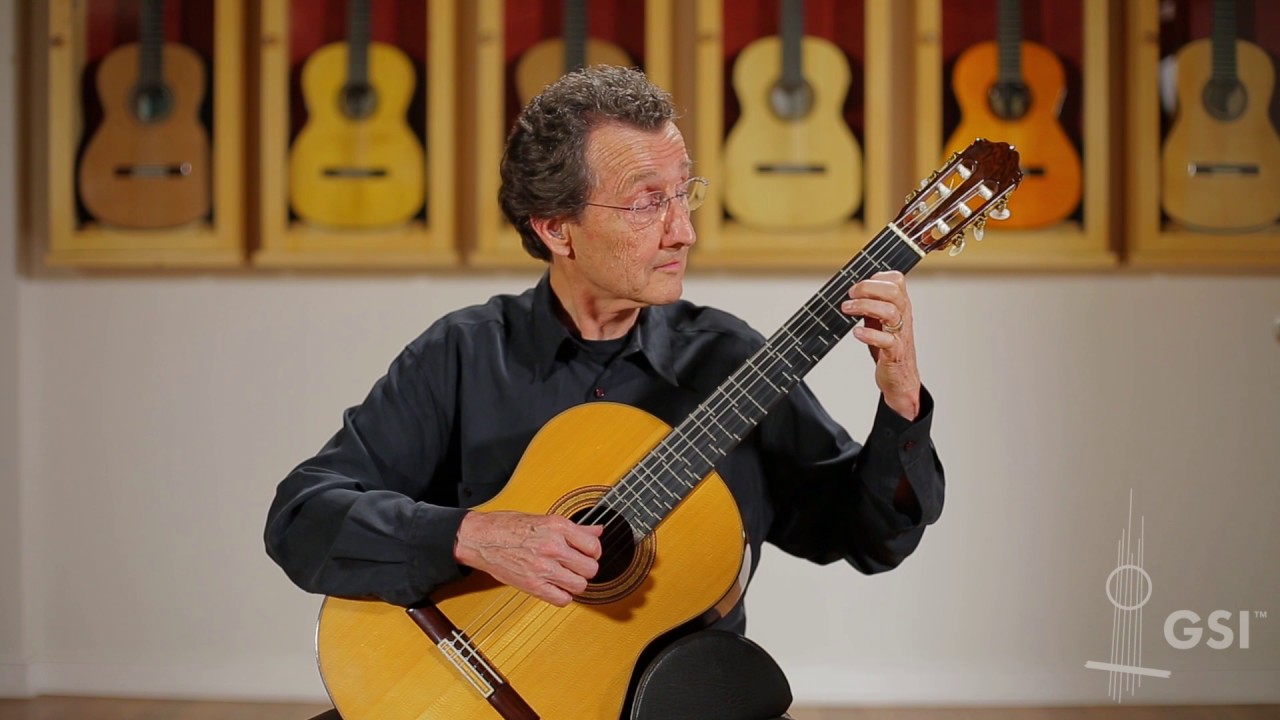
schneiderUtube

John Schneider from a You Tube screen capture

Let me start with the liner notes by producer John Schneider.  As one who is given to complain about the lack of liner notes I am so pleased to encounter such as these.  They alone are worth the price of the CD and read at times like the adventure they describe, to wit, this recording.  The tasteful and well designed (by one Casey Siu) booklet provides an intelligent guide to the music which enhances the listening experience.  Schneider’s web site also provides a wealth of information and references for further research.  Many would think that these liner notes are comprehensive as they are and there should be no need for anything more…so the link provided to even more info on the web site of the performing group on this disc, PARTCH.   These folks are Grammy winners and they perform on scholarly copies of the original Partch instruments executed by Schneider and his associates.  This release is solidly built from the ground up.

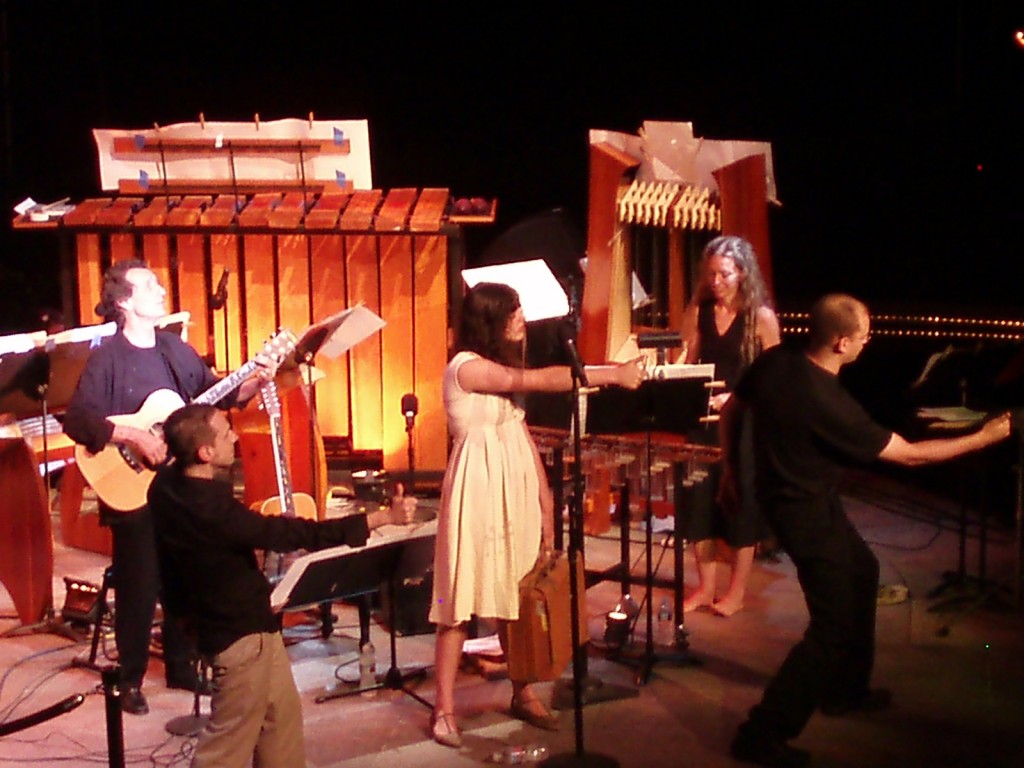
partchredcat

PARTCH performing at RedCat copyright Redcat

PARTCH includes: Erin Barnes (Diamond Marimba, Cymbal, Bass), Alison Bjorkedal (Canons, Kitharas), Matt Cook (Canon, Cloud Chamber Bowls, Spoils of War), Vicki Ray (Canons, Chromelodeon, Surrogate Kithara), John Schneider (Adapted Guitars, Bowls, Canons, Spoils, Surrogate Kithara, Adapted Viols, Voice), Nick Terry (Boo, Hypobass), T.J. Troy (Adapted Guitar II, Bass Marimba, Voice), Alex Wand (Adapted Guitar III, Canons, Surrogate Kithara)

The 21 tracks contain five Partch compositions.  It opens with one of Partch’s more unusual pieces (for him), Ulysses at the Edge of the World (1962).  This piece was written for Chet Baker but Baker never got to play it.  It kind of sits a bit outside of Partch’s work and is his most direct use of the medium of “jazz”.  The piece has been recorded twice before.  For this recording two fine new music/jazz musicians were chosen, saxophonist Ulrich Krieger and trumpet player extraordinaire Daniel Rosenboom.  Excellent choices for this too little performed piece.

Tracks 2-13 contain the Twelve Intrusions (1950) which is basically an accompanied song cycle with instrumental pieces placed at the beginning.  These are great vintage Partch works but do read the liner notes on the evolution of Partch as he was writing these.  They describe some of Partch’s evolution during that time.

Next is another discovery (or restoration if you will).  Partch’s scores exist in various versions for various reasons.  Windsong (1958) was written as a film score for the Madeline Tourtelot film of that name.  It was later reworked into a dance drama (Daphne of the Dunes, 1967).  Here we have a live performance of the entire score which (read them notes) includes things not heard before, not to mention the most lucid sound of this recording.

Now to the putative star of this release, the Sonata Dementia (1950).  It too comes with some nice detective work allowing listeners to hear substantially what Partch intended but neither recorded nor rejected.  There are three movements and let me just say that they are captivating and substantial.  This deserves to be heard again and again.

Now two little bonus tracks (reminiscent in nature but not in content of the sampler I mentioned earlier) add significantly to Partch and his place in music history.  First is a Edison cylinder recording from 1904 of a traditional Isleta Indian chant which Partch, who had been hired to transcribe these songs, later incorporated into his music.  It’s early date and the nature of that old recording method provide a picture of early ethnomusicological work.

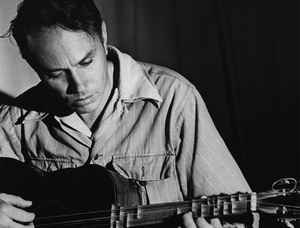
partchguit

Photo of Partch with adapted guitar found on web

The second bonus is a real gem.  Again, read the liner notes for more fascinating details.This is an important find, an acetate recording made of Partch performing his Barstow (1941) for an appreciative audience at the Eastman School of Music from November 3, 1942.  This early version (of at least three) for adapted guitar and voice was reconstructed by John Schneider and released on the Just West Coast album of 1993 (Bridge BCD 9041) and later performed so beautifully at Other Minds 14 in 2009.  But I believe that Schneider’s reconstruction predated the discovery of this recording.  Pretty validating to hear this now I would think.

It is this reviewer’s fondest hope that this wonderful Partch project will continue with its definitive survey of Partch’s work.  Bravo!!


William Susman’s Scatter My Ashes


susmanscatter

I first encountered the composer William Susman (1960- ) when one of his works appeared on a program which included a solo cello and electronics piece by Vivian Fung.  This solo electroacoustic piece, the work I was initially asked to review, was nestled in the middle of an interesting program by the San Jose Chamber Orchestra.  I chose to review the entire concert which was a fascinating selection of new music.  William Susman’s “In a State of Patterns” (2018) struck me immediately as interesting post-minimalist work.

Susman_at_piano

Mr. Susman read my review and rather promptly sent me this 2014 CD on his Belarca label.  It contains four of his works from 1992-2010 and is a fine sampling of his work.  All works are here performed by the Octet Ensemble which includes: Alan Ferber, trombone; Mike Gurfield, trumpet; Melissa Hughes, vocals; Elaine Kwon, piano; Eleonore Oppenheim, double bass; Demetrius Spaneas, saxophone; Greg Zuber, drums and percussion; and William Susman, electric piano.

There are four pieces on 12 tracks.  The disc begins with Camille (2010), a very listenable post-minimal chamber work.  It is followed by a melancholy song cycle, Scatter My Ashes (2009) on poems by the composer’s sister Sue Susman.

The third piece is a wonderful piano concerto.  There are not a lot of convincing concertos in the minimalist genre but this one is a candidate for being a poster child.  It is for piano with chamber ensemble.  Here the composer goes not for the finger busting virtuosity that seems to be the current vogue but rather he evokes a latter day Mozart with more technically modest but highly entertaining music that communicates directly.  Curiously (is this a carry over from the Steve Reich and/or The Philip Glass Ensemble?) he uses a wordless vocal (Hughes) as a part of the instrumental texture.  Elaine Kwon handles the featured keyboard part.  It works very well.

He ends with an arrangement for OCTET of Moving in to an Empty Space (1992, arr 2010), another setting of his sister’s lovely poetry.  Again he evokes the somber but it is more in the nature of exorcising the demons of sadness much like the mission of the poet.


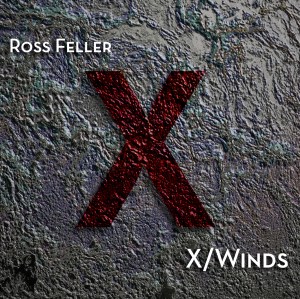
Ross Feller: X/Winds


feller-x-winds

Innova 911


This album is both an auspicious debut and a fine representative sampling of the compositional efforts of Ross Feller.  Feller holds MM and DMA degrees from the University of Illinois Champaign/Urbana, that venerable rural Illinois institution which oversaw some of the most significant early developments in computer technology.  More importantly for the present context it is has been the home of many important composers whose works have incorporated this technology directly or indirectly.  Like similar centers in New York (Columbia-Princeton), Oakland (Mills College), Stanford (CNMAT), Berkeley (CCRMA) among others a distinctive musical thread developed in that rural outpost and it is this provenance that makes this recording of particular interest.  Feller is also an editor at the Computer Music Journal and teaches at Kenyon College.

Ross Feller at the Paul Sacher Stiftung

Feller represents the current state of the art whose ancestry includes the likes of Lejaren Hiller and Salvatore Martirano, both major innovators in both music and technology.  Martirano was one of his teachers and Martirano’s widow, the fine violinist Dorothy Martirano, performs on this recording.  This writer had the pleasure of hearing the Martiranos in concert some years ago and can attest to the astounding quality of the work of this too little known composer.  Judging by the works on this recording Feller appears to be a worthy successor.

Eight works are represented here ranging from solo to acoustic ensemble to electroacoustic works.  The only thing missing is a purely electronic work and one hopes this will occur in a future release.  Composition dates range from 1994 to 2008 though, properly speaking, the 1994 work was revised in 2006.

Triple Threat (1994, rev 2006) is a sort of mini concerto for three soloists (B flat clarinet, trumpet and violin) and an ensemble of nine.  It is a sort of contemporary concerto grosso in that the soloists are more integrated into the overall texture of the piece.  It is a taught, well organized composition whose technical aspects discussed in the composer’s very useful notes are beyond the scope of this review.  What is well within the scope of this review is the fact that this is a marvelously engaging work in a sort of neo-mid century modernism sort of vein.  The technical aspects which will no doubt entertain theorists function in service of the music and are not an end in themselves.

Still Adrift (2013) is the first of three electroacoustic pieces on the disc.  This is an intense and virtuosic essay ably handled by soloist Adam Tendler.  It is obviously a very personal work evidenced both by its intimate focus and the composer’s own liner notes.  One suspects, however, that something is lost without the visuals and immediacy of seeing a live performance.  Nonetheless this piece easily stands on its own sonic merits.

Bypassing the Ogre (2006) is the first of two tracks for soloist without electronics.  This is perhaps the most experimental of the pieces on this disc.  It is essentially an etude focused on the soloist’s (Peter Evans) formidable improvisatory techniques on the trumpet.  It reminds this reviewer at times of the more experimental work of the justly lauded West Coast composer Robert Erickson (1917-1997) whose work also pioneered developments in electroacoustic musics as well.

Disjecta (2006) for percussion ensemble is actually the most extended work here at 14’10”.  It is sort of a catalog of Feller’s experiments with writing for percussion ensemble using playing techniques and naturally occurring (instead of electronically mediated) acoustic phenomena.  The title comes from Samuel Beckett’s term which he applied to a collection of miscellany.  This one requires close ,multiple listenings to grasp the composer’s intent but it appears to point the way to innovations in writing for percussion.

Sfumato (2006) for violin, bass clarinet and electroacoustic sound comes from the same apparently very productive year, 2006, as do three other tracks on this album.  This is the second electroacoustic track here.  As is often the case with electroacoustic compositions it is frequently difficult for the listener to determine whether the sounds heard are acoustic, electronic or some combination of the two without seeing a score or at least seeing the performance.  What is important is the sound and the impact of the music.  Again the music is engaging and satisfying.

Retracing (2009) for violin and electroacoustic sound is related to Still Adrift in that it incorporates gestures as well as textiles and dancers but stands on its sonic merits as a concert piece as well.  This is a very intense essay beautifully handled by Dorothy Martirano.  Even without the visuals there is much to engage the listener.

Glossolalia (2002) is the second of the two unaccompanied solo pieces here.  This one is for cello.  Unlike Bypassing the Ogre this piece seems to have impressionist leanings.  It is certainly filled with a variety of techniques but the end result is a coherent musical narrative.  It is abstract without an obvious narrative so the listener is free to apply their own impressions elicited by this very intense piece.

X/Winds (2008) for symphonic woodwind ensemble is the piece from which the album derives its title.  Here we return to the rich orchestral palette of the opening track.  Feller seems particularly strong in his ability to write meaningful and engaging music for large ensembles.  It left this reviewer wanting more.

These are incredible performances by highly competent and creative musicians of music which is well served by these skills.  Very engaging music very well performed and recorded.  

Rhys Chatham’s Pythagorean Dream


pythdream

Foom FM007CD

Rhys Chatham is responsible for one of my most read posts, the fabulous Secret Rose performance reviewed here and here.  An album released around the same time is reviewed here.  These reviews reflect the music most people think of when they hear Chatham’s name: alternate tunings, large groups of multiple guitars, sometimes groups of brass and woodwinds (Chatham plays trumpet and flutes as well) in a sort of wall of sound.

For this release Chatham has chosen to go solo, sort of.  In Pythagorean Dream he uses digital delay in a real time performance allowing him to achieve a similar sound world while maintaining control over the performance in the manner of a solo performer.

Regardless of the instrumentation Chatham has always been interesting and that has not changed in this release.  He uses Pythagorean tuning (hence the title) in this work which is split over three tracks for a total of about 55 minutes of impressionistic musings in the key of Pythagoras, so to speak.

The first track has some trumpet sounds softly at the beginning but focuses on the electric guitar building his choirs of instrumental sounds using his effects pedal.  This is the familiar Chatham multiple guitar sound.  The second track presents his musings with flute, alto flute and bass flute with a guitar cadenza.  Here he reminds this listener at times of the work of LaMonte Young with sustained tones and then plays some jazz like riffs over these before the final cadenza with the guitar.  The third track, according to the liner notes, is the whole of the brass intro to the piece and is presented as a “bonus track” and is entitled Whitechapel Brass Variations. This track, unlike the previous two, is a live (as opposed to studio) performance and is a good opportunity to hear Chatham’s skill with trumpet.  It is a fearless performance.  He manages to pursue his experiments without sounding experimental.

The overall effect of this piece, with drones, hints of free jazz and memories of minimalism is mesmerizing and appears to be the next logical step in his development as a composer and performer.  A few years ago Tony Conrad released an album inspired by the same tuning system and called that album, “Slapping Pythagoras”.  Chatham, by contrast, seems more concerned with soothing him.

The brief but informative liner notes are by the composer and the recording is lucid with Chatham doing the engineering and the mastering.  This album is a must for all Rhys Chatham fans and a nice intro to his current work for those who have not heard this important composer’s work..

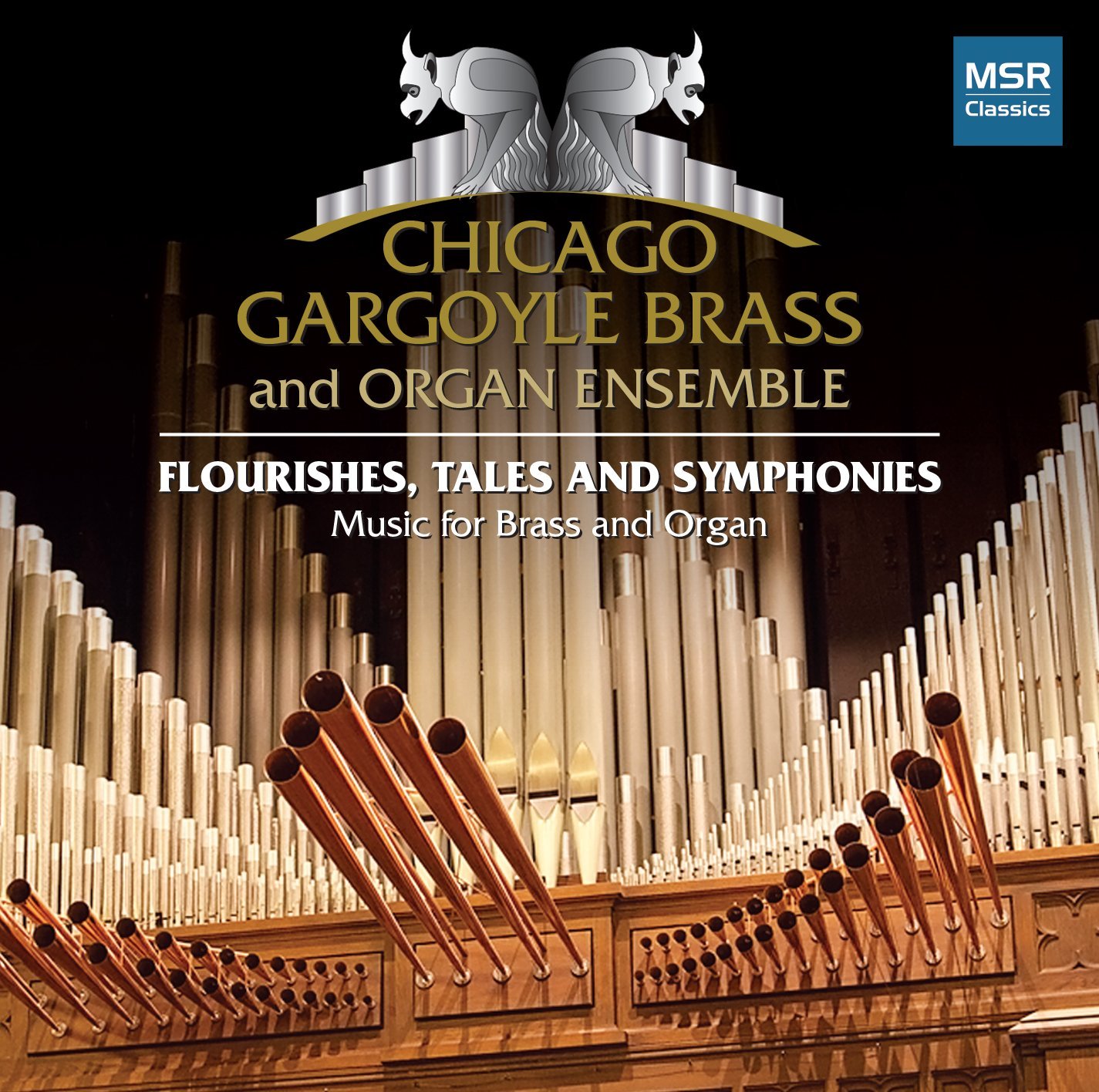
A Really Great Brass and Organ Album, Chicago Gargoyle Brass and Organ Ensemble


gargoylebrass

MSR Classics MS 1598

At first this disc seemed to be one of those “audiophile spectacular” niche market items designed to show off one’s stereo system.  I expected a well-recorded album with wide dynamic range and a clarity that would stun the listener but these types of albums frequently have well-recorded but uninteresting music or, worse, cloying showpieces that don’t bear repeated listening.

The first listen dissuaded me from that notion immediately because this is interesting and well-played music.  Except for three clever transcriptions of late 19th/early 20 century pieces all the music is from 2005-2013 (as are the transcriptions for that matter).

The music is, on the whole of a somewhat conservative nature but that is not a negative thing.  All of the music is pleasantly engaging and/or downright exciting.

The first four (of a total of 15) tracks present the music of Carlisle Sharpe (1965- ).  The first work Flourishes (2005/10) is a festive fanfare which was revised for this ensemble. The next three tracks contain the Prelude, Elegy and Scherzo (2012) is a commission by the present artists.

Next we move on to one of the arrangements by Craig Garner (1959- ).  This is, I think, a difficult arrangement to play but is handled with such ease by these players that one could be fooled into thinking it was easy.  The arrangement of the popular drinking song from Verdi’s La Traviata (1853) is a lucid and detailed transcription.  It is the clarify of the recording that makes this obvious as we are able to hear the various challenging lines that allow pretty much everyone in the ensemble to demonstrate their facility.

William Whyte (1983- ) is the next featured composer with a satisfying little suite called Dwarf Planets (2012).  It is in five brief movements.  The piece was also commissioned by and dedicated to Chicago Gargoyle Brass and artistic director Rodney Holmes.

Earthscape (2011) by David Marlatt is cast in a similar vein and, with the previous five tracks these are effectively musical appendices to Holst.  Marlatt, a Canadian composer has written this lyrical piece for the Gargoyle Brass.

Tracks 12 and 13 are another great transcription of a type of work which conductor Sir Thomas Beecham was fond of calling “bon-bons”, an appellation that was a proto-pop concert concept describing short, popular encore pieces.  It is the Polka and Fugue from “Schwanda the Bagpiper” by Jaromir Weinberger (1896-1967), a Czech composer whose reputation lies pretty much entirely on this work.   Originally for orchestra, this engaging work is very effectively arranged for this ensemble.

Tracks 14 and 15 comprise another transcription, this time of two movements from Camille Saint-Saens’ (1835-1921) 3rd Symphony (1886).  This is another truly great piece of music that always plays well with audiences.  The original is for a large orchestra and an organ.  The transcription is remarkably faithful to the score and it’s hard not to get hooked on that finale.  The entire symphony is actually based on the “Dies Irae” chant from the Requiem Mass though this is not a somber piece at all.

The last track is Velvet Blue (2012) by Peter Meechan (1983- ), a British born Canadian composer.  Originally written for a “rock” organ (the Hammond variety) and here played on a traditional pipe organ this is one of the most unusual pieces here.  It’s blues/jazz inflections harken back to big band sounds of the 1930s.

Brass instruments and organs are not instruments known for their agility.  Combine that with the resonant recording space of the churches involved and you have some serious engineering challenges.  Hudson Fair at Hudsonic has met these challenges and succeeded in capturing these performances in lucid detail with a true audiophile recording.  The dynamic range is wide and the the recording is about as clear as I have ever heard done  in this setting.

The musicians Lev Garbar, trumpet; Andrew Hunter, trumpet and flugelhorn; Amy Krueger, horn; Kathryn Swope, horn; John Grodrian, trombone; Graham Middleton, trombone; Ryan Miller, trombone; Andrew Vandevender, tuba; Paul Ramsler, tuba; Joshua Wort, tuba; Michael Schraft, tympani and drum set; Jared Stellmacher, organ; Mark Sudeth, piano; and Steven Squires, conductor all play with precision, lyricism and feeling.

One more piece of what I call “audio porn” is nicely included, the statistics on the two beautiful organs played at the two churches where these recordings were made.  Nice touch. Great fun album.