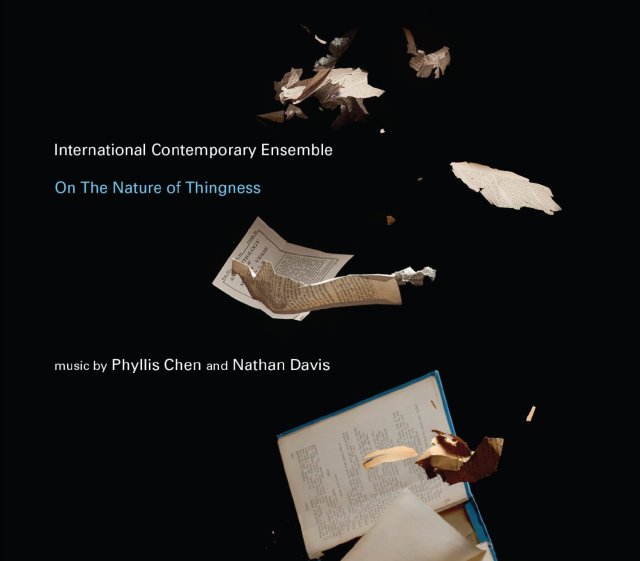
ICE Debuts on Starkland: Music by Phyllis Chen and Nathan Davis


71suob4pdtL._SL1500_

Starkland is one of those labels whose releases seem to be so carefully chosen that one is pretty much guaranteed a great listening experience even if that experience might challenge the ears sometimes.  If one were to purchase their complete catalog (as I pretty much have over the years) one would have a really impressive and wide-ranging selection of new music.

I recently reviewed a very fine ICE (International Contemporary Ensemble) recording of music by Anna Thorvaldsdottir here. The present disc is the first appearance on Starkland of this ensemble whose performance skills and repertoire choices show the same depth of understanding as the producers of the label upon which they now appear.

ICE was founded in Chicago in 2001 by executive director and flautist extraordinaire Claire Chase.  The discography on their website now numbers 21 albums including the present release.  The group features some 30+ artists and musicians including a live sound engineer (like the Philip Glass Ensemble) and a lighting designer.  Do yourself a favor and check out the ICE Vimeo page to get some ideas about why having a lighting designer is a good idea.  Their performances are visually as well as musically compelling.  And who knows, perhaps there is a Starkland DVD release in their future.

About half their albums feature music by members of ICE and that is the case with this release.  One always has to wonder at the process that is involved in choosing repertoire to perform and/or record but there is no doubt that this group seems to have good instincts in regards to such decisions as evidenced by the already wild popularity of this disc on WQXR and the positive initial reviews so far.

chen_phyllis_toypiano3Resized

Phyllis Chen‘s biographical data is a bit sparse on both the ICE website and her own so I am going to assume that this talented young keyboard player likely began playing at an early age.  Like fellow pioneers Margaret Leng Tan and Jeanne Kirstein before her she has embraced toy pianos and, by extension I suppose, music boxes, and electronics into her performing arsenal.  In addition to being a composer she is one of the regular members of ICE.

NathanDavis_Obraz9

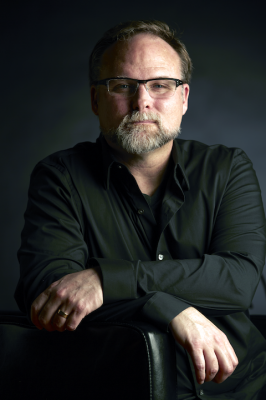
Nathan Davis is a regular percussionist with ICE as well as a composer.  His works range from opera to chamber and solo pieces for various instruments as well as electronics.

The tracks on this release pretty much alternate between these two featured composers.

The first track is Ghostlight (2013) by Nathan Davis, a sort of ragged moto perpetuo for “gently”prepared piano.  This is a good example of how these musicians (pianist Jacob Greenberg in this instance) have really fully integrated what were once exotic extended techniques into a comprehensive catalog of timbral options which are used to expand the palette of creative expression.  This is not a second rate John Cage clone but rather another generation’s incorporation of timbral exploration into their integral canon of sonic options.  This is an exciting and well-written tour de force deftly executed.

The next two tracks take us into the different but complimentary sound world of Phyllis Chen.  Hush (2011) for two pianos, toy pianos, bowls (presumably of the Tibetan singing variety) and music boxes is a playful gamelan-like piece played by the composer along with pianist Cory Smythe.

Chimers (2011) is a similarly playful work requiring the assistance of clarinetist Joshua Rubin, violinist Erik Carlson and Eric Lamb (on tuning forks) along with Chen and Smythe once again.  Again we hear these unusual instruments and timbres not as outliers in the musical soundscape but rather simply as artistic elements that are part of the composer’s vision.

Track number 4 features a work for bassoon and live processing.  Davis’ On Speaking a Hundred Names (2010) is played by Rebekah Heller and again the (to this listener) usually uncomfortable fit of acoustic and electronic are achieved very smoothly.  Music like this gives me hope that some day I will be able to drop the inevitable negative connotations I have associated with the term “electroacoustic”.  This is very convincing music and not just in the “golly gee, see what they’re doing” sense either.  The experimentation here (including the multiphonics) appears to have preceded the composition giving us an integrated and satisfying listening experience.

Chen comes back on track 5 with another successful integration of acoustic and electronic in her, Beneath a Trace of Vapor (2011).  Eric Lamb handles the flute here playing with (or against) the composer’s prepared tape.  This electroacoustic trend continues in the following track (also by Chen) called Mobius (201-) in which Chen, Smythe and Lamb are credited with playing “music boxes and electronics”.  Once again the integration of electric and acoustic speaks of a high level of music making.

The final four tracks are the big work here and the work that lends its name to this disc, On the Nature of Thingness (2011) by Nathan Davis.  Apparently taking its title from Lucretius’ On the Nature of Things (ca. 1B.C.) the work earlier also inspired Henry Brant in his spatial composition, On the Nature of Things (1956), but the work in this disc does not seem to make any direct reference to that Roman classic poem except perhaps metaphorically.

tony_8305

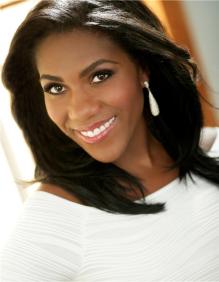
Soprano Tony Arnold

The work here is an exploration of language, sound and expression.  This most eclectic and ponderous of the selections is a wonderful opportunity to hear the considerable skills of resident vocalist Tony Arnold who sense of pitch and articulation are incredibly well-suited to this work.  Her performance leaves nothing to be desired and is likely as authoritative as it gets.  The work seems to require a great deal of concentration and coordination on the parts of all involved and ICE takes the opportunity to demonstrate their well-honed skills as they clearly listen to each other and go all out in terms of achieving the subtlety of expression required in this demanding and complex work.

As usual the Starkland recording is clear and detailed without the sense of claustrophobia that such detail can take on and the liner notes are useful without extraneous detail.  This is an ensemble to watch/listen for both for the performers and for the music they choose to program.  You won’t be disappointed.


A Grand Early Start to Black History Month


BHM160006

The United States (unlike England who use the 31 day month October) has chosen the shortest month of the year to celebrate Black History  but I have managed to get 30 days to celebrate this year by starting a day early in this leap year.  Basically I cheated, deal with it.

This is the year of the last term of our first black president and, while that is a historically significant fact, so are the facts of the police killings that demands the development of interventions like “Black Lives Matter” to remind society of a fact that should be obvious but clearly is not, that we have a serious human rights crisis here.  However, rather than getting into yet another acknowledgement of our racist society, I am interested in sharing a wonderful positive experience that I hope will provide as much inspiration to my readers as it did to the fortunate folks who attended this night’s festivities.

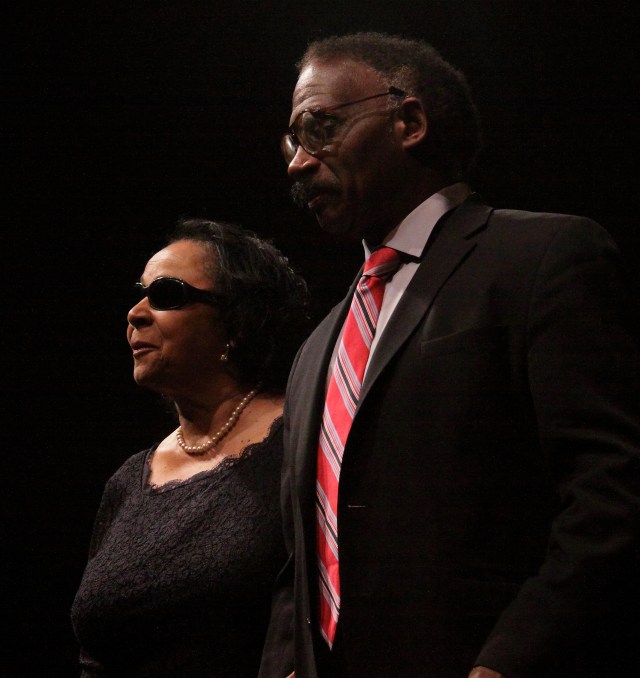
Friend and colleague Bill Doggett kindly made arrangements for me to attend this annual fundraising event at the Eastside College Preparatory School and sponnsored by the African American Composer Initiative  and the San Francisco Friends of Chamber Music.  The featured guest was composer/pianist Valerie Capers (1935- ) a Julliard trained pianist and composer. She was joined by a wealth of highly skilled musicians in a fascinating program of music and arrangements by Capers, John Robinson and several others.

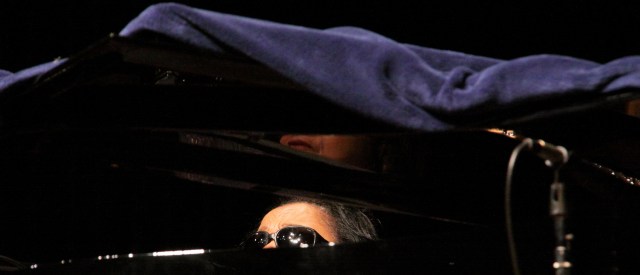
The well attended evening began with a couple of vocal numbers done by the Eastside Preparatory School Choir followed by the playing of the beginning of a documentary film about Ms. Capers (Dr. Valerie Capers: Dream Big, 2015).  In the excerpt she talks about her life, losing her sight and the importance of music to her.  She is a delightfully positive, optimistic and energetic person and, as we saw later, a powerful and inspiring musician. This became even more evident when we were treated to the live interview conducted from the stage by LaDoris Cordelle, herself an accomplished pianist and singer as well as a respected lawyer, judge and activist.

BHM160002

LaDoris Cordelle (left) interviewing Valerie Capers

Participating this evening were the Eastside Preparatory School Choir conducted by David Chaidez, soprano Yolanda Rhodes, vocalists/pianists LaDoris Cordell and Deanne Tucker, pianist Josephine Gandolfi, violinist Susan C. Brown, cellist Victoria Ehrlich, and clarinetist Carol Somersille along with guest artists Valerie Capers, John Robinson (bass, composer), Jim Kassis (percussion), Rufus Olivier (bassoon), Stephanie McNab (flute), John Monroe (trombone), John Worley (trumpet) and Lauren Sibley (narrator in “Ruby”).  I must say that the musicians this evening were truly spectacular and seemed to work even harder in their homage to guest of honor Valerie Capers.

The musical program properly began with the performance of John Robinson’s Fanfare for an Uncommon Woman (2015).  The work whose title echoes Aaron Copland’s populist Fanfare for the Common Man (1941) and was written in honor of Ms. Capers.  This was followed by several of Capers’ Portraits in Jazz (1976) compositions and her take (not at all like Vivaldi’s) on the four seasons in her, Song of the Seasons (1987).

BHM160005

Valerie Capers with John Robinson acknowledging the grateful applause.

The first half of the program concluded with Capers’ Winter Love, her gloss on Wagner and her arrangement of Duke Ellington’s “Don’t Mean a Thing if it Ain’t Got that Swing”.

The second half began with Bird Alone, an Abbey Lincoln song arranged by Capers.  This was followed by another composition from Mr. Robinson, “Tarantella with a Twist of Lime” (2015), a catchy somewhat humorous piece, and then “Doodlin'” by Horace Silver.

Next up was a work in a genre of great interest to this reviewer, that of a political classical piece written to express political ideas.  Ruby (2013) with text and music by Valerie Capers is a work for narrator, vocalists and ensemble that tells the story of Ruby Bridges who, in 1960, became the first black child admitted to the the all white William Frantz Elementary School in New Orleans, Louisiana.  She had to be accompanied by Federal Marshals under orders from then President Eisenhower.  Bridges was the only black student and was taught by the only teacher willing to teach a black student, Barbara Henry who remained Bridges teacher for the entire year and there were no other students in that classroom though some white families did eventually send their children back to the school where they were taught in their accustomed segregated fashion (ironic here too because New Orleans had had the beginnings of an integrated school system prior to the civil war). Bridges and her family suffered many indignities as a result of her participation in this landmark event, a critical step in the Civil Rights Movement. This was a powerful and touching piece performed with reverence, sympathy driven by the hindsight of the accomplishment itself as well as the frustration and sadness that even some 50 years later the struggle still continues.

BHM160007

The Grand Finale

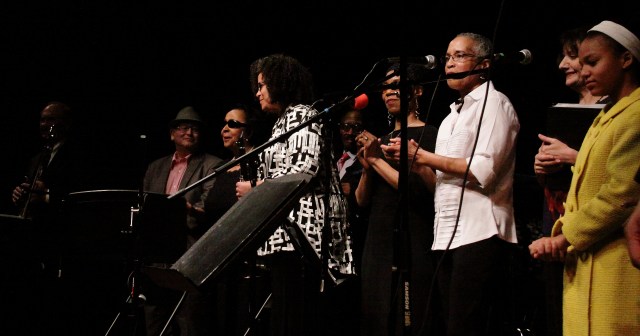
The evening concluded with a group performance of Capers’ arrangement of the iconic spiritual, “Eyes on the Prize” whose strains provided some of the soundtrack of the civil rights struggles of the 1960s.  It is a hymn which still offers much inspiration.  It was a joyful and optimistic evening much like the times 50 years ago whose struggles now rest on the shoulders of yet another generation hoping, praying, working and performing amidst adversities that seem to never end.  But even a progress measured in inches is still progress.

The reception which followed was catered by apprentices from a group called, “Worth Our Weight” (based in Santa Rosa) which teaches culinary and catering skills to minority students.  Various tasty little sandwiches, meatballs and pastries tended to our palates while we took advantage of the opportunity to meet the performers.

I took the opportunity to meet and talk briefly with Capers whose energy was unabated belying her 80 years as she greeted a wealth of appreciative audience members.  I commented to her that I thought her vocal writing sounded a bit like Mahler  Capers paused oh so briefly before stating with her characteristically good humor and a knowing smile, “I think that’s  compliment.” Indeed it was.


Spirituals Re-Imagined


411Wkh4lXuL._SS280
I managed to squeeze a delightful brunch meeting with my busy friend and colleague Bill Doggett on New Years Day.  It was there at a favorite Oakland cafe that we discussed many topics and Bill gave me a copy of this beautiful CD by a young black composer whose work is entirely new to me.

Okpebholo

Shawn Opkebholo (1981- )

Shawn Okpebholo (1981-  ) was born in Lexington, Kentucky.  He earned his B.A. in music at Asbury College and his M.M. and D.M.A. degrees at the  Unniversity of Cincinatti.  Doctor. Okpebholo is currently on faculty at Wheaton College  in Illinois.

The present disc is Opkebholo’s first CD dedicated entirely to his own compositions and is the composer’s “reimagining” of spirituals.  Drawing on the folk tradition of spirituals, worksongs, etc. as well as classical art song traditions he fashions his personal take on these much loved melodies.

I do feel compelled to mention the beauty of the photography and album design.  Greg Halvorsen Schreck took the pictures and Jeremy Botts did the overall design.  Powerful stuff.

In a slight deviation from the classic voice and piano arrangements the composer chose to score this little cycle for baritone, mezzo-soprano, viola and flue along with piano.  For this writer this was an interesting and suitably entertaining choice.

jnai

J’nai Bridges

Willnewheadshot

Will Liverman

The singers Will Liverman, baritone and J’nai Bridges, mezzo-soprano are marvelous and sensuous voices and discharge their duties most beautifully.  The pianist Paul Tuntland Sànchez is also a composer and very accomplished soloist.

Sanchez_Photo

Paul Tuntland Sanchez


The violist is Dorthy White Opkebholo and is the composer’s wife.  She is an accomplished musician in her own right.

The flute is played by Caen Thomason-Redus.

This is a beautiful recording of these loving arrangements of spirituals which can occupy that place in the literature populated by the likes of Aaron Copland’s Old American Songs.  A must for art song and folk song fans and a great opportunity to hear some fine musicians at the beginnings of what is hoped to be long and successful careers.

all spring, Music of Emily Doolittle


doolittle

Emily Doolittle (1972- ) was born in Halifax, Nova Scotia.  She earned a B. Mus. from Dalhousie University in 1995 having studied with Dennis Farrell and Steve Tittle.  She went on to earn an M. Mus. in 1999 from Indiana University where she studied with Don Freund.  She completed her Ph.D. at Princeton in 2007 studying with Barbara White, Steve Mackey and Paul Lansky.  In addition she studied with Louis Andriessen from 1997-1999.

Doolittle now lives in Glasgow, UK having just left a faculty position at the Cornish school in Seattle, WA.  where she taught since 2008.  A quick look at her CV reveals a very busy composer and academic with an extensive list of compositions, performances, research, teaching etc. such that this reviewer is amazed to find that the present release is the first CD dedicated exclusively to her music.

I was pleased to be able to get a perspective from the composer that helped me understand the context of this disc in terms of the rest of her work.  She wrote:

“As I was making choices of what to include on this CD, I realized that my music divides itself into several (sometimes overlapping) categories. Over the next few years, I’m hoping to be able to record two or three more CDs. The one that I sent you is the one for fairly standard-ish chamber ensembles, with pieces that would sit fairly comfortably with chamber music of any era. At the moment I’m applying for funding to record a CD of pieces for one or two instruments/voices — these pieces also have a fairly similar musical language to the pieces on “all spring”. After that, I’d like to record a CD of my bird and animal song influenced music, which tends to be more experimental (in terms of sounds used and structure), and often involves some improvisation. And then I have a number of pieces that are harder to figure out how to present to a larger audience — site-specific pieces, pieces for amateurs or children, etc. So I guess I see this CD as both the culmination of one project, and the beginning of a larger project. And I think that getting this sort of overview of my compositions to date will help give me ideas about the directions I’m most interested in going in in the next few years. (I’m at a bit of a transitional time — I just left a full-time teaching position at Cornish College of the Arts in Seattle to move to Glasgow. I’m hoping to find part time teaching here, but mostly I want to devote a lot more time to composing than I’ve been able to in the last few years.)”

I was also unaware that there was such a thing as “zoo-musicology” or the study of things musical generated by the members of the animal kingdom.  Who knew?  I was familiar with Olivier Messiaen’s transcriptions and use of bird song but until now I was not aware that work was still being done in this area.  Alas, that will have to be the subject of another review as this disc, while later analysis might reveal zoomusicological influences, is ostensibly more in the category of absolute music or perhaps metaphorical music.  What is quite clear is the picture of an artist with wide-ranging interests who is working to shape her oeuvre and her research interests into a more unified effort which promises potentially fascinating results yet to be heard.

The CD is a very pleasant listening experience.  Nothing here sounds experimental, rather these works are beautifully composed and lovingly played by the Seattle Chamber Players (and friends).  All were composed from 2000 to 2014 and share a sort of romantic and nostalgic flavor and demonstrate the delicate nuances of this composer’s palette.

The first two works, “Four Pieces About Water” (2000) in four short movements and the single movement “falling still” (2000/2009) are purely instrumental as is the fourth piece on the disc “col”(2002/2014).  (Please note that all spellings are as they appear on the disc.)

Tracks 6-10 comprise the album’s title piece, “all spring”(2004) features the poetry of Canadian poet Rae Crossman and the final and longest piece, “Why the parrot repeats human words” (2005) features a text by the composer in which she tells her version of a Thai folk tale (think perhaps of a Canadian Peter and the Wolf maybe).  Both these works feature the beautiful spoken and singing voice of Maria Mannisto.

The ample and lucid notes are by the composer.  The recording was engineered by Doug Haire at the Jack Straw Cultural Center in Seattle and mastering was by John D. S. Adams at Stonehouse Sound in Mahone Bay, Nova Scotia for this Composer’s Concordance label release.

Certainly this writer will be looking forward to hearing more from this fascinating artist as she reveals more of her work on recordings and goes on to who knows what new and interesting areas in this (now) post-Boulez world.  Brava!


The Big Piano Variations, a great new recording of Bach, Beethoven and Rzewski


71Dr+79MpxL._SL1200_

Let me start by saying that I specifically requested the opportunity to review this October, 2015 release because I was pleased and fascinated to see this representation of three major masterworks of the large variation form included in a single collection.  To my knowledge this is the first time that these three works have been represented in a single release.

Variation form is one of the staples of the composer’s arsenal of techniques for well over 400 years now but the form is most commonly used as one technique in one  of several movements of a larger work. Consequently these types of variations generally last a few minutes.  A favorite example is the variations movement from Schubert’s “Trout” Quintet, a set of variations on his song, “Die Forelle” (trout in English) which subsequently lends the title to the entire work for piano quintet. This variation movement runs about 7 minutes or so in performance.  The Goldberg Variations (1741) can run up to 2 hours if one includes all the repeats but generally performances take about an hour.

So, along comes Johann Sebastian Bach who is commissioned by one Count Herman Karl von Keyserling (1697-1764) to compose some music for harpsichord (the predominant keyboard instrument of the day) to be performed by his personal musician Johann Gottlieb Goldberg (1727-1756) to aid the count’s insomnia.  The original intent apparently was to have the player perform one or two of said variations as a sleep-inducing remedy upon the Count’s request.  The work, using a brief Sarabande from the Bach’s own Anna Magdalena Notebook collection of pieces, has since taken the performer’s name as the Goldberg Variations.

It is not clear when the practice of performing the work in it’s entirety began but there is little doubt that Glenn Gould’s 1955 recording for Columbia Records (now Sony Classical) placed this piece firmly in the repertoire and in the minds and hearts of musicians and the listening public.  The variations had been recorded before by Rudolf Serkin, Wanda Landowska, Claudio Arrau, Ralph Kirkpatrick, Gustav Leonhardt and Roslyn Tureck but Gould’s quirky interpretation apparently defined a moment.

In 1819 the publisher Anton Diabelli composed a waltz and sent it out to many composers of the time asking them to write a variation on his piece with the promise that the collection would then be published.  This was not an uncommon practice at the time and it is certainly a workable business plan.

Indeed Diabelli did publish a compendium of these 50 plus variations by many composers of the day (including Franz Schubert and the 11 year old Franz Liszt) as Vaterländischer Künstlerverein (the link will take you to the downloadable score of the non-Beethoven variations on the waltz) but these are largely now forgotten.  Beethoven apparently balked at the idea or simply saw a larger potential in Diabelli’s brief waltz because he chose to write not one but 33 variations on the theme which subsequently became Volume II of Diabelli’s project.

Unlike the Goldberg Variations the Diabelli Variations (1823) were intended as a concert piece to be performed in its entirety.  Like most of Beethoven’s music this piece found a place in the repertoire and remains a staple for many pianists.  It is not clear if Beethoven was familiar with Bach’s work but the gesture is certainly similar in creating a large cohesive set of variations.

In 1975 the fabulous pianist Ursula Oppens commissioned Frederic Rzewski to write a set of variations that could be a companion piece to the Diabelli Variations.  Rzewski composed the music and Oppens premiered it in 1976.  Her subsequent recording from 1979 was nominated for a Grammy Award.

Frederic Rzewski (1938- ) is a composer/performer as were Bach and Beethoven.  He is a highly virtuosic pianist and a prolific composer whose influence extends widely from his involvement in the European avant garde including his own innovative use of early electronics in his ensemble Musica Elletronica Viva with Alvin Curran, Richard Teitelbaum, Allan Bryant, Carol Plantamura and John Phetteplace.

Rzewski’s variations are based on a revolutionary song by Sergio Ortega called, “El Pueblo Unido Jamás Será Vencido” (The People United Will Never Be Defeated), a song popular during the Chilean revolution that deposed Salvador Allende.  Unlike Bach and Beethoven, Rzewski’s music frequently takes on political associations, usually pretty explicitly as seen in this piece.

There are  36 Variations (6 groups of 6) and, like the preceding pieces are a reflection of much of the performance practice of their respective times.  Various “extended techniques” include slamming the lid of the keyboard, whistling and others are carefully integrated into this very cohesive mostly tonal work.

This piece seems to be gaining ground as familiar repertoire in the concert hall and, whether by accident or design, the inclusion of this piece along with the other two by Sony (who, you will recall released the establishing version of the Goldberg Variations) in effect is a major acknowledgement of this piece as perhaps the foremost representation of the large variation form in the 20th century much as the Goldberg and Diabelli Variations represent the 18th and 19th.  Bravo, Sony!

The interest here too is the emergence of a new artist, the Russian pianist Igor Levit (1987- ). This is his third release on Sony Classical, the previous two being the 2 disc set of the Beethoven late piano sonatas and the 2 disc set of the Bach Partitas for keyboard.

I won’t go into the nuances of interpretation that distinguish Levit from other performers of these variations except to say that he has to my ears a lighter touch, more Chopin in spirit than Liszt perhaps.  His performances leave no doubt as to his virtuosity and interpretive abilities but, of course, there are always discussions of individual preferences for one or another pianist in such repertoire.  What is undeniable is his ability to grasp the larger picture and to perform these large masterpieces in such a way as to convince the listener of the integrity of each work and to hold the interest of the listener throughout the performances.  There is, in the end, no definitive recording of any music really but these are certainly candidates in the debate.

In short this is a fine set of discs, beautifully recorded, which would please anyone interested in classical music and piano music in general.  Over time one might want to hear other interpretations but these recordings are extremely satisfying and represent  their composers as well as any I’ve heard.

The Ensemble Formerly Known as Zeitgeist (?), Music by Scott Miller


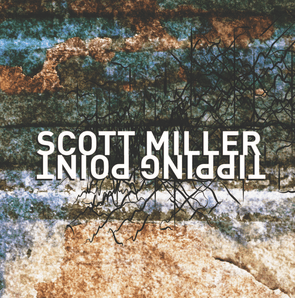
Scott Miller- Tipping Point (New Focus fcr 161)

Scott Miller- Tipping Point (New Focus fcr 161)

ADDENDUM:  Mr. Miller kindly supplied the correct composition dates for the pieces in this album and they have been placed in the text.  Also I was pleased to receive a link to their discography:(http://www.zeitgeistnewmusic.org/discography.html)  I hope that is a recent addition and not my oversight (apologies if it’s an oversight).


I was particularly pleased to receive this disc for review as I am a long time fan of the Minnesota based Zeitgeist ensemble.  This varied ensemble has been a vital part of the new music scene in Minnesota since about 1977 (I still have some of their vinyl LPs).  Happily they are in the process of making these out of print items available again on CDs via their website.

Curiously there is very little on the ensemble’s web site or on the internet in general on the history of this group prior to about the year 2000  A Google search yields few references to this group and Discogs does not have much listed in their discography of Zeitgeist.  Their Wikipedia page is also in serious need of updating. The Innova records site is perhaps the most useful in identifying the albums released by this group in its various configurations and solo or other collaborations by its members (though the re-release of the older discs are not distributed there).  I realize that this group began in the pre-internet era but perhaps it is time to clarify this and present a comprehensive history and discography of this significant new music ensemble.

Scott Miller

Scott Miller

The present disc is a collection of recent works by Scott Miller, a Minnesota based composer and teacher whose association with Zeitgeist goes back to 1993.  He is currently the president of SEAMUS (Society for Electro Acoustic Music in the United States) and professor of music at St. Cloud State University.  You can find his work on youtube and Sound Cloud.

Now let me say here that it is my observation that electroacoustic music, while not an uncommon genre, seems to be a specialized one which, like Zeitgeist, is not consistently well-promoted.  At least that is my explanation (excuse perhaps) for my limited knowledge of Mr. Miller’s music up to this point.

The CD is a collection of six tracks with vocals by soprano Carrie Henneman Shaw on tracks  2, 4 and 6.  Each track is a separate work and they are listed in the proper order on the back of the CD case but are discussed out of order in the notes for some reason.

But now I must stop my whining and criticisms (and thinly veiled references to Prince) and turn to the actual music. This is really wonderful music, well-performed and well worth your attention.  And if the term “electroacoustic” puts you off don’t worry.  What we have here is an artist who has managed to integrate a variety of techniques into an effective musical language that transcends mere experimentalism to yield some really good music.

The first piece, the one from which the album receives its title, is Tipping Point (2010) and was originally included on the SEAMUS CD Volume 20 (EAAM-2011).  This is a remixed and remastered version of that recording from 2010.  This writer hears echoes and homages to (or influences by, you decide which) Terry Riley, Steve Reich as well as perhaps Morton Subotnick and even the thornier sound of Mario Davidovsky at times.  To my ears this is an integration of many ideas which work effectively together.

The second track, Forth and Back (2003) is the longest track and is a setting of the poem by Catalan poet Felip Costaglioli.  The setting is atmospheric, appropriate to the lovely texts and the vocal writing is simply beautiful.  Carrie Henneman Shaw delivers this work with the success of interpretation that one would expect of a musician who understands the composer’s intent.  Not an explicitly virtuosic piece it nonetheless challenges the performer with sotto voce passages that I imagine are quite a balancing act for a singer.  This is a beautiful piece and the fact of its electroacoustic aspects take on far less important place than the effectiveness of the setting.

Next up is Pure Pleasure (2008) is a percussion piece.  The composer goes into some detail in the notes as to the genesis of this piece and that is interesting but so is the act of listening to it.  This is one of the more obviously experimental works here.

Twilight (2008-13) is actually a portion of a larger work, a collaboration between Miller, Pat O’Keeffe and video artist Rosemary Williams called, The Cosmic Engine.  This is a multi-media chamber opera which premiered in 2008 and this section was revised in 2013.  The text is by Walt Whitman.  Again, Shaw does a lovely job with the lyrical vocal lines.

Funhouse (2003) is a marvelous use of electroacoustic methods.  It is a piece with rather complex origins as explained in the notes but, consistent with its title, this is a fun piece to hear and, I imagine, to play.  Along with the percussion piece it represents the more overtly experimental work of this artist.

The final track, Consortia (2013), as  with Twilight, is an outgrowth or by product of work on the multimedia opera, The Cosmic Engine.  Here the composer enlists computer processing to create a sort of live polyphony with live mixing of tracks of pre-recorded and live improvisational structures based on some renaissance tunes and techniques.  I will leave it to the listener to read through the technical details but the result is a pretty entertaining piece of music.

Zeitgeist does a wonderful job here playing with passion and dedication.  I can only hope that we hear more from both Zeitgeist and Mr. Miller.

The recording done at Wild Sound Recording Studio in Minneapolis (Mark Zimmerman, master engineer on tracks 1 and three; Steve Kaul, master engineer on tracks 2 and 4-6) is lucid and warm.  The art and design by Raul Keller makes for an attractive product.  This release from New Focus Recordings belongs in the collection of any new music fan and certainly every Zeitgeist fan.