Meredith Monk and Eric Salzman, a Labor of Love


Labor Records LAB 7094

Labor Records LAB 7094

New music aficionados in the 1970s had access to quite a bit of new and unusual music on the Nonesuch label under the watchful eye of Theresa Sterne.  In fact, Salzman was among the wonderful producers along with people like Joshua Rifkin who put that label at the forefront of contemporary music releases.

Two most unusual dramatic pieces, The Nude Paper Sermon (1969) and Civilization and Its Discontents (1977) caught my ear (yes, I have them on vinyl).  I was looking to see if these had ever been reissued (they have) and ran across this disc containing music by Eric Salzman (who was involved in both of the aforementioned discs) and by Meredith Monk.

Eric Salzman

Eric Salzman

Eric Salzman (1933- ) is a composer, scholar, broadcaster, producer and theorist.  He studied at Columbia University(BA 1954) with Jack Beeson, Lionel Trilling, Otto Luening and Vladimir Ussachevsky.  His graduate work at Princeton University (MFA 1956) was with Milton Babbitt, Roger Sessions, Earl Kim, Edward T. Cone, Arthur Mendel, Oliver Strunk and Nino Pirotta.  A 1956-8 Fulbright fellowship allowed him to work with Goffredo Petrassi and at Darmstätdter Ferienkurse with Karlheinz Stockhausen, Bruno Maderna and Luigi Nono.

He has written for various news media and wrote for the wonderful Stereo Review magazine from 1966.  His academic credits and publications are also highly regarded.  He was the music director at WBAI, a Pacifica Radio Station during the 60s and 70s.  In short he is a living treasure of American music.


His music, unfortunately, is less well-known I think than his writings but what little I have been able to hear of his work (you can hear excerpts of various pieces on his web site) has piqued my interest to seek out more.  He is uncompromisingly innovative and experimental which may put off the casual listener but has wonderful revelations to those who lend their ear.  This disc on Labor Records (who have also issued the aforementioned dramatic works) contains a new aural drama or radio drama if you prefer.

Now I doubt that anyone who actually seeks out a recording by the likes of Salzman and Monk will be put off by innovative and experimental ideas but these works are quite listener friendly and represent mature work by both artists.  This very welcome recording gives listeners an opportunity to hear the vibrant mature work of two clearly still vital living masters.

Salzman’s “Jukebox in the Tavern of Love” (2008) was written on commission from the Western Wind Vocal Ensemble and was performed in Brooklyn’s “Bargemusic” in 2009.  The libretto is by Valeria Vasileski and the action takes place in a New York bar during a power outage.  The cast of characters reminds this writer of any number of, “a man walks into a bar…” jokes.  We meet a nun, a Rabbi, a Broadway Dame, a poet, and a Con Ed worker all culled from the composer and librettists perceptions of the individuals that make up Western Wind.  And these characters comment on the subject of love in this re-visioning of the madrigal opera genre.


Meredith Monk

Meredith Monk

Meredith Monk (1942- ) is a dancer, composer, vocalist, choreographer, filmmaker and new music innovator in extended vocal techniques.  She is among the best known of the composers who comprised the loosely defined “downtown” new music scene in New York in the 1970s.  She graduated Sarah Lawrence College in 1964 having studied with Beverly Schmidt Blossom.  She is best known for her numerous recordings on Manfred Eicher’s ECM label.

Basket Rondo (2007), also written for the Western Wind Vocal Ensemble, is vintage Monk.  The eight movements take the listener through a series of extended vocal sound worlds.  Monk’s work is always more evocative than literal and this work could suggest whatever the listener perceives or could simply be appreciated as musical expression. Her creative vision that underlies this piece involves a pre-industrial society singing a sort of work song.  Monk’s ability to export her extended vocal techniques through her workshops made it possible for her to write in her idiomatic style for singers not otherwise familiar with these techniques.

The piece is cast in eight movements  suggesting the “rondo” I suppose.  And I’m guessing the baskets represent the fruits of their labors.  But the important thing is that Monk’s re-visioning of medieval history in these dream like dance/vocal dramas succeeds in creating mesmerizing aural theater regardless of what plays in your head when you hear it.

The Grammy nominated Western Wind Vocal Ensemble (much of whose work is with Medieval and Renaissance music) has a well-deserved reputation as being among the finest small vocal ensembles working today.  This disc allows them to demonstrate their ability to move easily into the contemporary music world.  Their performances here are superb and a very welcome addition to the discography of these two composers.  I cannot think of anyone who could have written this music other than the present composers.  Here are two works by composers whose idiosyncratic methods have produced music that identifies them much as a thumb print identifies a check writer (or a criminal, for that matter, I suppose).  That is a mark of true mastery. And it would be a crime to miss hearing these works.


Game of the Antichrist, a spectacular new music drama by Robert Moran


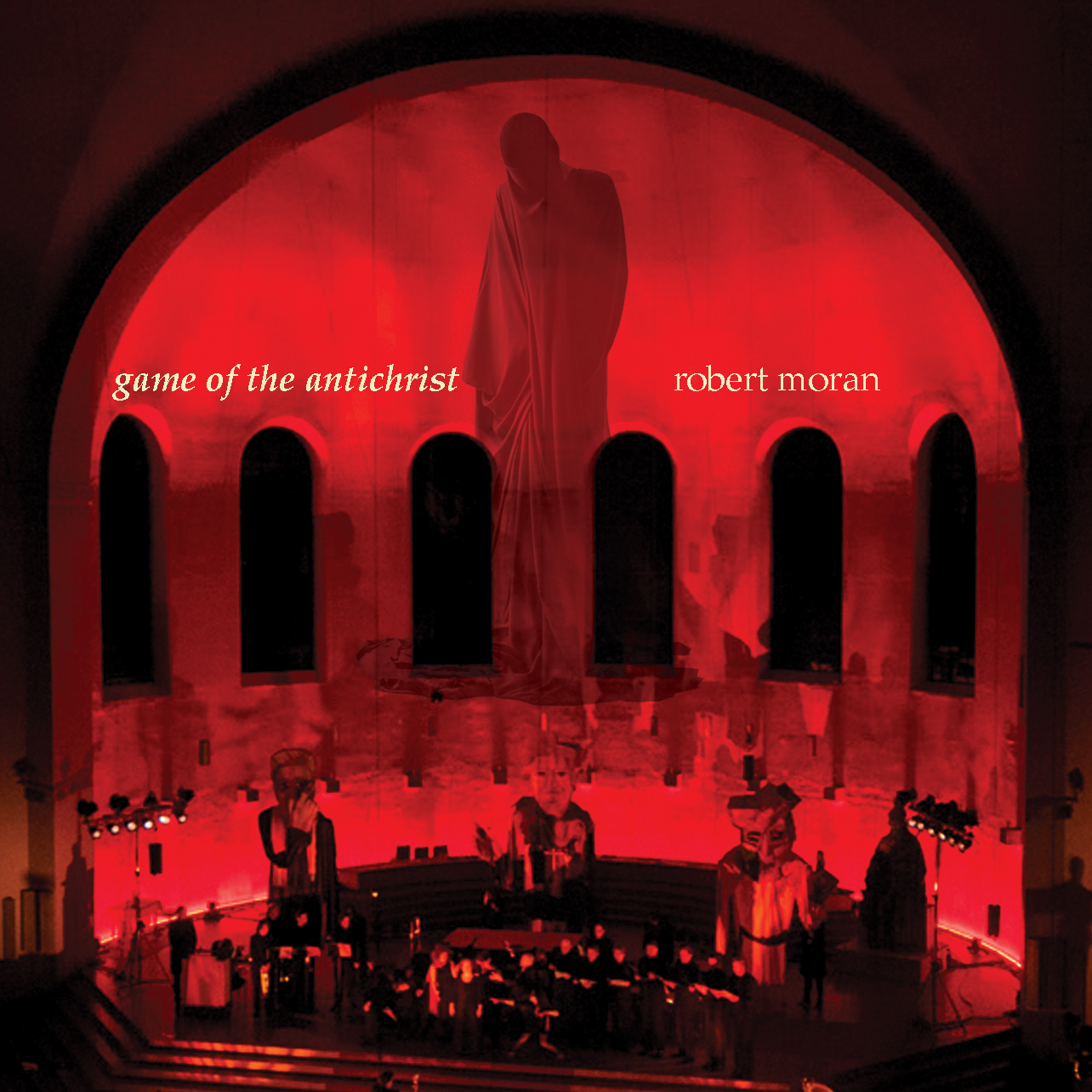
Cover of Game of the Antichrist

Game of the Antichrist (Innova 251)

Despite the title, this is neither a Stephen King adaptation or that of a given miniseries.  This is an actual medieval mystery play which was performed to disseminate religious ideas during that period.  The medieval passion plays are better known but eclectic composer Robert Moran managed to find an actual drama and added to it his unique blend of experimentalism, minimalism, jazz and lyrical melodies to create this visually and musically striking (there is a Video here) setting of this forgotten little play.

Moran (1937- ) studied in Vienna with Hans Erich Apostel, a student of both Berg and Schoenberg.  He earned a master’s degree from Mills College having studied with Darius Milhaud and Luciano Berio.  He has produced everything from electronic music, to happenings involving whole cities and has written in musical styles derived from chance operations to minimalism and is not afraid to write beautiful melodies.  His collaboration with Philip Glass in The Juniper Tree (1985) is a fine example of his facility with vocal writing and music drama.

This drama is performed in a cathedral space and Moran takes advantage of the resonant space by the inclusion of Alphorns, harp and organ whose tones are transformed in part by that space.  Musical styles vary suited to the unfolding drama and work well with the staging of the piece.

Moran, who professes a love of opera since about the age of 9 or 10 has a great sense of the dramatic and for beautiful vocal writing.  He says he listens to operas all the time.  His 2011 Trinity Requiem was written for similar forces and performed in a similarly resonant space also to great effect.  And his sense of eclecticism allows him to select from a wide variety of musical styles and effects.

The end result is, for this reviewer, a very successful integration of the composer’s various skills and influences.  It would be hard to imagine a better setting of this piece.  He starts with an anonymous text from Quirinus Monastery Cloister Tegernsee in Bavaria ca. 1150 and, with Alexander Hermann, creates a realization for performance.  The piece is scored for children’s chorus, vocal ensemble, soprano, mezzo-soprano, counter-tenor, oboe, english horn, Alp horn, Bar piano and organ.  In addition there are two other defined ensembles consisting of harp (representing the Heathen and his Babylonian followers), guitar, recorders and synthesizer (representing the Synagogue and Jerusalem), trumpets, horn, trombone, bass trombone, tuba and percussion (representing the Church and its Devotees).

There are roles for dancers and, in the performance depicted on the CD cover, choreography by Jarkko Lehmus and Bettina Hermann design by George Veit and menacing puppets created by Fabian Vogel.  Unfortunately there are no current plans to release a DVD of this work but settling for the music alone is hardly a terrible sacrifice.  Moran brings his eclectic musical range, knowledge of opera and music theater combined with careful selection of dramatic text to create a piece that can work as aural theater as well.

The disc concludes with another piece, Within a Day (2014), of aural theater which, in this case, has no specified stage actions.  It is a collaboration with the Thingamajigs Performance Group, Edward Shocker’s improvisational ensemble.  It is an example of Moran’s ability to write less determined music as well as his ability to collaborate with other creative artists.  The piece premiered at San Francisco’s Center for New Music in January, 2014 and subsequently recorded in Lisser Hall at Mills College in May, 2014.  It is a collective improvisation based on what appears to be an indeterminate score by the composer.

This is a clearly different music with more abstract aims and it contrasts strangely with the music drama but this is a good example of Moran’s facility with the art of composition as well as collaboration (Can you get more collaborative as a composer than an indeterminate score?).  This more ambient sort of music is a little sonic theater for the mind based loosely on Moran’s interest in Tibetan texts invoking the gods and goddesses through their chants.

This disc made one of my best of 2014 and I highly recommend it for listeners interested in music drama and sound theater.

…of the Adder’s Bite, a new CD release


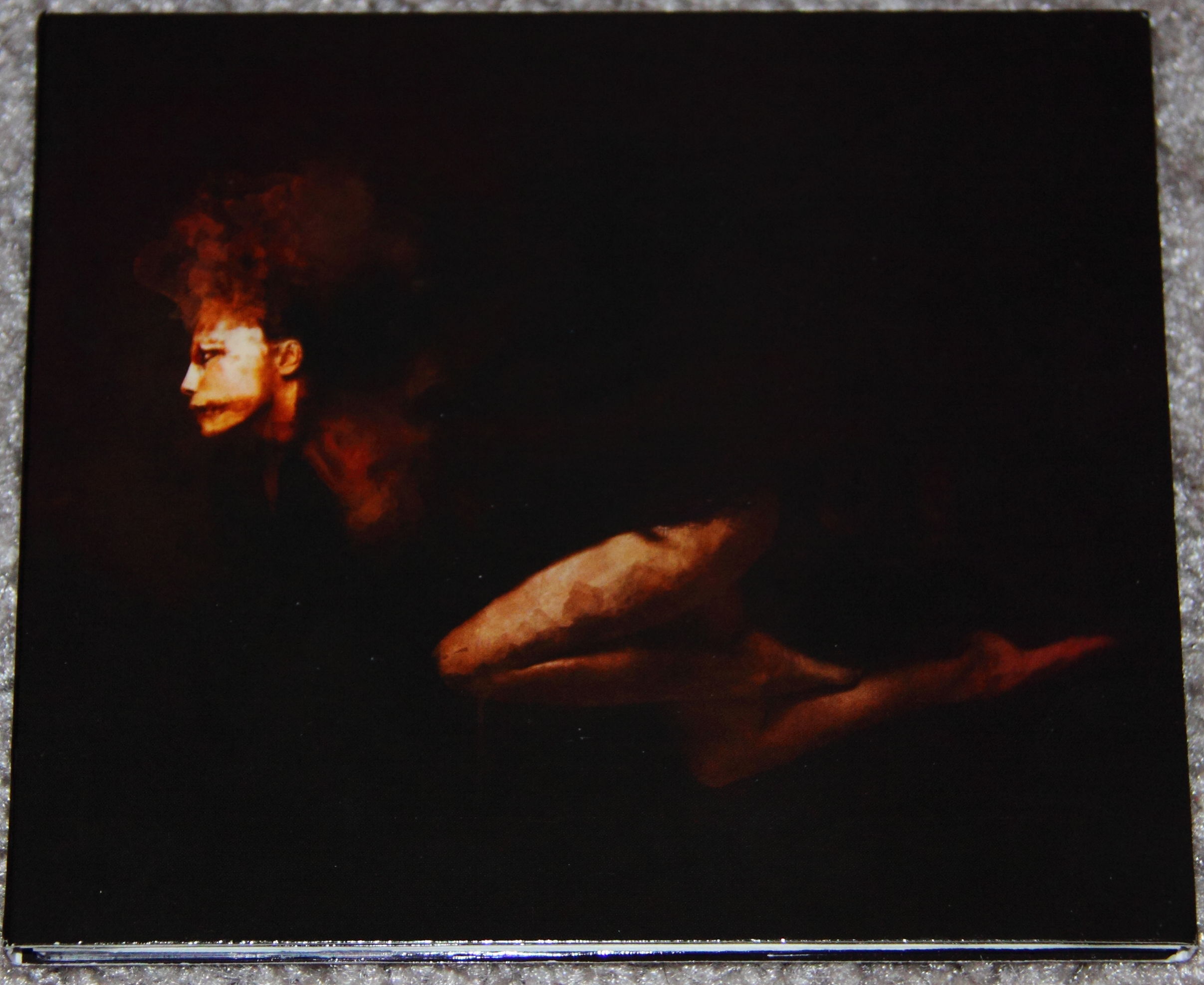
Back cover of "...of the Adder's Bite"

Back cover of “…of the Adder’s Bite”

A copy of this fine newly released CD was kindly sent  to me for review a few months ago.  First of all I must say that my delay in writing this review is due in large part to my difficulty in attempting to categorize my experience of the music.  This is a very individual statement by a young musician from Greece, Panagiotis Pagonis (1989- )  who goes by the name, ‘Abstractive Noise‘ and whose work seems to be inspired by drone, minimalism, ambient, rock and perhaps classical sources as well as experimental literary narrative.

This is a self-produced concept album created in the composer’s own studio and it can only be properly appreciated over several close listenings. I would categorize this release as “experimental” though not wanting to scare anyone away because this disc makes for a comfortable listening experience, not the cacophonous assault that is sometimes encountered with the term “experimental”.

That said, the music develops slowly and requires some patience to appreciate the logic of its unfolding processes.  The experimental literary narrative which is appended in the liner notes may be useful to some listeners but I did not connect with the mythological romantic fantasy nature of the narrative except that it provides some clue as to the passionate nature of the composer/performer and his inspiration.  But don’t take my lack of connection as a negative critique.  It is merely the personal experience of a fifty something reviewer listening to the product of an emerging young composer.

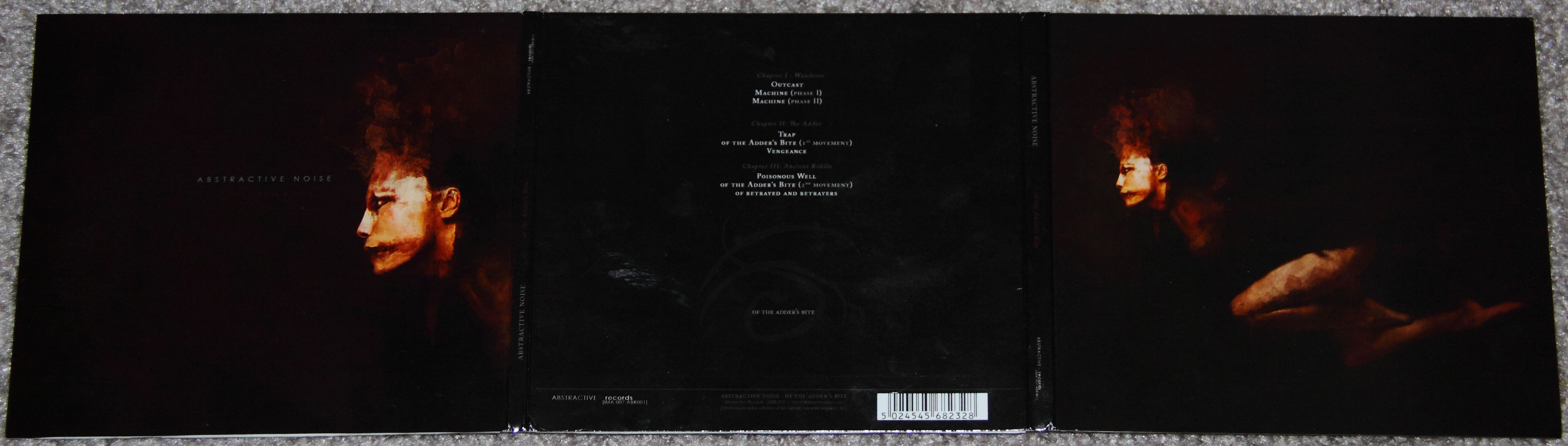
As you can see in the above photograph of the back cover and the photograph below of the unfolded package the cover art is quite beautiful and does seem to reflect some of the nature of the music within.  It has a dark quality imbued with mystery and perhaps longing.  It is a hybrid of musical styles which flows quite naturally from the composer’s pen (or perhaps more properly, from the composer’s various electronic processing programs which are, for many, replacing the traditional pen and paper).

unfolded view of 'Abstracive Noise's' album

unfolded view of ‘Abstractive Noise’s’ album


I am listening to it now as I write this belated review and finding that the music continues to take on deeper dimensions with repeated listens. It can actually work as well in a close listening as one would ideally do with a classical composition or in the background setting a mood.  It is very well recorded with obvious careful thought put into the mastering which definitely adds to the quality of the listening experience.  It is available through the composer’s web site as well as through Bandcamp.

It’s not the sort of CD I would put on my car stereo but it works very well in my living room as an accompaniment to writing or just sitting.

I know very little of this young artist’s background or future plans but I look forward to more from this musician.

Enhanced by Zemanta

Alvin Curran’s Fake Book at the Berkeley Arts Museum


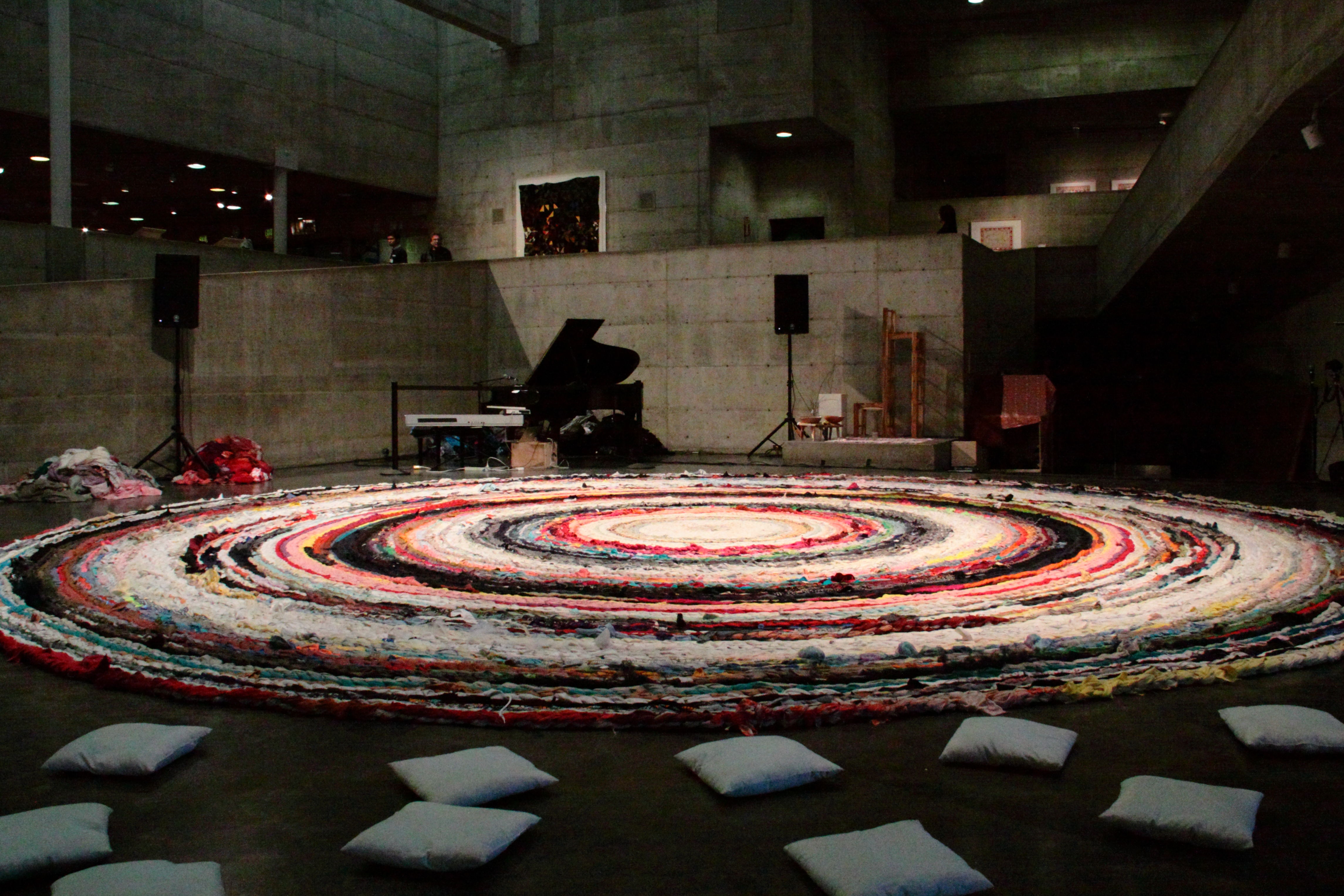
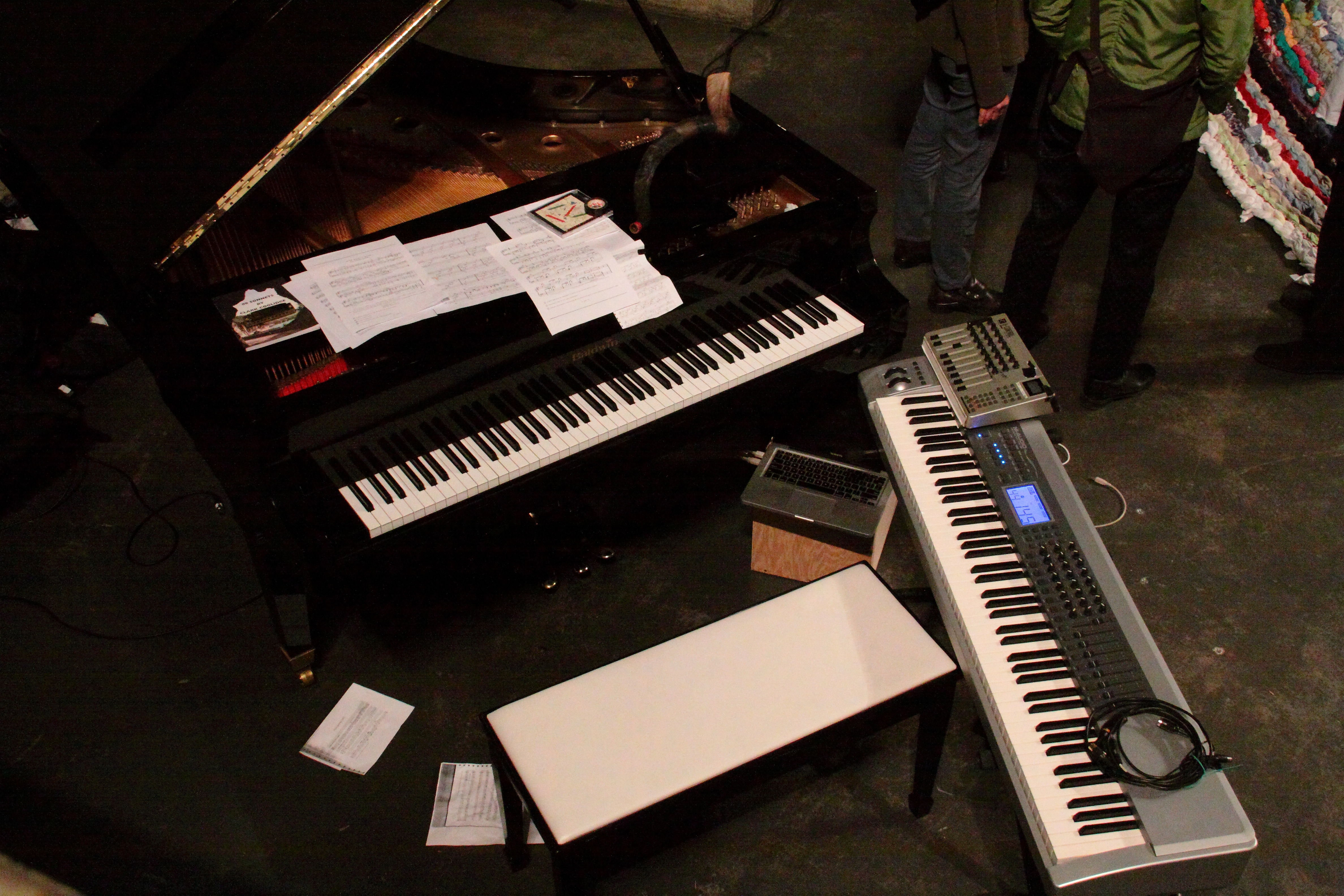
Staging set up for the Alvin Curran solo performance at the Berkeley Arts Museum

Staging set up for the Alvin Curran solo performance at the Berkeley Arts Museum

On a cool Friday evening in Berkeley April 11th I proceeded to the Berkeley Arts Museum which sits across the street from the University.  It is a beautiful modern architectural creation with a large and resonant space where there was a large and colorful rug, a series of pillows and behind that a set of conventional chairs for the audience.  Many chose to sit on the rug close to the performer.

The set up consisted of a piano on loan from the Piedmont Piano Company, an electronic keyboard on loan from Paul Dresher along with Mr. Curran’s computer and and amplifier driving two speakers on either side of the keyboards.  The open space is just off the entry way of the museum and tends to have a fair amount of traffic and ambient noise of the people on the various levels.

Curran, now 75, has been a prominent figure on the contemporary music scene internationally since about 1964 when he was partnered with fellow expatriates Frederic Rzewski, Allan Bryant, Richard Teitlebaum and Carol Plantamura among others in the ground breaking Musica  Elletronica Viva.  They created events and happenings using live electronics in the days before such things were easily accessible.  He has continued to explore the leading edge of musical creativity throughout his long and ongoing career.

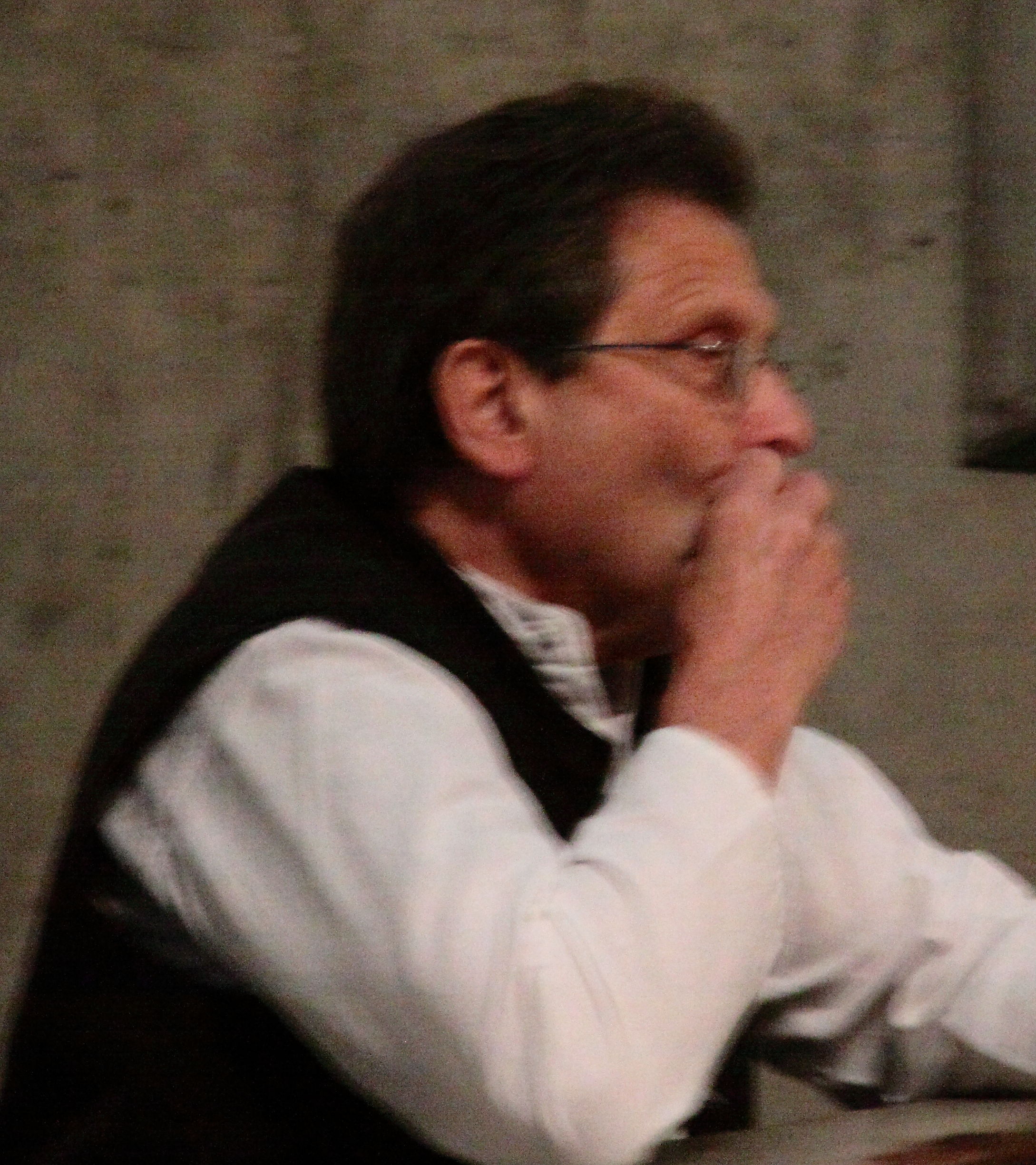
Curran playing a harmonica at the opening of the concert.

Curran playing a harmonica at the opening of the concert.

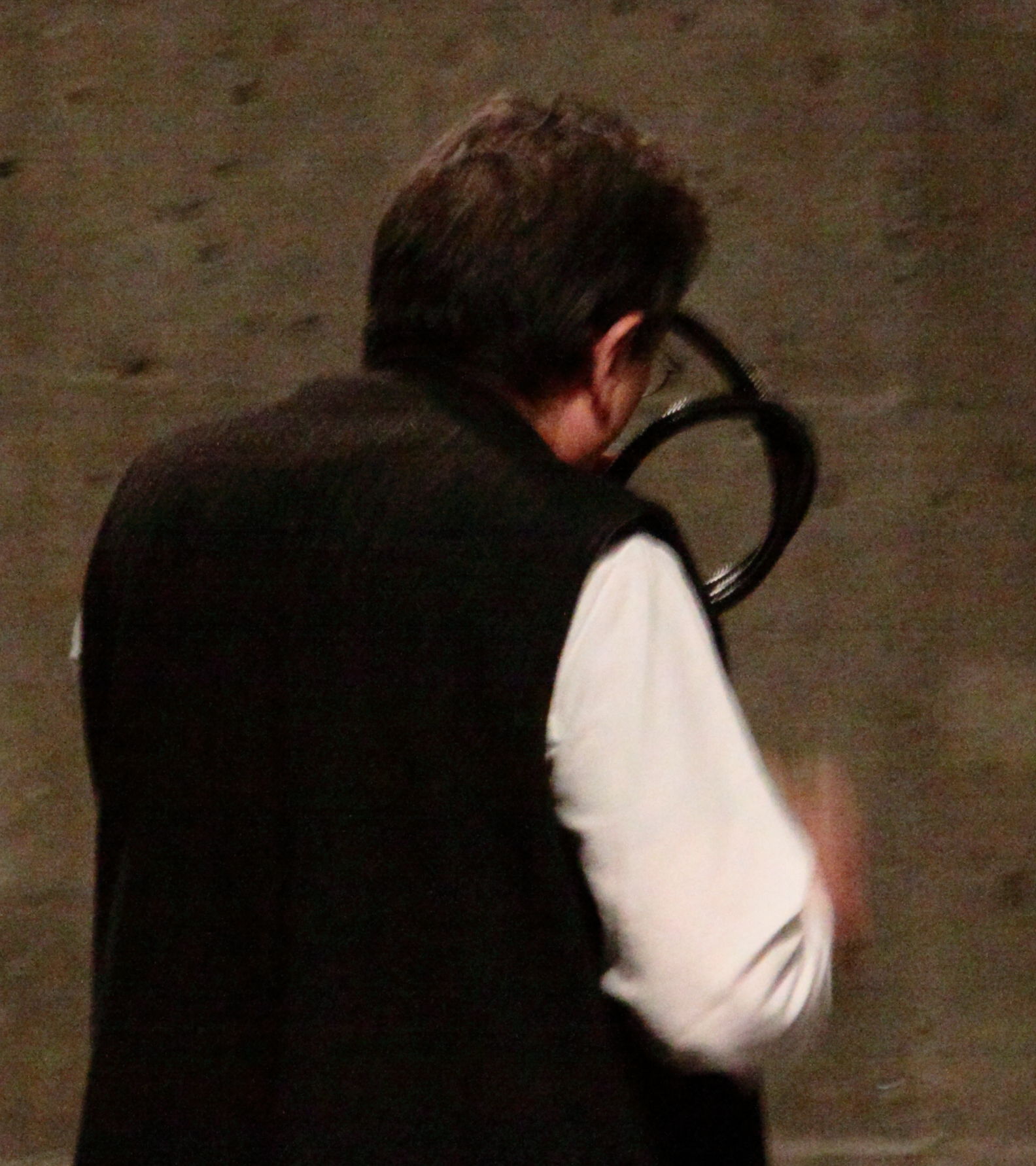
The concert began with Curran circumnavigating the audience in clockwise fashion beginning stage right and going around the audience making a full circle and returning to the front of the audience stage center.  he began by playing two simple chords on the instrument repeating them several times.  He then switched to another woodwind type instrument playing some unusual sounds.  When he took his place in front of the keyboards he set those instruments down.

Curran completing his circumnavigation which opened the performance.

Curran completing his circumnavigation which opened the performance.

He alternated between playing the piano and the electronic keyboard sometimes playing both.  He began with some simple sounding piano music and then turned to the electronic keyboard and began playing some of the samples on it.  They ranged from speech to electronic sounds.

At first the ambient noise of the crowd echoed gently in the museum along with the music.  Gradually as the music became more complex and louder the audience seemed entranced, taken on the ritualistic journey that comprises Curran’s work, Fake Book, a reference to books of musical lead sheets that musicians have used over the years to quickly and easily access a variety of materials for live performances.

The louder music then suddenly changed back to a softer dynamic and the reduction in the ambient noise of the audience and casual museum goers had noticeably decreased and one sense an increased attention and focus on the music.  All seemed to be drawn in to the variety of sounds and styles which Curran refers to as his “common practice”, a practice in which the composer uses any and all sounds, instruments and styles strategically to evoke the things the composer wishes to express.

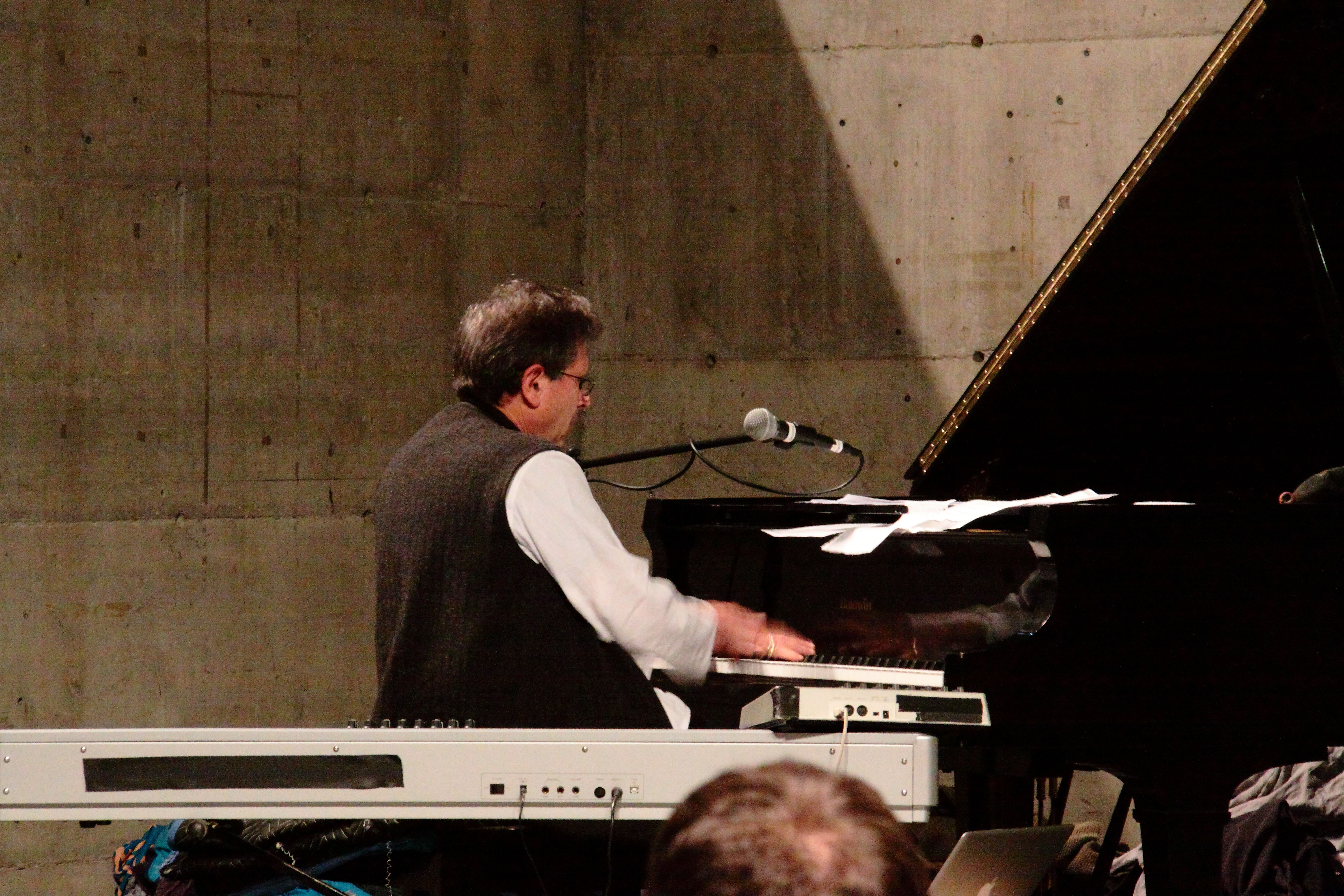
Alvin Curran at the keyboards performing his Fake Book.

Alvin Curran at the keyboards performing his Fake Book.

Curran played for just over an hour without pause an encyclopedic diversity of styles and ideas evoking the musical past in classical sounds, jazz sounds, modernist sounds.  The electronic keyboard samples played voices, radio snippets, electronic sounds and electronic manipulations of these sounds.

Curran effectively involved us all in a ritual performance respectfully evoking the past and blending it all into our experience of the moment.  From the beginning as he walked clockwise around the audience and through the complex collage of musical and sonic ideas he created a genuine ritual, a sacred performance if you will.  His music this night was an homage to the past and a celebration of the present.

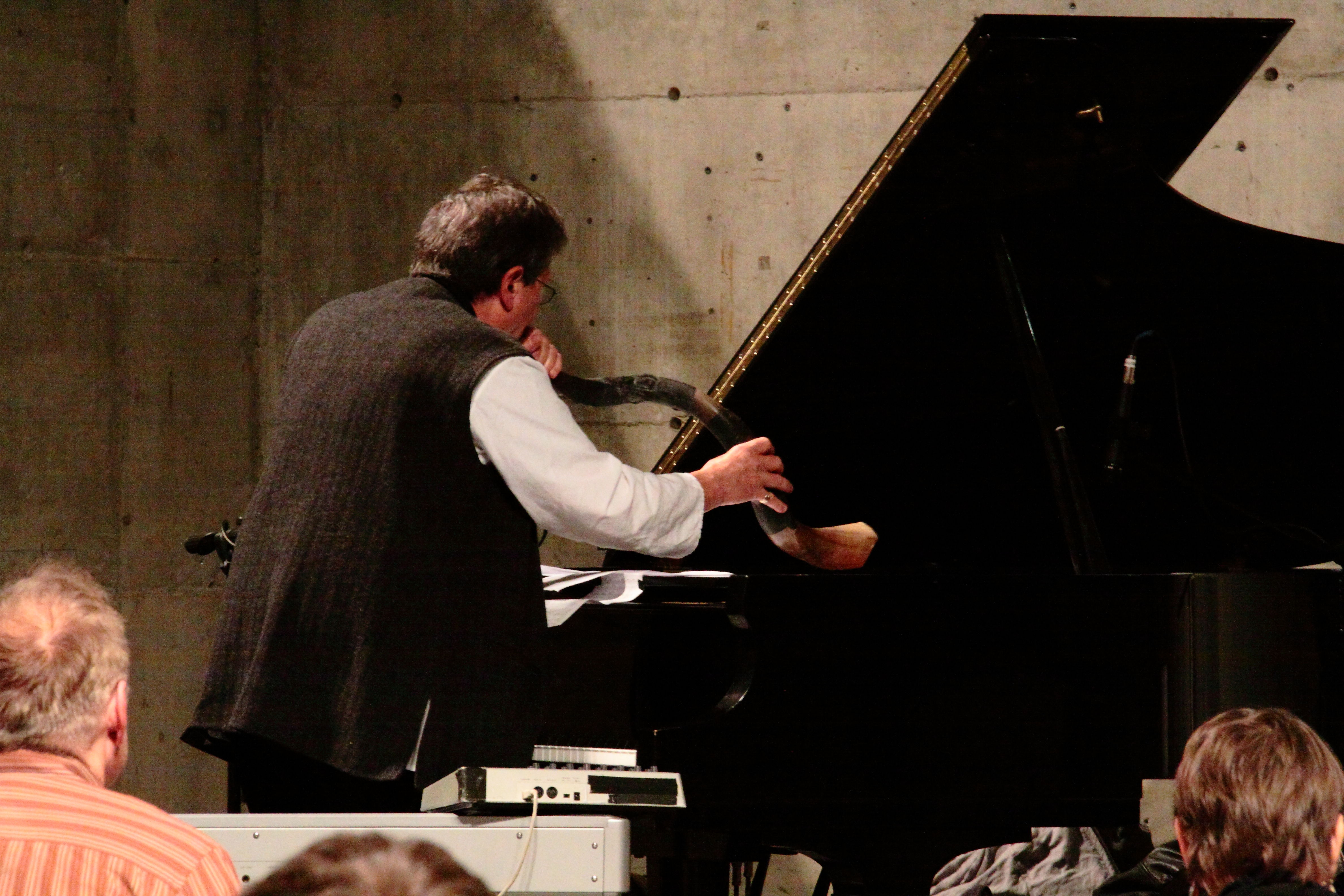
Curran blowing the ancient shofar (ram's horn) over the undamped piano strings.

Curran blowing the ancient shofar (ram’s horn) over the undamped piano strings.

He signaled the end of the performance as he blew the ancient shofar, an instrument fashioned from a ram’s horn, over the undamped piano strings creating a beautiful sympathetic resonance.

The audience responded with warm applause and appreciation.  Curran, who told me that he began work on this music while he was in residence at nearby Mills College, is clearly embraced and appreciated by the local audience.  He continues his tour and will return to his adopted  home in Rome, Italy but this evening he was clearly one of our own.

Overhead view of the keyboard set  up for the April 11th performance.

Overhead view of the keyboard set up for the April 11th performance.

Enhanced by Zemanta

Oh, No! Not Another Minimalist! John McGuire


When I posted my introductory article to the “Not Another Minimalist!” series I got the suggestion on Facebook from composer/writer Walter Zimmerman that I do a piece on John McGuire.  Many will remember Zimmerman for his important book of interviews called Desert Plants (1976) in which he interviewed a series of 23 American composers in the early to mid-1970s.  His choices virtually defined an era much like Robert Ashley’s Music with Roots in the Ether would later do.  He is also a fine composer in his own right and will be featured in a future essay on this blog.  I am honored to receive a challenge from him and I also thought it was a fine selection of a minimalist-type composer whose work deserves wider dissemination so I am using McGuire as my first article in the series.

Unfortunately there is precious little to be found on this American composer.  In Zimmerman’s book he gets only one page so I am essentially updating his earlier efforts.  However, even 38 years later, McGuire does not appear to have a web page and I have been able to find reference to only a few recordings of his music.

mcguire1r

Cover image from one of McGuire’s recordings.

John McGuire (1942- ) studied with Robert Gross at Occidental College in Los Angeles, where he earned his BA in 1964, with Ingolf Dahl at the University of Southern California in Los Angeles and with Seymour Shifrin at the University of California, Berkeley, where he earned his MA in 1970. He also studied composition privately with Karl Kohn, composition and orchestration with Krzysztof Penderecki at the Folkwang Universität der Künste in Essen from 1966–68 and composition with Karlheinz Stockhausen at the Ferienkurse in Darmstadt in 1967–68. He then studied computer composition with Gottfried Michael Koenig at the Instituut voor Sonologie of the Universiteit Utrecht in 1970–71 and electronic music with Hans Ulrich Humpert at the Hochschule für Musik und Tanz in Cologne from 1975–77.

I came to know the work of John McGuire when I found a remaindered copy of a Largo CD containing his 48 variations for two pianos in the great though now sadly gone Rose Records  store in Chicago in the 1980s.  It was a gamble as I had never even heard of this composer but the album somehow spoke to me from the CD bin.

Variations for 2 pianos CD

Variations for 2 pianos CD

My gamble paid off because I had found in that piece a new take  on minimalism and pattern music.  It seemed to be closer to classical variation form than to strict process-oriented patterns but clearly there were rhythmic cells being subjected to development.  It clocks in at about 48 minutes and is a tour de force.

As it turns out McGuire makes use of minimalism as only one of his compositional techniques and has a distinctly different take on it which appears to be informed by the various techniques gleaned from his teachers.  After finding and bonding with this CD I began to look for more of this man’s music.

The intelligent vigilance of Richard Friedman and the Other Minds organization broadcast McGuire’s 1974 Frieze for 4 pianos and his 1985 Cadence Music for 21 Instruments in a RadiOM program dedicated to the composer’s music. Both recordings were broadcast from a 2 CD release on the RZ label.   Again the unmistakable sound of minimalism in a very unique approach.

The east coast equivalent of RadiOM is WNYC’s New Sounds hosted by John Schaefer.  The program of November 12, 2013 included McGuire’s Pulse Music III from 1978.  This is a great example at the composer’s facility with electronics.  This piece realized on tape was apparently originally for a multiple speaker installation  but is mesmerizing even in the stereo presentation which was broadcast.  Another inspired new music show, Kalvos and Damian did a program on the genesis of this music which remains available as streaming content.

McGuire spent 25 years living and working in Germany returning to the United States in 1998.  He then worked for Carl Fischer music as an editor and was a visiting adjunct professor at Columbia from 2000-2002.

I’m not sure I’ve been able to do much more than Walter Zimmerman did in his book but it is my hope that this article may spark interest in musicians, producers and broadcasters to keep this fascinating composer in mind for future projects and performances.

Enhanced by Zemanta

Composers of Northern California, Other Minds 19


OM 19, the final bow.  Left to right: Charles Amirkhanian, Charles Celeste Hutchins, Joseph Byrd, Wendy Reid, Myra Melford, Roscoe Mitchell, John Schott, Mark Applebaum, John Bischoff, Don Buchla

OM 19, the final bow. Left to right: Charles Amirkhanian, Charles Celeste Hutchins, Joseph Byrd, Wendy Reid, Myra Melford, Roscoe Mitchell, John Schott, Mark Applebaum, John Bischoff, Don Buchla

This past Friday and Saturday the San Francisco Jazz Center hosted the 19th annual Other Minds Festival concerts.  This is the first year not to feature an international roster.  Instead the focus was on composers from northern California.  (Strictly speaking these composers’ creative years and present residence is northern California.)  It was not a shift in policy but a focus on a less generally well known group of artists who have not enjoyed the exposure of east coast composers but have produced a formidable body of work that deserves at least a fair assessment.  In fact these concerts presented a fascinating roster of composers from essentially three generations.

The first generation represented was one which came of age in the fabled 1960s and included electronic music pioneer Don Buchla, AACM founding member Roscoe Mitchell and proto-minimalist Joseph Byrd.  The second was represented by Wendy Reid, Myra Melford and John Bischoff.  And the youngest generation by Mark Applebaum and Charles Celeste Hutchins.

The program opened on Friday night with a sort of pantomime work by Stanford associate professor of music Mark Applebaum.  The piece, called Aphasia (2010) consists of an electronic score to which the composer, seated in a chair, responds with a variety of carefully choreographed gestures.  The result was both strange and humorous.  The audience was both amused and appreciative.
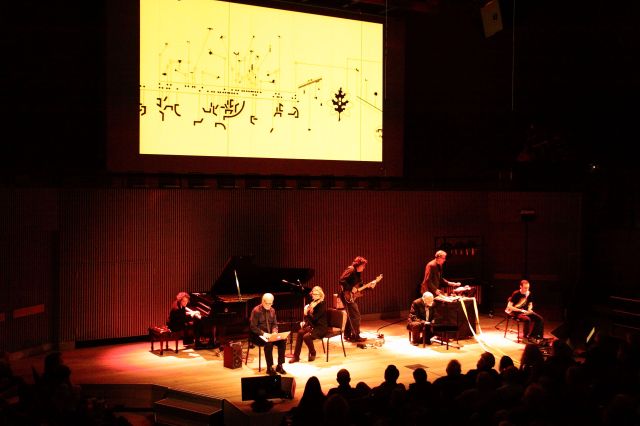
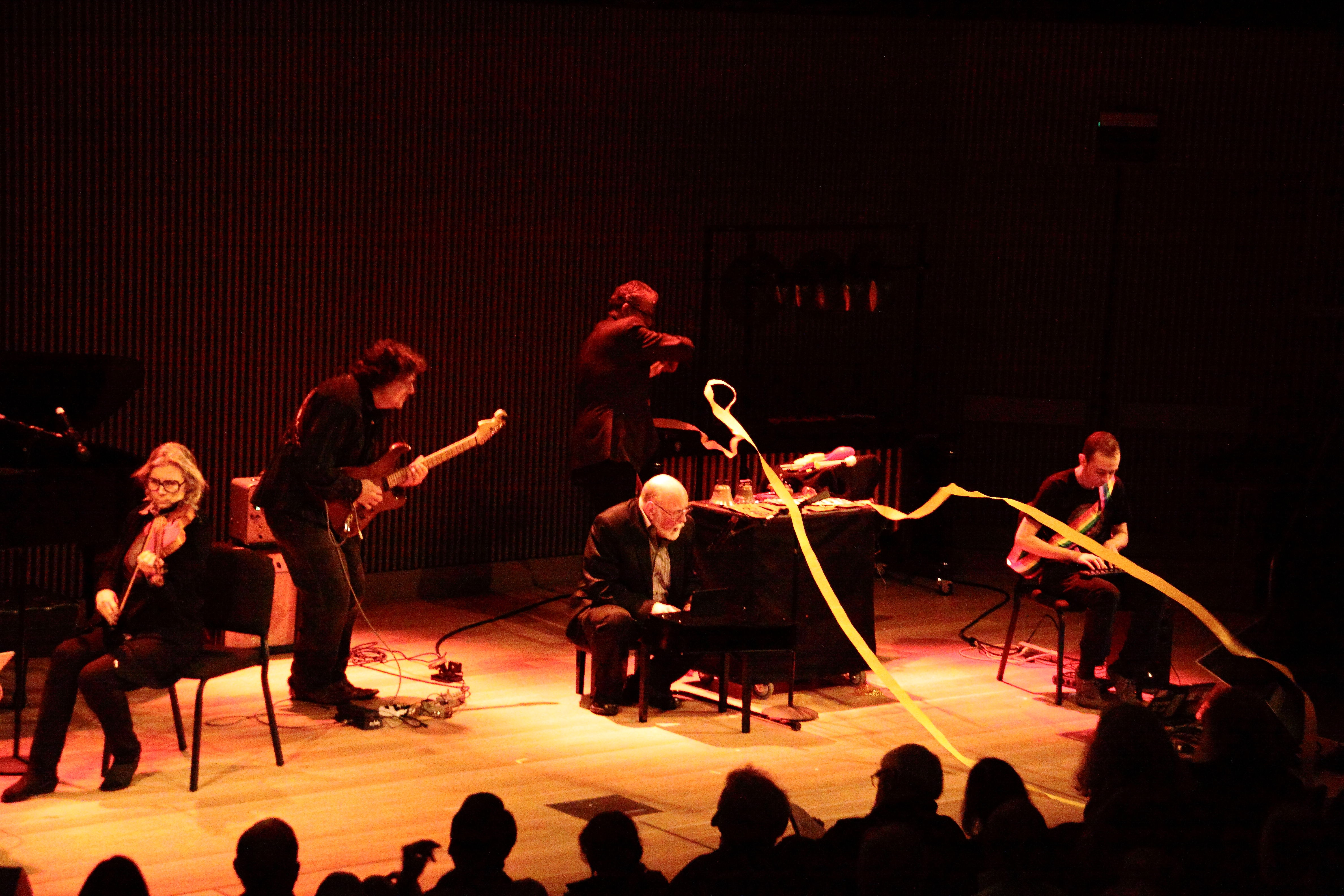
Applebaum's Metaphysics of Notation (2008) performed by the Other Minds Ensemble.  Left to right: Myra Melford, John Bischoff, Wendy Reid, John Schott, Joseph Byrd, Charles Amirkhanian and Charles Celeste Hutchins

Applebaum’s Metaphysics of Notation (2008) performed by the Other Minds Ensemble. Left to right: Myra Melford, John Bischoff, Wendy Reid, John Schott, Joseph Byrd, Charles Amirkhanian and Charles Celeste Hutchins

Applebaum’s graphic score Metaphysics of Notation (2008) was projected overhead while the ensemble played their interpretations of that score.  The ensemble, dubbed the Other Minds Ensemble, consisted of most of the composers who participated in the festival including Mr. Amirkhanian displaying his facility with  a percussion battery among other things.  (Presumably Roscoe Mitchell, who was reportedly not feeling well, would have joined the ensemble as well.)  Mr. Applebaum was conspicuously absent perhaps so as to not unduly influence the proceedings.

Ribbons strewn across the stage, a part of the Other Minds Ensemble's interpretation of the Metaphysics of Notation

Ribbons strewn across the stage, a part of the Other Minds Ensemble’s interpretation of the Metaphysics of Notation

The piece was full of minimal musical gestures, humorous events like ribbons strewn across the stage and the popping of little party favors that emitted streamers.  The ensemble appeared to have a great deal of fun with this essentially indeterminate score which they are instructed to interpret in their own individual  ways.  It was a rare opportunity to see and hear Mr. Amirkhanian (who is a percussionist by training) as well as an opportunity for the other composer/performers to demonstrate their skills and their apparent affinity for this type of musical performance.  Again the audience was both amused and appreciative.

Mark Applebaum performing on his invented instrument.
Mark Applebaum performing on his invented instrument.

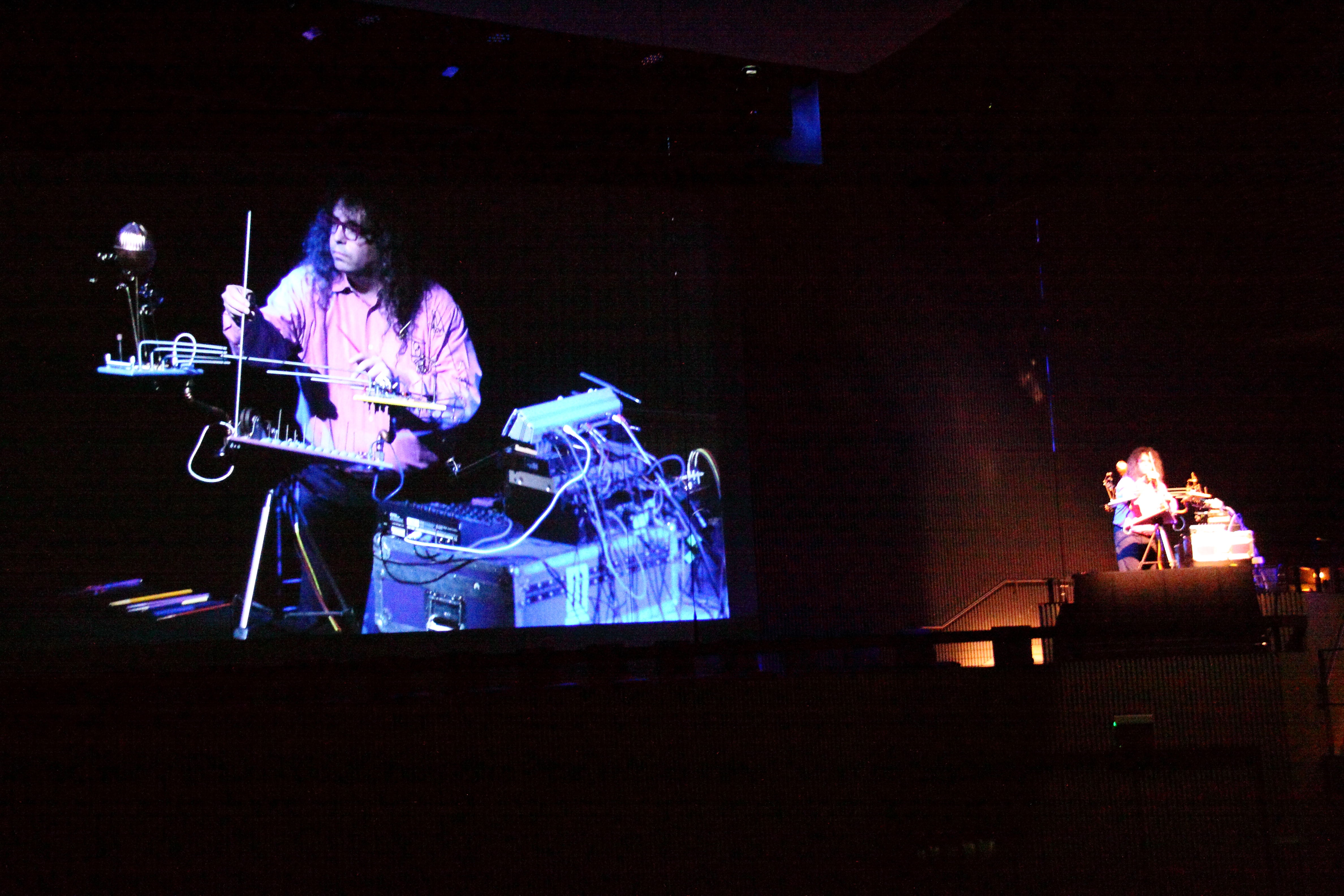
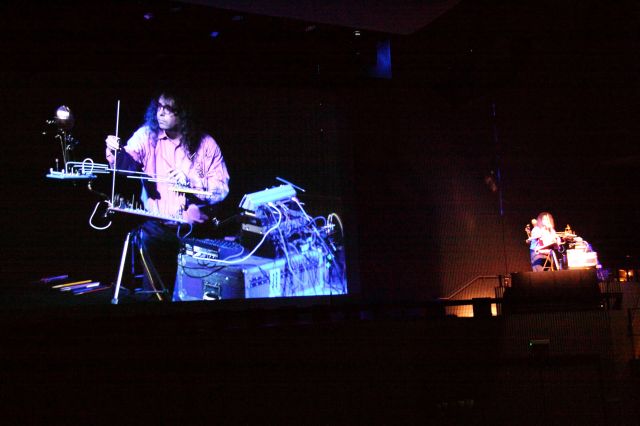
Projection of Applebaum performing with view of the composer/performer stage right as well.

Projection of Applebaum performing with view of the composer/performer stage right as well.

The third piece by Applebaum featured the composer with his invented instrument and electronics playing on a balcony stage right with a projection of himself on the big screen.  He produced a wide variety of sounds from his fanciful computer controlled contraption that seemed to please the audience.  This is the kind of unusual genre-breaking events which tend to characterize an Other Minds concert.

The second composer of the night was the elusive Joseph Byrd who is perhaps best known for his cult classic album The American Metaphysical Circus by Joe Byrd and the Field Hippies from 1969.  A previous band, The United States of America released a self-titled album which received critical acclaim in 1968.  Both are apparently out of print but available through Amazon.

Joe Byrd studied music with Barney Childs and worked with La Monte Young, cellist Charlotte Moorman, Yoko Ono and Jackson Mac Low.  Byrd went on to produce a great deal of music by others and also wrote music for films and television but his own compositions have only come to light again recently with the release of a New World CD released in 2013 which presents his work from 1960-63.  Mr. Amirkhanian said that it was this disc that got him interested in inviting Byrd to Other Minds (Byrd also taught at the College of the Redwoods in Eureka, California.).

This is the sort of musical archeology for which Other Minds has become known.  Amirkhanian is known for his ability to find and bring to performance and recordings music which has been unjustly neglected.  Hopefully this appearance will be followed by more releases of Byrd’s other music as well.

Byrd was represented here by performances of Water Music (1963) for percussionist and tape with Alan Zimmerman (who was one of the producers of the New World album) played the spare percussion part which integrated well with the analog electronic tape.

Alan Zimmerman performing Joe Byrd's Water Music.

Alan Zimmerman performing Joe Byrd’s Water Music.

A second piece, Animals (1961) was performed by the brilliant and eclectic bay area pianist Sarah Cahill with Alan Zimmerman and Robert Lopez on percussion and the fiercely talented Del Sol String Quartet (Kate Stenberg and Richard Shinozaki, violins, Charlton Lee, viola and Kathryn Bates Williams, cello).  This was another piece with soft, mostly gentle musical gestures involving a prepared piano and predominantly percussive use of the string players.  It was interesting to contemplate how this long unheard music must have sounded in 1961 but it was clear that it communicated well with the audience on this night.

Animals (1961)
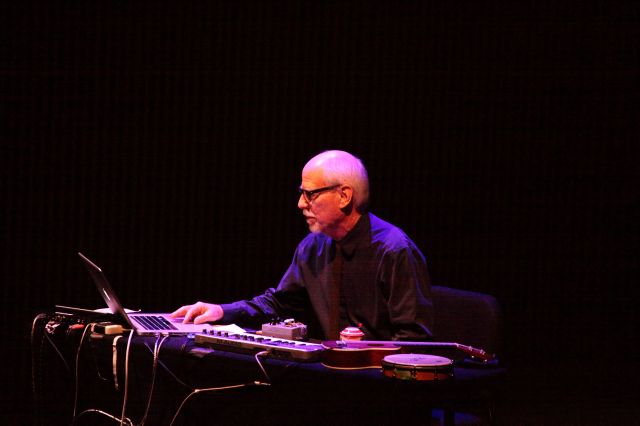
Animals (1961)

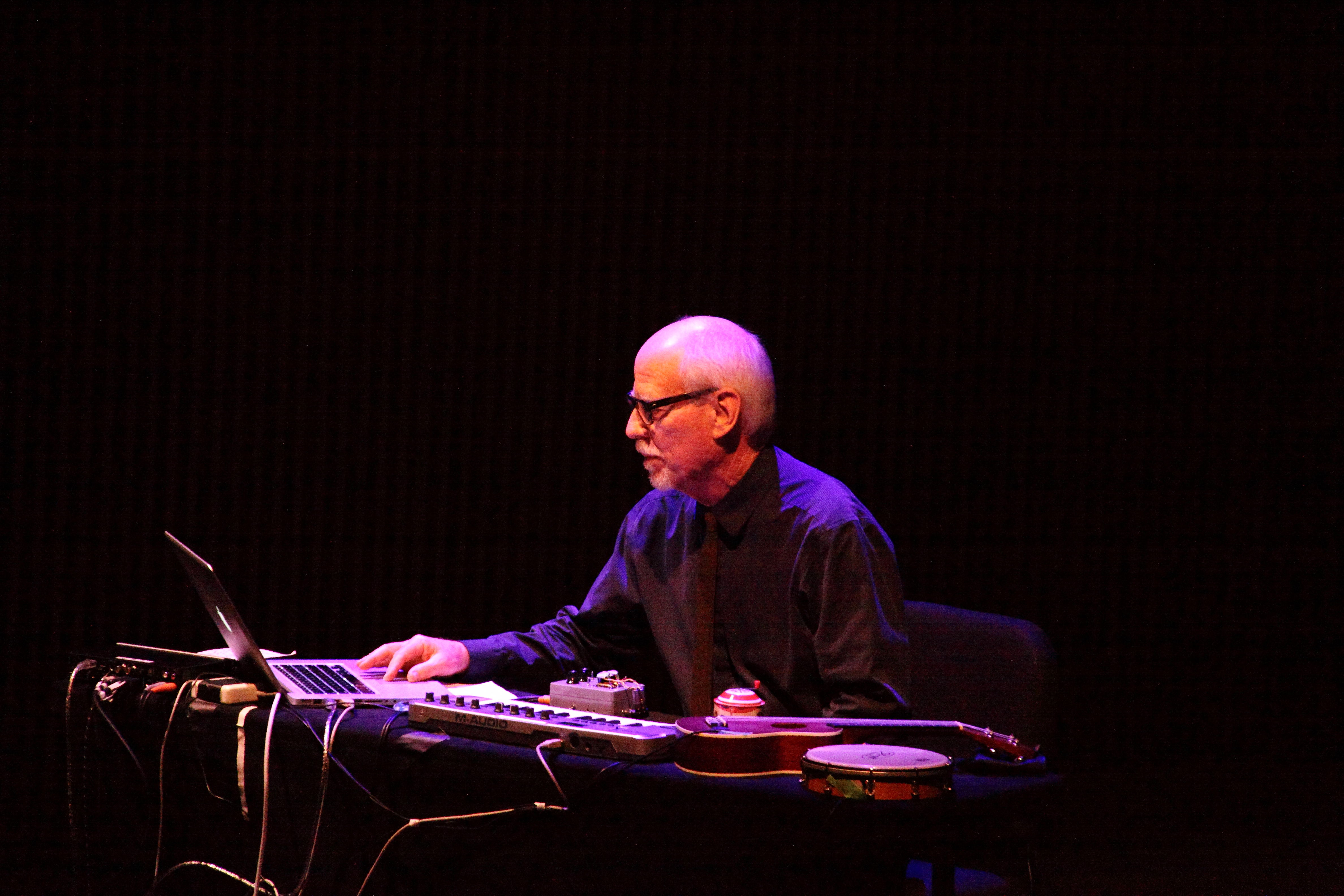
John Bischoff performing his work Audio Combine (2009)

John Bischoff performing his work Audio Combine (2009)

Following intermission we heard two pieces by Mills composer/performer John Bischoff.  The first was Audio Combine (2009) which featured Bischoff on this laptop producing a variety of digitally manipulated sounds.  It was followed by Surface Effect (2011) with creative lighting effects/animations that nicely complemented the laptop controlled analog circuitry.  Bischoff’s music is generally gentle and clear.  It belies the complexity of its genesis in state of the art computer composition and performance for which he is so well known.
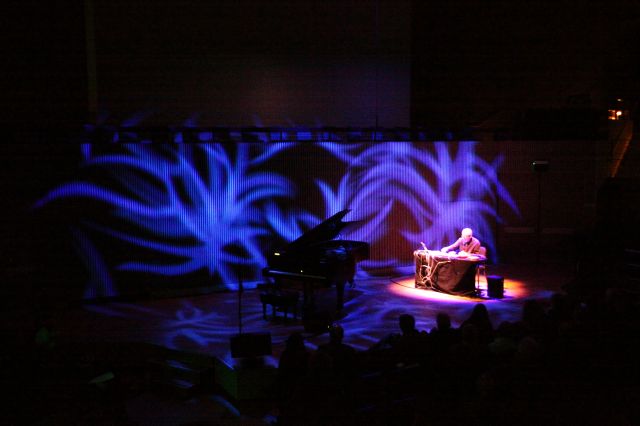
John Bischoff performing Surace Effect (2011)

John Bischoff performing Surace Effect (2011)

All this led to the final performance of the evening by Don Buchla whose modular synthesizers were developed in the early 1960s with input from Ramon Sender, Morton Subotnick, Pauline Oliveros and Terry Riley at the legendary San Francisco Tape Music Center (which later became the Mills Center for Contemporary Music).  Buchla also designed the sound system for Ken Kesey’s bus “Furthur” which featured in the Electric Kool-Aid Acid Test.
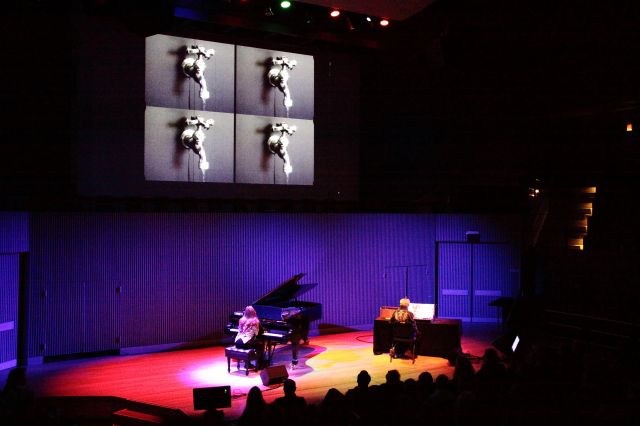
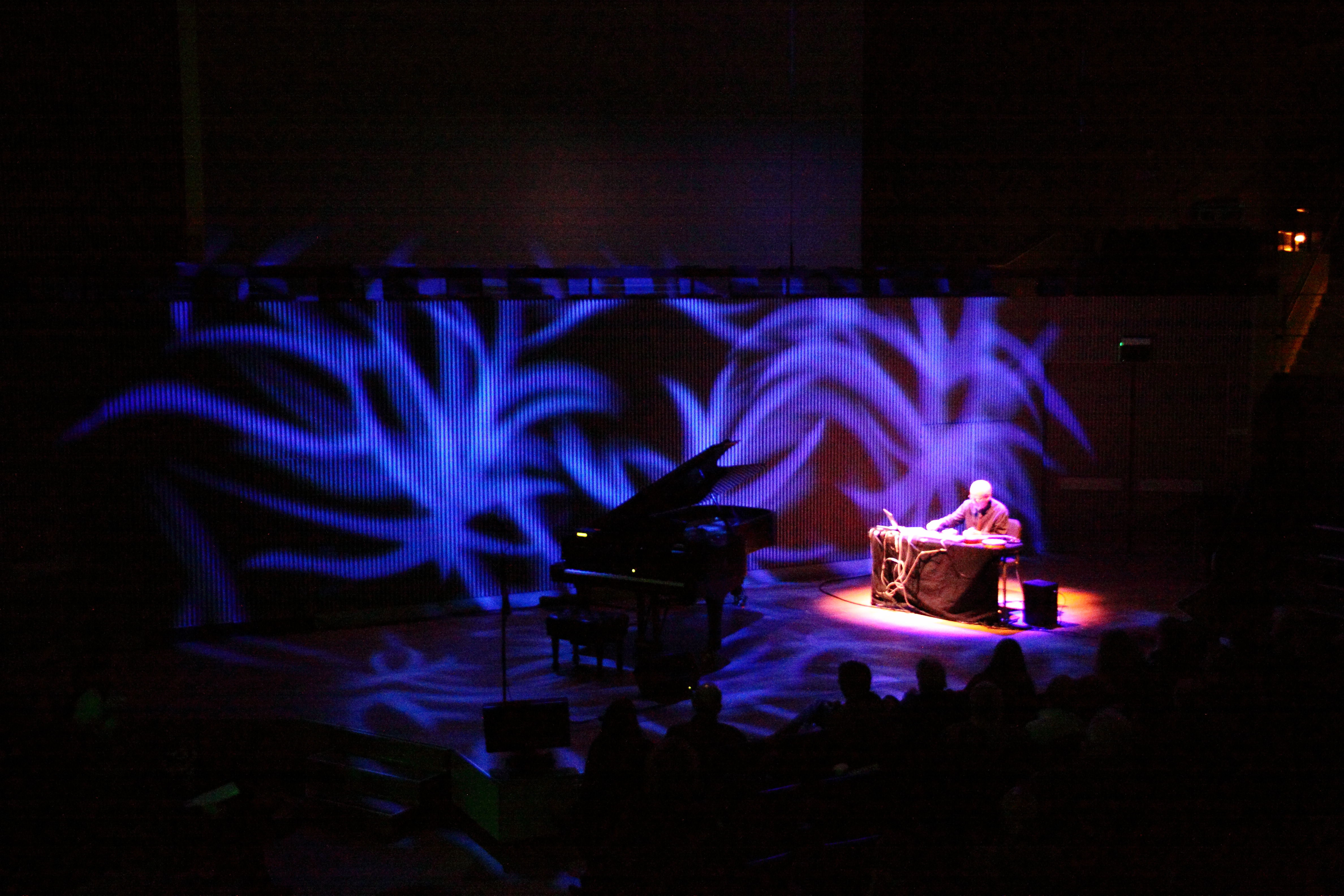
Don Buchla on the Buchla Bos and Nannick Buchla on the piano with film projection performing Drop by Drop (2012) in its American premiere.

Don Buchla on the Buchla Bos and Nannick Buchla on the piano with film projection performing Drop by Drop (2012) in its American premiere.

The conclusion of Friday’s program consisted of the American premiere of a Drop by drop by Don Buchla for Buchla 200e, electronically controlled “piano bar”  (another Buchla invention) and film projection.  The film was made in collaboration with bay area film maker Sylvia Matheus.  The sequence of images began with a dripping faucet and proceeded to a waterfall and then to emerging pictures of birds all the while accompanied by the various sounds from the synthesizer and the piano.

OM190028

Nannick and Donald Buchla receiving warm applause from the audience.

The Saturday night performances began with Charles Celeste Hutchins and his laptop improvising system.  Hutchins, a San Jose native, describes his system as related to Iannis Xenakis’ UPIC system and utilizes a live graphic interface which the computer uses to trigger sound events.

Charles Celeste Hutchins at his laptop performing Cloud Drawings (2006-9)

Charles Celeste Hutchins at his laptop performing Cloud Drawings (2006-9)

The drawings were projected onto the overhead screen.  There seemed to be a somewhat indirect correlation between the drawings and the resultant sounds and much of the tension of this performance derived from wondering what sounds would result when the cursor reached that particular drawing object.  The audience is basically watching the score as it is being written, a rather unique experience and the Other Minds audience clearly appreciated the uniqueness.

The projected graphic score for Cloud Drawings.
The projected graphic score for Cloud Drawings.

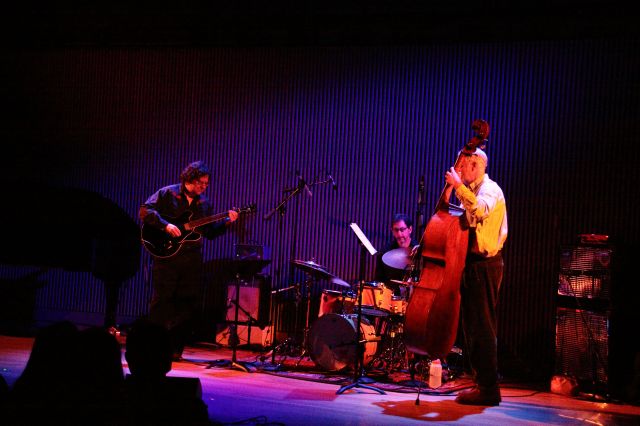
The Actual Trio: John Schott, guitar, Dan Seamans, bass, John Hanes, drums.

The Actual Trio: John Schott, guitar, Dan Seamans, bass, John Hanes, drums.

John Schott and his Actual Trio then took the stage to perform his own brand of jazz which seemed to be a combination of free jazz, Larry Coryell and perhaps even Jerry Garcia.  But these descriptions are merely fleeting impressions and are not intended to detract from some really solid and inspired music making.  After the conclusion of the set this listener half expected an encore.

But the program moved on toWendy Reid’s performance as we watched the stage being set up with music stands, some electronic equipment and a parrot in a cage.
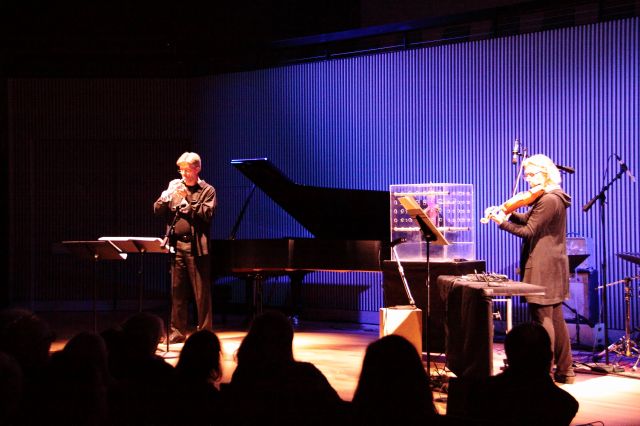
Tree Piece #55 "lulu variations" with Tom Dambly, trumpet, Wendy Reid, violin and electronics and Lulu Reid on vocals.

Tree Piece #55 “lulu variations” with Tom Dambly, trumpet, Wendy Reid, violin and electronics and Lulu Reid on vocals.

Reid’s Tree Pieces are an ongoing set of compositions incorporating nature sounds with live performance.  This is not unlike some of Pauline Oliveros’ work in that it involves careful listening by the musicians who react within defined parameters to these sounds.

Lulu the parrot appeared nervous and did a lot of preening but did appear to respond at times.  The musicians responded with spare notes on violin and muted trumpet.  It was a whimsical experience which stood in stark contrast to the more declarative music of the previous trio but at least some of  the audience, apparently prepared for such contrasts, was appreciative.
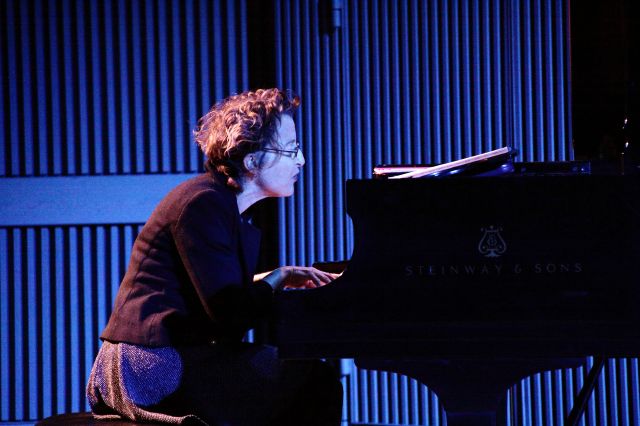
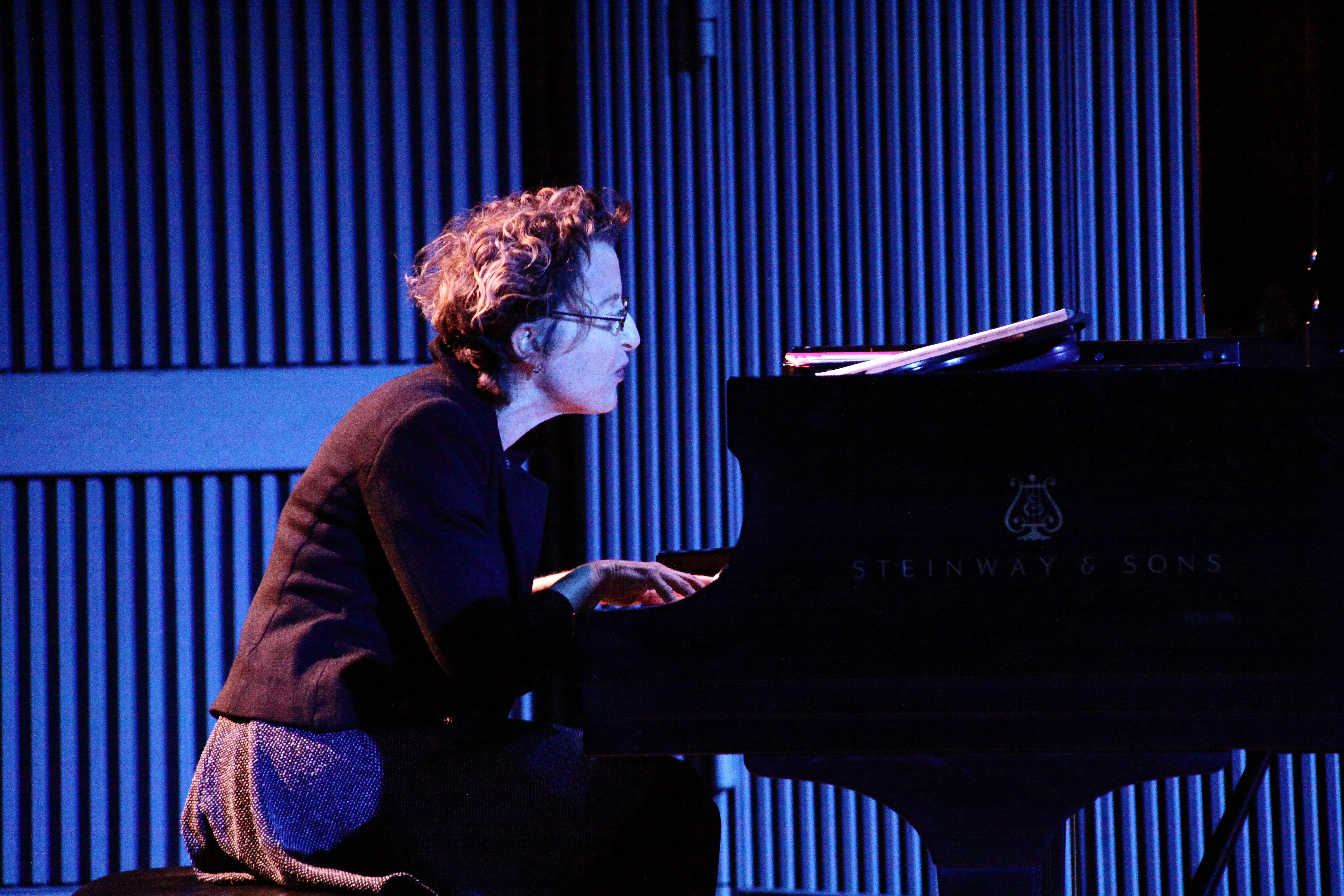
Myra Melford performing selections from Life Carries Me This Way (2013)

Myra Melford performing selections from Life Carries Me This Way (2013)

The diminutive figure of Myra Melford took command of the piano and the hearts of the audience in her rendition of several pieces from her recent CD.  She played sometimes forcefully with thunderous forearm cluster chords and sometimes with extreme delicacy but always with rapt attention to her music.  Her set received a spontaneous standing ovation from a clearly roused audience.  She is a powerful but unpretentious musician who clearly communicates well with her audience.

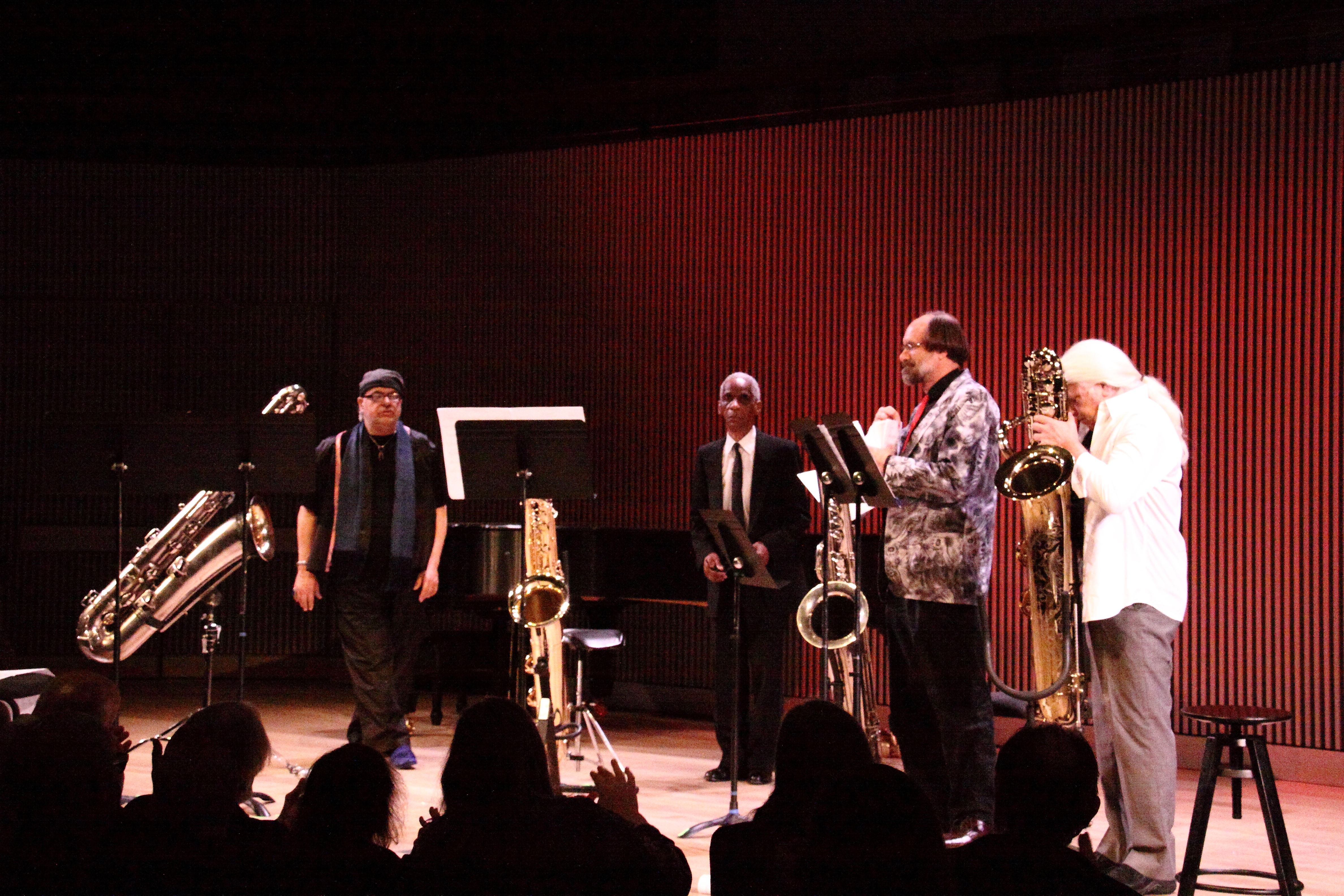
Roscoe Mitchell, Vinny Golia, Scott Robinson and J.D. Parran  following their performance of Noonah (2013)

Roscoe Mitchell, Vinny Golia, Scott Robinson and J.D. Parran following their performance of Noonah (2013)

The finale of OM 19 was the world premiere of an Other Minds commission, the version for four bass saxophones of Roscoe Mitchell’s Noonah (pronounced no nay ah).  It is the latest incarnation of a piece of music that Mitchell describes as having taken on a life of its own.  It exists now in several different versions from chamber groups to orchestra.

The piece is vintage Roscoe Mitchell, a combination of free jazz and sometimes inscrutable compositional techniques which clearly enthralled the very focused performers.  What the piece seemed to lack in immediate emotional impact it made up in mysterious invention which was brought out grandly by the very experienced and committed players.

Mitchell, who was not able to attend on the previous night, appeared rather tired but played with a focus and enthusiasm that matched his fellow musicians.  Like all of Mitchell’s music there is a depth and complexity that is not always immediately evident but does come with repeated listenings and performances.

Thus concluded another very successful edition of Other Minds.  Now we look forward to the gala 20th anniversary coming up in March, 2015.


Enhanced by Zemanta

Coming Up, Other Minds 19 at the SF Jazz Center


Official Other Minds logo

Official Other Minds logo (Photo credit: Wikipedia)

On February 28 and March 1 the SF Jazz Center will host Other Minds for the first time.  OM 19 is the latest incarnation of this annual festival which presents an amazing range of new music.

The Other Minds Festival, brainchild of filmmaker/producer Jim Newman and musician, composer and broadcaster Charles Amirkhanian, was first heard in 1993 and, except for the years 1994, 1998 and  2007, has been an annual event in San Francisco  gathering mostly new but  always innovative composers to share their inspirations and innovations with each other and with bay area audiences.  Being curious about those apparent gaps in this festival I sent a query to the Other Minds office and received a prompt reply from none other than Charles Amirkhanian.  He stated as follows:

Executive Director Charles Amirkhanian in his ...

Executive Director Charles Amirkhanian in his office with ASCAP award in background (Photo credit: Wikipedia)

“Hi Allan,
Here’s the story:
After our first festival in November 1993, we needed time to raise more funds to produce OM 2 and get back on the Yerba Buena Center’s schedule. So we postponed until March 1995, the next available spot in the Djerassi schedule. Our timing for the festival is determined by when we have access to empty rooms at DRAP, so we need to be there either in Feb/March or November.
In 1997, once again, we needed time to raise more funds and simply postponed to the next available Djerassi time. Same for OM 13.
In each case, the delay was about eight months (for a November event) or four months (for a March event), giving us a festival in succeeding concert seasons, but not “annual” events. (A concert season is Fall ’07 through Spring ’08, for example.)
Thus the mysterious gaps.
Charles”

This internationally known festival is not just a series of concerts.  The diverse selection of composers gathers first for an artistic residency at the Djerassi Resident Artist Program (DRAP in Mr. Amirkhanian’s note), a pastoral setting nestled between the Pacific coastline and the hills west of Palo Alto, where the invited composers live, work and share ideas for a week prior to the public concerts. The Djerassi Foundation for the Arts was founded by biochemist Carl Djerassi whose daughter, an artist, committed suicide in 1978.  The area is a sculpture park and the facility operates all year round with residencies for artists of all media.  Charles Amirkhanian is one of the former directors of this venerable artist colony and is now the executive and artistic director of Other Minds. The selection process for OM artists is based on the incredible range of interests of the Other Minds Operating Board and in consultation with their advisory board which are very open to suggestions from the general public.  Just e-mail them.  They actually read all their e-mails and respond. This along with New Music America, the ONCE festival, the Telluride Festival (also one of Amirkhanian’s efforts) are among the important music festivals which have yet to receive adequate treatment and exposition of their histories. This year’s OM 19 (which also looks forward with eager anticipation to a very promising gala OM 20) includes Mark Applebaum, John Bischoff, Donald Buchla, Joseph Byrd, Charles Celeste Hutchins, Myra Melford, Roscoe Mitchell, Wendy Reid and John Schott.  For the first time in the history of the festival all the composers will be from northern California.  The dates for the festival, which moves this year to the new SF Jazz Center, are Friday February 28 and Saturday March 1. One might think that limiting the selection of composers would be limiting in the variety of artistic efforts to be had but one would be quite wrong.  In fact it would not be difficult to argue that music by musicians from northern California have been unjustly neglected in favor of the more dominant musical cultures of New York City, Chicago and Los Angeles.  A quick look at the roster for OM 19 reveals a great deal of variety:

Mark Applebaum at TEDx Stanford

Mark Applebaum at TEDx Stanford (Photo credit: Tamer Shabani Photography)

The Chicago born Mark Applebaum is currently associate professor of composition and theory at Stanford University.  He counts Brian Ferneyhough, Joji Yuasa, Rand Steiger, Roger Reynolds and Philip Rhodes among his teachers.  He also performs as a jazz pianist. He appears to be the first composer at these concerts to have given a TED talk.  In this talk he speaks of being “bored with music”, at least with traditional music and how he used that boredom to break through to another level of creativity creating new instruments and elaborate scores.  He is an engaging speaker and his presentation will no doubt be fascinating.

John Bischoff (1949- )

John Bischoff (1949- )

John Bischoff studied at the California Institute of the Arts and Mills College.  His teachers include Robert Moran, James Tenney and Robert Ashley.  He is currently visiting professor and composer at Mills College. He is one of the pioneers of live computer performance and he is a frequent performer at the Garden of Memory concerts held annually on the summer solstice at Oakland’s beautiful Chapel of the Chimes. Mills College with its Center for Contemporary Music can be said to be the primary life blood of northern California composers.  Bischoff is part of a long line of composers who  have guided musical pedagogy in the Bay Area and have included Chris Brown, Luciano Berio, Darius Milhaud, Lou Harrison, Steve Reich, Terry Riley, Pauline Oliveros, Morton Subotnick, Ramon Sender, John Cage, Chris Brown, Maryann Amacher, Maggie Payne, Larry Polansky, Robert Ashley, and many others. Bischoff has released 16 albums and numerous publications.  He founded the League of Automatic Composers, the first computer network band and continues to be a driving force in the computer music scene. Don_Buchla_and_200e

Donald Buchla is one of the elder statesmen of new music in California.  His collaboration with Ramon Sender and Morton Subotnick produced one of the first modular synthesizers in 1963.  He continues to develop synthesizers with his Buchla and Associates corporation (founded in Berkeley in 1962) . He studied physics, physiology and music.  His importance in the field of electronic music and music synthesis cannot be underestimated.  His electronics have driven many classical, rock and jazz music.  He and his corporation continue to make new electronic instruments such as the marimba lumina and the piano bar and has made available again some of the classic analog electronics which first made his name familiar to musicians worldwide. I was able to find very little about his musical compositions but it is worth noting that his electronics will power the performances of several of the artists in this concert series in addition to his own.

Joe Byrd in 1968

Joe Byrd in 1968

Kentucky born Joseph Byrd is an electronic musician, composer and producer.  His album, “The American Metaphysical Circus” (1969) is legendary and considered a cult album which has been reissued on CD and can also be heard on You Tube.  His band, Joe Byrd and the Field Hippies never performed live but this work of 60s psychedelia has established itself as a landmark recording and a cult classic.  He also did an album of synthesized Christmas Carols in 1975. Byrd has also been a producer with estimable credits such as producer and arranger of Ry Cooder’s amazing ‘Jazz’ album from 1978.

I can’t imagine how his latest work sounds but I am looking forward to it.

Charles Céleste Hutchins at SOUNDkitchen

Charles Céleste Hutchins at SOUNDkitchen (Photo credit: hellocatfood)

Charles Celeste Hutchins is, as far as I can tell, the first instance in which an Other Minds operating board member has been featured as a composer in this series.  The advisory board consists largely of composers who have already been featured on OM concerts.  Until this booking I was not aware of this man’s work.

Hutchins worked in the dot com business for a time and is now working on his musical interests.  His work involves the digital music program called Supercollider which he uses to manipulate sounds.  Discogs lists an MP3 compilation of some of his work in this area.

Melford in Helsinki, 1993

Melford in Helsinki, 1993

Myra Melford is an internationally known jazz pianist and composer with some 17 albums and some 20 years of playing.  Melford is originally from Illinois.

She has played with AACM musicians like Leroy Jenkins, Joseph Jarman and other musicians including Marty Ehrlich, Henry Threadgill, Mark Dresser, OM alumni Han Benink and Tyshawn Sorey.  Currently she teaches at the University of California Berkeley.

saxophonist Roscoe Mitchell at the Pomigliano ...

saxophonist Roscoe Mitchell at the Pomigliano Jazz Festival (Photo credit: Wikipedia)

Roscoe Mitchell is one of the founding members of the venerable AACM (American Association of Creative Musicians) which redefined both jazz and contemporary classical music from its founding in 1965 to the present.  Other notable members include Anthony Braxton, Lester Bowie, Malachi Favors, George Lewis and Lester Bowie among others.  Mitchell is currently professor of music at Mills College where he holds the Darius Milhaud chair.  He has collaborated with Frederic Rzewski, George Lewis, Anthony Braxton, Joseph Jarman, Malachi Favors, Muhal Richard Abrams, Albert Ayler, Henry Threadgill, Thomas Buckner and many others.

Mitchell is one of the acknowledged living masters of American music and he plays and teaches widely.  In 2012 her performed at the “All Tomorrow’s Parties” festival in Minehead, England.  Any performance by this musician is an event.

Wendy Reid is a new name for me.  She is a composer who works with nature sounds.  I did buy her CD entitled “Tree Music” which features 5 of her Tree Pieces with various combinations of violin, percussion, piano, mandolin, oboe and Don Buchla on “thunder” interacting with nature sounds.  For her OM performance she will be sharing the stage with a parrot.  Yes, it does sound like a Monty Python sketch, but this promises to be interesting if not revelatory.  Her work is clearly concerned with the sounds of nature and is at least distantly related to the work of Pauline Oliveros whose album ‘Troglodyte’s Delight’ involves musicians responding to the sounds of water in a limestone cave.

John Schott is another name with which I am not familiar.  But lack of familiarity spells adventure in this series of concerts.  A quick internet search reveals that he is a Berkeley based composer, guitar player and banjo player.  His web site is a blog which reveals his interest in a wide range of musical styles and literary interests.  He lists 8 CDs which feature his work.  He also lists his “compositions in the classical grain”.  It’s anyone’s guess as to what he will present at Other Minds but if the preceding artists are any indication it will be unique and interesting.

All in all this promises to be a very exciting event with the ‘revelatory’ music which Other Minds uses as a tag line in their publicity materials. I won’t miss it and neither should you.

Enhanced by Zemanta

Final Culmination of a Long Collaboration: Alcatraz/Eberbach by Ingram Marshall and Jim Bengston


Starkland's Alcatraz DVD

Starkland’s Alcatraz DVD

The music of Ingram Marshall (1942- ) first came to my ears via the New Albion recording of the Gradual Requiem (1994) written in memory of his father.  The spare sounds in this abstract electroacoustic piece remind one of the music of Harold Budd or the ambient music of Brian Eno.  Like them Marshall has developed a unique and significant voice drawing from methods including minimalist repetition, drones and static harmonies.  He also incorporates electronic music techniques and the techniques of the modern recording studio as well as non-western tunings and instruments.  But even given all the comparisons and qualifiers it is difficult to describe his voice because it is a unique style that, once heard, will leave it’s stamp of individuality much as the distinction between the above-named artists or, for that matter between a Mozart vs. Haydn style.  Very difficult to describe in words alone.

Ingram Marshall in his Hamden, CT studio.

Ingram Marshall in his Hamden, CT studio. (Photo credit: Wikipedia)

Now a visiting professor of composition at Yale School of Music, Marshall has had a successful career as a professor, composer and performer.  He has written for a variety of instruments including electronic sounds, piano, guitar and voices as well as for chamber and orchestral groups.  He has released 8 (now 9 with the present DVD) albums.

Jim Bengston (1942- ), born in Evanston, IL developed an interest in photography while in the army.  His work will be familiar to music fans through his work on many albums including the characteristically beautiful photographs seen on albums from  ECM.  His work has been exhibited at MoMA, Art Institute of Chicago, Walker Art Center, National Museum of Art, Architecture and Design in Oslo, Lillehammer Art Museum and many others.

JimBengston in studio 2009 crop1107

Jim Bengston in his studio 2009

Starkland pioneered a wonderful DVD audio release in 2000 (which includes Marshall’s ‘Sighs and Murmurs’) called Immersion which contained works commissioned for the new Dolby 5.1 system, the first disc of it’s kind and still a landmark production.  Now comes this DVD from the always interesting Starkland records of two collaborative works between these fine artists making full use of the medium.

Like that earlier disc, this is a venture into another type of art object.  The disc contains musical tracks and a series of photographs leisurely timed with the flow of the music.  But this is not a commercial DVD experience of a film nor is it a traditional slide show.  It is not didactic and only incidentally linear.  It is not just a piece of music for listening either.  The experience that I come away with is more of a hybrid experience of something like a living electrovisualacoustic sculpture (sorry for the improvised neologism).

Alcatraz is a 1991 piece realized on tape as is the companion piece.  It is a sonic reworking by the producers into Dolby 5.1 surround sound.   Here it is paired with photography lovingly displayed on the video format by Jim Bengston.  There is a second work on the disc which is a fitting companion piece called Eberbach (1985) after the abandoned monastery Kloster Eberbach in Germany.  Both works are video sequences of images by the photographer accompanied by Marshall’s hypnotic, impressionistic and elegiac  music.

The audio version of Alcatraz was originally released on a New Albion disc in 1991 and Eberbach (the first two of the “Three Penitential Visions”) was released on a Nonesuch disc in 1985.  According to the liner notes the two artists, who first met at Lake Forest College in Illinois, had been discussing a collaboration such as this for many years and a quick look at the copyright info confirms the dates of the photography to 1984 and 1985 for Alcatraz and Eberbach respectively.  They reportedly exchanged photos and cassette recordings for some time  and the quality of their collaboration is apparent.  And now this formerly languishing collaboration is now completed as it was intended with the release of this DVD.

The first work, Alcatraz consists of environmental sounds as well as electronic music and recorded acoustic instruments.  Marshall creates a glowing ambient texture attempting to reflect the history of the famous prison island in the San Francisco Bay.  The piece is in 7 sections nicely divided into tracks.  Each section reflects different aspects of the prison and the location.

The first section is a minimalistic piano piece which has added ambiance apparently from some added electronic manipulation adding a slight echoing which reflects the open empty reflectively resonant chambers of the stone confinements of the old prison structures.  It is followed by some musique concréte incorporating sounds of the prison environment like the ominous slamming of a metal cell door and its echo.  These sounds are manipulated with minimalist techniques of repetition creating a disturbingly oppressive memory of a sound which cannot ever have had a happy connotation for anyone.  And, of course, throughout the stark, at times almost colorless photographs flow in a gentle rhythm from one to another with a few instances of “jump cuts” or quicker transitions.  One gets the sense almost of the visual and sonic events having been co-composed into this hybrid art form.

English: Monastery Eberbach, Germany

English: Monastery Eberbach, Germany (Photo credit: Wikipedia)

Eberbach is based on impressions by the artists of Kloster Eberbach, the first Cistercian Monastery which was established in 1136 by Saint Bernard of Clairvaux.  It is no longer in use as a monastery but is actively used as a concert space, wine tasting space (there is a large vineyard and winery on the property which is run by the state) and has been used for scenes in films such as ‘The Name of the Rose’.  It is in fact an acknowledged architectural heritage site as it preserves fine examples of architecture from Romanesque, Gothic and Baroque periods.

Eberbach was conceived and works as a companion to the first piece in several ways.  The same attention is paid to the use of environmental sounds as well as use of conventional instruments to evoke the scenes depicted in Bengston’s photographs.  Both the prison and the monastery are about isolation from the larger society, monks in their cells, prisoners in theirs.

The press room of Kloster Eberbach, a Cisterci...

The press room of Kloster Eberbach, a Cistercian monastery in Germany (Photo credit: Wikipedia)

This disc works on many levels.  You can enjoy it as a focused experience sitting in front of the television listening to the music as the pictures flow by.  But you can also experience it as it was played in an installation type setting with the pictures and the music as this sort of ambient living sculpture object.  One can, of course, also experience the pictures or the music alone.  This is a very pleasant and enjoyable disc which is a satisfying culmination of these long gestating projects.

The original recordings were mastered by Bob Shumaker and the current surround sound mix was done by the equally talented Tom Lazarus.  Photo to digital transfers were done by Lavasir Nordrum Design.  Executive producer Thomas Steenland did the design of the package and the DVD menus.

Enhanced by Zemanta

Alvin Curran at 75, Experimentalism with an Ethnic and Social Conscience


English: The American composer Alvin Curran pl...

English: The American composer Alvin Curran playing the shofar in his composition “Shofar 3,” for shofar and live electronics (2007). Photo taken at a concert of Curran’s music in Warner Concert Hall, Oberlin Conservatory of Music, Oberlin College, Oberlin, Ohio, United States. (Photo credit: Wikipedia

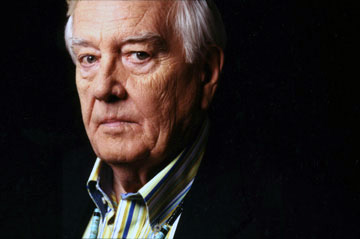
Alvin Curran (1938- ) is an American composer currently living and teaching in Rome whose career began as an expatriate artist working with the cutting edge improv electronics group Musica Elletronica Viva (MEV) in 1966. He turns 75 on December 13, 2013.

Curran was born in Providence, Rhode Island.  His father was a musician in a dance band and he learned to play piano and trombone early on.  He was exposed to big band music, jazz, traditional Jewish music and western classical music during his formative years.  Following his father’s example he also played in dance bands during boat crossings of the Atlantic.  He earned a B.A. in music from Brown University in 1960 where he studied composition with Ron Nelson.  He went on to complete his M.M. at Yale in 1963 were he studied with Elliott Carter and Mel Powell.

A 1964 Ford Foundation grant allowed him to go study in Darmstadt where he met the likes of Stravinsky, Xenakis, Berio, Yuji Takahashi, Andriessen, Remo Remotti, and above all Frederic Rzewski.  He joined with Rzewski,  Richard Teitelbaum and Allan Bryant, all fellow expatriate American musician/composers, with whom he formed the legendary ‘Musica Elettronica Viva‘ or MEV.  This was in early 1966 where their use of largely home made electronics in their improvisational ensemble live performances preceded the days of easily obtainable and operated electronic musical instruments. That wouldn’t begin to happen until about 1964 when Don Buchla, in collaboration with Ramon Sender, Morton Subotnick and the San Franciso Tape Music Center created the first modular instrument, the “music easel” later known as the ‘Buchla Box’ and Robert Moog on the east coast developed the “Moog” synthesizer.  Curran crossed paths with many of these people during his tenure teaching (1999-2006) at Mills College in Oakland where the San Francisco Tape Music Center had been integrated into the Mills Center for Contemporary Music.

Curran says that during all his years in Rome he met and interacted with many in the Italian avantgarde and new music circles like Franco Donatoni and Guiseppe Chiari.  He was mentored by the reclusive (think Thomas Pynchon) Giacinto Scelsi who held regular salons at his villa.  It was in these days that Curran developed his individual style further.  He lived and taught in Rome from 1966 to 1999 and was very active on the European scene.  After his teaching stint at Mills College Curran returned again to Rome.

Buchla 100 series modular synthesizer at NYU

Buchla 100 series modular synthesizer at NYU (Photo credit: Wikipedia)

In addition to electronics he uses acoustic instruments ranging from conventional instruments such as piano, strings, woodwinds, voices, etc. to the ancient shofar and environmental sounds including site-specific sound installations, multi-media works and film scores.  His works include the massive set of piano pieces ‘Inner Cities’ (1993-2010) which lasts about 6 hours in a complete performance, the early multi-media Songs and Views from the Magnetic Garden (1973), Maritime Rites (1984) written to be played by musicians in boats in various harbors incorporating, of course, the ambience of the given harbor’s acoustic properties.  Maritime Rites has been performed in its various incarnations in Central Park in New York as well as Philadelphia, Berlin and Sydney.

In a wonderful interview from 2003 with the ever vigilant composer/journalist Frank Oteri (published online at New Music Box) he was asked about the political and ethnic/religious content of his music.  Curran replied that he did not set out to express these things as aspects of himself, that the pieces  just happened due to an inspiration at the time.  He says that he is composing all the time and his influences are as wide ranging as his teachers and his milieu.  His style varies widely in part due to his many influences but also because a given style seems to work for the piece.  It sounds as though music is channeled through him.

Unfortunately, as with most expatriate composers, his music is generally less well known in his native country but there are quite a few recordings including some recent releases of some out of print recordings.  In addition there are quite a few videos on YouTube including pianist Kurt Jordan’s live performance of Inner Cities 1-13 from 2009 at Azusa Pacific University which is more than the previously complete recording by Daan Vandewalle who recorded 1-11 (as of 2010 there are 14 parts according  to Curran’s official web site).   As is frequently the case with much contemporary music YouTube provides a great resource, especially for the casual and/or cash-strapped listener.  It is a really good way to get familiar with this man’s diverse and fascinating music.

Not infrequently his music takes on sociopolitical issues as well as inspiration from the composer’s Jewish heritage.  His Schtetl Variations (1987), dedicated to Morton Feldman is an improvisatory meditation on these poor villages of eastern Europe and Russia (think of Fiddler on the Roof) which became the settings for the notorious anti-semitic pogroms. A later piano piece called 11 Schtetl Settings (1988) continues his exploration of this part of his ancestry.  Animal Behavior (1992) for sampler keyboard and optional percussion is a pretty transparent indictment of 1990s American politics.  And the list goes on.

His “Nineteen Eighty Five: Piece for Peace” (1985) involved three ensembles performing at 3 different radio stations in Venice, Amsterdam and Frankfurt (which was simulcast by all three countries) is a a sort of precursor to what is perhaps his most integrated and powerful political composition, his ‘Crystal Psalms’ of 1988.  Here the historical, sociopolitical, ethnic and even geographical are joined to the avant garde in a stunning sonic commemoration and condemnation of the fascism and genocide that characterized the horrors of the second world war.

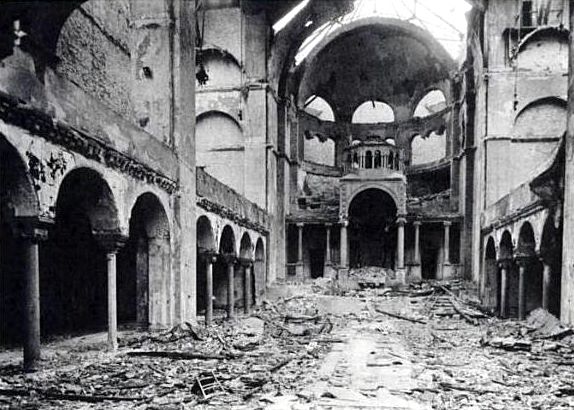
Interior of a Berlin Synagogue after Kristallnacht

Interior of a Berlin Synagogue after Kristallnacht

Seventy Five years ago this November (9th and 10th) Jewish shops and synagogues were vandalized and looted over those two nights throughout much of Nazi Germany and Austria in a most extreme incarnation of the “pogroms” that became known as “Kristallnacht” or the “Night of Broken Glass“.  It was one of the first major and overt expressions of Hitler’s genocidal plans then still being formulated. Unfortunately this event continues to be imitated by like-minded hateful individuals and groups worldwide. So the sociopolitical context of this musical work written for the 50th anniversary of that event sadly has an ongoing relevance for our contemporary world even 25 years after its creation.

At its most basic level this piece is a sort of concerto for six instrumental ensembles playing in radio stations in six different countries live mixed by the composer and broadcast throughout Northern Europe on October 20th of 1988. There is no text as such but the sounds of people praying and the apparently random Hebrew letters and German numbers are scattered throughout the piece along with environmental and found sounds on the tape Curran prepared which plays throughout the performance as a sort of political pedal point.

English: "Hebrew alphabet" in Hebrew...

English: “Hebrew alphabet” in Hebrew, modern serif typeface. (Photo credit: Wikipedia)

The liner notes of the recording describe the piece as “radio concert for six choruses; six sextets each including a quartet (violas, cellos, bass clarinets, bass flutes, trombones, tenor sax/tuba) plus accordion and percussion; tape.”  All were individually conducted with the conductors coordinated by a click track and mixed live by the composer. The recording on New World records is the document of that broadcast.

The effect is that of a collage connected by the electronic nervous system, the radio stations, which link the various performances.  The program is largely implicit here and listening to this piece evokes images that can vary from one listener to the next as any great piece of art provokes different experiences. The sound images here are not pretty and the work is very emotionally intense. Those images are guided by the tone of the music and fueled by the cryptic words and sounds mixed in with the live performances.  It is, in effect, his Mitzvah to the memories of the fallen.  You will not come away unmoved.

Kristallnacht occurred in November of 1938, a month before Curran was born but  the impact of that action continues to resound from that generation to this.  As a politically aware artist he was compelled to respond and he did so in a most emphatic, creative and powerful manner.  Perhaps it is the inherited duty of one generation to exorcise the demons and the atrocities of the previous ones.  Curran has certainly contributed most memorably to such an effort with this work.

Thank you, Mr. Curran, for your prolific and varied contributions to music and your efforts through your art to exorcise the demons of our collective past.  I wish you a happy 75th birthday and wishes for many more creative years to come.

Not Another Minimalist! (NAM): New and Lesser Known Minimalists


Philip Glass portrait

Philip Glass portrait (Photo credit: DailyM = Differentieel + JeeeM)

I have been a fan of so-called minimalist or pattern music for quite a number of years.  Since my first encounter with this type of music in the late 1970s I have listened with interest and been fascinated to hear how each composer expressed their own voice within that general rubric.  Though many have eschewed the label ‘minimal’ and argued over the alternate label ‘pattern music’ there are recognizable characteristics which continue to bind, however loosely,   Perhaps that is just another way of saying that I “know it when I hear it” but I think readers tend to get the general idea and I am open to discussion on what music I should include or exclude from these categories.

Kyle Gann

Kyle Gann (Photo credit: Wikipedia)

Anyway the point of this rambling little  post is to introduce a recurring series of posts about my personal discoveries in said genre.  You can be assured that I have scoured high and low but lay no claim to being either definitive or comprehensive.  What will follow will be an ongoing series of posts identifying the music of one composer or group whose music sounds minimalist or pattern based at least to my ears and which I find pleasing and/or significant in some way.  I will head each post with the identifying acronym NAM (Not Another Minimalist!).

Michael Nyman in Sant Cugat del Vallès

Michael Nyman in Sant Cugat del Vallès (Photo credit: Wikipedia)

The most useful books for me on this subject for me are those by Kyle Gann, Tom Johnson, Michael Nyman, Wim Mertens and Robert Fink.  I am listing these as my primary influences and do not mean to discount important works by other writers on the subject.  Gann’s ‘American Music in the Twentieth Century'(1997) and the collection of articles, ‘Music Downtown'(2006) remain among the most lucid descriptions and analyses of minimalist music.  He also maintains a blog with pretty regular posts at (http://www.artsjournal.com/postclassic/).  Gann’s work might not have been possible without the work of fellow composer and journalist Tom Johnson whose collection of reviews, ‘The Voice of New Music’ (1991) is one of the most important collections of reviews of the burgeoning ‘downtown music’ scene in New York in the 70s and 80s where purveyors of this genre first displayed their wares .  Both ‘Music Downtown’ and ‘The Voice of New Music’ are collections of reviews of concerts and events written for the Village Voice.

UCLA professor and music critic Robert Fink on...

UCLA professor and music critic Robert Fink on the “Different Strokes” panel at the 2009 Pop Conference, Experience Music Project, Seattle, Washington. (Photo credit: Wikipedia)

Michael Nyman’s book, ‘Experimental Music: Cage and Beyond'(1974) is among the earliest to describe this music and its context.  Wim Merten’s ‘American Minimal Music'(1988) is a great analysis of the essential canon.  Unfortunately these have been difficult to find lately and hopefully some reissues including digital formats may be forthcoming.

Robert Fink is a musicologist at UCLA.  His book, ‘Repeating Ourselves’ provides one of the most wide-ranging and comprehensive analyses of the concept of minimalism and pattern music.  He works across all music genres and cultural practices to identify a sort of minimalist ethic and has done much to shape my thinking in this area.

There are certainly many other fine books on the subject and that itself may need to be the subject of a future post.

I don’t like all music in this category (or any category for that matter) but it is the one which feels kind of like a personal discovery to me and a genre that continues to interest me.   And I can report that there is a good deal of music  outside the classic canon of minimalism that is definitely worth the effort to find.  And there are pieces of music written before the 1960s which appear in hindsight to have been sorts of precursors to this style.

This will be an occasional series of posts and I have decided to gather them under the somewhat facetious acronym of NAM (Not Another Minimalist) for the sake of easy reference should any reader actually find these posts useful.  My intent is both to share my discoveries and to generate debate and comment about this type of music.  I want to explore and share artistically interesting developments that lie outside the Reich/Glass/Riley/Young canon of minimalism.  As always I welcome discussion and feedback.

In the Mood for Food, a unique underground dinner/concert series returns to the east bay


The door is open to the underground restaurant.

The door is open to the underground restaurant.

This past Monday October 7th there was a gathering of twelve people at a small loft space in West Oakland.  This is not a neighborhood known for about anything but light industry and cheaper rents.  But there are gems to be found in nasty old Oakland, CA and this is one of them.  It was the return of an irregular (approximately monthly) series of dinners and dinner concerts hosted by local vegan caterer and chef extraordinaire (and shakuhachi teacher as well) Philip Gelb.  These concerts, according to Mr. Gelb, were inspired by the Creative Music Studio which flourished in Woodstock, New York from 1971 to 1984 which featured many of the brightest and most innovative musicians in jazz, free improvisation and experimental music.  But the inclusion of such high quality creative cooking is unique here.

View through a glass, lightly.

View through a glass, lightly.

It has been many months since he last hosted one of these at his loft space.  Phil has chosen to combine his substantial cooking talents with his interest and connections with the music community to create this unique blend of freshly shopped and created vegan dishes with local and visiting musical talent.  This series, dubbed “In The Mood for Food”, is named after one of his favorite films, “In the Mood for Love” by Wong Kar-Wai.  The series has occurred more or less monthly for the last 8 years. To date I have enjoyed the creative and varied multi-course meals (which are frequently themed to the season or to the performer’s preferences) and have enjoyed both dinner conversation and performances by Pauline Oliveros, Terry Riley, Stuart Dempster, Gyan Riley, Tim Rayborn, Michael Manring, Barre Phillips, Mark Dresser, Amy X Neuberg and Pamela Z to name just a few.

The meals are always multi-course, locally created, sourced and shopped meticulously by Phil himself.  He serves only farm fresh ingredients, never canned or packaged and the recipes are his personal creations.  Food is served by the chef and one or two assistants depending on the size of the audience (maximum capacity is about 20 people).  Cost ranges from $40 to $60 per person, about what you would pay at a good area restaurant.  The musicians are either people with whom Phil has collaborated or found by word of mouth from other musicians and friends.  He has had many musicians call him to ask if they can play at his venue.  Why would that be?  There is no significant publicity or profit to be had here.  The answer, I believe, is the intimacy which is a combination of the loving creation of both food and music, both raised to an art form by their execution as well as their content.

There is reportedly a cook book in the works which, in addition to many carefully tested vegan recipes, will tell some of the history of this series.  Phil is occasionally soliciting recipe testers via Facebook.  He is also known for his hands on cooking classes.

As it happened, Monday’s event did not include music but it did include some familiar faces who I frequently encounter at these dinners as well as an overall interesting collection of guests who make for great conversation and frequently share their BYOB offerings.  In fact the bartender from the great San Francisco vegan restaurant, ‘Millenium’, asked to attend and to prepare some delicious cocktails specially designed by him and incorporating some of the food ingredients to enhance the experience.  Two of the guests were the operators of a local new tempeh making business called Rhizocali and their superior product was featured in the night’s food offerings.

Unfortunately I forgot to get a picture of the wonderful dessert course which consisted of pumpkin waffles, spiced pumpkin sorbet and maple tea poached pears.  Characteristically the attentive chef went around offering more scoops of the refreshing pumpkin sorbet which no one appeared to refuse as they engaged each other in pleasant conversations.  It is good to have this series back again and, well, let’s just say no one walked away unsatisfied.

Appetizer- Fresh rice noodles wrapped with apple smoked tofu and miso glazed, grilled pumpkin hijiki salad

Appetizer- Fresh rice noodles wrapped with apple smoked tofu and miso glazed, grilled pumpkin hijiki salad

First course- Kim chi soup with rice cakes, homemade kim chi in a seaweed/pumpkin broth and a little side dish of Pumpkin tempura brushed with gochujang

First course- Kim chi soup with rice cakes, homemade kim chi in a seaweed/pumpkin broth and a little side dish of Pumpkin tempura brushed with gochujang

Entree- Dumpling pumpkin stuffed with Thai red curry with Rhizocali Tempeh, gai fan, snap peas and Thai eggplant; jade pearl rice, green mango salad and lotus root pickles

Happy diners chatting after a fantastic dinner.

Happy diners chatting after a fantastic dinner.

Peace through “A Sweeter Music”


President Lyndon B. Johnson signs the 1964 Civ...

President Lyndon B. Johnson signs the 1964 Civil Rights Act as Martin Luther King, Jr., and others, look on. (Photo credit: Wikipedia)

Album cover

Album cover

It is fitting that this CD, this music has been released in the 50th anniversary year of the March on Washington and just prior to the 50th anniversary of the Civil Rights Act of 1964.  The series of 18 pieces in this major commissioning project by the wonderful bay area pianist, producer and new music advocate Sarah Cahill called “A Sweeter Music”, its title taken from a phrase in Martin Luther King, Jr.’s 1964 Nobel Prize lecture.  Though only 8 composers are represented on this recording this is a fine document of some truly wonderful and heartfelt music.  And Cahill’s introductory note indicates that there are plans to record the other ten pieces as well.

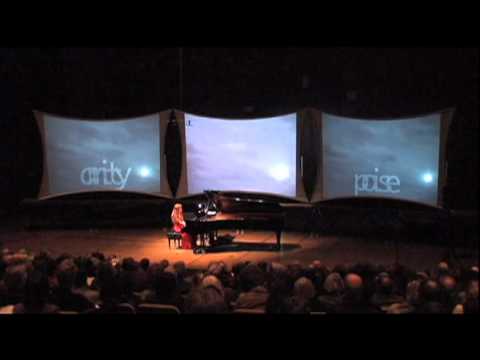
The project was planned to include video projections by Cahill’s husband, the skillful video artist John Sanborn.  The first formal performance took place on the Berkeley campus and the video projections across three screens added a dramatic perspective on the various pieces.  I was present at the first performance in Berkeley and later at a small multi-purpose hall in Point Reyes in the north bay.  At the smaller venue the projections were limited to a single screen but the images still added to the impact.  At the time of this writing Sanborn has posted some of these videos on You Tube ( http://www.youtube.com/user/sanborn707?feature=watch).

Still from one of Sanborn's videos.

Still from one of Sanborn’s videos.

Each of the recitals contained a selection of the pieces commissioned.  Sarah Cahill kindly provided the complete list which includes: Be Kind to One Another by Terry Riley, Peace Dances by Frederic Rzewski, There is a Field by Jerome Kitzke, Dar al-Harb by Preben Antonsen, The Olive Branch Speaks by Mamoru Fujieda, The Long Winter by Phil Kiline, Two, Entwined by Paul Dresher, War is Just a Racket by Kyle Gann, B’midbar by Larry Polansky, drum no fife by The Residents, Devotion to Peace by Michael Byron, Sonamu by Carl Stone, After the Wars by Peter Garland, A New Indigo Peace by Pauline Oliveros, Movement (Deep in My Heart) by Ingram Marshall, Study War No More by Bernice Johnson Reagon, toning by Yoko Ono and excerpts from Steppe Music by Meredith Monk.

The pieces represented on this recording are a diverse set including those by Frederic Rzewski, Terry Riley, Meredith Monk, Yoko Ono, The Residents, Phil Kline, Kyle Gann, and Carl Stone.  Missing from this disc, and planned for a future release, are the pieces by Jerome Kitzke, Larry Polansky, Pauline Oliveros, Preben Antonsen,  Sanborn’s images definitely enhanced the experience of the music and this writer hopes that some day this music might be released in a DVD format with those images but the pieces here stand easily on their own merits.

The disc opens with Terry Riley’s ‘Be Kind to One Another (rag)’ (2008-10).  Riley takes his title from a statement made by Alice Walker which followed the 9/11 attack on the World Trade Center.  Rather than express an anti-war stance Riley harkens to the days of his youth when he played barrel house piano music while he studied composition.  This is a jaunty and entertaining but substantial piece which expresses the wish for kindness.  It is a challenging work to play but not to hear.

‘Steppe Music’ (1997) is apparently a reworking of a 30 minute piano piece (the piece at hand lasts about 8 minutes) commissioned by Sarah Cahill for another masterful pianist, Nurit Tilles.  Meredith Monk is of course best known for her extended vocal techniques and dance/theater pieces.  Little of her piano music has been recorded and one hopes that there will be more to come.  This is a less literal contribution which, the composer says, is about “color, texture, resonance, and gesture…”.  Like her performance pieces this is music about images which evoke emotion and it is unlike any of Monk’s recorded piano music.

The seven ‘Peace Dances’ (2007/8) were written by a composer/pianist well-known for his political statements in music as well as for his virtuosic music.  Frederic Rzewski is probably best known for his massive set of variations on the protest song ‘El Pueblo Unido Jamas Sera Vencido‘ (The People United Will Never Be Defeated) commissioned in 1976 for Ursula Oppens.  His catalog contains a great deal of music with explicit and implicit political references.  Rzewski’s music sounds deceptively simple but is in fact very challenging to play.  These are part of a much larger set of compositions called “Nanosonatas”.  The dances here contain a variety of musical and political references that will entertain and frustrate musicologists for years to come but present the listener with some welcome additions to the repertoire.  Cahill plays them effortlessly and repeated listenings reveal more of the rich textures.  Rzewski’s inspiration, like that which inspired this series, is rooted in the same struggles as represented by Martin Luther King, Pete Seeger, gospel music and contemporary folk music.  The last of these dances was a birthday present for the 100th birthday of Elliott Carter.

Kyle Gann’s ‘War Is Just a Racket’ (2008) is written for speaking pianist.  He takes Christian Wolff’s ‘Accompaniments’, which was written for Frederic Rzewski in 1972 requiring the pianist to sing and speak as well as play.  It reminds this writer of Rzewski’s own ‘De Profundis’ of 1992 for speaking pianist using a text by Oscar Wilde.  Gann takes as his text a very interesting text by one General Smedley Butler who gave this speech in 1933.  Like Rzewski, Gann is no stranger to politics in his music.  This addition to the “speaking pianist” repertoire is spoken with feeling by Cahill as she pounds out the angry chords and melodies.  This is perhaps the most literal of the pieces on the disc and probably the least friendly to a conservative audience.

Sonamu (2010) was written by Carl Stone for piano and electronics.  It’s not the electronics your grandmother listened to either.  Stone uses a computer to perform “spectral convolution”, a process, the composer explains, which isolates various aspects of the sounds to “…shape and enclose the pitch and harmonies of separate voices…”.   The intention stated by Stone is to evoke ghosts and memories of the aftermath of war.  This most complex and abstract piece reminds me of the ghost electronics compositions by Morton Subotnick.  This piece requires repeated listenings and would no doubt be enhanced by Sanborn’s images.

Composer Phil Kline describes a process of using various musical fragments edited together to evoke images of living in a land under siege.  Kline was an eyewitness to the World Trade Center disaster and his personal experiences contained metaphorically in ‘The Long Winter’ (2009) have a memorial-like quality.  In the liner notes he describes his fantasy images leading to the realization that he (and we) do live in a land (or perhaps a world?) under siege.  The piece is in two sections ‘Crash’ and ‘Embers’.

Yoko Ono’s ‘Toning’ (2008) purports to be an effort to heal both performer and audience through sound.  As with much of her work this piece has an anti-art quality like the work she produced for the Fluxus performances.  This is perhaps the technically simplest of the pieces on this recording.  I think that reactions will vary to this music much the way that they vary to Ono’s oeuvre.  Those familiar with her work will see the threads that connect and others may simply dismiss her work entirely.

The enigmatic San Francisco based group “The Residents” aspire to anonymity as individuals in the hope that their audiences will focus on their art.  This is clearly one of their performance art pieces and is fairly explicit in its anti-war stance.  It consists of recorded voices and sounds in addition to the live piano performance and demonstrates the eclectic range involved in these commissions.

This CD was recorded at the recital hall at the University of California at Santa Cruz by Tom Lazarus.  It was released as another of the fine recordings of contemporary music on the Other Minds label with Charles Amirkhanian of ‘Other Minds’ as executive producer.  It is a major addition to the recordings of this political classical genre and a significant contribution to the solo piano repertoire as well as a snapshot of an eclectic range of contemporary music of the moment.  Highly recommended.

The Feeling of the Idea of Robert Ashley: Kyle Gann’s Appreciation of the Composer


Kyle Gann Kyle Gann (Photo credit: Wikipedia)

I first encountered the work of Robert Ashley in the early 1980s when I purchased the Lovely Music vinyl LP titled ‘Private Parts: (the record)’. It contained two tracks, one on each side, called, respectively, ‘The Park’ and, ‘The Back Yard’ (which happen to be the first and last acts of ‘Perfect Lives’). I took to the music rather quickly listening to its various layers of musical sounds and Mr. Ashley’s unique voice intoning the equally unique and unusual texts.

That record earned a special place in my mental favorites library (iTunes had yet to be invented) and spurred me on to the purchase of more of Ashley’s music. But other than the liner notes (which I read closely and repeatedly) there was surprisingly little information on this mysterious and wonderful composer whose music and words so captured my sensibilities.  The publication of this volume, ‘Robert Ashley’ (one of a great series of books on contemporary composers from the University of Illinois Press) fills this long standing void in the realms of music scholarship and biography.

I encountered the author’s work at about the same time as I did Ashley’s.  He was writing fascinating and accessible reviews in the local (Chicago) free newspaper, ‘The Reader’. He would later be selected as classical music reporter for New York’s ‘Village Voice’. Kyle Gann, composer, critic, musicologist and new music raconteur contributes a most essential work to help fill that void. His biographical sketch, analysis, bibliographic and discographic references serve also as a much needed exegesis of Robert Ashley’s work.

As it happens, the author was involved in the premiere of ‘Perfect Lives’ when he was a student at Northwestern University in Illinois in 1979. He developed and maintained a close connection with the composer and his music.

Photo by Joanne Savio, 2006 Photo by Joanne Savio, 2006

Robert Ashley (1930- ) is an American composer born in Ann Arbor, Michigan. His experience growing up in the American Midwest informed his vision, speech and temperament affecting his compositional style. He spent the formative years of his youth in Ann Arbor.  He studied at the University of Michigan with Ross Lee Finney and at the Manhattan School of Music earning, respectively, undergraduate and graduate degrees in music.  Ashley declined an offer to pursue a doctorate in speech pathology (one of his many interests) to pursue music.  He organized and participated in the ONCE Festival of contemporary music in Ann Arbor from 1961 to 1969.  In 1972, he accepted an appointment at Mills College as director of the Center for Contemporary Music succeeding Pauline Oliveros, Lowell Cross and Anthony Gnazzo. In 1978 he left for New York which would become his new creative home base.

Ashley and his collaborators have performed internationally and a great deal of his music has been recorded.  His collaborators include Alvin Lucier, Gordon Mumma and David Behrman (who along with Ashley formed the performing group Sonic Arts Union), Roger Reynolds, “Blue Gene Tyrrany”(aka Robert Sheff), Pauline Oliveros, filmmaker George Manupelli and many more.  There were recent performances in New York and Miami of his early operas and a big new opera ‘Quicksand’is reportedly in progress and due to be premiered some time after this book was issued.

Gann acknowledges the limitations of his analyses saying quite correctly that Ashley’s work will require more time as well as access to the composer’s sound archive and consideration of his unrecorded works. He never pretends that this is more than a relatively brief treatment of a very large subject. Many works are not analyzed and little attention is given to either the ONCE Festival or the Sonic Arts Union.  His collaborations and influences get little space.  And George Manupelli’s films for which Ashley composed soundtracks deserve a book to themselves.  Nevertheless there is an awful lot accomplished in under 200 pages.

Gann discusses some of Ashley’s early works, his involvement in the too little known ‘ONCE festival‘ and his very important time teaching at Mills College where he became director of their Contemporary Music Center. But the real substance of this book comes in Gann’s analysis of Ashley’s operas which most certainly form the core of his creative output. It is the music that gets the closest attention here.   The author’s detailed analyses of the rhythmic schemes and harmonic structures that underlie the (mostly spoken or chanted) texts reveal the complexities of these deceptively simple sounding and seemingly impenetrable works and provide a means of appreciating and even understanding these unusual pieces that hardly fit any conventional definition of opera.

Gann also discusses some of the literary and intellectual ideas that permeate Ashley’s work.  The ideas come from a variety of sources including speech, speech pathology, geography, television, film, history, culture, the Tibetan Book of the Dead, writings of the Italian mystic and martyr Giordano Bruno and the writings of scholar Frances Yates in ‘The Art of Memory’ and ‘Giordano Bruno and the Hermetic Tradition‘ among many others.

Beginning with the earliest ‘Music With Roots in the Aether’ and then continuing with the most familiar ‘Perfect Lives’ the reader is treated to loving and insightful descriptions of the series of works which comprise his trilogy: ‘Atalanta’, ‘Perfect Lives’ and ‘Now Eleanor’s Idea’.  He proceeds to subsequent opera projects and “spin off” works.  At one point Ashley told Gann that he had figured out the structure for his “next 72 operas”.  This writer is eager for more on the man, his works and his wide artistic circle.

The electronic version of this book (unlike that of Gann’s ‘No Such Thing as Silence’) contains all the images in the hard copies and is formatted, for the most part, very skillfully.

If you already know and love the work of Robert Ashley this volume will deepen your appreciation and if you don’t know this man’s work this is the book which will tell you why you should.

Music 109, Alvin Lucier’s personal view of the post 50s avant garde


20130604-083336.jpg

This little volume is an endearing record of an undergraduate course, a music appreciation course designed for students with an interest in the music of the avant-garde of the 1960s, 70s and 80s taught by a man who was an integral part of that era as a composer, performer and teacher. The class, which he taught at Wesleyan University was reportedly very popular continues to be offered today. And this book is required reading for fans of new and experimental music.

In just over 200 pages Professor Lucier takes the virtual class of readers through a very personal journey of the music, experiments and performances of some of the highlights of some of the major works and composers of this time period. And he manages to navigate all this wildly experimental music in a way that is understandable to a general audience (remember that this is an undergraduate course for non music majors).

What makes this book so special and unique is its personal nature (Lucier was a composer, performer, organizer and interpreter of much of the music) and the particular networks to which he connects. Few historians save for Kyle Gann pay significant attention to the techniques which arose from the orbit of Ann Arbor, Michigan and composers like Robert Ashley, Gordon Mumma and Lucier himself among many others. But this group is indeed an orbit and not a universe unto itself. David Tudor, for example, crossed paths with these composers as well as, more famously, with John Cage and the New York School.

This delightfully readable volume narrates Lucier’s vast experience with and love for a variety of experimental trends. Lucier writes of his own works and places them within the contexts of fellow innovators including the above mentioned artists as well as diverse voices such as Pauline Oliveros, Philip Glass, Steve Reich, LaMonte Young, Roger Reynolds, Gordon Mumma, Robert Ashley, Earle Brown, Morton Feldman, John Cage, Christian Wolff, David Tudor, Karlheinz Stockhausen and many others. This personal inside view makes for entertaining and compelling reading which provides a historical context as well as insights to the “method behind the madness” of a diverse and innovative time in music history.

Except for Kyle Gann’s fine volume on Robert Ashley this is the only book length treatment (known to this reviewer) of artists connected with the ONCE festival and the Sonic Arts Union. Lucier’s place in music history is connected across east coast academia as well as far less academically connected groups like these. This book connects some of those dots placing an important perspective on this era.

Earlier this year I had the pleasure of speaking with Paula Matthusen, a composer who now teaches at Wesleyan. In fact she has inherited this delightful and inexplicably popular course. She told me that not only does the course continue to be popular, many of the students come in with some level of experience of this music and a desire to know more. How cool is that?

Matthusen shares many of her teacher (Lucier’s) concepts in her own work but she is clearly the next generation in experimental music reminding us that art of the era documented is receding into the past yet we hardly know it. And how can we appreciate the latest work without some understanding of how we got there? Lucier’s book provides a great introduction and hopefully will encourage more attention to this important and fascinating time in American music history.

Abraham Lincoln and the Avant Garde


Abraham Lincoln’s speeches and writings are well liked and frequently quoted in many contexts. Perhaps their most famous use in music is that of Copland’s ‘Lincoln Portrait’ for narrator and orchestra. And without doubt his most famous words are those of the ‘Gettysburg Address’ first read on Thursday November 19th, 1863 at the dedication of the Soldier’s National Cemetery in Gettysburg, Pennsylvania. That’s 150 years ago.

20130409-215729.jpg

Those words were brought to the service of the avant garde in 1967 when Salvatore Martirano employed them in his overtly political ‘L’s GA’ for “gassed masked politico”, “helium bomb”, three 16mm movie projectors and two channel tape recorder. The piece was updated to a version for three video tapes played simultaneously on three monitors sometime in the 1980s.

<code><br />
20130409-210826.jpg

Salvatore Martirano (1925-1999) was a major pioneer in electronic music. He graduated from Oberlin College in 1951 where he studied composition with Herbert Ellwell. In 1952 he completed a masters degree at the Eastman-Rochester School having studied with Bernard Rogers. He studied with Luigi Dallapicola in Italy from 1952 to 1954 on a Fulbright Fellowship.

While his early work is influenced by the twelve tone traditions which also characterize Dallapicola’s music nothing in his various teachers’ work could possibly prepare one for the music he would produce in his mature works. His long association with the University of Illinois afforded him access to technology and developers with cutting edge ideas that he absorbed and mastered. Until a fair assessment is made of the work and achievements of the computer labs there it is difficult to say if they exceeded that of the Columbia Princeton lab (with the brilliant Milton Babbitt at the punchcards).

The piece at hand in this essay defies verbal description and is not easy listening. It utilizes the text of the Gettysburg Address read by a man in a gas mask breathing helium (which raises the pitch of his voice in a cartoon-like way), 3 sixteen millimeter film projectors and electronic score on tape. The original recording lasts some 25 minutes. I recall that the version for three videotapes on simultaneously running monitors lasted about the same time. But the experience is one of a complex wall of sound and images that is unrelenting until it actually ends. It was embraced as a sort of “cri de coeur” in sympathy with the escalating anti-war protests of the time.

Unfortunately the posts on you tube do not contain the video footage which definitely enhances the experience of this true multimedia masterpiece. And it is a prime example of classical political protest music. It is and should be disturbing.

But even in retrospect I doubt that the passing of time can be seen to have diminished the importance of this composition both as music and of sociopolitical protest (that never seems to become irrelevant actually). This work certainly deserves to be heard and experienced much more widely and studied along with Martirano’s other mature works and the body of work which has come out of the hybridization of music and technology of that era.