New Music Buff’s Best of 2023


Attack of the Music Memes

After agonizing about writing a “best of” blog and publishing it before January 1, I decided to take a pause and enjoy the holidays. So here I look back on my 2023 in the rear view mirror but with memories still pretty fresh.

Regular readers of this blog likely already know of my oft shared opinion of the superfluous nature of “best of” lists and of my acquiescence in producing such on an annual basis. I certainly don’t think of this as a meaningless exercise and I think the process has grown on me. It is a chance to achieve a perspective which would be missed by simply plowing on ahead with the usual flow of reviews and articles. But drawing down that 12 month perspective is an opportunity to evaluate those months, to see where we’ve been and to hopefully get a smidgen of insight into where I/we are likely headed.

My Facebook friends will recognize the representative meme at the head of this article which is one of the more cloying aspects of “AI”, whatever that is. So indulge me for a moment to look at this seemingly new intrusion into the reality we thought we knew. So, what is “AI” and what will it do to us? Ultimately I’m not the one to answer that question but I’d like to throw some ideas to add to the speculation.

First, the choices a composer makes, like the choices of a painter, a writer, etc. are the stuff of the mystery of creation itself. Why “A major”, or why that tuning, or scale, or rhythm, or orchestration, etc? So along comes the notion of removing, or at least distancing, the artist from their creative product. That notion started not with famed proponent John Cage but rather with Johannes Chrysostymous Wolfgang Amadeus Mozart in his K. 516f musical dice game. Voila! Algorithmic composition (actually fairly common practice in the classical era). An early manifestation of “AI”? Perhaps.

Lejaren Hiller (1924-1994) was the first composer to employ electronic data processing in a musical work in his Fourth String Quartet subtitled “Iliac Suite” in 1957. There followed similar experiments with various iterations of electronic creations at music centers worldwide including The University of Illinois at Champaign, Columbia-Princeton, Stanford, The University of California Berkeley and San Diego, The San Francisco Tape Music Center (later subsumed into the Mills College Center for Contemporary Music, IRCAM in Paris, Israel Electronic Music Studio, and counterparts in the Nordic countries, Germany, Belgium, etc. Proto “AI”?

While historically interesting I raise this issue to say that, as far as I can tell, “AI” has not made this writer’s greatest hits list but it is interesting and maybe even useful. With that, my concern for the subject officially goes to the back burner for a later time.

2023 has been a year of great personal changes for the writer of this blog. A job change, a geographical relocation, and many things unrelated to this blog characterized a busy year for New Music Buff. So here in a sort of holiday tradition I present my “Best of 2023” from my little listener’s corner of the world. For the sake of simplicity I present a more or less chronological exposition of my sonic adventures. (N.B. Not one portion of this article made use of “AI”).

I begin with not with my 20 most read posts, a practice that characterized previous iterations of this annual exercise. Instead I am providing my top 20 favorite releases that were reviewed in 2023. Please note a couple of caveats. First, I receive a lot of review requests, more than I can even listen to, much less give a reasonably intelligent review. Albums that I’ve not reviewed should not be assumed to be bad or insignificant and my reviews are personal observations. I really only review albums that interest me anyway. Second, this article is only one reviewer’s opinion and not intended to be definitive or to supersede anyone else’s opinions. Third, this is not the end of my attention to music that was released in 2023. Some releases require more time to give a fair listen and a respectful review. There are more to come in 2024.

First a few stats: 2023 saw the publication of some 45 blog posts on New Music Buff, earning me 9693 views for the year. I rarely get comments on my posts (though I welcome and invite comments both positive and negative). Not bad, I think, for the overall less appreciated musical styles that fuel my desire to write about.

Now, in chronological order (of publication) are my personal favorites as a listener:

Neuma 158

Binaural Beats in the Tudor Rainforest started my new year with a bang. Reviewing this disc required me to take a closer look at the astounding work of David Tudor and his unique contributions to new music. This important release is a recording of a work which, by its own concept cannot receive a “definitive” performance. But this recording comes mighty close, involving “binaural” recording utilizing a mobile set of binaural microphones which are worn by the recordist. In addition this recording involved a collaboration with Pauline Oliveros and a group called, “Composers Inside Electronics”. The recording was done during Oliveros’ tenure at UCSD. Rainforest IV is so called because it is the fourth iteration of the instructions that form the original concepts of Tudor’s composition, “Rainforest”. It is an immersive sonic experience heard on headphones but actually not bad even heard on stereo speakers. A rich and wonderful release.

Starkland S-236

From a 1960s electroacoustic to a budding 21st Century composer Kotoka Suzuki released on the reliably interesting and even visionary Starkland label. Next Gen Electroacoustic: Kotoka Suzuki will introduce the listener to this rising star who doubtless will produce more of her compelling compositions.

Sony 194399434826

Igor Levit is a fine concert pianist whose albums are effectively redefining the way we, as listeners, perceive the western classical oeuvre. Igor Levit: Defining Tristan does for the various musical pieces inspired by the Tristan legend what Levit did for the concept of the great keyboard variations in which he selected Beethoven’s “Diabelli Variations” and Frederic Rzewski’s “El Pueblo Unido Variations” to join his recording of the Bach “Goldberg Variations” in a 3 disc package placing these three large sets of variations as emblematic of the genre in three different centuries (18th, 19th, and 20th). Levit, by his recorded output, is providing a valuable perspective which may influence repertory choices for years to come.

Levit’s traversal of the Tristan legend here ranges from the second recording of Hans Werner Henze’s too seldom heard “Tristan Preludes” back to works by Wagner (of course) and Liszt. He even slips in his wonderful solo piano transcription of the Adagio of Mahler’s unfinished 10th Symphony into the mix. This is a very compelling Tristan anthology by a deservedly still rising star.

Cantaloupe

This Cantaloupe release by Bang on a Can composer and master clarinetist Evan Ziporyn is both masterful and great fun. Evan Ziporyn: Bang on a Pop consists of transcriptions of “pop” songs for multiple clarinets all played by Ziporyn via his very effective multi-track recordings. The album is very personal and pretty much cliche free with these engaging and insightful transcriptions. It is an homage to the songwriters as well as a showcase for Ziporyn both as composer and as performer.
Microfest MF 23

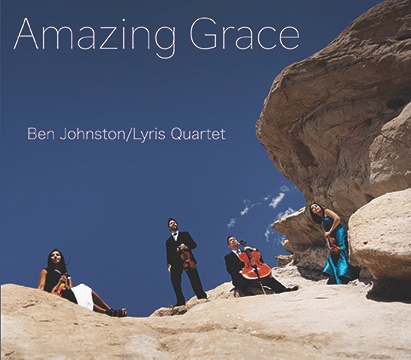
The Young Person’s Guide to Ben Johnston is an ideal way to introduce listeners to the wonderful world of the late Ben Johnston’s music. Johnston, a student and colleague of Harry Partch shows his compositional skills utilizing non-traditional western tunings in these representative works. Johnston here does for some quasi pop tunes what Evan Ziporyn did with his clarinetist perspective for the tunes on Pop Matters. But Johnston’s pretty, accessible work belies fascinating complexities that don’t actually sound complex to the listener. This disc contains Johnston’s last completed work, “Ashokan Farewell” (which Johnston took to be a public domain folk tune but is in fact a piece written by Jay Ungar). It is paired with the 4th String Quartet (a set of ingenious variations on “Amazing Grace”) from 1982 and the 9th String Quartet of 1997. Profound, lovely to listen to, and a great homage.

DVD OM 4001

This DVD is a major addition to the discography of Charles Amirkhanian’s sound poetry as fine sampling of one aspect of Carol Law’s (Amirkhanian’s life partner) complementary visual art. These collaborations are also important contributions to the visual and performative aspect of these collaborative works. Amirkhanian has been a fine curator and promoter of the work of others but he has rather seldom stepped into the spotlight himself. This quirky genre got some fabulous exposure at the 7 day Other Minds 23 festival in 2018 in which Amirkhanian’s work was presented in the (surprisingly varied) context of sound poetry of the amazing international collection of artists who were hosted at those events. This DVD should be in the collection of anyone interested in new music sound poetry and performance art. It is both entertaining and mind bending featuring a juxtaposition of images and sound reviewed in greater detail in the post “Dyadic Dreams”. But words cannot do justice to these works. You really have to see them.

Cedille CDR 90000 210

Readers of this blog know my fondness for the Chicago based label Cedille and their promotion of Chicago based musicians. This disc stands out in this group’s embrace of non-traditional composers alongside more traditional works. The inclusion of works by DJ composer Jlin and the academy based genre defying duo Flutronics alongside composers like Danny Elfman and Philip Glass demonstrate the wide ranging repertoire of Third Coast Percussion. Much more information can be found in Perspectives: Spectacular World Premiere Recordings from Third Coast Percussion on my blog. This one reimagines the percussion ensemble.

Neuma 176

This disc is a good example of why listeners and collectors should pay attention to the Neuma record label. Philip Blackburn, who had been the very successful curator of Innova records, took over the defunct Neuma label which was founded with the intention of promoting largely electroacoustic music though not exclusively.

Agnese Toniutti‘s New Music Vision is actually a review of two discs by this rising star, a dedicated new music pianist that needs to be on your radar. The other Neuma disc contains Toniutti’s traversal of John Cage’s reluctant masterpiece, “Sonatas and Interludes for prepared piano”.

The disc pictured here is Toniutti’s vision beyond the Cage work. This one focuses on mostly living composers Lucia Dlugoszewski, Tan Dun, Philip Corner, and Toniutti’s herself. Basically, if Toniutti plays it, you should probably at least give a listen.

2023 saw the completion of Bay Area pianist Sarah Cahill’s epic survey of piano music by female composers. Cahill is another (predominantly) new music focused pianist about whom I would also assert that, if she plays it, you should probably give at least one listen.

The End of the Beginning: Sarah Cahill’s “The Future is Female” Trilogy Completed will tell you all you need to know about this trilogy which encompasses about 300 years of music history and sheds light on some fascinating and substantial music written by women. Most of the works on this trilogy of albums are, in fact, world premieres but, fear not, even the pieces which are not premieres are likely not in your collection. This is a brilliant selection of music that effectively throws down the gauntlet to challenge other artists to explore this repertory. This trilogy is a true landmark and a joy to the ears.

This third volume in the wonderful Catalyst Quartet’s survey of another unjustly neglected group of composers focuses on the music of three black Americans of the twentieth century. Catalyzing Blackness, Volume Three: The Catalyst Quartet plays 20th Century music by Black Americans was nominated (but didn’t win) for a Grammy Award and, happily, I’m told that more volumes are in preparation. Again, this music is a pleasant revelation that does for black composers what Sarah Cahill has done for women composers (N.B. The first volume by the Catalyst Quartet focused on the black female composer Florence Price). And here’s hoping that Coleridge Taylor Perkinson, George Walker and William Grant Still will become household names in the concert hall.

Microfest MF 21

Son of Partch, Carrying on a Tradition is a really wonderful disc which, though I reviewed it in exceedingly positive terms, provoked a strongly negative reaction from the artist. The reaction apparently also provoked enough interest to have made this review one of my most read of 2023.

But, aside from the unfortunate negative reaction, I still maintain that this is a fine release worthy of attention from anyone who likes new music, microtonality, and the music of Harry Partch. Cris Forster is a composer, theoretician, and instrument builder clearly descended from the Partch tradition. His work deserves attention and this disc is a very satisfying experience.

Islandia IMR 011

Steven Schick is a master percussionist and conductor. This release is the first volume of his personal choices of solo percussion repertoire. Solo Percussion Manifesto Volume I: Steven Schick’s “A Hard Rain” is a manifesto of sorts and does for solo percussion music what Sarah Cahill has done for women composers and the Catalyst Quartet is doing for black composers. There are not many recordings of solo percussion music and Maestro Schick essentially presents his favorite works in definitive performances on a label produced by Bang on a Can cellist Maya Beiser. The second volume is in my review queue and, if this first volume is any indication, it will be a landmark survey.

Cedille

Rising Star Seth Parker Woods’ “Difficult Grace” is a Classic in the Making. Here’s another Grammy nominee that did not win but, this second album by this fine American new music cellist is a winner in my book (er, blog). This is actually the audio of what was developed as a staged performance but the music speaks for itself. Keep an eye/ear out for this rising star who, even now, is storming the new music cello scene in invigorating ways.

Neuma 128

A Reason to Listen: Roger Reynolds’ Latest, “For a Reason”,new recordings on Neuma Records. Here we see Neuma following its original electroacoustic mission with this remarkable set in celebration of Roger Reynolds’s 90th year. This is a lavish 2 CD box set with a beautiful booklet and lucid liner notes. It is a worthy production which showcases recent works by this prolific and important American composer.

Readers of this blog likely are aware of my interest in music that is suppressed and/or neglected so this disc grabbed my attention immediately. Israel does a great job of funding the arts and this can be seen in the proliferation of truly fine performers nurtured by that funding. Less well known are the composers who have flourished in the art healthy politics of this country. Some 50 years of history are represented here. This is but a sampling, albeit finely curated, of several generations of composers displaying a plurality of styles with substantial results. This entertaining disc will whet the appetites of intelligent and curious listeners and, hopefully, bring about more recognition of the world class composers who deserve an audience.

So, finally, went my 2023.

Mahler and Klezmer in Santa Barbara Featuring Clarinetist David Krakauer


Santa Barbara conductor Nir Kabaretti (photo copyright David Bazemore)

It was the day before Passover and all through the lovely acoustics of the Granada Theater, nostalgia was afoot. It came in the form of a Mozart Overture, a Mahler Symphony, and some new music for clarinet, the klezmer clarinet of David Krakauer. (N.B. Klezmer is a style of playing common to the Ashkenazi Jewish communities of Eastern Europe and Russia).

Maestro Kabaretti’s thoughtfully crafted program featured the integration on non-western vernacular (folk) musics into the western classical idiom. The incorporation of an age’s popular music into the newly written concert music of that era is a time honored tradition in music history.

Today’s concert would feature Wolfgang Amadeus Mozart’s imitation of the exotic music (to Viennese audiences) of Turkish Janissary music in the overture to his opera, “The Abduction from the Seraglio”. The plot consists of a story that involves a Turkish Pasha who has kidnapped the lover of the leading man. (Spoiler: He rescues her).

There was a personal nostalgia in that the first opera recording I bought was the budget LP of the Josef Krips conducted performance of that opera. The overture quotes some of the music of the opera and sets the exotic locale with the imitation of Turkish music.

The relative exoticism of Turkish music was imitated by Mozart in his 5th Violin Concerto, subtitled “Turkish”, as well. Listeners may recall the imitation of Turkish martial music in the finale of Beethoven’s 9th Symphony (just after the cherub stands before God). Mozart’s inclusion of piccolo, triangle, big drum, and cymbals (rarely seen in classical era orchestras) typify the European imitation of this ethnic music.

Mozart’s overture works well as a standalone piece and Kabaretti’s Santa Barbarans stimulated at least this listener’s sense of nostalgia in a beautifully crafted reading of this music. From the familiar opening notes this overture this listener was transported to nostalgic reverie and simultaneously enthralled by the energetic reading of the work. It was a delightful balance of both nostalgia and an opportunity to somehow hear this work anew.

Clarinetist David Krakauer (c)Linus Lintner Fotografie

What followed that delightful overture brought featured performer David Krakauer to the stage for a performance of a new (2018) concerto for klezmer clarinet. But before that, we were treated to what Krakauer described as “an arrangement” of a classic klezmer wedding tune. The affably chatty Krakauer is apparently possessed of a genuine humility here because this was virtually a mini concerto for clarinet and string orchestra whose style had some resemblance to the Mahler Symphony programmed post intermission.

Krakauer is a seriously accomplished musician, composer, musicologist, and teacher. His technical and interpretive skills are of Olympian dimension and his ability to relate to fellow musicians and the audience were a joy to behold. Readers of this blog might recall an earlier review of yet another klezmer concerto also championed by Krakauer. You can read that blog entry here.

The youngest music by the youngest composer on the program was next. Wlad Marhulets (1986- ) is a Polish born and educated composer. His name had been unfamiliar to me but a quick look at his website and a few listens on YouTube revealed this man to be a marvelously skilled and creative composer. Put this man’s name on your listener’s radar.

Doubtless our soloist had some input on the performance of this concerto but Marhulets appears to have an in depth understanding of klezmer performance along with a solid grounding in western classical music and a marvelously nuanced skill at orchestration. This is a substantial concerto and a great addition to the repertory.

Like the Mahler Symphony which would follow in the second half of the concert, Mr. Marhulets demonstrated a range of compositional skills. He can evoke humor, terror, nostalgia, joy. He handles a large orchestra augmented by an electric bass guitar and a drum kit. And he has a subtle but effective sense of orchestral color. The soloist, who has a lot to do, winds in and out of passages that pit his clarinet variously against the full orchestra and in duet pairings, sometimes fleetingly, that suggest images of pub, dance hall, and street concerts. All of these the natural milieu of Klezmer music.

The concerto began loudly, raucously, and assertively. The soloist navigated the complex rhythms and subtle balances of texture as only a master musician can do. Kabaretti and his fine orchestra were clearly up to the significant challenges of this music and clearly enjoyed their labors.

The loud, declarative, opening gave way to a lovely and lyrical slow movement followed by a long and engaging cadenza, sometimes punctuated briefly at times by the orchestra. It then led into a really fun (though hardly trite) finale.

Following a richly deserved standing ovation, Krakauer and the orchestra gifted the audience with an encore. Echoes of klezmer in the many moods evoked by this afternoon’s music making left this listener reflecting on the chaos in our world here, in this beautiful hall, in this beautiful city, on the eve of Passover. I fancy that there is a gentle activism here, one in which the sharing of the beauty of a culture’s esteemed artists (composers and performers) acts as a proud display of some of the best that that culture has to offer. The quality of the music and the music making can’t fix the world’s problems but they can give us hope and joy. Great art elevates the soul. At least that’s what this reviewer felt.

The intermission was needed to replenish listeners’ emotional reserves for the second half. No doubt the musicians needed to recharge as well.

The Mahler First Symphony (1888) triggers more personal nostalgia for two reasons. One, my first Mahler purchase was the Bruno Walter reading of this and the ninth symphony. Second, I will forever associate that first movement depicting dawn in its opening. Astute listeners may recognize television and film composer Alexander Courage’s appropriation of this music in his now iconic theme for the original Star Trek series (which debuted in 1964 when your humble reviewer was 9 years old). I would encounter Mahler some years later.

It is difficult over 100 years after the symphony’s premiere to understand how radical this music seemed to players and listeners. Its Budapest premiere has been described as a disaster mediated by uncooperative musicians in the orchestra and an unsympathetic audience. After his death in 1911, Mahler’s compositional star rose to new heights when the late, great Leonard Bernstein championed his work during his long and fruitful career, even reintroducing Mahler’s music to the Vienna of its beginnings. This is the Vienna where Maestro Kabaretti was trained. And he gets this music deeply.

To be fair, this piece presents many challenges for players and conductors but, when it is well done, it thrills audiences. Maestro Kabaretti and his Santa Barbarans delivered as fine a performance of this symphony that this reviewer has heard. It was positively thrilling and, unlike the musicians who played in the disastrous premiere, the Santa Barbara Symphony clearly enjoyed their hard work and respected their leader.

This was a thrilling and invigorating concert experience. The hometown orchestra put in a world class performance and our esteemed soloist was matched in his expertise by their skills. The nearly full house was most obviously pleased as was this reviewer.

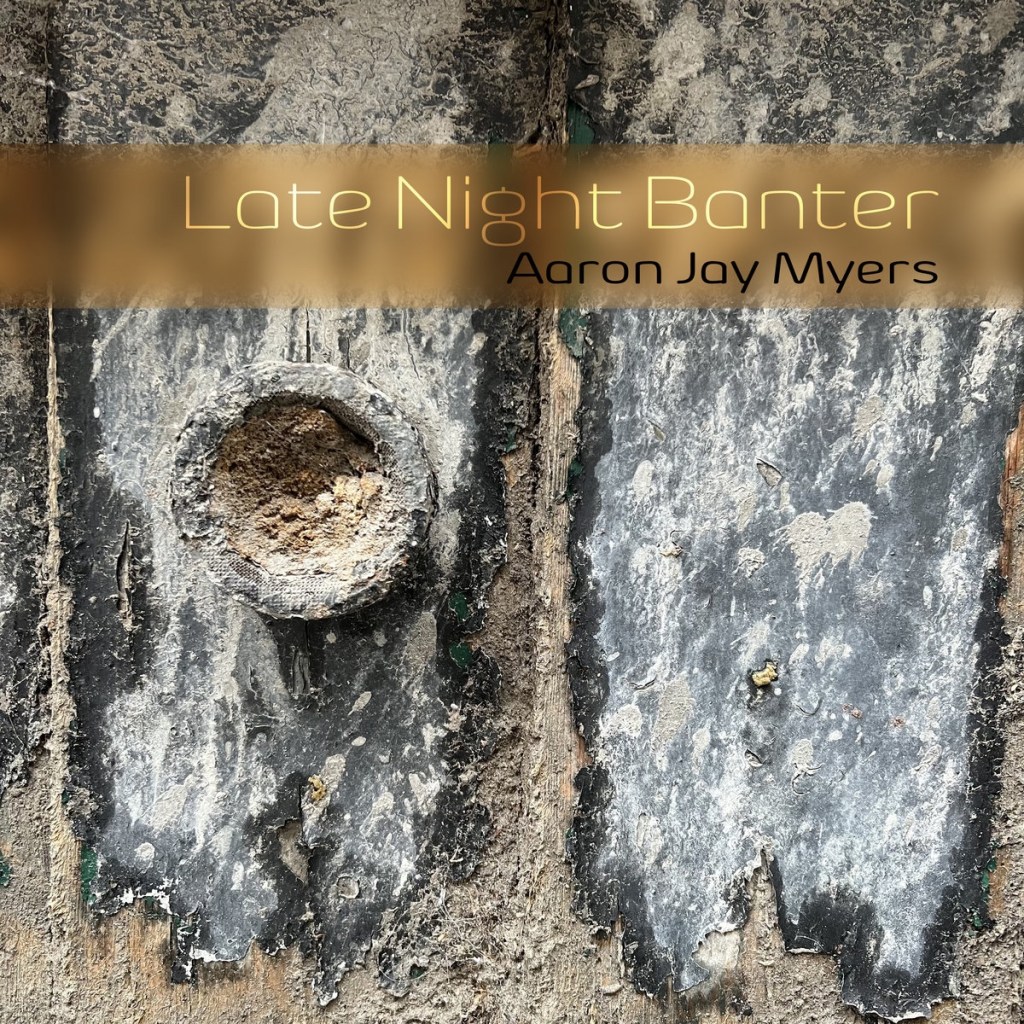
Aaron Jay Myers, Superbly Integrated Eclecticism in “Late Night Banter”


Neuma 175

Aaron Jay Myers’ third album grabbed my attention immediately and didn’t let go til the album ended. Working un-self consciously in a stunning plurality of styles (this guy clearly paid attention to his 20th century music history classes) he has produced some mighty substantial works. His ability to integrate a wide variety of techniques and styles into his artistic persona is simply astounding. His references to other composers’ works, rather than sounding derivative, evoke nostalgic homage, at least in this listeners ears. Indeed there seem to be more references per square inch than in a Thomas Pynchon novel. And the fact that he shares this writer’s passion for Star Trek, Deep Space Nine only endeared him more to me (more on that later).

His very listenable music seemingly embraces the whole of the twentieth century stylistically and his very judicious use of extended techniques for pretty much all instruments including voice demonstrate a firm understanding of where those techniques best serve his artistic vision. Fortunately he has managed to find performers who both meet his technical demands and have a real grasp of his musical vision. This Neuma release is truly something special.

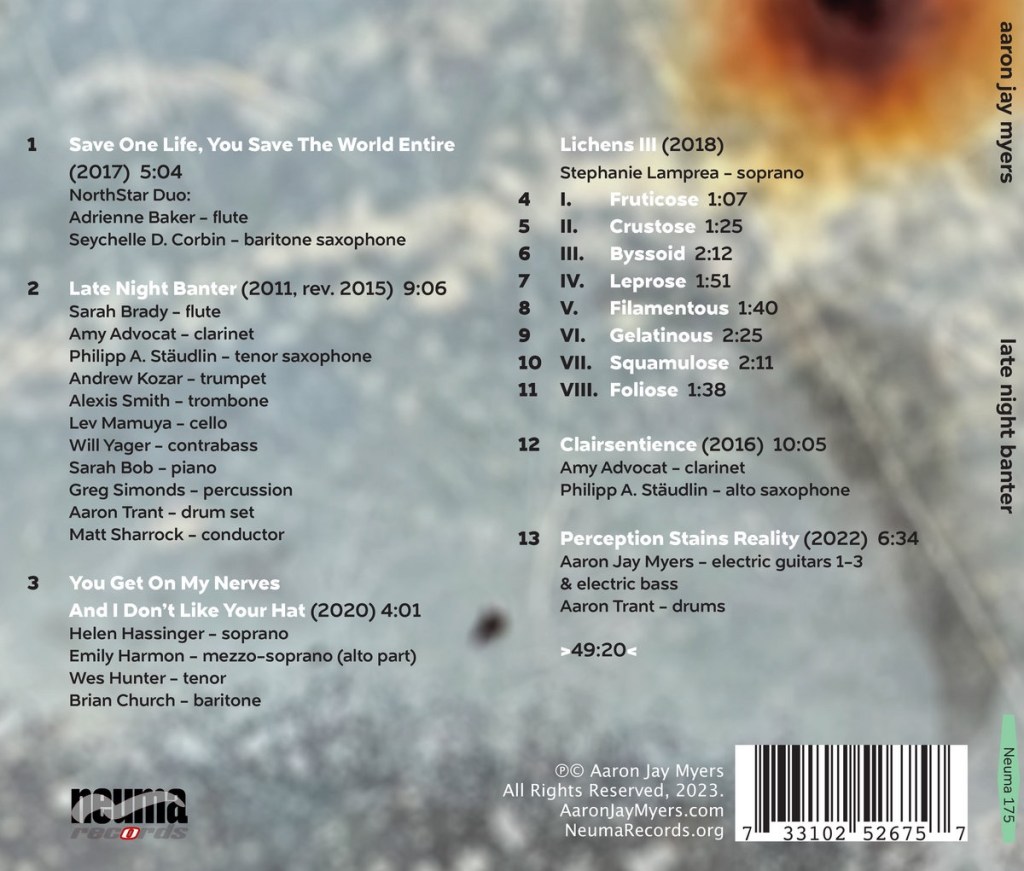
There are six works divided among the thirteen tracks. These chamber works were written between 2011 and 2021. None require more than ten minutes or so of your time and left this listener satisfied with the music and optimistic for the future of classical music in general.

“Save One Life, You Save the World Entire” (2017) for the unusual combination of flute and baritone saxophone opens this album with a surprisingly engaging work. It sounds like a challenge for the musicians who handle those challenges seamlessly and engage the listener in this rather brief essay.

When I listen to “Late Night Banter” (2011 rev. 2015) now, I do so in bare feet (it knocks my socks off). This piece for ten musicians with a conductor is a finely crafted piece that grabbed this listener’s attention by that craftsmanship but also by what seem to be a plethora of sonic references to 20th century music. The style of Stravinsky, an homage to Luciano Berio, etc. These brief references evoked emotional responses which led me to recall similar emotions I had attached to the apparent (at least to me) object of said reference. Even minimalist references occur matter of factly. Such efforts can sound derivative or at least imitative but not so in this piece. Rather it had the quality of a tour of the twentieth century in respectful jogs of memory. But even if you don’t get the references, this is a substantial and entertaining work. The evanescence of those references had me questioning whether they were actually there or just my mental figment. (I guess I’ll just have to listen again). Either way I was thrillingly engaged.

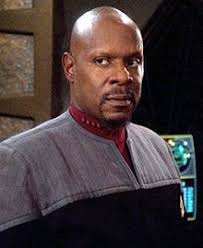
Avery Brooks as Captain Benjamin Sisko, commander of Deep Space Nine

“You Get On My Nerves, And I Don’t Like Your Hat” (2020) is the Deep Space Nine reference mentioned at the beginning of this review. If you haven’t seen this series I highly recommend it. And so, apparently, does Aaron Michael Myers. This work for vocal quartet (SATB) takes its title from a witty utterance by Captain Sisko (my fave Star Trek Captain). Of course you don’t have to know Star Trek lore to appreciate this work, but it helps. It is a challenging work for four unaccompanied soloists which reflects the composer’s sense of humor as well as his connection to pop culture.

Aaron Jay Myers

“Lichens III” (2018) is scored for soprano voice but the singer also does the work of a percussionist. In addition to the vocal challenges the singer is asked to perform on “body percussion”, the various sounds one can make by percussing (pounding) on one’s body. It is more commonly an idiom of folk and blues but soloist Stephanie Lamprea handles both the singing and the percussing as though it is her everyday practice accomplished with ease.

Clairsentience (2016) is another wind instrument duo, this time for clarinet and alto saxophone, a similarly unusual choice of instruments. This one is about twice the duration of that first piece and every bit as engaging as well as challenging.

The last track is a marvel of multitasking. Other than Aaron Trant (who does a fine job) on drums, all of the parts (three electric guitars, and bass) are handled by the composer. “Perception Stains Reality” (2002) is a tour de force consistent with the other works on this disc. Here he shows his rock/pop sensibilities, clearly as essential a part of his artistic endeavors as his “classical” training.

Myers is one to put on your hot list. He is certainly on mine. If you can hear a performance of his work, whether live or recorded, you would do well to check it out.

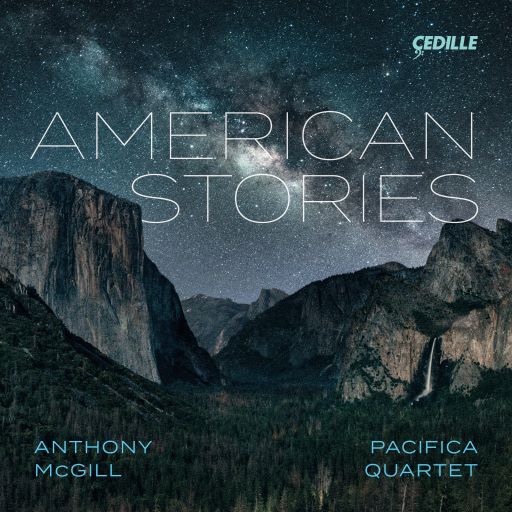
Anthony McGill and the Pacifica Quartet: Telling American Stories with music


Cedille CDR 9000216

Anthony McGill’s star rises rapidly higher with the release of this new album. His previous Cedille release was music for woodwind soloists and orchestra and featured Anthony’s brother, flautist Demarre McGill as well. And this one is a real gem that introduces listeners to four composers whose work defines to significant degree the current state of American music. From the very well known work of Richard Danielpour to three less familiar names listeners will want to know better, this is one fine chamber music recording.

I was first introduced to the clarinet and string quartet genre via the 1957 RCA recording of Mozart’s A major Clarinet Quartet played by Benny Goodman with the Boston String Quartet (paired with Mozart’s Clarinet Concerto and this disc was my first hearing of both works). I later heard the Brahms Clarinet Quintet (McGill recorded both of these on a 2014 Cedille release) and other essays in this genre but the Mozart and Brahms are forever my reference point as I imagine they are for most listeners.

Anthony McGill (photo copyright 2014 by Chris Lee)

All of these works are essentially clarinet quintets though only one bears that specific title. All but one work are recorded premieres but all are fulfilling listening experiences beautifully performed by Mr. McGill and the fabulous Pacifica Quartet . This album is almost as much an homage to the clarinet quintet genre as it is to the people and historical events that provided inspiration for the music. This is music with messages for all who want to hear them.

Pacifica Quartet (photo from their website)

All four works here are inspired by “American Stories”, as Maestro McGill says in his introductory notes, “Through music we connect with our stories.” The music here is about pain, struggle, memorial, and hope. It is more elegy than lamentation and, ultimately more music than history. But, as music, it succeeds very well and one hopes that these works will help preserve the histories described. This is beautiful and lyrical music with immediate appeal and substance that demands repeated hearings.

Richard Danielpour

Richard Danielpour’s “Four Angels” (2020) is in one movement divided into four sections, each lamenting the death of four little girls (Addie May Collins, Carol Denise McNair, Cynthia Wesley, Carole Rosamond Robertson) who were killed in the bombing of the 16th Street Baptist Church in 1963 by Ku Klux Klan members. Danielpour says in his notes, “This music also stands as a small testament to the choice for a better path, one consisting of the compassion and understanding that we must have for one another.”, a statement that could be applied to all the works herein.

James Lee III (photo from composer’s website)

James Lee III is represented by his four movement “Clarinet Quintet”(2019) here in its premiere recording. This rising star states in his liner notes that this quintet is inspired by his reading of the experiences of Native Americans. It is also, via quotation in the first movement, homage to Black American composers who preceded him. The scherzo movement is named “Awashoha”, a Choctaw word meaning, “play here”. The metaphors he attaches to his classical forms are gentle impressionistic clues to his compositional processes. It is a deeply felt work and listeners are advised to explore his well organized website.

Ben Shirley (Photo from composer’s website)

Ben Shirley’s “High Sierra Sonata” (2019) is in three movements and, according to the composer, is somewhat autobiographical, inspired by his fall into addiction and subsequent recovery. He specifically references his experience as a volunteer for an athletic event in the Eastern Sierra Mountains in eastern California where the unpredictable changes in weather provided him with a metaphor for life’s unpredictable nature, both in his life and others.

Valerie Coleman (Photo by Matthew Murphy from the composer’s website)

The recording concludes with “Shotgun Houses” (2000) by Valerie Coleman. This work, the only one on this release that is not a premiere recording, is an homage to fellow Louisville resident Muhammad Ali and references the architectural style known as “shotgun houses” known to both Ali and Coleman when they resided there. She states that the opening movement is a general homage to southern black culture, the second an homage to Ali’s mother, and the third a celebration of Ali’s triumph in the 1960 Olympics which essentially launched his fame.

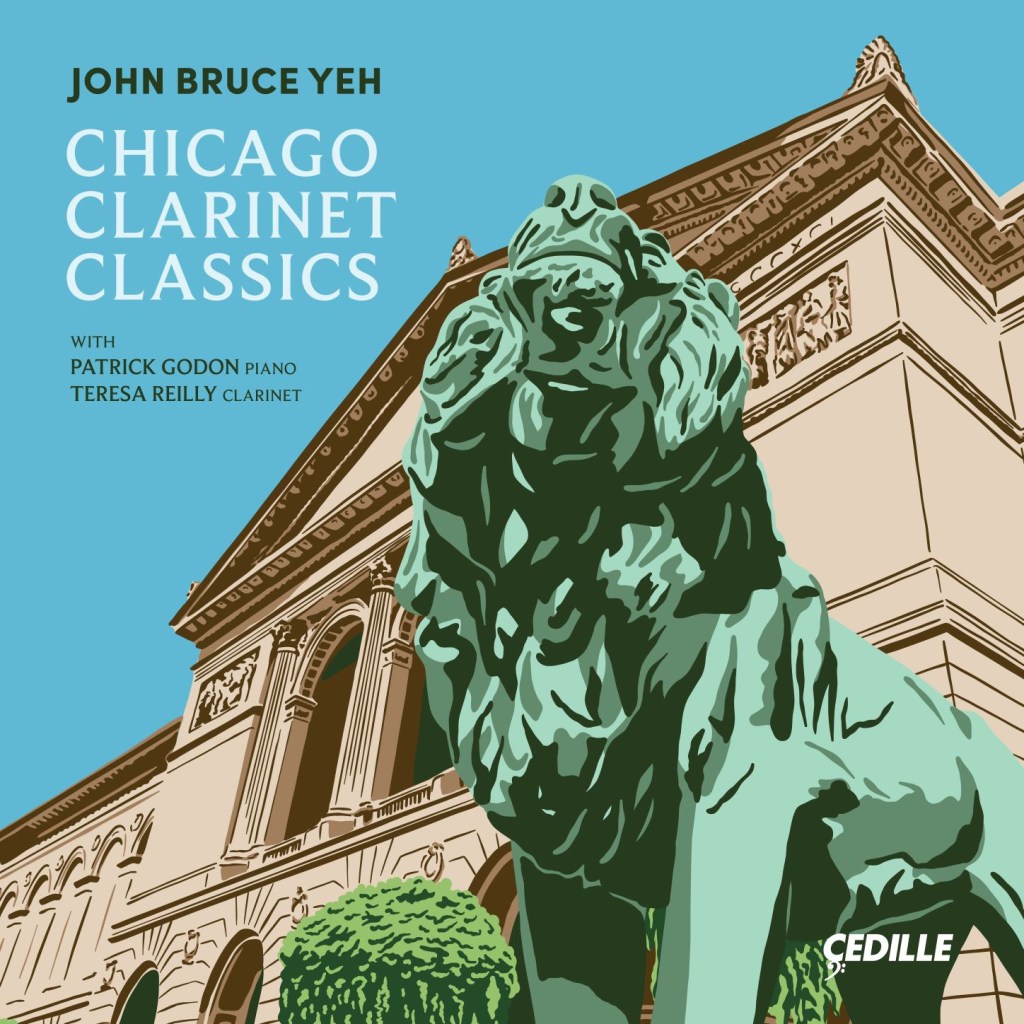
John Bruce Yeh: Chicago Clarinet Classics


Cedille CDR 90000 218

Professor Yeh has been assistant principal clarinet with the Chicago Symphony since 1977 when he was just 19. As a former Chicagoan I can recall that Yeh’s hiring seems to have marked a change in the more traditional image of an orchestral musician. In addition to being an inspiration to aspiring musicians of Asian heritage his media presence also drew interest from both listeners of Asian Heritage but also young listeners (I turned 21 when he was hired and was pleased to find an artist who communicated to me and my age group).

In addition to his duties with the CSO, he has actively supported music and music making in his adopted home town. It is his support for local composers that he showcases here. This disc features music by Alexander Tcherepnin (1899-1977), Stacy Garrop (1969- ), Leo Sowerby (1895-1968), Shulamit Ran (1949- ), Teresa Reilly (1976- ), and Robert Muczinski (1929-2010).

Alexander Tcherepnin, whose father Nikolai was a student of Rimsky-Korsakov, and whose sons, Serge and Ivan, along with grandsons Sergei and Stephan are all highly accomplished composers comprise a multigenerational artistic dynasty of sorts. Russian born Alexander taught in Chicago thus qualifying him for inclusion in Cedille recordings’ mission to promote artists with a “second city” connection. He is well represented in recordings but is less present in the concert hall these days. His brief Sonata in one movement for clarinet and piano (1939) takes the first track on this fine chamber music release. It is a deservedly popular recital piece with a style that sounds a bit like Shostakovich, one of his contemporaries.

Stacy Garrop is a favorite of this reviewer. Her work has been reviewed elsewhere in this blog. She is a freelance composer of immense talent and skill. Her work is featured on at least 12 Cedille albums as well as other labels. Phoenix Rising (2016-18) was originally for alto saxophone (subsequent versions were made for flute and for violin) is presented here in a world premiere transcription for clarinet. As with all her music, Garrop shows herself to be a master of color and texture. She uses both traditional and extended techniques to achieve her compositional visions. These can be challenging for performers but the end result is always worth the effort. Garrop derives inspiration, as she frequently does, from world mythology. Here, of course, the familiar Phoenix bird that lives some 500 years and rises again from the ashes of its funeral pyre.

Leo Sowerby, long associated with Chicago as an organist, composer, and teacher, is represented here by his 1944 clarinet sonata (here in its world premiere recording). Written in the year which saw him win the Pulitzer Prize for music (for Canticle of the Sun), this sonata takes on near symphonic dimensions in its four movements. Sowerby is generally well represented on recordings (8 discs on Cedille alone). His lyrical writing is expressive and accessible and it is perhaps just a matter of time before someone orchestrates this work to present it as a concerto. At just a bit under 30 minutes, it is the largest work on this release.

Shulamit Ran, Israeli/American composer and pianist, student of the great Ralph Shapey, 1991 Pulitzer Prize winner (for her 1989-90 Symphony), Andrew MacLeish Distinguished Service Professor Emerita at the University of Chicago is represented on this recording by her Spirit for solo clarinet (2017). The work is dedicated to the composer’s friend, clarinetist Laura Flax (1952-2017). This is its world premiere recording. Ran’s music has gotten some recordings but her large and substantial orchestral works like the Symphony and a fine Concerto for Orchestra remain unavailable on recordings (even more egregious is the general lack of representation of her mentor, Ralph Shapey’s music). This solo clarinet work is a testament to her compositional talents. Here’s hoping we get to hear more.

Teresa Reilly is a clarinetist, composer, and life partner of Mr. Yeh. The Forgiveness Train (2020) is described as, in part, a response to the COVID epidemic (Yeh notes that much of this album is similarly inspired). The three movement work is essentially a sonata with a loosely poetical program. It is a lyrical work with nods to minimalism and jazz. This is the world premiere recording.

The disc concludes with the four movement Time Pieces for clarinet and piano (1983). This work (the second longest on the disc) is, like the Sowerby piece, substantially a concerto that waits an orchestrator for the piano part. Robert Muczinski, Chicago born composer studied under Alexander Tcherepnin whose music opens this release. The Opus 43 work was commissioned and premiered by former CSO principal clarinet Mitchell Lurie with Muczinski at the piano.

Mr. Yeh is, as always, a joy to hear. He is most ably supported by pianist Patrick Godon on piano (tracks 1, 4-7, and 12-15) and, of course by (more properly with) Teresa Reilly (tracks 9-11). This release, from the Art Institute depicted in (Chicago artist) Steve Shanabruch’s distinctive cover art to the composers represented, is pure Chicago in the best ways.

The Young Person’s Guide to Ben Johnston


Microfest MF 23

I’m guessing that my title has its origins in the Benjamin Britten piece, “The Young Person’s Guide to the Orchestra”. That phrasing has been used by the likes of Phill Niblock and King Crimson to title retrospective compilation discs. While the disc under consideration here is not, strictly speaking, a retrospective it is a fine representation of the chamber music of the late great Ben Johnston (1926-2019).

Johnston, a former associate of Harry Partch (Johnston played in Partch’s ensemble) was a composer in his own right. His ten string quartets are a landmark of the genre. Two of those quartets are featured here played by the Lyris Quartet (Nos. 4 and 9) along with what is apparently his last composition, “Ashokan Farewell” (1999) scored for an octet in which the Lyris is augmented with flute, clarinet, bassoon, and double bass.

Like so many composers before him, Johnston was fond of incorporating folk tunes into his compositions. The composer’s fourth quartet (included here) from 1973, which incorporates “Amazing Grace”, is likely his best known work. Despite its incredible complexity (nicely summarized in Kyle Gann’s lucid liner notes) this set of variations keeps that familiar tune near the surface and effectively make for music that is friendly to the audience, easy on the ears. It’s single movement clocks in at just under 12 minutes, the piece ends long before listeners have time to worry about that complexity.

Not all of the quartets incorporate familiar tunes but they explore various aspects of just intonation tunings. The ninth quartet (1987) is about twice the length of the fourth and is set in the familiar four movements that characterize the majority of the classical string quartet literature. The use of the classical format along with Johnston’s masterful writing also make this slightly odd sounding work just familiar enough that few listeners will find unpleasant. In fact the work is a joy to experience though very difficult to play.

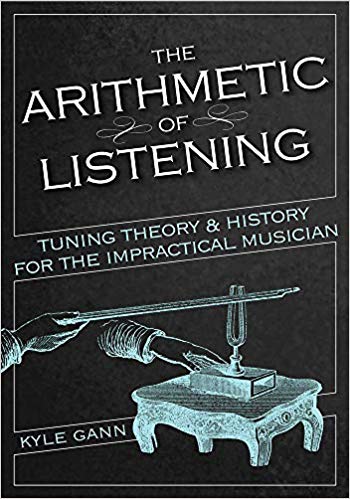
Listeners may want to seek out Mr. Gann’s very readable work on microtonal tuning systems, “The Arithmetic of Listening” available. Your humble reviewer is working through this text and finding it useful in understanding microtonality.

The final work (both the last on the disc and the last in the composer’s ouevre) is a delightful set of variations on a tune called “Ashokan Farewell”, a pretty folk like melody that pervades the Ken Burns Civil War documentary. I say “folk like” because the time was written by Jay Ungar and Molly Mason. Johnston mistakenly believed it to be a folk song in the public domain and, seeing its possibilities for his compositional aspirations, simply used it. Like the fourth quartet it is a set of variations in a single movement of similar length. This is the world premiere recording.

Musicians include Alyssa Park, violin; Shalini Vijayan, violin; Luke Maurer, viola; Timothy Loo, cello; Sara Andon, flute; James Sullivan, clarinet; Scott Worthington, double bass.

In researching this review I discovered that the tune actually has lyrics (also under copyright) and they are presented below:

The sun is sinking low in the sky above Ashokan
The pines and the willows know soon we will part
There’s a whisper in the wind of promises unspoken
And a love that will always remain in my heart

My thoughts will return to the sound of your laughter
The magic of moving as one
And a time we’ll remember long ever after
The moonlight and music and dancing are done

Will we climb the hills once more?
Will we walk the woods together?
Will I feel you holding me close once again?
Will every song we’ve sung stay with us forever?
Will you dance in my dreams or my arms until then?

Under the moon the mountains lie sleeping
Over the lake the stars shine
They wonder if you and I will be keeping
The magic and music, or leave them behind.

Ben Johnston

Those lyrics make for a fond farewell to a true musical genius who gave us both magic and music. Grab this lovely disc and honor his memory.

Art and the Reclamation of History: Akropolis Reed Quintet’s “Ghost Light”


New Focus FCR-292

Let me say that this disc represents one of the most integrated releases that I have seen/heard. This has the gravitas of a well conceived and executed prog rock concept album (remember those?). This young group of musicians from Detroit present themselves in a photo in the accompanying booklet in casual dress flouting the old fashioned traditions of playing in tuxes much as another creative chamber ensemble (The Kronos Quartet) did many years ago. The Akropolis Reed Quintet is a group of instruments not commonly known (I’ve never heard of any repertoire for this combination of instruments, any musicians/musicologists want to chime in here?) in classical chamber ensembles. Whereas the Kronos began work a with a long held standard ensemble comprising two violins, a viola and a cello, the classical string quartet which can easily trace a long standing tradition going back to Haydn and very much alive today, the Akropolis consists of oboe (Tim Gocklin), clarinet (Kari Landry), saxophone (Matt Landry), bass clarinet (Andrew Koeppe), and bassoon (Ryan Reynolds), an unheard of combo. Its history begins here.

Illustrator Ashton Springer

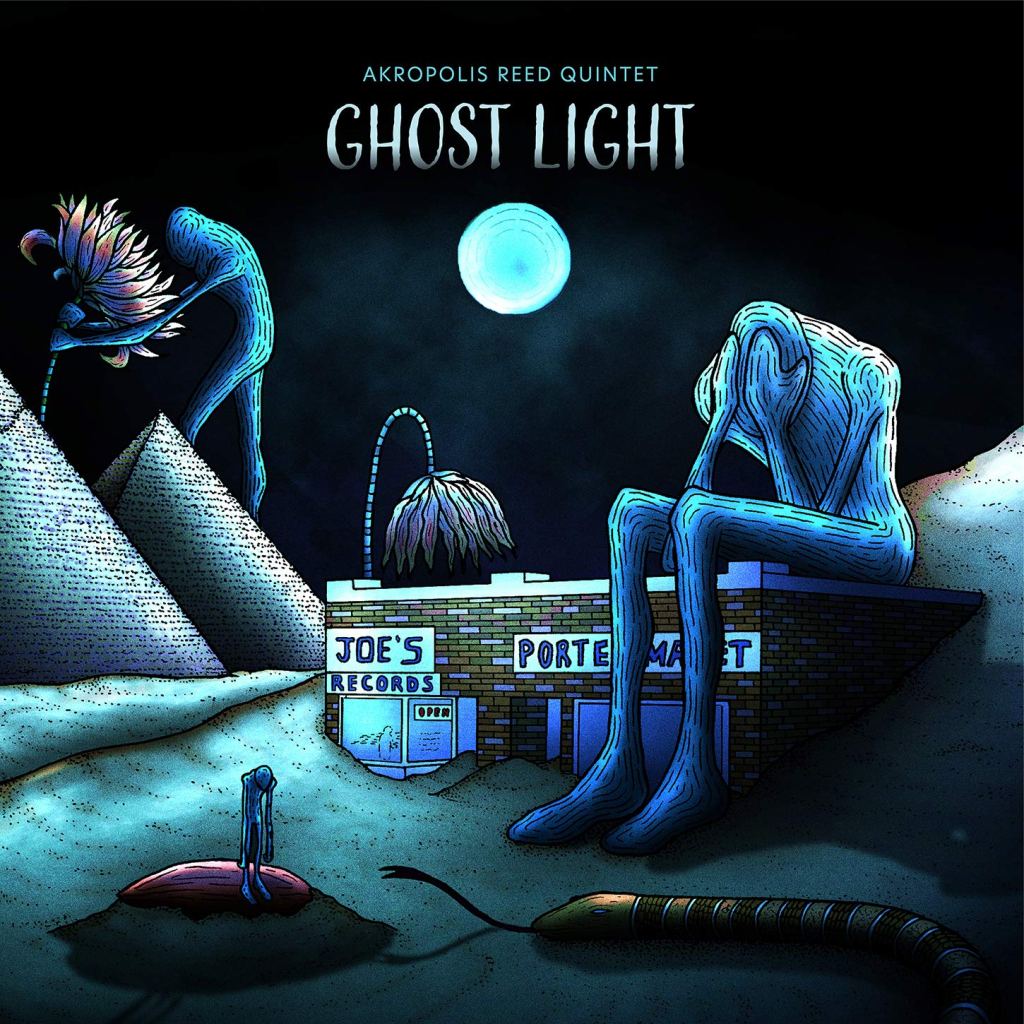
Unfamiliar music by an unfamiliar group of reed instruments doesn’t exactly shout, “Buy me, listen to me”, but the prospective listener need not fear. The program here consists of all new music for this ensemble. There are no competitors, at least for now. But all this music in truly excellent performances/recordings along with remarkably integrated collaboration with visual artist, British artist and illustrator Ashton Springer, and poet/writer Marsha Music combines in an apparent attempt to reclaim the artistic history that, in the days of the booming automotive industry and the success of Motown Recordings made Detroit a creative center known round the world. Ms. Music (a nom de plume for Marsha Battle Philpot), a Detroit native, is in many ways the heart of this album. Her father was a producer for Motown and her poetic reflections on local history infuses the album with a certain authenticity. The poet states she was “born in a record store”. Indeed it was the Joe’s Records which appears in Ashton’s album cover art to which she refers (metaphorically of course)

Ghost Light brings a variety of things into focus in this paean to Detroit, the home of these artists whose work very organically includes promotion of the arts in local schools and other venues. In works generally focused on themes of birth, death, and rebirth this album tells a sad story of lost history, of razed black neighborhoods, of fond memories, of a once thriving economy now struggling but fully embracing pride of place while seeking resolution of (and forgiveness?) for past injustices while looking optimistically to a better future.

Poet Marsha Music

The art work itself is a nostalgic example of fine cover art which successfully reflects the content and the character of the music contained within. The illustrations which so beautifully attract the eye to the cover are continued in the accompanying booklet which provides concise notes which place the music in the context of the composers’ various intent and processes as well as the nearly cinematic efforts made to represent the intended content of each piece. Though neither the poet nor the illustrator are known to this writer it is reasonable to assume that we will see/hear from them again. That would be my wish.

This is the fourth album by this prize winning chamber group which was formed in 2009 at the University of Michigan. It contains five musical compositions and three poems (which precede movements I, II, and IV of the final work). All the music, as noted above is generally on themes of life, death, and rebirth as well as “ghosts” of the past.

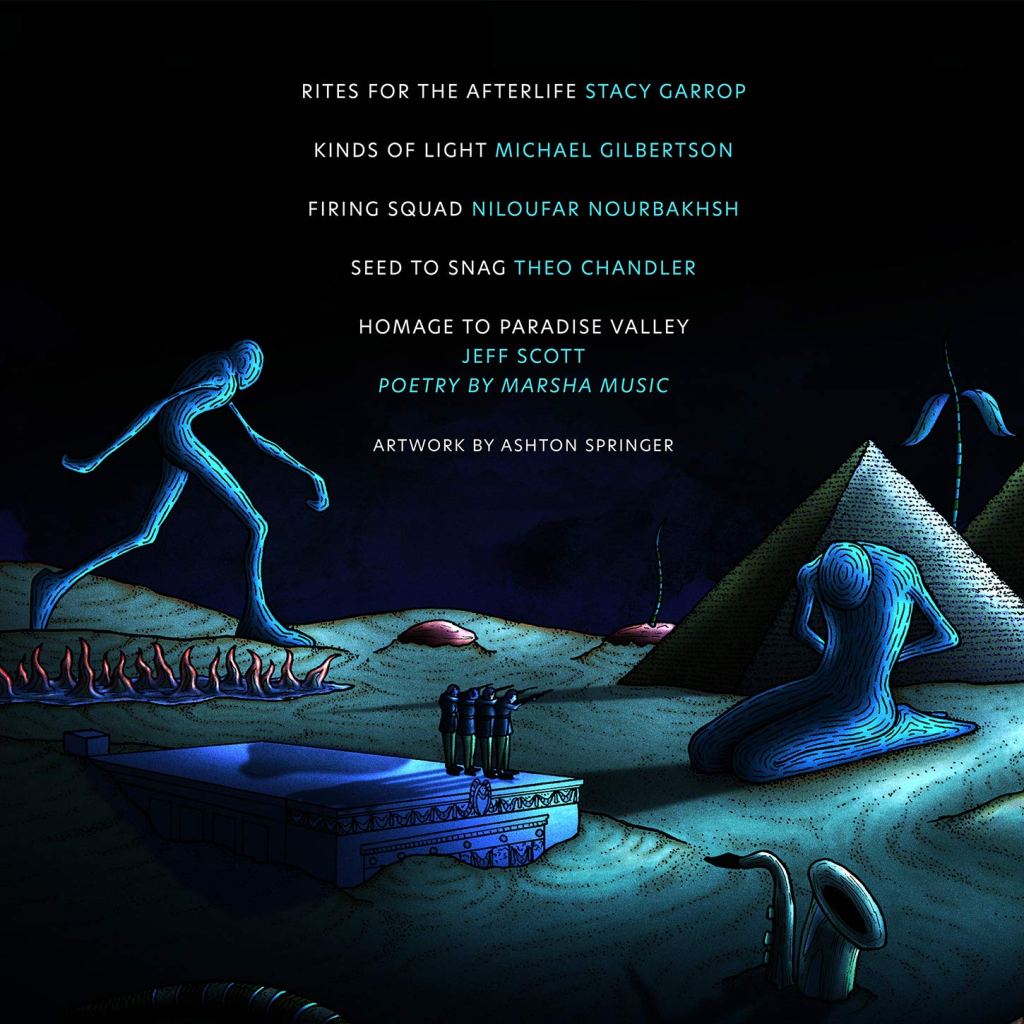
The first work by the only composer here that was known previously to this writer is “Rites for the Afterlife” (2018) by the amazing Stacy Garrop whose facility with melodic invention and subtle use of tone colors permeated her exciting Mythology Symphony. The four movements are roughly analogous to the classical sonata forms with a longer more complex first movement followed by a slow movement, a scherzo-like movement, and a finale which ties them all together. Here she titles her movements: I. Inscriptions from the Book of the Dead, II. Passage Through the Netherworld, III. The Hall of Judgement, and IV. The Field of Reeds. The composer provides a scenario which is recounted in the booklet. Let me say that her tone painting is that of a true master and I advise listeners to collect anything she releases. You will not be disappointed.

Second is “Kinds of Light” (2018) by Michael Gilbertson. This piece, in four brief movements attempting to metaphorically treat each instrument as a pigment. The movements: I. Flicker, II. Twilight, III. Fluorescence, and IV. Ultraviolet utilize timbres and combinations of timbres to represent the visuals implied by the titles. This is probably the most “experimental” of the pieces here but the experiment engages rather than repels.

“Firing Squad” (2018?) by Niloufar Nourbakhsh. If I’m reading those liner notes correctly, the performance of this work is accomplished with the ensemble playing with a recording of themselves playing the work. This is the most overtly political of the works represented here in its intense single movement.

“Seed to Snag” (2018) by Theo Chandler is cast in three movements: I. Sprout, II. Stretch, and III. Sow. Here is a metaphoric evocation of the cycle of life from birth to death utilizing baroque musical structures.

The album concludes with “Homage to Paradise Valley” by Jeff Scott. This is the largest work here clocking in at over 30 minutes including the poetry. Its four movements attempt to describe forgotten neighborhoods of Detroit. The movements are titled: I. Ghosts of black Bottom, II. Hastings Street blues, III. Roho Pumzika Kwa Amani, and IV. Paradise Theater Jump. Movements I, II, and IV are preceded by Detroit poet Marsha Music reading from her work. The beautiful title of the third movement is a phrase in Swahili which translates as, “Spirits, Rest Peacefully”. The other movements channel the ghosts of these nearly forgotten neighborhoods and that third movement invites those ghosts to a place of rest and the peace of knowing that they will not be forgotten.

I’ve placed links throughout this article so that readers can find more detail about the composers and other artists involved. All of the artists involved here deserve at least a second look if not more. Kudos to all who were involved in this project.

The Bewitched in Berlin, Kenneth Gaburo does Harry Partch for your head (phones)


Neuma 126

As far as I can tell this is only the second recording of Harry Partch’s 1958 dance theater masterpiece. The recording that most folks know is likely the CRI release which used that awful simulated stereo (which is rather unpleasant heard on headphones). That recording (thankfully remastered in the original mono for New World Records) is of the 1958 premiere of this inventive and groundbreaking work originally released on the composer’s Gate 5 label.

Neumann KU100 microphone used to record binaural sound (Photo from Wikipedia)

This release of the 1980 (six years after the composer’s death) Berlin performance is here released for the first time on Neuma records under Philip Blackburn’s new tenure. Neuma’s tagline, “Food for the Mind’s Ear” is curiously reflected in the recording method used here. Binaural recording was pioneered in the late 1960s using two microphones facing away from each other inside a dummy head with anatomically accurate human inner and outer ears. The idea was to produce recordings which, when heard on headphones, simulated the experience of being present in the audience. Of course one can listen on conventional speakers but it is truly worth one’s time and money to get a good set of headphones to appreciate this amazing performance.

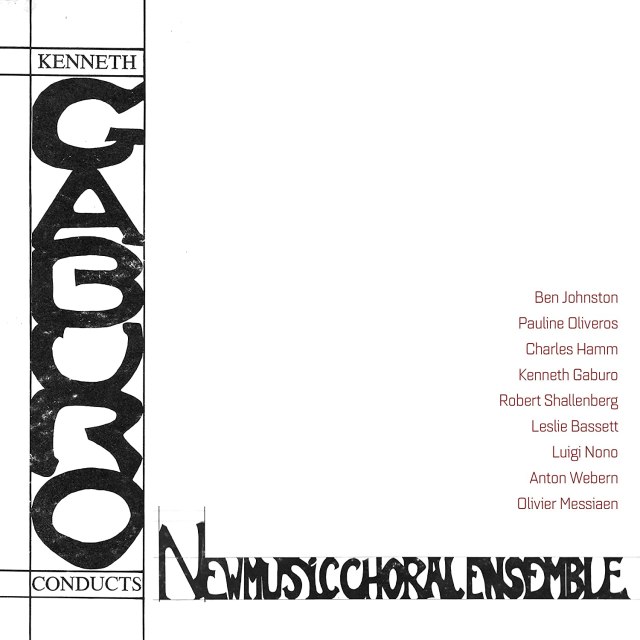
This is the second Neuma release which embraces Kenneth Gaburo’s legacy. The above recording (reviewed in an earlier blog post) is of a 1967 choral concert curated and conducted by Kenneth Gaburo at the University of Illinois at Champaign where, nearly ten years before that event, the premiere of Partch’s Bewitched was first imposed on a audience. It is Gaburo’s skills as a musical theater director that come into play in the 1980 Berlin production which features the Harry Partch Ensemble conducted by Danlee Mitchell, a long time Partch collaborator and performer.

The recording has a refreshingly superior sound to the 1958 mono premiere but the crucial significance of this release is of Kenneth Gaburo’s holistic theatrical vision which draws upon world music theater conventions such as Japanese Noh, Hindu Mahabharata performances, Gamelan accompanied Balinese Shadow Puppet theater, and the “happenings” of Allan Kaprow as well as ancient Greek theater. Gaburo rehearsed the musicians and dancers to channel Partch’s grand vision in this, the first of his three major dance/theater works (the others being Revelations in the Courthouse Park, 1960; and Delusion of the Fury, 1965-66). It is a masterpiece of American music.

back cover

The Harry Partch Ensemble in this recording consisted of Isabella Tercero (The Witch), Peter Hamlin (Adapted Koto), Phil Keeney (Spoils of War), Cris Forster (Marimba Eroica), Randy Hoffman (Cloud Chamber Bowls), Francis Thumm (Chromelodeon I), John Szanto (New Boo I), Dan Maureen (Bass Clarinet), Donna Caruso (Piccolo and Flute), Robert Paredes (Clarinet), David Dunn (Adapted Viola), Robin Gillette and Anna Mitchell (Kithara II), Ron Caruso (Diamond Marimba), Gary Irvine (Bass Marimba), David Savage and Paul William Simons (Harmonic Canon II), Ron Engel (Surrogate Kithara). Lou Blankenburg (choreographer/associate director) and Kenneth Gaburo (director). The Partch instruments are as much characters in this piece as the musicians and dancers.

The original recording done by RIAS (Radio In the American Sector) was restored and mastered by David Dunn. The booklet includes commentary from clarinetist Bob Paredes as well as Partch’s original scenario taken from the published score.

The Bewitched is a visionary politically progressive music/dance theatrical satire that parallels the work of Julian Beck and Judith Malina’s Living Theater and presages theatrical and musical trends that would later characterize the 1960s and beyond. This recording is a very significant historical document and a great sounding CD, an essential recording for fanciers of Partch’s work, and a performance that sets a standard for the future.

If you don’t already have a good pair of headphones get one and buy this CD. You won’t regret it.

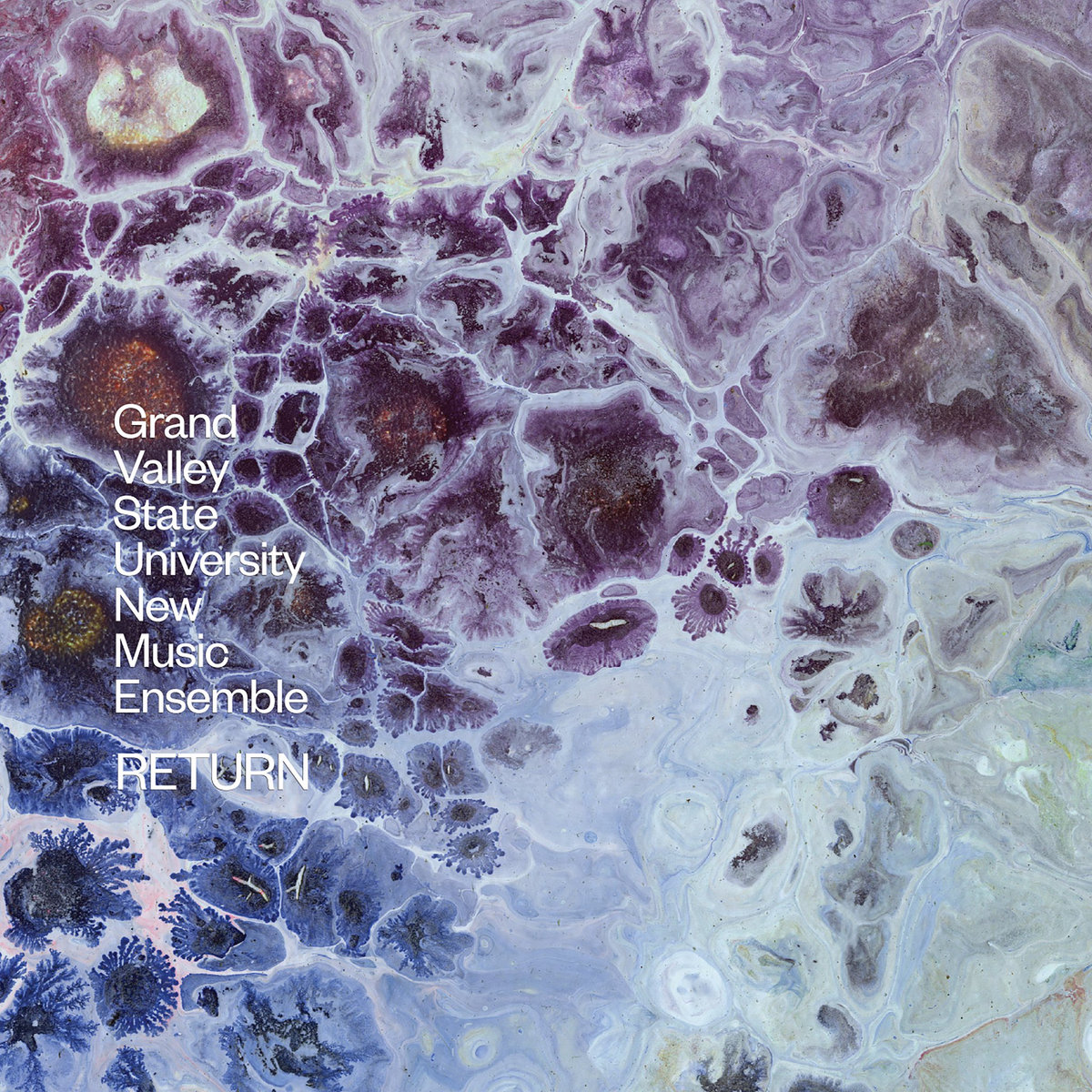
GVSU’s “Return”, an Intoxicating Adventure in Sound


gvsureturn

                                                                        Innova 983

OK, I’ve listened to this lovely CD numerous times and greatly enjoyed it each time. So why has it languished as a draft and why have I failed to publish this?

Procrastination aside there are several things I can identify as things that make this reviewer pause. First (and perhaps least significant) is unfamiliarity. The disc features three composers completely unknown to me: Daniel Rhode, Adam Cuthbert, and Matt Finch all of whom are listed as doing the additional duty of acting as mixing engineers (they are all students of the ensemble director as well).

GVSU  hails from the state of Michigan and it’s new music ensemble (consisting of Hannah Donnelly on piccolo, flute, alto flute, bass flute; Ryan Schmidt, clarinet, bass clarinet, contrabass clarinet; Darwin McMurray, soprano, alto, tenor, and baritone saxophones; Makenzie Mattes, percussion; Reese Rehkopf, piano; Jenna Michael, violin; Kirk McBrayer, cello; Niko Schroeder, sound engineer; and Bill Ryan, director and producer) is also new on this writer’s radar. Add the participation of the extraordinary violinist Todd Reynolds (on one track) and one’s attention is further piqued. Reynolds is an artist who chooses his repertoire and collaborations judiciously so his presence certainly functions as an endorsement.  But “unknown” is the heart of my interests both as listener and reviewer so that can’t be the reason though the lack of liner notes is a bugaboo (though hardly a fatal one).

On the positive side this is an Innova release and that fact alone lends credibility. Anything that Minnesota based label (the official label of the American Composers Forum) is worth your attention. Label director Philip Blackburn has a finely tuned radar which has led to many revelatory releases over the years.  Truly anything released on this label is worthy of your attention if you are a new music fan.

So we have hear a 15 track CD of 15 new works whose sounds seems to travel between ambient and postminimal. The pieces merge nicely with each other in a production which assures a fine listening experience. One can put this on either as background or for more intensive listening. It works either way. The playing is dedicated and insightful and the recording is top notch.

The pieces range in length from 1:32 to 7:32 and all seem to be just the right length communicating substance but never dallying too long. They’re bite sized, so to speak but they each have their charms as well as their complexities.  All are premiere recordings and all are commissioned by the ensemble.

Check it out. Click on the links provided in this review. And simply enjoy.


Concertante Music for Flute and Clarinet


71BwJt9fYpL._SL1200_

This release is a fine example of a record label fulfilling its mission by highlighting local talent while also making very intelligent selections of repertoire.  Cedille is one of those labels whose every release is worthy of your attention.  Here is a good example of why that is so. We have here four works for the rather uncommon combination of flute and clarinet with orchestra.  Concerti for multiple instruments probably began with Bach’s Brandenburg Concerti but this combination of flute and clarinet limits the repertoire choices considerably.  Nonetheless the folks at Cedille have gathered two 21st century pieces, one from the high romanticism of the late 19th century and a seldom heard gem from the late 18th century, all for these two instruments accompanied by orchestra.

Just for local interest let’s also add an opportunity for a local youth orchestra to show their considerable talents.  The Chicago Youth Symphony under conductor Allan Tinkham demonstrates the remarkably polished and mature sound of this local gem (Cedille is a Chicago label).  And Cedille, in its support of black musicians brings this marvelous pair of brothers with their expertise as soloists.  All in all a classic Cedille style release, intelligent choice of repertoire, promotion of young artists, promotion of artists of color, and quality recordings.

The disc opens with the world premiere recording of the eponymous single movement work, “Winged Creatures” (2018) by one Michael Abels (1962- ).  It is essentially a 12 minute concertante for the soloists with orchestra.  Abels is best known for having scored the brilliant horror genre film “Get Out” from 2017 (if you haven’t seen it, do make a note to yourself).

Winged Creatures is a well written mini concerto which, despite its recent vintage, tends toward a sort of neo-romantic sound.  The composer gives ample opportunity for the soloists to show their mettle and for the orchestra to demonstrate its facility with the music.  It is a delightful showpiece which seems to have a cinematic feel to it.

Next up, and this is typical of the acumen of the folks at Cedille, is a full blown, heretofore unknown (practically) Sinfonia Concertante from a lesser known contemporary of Wolfgang Amadeus Mozart.  Franz Danzi 1763-1826).  This double concerto for flute, clarinet, and orchestra was published in 1813 and sounds like Mozart and/or early Beethoven.  It is a highly entertaining piece, one which listeners will delight in hearing again.  Who knows this piece could become a sensation in the concert hall once again.  It’s about 22 minutes in length.

The third piece is an early work by French composer, pianist, organist, Charles Camille Saint-Saens (1836-1921).  Tarantella Op. 6 (1857) was written in when the composer was only 22 years old.  This is hardly one of his best works but it is a curiosity worthy of being heard and, like most of this composer’s work, it is eminently listenable.

Finally, we have another large scale concerto (and the second world premiere on the disc), “Concert Duo” (2012) by Joel Puckett (1977- ).  In gestures classical, jazzy, contemporary, but as listenable as anything on this release, Puckett’s work in three movements has tantalizing titles for each of the movements suggesting a wealth of non-musical references.

The ample liner notes provide the listener with a guide to the joys to be heard  on this collection and the recording, as usual with this label is lucid.  You can’t go wrong with this one.

Mathew Rosenblum: Klezmer, Witches, and the Avant-Garde


Conjuring the spirits of the 1950s/ 60s avant-garde and a few musical references composer Mathew Rosenblum (1954- ) enlists the klezmer spirit of none other than David Krakauer and master conductor Gil Rose with his wonderful Boston Modern Orchestra Project to bring life to this klezmer clarinet concerto.

The concerto, titled, “Lament/Witches Sabbath” (2017) is a tour de force for the soloist and certainly a challenge for the large orchestra.  Using elements of klezmer style along with musical references such as Berlioz in suggesting the evil sabbath revels the composer creates an unusual but fascinating canvas.  Nothing evil here, just some truly exciting musicianship. In addition we hear various noisy avant-garde effects and even voice overs reminiscent of Robert Ashley.  Ultimately it is also a species of classical which has a sociopolitical view and this is both memory and homage to the composer’s past, lamenting the suffering and pondering the evil that fueled it.

Krakauer’s facility with his instrument is simply astonishing.  He has the klezmer thing down but he also brings with him a great virtuosity as a classical clarinetist and a working knowledge of free jazz.  It’s not clear how much creativity this soloist was allowed within the constraints of the piece but the bottom line is that it works very well.  Gil Rose’ expertise in handling all this potential chaos is impressive as always and he delivers ultimately a very enjoyable performance despite those noisy avant-garde moments.  Indeed it is Rose’ ability to select repertoire with which he can grasp and from which he can conjure a compelling performance.  It is Rosenblum’s family biography taking him from the pogroms of the Ukraine to the United States.

The second track (of 4) is a solo for percussion.  Again the avant-garde remains interesting and both performance and recording communicate well with the listener.  Northern Flicker (2013) is no filler, it is an interesting, if rather brief, work.  Lisa Pegher is the busy soloist.

Falling (2013) is a complex work involving pre-recorded audio as well as a chamber group in a song cycle based on the James Dickey poem of the same name.  It is a retelling of an incident in which an airline stewardess who died when she was sucked out of a defective emergency exit in the plane and fell to her death.  The cycle recounts an imagined look into her psyche as she fell to her death.  It is an affecting, if unusual, presentation but Rosenblum’s judicious use of modern elements  while still using recognizable melodies and more traditional techniques make for a listenable, if harrowing, experience.

Here the Pittsburgh New Music Ensemble consisting of Lindsey Goodman, flute; Eric Jacobs, clarinet; Nathalie Shaw, violin; Norbert Lewandowski, cello; Ian Rosenbaum, percussion; and Oscar Micaelsson, piano/keyboard join with soprano Lindsey Kesselman with conductor Kevin Noe to produce this rewarding work.

Finally we get another large work, this time for multi-tracked string quartet with percussion titled Last Round (2015) which is also biographical in that the composer is attempting to evoke a time in the 1980s when he frequented an establishment with fellow composers.  The composer, in his entertaining and informative liner notes recounts his time with fellow composer Lee Hyla and friends and seeks to evoke elements of the downtown scene of that era.  This is a rather large work with its own complexities but one which speaks easily to an audience, even one not experienced in the time and place the composer attempts to evoke.

This is a marvelous recording of a music by a composer unfamiliar to this writer (until now) whose work deserves your attention.

Harold Meltzer New Chamber Music


meltzervar

Open G Records

I was delighted to receive this disc directly from the composer.  I had not been familiar with Harold Meltzer‘s (1966- ) work so this would be my introduction.  The disc contains two works, a Piano Quartet (2016) and a song cycle, Variations on a Summer Day (2012-2016).  Both are functional titles which tell the listener little about what to expect in terms of style.  I was even more delighted when he kindly sent me some PDF scores of these pieces.

The Piano Quartet might be described as post minimal I suppose but the salient characteristic of this piece is that it is exciting and quite listenable.  It is also quite a workout for the musicians.  In fact this piece seems to embody a variety of styles which give it a friendly romantic gloss at times.  This is a fine addition to the Piano Quartet repertoire.

The musicians that do such justice to this composition are: Boston Chamber Music Society: Harumi Rhodes, violin, Dimitri Murrath, viola, Ramen Ramakrishnan, violoncello, and Max Levinson, piano.  All are kept quite busy and seems to be enjoying themselves.  I can’t imagine this not playing well to the average chamber music audience.

The song cycle, “Variations on a Summer Day” sets poetry by Wallace Stevens and Meltzer’s compositional style seems to be a good fit for Stevens’ poetic style.  This work is stylistically very similar to the Piano Quartet with hints of minimalism within a larger somewhat romantic style.  It is scored for chamber orchestra with soprano solo.  Actually the orchestra is Ensemble Sequitur, a group founded in part by the composer and clearly dedicated to the performance of new music.  The members of this group include: Abigail Fischer, soprano, Jayce Ogren, conductor, Tara O’Connor and Barry Crawford, flutes, Alan Kay and Vicente Alexim, clarinets, Margaret Kampmeier, piano, Miranda Cuckson and Andrea Schultz, violins, Daniel Panner, viola, Greg Hesselink, violoncello.

The poem is by the sometimes obtuse American poet Wallace Stevens.  Maybe “obtuse” is the wrong word but Stevens is not the easiest read.  What is interesting is how well this composer’s style fits this poetic utterance.  This is a lovely song cycle that puts this writer in the mind of Copland’s Dickinson Songs and Barber’s Hermit Songs and perhaps his Knoxville Summer of 1915.  There is an air of romantic nostalgia in this tonal and passionate setting.

Stevens’ poetry has been inspiring American composers for some years.  Works like Roger Reynolds’ “The Emperor of Ice CreamThe Emperor of Ice Cream“(1961-2) demonstrate an effective avant garde setting of another of his works.  It is fascinating to hear how different composers utilize the poet’s work.  The present cycle is a beautiful setting which presents a challenge to the musicians which is met quite successfully here.


A Wonderful Survey of Helmut Lachenmann via his Clarinet Music


aestheticapp

New Focus FCR 196

Helmut Lachenmann (1935- ) is a composer who has been “on my radar” for some years now but, like a lot of names I get, I had yet to hear much of his music.  Along comes Gregory Oakes  from, of all places, Iowa.  The Midwest in the United States doesn’t have much of a reputation for embracing the avant garde (though they actually do).  So into the CD player goes this one and…wow, I really need to hear more Lachenmann and whoever this Oakes guy is I want to pay attention to what he is doing with that clarinet.
Admittedly this disc languished a bit before I heard it but I am now glad I did.

This disc consists of only three tracks comprising three works by this major German composer from three different periods in his career.  Dal Niente (Interiur III), Trio Fluido, and Allegro Sostenuto.

Dal Niente (1970) is for solo clarinet and, as the title prescribes, the music is to be played as “from nothing” the meaning of the title.  In fact this seems to be practically a textbook of extended techniques for the clarinet.  But far from being a dull accounting of dry techniques, this is a tour de force which will challenge the skills of even the most experienced players.  It is quite musical and listenable but the virtuosity will knock your socks off.  Oakes pulls it off with a deceptive ease that demonstrates his rather profound knowledge of his instrument.  It is easy to see the seeming cross pollination between the avant garde and free jazz here.

Next up is Trio Fluido (1966-68) which is a respectably avant garde trio for clarinet, viola, and percussion with Matthew Coley, percussion, and Jonathan Sturm, viola.  Like the previous work this one is also about extended techniques (for all three instruments this time).  This is a fine example of mid-twentieth century modernism and deserves a place in the repertoire.  All three musicians are challenged to play their instruments in unconventional ways and the effect is almost like some of the electronic music of the era.  It is a complex and pointillistic texture that has a strong and serious content.

Finally Allegro Sostenuto (1986-88) is another trio, this time for clarinet, cello, and piano.  So while this work would make a fine companion work to the Brahms clarinet trio the work is unambiguously avant garde in the finest Darmstadt traditions.  It is, at about 30 minutes, the longest piece here and it reflects the further maturity of the composer as he creates another challenging but almost surprisingly satisfying work.

This album serves as a nice way to be introduced to Helmut Lachenmann and to get to know some major new champions of the avant garde.  And one would do well to stay informed about the work being done by this fine new music clarinetist.


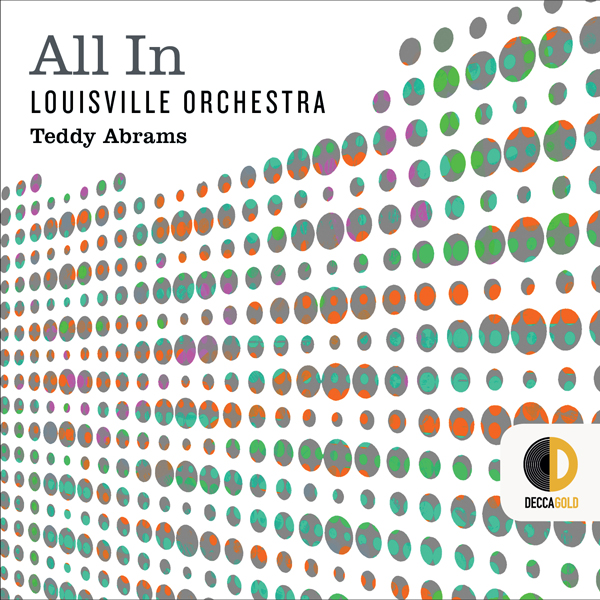
Louisville Orchestra Reboot on CD: All In


Abrams-Louisville-All-In_coverweb

The Louisville Orchestra was established in 1937 and its history has been wonderfully told in a 2010 documentary entitled, Music Makes a City.  Since their founding they released about 150 LPs containing new and interesting music not available anywhere else.  Many of those recordings have become available on the Albany CD label but the orchestra hasn’t released a new recording in about 30 years.

abrams

Teddy Abrams

Along comes new music director, composer, clarinetist Teddy Abrams and now we are graced with a new recording on the Decca Gold label.  Now for a reboot this release is somewhat conservative in it’s musical choices but that’s not to say it isn’t interesing.  This recording, released also in commemoration of the orchestra’s 80th season, reflects a sincere effort to draw younger audiences to the concert hall.

This auspicious release contains as its opening Abrams’ Unified Field, a finely crafted four movement work that channels the late Aaron Copland and his ilk.  It’s style is inflected with elements of jazz and other so called “vernacular” music but it incorporates those styles in much the way that Copland and his contmporaries incorporated folk song as well as jazz/pop rhythms. It is virtually a symphony in its dimensions and is highly entertaining while remaining seriously classical and very finely crafted.  The year of it’s composition is not specified in the notes this writer received but best guess is that it is of recent vintage in this talented composer’s oeuvre.

This is followed, curiously, by three torch songs, one by the able soloist Storm Large, one by Cole Porter, and one by Teddy Abrams.  The stylistic unity of these three songs is striking and Storm Large (who is known for her work with Pink Martini) is a convincing chanteuse.

These are followed by another American masterpiece, the Clarinet Concerto (1948) by Aaron Copland.  Originally written (and subsequently recorded by) Benny Goodman, the concerto is definitely in the repertoire but receives far too few hearings in concert.  This writer had not heard the concerto in many years and was struck both by its quality and by the convincing performance recorded here.  Abrams takes the solo role and the orchestra is conducted with assurance by one Jason Seber.

Abrams’ reading is as convincing and authentic as any and this is a delightful way to close this wonderful recording.  Here’s hoping that this release will be the restart of Louisvilled great recorded legacy and that Abrams tenure as conductor will breath new life into an orchestra which has become a venerable part of America’s cultural history.


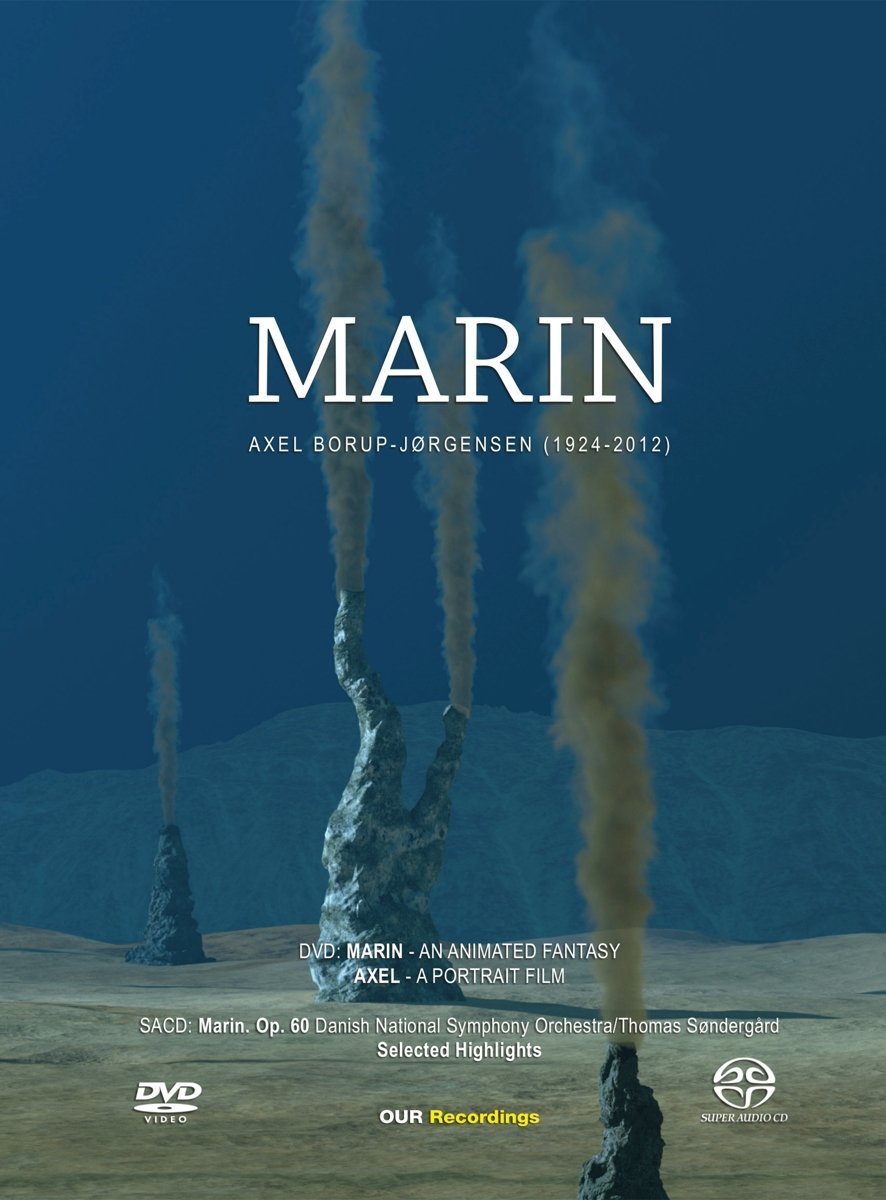
Marin: An Unknown Danish Master Gets His Due Marvellously


marin

I have made no secret of my passion for the music which has been coming out of the Scandinavian portion of our planet.  My knowledge of these musical traditions is mostly limited to the twentieth century up to the present but what a horn of plenty there is to be had.  There are so many composers that it is forgivable if one of them fails to get worldwide attention and acclaim during their lifetime.  Or is it?

Well if sins of omission that have been committed all can now be forgiven and the memory of Axel Borup-Jørgenson (1924-2012) is likely guaranteed to remain solidly in the history of music of the twentieth century.  The Danes take their music very seriously it seems (check out the You Tube Channel for the Danish National Symphony Orchestra if you don’t believe me) and producer Lars Hannibal and his crew have labored tirelessly to bring this formerly obscure master most deservingly to light in this DVD/CD combo pack featuring some of his finest works.

This truly major release contains a DVD with a gorgeous animated feature synced to the late composer’s swan song big orchestral piece, Marin op. 60 (1963-70) a really beautifully produced documentary (“Axel”) on the composer featuring some of his fellow composers including, Finn Savery, Pelle Gudmunsen-Holmgreen, Bent Sørensen, Sunleif Rasmussen, Per Nørgard, Gert Mortensen, Ib Nørholm, Michala Petri, and producer Lars Hannibal along with family and other musicians and producers.

The animated feature looks like one of the finer entries one might find on Vimeo.  The animation was done by Lùckow Film and works well with the music.  The biographical feature does a spectacular job of placing the composer in context with his Nordic contemporaries and with contemporary music in general.  The people interviewed give about as definitive a description of the man’s work as can be done in a film biography and the intervening or connecting scenes bespeak a high level concept of cinematography that makes this film both compelling and a delight for the eyes as well as the mind.  The concept of the composer’s use of silence as a compositional tool seems to be reflected in these transitional scenes.

The CD consists of seven carefully selected pieces on seven tracks.  The disc opens with the big orchestra piece which was heard behind the animation on the DVD, Marin Op. 60 (1963-70) followed by Music for Percussion and Viola Op. 18 (1955-56), For Cembalo and Orgel Op. 133 (1989), Nachtstuck Op. 181 (1987) (played here by the composer’s daughter, Elisabeth Selin), Winter Pieces Op. 30b (1959) for piano, Pergolato Op. 182 (2011) for treble recorder, and Coast of Sirens Op. 100 (1980-85) for flute, clarinet, violin, cello, guitar, piano, percussion, and multivoice tape.  This is truly a balanced portrait with examples of orchestral, solo instrument, keyboard, chamber and electroacoustic works from 1959-2011, a more than fair sampling of the composer’s output both by genre and by time.

The music seems to move between post-romantic tonality and expressionistic experiments such as one hears in the music of Gyorgy Ligeti.  The music is evocative and very listenable especially if one avails one’s self of the introductory film.  It certainly seemed to tune this reviewer’s ears properly.  It is helped as well by some very fine recordings that capture the subtlety of the composer’s work.

Lars Hannibal is clearly the guiding hand in this project but his genius (he is a fine guitarist as well as a producer) is his ability to engage all these fine musicians, artists, producers, and family in what is one of the most loving portraits this writer has ever seen.  Now that is the way to blast someone out of obscurity forever.

And this is but one entry in a larger project to record the composer’s complete output.  Two previous releases were reviewed on this blog and, presumably there are more to come.  But in the meantime there is much to savor here and one hopes that this will introduce this music into the general repertoire.  I’m sure Axel would be pleased to be placed as he is now among the masters of Danish composers.


Howard Hersh’s Chamber Music: Dancing at the Pink House


hersh pink

This latest release by Howard Hersh reveals more of his range as a composer.  His previous release focused on one large concerted work for piano and chamber orchestra as well as some virtuosic writing for piano and for harpsichord.  This disc (worth a listen if only for the return engagement of the pianism of Brenda Tom) focuses on some smaller chamber ensembles and a look at the composer’s more impressionistic moods.

This writer is left with the notion that each piece seems to be an intimate telling of a story.  Though the stories are not explicit, each piece has a distinct narrative character.  Mary Rowell handles the multi-track violin parts on Madam’s Tavern (2014).  The piece has an almost symphonic character evoking a variety of styles and meandering most pleasantly through a musical narrative whose details are not as important as the fact that the piece engages very successfully on a purely musical level.  It is written for solo violin with a chorus of some 15 tracks of violin accompanying.

Loop (2006) is a sort of cyclic quasi-minimalist work featuring Jonah Kim on cello, Brenda Tom (gently) on piano, and Patricia Niemi on vibraphone.  It is a dream-like, perhaps even impressionistic piece whose structure and compositional techniques serve the end goal of being a charming aural object.

I Love You Billy Danger (2012) was written for pianist Brenda Tom.  Here she demonstrates her virtuosity and her dramatic and dynamic range in a piece which, though related to Liszt according to the liner notes, seems to evoke the rather Lisztian master Frederic Rzewski as well.  Tom is at her fines with this challenging work and she conveys the narrative well.

Night (2013) seems related to the earlier Loop by virtue of being a percussion piece but also by its gentle evocation of a shimmering musical narrative punctuated with a clarinet part that alternately hides within the percussive sounds and comes wailing out  in jazzy/bluesy moments.  This writer was left with the notion of Gershwin haunting the score (but maybe that is because this review is being written in the Halloween season).  José González Granero is on clarinet, Patricia Niemi on marimba, and Nick Matthiessen on percussion.

Dancing at the Pink House (2006) is a musical narrative for clarinet and piano that Hersh has featured as a teaser on his website.  It was written for Patricia Shands, clarinet and is accompanied by James Winn on piano.  Shands is the owner of said Pink House and she seems to be having a lot of fun with this playful but substantial piece.  Both of these musicians appeared on Hersh’s 2007 CD release, Pony Concerto (Albany Records).

Dancing at the Pink House is a valuable addition to Hersh’s discography and reveals more of his range as a composer.  This is a highly entertaining recording and leaves the listener wanting more.

Traceur, American Music for Clarinet and Piano


traceur

New Focus Recordings FCR-172

This is a nice little program of pieces for clarinet and piano by 20-21st century composers. It might even be a representation of the state of the art for this genre.  All of these pieces are basically tonal and would work well in a recital.

Michael Norsworthy, professor of clarinet at Boston Conservatory at Berklee has an impressive set of credentials in the interpretation and performance and teaching of new music.  This performing academic has quite a list of recordings to his credit.

David Gompper is a composer and pianist with a similarly extensive set of credentials in support of new music (his own and others’).

The disc opens with a six movement suite of short pieces by Robert Beaser (1954- ) called, Souvenirs (2001-2).  Beaser is one of the finest composers of his generation and his tonal style was a hallmark of his work from the very beginnings.  These short, personal sketches are a delightful example of his work.  These pieces were originally written for piccolo and piano and are here presented in the composer’s transcription for clarinet and piano.

The next piece, Black Anemones (1980) is originally for flute and piano and is a sort of modern classic (here is a recent review of the flute and piano version).  The Pulitzer Prize winning Joseph Schwantner (1943- ) is also among the finest composers working today. This transcription for clarinet by Mr. Norsworthy will most certainly guarantee further performances.  This is truly lovely music inspired by poetry of Agueda Pizarro.

Three American Pieces (1944-5) by Lukas Foss (1922-2009) are another sort of classic set of pieces.  These are early compositions in a neo-classical/nationalist style characteristic of this period of Foss’ compositional style.  It is great to have a new recording of these entertaining pieces.  Foss is due for a reckoning I think.

Marti Epstein (1959- ), also a professor at Berklee was represented in an earlier review of a disc (here) dedicated entirely to her gentle music imbued with memories of her upbringing in the great plains of the Midwest.  Nebraska Impromptu (2013) is characteristic of this composer’s gentle but substantial music.  Her website also contains a very interesting occasional blog that is worth your time.

Derek Bermel (1967- ) is here represented by schiZm (1993-4).  Originally for oboe and piano the composer also made this transcription for clarinet and piano.  Bermel describes some of the fascinating techniques that underlie the structure of this two movement piece but the result of those techniques is a very interesting piece of music.

Last but definitely not least is the title track Traceur (2014-5) by composer/pianist David Gompper (1954-).  It is the longest and most complex of the pieces presented and requires the most involvement on the part of the musicians as well as the listener.  I don’t mean to imply that this is difficult music because it isn’t.  It is substantial music whose charms demand close listening, an effort for which one will be rewarded.

This lucid recording was produced by Norsworthy and Gompper (with the assistance of Robert Beaser in the recording of his work).  It was recorded in 2015 with editing and mastering by Patrick Keating.  Very nice disc.  Highly recommended.


Music by Gerhard Schedl, a New Recording by the Walden Chamber Players


Suicide, the artificial ending to a life is an inscrutable act, especially so when it takes the life of a talented individual.  So it is with Austrian composer Gerhard Schedl whose life was ended by his own hand in 2001.  I had never heard of this man and his work and I always welcome the opportunity to hear music new to my ears and such an opportunity presented itself recently.

By good fortune and the kindness of cellist and current artistic director Ashima Scripp I received a copy of the Walden Chamber Players latest CD: ‘A Voice Gone Silent too Soon: The Music of Gerhard Schedl.  The disc contains 4 chamber works for various combinations of strings, piano and clarinet.schedl

As it happens I had not been familiar with this ensemble before either so a word about them would seem to be appropriate.  Founded in 1997 this flexible sized ensemble consists of eleven musicians including strings, piano, harp and woodwinds.  The musicians are all highly accomplished and most are on faculty at area Universities.  Their choice of repertoire distinguishes them as they seem to choose new and/or lesser known music that the musicians feel deserve a hearing and hopefully a wider audience.  Their fascinating catalog at the time of this writing consists of 6 discs and includes music by Beethoven, Debussy, Vaughn Williams, Francaix, Gubaidulina and Reger to name a few.

When they choose Beethoven they choose the seldom played string trios and their other choices seem to involve late romantic and early 20th Century composers with a focus on pieces that are little known and rarely played.  From what I have heard they bring a real passion to their performances.  In addition they have a variety of educational and outreach programs that serve to increase interest in chamber music and support new artists in playing this repertoire.

Now to the disc at hand.  At first I did what I usually do after a quick read of the liner notes.  I put the CD in my car stereo to begin some relatively casual listening so I can begin to form some initial impressions.  However this is music of wide dynamic range and some of the most beautiful moments are the quieter ones so I found that it is best heard in a quiet environment and preferably with headphones.  Most of the gestures in this music are the familiar sounds of chamber music.  The music is sometimes melodic, sometimes pointillistic, sometimes impressionistic, sometimes expressionistic.  Schedl seems to be a sort of modern post-romantic who is well-schooled in what a chamber ensemble can do and is apparently influenced by the expressionism of Schoenberg and the Second Viennese School as well as by Mahler, Debussy and perhaps Messiaen.  This being said his music does not actually resemble any of these influences too strongly.  The music is rarely dissonant but there are grand fortissimo gestures as well as glissandi and what sounds like some playing inside the piano and some extended techniques which my ears could not identify with certainty.  But this is not what I would call “experimental music”.  Indeed the music sounds very well planned with an ear for subtleties that the ensemble lovingly interprets.  It sounds like this music is as enjoyable to play as it is to hear.  Though virtuosic it is also expressive if agonized at times and the recording is fantastic.

The first piece, String Trio (1991) for violin, viola and cello is in three movements.  I did not find the tempi descriptions particularly useful as a listener since this composer’s music seems to sustain a variety of tempi and expression within each movement.  Inevitably comparisons to Schoenberg, Webern and perhaps Ernst Krenek will come to mind and it is difficult to predict this piece to stand with those models but it definitely bears additional hearings and would be welcome on any good chamber music program.

The next piece, “A Due”, a Duo for Violin and Cello (2000) is from the last year of the composer’s life.  It is in four movements and is the most angst ridden of the pieces on the disc.  This combination of instruments is relatively rare.  I personally know only the Ravel duo which resembles this piece though that is largely due to the instrumentation, not the style.  This is a concentrated and deeply felt piece which seems to reflect some painful emotions.  Here I am reminded more of Webern and perhaps Wolfgang Rihm with their spare textures and emphatic fortissimi amidst the quieter moments.   As with all the pieces on this disc the execution reflects the intense concentration and dedication of the musicians.

The five movement, “A Tre” for clarinet, violin and piano of 1984 is the earliest composition here.  It comes as a welcome relief emotionally from the previous “A Due”.  This is by far the most whimsical of the pieces featured on this album.  It has an almost orchestral feel to it at times.  Multiple techniques (and, no doubt, careful execution) result in textures that are sometimes rather expansive.  Shades of Messiaen appear to be present sometimes.  They contrast with the more chamber music like gestures familiar from the previous works.

The disc concludes with the 1996-7 “A Cinque” for clarinet, violin, viola, cello and piano.  It is a very serious post-romantic, even neo-classical take on the quintet format.  The piece consists of three movements.  The first two are serious but not terribly dark and showcase the ensemble well.  The last, an adagio, has a sadness mixed with nostalgia that reminds this listener of Mahler. There are none of the abrupt dynamic changes heard in the previous works on this CD, only a soft and gentle ending.

If you enjoy well-performed and recorded chamber music and are interested in exploring something besides the old war horses of the standard repertoire then this disc is for you.  Multiple listenings reveal more detail about the pieces and make this writer curious about this man’s work for larger ensembles as well.

Thank you Walden Chamber Players for a wonderful CD.  I look forward to hearing more from this fine and adventurous ensemble.