For the humble listener, a musician’s technical and interpretive performance skills are one of the most compelling reasons to buy a concert ticket or a recording of said musician. But your humble reviewer has another, perhaps equally important reason for investing time and money in the work of a musician. And that skill is what I like to call “musical radar”. It is the (sometimes uncanny) ability of such gifted musicians to intelligently choose repertoire.
Conductor Kellen Gray demonstrates a keen sense of what music sounds good and also has the weight of substance. Following in the footsteps of incisive conductors like Leopold Stokowski (1882-1977), Dean Dixon (1915-1976), and Paul Freeman (1936-2015) Gray is clearly a champion for contemporary music and is now into the second volume of what this listener hopes will be many more releases of substantive music by black composers whose work has lain fallow for reasons unrelated to quality.
The first volume included early to mid twentieth century masterworks like William Levi Dawson’s 1934 “Negro Folksong Symphony”, William Grant Still’s First Symphony “Afro American” (1930), and George Walker’s “Lyric for Strings” (1946, orch 1990). These are certainly great and foundational works that deserve a place in concert programs but these works have had at least some exposure via recordings. Nonetheless they are fine foundation on which to build this series. Gray demonstrates a depth of understanding for these works and his skills as a conductor were displayed well here. But that was just the first volley in an exciting survey in progress.
In this second volume we see more deeply the acumen of this conductor’s musical radar. These are new commercial recordings of orchestral works by mid to late 20th century black composers, works of obvious substance that remain unjustly neglected. It is this “not the usual suspects” angle that finds this enterprising conductor demonstrating his personal perspective and respect for music history. And they are revelatory. Hearing these definitive performances will leave listeners wanting more as we get to hear some very exciting music that deserves at least a reckoning if not a place in the repertoire.
The four victims of the Birmingham Church bombing.
The disc begins with Margaret Bonds’ “Montgomery Variations” (1964), a classical set of variations, in this case on a gospel tune, “I want Jesus to walk with me”. But this work was “lost” and was only rediscovered in 2017. Its neglect was likely due both to the work being by a black woman, and the fact that it is a response to the 1963 Birmingham church bombing, a hate crime that killed four little girls. So, here it is, Bonds’ only surviving purely orchestral work getting a truly fine hearing. And what a great piece it is.
Margaret Bonds (1913-1972)
The work is structured in distinct sections with titles (Decision, Prayer Meeting, March, Dawn in Dixie, One Sunday in the South, Lament, Benediction). Each title is reflected in the musical mood of each section. It is an overt and powerful denunciation of a horrific hate crime. It is harrowing at times, somber and reverent at others, but Bonds’ composition is also effective in the metaphorical quality of the music itself. It is also very nearly a concerto for orchestra in its broad symphonic dimensions and clever orchestration most deftly handled in this recording.
The genre of “variations” is common throughout musical practice but only took on the guise of monolithic large orchestral works in the late 19th century. Well known examples include, Elgar’s “Enigma Variations”, Britten’s “Variations and Fugue on a theme of Henry Purcell”, Brahms’ “Haydn Variations”, etc. It’s hard to say if this work will find a place in the concert hall alongside those proven classics but Maestro Gray and the talented musicians of his Royal Scottish National Orchestra really make a strong case to do just that.
Ulysses Kay (1917-1995)
Next we are introduced to Ulysses Kay’s “Concerto for Orchestra” (1948). This work, first performed by the similarly incisive conductor, Leopold Stokowski has been sorely in need of a new recording and Maestro Gray serves up a taught and insightful performance that, like all the works on this release, stand as a challenge to performers, broadcasters, and listeners to not let this music fade into obscurity. The “Concerto for Orchestra” genre was first heard in a 1925 Hindemith work with that title and the work best known in the genre is without doubt Bartok’s 1943 “Concerto for Orchestra”. Where Kay’s work will stand in relation to other concerti for orchestra remains to be seen/heard (as with the Bonds work) but at least it now has a chance to be heard in all its glory.
It is one of Kay’s major works and it is of grand symphonic scale. This neoclassical work was written in 1948 and is cast in three movements. The work is eminently listenable but it puts challenges to the orchestra which this orchestra handles quite well.
Coleridge Taylor Perkinson (1932-2004)
The disc concludes with a rather brief work by a composer with whom even adventurous listeners (including myself) have limited familiarity. Coleridge Taylor-Perkinson. It is the only work here that comes from the 21st century. This 2001 Concert Overture subtitled, “Worship” reflects Perkinson’s exposure to black church music which he utilizes in this tone poem written for a sizable orchestra.
Gayle Murchison’s fine liner notes help guide the listener by providing context and by understandable descriptions of the compositional processes. This is an exciting release that builds nicely on the first volume and leaves this listener excitedly anticipating Kellen Gray’s next installment.
When Bassist Robert Black (1956-2023) succumbed to colon cancer this past June, the music world lost one of its finest advocates, performers, and teachers. This posthumous release of composer John Luther Adams’ (1953- ) works for solo and multiple bassists receive definitively beautiful renditions here in this satisfying release in which Maestro Black plays all parts (two works are for solo double bass and one work is for 5 double basses). It strikes this listener as a fitting eulogy for Robert Black and his fine performance legacy.
Robert Alan Black (1956-2023)
First, let me say that the Cold Blue label has defined its own take on post minimalist experimentation, it’s one of those labels that I recommend you just buy anything they choose to release. So this chamber music by John Luther Adams fits most comfortably within the little niche that Cold Blue defines (sort of). In fact this is Adams’ 9th CD on this label. And Robert Black is perhaps the ideal musician to plumb the sonic depths of this “other John Adams”. This listener can’t imagine these works having been done better. These performances are definitive, an example of interpretation with which all subsequent performers will have to contend.
The opening work, “Those High Places” (2007) is a work in three movements, originally for solo violin, played here for the first time on a double bass. Black pretty much reimagines Adams’ piece for his instrument. This is not mere transcription. This version is virtually a new work in the soloist’s sensitive and insightful hands.
Those three movements serve, as do the last three tracks on this album, as bookends, nicely framing the centerpiece, “Darkness and Scattered Light” (2023). Unlike those bookends, this work is in one large movement and is scored for 5 double basses. This multitrack recording is an essential and very effectively produced effort that does as much justice to the composer’s intent as does the effort of the performer.
The last three tracks are, in their compositional processes, intimately linked to that first three tracks. Both rely on special tunings to produce the intended effects.
This release is also a fine example of the artistic style that characterizes the look that accompanies the sounds within. The photography, the overall design, visually pleasing, creating a metaphor for the sound of the recording, and paying respectful homage to composer and performer. This just fires on all cylinders for me. This is Cold Blue at their best.
This is, by my count, the fifth Starkland release of Guy Klucevsek’s work. Klucevsek has happily been one of Starkland’s favorite artists. Though he officially retired from performing in 2018, he continues to compose, collaborate, and record.
“Hope Dies Last” consists of several new compositions from this (hardly retired) man. And if you don’t know his work, this is a fine place to start. Klucevsek is a unique composer/performer who has defined his brand as one of the finest accordion players in new and experimental music. Through years of composing, performing, and collaborating, Klucevsek has taken the accordion to places it never dreamed of going and still manages to do honor to the history and significance of his chosen instrument.
NB: This reviewer is biased, having had a long admiration for this artist. The “vernacular” idioms of the accordion had been very familiar to me from my childhood on with my exposure to rituals of some of my Eastern European ancestors (polka bands, Lawrence Welk, Myron Florence, etc). Because of Klucevsek I will never hear the accordion in the same way ever again.
Having, ostensibly, “retired” (at least from performing), we find his creative juices still flowing in these recent compositions. This album is largely representative of his more lyrical writing as heard in releases like, “Citrus, My Love” but Klucevsek is seldom far from parody (in an honorific sense) and both humor and pathos infuse this music in ways that sneak up on the listener. This recording stems in part from music written by Klucevsek and performed by many of his friends, but not always on accordion, on a concert in celebration of his 75th birthday.
We hear, on this album, compositional genius distilled from the composer’s broad knowledge and understanding of music in general, and of his ability to incorporate classical and vernacular idioms into his personal style. The valuable liner notes by the composer reveal how his work belies the complexity which underlies his very approachable style. There is a depth in these works that lies, tantalizingly, just below the surface.
One of the most rewarding aspects of this album is hearing all these fine collaborators play Klucevsek’s music. The dedication and enthusiasm of these performances are a fitting celebration of this unique artist who brings his 19th century folk instrument (and its milieu) very successfully into the 21st century. Participating artists include: Jenny Lin, pianos; Todd Reynolds, violins; Jeff Gauthier, violin; Margaret Parkins, cello and whistling; Will Holshouser, accordion; Alan Bern, accordion; Nathan Koci, accordion; Bachtopus Accordion Ensemble (Robert Duncan, Peter Flint, Mayumi Miyaoka, and Jeanne Velonis); Jerome Kitzke, heavy breather and toy piano schlepper; and, of course, Guy Klucevsek, accordion and piano. Starkland founder Tom Steenland’s steady producer’s hand is a guiding spirit here as well.
The last six tracks, “Industrious Angels” (2010) were written on commission by Laurie McCants for her dramatic presentation of the same name, a work inspired by the poems of Emily Dickinson. Collaborations such as this, with non-musician artists, are well represented in Klucevsek’s career. These are the oldest compositions here.
The first 13 tracks, with the exception of the 2022 transcription (of the 1988 original classic), “Flying Vegetables of the Apocalypse”, were all composed from 2015 to 2021. And they serve to characterize Klucevsek’s wide ranging musical interests whose further elucidation in the aforementioned liner notes provide valuable insights into his compositional processes. Really fascinating on that technical level as well as in the resulting sound of the compositions. This album just works well on so many levels.
In many ways, this release, with so much recently composed music, feels like an apotheosis, an artist’s very satisfying and nostalgic perspective looking back on a very successful career (I’m thinking like Wild Strawberries, maybe, but happier). It is a contemporary journey that will likely send listeners to hear more of this man’s work. And so they should.
More Klucevsek at Starkland Starkland has previously released five other Klucevsek CDs:
Transylvanian Softwear with works by William Duckworth, Fred Frith, Klucevsek, and John Zorn. Awarded a “Recording of Special Merit” by Stereo Review.
Free Range Accordion with works by Burt Bacharach, Lars Hollmer, Aaron Jay Kernis, Jerome Kitzke, Klucevsek, Stephen Montague, Somei Satoh, and Lois V Vierk. “A rebel with an accordion… Klucevsek combines poker-faced wit and imagination with command of his instrument, forcing you to re-think the accordion’s limitations” (Downbeat).
Polka From The Fringe A double-CD re-release presenting the most comprehensive edition of this major project conceived and shepherded by Klucevsek. Works by Mary Ellen Childs, Anthony Coleman, Dick Connette, William Duckworth, Carl Finch (of Brave Combo), Fred Frith, David Garland, Peter Garland, Phillip Johnston, Aaron Jay Kernis, John King, Mary Jane Leach, Bobby Previte, Elliott Sharp, Carl Stone, Lois V Vierk, William Obrecht, and more. “A long-overdue reissue” (John Schaefer, WNYC New Sounds). “A two-CD collection of new polkas he got from a wide range of classical new music, jazz and indie pop composers. It’s a riot, and an addictive one at that” (Los Angeles Times).
Teetering on the Verge of Normalcy with works exclusively by Klucevsek. With violinist Todd Reynolds, soprano Kamala Sankaram, and pianist Alan Bern. “This heartfelt album has an especially elegiac quality” (Sarah Cahill).
Citrus, My Love offers two substantial works composed for dance, Citrus, My Love (1990) and Passage North (1990), separated by another piece Patience and Thyme (1991). A “strikingly beautiful” CD (AllMusic Review) that is “generously imbued with melodic charm and grace” (The Wire).
Regular readers of this blog are doubtless aware of my “underdog” interests. Whether suppressed by fascist regime, (as in London Records “Entartete Musik” series and Chandos “ARC”ensemble recordings), or just somehow eclipsed by more “spectacular” (by which I mean, “producing a spectacle” like Stravinsky’s Rite of Spring) but, as exemplified by Cedille Records’ “Avant L’ Orage”, music can be oppressed, disliked, or overlooked and such music, in my humble opinion, deserves another listen, a second chance. With this release, NAXOS puts forward a second chance on these stage works by a man better known for his stride piano and ragtime works. No, it’s not Scott Joplin. Guess again.
Esoteric as this my interests have ranged, I couldn’t have guessed that I refer here to James Price Johnson (1894-1955), so don’t feel bad if you guessed wrong. Johnson’s burial site is in Queens, New York. His grave, unmarked since his burial, didn’t get a headstone until 2009. And this is the man whose composition, “Charleston” (1923) became ubiquitous and emblematic of the so called “Jazz Age”.
Apparently Johnson had a fair amount of success as a composer of stage works. And he collaborated and/or influenced people like William Grant Still, Duke Ellington, Count Basie, Jelly Roll Morton, Willie “The Lion” Smith, Art Tatum, and Thelonius Monk, among many others. Fats Waller was one of his students.
Johnson is arguably an artistic descendant of Scott Joplin whose work Johnson both performed and recorded. And in addition to his solo piano work he apparently also wrote stage works. The works presented on this release are short operas, lovingly reconstructed by the late James Dapogny (1940-2019), a composer, pianist, and jazz musicologist. Dapogny provided an accounting of his work reviving these historically and culturally significant works that also happen to be well written and very entertaining.
The liner notes written by University of Michigan doctoral candidate Cody M. Jones provide a very useful context for understanding both the music and it’s unreasonable neglect. Jones identifies these works as part of the “shadow culture” (a concept made by opera historian Naomi André referring to art produced by black artists which was willfully neglected during the “Jim Crow” era).
Jones writes that these works may have been inspired by George Gershwin’s Porgy and Bess (1936). It appears that The Dreamy Kid (1937) was Johnson’s first stage work and De Organizer (ca. 1938-9) was his second (and last) work for the stage.
The Dreamy Kid was written to an existing play by Eugene O’Neill but apparently was never completed. Its fragments were found during Dapogny’s research on De Organizer. So that makes this a world premiere recording of this piece.
Track listing
Two stage works with libretti, one by the estimable hero of the Harlem Renaissance, Langston Hughes, and the other (actually a stage play, not a libretto) by Eugene O’Neill. These recordings owe a debt to the conductor Kenneth Kiesler (1953- ) and the late James Dapogny (1940-2019), composer, musicologist, and jazz musician. Dapogny and Kiesler also contribute the brief but useful program notes.
“De Organizer” (ca. 1930) received acclaimed revival performances in Michigan, New York, and Chicago in 2002. Both the New York Times and the Chicago Tribune featured strongly positive reviews.
“De Organizer” is an apparently complete recording Its libretto was written by the Harlem Renaissance writer Langston Hughes (1902-1967). The work received only one performance in Carnegie Hall in 1941 as a benefit for the International Ladies Garment Workers Union. This work shares a similar fate with that of Marc Blitzstein’s “The Cradle Will Rock” (1937), famously suppressed for its pro union themes.
The second work is a set of excerpts of an incomplete opera called, “The Dreamy Kid” based on a stage play by the great American playwright, Eugene O’Neill (1888-1953) and its tale of racial violence at the hands of police is sadly a timely theme and a precursor of sorts for the politically infused operas of the Pulitzer Prize winning Anthony Davis.
Both works make use of jazz and blues forms (both distinctly African American art forms) and will remind the listener of Gershwin’s admiring appropriation of these forms. Jazz and Blues ubiquitously informed western classical worldwide as seen in the work of Gershwin, Aaron Copland, and Maurice Ravel, among others so the reconstruction and revival of Johnson’s theater works fill a gap in the history of western music as a whole. This is a very entertaining recording of some truly substantial music that can now take its place with Joplin’s “Treemonisha” as great American music.
There are, by my count, at least 8 discs on this fine audiophile label dedicated to music by composers from Iceland. That country’s musical prowess deserves to be better known as does their world class orchestra. I’m reviewing these back to back releases together because they are both Iceland Symphony recordings presenting new music by (mostly) Icelandic composers. And they have a secret connection.
This first disc is a nice mix of music by five different composers in works that really give the orchestra an opportunity to shine. Under the direction of composer/conductor Daniel Bjarnason we are availed of the sound of now, or at least Bjarnason’s “now”.
Track list
This disc, which seems to have a “outer space”theme in large part, opens with a large orchestral work from the most deservedly best known Icelandic classical composer, Anna Thorvaldsdottir. “Catamorphosis” is a 20+ minute work for full orchestra and then some. Her style initially reminded this listener of the sound mass of music like Ligeti and Penderecki. But her harmonic language is more lush and romantic. She has an astounding skill in writing for large orchestra, producing at times the modern equivalent of Impressionism. Her use of motives suggest she has digested ideas from minimalist/pattern composers. And at the end of the day (or the review), one realizes that she has developed her own voice.
The subtle colors of this work are well defined by the orchestra under Bjarnason’s truly expert guidance but also via the sonics that the Sono Luminus engineers are able to capture. This sounds like a difficult work to perform but Bjarnason manages to create a definitive performance and Sono Luminus’ sonics are, as always first rate.
Catamorphosis (2022) is typical of Thorvaldsdottir’s writing for large orchestra reflecting her skills as an orchestrator as well as her imagination, her ability to create a wide palette of subtle sound forms that suggest a sort of post impressionist style. The poetic and metaphorical titles tell little about the musical content (or structure for that matter). But her ability to create cohesive and compelling compositions such as this provide an experience that will likely evoke images for the listener, a sort of movie for the mind. So feel free to conjure your own images in this 7 part (played without pause) work and/or listen and watch a recent Elephilharmonie performance on YouTube here.
Missy Mazzoli’s comparatively brief “Symphony for Orbiting Spheres” (2014 rev 2016) taps into a vein of inspiration seemingly related to the cosmic images of Thorvaldsdottir. Mazzoli incorporates an electronic keyboard and harmonicas, among several less common instruments used in symphony orchestras, to create her own sonic cosmic fantasy. Please click the link on her name above to learn more about this rising star from her nicely designed website.
Daniel Bjarnason demonstrates his own formidable compositional chops with “From Space I Saw Earth” (2019). And this track also provides a link of sorts to the other album reviewed in this blog entry. This work, written on commission for the 100th anniversary of the LA Philarmonic, is a work that requires three conductors. The premiere was led by Zubin Mehta, Gustavo Dudamel, and Esa-Pekka Salonen, all of whom have significant connections to the orchestra (Mehta as conductor Emeritus, Dudamel as present chief conductor, and Salonen as conductor laureate). That was the premiere but this recording is conducted by Bjarnason along with Kornilios Michalaidis, and the then incoming chief conductor of the Iceland Symphony, Eva Ollikainen. Therein lies the “secret connection” to which I referred earlier.
María Huld Markan Sigfúsdóttir (1980- ) is a violinist and composer. Her orchestral work, “Clockworking” is a sort of post minimalist work with a gently driving Ostinato in the percussion. It reminds this reviewer variously of Birtwistle’s “Chronometer”, Ligeti’s “Poeme Symphonique”, to name a few but it is not derivative of these in any way. It is a very listenable and enjoyable orchestral work.
Bára Gísladóttir (1989- ) is a composer, vocalist, and double bass player based in Copenhagen.This, the briefest work on the album is at times the quietest and at others the loudest work here. I would add that it is also the most avant garde. Relying on a battery of percussion and what appears to be some extended instrumental techniques the composer creates a world that to this reviewer’s ears sound a bit like Gyorgy Ligeti’s work “Atmospheres” (1968). That’s not meant to say it’s derivative, just that it could conceivably be used for that famous psychedelic sequence from Stanley Kubrick’s masterful “2001, A Space Odyssey” where my own young ears first heard the Ligeti work.
DSL- 92268
As fabulous as that first disc is, this release, dedicated entirely to the work of Anna Thorvaldsdottir, is a worthy endeavor. In addition to that we are treated to the sublime and insightful artistry of the first female principal conductor of the Iceland Symphony, Eva Ollikainen who leads the Iceland Symphony on this disc.
Like the above release, the Iceland Symphony Orchestra demonstrates their world class artistry. This is not easy music to play but, under Ollikainen, as they have under her predecessor, they are able to articulate the intricately orchestrated sounds by this really astounding composer.
Just two works here. “Archora” (2022) and “Aion” (2018). Both are works of grand concept and could easily be called symphonies but the composer seems fond of metaphoric poetic titles. Regardless of the names given these works they demonstrate the composer’s grand sonic visions and her mastery of the orchestra, a mastery grasped very clearly by the Iceland Symphony’s new artistic director and conductor, Eva Ollikainen (1982- ). She holds the distinction of being the first woman to hold the post to which she was appointed in 2019.
Track list
There are only two works presented but both are stunning examples of some of the finest new music being produced today. Yes, it’s great to see women having a greater presence (both as composers and conductors) but, truly, Thorvaldsdottir is “the bomb”, so to speak. Her creativity, her mastery of the orchestra are simply a revelatory as well as entertaining listening experience.
Eva Ollikainen
This release is also a landmark which showcases the formidable talent of the Icelandic Symphony’s new conductor. In addition to breaking gender barriers she is quite simply a rising star and one of the finest interpreters of new music today.
“Archora” (2022) is the most recent work here and it’s another of Thorvaldsdottir’s sprawling cinematic tone poems. No specific story here but the composer’s mastery of orchestral color will doubtless evoke images and feelings in the listener. Thorvaldsdottir is creating a sort of sonic (as opposed to literal) mythology. Her reference points seem to be largely in Greek and Roman mythology but also in Nordic and Northern European myths. Eva Ollikainen conducted the world premiere at the 2022 BBC Proms. You can hear that performance on YouTube here. But the Sono Luminus recording captures more of the subtle sound colors of this engaging work.
The composer’s three movement, “Aion” (2018) concludes this recording. Aion is a Greek God of time. The composer is concerned with various aspects of time in her work. This large three movement work is virtually a symphony with an augmented orchestra, extended instrumental techniques, and an optional choreographic accompaniment. (Tell me that’s not cinematic). There is an example of the optional choreography here.
This recording is also a fine introduction to conductor Eva Ollikainen who clearly has a grasp of this music. Various examples of her interpretive genius can be found on YouTube ranging from Beethoven to new contemporary masters.
These are two truly fine discs both musically and for sheer sonic detail. They’re available in streaming and hard copy CD as well as Blue Ray Audio. These are a fabulous listening experience. Enjoy!
Samuel Taylor Coleridge begat Samuel Coleridge-Taylor, who begat Coleridge Taylor Perkinson… Wait, that’s not right. But these three men, listed in chronological order, became intertwined, much as they were admired, by their names. Samuel Taylor Coleridge (1792-1834) is the great (white) British poet. Samuel Coleridge-Taylor (1875-1912), named in honor of that poet (and the subject of this review) was a much lauded, though subsequently neglected British composer, as it happens a black British composer. Taylor Coleridge Perkinson (1932-2004), a much lauded and subsequently neglected black American composer named in honor of those predecessors. Stick with me, this comes together (for the purposes of this review) with the name of the orchestra on this recording, “Chineke”, a word taken from the African Igbo religion, meaning, “God”. Add an exclamation point and you get “Chineke!”, the orchestra which was founded in 2015 by the double bass player, Chi-chi Nwanoku CBE, to provide career opportunities for Black and ethnically diverse classical musicians in the UK and Europe.
All that to introduce listeners to this landmark of the recording industry, fulfilling in part the mission of this fine orchestra. This two CD set provides an intelligent selection of the music of Samuel Taylor-Coleridge which is nothing short of revelatory. Knowledge (at least outside of Britain) of his music, up until this release pretty much limited to his fine choral work “Hiawatha’s Wedding Feast” and perhaps a short orchestra movement. The late great Paul Freeman included an aria from that choral work and one movement (Danse Negre) from his African Suite in his defining set of recordings on Columbia/Sony, “Black Composers”. These brief pieces were the introduction for many people, this writer included, to this composer’s work.
The last family Christmas card, 1912
Chineke! now presents a far more representative selection of this man’s work with a truly nice touch of alreleasing the first recording of music by Coleridge-Taylor’s daughter Gwendolyn Avril Coleridge-Taylor (1903-1998) who wrote under the pen name Peter Riley (it is hardly a secret that both black people and women suffer from lack of recognition in the world of classical music).
Coleridge-Taylor’s output was large, comprising some 82 pieces with opus numbers and unpublished works as well. That’s a lot of music from a man who died at age 37 from pneumonia. This two disc set does a very nice job of presenting music from all eras of his brief career. From the Opus 2 Nonet (1894) to the Opus 80 Violin Concerto (1912) this release provides a larger perspective on this artist (dubbed by white musicians in New York, in what today would be judged a pejorative appellation, “The Black Mahler”). My guess is that the same people who would speak condescendingly about Coleridge-Taylor were also not appreciative of that Jewish Austrian conductor/composer.
Though it appears that all these works have appeared previously in recordings (appropriately on mostly British labels) this collection does a great service in demonstrating the arc of his truncated life’s work. Only the Avril Coleridge-Taylor work, “Sussex Landscape” (1940), is a world premiere recording.
Track list
For the purposes of this review I will be discussing these works in chronological order rather than the order on the recordings. Even a short career demonstrably goes through changes over time, led by social, political, historical, and musical experiences. A photo (above) shows the order on the discs.
The Nonet Op. 2 (1894) for strings, winds, and piano was written by the 19 year old (still a student at the Royal College of Music). This unusual combination, nearly a chamber orchestra in dimension as is the grand, late romantic, Brahmsian dimension. His skill in orchestration is evident here and serves to clarify the musical lines in these four large movements. It is virtually a symphony with a virtuoso piano obbligato.
Here, emissaries of the nascent Harlem Renaissance came to England in the the form of a 1896 concert by the Fisk Jubilee Singers who presented a program of “Negro Spirituals” (Fisk is one of the so called “Historically Black Colleges and Universities” which were formed to provide educational opportunities for Black Americans who were barred from admittance to other colleges). The following year Coleridge-Taylor met the Black American poet Paul Laurence Dunbar (1872-1906), who had come to England on a literary tour. His parents were freed slaves in Kentucky. Both of these experiences had a profound effect on Coleridge-Taylor and his music. Coleridge-Taylor would attend the first Pan-African Conference in London in July 1900. There he would explore the ideas and philosophies of Pan-Africanism which emphasised the importance of a shared African heritage. The orchestral works “Ballade in A minor” Op. 33 and the “African Suite” Op. 35, (both 1898) reflect those influences.
The two movement Ballade is a grand romantic work with no particular program but one that demonstrates the composer’s amazing command of the orchestra. The African Suite, one of his more popular works, was directly influenced by the work of Dunbar (whose career, like Coleridge-Taylor’s, also ended prematurely).
The two movement “Romance” Op. 39 (1899) for violin and orchestra is a foreshadowing of the later Violin Concerto. It is a heavily late romantic work with a beautiful and substantial violin part.
His “Petite Suite” Op. 77 (1911) is among his most popular works and arguably served as a precursor to what would later be termed, “Light Music”. The second movement strikes deep into this writer’s memory as one of those pieces whose charm prompted me to find out what it was so I might hear it again. Very charming and immediately listener friendly music.
The first work on this set, The five movement, “Othello” Orchestral Suite Op. 79 was published in 1909 and first performed in 1911. It was conceived and written as an orchestral suite, not a suite of music drawn from another work and is complete as performed here. It is a stunning example of the composer’s skills with orchestration and with dramatic writing.
Maud Powell (1867-1920)
Now we come to the Op. 80 Violin Concerto of 1911-2 which is dedicated to American violinist Maud Powell, a staunch advocate for female musicians, black composers, and new music in general (an early model for the likes of Rachel Barton Pine). This work of high late romanticism echoes Brahms and Bruch in its Melodie’s, it’s harmonies, and the grand sweep of its gorgeously orchestrated three movements. It is easy to imagine this as a regular repertoire piece.
Avril Coleridge Taylor (1903-1998)
Last and most certainly not least is the world premiere recording by Coleridge-Taylor’s daughter, Gwendoline Avril Coleridge-Taylor (1903-1998), her “Sussex Landscape” Op. 27 (1940). This is just a taste of her 60+ compositions but it is compelling enough to prompt listeners (and hopefully progressive organizations such as “Chineke!”) to pursue more exploration of her oeuvre.
Chineke! Truly achieves their goal in producing this wonderful portrait of a composer whose work has, until very recently languished in relative obscurity. Even this writer, whose obsessive interest in the new and interesting, has been seriously transformed by this release. You really have to hear this release. My thanks and congratulations to everyone involved in this fine Chineke! release.
Utter the name “Israel” and probably only a handful of people will think, “classical music”. As a lifelong new music fan I’ve made many wonderful discoveries by looking at work done by composers in countries that aren’t part of the typical America, Germany, Italy, France, Russia nexus. Throw in the Nordic countries, Canada, and Australia more recently and you have perhaps 90% of what is marketed (even if not efficiently distributed) as new classical music. Israel, at 75, remains a young country but its participation with world class classical composers and musicians is among their proudest contributions to the world at large and those contributions are both extensive and interesting.
Neuma 177
This fine release gives only the briefest taste with a curious selection of pieces that will likely lead listeners to the “more where that came from” path to discover a huge trove of music that really needs to be heard. The only problem with this release is that it’s not a 20 or 30 CD box set of representative western classical music from a comparatively new country in a very old artistic/cultural hotbed.
This fine Neuma release is actually a very nice taste whetting collection of three generations of Israeli composers. I wish I could call it “representative” but that would be a tall order. It is an intelligent selection that will hopefully inspire further exploration of Israel’s classical music artistic legacy. Israel is, in many ways, a country of challenges and this release is, similarly, an extension of this country’s challenges to the canon of western art music in its way and a gentle nudge to curious listeners.
Professor Robert Fleisher (photo: Darsha Primich, courtesy Navona Records)
This project began with a 1986 Israel residency by American composer/musicologist (now Professor Emeritus at NIU) Robert Fleisher. The culmination of this residency resulted in his marvelous book, “Twenty Israeli Composers” (1997) and all but one track on this disc from an earlier concert at NIU in 1987. which was fortunately recorded rather nicely. You can download the book for free by clicking on the title above. Fleisher wrote the very useful liner notes which are also available as a free download. Those two sources can help guide the avid listener to a wider range of music from Israel’s first 75 years.
Track list
German refugee Paul Frankenburger (1897-1984), better known as Paul Ben-Haim is doubtless the one name in this collection that listeners may have heard. He emigrated to the (then British Mandate of Palestine) in 1933 just ahead of the onslaught of the Third Reich in Germany. He Hebraicized his name when he became an Israeli citizen at that country’s inception in 1948. Truly, he was there at the beginning.
His pupils Tvi Avni, Eliahu Inbal, Henri Lazarof, Ami Maayani, Ben-Zion Orgad, and Shulamit Ran (to name just a few) all went on to make significant impacts on the musical world. Some made their careers in Israel, others established the Israeli artistic diaspora but that is another story.
The disc opens with one of Ben-Haim’s finest and best known compositions, his 1943 protominimal “Toccata” for piano. This brief piece is a virtuoso showpiece that this listener found immediately appealing having heard it played as an encore after a concerto performance. Here, a wonderful rendition by Liora Ziv-Li makes a strong case for this piece to be heard more often. This first release of this live performance is, happily, not the only recording of the work. Ben-Haim whose style is of a post romantic/nationalistic style somewhat like an Israeli Aaron Copland, creative and nationalist with just a dash of liturgical. His work is fairly well represented on recordings and on YouTube but he is far less known outside his adopted country where his pedagogy also sowed further seeds.
This second track is one of two (with Tsippi Fleischer’s “The Gown of Night”) that did not appear on the 1987 concert referenced in the intro. Bashrav (2004) by Betty Olivero (the first Israeli born composer represented on this recording) was recorded in Tel Aviv in 2020. The inclusion of this work can stand as a challenge to get listeners to hear one of the finest living composers from Israel. Olivero (1954- ) is very well known in Israel but less so elsewhere despite the fact that some major American orchestras have embraced her work. She is a lyrical and substantive composer whose work is quite appealing. Bashrav is an instrumental chamber orchestra piece based on a Turkish/Iranian musical form from which the work’s title is drawn. It was commissioned and first performed by the San Francisco Contemporary Chamber Players. This is the first commercial recording.
Now we come to another name changer. Tzvi Avni (1927- ) was born Hermann Jakob Steinke in Saarbrucken, Germany. He, like Ben-Haim (with whom he later studied) fled Germany (in 1935) for the safety of the British Mandate of Palestine and took a name reflecting his adopted national alliance. Avni is probably the second best known Israeli composer outside of Israel. His somewhat Stravinskian (to this listener’s ears) neoclassicism is another voice seriously in need of a wider hearing. His brief Capriccio (1955/1975) for piano has had several recordings and performances and the release of this live recording provides an opportunity to hear the work as well as the opportunity to hear another artist’s interpretation of the work. Avni had the foresight to tap into the emerging world of electronic and computer music and added a stint at the justly famed Columbia Princeton Electronic Music Studio to his musical training. Sadly, though he may have name recognition, his representation in recordings is nothing short of abysmal.
Ami Maayani (1936-2019) is, in this writer’s opinion, the third best known composer of those represented here outside of Israel. He was the founder of several fine Israeli music ensembles including the Israel Youth Orchestra. Like Avni, he chose to supplement his traditional music studies at the fledgling Columbia Princeton Electronic Music Center. He also counts Paul Ben-Haim among his teachers. His musical style derives from Arabic traditional music (one of the few folk musics routinely incorporating the microtonal quarter tone) as well as Ashkenazi and Sephardic folk music. In addition to training in music, he studied architecture and has written several books.
While he has written more experimental work, the majority of his available music sounds basically tonal with folk and sometimes electronic elements. Maayani was a prolific composer who, like his “best known” colleagues, suffers from a distribution problem. His architectural work is represented in several portions of Israel’s infrastructure. His three volume study in Hebrew of Richard Wagner challenged Israel’s (understandable) dislike of Wagner’s music. And now time is nigh for a fair reckoning of Maayani’s own music. This is not the first recording of his Arabesque No. 2 (1973) scored for flute and harp. His sister Ruth Maayani (1948-1921), herself an accomplished musician plays the harp in this 1987 performance. His orchestral work, “Qumran” (1970) was the first Israeli composition to be performed in Germany after World War II (even that took nearly thirty years to achieve).
Now we come to another refugee from early to mid century European fascism. Abel Ehrlich (1915-2003) was born in east Prussia and took a more circuitous route to Israel, arriving in the Palestine Mandate in 1939. Unlike some of his predecessors he made no changes to his name. He did study at the Eretz-Israel Conservatory in Jerusalem and went on to write music and teach at Israel Conservatory, the Rubin Academy of Music, Jerusalem; the Rubin Academy of Music, Tel Aviv; Bar-Ilan University and Oranim Academic College. He was of an age that didn’t create a web page but even Wikipedia has very little to say about him except that he was recognized during his lifetime with various prizes and I was able to find this laudatory 2004 concert review in Ha’aretz which reports a count of some 3500 compositions (sic)! It also makes mention of one of his best known compositions, his 1953 “Bashrav” for solo violin. This is a piece based on the Arabic musical form for which it is named. Astute listeners/readers will recognize the name from the earlier Betty Olivero work with which it shares both its name and structure. Would that a performance could have been included here but listeners can easily find several recordings of that other Bashrav on YouTube.
Abel is represented on this recording by two works, both from 1986 and both world premiere recordings from the 1987 concert that forms the core of this album. Track five documents a piano work called, “The Death of Dan Pagis”. It is a sort of lament for Pagis (1930-1986) some of whose poetry Abel set musically but was sadly never heard by the poet. Track eight gives us a hearing of Ehrlich’s “The Dream About Strange Terrors” for two flutes. Both are brief but effective works and, like much of the music here (and a lot of art) seem to be a form of sublimation, a Freudian derived term which refers to an adaptive psychological mechanism, a transformation of pain, anxiety, anger, etc. into something positive. The otherwise informative liner notes say little about these two works but given the composer’s history, both works would seem to fall into that category. Both are in a sort of mid century post romantic style that challenge the performers but speak pretty directly, in a musical sense, to the listener.
Track six introduces us to another native born Israeli composer, Tsippi Fleischer (1948- ). This one is a graphic score which is realized electronically. “The Gown of Night” (1988) is a setting of a poem. It is performed in the original Arabic. The English translation is below.
THE GOWN OF NIGHT Muhammad Ghana’im
The gown of night Envelops the desert Engulfing tent and well From the boundaries of night The howling of jackals descends To raise the dawn Engulfing tent and well Then came the dawn …
A portion of the graphic score is reproduced in both physical and digital formats of the album. It is one of the pieces that has actually been released before but those releases on small limited distribution independent labels has likely remained obscure to all but the most tenacious listeners and collectors. It is a fine example of purely electronic music and was composed using recordings of Bedouin children reciting the poem.
I was astounded and oh so pleased to learn that all of Fleischer’s recorded output (including liner notes) is available for free downloads via her website the link for which can be accessed by clicking on the composer’s name in this review. Well, brava Maestra Fleischer for striking a blow against obscurity.
Arie Shapira (1915-2013) is another substantial and prolific composer with no personal website, no government generated website, no publisher generated website, and a way too brief Wikipedia page. In fact Professor Fleisher’s book remains the “go to” resource for this man’s work. A quick look on the discogs site, not surprisingly, list only two CD releases.
He is represented in this collection by “Off Piano” (1984) written for the Michal Tal who performs it here. The 1984 premiere was broadcast by Israeli media. This all too brief work immediately suggested the pianistic fireworks of Frederic Rzewski.
Tracks nine, ten, and eleven comprise the second largest offering by time of all the composers on this album. The “Three Romances” (1986) for piano by Ari Ben-Shabetai (1954- )The works, premiered in 1986 and were written for Liora Ziv-Li whose 1987 performance are on the present disc. Ostensibly an homage to Robert Schumann’s similarly titled work are a modernist and highly virtuosic set of pieces.
Lastly we have by far the longest offering of music of all the represented composers with Oded Zehavi’s “Wire” (1986) for chamber orchestra and soprano (Zehavi plays the piano part in the ensemble). Born in 1961, he is by far the youngest composer this collection. Wire is a setting of a poem in Hebrew by Chaya Shenhav, English text given below.
In those awful shadowless minutes before sunset when greenish lights rise from the valley When the trees on the slopes glow with a sudden great light but beingless, perhaps, And the children slowly climb the path, their faces shining with a strange brightness . . . Call out to them quickly, “speak,” “shout,” like the partridges screaming in the valley scream, You see, you know, don’t you? that they are moving away
This release is a testament to Professor Fleisher’s musicological efforts that help raise awareness that Israel has some truly world class composers of new classical music. It is also a fine place for listeners to begin their explorations of this repertoire.
Roger Reynolds (1934- ) turns 90 next year. This prolific American artist’s work is being collected and preserved by the Library of Congress. The present recording is the most recent release documenting Reynolds’ music, now numbering about 30 CDs and DVDs. And this is but a fraction of his musical works.
I first encountered Reynolds’ music when I heard a broadcast of the first commercial recording of his music. The disc, released in 1969 on Nonesuch records documented performances of Frederic Myrow’s “Songs from the Japanese” (1964) paired with Reynolds’ “Quick are the Mouths of the Earth” (1965), a work that actually uses the text of the title to derive the music. I recall that the sound of this music sent chills up my spine and sent me to a record store to purchase a copy. This first encounter was a visceral experience, one of many I would encounter as I heard his subsequent music, and that of his contemporaries.
Reynolds has been a prolific composer, writer, and reader. His father was an architect, Roger would go on initially to study engineering and then also encountered some of the new interest in experimental music at the ONCE Festival in Ann Arbor, Michigan in the early 60s. His studies in music and literature continued to be wide ranging and the fine liner notes by Thomas May in “For a Reason” are extremely useful in grasping the range of inspirations that inform Reynolds’ music. This is one of those gorgeous new music releases that will likely become one of those odd but much sought after collectibles. The booklet jdesign by Karen Reynolds, Stacie Birky Greene, and producer Philip Blackburn is by itself, worth the price of this release.
While listeners can certainly appreciate Reynolds’ work without those details, they add a dimension of understanding and provide contexts as well. In some ways, Reynolds is unclassifiable but this writer finds him to be the consummate experimentalist and modernist, two aspects that appear to have been in his work from the very beginning. His work is rarely easy listening but, even if you don’t get it on first hearing, his compositions tend to reveal weight and substance with repeated listenings.
That said, Reynolds’ music produces sounds that might be heard as romantic, expressionist, and even classical at times. Much of his work, as is the case with most of this 2 CD set, is electroacoustic. It is not heavily dissonant or overly complex to the listener’s ear but his music presents unique challenges to performers. And, as mentioned, this beautifully designed set includes a decent set of liner notes to help navigate this voyage.
Three of the four works here are “electroacoustic”, meaning that some form of electronics interacts with the performer. The one work that does not fit that category pretty much needs it’s own category. Pieces for speaking pianist are getting more common in the last 20 years or so but pieces for speaking percussionist are far less common. Frederic Rzewski’s “To the Earth” for speaking percussionist playing on clay flower pots comes to mind. Of course John Cage also wrote in this genre but Reynolds’ essay is the longest, most complex work this listener has encountered for solo percussionist with speaking duties.
The first track is “Dream Mirror” (2010), the first of Reynolds’ “Sharespace” series of compositions in which an instrumental performer interacts in the shared performance space with a computer musician in a duet. This first sharespace work is for guitar and computer musician. It features the fine Mexican guitarist, Pablo Gomez Cano. The fact that Cano is not a familiar name is likely that his work has focused on challenging new music such as this. Dream Mirror is a big work, at over 20 minutes in performance, but it has a chamber music quality consistent with the composer’s focus on the interaction of this duet in their shared performance space.
The second track introduces listeners to the fourth in the Sharespace series, this time, for violin. “Shifting/Drifting” (2015) was written for Irvine Arditti, one of the finest working musicians of our time supporting new music via his solo efforts and his work with his esteemed “Arditti Quartet”. Like the preceding track, this big duet takes some 20+ minutes in performance.
On to CD 2 for the third offering, “Here and There” (2018), both the longest work and the most recent. This one is for solo percussionist with a substantial speaking part designed to be spoken by the percussionist (in this case, Steven Schick, one of Reynolds’ fellow faculty at UCSD). Solo percussion works are relatively uncommon, though readers will want to familiarize themselves with volume one of Mr. Schick’s ongoing series of the solo percussion repertoire Hard Rain.
This will likely become a showpiece but, at the time of this writing only Schick and the ubiquitous William Winant come to mind as being both willing and able to perform this work right now. And it is apparently a beast of a challenge for the performer but remarkably engaging for the listener. The texts, from Samuel Beckett, are referenced in the liner notes. Not surprisingly, Schick delivers a stunning performance, setting a bar for successive performers and performances. The texts are non-narrative and have a more musical than didactic or dramatic function.
Last but not least is the earliest work on the album, “Sketchbook”(1985), originally written for Joan LaBarbara but never performed. Here, singer, Liz Pearse effectively took a page from Irvine Arditti (whose doctoral studies resulted in research that culminated in John Cage being able to finish his partially completed solo violin work, “Freeman Etudes”). Pearse, also pursuing doctoral studies came upon this work and collaborated with Reynolds in creating a performance. His texts here come from Milan Kundera. The work, while dramatic and challenging, is not a species of opera or monodrama but, like the preceding works, a piece that, like Reynolds, thrives on collaboration. In addition to requiring some pianistic skills, the singer collaborates with interactive computer electronics.
These four works, despite their differences, clearly fit Reynolds’ interest in literature, collaboration, and in various technical aspects described in the well documented liner notes. Those notes provide technical detail and insights beyond the scope of your humble reviewer’s skills but what I can tell you is that this release is a marvelously engaging experience revealing fascinating aspects of this composer’s work.
The experience of listening and reading and the visual experience of the graphics was an immersive one and a delightful use of my time. Heads up to all my fellow new music aficionados. This is truly spectacular.
Every solo artist, regardless of what instrument they play seeks to define themselves. Generally that means setting limits. Some set limits by specializing in an era (baroque, classical, etc.). Some specialize in working with electronics, some with jazz, some with experimental music, some with standard recital repertoire, etc. Seth Parker Woods (1984- ) seems almost unaware of such limits. He plays what he chooses. And, oh, what choices. From standard classics to the leading edge of musical creativity woods is poised at the beginning of a very promising career.
Seth Parker Woods (photo from his faculty page at USC Thornton School of Music)
This album is in fact the musical portions of what was produced as a staged presentation with Woods playing, singing, talking. No doubt something is lost without the staging but Woods’ asserts himself with great clarity on the sonic aspect alone. Think of this as a sort of cast album, though it is more than just a souvenir. It is Woods’ second album and it has this writer enthralled at where he may go next. You will be too.
Parker’s first solo release “asinglewordisnotenough” available on bandcamp reveals his dedication to new and recent music.
I feel privileged to have known this artist via digital media and to have watched with increasing interest his development as a true rising star in the new music world. I only recently acquired his first album via bandcamp. It was released “across the pond” when he was completing his Ph.D. at the University of Huddersfield.
Born in Houston, his father, a jazz and gospel singer, Woods was exposed to a great deal of music. He rehearsed in a home studio and somehow came to a fascination and deep appreciation for a wide variety of repertory.
His affiliations continue to be wide ranging from Peter Gabriel to George Lewis. He has appeared on many recordings but this is only the second disc dedicated entirely to Woods as performer and the first such solo efforts on a US label. Woods is apparently able and willing to tackle music of all eras and genres including the wildly experimental, like his “Ice Cello” homage to Charlotte Moorman and the theatrical, which brings to the the album at hand.
Track listing.
Four of the seven works presented are world premieres. And, despite this being a sort of “cast album” which lacks the visuals, this is a major release that presents a characteristic variety of musical choices and is a fine calling card for the artist. This is one classy production.
Frederic Gifford (photo from composer’s website)
He begins with the title track, “Difficult Grace” by Chicago based composer Frederic Gifford (1972- ). It is a setting of poetry by Dudley Randall subjected to some Cageian mesostic like manipulation. This first track tells us we are dealing with modern music and sort of sets the tone of this project. This is a complex work in concept (lucidly described in the composer’s notes) and involves projections of the texts onto the performer as well as electronics which, by careful use of both the sounds and the spoken text (spoken by the cellist) which then contributes to the musical structure. Photographs in the booklet show some of the striking visual design for this project.
Coleridge Taylor Perkinson (photo from Wikipedia)
Woods follows with what is to this listener a stunningly beautiful piece, “Calvary Ostinato” (1973) by the late, sadly neglected Coleridge Taylor Perkinson (1932-2004), a black American composer (actually represented admirably in a fine earlier Cedille release CDR 90000 087). The Ostinato is one movement from Perkinson’s “Lamentations: Black/Folk Song Suite For Solo Cello” (1973). Woods’ performance is available on YouTube. It’s truly enthralling. One gets the feeling that Woods really gets inside the music he performs and that deep feel for the music is delightfully obvious in this track, the second oldest work on the disc and one that is for the solo cello sans electronics or vocals but using a dazzling variety of extended instrumental techniques, none involving a bow.
Monty Adkins (photo from electro cd website)
Then we hear Monty Adkins’ (y. 1972- ) “Winter Tendrils” (2019) written for cellist who, in addition to playing his instrument, is asked to use his voice and work with electronics, albeit in a different manner than the title track. Adkins worked closely with Woods on the creation of this work. The work essentially an impressionistic piece with clever use of counterpoint to depict fresh fallen snow on the branches of a tree.
Nathalie Joachim (1983- ), a Haitian-American vocalist, flautist, and composer, is represented by two works. The first, “The Race 1915” (2019), a work that contributes to the Chicago centered Cedille label by its use of historical quotations from The Defender, a major and influential black newspaper in Chicago. Woods is again asked to use his vocal skills in this work which celebrates efforts to undo social inequalities.
The multitalented Joachim lends her vocal skills to Woods’ performance in Joachim’s second piece on the album, “Dam Men Yo” (2017). The title is Haitian Creole for “they are my ladies”. It is a sort of black feminist peaen celebrating the strength of the women with whom the composer was raised in her native Haiti. (NB: Haiti is the site of the only successful slave revolt in history, a fact that continues to be reflected in their turbulent politics).
Alvin Singleton (photo from Schott website)
In between those two pieces we get to hear perhaps the best known composer in this mix, Alvin Singleton (1940- ). Singleton is represented by “Argoru II” (1970) for solo cello (the Argoru series is a set of pieces for solo instruments akin to Luciano Berio’s “Sequenza” series). The title is from the Twi language (spoken in Ghana) and translates as “to play”. It is a virtuosic piece employing extended instrumental techniques which Woods accomplishes with almost supernatural ease. He does honor to this living elder statesman of American music.
Ted Hearne (photo by Jen Rosenstein from composer’s website)
And here we are back in Chicago now with Maestro Woods’ performance of a work by Chicago born composer Ted Hearne (1982- ), a name which did make it to this writer’s musical radar but one whose work I have just begun to explore. But this is a fine example of one of the reasons for my admiration for Woods’ scope of musical interest. I think he is one of those artists to whom I will turn to look for good new music. His instincts for repertory choices are amazing.
This is perhaps the most unusual entry on this disc as well as one that, if any controversy is forthcoming, it will likely originate with this set of songs to poetry by Keri Alabi. A casual listen to some of Hearne’s music on YouTube suggests a sort of post minimalist ethic but this last work is not discernibly minimal. Like the music that preceded it, this cycle is overtly about politics and equality.
Hearne’s little 6 movement song cycle is a combination of poetry, electronics, cello (of course), and the voice of said cellist. Hearne’s expletive title, “free fucked”, is apparently very much in line with the composer’s assertive and playfully humorous style.
We return in these tracks to the avant garde and complex with which the album opened. Again we have a multitasking role for the cellist demanding his vocal participation and working in a distinctly electroacoustic genre. Hearne lends his voice to the final track of this unusual work.
While political themes and references abound in this release it is as much about black politics and civil rights as well as feminist, gender, and global equality issues. But ultimately this recording is a landmark in the career of this fine young musician who works fearlessly with a variety of composers, poets, designers, political activists, progressive ideas, and new music in general.
Cedille is one of my top favorite new music record labels and has been since they first started in 1987. Their releases (not limited to new music) are consistently well recorded and produced but producer James Ginsburg really pulls out all the stops on this one. From concept to recording, from lucid liner notes to gorgeous package design this has all the marks of a classic and collectible release. I mean, the music is great, but the whole package is something you’ll want to own. That’s right, I’m calling for “collector’s item” status here. Now is the time to get your copy.
Being asked to review this retrospective of the work of this virtually uncategorizable dancer, singer, composer, dramatist is the telling of my personal experience of growing up nurtured by this artist. Monk is not, of course the only artist whose presence has nurtured me and so many friends but her work is a case where I learned how to tune my curious radar to find more of the music that touched me deeply.
I first discovered her work when I purchased her album, “Key” (1971), self released and marketed via the late lamented New Music Distribution Center in New York. That album, later released on the Lovely Music label along with two releases on the great German avant garde label Wergo (Our Lady of Late, 1973 and Songs from the Hill/Tablet, 1979), constitute the minimalist, SOHO loft music which characterizes her style even now. But with her first ECM release she clearly hit her stride. Those early albums are definitely worth hearing but her mature style blossomed on ECM. It was, in retrospect, a sort of quantum leap, if you will.
LP album cover of “Key”“Our Lady of Late”“Songs from The Hill”
In that first album one can find Dick Higgins among the singers and Colin Walcott producing and playing percussion (as well as singing). Walcott, along with the yet to be known Julius Eastman would later participate in the Dolmen Music release. Monk, who studied dance at Sarah Lawrence College along with fellow student Alwyn Nikolais established “The House”, her flexible performing group in 1968 at a time which saw a great deal of artistic energy in and around Manhattan’s SOHO district where she encountered musicians like Philip Glass, Steve Reich, and performers sympathetic to new innovations and ideas. She also taught and continues to teach her characteristic extended vocal techniques. Monk, along with John Cage, Philip Glass, and Robert Ashley was featured in Peter Greenaway’s “Four American Composers (1983).
The release of her first ECM disc, “Dolmen Music” (1981) can now be seen as a sort of watershed event. It was followed by “Turtle Dreams” (1983) a work which was prominently featured at New Music America 1982 in Chicago along with Robert Ashley’s “Perfect Lives”. Monk’s appearance on ECM occurred at about the same time as Steve Reich’s masterful “Music for 18 Musicians”. Monk found her mature voice more or less at the same time that Steve Reich and Philip Glass had found theirs. And anyone following new music in those years will recall the flow of new musical ideas that established many now acknowledged masters as legitimate artists.
While the major masterpiece, “Dolmen Music” dominates the album, Monk’s quirky mix of humor and pathos in pieces like “Gotham Lullaby” and “Biography” remain signature pieces in her oeuvre. And Turtle Dreams was made into a performance film for public television by visual artist Ping Chong in 1983, now available on YouTube.
She followed with “Do You Be” (1987) and “Book of Days” (1990) which also exists in at least two film versions and the CD itself which has been described as a “film for the ears”.
Following “Facing North” (1992) Monk released her only opera (though she refers to much of her works as “operas” this is the only one that comes close to the more generic concept of western music operas) to date, “Atlas” (1993) which was commissioned and subsequently performed at the Houston Opera. This represented another phase in her artistic development as she utilized her structured improvisation techniques along with her now familiar extended vocal techniques with an expanded set of performers both vocal and instrumental. Atlas is arguably similarly creative (and transgressive) as Philip Glass’ 1976 “Einstein on the Beach”. Both were developed in an unconventional manner and uses a similar harmonic language with really none of the standard conventions of western music in opera. Would that we can some day see a filming of this work.
I was privileged to see Monk in person for the first time when she performed excerpts from “Volcano Songs” (1997) in Chicago. Those images involving, among other things, light sensitive areas where Monk lay down and left a ghostly shadow upon arising. In addition to her engaging minimalist inflected music, Monk is a master at creating compelling images.
“Mercy” (2002) was followed by “Impermanence” (2008) which I was thrilled to see at Stanford. “Songs of Ascension” (2011) was another landmark in this piece conceived and performed in conjunction with installation artist Ann Hamilton in her tower in Northern California. Attendees to this event were brought in by bus due to the lack of actual parking facilities in that tower. I wish I could have experienced this but hopefully a cohesive video release will be forthcoming. Excerpts are available for viewing on YouTube and on Monk’s website.
“Piano Songs” (2014) by the wonderful new music championing pianists Bruce Brubaker and Ursula Oppens filled an inexcusable gap in the documentation of Monk’s piano music. And following her receiving the National Medal for the Arts in 2015 she released “On Behalf of Nature”(2016).
Monk is a well documented artist largely due to her productive affiliation with Manfred Eicher and ECM and, while gaps remain these recordings represent a major artistic accomplishment and an enduring legacy for new music, for women composers, for western art music. This lovely box set is truly a joy to behold.
Meredith Monk performing an encore at the final concert of OM 21 (2016) in San Francisco
The first time I heard Native American Music was on a Pete Seeger album when I was in high school. Later I heard the Native American flute player R. Carlos Nakai whose artistry was being marketed in a “new age” context.
I had known for some years that American composer Charles Wakefield Cadman (1881-1946), famed for his song, based on “indian themes” which was famously conscripted for use in a beer commercial. Many on the baby boomer ranks will likely recall the melody if I provide a small portion of the lyrics, “From the land of sky blue waters…”
In fact there was a relatively short lived group of American composers known as “ Indianists” who attempted to incorporate Native American music into their work. This group flourished from roughly 1880 to about 1920 and included Cadman along with Charles Sanford Skilton, Arthur Nevin, and Arthur Farwell among a few others. This interest parallels the burgeoning interests in the incorporation of “folk music”, especially that of the land of the composers’ origin. Bela Bartok and Zoltan Kodaly famously travelled the Eastern European countryside recording and transcribing music that would later be included in their own compositions. This archeology of sound approach was also done in the United States with people like Charles Seeger and his second wife, Ruth Crawford collected and transcribed American folk music. John and Alan Lomax carried this on further in their massive sound recording projects.
Florence Tsianina Evans (1882-1985), known as Tsianina Redfeather, a member of the Creek/Muskogee Nation, was a s classically trained singer, activist and educator who toured with Charles Wakefield Cadman singing his “Indianist” compositions including an opera “Shanewis” (produced at the Met) in which she collaborated on the libretto and sang the title role.
As far as I can determine, the majority of music collected by these people paid most attention to music whose origins come from three distinct sources, first are the colonialists who brought their folk traditions with them, second are the music of the forcibly relocated slave populations, and third, Native American music. Interest in “American” folk music and the parallel folk traditions of slaves drove much of the folk revival of the 1950s and 60s as well as driving the folk nationalism of American classical composers. Much less attention was given to actual indigenous musics.
To be fair, many native Americans seem to have a different relationship to music but that’s the realm of cultural anthropologists. I’m just glad to see/hear indigenous composers getting some exposure. It’s beautiful and it’s now a part of the whole of “American music”, a part that deserves to be better known. And, of course, mention must be made that Raven Chacon, a Navajo composer, was the first Native American to win a Pulitzer Prize in music for 2022.
So the recording being reviewed here can be seen as a reckoning of sorts. It presents classical music written by indigenous artists and incorporating indigenous music. Therein lies the importance of this release. The Lakota Music Project is a lovingly produced album giving voice to five Native American composers who work largely in the western classical idiom but composers whose work reveals distinct creative voices worthy of a wider audience.
Credit must be given to innovative conductor Delta David Gier who appears to be one of those visionary musicians poised to make change and open minds as well as ears. This writer fondly hopes that this release will be the first of many by the South Dakota Symphony and by musicians in general exploring these uniquely American voices.
This disc, the first commercial recording by the South Dakota Symphony, features five commissioned compositions by four Native American composers:
Brent Michael Davids (photo courtesy composer)
1. Black Hills Olowan by Brent Michael Davids (13:25) The album opens with this hybrid orchestral/choral work that embraces the western classical tradition as well as the indigenous music of Native Americans. David’s works as a film composer and this seems evident in the rich sound painting in his work.
Jeffrey Paul (from website)
2.Wind on Clear Lake by Jeffery Paul II is one of two works by this composer/performer who also happens to be the principal oboe of the South Dakota Symphony. This work incorporates a Lakota song.
Jerod Impichchaachaaha’ Tate–Photo by Shevaun Williams
3. Waktégliolówaŋ (Victory Songs) by Jerod Impichchaachaaha’ Tate. Perhaps the most familiar name in this list of composers, Tate is known as a composer, conductor, and pianist of Chickasaw heritage. His entry here is the largest work on the album, a major song cycle. Tate was composer in residence with the South Dakota Symphony in 2017.
4. Desert Wind by by Jeffrey Paul II is the second entry on the disc by Mr. Paul. It is a sort of mini concerto for cedar flute and orchestra.
5. Amazing Grace (Arr. T. Wiprud for Orchestra) is an interesting set of variations on the familiar hymn. Wiprud is a fantastically busy musician which he documents nicely on his website. He is the successor to Tate as composer in residence.The choice of this song and this arrangement make for a rather spectacular finale to this forward looking collections of new music by Native American composers. The song, an old tune, was given new lyrics by a slave trader after he had the personally devastating revelation of the evils of his pursuits. It was incorporated into civil rights efforts and is arguably one of the most familiar hymn tunes. It’s use here can be read as a sort of attempt at reconciliation for the colonial atrocities that have plagued the United States since it’s “discovery” by Christopher Columbus in 1492.
Much work needs to be done investigating and celebrating the plurality of music subsumed under the term, “Native American Music” and this album takes a significant step in promoting the living composers, singers, dancers, and musicians who’s work was the whole of “American Music”.
Aaron Jay Myers’ third album grabbed my attention immediately and didn’t let go til the album ended. Working un-self consciously in a stunning plurality of styles (this guy clearly paid attention to his 20th century music history classes) he has produced some mighty substantial works. His ability to integrate a wide variety of techniques and styles into his artistic persona is simply astounding. His references to other composers’ works, rather than sounding derivative, evoke nostalgic homage, at least in this listeners ears. Indeed there seem to be more references per square inch than in a Thomas Pynchon novel. And the fact that he shares this writer’s passion for Star Trek, Deep Space Nine only endeared him more to me (more on that later).
His very listenable music seemingly embraces the whole of the twentieth century stylistically and his very judicious use of extended techniques for pretty much all instruments including voice demonstrate a firm understanding of where those techniques best serve his artistic vision. Fortunately he has managed to find performers who both meet his technical demands and have a real grasp of his musical vision. This Neuma release is truly something special.
There are six works divided among the thirteen tracks. These chamber works were written between 2011 and 2021. None require more than ten minutes or so of your time and left this listener satisfied with the music and optimistic for the future of classical music in general.
“Save One Life, You Save the World Entire” (2017) for the unusual combination of flute and baritone saxophone opens this album with a surprisingly engaging work. It sounds like a challenge for the musicians who handle those challenges seamlessly and engage the listener in this rather brief essay.
When I listen to “Late Night Banter” (2011 rev. 2015) now, I do so in bare feet (it knocks my socks off). This piece for ten musicians with a conductor is a finely crafted piece that grabbed this listener’s attention by that craftsmanship but also by what seem to be a plethora of sonic references to 20th century music. The style of Stravinsky, an homage to Luciano Berio, etc. These brief references evoked emotional responses which led me to recall similar emotions I had attached to the apparent (at least to me) object of said reference. Even minimalist references occur matter of factly. Such efforts can sound derivative or at least imitative but not so in this piece. Rather it had the quality of a tour of the twentieth century in respectful jogs of memory. But even if you don’t get the references, this is a substantial and entertaining work. The evanescence of those references had me questioning whether they were actually there or just my mental figment. (I guess I’ll just have to listen again). Either way I was thrillingly engaged.
Avery Brooks as Captain Benjamin Sisko, commander of Deep Space Nine
“You Get On My Nerves, And I Don’t Like Your Hat” (2020) is the Deep Space Nine reference mentioned at the beginning of this review. If you haven’t seen this series I highly recommend it. And so, apparently, does Aaron Michael Myers. This work for vocal quartet (SATB) takes its title from a witty utterance by Captain Sisko (my fave Star Trek Captain). Of course you don’t have to know Star Trek lore to appreciate this work, but it helps. It is a challenging work for four unaccompanied soloists which reflects the composer’s sense of humor as well as his connection to pop culture.
Aaron Jay Myers
“Lichens III” (2018) is scored for soprano voice but the singer also does the work of a percussionist. In addition to the vocal challenges the singer is asked to perform on “body percussion”, the various sounds one can make by percussing (pounding) on one’s body. It is more commonly an idiom of folk and blues but soloist Stephanie Lamprea handles both the singing and the percussing as though it is her everyday practice accomplished with ease.
Clairsentience (2016) is another wind instrument duo, this time for clarinet and alto saxophone, a similarly unusual choice of instruments. This one is about twice the duration of that first piece and every bit as engaging as well as challenging.
The last track is a marvel of multitasking. Other than Aaron Trant (who does a fine job) on drums, all of the parts (three electric guitars, and bass) are handled by the composer. “Perception Stains Reality” (2002) is a tour de force consistent with the other works on this disc. Here he shows his rock/pop sensibilities, clearly as essential a part of his artistic endeavors as his “classical” training.
Myers is one to put on your hot list. He is certainly on mine. If you can hear a performance of his work, whether live or recorded, you would do well to check it out.
Professor Yeh has been assistant principal clarinet with the Chicago Symphony since 1977 when he was just 19. As a former Chicagoan I can recall that Yeh’s hiring seems to have marked a change in the more traditional image of an orchestral musician. In addition to being an inspiration to aspiring musicians of Asian heritage his media presence also drew interest from both listeners of Asian Heritage but also young listeners (I turned 21 when he was hired and was pleased to find an artist who communicated to me and my age group).
In addition to his duties with the CSO, he has actively supported music and music making in his adopted home town. It is his support for local composers that he showcases here. This disc features music by Alexander Tcherepnin (1899-1977), Stacy Garrop (1969- ), Leo Sowerby (1895-1968), Shulamit Ran (1949- ), Teresa Reilly (1976- ), and Robert Muczinski (1929-2010).
Alexander Tcherepnin, whose father Nikolai was a student of Rimsky-Korsakov, and whose sons, Serge and Ivan, along with grandsons Sergei and Stephan are all highly accomplished composers comprise a multigenerational artistic dynasty of sorts. Russian born Alexander taught in Chicago thus qualifying him for inclusion in Cedille recordings’ mission to promote artists with a “second city” connection. He is well represented in recordings but is less present in the concert hall these days. His brief Sonata in one movement for clarinet and piano (1939) takes the first track on this fine chamber music release. It is a deservedly popular recital piece with a style that sounds a bit like Shostakovich, one of his contemporaries.
Stacy Garrop is a favorite of this reviewer. Her work has been reviewed elsewhere in this blog. She is a freelance composer of immense talent and skill. Her work is featured on at least 12 Cedille albums as well as other labels. Phoenix Rising (2016-18) was originally for alto saxophone (subsequent versions were made for flute and for violin) is presented here in a world premiere transcription for clarinet. As with all her music, Garrop shows herself to be a master of color and texture. She uses both traditional and extended techniques to achieve her compositional visions. These can be challenging for performers but the end result is always worth the effort. Garrop derives inspiration, as she frequently does, from world mythology. Here, of course, the familiar Phoenix bird that lives some 500 years and rises again from the ashes of its funeral pyre.
Leo Sowerby, long associated with Chicago as an organist, composer, and teacher, is represented here by his 1944 clarinet sonata (here in its world premiere recording). Written in the year which saw him win the Pulitzer Prize for music (for Canticle of the Sun), this sonata takes on near symphonic dimensions in its four movements. Sowerby is generally well represented on recordings (8 discs on Cedille alone). His lyrical writing is expressive and accessible and it is perhaps just a matter of time before someone orchestrates this work to present it as a concerto. At just a bit under 30 minutes, it is the largest work on this release.
Shulamit Ran, Israeli/American composer and pianist, student of the great Ralph Shapey, 1991 Pulitzer Prize winner (for her 1989-90 Symphony), Andrew MacLeish Distinguished Service Professor Emerita at the University of Chicago is represented on this recording by her Spirit for solo clarinet (2017). The work is dedicated to the composer’s friend, clarinetist Laura Flax (1952-2017). This is its world premiere recording. Ran’s music has gotten some recordings but her large and substantial orchestral works like the Symphony and a fine Concerto for Orchestra remain unavailable on recordings (even more egregious is the general lack of representation of her mentor, Ralph Shapey’s music). This solo clarinet work is a testament to her compositional talents. Here’s hoping we get to hear more.
Teresa Reilly is a clarinetist, composer, and life partner of Mr. Yeh. The Forgiveness Train (2020) is described as, in part, a response to the COVID epidemic (Yeh notes that much of this album is similarly inspired). The three movement work is essentially a sonata with a loosely poetical program. It is a lyrical work with nods to minimalism and jazz. This is the world premiere recording.
The disc concludes with the four movement Time Pieces for clarinet and piano (1983). This work (the second longest on the disc) is, like the Sowerby piece, substantially a concerto that waits an orchestrator for the piano part. Robert Muczinski, Chicago born composer studied under Alexander Tcherepnin whose music opens this release. The Opus 43 work was commissioned and premiered by former CSO principal clarinet Mitchell Lurie with Muczinski at the piano.
Mr. Yeh is, as always, a joy to hear. He is most ably supported by pianist Patrick Godon on piano (tracks 1, 4-7, and 12-15) and, of course by (more properly with) Teresa Reilly (tracks 9-11). This release, from the Art Institute depicted in (Chicago artist) Steve Shanabruch’s distinctive cover art to the composers represented, is pure Chicago in the best ways.
This release completes Sarah Cahill’s monumental survey of piano music written by women which saw its first two CD volumes last year.last year. This, the third volume titled “At Play”, follows the first two as seen below. This trilogy is not, of course, the last word, the end on the subject of piano works by women. There can be no last word but these selections are a reflection of Cahill’s perspective as a performer but also a producer/programmer whose scholarship and advocacy are well known and respected worldwide. These releases speak to women, certainly. But they also speak to audiences in general, producers, and fellow musicians. They comprise a careful sampling of some three hundred years of music which effectively demonstrates that “there’s gold in them thar hills” (after all Cahill is a Californian). Here’s hoping that this survey will help start a metaphorical gold rush to unearth the gold that can be found in this neglected music.
The first two volumes (both previously reviewed in this blog).
Other Minds OM 1022-2
I recall my fascination with Cahill’s earlier commissioning project which resulted in her CD “A Sweeter Music” (2013). I recall attending a very preliminary recital at Mills College where she did brief run through of some of the compositions and spoke about the project. She later toured the music (sometimes with John Sanborn’s wonderful accompanying visuals, sometimes without). Little did Cahill know that she hit upon a genre of classical music dear to this listener’s heart, that of politically inflected classical music. As a result, my interest in her artistry and choices of repertoire escalated tremendously (I heard two of her Bay Area recitals of this music and reviewed the recording in the early incarnation of this very blog). So another project, this time supporting female composers, with even greater dimension than that earlier project has similarly grabbed my attention in this landmark collection of music by women composers which has largely been neglected by mainstream artists, producers, and programmers.
This trilogy of recordings hardly solves the egregious neglect of this music but it does contribute rather authoritatively to the canon (there is one now) of music by non-male composers. Cahill is not the first artist to do this, and there are multiple ongoing projects exploring the work of female composers, but this project deserves top billing as it casts a mighty wide net with its three volumes covering about 300 years (of neglect). These recordings of some 30 pieces are but a fraction of music by women composers in this pianist’s repertoire. But, more than simply righting wrongs, this is about celebrating a legacy of artists getting their due recognition. (The “bad idea” Biblical metaphor of hiding a lamp beneath a basket comes to mind). Just look, er, listen at/to what’s been under that basket!
Cahill playing at the Chapel of the Chimes Solstice Concerts in 2013, a major annual Bay Area event created and managed by her. (Photo by Allan Cronin Creative Commons License)
This now completed trilogy doubtless will not mark the end of Cahill’s advocacy but it will stand as a major manifesto of sorts and will hopefully bring more performers and producers to be open to performing and recording them. Simply hearing these recordings exposes the listener to music of stunning substance selected by an artist whose curatorial radar is finely tuned and whose choices will speak definitively to listeners (and likely fellow performing artists) for years to come. (N.B. Listeners would do well to check out Cahill’s YouTube channel where one can find a gold mine of music which reflects the scope of her performances and advocacy, not just for women composers, but for an amazing range of artists.)
This third volume is entitled, “At Play”. Like the previously released volumes, this collection gets a collective title that vaguely hints at the character of the music herein. The sequencing of the music is, like the previous two volumes, pretty much chronological. The essential program notes by Ms. Cahill (in all three volumes) provide just enough background to provide useful contexts for the listener. And you have to love the “Cahill and friends” photo galleries (on each volume) reflecting the deeply personal nature of this undertaking. That may sound hyperbolic but just listen to this music and feel the love, the passion, the connections, the sincerity, and the incisive playing. (Should I throw in a “Pied Piper” metaphor?) Listen and you’ll likely get hooked.
Track listings
There are 16 tracks comprising nine works by nine female composers over nearly three centuries. Four of the nine works receive here receive their first (or first commercial) recordings. As noted earlier, the track sequence is chronological. (N.B. That makes 30 + works over the 3 CDs), a little less than half of the total commissions.
We begin with the last of 9 sonatas by Hélène de Montgeroult (1764-1836). Her lifespan covers the classical to the early romantic eras in western musical history but recordings of her music didn’t begin to appear until about 2006 when Jérôme Dorival published a biography of her. Listeners will likely find this music similar to that of Mozart, Haydn, and early Beethoven but with a level of virtuosic writing that anticipates Chopin and Liszt. This three movement sonata was published in 1811. This is apparently the second recording of this work as another new music champion, Nicolas Horvath, released a recording of all nine of these in 2021, further testament that time has come for this composer (and perhaps women composers in general).
Next is the Thème varié, Op. 98 (1895) by Cécile CHAMINADE (1857–1944). This late romantic composer is probably the only name with which most listeners may be acquainted. A recording of her Concertino for flute and orchestra (1902) continues to receive attention by classical broadcasters but most of her work remains very little known. Cahill makes a strong case for this music with her interpretation of this virtuosic early romantic styled work. She is far better known in her native France. It is time we see what the French have been hiding.
Grażyna BACEWICZ (1909–1969), represented here by her Scherzo (1934), has gotten recognition in her native Poland but has only fairly recently become known internationally. This early work, less modernist than her later work, has apparently been recorded before but is new to this reviewer’s ears. Bacewicz was a prolific composer and this fine piece, a virtuosic showpiece, is likely to encourage listeners to further explore her extensive catalog which includes Symphonies, Concertos for violin, viola, cello, and for piano, 7 string quartets, symphonies, operas, songs, and much more.
Now Cahill brings us into present time, featuring living composers, beginning with the music of Chinese-American composer Chen YI (b. 1953). Guessing (1989) is a small piano piece which incorporates a Chinese folk song in a set of variations.
This is the first commercial recording of this music. To be honest, I am not familiar with much of this composer’s work (nor most of them here) save for Oliveros and Wong) but this piece as with all the selections here are sufficiently intriguing to prompt listeners to explore further. That is the point of an anthology such as this, to spark curiosity, suggest another path for the journey. Mission accomplished.
Franghiz ALI-ZADEH (b. 1947), born in Azerbaijan, incorporates elements from her ethnic heritage into modern classical idioms. Music for Piano (1989/1997) utilizes Cagean-like preparations, in this case a glass beaded necklace laid across the strings. The resulting sound, evoking Alan Hovhaness and/or Henry Cowell at times, is intended to evoke that of the traditional Azerbaijani string instrument called “tar” (not a reference to the recent film). The composers use of different scales also seems to derive from folk models. The piece is in several sections delineated by dynamics and by register in which is, I believe, an ingenious use of register used to control when to allow for those prepared strings to sound. The piece is by a composer with a wide expressive pallete and the ability to use those methods judiciously toward her unique creative ends.
Next, in the briefest entry at just over 4 minutes, we get one piece from a set of commissions (all by women composers) Cahill made to honor the 100th birthday of American composer Ruth Crawford (1901-1953). Pauline OLIVEROS (1932–2016) submitted this work (her first notated composition since the 60s) which uses her own unique approach to indeterminate composition in Quintuplets Play Pen: Homage to Ruth Crawford (2001), here in its world premiere recording. Oliveros, who exerted a profound influence on a generation of composers, performers, and listeners via her work in electronic music and improvisation, but most powerfully via her “Deep Listening” concepts which effectively define the role of the listener as being a part of the compositional process.
A clearly happy Pauline Oliveros acknowledges the warm applause of the Other Minds 20 audience after her performance at the SF Jazz Center in 2015. Her gentle spirit and powerful intellect preside over this trilogy and continue to influence all who knew her and her work. She would have loved these recordings. (Photo by Allan Cronin Creative Commons license)
I’m claiming fair use in publishing this lovely photo ad for an expensive perfume inspired by the same poem. Kinda Freudian, no?
Hannah KENDALL (b. 1984) is a black British composer whose three movement “On the Chequer’d Field Array’d” (2013) is based on the 1763 poem Caissa by Sir William Jones and depicts the three sections of a game of chess. The lengthy Elizabethan styled poem can easily be read as protofeminist given that the female chess piece heroically wins. Read it if you don’t believe me. And there are musical metaphors as well. It is these: mindplay, middlegame, and coda into which the work is divided. The music, like the poem is an intimate perspective which invites the reader (or hearer of the music) to create their own meanings here.
Aida SHIRAZI (b. 1987), an Iranian born composer, takes the performer inside the piano. Her blandly titled, “Albumblatt” (2017) belies her deep understanding of the piano and its possibilities. This is arguably the most avant garde (or modernist if you prefer) composition of the trilogy. Cahill’s choices reflect her eclectic approach to music programming.
In addition to a chronological approach, this trilogy is stylistically diverse. This music borrows from forbears such as John Cage and Morton Feldman as well as Henry Cowell. This meditative music only reveals itself fully to the focused listener. This is like an etude comprised of sounds you rarely hear (intentionally) from a piano. Played much of the time inside the piano but also at the keyboard more conventionally, the piece also demands close attention to dynamics (down to silence). Here is where the recordist’s art shines through. The subtleties of dynamics and the ability to capture the variety of harmonics evoked. Of course said performer had to accomplish rather large postural changes and do so silently if the performance adheres to the score, lol. And both are accomplished here in what sounds like a single take. This is a pretty great listen.
Regina HARRIS BAIOCCHI (b. 1956), a native Chicagoan poet and composer is given the last word with her, “Piano Poems” (2020). Last but not least by any means is a testament to Cahill’s singular but relevant choices as well as her advocacy of young composers as their stars begin to rise. This artist is new on my radar but one that will remain there. As both poet and composer, this young artist, commissioned by Cahill with a request that the music be about poetry, specifically by fellow (adopted) Chicagoans Gwendoline Brooks (one of this formerly Chicagoan reviewer’s personal faves) and Richard Wright.
The response was these 4 meditations on Brooks, Wright, and on the composer’s own poetical musings. The language here seemingly derives, appropriately, from 30s to 40s jazz of Ellington and Basie and a seemingly latter day version of that in the last two pieces describing the composer’s own literary utterances. Both virtuosic and apparently written by a composer very familiar with the instrument, a fitting and hopeful glimpse to the future.
Each of these discs contains at least one piece that reflects a deeper than average commitment by the performer. Cahill’s collaborative wok (with Dr. John DesMarteau) in the Agi Jambor sonata in volume I, her advocacy of Teresa Wong premiering the first performance of (She dances Naked…),the justly celebrated bay area artist’s selection on volume II. And her reaching out to Regina HARRIS BAIOCCHI for a commission (in volume III) all reflect another valued aspect of this performer.
The recording by Matt Carr is very listener friendly demonstrating serious skills at times in dealing with the many sonic challenges. This album and its two predecessors belong in any serious collector’s library. If the future is indeed female, then this is a fine soundtrack. Listeners, performers, Brava!!
This release appears to be as much about the musician as it is about the music. Ives’ second piano sonata has had numerous recordings since John Kirkpatrick’s landmark recording of 1948. It is a gargantuan work that requires formidable technical skills simply to play it and interpretive skills at a very high level. Here is a recording by an artist who certainly possesses the skill sets required.
Philip Bush
Pianist Philip Bush has spent over twenty years playing, teaching and recording. He is well known in new music circles as a versatile and committed artist very familiar with Charles Ives’ music. Doubtless many have heard his work but his name is far better known among his peers than his listeners. Why? Well despite at least 24 releases his role as accompanist or ensemble member leaves his name recognition to his fellow artists and to fans who read credit listings on those recordings. This writer is reminded of another artist of a previous generation whose skills were unquestioned but his name less known. I’m talking about the wonderful Gerald Moore whose work as an accompanist graced many recordings of the 50s, 60s, and 70s where he worked alongside many different instrumentalists and singers. Moore’s charming album, “The Unashamed Accompanist” (1955) is a good humored tour of the hard work of the accompanist, the unsung hero. I don’t mean to suggest that Mr. Bush is an exact match for this analogy, but this album certainly puts him more in that soloist spotlight than any other he has done.
Despite many recordings of this masterpiece, ostensibly a landmark of American modernist composition, this work has yet to achieve the prominence it deserves in the recital hall. Bush’s performance along with his very clever inclusion of lesser known Ives contemporary, Marion Bauer’s Six Preludes for Piano, Op. 15 (1922) helps to provide context for the listener. Bauer was later the first American to study with Nadia Boulanger whose pedagogy would shape the careers of many of the great composers of the 20th century in many countries. The preludes are apparently included here as representing American music played more commonly in recitals of that time.
Kyle Gann’s perspectives on the Concord
For a thorough summary and perspective on the Concord Sonata I have found Kyle Gann’s recent book on the subject to be illuminating. Ives himself felt the need to “explain himself” when he wrote a little book to be published concurrently with the sonata. Ives’ title for his book “Essays Before a Sonata” provide the inspiration for Gann’s subtitle (Essays After a Sonata). Ives’ near constant revisions add to the difficulties in even determining a final version of the score itself. The composer’s revisions and the partial recordings he did of the work add to the performer’s burden in the performance of the work. There’s even optional parts for flute (included in Bush’s recording played by Jennifer Parker-Harley) and for viola (not in Bush’s recording).
Track listing.
The Bauer preludes are far more conservative musically than the Ives of course but one could argue that nearly everything contemporary with the Concord Sonata sounds conservative by contrast. Bauer’s Op, 15 are relatively early works in her output. She lived and worked another 33 years after these little works which were apparently influenced by French Impressionism. There is no indication that Bauer and Ives ever met or discussed music but her work was the new music more commonly heard than that of the roughly concurrent work of Ives. The use of the stereopticon style slide on the album cover, a current technology of the time, also serves to provide a charming nostalgic reference to an era about to experience many rapid changes historically, technically, and conceptually in which the Concord becomes an American work analogous to The Rite of Spring (1913) as a signpost of the beginning of another era.
Despite the complexities, Bush’s reading of the Concord and the Bauer preludes are eminently listenable. That clarity is ultimately the value of this release. This recording is a wonderful opportunity to hear the artistry of a dedicated artist and academic. It helps make a case for the Concord to be recognized as an important work whose complexities are made clearer with each interpretation. Bravo, Professor Bush!
Let me start with a positive image from a brief photography trip which I managed this year. It was one of the highlights of what has been a difficult year for many of us. Weather, politics, COVID, itinerant employment issues, financial, and personal difficulties were an encumbrance but now stand in relief to the many positive aspects of 2022.
First, let me say that nothing musical fell into the category of “worst of” so fear not, what follows is essentially my “best of” from 2022. In my head I blame the aforementioned encumbrances for delays and sheer lack of production on my part. Whether that is the ultimate truth does not matter really so here, for better or worse, is my celebration of the positive experiences enumerated in this music blog in 2022.
This is one of the albums that stoked my interest.
My first post for the year struck a sad note. It was my personal tribute to a composer, A Belated Fan Letter: Homage to George Crumb described George Crumb, who had been one of my “gateway drugs”, so to speak, which helped put me on the exciting roads of new music upon with I continue to travel with great joy. Recordings of his complete works are still being released on the visionary Bridge Records.
Hannah Collins debut on Sono Luminus was a compelling offering from this rising star.
Carolyn Shaw’s striking and much performed “In Manus Tuas” (on solo viola as well as solo cello) was originally written for Collins. Her selections on this album, including that Shaw work, suggest to this writer/listener that she has both vision and an encyclopedic knowledge of music, especially that written for her instrument. She will be among the major shapers of this repertoire via her vision as well as her interpretive talents. And Sono Luminus’ superb sonics certainly helps make this a great release.
The first volume of Sarah Cahill’s landmark trilogy of piano music by women composers.
I have followed the work of Sarah Cahill since her first solo CD (music of Ravel). Like Collins, she has been an artist who, by her intelligent selection of repertoire, serves as a guide to listeners (and musicians) as well. She has championed many composers as a pianist and as a broadcaster on her weekly KALW broadcasts. Her curation of concerts throughout the Bay Area, such as her solstice concerts at Oakland’s Chapel of the Chimes, have showcased a large variety of creative performers.
As she focuses her lens on women composers (neglected is implied) she embraces a stunning range of styles from the baroque era to the present and it seems as though she can play anything she chooses well. She is also collaborative with an amazing ability to discern the substance in the works she chooses to play. And she has discovered (or rescued?) much music from obscurity via scholarship and intelligent collaboration. Can’t wait for the next release. She is consistently interesting and relevant.
This release on Lars Hannibal’s OUR records was a brilliant new recording of some of Ligeti’s music and introduced me to Kodaly’s solo choral works.
This album was sent to me by a friend. I knew the Ligeti pieces but heard them with new ears in this release and I was amazed by the Kodaly works too. Marcus Creed may not be as well known in the U.S. as he is across the pond but he should be.
Another debut album by a cellist.
This album was kindly sent to me for review by John Schneider of Microfest records. Read the review. Listen to this album. And watch for more from Chris Votek, another rising star in 2022.
Dan Lippel’s virtual manifesto displaying his vision and skill as he furthers the mission of the guitarist in all their guises.
Dan Lippel is one of the founders of the fabulous new music label, New Focus Recordings. Here he is acoustic, electric, conventional, and experimental but always interesting. Keep his name on your radar.
Languishing no longer.
This is a gorgeously designed, very collectible art object. It is a beautiful hard cover, full color book which also contains a CD of a recording (from acetate masters) which had languished in the archives of the Eastman/Rochester Music School where Harry Partch gave this lucid lecture/performance in 1942. Mr. Schneider, who sent me the Votek release as well, fronts an ensemble called PARTCH which, in addition to performing Harry Partch ‘s work, is recording Partch’s complete works for David and Becky Starobin’s Bridge label. This one is both eye and ear candy to my ears.
Rescuing those acetate masters from obscurity is a major find that rises in significance (in the musical sense) almost to the level of the archeological discovery of Tut’s Tomb. Schneider is a musician, a composer, a radio broadcaster, and an archivist and now a sonic archeologist I suppose. He also sports a collection of authentic copies of Partch’s curious instruments which were built to play the microtonal scales required. Partch is a major American composer whose work is now gaining its rightful place among the best of American classical music.
Seminal work by an American post minimalist composer.
I first discovered Mr. Susman’s work when I was asked to review a performance of another composer’s work. I heard one of his works played by the remarkable San Jose Chamber Orchestra on that same concert. Here we have another multi volume release of these lovely and significant piano works. The remarkable pianist (mentioned often in these pages) has contracted to record all 4 books of this sort of “Well Tempered Clavier” type gesture which effectively provides much insight to this composer. Nicolas Horvath, known for marathon concerts performing (and subsequently recording) all of Philip Glass’ piano music, among others. (We’re talking 15 hours or so. There is also a 35 hour live rendition of Erik Satie’s “Vexations” on you tube.) Who better to record these? The remaining three volumes are due some time this year. Who better to take on this post minimalist set of pieces? Can’t wait for the next volume.
Kondonassis’ new music manifesto for the Harp (and the earth).
Yolanda Kondonassis is about as household a name that you can find among harpists. These five minute (more or less) pieces are a significant addition to the solo harp repertoire. They are forward looking works for her instrument. Very interesting work, excellently performed.
New piano music written for Jacob Greenberg
I remain in awe at the curatorial and historically aware work of this truly fine pianist. Greenberg helped me grasp the historical context of the Second Viennese School in a new way with his earlier release “Book of the Hanging Gardens”. In that release he played all the Debussy Preludes along with Schoenberg’s pre twelve tone song cycle, Webern’s Variations, and the Berg Sonata which helped this listener to better grasp the historical context of this music. This small collection of works written for him reflects a collaborative and visionary ethic akin to that of Sarah Cahill’s. Keep an ear out for this guy.
Lou Harrison’s brief Solo Violin Sonata
I have received some good natured teasing about the fact that this, one of my longer reviews, is of a 15 minute piece of music. But this act of musical archeology by the bay area’s Kate Stenberg (who is a regular collaborator with Sarah Cahill BTW) has made the first recording of this little work. It’s Webernian duration belies a style very much in character with this beloved composer’s other work. My review was as much about the music and the recording as it was about the dedication of Stenberg to new music. This release is from Other Minds, another shining example of advocacy of new music and collaboration among composers and performers. Get it. Listen to it. And don’t miss a chance to hear Stenberg live performances or to hear anything Harrison has written.
Music between the wars
The Chicago based Cedille label is one of my favorite classical music labels. Producer James Ginsburg has a golden ear and Cedille is the finest Chicago based classical label since the justly fabled Mercury records. All their releases deserve attention but this two disc set of little known works for String Trio written between the world wars is a feast of substantive, if slightly conservative, voices. This one is a great listen and, trust me, none of this music is in your collection.
Other Minds Executive and Artistic Director of Other Minds Charles Amirkhanian applauds a rare performance of his own music at OM 26.
While circumstances conspired to limit my attendance to only one of the three days of OM 26, I would be loathe to leave this world class music festival off my “best of” list. My first published blog of 2023 was of the 30th anniversary celebration which showcased Marc-Andre Hamelin’s stunning reading of Charles Ives’ massive Concord Sonata. Anything OM does deserves your attention but the roughly annual festival continues to present composers and performers from around the world. Not to be missed.
Volume two of three
Another exciting release of Cahill’s visionary series. Like the previous volume (and the aforementioned Cedille release) the consumer will suffer no unnecessary duplications if the music herein. Fascinating and expertly done. This set (the third volume due this year) is a testament to Cahill’s encyclopedic knowledge of piano music as well as her collaborative nature and, of course, her skills as a pianist.
A new voice in electroacoustic composition Kataro Suzuki.
I’m cheating a bit here since I wasn’t able to complete my review until 2023 but this Starkland disc was released in 2022 and definitely earns its place in my “best of” list. This rising star is another one to watch. Starkland, run by the dynamic Tom Steenland is one of those labels that reliably finds interesting and substantive new music. This one is no exception. It goes a long way to alleviating my skepticism of the electroacoustic genre.
DVD OM 4001
And, in order to be fair I must cheat equitably. Charles Amirkhanian kindly sent me this exciting and excellent DVD of his collaboration with his partner in life and in artistic crimes, Carol Law. My more extensive review will appear shortly but this was a major release in 2022. Amirkhanian spends far less time promoting and performing his own unique compositions so this is an especially welcome release.
Neuma
Last but not least of my best of 2022 is this wonderful Neuma release which, when I began my research to write a cogent and informed review, left me stunned at how little I actually knew about composer David Tudor and the astounding dimensions of this unusual piece that evolves with every performance. After gathering a whole ton of data I finally decided that I could not write a comprehensive review without more research so I settled on a tasteful (I hope) summary with the expectation that I will write a larger piece on Tudor and his work. The review will be out very shortly. This is an amazing and significant release.
Happy 2023 to all my readers and thanks to those who kept reading my blog during more fallow times. I have many blogs currently in preparation that I look forward to sharing in the months to come. Peace, health, and music to all.
Hanzhi Wang with her Pigini concert accordion (publicity photo from the internet)
On the first day of February, on a sunny day in Santa Barbara, rising star Hanzhi Wang presented a solo recital in Hahn Hall at the matinee hour of 4PM. Despite the beautiful weather a substantial crowd gathered for this event which was part of the always notable UCSB Arts and Lectures series.
This young performer only recently came to this writer’s musical radar a few months ago. Subsequent research revealed her to be a marvelously accomplished musician. She earned her Bachelor’s degree at the China Central Conservatory of Music in Beijing, and her Master’s degree at the Royal Danish Academy of Music in Copenhagen as a student of Geir Draugsvoll. First Prize Winner of the 2017 Young Concert Artists International Auditions, Ms. Wang’s debut opened the Young Concert Artists Series in New York in The Peter Marino Concert at Zankel Hall at Carnegie Hall, and her Washington, DC debut opened the 40th Anniversary Young Concert Artists Series at the Kennedy Center.
Her interesting and rather eclectic program was artfully designed to showcase her strengths. One of those strengths is certainly her ability to communicate with her audience both is her brief but lovely introductions to her performances using a microphone kept near her seat as well as in her radiant persona which communicates a humility and pleasant affability. Of course the most important communication to be heard on this afternoon would be the musical.
She began with a couple of Bach pieces which, like most of his keyboard music, can be done equally well on harpsichord, piano, and now, accordion. It is here that she showed her virtuosity and interpretive skills which reflected an obvious affection for the material. Though scheduled to perform the famous Chaconne she chose instead to present these shorter, entertaining pieces.
Her Pigini concert accordion echoed the pleats in the skirt of her tasteful outfit well suited to a recitalist performing these essential works of the western musical canon. She followed these with three keyboard sonatas by Domenico Scarlatti (1685-1757)(K. 9, 159, and 146). This writer first encountered these little gems (the composer wrote over 500 of them) in the landmark recording Switched on Bach by Wendy Carlos in the 1970s and they are a delight on any concert program (though not programmed often enough). She handled these challengingly virtuosic works with seeming ease expertly adding dynamics to define these works to create a wonderfully entertaining concert experience.
Wang followed these with three pieces by another late baroque master, French composer Jean-Philippe Rameau (1683-1764). “L’ Egiptienne”, “La Livri”, and “Le Rappel des oiseau”. Her obvious affection for these works have subsequently sent this listener to seek out more of Rameau’s works. These works on the first half of the program were all characterized by her lovely playing, making a strong case for the role of this nineteenth century folk instrument’s role in the playing of classical music.
After a brief intermission Ms. Wang offered a twentieth century work by the late, great Russian composer, Alfred Schnittke (1934-1998). Though not originally for the accordion the composer did utilize this instrument in some of his works. Russian composers at least since Tchaikovsky have utilized the accordion to stunning effect. And this performance was another demonstration of this young musician’s easy virtuosity and insight offering up these brief pieces inspired by Nikolai Gogol’s novel, “Dead Souls”. The music is filled with both humor and passion with echoes of the dead souls (in Schnittke’s trademark “polytsylism”) of prior Russian composers.
The soloist’s clear understanding of the modern idiom was made very clear and one need only look to Wang’s website to see that her repertory ranges across 400 years of the western musical canon. One wonders if there is anything she can’t play well.
Her last scheduled pieces came from the late nineteenth century by a composer which Wang humorously noted eschewed the accordion, Edvard Grieg (1843-1907). The Norwegian nationalist’s famed Holberg Suite (originally for string orchestra) sounded pleasantly familiar on Wang’s instrument.
After an enthusiastic standing ovation Ms. Wang presented three more pieces, two by the late Argentinian Astor Piazzolla (1921-1992) and a piece by German composer and piano virtuoso, Moritz Moszkovsky (1854-1925). These were like gifts to the audience which further demonstrated her facility with the tango inflected Piazzola and the playful, though difficult, pianism of Moszkowski.
This young woman is indeed a rising star who belongs on your radar.
I was delighted to have had the opportunity to speak with guitarist Sharon Isbin (1956-) about this fine album. She appeared to be in the midst of a queue of interviewers set up by her press corps but she came across as a confident, relaxed, and skilled interviewee and a gracious person with a palpable passion for music. Listening to this latest release and having a more than passing interest in this fine musician it is a joy to see her getting recognition.
Originally from the Midwest, Isbin actually began her studies in Italy where her nuclear scientist father was working as a consultant. Her studies in Varese, Italy began at age 9 with Aldo Minella. She also counts among her teachers Andre Segovia, Alirio Diaz, and Oscar Ghiglia among her many teachers.
Most curiously she spent time studying Bach with none other than pianist Rosalyn Tureck during the time she was working on her landmark recording of the Bach Lute Suites. Isbin stated, “I don’t play piano and Tureck doesn’t play guitar but I wanted her insights into the preparation of this music.” Apparently this collaborative scholarship resulted in the publication (by G. Schirmer) of two of these suites originally written for lute.
As an academic, Isbin is all about research, fact checking, and collaboration and this clearly pays off as listeners will be delighted to find. But she is also the founder of the Guitar Department at the venerable Julliard School, a department which this year celebrates 30 years hosting students from 20 countries and, this year, establishing a DMA in guitar performance. Her first graduate, Australian guitarist Alberta Khoury, is the first recipient of this degree.
Asked about being THE musician to start the guitar department at Julliard she related that Segovia had proposed the idea some years ago and was rejected but that she was actually asked to start the department. An example, perhaps, of the student transcending the teacher.
Isbin plays a great deal of guitar music but, unlike many in her field, she has shown interest and devotion to music of our time as well. In fact she estimates having at least 80 scores and arrangements either commissioned by her or dedicated to her. It was with her recording “American Landscapes” featuring concerti commissioned from Lukas Foss, John Corigliano, and Tan Dun that first brought this artist to this reviewer’s attention. She is the recipient of three Grammys (and this album may very well earn her a fourth).
Regarding the present release, Isbin spoke of the process of preparation involved with this music. The Pacifica Quartet had been in residence at the University of Chicago and this was the connection (Cedille is a Chicago based, Chicago friendly label) that allowed her collaboration to appear of this fine record label.
She also spoke of the serendipitous discovery of finding that the composer’s granddaughter, Diana Castelnuovo-Tedesco, actually lived near her in New York. They began discussions and Isbin was able to view and work directly with the manuscript of the Quintet which opens the disc. Asked about the fact that this very quintet had been recorded about a year ago by Jason Vieaux, Isbin replied that it was pure coincidence but that this piece was considered by the composer to be his finest work of chamber music.
The Italian composer, Mario Castelnuovo-Tedesco (1895-1968) was born in Italy but was forced to flee the Nazis and was able, with the sponsorship of Jascha Heifetz (then a recently minted citizen himself), to come to the United States in 1939 just before the outbreak of WWII. In fact, his family suffered a similar indignity in 1492 when they were forced from their native Spain when the Alhambra Edict forced the expulsion of Jews from the country. The composer’s curious hyphenated name, according to Isbin, resulted when a dying friend who had no progeny asked that the composer somehow incorporate his name. This is both sweetly romantic and evocative of the sensitivities of the man himself.
The Guitar Quintet Op. 143 (1950) is a grand romantic and virtuosic work that deserves to be heard. It is difficult to imagine an audience not being thrilled by this music. It is cast in four movements like a classical work (allegro, andante, scherzo, finale). From the beginning the listener is carried along by beautiful melodies and clever collaborations between the strings and the guitar. Isbin related that superscriptions on the score saying, “Souvenir of Spain” gave the idea for the title of this album.
This is followed by one of the most recognizable guitar concertos, the Concerto in D Major for guitar and strings by Antonio Vivaldi written about 1730. The original is written for lute and Isbin uses an edition for guitar by Emilio Pujol with gorgeous ornamentation consistent with late baroque practice added by the present performer. This performance is with guitar, violin, viola, and cello (no second violin) but manages to make a big sound. This work is a personal favorite and, unlike the other works on the album, extremely well known and loved by this reviewer. My baseline favorite recording of this piece will probably always be Julian Bream’s performance on this RCA recording but Isbin’s scholarship provides a fascinating perspective on this work. So basically I now have two favorite recordings.
Next up is the only piece on the album where the Pacifica Quartet plays without guitar. Joaquin Turina (1882-1949) is more or less a contemporary of Castelnuovo-Tedesco. Offered here is Oración del Torero Op. 34 (1925). Curiously this work was written originally for four lutes or string quartet. Only the quartet version seems to get much play though the lute version might be interesting as well. This work, which translates into English as “Bullfighter’s Prayer” is essentially a miniature tone poem whose drama takes on almost cinematic dimensions in its just over 7 minutes. The Pacifica Quartet does a potent job of delivering an engaging performance. The Pacifica consists of Simin Ganatra, first violin; Austin Hartman, second violin; Mark Holloway, viola; and Brandon Vamos, cello. They are based at Indiana University.
Last and certainly not least is another major Quintet by an Italian composer, Luigi Boccherini (1743-1805). His dates make him a contemporary of Mozart and Haydn, though he was born in Italy, many of his productive years were spent in Spain where he enjoyed royal patronage. He was a prolific composer who has experienced a significant interest in the 20th century.
He wrote no less than 9 Quintets for guitar and string quartet and this one, in D Major G. 448 dates from about 1798 and is the best known of his works for this combination. It has the rather unusual attribute of having a percussionist (one Eduardo Leandro) improvise on castanets and tambourine in the last movement, fandango.
The work is cast in three movements (pastorale, allegro, grave assai-fandango) and will remind the listener of Haydn, Mozart, and/or early Beethoven. The music is both familiar and very entertaining. The castanets do not appear to be included in the original score and one can find recordings without them but they really rock that last movement.
This is another triumph for Ms. Isbin and a feather in the caps of the Pacifica Quartet. It is sonically spectacular album as well having employed the producer/engineer team of Judith Sherman and Bill Maylone. They achieve a lucid and warm sound field with an appropriately dry resonance that makes for an intimate listening experience which reveals the details the musicians coax from the score. Get this one, you’ll play it often.
Since her debut in the mid 1970s Michala Petri has proven herself as one of the great masters of the recorder. The recorder is an instrument which, until the 20th century was pretty much only heard in music written before 1750 or so. Many previous masters such as David Munrow and Franz Brüggen restricted their playing to early music. Petri has certainly broken that mold. She has mastered baroque, renaissance and contemporary music for her instrument as her recent releases demonstrate. And her skills as a musician have only grown stronger and more convincing.
This disc is her celebration of American music for the recorder. We hear four 21st century concerti for the recorder. Composers include Roberto Sierra (1953- ), Steven Stucky (1949-2016), Anthony Newman (1941- ), and (a new name to this reviewer) Sean Hickey (1970- ). These are fine compositions but they are basically mainstream sort of neo-romantic/neo-classical/neo-baroque works. These are all finely crafted compositions but nothing here is experimental. Despite the names all are basically concerti which highlight the interplay between soloist and ensemble. Therein lies the joy.
The disc begins with Roberto Sierra (1953- ) wrote his “Prelude, Habanera, and Perpetual Motion (2016) as an expansion of an earlier recorder and guitar piece but, obviously, with a great deal of expansion and orchestration. Despite its colorful title the work is basically a concerto and a fine one at that. Petri here performs with the Tivoli Copenhagen Philharmonic under Alexander Shelley. From Sierra’s web page there is a link to a video of the premiere here. Sierra, born in Puerto Rico, affirms his skills as a composer in this exciting work.
Next up is music of the late Steven Stucky (1949-2016) sadly known almost as much for his recent demise as for his compositions. However Petri’s performance of his “Etudes” (2000) for recorder and orchestra goes a long way to affirming some of the gravity of the talent we lost and the wonderful legacy he left. The Danish National Symphony under Lan Shui do a fine job of handling the complex orchestral accompaniment and Petri shines as always. This concerto is in three movements titled: Scales, Glides, and Arpeggios respectively.
Anthony Newman (1941- ) is a name that must be familiar to classical recording buyers in the late 1970s into the 1980s when Newman’s exciting recordings of Bach dominated record sales. It is no wonder that he composed an essentially neo-baroque concerto pitting the recorder against an ensemble consisting of a harpsichord (deliciously played by Newman) and a string quartet (in this case the Nordic String Quartet). Clearly a more suitable sized ensemble that might have been used in the 18th century. This is the only piece on this album that is actually called a concerto by its composer. Concerto for recorder, harpsichord, and strings (2016) in four movements (Toccata, Devil’s Dance, Lament, and Furie) shows this performer, musicologist, and composer at the height of his powers in this lovingly crafted work.
Last (and certainly not least as the cliché goes) least is by a composer unfamiliar to this reviewer, Sean Hickey (1970- ) is also the youngest composer here. His A Pacifying Weapon (2015) is subtitled, “Concerto for Recorder, Winds, Brass, Percussion and Harp” which tells you about the rather gargantuan dimensions of his work. While not representing a specific “program” the work is the only one on this CD that espouses some political content. The title reflects the composer’s desire to use this concerto to represent some of his response to “current events”. The three movements are simply numbered 1, 2, and 3. I can only begin to imagine the problems of balancing the little recorder against such a huge and loud ensemble but the Royal Danish Academy of Music under conductor Jean Thorel are clearly up to the task.
Hickey originally hails from Detroit and is now based in New York. A quick perusal of his web page suggests that listeners like your humble reviewer have much to hear from this up and coming young composer.
All these are world premiere recordings which show Michala Petri at the height of her powers. Indeed she is an international treasure whose instrumental skills and her range of repertory continue to amaze and entertain her audience. The recording under Lars Hannibal’s direction is, as usual, lucid and very listenable. Joshua Cheeks liner notes save this writer a great deal of research time and pretty much answered all this listener’s questions.
Happy listening all. This recording has it going on at many levels.
Lara Downes has proven herself as a virtuoso pianist in solo, chamber, and with orchestra. She has demonstrated facility with standard repertoire as well as an intelligent selection of contemporary composers. In this sort of mid-career place she has begun releasing a more personal kind of album of which this is the third incarnation. The “series’ to which I refer is the perception of this reviewer, not one defined as such by Ms. Downes but stick with me. Her previous releases have been organized on one level or another on themes just like most album of any stripe. The difference is a more sociopolitical focus.
One look at the eclectic musical choices here and one sees Downes sharing her spotlight with kindred spirits (composers and performers both) while her themes take on more socially conscious ideas. The first of these was America Again (2016) which is a beautiful collection of short piano pieces predominantly though not exclusively by black composers. It is a very personal choice of repertoire reflecting her profound knowledge of the repertoire as well as the neglect of black composers. The second was Lenny (2018), a tribute to Leonard Bernstein. It includes a marvelously varied group of guest artists and, much as Lenny did, blurs the line between the “classical” and the “vernacular”. It was a love song to a cherished artist (this writer included in the cherishing).
She does something similar here in this album whose title is taken, appropriately enough, from Georgia O’Keefe, “I want real things, live people to take hold of, to see, and talk to, music that makes holes in the sky, I want to love as hard as I can.” In the essay that opens the program booklet Downes speaks briefly of her relationship with women in general and women as composers and as performers.
The album opens with a 1949 piece by Florence Price, a black American composer much of whose whose work has recently been rediscovered and recorded. Her work was also featured on the America Again album. This is a mid-century romantic piece for solo piano.
The second track, and the one that hooked this listener big time is this recording of Judy Collins early song, Albatross (1966) which appeared on her album Wildflowers which in turn provided some of the design elements of the album. The liner notes to the present album also note this connection.
In place of detailed liner notes there is a fascinating conversation between two of the women involved with this album, Lara Downes and Judy Collins. A lovely black and white portrait is included in the liner notes. Their discussion centers primarily on the Albatross song but also touches on the nature of political activism in which Downes laments not being active in marches. Collins tells her (and this writer agrees wholeheartedly) she belongs at the piano. Indeed her activism, though of a gentler nature, gets ideas out most effectively utilizing her incredible talents as a pianist, historian, and fellow musician.
Rather than go through an analysis of each of these pieces I am simply going to provide a track list. It appears that this album is designed to be heard and contemplated as a sonic document first and as a research project at a later time (one hopes for more detail at some point because these are interesting pieces).
1. Memory Mist (1949) by Florence Price
2. Albatross (1967) by Judy Collins
3. A Tale of Living Water (2010) by Clarice Assad
4. Dream Variation with Rhiannon Giddens (1959) by Margaret Bonds and Langston Hughes
5. Ellis Island with Simone Dinnerstein (1981) by Meredith Monk
6. Don’t Explain with Leyla McCalla (1944) by Billie Holiday
7. Willow Weep for Me (1932) by Ann Ronel (arr. by Hyungin Choi)
8. Venus Projection (1990) by Paula Kimper
9. Morning on the Limpopo: Matlou Women (2005) by Paola Prestini
10. Farther from The Heart with Hila Pittman (2016) by Eve Beglarian and Jane Bowles
11. Favorite Color (1965) by Joni Mitchell (arr. by Nora Kroll-Rosenbaum)
12. Noises of Gratitude (2017) by Jennifer Higdon
13. Arroyo, Mi Niña with Mogos Herrera (2018) trad. arr. by Lara Downes
14. Music Pink and Blue (2018) by Elena Ruehr
15. Idyll (1946) by Hazel Scott
16. Blue Piece with Rachel Barton Pine (2010) by Libby Larsen
17. Bloom (2018) by Marika Takeuchi
18. Just for a Thrill with Alicia Hall Moran (1936) by Lil Hardin-Armstrong (arr. by Hyungin Choi)
19. Agwani (Doves) (2009) by Mary Kouyoumdjian
20. What Lips My Lips Have Kissed (2014) by Georgia Stitt
21. Rainbow (n.d.) by Abbey Lincoln and Melba Liston (arr. by Laura Karpman)
22. All the Pretty Little Horses with Ifetayo Ali-Landing and The Girls of Musicality (Trad. arr. by Lara Downes and Laura Karpman)
In these 22 tracks all the music is by women composers and, most charmingly a selection of women performers who appear as sort of cameos on different tracks. The music ranges from the mid-twentieth century to the present and embraces a variety of genres (classical, folk, blues, etc.). The end result is a charming and very intimate document but also one which is somehow gently subversive as it presents the best in musical and performance quality as an acknowledgement of the accomplishments of women in general, (to paraphrase Ms. O’Keefe) making music as hard as they can.
This is, by my count, the third Tim Brady CD released by Starkland. The other two, Instruments of Happiness and Music for Large Ensemble, represent only a small portion of his output and I highly recommend exploring his other releases. You can find a listing on his web page here. Since being introduced to Brady’s work in the Instruments of Happiness album I have purchased and enjoyed several of his earlier CDs. Initially one necessarily wants to lump Brady in with the massed guitar masters such as Glenn Branca, Jeffrey Lohn, and Rhys Chatham. That’s a fine starting point but as one listens to Brady’s work it becomes clear that he has his own vision and that vision is shared with like minded artists. Some of those like minded artists are on this fine CD.
In some ways this is a sequel or a volume two to the Instruments of Happiness CD of 2016. Despite this being chamber music with only four musicians the nature of electric guitars is to make a bigger sound. It is always interesting to see how different artists work with a given ensemble configuration and that is the real thrill here. One track features Brady’s music and the other tracks feature Scott Godin, Jordan Nobles, Maxime McKinley, Gordon Fitzell , and Emily Hall. All are individual creations commissioned for this quartet. The liner notes are definitely useful but there is much to be gleaned from the ‘composers’ web sites as well, trust me.
The disc contains six works on 10 tracks and, like the earlier Instruments of Happiness release on Starkland, this is an interesting and revelatory sampling of the marvelous invention of these composers and the amazing range and utility of the electric guitar. If anyone questions the place of electric guitars in classical music this is a fine example of some of the potential and a teaser for the future as well. The vision is more like that of a string quartet (another ensemble that has managed to establish itself) seeking innovative composers for some portable music making.
Familiarity with the composers mentioned earlier (Branca, Lohn, Chatham) will provide the listener with a context but the work here is seemingly almost unrelated to their work excepting that they used electric guitars. This is a new generation of composers to whom, electric guitars were a given, not a new invention and whose use, increasingly ubiquitous in classical music, is simply one of their compositional options.
And now the music. The album opens with an homage to the late British composer Steve Martland (1959-2013) whose rhythmic, driving music resembles that of Michael Nyman but closer to a rock aesthetic. Martlandia (2016) by Scott Godin engages the listener (and will likely send him/her in search of Steve Martland CDs) with its long tone meditative beginning that acts like a slow introduction to a symphony of the classical era and then moves into faster quasi-minimalist sections that remind this listener favorably of some of Steve Reich’s work. This is practically a miniature symphony. It is an engaging piece and a loving tribute to the late composer.
Equal and Opposite Reaction (2016) is Mr. Brady’s submission to the album. It also opens with a slow section and then goes into the manic virtuosity that is typical of Brady’s work. I’m not saying he can’t write a decent slow movement, he can and does, but much of his work moves rather quickly and with a variety of guitar techniques in his expanded palette of sounds. Like all the works here the harmonic language is largely tonal and the development of thematic material owes much to classical compositional techniques though his rhythmic choices owe something to rock and jazz.
Jordan Nobles’ Deep Field (2016) is a tribute the the iconic Hubble Telescope. (If you haven’t seen at least one photo from Hubble’s catalog then you may have been in suspended animation for the last 20 years.) Suffice it to say that the Hubble’s images have inspired a great deal of artists and this is yet another example. This is one of the more meditative pieces on the album at its opening but, like the other pieces there are several contiguous sections.
Reflets de Francesca Woodman (2017) by Maxime McKinley is another homage. This time the subject is an American photographer Francesca Stern Woodman (1958-1981) who took her own life in 1981 and left a posthumous legacy. Aptly this is one of the more somber and disturbing tracks on the album. I’m sorry to say I don’t know her work but this tribute certainly sparks interest.
Going with that melancholy theme is the next track, Gordon Fitzell’s Bomb Crater Garden (2016) is the most avant garde sounding track (as well as the longest at 11:16) and the most exquisitely disturbing in its post apocalyptic vision. The piece has optional narration and video but the music gives the listener a pretty good idea of what those images and ideas are. So much for happiness.
Finally we have The Happiness Handbook (2016) by Emily Hall. Like Brady’s flexibly peopled ensemble of the same name the theme of happiness comes to the fore once again. As explained in the liner notes the notion of guitars as instruments associated with happiness is the concern. There are five movements varied in style that make this piece function like a little symphony. It is a celebration of the plethora of techniques and compositional possibilities of this modern guitar ensemble and will leave the astute listener ultimately in a happy place.
I believe the composer himself sent me this disc. I was not familiar with this composer/musician prior to receiving this but, a quick search on Amazon revealed several albums by this artist. Cissell‘s web page validates my initial impression of an artist who will not easily fit in a category. That is to say that this music wears several hats.
There is nothing experimental or difficult about this CD nor is it exactly pop or easy listening. It is a rather personal recording. Indeed the composer plays most of the parts and the concept is entirely his own. Not having heard Cissell’s other recordings it is difficult to say whether this most recent one is a continuation of a style or a departure. What is clear is that this music is easy to listen to but difficult to market efficiently.
This entirely self composed and produced album consists of 13 tracks ranging from 2 to 5 minutes or so in length. The instrumentation consists of mandolin, electric bass, strings, and electronics and all are performed by the composer. He identifies the track, “Follies” as being most appropriate for classical radio and the track, “Serf Shop” for pop/alternative radio. It is lovely material with some folk leanings as well as classical leanings. Cissell has classical training and that comes across in his writing but suffice it to say that his influences are eclectic and wide ranging. He clearly is well trained in his ability to write effectively for these instruments and hearing this work makes one wonder what his more classically oriented work sounds like.
If this disc has languished for longer than it should have in my “to be reviewed” queue then blame it in part on the reviewer’s organizational strategy but also on the difficulty pigeon holing such a release. There is little doubt that most who hear this album will find it entertaining but it is not clear how easy it will be for fans to find such a release unless they are searching for this specific composer.
In reviewing “classical” recordings one can rely on the “sounds like” strategy to provide listeners with some idea of what to expect. That does not seem to work here. The music is very listenable but it is not strictly classical and not exactly pop so while it is a very good disc I’m not sure how easily it will find an appreciative audience.
This reviewer will pay attention to this composer and looks forward to hearing his more classically oriented work as well. Kudos, Mr. Cissell.
I have found it strange that the few articles I have written (and, full disclosure, I’m a white guy) on black musicians seem to have placed me in the position of being one of apparently a limited number of writers/bloggers who pay attention to the topic. Happily these articles have gained an audience. The rather simple piece I wrote on black conductors, a little essay composed in honor of Black History Month, remains by far one of my most read articles.
The vicissitudes of race and racism are such that we need to say, “black lives matter” because even the most cursory examination of statistics shows that they seem to matter far less than lives with other racial identities. The same is true with music and musicians.. There are organizations dedicated to the promotion of black musicians because they remain far less well represented.
It is in this spirit that I am writing this little sketch to highlight a black musician who does not have a Wikipedia page or even a personal web page that I have been able to find. You can find her easily with a Google search but you will find some of the same segregation of which I spoke. One finds her on the “Broadway Black” website which does a fine job of promoting her and her work. And what fine work it is.
To be fair she is also on the “Internet Broadway Database“, “Playbill“, the “Internet Movie Database“, and one can find her most recent work listed on the “Broadway World” site. Her cantata, “Changed My Name” can be found on You Tube. And it is there where, curiously enough, one can find the most comprehensive information on her. I present it here:
From the Muskogee Phoenix, 11/10/2007, we have this information about Linda Twine:
Twine, a native of Muskogee, OK, graduated from Oklahoma City University in 1966, with a bachelor of arts degree in music. There, she studied piano with the esteemed Dr. Clarence Burg and Professor Nancy Apgar. After graduating from OCU, Twine studied at the Manhattan School of Music in New York, where she earned a master’s degree, and made New York her home. She began her musical career in New York, teaching music in public school by day and accompanying classical and jazz artists at night. At one of these engagements, she was asked if she would like to substitute for the keyboardist of the Tony Award winning Broadway hit, “The Wiz.” Her positive response began a long career in Broadway musicals from keyboard substitute to assistant conductor of Broadway orchestras. In 1981, to conductor when Lena Horne asked her to conduct her one-woman hit, “Lena Horne: The Lady and Her Music.” This garnered Twine the respect of her peers and as a much sought-after Broadway musical conductor. In addition to “The Wiz” and “Lena Horne,” Twine’s Broadway credits include, “Ain’t Misbehavin’,” “Big River” (the score composed by Oklahoman Roger Miller), “Jelly’s Last Jam,” “Frog and Toad,” “Caroline or Change,” “Purlie,” and the current “The Color Purple,” starring Fantasia. Not only a distinguished conductor, Twine is also a composer and arranger. She composed “Changed My Name,” a cantata inspired by slave women Sojourner Truth and Harriet Tubman, and written for two actresses, four soloists, and a chorus. Her popular spiritual arrangements are published by Hinshaw. As a producer, instrumental and vocal arranger, her work can be seen and heard in the books and CDs of the Silver Burdett Publishing company, which are used by many public schools in the United States. Community commitment and involvement have also marked Twine’s outstanding career. She has arranged and composed for the renowned Boys Choir of Harlem, and she served for 14 years as minister of music for St. James Presbyterian Church of New York. Among her many awards and honors is the “Personal Best Award for Achievement and the Pursuit of Excellence,” for her role as a writer and arranger for the Boys Choir of Harlem, her artistic achievements in the world of Musical Theatre, and her concern for humanity. Twine, a proud Oklahoman, is the granddaughter of William Henry Twine, a pioneer lawyer who made a homestead claim in the 1891 Sac and Fox Run, and along with G.W.F. Sawner and E.I. Saddler established the first black law partnership in Oklahoma Territory.
So here, in honor of Black History Month, I wish to present this fine musician whose art deserves the world’s attention. Take note please.
I recall excitedly taking a class in college in the late 70s which dealt with post 1950 composition. The professor emphasized that the reigning characteristic of this music is “pluralism”, that is to say that anything goes and one gets less useful information from labels like, “classical”, “baroque”, “romantic”, “post-romantic”, “post-modern”, etc. There is no question that this maxim remains very true and we now are seeing composers well-versed in virtually every technique known to the world of composition.
This album is a fine example of such pluralism. Seeing names such as Elliott Sharp and Gareth Davis one might expect something of the “free jazz” genre and that would not necessarily be an inaccurate description. But it would fail to capture the wonderful writing for Ensemble Resonanz by the eclectic (yes, pluralistic too) Elliott Sharp. As a composer Sharp draws on late twentieth century modern/post-modern compositional techniques along with a fair amount of his own creative innovations gleaned from his own experimentation and, no doubt, from his exposure to the wildly creative milieu of the Downtown New York scene of the 80s and 90s.
The result is like listening to shades of Penderecki and Xenakis as they wrote in the late 1950s though the 70s. This is far more homage than derivation however and the achievement here is how well the soloists on guitar and bass clarinet fit into the work as a whole. They fit remarkably well.
This could easily be called “Symphony for Ensemble with Obligatto Guitar and Bass Clarinet” or even Concerto if you like. The point is that Sharp is an engaging composer whose works are very substantial. From his beginnings on the New York Downtown scene with its mix of jazz, experimental and classical he has continued to explore and grow as a composer and that is what ultimately makes this release so compelling.
The musicianship here from Ensemble Resonanz, Sharp and Davis is of the first order and there is a certain sense of a tight fit such that, whatever may be improvised here sounds as though it were carefully written into this large orchestral fabric. This is a powerful piece of music and repeated listenings will doubtless reveal more and more depth. This is a very engaging piece.
Sharp is clearly evolving and growing as a composer and still hasn’t lost his marvelous collaborative and improvisatorial abilities. This is a major work and a lovely recording.
Dane Rousay is a San Antonio based percussionist and this is the first of several planned releases. This is a solo effort largely with drum kit and perhaps a couple of enhancements or additional percussive hardware. There are 8 rather brief tracks on this album, all of an experimental nature and all very well recorded.
One small disclaimer: I generally don’t review download only releases but Mr. Rousay was persistent and kind in his requests for a review. Another aspect is that there appears to be an increase in this purely digital release format and to ignore that in favor of a demand for a physical product would likely be missing an opportunity to hear some good work.
Despite the brevity there is much for the ear. The percussion seems to be closely miked and that is apparently the point here. Each track is like a mini-etude or experiment which will presumably be used as material for other work. Whether this is jazz, free jazz, new music, classical, etc. is actually beside the point. The point appears to be the sound itself.
There are no liner notes and little in the way of explanation to be found even on the composer’s web site. (That’s not necessarily a negative thing either.) It is not clear if this music is improvised or composed or if there is any predetermined structure and there appears to be no intended connection between each of the tracks. Most of the work is mallets or sticks of some sort hitting the targeted percussive surface though he does make use of extended techniques such as rubbing the mallets across the surface creating rich harmonics in the manner of the spectralists.
After multiple listens this reviewer is left with the impression of having visited the artist’s studio for a rather personal tour of some of his working ideas. If you are a percussionist or a fan of percussion music this album will doubtless interest you. It is not easy listening but it does appear to be a very personal exploration of this artist’s techniques and ideas.
I am looking forward to more from this interesting and seemingly uncompromising artist.


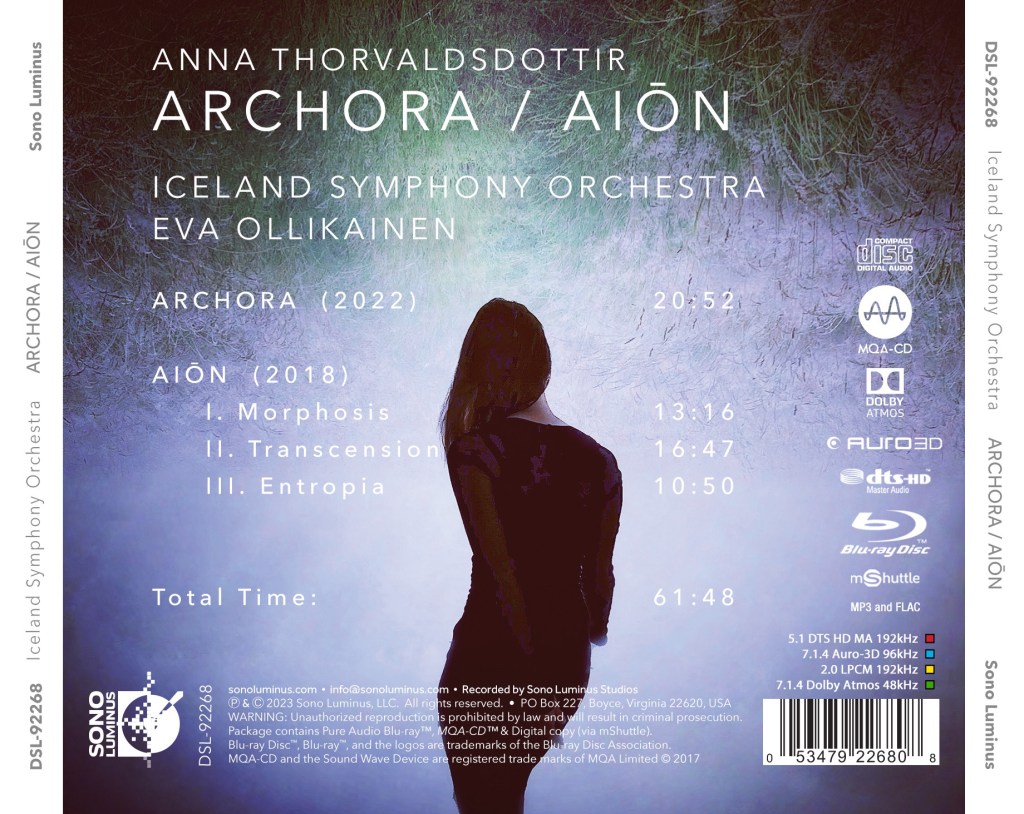
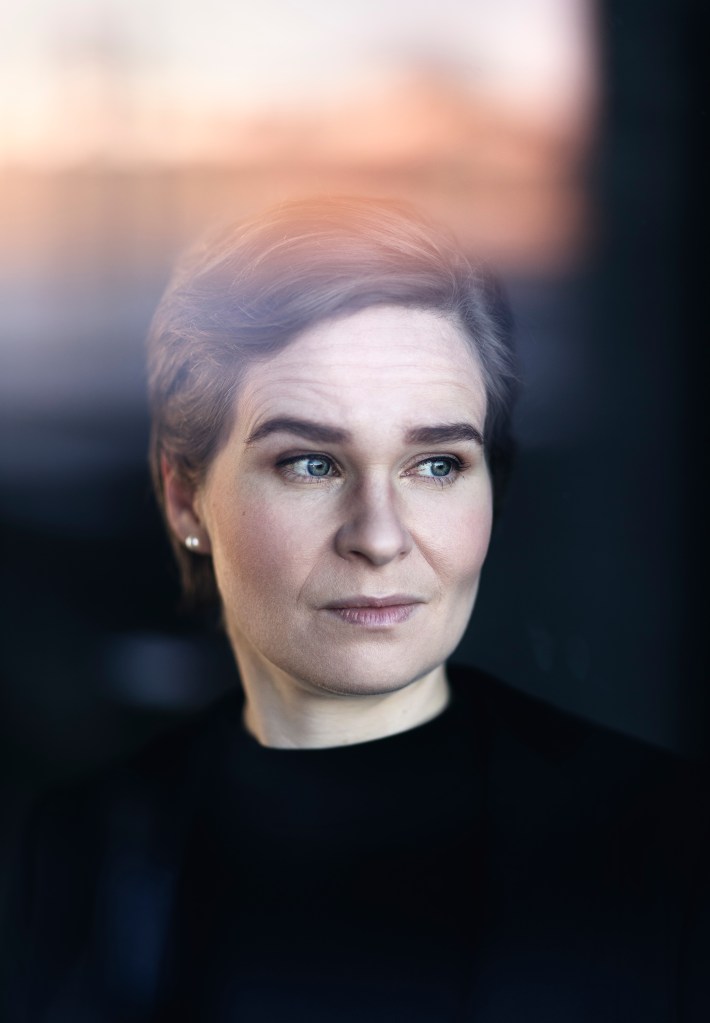
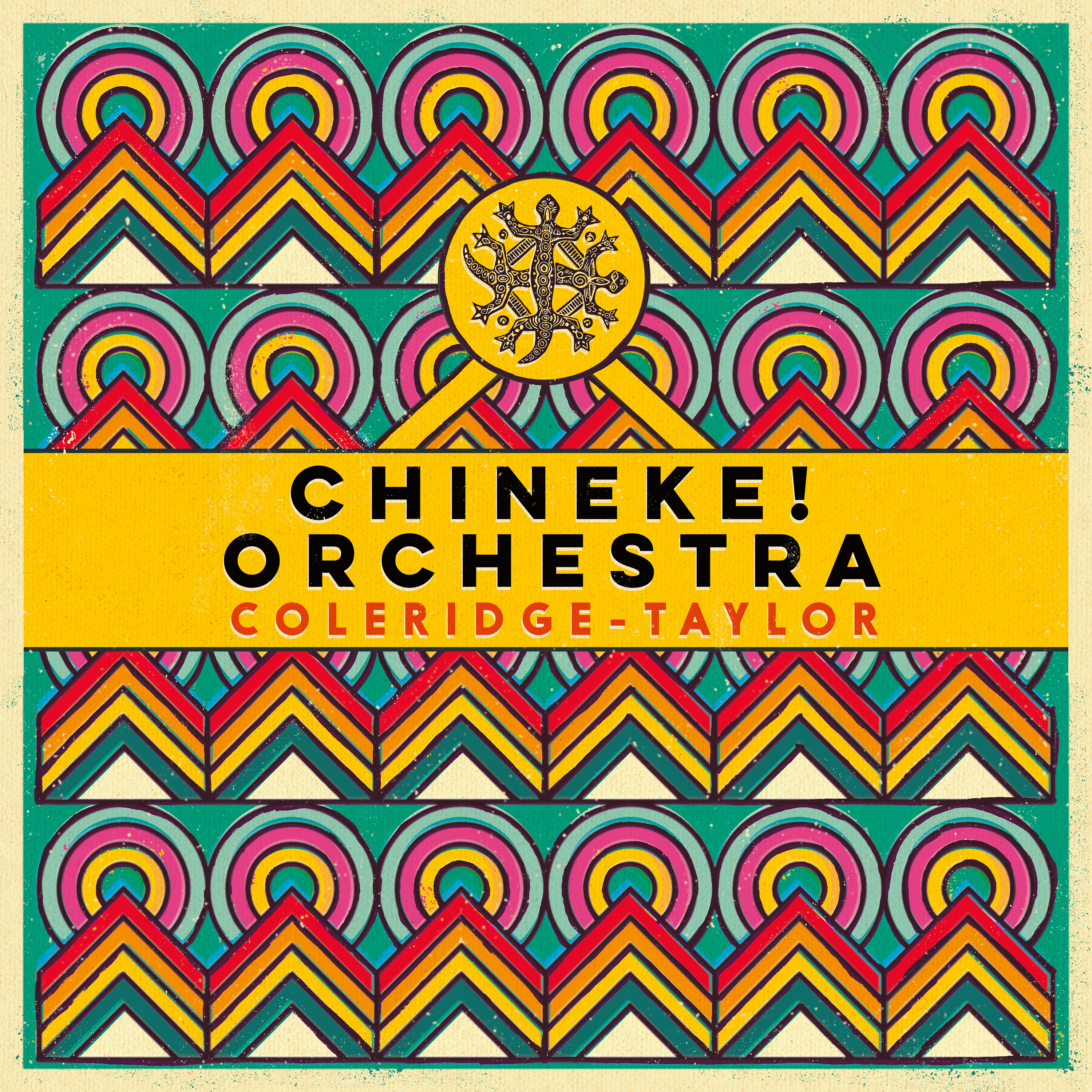


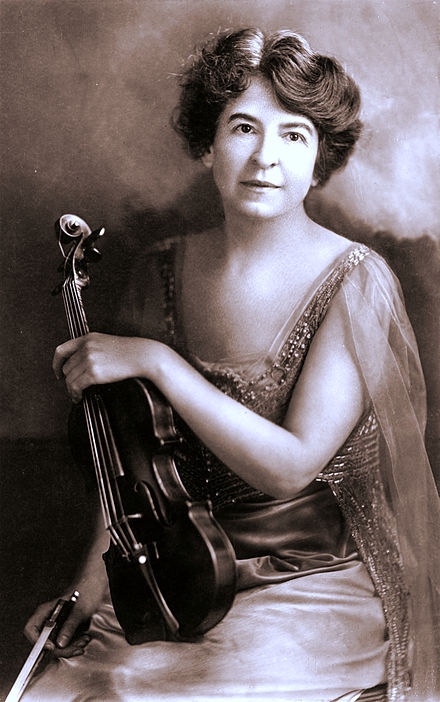


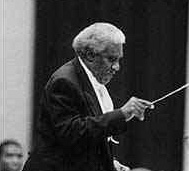




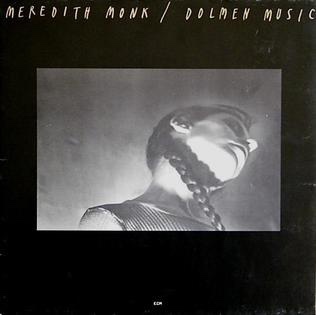


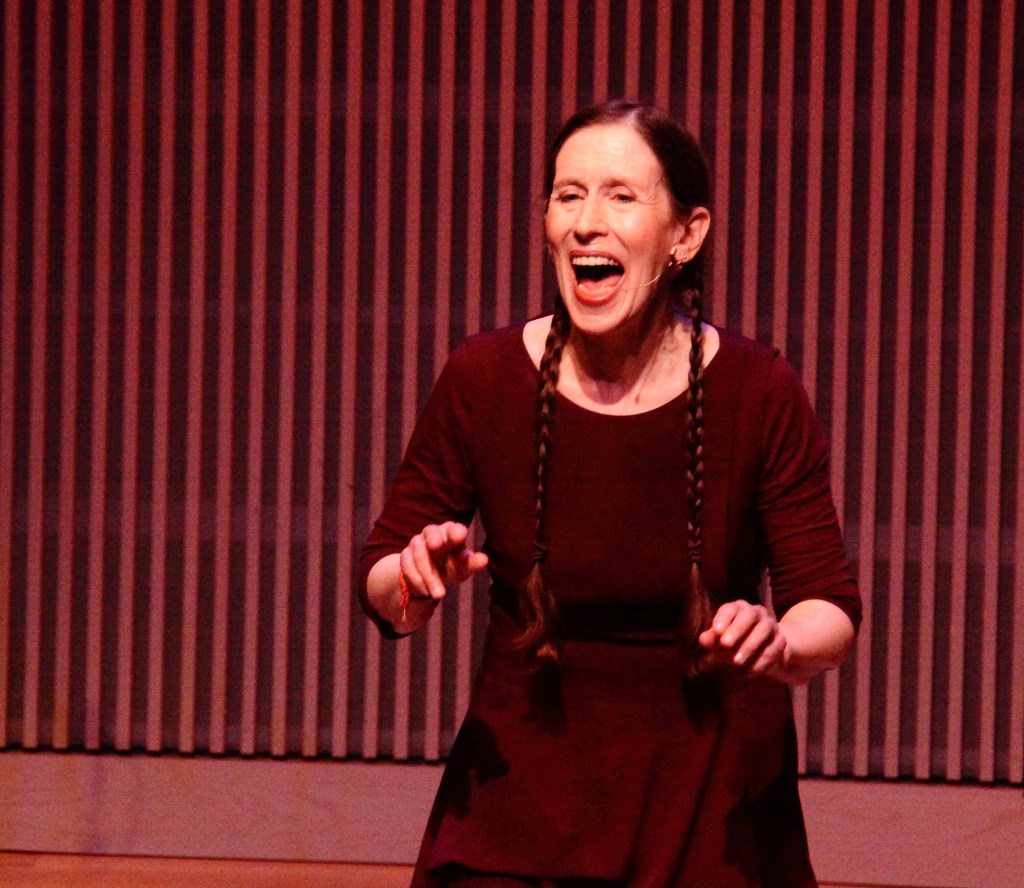
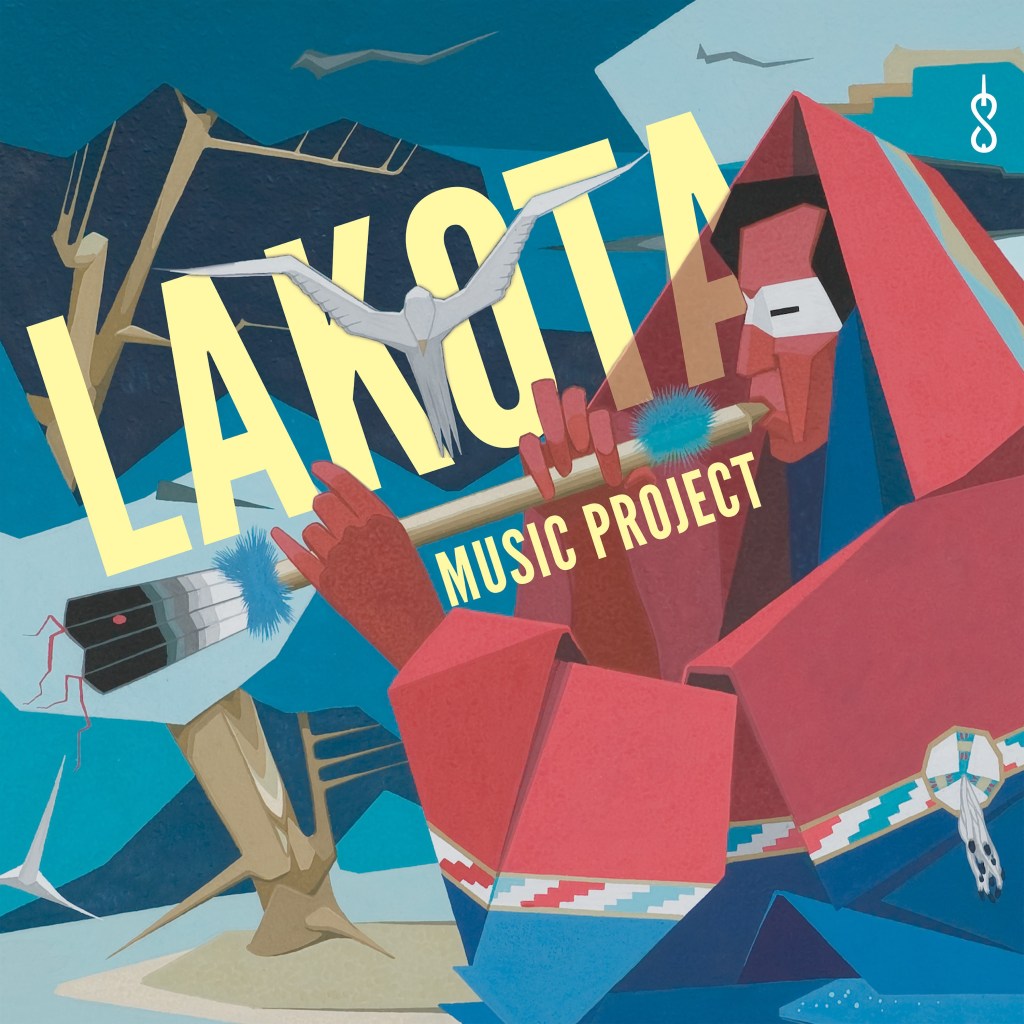
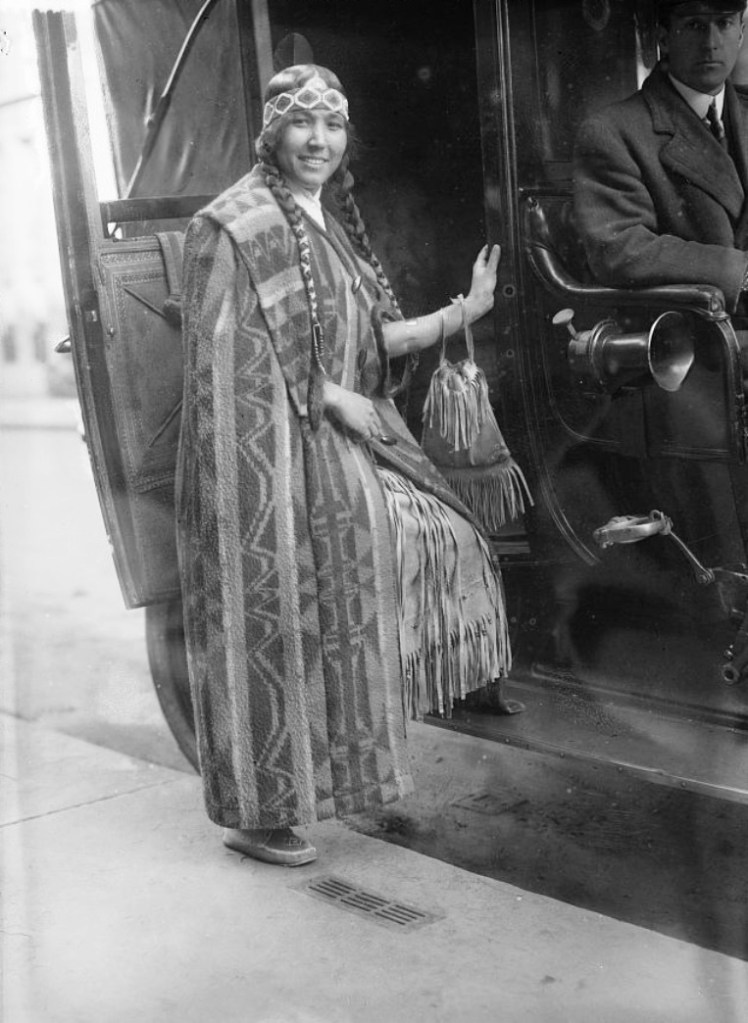


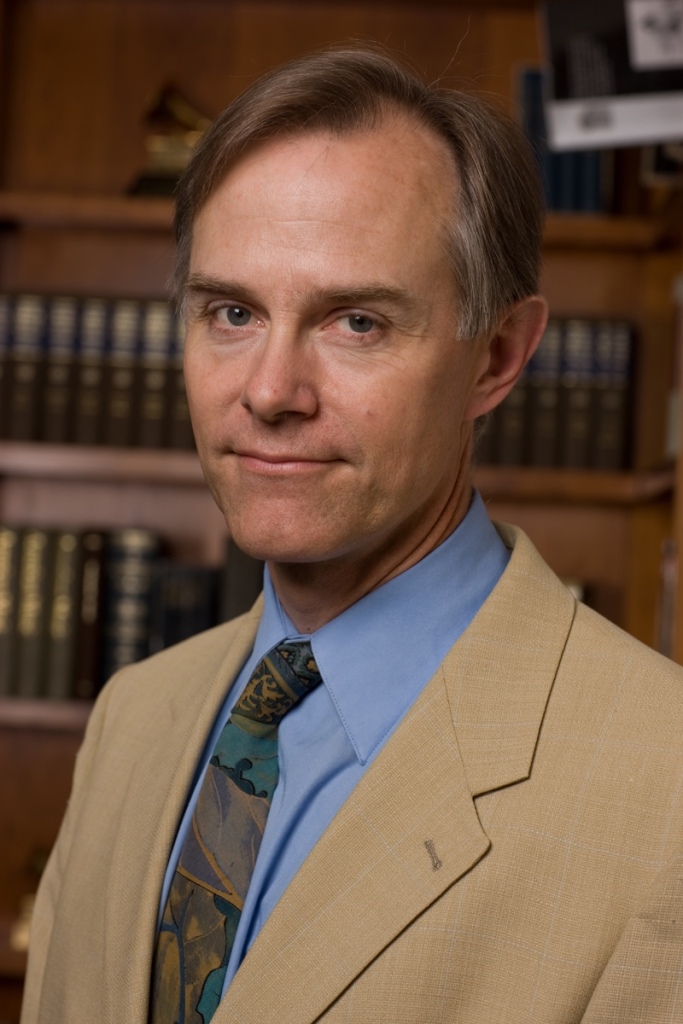
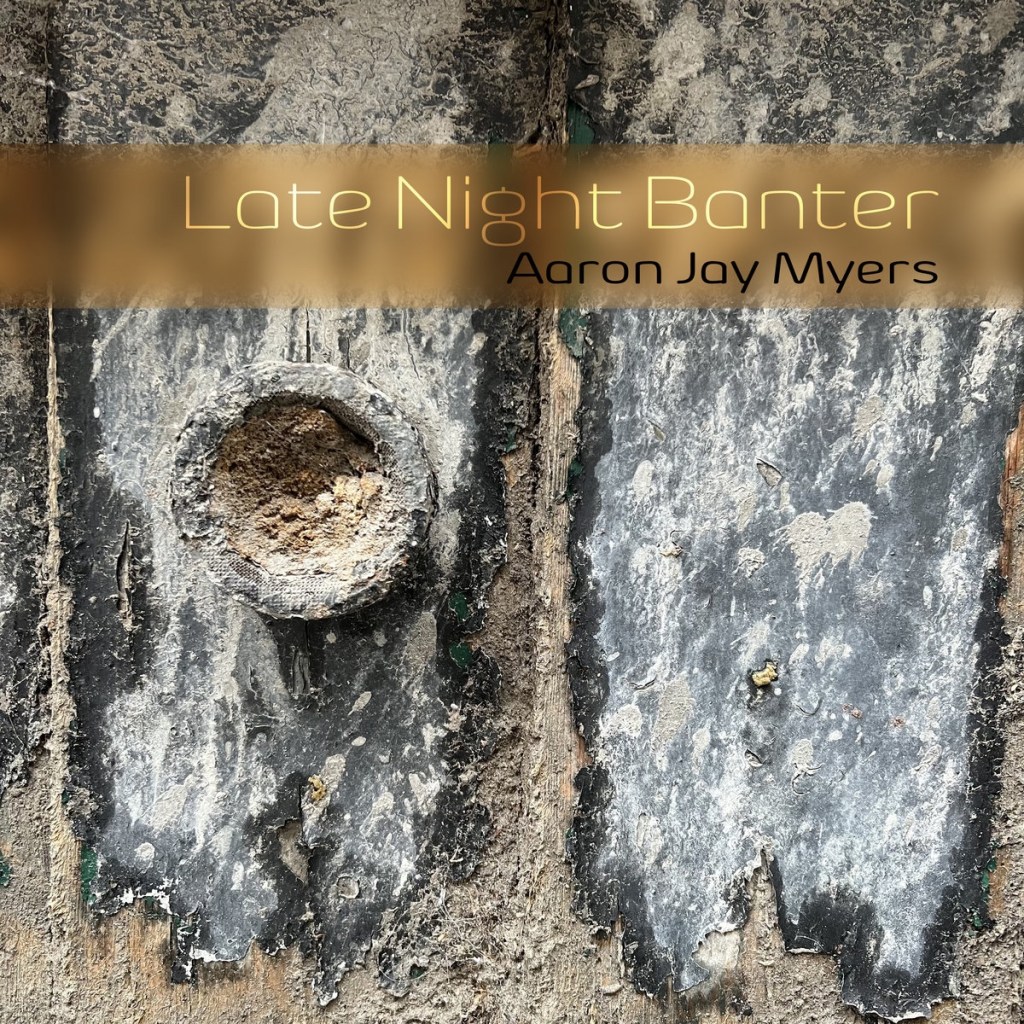
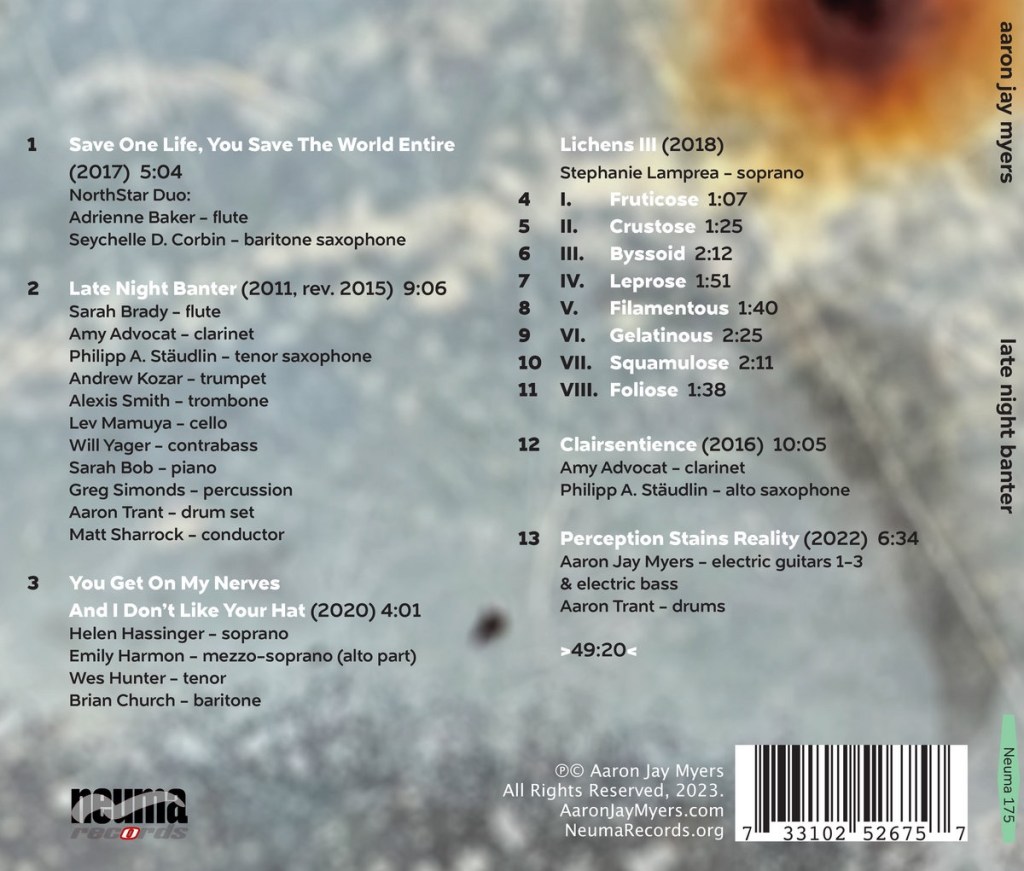




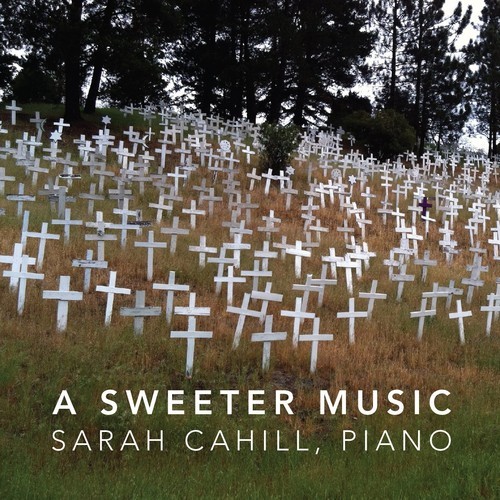


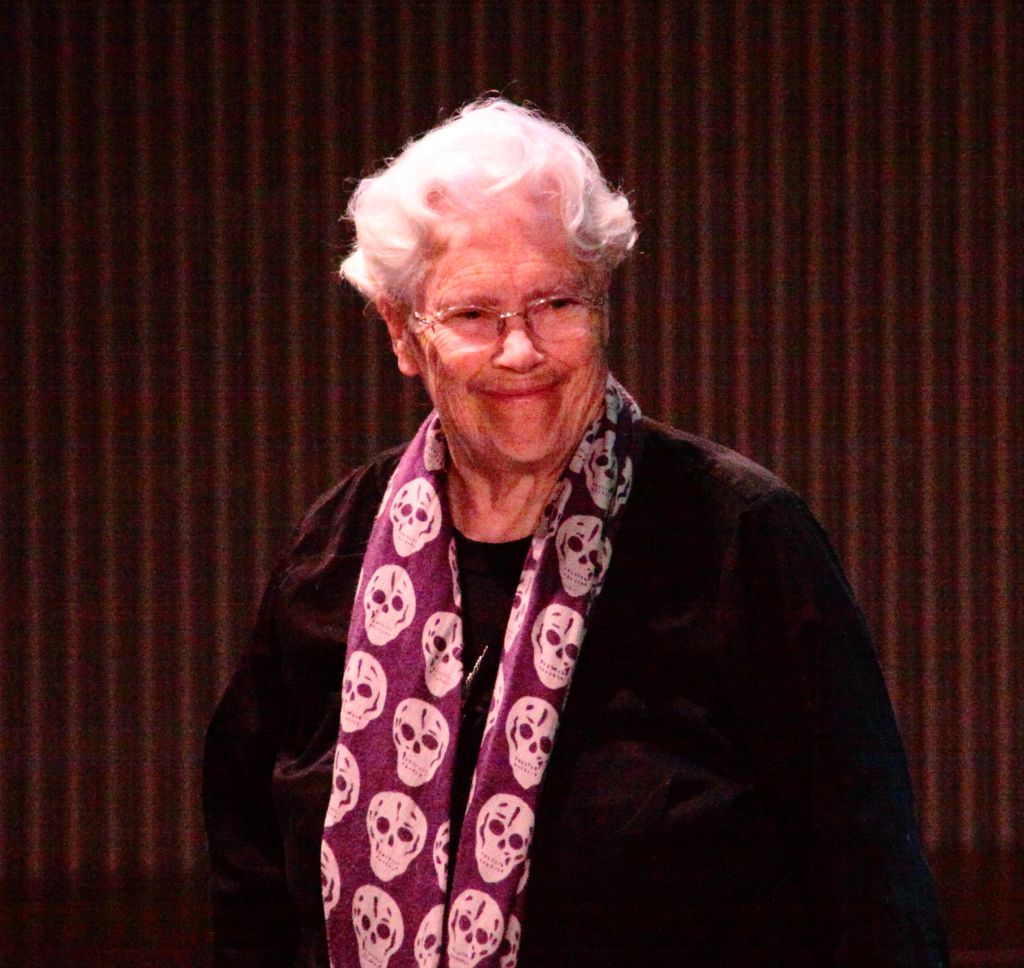


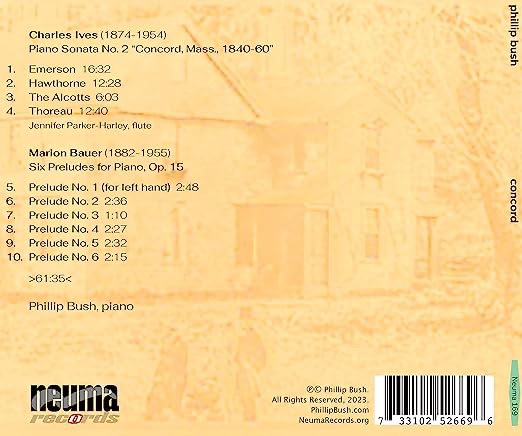


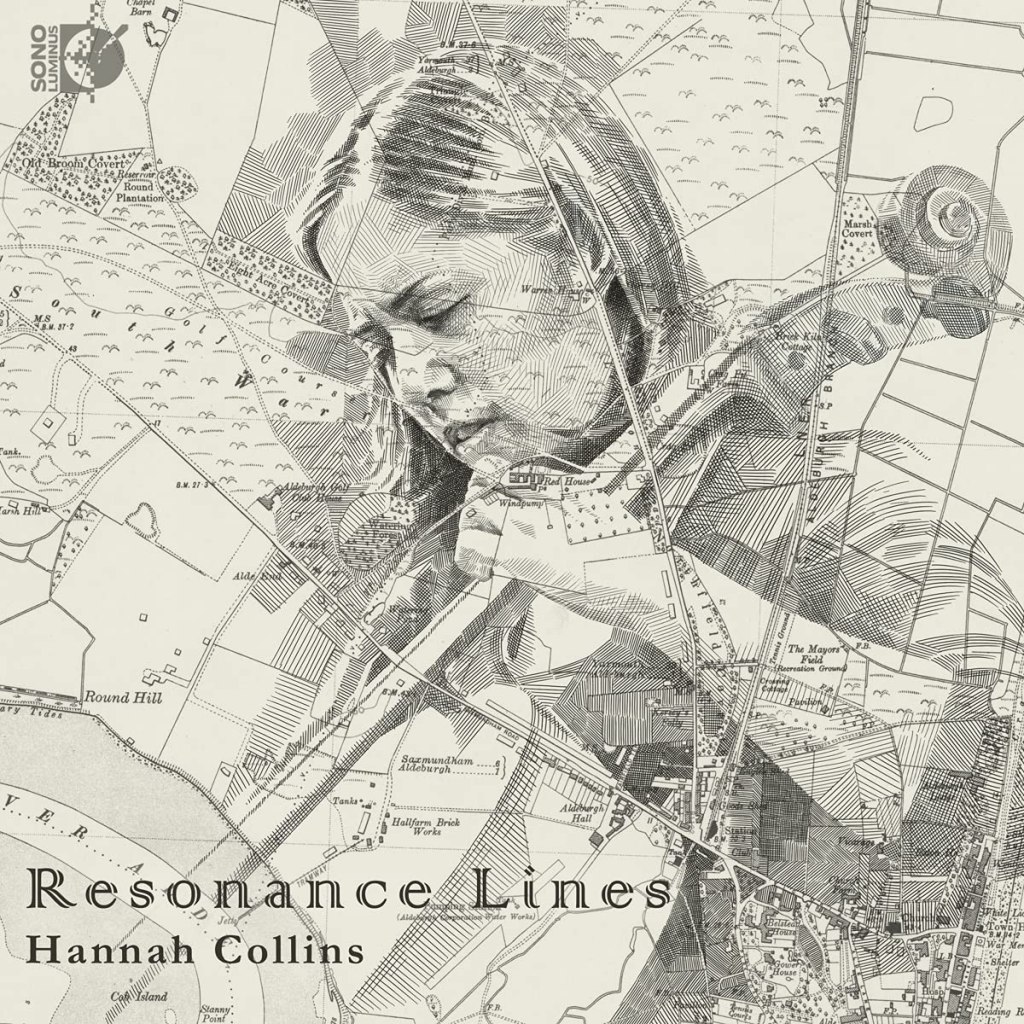


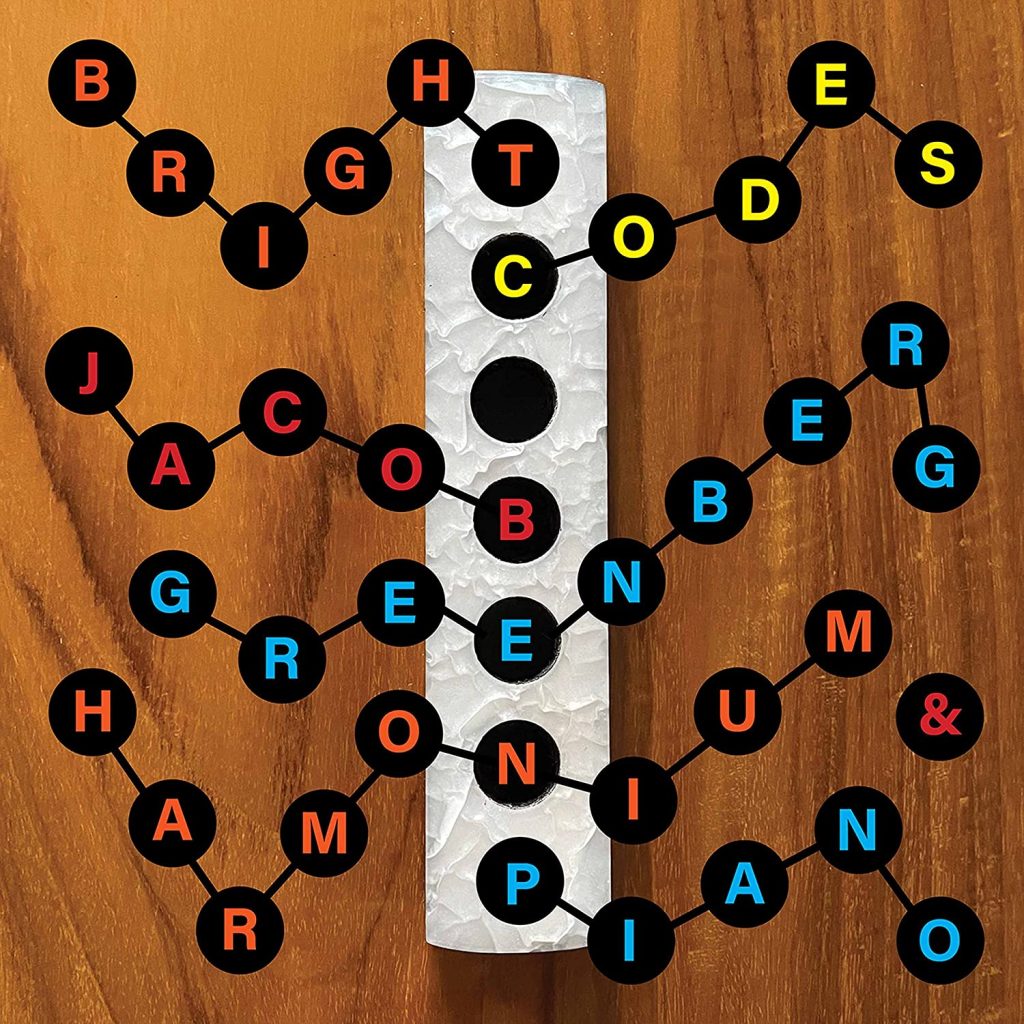


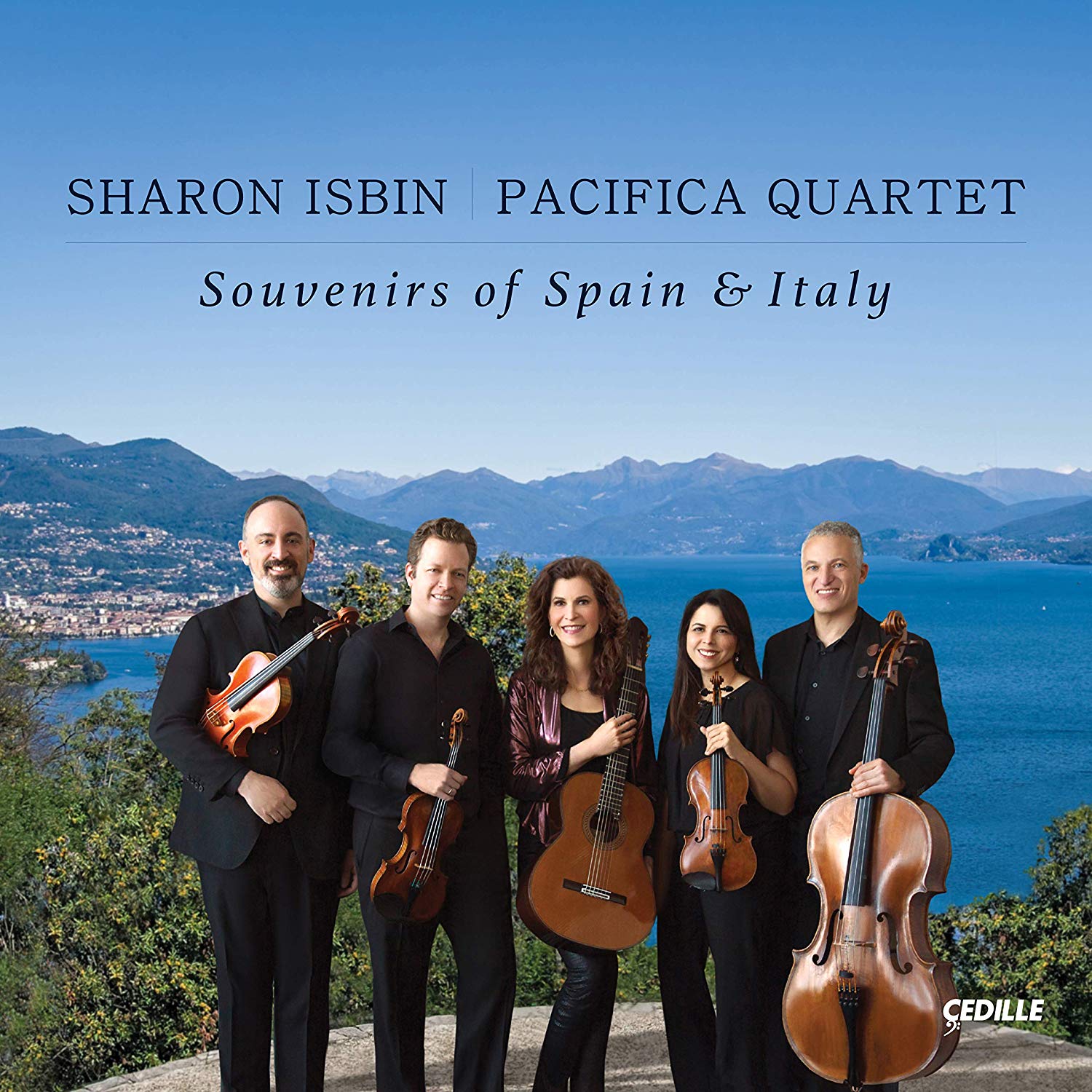

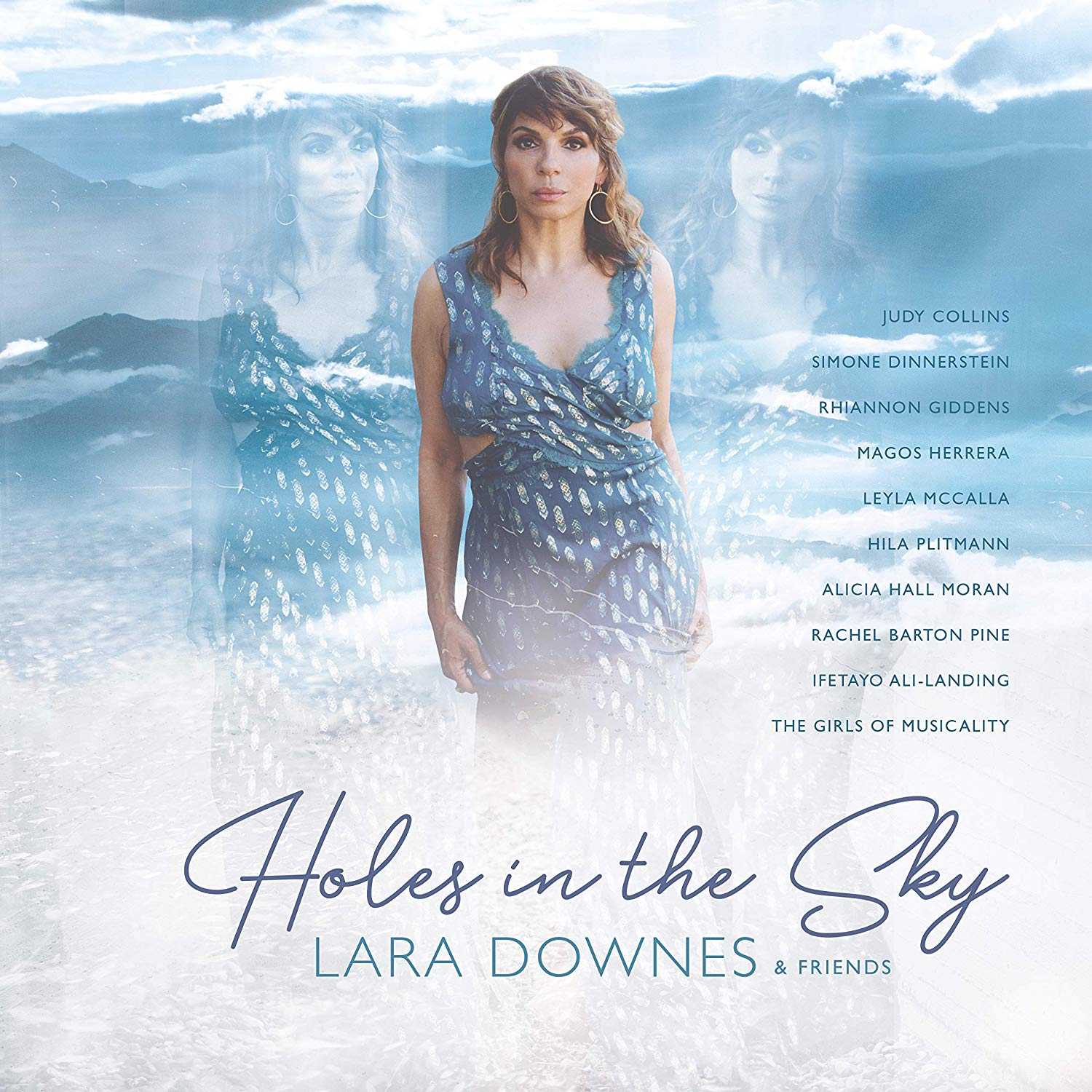


 New Music Buff