I’ve listened to this utterly charming debut album from this flute and marimba duo several times. It is an engaging and charming selection of music by composers all unfamiliar to this listener but all seem to have the gift of substance.
I will not attempt to survey each of these composers’ works or even their biographies except to provide references for listeners who wish to explore these composers more in depth. Many do not (yet?) have web pages. They are:
They all contribute compositions delightfully suited to this combination of instruments. Many were written for this duo.
All the compositions have characteristics ranging from jazz to light classical chamber music. And when I say “light” I simply mean basically friendly works with tonal melodic content but the music here has depth and substance.
There is a clear and wonderful synergy of just really good dedicated musicians whose interpretive skills that flatter the composers’ works. Rather than attempt to describe each of the pieces on this album, I am choosing in this brief review to simply report the experience of this reviewer’s multiple listenings.
I have played this through many times, each time in varying contexts, some with no distraction, focused listens, sometimes in the background letting the music draw its gentle spell in the background, and all revealed joyful, seductive musicianship of music with creative substance. I will leave further analysis to those trained far better than me. I’m just a happy listener. As Shakespeare said, “…play on”!
Cover of the original vinyl release of “Der Floss der Medusa”
The 1913 riotous premiere of Stravinsky’s “Rite of Spring” is pretty well known in classical music history. Sandwiching the premiere of his masterpiece of modernism between well known conservative chestnuts such as “Les Sylphides” (an orchestration by Alexander Glazunov of piano music by Chopin, 1907-9) which opened the concert along with Carl Maria von Weber’s “Les Spectre de la Rose” (an 1841 Berlioz orchestration of Weber’s 1819 piano piece, “Invitation to the Dance”) and Alexander Borodin’s “Polovtsian Dances” from his opera “Prince Igor” (1887-1890) which were programmed to follow it. Combine these (familiar to audiences) conservative works with the Rite’s original choreography by Vaclav Nijinsky and the subject of pagan ritual that form the scenario played before an audience consisting of elite concert goers seeking a familiar easy experience along with a burgeoning group of bohemian leaning audience members (who loved the Rite’s loud, subversive nature of both music and staging) and you have a formula for conflict. Speculation is that Stravinsky and/or his producers planned this event to create a contrast for his new modernist work but more likely it was a largely a product of its time and of human nature.
Fifty two years later, Hans Werner Henze appears to have had nothing in mind (at least initially) other than the premiere of his new work, “Das Floß der Medusa” (The Raft of the Medusa) on December 9, 1968 in Hamburg’s “Planten und Blomen” Hall. The recording which was later released on DGG LPs had been done sans audience on the previous days, December 4-8th, and preparations were being made for that night’s world premiere performance before an audience.
An article would later run in the German magazine Der Spiegel describing the event. I present the text of that article in my own translation:
Der Spiegel, December 12, 1968
“What is necessary”, says Hans Werner Henze, 42, “are not museums, opera houses and world premieres … What is necessary is the creation of mankind’s greatest work of art: the world revolution.”
Last Monday, Henze’s “Das Floss der Medusa,” an “Oratorio volgare e militare, in due parti” commissioned by the NDR, was to be premiered in Hamburg — instead, there was a revolution in the hall.
The 1060 seats in Hall B by Planten un Blomen were fully occupied, the NDR Symphony Orchestra was already tuning the instruments, on the podium were ready: Edda Moser (soprano), Dietrich Fischer-Dieskau (baritone) and Charles Regnier (speaker) , the North German Radio Choir, the RIAS Chamber Choir and the St. Nikolai Boys’ Choir. The game could begin, and it began — a duo volgare e militare between NDR and SDS.
Because the Berlin SDS friends under Gaston Salvatore, summoned by Henze, didn’t want to do without this premiere of the APO (Außerparlamentarische Opposition) man Henze any more than the socialist students of the Hamburg Music Academy — albeit for different reasons: The Hamburgers cared about Henze’s music as reactionary to expose the Berliners, to bring their Hamburg colleagues to reason and to divert attention to the middle-class audience. Action against Henze, argued the Berlin “Project Group Culture and Revolution,” would only benefit the bourgeois enemy.
Che Guevara (1928-1967)
After three days of palaver, the Hamburg wing was lame. For example, the intention to ask the composer to explain the structures of his music when he played Medusa was abandoned, as was the plan to intervene in the choral singing, and the attempt to expose Henze’s listeners to Henze as culinary Henze consumers.
On Monday evening, Berliners and Hamburgers moved in socialist harmony to Planten un Blomen, the premiere location that Henze claims to have confused with Blohm & Voss. At least that’s how the Berlin SDS had informed the Hamburg SDS.
NDR program director Franz Reinholz, to whom Henze owes the “Medusa” commission, knows otherwise: “Henze,” Reinholz assures, “inspected the hall himself beforehand. He was also informed about the audience.” shipyard workers, it was, the socialist students recognized once again, an audience of “rich bastards.”
Shortly before 8 p.m. the squad was ready for action in Hall B. And before the conductor Henze stepped out of the artist’s room, Che was already in the hall: the agitators had pinned a Che Guevara portrait to the desk; it was intended to remind us of what had been concealed in the program with Henze’s approval: the oratorio is dedicated to the Latin American freedom fighter.
NDR program director Franz Reinholz didn’t appreciate this memento at all – he tore down the poster. He felt that politics and art did not go together.
The students didn’t think so. They put up a new poster and hoisted the red flag, and a team of anarchists, who had come with duck decoys and other hunting instruments, hung a black one next to it. Then the radio hit, the police joined in, the RIAS Chamber Choir began, but not in unison. “Lower the red flag,” demanded one singer, two singers left sobbing: “We are Berliners and have had enough of red flags.” to whose honor they should sing, left the stage and never came back.
The composer, however, was determined to prove his revolutionary sentiment to his comrades for the first time by saying, “The red flag,” said Henze, “it stays.”
While NDR director Gerhard Schröder (SPD), long since in the safe broadcasting van, stopped the live tumult at 8:19 p.m. and radioed his listeners a recording of the dress rehearsal, his deputy, Freiherr von Hammerstein-Equord (CDU), countered in the hall the resistance of the demonstrators banners and placards; A little later, a squad of 25 police officers, visors on combat helmets, broke into the hall. “Nazis!” “Fascists!” shouted the audience. One artist yelled enthusiastically, “Down with the Reds!”
“The police,” Hammerstein explained, “were ready at the request of the NDR, which considered demonstrations possible and had to ensure the safety of its employees, the audience and valuable instruments.”
Ernst Schnabel, librettist
NDR employee Ernst Schnabel, librettist of “Medusa”, felt the precautions thoroughly. Several police officers threw him through a glass door, expedited him with six other delinquents to police headquarters, took his fingerprints, and locked him in cell 7 until midnight. Schnabel to Hammerstein-Equord: “We don’t have breakfast together anymore.”
Meanwhile, Hammerstein kept order in Planten un Blomen. When Henze informed the audience: “The intervention of the police prevented the discussion,” Hammerstein snatched the microphone from his hand. The hands in the stalls responded with rhythmic Ho Chi Minh clapping, and Henze clapped along — three times. Then he disappeared through a back door.
At that time the “raft of the Medusa” was already well advanced in the ether waves — on the usual counter-revolutionary course.
“Wherever”, the “Süddeutsche Zeitung” judged, “the choirs sang, there was the old, floating, iridescent Henze sound, which doesn’t hurt anyone and never becomes distinctive. The orchestra … strangely often reminded of Richard Strauss.”
The music critic Heinrich von Lüttwitz saw “Medusa” as a “tragi-comic absurdity” full of “romantic colours”, with “sometimes clumsy, sometimes fussy recitatives and melodramas”.
Henze biographer Klaus Geitel saw the “raft” in the “ocean of an emotional but overly extended, lyrically colored monotony”.
It may be that, as Henze puts it, this evening “brought him a little further” politically. But the Henze fans in the APO have failed — that’s how the currently most thoroughly analyzing music theorist Heinz-Klaus Metzger, who identifies with the “anti-authoritarian wing of the SDS,” puts it.
‘The APO, Metzger predicts, ‘will only have created meaningful conditions when German musicians no longer refuse to perform under a red or even a black flag, but instead perform a work by Henze. And for strictly musical reasons. Unfortunately, not even Tucholsky’s bon mot applies to this composer: “Because of bad weather, the German revolution took place in music.”
______________________________________
——————————————————–
So it went in 1968. The Oratorio performance was cancelled and the world premiere had to wait until January 29, 1971 when it was performed in Vienna by the ORF Orchestra conducted by Miltiades Carides. The recording of the first performance was achieved prior to the performance with the audience. That recording was released in 1969.
Many more performances followed but one of those performances, in 2001, was attended by a former chorister, Henning Sidow. He was twelve years old at that 1968 non-concert. And the following article on his experiences of that attempted performance was published in Der Spiegel in 2013.
————————————————–
__________________________________
Blaze at the choral-concert. How the “Raft of the Medusa” went down.
He was anxiously awaiting the big performance: when he was twelve, Henning Sidow was supposed to perform on stage with the NDR boys’ choir in Hamburg. And indeed, the live performance of the oratorio was exciting – but for completely unexpected reasons.
The boys’ choir was founded in 1960 as the choir of the North German Radio and has been connected to the main church of St. Nikolai since 1967.
“As a twelve-year-old in 1968, I had only vague ideas about the political and social turmoil of the time. But on December 9th, as a member of the St. Nikolai boys’ choir, they became tangible experiences for me as a result of the unsuccessful premiere of the oratorio “Das Raft der Medusa” by composer Hans Werner Henze in Hall B in Hamburg’s Planten un Blomen Park.
I had been in the boys’ choir for four years, which belonged to the NDR until 1967 and was then taken over by the St. Nikolai parish in Hamburg. We “experienced” boys felt quite up to the task of taking part in Henze’s musically demanding oratorio and also appearing in a world premiere that was to be broadcast live on the radio.
The play tells the tragic story of the French frigate “Medusa”, which ran aground as the only ship in a convoy on the way to Senegal in 1816. Since there were not enough lifeboats for the 400 people on board, the crew built a raft that could accommodate around 150 men, women and children and which was to be pulled ashore by the boats. But the officers fled in the boats, leaving the people on the raft to fend for themselves. On the day of the accidental rescue 13 days later, there were only 15 survivors. The others fell victim to starvation, lack of water or cannibalism.”
Hide and seek in the empty hall
“Our boys’ choir was supposed to portray the children on the raft – first as living, then as dead. A difficult piece with a socially critical background, this “Raft of the Medusa”, we knew that. It meant not only intensive rehearsals, but also many afternoons and evenings of rehearsals. What we didn’t know was that the premiere was never to take place.
The location of the event and the preparations fascinated me. The hall seemed huge to me as a child. Large platforms were set up here for the performance, with countless instruments on them. There were people everywhere: stagehands, technicians, orchestra musicians, choristers and soloists – it was just teeming. Now we guys were added.
We had a lot of waiting time and were able to explore everything. So we crawled under the stage construction, played hide and seek, crawled under the platforms and shimmied over wooden struts until we got too many splinters in our fingers. And right next door there was another hall, several stories high – a gigantic glass box. There was no event taking place at the time, so the hall was yawning and unlit. We strolled through them, hearts in our pants because of the darkness and the eerie acoustics of the room.”
Protest in the concert hall
“Then things got serious, rehearsals began. In my memory, Hans Werner Henze was a small man who was already a bit bald at the time, but incredibly energetic. He radiated a mixture of warmth, ingenious artistry and normality. We boys found him sympathetic, but he had no airs and graces and met everyone completely naturally, friendly and patiently. He treated us as if we were adults, which I found very beneficial. When I was a child, I was used to other well-known personalities whom we had met here and there through our performances to be treated and professionally not taken very seriously.
Henze was excellent at conveying his music to the participants, it was lively, colorful and exciting like the story itself. The dramatic story and the historical background that he and the music told us captivated me even then. Conducting, however, was not his thing, I remember his somewhat awkward gestures. But that’s not so important in a professional ensemble, as long as the right impulses and cues come. In any case, we children liked and admired him and his music.
On December 9, 1968, as far as I can remember, the hall was filled to the last seat with an audience. There was talk of more than 1000 guests. Henze was already at the desk. But just before it started, there was a small crowd in front of the stage. A few protesting students stood directly in front of the podium and hung red flags to the left and right of Henze’s desk. It was not clear whether the master just put up with this or whether it had been agreed with him, as was later speculated. In any case, he didn’t seem to put up much resistance to the activities.”
The situation is escalating
“Shortly thereafter, the audience and the choir became restless. Because one of the choirs, the RIAS Chamber Choir, came from Berlin, the enclosed city. Red flags were literally a red rag for many who lived there. At first I – and I’m sure my fellow boys too – didn’t understand much of what was happening down there. But when voices from the Berlin choir grew louder and louder, refusing to sing under “the red flag”, I understood what it was all about. The adults feared that they and the music would be exploited by demonstrating communist students. In addition, a large portrait of Ché Guevara has now been erected, to which the work is dedicated.
Henze’s efforts to get the performance started were nipped in the bud by the boycott of the Berlin singers. The removal of the communist symbols was demanded louder and louder from the podium, before they would refuse to sing a single note. In the meantime it was getting more and more restless in the auditorium and in front of the stage there were small scuffles between the demonstrators and some spectators who got involved. Negotiations between the choir and the composer were taking place behind the scenes as to the conditions under which the performance could still take place.
We boys watched the whole thing with suspense, since the circumstances had now reversed: the auditorium had become the stage, and we on the podium had a box view of this live cultural scandal. Music was out of the question. In the back of the hall, the doors flew open and police officers in full riot gear marched in. Like a horde of ants, they came down the aisles from several sides to the podium. I don’t remember how many there were, maybe a hundred. They looked particularly martial with their helmets with full visors and the shields they – to protect against what actually: a few students, musicians and false notes? – carried in front of them.”
A dark chapter
“Henze had meanwhile disappeared unnoticed and downstairs young people were having their arms twisted behind their backs in order to be taken away. Among them was Ernst Schnabel, who wrote the text of the play. He was later charged with “resisting the authority of the state”. On the other hand, part of the audience did not like the actions of the police and protested, which did not prevent the state authorities from their plan to convict the “perpetrators” in flagrante delicto.
I can’t remember exactly how long the commotion lasted. In any case, it never came to a performance, and at some point we left the stage disappointed. It was incomprehensible to us children why a few red flags and the likeness of a bearded South American led to such an uproar. For us it was about art, about music. We felt cheated of our work.
The newspapers reported extensively on this event in the following days. Some tabloids insisted on turning it into a real political scandal. To this day it is unclear to me what the state authorities were thinking when they made this appearance. That’s for sure
That she was thin-skinned in those times and liked to overreact on such occasions. The fear that the ideology that prevailed behind the Iron Curtain could also spread to the West was too great.
For Hans Werner Henze, who died in 2012, this scandal is said to have been a dark chapter in his artistic career. Later, it is said, he did not want to be reminded of it.
My own memories of that evening only surfaced again years later: at the much delayed premiere in June 2001 in Hamburg’s Laeiszhalle. After 33 years I experienced “The Raft of the Medusa” a second time. The fact that I was still able to silently speak and sing along to the lyrics and the music showed how much the piece and the story it was based on had impressed me at the time. None of it was lost. I left the performance deeply touched.”
So, here we are some 46 years after the riotous non-premiere of Henze’s fine oratorio/requiem, 111 years since the famed “riots at the Rite”. The Stravinsky has since firmly taken its place in the commonly performed orchestral and ballet repertory. The Henze work, never laying any claim to the seminal and visionary compositional methods that characterize Stravinsky’s landmark work, continues to receive performances and recordings having established itself as a substantial work, and himself as a significant composer with a rich and varied career.
NB: All translations are my own efforts. Historical photos are included under fair use terms.
After agonizing about writing a “best of” blog and publishing it before January 1, I decided to take a pause and enjoy the holidays. So here I look back on my 2023 in the rear view mirror but with memories still pretty fresh.
Regular readers of this blog likely already know of my oft shared opinion of the superfluous nature of “best of” lists and of my acquiescence in producing such on an annual basis. I certainly don’t think of this as a meaningless exercise and I think the process has grown on me. It is a chance to achieve a perspective which would be missed by simply plowing on ahead with the usual flow of reviews and articles. But drawing down that 12 month perspective is an opportunity to evaluate those months, to see where we’ve been and to hopefully get a smidgen of insight into where I/we are likely headed.
My Facebook friends will recognize the representative meme at the head of this article which is one of the more cloying aspects of “AI”, whatever that is. So indulge me for a moment to look at this seemingly new intrusion into the reality we thought we knew. So, what is “AI” and what will it do to us? Ultimately I’m not the one to answer that question but I’d like to throw some ideas to add to the speculation.
First, the choices a composer makes, like the choices of a painter, a writer, etc. are the stuff of the mystery of creation itself. Why “A major”, or why that tuning, or scale, or rhythm, or orchestration, etc? So along comes the notion of removing, or at least distancing, the artist from their creative product. That notion started not with famed proponent John Cage but rather with Johannes Chrysostymous Wolfgang Amadeus Mozart in his K. 516f musical dice game. Voila! Algorithmic composition (actually fairly common practice in the classical era). An early manifestation of “AI”? Perhaps.
Lejaren Hiller (1924-1994) was the first composer to employ electronic data processing in a musical work in his Fourth String Quartet subtitled “Iliac Suite” in 1957. There followed similar experiments with various iterations of electronic creations at music centers worldwide including The University of Illinois at Champaign, Columbia-Princeton, Stanford, The University of California Berkeley and San Diego, The San Francisco Tape Music Center (later subsumed into the Mills College Center for Contemporary Music, IRCAM in Paris, Israel Electronic Music Studio, and counterparts in the Nordic countries, Germany, Belgium, etc. Proto “AI”?
While historically interesting I raise this issue to say that, as far as I can tell, “AI” has not made this writer’s greatest hits list but it is interesting and maybe even useful. With that, my concern for the subject officially goes to the back burner for a later time.
2023 has been a year of great personal changes for the writer of this blog. A job change, a geographical relocation, and many things unrelated to this blog characterized a busy year for New Music Buff. So here in a sort of holiday tradition I present my “Best of 2023” from my little listener’s corner of the world. For the sake of simplicity I present a more or less chronological exposition of my sonic adventures. (N.B. Not one portion of this article made use of “AI”).
I begin with not with my 20 most read posts, a practice that characterized previous iterations of this annual exercise. Instead I am providing my top 20 favorite releases that were reviewed in 2023. Please note a couple of caveats. First, I receive a lot of review requests, more than I can even listen to, much less give a reasonably intelligent review. Albums that I’ve not reviewed should not be assumed to be bad or insignificant and my reviews are personal observations. I really only review albums that interest me anyway. Second, this article is only one reviewer’s opinion and not intended to be definitive or to supersede anyone else’s opinions. Third, this is not the end of my attention to music that was released in 2023. Some releases require more time to give a fair listen and a respectful review. There are more to come in 2024.
First a few stats: 2023 saw the publication of some 45 blog posts on New Music Buff, earning me 9693 views for the year. I rarely get comments on my posts (though I welcome and invite comments both positive and negative). Not bad, I think, for the overall less appreciated musical styles that fuel my desire to write about.
Now, in chronological order (of publication) are my personal favorites as a listener:
Neuma 158
Binaural Beats in the Tudor Rainforeststarted my new year with a bang. Reviewing this disc required me to take a closer look at the astounding work of David Tudor and his unique contributions to new music. This important release is a recording of a work which, by its own concept cannot receive a “definitive” performance. But this recording comes mighty close, involving “binaural” recording utilizing a mobile set of binaural microphones which are worn by the recordist. In addition this recording involved a collaboration with Pauline Oliveros and a group called, “Composers Inside Electronics”. The recording was done during Oliveros’ tenure at UCSD. Rainforest IV is so called because it is the fourth iteration of the instructions that form the original concepts of Tudor’s composition, “Rainforest”. It is an immersive sonic experience heard on headphones but actually not bad even heard on stereo speakers. A rich and wonderful release.
Starkland S-236
From a 1960s electroacoustic to a budding 21st Century composer Kotoka Suzuki released on the reliably interesting and even visionary Starkland label. Next Gen Electroacoustic: Kotoka Suzukiwill introduce the listener to this rising star who doubtless will produce more of her compelling compositions.
Sony 194399434826
Igor Levit is a fine concert pianist whose albums are effectively redefining the way we, as listeners, perceive the western classical oeuvre. Igor Levit: Defining Tristandoes for the various musical pieces inspired by the Tristan legend what Levit did for the concept of the great keyboard variations in which he selected Beethoven’s “Diabelli Variations” and Frederic Rzewski’s “El Pueblo Unido Variations” to join his recording of the Bach “Goldberg Variations” in a 3 disc package placing these three large sets of variations as emblematic of the genre in three different centuries (18th, 19th, and 20th). Levit, by his recorded output, is providing a valuable perspective which may influence repertory choices for years to come.
Levit’s traversal of the Tristan legend here ranges from the second recording of Hans Werner Henze’s too seldom heard “Tristan Preludes” back to works by Wagner (of course) and Liszt. He even slips in his wonderful solo piano transcription of the Adagio of Mahler’s unfinished 10th Symphony into the mix. This is a very compelling Tristan anthology by a deservedly still rising star.
Cantaloupe
This Cantaloupe release by Bang on a Can composer and master clarinetist Evan Ziporyn is both masterful and great fun. Evan Ziporyn: Bang on a Popconsists of transcriptions of “pop” songs for multiple clarinets all played by Ziporyn via his very effective multi-track recordings. The album is very personal and pretty much cliche free with these engaging and insightful transcriptions. It is an homage to the songwriters as well as a showcase for Ziporyn both as composer and as performer.
Microfest MF 23
The Young Person’s Guide to Ben Johnston is an ideal way to introduce listeners to the wonderful world of the late Ben Johnston’s music. Johnston, a student and colleague of Harry Partch shows his compositional skills utilizing non-traditional western tunings in these representative works. Johnston here does for some quasi pop tunes what Evan Ziporyn did with his clarinetist perspective for the tunes on Pop Matters. But Johnston’s pretty, accessible work belies fascinating complexities that don’t actually sound complex to the listener. This disc contains Johnston’s last completed work, “Ashokan Farewell” (which Johnston took to be a public domain folk tune but is in fact a piece written by Jay Ungar). It is paired with the 4th String Quartet (a set of ingenious variations on “Amazing Grace”) from 1982 and the 9th String Quartet of 1997. Profound, lovely to listen to, and a great homage.
DVD OM 4001
This DVD is a major addition to the discography of Charles Amirkhanian’s sound poetry as fine sampling of one aspect of Carol Law’s (Amirkhanian’s life partner) complementary visual art. These collaborations are also important contributions to the visual and performative aspect of these collaborative works. Amirkhanian has been a fine curator and promoter of the work of others but he has rather seldom stepped into the spotlight himself. This quirky genre got some fabulous exposure at the 7 day Other Minds 23 festival in 2018 in which Amirkhanian’s work was presented in the (surprisingly varied) context of sound poetry of the amazing international collection of artists who were hosted at those events. This DVD should be in the collection of anyone interested in new music sound poetry and performance art. It is both entertaining and mind bending featuring a juxtaposition of images and sound reviewed in greater detail in the post “Dyadic Dreams”. But words cannot do justice to these works. You really have to see them.
Cedille CDR 90000 210
Readers of this blog know my fondness for the Chicago based label Cedille and their promotion of Chicago based musicians. This disc stands out in this group’s embrace of non-traditional composers alongside more traditional works. The inclusion of works by DJ composer Jlin and the academy based genre defying duo Flutronics alongside composers like Danny Elfman and Philip Glass demonstrate the wide ranging repertoire of Third Coast Percussion. Much more information can be found in Perspectives: Spectacular World Premiere Recordings from Third Coast Percussionon my blog. This one reimagines the percussion ensemble.
Neuma 176
This disc is a good example of why listeners and collectors should pay attention to the Neuma record label. Philip Blackburn, who had been the very successful curator of Innova records, took over the defunct Neuma label which was founded with the intention of promoting largely electroacoustic music though not exclusively.
Agnese Toniutti‘s New Music Visionis actually a review of two discs by this rising star, a dedicated new music pianist that needs to be on your radar. The other Neuma disc contains Toniutti’s traversal of John Cage’s reluctant masterpiece, “Sonatas and Interludes for prepared piano”.
The disc pictured here is Toniutti’s vision beyond the Cage work. This one focuses on mostly living composers Lucia Dlugoszewski, Tan Dun, Philip Corner, and Toniutti’s herself. Basically, if Toniutti plays it, you should probably at least give a listen.
2023 saw the completion of Bay Area pianist Sarah Cahill’s epic survey of piano music by female composers. Cahill is another (predominantly) new music focused pianist about whom I would also assert that, if she plays it, you should probably give at least one listen.
The End of the Beginning: Sarah Cahill’s “The Future is Female” Trilogy Completedwill tell you all you need to know about this trilogy which encompasses about 300 years of music history and sheds light on some fascinating and substantial music written by women. Most of the works on this trilogy of albums are, in fact, world premieres but, fear not, even the pieces which are not premieres are likely not in your collection. This is a brilliant selection of music that effectively throws down the gauntlet to challenge other artists to explore this repertory. This trilogy is a true landmark and a joy to the ears.
This third volume in the wonderful Catalyst Quartet’s survey of another unjustly neglected group of composers focuses on the music of three black Americans of the twentieth century. Catalyzing Blackness, Volume Three: The Catalyst Quartet plays 20th Century music by Black Americans was nominated (but didn’t win) for a Grammy Award and, happily, I’m told that more volumes are in preparation. Again, this music is a pleasant revelation that does for black composers what Sarah Cahill has done for women composers (N.B. The first volume by the Catalyst Quartet focused on the black female composer Florence Price). And here’s hoping that Coleridge Taylor Perkinson, George Walker and William Grant Still will become household names in the concert hall.
Microfest MF 21
Son of Partch, Carrying on a Traditionis a really wonderful disc which, though I reviewed it in exceedingly positive terms, provoked a strongly negative reaction from the artist. The reaction apparently also provoked enough interest to have made this review one of my most read of 2023.
But, aside from the unfortunate negative reaction, I still maintain that this is a fine release worthy of attention from anyone who likes new music, microtonality, and the music of Harry Partch. Cris Forster is a composer, theoretician, and instrument builder clearly descended from the Partch tradition. His work deserves attention and this disc is a very satisfying experience.
Islandia IMR 011
Steven Schick is a master percussionist and conductor. This release is the first volume of his personal choices of solo percussion repertoire. Solo Percussion Manifesto Volume I: Steven Schick’s “A Hard Rain” is a manifesto of sorts and does for solo percussion music what Sarah Cahill has done for women composers and the Catalyst Quartet is doing for black composers. There are not many recordings of solo percussion music and Maestro Schick essentially presents his favorite works in definitive performances on a label produced by Bang on a Can cellist Maya Beiser. The second volume is in my review queue and, if this first volume is any indication, it will be a landmark survey.
Cedille
Rising Star Seth Parker Woods’ “Difficult Grace” is a Classic in the Making. Here’sanother Grammy nominee that did not win but, this second album by this fine American new music cellist is a winner in my book (er, blog). This is actually the audio of what was developed as a staged performance but the music speaks for itself. Keep an eye/ear out for this rising star who, even now, is storming the new music cello scene in invigorating ways.
Neuma 128
A Reason to Listen: Roger Reynolds’ Latest, “For a Reason”,new recordings on Neuma Records. Here we see Neuma following its original electroacoustic mission with this remarkable set in celebration of Roger Reynolds’s 90th year. This is a lavish 2 CD box set with a beautiful booklet and lucid liner notes. It is a worthy production which showcases recent works by this prolific and important American composer.
Readers of this blog likely are aware of my interest in music that is suppressed and/or neglected so this disc grabbed my attention immediately. Israel does a great job of funding the arts and this can be seen in the proliferation of truly fine performers nurtured by that funding. Less well known are the composers who have flourished in the art healthy politics of this country. Some 50 years of history are represented here. This is but a sampling, albeit finely curated, of several generations of composers displaying a plurality of styles with substantial results. This entertaining disc will whet the appetites of intelligent and curious listeners and, hopefully, bring about more recognition of the world class composers who deserve an audience.
Santa Barbara conductor Nir Kabaretti (photo copyright David Bazemore)
It was the day before Passover and all through the lovely acoustics of the Granada Theater, nostalgia was afoot. It came in the form of a Mozart Overture, a Mahler Symphony, and some new music for clarinet, the klezmer clarinet of David Krakauer. (N.B. Klezmer is a style of playing common to the Ashkenazi Jewish communities of Eastern Europe and Russia).
Maestro Kabaretti’s thoughtfully crafted program featured the integration on non-western vernacular (folk) musics into the western classical idiom. The incorporation of an age’s popular music into the newly written concert music of that era is a time honored tradition in music history.
Today’s concert would feature Wolfgang Amadeus Mozart’s imitation of the exotic music (to Viennese audiences) of Turkish Janissary music in the overture to his opera, “The Abduction from the Seraglio”. The plot consists of a story that involves a Turkish Pasha who has kidnapped the lover of the leading man. (Spoiler: He rescues her).
There was a personal nostalgia in that the first opera recording I bought was the budget LP of the Josef Krips conducted performance of that opera. The overture quotes some of the music of the opera and sets the exotic locale with the imitation of Turkish music.
The relative exoticism of Turkish music was imitated by Mozart in his 5th Violin Concerto, subtitled “Turkish”, as well. Listeners may recall the imitation of Turkish martial music in the finale of Beethoven’s 9th Symphony (just after the cherub stands before God). Mozart’s inclusion of piccolo, triangle, big drum, and cymbals (rarely seen in classical era orchestras) typify the European imitation of this ethnic music.
Mozart’s overture works well as a standalone piece and Kabaretti’s Santa Barbarans stimulated at least this listener’s sense of nostalgia in a beautifully crafted reading of this music. From the familiar opening notes this overture this listener was transported to nostalgic reverie and simultaneously enthralled by the energetic reading of the work. It was a delightful balance of both nostalgia and an opportunity to somehow hear this work anew.
Clarinetist David Krakauer (c)Linus Lintner Fotografie
What followed that delightful overture brought featured performer David Krakauer to the stage for a performance of a new (2018) concerto for klezmer clarinet. But before that, we were treated to what Krakauer described as “an arrangement” of a classic klezmer wedding tune. The affably chatty Krakauer is apparently possessed of a genuine humility here because this was virtually a mini concerto for clarinet and string orchestra whose style had some resemblance to the Mahler Symphony programmed post intermission.
Krakauer is a seriously accomplished musician, composer, musicologist, and teacher. His technical and interpretive skills are of Olympian dimension and his ability to relate to fellow musicians and the audience were a joy to behold. Readers of this blog might recall an earlier review of yet another klezmer concerto also championed by Krakauer. You can read that blog entry here.
The youngest music by the youngest composer on the program was next. Wlad Marhulets (1986- ) is a Polish born and educated composer. His name had been unfamiliar to me but a quick look at his website and a few listens on YouTube revealed this man to be a marvelously skilled and creative composer. Put this man’s name on your listener’s radar.
Doubtless our soloist had some input on the performance of this concerto but Marhulets appears to have an in depth understanding of klezmer performance along with a solid grounding in western classical music and a marvelously nuanced skill at orchestration. This is a substantial concerto and a great addition to the repertory.
Like the Mahler Symphony which would follow in the second half of the concert, Mr. Marhulets demonstrated a range of compositional skills. He can evoke humor, terror, nostalgia, joy. He handles a large orchestra augmented by an electric bass guitar and a drum kit. And he has a subtle but effective sense of orchestral color. The soloist, who has a lot to do, winds in and out of passages that pit his clarinet variously against the full orchestra and in duet pairings, sometimes fleetingly, that suggest images of pub, dance hall, and street concerts. All of these the natural milieu of Klezmer music.
The concerto began loudly, raucously, and assertively. The soloist navigated the complex rhythms and subtle balances of texture as only a master musician can do. Kabaretti and his fine orchestra were clearly up to the significant challenges of this music and clearly enjoyed their labors.
The loud, declarative, opening gave way to a lovely and lyrical slow movement followed by a long and engaging cadenza, sometimes punctuated briefly at times by the orchestra. It then led into a really fun (though hardly trite) finale.
Following a richly deserved standing ovation, Krakauer and the orchestra gifted the audience with an encore. Echoes of klezmer in the many moods evoked by this afternoon’s music making left this listener reflecting on the chaos in our world here, in this beautiful hall, in this beautiful city, on the eve of Passover. I fancy that there is a gentle activism here, one in which the sharing of the beauty of a culture’s esteemed artists (composers and performers) acts as a proud display of some of the best that that culture has to offer. The quality of the music and the music making can’t fix the world’s problems but they can give us hope and joy. Great art elevates the soul. At least that’s what this reviewer felt.
The intermission was needed to replenish listeners’ emotional reserves for the second half. No doubt the musicians needed to recharge as well.
The Mahler First Symphony (1888) triggers more personal nostalgia for two reasons. One, my first Mahler purchase was the Bruno Walter reading of this and the ninth symphony. Second, I will forever associate that first movement depicting dawn in its opening. Astute listeners may recognize television and film composer Alexander Courage’s appropriation of this music in his now iconic theme for the original Star Trek series (which debuted in 1964 when your humble reviewer was 9 years old). I would encounter Mahler some years later.
It is difficult over 100 years after the symphony’s premiere to understand how radical this music seemed to players and listeners. Its Budapest premiere has been described as a disaster mediated by uncooperative musicians in the orchestra and an unsympathetic audience. After his death in 1911, Mahler’s compositional star rose to new heights when the late, great Leonard Bernstein championed his work during his long and fruitful career, even reintroducing Mahler’s music to the Vienna of its beginnings. This is the Vienna where Maestro Kabaretti was trained. And he gets this music deeply.
To be fair, this piece presents many challenges for players and conductors but, when it is well done, it thrills audiences. Maestro Kabaretti and his Santa Barbarans delivered as fine a performance of this symphony that this reviewer has heard. It was positively thrilling and, unlike the musicians who played in the disastrous premiere, the Santa Barbara Symphony clearly enjoyed their hard work and respected their leader.
This was a thrilling and invigorating concert experience. The hometown orchestra put in a world class performance and our esteemed soloist was matched in his expertise by their skills. The nearly full house was most obviously pleased as was this reviewer.
It is the duty of performers to infuse their performance with their nuances of interpretive skills until they (and, hopefully, composer and audience) are satisfied that they are doing justice to the music. When the music at hand challenges established norms and expectations that task becomes quite large. One need only look at the plethora of performances of Terry Riley’s seminal “In C” to realize that the nature and structure of this piece invites, by design as it were, experimentation with instrumentation and experimentation with the music itself which consists of 51 short notated cells.
This is the whole score
The original release in 1968 has been followed by at least 40 recordings reflecting choices made related to tempo, instrumentation, etc. In an earlier review of the “In C” version by Brooklyn Raga Massive, I addressed the inherently heretical nature of this music in light of the etymology of the term “heresy” (derived from “hairesis”, the Greek word for decision or choice). And this music demands intelligent choices.
This 1964 composition has been definitively analyzed in Robert Carl’s fine volume, “Terry Riley’s in C” so interested readers should seek out this book for definitive analytical detail. My main point here is that the musics elicits the making of choices much more so than the traditional western classical notated score. And the present release says nearly as much about the performer/producer, as it does about the composer. It is Maya Beiser’s expertise on her instrument, certainly. It is her experience performing at the center of the new music performance scene to have a definitive grasp of the pluralities that are the nature of new music. And, finally, it is her daring to make choices that threaten to make her not merely a performer but virtually a co-composer. All that with managing to flatter the composer and engage adventurous listeners. She did something similar in her Philip Glass album. She even did it with her recording of the Bach cello suites. Now that’s heresy at its best.
There can never be a definitive recording of this work. That is a huge part of this music’s charms as well as its importance as a challenge to the very nature of western classical music. The music itself is heretical.
Not all listeners may appreciate this significantly new, innovative, and very personal performance but the composer shared an appreciative blurb on the album’s back cover and the reviews this writer has seen have been unanimously positive.
Beiser’s use of harmonics and, indeed, quite a few of her instrument’s extended capabilities (pizzicati, harmonics, etc) all conspire to her revisioning of this music. On top of that she even uses her own voice and employs two percussionists to round out her orchestration of the work.
The percussion accentuates the ritual nature of the music. The harmonics and multiphonics place this version in the spectral realm of new music and even suggested to this listener the Phil Spector “wall of sound”, another hallmark of some ritual musics.
It is an album that invites repeated hearings to grasp the subtleties and insights of this interpretation. Beiser here, even at her most transgressive, is not seeking to supplant other interpretations, rather she simply shows the power of this landmark work to inspire another generation of talented performers (and enlightened listeners, for that matter) to experience the enduring cultural significance of this masterpiece. Brava, Maya! And sincere thanks, Terry.
Utter the name “Israel” and probably only a handful of people will think, “classical music”. As a lifelong new music fan I’ve made many wonderful discoveries by looking at work done by composers in countries that aren’t part of the typical America, Germany, Italy, France, Russia nexus. Throw in the Nordic countries, Canada, and Australia more recently and you have perhaps 90% of what is marketed (even if not efficiently distributed) as new classical music. Israel, at 75, remains a young country but its participation with world class classical composers and musicians is among their proudest contributions to the world at large and those contributions are both extensive and interesting.
Neuma 177
This fine release gives only the briefest taste with a curious selection of pieces that will likely lead listeners to the “more where that came from” path to discover a huge trove of music that really needs to be heard. The only problem with this release is that it’s not a 20 or 30 CD box set of representative western classical music from a comparatively new country in a very old artistic/cultural hotbed.
This fine Neuma release is actually a very nice taste whetting collection of three generations of Israeli composers. I wish I could call it “representative” but that would be a tall order. It is an intelligent selection that will hopefully inspire further exploration of Israel’s classical music artistic legacy. Israel is, in many ways, a country of challenges and this release is, similarly, an extension of this country’s challenges to the canon of western art music in its way and a gentle nudge to curious listeners.
Professor Robert Fleisher (photo: Darsha Primich, courtesy Navona Records)
This project began with a 1986 Israel residency by American composer/musicologist (now Professor Emeritus at NIU) Robert Fleisher. The culmination of this residency resulted in his marvelous book, “Twenty Israeli Composers” (1997) and all but one track on this disc from an earlier concert at NIU in 1987. which was fortunately recorded rather nicely. You can download the book for free by clicking on the title above. Fleisher wrote the very useful liner notes which are also available as a free download. Those two sources can help guide the avid listener to a wider range of music from Israel’s first 75 years.
Track list
German refugee Paul Frankenburger (1897-1984), better known as Paul Ben-Haim is doubtless the one name in this collection that listeners may have heard. He emigrated to the (then British Mandate of Palestine) in 1933 just ahead of the onslaught of the Third Reich in Germany. He Hebraicized his name when he became an Israeli citizen at that country’s inception in 1948. Truly, he was there at the beginning.
His pupils Tvi Avni, Eliahu Inbal, Henri Lazarof, Ami Maayani, Ben-Zion Orgad, and Shulamit Ran (to name just a few) all went on to make significant impacts on the musical world. Some made their careers in Israel, others established the Israeli artistic diaspora but that is another story.
The disc opens with one of Ben-Haim’s finest and best known compositions, his 1943 protominimal “Toccata” for piano. This brief piece is a virtuoso showpiece that this listener found immediately appealing having heard it played as an encore after a concerto performance. Here, a wonderful rendition by Liora Ziv-Li makes a strong case for this piece to be heard more often. This first release of this live performance is, happily, not the only recording of the work. Ben-Haim whose style is of a post romantic/nationalistic style somewhat like an Israeli Aaron Copland, creative and nationalist with just a dash of liturgical. His work is fairly well represented on recordings and on YouTube but he is far less known outside his adopted country where his pedagogy also sowed further seeds.
This second track is one of two (with Tsippi Fleischer’s “The Gown of Night”) that did not appear on the 1987 concert referenced in the intro. Bashrav (2004) by Betty Olivero (the first Israeli born composer represented on this recording) was recorded in Tel Aviv in 2020. The inclusion of this work can stand as a challenge to get listeners to hear one of the finest living composers from Israel. Olivero (1954- ) is very well known in Israel but less so elsewhere despite the fact that some major American orchestras have embraced her work. She is a lyrical and substantive composer whose work is quite appealing. Bashrav is an instrumental chamber orchestra piece based on a Turkish/Iranian musical form from which the work’s title is drawn. It was commissioned and first performed by the San Francisco Contemporary Chamber Players. This is the first commercial recording.
Now we come to another name changer. Tzvi Avni (1927- ) was born Hermann Jakob Steinke in Saarbrucken, Germany. He, like Ben-Haim (with whom he later studied) fled Germany (in 1935) for the safety of the British Mandate of Palestine and took a name reflecting his adopted national alliance. Avni is probably the second best known Israeli composer outside of Israel. His somewhat Stravinskian (to this listener’s ears) neoclassicism is another voice seriously in need of a wider hearing. His brief Capriccio (1955/1975) for piano has had several recordings and performances and the release of this live recording provides an opportunity to hear the work as well as the opportunity to hear another artist’s interpretation of the work. Avni had the foresight to tap into the emerging world of electronic and computer music and added a stint at the justly famed Columbia Princeton Electronic Music Studio to his musical training. Sadly, though he may have name recognition, his representation in recordings is nothing short of abysmal.
Ami Maayani (1936-2019) is, in this writer’s opinion, the third best known composer of those represented here outside of Israel. He was the founder of several fine Israeli music ensembles including the Israel Youth Orchestra. Like Avni, he chose to supplement his traditional music studies at the fledgling Columbia Princeton Electronic Music Center. He also counts Paul Ben-Haim among his teachers. His musical style derives from Arabic traditional music (one of the few folk musics routinely incorporating the microtonal quarter tone) as well as Ashkenazi and Sephardic folk music. In addition to training in music, he studied architecture and has written several books.
While he has written more experimental work, the majority of his available music sounds basically tonal with folk and sometimes electronic elements. Maayani was a prolific composer who, like his “best known” colleagues, suffers from a distribution problem. His architectural work is represented in several portions of Israel’s infrastructure. His three volume study in Hebrew of Richard Wagner challenged Israel’s (understandable) dislike of Wagner’s music. And now time is nigh for a fair reckoning of Maayani’s own music. This is not the first recording of his Arabesque No. 2 (1973) scored for flute and harp. His sister Ruth Maayani (1948-1921), herself an accomplished musician plays the harp in this 1987 performance. His orchestral work, “Qumran” (1970) was the first Israeli composition to be performed in Germany after World War II (even that took nearly thirty years to achieve).
Now we come to another refugee from early to mid century European fascism. Abel Ehrlich (1915-2003) was born in east Prussia and took a more circuitous route to Israel, arriving in the Palestine Mandate in 1939. Unlike some of his predecessors he made no changes to his name. He did study at the Eretz-Israel Conservatory in Jerusalem and went on to write music and teach at Israel Conservatory, the Rubin Academy of Music, Jerusalem; the Rubin Academy of Music, Tel Aviv; Bar-Ilan University and Oranim Academic College. He was of an age that didn’t create a web page but even Wikipedia has very little to say about him except that he was recognized during his lifetime with various prizes and I was able to find this laudatory 2004 concert review in Ha’aretz which reports a count of some 3500 compositions (sic)! It also makes mention of one of his best known compositions, his 1953 “Bashrav” for solo violin. This is a piece based on the Arabic musical form for which it is named. Astute listeners/readers will recognize the name from the earlier Betty Olivero work with which it shares both its name and structure. Would that a performance could have been included here but listeners can easily find several recordings of that other Bashrav on YouTube.
Abel is represented on this recording by two works, both from 1986 and both world premiere recordings from the 1987 concert that forms the core of this album. Track five documents a piano work called, “The Death of Dan Pagis”. It is a sort of lament for Pagis (1930-1986) some of whose poetry Abel set musically but was sadly never heard by the poet. Track eight gives us a hearing of Ehrlich’s “The Dream About Strange Terrors” for two flutes. Both are brief but effective works and, like much of the music here (and a lot of art) seem to be a form of sublimation, a Freudian derived term which refers to an adaptive psychological mechanism, a transformation of pain, anxiety, anger, etc. into something positive. The otherwise informative liner notes say little about these two works but given the composer’s history, both works would seem to fall into that category. Both are in a sort of mid century post romantic style that challenge the performers but speak pretty directly, in a musical sense, to the listener.
Track six introduces us to another native born Israeli composer, Tsippi Fleischer (1948- ). This one is a graphic score which is realized electronically. “The Gown of Night” (1988) is a setting of a poem. It is performed in the original Arabic. The English translation is below.
THE GOWN OF NIGHT Muhammad Ghana’im
The gown of night Envelops the desert Engulfing tent and well From the boundaries of night The howling of jackals descends To raise the dawn Engulfing tent and well Then came the dawn …
A portion of the graphic score is reproduced in both physical and digital formats of the album. It is one of the pieces that has actually been released before but those releases on small limited distribution independent labels has likely remained obscure to all but the most tenacious listeners and collectors. It is a fine example of purely electronic music and was composed using recordings of Bedouin children reciting the poem.
I was astounded and oh so pleased to learn that all of Fleischer’s recorded output (including liner notes) is available for free downloads via her website the link for which can be accessed by clicking on the composer’s name in this review. Well, brava Maestra Fleischer for striking a blow against obscurity.
Arie Shapira (1915-2013) is another substantial and prolific composer with no personal website, no government generated website, no publisher generated website, and a way too brief Wikipedia page. In fact Professor Fleisher’s book remains the “go to” resource for this man’s work. A quick look on the discogs site, not surprisingly, list only two CD releases.
He is represented in this collection by “Off Piano” (1984) written for the Michal Tal who performs it here. The 1984 premiere was broadcast by Israeli media. This all too brief work immediately suggested the pianistic fireworks of Frederic Rzewski.
Tracks nine, ten, and eleven comprise the second largest offering by time of all the composers on this album. The “Three Romances” (1986) for piano by Ari Ben-Shabetai (1954- )The works, premiered in 1986 and were written for Liora Ziv-Li whose 1987 performance are on the present disc. Ostensibly an homage to Robert Schumann’s similarly titled work are a modernist and highly virtuosic set of pieces.
Lastly we have by far the longest offering of music of all the represented composers with Oded Zehavi’s “Wire” (1986) for chamber orchestra and soprano (Zehavi plays the piano part in the ensemble). Born in 1961, he is by far the youngest composer this collection. Wire is a setting of a poem in Hebrew by Chaya Shenhav, English text given below.
In those awful shadowless minutes before sunset when greenish lights rise from the valley When the trees on the slopes glow with a sudden great light but beingless, perhaps, And the children slowly climb the path, their faces shining with a strange brightness . . . Call out to them quickly, “speak,” “shout,” like the partridges screaming in the valley scream, You see, you know, don’t you? that they are moving away
This release is a testament to Professor Fleisher’s musicological efforts that help raise awareness that Israel has some truly world class composers of new classical music. It is also a fine place for listeners to begin their explorations of this repertoire.
Roger Reynolds (1934- ) turns 90 next year. This prolific American artist’s work is being collected and preserved by the Library of Congress. The present recording is the most recent release documenting Reynolds’ music, now numbering about 30 CDs and DVDs. And this is but a fraction of his musical works.
I first encountered Reynolds’ music when I heard a broadcast of the first commercial recording of his music. The disc, released in 1969 on Nonesuch records documented performances of Frederic Myrow’s “Songs from the Japanese” (1964) paired with Reynolds’ “Quick are the Mouths of the Earth” (1965), a work that actually uses the text of the title to derive the music. I recall that the sound of this music sent chills up my spine and sent me to a record store to purchase a copy. This first encounter was a visceral experience, one of many I would encounter as I heard his subsequent music, and that of his contemporaries.
Reynolds has been a prolific composer, writer, and reader. His father was an architect, Roger would go on initially to study engineering and then also encountered some of the new interest in experimental music at the ONCE Festival in Ann Arbor, Michigan in the early 60s. His studies in music and literature continued to be wide ranging and the fine liner notes by Thomas May in “For a Reason” are extremely useful in grasping the range of inspirations that inform Reynolds’ music. This is one of those gorgeous new music releases that will likely become one of those odd but much sought after collectibles. The booklet jdesign by Karen Reynolds, Stacie Birky Greene, and producer Philip Blackburn is by itself, worth the price of this release.
While listeners can certainly appreciate Reynolds’ work without those details, they add a dimension of understanding and provide contexts as well. In some ways, Reynolds is unclassifiable but this writer finds him to be the consummate experimentalist and modernist, two aspects that appear to have been in his work from the very beginning. His work is rarely easy listening but, even if you don’t get it on first hearing, his compositions tend to reveal weight and substance with repeated listenings.
That said, Reynolds’ music produces sounds that might be heard as romantic, expressionist, and even classical at times. Much of his work, as is the case with most of this 2 CD set, is electroacoustic. It is not heavily dissonant or overly complex to the listener’s ear but his music presents unique challenges to performers. And, as mentioned, this beautifully designed set includes a decent set of liner notes to help navigate this voyage.
Three of the four works here are “electroacoustic”, meaning that some form of electronics interacts with the performer. The one work that does not fit that category pretty much needs it’s own category. Pieces for speaking pianist are getting more common in the last 20 years or so but pieces for speaking percussionist are far less common. Frederic Rzewski’s “To the Earth” for speaking percussionist playing on clay flower pots comes to mind. Of course John Cage also wrote in this genre but Reynolds’ essay is the longest, most complex work this listener has encountered for solo percussionist with speaking duties.
The first track is “Dream Mirror” (2010), the first of Reynolds’ “Sharespace” series of compositions in which an instrumental performer interacts in the shared performance space with a computer musician in a duet. This first sharespace work is for guitar and computer musician. It features the fine Mexican guitarist, Pablo Gomez Cano. The fact that Cano is not a familiar name is likely that his work has focused on challenging new music such as this. Dream Mirror is a big work, at over 20 minutes in performance, but it has a chamber music quality consistent with the composer’s focus on the interaction of this duet in their shared performance space.
The second track introduces listeners to the fourth in the Sharespace series, this time, for violin. “Shifting/Drifting” (2015) was written for Irvine Arditti, one of the finest working musicians of our time supporting new music via his solo efforts and his work with his esteemed “Arditti Quartet”. Like the preceding track, this big duet takes some 20+ minutes in performance.
On to CD 2 for the third offering, “Here and There” (2018), both the longest work and the most recent. This one is for solo percussionist with a substantial speaking part designed to be spoken by the percussionist (in this case, Steven Schick, one of Reynolds’ fellow faculty at UCSD). Solo percussion works are relatively uncommon, though readers will want to familiarize themselves with volume one of Mr. Schick’s ongoing series of the solo percussion repertoire Hard Rain.
This will likely become a showpiece but, at the time of this writing only Schick and the ubiquitous William Winant come to mind as being both willing and able to perform this work right now. And it is apparently a beast of a challenge for the performer but remarkably engaging for the listener. The texts, from Samuel Beckett, are referenced in the liner notes. Not surprisingly, Schick delivers a stunning performance, setting a bar for successive performers and performances. The texts are non-narrative and have a more musical than didactic or dramatic function.
Last but not least is the earliest work on the album, “Sketchbook”(1985), originally written for Joan LaBarbara but never performed. Here, singer, Liz Pearse effectively took a page from Irvine Arditti (whose doctoral studies resulted in research that culminated in John Cage being able to finish his partially completed solo violin work, “Freeman Etudes”). Pearse, also pursuing doctoral studies came upon this work and collaborated with Reynolds in creating a performance. His texts here come from Milan Kundera. The work, while dramatic and challenging, is not a species of opera or monodrama but, like the preceding works, a piece that, like Reynolds, thrives on collaboration. In addition to requiring some pianistic skills, the singer collaborates with interactive computer electronics.
These four works, despite their differences, clearly fit Reynolds’ interest in literature, collaboration, and in various technical aspects described in the well documented liner notes. Those notes provide technical detail and insights beyond the scope of your humble reviewer’s skills but what I can tell you is that this release is a marvelously engaging experience revealing fascinating aspects of this composer’s work.
The experience of listening and reading and the visual experience of the graphics was an immersive one and a delightful use of my time. Heads up to all my fellow new music aficionados. This is truly spectacular.
Steven Schick is a multi-talented and skilled musician. A quick look at his website demonstrates the sheer scope of his musical career. He is probably best known as a master percussionist having played with the San Diego Symphony and a host of others internationally. He is also a fine conductor and composer. His website is a must visit to grasp the scope of this man’s work.
Steven Schick (photo from composer’s website)
Now, solo percussionists are somewhat of a rarity even in the 21st century. Percussion is ostensibly the “junk drawer” of the orchestra by which I mean it becomes the home to pretty much anything that doesn’t fit into the categories of keyboards, strings, woodwinds, and brass instruments. Anyone who has studied any theoretical taxonomy knows that you have to have a “junk drawer” (so to speak) to place things that don’t fit elsewhere at least until you can find a useful category in which to place them. The point here is that a solo percussionist has a huge amount of instruments from which to choose and subsequently master (some of which might also fit other categories like piano, harp, etc. but also things like taxi horns, for example, which Gershwin used in his tone poem, “An American in Paris”). Add to that the artists who regularly add instruments to this group and the task of mastering these becomes even more daunting.
Percussion, aside from tympani and the occasional military drum is largely absent from western music. That began to change with the work of Henry Cowell, John Cage, and Lou Harrison in the early 20th century. As interest grew, so did repertoire.
Despite attending many contemporary music concerts I cannot recall any by a single percussionist. Percussion ensembles began to appear in the early 20th century including Paul Price (1921-1986), Donald Knaack, and Les Percussions de Strasbourg. After 1962 or so the number of percussion ensembles increased along with a rapidly growing repertoire.
With this release Steven Schick begins what appears to be the first of a multi-volume survey of works for solo percussion under the collective title of “Weather Systems”. This first volume is subtitled, “A Hard Rain”, a two disc set that is both manifesto and innovation. It is released by Bang on a Can cellist Maya Beiser’s Islandia Records, not to be confused with the pop music Island Records.
Schick’s book on percussion published in 2006 is a sort of precursor to this CD release.
Here, Schick appears to be doing two related things. First, he is establishing a repertoire for the solo percussionist. And, second, he is presenting his own insights and ideas to both define and expand that repertoire. Having already released definitive recordings of percussion music by Xenakis and Stockhausen, among others, he is apparently ready to blaze a trail that will increase the possibility of hearing a solo percussion concert and establishing a canon of music for those concerts.
There are 7 works (3 by German composers, 4 by American composers) on these two discs largely focused on mid 20th century works and presented (mostly) in chronological order:
1. John Cage (1912-1992) 27’10.554” for a percussionist (1956) arguably one of the must difficult of the pieces here. It is more like a set of tasks than a conventional score and may be the first great solo percussion piece.
2. Karlheinz Stockhausen (1928-2007) Zyklus (1959) experimenting differently from Cage but producing a similarly difficult and masterful work.
3. Morton Feldman (1926-1987) “The King of Denmark” (1964) the second name in the self defined “New York School” of composers, this is about soft sounds and, like the Cage work, unconventionally scored.
4. Charles Wourinen (1938-2020) “Jannissary Music” (1966) a lifelong devotee of post Schoebergian 12 tone music manages to be relevant. And this one of his earliest masterpieces.
5. Helmet Lachenmann (1935- ) “Intérieur I” (1966), this is among the earliest acknowledged works by this prolific German composer.
6. William Hibbard (1939-1989) “Parson’s Piece” (1968), an early work by an artist who died in mid career.
7. Kurt Schwitters (1887-1948) “Ursonate” (1922-1932). This realization of Schwitters’ spoken vocal score is a modern revisioning of this unusual dada-like work. Many recorded versions exist (including one by Schwitters) demonstrating a surprising diversity of interpretation, sometimes with visual components. This is actually pretty frequently performed but this is the first version explicitly designed with a percussionist in mind. It is here that Schick is at his most transgressional and creative. In addition to his percussion Schick includes his voice in the mix and teams with Sharokh Shadegari on electronics and voice. This is the only non-solo work on this set and it is a radically effective take on Schwitters’ strange opus.
All are engaging and all will thrill percussionists who work in new music as well as new music enthusiasts. It remains to be seen if solo percussion performances begin to proliferate but, after all, this is only volume one.
There were no percussion ensembles in Western music until the early twentieth century, at least not anything close to the size and instrumental diversity we see now, but since then there have been a variety of percussion ensembles which have popped up. some touring, some recording, but all investigating the possibilities of this collection of pitched and unpitched instruments. Notable examples from this writer’s memory include the Paul Price Percussion Ensemble, the Donald Knaack Percussion Ensemble, Amadinda, and the Canadian group, “Nexus”. Each of these ensembles (the list is not comprehensive) has put their own stamp on the flexibly nebulous group subsumed under the title, “Percussion Ensemble”.
All of these groups have chosen which instruments to include in their group, which to exclude, and they have done their own curation of music to expand their respective repertoires and the percussion group repertoire as a whole. And the present recording presents yet another Third Coast Percussion CD on Cedille Records for this busy Chicago based group. The relationship between this energetic ensemble and the equally energetic Cedille Records has been a mutually beneficial one artistically. this release is the fifth release for that label. They have at least nine other albums as a group and have collaborated on many more recordings.
As noted on the album this disc contains all world premiere recordings that reflect varying degrees of collaboration. One of the unifying threads of this CD is the variety of compositional approaches. The Elfman piece being perhaps the most traditionally notated and structured. The others involve different compositional methods which are not exactly traditional in classical music. It is the exploration of such non-traditional methods and the expansion of the definition of composition that is a characteristic of this always interesting classically trained group of musicians.
Let me just start by saying WOW!!!
The first work on the album is by Danny Elfman (1953- ) is best known for his work in movies and television as the composer of “The Simpsons” theme and similarly energetic scores for Tim Burton’s films among others. His roots were in his work with the unusual pop band “Oingo Boingo” whose manic style is still present in much of Elfman’s work. And this is not his first appearance in this new music blog either. His Violin Concerto was reviewed here. He manages to succeed in pop, film, and the concert hall, a feat that few can match.
Elfman’s rather blandly named, Percussion Quartet (2019) is appropriately described in the liner notes as the most conventional work here in terms of how it was written. It is fully notated in in traditional notation and consists of four movements ranging in length from about 4 minutes to about 6 and a half. The work resembles traditional sonata forms with Elfman’s energetic and sometimes quirky melodies that successfully draw the listener through the composer’s journey. That bland title is almost ironic as it belies the really entertaining qualities of this piece. Third Coast’s realization is definitive as one would hope for a world premiere recording.
The second composition is a transcription by Third Coast of a popular Philip Glass piano work, “Metamorphosis No. 1.” But this is a transcription influenced by another transcription, that of the Brazilian group, “Uakti”. So this can be said to be tantamount to a collaboration with another performing ensemble. Clocking in at nearly ten minutes this track is a familiar interlude that cleanses the aural pallet for what is to come.
Photo by Cary Huws
And what does come next is a collaboratively composed seven movement work entitled, “Perspective”. This more poetic title is the source of the album’s title. This work by Jlin (Jerrilynn Patton 1987- ) was originally written by first recording multiple tracks or layers and then working with the musicians of Third Coast to transcribe these ideas into traditional notation and into a form playable by the quartet of percussionists. This, of course, resembles the methodology that brought forth the wonderful Devonte Hynes album (also on Cedille) reviewed here.
The music is arguably entirely composed by Jlin with the orchestration creatively realized by Third Coast Percussion (doubtless in direct discussion with Jlin). What results is a dizzying and energetic set of movements whose styles derive in part from minimalism and from the rhythmic complexities of African drumming and contemporary dance music. Jlin, who hails from Gary, Indiana, works from a perspective of a DJ spinning dance music. But this is hardly your typical DJ. This is a fascinating musical mind who just happened to have started with DJ equipment.
Flutronix (photo from their website)
Another example of Third Coast Percussion’s creative collaborations has resulted in “Rubix”, a three movement work written (mostly) by Flutronix, a genre busting duo. Flutronix is Nathalie Joachim and Allison Loggins-Hull, both classically trained flautists who aren’t afraid to cross dated boundaries to create music that speaks their minds.
This is some high energy music which reflects a variety of styles but always demands much from all players involved. The duo, whose rendition of Steve Reich’s “Vermont Counterpoint” demonstrates their virtuosity and interpretive rigor. Rubix is essentially a chamber work for flutes and percussion but their defiance of categories seems to be as much a critical element of their music as is their virtuosity. Bottom line is that this is engaging, creative work that leaves the listener wanting more even as they may be unsure what they just heard. Kudos, all!
Let me start with a positive image from a brief photography trip which I managed this year. It was one of the highlights of what has been a difficult year for many of us. Weather, politics, COVID, itinerant employment issues, financial, and personal difficulties were an encumbrance but now stand in relief to the many positive aspects of 2022.
First, let me say that nothing musical fell into the category of “worst of” so fear not, what follows is essentially my “best of” from 2022. In my head I blame the aforementioned encumbrances for delays and sheer lack of production on my part. Whether that is the ultimate truth does not matter really so here, for better or worse, is my celebration of the positive experiences enumerated in this music blog in 2022.
This is one of the albums that stoked my interest.
My first post for the year struck a sad note. It was my personal tribute to a composer, A Belated Fan Letter: Homage to George Crumb described George Crumb, who had been one of my “gateway drugs”, so to speak, which helped put me on the exciting roads of new music upon with I continue to travel with great joy. Recordings of his complete works are still being released on the visionary Bridge Records.
Hannah Collins debut on Sono Luminus was a compelling offering from this rising star.
Carolyn Shaw’s striking and much performed “In Manus Tuas” (on solo viola as well as solo cello) was originally written for Collins. Her selections on this album, including that Shaw work, suggest to this writer/listener that she has both vision and an encyclopedic knowledge of music, especially that written for her instrument. She will be among the major shapers of this repertoire via her vision as well as her interpretive talents. And Sono Luminus’ superb sonics certainly helps make this a great release.
The first volume of Sarah Cahill’s landmark trilogy of piano music by women composers.
I have followed the work of Sarah Cahill since her first solo CD (music of Ravel). Like Collins, she has been an artist who, by her intelligent selection of repertoire, serves as a guide to listeners (and musicians) as well. She has championed many composers as a pianist and as a broadcaster on her weekly KALW broadcasts. Her curation of concerts throughout the Bay Area, such as her solstice concerts at Oakland’s Chapel of the Chimes, have showcased a large variety of creative performers.
As she focuses her lens on women composers (neglected is implied) she embraces a stunning range of styles from the baroque era to the present and it seems as though she can play anything she chooses well. She is also collaborative with an amazing ability to discern the substance in the works she chooses to play. And she has discovered (or rescued?) much music from obscurity via scholarship and intelligent collaboration. Can’t wait for the next release. She is consistently interesting and relevant.
This release on Lars Hannibal’s OUR records was a brilliant new recording of some of Ligeti’s music and introduced me to Kodaly’s solo choral works.
This album was sent to me by a friend. I knew the Ligeti pieces but heard them with new ears in this release and I was amazed by the Kodaly works too. Marcus Creed may not be as well known in the U.S. as he is across the pond but he should be.
Another debut album by a cellist.
This album was kindly sent to me for review by John Schneider of Microfest records. Read the review. Listen to this album. And watch for more from Chris Votek, another rising star in 2022.
Dan Lippel’s virtual manifesto displaying his vision and skill as he furthers the mission of the guitarist in all their guises.
Dan Lippel is one of the founders of the fabulous new music label, New Focus Recordings. Here he is acoustic, electric, conventional, and experimental but always interesting. Keep his name on your radar.
Languishing no longer.
This is a gorgeously designed, very collectible art object. It is a beautiful hard cover, full color book which also contains a CD of a recording (from acetate masters) which had languished in the archives of the Eastman/Rochester Music School where Harry Partch gave this lucid lecture/performance in 1942. Mr. Schneider, who sent me the Votek release as well, fronts an ensemble called PARTCH which, in addition to performing Harry Partch ‘s work, is recording Partch’s complete works for David and Becky Starobin’s Bridge label. This one is both eye and ear candy to my ears.
Rescuing those acetate masters from obscurity is a major find that rises in significance (in the musical sense) almost to the level of the archeological discovery of Tut’s Tomb. Schneider is a musician, a composer, a radio broadcaster, and an archivist and now a sonic archeologist I suppose. He also sports a collection of authentic copies of Partch’s curious instruments which were built to play the microtonal scales required. Partch is a major American composer whose work is now gaining its rightful place among the best of American classical music.
Seminal work by an American post minimalist composer.
I first discovered Mr. Susman’s work when I was asked to review a performance of another composer’s work. I heard one of his works played by the remarkable San Jose Chamber Orchestra on that same concert. Here we have another multi volume release of these lovely and significant piano works. The remarkable pianist (mentioned often in these pages) has contracted to record all 4 books of this sort of “Well Tempered Clavier” type gesture which effectively provides much insight to this composer. Nicolas Horvath, known for marathon concerts performing (and subsequently recording) all of Philip Glass’ piano music, among others. (We’re talking 15 hours or so. There is also a 35 hour live rendition of Erik Satie’s “Vexations” on you tube.) Who better to record these? The remaining three volumes are due some time this year. Who better to take on this post minimalist set of pieces? Can’t wait for the next volume.
Kondonassis’ new music manifesto for the Harp (and the earth).
Yolanda Kondonassis is about as household a name that you can find among harpists. These five minute (more or less) pieces are a significant addition to the solo harp repertoire. They are forward looking works for her instrument. Very interesting work, excellently performed.
New piano music written for Jacob Greenberg
I remain in awe at the curatorial and historically aware work of this truly fine pianist. Greenberg helped me grasp the historical context of the Second Viennese School in a new way with his earlier release “Book of the Hanging Gardens”. In that release he played all the Debussy Preludes along with Schoenberg’s pre twelve tone song cycle, Webern’s Variations, and the Berg Sonata which helped this listener to better grasp the historical context of this music. This small collection of works written for him reflects a collaborative and visionary ethic akin to that of Sarah Cahill’s. Keep an ear out for this guy.
Lou Harrison’s brief Solo Violin Sonata
I have received some good natured teasing about the fact that this, one of my longer reviews, is of a 15 minute piece of music. But this act of musical archeology by the bay area’s Kate Stenberg (who is a regular collaborator with Sarah Cahill BTW) has made the first recording of this little work. It’s Webernian duration belies a style very much in character with this beloved composer’s other work. My review was as much about the music and the recording as it was about the dedication of Stenberg to new music. This release is from Other Minds, another shining example of advocacy of new music and collaboration among composers and performers. Get it. Listen to it. And don’t miss a chance to hear Stenberg live performances or to hear anything Harrison has written.
Music between the wars
The Chicago based Cedille label is one of my favorite classical music labels. Producer James Ginsburg has a golden ear and Cedille is the finest Chicago based classical label since the justly fabled Mercury records. All their releases deserve attention but this two disc set of little known works for String Trio written between the world wars is a feast of substantive, if slightly conservative, voices. This one is a great listen and, trust me, none of this music is in your collection.
Other Minds Executive and Artistic Director of Other Minds Charles Amirkhanian applauds a rare performance of his own music at OM 26.
While circumstances conspired to limit my attendance to only one of the three days of OM 26, I would be loathe to leave this world class music festival off my “best of” list. My first published blog of 2023 was of the 30th anniversary celebration which showcased Marc-Andre Hamelin’s stunning reading of Charles Ives’ massive Concord Sonata. Anything OM does deserves your attention but the roughly annual festival continues to present composers and performers from around the world. Not to be missed.
Volume two of three
Another exciting release of Cahill’s visionary series. Like the previous volume (and the aforementioned Cedille release) the consumer will suffer no unnecessary duplications if the music herein. Fascinating and expertly done. This set (the third volume due this year) is a testament to Cahill’s encyclopedic knowledge of piano music as well as her collaborative nature and, of course, her skills as a pianist.
A new voice in electroacoustic composition Kataro Suzuki.
I’m cheating a bit here since I wasn’t able to complete my review until 2023 but this Starkland disc was released in 2022 and definitely earns its place in my “best of” list. This rising star is another one to watch. Starkland, run by the dynamic Tom Steenland is one of those labels that reliably finds interesting and substantive new music. This one is no exception. It goes a long way to alleviating my skepticism of the electroacoustic genre.
DVD OM 4001
And, in order to be fair I must cheat equitably. Charles Amirkhanian kindly sent me this exciting and excellent DVD of his collaboration with his partner in life and in artistic crimes, Carol Law. My more extensive review will appear shortly but this was a major release in 2022. Amirkhanian spends far less time promoting and performing his own unique compositions so this is an especially welcome release.
Neuma
Last but not least of my best of 2022 is this wonderful Neuma release which, when I began my research to write a cogent and informed review, left me stunned at how little I actually knew about composer David Tudor and the astounding dimensions of this unusual piece that evolves with every performance. After gathering a whole ton of data I finally decided that I could not write a comprehensive review without more research so I settled on a tasteful (I hope) summary with the expectation that I will write a larger piece on Tudor and his work. The review will be out very shortly. This is an amazing and significant release.
Happy 2023 to all my readers and thanks to those who kept reading my blog during more fallow times. I have many blogs currently in preparation that I look forward to sharing in the months to come. Peace, health, and music to all.
Gail Thompson Kubik (1914-1984) was born in Oklahoma, educated at the Eastman School of Music, Chicago’s American Conservatory (where he studied with Leo Sowerby), and Harvard (where he studied with Walter Piston). He is also among the long list of composers who studied with Nadia Boulanger.
Gail Kubik
Kubik joined NBC radio in 1940 and was music director for the Office of War Information where he composed and conducted music for their Motion Picture Bureau. He taught at Monmouth College, Columbia Teacher’s College (now Columbia University), and Scripps College.
To this writer’s ears his style is similar to that of Aaron Copland (14 years his senior) and contemporaries who included jazz influences in a mid-century post romantic tonal fabric. The pieces recorded here are roughly contemporary with Stravinsky’s neoclassical era and similar gestures can be heard in them. Carl Stalling’s music is also a likely influence.
Doubtless Kubik’s film work for the war department helped contribute to his success in a basically populist style which served him well. And also like Copland, he wrote for the concert hall producing 3 Symphonies, Violin Concertos for Jascha Heifetz and Ruggiero Ricci along with other orchestral works, chamber music, and two operas.
The present recording is focused on his post war concert music. Four works are presented here, from his Dr. Seuss collaboration of 1950 for narrator, orchestra, and percussion, “Gerald Mc Boing Boing” (possibly the only example from this era in which the music preceded the cartoon film), his two Divertimenti for diverse chamber groups (1958 and 1959), to his best known work, the Symphony Concertante for Piano, Trumpet, and Viola which won him the Pulitzer Prize for Music in 1952. (Without doing any research I would venture to say that this is a unique combination of solo instruments). Soloists Vivian Choi (piano), Terry Everson (trumpet), and Jing Peng (viola) handle the challenging solo parts with confidence and skill. This new realization alone is a reason to purchase this disc.
Like Copland and other film composers Kubik repurposed some of his film music as a source for his concert music. Without getting too much into the musicological analysis, the composer himself has related that the Symphony Concertante was repurposing of the music he wrote for the low budget noir film, “C-Man” (1949) which starred Dean Jagger and John Carradine, among others.
The two divertimenti for diverse chamber ensembles are like baroque suites consisting of brief pithy movements. They are analogous to works like Copland’s too seldom heard Music for the Theater (1925) with jazzy rhythms and harmonies throughout. Their unusual groupings of instruments likely limit the occasions on which they might be performed live so these recordings are very welcome.
The “Gerald Mc Boing Boing” cartoon took on a life of its own following its concert presentation, spawning a series of shorts furthering the myth of the title character. And during the research for this review I was fascinated to learn that the famed film sound designer, Walter Murch, once revealed that he was sometimes known by the nickname of that character due to an analogous childhood affectation. In addition, many actors voiced the narrator in the the many recordings that have been made of the purely audio recording as heard here. The demands of the narration are similar to those of the soloists in the concertante work. Narrator Frank Kelley delivers a performance that makes this very much his own, using it as a springboard to which he applies his skills as a voice actor. He really seems to enjoy himself here.
Much of Kubik’s music has been recorded before but not for some time, so this release by masterful curator and conductor Gil Rose and his incredibly talented ensemble, the Boston Modern Orchestra Project is a very welcome revival of this very talented and technically skilled composer. The four works on this recording may be a reasonable sampling of some of Kubik’s best work but it would be hard to say that it is a complete portrait without hearing some of the composer’s other large concert works. Mr. Rose and his musicians have shown a tendency to release more than one disc of one of these nearly forgotten composers so listeners charmed by these may anticipate more such gems in, the future, that is, if other ensembles don’t beat them to the punch. Either way this is a very welcome installment in BMOP’s ongoing survey of music that simply deserves to be heard because it’s good.
This welcome recording presents music by five contemporary Armenian composers: Artur Avanesov (1980- ), Ashot Zohrabyan (1945- ), Michel Petrossian (1973- ), Artashes Kartalyan (1961- ), and Ashot Kartalyan (1985- ). All of these are new names to this writer and, most likely, to the majority of listeners. That is what makes this disc such an exciting prospect. This post WW2 generation of composers are writing music from the perspective of their generations, one which is qualitatively different than that of previous generations but all owe a debt to the man who is arguably Armenia’s first truly modern composer, Tigran Mansurian (1939- ) whose brave integration of modern trends in western music distinguish him from previous generations of classical composers whose focus was either nationalistic (as Copland was to American music) or traditional religious music for the Armenian Orthodox Christian rites. Mansurian, in addition to embracing European modernism also returned to embrace the traditional religious compositions of Komitas. Spirituality is a frequent and revered aspect of Armenian classical music.
Tigran Mansurian in San Francisco at the Other Minds 20 concert in 2015
One must, of course, acknowledge the “elephant in the room” issue of the Armenian genocide of 1915 (only now in 2021 finally acknowledged by the United States) as a factor in some degree in the artistic output of this small nation. There are no obvious references as such in the compositions recorded here but the selection of texts which either inspire or are literally set to be sung are notably somber whether hat be the Latin title of the first work on the disc, Artur Avanesov’s “Quasi Harema Maris” taken from the Book of Job or the beautiful but lonely poetry of Vahan Tekayan set in Artashes Katalyan’s “Tekayan Triptych”. Horrors such as this affect generations after all.
Movses Pogossian performing the US premiere of Tigran Mansurian’s “Romance for Violin and Strings (2011) at the Other Minds Festival in 2015. The concert was in honor of the 100th anniversary of the 1915 Armenian genocide at the hands of the Ottoman Empire.
It was Maestro Movses Pogossian who kindly sent me a review copy of this album. He played a large role in the conceptualization and production of this album. He also plays violin on the first track. The Armenian born Pogossian, a world renowned violinist, is also the head of the Armenian Music Program at UCLA’s Herb Alpert School of Music. He is also the artistic director of the Dilijan Chamber Music Series and artistic director of the VEM Ensemble, a group of graduate musicians in residence at UCLA. His involvement is yet another reason to get this disc. It is clearly a project close to his heart and one upon which he has invested a great deal of artistic energy.
This album was recorded in May, 2019 and released in 2020 where it ran up against the pandemic shutdowns which affected performing musicians and temporarily stifled this reviewer as well. So here is my very appreciative review perhaps a year later than intended.
There are 18 tracks containing pieces by five Armenian composers, all of whom took part in this production.
The first track contains a piece for piano quintet in one movement (Movses Pogossian and Ji Eun Hwang, violins; Morgan O’Shaughnessey, viola; Niall Ferguson, cello; and the composer Artur Avanesov at the piano). “Quasi Harena Maris” (2016) takes its Latin name from the Biblical Book of Job. The title in English reads, “Like the Sand of the Sea”. It is a metaphor spoken by Job as he compares his grief to the sand of the sea sinking in its heaviness. The piece is described by the composer as a set of variations. Microtonal gestures evoke a choir interacting in a sort of call and response strategy with the piano. This is a powerful piece sometimes meditative, sometimes declamatory, but always evoking pain and sadness such as that described by the Biblical Job. While embracing modernism in his compositional methods Avanesov embraces spirituality as well.
The second track contains another single movement work, Novelette (2010) by Ashot Zohrabyan. It is scored for piano quartet (Varty Manouelian, violin; Scott St. John, viola; Antonio Lysy, cello; and Artur Avanesov once again at the piano. This work seems to have much in common with the first in that it embraces modernist techniques with spiritual references to suggest longing and separation. It is another powerful expression which engages the listener with clever invention while evoking a post apocalyptic sadness.
Now we move from quintet through quartet and on to, of course, trio. This work, also in a single movement, is scored for piano trio (Varty Manouelian, violin; Charles Tyler, cello; and Artur Avanesov on piano. Michel Petrossian’s, “A Fiery Flame, a Flaming Fire” (2017), the title a contrasting of two different translations of the biblical event in which the Angel of God appears to Moses in a burning bush. The composer describes this piece as an investigation of identity (his own being variously of “Armenian by birth, Russian by education, and French by culture”). It is also an homage to Mr. Pogossian. More kinetic and varied than the previous two pieces, this tour de force nonetheless also knows pain.
Tracks 4-6 contain the “Tekeyan Triptych” by Artashes Kartalyan showcases the poetry of Vahan Tekeyan in an English translation by Vatsche Barsoumian. The UCLA VEM Ensemble (Danielle Segen, mezzo-soprano; Ji Eun Hwang and Aiko Richter, violins; Morgan O’Shaughnessey, viola; and Jason Pegis, cello). This is a beautifully lyric setting of some mighty somber poetry which is very much in keeping with the tone of this recording. The VEM Ensemble handles this lyricism with ease and professionalism.
We now move on to music for something other than strings and piano, namely the “Suite for Saxophone and Percussion” (2015) by Ashot Kartalyan. This five movement suite puts this writer in the mind of similar works by American composer Alan Hovhaness, the composer whose immersion in Armenian culture introduced many (this writer included) to the splendors of Armenian art music. This piece uses instrumental choices similar to Hovhaness and utilizes contrapuntal writing as well. but one cannot miss the jazz inflections doubtless gleaned from Kartalyan’s exposure to the work of his jazz musician father. This suite is also a more animated piece providing relief from the intense and somber music on the first half of the disc.
The final seven tracks are given to a selection from a series of works by the hard working pianist/composer who performed in the first three works on the disc. And it is here that we can solve the mystery of the title of the album as well. These brief works seem to be etudes, experimental compositional efforts which doubtless become material in some way for later works. The third piece presented here is titled “Modulation Necklace”. This selection comes from what the composers says are some seventy similar works under the title “Feux Follets” (frenzied flames in English). They are said to have no singe unifying aspect but it appears that these are an insight to some of the composer’s compositional methods. They provide a calm and curiously speculative little journey which leaves the listener wanting more.
This is a delightful disc made with serious scholarship and dedication which introduces audiences to the splendors of contemporary Armenian art music. One hopes that this well lead to more and larger works being recorded.
Like many innovative young artists in New York City in the early 60s Meredith Monk had to train musicians to work with her unusual vocal methods. Her first album, Key (1971), was the first time her vocal art began to be dispersed outside the intimate, neo-bohemian loft space where the album was recorded. After graduating from Sarah Lawrence College in 1964 Monk moved to Manhattan where she and many other young, creative experimental musicians populated what became known as the “downtown scene” or SOHO. Many musicians worked with her over the years including composer/cellist Robert Een, Pianist Anthony De Mare both of whom incorporated their extended vocal techniques learned in the loft of the master herself.
Bang on a Can was formed from a very similar aesthetic (that of providing an alternative to the “uptown scene” which generally refers to the “establishment” or “mainstream” of classical music epitomized by Julliard and Lincoln Center. Founded in 1987, Bang on a Can and their subsequent touring group, Bang on a Can All Stars (begun in 1992) can be said to be another generation’s effort to achieve what Monk and the many musicians who followed such as Philip Glass, Steve Reich, LaMonte Young, among many others whose musical vision stood in contrast to the established uptown, more academic leanings.
It was Bang on a Can’s transcription of Brian Eno’s famous studio produced album (no live musicians), “Music for Airports” that demonstrated their ability to revision some of the work of their forebears and bring it into the concert hall. This is pretty much what we see here in this loving collaboration/tribute to one of New York’s finest composer/performers from the early downtown/SOHO era.
Monk began her artistic life as a dancer and dance/choreography remains an essential part of her artistic vision. 2014-2015 marks the 50th anniversary of Meredith Monk as a performer. “–M—EM–O-R—Y —-G-A—-ME—” (2020) is a wonderful production which sits somewhere between a “greatest hits” record and that of another generation’s reverent celebration of a unique artist. Bang on a Can shares the duties of transcription and performing with Monk and her ensemble. Most of Monk’s work involves (generally) one to five musicians (playing minimalist style music) onstage but here we see an expansion into a larger ensemble not unlike her collaborations which resulted in one of her largest works, the masterful “Atlas” (1993) produced by the Houston Opera. (Would that a new recording of Atlas may eventually come from such a collaboration).
back cover
So what we have here is a combination of transcription, performance, but most importantly a respectful sharing out of a mutual educational experience between Monk’s ensemble and that of BOC. There are nine tracks comprising nine distinct compositions from Monk’s oeuvre. BOC composers provided transcriptions of “Spaceship” (Michael Gordon), “Memory Song” (Julia Wolfe), “Downfall” (Ken Thomson), “Totentanz” and “Double Fiesta” (David Lang). The other tracks appear in transcriptions by members of Monk’s ensemble: “Gamemaster’s Song” and “Migration” (Monk), “Waltz in 5s” (Monk and Sniffin), and “Tokyo Cha Cha” (Sniffin).
Monk’s ensemble in this recording consists of Meredith Monk, Theo Bleckmann, Katie Geissinger, Allison Sniffin, and guest artist Michael Cerveris. The Bang on a Can All Stars include Ashley Bathgate, cello and voice; Robert Black, electric and acoustic bass; Vicky Chow, piano, keyboard, and melodica; David Cossin, percussion; Mark Stewart, electric guitar, banjo, and voice; and Ken Thomson, clarinets and saxophones. The expansion of the ensemble adds favorably to the sound (as it did in Atlas) and the transcriptions enhance the music (as was the case in “Music for Airports”).
The 2012 collaboration produced by Monk’s House Foundation deserves mention here because it is a crowd sourced two CD production of covers by a variety of artists paying homage to Monk’s work. It is not clear if this release had any influence over the Memory Game album but it does speak to the influence of the artist.
The House Foundation for the Arts ASIN : B00A1JCY1I
Fans of Meredith Monk and her various music/dance/theater works will find a comforting familiarity in these performances of music which, at one time were the leading edge of the new and experimental, now become familiar and, more importantly, embraced by another generation who clearly took the time to look, listen, and understand the work of this now acknowledged American Master. Those unfamiliar will find this a great introduction to Monk’s legacy.
Though chosen from a variety of compositions which date from 1983 to 2006, this selection comes together in a satisfying unity. The very tasteful album design is itself an homage to the look of Monk’s ECM recordings (under Manfred Eicher’s direction) who released the majority of her work. Kudos to the production team of David Cossin and Rob Friedman whose work here is among the finest of Bang on a Can Allstars’ recordings and a very satisfying addition to Monk’s discography. The little liner notes booklet includes an essay by the composer as well as a copy of the lyrics to “Migration” and “Memory Song”, just enough to inform and not overwhelm the casual listener. This is one fantastic release.
Meredith Monk performing her signature Gotham Lullaby in San Francisco, 2016 Other Minds
Alan Hovhaness (1911-2000) is among the most prolific of American composers. He has written so much music that even now, over twenty years since he exited the earthly plane, there remains much music that has not been recorded and manuscripts that await editing and publication. This beautiful recording fills some of those gaps.
First I must say that Hovhaness holds a special place for me personally as his music has always felt like a personal discovery. In my early teens I was immediately hooked when I first heard a recording of his second symphony, better known as “Mysterious Mountain” (in the Chicago Symphony/Reiner recording). It would be years before I attempted to grapple with the structure of his music but I knew it spoke to me.. Another piece which caught my still forming musical ear was his Allegro on a Pakistan Lute Tune from pianist Robert Helps’ classic survey of American piano music on CRI recordings from 1966. And in 1976 Hovhaness’ “Achtamar” was included in radio station WFMT’s bicentennial survey of American Music curated by composer/educator Raymond Wilding-White.
I later heard a broadcast performance from Oberlin of his Visionary Landscapes for piano which also grabbed my attention. I would later hear this in the recording and at a live recital in 2011 performed by Sahan Arzruni in Berkeley, California in celebration of the composer’s centennial (curated by legendary Bay Area Armenian-American composer/producer/educator/broadcaster Charles Amirkhanian). I later purchased the two wonderful discs of piano music by equally legendary pianist/broadcaster/educator/new music advocate Marvin Rosen as well as a disc or two with the composer himself at the keyboard.
That brief personal history serves to illustrate some of why this disc is so exciting to me. This new recording is a sumptuous production that came in a little cardboard CD box with a distinctive design and gold stamped lettering. Inside is a CD in a matching cardboard slipcase and a high gloss paper booklet in three languages (Turkish, Armenian, and English). These useful notes describe the nature and sources of these compositions which are recorded for the first time, some from manuscripts which remain unpublished.
Arzruni is himself of Armenian extraction (born in Istanbul in 1943) and has been active as a pianist for many years as soloist and as a chamber music partner in a wide range of music. Some will recall him as the straight man playing in some of Victor Borge’s humorous recitals. Arzruni is a multifaceted artist whose knowledge and affinity for Turkish and Armenian music along with his firm grounding in the traditional western classical repertoire make him one of the finest interpreters of Hovhaness’ music. The pianists discography is diverse and interesting encompassing classical repertoire as well as fascinating niches of contemporary music from Turkey, Armenia, and their diaspora.
Sahan Arzruni with composer Alan Hovhaness
There are 34 tracks which contain 10 compositions. Some of the tracks require a percussionist (Adam Rosenblatt). All tracks are vintage Hovhaness. Though he is an American composer, born in Massachusetts, Hovhaness, in the tradition of learning non-western musics that traces to composers like Henry Cowell, Lou Harrison, McPhee, Georges Enescu, and other proto-world music scholars who incorporated non-western scales, tunings, and compositional methods in their work. Hovhaness studied variously Armenian traditional music as well as Korean, Chinese, Japanese, Indian, Javanese, and Balinese musics.
The first piece on this disc is the five movement “Invocations to Vahakn” (1945-6). Vahakn is, in Armenian mythology, a god who symbolizes martial victory. According to legend he saved the earth by slaying savage black dragons in pre-Christian Armenia. The first movement is for solo piano. The remaining four augment the piano with various percussion instruments including a thunder sheet, Chinese drums, a conch shell, Burmese gongs, and cymbals. This piece appears to have been recorded only once before in an excellent performance by the Abel/Steinberg/Winant Trio on New Albion records.
Next up is another five (originally seven) movement suite for piano (this time without percussion), “Yenovk” (1951). This work went through several revisions ultimately culminating in it being renamed, “Madras Sonata” (1960). These five movements reveal various aspects of his compositional style including his imitation of non-western instruments and the use of various western and non-western forms. The five movements in the world premiere of this version of the work are: Fantasy, Canzona, Jhala, Canzona, Ballata, and Fugue. Hovhaness was a master of counterpoint and fugue as can be heard here. This was dedicated to Yenovk Der Hagopian, a singer and friend of the composer who introduced him to Armenian traditional folk music.
Lalezar (1947) is for solo piano. The title is a Farsi word for “field of tulips” and, like many of Hovhaness’ works, it went through later transformations culminating in it becoming a song in the 1971 song cycle (The flute Player of the Armenian Mountains) written for the great Armenian bass singer, Ara Berberian.
The next three tracks contain the “Suite on Greek Tunes” (1949). It is dedicated to the Greek-American pianist William Masselos (1920-1992) whose performing repertoire included a great deal of American music. This appears to tbe the first recording of it. The three movements, wedding song, grapeyard song, and dance in seven tala. The last movement reflects Hovhaness’ interest in Hindustani music. Tala is a rhythmic form in that musical system.
Mystic Flute (1937) is a brief piece which is also based on tala. It was a frequent encore played by none other than Sergei Rachmaninoff. The 1962 revision, given the Opus number 22 has been recorded but this is the premiere recording of the 1937 version originally published in 1942.
Journey into Dawn (1954) was originally titled, “Piano Suite No. 2”. This second of four piano suites composed in 1954 is cast in five movements: Hymn, Fugue, Jhala, Aria, Alleluia. Again we hear the eclectic nature of the composer’s interests with elements here of sacred music, western art music, and Hindustani forms.
Laona (1956) was originally titled, “Genesee River” after the river which runs through Rochester, New York. Hovhaness was fond of the views of the river. He later changed the name of the piece in reference to the city in New York state where the Spiritualist Movement established a center in the mid-19th century. This is an impressionistic piece rather unlike Hovhaness’ other works in style but certainly of the same quality. This is its recording premiere.
The three movement “Lake of Van Sonata” (1946, rev 1959). The title refers to Lake Van, the largest body of water in Anatolia and was the center of the Armenian kingdom or Ararat. It was populated predominantly by Armenians from about 1000 B.C. until the Armenian genocide of 1915. In his liner notes Arzruni reports that he has abridged the first movement in collaboration with the composer. This sonata has been recorded at least twice before this release.
Vijag (1946) is a composition for two pianos. The title refers to the traditional Armenian fortune telling festival. Though the notes do not specify, it appears that Arzruni plays both parts. It is a world premiere recording.
The disc ends with a fairly large work, the eight movement “Hakhpat Sonata” (1948-51). It is scored for piano and percussion (apparently the only Hovhaness piano sonata that uses percussion). The percussion consists of a large Tam Tam and a kettle drum tuned to the note “G”.
This is the first recording of this piece whose title refers to a large monastic complex built in 976 CE. The monastery has been placed on UNESCO’s World Heritage List as of 1996.
This is a major release, a gorgeously recorded and produced CD album which fills essential gaps in Alan Hovhaness’ recorded legacy. The liner notes by Mr. Arzruni reflect his depth of knowledge of the music and his thorough research. All collectors of American Music, Armenian Music and lovers of piano music in general will want to have this disc. It is a gem.
This is another in an ongoing series from various labels which are publishing a selection of repertoire chosen by artists who define themselves by their individual approaches to new and recent music. Kathleen Supove, Sarah Cahill, R. Andrew Lee, Lisa Moore, Liza Stepanova, and Lara Downes come to mind as recent entries into this field. In the past similar such focused collections has opened many listeners minds to hitherto unknown repertoire. One would have to include names like Robert Helps, Natalie Hinderas, and Ursula Oppens, all of whom produced revelatory adventures into the world of new and recent piano music in historical landmark recordings. (A recent such collection by Emanuele Arciuli was reviewed here).
On this Reference Recordings disc Nadia Shpachenko presents a series of works, many commissioned for her, of piano music whose focus is architecture, buildings, facades, etc. It is a curious and unique angle on choosing new music. There are 11 pieces here all involving Shpachenko at the piano but sometimes with various combinations of electronics, another piano, and a couple of percussionists.
Strictly speaking this is the third disc by Shpachenko featuring new music. Last year’s “Quotations and Homages” and 2013’s “Woman at the Piano” are doubtlessly worthy precursors to the present disc.
These works are neither trite nor easy listening. They are new works and one can get lost in their complexity worrying about the way in which architecture is incorporated. Or one can listen simply to hear the gorgeous sounds (this is a Reference Recording) of the introductory interpretations by a master musician of works which may or may not become repertory staples but whose substance deserves more than a passing listen.
I won’t go into any detail about these works except to say that the disc seems to have been well received by virtue of the amount of reviews it received on Amazon (I am frequently the first and only reviewer on Amazon when it comes to new music such as this) and those reviewers seem to have heard this release in a way similar to what this reviewer has experienced.
Shpachenko is an important artist who, along many of the artists mentioned at the beginning of this review, is pointing the way to some of the best music currently being written.
OK, I’ve listened to this lovely CD numerous times and greatly enjoyed it each time. So why has it languished as a draft and why have I failed to publish this?
Procrastination aside there are several things I can identify as things that make this reviewer pause. First (and perhaps least significant) is unfamiliarity. The disc features three composers completely unknown to me: Daniel Rhode, Adam Cuthbert, and Matt Finch all of whom are listed as doing the additional duty of acting as mixing engineers (they are all students of the ensemble director as well).
GVSU hails from the state of Michigan and it’s new music ensemble (consisting of Hannah Donnelly on piccolo, flute, alto flute, bass flute; Ryan Schmidt, clarinet, bass clarinet, contrabass clarinet; Darwin McMurray, soprano, alto, tenor, and baritone saxophones; Makenzie Mattes, percussion; Reese Rehkopf, piano; Jenna Michael, violin; Kirk McBrayer, cello; Niko Schroeder, sound engineer; and Bill Ryan, director and producer) is also new on this writer’s radar. Add the participation of the extraordinary violinist Todd Reynolds (on one track) and one’s attention is further piqued. Reynolds is an artist who chooses his repertoire and collaborations judiciously so his presence certainly functions as an endorsement. But “unknown” is the heart of my interests both as listener and reviewer so that can’t be the reason though the lack of liner notes is a bugaboo (though hardly a fatal one).
On the positive side this is an Innova release and that fact alone lends credibility. Anything that Minnesota based label (the official label of the American Composers Forum) is worth your attention. Label director Philip Blackburn has a finely tuned radar which has led to many revelatory releases over the years. Truly anything released on this label is worthy of your attention if you are a new music fan.
So we have hear a 15 track CD of 15 new works whose sounds seems to travel between ambient and postminimal. The pieces merge nicely with each other in a production which assures a fine listening experience. One can put this on either as background or for more intensive listening. It works either way. The playing is dedicated and insightful and the recording is top notch.
The pieces range in length from 1:32 to 7:32 and all seem to be just the right length communicating substance but never dallying too long. They’re bite sized, so to speak but they each have their charms as well as their complexities. All are premiere recordings and all are commissioned by the ensemble.
Check it out. Click on the links provided in this review. And simply enjoy.
Though this album was actually released a few months before the Sharon Isbin recording containing, purely by chance, two of the same guitar quintets is perhaps an indicator that these quintets are making their way into the active performing repertoire. I’m not really interested in the differences between the two recordings but I am interested in hearing two of the finest guitarists working today finding the two works on their respective radars at more or less the same time.
The present disc with Jason Vieaux (whose fine work has been reviewed elsewhere in this blog) and the Escher Quartet begins (as Isbin’s does) with the inconceivably little known masterpiece, the Guitar Quintet Op. 148 (1950) of Italian composer Mario Castelnuovo-Tedesco (1895-1968). The composer’s style sounds pretty much mid-century post romantic with a wealth of Spanish references. The high romanticism of the quintet format (compare Schubert’s Trout Quintet, Brahms and Schumann’s Piano Quintets) is well served here in an incredibly engaging work which makes significant demands on the musicians but is musically very transparent to the listener. It is a wonder that this piece is not better known and, for that matter, that the rest of Castelnuovo-Tedesco’s output is not being explored in a big way.
The second work here also deserves more hearings. Aaron Jay Kernis’ (1960- ) 100 Greatest Dance Hits is another piece which can be described as post romantic and audience friendly. Kernis uses some extended techniques like using the instruments percussively at times but its basically a consonant melodic experience. It’s scoring for guitar and string quartet keep the listener in basically the same sound world and, except for Kernis’ curious titlings, this is a guitar quintet in all but name. And the use of dance forms is a tradition that goes back at least the baroque era. Like the opening work, it is cast in four movements.
Luigi Boccherini (1743-1805) is a prolific Italian composer who spent a great deal of creative life in Spain and, as a result, has incorporated Spanish rhythms and idioms into his work. This contemporary of Mozart and Haydn shares a similar late classical style. The last work here is another four movement Guitar Quintet (1793), the fourth of nine he wrote and probably the best known. The only difference between this rendition and the one by Isbin and the Pacifica Quartet is the absence of castanets in the fandango last movement. In fact that may be one of the hooks for completists who want to hear what it sounds like in its original version (both work very well).
The performances are all full of enthusiasm and seemingly easy virtuosity that one expects from musicians of this caliber. If you are stumped as to which one of these to get I think the only reasonable answer is, of course, both.
I was delighted to have had the opportunity to speak with guitarist Sharon Isbin (1956-) about this fine album. She appeared to be in the midst of a queue of interviewers set up by her press corps but she came across as a confident, relaxed, and skilled interviewee and a gracious person with a palpable passion for music. Listening to this latest release and having a more than passing interest in this fine musician it is a joy to see her getting recognition.
Originally from the Midwest, Isbin actually began her studies in Italy where her nuclear scientist father was working as a consultant. Her studies in Varese, Italy began at age 9 with Aldo Minella. She also counts among her teachers Andre Segovia, Alirio Diaz, and Oscar Ghiglia among her many teachers.
Most curiously she spent time studying Bach with none other than pianist Rosalyn Tureck during the time she was working on her landmark recording of the Bach Lute Suites. Isbin stated, “I don’t play piano and Tureck doesn’t play guitar but I wanted her insights into the preparation of this music.” Apparently this collaborative scholarship resulted in the publication (by G. Schirmer) of two of these suites originally written for lute.
As an academic, Isbin is all about research, fact checking, and collaboration and this clearly pays off as listeners will be delighted to find. But she is also the founder of the Guitar Department at the venerable Julliard School, a department which this year celebrates 30 years hosting students from 20 countries and, this year, establishing a DMA in guitar performance. Her first graduate, Australian guitarist Alberta Khoury, is the first recipient of this degree.
Asked about being THE musician to start the guitar department at Julliard she related that Segovia had proposed the idea some years ago and was rejected but that she was actually asked to start the department. An example, perhaps, of the student transcending the teacher.
Isbin plays a great deal of guitar music but, unlike many in her field, she has shown interest and devotion to music of our time as well. In fact she estimates having at least 80 scores and arrangements either commissioned by her or dedicated to her. It was with her recording “American Landscapes” featuring concerti commissioned from Lukas Foss, John Corigliano, and Tan Dun that first brought this artist to this reviewer’s attention. She is the recipient of three Grammys (and this album may very well earn her a fourth).
Regarding the present release, Isbin spoke of the process of preparation involved with this music. The Pacifica Quartet had been in residence at the University of Chicago and this was the connection (Cedille is a Chicago based, Chicago friendly label) that allowed her collaboration to appear of this fine record label.
She also spoke of the serendipitous discovery of finding that the composer’s granddaughter, Diana Castelnuovo-Tedesco, actually lived near her in New York. They began discussions and Isbin was able to view and work directly with the manuscript of the Quintet which opens the disc. Asked about the fact that this very quintet had been recorded about a year ago by Jason Vieaux, Isbin replied that it was pure coincidence but that this piece was considered by the composer to be his finest work of chamber music.
The Italian composer, Mario Castelnuovo-Tedesco (1895-1968) was born in Italy but was forced to flee the Nazis and was able, with the sponsorship of Jascha Heifetz (then a recently minted citizen himself), to come to the United States in 1939 just before the outbreak of WWII. In fact, his family suffered a similar indignity in 1492 when they were forced from their native Spain when the Alhambra Edict forced the expulsion of Jews from the country. The composer’s curious hyphenated name, according to Isbin, resulted when a dying friend who had no progeny asked that the composer somehow incorporate his name. This is both sweetly romantic and evocative of the sensitivities of the man himself.
The Guitar Quintet Op. 143 (1950) is a grand romantic and virtuosic work that deserves to be heard. It is difficult to imagine an audience not being thrilled by this music. It is cast in four movements like a classical work (allegro, andante, scherzo, finale). From the beginning the listener is carried along by beautiful melodies and clever collaborations between the strings and the guitar. Isbin related that superscriptions on the score saying, “Souvenir of Spain” gave the idea for the title of this album.
This is followed by one of the most recognizable guitar concertos, the Concerto in D Major for guitar and strings by Antonio Vivaldi written about 1730. The original is written for lute and Isbin uses an edition for guitar by Emilio Pujol with gorgeous ornamentation consistent with late baroque practice added by the present performer. This performance is with guitar, violin, viola, and cello (no second violin) but manages to make a big sound. This work is a personal favorite and, unlike the other works on the album, extremely well known and loved by this reviewer. My baseline favorite recording of this piece will probably always be Julian Bream’s performance on this RCA recording but Isbin’s scholarship provides a fascinating perspective on this work. So basically I now have two favorite recordings.
Next up is the only piece on the album where the Pacifica Quartet plays without guitar. Joaquin Turina (1882-1949) is more or less a contemporary of Castelnuovo-Tedesco. Offered here is Oración del Torero Op. 34 (1925). Curiously this work was written originally for four lutes or string quartet. Only the quartet version seems to get much play though the lute version might be interesting as well. This work, which translates into English as “Bullfighter’s Prayer” is essentially a miniature tone poem whose drama takes on almost cinematic dimensions in its just over 7 minutes. The Pacifica Quartet does a potent job of delivering an engaging performance. The Pacifica consists of Simin Ganatra, first violin; Austin Hartman, second violin; Mark Holloway, viola; and Brandon Vamos, cello. They are based at Indiana University.
Last and certainly not least is another major Quintet by an Italian composer, Luigi Boccherini (1743-1805). His dates make him a contemporary of Mozart and Haydn, though he was born in Italy, many of his productive years were spent in Spain where he enjoyed royal patronage. He was a prolific composer who has experienced a significant interest in the 20th century.
He wrote no less than 9 Quintets for guitar and string quartet and this one, in D Major G. 448 dates from about 1798 and is the best known of his works for this combination. It has the rather unusual attribute of having a percussionist (one Eduardo Leandro) improvise on castanets and tambourine in the last movement, fandango.
The work is cast in three movements (pastorale, allegro, grave assai-fandango) and will remind the listener of Haydn, Mozart, and/or early Beethoven. The music is both familiar and very entertaining. The castanets do not appear to be included in the original score and one can find recordings without them but they really rock that last movement.
This is another triumph for Ms. Isbin and a feather in the caps of the Pacifica Quartet. It is sonically spectacular album as well having employed the producer/engineer team of Judith Sherman and Bill Maylone. They achieve a lucid and warm sound field with an appropriately dry resonance that makes for an intimate listening experience which reveals the details the musicians coax from the score. Get this one, you’ll play it often.
Philippe Manoury (1952- ) is a French composer who worked at IRCAM and is professor emeritus at UCSD. Knowing just these facts I must admit that I let this one languish a bit before giving it a good listen. I was just not ready for some obtuse Boulez-oriented complexity. But Manoury is nothing if not original and even if his music has complexities it does not fail to communicate very well to the listenter. My apologies to Third Coast Percussion and the ever interesting New Focus recordings for the delay now that I’ve put my fears to rest and given the music a chance.
There are two works on this disc, Le livre des claviers, Six pieces for 6 percussionists (1987) and Métal for sixxens sextett (1995). The first piece, which translates as, “Book of Keyboards” invites connotations of monolithic masterpieces such as Bach’s Well Tempered Clavier, Boulez’ Livre pour Quatuor, or any of a number of pieces with such aspirations that have the word “book/livre” in the title. The second piece is strikingly similar in sound to the first and is a fitting companion on the recording.
Indeed the 6 movement Livres is a monumental work but its aspirations are to produce a lovely and complex set of pieces for percussion sextet. Third Coast handles this work, as they do with all they approach, with thought and virtuosity. This is not a grandiose attempt to create a landmark of western music but rather to add to the oeuvre. The same can be said for the later work which follows it.
While Manoury has worked with electronics and computers, none of that is in evidence here. This is purely acoustic, just six virtuoso percussionists and the music is well crafted and shows off the composer’s inventiveness as well as giving these fine young musicians something to show off their considerable skills. It is absolute music (ie music for the sake of music) and if there are metaphorical aspects they are not immediately evident.
Doubtless there are complexities here, most of which lay beyond the ken of the average listener (your humble reviewer included) but the joys of the sounds and the lucidity of the writing make for an enjoyable experience. It’s not the minimalism of Philip Glass, nor the complexities of Boulez, nor the dissonances of Xenakis. This is intelligent, approachable chamber music that will speak to the listener who allows it to unfold.
The first piece has six movements which are named simply for the instruments called for in the score:
6 Thai Gongs and 2 Marimbas
Marimba Duo
Sixxen
Vibraphone solo
6 Thai Gongs and 2 Marimbas
Sixxen
As you can see, not all six percussionists are kept equally busy throughout. Each movement seems to have its own character and probably a great deal of complexity which will entertain and perhaps frustrate musicologists. All in all a very entertaining work.
The second work coming in at just over 22 minutes is cast in a single movement and has a more pensive quality. It does require attention and, like all good music, reveals more on repeated listens.
The recording is, as always with New Focus, lucid and complementary. This recording also serves to demonstrate the incredible range of this rapidly rising star in the percussion players universe.
Conjuring the spirits of the 1950s/ 60s avant-garde and a few musical references composer Mathew Rosenblum (1954- ) enlists the klezmer spirit of none other than David Krakauer and master conductor Gil Rose with his wonderful Boston Modern Orchestra Project to bring life to this klezmer clarinet concerto.
The concerto, titled, “Lament/Witches Sabbath” (2017) is a tour de force for the soloist and certainly a challenge for the large orchestra. Using elements of klezmer style along with musical references such as Berlioz in suggesting the evil sabbath revels the composer creates an unusual but fascinating canvas. Nothing evil here, just some truly exciting musicianship. In addition we hear various noisy avant-garde effects and even voice overs reminiscent of Robert Ashley. Ultimately it is also a species of classical which has a sociopolitical view and this is both memory and homage to the composer’s past, lamenting the suffering and pondering the evil that fueled it.
Krakauer’s facility with his instrument is simply astonishing. He has the klezmer thing down but he also brings with him a great virtuosity as a classical clarinetist and a working knowledge of free jazz. It’s not clear how much creativity this soloist was allowed within the constraints of the piece but the bottom line is that it works very well. Gil Rose’ expertise in handling all this potential chaos is impressive as always and he delivers ultimately a very enjoyable performance despite those noisy avant-garde moments. Indeed it is Rose’ ability to select repertoire with which he can grasp and from which he can conjure a compelling performance. It is Rosenblum’s family biography taking him from the pogroms of the Ukraine to the United States.
The second track (of 4) is a solo for percussion. Again the avant-garde remains interesting and both performance and recording communicate well with the listener. Northern Flicker (2013) is no filler, it is an interesting, if rather brief, work. Lisa Pegher is the busy soloist.
Falling (2013) is a complex work involving pre-recorded audio as well as a chamber group in a song cycle based on the James Dickey poem of the same name. It is a retelling of an incident in which an airline stewardess who died when she was sucked out of a defective emergency exit in the plane and fell to her death. The cycle recounts an imagined look into her psyche as she fell to her death. It is an affecting, if unusual, presentation but Rosenblum’s judicious use of modern elements while still using recognizable melodies and more traditional techniques make for a listenable, if harrowing, experience.
Here the Pittsburgh New Music Ensemble consisting of Lindsey Goodman, flute; Eric Jacobs, clarinet; Nathalie Shaw, violin; Norbert Lewandowski, cello; Ian Rosenbaum, percussion; and Oscar Micaelsson, piano/keyboard join with soprano Lindsey Kesselman with conductor Kevin Noe to produce this rewarding work.
Finally we get another large work, this time for multi-tracked string quartet with percussion titled Last Round (2015) which is also biographical in that the composer is attempting to evoke a time in the 1980s when he frequented an establishment with fellow composers. The composer, in his entertaining and informative liner notes recounts his time with fellow composer Lee Hyla and friends and seeks to evoke elements of the downtown scene of that era. This is a rather large work with its own complexities but one which speaks easily to an audience, even one not experienced in the time and place the composer attempts to evoke.
This is a marvelous recording of a music by a composer unfamiliar to this writer (until now) whose work deserves your attention.
This is a big work written expressly for these musicians and commissioned by conductor Jonathan Haas. It is titled percussion “symphony” which suggests a grand undertaking. It is the only work on the disc.
The composer, Tomas Kozumplik is an American composer unfamiliar to this writer and most likely to most listeners. Kozumplik is a percussionist and composer based in Brooklyn. He is perhaps best known as a film composer but his interests and his collaborations reveal him to be embracing a wide variety of musical interests.His website is definitely worth your time as it describes this artist’s range.
This work is neither noisy modernism nor “lite classical”. It is almost neo-romantic at times as it lives up to the grand promise of its title. It is a great example of how to write for percussion. Indeed the genesis of this work lies partly in the collaborative. Kozumplik worked closely with the musicians to mold this work into its final form. Multiple listens reveal more of the structure and unity of this work. It is not, strictly speaking, difficult music but it is also not simple either.
Indeed, as the titles suggest this piece has a sort of external program, “Child of the Earth” and the subtitle, “Un nino busca a Dios” (which my limited Spanish means, “A child looks to God”) are referred to in greater detail in each track. It’s not clear how these ideas are integrated musically it does couch this work in a sociopolitical genre. The music certainly works well by itself but astute listeners will want to be aware of the meaning these ideas have had for the composer’s and, doubtless, the performers whose intimate investment here is ultimately the joy in this release.
Since her debut in the mid 1970s Michala Petri has proven herself as one of the great masters of the recorder. The recorder is an instrument which, until the 20th century was pretty much only heard in music written before 1750 or so. Many previous masters such as David Munrow and Franz Brüggen restricted their playing to early music. Petri has certainly broken that mold. She has mastered baroque, renaissance and contemporary music for her instrument as her recent releases demonstrate. And her skills as a musician have only grown stronger and more convincing.
This disc is her celebration of American music for the recorder. We hear four 21st century concerti for the recorder. Composers include Roberto Sierra (1953- ), Steven Stucky (1949-2016), Anthony Newman (1941- ), and (a new name to this reviewer) Sean Hickey (1970- ). These are fine compositions but they are basically mainstream sort of neo-romantic/neo-classical/neo-baroque works. These are all finely crafted compositions but nothing here is experimental. Despite the names all are basically concerti which highlight the interplay between soloist and ensemble. Therein lies the joy.
The disc begins with Roberto Sierra (1953- ) wrote his “Prelude, Habanera, and Perpetual Motion (2016) as an expansion of an earlier recorder and guitar piece but, obviously, with a great deal of expansion and orchestration. Despite its colorful title the work is basically a concerto and a fine one at that. Petri here performs with the Tivoli Copenhagen Philharmonic under Alexander Shelley. From Sierra’s web page there is a link to a video of the premiere here. Sierra, born in Puerto Rico, affirms his skills as a composer in this exciting work.
Next up is music of the late Steven Stucky (1949-2016) sadly known almost as much for his recent demise as for his compositions. However Petri’s performance of his “Etudes” (2000) for recorder and orchestra goes a long way to affirming some of the gravity of the talent we lost and the wonderful legacy he left. The Danish National Symphony under Lan Shui do a fine job of handling the complex orchestral accompaniment and Petri shines as always. This concerto is in three movements titled: Scales, Glides, and Arpeggios respectively.
Anthony Newman (1941- ) is a name that must be familiar to classical recording buyers in the late 1970s into the 1980s when Newman’s exciting recordings of Bach dominated record sales. It is no wonder that he composed an essentially neo-baroque concerto pitting the recorder against an ensemble consisting of a harpsichord (deliciously played by Newman) and a string quartet (in this case the Nordic String Quartet). Clearly a more suitable sized ensemble that might have been used in the 18th century. This is the only piece on this album that is actually called a concerto by its composer. Concerto for recorder, harpsichord, and strings (2016) in four movements (Toccata, Devil’s Dance, Lament, and Furie) shows this performer, musicologist, and composer at the height of his powers in this lovingly crafted work.
Last (and certainly not least as the cliché goes) least is by a composer unfamiliar to this reviewer, Sean Hickey (1970- ) is also the youngest composer here. His A Pacifying Weapon (2015) is subtitled, “Concerto for Recorder, Winds, Brass, Percussion and Harp” which tells you about the rather gargantuan dimensions of his work. While not representing a specific “program” the work is the only one on this CD that espouses some political content. The title reflects the composer’s desire to use this concerto to represent some of his response to “current events”. The three movements are simply numbered 1, 2, and 3. I can only begin to imagine the problems of balancing the little recorder against such a huge and loud ensemble but the Royal Danish Academy of Music under conductor Jean Thorel are clearly up to the task.
Hickey originally hails from Detroit and is now based in New York. A quick perusal of his web page suggests that listeners like your humble reviewer have much to hear from this up and coming young composer.
All these are world premiere recordings which show Michala Petri at the height of her powers. Indeed she is an international treasure whose instrumental skills and her range of repertory continue to amaze and entertain her audience. The recording under Lars Hannibal’s direction is, as usual, lucid and very listenable. Joshua Cheeks liner notes save this writer a great deal of research time and pretty much answered all this listener’s questions.
Happy listening all. This recording has it going on at many levels.
I first encountered the composer William Susman (1960- ) when one of his works appeared on a program which included a solo cello and electronics piece by Vivian Fung. This solo electroacoustic piece, the work I was initially asked to review, was nestled in the middle of an interesting program by the San Jose Chamber Orchestra. I chose to review the entire concert which was a fascinating selection of new music. William Susman’s “In a State of Patterns” (2018) struck me immediately as interesting post-minimalist work.
Mr. Susman read my review and rather promptly sent me this 2014 CD on his Belarca label. It contains four of his works from 1992-2010 and is a fine sampling of his work. All works are here performed by the Octet Ensemble which includes: Alan Ferber, trombone; Mike Gurfield, trumpet; Melissa Hughes, vocals; Elaine Kwon, piano; Eleonore Oppenheim, double bass; Demetrius Spaneas, saxophone; Greg Zuber, drums and percussion; and William Susman, electric piano.
There are four pieces on 12 tracks. The disc begins with Camille (2010), a very listenable post-minimal chamber work. It is followed by a melancholy song cycle, Scatter My Ashes (2009) on poems by the composer’s sister Sue Susman.
The third piece is a wonderful piano concerto. There are not a lot of convincing concertos in the minimalist genre but this one is a candidate for being a poster child. It is for piano with chamber ensemble. Here the composer goes not for the finger busting virtuosity that seems to be the current vogue but rather he evokes a latter day Mozart with more technically modest but highly entertaining music that communicates directly. Curiously (is this a carry over from the Steve Reich and/or The Philip Glass Ensemble?) he uses a wordless vocal (Hughes) as a part of the instrumental texture. Elaine Kwon handles the featured keyboard part. It works very well.
He ends with an arrangement for OCTET of Moving in to an Empty Space (1992, arr 2010), another setting of his sister’s lovely poetry. Again he evokes the somber but it is more in the nature of exorcising the demons of sadness much like the mission of the poet.
Helmut Lachenmann (1935- ) is a composer who has been “on my radar” for some years now but, like a lot of names I get, I had yet to hear much of his music. Along comes Gregory Oakes from, of all places, Iowa. The Midwest in the United States doesn’t have much of a reputation for embracing the avant garde (though they actually do). So into the CD player goes this one and…wow, I really need to hear more Lachenmann and whoever this Oakes guy is I want to pay attention to what he is doing with that clarinet.
Admittedly this disc languished a bit before I heard it but I am now glad I did.
This disc consists of only three tracks comprising three works by this major German composer from three different periods in his career. Dal Niente (Interiur III), Trio Fluido, and Allegro Sostenuto.
Dal Niente (1970) is for solo clarinet and, as the title prescribes, the music is to be played as “from nothing” the meaning of the title. In fact this seems to be practically a textbook of extended techniques for the clarinet. But far from being a dull accounting of dry techniques, this is a tour de force which will challenge the skills of even the most experienced players. It is quite musical and listenable but the virtuosity will knock your socks off. Oakes pulls it off with a deceptive ease that demonstrates his rather profound knowledge of his instrument. It is easy to see the seeming cross pollination between the avant garde and free jazz here.
Next up is Trio Fluido (1966-68) which is a respectably avant garde trio for clarinet, viola, and percussion with Matthew Coley, percussion, and Jonathan Sturm, viola. Like the previous work this one is also about extended techniques (for all three instruments this time). This is a fine example of mid-twentieth century modernism and deserves a place in the repertoire. All three musicians are challenged to play their instruments in unconventional ways and the effect is almost like some of the electronic music of the era. It is a complex and pointillistic texture that has a strong and serious content.
Finally Allegro Sostenuto (1986-88) is another trio, this time for clarinet, cello, and piano. So while this work would make a fine companion work to the Brahms clarinet trio the work is unambiguously avant garde in the finest Darmstadt traditions. It is, at about 30 minutes, the longest piece here and it reflects the further maturity of the composer as he creates another challenging but almost surprisingly satisfying work.
This album serves as a nice way to be introduced to Helmut Lachenmann and to get to know some major new champions of the avant garde. And one would do well to stay informed about the work being done by this fine new music clarinetist.
The Whole Earth Catalog turned 50 this year. It was in the 1980 edition of this classic publication that this writer stumbled across and embraced a small article which listed, “A Basic 10 Records of American Composers”. It was written by one Peter Garland and forever influenced most of my subsequent listening choices and purchases. For the record they are:
The Complete Music of Carl Ruggles (recently released on CD Other Minds OM 1020-21-2)
Piano Music of Henry Cowell (Folkways FM 3349)
Ameriques, Arcana, Ionisation by Edgar Varese (Columbia M 34552)
Peaens, Stars, Granites: Music by Dane Rudhyar and Ruth Crawford Seeger (CRI S 247)
Ives: Three Places in New England, Copland: Appalachian Spring (Sound 80 DLR 101)
Music of Silvestre Revueltas (RCA)
Conlon Nancarrow: Complete Studies for Player Piano (Other Minds CD 1012-1015-2)
Lou Harrison: Pacifika Rondo and other works (Desto DC 6478)
Harry Partch: Delusion of the Fury (Columbia M2 30576)
John Cage: Three Dances for Two Pianos, Steve Reich: Four Organs (Angel S 36059)
And I start here to illustrate the range of this still too little known composer, musicologist, writer, musician. Peter Garland (1952- ) doesn’t even have a dedicated website as of this writing and this list helps to put him in a context. But a quick look at Google, Wikipedia, and Baker’s Biographical Dictionary will confirm that Garland is indeed a prolific composer as well as an accomplished and dedicated musicologist. The list of albums reflect far ranging tastes and interests. That 1980 article serves to reflect how his scholarship reached effectively beyond academia and reached a much wider audience and the same wide embrace is slowly being realized about his musical output.
Peter Garland
He studied at Cal Arts with James Tenney and Harold Budd. He started Soundings Press after attending a workshop with Dick Higgins. Soundings press published articles by Garland and other musicologists. Garland has focused on Native American and Latin American indigenous musics and is regarded as an expert in these areas. Hie own music employs a variety of styles including minimalism and some use of folk melodies but he doesn’t really sound like anyone else.
His compositions almost seem secondary to his academic pursuits and, despite tantalizing descriptions of Garland’s performances in places like EAR magazine his music was hard to come by for some time. There have been a few recordings and, for those who don’t know his work, here is a little discography:
1992 Border Music (¿What Next?, reissued on OO Disc, 2002)
1992 Walk in Beauty (New Albion)
1993 Nana + Victorio (Avant)
2000 The Days Run Away (Tzadik)
2002 Another Sunrise (Mode)
2005 Love Songs (Tzadik)
2008 Three Strange Angels (Tzadik) reissue of Border Music expanded with live recordings
2009 String Quartets (Cold Blue)
2011 Waves Breaking on Rocks (New World)
2015 After the Wars (Cold Blue) EP with Sarah Cahill
2017 The Birthday Party (New World)
Fortunately there are a few record producers who have recognized Garland’s talents. And it should come as no surprise that these producers are of the independent label variety. Starkland Records is indeed one of those independents with a reliable nose/ear for good new music and have chosen to record a major opus, The Landscape Scrolls.
This choice embodies much of what is great about Peter Garland. In this work we get exposed to his scholarship of the stories and symbols of the scrolls as well as some insight to his interest in experimental and unusual instruments. This is in fact a percussion piece but not the percussion music of your mother’s generation.
Commissioned by and dedicated to percussionist John Lane, The Landscape Scrolls (2010-2011) depicts the 24-hour day cycle in five movements. Garland remarks the work was influenced by Indian ragas, Japanese haiku poetry, and, especially, the famous Landscape Scroll of the Four Seasons by Japan’s 15th century painter Sesshu.
Each of the five movements is a metaphorical monochromatic study, more about resonance and space than melody or harmony: mid-day (Chinese drums); afternoon (rice bowls); after dark (triangles); late (glockenspiel); early morning (tubular bells). Garland notes that, after the fact, he was likely influenced by his fascination with the single-tonal color paintings of Barnett Newman.
John Luther Adams, himself a composer of some significant percussion music lately, provides most of the lucid liner notes. Clearly Garland is respected by his fellow artists. This release provides a fine opportunity to get to know this American master through this major opus. As usual the Starkland production is very well recorded and sounds great. This one was really done right.


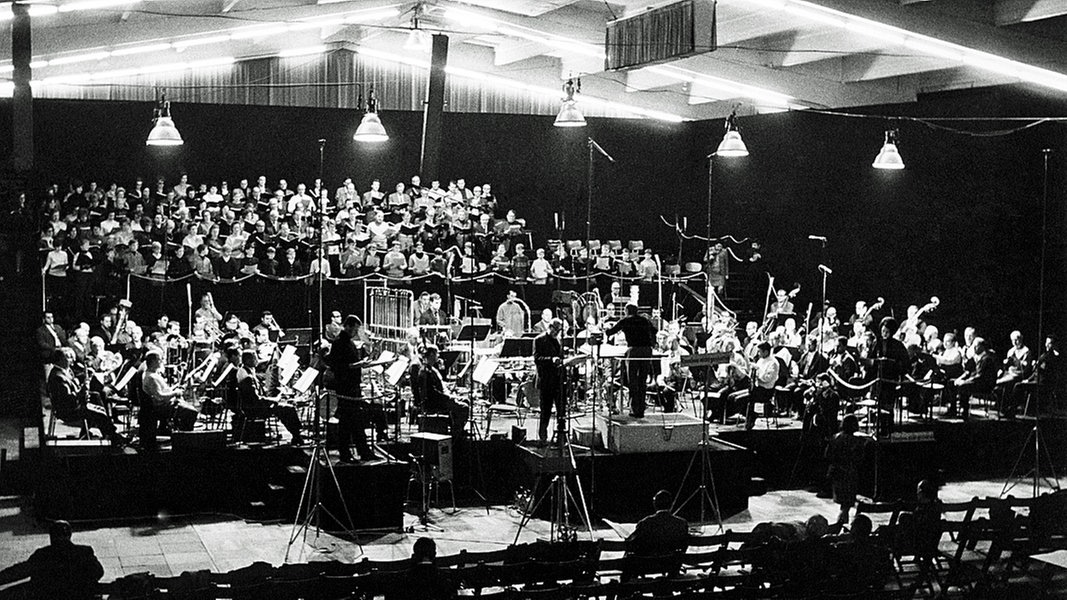
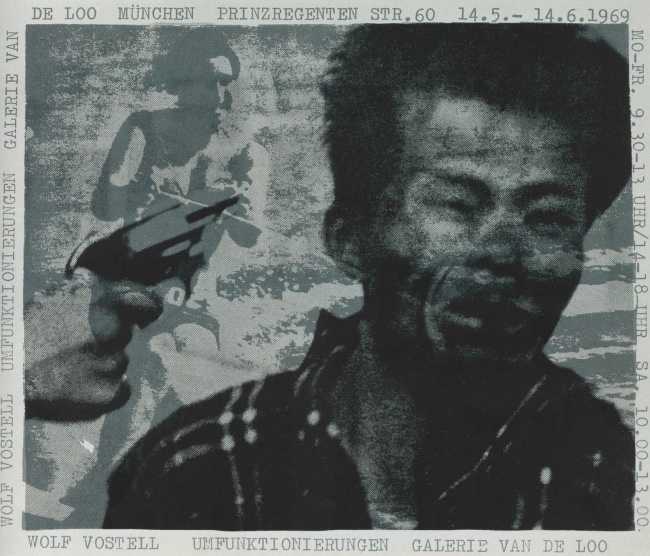
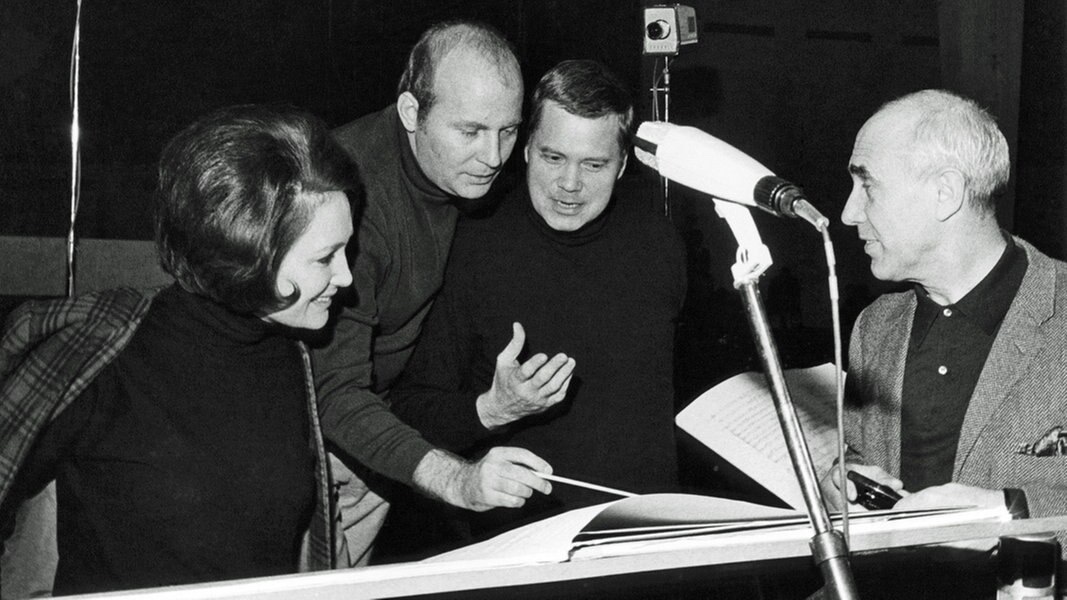
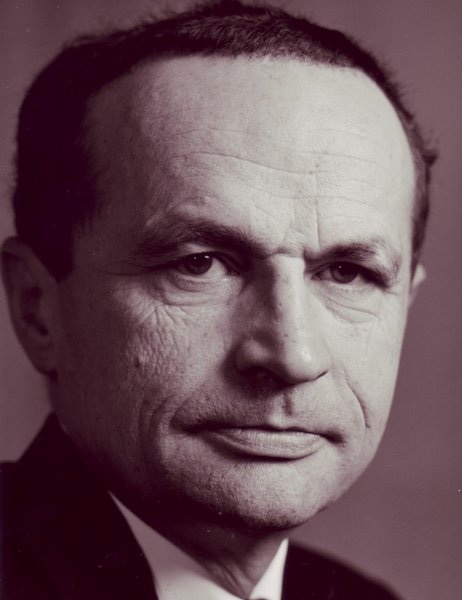


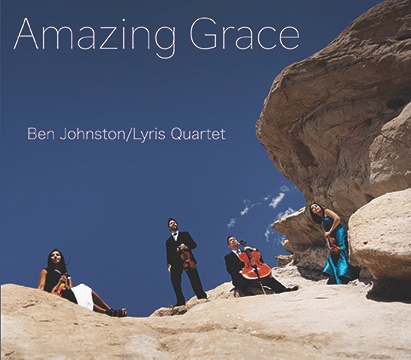




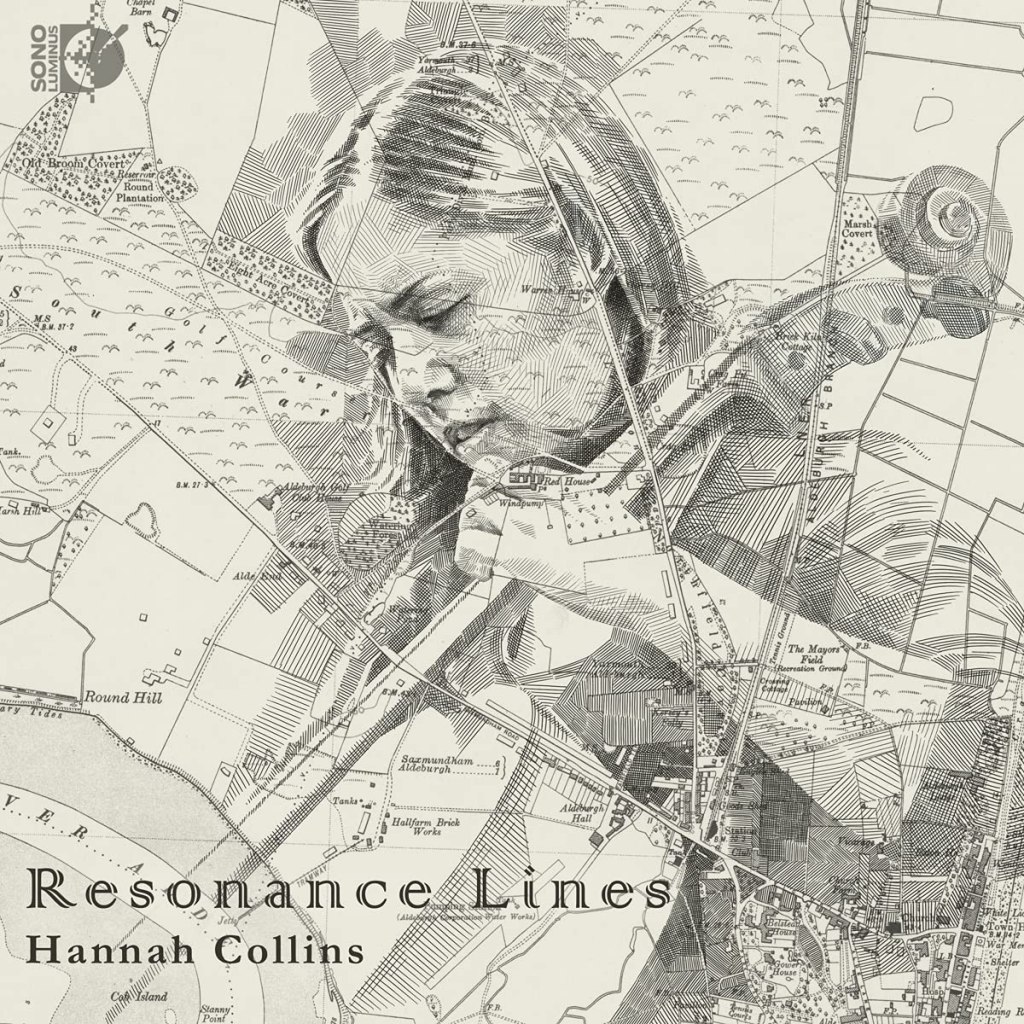




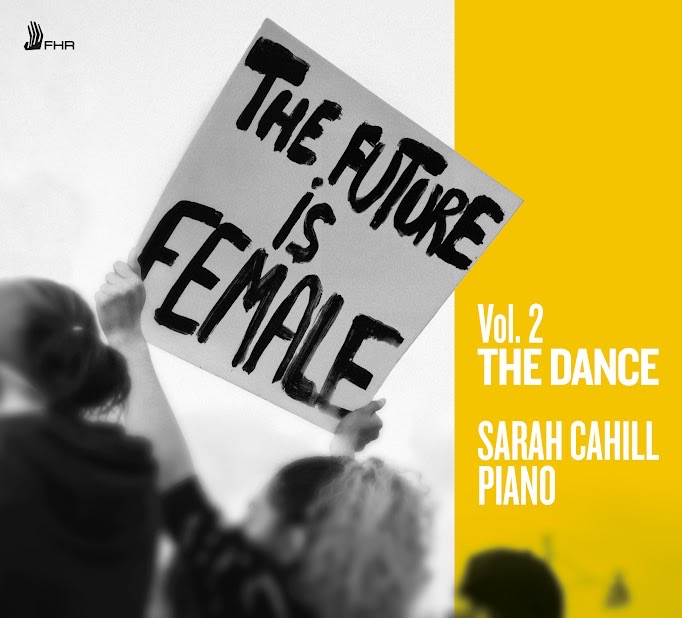


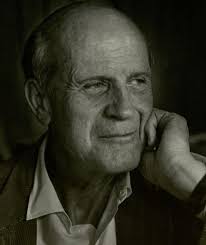


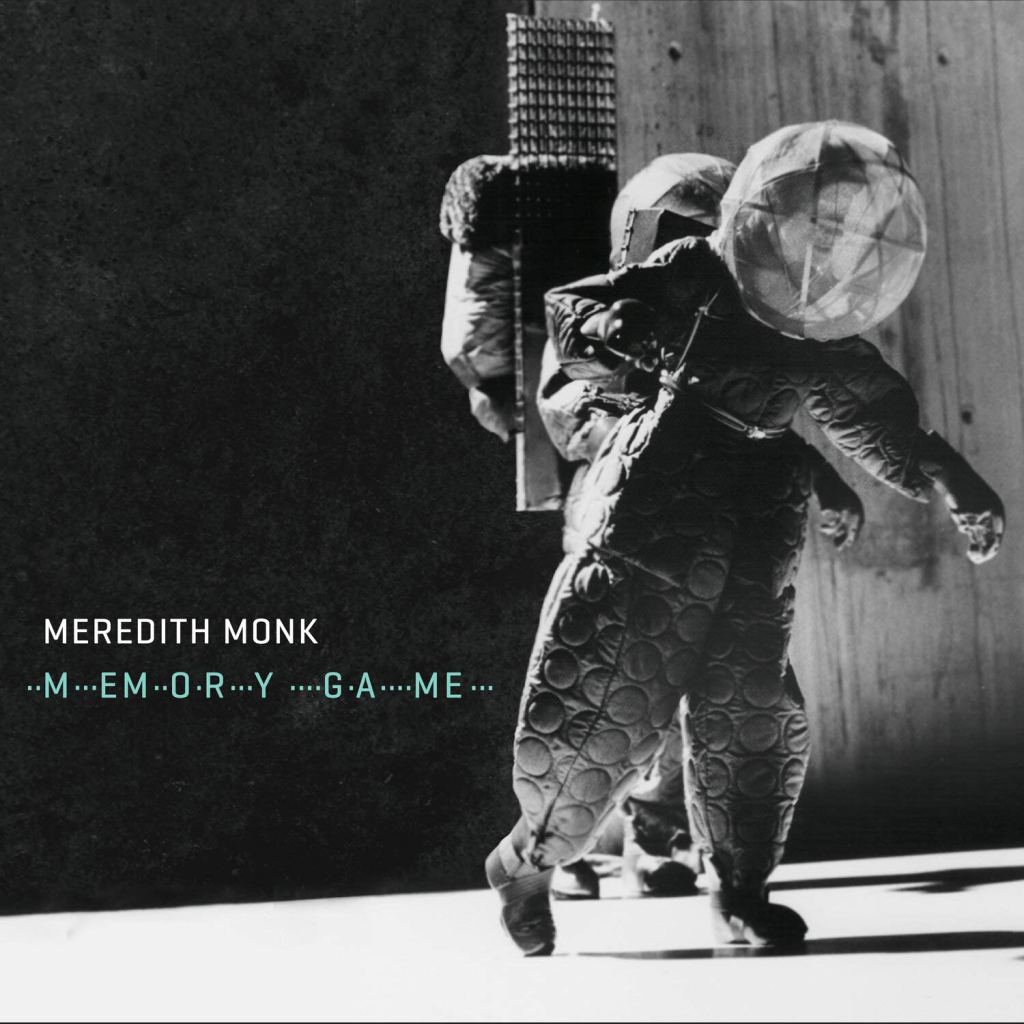
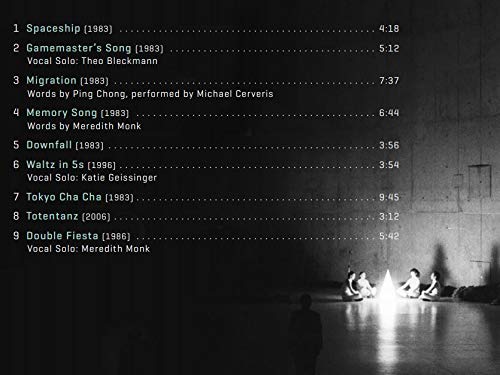


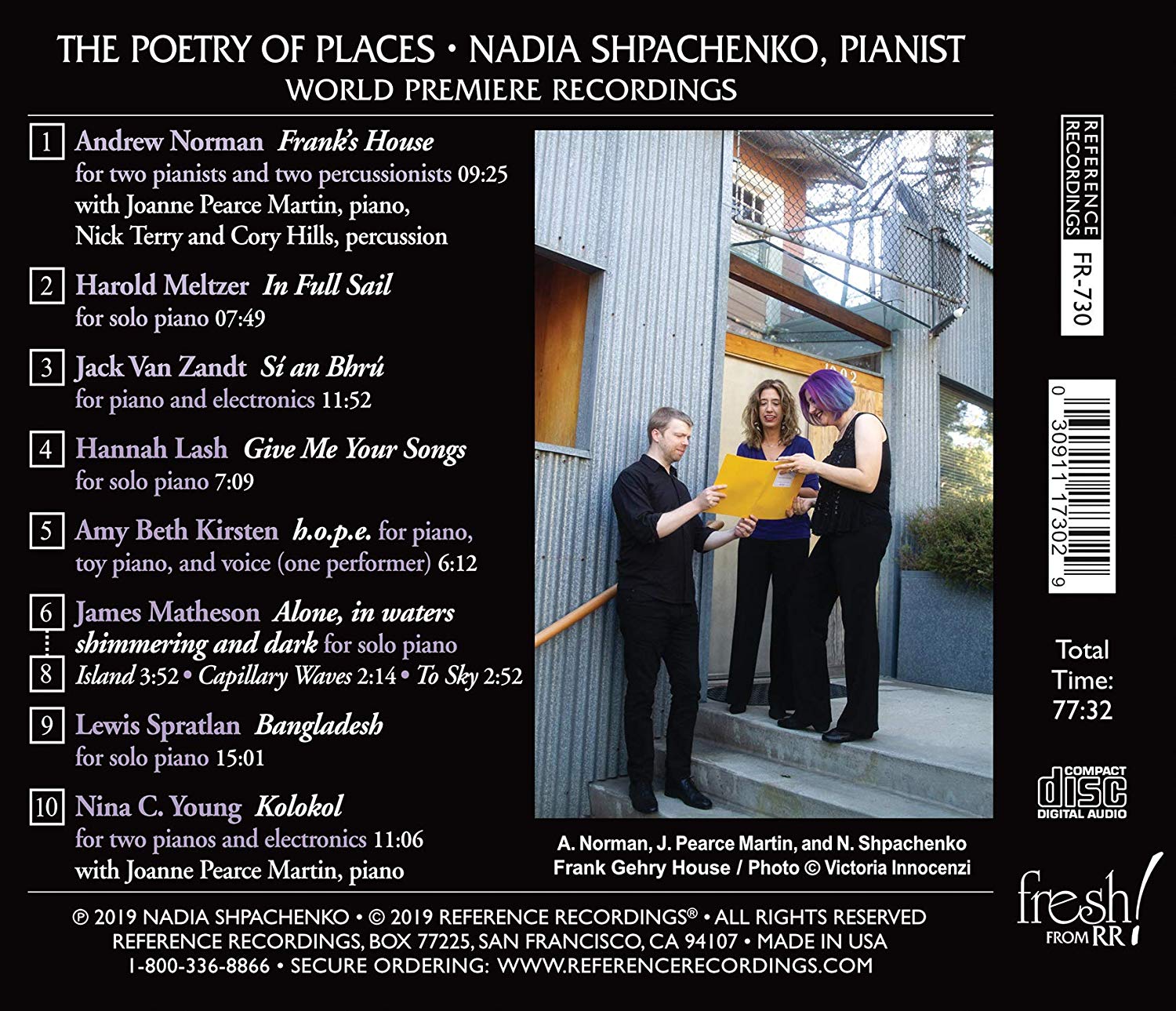




 New Music Buff