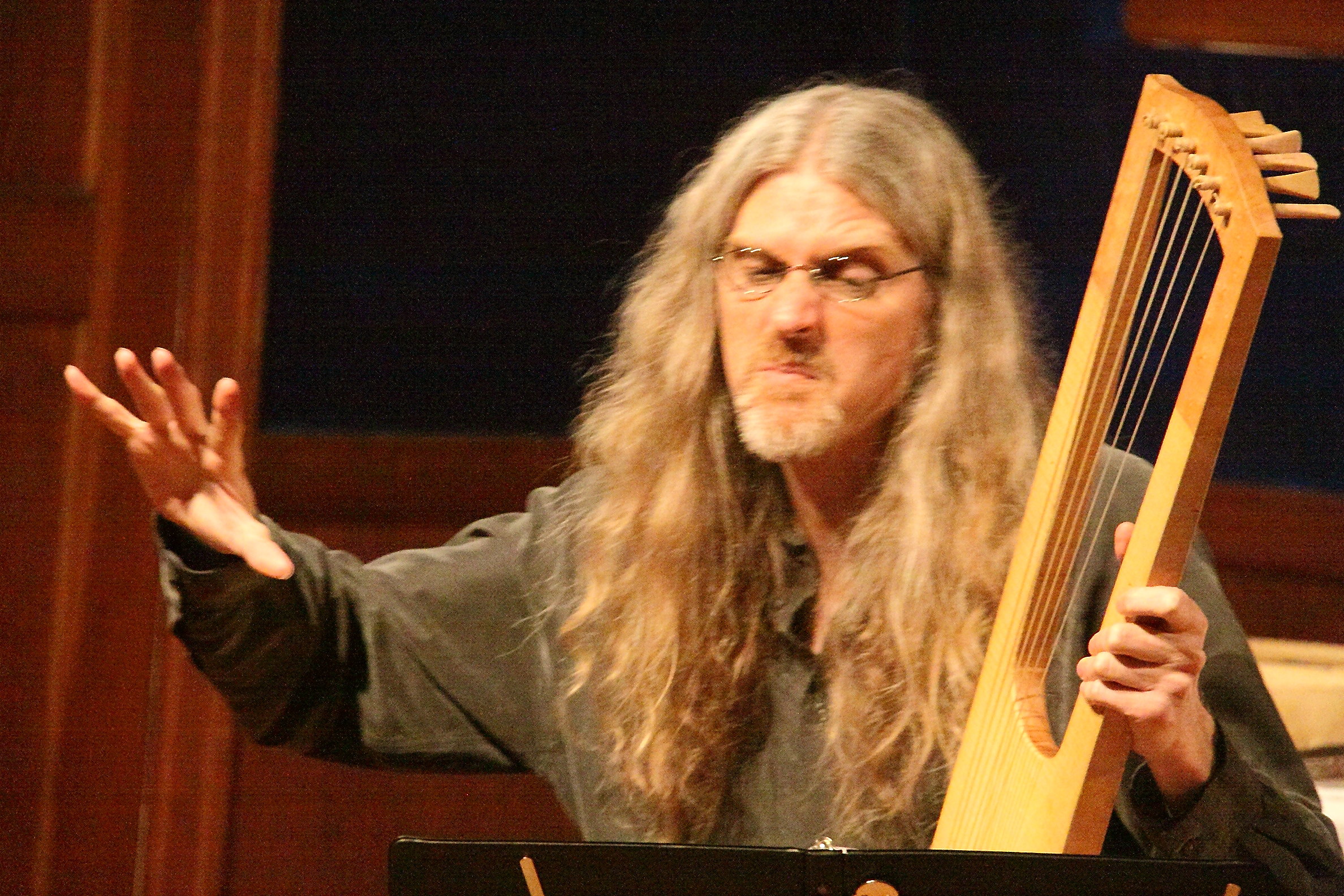
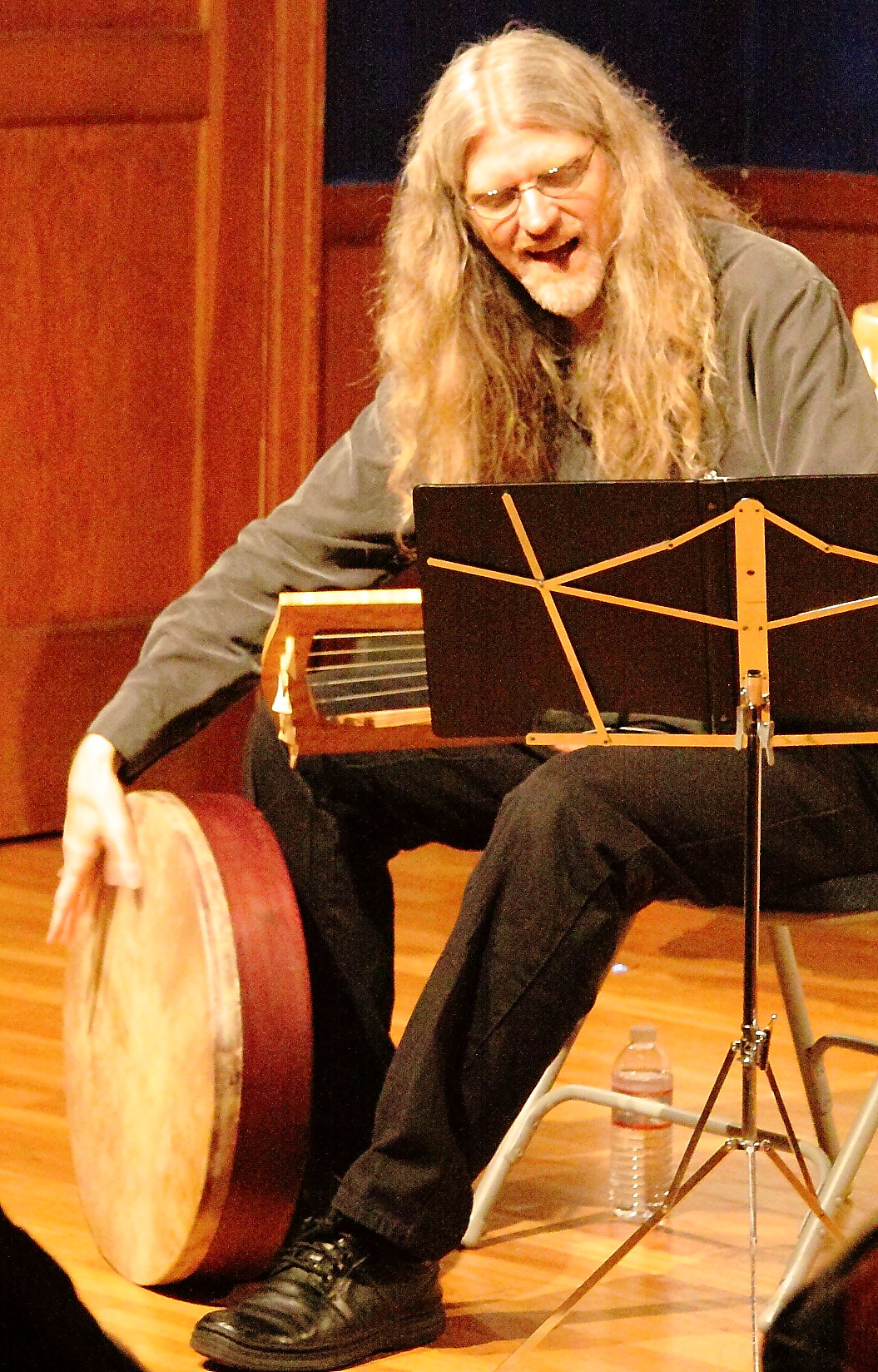
İlhan Kemaleddin Mimaroğlu (1926-2012) photo credit unknown, fair use
Portrait of Ahmet M. Ertegun and Nesuhi Ertegun, Turkish Embassy (record room), Washington, D.C., 193- (Photo credit: Wikipedia)
It would be difficult to underestimate the impact of Turkish immigrant brothers Ahmet and Nesuhi Ertegun on the American music industry in the last half of the 20th century with their promotion and production of jazz and rhythm and blues artists. Their lesser known colleague, Ilhan Mimaroglu labored under a slightly different esthetic. In addition to having been involved with the production of many artists’ work on the Atlantic label (including Charles Mingus, Freddie Hubbard, et al) his study of the developing techniques of electronic and tape-based music helped him develop a unique voice as a composer where he worked with electronics, tape, acoustic instruments, musique concrete, and combinations of these media. He was equally skilled in the art of music production and recording and he utilized this knowledge to produce an impressive body of work which deserves to be better known. He also curated the sub label Finnadar to release his own music and that of other artists with similar vision like Anthony Braxton, Frederic Rzewski, Morton Feldman and others.
Mimaroglu wrote a number of works reflecting his political views during the same turbulent years during which Atlantic records shaped the popular soundtrack of the sixties era. Using his knowledge of studio technology in combination with emerging developments in electronic music synthesis he created many purely electronic studies, musique concrete, at least 4 string quartets, solo piano pieces, and more that has yet to be fully catalogued.
First let me clarify the term ‘Agitprop’. This is a hybrid word or ‘portmanteau’ for the terms ‘agitation’ and ‘propaganda’. The word appears to have first been coined and used in conjunction with the Russian Bolshevik revolution and it’s political tactics. The idea was to create a form of propaganda that would not only inform but also encourage action.
This unusual piece, a concatenation of an electronic score, the Freddie Hubbard Quintet, organ, and strings is perhaps his greatest example of Mimaroglu’s brand of political music. It is by no means his only agitprop/ political piece but it may be his finest and one of the best works of this thorny, frequently controversial genre.
The title is a combination of the name of the town (Son My), the location of the My Lai massacre, and the ironic words, “Sing me a song of Songmy”. The collage and non-linear format of the piece actually contains a dizzying mix of concurrent horrors including the Sharon Tate murders and others whose subjects await a comprehensive analysis by a historian and/or a musicologist. The work includes poetry by Fazil Husnu Daglarca, news clippings, etc. Luciano Berio did something similar in his similarly political masterpiece, Sinfonia (1968). That work is rife with musical and textural references subsequently enumerated by the late American composer/musicologist, Alan Stout.
This is also one of the most expensive productions of a mix of evolving musical genres with a strongly controversial and ugly subject. It can stand in comparison to Picasso’s Guernica for its power to provoke. Add the thorny early electronics with the free jazz of Hubbard and the jazz/blues inflected writing, and you have a powerful indictment of war crimes but hardly a best seller. And it is only with the healing of time and the fading of the sting of those memories that this work has begun to be appreciated more fully.
A landmark set of recordings of Schoenberg’s chamber music for strings
The Juilliard Quartet, founded in 1946 by composer William Schuman (1910-1992) is a highly respected and justly lauded ensemble. This fine CD set includes two complete cycles of Arnold Schoenberg’s String Quartets. It also includes the composer’s too little known String Trio of 1945 and a ravishing string sextet version of Verklärte Nacht. This 7 CD set documents a bit of recording history as well, offering the original mono recordings of his numbered string quartets alongside the Grammy winning (Steven Epstein, producer) 1978 stereo recording (which also included an early unnumbered string quartet in D major).
I grew up expanding my musical horizons with that 1978 release, offered here for the first time on CD format. But the present box set was my first hearing of the 1951 mono recordings of the numbered quartets.
I would venture a guess that most listeners, even those drawn to the sorts of modernism that characterizes my blog reviews, probably own no more than one set of the Schoenberg String Quartets. They just don’t seem to get the same love that other modernists like Bartok, Ravel, Debussy, and maybe even Elliott Carter get from fans of new music. (All of these composers, by the way, have had their quartets recorded by the Julliard Quartet). But hearing two readings across just over a thirty year span by two different generations of this iconic ensemble does much to suggest that Arnold deserves at least another reckoning and perhaps an elevation of his reputation as a brilliant musical mind. It is also a fine testament to the enduring creative interpretive skills in the various generations who have been The Julliard String Quartet.
For that reason alone (the inclusion of those 1951 recordings), discerning listeners will want to own this wonderful set. The production is itself a work of homage and respect with some lovely nostalgia inducing reproductions of the original cover art. And the photographic image of a vinyl record that adorns several CD helps set that tone, one which virtually screams “COLLECTOR’S ITEM”.
I fell in love when I opened the box
The Juilliards have helped identify and characterize the whole of string quartet literature much as the Guarneri Quartet, the Arditti, Kronos, etc. have. Having a work performed and recorded by any of these (to name but a few performers) virtually assures the accepted work a place in the actively performed canon of concert works. It is a stamp of authenticity.
The Quartets span most of the creative span of the composer’s career. That early D Major Quartet (1897), First Quartet (1905), and the Second Quartet (1908) were written before his 12 tone method had been fully developed. We hear the 12 tone method in the Third and Fourth Quartets and the Trio.
That Second Quartet is apparently the first time a soprano had been used as an adjunct to the ensemble. Uta Graf sings in the 1951 recording and Benita Valente in the 1975 cycle. The text (curiously not included in the otherwise delightful and intelligent notes) are by poet Stefan George (1868-1933). I include them here in English for interested listeners:
Rapture I feel air from another planet. The faces that once turned to me in friendship Pale in the darkness before me.
And trees and paths that I once loved fade away So that I scarcely recognize them, and you bright Beloved shadow—summoner of my anguish—
Are now extinguished completely in deeper flames In order, after the frenzy of warring confusion, To reappear in a pious display of awe.
I lose myself in tones, circling, weaving, With unfathomable thanks and unnamable praise; Bereft of desire, I surrender myself to the great breath.
A tempestuous wind overwhelms me In the ecstasy of consecration where the fervent cries Of women praying in the dust implore:
Then I see a filmy mist rising In a sun-filled, open expanse That includes only the farthest mountain retreats.
The land looks white and smooth like whey. I climb over enormous ravines. I feel like I am swimming above the furthest cloud
In a sea of crystal radiance— I am only a spark of the holy fire I am only a whisper of the holy voice.
Litany Deep is the sadness that gloomily comes over me, Again I step, Lord, in your house.
Long was the journey, my limbs are weary, The shrines are empty, only anguish is full.
My thirsty tongue desires wine. The battle was hard, my arm is stiff.
Grudge peace to my staggering steps, for my hungry gums break your bread!
Weak is my breath, calling the dream, my hands are hollow, my mouth fevers.
Lend your coolness, douse the fires, rub out hope, send the light!
Still active flames are glowing inside my heart; in my deepest insides a cry awakens.
Kill the longing, close the wound! Take love away from me, and give me your happiness!
Schoenberg said he had been inspired by the poetry to compose these angular, expressionistic melodies. The poetry, like the music reflects tenor of the times.
In addition to the quartet cycles, this set is intelligently filled out by the inclusion of the string sextet version of the 1899 Verklärte Nacht. Here the Julliards (consisting of Robert Mann and Joel Smirnoff, violins; Samuel Rhodes, viola; Joel Krosnick, cello) are augmented by two exceptionally worthy soloists, Yo Yo Ma on cello and Walter Trampler on viola. It is followed on the disc with a powerful reading of the masterful String Trio from 1946. It is an illustration of the historical development of the composer over that 44 year period. I listened casually the first time but more carefully in subsequent hearings as the disc moved from the last track division of Verklärte Nacht to the first of the Trio finding this to be a lucid illustration of the composer’s seemingly natural development from post Wagnerian harmonies of fin de siecle Transfigured Night to those of the now fully developed 12 tone compositional method so beautifully integrated in the post war String Trio (played here by Robert Mann, Samuel Rhodes, and Joel Krosnick).
I used the term “post war” in my previous paragraph as a convenient segue to the last piece in this collection. The Trio is offered in a 1965-6 recording (stereo) played by Robert Mann, Rafael Hillyer, and Claus Adam. It is followed by the anti fascist “Ode to Napoleon Bonaparte” from 1942, a setting of a text by Lord Byron. Here the Julliards are joined by Glenn Gould on piano and speaker John Horton. It is one of Schoenberg’s politically tinged works. It has much in common with A Survivor from Warsaw (1947) and Schoenberg can only really be understood in the context of his turbulent times.
Perhaps there’s a parallel to our turbulent present. Maybe Schoenberg can be better understood if his listeners have experienced a certain amount of existential angst. We certainly have a lot of that. But, ultimately, this box set is a cause for joy and even optimism. It is a loving document of compositional, performance, and recording excellence.
Just had to post this for all my readers and friends but especially those living near or able to get to Rome. Curran’s wife, Dr. Susan Levenstein, graciously sent this announcement to me. She is an American physician (and webmaster).Her very entertaining memoir, “Dottoresa” is her accounting of moving her practice to Italy.
Alvin Curran, (1938- ) is the co-founder of the seminal live electric music performance group, “Musica Elletronica Viva” along with his late colleagues Frederic Rzewski (1938-2021) and Richard Teitelbaum (1939-2020). The group formed in 1966 and later included kindred spirits including George Lewis and Garrett List among others. The group did its final tour in 2016.
Click on Curran’s name to look at his fascinating and well organized website which gives a fairly comprehensive accounting of the incredible range of musical styles and a very large bevy of collaborators.
Curran discussing some of his work with interviewer Charles Amirkhanian in Berkeley in 2016 (photo by Allan J. Cronin)
Curran, who taught at the venerable Mills College in Oakland, California is an always welcome visitor in the Bay Area. While he has made his home in Italy for many years now, he is truly an artistic citizen of the world. The warm and affable composer exudes an infectious enthusiasm which doubtless is why he has so many collaborators. His aesthetic which he documented in an article called, “The New Common Practice” in 1994 documents his all inclusive style, one that is very difficult to convey. His works include music for piano, chamber ensembles, orchestra, and even things most folk never thought of as musical.
He is a giant in late twentieth and early twenty first century music and this retrospective is most welcome.
“HEAR ALVIN HERE”
ALVIN CURRAN
…a retrospective
part of the #CHAMBERMUSIC series
The show consists in a listening room where a new sound work plays continuously—a mixtape comprising fragments from many different compositions, improvisations, and installations. It leads the audience on an autobiographical listening journey, freely mixing styles, periods, and languages, from free improvisation to Fluxus to Artificial Intelligence, from compositions for shiphorns to works for hundreds of musicians, from Sargentini’s L’Attico and the Beat 72 to MAXXI and the Tate, from Angelo Mai and The American Pavilion of Expo 58 to No Mans Land and the Théâtre de Chaillot.
The Museum of Contemporary Art of Rome (MACRO), Via Nizza, 138
inauguration September 20, 2023, from 6 pm to 9 pm
running until March 17, 2024
***************
Curran in performance at the Pacific Film Archive in Berkeley in 2014.
Samuel Taylor Coleridge begat Samuel Coleridge-Taylor, who begat Coleridge Taylor Perkinson… Wait, that’s not right. But these three men, listed in chronological order, became intertwined, much as they were admired, by their names. Samuel Taylor Coleridge (1792-1834) is the great (white) British poet. Samuel Coleridge-Taylor (1875-1912), named in honor of that poet (and the subject of this review) was a much lauded, though subsequently neglected British composer, as it happens a black British composer. Taylor Coleridge Perkinson (1932-2004), a much lauded and subsequently neglected black American composer named in honor of those predecessors. Stick with me, this comes together (for the purposes of this review) with the name of the orchestra on this recording, “Chineke”, a word taken from the African Igbo religion, meaning, “God”. Add an exclamation point and you get “Chineke!”, the orchestra which was founded in 2015 by the double bass player, Chi-chi Nwanoku CBE, to provide career opportunities for Black and ethnically diverse classical musicians in the UK and Europe.
All that to introduce listeners to this landmark of the recording industry, fulfilling in part the mission of this fine orchestra. This two CD set provides an intelligent selection of the music of Samuel Taylor-Coleridge which is nothing short of revelatory. Knowledge (at least outside of Britain) of his music, up until this release pretty much limited to his fine choral work “Hiawatha’s Wedding Feast” and perhaps a short orchestra movement. The late great Paul Freeman included an aria from that choral work and one movement (Danse Negre) from his African Suite in his defining set of recordings on Columbia/Sony, “Black Composers”. These brief pieces were the introduction for many people, this writer included, to this composer’s work.
The last family Christmas card, 1912
Chineke! now presents a far more representative selection of this man’s work with a truly nice touch of alreleasing the first recording of music by Coleridge-Taylor’s daughter Gwendolyn Avril Coleridge-Taylor (1903-1998) who wrote under the pen name Peter Riley (it is hardly a secret that both black people and women suffer from lack of recognition in the world of classical music).
Coleridge-Taylor’s output was large, comprising some 82 pieces with opus numbers and unpublished works as well. That’s a lot of music from a man who died at age 37 from pneumonia. This two disc set does a very nice job of presenting music from all eras of his brief career. From the Opus 2 Nonet (1894) to the Opus 80 Violin Concerto (1912) this release provides a larger perspective on this artist (dubbed by white musicians in New York, in what today would be judged a pejorative appellation, “The Black Mahler”). My guess is that the same people who would speak condescendingly about Coleridge-Taylor were also not appreciative of that Jewish Austrian conductor/composer.
Though it appears that all these works have appeared previously in recordings (appropriately on mostly British labels) this collection does a great service in demonstrating the arc of his truncated life’s work. Only the Avril Coleridge-Taylor work, “Sussex Landscape” (1940), is a world premiere recording.
Track list
For the purposes of this review I will be discussing these works in chronological order rather than the order on the recordings. Even a short career demonstrably goes through changes over time, led by social, political, historical, and musical experiences. A photo (above) shows the order on the discs.
The Nonet Op. 2 (1894) for strings, winds, and piano was written by the 19 year old (still a student at the Royal College of Music). This unusual combination, nearly a chamber orchestra in dimension as is the grand, late romantic, Brahmsian dimension. His skill in orchestration is evident here and serves to clarify the musical lines in these four large movements. It is virtually a symphony with a virtuoso piano obbligato.
Here, emissaries of the nascent Harlem Renaissance came to England in the the form of a 1896 concert by the Fisk Jubilee Singers who presented a program of “Negro Spirituals” (Fisk is one of the so called “Historically Black Colleges and Universities” which were formed to provide educational opportunities for Black Americans who were barred from admittance to other colleges). The following year Coleridge-Taylor met the Black American poet Paul Laurence Dunbar (1872-1906), who had come to England on a literary tour. His parents were freed slaves in Kentucky. Both of these experiences had a profound effect on Coleridge-Taylor and his music. Coleridge-Taylor would attend the first Pan-African Conference in London in July 1900. There he would explore the ideas and philosophies of Pan-Africanism which emphasised the importance of a shared African heritage. The orchestral works “Ballade in A minor” Op. 33 and the “African Suite” Op. 35, (both 1898) reflect those influences.
The two movement Ballade is a grand romantic work with no particular program but one that demonstrates the composer’s amazing command of the orchestra. The African Suite, one of his more popular works, was directly influenced by the work of Dunbar (whose career, like Coleridge-Taylor’s, also ended prematurely).
The two movement “Romance” Op. 39 (1899) for violin and orchestra is a foreshadowing of the later Violin Concerto. It is a heavily late romantic work with a beautiful and substantial violin part.
His “Petite Suite” Op. 77 (1911) is among his most popular works and arguably served as a precursor to what would later be termed, “Light Music”. The second movement strikes deep into this writer’s memory as one of those pieces whose charm prompted me to find out what it was so I might hear it again. Very charming and immediately listener friendly music.
The first work on this set, The five movement, “Othello” Orchestral Suite Op. 79 was published in 1909 and first performed in 1911. It was conceived and written as an orchestral suite, not a suite of music drawn from another work and is complete as performed here. It is a stunning example of the composer’s skills with orchestration and with dramatic writing.
Maud Powell (1867-1920)
Now we come to the Op. 80 Violin Concerto of 1911-2 which is dedicated to American violinist Maud Powell, a staunch advocate for female musicians, black composers, and new music in general (an early model for the likes of Rachel Barton Pine). This work of high late romanticism echoes Brahms and Bruch in its Melodie’s, it’s harmonies, and the grand sweep of its gorgeously orchestrated three movements. It is easy to imagine this as a regular repertoire piece.
Avril Coleridge Taylor (1903-1998)
Last and most certainly not least is the world premiere recording by Coleridge-Taylor’s daughter, Gwendoline Avril Coleridge-Taylor (1903-1998), her “Sussex Landscape” Op. 27 (1940). This is just a taste of her 60+ compositions but it is compelling enough to prompt listeners (and hopefully progressive organizations such as “Chineke!”) to pursue more exploration of her oeuvre.
Chineke! Truly achieves their goal in producing this wonderful portrait of a composer whose work has, until very recently languished in relative obscurity. Even this writer, whose obsessive interest in the new and interesting, has been seriously transformed by this release. You really have to hear this release. My thanks and congratulations to everyone involved in this fine Chineke! release.
Every solo artist, regardless of what instrument they play seeks to define themselves. Generally that means setting limits. Some set limits by specializing in an era (baroque, classical, etc.). Some specialize in working with electronics, some with jazz, some with experimental music, some with standard recital repertoire, etc. Seth Parker Woods (1984- ) seems almost unaware of such limits. He plays what he chooses. And, oh, what choices. From standard classics to the leading edge of musical creativity woods is poised at the beginning of a very promising career.
Seth Parker Woods (photo from his faculty page at USC Thornton School of Music)
This album is in fact the musical portions of what was produced as a staged presentation with Woods playing, singing, talking. No doubt something is lost without the staging but Woods’ asserts himself with great clarity on the sonic aspect alone. Think of this as a sort of cast album, though it is more than just a souvenir. It is Woods’ second album and it has this writer enthralled at where he may go next. You will be too.
Parker’s first solo release “asinglewordisnotenough” available on bandcamp reveals his dedication to new and recent music.
I feel privileged to have known this artist via digital media and to have watched with increasing interest his development as a true rising star in the new music world. I only recently acquired his first album via bandcamp. It was released “across the pond” when he was completing his Ph.D. at the University of Huddersfield.
Born in Houston, his father, a jazz and gospel singer, Woods was exposed to a great deal of music. He rehearsed in a home studio and somehow came to a fascination and deep appreciation for a wide variety of repertory.
His affiliations continue to be wide ranging from Peter Gabriel to George Lewis. He has appeared on many recordings but this is only the second disc dedicated entirely to Woods as performer and the first such solo efforts on a US label. Woods is apparently able and willing to tackle music of all eras and genres including the wildly experimental, like his “Ice Cello” homage to Charlotte Moorman and the theatrical, which brings to the the album at hand.
Track listing.
Four of the seven works presented are world premieres. And, despite this being a sort of “cast album” which lacks the visuals, this is a major release that presents a characteristic variety of musical choices and is a fine calling card for the artist. This is one classy production.
Frederic Gifford (photo from composer’s website)
He begins with the title track, “Difficult Grace” by Chicago based composer Frederic Gifford (1972- ). It is a setting of poetry by Dudley Randall subjected to some Cageian mesostic like manipulation. This first track tells us we are dealing with modern music and sort of sets the tone of this project. This is a complex work in concept (lucidly described in the composer’s notes) and involves projections of the texts onto the performer as well as electronics which, by careful use of both the sounds and the spoken text (spoken by the cellist) which then contributes to the musical structure. Photographs in the booklet show some of the striking visual design for this project.
Coleridge Taylor Perkinson (photo from Wikipedia)
Woods follows with what is to this listener a stunningly beautiful piece, “Calvary Ostinato” (1973) by the late, sadly neglected Coleridge Taylor Perkinson (1932-2004), a black American composer (actually represented admirably in a fine earlier Cedille release CDR 90000 087). The Ostinato is one movement from Perkinson’s “Lamentations: Black/Folk Song Suite For Solo Cello” (1973). Woods’ performance is available on YouTube. It’s truly enthralling. One gets the feeling that Woods really gets inside the music he performs and that deep feel for the music is delightfully obvious in this track, the second oldest work on the disc and one that is for the solo cello sans electronics or vocals but using a dazzling variety of extended instrumental techniques, none involving a bow.
Monty Adkins (photo from electro cd website)
Then we hear Monty Adkins’ (y. 1972- ) “Winter Tendrils” (2019) written for cellist who, in addition to playing his instrument, is asked to use his voice and work with electronics, albeit in a different manner than the title track. Adkins worked closely with Woods on the creation of this work. The work essentially an impressionistic piece with clever use of counterpoint to depict fresh fallen snow on the branches of a tree.
Nathalie Joachim (1983- ), a Haitian-American vocalist, flautist, and composer, is represented by two works. The first, “The Race 1915” (2019), a work that contributes to the Chicago centered Cedille label by its use of historical quotations from The Defender, a major and influential black newspaper in Chicago. Woods is again asked to use his vocal skills in this work which celebrates efforts to undo social inequalities.
The multitalented Joachim lends her vocal skills to Woods’ performance in Joachim’s second piece on the album, “Dam Men Yo” (2017). The title is Haitian Creole for “they are my ladies”. It is a sort of black feminist peaen celebrating the strength of the women with whom the composer was raised in her native Haiti. (NB: Haiti is the site of the only successful slave revolt in history, a fact that continues to be reflected in their turbulent politics).
Alvin Singleton (photo from Schott website)
In between those two pieces we get to hear perhaps the best known composer in this mix, Alvin Singleton (1940- ). Singleton is represented by “Argoru II” (1970) for solo cello (the Argoru series is a set of pieces for solo instruments akin to Luciano Berio’s “Sequenza” series). The title is from the Twi language (spoken in Ghana) and translates as “to play”. It is a virtuosic piece employing extended instrumental techniques which Woods accomplishes with almost supernatural ease. He does honor to this living elder statesman of American music.
Ted Hearne (photo by Jen Rosenstein from composer’s website)
And here we are back in Chicago now with Maestro Woods’ performance of a work by Chicago born composer Ted Hearne (1982- ), a name which did make it to this writer’s musical radar but one whose work I have just begun to explore. But this is a fine example of one of the reasons for my admiration for Woods’ scope of musical interest. I think he is one of those artists to whom I will turn to look for good new music. His instincts for repertory choices are amazing.
This is perhaps the most unusual entry on this disc as well as one that, if any controversy is forthcoming, it will likely originate with this set of songs to poetry by Keri Alabi. A casual listen to some of Hearne’s music on YouTube suggests a sort of post minimalist ethic but this last work is not discernibly minimal. Like the music that preceded it, this cycle is overtly about politics and equality.
Hearne’s little 6 movement song cycle is a combination of poetry, electronics, cello (of course), and the voice of said cellist. Hearne’s expletive title, “free fucked”, is apparently very much in line with the composer’s assertive and playfully humorous style.
We return in these tracks to the avant garde and complex with which the album opened. Again we have a multitasking role for the cellist demanding his vocal participation and working in a distinctly electroacoustic genre. Hearne lends his voice to the final track of this unusual work.
While political themes and references abound in this release it is as much about black politics and civil rights as well as feminist, gender, and global equality issues. But ultimately this recording is a landmark in the career of this fine young musician who works fearlessly with a variety of composers, poets, designers, political activists, progressive ideas, and new music in general.
Cedille is one of my top favorite new music record labels and has been since they first started in 1987. Their releases (not limited to new music) are consistently well recorded and produced but producer James Ginsburg really pulls out all the stops on this one. From concept to recording, from lucid liner notes to gorgeous package design this has all the marks of a classic and collectible release. I mean, the music is great, but the whole package is something you’ll want to own. That’s right, I’m calling for “collector’s item” status here. Now is the time to get your copy.
This release completes Sarah Cahill’s monumental survey of piano music written by women which saw its first two CD volumes last year.last year. This, the third volume titled “At Play”, follows the first two as seen below. This trilogy is not, of course, the last word, the end on the subject of piano works by women. There can be no last word but these selections are a reflection of Cahill’s perspective as a performer but also a producer/programmer whose scholarship and advocacy are well known and respected worldwide. These releases speak to women, certainly. But they also speak to audiences in general, producers, and fellow musicians. They comprise a careful sampling of some three hundred years of music which effectively demonstrates that “there’s gold in them thar hills” (after all Cahill is a Californian). Here’s hoping that this survey will help start a metaphorical gold rush to unearth the gold that can be found in this neglected music.
The first two volumes (both previously reviewed in this blog).
Other Minds OM 1022-2
I recall my fascination with Cahill’s earlier commissioning project which resulted in her CD “A Sweeter Music” (2013). I recall attending a very preliminary recital at Mills College where she did brief run through of some of the compositions and spoke about the project. She later toured the music (sometimes with John Sanborn’s wonderful accompanying visuals, sometimes without). Little did Cahill know that she hit upon a genre of classical music dear to this listener’s heart, that of politically inflected classical music. As a result, my interest in her artistry and choices of repertoire escalated tremendously (I heard two of her Bay Area recitals of this music and reviewed the recording in the early incarnation of this very blog). So another project, this time supporting female composers, with even greater dimension than that earlier project has similarly grabbed my attention in this landmark collection of music by women composers which has largely been neglected by mainstream artists, producers, and programmers.
This trilogy of recordings hardly solves the egregious neglect of this music but it does contribute rather authoritatively to the canon (there is one now) of music by non-male composers. Cahill is not the first artist to do this, and there are multiple ongoing projects exploring the work of female composers, but this project deserves top billing as it casts a mighty wide net with its three volumes covering about 300 years (of neglect). These recordings of some 30 pieces are but a fraction of music by women composers in this pianist’s repertoire. But, more than simply righting wrongs, this is about celebrating a legacy of artists getting their due recognition. (The “bad idea” Biblical metaphor of hiding a lamp beneath a basket comes to mind). Just look, er, listen at/to what’s been under that basket!
Cahill playing at the Chapel of the Chimes Solstice Concerts in 2013, a major annual Bay Area event created and managed by her. (Photo by Allan Cronin Creative Commons License)
This now completed trilogy doubtless will not mark the end of Cahill’s advocacy but it will stand as a major manifesto of sorts and will hopefully bring more performers and producers to be open to performing and recording them. Simply hearing these recordings exposes the listener to music of stunning substance selected by an artist whose curatorial radar is finely tuned and whose choices will speak definitively to listeners (and likely fellow performing artists) for years to come. (N.B. Listeners would do well to check out Cahill’s YouTube channel where one can find a gold mine of music which reflects the scope of her performances and advocacy, not just for women composers, but for an amazing range of artists.)
This third volume is entitled, “At Play”. Like the previously released volumes, this collection gets a collective title that vaguely hints at the character of the music herein. The sequencing of the music is, like the previous two volumes, pretty much chronological. The essential program notes by Ms. Cahill (in all three volumes) provide just enough background to provide useful contexts for the listener. And you have to love the “Cahill and friends” photo galleries (on each volume) reflecting the deeply personal nature of this undertaking. That may sound hyperbolic but just listen to this music and feel the love, the passion, the connections, the sincerity, and the incisive playing. (Should I throw in a “Pied Piper” metaphor?) Listen and you’ll likely get hooked.
Track listings
There are 16 tracks comprising nine works by nine female composers over nearly three centuries. Four of the nine works receive here receive their first (or first commercial) recordings. As noted earlier, the track sequence is chronological. (N.B. That makes 30 + works over the 3 CDs), a little less than half of the total commissions.
We begin with the last of 9 sonatas by Hélène de Montgeroult (1764-1836). Her lifespan covers the classical to the early romantic eras in western musical history but recordings of her music didn’t begin to appear until about 2006 when Jérôme Dorival published a biography of her. Listeners will likely find this music similar to that of Mozart, Haydn, and early Beethoven but with a level of virtuosic writing that anticipates Chopin and Liszt. This three movement sonata was published in 1811. This is apparently the second recording of this work as another new music champion, Nicolas Horvath, released a recording of all nine of these in 2021, further testament that time has come for this composer (and perhaps women composers in general).
Next is the Thème varié, Op. 98 (1895) by Cécile CHAMINADE (1857–1944). This late romantic composer is probably the only name with which most listeners may be acquainted. A recording of her Concertino for flute and orchestra (1902) continues to receive attention by classical broadcasters but most of her work remains very little known. Cahill makes a strong case for this music with her interpretation of this virtuosic early romantic styled work. She is far better known in her native France. It is time we see what the French have been hiding.
Grażyna BACEWICZ (1909–1969), represented here by her Scherzo (1934), has gotten recognition in her native Poland but has only fairly recently become known internationally. This early work, less modernist than her later work, has apparently been recorded before but is new to this reviewer’s ears. Bacewicz was a prolific composer and this fine piece, a virtuosic showpiece, is likely to encourage listeners to further explore her extensive catalog which includes Symphonies, Concertos for violin, viola, cello, and for piano, 7 string quartets, symphonies, operas, songs, and much more.
Now Cahill brings us into present time, featuring living composers, beginning with the music of Chinese-American composer Chen YI (b. 1953). Guessing (1989) is a small piano piece which incorporates a Chinese folk song in a set of variations.
This is the first commercial recording of this music. To be honest, I am not familiar with much of this composer’s work (nor most of them here) save for Oliveros and Wong) but this piece as with all the selections here are sufficiently intriguing to prompt listeners to explore further. That is the point of an anthology such as this, to spark curiosity, suggest another path for the journey. Mission accomplished.
Franghiz ALI-ZADEH (b. 1947), born in Azerbaijan, incorporates elements from her ethnic heritage into modern classical idioms. Music for Piano (1989/1997) utilizes Cagean-like preparations, in this case a glass beaded necklace laid across the strings. The resulting sound, evoking Alan Hovhaness and/or Henry Cowell at times, is intended to evoke that of the traditional Azerbaijani string instrument called “tar” (not a reference to the recent film). The composers use of different scales also seems to derive from folk models. The piece is in several sections delineated by dynamics and by register in which is, I believe, an ingenious use of register used to control when to allow for those prepared strings to sound. The piece is by a composer with a wide expressive pallete and the ability to use those methods judiciously toward her unique creative ends.
Next, in the briefest entry at just over 4 minutes, we get one piece from a set of commissions (all by women composers) Cahill made to honor the 100th birthday of American composer Ruth Crawford (1901-1953). Pauline OLIVEROS (1932–2016) submitted this work (her first notated composition since the 60s) which uses her own unique approach to indeterminate composition in Quintuplets Play Pen: Homage to Ruth Crawford (2001), here in its world premiere recording. Oliveros, who exerted a profound influence on a generation of composers, performers, and listeners via her work in electronic music and improvisation, but most powerfully via her “Deep Listening” concepts which effectively define the role of the listener as being a part of the compositional process.
A clearly happy Pauline Oliveros acknowledges the warm applause of the Other Minds 20 audience after her performance at the SF Jazz Center in 2015. Her gentle spirit and powerful intellect preside over this trilogy and continue to influence all who knew her and her work. She would have loved these recordings. (Photo by Allan Cronin Creative Commons license)
I’m claiming fair use in publishing this lovely photo ad for an expensive perfume inspired by the same poem. Kinda Freudian, no?
Hannah KENDALL (b. 1984) is a black British composer whose three movement “On the Chequer’d Field Array’d” (2013) is based on the 1763 poem Caissa by Sir William Jones and depicts the three sections of a game of chess. The lengthy Elizabethan styled poem can easily be read as protofeminist given that the female chess piece heroically wins. Read it if you don’t believe me. And there are musical metaphors as well. It is these: mindplay, middlegame, and coda into which the work is divided. The music, like the poem is an intimate perspective which invites the reader (or hearer of the music) to create their own meanings here.
Aida SHIRAZI (b. 1987), an Iranian born composer, takes the performer inside the piano. Her blandly titled, “Albumblatt” (2017) belies her deep understanding of the piano and its possibilities. This is arguably the most avant garde (or modernist if you prefer) composition of the trilogy. Cahill’s choices reflect her eclectic approach to music programming.
In addition to a chronological approach, this trilogy is stylistically diverse. This music borrows from forbears such as John Cage and Morton Feldman as well as Henry Cowell. This meditative music only reveals itself fully to the focused listener. This is like an etude comprised of sounds you rarely hear (intentionally) from a piano. Played much of the time inside the piano but also at the keyboard more conventionally, the piece also demands close attention to dynamics (down to silence). Here is where the recordist’s art shines through. The subtleties of dynamics and the ability to capture the variety of harmonics evoked. Of course said performer had to accomplish rather large postural changes and do so silently if the performance adheres to the score, lol. And both are accomplished here in what sounds like a single take. This is a pretty great listen.
Regina HARRIS BAIOCCHI (b. 1956), a native Chicagoan poet and composer is given the last word with her, “Piano Poems” (2020). Last but not least by any means is a testament to Cahill’s singular but relevant choices as well as her advocacy of young composers as their stars begin to rise. This artist is new on my radar but one that will remain there. As both poet and composer, this young artist, commissioned by Cahill with a request that the music be about poetry, specifically by fellow (adopted) Chicagoans Gwendoline Brooks (one of this formerly Chicagoan reviewer’s personal faves) and Richard Wright.
The response was these 4 meditations on Brooks, Wright, and on the composer’s own poetical musings. The language here seemingly derives, appropriately, from 30s to 40s jazz of Ellington and Basie and a seemingly latter day version of that in the last two pieces describing the composer’s own literary utterances. Both virtuosic and apparently written by a composer very familiar with the instrument, a fitting and hopeful glimpse to the future.
Each of these discs contains at least one piece that reflects a deeper than average commitment by the performer. Cahill’s collaborative wok (with Dr. John DesMarteau) in the Agi Jambor sonata in volume I, her advocacy of Teresa Wong premiering the first performance of (She dances Naked…),the justly celebrated bay area artist’s selection on volume II. And her reaching out to Regina HARRIS BAIOCCHI for a commission (in volume III) all reflect another valued aspect of this performer.
The recording by Matt Carr is very listener friendly demonstrating serious skills at times in dealing with the many sonic challenges. This album and its two predecessors belong in any serious collector’s library. If the future is indeed female, then this is a fine soundtrack. Listeners, performers, Brava!!
It is thanks to the ever industrious Guitarist/composer/producer (et al) John Schneider for doing the research and navigating legal quagmires to obtain permission to release this marvelous private recording of a lecture/demonstration of Harry Partch’s musical theories in a sort of lecture/recital given on November 3, 1942 in Kilbourn Hall at the Eastman School of Music. This (apparently stereo) direct to disc recording languished in an archive and has now been liberated and released to Partch historians, fans and friends of new music..
First let me say that the physical product here is both a valuable historic artifact and a “fetish level” collectible. And by that I mean it is a hardcover book measuring 6 x 8 inches with boards and spine covered tastefully with images and text. Save for the heavy stock end papers the pages are glossy satin coated pages. They contain the liner notes, relevant texts as well as historical photographs and some fascinating historical material that helps put this sonic document in its proper context. It is a beautifully conceived and executed release on the ever adventurous MicroFest Records. (Of course you can get the excellent recording and the texts, learned liner notes, and historical photos on a pdf file, the recording on a digital file, but collectors will long cherish this museum quality document. Suffice it to say that some of my Christmas shopping is done now.)
This is in effect a sort of appendix to the Bridge Records Volume I, (“Bitter Music” released in 2011) of their visionary complete Partch recording project. Both “Bitter music” and “Harry Partch, 1942” are basically variations on Partch’s work with “speech music”.
Partch’s work here seems to be anchored not only to ancient Greek antecedents for the tunings and the performance practices of poetry but also in the genre of “sound poetry” as practiced in the early twentieth century and even perhaps forward to later incarnations of this genre like Charles Dodge’s pioneering 1980s “Speech Songs” using computerized vocal synthesis algorithms. All are plays on the intertwining of speech and music, the artistic territory that exists between music, poetry, and spoken word.
Partch is connected to sound poetry via his explorations of early Greek culture which had a tradition of performing poetry with music. He is a contemporary of Thomas Wolfe, Jack Kerouac, Allen Ginsberg (maybe even Bob Dylan), and can be said to be in the lineage of beatniks, folk singers, street theater, sound poets, and an exponent of music theater. And Partch’s work on tunings precedes and informs the later work of Ben Johnston (who played in Partch’s own ensemble) as well as La Monte Young. This hour with the master sheds light on his theories, his art, and his genius which will thrill fans of his work. This is one exciting release.
That “Bitter Music” of the Bridge release (Bridge 9349A) is a contemporary performance version, a faithful realization of a written diary but the present document is a chance to hear the mid-career Partch (the Bitter Music journal dates from 1935-7) showing and telling his audience how its done. Partch did some speaking in a lot of the CRI discs which contained digitally remastered transcriptions of the 78 rpm discs released on the composer’s Gate 5 label but these were largely brief, scripted, and informational comments preceding the recorded performances. By contrast Partch, 1942 is a lucidly informative lecture demonstration with an (mostly) unscripted Partch speaking in his own voice, a professor presenting his research. Partch’s exposition of his theories is well constructed and his musical performances are heartfelt and, well, definitive.
The disc (which sits neatly in a pocket on the inside of the back cover) clocks in at about an hour and, for reasons likely lost to history, the recording begins with the introduction “already in progress”. This single CD contains the material on the four original direct to disc live recordings. The sound is surprisingly good.
So whether you just want to hear the performance or want to own this objet d’art in all its glory this is a fine way to introduce yourself or a friend to this unique American genius.
Strictly speaking all women composers are neglected. Despite significant efforts in recent years there remain significant disparities in the representation of women composers in the concert and recital halls. Realistically it will take years just to catch up on those composers whose music has languished in unfair obscurity. Now in this International Women’s Month we are seeing the release of a great deal of music by various artists attempting to correct this neglect each with their own lens. Here we have the first installment of three planned CDs by the Berkeley based pianist, Sarah Cahill. This volume, titled “In Nature” is to be followed by one called “At Play” in November, 2022 and “The Dance” in March, 2023.
Photo by Christine Alicino from Cahill’s web site
Cahill is as much curator as artist, a skill evident in her weekly radio program “Revolutions Per Minute” on Bay Area radio station KALW and any number of creative concerts and musical projects in the San Francisco area. She is an internationally acclaimed recitalist and soloist and her You Tube Channel is one I frequently visit just to see what she’s up to. It is where I first heard many of the women composers featured on the present CD and a place where one can get a sense of her unique choices of repertory that characterize her career. Her husband, acclaimed videographer and video artist John Sanborn does the camera work and I must say that these videos were a welcome respite during the COVID lockdown and an opportunity to experience her musicianship up close and personal (only a page turner at a recital gets a better seat).
The first release in this series contains music spanning some 250+ years. The first selection is by Anna Bon (1739/40-ca.1767) which puts her in the late baroque/early classical era. This is the 5th (of 6) in her Opus 2 sonatas for keyboard. This is the first recording on a piano of this entertaining work by this Venetian composer who died in her 20s. Listeners will discern echoes of Mozart (1756-1791) and Haydn (1732-1809) for whom she sang in the choir at Prince Esterhazy’s, Haydn’s celebrated patron and employer. But the sound of the mature J.S. Bach (1685-1750) certainly dominates this very accomplished sonata. This writer hears it almost as a not too distant relative of the Goldberg Variations.
Next we come to 1846 with the music of Fanny Mendelssohn-Hensel (1805-1847), sister of Felix Mendelssohn (1809-1847). Though Fanny composed some 450 pieces in her short life most remained unknown and some were falsely attributed to her more famous younger brother, Felix. In fact he published some of her work under his name (in his Opus 8 and 9 collections) as women rarely got published at the time and Felix recognized his older sister’s talent.
Cahill has chosen numbers one and three of Fanny’s Opus 8 “Four Lieder for Piano” (a form which her younger brother would later embrace in his “Songs Without Words”). These accomplished early romantic works will leave the listener wanting more of this woman’s music which remains still largely unrecorded. They are a testament to her inventiveness as a composer as well as her virtuosity as a pianist and one hopes for a reassessment of her work.
The next selection comes from a Venezuelan composer, soprano, pianist Teresa Carreño (1853-1917). Sometimes referred to as the “Valkyrie of the Piano”, she had a 54 year career championing the work of luminaries such as Edward MacDowell and Edvard Grieg. Her 1848 etude-meditation, “A Dream at Sea” is a romantic virtuosic work that sounds like a challenge to play but a joy for the listener. This deserves to be in the recitalist’s repertory.
The next unknown gem in this fine collection comes from the pen of Leokadiya Aleksandrovna Kashperova (1872-1940) who was one of Igor Stravinsky’s piano teachers. In a sad echo of present day events Kashperova’s works, though published, were suppressed from performance due to her Bolshevik in exile husband whose politics were, to say the least, unpopular. Cahill here plays her Murmur of the Wheat from the piano suite, “In the Midst of Nature” (1910). Cahill handles the finger busting, Lisztian virtuosity with seeming ease and makes a case both for the further exploration of this woman’s music and the inclusion of it in the performing repertoire. This recording is the commercial recording premiere of the work.
We move now from one of Stravinsky’s piano teachers to one of John Cage’s. American composer, pianist, educator Fannie Charles Dillon (1881-1947) studied composition with Rubin Goldmark (one of Aaron Copland’s teachers) and piano with the great virtuoso Leopold Godowsky.
Years before Olivier Messiaen took up the practice, Dillon, was known for the inclusion of birdsong in her works. One of her 8 Descriptive Pieces, “Birds at Dawn Op. 20 No. 2” (1917) was performed and recorded by early 20th century virtuoso Josef Hoffman. Cahill comments in her fine liner notes, “Dillon’s score is remarkable in its specific notation of bird songs: the Chickadee, Wren-tit, Thrush, Canyon Wren, Vireo, and Warbling Vireo…”. It is indeed a sonic painting of the birds at dawn.
The Czech composer, conductor, pianist Vítězslava Kaprálová (1915-1940) was the daughter of composer, pianist Václav Kaprál (1889-1947). She composed some 50 works in her short life and died at the age of 25 in Montpelier, France two days after France surrendered to the Nazis. Her four “April Preludes Op. 13” were written for the Moravian-American pianist Rudolf Firkušný and are her best known piano works. Cahill has chosen the first and third for this recording. The music is notable for its exploration of extended harmonic language and made this listener curious about her other compositions.
This next work is a classic Cahill achievement. As a pianist known for working with living composers as well as being a producer who knows good music when she hears it this is a bit of musical archeology that brings to life in this world premiere recording a work from 1949 by Hungarian pianist Agi Jambor (1909-1997). Jambor studied with the legendary Edwin Fischer and had a career as a pianist and teacher very tragically interrupted by the events of World War II. She came to the United States in 1947 where her husband passed away two years later. She taught at Bryn Mawr College and was granted Emeritus status in 1974.
Her three movement Piano Sonata “To the Victims of Auschwitz” was brought into a legible and performable score with the assistance of Dr. John DesMarteau who befriended Jambor late in her life and to whom the piece is dedicated. And it was in consultation with Dr. DesMarteau, Cahill writes, that she was assisted in the interpretation of this music. According to Cahill’s liner notes this work attempts to represent sonically some of Jambor’s war time memories. It is a substantial work, a lost and lonely artifact of history given a definitive performance and recording.
The amazing composer Eve Beglarian (1958- ), the only of these composers known to this reviewer prior to receiving this album, provides the next offering, “Fireside” (2001). It is in fact a Cahill commission for a project commemorating the centennial of another neglected female composer, Ruth Crawford (Seeger) (1901-1953). Beglarian takes a poem written by the 13 year old Ruth Crawford hopefully describing her fantasy of what she would be in future years and, utilizing some chords from one of Crawford’s piano pieces, constructs a powerful meditation on the subject at hand. As it turned out Crawford wound up giving up her composing career to work with musicologist Charles Seeger, not exactly tragic, but hardly what her 13 year old self had imagined. Beglarian writes that “Fireside is dedicated to women composers of the future, who will undoubtedly be making devils bargains of their own.”, a cynicism which is hard to deny.
This piece, in its world premiere commercial recording, is one of a genre unique to the 20th and 21st centuries, that of the speaking pianist. This puts in in a category shared by works like Frederic Rzewski’s classic “De Profundis” (1994) and Kyle Gann’s “War is Just a Racket” (2008), a Cahill commission for yet another of her fascinating themed projects and recorded on her CD, “A Sweeter Music” released in 2013.
The penultimate track on this journey is provided by Belfast born (now in London) Irish composer Deirdre Gribbin (1967- ). “Unseen” (2017), in its commercial recording premiere, is described by the composer as a sort of meditation on the innocent victims of violence she has seen in her now home city of London whose presence is frequently unseen by many and, in the composer’s words, “reflects my desire to embrace an awareness more fully of my immediate surroundings in all their beauty and cruel pain”.
Mary D. Watkins (1939- ) is an American pianist and composer, a graduate of Howard University who has penned three operas as we as music for orchestra, chamber ensembles, jazz ensembles, and solo piano. She is a fine pianist, an advocate for Black
At first glance I was struck by Shane Keaney’s dark, drab art work of this album’s cover. It echoes the photographic work of Declan Haun and his contemporaries who documented the harrowing events of the 1960s Civil Rights Movement. But after reading the harrowing stories behind this music I find it entirely apt. There is certainly beauty here but also pain and sadness. The monochrome portraits that make up the inside of this gatefold album charmingly includes Sarah Cahill’s face alongside portraits of the composers within, a reflection of the pianist’s solidarity with them. And the other photos in the booklet by Cahill’s daughter Miranda Sanborn add to the sense of connectedness that seems to characterize her projects. This is a wonderful start to a promising project.
Sunleif Rasmussen is the best known composer from the Faroe Islands which are about mid way between Iceland and Denmark. He turned 60 on March 19th. He is certainly lauded in his homeland but his works have demonstrated him to be an artist whose reputation can hardly be contained by a single country. His works favorably compare with the finest composers from all of the Nordic countries (Iceland, Faroe Islands, Sweden, Norway, Denmark, and Finland). His work is known, as it should be, internationally.
This most recent release on the Danish label OUR Recordings contains music written between 2009 and 2014. All of these works are collaborations with the wonderful recorder player Michala Petri, a Danish artist whose name is as easily recognized as predecessors like David Munrow and Frans Brüggen. She is arguably the first lady of the recorder and the instruments most prominent advocate having first taken up the instrument at the age of three. and gone on to play over 4000 concerts.
The recorder is featured in several different contexts from solo to collaborations with choral, chamber, and orchestral groups. These contexts serve to demonstrate Petri’s facility as a performer as well as Rasmussen’s range of compositional vision.
The album opens with Flow (2012) for recorder and string trio. Here Petri is joined by the Esbjerg Ensemble String Trio with Bogdan Bozovic, violin; Michele Camile, viola; and Pau Codina Masferrer, cello. The piece was conceived as a companion piece to Mozart’s Flute Quartet K.285 (for flute and string trio). This work, in three movements utilizes a variety of extended techniques on the recorder and Petri’s collaboration was essential to provide the composer with information of the possibilities of such techniques with her instrument. The string writing is also laden with harmonics and techniques that were virtually unknown in Mozart’s time. To be clear, this “companion” piece is more homage than imitation but there are phrases which are clearly neoclassical nods to the Austrian master.
“I” (2011) is for the unusual grouping of recorder with chamber choir (with alto and tenor soloists) in a setting of a poem by Danish poet Inger Christensen whose text is a response to Wallace Stevens’ “Thirteen Ways of Looking at a Blackbird”(1917). Christensen’s poem is a personal (and dare I say feminist) response to Stevens’ classic work. Lyrical writing in the composer’s essentially tonal idiom belie the intricate structures of this brief setting. It is clearly a challenge for all but the Danish National Vocal Ensemble under their director Stephen Layton, along with Petri, deliver a truly excellent performance.
Next up is a piece for solo recorder, “Sorrow and Joy Fantasy” (2011), essentially a set of variations on a theme. It is based on a folk melody which was applied to the Thomas Kingo (1634-1703) sacred poem/hymn, Sorrow and Joy. There are twelve variations each with increasing demands on the soloist. It is a stunning vehicle for Petri’s lyricism and virtuosity.
Next is “Winter Echoes” (2014), an homage to the late Danish master Axel Borup-Jørgensen whose work has been championed by OUR records. This piece, scored for recorder and 13 solo strings. Petri is accompanied by the Lapland Chamber Orchestra under Clemens Schuldt. It sounds like a concerto in all but name. The piece requires Petri to play bass, tenor, alto, soprano and sopranino recorders as the piece progresses from low to high, dark to light. Extended instrumental techniques are present for the recorder soloist and the the string players.
The final piece, and the one from which this album derives its title, is “Territorial Songs” (2009). This concerto for recorder and orchestra finds Petri accompanied by the Aaborg Symphony Orchestra under Henrik Vagn Christensen. It is cast in five movements. The composer states that he was inspired by bird song in composing this piece, an inspiration shared by Olivier Messiaen most famously but also by composers who have written for the recorder. Again we have music that is lyrical, basically tonal, and virtuosic for both soloist and orchestra. Rasmussen’s facility with orchestral color make for an exciting listening experience and, as always, Petri meets the considerable demands with grace and seeming ease.
The recording, as seems to be the case with all The OUR Recordings that have met these ears, is bright and clear. The liner notes include a statement from the composer and a very welcome and useful set of liner notes by my friend and colleague Joshua Cheek who alerted me to this release. He provides insight and detail that enhance one’s appreciation of the music. The photography and design are both beautiful and distinctive. Lars Hannibal deserves high marks for his work as producer. It is a fine 60th birthday gift to Maestro Rasmussen and a major release for Ms. Petri. If you don’t know Rasmussen’s work (or Petri’s for that matter) this is a fine introduction that will have the listener craving more.
Michala Petri and Sunleif Rasmussen at Other Minds in San Francisco, 2013
This is another in this first volley of new releases from Neuma. Philip Blackburn did fine service by reissuing the out of print the wonderful Argo recordings of Moran’s works and released two new collections from this all too little heard American composers as well as the gorgeous Trintity Requiem (2011) on Innova Records. He now continues his advocacy of this composer in the release on Neuma of two new Moran recordings, The second, Buddha goes to Bayreuth (2015) will get its own review shortly.
The present disc consists of five works, only one of which (Points of Departure) has been recorded before. Composition dates range from 1973 to 2017. Moran’s work is widely eclectic reflecting his early study with Second Viennese composer Eric Apostel, his M.A. studies at (the now lamentably defunct) Mills College where he studied with Luciano Berio and Darius Milhaud. HIs work ranges from graphic scores to post minimalist and post modern/neo-romantic styles doubtless influence at least in part by the various places he has lived (Vienna, Milan, Berlin, Portland, San Francisco, and Philadelphia where he now makes his home).
All of the works on this album are of the very listenable and sometimes unabashedly beautiful category. But these compositions belie the processes that underlie their structures and methods. What is most fascinating is Moran’s ability to use quasi aleatoric procedures (as in Star Charts and Travel Plans I) and produce results so gentle on the ear. This is a beautiful disc.
The all new recordings presented here begin with the titular Points of Departure (1993). It is a work for large orchestra which, according to Philip Gentry’s fine liner notes, is excerpted from a larger dance work. It is a rhythmic and exciting piece which demonstrates the composer’s mastery of the orchestra. One can easily imagine this accompanying choreography but it stands alone successfully as a concert piece.
The second track is Angels of Silence (1973) is seemingly anachronistic given it’s composition date when Moran’s output was arguably at it’s most experimental. Written during Moran’s time in San Francisco, it is one of a trilogy of works (between Messages from 1970 and Emblems of Passage from 1974). This trilogy followed on the heels of such grand experimental pieces as Thirty Nine Minutes for Thirty Nine Autos (1969) and Hallelujah (1971) for the city of Bethlehem, PA.
Here, despite the modernist use of chord charts for soloist and orchestra, we hear a very consonant piece which has an ethereal, gentle quality. To my ears it has much in common with the sound world of Stimmen Des Letzten Siegels(Voices of the Last Seal) (2001). The viola soloist, the Romanian-American Maria Rusu, handles her role beautifully with the university of Delaware Symphony Orchestra under the guidance of conductor James Allen Anderson. This writer’s fingers are crossed in the hopes of hearing the remaining two pieces of this trilogy in the near future.
Next up is the five movement Frammenti di un’ opera barocca perduta (2017). The title translates to something like “fragments of a lost baroque opera” and reflects Moran’s deep interest in early opera. The composer mentioned in an email exchange with this writer some years ago that he greatly enjoys listening to early baroque operas and this influence is in evidence here (in fact the texts he sets are texts from operas of this era). Scored for large orchestra with countertenor, a vocal artistry nearly extinct in the 20th and 21st centuries save for Philip Glass’ (with whom Moran collaborated in the fine fairy tale opera, The Juniper Tree) casting of the lead in his opera Akhnaten.
This gloriously lyrical suite can be sung by a soprano (and on first listen done before consulting program notes my guess was soprano) but it is sung as written by a truly fine vocal artist, Daniel Bubeck. The orchestral intro is followed by three arias (fast slow fast) followed by a brief orchestral epilogue. The piece is in some ways Moran’s Pulcinella, an homage to the past in the garb of the 21st century.
Star Charts and Travel Plans I (2016-17) is yet another example of the composer’s remarkable ability to use non-traditional notation to achieve his compositional goals. This rather meditative piece is very much in keeping with the overall sound of this fine release.
The disc ends with another vocal piece, Yahrzeit (2002-18), described by the composer as a “memory piece”. It has much in common emotionally with his wonderful Trinity Requiem (2011). Yahrzeit is a Jewish custom practiced on the annual celebration of the memory of the honored deceased. It is in memory of AIDS victim Michael Neal Sitzer whose life partner, poet James Skofield, wrote the beautiful text. Commissioned by friends of the couple, it was originally scored for male chorus and orchestra. It is presented here in a version for basso profundo, sung most movingly by Zachary James .
This is another major addition to the still too small discography of this great American composer. It is beautifully performed and recorded, a joy for fans of Moran’s work and a gift to listeners.
I first encountered the composer William Susman (1960- ) when one of his works appeared on a program which included a solo cello and electronics piece by Vivian Fung. This solo electroacoustic piece, the work I was initially asked to review, was nestled in the middle of an interesting program by the San Jose Chamber Orchestra. I chose to review the entire concert which was a fascinating selection of new music. William Susman’s “In a State of Patterns” (2018) struck me immediately as interesting post-minimalist work.
Mr. Susman read my review and rather promptly sent me this 2014 CD on his Belarca label. It contains four of his works from 1992-2010 and is a fine sampling of his work. All works are here performed by the Octet Ensemble which includes: Alan Ferber, trombone; Mike Gurfield, trumpet; Melissa Hughes, vocals; Elaine Kwon, piano; Eleonore Oppenheim, double bass; Demetrius Spaneas, saxophone; Greg Zuber, drums and percussion; and William Susman, electric piano.
There are four pieces on 12 tracks. The disc begins with Camille (2010), a very listenable post-minimal chamber work. It is followed by a melancholy song cycle, Scatter My Ashes (2009) on poems by the composer’s sister Sue Susman.
The third piece is a wonderful piano concerto. There are not a lot of convincing concertos in the minimalist genre but this one is a candidate for being a poster child. It is for piano with chamber ensemble. Here the composer goes not for the finger busting virtuosity that seems to be the current vogue but rather he evokes a latter day Mozart with more technically modest but highly entertaining music that communicates directly. Curiously (is this a carry over from the Steve Reich and/or The Philip Glass Ensemble?) he uses a wordless vocal (Hughes) as a part of the instrumental texture. Elaine Kwon handles the featured keyboard part. It works very well.
He ends with an arrangement for OCTET of Moving in to an Empty Space (1992, arr 2010), another setting of his sister’s lovely poetry. Again he evokes the somber but it is more in the nature of exorcising the demons of sadness much like the mission of the poet.
I was delighted to receive this disc directly from the composer. I had not been familiar with Harold Meltzer‘s (1966- ) work so this would be my introduction. The disc contains two works, a Piano Quartet (2016) and a song cycle, Variations on a Summer Day (2012-2016). Both are functional titles which tell the listener little about what to expect in terms of style. I was even more delighted when he kindly sent me some PDF scores of these pieces.
The Piano Quartet might be described as post minimal I suppose but the salient characteristic of this piece is that it is exciting and quite listenable. It is also quite a workout for the musicians. In fact this piece seems to embody a variety of styles which give it a friendly romantic gloss at times. This is a fine addition to the Piano Quartet repertoire.
The musicians that do such justice to this composition are: Boston Chamber Music Society: Harumi Rhodes, violin, Dimitri Murrath, viola, Ramen Ramakrishnan, violoncello, and Max Levinson, piano. All are kept quite busy and seems to be enjoying themselves. I can’t imagine this not playing well to the average chamber music audience.
The song cycle, “Variations on a Summer Day” sets poetry by Wallace Stevens and Meltzer’s compositional style seems to be a good fit for Stevens’ poetic style. This work is stylistically very similar to the Piano Quartet with hints of minimalism within a larger somewhat romantic style. It is scored for chamber orchestra with soprano solo. Actually the orchestra is Ensemble Sequitur, a group founded in part by the composer and clearly dedicated to the performance of new music. The members of this group include: Abigail Fischer, soprano, Jayce Ogren, conductor, Tara O’Connor and Barry Crawford, flutes, Alan Kay and Vicente Alexim, clarinets, Margaret Kampmeier, piano, Miranda Cuckson and Andrea Schultz, violins, Daniel Panner, viola, Greg Hesselink, violoncello.
The poem is by the sometimes obtuse American poet Wallace Stevens. Maybe “obtuse” is the wrong word but Stevens is not the easiest read. What is interesting is how well this composer’s style fits this poetic utterance. This is a lovely song cycle that puts this writer in the mind of Copland’s Dickinson Songs and Barber’s Hermit Songs and perhaps his Knoxville Summer of 1915. There is an air of romantic nostalgia in this tonal and passionate setting.
Stevens’ poetry has been inspiring American composers for some years. Works like Roger Reynolds’ “The Emperor of Ice CreamThe Emperor of Ice Cream“(1961-2) demonstrate an effective avant garde setting of another of his works. It is fascinating to hear how different composers utilize the poet’s work. The present cycle is a beautiful setting which presents a challenge to the musicians which is met quite successfully here.
Charles Amirkhanian performing one of his spoken word compositions at Other Minds 20 in 2015
Other Minds has been the the darling of composer/producer Charles Amirkhanian since its founding in 1993. Along with television producer and arts patron Jim Newman he has presided over the 25 years of this renowned festival which has consistently brought the finest new music composers and performers to San Francisco.
There is little doubt that this year’s festival has to be very close to Amirkhanian’s heart. Words have been central to his career at least since 1969 when he began his work as a producer at KPFA. In the 23 years he spent there he presented countless hours of musical programming and interviews. He crossed paths with most of the major stars in contemporary classical music and many stars whose genre may not be captured by the classical label. A look at his programming choices and interviews from his time there defined new music for the Bay Area and beyond. After his tenure at KPFA ended in 1992 he continued exploring cutting edge music and musicians bringing them to San Francisco for live performances.
His work as producer and curator has tended to overshadow his work as a composer, sound poet, and spoken word artist. This year’s OM festival is dedicated to speech, sound poetry, and the spoken word. It is about both the history and the present state of the art. In many ways Amirkhanian’s 1975 release “10 + 2: 12 American Text Sound Pieces” on 1750 Arch Records (now on an OM CD 1006-2) can be seen as sort of the starting point for this festival. This masterful anthology includes works by Charles Amirkhanian (1945- ), Clark Coolidge (1939- ), John Cage (1912-1992), John Giorno (1936- ), Anthony Gnazzo (1936- ), Charles Dodge (1942- ), Robert Ashley (1930-2014), Beth Anderson (1950- ), Brion Gysin (1916-1986), Liam O’Gallagher (1917-2007), and Aram Saroyan (1943- ).
“Word! Thou word that I cannot speak!
At the end of the second (and last completed) act of Arnold Schoenberg’s powerful opera “Moses und Aron” (1932) Moses sings, or actually half speaks and half sings this text lamenting his expressive deficits. Speech song or, in German, sprechgesang is an invention by Schoenberg in which the singers are asked to find a point between speech and music. Perhaps this is a good example of some of the artistic thinking going on at about the time when speech music/sound poetry began to take shape.
Kurt Schwitters (1887-1948)
Some of the history of sound poetry is featured in this unprecedented 6 day festival (April 9-14). Some of the earliest practitioners of this unusual genre include the German artist Kurt Schwitters whose composition Ursonate (1922-32) will be performed in its entirety, a rare event by itself.
Another early gem will be the Spoken Music (1930) by German-American composer Ernst Toch. This three movement suite has been known for its last movement, the Geographical Fugue. The other two movements, once thought lost, were discovered in sketches in 2006 and reconstructed by Christopher Caines. The now complete version will be presented I believe on day 3.
Ernst Toch (1887-1964)
It is beyond the scope of this blog post to tell the history of text sound so I will refer readers to the Other Minds website for further details. Or you could come to the festival too I suppose.
With due respect given to the past the festival will move on to the present. San Francisco Beat Poet Michael McClure (1932- ) will make an appearance as will post beat colleagues Anne Waldman (1945- ), Clark Coolidge (yeah the guy from that cool anthology), Aram Saroyan (another guy from the classic text sound disc).
Alvin Curran in conversation last year in Berkeley.
Other Minds alumnus Alvin Curran (1938- ) will be premiering his collaboration with Clark Coolidge entitled, Came Through in the Call Hold. Curran’s eclectic sensibilities will doubtless result in an interesting composition. This event alone, at least for this writer, is worth the price of admission. And this is just the first day!
Other events include workshops, discussions of the history of the art, and even some curious variations on a theme. Apparently the writer Lawrence Weschler is the grandson of Ernst Toch and has written a variation on the Geographical Fugue called, The Medical Fugue which will be premiered at this festival.
The increasingly ubiquitous pianist Sarah Cahill will be present to perform Virgil Thomson’s unusual but entertaining setting of a Gertrude Stein (a one time Oakland resident) text called Capital, Capitals. She will accompany the men of the Other Minds Ensemble. Jaap Blonk will be tasked with performing Schwitters’ Ursonate and, along with Enzo Miranelli will also perform other historical works including some by a couple of Italian Futurists.
Other Minds Administrative Director Randall Wong will end the evening by undertaking a performance of the late great Cathy Berberian’s Stripsody. That promises to be a wild evening I think.
Jaap Blonk (1953- )
Northern Europe, including the Netherlands and the Scandinavian countries will literally have their day. As it turns out they are doing a great deal of creative work in this increasingly diverse genre of speech music. Other Minds is at its best in introducing the new and the innovative from wherever Charles’ radar has tracked it down. Indeed Mr. Amirkhanian and his wife, artist/photographer Carol Law traveled throughout these regions in the early 70s talking with and learning from these diverse artists. (Amirkhanian’s work, Just was recorded in a Scandinavian studio during one of those trips).
As usual homage will be paid to the past with some recorded classics by Sten Hanson, Åke Hodell, and Lily Greenham. Some new voices will be introduced including Tone Åse and Sten Sandell. The Norwegian/Russian-American duo OTTARAS (consisting of visual poet Ottar Ormstad and composer Taras Mashtalir will also perform. One can fully expect a mind expanding experience which will redefine the possibilities of the art form.
Auspiciously or perhaps dangerously Friday the 13th has been reserved for Bay Area talents. First up will be the man of the hour, Charles Amirkhanian. Hearing him do his work live is an uncommon but entirely enjoyable experience. If that alone weren’t enough we will get to hear the even rarer public collaboration between him and his life partner Carol Law whose photography and collage work deserves wider recognition and will happily get that here.
Amy X Neuberg.
Trained in both linguistics and music, Amy X Neuberg will be on hand to perform her indescribable electronic cabaret including the world premiere of “Say it like you mean” and other genre bending work. She is another valued Other Minds alumnus having given numerous performances at the festivals.
Stanford professor Mark Applebaum, another alumnus will present “Three Unlikely Corporate Sponsors” which premiered at Stanford in 2016. Enzo Miranelli will conclude the evening with his theatrical combination of movement and text in “Fame: What I Want to Say”.
Pamela Z
The festival concludes on Saturday April 14th with Jaap Blonk followed by the wonderful San Francisco based Pamela Z who, like Neuberg uses electronics, but creates her own unique sound world. She too is an alumnus of Other Minds.
Another composer from that great anthology, Beth Anderson, will make an appearance to perform “If I Were a Poet”, “I Can’t Stand It”, and “Ocean Mildew Minds”.
The finale will feature Susan Stone and Sheila Davies Sumner performing excerpts from two works, “House with a View” and “Loose Tongues” both dealing with the lives of working class southern women.
This will be both a feast and a marathon but it promises to be one of the finest Other Minds productions maybe ever. Come to be entertained, come to be challenged, come to expand your mind. You’ll never be the same. See you there.
The lovely cover photo for this album by San Francisco born pianist Lara Downes is reminiscent of any number of socially conscious folk/rock stars of the 60s and 70s. It would seem that this is no accident. This delightful album of short pieces by a wide variety of American composers takes its title from the Langston Hughes (1902-1967) poem, Let America Be America Again (1935). By so doing the pianist places this interesting selection of short piano pieces firmly in the context of black racial politics and the artistic expression of black America as well as those influenced by this vital vein of American culture (both musical and literary). It is a graceful and deeply felt effort and I hope that the metaphor of the title of my review is not too tortured a one to reflect that.
This is also a very personal album. Downes seems to share some deeply felt connections with her materials. This artist, born to a white mother and a black father, invokes a careful selection of short piano pieces steeped sometimes in jazz and blues but also the political directness (and optimism) which was characteristic of the inter-war years that brought forth the Hughes poem. There is both sadness and celebration in these virtuosic and technically demanding little gems (most apparently recorded for the first time or at least the first time in a while). The pianist’s comments on each individual piece are also critical to the understanding of this disc as she shares the impact and meaning that the music has had for her.
There are 21 tracks by 19 composers in all and the selections themselves are quite a feat. They range from the 19th to the 21st centuries and are composed by both men and women of a variety of racial and ethnic backgrounds. All seem to share the sort of populist charm befitting the idealized America yearned for in the poem which is to say that they represent a kind of idealized or hopeful nationalism. Downes is well acquainted with a large variety of American music and recognizes no distinction between classical and so-called “vernacular” traditions.
In fact none of these things are atypical for this artist. Her previous albums Exiles Cafe (2013) featured music by composers exiled from their homelands, A Billie Holiday Songbook (2015) celebrated the life of this iconic black artist and her American Ballads (2001) demonstrated her deep mastery and affection for populist (but not jingoistic) nationalism. Her tastefully issue oriented albums define a very individual path and the present album appears to be a very logical and well executed next entry into her discography.
This disc shares a similar heritage to that of Alan Feinberg’s four discs on Argo/Decca entitled, The American Innovator, The American Virtuoso, The American Romantic and Fascinating Rhythm: American Syncopation. Another notable antecedent is Natalie Hinderas’ groundbreaking two disc set of music by African-American composers.
And now on to the music:
Morton Gould (1913-1996) was a Pulitzer Prize winning composer and conductor with a style informed by his study of jazz and blues in a vein similar to that of Bernstein and Copland. He is represented here by American Caprice (1940).
Lou Harrison (1917-2003) was a composer, conductor and teacher. He was a modernist and an innovator in the promotion of non-western musical cultures. His New York Waltzes (1944-1994) are three brief essays in that dance form.
The traditional folk song Shenandoah (apparently in the pianist’s transcription) is next. This tune will be familiar to most listeners as a popular selection by choral groups and the melody is a common metaphor for things American.
Amy Marcy Cheney Beach (1867-1944) was one of the first successful female American composers. Her “From Blackbird Hills” Op. 83 (1922) is representative of her late romantic style and her incorporation of Native American (Omaha) elements in her music.
Samuel Coleridge-Taylor (1875-1912) is a English composer with Creole roots, a black composer, known as the “African Mahler” in his day. Deep River (1905) is his setting of this spiritual which also was one of Marian Anderson’s signature pieces.
Dan Visconti (1982- ) was commissioned by the International Beethoven Festival to write his Lonesome Roads Nocturne (2013) for Lara Downes. It receives its world premiere recording in this collection.
Swiss-American composer and teacher Ernest Bloch (1880-1959) is certainly deserving of more attention. His At Sea (1922) is used here to represent the sea voyages of the many immigrants (willing and unwilling) whose journey defined in part who they were.
George Gershwin (1898-1937) mastered both the vernacular tradition (as one of the finest song writers of the 20th Century) and the classical tradition in his too few compositions written in his sadly abbreviated life. His opera Porgy and Bess (1935) is contemporary with the Langston Hughes poem mentioned earlier. Downes most arrestingly chooses the arrangement of “I loves you, Porgy” by the classically trained iconic singer, musician and civil rights activist Nina Simone (1933-2003). Quoting from Downes’ notes (Nina Simone expresses what she knew) “…about being a woman, being black and about being strong and powerless all at the same time.” Indeed one of the most potent lines of the Hughes poem reads, “America was never America to me.”
Angelica Negrón (1981- ) was born in Puerto Rico and now lives and works in New York. Her Sueno Recurrente (Recurring Dream, 2002) is a lovely little nocturne which is here given its world premiere.
Leonard Bernstein (1918-1990) held credentials as composer, conductor, teacher and ardent civil rights supporter. His Anniversary for Stephen Sondheim (1988) is one of a series of Anniversary piano pieces he wrote. Bernstein did much to help modern audiences (including this reviewer) comprehend the vital musicality of jazz and blues. Like Downes, he drew little distinction between popular and classical and celebrated all the music he believed was good.
David Sanford (1963- ) is a trombonist, teacher and composer who works in both classical and jazz idioms. His work Promise (2009) was written for Downes and this is the world premiere recording.
Howard Hanson (1896-1981) was a conductor, teacher and Pulitzer Prize winning composer (though not at all an advocate of ragtime, jazz or blues). His brief but lovely piano piece Slumber Song (1915) is a nice discovery and one hopes that it will be taken up by more pianists.
Scott Joplin (1867/68-1917) was discovered largely due to the scholarship and recordings of musicologist Joshua Rifkin (who incidentally did some arrangements for folkie Judy Collins) whose three volumes of piano rags on Nonesuch records introduced this wonderful black composer’s work to a wider audience once again. Marvin Hamlisch famously incorporated Joplin’s music into his score for the motion picture The Sting (1973). Downes chooses the Gladiolus Rag (1907) to represent this composer.
Irving Berlin (born Israel Isidore Baline 1888-1989) is another of the greatest song composers this country has produced. In another characteristically clever choice Downes chooses the arrangement of this hugely optimistic song, “Blue Skies”(1926) by the great jazz pianist Art Tatum (1909-1956).
Florence Price (1887-1953) was a black female composer (the first to have one of her orchestral works programmed by a major symphony orchestra) whose work is only recently getting some much needed exposure. Her Fantasy Negre (1929) is based on a spiritual, “Sinner, Please Don’t Let This Harvest Pass”. Price was involved in the New Negro Arts Movement of the Harlem Renaissance and was professionally connected with Langston Hughes among others.
Aaron Copland (1900-1990) is perhaps the most iconic American composer. Dubbed the “Dean of American Composers” his earliest work has strong jazz influences and his later work created the American romantic/nationalist sound incorporating folk songs and rhythms. For this recording the artist chose the first of the composer’s Four Piano Blues (1926) which also appeared on her 2001 album of American Ballads.
Edward Kennedy “Duke” Ellington (1899-1974) was a composer and band leader whose sound virtually defined the Harlem Renaissance during his tenure at the famed Cotton Club. Melancholia (1959) is the piece chosen here, again a nice little discovery.
Roy Harris (1898-1979) was, like Copland, a populist but the Oklahoma born composer studied Native American music as well as American folk songs. His American Ballads (1946) was included on Downes’ American Ballads album. Here she includes an unpublished work from a projected (but never finished) American Ballads Volume II. This piece is a setting of the spiritual, “Lil Boy Named David”.
The album concludes with one of the ultimate hopeful dreamer songs, Harold Arlen’s (1905-1986) Over the Rainbow (1939) from his score for The Wizard of Oz (1939). The adolescent yearning of Dorothy for something better than her dust bowl farm life touched a chord in many over the years and it is a fitting conclusion to this beautiful and hopeful collection.
As mentioned earlier the insightful liner notes by Lara Downes complement this production and tactfully position its politics. She shares a personal journey that is as American as the proverbial apple pie. The album is dedicated to the artist’s ancestors in recognition of their struggles as well as to her children in hopes that dreams for a better future can become their reality.
This beautiful sound of this album is the result of work of Producer Dan Merceruio and Executive Producer Collin J. Rae along with Daniel Shores and David Angell. The lovely photography is by Rik Keller and as with the previous release Skylark: Crossing Over (reviewed here) the graphic design by Caleb Nei deserves special mention for its ability to truly complement this disc.
It is scheduled for release on October 28, 2016.
A shamanic effort to raise consciousness and further socially progressive ideas.
Close your eyes and listen intently in the darkened hall. From the back of the hall comes first a growling gutteral sound in an unfamiliar language. This is followed by beats on a drum and the sound of a rattle.
Slowly the primitive creature comes up the center aisle growling, chanting, reciting and playing his drum and rattle moving slowly towards the stage and into view in the light.
He is seated on the stage and continues his chanting, speaking and playing.
He is playing unfamiliar instruments and telling unfamiliar stories.
There is both precision and passion in his playing and reciting.
Tim Rayborn is a resident of Berkeley, a multi-instrumentalist, singer and performer, familiar to local audiences in both his solo performances and with his group Canconiér. His area of focus is authentic performance of music and poetry of the middle ages and before.
But how does one determine the authenticity especially as one goes further back in time and finds fewer records and accounts of how these performances sounded? In the pre-concert lecture Mr. Rayborn spoke of this project, ‘The Far Famed Ones-Music and Poetry of the Vikings’. He told the audience that there are no scores of this music and, like the languages in which the poetry was written, we have only the barest clues as to how these things must have sounded some 1000 years ago.
The clues, he explained, come from archaeology, linguistics and a few extant bare threads of oral tradition…there are pieces, an immense puzzle that some scholars say can’t or shouldn’t be solved. But Rayborn asserts that these puzzles, if not able to be completely solved, are worth time to approximate the answers.
In a very real way this music, this performance is entirely new comprised of minimal facts, educated scholarship, conjecture. No one can ever know what this body of work sounded like without travelling back in time to hear it. Failing that we have the laborious work of Rayborn and his fellow scholars attempting to piece together an approximation of this work, not unlike the re-creation of dinosaurs in Jurassic Park (albeit without the attendant dangers)…a few pieces of evidence held together with educated guesses producing something new, an opportunity to hear these reconstructions of music and ritual as it may have existed those thousand years ago.
The stories and poetry, like the music are very different from what we think of when we use those terms today. The performance of these poems integrating music were a medium of entertainment and communication in a pre-literate society. They varied greatly from one performance to the next dependent on the performers choices. Even the musical instruments varied in style and construction.
In a sense, all performance is an approximation. Any musical score or performance text require interpretation and vary from one performance to the next dependent on the artists’ choices. But choices are more limited in work whose performance practices and directions for performance are more completely communicated and understood.
With this work Tim Rayborn reaches further back than almost anyone has into the darkness of the dark ages to attempt to illuminate some portion of these traditions that would later evolve into poetry, prose and musical compositions. The Viking Age lasted from the 790s to the Norman Conquest of 1066. And while history knows this era for its battles and plunders it was not devoid of culture.
Rayborn is an affable, genial man who is first a serious scholar and a performer second. He speaks with great precision leaving as little ambiguity as possible as one finds with serious academics. His joy and enthusiasm, love for this work combine with that scholarship to make his performances a riveting experience.
He described this performance (January 27th, 2013) at the little church hall in Albany as a ‘work-in-progress’ evolving over time, being tweaked with each new performance to reflect the scholarship and the instincts of the experienced performer. Rayborn is part scholar, part musician and part actor. He is as serious, precise and joyous in each of these endeavors.
Following the opening comments there was a brief intermission which led into the performance without interruption (as the performer requested) of all the pieces on the program.
What followed was an integrated program of performance, poetry, song and music making of perhaps one hour’s duration. There was drama and humor in this entertaining mix. The audience sat respectful and engaged to the end when Rayborn stepped out of character to acknowledge the conclusion. And the far-famed ones came just a little bit closer.
The audience stood applauding loudly this ‘new’ old music dredged from the darkness of the ages like relics recovered from a peat bog, and restored as best as anyone can to most closely resemble what they originally were. What was once thought lost to time has now been restored.


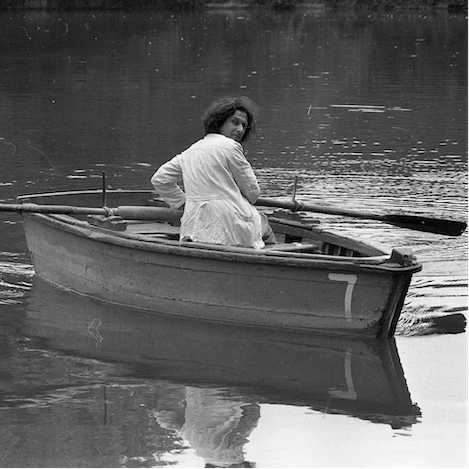

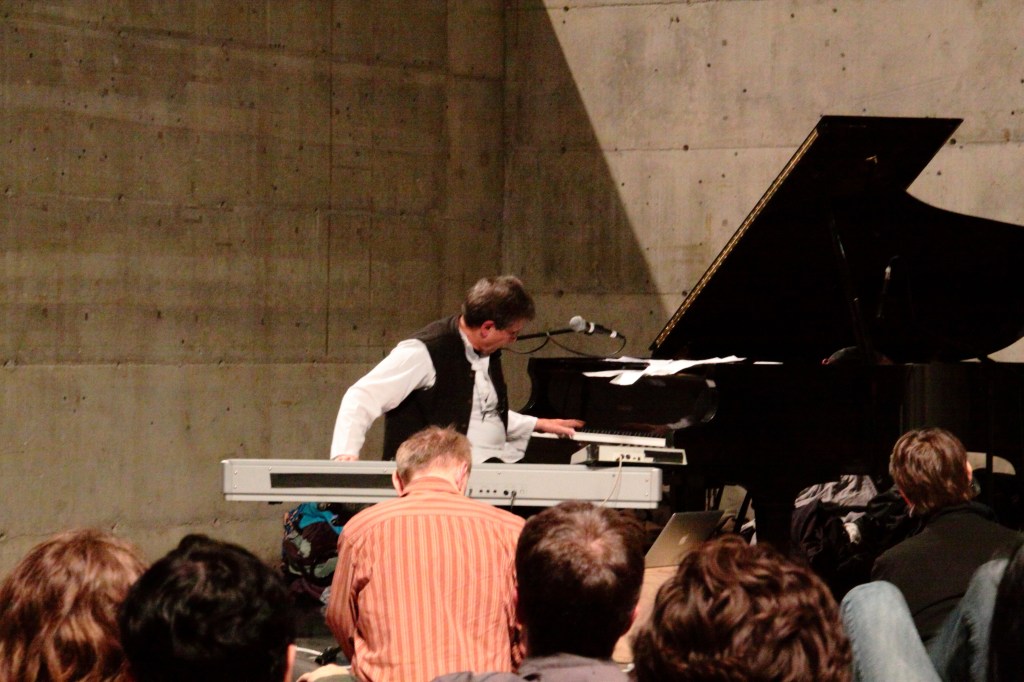
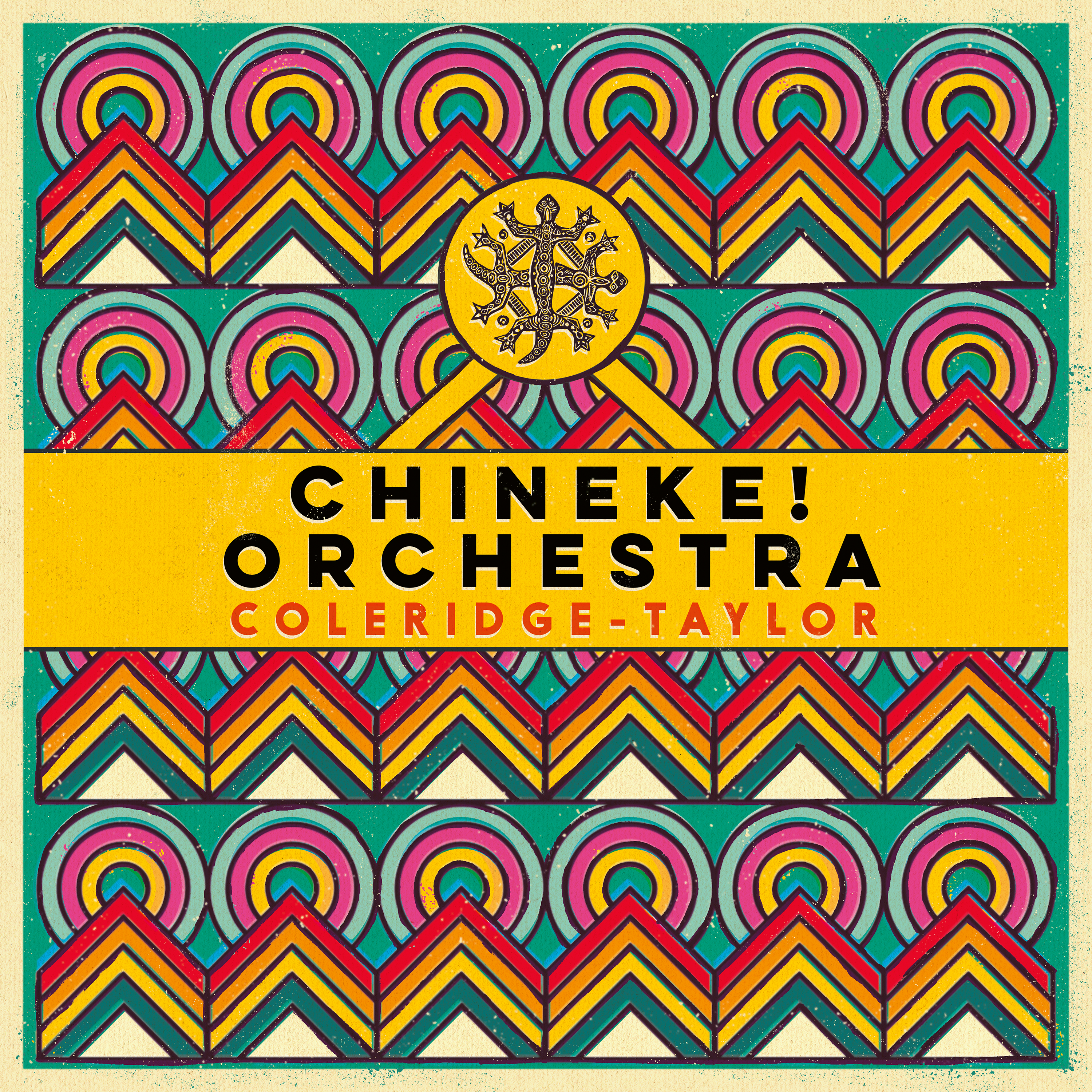


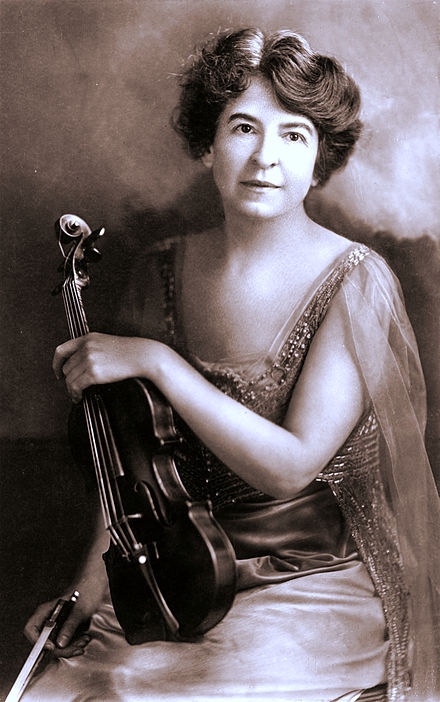


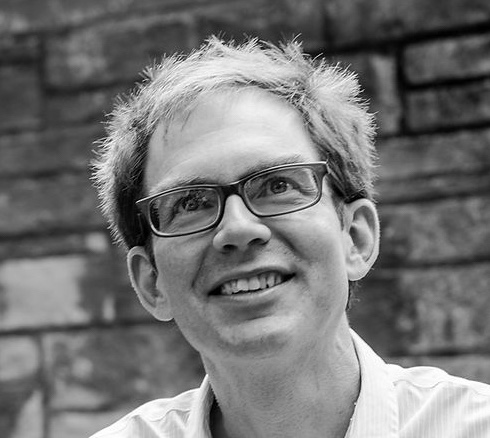


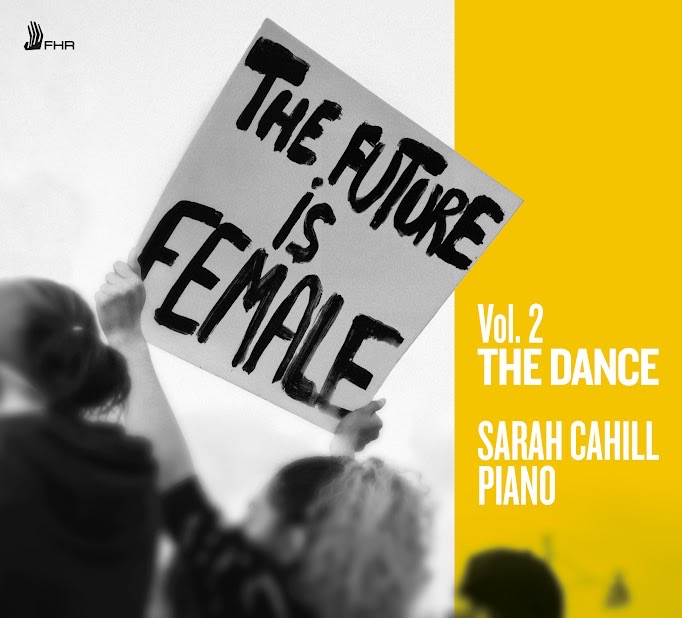

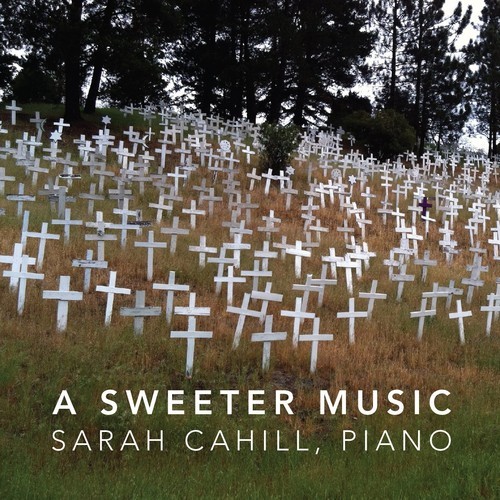


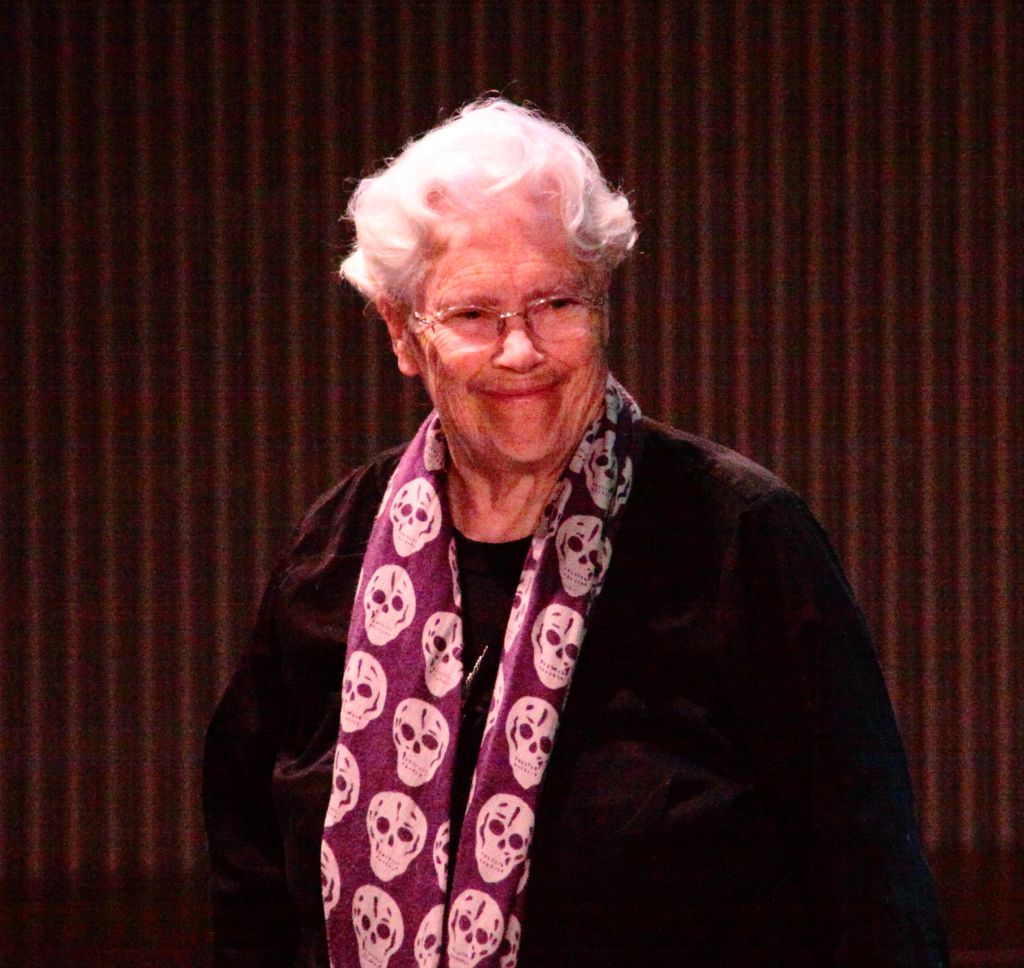


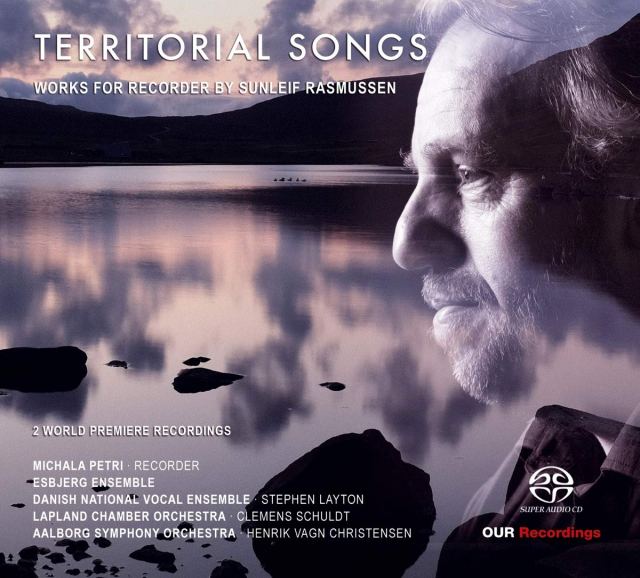


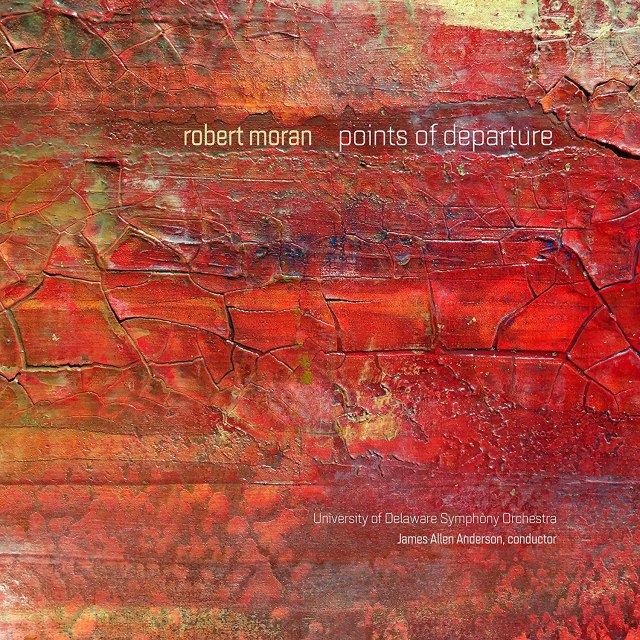
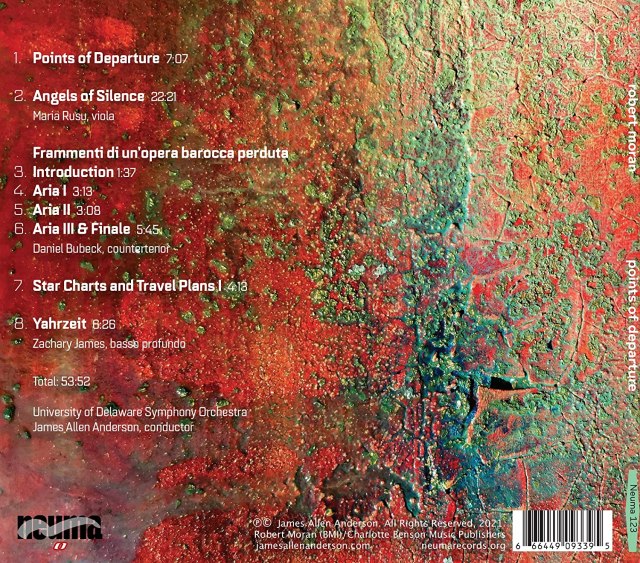






 New Music Buff