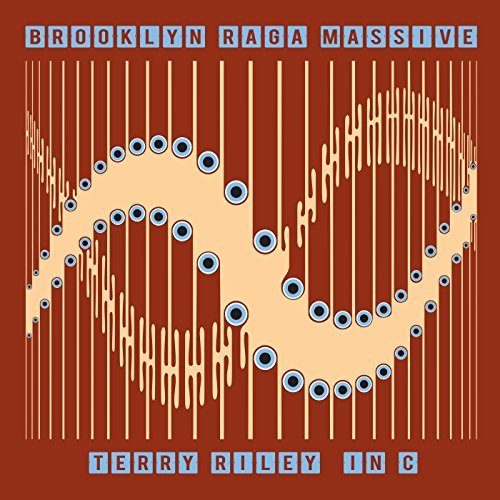
This is heresy. It is not, strictly speaking, faithful to the 1964 score and it is a sort of cultural appropriation which is actually the very basis of Brooklyn Raga Massive, a sort of latter day “Oregon” (to those who recall that band) which takes on all sorts of music and filters it through the unique lens of this flexibly populated group of musicians whose backgrounds range primarily from Hindustani and Carnatic traditions (though hardly in the most classical sense) but also from western classical and jazz. Their “heresy” comes from their choices. The root of heresy is the Greek word, “hairesis” which means choice. There is a lovely selection of their musical heresies on their You Tube Channel.
No this is not purely heresy and it is certainly not blasphemy. Quite the opposite actually. And I would prefer to think of this effort as cultural integration. The choices made here instead lead to some mighty ecstatic music making which pays honor to Terry Riley who turned 80 in 2015 and provides a unique perspective on this classic work.
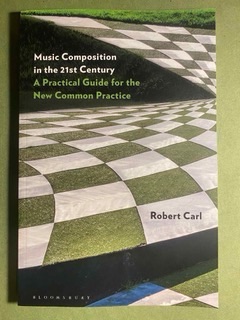
“In C” (1964) is without doubt Riley’s best known work by far and the one which pretty much defined what would later become known for better or worse as “minimalism”. It is an open score meaning that no instruments are specified for performance making this music heretical in nature as well. In addition there is no conductor’s score as such. Rather there are 53 melodic cells numbered 1 to 53 and the ensemble is held together by the expression of an 8th note pulse played by at least one of the musicians involved. The defining reference on the intricacies of this work is composer/musicologist Robert Carl’s masterful book entitled simply, “In C”. He describes the wide variety of potential choices which can be made in performance and the different results which can be achieved.
There are a great deal of recordings available of this work from the first (released 1968) on Columbia’s “Music of Our Time” series curated by the insightful David Behrman to versions involving a wide variety of instrumental combinations of varying sizes. The first “world music” version this writer has heard is the version for mostly percussion instruments by Africa Express titled, “In C Mali” (released in 2014).
Not surprisingly BRM, as they are known, have chosen a largely Hindustani/Carnatic take on this music. The unprepared listener might easily mistake this for a traditional Indian music recording with the introduction which incorporates a raga scale and adheres to the traditional slow free rhythm improvisation of the introductory “alap” section common to such traditional or classical performances.
The familiar sound of these (largely) South Asian instruments with their rich harmonics sets the tone gently. This writer has at best a perfunctory working knowledge of these complex and beautiful musical traditions but one must surmise that the choice of Raga Bihag may have some intended meaning. Indeed such music is by definition integrated into the larger cosmology of Hinduism, the Vedas, the Gita, the Sanskrit language, and, no doubt other references. This is not discussed in the brief liner notes but is worthy perhaps as a future interview question.
It appears that many of the musical decisions were made by sitarist Neel Murgai though it becomes clear as the performance develops that individual soloists are allowed wonderful improvisational freedoms at various points. The recording is intelligently divided to let the listener know which set of melodic cells is being expressed at a given time.
The alap gives way to the sound of the tablas which initiate the pulse mentioned earlier. The structure of this piece produces a range of musical experiences from a sort of didactic beginning to the swirling psychedelic waves of sound which stereotypically define much of the music born in the mid 1960s in this country. In fact Terry Riley’s deep study of South Asian musics (most famously under vocalist Pandit Pran Nath) did not occur until later in his career. Nonetheless there seems to have always been some affinity between Riley’s vision and the sort of music whose popularity was driven in the United States most famously by the efforts such as Pandit Ravi Shankar and Ustad Alla Rakha in the 1970s.
What follows is a riot of musical ecstasy involving some inspired improvisational riffs and some stunning vocalizations as well giving us a fascinating take on this music which was written well before these musicians came into the world. We have a later generation paying homage to the beloved American composer and to the beautiful traditions of their own eclectic ethnic heritage.
The set concludes in this live and lively recording with a traditional fast paced Jhalla, the traditional ending to classical Indian musical performances. This will likely become known as the “Indian” recording of “In C” but it is so much more than that. It is an homage. It is a look back from the view of at least a couple of generations of artists. And it is heresy in the best sense of that word, choices made judiciously to achieve higher artistic goals. Not all art is heresy and not all heresy is art but the heresies perpetrated here definitely deserve our ears.
The heretics are: Neel Murgai, Sitar and Vocal; Arun Ramamurthy, Violin; Andrew Shantz, Vocal; Josh Geisler, Bansuri; Sameer Gupta, Tabla; Roshni Samlal, Tabla; Eric Fraser, Bansuri; Timothy Hill, vocal; Trina Basu, Violin; Ken Shoji, Violin; Kane Mathis, Oud; Adam Malouf, Cello; Michael Gam, Bass; Lauren Crump, Cajon; David Ellenbogen, Guitar; Max ZT, Hammered Dulcimer; Vin Scialla, Riq and Frame Drum; Aaron Shragge, Dragon Mouth Trumpet.
Namaste, folks.


 New Music Buff