Leonard Bernstein‘s liberal political sympathies are well known. But they were never as clearly presented in his music as they were in his ‘Mass’ from 1971. The work was commissioned for the opening of the Kennedy Center for the Performing Arts in Washington, DC and dedicated to the memory of John F. Kennedy.
In using the structure of the Catholic Mass Bernstein echoes the embrace of Christianity of previous Jewish composers like Schoenberg and Mahler. Mahler embraced Christianity at least partly to get work in the increasingly antisemitic atmosphere of late nineteenth century Europe. Schoenberg’s dalliance with Christianity was more that of an existential crisis as he watched the rise of the Nazi party and their genocidal horrors. Bernstein’s embrace of Christianity seems a combination of homage and disappointment. He knew well the glories of liturgical settings of the traditional texts by the likes of Bach, Haydn, Mozart and Beethoven and had himself made an a capella setting of the mass using music he had originally written for Jean Anouilh’s play, “The Lark”.
He also knew well the suffering and deaths occurring in the protests against the Vietnam war and the struggles of American citizens for equality in the Civil Rights movement as well as the struggles in the war itself and the failure of religious institutions to stem the tide of violence.
Bernstein had dealt with religious themes in his first Symphony from 1942, which set texts from the Biblical “Lamentations of Jeremiah” in the last movement. His Chichester Psalms of 1965 set three Psalms in Hebrew. And, his Third Symphony, “Kaddish” (1963) can be seen as a forerunner to the 1974 “Mass”. His final symphony became a post hoc requiem subsequently dedicated to John F. Kennedy when, just weeks before the premiere, he was assassinated in Dallas. The composer dedicated the work to the late president. He also performed Mahler’s “Resurrection” symphony the day after John F. Kennedy’s assassination presenting it as a peaceful response to the murder.
Bernstein was no stranger to politics and progressive ideas and his activism is central to his life and legacy.
The traditional mass is a ritual of sacrifice which the composer uses to talk about the sacrifices of lives and culture occurring during the ongoing Vietnam war. It laments the ineffectiveness of religion in dealing with sociopolitical crises. The full title of the score at hand is ‘Mass, a piece for singers, players, and dancers’. It was commissioned by Jacqueline Kennedy as the inaugural work for the opening of the newly completed Kennedy Center for the Performing Arts in Washington D.C. The first performance took place at the new Kennedy Center on September 8, 1971.
Richard Nixon had declined to attend ostensibly to not draw focus from Jacqueline Kennedy Onassis but subsequent research has determined that he had been warned by FBI headJ. Edgar Hoover of the possibility of “subversive” texts within the piece. He was apparently referring to the latin texts of the mass. So, for “security” reasons, Nixon stayed home that night.
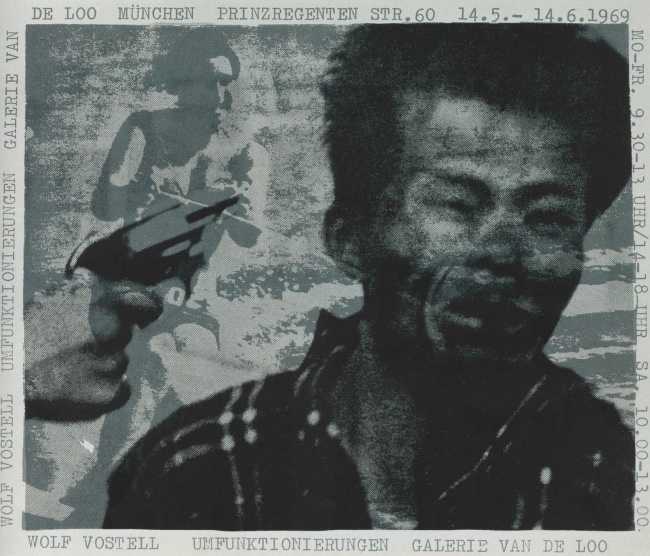
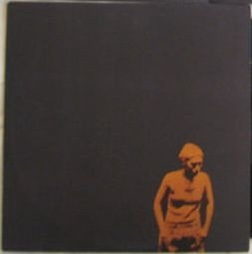
Cover of the original vinyl release of “Der Floss der Medusa”
The 1913 riotous premiere of Stravinsky’s “Rite of Spring” is pretty well known in classical music history. Sandwiching the premiere of his masterpiece of modernism between well known conservative chestnuts such as “Les Sylphides” (an orchestration by Alexander Glazunov of piano music by Chopin, 1907-9) which opened the concert along with Carl Maria von Weber’s “Les Spectre de la Rose” (an 1841 Berlioz orchestration of Weber’s 1819 piano piece, “Invitation to the Dance”) and Alexander Borodin’s “Polovtsian Dances” from his opera “Prince Igor” (1887-1890) which were programmed to follow it. Combine these (familiar to audiences) conservative works with the Rite’s original choreography by Vaclav Nijinsky and the subject of pagan ritual that form the scenario played before an audience consisting of elite concert goers seeking a familiar easy experience along with a burgeoning group of bohemian leaning audience members (who loved the Rite’s loud, subversive nature of both music and staging) and you have a formula for conflict. Speculation is that Stravinsky and/or his producers planned this event to create a contrast for his new modernist work but more likely it was a largely a product of its time and of human nature.
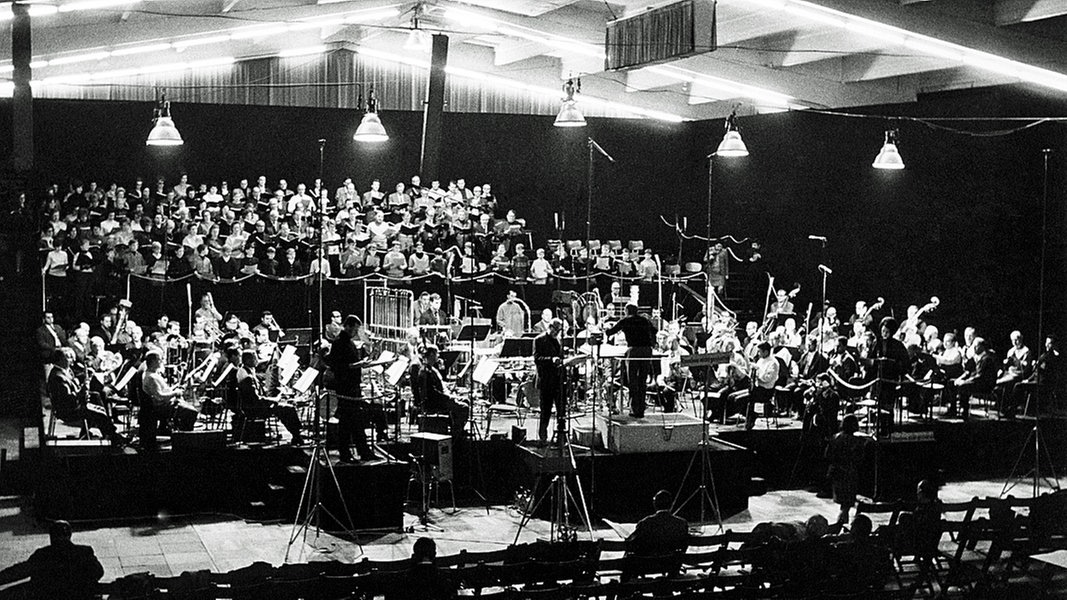
Fifty two years later, Hans Werner Henze appears to have had nothing in mind (at least initially) other than the premiere of his new work, “Das Floß der Medusa” (The Raft of the Medusa) on December 9, 1968 in Hamburg’s “Planten und Blomen” Hall. The recording which was later released on DGG LPs had been done sans audience on the previous days, December 4-8th, and preparations were being made for that night’s world premiere performance before an audience.
An article would later run in the German magazine Der Spiegel describing the event. I present the text of that article in my own translation:
Der Spiegel, December 12, 1968
“What is necessary”, says Hans Werner Henze, 42, “are not museums, opera houses and world premieres … What is necessary is the creation of mankind’s greatest work of art: the world revolution.”
Last Monday, Henze’s “Das Floss der Medusa,” an “Oratorio volgare e militare, in due parti” commissioned by the NDR, was to be premiered in Hamburg — instead, there was a revolution in the hall.
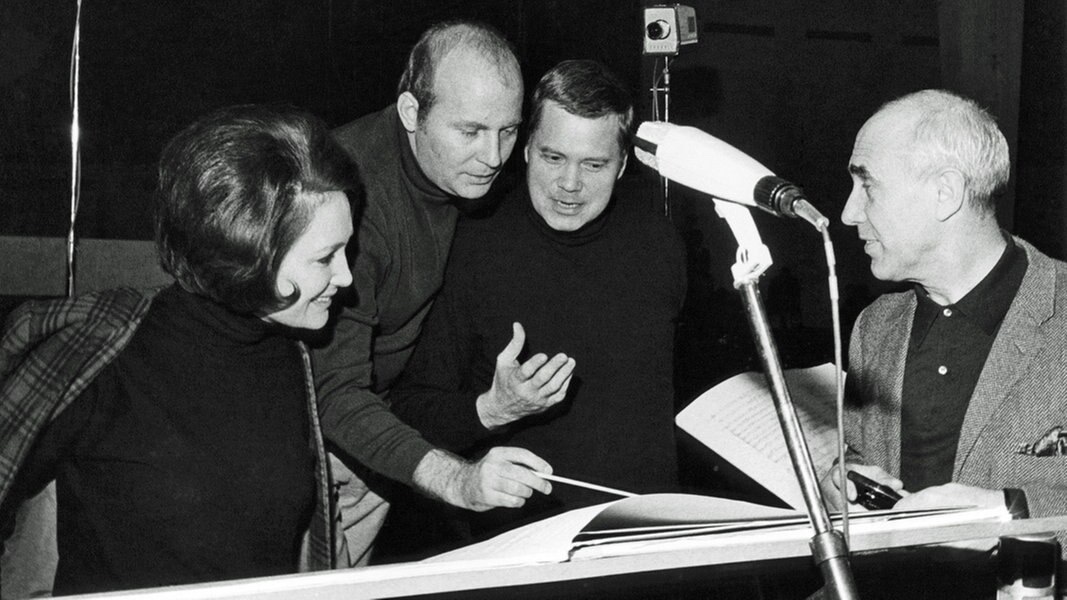
The 1060 seats in Hall B by Planten un Blomen were fully occupied, the NDR Symphony Orchestra was already tuning the instruments, on the podium were ready: Edda Moser (soprano), Dietrich Fischer-Dieskau (baritone) and Charles Regnier (speaker) , the North German Radio Choir, the RIAS Chamber Choir and the St. Nikolai Boys’ Choir. The game could begin, and it began — a duo volgare e militare between NDR and SDS.
Because the Berlin SDS friends under Gaston Salvatore, summoned by Henze, didn’t want to do without this premiere of the APO (Außerparlamentarische Opposition) man Henze any more than the socialist students of the Hamburg Music Academy — albeit for different reasons: The Hamburgers cared about Henze’s music as reactionary to expose the Berliners, to bring their Hamburg colleagues to reason and to divert attention to the middle-class audience. Action against Henze, argued the Berlin “Project Group Culture and Revolution,” would only benefit the bourgeois enemy.
Che Guevara (1928-1967)
After three days of palaver, the Hamburg wing was lame. For example, the intention to ask the composer to explain the structures of his music when he played Medusa was abandoned, as was the plan to intervene in the choral singing, and the attempt to expose Henze’s listeners to Henze as culinary Henze consumers.
On Monday evening, Berliners and Hamburgers moved in socialist harmony to Planten un Blomen, the premiere location that Henze claims to have confused with Blohm & Voss. At least that’s how the Berlin SDS had informed the Hamburg SDS.
NDR program director Franz Reinholz, to whom Henze owes the “Medusa” commission, knows otherwise: “Henze,” Reinholz assures, “inspected the hall himself beforehand. He was also informed about the audience.” shipyard workers, it was, the socialist students recognized once again, an audience of “rich bastards.”
Shortly before 8 p.m. the squad was ready for action in Hall B. And before the conductor Henze stepped out of the artist’s room, Che was already in the hall: the agitators had pinned a Che Guevara portrait to the desk; it was intended to remind us of what had been concealed in the program with Henze’s approval: the oratorio is dedicated to the Latin American freedom fighter.
NDR program director Franz Reinholz didn’t appreciate this memento at all – he tore down the poster. He felt that politics and art did not go together.
The students didn’t think so. They put up a new poster and hoisted the red flag, and a team of anarchists, who had come with duck decoys and other hunting instruments, hung a black one next to it. Then the radio hit, the police joined in, the RIAS Chamber Choir began, but not in unison. “Lower the red flag,” demanded one singer, two singers left sobbing: “We are Berliners and have had enough of red flags.” to whose honor they should sing, left the stage and never came back.
The composer, however, was determined to prove his revolutionary sentiment to his comrades for the first time by saying, “The red flag,” said Henze, “it stays.”
While NDR director Gerhard Schröder (SPD), long since in the safe broadcasting van, stopped the live tumult at 8:19 p.m. and radioed his listeners a recording of the dress rehearsal, his deputy, Freiherr von Hammerstein-Equord (CDU), countered in the hall the resistance of the demonstrators banners and placards; A little later, a squad of 25 police officers, visors on combat helmets, broke into the hall. “Nazis!” “Fascists!” shouted the audience. One artist yelled enthusiastically, “Down with the Reds!”
“The police,” Hammerstein explained, “were ready at the request of the NDR, which considered demonstrations possible and had to ensure the safety of its employees, the audience and valuable instruments.”
Ernst Schnabel, librettist
NDR employee Ernst Schnabel, librettist of “Medusa”, felt the precautions thoroughly. Several police officers threw him through a glass door, expedited him with six other delinquents to police headquarters, took his fingerprints, and locked him in cell 7 until midnight. Schnabel to Hammerstein-Equord: “We don’t have breakfast together anymore.”
Meanwhile, Hammerstein kept order in Planten un Blomen. When Henze informed the audience: “The intervention of the police prevented the discussion,” Hammerstein snatched the microphone from his hand. The hands in the stalls responded with rhythmic Ho Chi Minh clapping, and Henze clapped along — three times. Then he disappeared through a back door.
At that time the “raft of the Medusa” was already well advanced in the ether waves — on the usual counter-revolutionary course.
“Wherever”, the “Süddeutsche Zeitung” judged, “the choirs sang, there was the old, floating, iridescent Henze sound, which doesn’t hurt anyone and never becomes distinctive. The orchestra … strangely often reminded of Richard Strauss.”
The music critic Heinrich von Lüttwitz saw “Medusa” as a “tragi-comic absurdity” full of “romantic colours”, with “sometimes clumsy, sometimes fussy recitatives and melodramas”.
Henze biographer Klaus Geitel saw the “raft” in the “ocean of an emotional but overly extended, lyrically colored monotony”.
It may be that, as Henze puts it, this evening “brought him a little further” politically. But the Henze fans in the APO have failed — that’s how the currently most thoroughly analyzing music theorist Heinz-Klaus Metzger, who identifies with the “anti-authoritarian wing of the SDS,” puts it.
‘The APO, Metzger predicts, ‘will only have created meaningful conditions when German musicians no longer refuse to perform under a red or even a black flag, but instead perform a work by Henze. And for strictly musical reasons. Unfortunately, not even Tucholsky’s bon mot applies to this composer: “Because of bad weather, the German revolution took place in music.”
______________________________________
——————————————————–
So it went in 1968. The Oratorio performance was cancelled and the world premiere had to wait until January 29, 1971 when it was performed in Vienna by the ORF Orchestra conducted by Miltiades Carides. The recording of the first performance was achieved prior to the performance with the audience. That recording was released in 1969.
Many more performances followed but one of those performances, in 2001, was attended by a former chorister, Henning Sidow. He was twelve years old at that 1968 non-concert. And the following article on his experiences of that attempted performance was published in Der Spiegel in 2013.
————————————————–
__________________________________
Blaze at the choral-concert. How the “Raft of the Medusa” went down.
He was anxiously awaiting the big performance: when he was twelve, Henning Sidow was supposed to perform on stage with the NDR boys’ choir in Hamburg. And indeed, the live performance of the oratorio was exciting – but for completely unexpected reasons.
The boys’ choir was founded in 1960 as the choir of the North German Radio and has been connected to the main church of St. Nikolai since 1967.
“As a twelve-year-old in 1968, I had only vague ideas about the political and social turmoil of the time. But on December 9th, as a member of the St. Nikolai boys’ choir, they became tangible experiences for me as a result of the unsuccessful premiere of the oratorio “Das Raft der Medusa” by composer Hans Werner Henze in Hall B in Hamburg’s Planten un Blomen Park.
I had been in the boys’ choir for four years, which belonged to the NDR until 1967 and was then taken over by the St. Nikolai parish in Hamburg. We “experienced” boys felt quite up to the task of taking part in Henze’s musically demanding oratorio and also appearing in a world premiere that was to be broadcast live on the radio.
The play tells the tragic story of the French frigate “Medusa”, which ran aground as the only ship in a convoy on the way to Senegal in 1816. Since there were not enough lifeboats for the 400 people on board, the crew built a raft that could accommodate around 150 men, women and children and which was to be pulled ashore by the boats. But the officers fled in the boats, leaving the people on the raft to fend for themselves. On the day of the accidental rescue 13 days later, there were only 15 survivors. The others fell victim to starvation, lack of water or cannibalism.”
Hide and seek in the empty hall
“Our boys’ choir was supposed to portray the children on the raft – first as living, then as dead. A difficult piece with a socially critical background, this “Raft of the Medusa”, we knew that. It meant not only intensive rehearsals, but also many afternoons and evenings of rehearsals. What we didn’t know was that the premiere was never to take place.
The location of the event and the preparations fascinated me. The hall seemed huge to me as a child. Large platforms were set up here for the performance, with countless instruments on them. There were people everywhere: stagehands, technicians, orchestra musicians, choristers and soloists – it was just teeming. Now we guys were added.
We had a lot of waiting time and were able to explore everything. So we crawled under the stage construction, played hide and seek, crawled under the platforms and shimmied over wooden struts until we got too many splinters in our fingers. And right next door there was another hall, several stories high – a gigantic glass box. There was no event taking place at the time, so the hall was yawning and unlit. We strolled through them, hearts in our pants because of the darkness and the eerie acoustics of the room.”
Protest in the concert hall
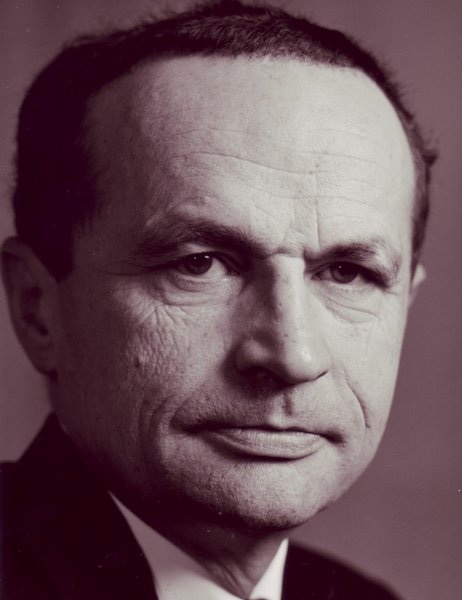
“Then things got serious, rehearsals began. In my memory, Hans Werner Henze was a small man who was already a bit bald at the time, but incredibly energetic. He radiated a mixture of warmth, ingenious artistry and normality. We boys found him sympathetic, but he had no airs and graces and met everyone completely naturally, friendly and patiently. He treated us as if we were adults, which I found very beneficial. When I was a child, I was used to other well-known personalities whom we had met here and there through our performances to be treated and professionally not taken very seriously.
Henze was excellent at conveying his music to the participants, it was lively, colorful and exciting like the story itself. The dramatic story and the historical background that he and the music told us captivated me even then. Conducting, however, was not his thing, I remember his somewhat awkward gestures. But that’s not so important in a professional ensemble, as long as the right impulses and cues come. In any case, we children liked and admired him and his music.
On December 9, 1968, as far as I can remember, the hall was filled to the last seat with an audience. There was talk of more than 1000 guests. Henze was already at the desk. But just before it started, there was a small crowd in front of the stage. A few protesting students stood directly in front of the podium and hung red flags to the left and right of Henze’s desk. It was not clear whether the master just put up with this or whether it had been agreed with him, as was later speculated. In any case, he didn’t seem to put up much resistance to the activities.”
The situation is escalating
“Shortly thereafter, the audience and the choir became restless. Because one of the choirs, the RIAS Chamber Choir, came from Berlin, the enclosed city. Red flags were literally a red rag for many who lived there. At first I – and I’m sure my fellow boys too – didn’t understand much of what was happening down there. But when voices from the Berlin choir grew louder and louder, refusing to sing under “the red flag”, I understood what it was all about. The adults feared that they and the music would be exploited by demonstrating communist students. In addition, a large portrait of Ché Guevara has now been erected, to which the work is dedicated.
Henze’s efforts to get the performance started were nipped in the bud by the boycott of the Berlin singers. The removal of the communist symbols was demanded louder and louder from the podium, before they would refuse to sing a single note. In the meantime it was getting more and more restless in the auditorium and in front of the stage there were small scuffles between the demonstrators and some spectators who got involved. Negotiations between the choir and the composer were taking place behind the scenes as to the conditions under which the performance could still take place.
We boys watched the whole thing with suspense, since the circumstances had now reversed: the auditorium had become the stage, and we on the podium had a box view of this live cultural scandal. Music was out of the question. In the back of the hall, the doors flew open and police officers in full riot gear marched in. Like a horde of ants, they came down the aisles from several sides to the podium. I don’t remember how many there were, maybe a hundred. They looked particularly martial with their helmets with full visors and the shields they – to protect against what actually: a few students, musicians and false notes? – carried in front of them.”
A dark chapter
“Henze had meanwhile disappeared unnoticed and downstairs young people were having their arms twisted behind their backs in order to be taken away. Among them was Ernst Schnabel, who wrote the text of the play. He was later charged with “resisting the authority of the state”. On the other hand, part of the audience did not like the actions of the police and protested, which did not prevent the state authorities from their plan to convict the “perpetrators” in flagrante delicto.
I can’t remember exactly how long the commotion lasted. In any case, it never came to a performance, and at some point we left the stage disappointed. It was incomprehensible to us children why a few red flags and the likeness of a bearded South American led to such an uproar. For us it was about art, about music. We felt cheated of our work.
The newspapers reported extensively on this event in the following days. Some tabloids insisted on turning it into a real political scandal. To this day it is unclear to me what the state authorities were thinking when they made this appearance. That’s for sure
That she was thin-skinned in those times and liked to overreact on such occasions. The fear that the ideology that prevailed behind the Iron Curtain could also spread to the West was too great.
For Hans Werner Henze, who died in 2012, this scandal is said to have been a dark chapter in his artistic career. Later, it is said, he did not want to be reminded of it.
My own memories of that evening only surfaced again years later: at the much delayed premiere in June 2001 in Hamburg’s Laeiszhalle. After 33 years I experienced “The Raft of the Medusa” a second time. The fact that I was still able to silently speak and sing along to the lyrics and the music showed how much the piece and the story it was based on had impressed me at the time. None of it was lost. I left the performance deeply touched.”
So, here we are some 46 years after the riotous non-premiere of Henze’s fine oratorio/requiem, 111 years since the famed “riots at the Rite”. The Stravinsky has since firmly taken its place in the commonly performed orchestral and ballet repertory. The Henze work, never laying any claim to the seminal and visionary compositional methods that characterize Stravinsky’s landmark work, continues to receive performances and recordings having established itself as a substantial work, and himself as a significant composer with a rich and varied career.
NB: All translations are my own efforts. Historical photos are included under fair use terms.
After agonizing about writing a “best of” blog and publishing it before January 1, I decided to take a pause and enjoy the holidays. So here I look back on my 2023 in the rear view mirror but with memories still pretty fresh.
Regular readers of this blog likely already know of my oft shared opinion of the superfluous nature of “best of” lists and of my acquiescence in producing such on an annual basis. I certainly don’t think of this as a meaningless exercise and I think the process has grown on me. It is a chance to achieve a perspective which would be missed by simply plowing on ahead with the usual flow of reviews and articles. But drawing down that 12 month perspective is an opportunity to evaluate those months, to see where we’ve been and to hopefully get a smidgen of insight into where I/we are likely headed.
My Facebook friends will recognize the representative meme at the head of this article which is one of the more cloying aspects of “AI”, whatever that is. So indulge me for a moment to look at this seemingly new intrusion into the reality we thought we knew. So, what is “AI” and what will it do to us? Ultimately I’m not the one to answer that question but I’d like to throw some ideas to add to the speculation.
First, the choices a composer makes, like the choices of a painter, a writer, etc. are the stuff of the mystery of creation itself. Why “A major”, or why that tuning, or scale, or rhythm, or orchestration, etc? So along comes the notion of removing, or at least distancing, the artist from their creative product. That notion started not with famed proponent John Cage but rather with Johannes Chrysostymous Wolfgang Amadeus Mozart in his K. 516f musical dice game. Voila! Algorithmic composition (actually fairly common practice in the classical era). An early manifestation of “AI”? Perhaps.
Lejaren Hiller (1924-1994) was the first composer to employ electronic data processing in a musical work in his Fourth String Quartet subtitled “Iliac Suite” in 1957. There followed similar experiments with various iterations of electronic creations at music centers worldwide including The University of Illinois at Champaign, Columbia-Princeton, Stanford, The University of California Berkeley and San Diego, The San Francisco Tape Music Center (later subsumed into the Mills College Center for Contemporary Music, IRCAM in Paris, Israel Electronic Music Studio, and counterparts in the Nordic countries, Germany, Belgium, etc. Proto “AI”?
While historically interesting I raise this issue to say that, as far as I can tell, “AI” has not made this writer’s greatest hits list but it is interesting and maybe even useful. With that, my concern for the subject officially goes to the back burner for a later time.
2023 has been a year of great personal changes for the writer of this blog. A job change, a geographical relocation, and many things unrelated to this blog characterized a busy year for New Music Buff. So here in a sort of holiday tradition I present my “Best of 2023” from my little listener’s corner of the world. For the sake of simplicity I present a more or less chronological exposition of my sonic adventures. (N.B. Not one portion of this article made use of “AI”).
I begin with not with my 20 most read posts, a practice that characterized previous iterations of this annual exercise. Instead I am providing my top 20 favorite releases that were reviewed in 2023. Please note a couple of caveats. First, I receive a lot of review requests, more than I can even listen to, much less give a reasonably intelligent review. Albums that I’ve not reviewed should not be assumed to be bad or insignificant and my reviews are personal observations. I really only review albums that interest me anyway. Second, this article is only one reviewer’s opinion and not intended to be definitive or to supersede anyone else’s opinions. Third, this is not the end of my attention to music that was released in 2023. Some releases require more time to give a fair listen and a respectful review. There are more to come in 2024.
First a few stats: 2023 saw the publication of some 45 blog posts on New Music Buff, earning me 9693 views for the year. I rarely get comments on my posts (though I welcome and invite comments both positive and negative). Not bad, I think, for the overall less appreciated musical styles that fuel my desire to write about.
Now, in chronological order (of publication) are my personal favorites as a listener:
Neuma 158
Binaural Beats in the Tudor Rainforeststarted my new year with a bang. Reviewing this disc required me to take a closer look at the astounding work of David Tudor and his unique contributions to new music. This important release is a recording of a work which, by its own concept cannot receive a “definitive” performance. But this recording comes mighty close, involving “binaural” recording utilizing a mobile set of binaural microphones which are worn by the recordist. In addition this recording involved a collaboration with Pauline Oliveros and a group called, “Composers Inside Electronics”. The recording was done during Oliveros’ tenure at UCSD. Rainforest IV is so called because it is the fourth iteration of the instructions that form the original concepts of Tudor’s composition, “Rainforest”. It is an immersive sonic experience heard on headphones but actually not bad even heard on stereo speakers. A rich and wonderful release.
Starkland S-236
From a 1960s electroacoustic to a budding 21st Century composer Kotoka Suzuki released on the reliably interesting and even visionary Starkland label. Next Gen Electroacoustic: Kotoka Suzukiwill introduce the listener to this rising star who doubtless will produce more of her compelling compositions.
Sony 194399434826
Igor Levit is a fine concert pianist whose albums are effectively redefining the way we, as listeners, perceive the western classical oeuvre. Igor Levit: Defining Tristandoes for the various musical pieces inspired by the Tristan legend what Levit did for the concept of the great keyboard variations in which he selected Beethoven’s “Diabelli Variations” and Frederic Rzewski’s “El Pueblo Unido Variations” to join his recording of the Bach “Goldberg Variations” in a 3 disc package placing these three large sets of variations as emblematic of the genre in three different centuries (18th, 19th, and 20th). Levit, by his recorded output, is providing a valuable perspective which may influence repertory choices for years to come.
Levit’s traversal of the Tristan legend here ranges from the second recording of Hans Werner Henze’s too seldom heard “Tristan Preludes” back to works by Wagner (of course) and Liszt. He even slips in his wonderful solo piano transcription of the Adagio of Mahler’s unfinished 10th Symphony into the mix. This is a very compelling Tristan anthology by a deservedly still rising star.
Cantaloupe
This Cantaloupe release by Bang on a Can composer and master clarinetist Evan Ziporyn is both masterful and great fun. Evan Ziporyn: Bang on a Popconsists of transcriptions of “pop” songs for multiple clarinets all played by Ziporyn via his very effective multi-track recordings. The album is very personal and pretty much cliche free with these engaging and insightful transcriptions. It is an homage to the songwriters as well as a showcase for Ziporyn both as composer and as performer.
Microfest MF 23
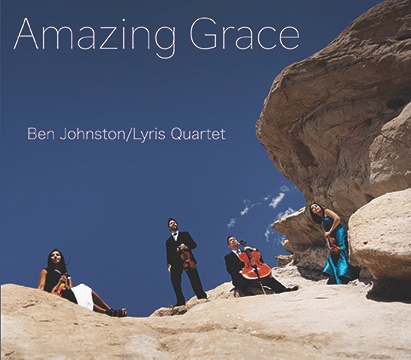
The Young Person’s Guide to Ben Johnston is an ideal way to introduce listeners to the wonderful world of the late Ben Johnston’s music. Johnston, a student and colleague of Harry Partch shows his compositional skills utilizing non-traditional western tunings in these representative works. Johnston here does for some quasi pop tunes what Evan Ziporyn did with his clarinetist perspective for the tunes on Pop Matters. But Johnston’s pretty, accessible work belies fascinating complexities that don’t actually sound complex to the listener. This disc contains Johnston’s last completed work, “Ashokan Farewell” (which Johnston took to be a public domain folk tune but is in fact a piece written by Jay Ungar). It is paired with the 4th String Quartet (a set of ingenious variations on “Amazing Grace”) from 1982 and the 9th String Quartet of 1997. Profound, lovely to listen to, and a great homage.
DVD OM 4001
This DVD is a major addition to the discography of Charles Amirkhanian’s sound poetry as fine sampling of one aspect of Carol Law’s (Amirkhanian’s life partner) complementary visual art. These collaborations are also important contributions to the visual and performative aspect of these collaborative works. Amirkhanian has been a fine curator and promoter of the work of others but he has rather seldom stepped into the spotlight himself. This quirky genre got some fabulous exposure at the 7 day Other Minds 23 festival in 2018 in which Amirkhanian’s work was presented in the (surprisingly varied) context of sound poetry of the amazing international collection of artists who were hosted at those events. This DVD should be in the collection of anyone interested in new music sound poetry and performance art. It is both entertaining and mind bending featuring a juxtaposition of images and sound reviewed in greater detail in the post “Dyadic Dreams”. But words cannot do justice to these works. You really have to see them.
Cedille CDR 90000 210
Readers of this blog know my fondness for the Chicago based label Cedille and their promotion of Chicago based musicians. This disc stands out in this group’s embrace of non-traditional composers alongside more traditional works. The inclusion of works by DJ composer Jlin and the academy based genre defying duo Flutronics alongside composers like Danny Elfman and Philip Glass demonstrate the wide ranging repertoire of Third Coast Percussion. Much more information can be found in Perspectives: Spectacular World Premiere Recordings from Third Coast Percussionon my blog. This one reimagines the percussion ensemble.
Neuma 176
This disc is a good example of why listeners and collectors should pay attention to the Neuma record label. Philip Blackburn, who had been the very successful curator of Innova records, took over the defunct Neuma label which was founded with the intention of promoting largely electroacoustic music though not exclusively.
Agnese Toniutti‘s New Music Visionis actually a review of two discs by this rising star, a dedicated new music pianist that needs to be on your radar. The other Neuma disc contains Toniutti’s traversal of John Cage’s reluctant masterpiece, “Sonatas and Interludes for prepared piano”.
The disc pictured here is Toniutti’s vision beyond the Cage work. This one focuses on mostly living composers Lucia Dlugoszewski, Tan Dun, Philip Corner, and Toniutti’s herself. Basically, if Toniutti plays it, you should probably at least give a listen.
2023 saw the completion of Bay Area pianist Sarah Cahill’s epic survey of piano music by female composers. Cahill is another (predominantly) new music focused pianist about whom I would also assert that, if she plays it, you should probably give at least one listen.
The End of the Beginning: Sarah Cahill’s “The Future is Female” Trilogy Completedwill tell you all you need to know about this trilogy which encompasses about 300 years of music history and sheds light on some fascinating and substantial music written by women. Most of the works on this trilogy of albums are, in fact, world premieres but, fear not, even the pieces which are not premieres are likely not in your collection. This is a brilliant selection of music that effectively throws down the gauntlet to challenge other artists to explore this repertory. This trilogy is a true landmark and a joy to the ears.
This third volume in the wonderful Catalyst Quartet’s survey of another unjustly neglected group of composers focuses on the music of three black Americans of the twentieth century. Catalyzing Blackness, Volume Three: The Catalyst Quartet plays 20th Century music by Black Americans was nominated (but didn’t win) for a Grammy Award and, happily, I’m told that more volumes are in preparation. Again, this music is a pleasant revelation that does for black composers what Sarah Cahill has done for women composers (N.B. The first volume by the Catalyst Quartet focused on the black female composer Florence Price). And here’s hoping that Coleridge Taylor Perkinson, George Walker and William Grant Still will become household names in the concert hall.
Microfest MF 21
Son of Partch, Carrying on a Traditionis a really wonderful disc which, though I reviewed it in exceedingly positive terms, provoked a strongly negative reaction from the artist. The reaction apparently also provoked enough interest to have made this review one of my most read of 2023.
But, aside from the unfortunate negative reaction, I still maintain that this is a fine release worthy of attention from anyone who likes new music, microtonality, and the music of Harry Partch. Cris Forster is a composer, theoretician, and instrument builder clearly descended from the Partch tradition. His work deserves attention and this disc is a very satisfying experience.
Islandia IMR 011
Steven Schick is a master percussionist and conductor. This release is the first volume of his personal choices of solo percussion repertoire. Solo Percussion Manifesto Volume I: Steven Schick’s “A Hard Rain” is a manifesto of sorts and does for solo percussion music what Sarah Cahill has done for women composers and the Catalyst Quartet is doing for black composers. There are not many recordings of solo percussion music and Maestro Schick essentially presents his favorite works in definitive performances on a label produced by Bang on a Can cellist Maya Beiser. The second volume is in my review queue and, if this first volume is any indication, it will be a landmark survey.
Cedille
Rising Star Seth Parker Woods’ “Difficult Grace” is a Classic in the Making. Here’sanother Grammy nominee that did not win but, this second album by this fine American new music cellist is a winner in my book (er, blog). This is actually the audio of what was developed as a staged performance but the music speaks for itself. Keep an eye/ear out for this rising star who, even now, is storming the new music cello scene in invigorating ways.
Neuma 128
A Reason to Listen: Roger Reynolds’ Latest, “For a Reason”,new recordings on Neuma Records. Here we see Neuma following its original electroacoustic mission with this remarkable set in celebration of Roger Reynolds’s 90th year. This is a lavish 2 CD box set with a beautiful booklet and lucid liner notes. It is a worthy production which showcases recent works by this prolific and important American composer.
Readers of this blog likely are aware of my interest in music that is suppressed and/or neglected so this disc grabbed my attention immediately. Israel does a great job of funding the arts and this can be seen in the proliferation of truly fine performers nurtured by that funding. Less well known are the composers who have flourished in the art healthy politics of this country. Some 50 years of history are represented here. This is but a sampling, albeit finely curated, of several generations of composers displaying a plurality of styles with substantial results. This entertaining disc will whet the appetites of intelligent and curious listeners and, hopefully, bring about more recognition of the world class composers who deserve an audience.
Santa Barbara conductor Nir Kabaretti (photo copyright David Bazemore)
It was the day before Passover and all through the lovely acoustics of the Granada Theater, nostalgia was afoot. It came in the form of a Mozart Overture, a Mahler Symphony, and some new music for clarinet, the klezmer clarinet of David Krakauer. (N.B. Klezmer is a style of playing common to the Ashkenazi Jewish communities of Eastern Europe and Russia).
Maestro Kabaretti’s thoughtfully crafted program featured the integration on non-western vernacular (folk) musics into the western classical idiom. The incorporation of an age’s popular music into the newly written concert music of that era is a time honored tradition in music history.
Today’s concert would feature Wolfgang Amadeus Mozart’s imitation of the exotic music (to Viennese audiences) of Turkish Janissary music in the overture to his opera, “The Abduction from the Seraglio”. The plot consists of a story that involves a Turkish Pasha who has kidnapped the lover of the leading man. (Spoiler: He rescues her).
There was a personal nostalgia in that the first opera recording I bought was the budget LP of the Josef Krips conducted performance of that opera. The overture quotes some of the music of the opera and sets the exotic locale with the imitation of Turkish music.
The relative exoticism of Turkish music was imitated by Mozart in his 5th Violin Concerto, subtitled “Turkish”, as well. Listeners may recall the imitation of Turkish martial music in the finale of Beethoven’s 9th Symphony (just after the cherub stands before God). Mozart’s inclusion of piccolo, triangle, big drum, and cymbals (rarely seen in classical era orchestras) typify the European imitation of this ethnic music.
Mozart’s overture works well as a standalone piece and Kabaretti’s Santa Barbarans stimulated at least this listener’s sense of nostalgia in a beautifully crafted reading of this music. From the familiar opening notes this overture this listener was transported to nostalgic reverie and simultaneously enthralled by the energetic reading of the work. It was a delightful balance of both nostalgia and an opportunity to somehow hear this work anew.
Clarinetist David Krakauer (c)Linus Lintner Fotografie
What followed that delightful overture brought featured performer David Krakauer to the stage for a performance of a new (2018) concerto for klezmer clarinet. But before that, we were treated to what Krakauer described as “an arrangement” of a classic klezmer wedding tune. The affably chatty Krakauer is apparently possessed of a genuine humility here because this was virtually a mini concerto for clarinet and string orchestra whose style had some resemblance to the Mahler Symphony programmed post intermission.
Krakauer is a seriously accomplished musician, composer, musicologist, and teacher. His technical and interpretive skills are of Olympian dimension and his ability to relate to fellow musicians and the audience were a joy to behold. Readers of this blog might recall an earlier review of yet another klezmer concerto also championed by Krakauer. You can read that blog entry here.
The youngest music by the youngest composer on the program was next. Wlad Marhulets (1986- ) is a Polish born and educated composer. His name had been unfamiliar to me but a quick look at his website and a few listens on YouTube revealed this man to be a marvelously skilled and creative composer. Put this man’s name on your listener’s radar.
Doubtless our soloist had some input on the performance of this concerto but Marhulets appears to have an in depth understanding of klezmer performance along with a solid grounding in western classical music and a marvelously nuanced skill at orchestration. This is a substantial concerto and a great addition to the repertory.
Like the Mahler Symphony which would follow in the second half of the concert, Mr. Marhulets demonstrated a range of compositional skills. He can evoke humor, terror, nostalgia, joy. He handles a large orchestra augmented by an electric bass guitar and a drum kit. And he has a subtle but effective sense of orchestral color. The soloist, who has a lot to do, winds in and out of passages that pit his clarinet variously against the full orchestra and in duet pairings, sometimes fleetingly, that suggest images of pub, dance hall, and street concerts. All of these the natural milieu of Klezmer music.
The concerto began loudly, raucously, and assertively. The soloist navigated the complex rhythms and subtle balances of texture as only a master musician can do. Kabaretti and his fine orchestra were clearly up to the significant challenges of this music and clearly enjoyed their labors.
The loud, declarative, opening gave way to a lovely and lyrical slow movement followed by a long and engaging cadenza, sometimes punctuated briefly at times by the orchestra. It then led into a really fun (though hardly trite) finale.
Following a richly deserved standing ovation, Krakauer and the orchestra gifted the audience with an encore. Echoes of klezmer in the many moods evoked by this afternoon’s music making left this listener reflecting on the chaos in our world here, in this beautiful hall, in this beautiful city, on the eve of Passover. I fancy that there is a gentle activism here, one in which the sharing of the beauty of a culture’s esteemed artists (composers and performers) acts as a proud display of some of the best that that culture has to offer. The quality of the music and the music making can’t fix the world’s problems but they can give us hope and joy. Great art elevates the soul. At least that’s what this reviewer felt.
The intermission was needed to replenish listeners’ emotional reserves for the second half. No doubt the musicians needed to recharge as well.
The Mahler First Symphony (1888) triggers more personal nostalgia for two reasons. One, my first Mahler purchase was the Bruno Walter reading of this and the ninth symphony. Second, I will forever associate that first movement depicting dawn in its opening. Astute listeners may recognize television and film composer Alexander Courage’s appropriation of this music in his now iconic theme for the original Star Trek series (which debuted in 1964 when your humble reviewer was 9 years old). I would encounter Mahler some years later.
It is difficult over 100 years after the symphony’s premiere to understand how radical this music seemed to players and listeners. Its Budapest premiere has been described as a disaster mediated by uncooperative musicians in the orchestra and an unsympathetic audience. After his death in 1911, Mahler’s compositional star rose to new heights when the late, great Leonard Bernstein championed his work during his long and fruitful career, even reintroducing Mahler’s music to the Vienna of its beginnings. This is the Vienna where Maestro Kabaretti was trained. And he gets this music deeply.
To be fair, this piece presents many challenges for players and conductors but, when it is well done, it thrills audiences. Maestro Kabaretti and his Santa Barbarans delivered as fine a performance of this symphony that this reviewer has heard. It was positively thrilling and, unlike the musicians who played in the disastrous premiere, the Santa Barbara Symphony clearly enjoyed their hard work and respected their leader.
This was a thrilling and invigorating concert experience. The hometown orchestra put in a world class performance and our esteemed soloist was matched in his expertise by their skills. The nearly full house was most obviously pleased as was this reviewer.
This is, by my count, the fifth Starkland release of Guy Klucevsek’s work. Klucevsek has happily been one of Starkland’s favorite artists. Though he officially retired from performing in 2018, he continues to compose, collaborate, and record.
“Hope Dies Last” consists of several new compositions from this (hardly retired) man. And if you don’t know his work, this is a fine place to start. Klucevsek is a unique composer/performer who has defined his brand as one of the finest accordion players in new and experimental music. Through years of composing, performing, and collaborating, Klucevsek has taken the accordion to places it never dreamed of going and still manages to do honor to the history and significance of his chosen instrument.
NB: This reviewer is biased, having had a long admiration for this artist. The “vernacular” idioms of the accordion had been very familiar to me from my childhood on with my exposure to rituals of some of my Eastern European ancestors (polka bands, Lawrence Welk, Myron Florence, etc). Because of Klucevsek I will never hear the accordion in the same way ever again.
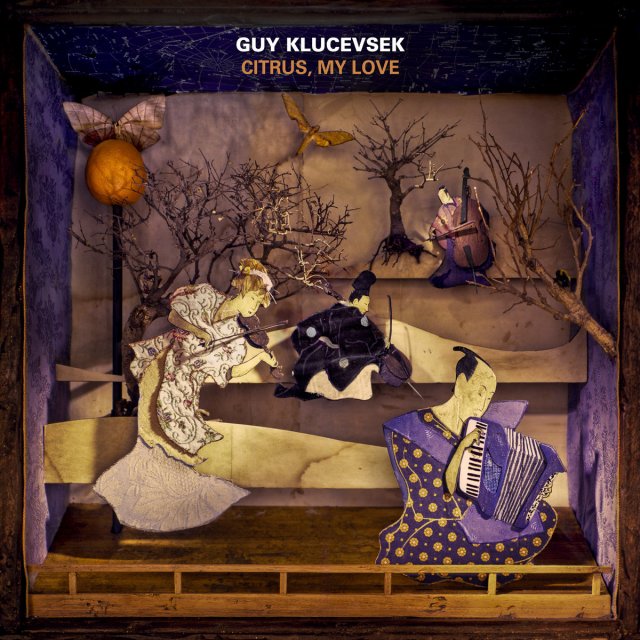
Having, ostensibly, “retired” (at least from performing), we find his creative juices still flowing in these recent compositions. This album is largely representative of his more lyrical writing as heard in releases like, “Citrus, My Love” but Klucevsek is seldom far from parody (in an honorific sense) and both humor and pathos infuse this music in ways that sneak up on the listener. This recording stems in part from music written by Klucevsek and performed by many of his friends, but not always on accordion, on a concert in celebration of his 75th birthday.
We hear, on this album, compositional genius distilled from the composer’s broad knowledge and understanding of music in general, and of his ability to incorporate classical and vernacular idioms into his personal style. The valuable liner notes by the composer reveal how his work belies the complexity which underlies his very approachable style. There is a depth in these works that lies, tantalizingly, just below the surface.
One of the most rewarding aspects of this album is hearing all these fine collaborators play Klucevsek’s music. The dedication and enthusiasm of these performances are a fitting celebration of this unique artist who brings his 19th century folk instrument (and its milieu) very successfully into the 21st century. Participating artists include: Jenny Lin, pianos; Todd Reynolds, violins; Jeff Gauthier, violin; Margaret Parkins, cello and whistling; Will Holshouser, accordion; Alan Bern, accordion; Nathan Koci, accordion; Bachtopus Accordion Ensemble (Robert Duncan, Peter Flint, Mayumi Miyaoka, and Jeanne Velonis); Jerome Kitzke, heavy breather and toy piano schlepper; and, of course, Guy Klucevsek, accordion and piano. Starkland founder Tom Steenland’s steady producer’s hand is a guiding spirit here as well.
The last six tracks, “Industrious Angels” (2010) were written on commission by Laurie McCants for her dramatic presentation of the same name, a work inspired by the poems of Emily Dickinson. Collaborations such as this, with non-musician artists, are well represented in Klucevsek’s career. These are the oldest compositions here.
The first 13 tracks, with the exception of the 2022 transcription (of the 1988 original classic), “Flying Vegetables of the Apocalypse”, were all composed from 2015 to 2021. And they serve to characterize Klucevsek’s wide ranging musical interests whose further elucidation in the aforementioned liner notes provide valuable insights into his compositional processes. Really fascinating on that technical level as well as in the resulting sound of the compositions. This album just works well on so many levels.
In many ways, this release, with so much recently composed music, feels like an apotheosis, an artist’s very satisfying and nostalgic perspective looking back on a very successful career (I’m thinking like Wild Strawberries, maybe, but happier). It is a contemporary journey that will likely send listeners to hear more of this man’s work. And so they should.
More Klucevsek at Starkland Starkland has previously released five other Klucevsek CDs:
Transylvanian Softwear with works by William Duckworth, Fred Frith, Klucevsek, and John Zorn. Awarded a “Recording of Special Merit” by Stereo Review.
Free Range Accordion with works by Burt Bacharach, Lars Hollmer, Aaron Jay Kernis, Jerome Kitzke, Klucevsek, Stephen Montague, Somei Satoh, and Lois V Vierk. “A rebel with an accordion… Klucevsek combines poker-faced wit and imagination with command of his instrument, forcing you to re-think the accordion’s limitations” (Downbeat).
Polka From The Fringe A double-CD re-release presenting the most comprehensive edition of this major project conceived and shepherded by Klucevsek. Works by Mary Ellen Childs, Anthony Coleman, Dick Connette, William Duckworth, Carl Finch (of Brave Combo), Fred Frith, David Garland, Peter Garland, Phillip Johnston, Aaron Jay Kernis, John King, Mary Jane Leach, Bobby Previte, Elliott Sharp, Carl Stone, Lois V Vierk, William Obrecht, and more. “A long-overdue reissue” (John Schaefer, WNYC New Sounds). “A two-CD collection of new polkas he got from a wide range of classical new music, jazz and indie pop composers. It’s a riot, and an addictive one at that” (Los Angeles Times).
Teetering on the Verge of Normalcy with works exclusively by Klucevsek. With violinist Todd Reynolds, soprano Kamala Sankaram, and pianist Alan Bern. “This heartfelt album has an especially elegiac quality” (Sarah Cahill).
Citrus, My Love offers two substantial works composed for dance, Citrus, My Love (1990) and Passage North (1990), separated by another piece Patience and Thyme (1991). A “strikingly beautiful” CD (AllMusic Review) that is “generously imbued with melodic charm and grace” (The Wire).
Regular readers of this blog are doubtless aware of my “underdog” interests. Whether suppressed by fascist regime, (as in London Records “Entartete Musik” series and Chandos “ARC”ensemble recordings), or just somehow eclipsed by more “spectacular” (by which I mean, “producing a spectacle” like Stravinsky’s Rite of Spring) but, as exemplified by Cedille Records’ “Avant L’ Orage”, music can be oppressed, disliked, or overlooked and such music, in my humble opinion, deserves another listen, a second chance. With this release, NAXOS puts forward a second chance on these stage works by a man better known for his stride piano and ragtime works. No, it’s not Scott Joplin. Guess again.
Esoteric as this my interests have ranged, I couldn’t have guessed that I refer here to James Price Johnson (1894-1955), so don’t feel bad if you guessed wrong. Johnson’s burial site is in Queens, New York. His grave, unmarked since his burial, didn’t get a headstone until 2009. And this is the man whose composition, “Charleston” (1923) became ubiquitous and emblematic of the so called “Jazz Age”.
Apparently Johnson had a fair amount of success as a composer of stage works. And he collaborated and/or influenced people like William Grant Still, Duke Ellington, Count Basie, Jelly Roll Morton, Willie “The Lion” Smith, Art Tatum, and Thelonius Monk, among many others. Fats Waller was one of his students.
Johnson is arguably an artistic descendant of Scott Joplin whose work Johnson both performed and recorded. And in addition to his solo piano work he apparently also wrote stage works. The works presented on this release are short operas, lovingly reconstructed by the late James Dapogny (1940-2019), a composer, pianist, and jazz musicologist. Dapogny provided an accounting of his work reviving these historically and culturally significant works that also happen to be well written and very entertaining.
The liner notes written by University of Michigan doctoral candidate Cody M. Jones provide a very useful context for understanding both the music and it’s unreasonable neglect. Jones identifies these works as part of the “shadow culture” (a concept made by opera historian Naomi André referring to art produced by black artists which was willfully neglected during the “Jim Crow” era).
Jones writes that these works may have been inspired by George Gershwin’s Porgy and Bess (1936). It appears that The Dreamy Kid (1937) was Johnson’s first stage work and De Organizer (ca. 1938-9) was his second (and last) work for the stage.
The Dreamy Kid was written to an existing play by Eugene O’Neill but apparently was never completed. Its fragments were found during Dapogny’s research on De Organizer. So that makes this a world premiere recording of this piece.
Track listing
Two stage works with libretti, one by the estimable hero of the Harlem Renaissance, Langston Hughes, and the other (actually a stage play, not a libretto) by Eugene O’Neill. These recordings owe a debt to the conductor Kenneth Kiesler (1953- ) and the late James Dapogny (1940-2019), composer, musicologist, and jazz musician. Dapogny and Kiesler also contribute the brief but useful program notes.
“De Organizer” (ca. 1930) received acclaimed revival performances in Michigan, New York, and Chicago in 2002. Both the New York Times and the Chicago Tribune featured strongly positive reviews.
“De Organizer” is an apparently complete recording Its libretto was written by the Harlem Renaissance writer Langston Hughes (1902-1967). The work received only one performance in Carnegie Hall in 1941 as a benefit for the International Ladies Garment Workers Union. This work shares a similar fate with that of Marc Blitzstein’s “The Cradle Will Rock” (1937), famously suppressed for its pro union themes.
The second work is a set of excerpts of an incomplete opera called, “The Dreamy Kid” based on a stage play by the great American playwright, Eugene O’Neill (1888-1953) and its tale of racial violence at the hands of police is sadly a timely theme and a precursor of sorts for the politically infused operas of the Pulitzer Prize winning Anthony Davis.
Both works make use of jazz and blues forms (both distinctly African American art forms) and will remind the listener of Gershwin’s admiring appropriation of these forms. Jazz and Blues ubiquitously informed western classical worldwide as seen in the work of Gershwin, Aaron Copland, and Maurice Ravel, among others so the reconstruction and revival of Johnson’s theater works fill a gap in the history of western music as a whole. This is a very entertaining recording of some truly substantial music that can now take its place with Joplin’s “Treemonisha” as great American music.
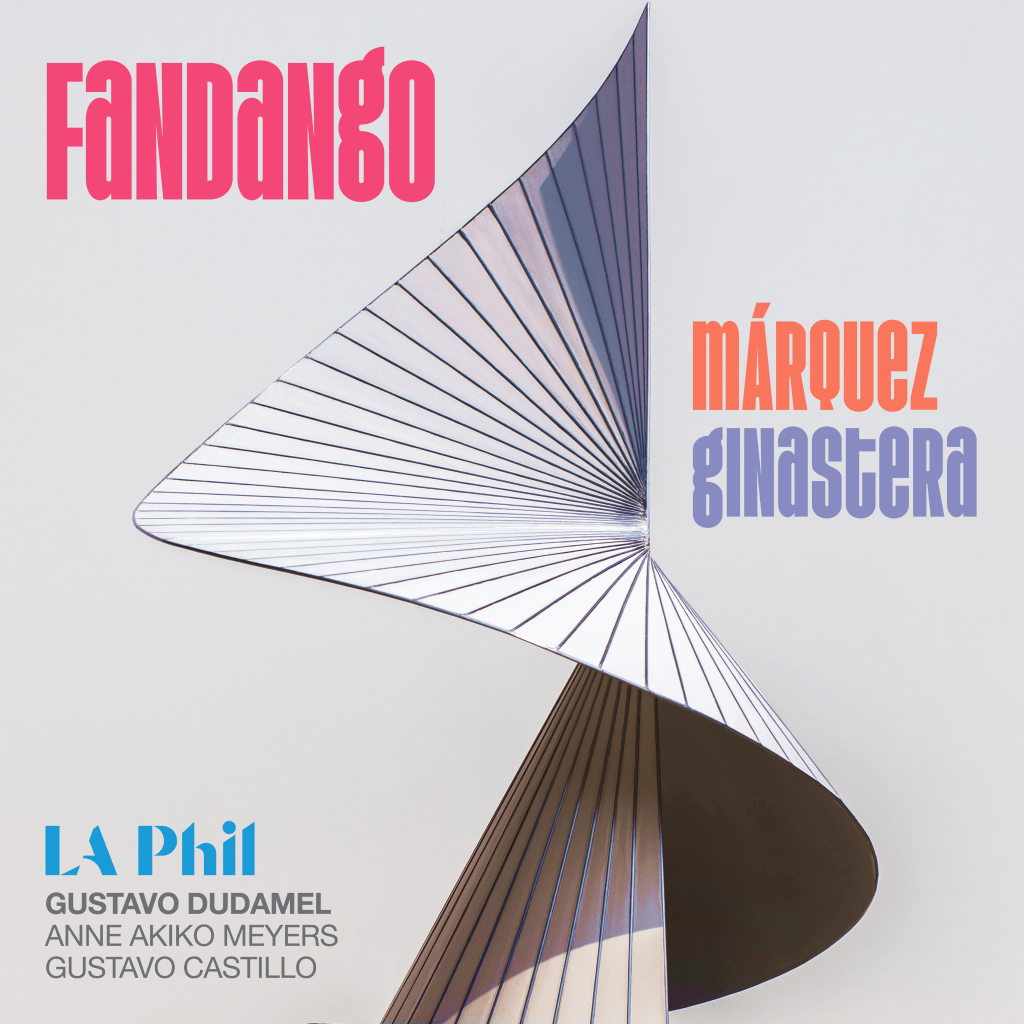
The primary importance of this new release is, of course, the presentation of these two major works but it also an exposition of the diversity (or do you prefer, “heterogeneity”?) that can become obscured by well intended terms like, “Latino” and “Hispanic”, or even conductor Gustavo Dudamel’s “Pan American”. All are well intended but racial, nationalist, and other categories are insufficient on their own in recognizing the rich diversity inherent in their cultures. Here we go, just in time for Latin History Month.
The concise liner notes tell us that even the album’s title, “Fandango” has multiple meanings depending on cultural contexts. The fact is that no single style or genre can be said to be representative of the marvelous diversity that exists within their intended scope which attempts to represent practically the whole of the western hemisphere as is the case with this release. So, while Fandango is certainly about the musical works presented, it also touches on the issue of diversity by the choice of two major works separated chronologically by some 80 years and representing composers from Argentina on the one hand, and Mexico on the other. Two different cultures that share a language in both words and , to some extent, music.
The centerpiece of this album is, of courses, the concerto that Maestra Akiko-Meyers commissioned from Mexican composer Arturo Márquez Navarro (1950- ). I’m sad to say that I am only now learning of this composer but delighted in his mastery of the orchestra and the grand romantic gestures of a past era along with an acute and personal appreciation of the folk idioms of his culture. At first I was skeptical of a “mariachi” inspired concerto because such attempts, even the most sincere, don’t always seem to work. Well, that is certainly not the case here. This is a strong contender for regular inclusion in the current canon of widely performed violin concertos. This one is a masterpiece which poses challenges to the soloist (which give her a chance to show her virtuosity) and surround it with rich, subtly, ultimately beautiful orchestral textures that support the soloist but which demand much of the orchestra and its conductor as well.
The concerto (written in 2020) is in the traditional three movements. The first, entitled “Folia Tropical” (tropical leaves) embraces the spirit of late romantic concerti like those of Bruch and Brahms. It is an extended movement that introduces and develops many moods and themes. It is a big symphonic movement worthy of a symphony and it gives the soloist much to do and upon which to demonstrate her musical and interpretive skills all the while with a very busy orchestra accompanying her.
The second movement, “Plegaria” (prayer) is a hugely substantive chaconne, the baroque contrapuntal variation form with a repeating bass line and thematic variations over the harmonic structures supported by those notes.. At least that is my listener’s understanding. But what is not necessary to “understand” technically is the emotional impact of this movement. This is an amazing use of the form. The soloist moves into different roles, sometimes very much upstage, sometimes an adjunct to the orchestra, sometimes not there at all. There is a slow, meditative beauty in this movement which is also characteristic of the romantic idiom in which this is written.
The third movement, “Fandanguito” (little Fandango) is a somewhat lighter and very energetic finale one might expect in a movement following the previous deeply emotional ones. And the composer does not disappoint. He writes a joyous, energetic finale which nonetheless stands up as substantially as its predecessors.
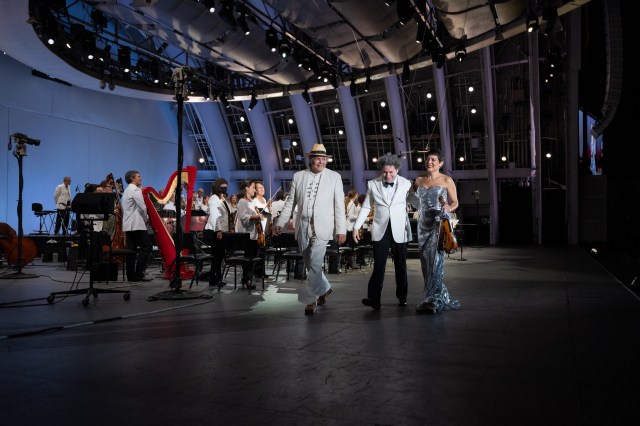
The composer Arturo Marquez with Maestro Dudamel and Anne Akiko-Meyers leaving the stage after a successful performance.
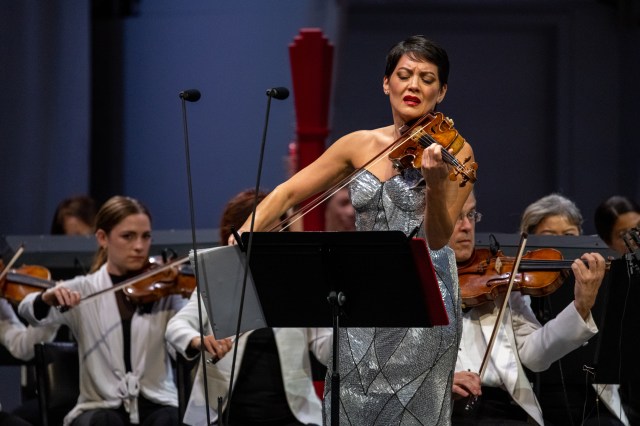
The joy, to this listener, is to hear a master composer in collaboration with a fine soloist both technically and interpretively. The composer has integrated his experiences and study of his own cultural folk musics and infuses the spirit of the music into his grand romantic idiom. That is, the concerto does not, for the most part use direct quotation from folk sources but uses structural elements in his composition. Maestra Akiko Meyers discharges her soloist duties with both startling facility and a deep understanding of the music and the composer’s intent.
Gustavo Dudamel is a joyfully rising star who brings his cultural proclivities and his own lens on western orchestral music. He is an exciting and incisive conductor. I don’t know the extent of Dudamel’s study of Latin folk musics but he really gets this work and brings out the composer’s subtleties in this gorgeous and exciting concerto.
The “B side” as they used to be called is no mere filler, it is the entirety of the Alberto Ginastera (1916-1983) ballet, “Estancia” Op. 8 (1941). Here, 15 separate movements are used in a five scene scenario. The work, usually heard in its four movement suite format and, even more frequently, just the spectacular finale, the Malambo.
In addition to its large orchestra, the ballet calls for a singer/speaker soloist who acts as both narrator and as soloist with orchestra. In this performance the challenge is admirably met by baritone GUSTAVO CASTILLO, another shining light cultivated by El Sistema. He performs well in both his baritone vocal duties and his narrator task in which he speaks Spanish in an elegant and, I’d say, almost Shakespearean grasp of the beauty of the language. The man understands drama as well as music.
This ballet is clearly a masterpiece. It reminds this listener of Prokofiev if he was born in Argentina. Nothing derivative here though. This is an intensely entertaining work, as substantial as Romeo and Juliet, similarly constructed in relatively brief musical segments designed to accompany a dance whose scenario is the story of the “gaucho” or cowboy that lived and worked hard lives, lives that were romanticized into a poem by Argentinian poet José Hernández (1834-1886). (click on the word “poem” for a link to an English translation of the poem).
All that to say that this is a truly enjoyable and important release. A valuable addition to the discography of Latin classical music.
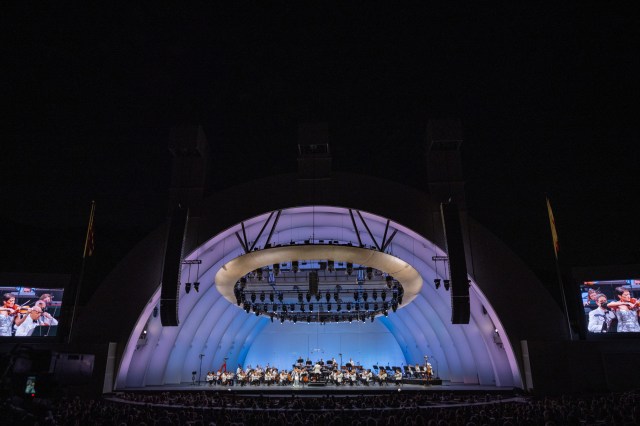
Dudamel and his LA Philharmonic at the Hollywood Bowl.
Every solo artist, regardless of what instrument they play seeks to define themselves. Generally that means setting limits. Some set limits by specializing in an era (baroque, classical, etc.). Some specialize in working with electronics, some with jazz, some with experimental music, some with standard recital repertoire, etc. Seth Parker Woods (1984- ) seems almost unaware of such limits. He plays what he chooses. And, oh, what choices. From standard classics to the leading edge of musical creativity woods is poised at the beginning of a very promising career.
Seth Parker Woods (photo from his faculty page at USC Thornton School of Music)
This album is in fact the musical portions of what was produced as a staged presentation with Woods playing, singing, talking. No doubt something is lost without the staging but Woods’ asserts himself with great clarity on the sonic aspect alone. Think of this as a sort of cast album, though it is more than just a souvenir. It is Woods’ second album and it has this writer enthralled at where he may go next. You will be too.
Parker’s first solo release “asinglewordisnotenough” available on bandcamp reveals his dedication to new and recent music.
I feel privileged to have known this artist via digital media and to have watched with increasing interest his development as a true rising star in the new music world. I only recently acquired his first album via bandcamp. It was released “across the pond” when he was completing his Ph.D. at the University of Huddersfield.
Born in Houston, his father, a jazz and gospel singer, Woods was exposed to a great deal of music. He rehearsed in a home studio and somehow came to a fascination and deep appreciation for a wide variety of repertory.
His affiliations continue to be wide ranging from Peter Gabriel to George Lewis. He has appeared on many recordings but this is only the second disc dedicated entirely to Woods as performer and the first such solo efforts on a US label. Woods is apparently able and willing to tackle music of all eras and genres including the wildly experimental, like his “Ice Cello” homage to Charlotte Moorman and the theatrical, which brings to the the album at hand.
Track listing.
Four of the seven works presented are world premieres. And, despite this being a sort of “cast album” which lacks the visuals, this is a major release that presents a characteristic variety of musical choices and is a fine calling card for the artist. This is one classy production.
Frederic Gifford (photo from composer’s website)
He begins with the title track, “Difficult Grace” by Chicago based composer Frederic Gifford (1972- ). It is a setting of poetry by Dudley Randall subjected to some Cageian mesostic like manipulation. This first track tells us we are dealing with modern music and sort of sets the tone of this project. This is a complex work in concept (lucidly described in the composer’s notes) and involves projections of the texts onto the performer as well as electronics which, by careful use of both the sounds and the spoken text (spoken by the cellist) which then contributes to the musical structure. Photographs in the booklet show some of the striking visual design for this project.
Coleridge Taylor Perkinson (photo from Wikipedia)
Woods follows with what is to this listener a stunningly beautiful piece, “Calvary Ostinato” (1973) by the late, sadly neglected Coleridge Taylor Perkinson (1932-2004), a black American composer (actually represented admirably in a fine earlier Cedille release CDR 90000 087). The Ostinato is one movement from Perkinson’s “Lamentations: Black/Folk Song Suite For Solo Cello” (1973). Woods’ performance is available on YouTube. It’s truly enthralling. One gets the feeling that Woods really gets inside the music he performs and that deep feel for the music is delightfully obvious in this track, the second oldest work on the disc and one that is for the solo cello sans electronics or vocals but using a dazzling variety of extended instrumental techniques, none involving a bow.
Monty Adkins (photo from electro cd website)
Then we hear Monty Adkins’ (y. 1972- ) “Winter Tendrils” (2019) written for cellist who, in addition to playing his instrument, is asked to use his voice and work with electronics, albeit in a different manner than the title track. Adkins worked closely with Woods on the creation of this work. The work essentially an impressionistic piece with clever use of counterpoint to depict fresh fallen snow on the branches of a tree.
Nathalie Joachim (1983- ), a Haitian-American vocalist, flautist, and composer, is represented by two works. The first, “The Race 1915” (2019), a work that contributes to the Chicago centered Cedille label by its use of historical quotations from The Defender, a major and influential black newspaper in Chicago. Woods is again asked to use his vocal skills in this work which celebrates efforts to undo social inequalities.
The multitalented Joachim lends her vocal skills to Woods’ performance in Joachim’s second piece on the album, “Dam Men Yo” (2017). The title is Haitian Creole for “they are my ladies”. It is a sort of black feminist peaen celebrating the strength of the women with whom the composer was raised in her native Haiti. (NB: Haiti is the site of the only successful slave revolt in history, a fact that continues to be reflected in their turbulent politics).
Alvin Singleton (photo from Schott website)
In between those two pieces we get to hear perhaps the best known composer in this mix, Alvin Singleton (1940- ). Singleton is represented by “Argoru II” (1970) for solo cello (the Argoru series is a set of pieces for solo instruments akin to Luciano Berio’s “Sequenza” series). The title is from the Twi language (spoken in Ghana) and translates as “to play”. It is a virtuosic piece employing extended instrumental techniques which Woods accomplishes with almost supernatural ease. He does honor to this living elder statesman of American music.
Ted Hearne (photo by Jen Rosenstein from composer’s website)
And here we are back in Chicago now with Maestro Woods’ performance of a work by Chicago born composer Ted Hearne (1982- ), a name which did make it to this writer’s musical radar but one whose work I have just begun to explore. But this is a fine example of one of the reasons for my admiration for Woods’ scope of musical interest. I think he is one of those artists to whom I will turn to look for good new music. His instincts for repertory choices are amazing.
This is perhaps the most unusual entry on this disc as well as one that, if any controversy is forthcoming, it will likely originate with this set of songs to poetry by Keri Alabi. A casual listen to some of Hearne’s music on YouTube suggests a sort of post minimalist ethic but this last work is not discernibly minimal. Like the music that preceded it, this cycle is overtly about politics and equality.
Hearne’s little 6 movement song cycle is a combination of poetry, electronics, cello (of course), and the voice of said cellist. Hearne’s expletive title, “free fucked”, is apparently very much in line with the composer’s assertive and playfully humorous style.
We return in these tracks to the avant garde and complex with which the album opened. Again we have a multitasking role for the cellist demanding his vocal participation and working in a distinctly electroacoustic genre. Hearne lends his voice to the final track of this unusual work.
While political themes and references abound in this release it is as much about black politics and civil rights as well as feminist, gender, and global equality issues. But ultimately this recording is a landmark in the career of this fine young musician who works fearlessly with a variety of composers, poets, designers, political activists, progressive ideas, and new music in general.
Cedille is one of my top favorite new music record labels and has been since they first started in 1987. Their releases (not limited to new music) are consistently well recorded and produced but producer James Ginsburg really pulls out all the stops on this one. From concept to recording, from lucid liner notes to gorgeous package design this has all the marks of a classic and collectible release. I mean, the music is great, but the whole package is something you’ll want to own. That’s right, I’m calling for “collector’s item” status here. Now is the time to get your copy.
Being asked to review this retrospective of the work of this virtually uncategorizable dancer, singer, composer, dramatist is the telling of my personal experience of growing up nurtured by this artist. Monk is not, of course the only artist whose presence has nurtured me and so many friends but her work is a case where I learned how to tune my curious radar to find more of the music that touched me deeply.
I first discovered her work when I purchased her album, “Key” (1971), self released and marketed via the late lamented New Music Distribution Center in New York. That album, later released on the Lovely Music label along with two releases on the great German avant garde label Wergo (Our Lady of Late, 1973 and Songs from the Hill/Tablet, 1979), constitute the minimalist, SOHO loft music which characterizes her style even now. But with her first ECM release she clearly hit her stride. Those early albums are definitely worth hearing but her mature style blossomed on ECM. It was, in retrospect, a sort of quantum leap, if you will.
LP album cover of “Key”“Our Lady of Late”“Songs from The Hill”
In that first album one can find Dick Higgins among the singers and Colin Walcott producing and playing percussion (as well as singing). Walcott, along with the yet to be known Julius Eastman would later participate in the Dolmen Music release. Monk, who studied dance at Sarah Lawrence College along with fellow student Alwyn Nikolais established “The House”, her flexible performing group in 1968 at a time which saw a great deal of artistic energy in and around Manhattan’s SOHO district where she encountered musicians like Philip Glass, Steve Reich, and performers sympathetic to new innovations and ideas. She also taught and continues to teach her characteristic extended vocal techniques. Monk, along with John Cage, Philip Glass, and Robert Ashley was featured in Peter Greenaway’s “Four American Composers (1983).
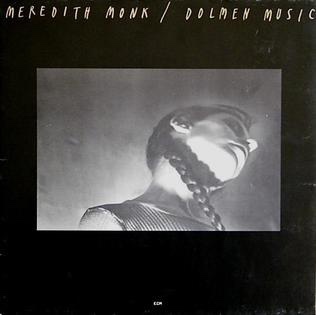
The release of her first ECM disc, “Dolmen Music” (1981) can now be seen as a sort of watershed event. It was followed by “Turtle Dreams” (1983) a work which was prominently featured at New Music America 1982 in Chicago along with Robert Ashley’s “Perfect Lives”. Monk’s appearance on ECM occurred at about the same time as Steve Reich’s masterful “Music for 18 Musicians”. Monk found her mature voice more or less at the same time that Steve Reich and Philip Glass had found theirs. And anyone following new music in those years will recall the flow of new musical ideas that established many now acknowledged masters as legitimate artists.
While the major masterpiece, “Dolmen Music” dominates the album, Monk’s quirky mix of humor and pathos in pieces like “Gotham Lullaby” and “Biography” remain signature pieces in her oeuvre. And Turtle Dreams was made into a performance film for public television by visual artist Ping Chong in 1983, now available on YouTube.
She followed with “Do You Be” (1987) and “Book of Days” (1990) which also exists in at least two film versions and the CD itself which has been described as a “film for the ears”.
Following “Facing North” (1992) Monk released her only opera (though she refers to much of her works as “operas” this is the only one that comes close to the more generic concept of western music operas) to date, “Atlas” (1993) which was commissioned and subsequently performed at the Houston Opera. This represented another phase in her artistic development as she utilized her structured improvisation techniques along with her now familiar extended vocal techniques with an expanded set of performers both vocal and instrumental. Atlas is arguably similarly creative (and transgressive) as Philip Glass’ 1976 “Einstein on the Beach”. Both were developed in an unconventional manner and uses a similar harmonic language with really none of the standard conventions of western music in opera. Would that we can some day see a filming of this work.
I was privileged to see Monk in person for the first time when she performed excerpts from “Volcano Songs” (1997) in Chicago. Those images involving, among other things, light sensitive areas where Monk lay down and left a ghostly shadow upon arising. In addition to her engaging minimalist inflected music, Monk is a master at creating compelling images.
“Mercy” (2002) was followed by “Impermanence” (2008) which I was thrilled to see at Stanford. “Songs of Ascension” (2011) was another landmark in this piece conceived and performed in conjunction with installation artist Ann Hamilton in her tower in Northern California. Attendees to this event were brought in by bus due to the lack of actual parking facilities in that tower. I wish I could have experienced this but hopefully a cohesive video release will be forthcoming. Excerpts are available for viewing on YouTube and on Monk’s website.
“Piano Songs” (2014) by the wonderful new music championing pianists Bruce Brubaker and Ursula Oppens filled an inexcusable gap in the documentation of Monk’s piano music. And following her receiving the National Medal for the Arts in 2015 she released “On Behalf of Nature”(2016).
Monk is a well documented artist largely due to her productive affiliation with Manfred Eicher and ECM and, while gaps remain these recordings represent a major artistic accomplishment and an enduring legacy for new music, for women composers, for western art music. This lovely box set is truly a joy to behold.
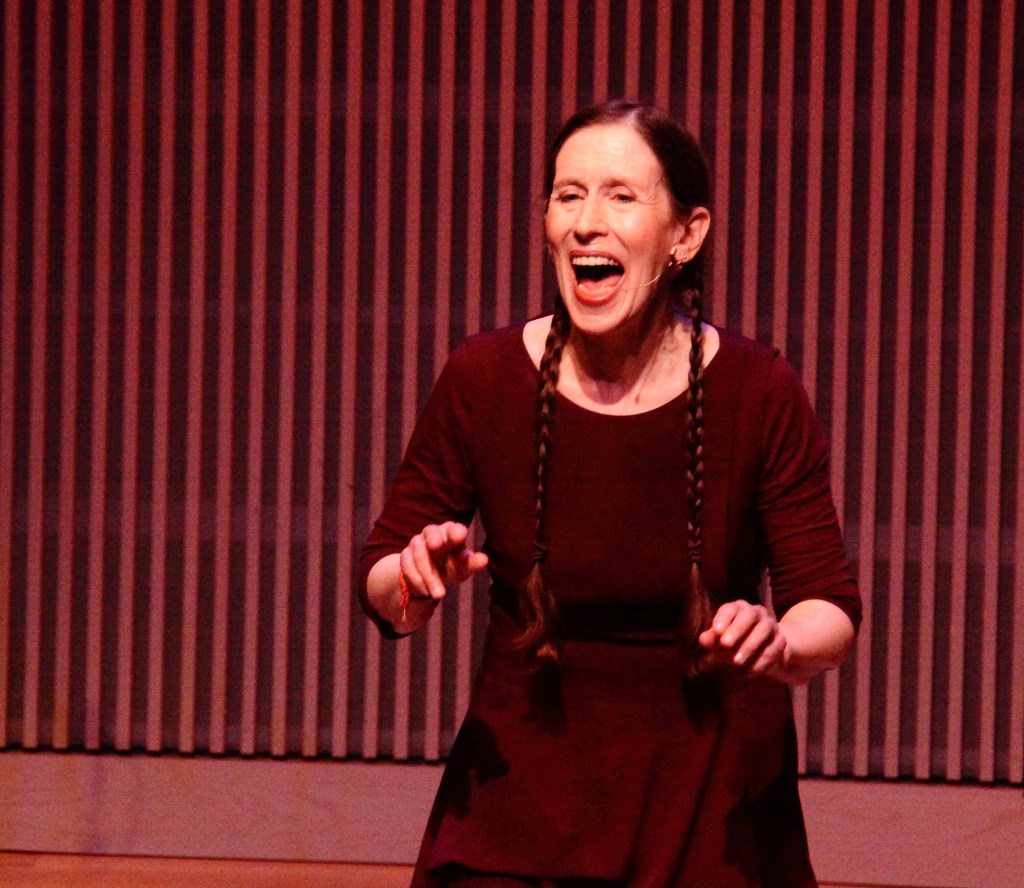
Meredith Monk performing an encore at the final concert of OM 21 (2016) in San Francisco
Make no mistake. This release, a long time in coming, is an essential document of the work of two Bay Area artists whose contributions (frequently behind the scenes) receives some richly deserved attention.
The dyad here consists of Carol Law and Charles Amirkhanian, partners in both life and art, collaborators in sound and image now release this collection of their collaborative works from 1973 to 1985 entitled, “Hypothetical Moments: Collaborative Works (1975-1985)”. This lovingly produced DVD brings together a series of performance art pieces demonstrating an intimate set of collaborations between these two Bay Area artists. Law is a photographer and visual artist whose art works have been displayed internationally in several galleries. Her designs can also be found in some of the striking wearable art she made as promotional/souvenir collectible items sold at concerts and online from the OM store. Amirkhanian is a composer and sound artist as well as a broadcaster and producer who has curated concerts and produced radio programs promoting new and innovative music in the bay area (and beyond) since about 1969.
Carol Law and Charles Amirkhanian acknowledging audience applause at OM 23 in 2018 (Photo by Allan Cronin, Creative Commons License)
Their respective artistic outputs include both individual and collaborative works but, until now, the only chance to experience their collaborative efforts has been in the rare occasions in which these works were performed live. The booklet accompanying this DVD gives a partial list of live performances the most recent of which was in 2018 when OM 23 “The Wages of Syntax” presented a 6 day series of concerts which was an international survey of linguistic sonic arts. Visual analogues and deconstructions of vocal sounds as practiced by artists inspired by language and the expansion of the very definition of art, music, and performance.
Dominic Murcott, peripatetic conductor/drummer about to lead a major new opus by Charles Amirkhanian. (Photo by Allan Cronin, Creative Commons license)
My tardiness in completing this review afforded me a unanticipated perspective on Amirkhanian’s art. The performance of his new composition, “Ratchet Attach It” (2021) at OM 26, pictured here integrates his roots as a percussionist with his penchant for spoken word and sound sampling.
Charles Amirkhanian performing in front of images by Carol Law at OM 23 in 2018 (Photo by Allan Cronin, Creative Commons License)
The collaborations here have roots going back at least to the early twentieth century with the experimental visual innovations of Vassily Kandinsky, Picasso, Miro, and the photographic experiments of Man Ray, etc. Their sonic antecedents include the work of Gertrude Stein, James Joyce, Antonin Artaud, Luigi Russolo, and a panoply of sound artists that Law and Amirkhanian visited in the late 1960s.
In addition to these early experiments one must understand that these creative meldings of sonic and visual art were flourishing in the Bay Area, most obviously in San Francisco where Allan Kaprow’s “happenings”, Bill Graham’s rock concert productions, and similar sound/light shows dominated the fare at performance venues like the Fillmore and similar spaces where innovation in pop/rock music mixed with innovation in visual light shows combined with bands performing for audiences immersing them in mind manifesting artistic assaults that drew crowds frequently also experimenting with not yet illegal psychedelic drugs (the word “psychedelic” is a neologism which means “mind manifesting”). The emblematic event here was the so called “Trips Festival“, a three day event held in 1966 at the Longshoreman’s Hall. I have elsewhere referred to Mr. Amirkhanian as the “Bill Graham of new music”, a comparison which still seems valid.
speaking is speaking (by Bay Area poet Richard Brautigan)
We repeat what we speak and then we are speaking again and that speaking is speaking. Tokyo June sometime, 1976
Well, drugs are not the issue here but mind expansion is. What is documented here is the multimedia collaboration of two essential Bay Area artists who, via their individual and collective efforts effectively expanded the possibilities of both visual and sonic media. These are innovative on many levels. Amirkhanian’s unique take on sound poetry (his anthology “10 + 2: 12 American Text Sound Pieces”) is an essential survey of that genre released on vinyl (now available on OM records ). And Law’s photographs, design, deconstruction and collage methods are integrated into her own unique style of visual art. The performances on this DVD constitute another uniquely San Francisco Bay Area chapter in multimedia, collaborative performance art now made available to a larger audience.
Other Minds (OM 1006-2)
This defining anthology of Law and Amirkhanian’s explorations of sound poetry (first released on vinyl in 1975 on the now defunct 1750 Arch Records) has defined the genre for many (this writer included). Aram Saroyan, Clark Coolidge and Beth Anderson would later appear live at Other Minds 23 in 2018 which outdid the aforementioned “Trips Festival” in a week long festival of sound poetry from an international roster of poets and sound artists.
Now keep in mind that the original presentations of these works from the early 80s utilized the technology of its era, analog recording, magnetic tape, and slide projectors (remember those?). So this 21st century rendition takes this work into contemporary technology and makes available for the first time since their premieres the original marriage of sound and image as intended by the artists. Without getting into McLuhan-esque analyses of the differences and subsequent meanings of the original media versus those on this DVD one need only celebrate the fact that listeners/viewers can now see these works with their originally intended melding of sound and image.
There are 12 tracks:
History of Collage (1981) (original audio release on Mental Radio CRI, 1985)
Audience (1978)
Tremolo Bank (1982)
Dog of Stravinsky (1982) (original audio release on Mental Radio CRI, 1985)
Maroa (1981) (original audio release on Mental Radio CRI, 1985)
Hypothetical Moments (in the intellectual life of southern California) (1981) (original audio release on Mental Radio CRI, 1985)
Awe (1973)
Andas (1982)
Dreams Freud Dreamed (1979)
Too True (1982)
The first nine tracks are the digital adaptation of sound and image accomplished by Dave Taylor. These are the pieces originally performed live in an era using equipment as distant from current technology as MP 3 files are now from magnetic tape. The last three bonus tracks are actual live performance videos (restored by Jim Petrillo) of three 1985 performances which give some of the flavor of the original experience of these works.
Several of these pieces have been released as audio only tracks on Amirkhanian’s CD releases (as noted) and, while they certainly work as audio only experiences, the images add a welcome dimension. The equally striking design by OM resident design master Mark Abramson add a deserving touch of class to the videos and the accompanying booklet which features informative texts on the works as well as a nostalgic collection of photographs featuring the dyadic duo.
I am honored to have a quote reprinted there from my blog review of OM 23 where I and a sizable audience were treated to a fabulous week long live experience of sound poetry featuring this duo’s work alongside that of exhilarating selections of other similar minds’ work. Of course nothing can take the place of the live experience but this production comes close.
This is a must have collectible document for anyone interested in sound poetry and Bay Area artists.
“Whereof one cannot speak, thereof one must remain silent.”- Ludwig Wittgenstein (1921)
On the back of the CD case, in the right upper hand corner, like a warning on the back of a medicine bottle, an entreaty:
“Binaural Recording: Please use headphones.”
Even those of you who think they know this masterpiece of experimental electronics by David Tudor (1926-1996) will find here a unique and important collaboration in this production initiated by Pauline Oliveros, then director of the Center for Music Experiment (CME) at UCSD. She invited a group called CIE (Composers Inside Electronics). And the resulting product of that collaboration documented here advances the understanding of this music and will henceforth be an influence on all future performances.
Unfortunately for this writer’s timing, the wealth of information gathered in the course of researching this review, the sheer volume of possibilities in performance and the wider scope of historical and technical elements embraced by this work required a deeper reading and contemplation on my part. In short, it has taken some time for this reviewer to get a grasp of how to express the significance of the deeply substantive work at hand. I simply didn’t know enough about the history of electronic music and the work of this seminal musician.
So now, after some serious study, this is my perspective on this landmark composition and, in particular, the deeper significance of this performance. In short, there will likely be many more performances of this work but this one will always be a standout. Not the ultimate version perhaps, but one of the most memorable.
David Tudor ca. 1950
David Tudor was a pianist who championed contemporary piano music and then began a career as a composer. But he was no ordinary composer. Taking inspiration from the composers whose work he championed, Tudor developed musical ideas with structures that contain indeterminate elements within a larger structure. Such is the case with Rainforest which was first developed in 1968 against a cultural backdrop of the height of the psychedelic sixties and the political “days of rage”, a time of artistic innovation like Allen Kaprow’s “happenings” which expanded the concepts of what constituted art, a time of wild experimentation. His work crossed paths with the San Francisco Tape Music Center (which later became the Mills College New Music Center). Tudor traversed some of the same territory as Donald Buchla, Pauline Oliveros, Maggie Payne, Morton Subotnick, Ramon Sender, as well as many others.
The first iteration of Tudor’s innovative and experimental “Rainforest” was in 1968. It is a testament to Tudor’s creativity to have created a structure that contains the indeterminate sonic events called for in the score (not a formal score but a set of performance instructions) in such a way that the piece evolves with each iteration, each performance. That, rather than the varying sonic content, is the heart of this major work of contemporary sonic art.
First, this is a binaural recording, meaning that it was recorded with a technology intended to deliver the sound directly to headphones of the listener hopefully producing an experience much as would have been experienced by sitting in the audience. Earlier versions of this technology involved, basically, microphones embedded in the ear canals of an anthropomorphic head which is placed in front of the performance as a listener would sit in their seat. However, the present recording recording involved another generation of this technology which is particularly well suited to this music. Here the microphones are worn in the ears of the recordist(s) as they meander through the space in which the piece is being performed. The result is the listener being able to (almost literally) get inside the head of the person wandering within the space and listening to the sounds created, sometimes at a distance, sometimes more closely.
Despite the entreaty that the listener wear headphones when listening to this recording (you really should try that at least once), one can play this recording as one would any other musical recording. It can also be appreciated by playing it on speakers in any space as a sort of sound installation. This piece challenges conventional concepts of music and its audience.
William Robin is a musicologist whose credentials (nicely enumerated on his web site) are more than adequate to the task at hand. This is a socioeconomic and political perspective on the seminal Bang on a Can organization. At its core, Bang on a Can is the foundational work of three people now recognized as major American composers: Julia Wolfe, David Lang, and Michael Gordon, all of whom met as students at Yale University.
Julia Wolfe, image from composer’s web site
This is the (much needed) first book on the history of the collaboration of these composers and how their work helped transform and move ahead the new music scene. First in New York, then nationally, and now internationally these individuals experimented and embraced innovative ideas while navigating the labyrinth of of social, political and economic hurdles involved in the production and promotion of non-pop new music. Therein lies the “agony” referenced in my title. This essential background information makes for some slow going reading but also serves to demonstrate how daunting their task has been.
David Lang, image from composer’s web site
The book documents the early efforts both to define their concepts and to learn the politics of the new music economy. But, painful as they are, these efforts are ultimately instructive for anyone involved in the production of new music. This reader comes away with a new found respect for those who wrangle with the varied and complex elements behind the production of concerts in general, and new music in particular. It is “how the sausage is made” so to speak. And it is a useful perspective for the average listener to better understand the incredible complexity of new music production and promotion.
Michael Gordon, image from the composer’s web site
The book is divided into 7 chapters and an epilogue which focuses not just on the trials and tribulations of the gestation of Bang on a Can but also its context among several other new music initiatives that preceded BOC. Meet the Composer, New Music America, and the New York Philharmonic’s New Horizons Festival loomed large in their time and the “downtown” loft scene which nurtured the likes of Philip Glass, Meredith Monk, Rhys Chatham, etc. contributed to the promotion of new music during their respective eras.
Robin identifies the innovative efforts by BOC in their use of marathon open air concerts to showcase their innovative programming which effectively blurred the lines of genres like jazz, free jazz, classical, pop, rock, etc. But their challenges were essentially the some, the politics of concert production, funding, advertising, etc. They characterized their efforts in contrast to the economically dominant Lincoln Center. The evolution of BOC from its beginnings through the establishment of the Bang on a Can All Stars touring ensemble, the establishment of a record label (Cantaloupe) and their later performances at Lincoln Center, the stodgy institution against which they railed dubbing their music as “downtown” as an alternative to the “uptown” mainstream. There is the beginnings of a history of new music in recordings that remains to be written but the point here is context and the socioeconomic and political motivations involved.
Author William Robin does his work well in this academic tome which is richly annotated and referenced with a bibliography to take the interested reader to a wealth of information on new music and its production. And while this is more about “how the sausage is made” so to speak, it is a necessary exposition which provides both history and context, something to think about the next time you buy a ticket to hear new music. Admittedly its not a pretty picture but it certainly illuminates the side of new music virtually unknown to the average listener.
While this reader had hoped for more information on the music performed (which deserves a book unto itself) this book takes its place alongside Tom Johnson”s “The Voice of New Music”, Kyle Gann’s “Downtown Music”, Renee Levine Packer’s wonderful history of the Buffalo New Music scene, “This Life of Sounds”, Benjamin Piekut’s “Experimentalism Otherwise”, George Lewis’ “A Power Stronger than Itself”, Luciano Chessa’s “Luigi Russolo, Futurist”, and David Bernstein’s “The San Francisco Tape Music Center” (to name a few) as an essential history of new music.
Jacob Greenberg will be a name familiar to many primarily for his essential role as the keyboard artist in ICE, one of those fine New York based new music ensembles that can play just about anything. At one time composers were forming their own ensembles to play the strange and difficult music they were writing (Steve Reich, Philip Glass, Michael Nyman, Steve Martland to name a few). Now ensembles like ICE are ready made, able to provide a flexible instrumentation and, with each musician, a stunning level of technical competence and a true affinity for the music of now.
Mr. Greenberg here is one of those multitasking, technically refined artists whose curatorial ear makes him an artist you need to have on your radar. In an earlier blog post I reviewed his solo (mostly) piano release Hanging Gardens in which he created an insightful contextualization by the choices of repertoire he made for the album. In response to this review he sent me a copy of this, the latest of his solo piano (mostly) projects.
The context of this album is of compositions all commissioned by Greenberg and written for him over the span of 2013-2019. It is a marvelously diverse collection which speaks to the wide scope of his interests and skills as well as the range of personal relationships he cultivates with other musicians.
The disc begins with music by probably the best known composer on this release, Japanese composer Dai Fujikura (1977- ). White Rainbow (2016) is a sort of tone poem for harmonium evoking the visual atmospheric phenomenon of a “fogbow” or “white rainbow”. It has an impressionistic feel much like Debussy. This is followed by the more experimental “Bright Codes” (2015-2018) for piano, four pieces which can be played in any order, but with the caveat that they be played without pause.
The next 5 tracks are dedicated to the 2018 “Funf Worte” (Five Words) by Amy Williams, five miniatures, each exploring a single German word. The piece is for harmonium and voice and the voice is the wonderful new music soprano, Tony Arnold. This is followed by a much larger piece for solo piano, “Cineshape 4” (2016) developed after the structure of the film “Run, Lola, Run” (1998). this virtuosic piece starts three times, each time developing differently analogously to said film.
“The Memory of Now” (2021) by IONE. This is a work for harmonium and voice. This time the voice is of the composer IONE, poet, dramatist, musician, playwright, and life partner of the late, great Pauline Oliveros. The piece has improvisational, indeterminate elements which require the performer(s) to listen to internal and external sounds.
The album ends with two large and powerful pieces by Nathan Davis. “Ghostlight” (2013) and “Seedling” (2019). Ghostlight is for “lightly prepared piano” and evokes the ambiance of those small single lights that shines on a darkened stage when the theater is closed. The preparations hep produce the ghostly microtones and gong-like sounds.
Seedling for harmonium and electronics brings us back to the sounds again of a harmonium. This is the only track which has appeared before and it was on the wonderful ICE release on Starkland Records (On the Nature of Thingness).
This sampling of some of the latest in contemporary composition reflects the use of extended instrumental and vocal techniques. It also makes use of experimental compositional techniques that demand deep involvement of the musicians in the execution of the music in ways that diverge from the conventional classical music paradigm. And it is the expansion of old paradigms that are ultimately what makes Greenberg and his ICE colleagues so compelling.
It is thanks to the ever industrious Guitarist/composer/producer (et al) John Schneider for doing the research and navigating legal quagmires to obtain permission to release this marvelous private recording of a lecture/demonstration of Harry Partch’s musical theories in a sort of lecture/recital given on November 3, 1942 in Kilbourn Hall at the Eastman School of Music. This (apparently stereo) direct to disc recording languished in an archive and has now been liberated and released to Partch historians, fans and friends of new music..
First let me say that the physical product here is both a valuable historic artifact and a “fetish level” collectible. And by that I mean it is a hardcover book measuring 6 x 8 inches with boards and spine covered tastefully with images and text. Save for the heavy stock end papers the pages are glossy satin coated pages. They contain the liner notes, relevant texts as well as historical photographs and some fascinating historical material that helps put this sonic document in its proper context. It is a beautifully conceived and executed release on the ever adventurous MicroFest Records. (Of course you can get the excellent recording and the texts, learned liner notes, and historical photos on a pdf file, the recording on a digital file, but collectors will long cherish this museum quality document. Suffice it to say that some of my Christmas shopping is done now.)
This is in effect a sort of appendix to the Bridge Records Volume I, (“Bitter Music” released in 2011) of their visionary complete Partch recording project. Both “Bitter music” and “Harry Partch, 1942” are basically variations on Partch’s work with “speech music”.
Partch’s work here seems to be anchored not only to ancient Greek antecedents for the tunings and the performance practices of poetry but also in the genre of “sound poetry” as practiced in the early twentieth century and even perhaps forward to later incarnations of this genre like Charles Dodge’s pioneering 1980s “Speech Songs” using computerized vocal synthesis algorithms. All are plays on the intertwining of speech and music, the artistic territory that exists between music, poetry, and spoken word.
Partch is connected to sound poetry via his explorations of early Greek culture which had a tradition of performing poetry with music. He is a contemporary of Thomas Wolfe, Jack Kerouac, Allen Ginsberg (maybe even Bob Dylan), and can be said to be in the lineage of beatniks, folk singers, street theater, sound poets, and an exponent of music theater. And Partch’s work on tunings precedes and informs the later work of Ben Johnston (who played in Partch’s own ensemble) as well as La Monte Young. This hour with the master sheds light on his theories, his art, and his genius which will thrill fans of his work. This is one exciting release.
That “Bitter Music” of the Bridge release (Bridge 9349A) is a contemporary performance version, a faithful realization of a written diary but the present document is a chance to hear the mid-career Partch (the Bitter Music journal dates from 1935-7) showing and telling his audience how its done. Partch did some speaking in a lot of the CRI discs which contained digitally remastered transcriptions of the 78 rpm discs released on the composer’s Gate 5 label but these were largely brief, scripted, and informational comments preceding the recorded performances. By contrast Partch, 1942 is a lucidly informative lecture demonstration with an (mostly) unscripted Partch speaking in his own voice, a professor presenting his research. Partch’s exposition of his theories is well constructed and his musical performances are heartfelt and, well, definitive.
The disc (which sits neatly in a pocket on the inside of the back cover) clocks in at about an hour and, for reasons likely lost to history, the recording begins with the introduction “already in progress”. This single CD contains the material on the four original direct to disc live recordings. The sound is surprisingly good.
So whether you just want to hear the performance or want to own this objet d’art in all its glory this is a fine way to introduce yourself or a friend to this unique American genius.
OK, I admit that using the term “rogue” is a stretch. But titles of reviews should help draw the reader to it. And “clickbait” is the new “catchy”. But, in another sense one doesn’t generally think of the bass clarinet as a standalone recital instrument, even with electronics. Increasingly, it seems, new music purveyors are liberating instruments once unthinkable outside an orchestra or chamber ensemble. Jazz players have long used the bass clarinet as a solo instrument alongside the ubiquitous family of saxophones and the flute as the woodwinds that comprise most jazz ensembles,
Classical music has been slow to accept the bass clarinet until relatively recently. I don’t know when the first use of a bass clarinet either as a standalone solo or as part of a chamber ensemble occurred but certainly post 1950. Without getting in to the “whys” of this one can simply embrace the increasing presence of this instrument and its fascinating players.
Here, we get another of the subgenre of “COVID Isolation music”, itself a category worth further exploration.
There are five selections with composition dates ranging from 1983 to 2020 and composers from the still underappreciated Isang Yun to a new name, Hidiaki Aomori, a composer and friend of the soloist. And the remainder are risen and rising stars including the late conductor/composer Pierre Boulez, Grawmeyer Award winner Unsuk Chin, and the prolific Japanese composer Dai Fujikura.
The Fujikura work opens this isolated recital with a melancholy piece which appears to be a set of variations and has the character of a cadenza calling upon both technical and interpretive skills of the performer. And do I hear a nod to minimalism at the end? “Contour” (2020) is a fine opener where Lee displays her technical skills and insight to the composer’s vision.
Then its back to 1985 with one of the technical peaks of Boulez’ work at IRCAM, “Dialogue de L’Ombre Double” for bass clarinet with inscrutably complex electronics. This once leading edge example of the avant garde in its day actually sounds a bit dated but the soloist here seems to humanize the piece with her warm interpretation. And, despite what you may hear in the other tracks here, it is the only one using electronics on this disc.
Isang Yun (1917-1995), the late prolific Korean master is beginning to get more of a reckoning, and this 1983 piece, “Monolog for Bass Clarinet” is a fine entry to the expanding recorded oeuvre of this mid/late-twentieth century embattled and neglected genius. This piece speaks deeply of alone-ness.
Unsuk Chin (1961- ), a rising star and Grawmeyer Award winner is represented by a bass clarinet solo from her much lauded opera “Alice in Wonderland”. This stand alone solo, titled “Advice from a Caterpillar” is a maze of hallucinatory nods to Gershwin, Carl Stalling, and perhaps Prokofiev (in a “Peter and the Wolf” sense) using multiphonics and seems to expand the possibilities of this instrument to limits which might only be transcended with electronic assistance.
Hideaki Aomori‘s “Split” is a rather personal addition, a submission from one friend to another, a gift from one alone to another alone. It is another fine solo work which sits stylistically somewhere between the technical extremes of Boulez and Unsuk Chin and the more melodic work of Fujikura and Yun.
This is a very personal disc on many levels and it is a fine calling card by which to introduce listeners to this fine musician.
Receiving this album for review the fact is I actually shed a tear when, upon opening my mail, I found the cover of this album cause my emotions to jump to regions of nostalgic memories deeply treasured.
Another fact is that, due to COVID 19, the virtual stoppage of all live concerts, and shifts in my scheduling priorities I had stopped following the career of Mr. Gibson (1940-2020) for the last few years and I wasn’t even aware that this disc had been released. I had heard that he had died in October, 2020. Gibson is a musician I first encountered, as most people had, via his omnipresence at concerts of the Philip Glass Ensemble where he was a founding member. Gibson’s performances of the saxophone solo in Glass’ “Facades”, which I first heard in 1980, are forever etched in my memory. And I caught pretty much every concert they did in or near Chicago from 1980 to perhaps 2000. So that little personal history gives you some idea as to why seeing this album was a “gut punch” of emotion to me.
Albums
I lifted this discography of Gibson’s releases from discogs.com and it does not include his work the Philip Glass Ensemble in which he was a member since 1968. It is probably not definitive but it provides some perspective on Gibson’s range of repertoire and his musical affiliations.
The Dance (CD, Album) Orange Mountain Music 70072013
Relative Calm (CD, Album)New World Records 80783-22016
Jon Gibson’s Visitations Otoroku2017
Violet Fire – An Opera About Nikola Tesla (2xCD, Album) Orange Mountain Music70182019
Songs & Melodies, 1973-1977 (2xLP, Album) Superior ViaductSV1732020
David Behrman with Jon Gibson & Werner Durand -Viewfinder / Hide & Seek (LP, Album, Ltd)Black Truffle BT08220211
Gibson’s brand of minimalism resembles Glass’ at times but Gibson’s eclecticism, his mix of styles bear the fingerprints of a style which will be easily recognized by listeners familiar with some of his previous albums.
This is an album’s worth of music written for a performance piece with choreography by the wonderful Lucinda Childs (who choreographed Philip Glass’ “Einstein on the Beach” and commissioned Gibson in 1981 for this piece). Relative Calm (1981) is in four sections (or movements) each with its own character.
Tracklist
1. Relative Calm (Rise) (1981) Composed By, Wind, Keyboards, Autoharp, Sounds [Field Recording] – Jon Gibson Keyboards – Joseph Kubera Percussion – David Van Tieghem
2. Q-Music (Race) (1981) Composed By, Keyboards – Jon Gibson Keyboards – Joseph Kubera
3. Extensions RC (Reach) (1981) Sopranino Saxophone, Composed By – Jon Gibson
4. Return (Return) (1981) Keyboards – Joseph Kubera Percussion – David Van Tieghem Saxophone, Composed By – Jon Gibson
Gibson’s fondness for jazz is evident here but the dominant style is the composer’s brand of minimalism. Relative Calm was commissioned and choreographed by Lucinda Childs with decor by Robert Wilson, it received its world premiere by the Lucinda Childs Dance Company at Théatre National de Strasbourg in Strasbourg, France on November 26, 1981. It’s wonderful and it is a blessing to have this recording available.
This was released in 2016 on New World Records and is now available for streaming on Bandcamp. The excellent liner notes are by Kyle Gann and Dean Suzuki tell you pretty much all you need to know and the album sounds great. Thanks, Mr. Gibson, RIP.
Pamela Z first came to this writer’s attention when the fine Starkland label under the very insightful guidance of Tom Steenland released a cutting edge, surround sound 5.1 DVD release in 2000 which featured her along with other similarly interesting musicians in a forward looking recording.
Starkland ST-213
The first CD dedicated entirely to Ms. Z’s work was also a Starkland release (A Delay is Better, 2004) was quickly added to my music collection when I was still a Chicago resident. Since moving to California in 2005 I have had the pleasure of seeing Pamela’s work live on numerous occasions (something which I highly recommend). She is a fascinating performer to watch as well as hear. These releases are the only ones dedicated entirely to her work currently available to the general public though her crowd funded DVD, Baggage Allowance may be obtainable through her web site. Much of her presence on recorded media is as a collaborator so this new disc of largely new work is a truly welcome addition to her catalog and an opportunity to see a unique talent.
Pamela Z performing at Other Minds 23 in 2018
Her visual presence and gestures are an important part of her work but it is the hearing part with which we are concerned here. Philip Blackburn at Neuma records has chosen to release a new disc consisting of performances of more recent compositions. Z maintains a busy schedule of composing and performing world wide and her quirky creativity has not failed her. Let me say that I use the word “quirky” just to indicate that her work is unique, a technological expansion of the tired “one man band” cliché in which she uses a variety of compositional electronics (some made exclusively for her) to facilitate her uniquely recognizable style. It is difficult to describe her work in a way that can easily be understood without actually having heard her work. Suffice it to say that, generally speaking, she works with live recording and subsequent looping of those sounds. She is able to turn loops on and off as the piece progresses. Her texts come from a variety of sources, including found texts. And the presentation of these texts are sometimes sung and sometimes spoken.
She has had great success as a collaborator with spoken word narration, singing (she also has a beautifully trained soprano voice), and performing with other musicians. These collaborations are listed on her web site and are worth your time to explore.
The photo of the back cover of this new album serves both to provide a listing of the tracks but also to display one of the wearable electronic devices mad for her which she uses (to pleasantly theatrical effect) in performance. From her web site: “She uses MAX MSP and Isadora software on a MacBook Pro along with custom MIDI controllers that allow her to manipulate sound and image with physical gestures.”
Z is a vocalist, an operatically trained singer and voice over artist who has pioneered the use of complex delay and looping systems to produce her work. She is apparently enamored of language (she has studied English, French, Italian, and Japanese). Her combination of spoken and sung passages combined with the looping/delay technology, and, increasingly, writing for other instrumentalists is the basic medium(s) with which she works.
In my mind she shares conceptual space with artists like Amy X Neuberg, Meredith Monk, and Diamanda Galas, at least that is the way I have them filed in my collection. In fact, each of these performers has their own distinct style and aesthetic, each a separate origin story. What they have in common in this listener’s mind is the fact that they are women, the fact that their voice is their primary instrument, and the fact that each uses that voice, sometimes with some augmentation, to achieve their compositional and performance goals. (I nurture a personal fantasy of some day hearing one or all of these women doing their cover of a piece like Rzewski’s “Coming Together” or some similar speaking pianist type work but that’s a topic for another blog).
The ten tracks on this release represent Ms. Z’s more recent work. Taken as a whole this album has an almost existential/apocalyptic character at times. There are 10 tracks ranging from about 4 to 10 minutes each and they span the years from 2003 to 2018 with one track from 1995. The overall feel of this is rather darker in tone than the Starkland disc but it also reflects her further artistic development and that alone is worth the purchase price. The album is recorded, edited, and mixed by the artist who also supplies the brief but clear and useful liner notes.
The first track, Quatre Couches/Flare Stains is a studio mix of two pieces (Quatre Couche from 2015 and Flare Stains from 2010), two works she has combined in her live performances. So this is mix is a 2021 artistic mashup reflecting what she has gleaned from her live performances and incorporating that learning into a new compositional experience.
Unknown Person (2010) is an excerpt from the aforementioned “Baggage Allowance” (2010) which uses found texts collected during the composition process as lyrics and is a work with many metaphorical dimensions that touch on existential ideas that touch us all.
Other Rooms (2018) is constructed around vocal samples of an interview with playwright Paul David Young.
A piece of π (2012) utilizes the first 200 digits which express the value of that mathematical constant. Z recounts further details of her process in the liner notes.
Site Four (2017) is a section of music which was composed for a dance work.
He Says Yes (2018) is an excerpt from music for a theater piece.
Typewriter (1995) is the outlier here. It is one of Z’s live performance staples which utilizes the beautifully designed MIDI controllers which she wears and which control the electronics as she moves her body through the performance space. Even without the visuals, one can get an idea of this seminal work and how it influenced her later developments.
The disc ends with a trilogy of works, The Timepiece Triptych, which consists of Declaratives in the First Person (2005), Syrinx (2003), and De-Spangled (2003). This trilogy is a virtual compendium of the techniques which Z has thus far developed. Using sampling, linguistics, spoken voice, singing voice, and her signature electronics this artist presents work which functions on many levels. It is entertaining, it is thought provoking, it is funny, it is sad, it is personal, it is self referential, it refers to us all. Denotation, connotation, musical/electronic alchemy, language (both spoken and sung) all come together to create art which is engaging and, watch out, sometimes subversive.
Though I earlier made reference to my filing preferences for this and (what I consider) similar artists there is, in the end no one quite like Pamela. She is the Alpha and the Omega, the A and, of course, the Z.
I don’t recall when I first heard Guy Klucevsek but I think it was the early 90s. I grew up hearing a great deal of accordions in polka bands at weddings throughout my childhood. This instrument had, pretty much since its beginnings in the early 19th century, been associated primarily with folk bands and not at all with classical music. I don’t think one can find an accordion used in a classical orchestra before Tchaikovsky’s 1822 Second Orchestral Suite and only sparingly after that. So when I discovered this New York musician via his releases on the Starkland label, Transylvanian Software (1999) and Free Range Accordion (2000) and the CRI disc Manhattan Cascade (1992). I was curious to see what this musician would do with this traditionally “low brow” folk instrument.
Free Range Accordion Starkland ST-209
Transylvanian Software Starkland ST-207
I had come to trust the Starkland label (which began in 1991) as one whose releases were usually very much to my taste and I was not disappointed to hear Klucevsek’s playing of pieces written by him and other composers for this instrument. Unlike Pauline Oliveros who did much to expand the very nature of the instrument itself, Klucevsek retained, and sometimes parodied, the humble folk/pop origins and reputation of the instrument while still pursuing its possibilities in the New York downtown experimental music scene where he worked with people like Laurie Anderson, Bang On a Can, Brave Combo, Anthony Braxton, Anthony Coleman, Dave Douglas, Bill Frisell, Rahim al Haj, Robin Holcomb, Kepa Junkera, the Kronos Quartet, Natalie Merchant, Present Music, Relâche, Zeitgeist, and John Zorn among many others. Klucevsek expanded the role of the accordion in his own way.
Klucevsek later put together a commissioning project called, “Polka from the Fringe” (1992), a project which echoes the 1981 “Waltz Project” by Robert Moran and presages another accordionist William Schimmel’s “The Tango Project” of 2006. All of these commissioning projects utilized dance forms common in the 20th century as a “stepping off” place for a new musical piece. And it was Starkland which rescued the fascinating two disc release of Polka from the Fringe (2013) from over two decades languishing in “out of print” status. These projects are significant in that they invite composers to get out of their comfort zone and demonstrate their take on the given dance form. Like Klucevsek’s earlier releases this Polka collection is a veritable Who’s Who of working composers of the era much as the Variations (1819) project of Anton Diabelli collected some 51 composers’ works based on Diabelli’s waltz-like theme (Beethoven’s gargantuan set of variations was published as volume 1 and the other 50 variations in volume 2 which included composers like Schubert and Liszt).
Polka from the Fringe Starkland ST-218
So here comes Starkland to the rescue again in this (languished for some 25 years after only having been available for two years) very personal recording which displays Klucevsek’s substantial compositional chops as well as his knowledge and use of extended instrumental techniques for his instrument. It presents pieces written for a dance performances and shows a very different side of Klucevsek, one which shows more of his substance as a composer alongside his virtuosic skills on his instrument. In this digital only release there is an option to include (for a mere $3.00 more on the Bandcamp site) a series of 13 videos featuring Guy Klucevsek talking about the music on this album and his various musical interests. A gorgeous 10 page booklet providing further detail including the original liner notes with updates is included in all purchases. The album will also be available on Spotify, You Tube, and other streaming services but the videos are only available on Bandcamp.
Teetering on the Verge of Normalcy Starkland ST-225
Listeners may find this new release has some in common with Starkland’s previous Klucevsek release from Starkland, “Teetering on the Verge of Normalcy” (2016) which features some similar compositional diversity in a disc entirely of Klucevsek’s works. The line from Citrus, My Love to Teetering on the Edge of Normalcy seems to be a logical succession in Klucevsek’s compositional development. In addition to his accordion studies Klucevsek studied composition in Pittsburgh but it was the influence of Morton Subotnick with whom he studied in his independent post graduate work at the California Institute of the Arts that exposed this east coast artist to some of the splendors of the west coast encountering artists like Terry Riley and Pauline Oliveros. Indeed Klucevsek can be said to be “bi-coastal” in his compositional endeavors. And though this is a “tongue in cheek” characterization it does speak to the roots of Klucevsek’s diversity in style.
There are 12 tracks on “Citrus, My Love” representing 3 separate works: the three movement, “Passage North” (1990), the single movement, “Patience and Thyme” (1991), and the eponymous, “Citrus, My Love” (1990) in 8 movements. The production of this album is by none other than Bobby Previte, another valued east coast musician and colleague. The notes have been updated under the guidance of Tom Steenland with input from Klucevsek who, understandably, expresses great joy in having this album available again.
The first three tracks are dedicated to a single work, “Passage North” (1990) written for accordion and string trio consisting of Mary Rowell, violin/viola, Erik Friedlander, cello, and Jonathan Storck, double bass. They are dubbed “The Bantam Orchestra”. This Copland-esque work was commissioned by Angela Caponigro Dance Ensemble. The second movement is for string trio alone and is dedicated to the memory of Aaron Copland who died in 1990.
Patience and Thyme (1991) according to the composer “is a love note to my wife, Jan.” He composed the work while in residence at the Yellow Springs Institute in Pennsylvania, which coincided with his 22nd wedding anniversary. It is scored for piano and string trio, no accordion. Compositionally it seems at home between the larger pieces.
Citrus, My Love was commissioned by Stuart Pimsler for the dance of the same name. It is in 8 scenes and is scored for Klucevsek’s accordion accompanied by his personally chosen Bantam Orchestra. Klucevsek describes the music on this album as representing his transition from hard core minimalism to a more melody driven style and this is the missing link, the “hole” to which I referred in the Beatles metaphor in the title of this review.
For those who already appreciate Klucevsek’s work this album is a must have. To those who have not gotten to know this unique talent this is a good place to start.
For those seeking to get more deeply into Klucevsek’s work (a worthwhile endeavor) and to provide a perspective on the range of this artist’s work I’m appending a discography (shamelessly lifted and updated from the Free Reed Journal) :
SOLOIST/LEADER
Scenes from a Mirage (Review) Who Stole the Polka? (out-of-print) Flying Vegetables of the Apocalypse (Experimental Intermedia) Polka Dots & Laser Beams (out-of-print) Manhattan Cascade (CRI) Transylvanian Softwear (Starkland) Citrus, My Love (Starkland) Stolen Memories (Tzadik) Altered Landscapes (out-of-print) Accordance with Alan Bern (Winter & Winter) Free Range Accordion (Starkland) The Heart of the Andes (Winter & Winter) Tales from the Cryptic with Phillip Johnston (Winter & Winter) Notefalls with Alan Bern (Winter & Winter) Song of Remembrance (Tzadik) Dancing On the Volcano (Tzadik) The Multiple Personality Reunion Tour (Innova) Polka From The Fringe (Starkland) Teetering On the Verge of Normalcy (Starkland)
COMPILATIONS
Great Jewish Music: Burt Bacharach, Who Gets the Guy?, This Guy’s in Love With You (Tzadik) Planet Squeezebox, The Grass, It Is Blue, Ellipsis Arts Legends of Accordion, Awakening (Rhino) The Composer-Performer, Samba D Hiccup (CRI) Koroshi No Blues, Sukiyaki Etoufee, Maki Gami Koechi (Toshiba EMI) Norwegian Wood, Monk’s Intermezzo, Aki Takahashi (Toshiba EMI) Music by Lukas Foss, Curriculum Vitae (CRI) Here and Now, Oscillation No. 2, Relache (Callisto) A Haymish Groove, Transylvanian Softwear (Extraplatte) A Confederacy of Dances, Vol. I. Sylvan Steps (Einstein) A Classic Guide to No Man’s Land, Samba D Hiccup (No Man’s Land)
WITH JOHN ZORN
The Big Gundown (Nonesuch Icon) Cobra (Hat Art) Lost in the Stars: The Music of Kurt Weill, Der Kleine Leutnant Des Lieben Gottes (A&M)
WITH RELACHE
On Edge (Mode) Open Boundaries, Parterre (Minnesota Composers Forum McKnight Recording) Pauline Oliveros: The Well and The Gentle (Hat Art)
WITH OTHERS
Laurie Anderson: Bright Red (Warner Bros) Anthony Braxton: Four Ensemble Compositions, 1992(Black Saint) Mary Ellen Childs: Kilter (XI) Anthony Coleman: Disco by Night (Avante) Nicolas Collins: It Was a Dark and Stormy Night (Trace Elements) Fast Forward: Same Same (XI) Bill Frisell: Have A Little Faith (Elektra Musician) David Garland: Control Songs (Review) Robin Holcomb: Rockabye (Elektra Musician) Guy Klucevsek/Pauline Oliveros: Sounding/Way, private cassette release (out-of-print) Orchestra of Our Time: Virgil Thomson, Four Saints in Three Acts (Nonesuch) Bobby Previte: Claude’s Late Morning (Gramavision)
As far as I can tell this is only the second recording of Harry Partch’s 1958 dance theater masterpiece. The recording that most folks know is likely the CRI release which used that awful simulated stereo (which is rather unpleasant heard on headphones). That recording (thankfully remastered in the original mono for New World Records) is of the 1958 premiere of this inventive and groundbreaking work originally released on the composer’s Gate 5 label.
Neumann KU100 microphone used to record binaural sound (Photo from Wikipedia)
This release of the 1980 (six years after the composer’s death) Berlin performance is here released for the first time on Neuma records under Philip Blackburn’s new tenure. Neuma’s tagline, “Food for the Mind’s Ear” is curiously reflected in the recording method used here. Binaural recording was pioneered in the late 1960s using two microphones facing away from each other inside a dummy head with anatomically accurate human inner and outer ears. The idea was to produce recordings which, when heard on headphones, simulated the experience of being present in the audience. Of course one can listen on conventional speakers but it is truly worth one’s time and money to get a good set of headphones to appreciate this amazing performance.
This is the second Neuma release which embraces Kenneth Gaburo’s legacy. The above recording (reviewed in an earlier blog post) is of a 1967 choral concert curated and conducted by Kenneth Gaburo at the University of Illinois at Champaign where, nearly ten years before that event, the premiere of Partch’s Bewitched was first imposed on a audience. It is Gaburo’s skills as a musical theater director that come into play in the 1980 Berlin production which features the Harry Partch Ensemble conducted by Danlee Mitchell, a long time Partch collaborator and performer.
The recording has a refreshingly superior sound to the 1958 mono premiere but the crucial significance of this release is of Kenneth Gaburo’s holistic theatrical vision which draws upon world music theater conventions such as Japanese Noh, Hindu Mahabharata performances, Gamelan accompanied Balinese Shadow Puppet theater, and the “happenings” of Allan Kaprow as well as ancient Greek theater. Gaburo rehearsed the musicians and dancers to channel Partch’s grand vision in this, the first of his three major dance/theater works (the others being Revelations in the Courthouse Park, 1960; and Delusion of the Fury, 1965-66). It is a masterpiece of American music.
back cover
The Harry Partch Ensemble in this recording consisted of Isabella Tercero (The Witch), Peter Hamlin (Adapted Koto), Phil Keeney (Spoils of War), Cris Forster (Marimba Eroica), Randy Hoffman (Cloud Chamber Bowls), Francis Thumm (Chromelodeon I), John Szanto (New Boo I), Dan Maureen (Bass Clarinet), Donna Caruso (Piccolo and Flute), Robert Paredes (Clarinet), David Dunn (Adapted Viola), Robin Gillette and Anna Mitchell (Kithara II), Ron Caruso (Diamond Marimba), Gary Irvine (Bass Marimba), David Savage and Paul William Simons (Harmonic Canon II), Ron Engel (Surrogate Kithara). Lou Blankenburg (choreographer/associate director) and Kenneth Gaburo (director). The Partch instruments are as much characters in this piece as the musicians and dancers.
The original recording done by RIAS (Radio In the American Sector) was restored and mastered by David Dunn. The booklet includes commentary from clarinetist Bob Paredes as well as Partch’s original scenario taken from the published score.
The Bewitched is a visionary politically progressive music/dance theatrical satire that parallels the work of Julian Beck and Judith Malina’s Living Theater and presages theatrical and musical trends that would later characterize the 1960s and beyond. This recording is a very significant historical document and a great sounding CD, an essential recording for fanciers of Partch’s work, and a performance that sets a standard for the future.
If you don’t already have a good pair of headphones get one and buy this CD. You won’t regret it.
Leonard Bernstein’s 1971 Mass was commissioned by Jacqueline Kennedy for the opening of the new John F. Kennedy Center for the Performing Arts in Washington, D.C. The premier generated both controversy and paranoia (by Nixon and his crew) but the recording sold well.
This is by my count the fifth commercial recordings not counting the one DVD release. In addition there are numerous full performances available on YouTube. All have their individual highs and lows.
This work is in many ways the single work that embraces all the facets of a truly multifaceted composer. There is serious classical music passages, cheesy electronic music, excellent choral writing, showtunes, dancing, and, above all, political protest.
This writer fell in love with the original Columbia vinyl boxed set on the mid seventies and that recording remains a critical reference point but the joy of multiple interpretations begins to show the depth and complexity of this work. It is, in this writer’s mind this composer’s song of the earth, struggling with all its complexities both beautiful ones and sad ugly realities.
The present release is very enjoyable but is marred at points by some clunky miking if the singers. No doubt this is due in part to the fact that this is a document taken from several live performances. That makes it difficult to hear the words at times.
Nezet-Seguin is strongest in his interpretation of the orchestral parts where he elevates the discourse effectively placing Bernstein alongside the great masters who he championed as a conductor. If his and the singers’ interpretation don’t swing the way Bernstein’s own did I would assert that it’s OK to hear those passages differently. Every serious interpretation is effectively a dialogue between composer, performers, and audience. And this one is moving.
I looked at the rather drab cover. I had never heard of the Quince Ensemble nor any of the composers featured on this disc. I looked again at the cover. Clearly it was labeled with one of those parental advisory warnings which one rarely sees on a classical recording.
My usual practice is to do some research before spinning a given disc but I decided to just put this one in the CD player cold. I had about an hour’s drive ahead and I decided to just let the disc speak for itself. But my spidey sense suggested I might be in for a rather dull listen.
So much for my superhero powers. From the moment the first track played I felt drawn in. What I heard seemed to be a mixture of Peter Kotik (of Many, Many Women in particular), Meredith Monk, a touch of La Mystere de Voix Bulgare, the west coast group Kitka, and a few others). That is to say that this disc grabbed my attention and had echoes of a few other contemporary vocal music styles. What I heard was very compelling, creative, practiced, passionate.
This is mostly an a capella group though they made very effective use of harmonicas as drone material at one point. Even after reaching my destination (achieved before the disc ended) I couldn’t bring myself to shut it off so I stayed parked and listening til I had heard the entire disc. Yes, it was THAT compelling.
Complicating the reviewer’s task further is that the disc contains four compositions by four composers whose first appearance on this writer’s radar was from this very disc. All four are world premiere recordings and all are by women composers.
The Quince Ensemble consists of Liz Pearse (soprano), Kayleigh Butcher (mezzo soprano), Amanda DeBoer Bartlett (soprano), and Carrie Henneman Shaw (soprano). And this is the fourth album dedicated entirely to this ensemble’s work. Two previous albums were appearances and collaborations.
The featured composers are (in order of their appearance on this release): Gilda Lyons (1975- ); Laura Steenberge; Cara Haxo (1991- ); and Jennifer Jolley (1981- ). All appear to be Calfornia based and at the beginnings of what will doubtless be some interesting careers. I will leave it to the interested reader to look into the details available at these various web sites but, after listening to the music, most listeners will want to know more.
The pieces range from Lyon’s Bone “Needles” coming in at just over 4 minutes to the next two multiple movement pieces and finally Jolley’s “Prisoner of Conscience” which is an homage to the politically active musical group, “Pussy Riot”. This is the longest and most political piece on the album.
From the initial (and incorrect) assumption that this would be a dull disc to the end of this listening journey I came to see this disc in quite a different light. The cover now seems friendly and appropriately representative of the album.
Rather than go into a bland or potentially inaccurate analysis of these pieces suffice it to say that this is effective and affecting music by a delightfully talented and energetic ensemble. If you like vocal music, political music, music by women, or are just looking for something to lift you from your daily malaise give this one a try. You will be both challenged and entertained. No doubt this group would be fantastic in a live performance but for now we shall have to make do with this wonderful recording.
Kenji Bunch (1973- ) is a musician whose name has made it to my personal orbit many times but this is my first encounter with his music and what an encounter it is! This two disc set comprises a full length ballet commissioned and performed by the Eugene (Oregon) Ballet.
Kenj Bunch
Bunch is an American composer who hails from Portland, Oregon the child of a Japanese mother and a Scottish father. He studied at Julliard and this is approximately the 18th CD release to contain his music (if I counted correctly). A prolific composer, one can find a decent listing of his compositions on his website. And he was a violist performing with the esteemed Portland Youth Philharmonic from 1986-1991/
There are at least two symphonies, numerous soloists and orchestra pieces as well as solo instrumental music. Though I’ve heard just snippets of his music aside from the disc under review here I think I can safely say that his style can be described as essentially tonal, even perhaps somewhat conservative, but the accessible qualities of his music do not translate into mediocrity. Quite the contrary, he is a very exciting composer and his style seems very well suited to an undertaking such as this ballet. Bunch appears to be a master of orchestral color and he uses it to great effect here.
The two discs comprise 23 tracks much like one would expect of most classical ballets. The individual movements are 3-10 minutes approximately and they correspond to specific scenes that tell the classic story of the classic Hans Christian Andersen story. No doubt cost is the barrier which precluded a DVD release which looks like it was a gorgeous production.
It is at least this writer’s impression that much of classical ballet music does not do well without the visuals of the dance. I am referring to 19th century models such as Coppelia whose music might be best performed in excerpted suites if dancers are not a part of the performance. Bunch’s ballet is more in the spirit of perhaps Prokofiev or Stravinsky wherein the music stands quite well on its own and even does a great job of evoking the images of the given scenes. Basically the music stands on its own as a narrative.
Orchestra NEXT is a training orchestra and resident ensemble with the Eugene Ballet Company. They handle this complex and musically challenging score with seeming ease under music director Brian McWhorter.
There is little doubt that those who were fortunate enough to see this fully staged production will appreciate the opportunity to relive their memories by hearing again the recorded score. But this will likely appeal to most fans of new music as well. It is a major work by a composer who deserves serious attention. This writer will certainly be listening.
Steven Stucky (1949-2016) was sadly taken from the world too soon. But we can rejoice in this wonderful new disc of (mostly) first recordings of some of his wonderful orchestral music and songs. Boston Modern Orchestra Project adds another entry to their growing discography of must hear American music with this beautiful recording.
Three works are featured, Rhapsodies (2008), American Muse (1999), and Concerto for Orchestra (No. 1, 1987). Only one, American Muse has been recorded (on Albany Records) before and all are worthy selections from the composer’s ample catalog.
Rhapsodies, the most recent work, is also the shortest at just over 8 minutes. It was commissioned by the New York Philharmonic and the BBC Symphony and is for large orchestra and sounds as though it could serve as a movement in another Concerto for Orchestra. Stucky, who was an expert on the music of Witold Lutosławski (1913-1994), was a master orchestrator as was Lutosławski though Stucky’s style is distinctly different reflecting a sort of friendly romantic modernism with serious virtuosity. This little gem gives the orchestra and, no doubt, the conductor, a run for their money in this virtuosic and highly entertaining little sonic gem. It was premiered in 2008 under Lorin Maazel.
The Los Angeles Philharmonic commission, American Muse was written with the fine baritone Sanford Sylvan in mind. It is a four song cycle setting poems by John Berryman, e.e. cummings, A.R. Ammons, and Walt Whitman and was premiered in 1999 under Esa-Pekka Salonen. Sylvan is a very fine interpreter of American music and first won this reviewer’s heart with his rendition of John Adams’ The Wound Dresser (also a Whitman setting). One should never miss an opportunity to hear Sylvan’s work.
Again we are treated to Stucky’s acute and subtle sense of orchestration which works with the poetry unobtrusively paralleling the words with the musical accompaniment and seemingly creating its own poetry in sound. Sylvan is in fine voice and seems to be enjoying his performance, a very satisfying experience.
The inclusion of Stucky’s first Concerto for Orchestra which was commissioned by the Philadelphia Orchestra and premiered in 1988 (under Ricardo Muti) will satisfy fans of this composer’s work as it provides an opportunity to hear “the one that got away” so to speak. It was the runner up for the Pulitzer Prize which he would later win for his Second Concerto for Orchestra (2003) in 2005.
In it’s three movements Stucky is clearly the master of his realm and creates a wonderful listening experience. His sense of drama and emotion are stunning and serve to underscore the dimension of what the world has lost in his passing. But it is time to leave sorrow aside and let the music speak and thus provide the composer with a dimension of immortality.
As usual the performance and recording are impeccable and Gil Rose continues to record wonderful music that deserves more frequent hearings and does honor to the memory of a cherished artist. Now can a recording of Stucky’s 2012 Symphony be far behind? Let’s hope so.
Much needed rain pummeled the city by the bay on all three days of OM 21 dampening, perhaps, some attendance but not the enthusiasm of the audience or the performers. In most ways this concert was a continuation of the celebration begun last year commemorating 20 years of this festival. Returning this year were Gavin Bryars (OM7) and Meredith Monk (OM1).
Until last year no composer had appeared more than once at this series. For those unfamiliar with OM it is worth noting that the process has been for the 8-10 selected composers spend a week at the Djerassi Arts Center in Woodside, California sharing and discussing their work before coming to San Francisco for performances of their work.
As it turns out this year’s concert series will be the last to follow that format. Apparently OM has become the victim of gentrification and has had to move out of its Valencia Street offices and will now opt for various concerts throughout the year as they have done but without the big three-day annual festival and the residency at Djerassi.
The archives of OM are now going to be housed at the University of California Santa Cruz where they will reside along with the Grateful Dead archives. I do believe that Mr. Amirkhanian lived near Phil Lesh of the Grateful Dead when he lived in San Francisco some years ago so it seems fitting that these two archives will peacefully coexist in that space (also coming to UCSC will be OM 21 composer Larry Polansky though not in an archive).
This is certainly a change but this is a festival which has endured various changes in time and venue led throughout by the steady hand of the Bill Graham of contemporary music concerts, Charles Amirkhanian (both men have had a huge impact on music in the bay area as well as elsewhere and it is worth noting that the Contemporary Jewish Museum will have a tribute to Graham this year).
Actually Other Minds traces its provenance to the Telluride, Colorado Composer to Composer festival (also led by Amirkhanian) and later morphed into OM with the leadership of president (now emeritus) Jim Newman back in the early 1990s. There is a short excellent film describing OM’s history on Vimeo here.
It is the end of a chapter but, as Amirkhanian explained, there are many exciting concerts coming up which will keep Other Minds in the earshot of the astute contemporary music aficionados on the west coast. Next year, for example, will include several very exciting concerts celebrating the 100th birthday anniversary of beloved bay area composer Lou Harrison.
My apologies for the delay in posting which was due to both the richness of the experience and the exigencies of my day job and other responsibilities. I hope that readers will find this post to have been worth the wait.
Nordic Voices
Starting our rainy day were the extremely talented singers known as Nordic Voices. Lasse Thoresen‘s Solbøn ( Sun Prayer) (2012) and Himmelske Fader (Heavenly Father) (2012) both required keen listening and required the use of extended vocal techniques such as multiphonics. The singing appeared effortless and even fun for the ensemble but that speaks more to their expertise and preparedness than any ease in terms of the score.
It is always difficult to judge a composer’s work by only a small selection from their output but Thoresen’s virtuosity and subtle use of vocal effects suggests a highly developed artist and it would seem worth one’s time to explore more of this gentleman’s oeuvre.
Lasse Thoresen takes the stage to acknowledge the applause.
Next was an unusual, humorous/dramatic work by Cecile Ore called Dead Pope on Trial (2015/16) with a libretto by Bibbi Moslet. This Other Minds commission was given its world premiere at this concert. The work is based on the story of a medieval pope who was taken from his grave no fewer than six times for various perceived offenses. It is a mix of irony and humor in a sort of madrigal context. The work was in English and had the nature of a conversation between the singers. No doubt a challenging piece, it was sung very well and the composer seemed as pleased with the performance as much as the audience.
Cecile Ore smiling as she acknowledges the applause for the wonderful premiere performance of her new work, Dead Pope on Trial.
As if in a demonstration of sheer stamina in addition to virtuosity Nordic Voices took the stage again, this time for some Madrigals (2002/2016) by returning artist Gavin Bryars. Bryars is no stranger to Other Minds or to madrigals and such older musical forms from the renaissance and before. He has extensively explored vocal writing and medieval harmonies in many previous works. Though categorized as being a “minimalist”, Bryars actually has produced a huge range of music in all forms including opera, chamber and orchestral music.
His madrigals have been written for the Hilliard Ensemble and each book is distinguished by the madrigals having been written on a specific day of the week. The first book on Mondays, etc. They are settings of Petrach’s sonnets and are sung in the original Italian of his day. On this night we were treated to four madrigals from Book Two and the premiere of a madrigal from Book Four. That madrigal was dedicated to Benjamin Amirkhanian, the father of Charles Amirkhanian who celebrates his 101st birthday this summer.
I had the opportunity to meet and speak briefly with the affable Mr. Bryars. His generous spirit pervaded our conversation and he spoke very highly of both his visits to Other Minds. If you don’t know this man’s music you are doing yourself a great disservice.
A very pleased Gavin Bryars deflects the applause and adulation to the amazing Nordic Voices for their astounding performance of five of his madrigals.
The singers of Nordic Voices sustained a high level of virtuosity as well as sheer stamina as they sang for nearly two hours in the opening pieces of this concert series. No time was lost setting the stage for the performance of the next piece, another premiere, Algebra of Need (2016) for electronic sampling and string quartet by Bang on a Can member Phil Kline.
FLUX Quartet playing at SF Jazz, 2016
The Flux Quartet was featured in the next two (and last) works on this long program. Algebra of Need is Kline’s meditation on the words and the cadences of the iconic writing and voice of the late William S. Burroughs (gone 19 years as of this writing). The familiar voice seemed to go in and out of clearly audible, at times mixed more closely with the string writing in this intense homage.
A satisfied looking Phil Kline leans in to embrace the first violin of the Flux Quartet after their premiere of his Algebra of Need.
The Bang on a Can collective was also represented tonight by Michael Gordon. The Sad Park (2008) for string quartet and electronics put a most decidedly disturbing conclusion on the evening. This piece, which samples the voices of children (one of them Gordon’s) as they spoke of their experience of the 9/11 Twin Towers attacks.
The effect was, as no doubt intended, harrowing leaving a pretty strange and unsettling feeling as we walked away from the concert into the still rainy night.
Michael Gordon embraces the FLUX Quartet’s first violin after a stunning performance of The Sad Park.
The rain continued on Saturday but the crowd was noticeably larger for the second night which opened with the usual panel discussion.
left to right: Meredith Monk, John Oswald, Nicole Lizee, Eliot Simpson, Larry Polansky, Oliver Lake and Charles Amirkhanian in a panel discussion prior to the concert
This evening began with a performance by the wonderful bay area violinist Kate Stenberg of a piece which was a sort of antidote to the somber, The Sad Park from the previous night. Again the composer was Michael Gordon and the piece was Light is Calling (2004), a collaboration with filmmaker Bill Morrison. Though hardly a happy piece Light is Calling is perhaps elegiac and the composer seems to achieve some of his stated intent to find some healing in the wake of a disaster to which he was all too close.
Kate Stenberg plays violin beneath the projection of a Bill Morrison film in Michael Gordon’s, Light is Calling
Michael Gordon and Kate Stenberg accepting the applause of an appreciative audience.
Next up was John Oswald, a Canadian composer whose career took off in infamy when his Plunderphonic CD, released to radio stations in the early 1980s, became the subject of legal battles over the meaning of copyright law in light of digital sampling. Fortunately Oswald won the right to publish his work and his Plundrphonics concepts now underlie much of his compositional process. Until this night I had not heard any but his Plunderphonic CDs so the introduction to his live music was a revelation.
Pianist and (at least here) multi-instrumentalist Eve Egoyan performing with a Yamaha Disklavier and other instruments.
The first piece she did was called Homonymy (1998/2015) was originally written for chamber orchestra and was then transcribed for Egoyan and her prepared disklavier et al. It is a piece based on linguistic elements and with a visual component as well.
Eve Egoyan performing Homonymy with overhead projections.
Nicole Lizee’s David Lynch Etudes (2015) was the next piece and also made use of the projection screen. The subtitle of the piece indicates it is for “disklavier and glitch”. Well life imitated art as some sort of glitch prevented the projection from functioning at first but this was rather quickly resolved and we were treated to excerpts of scenes from several David Lynch films with the piano playing some of the rhythms of the dialog in an exchange that puts this writer in the mind of music like Scott Johnson’s “John Somebody” and Steve Reich’s incorporation of speech rhythms in works like, “The Cave”.
Nicole Lizee is a Canadian composer and was the youngest composer on this year’s program.
Eve Egoyan playing Nicole Lizee’s David Lynch Etudes with projected scenes/glitches from Lynch’s films.
The work is one of a series of pieces inspired by films and was executed with apparent ease by pianist Eve Egoyan who played the disklavier (both the keyboard and directly on the strings), a guitar and perhaps other gadgets . The piece kept her quite busy and the associations I described above sound nothing like this work actually. These etudes were a unique, typically Other Minds sort of experience, one that expands the definition of musical composition.
Nicole Lizee (l) with Eve Egoyan absorbing the audience’s appreciation of the David Lynch Etudes.
Two more John Oswald compositions graced the program next. Palimpia (2016) is a six movement piece for disklavier with pianist playing as well. Oswald says it is actually his first composition for piano.
John Oswald embracing pianist Egoyan and enjoying the audience applause for his work.
Well I did say there were two more Oswald pieces but this last one was a masterful plunder by this truly unusual composer. Here Oswald conjured the playing as well as the image of the late great Glenn Gould who was seen actually playing Invaria (1999) with the disklavier performing along with the film of Gould performing this music. It was, for this writer, a spellbinding experience. He has raised the dead in the name of music. Wow! It was an amazing and heartfelt homage to a fellow great Canadian musician.
Glenn Gould playing John Oswald
Larry Polansky (1954- ) is well known as a teacher and as a composer but one is hard pressed to find much in the conventional discography of his work. The few discs out of his amazing electronic music (and one disc of piano variations) represent only a small fraction of his output and represent only one genre of music which he has mastered. However the astute listener needs to be advised to look online to look, listen and hear some of the bounty of his creative output. Check out the following sites: Frog Peak Music (Polansky’s publishing site which includes music and scores by a great many interesting composer in addition to himself and Dartmouth Page (which contains link to various recordings, writings, computer software, etc.
Giacomo Fiore (left) and Larry Polansky playing Polansky’s ii-v-i (1997)
As an amateur musician who has enough trouble simply tuning a guitar it made my knees weak to watch these musicians effortlessly retune as they played. Polansky’s experimentation with alternate tunings is an essential part of many of his compositions.
Fiore and Polansky changing their tunings mid-phrase in a stunning demonstration of virtuosity with pitch changes.
The program then moved from the electric to the acoustic realm with Polansky’s folk song arrangements. Eliot Simpson, the pedagogical progeny of the great David Tanenbaum (who played these concerts last year at OM 20), played the just intonation National Steel Guitar and sang.
Let me say just two things here. First, these are not arrangements like Copland’s Old American Songs and second, I will never hear these folk songs quite the same way again. Polansky’s interest in folk music and Hebrew cantillation along with alternate tunings produces what the ears hear as perhaps a different focus. In these pieces he did not stray too far from the original (as he does in his Cantillation Studies) but one is left with distinctly different ways of hearing and thinking about this music and the listener is left richer for that. It is a journey worth taking and Simpson played with both passion and command.
Eliot Simpson playing a selection of Larry Plansky’s Songs and Toods
Polansky returned to the stage for a performance of his 34 Chords (Christian Wolff in Hanover and Royalton) (1995). Again we were treated to the virtuosic use of alternate tunings performed live (and again with live re-tunings) by the composer.
Oliver Lake delivering a blistering free jazz improvisation.
Continuing with the solo performer theme we were privileged to hear the virtuosic jams of Oliver Lake (1942- ) whose long career is legendary in the jazz world. The “mostly improvised” (according to the composer) Stick was played on two different saxophones in what appeared to be as intense an experience for the performer as it was for the audience.
Oliver Lake takes a final bow at the end of the second concert of OM 21
The emotional workout was received warmly by the audience.
Charles Amirkhanian introduces Meredith Monk on the final day of OM 21
There was no panel discussion on the third day of OM 21. This matinée was dedicated entirely to the work of Meredith Monk (1942) who, fittingly was one of the featured artists in the first Other Minds gathering in 1993. Now a recipient of the National Medal of the Arts this beloved artist returns to OM 21. Though the rain continued the house appeared to be full.
Meredith Monk playing a Jaw Harp and singing in one of her early solo songs.
Monk played a selection of material from various periods in her career in a mostly chronological survey which she called The Soul’s Messenger. She began with selections from her solo songs and proceeded to her voice and piano music, then to her work with multiple voices and instruments.
Meredith Monk performing her signature Gotham Lullaby
Most of the audience seemed to have a comfortable familiarity with the individual works she offered on this night which effectively gave a picture of her career. Monk was in good voice and appeared to enjoy her performance.
Long time collaborator Katie Geissinger and Allson Sniffin joined in the next selection
The stage was set to allow for the dance/movement that is an essential part of Monk’s works. She originally trained as a dancer.
Monk and long time collaborator Katie Geissinger reacting to the appreciative audience
In addition to the grand piano the stage was set with two electronic keyboards, an essential sound in many of Monk’s works.
Monk at one of the electronic keyboards
Woodwind player Bodhan Hilash joined the ensemble for the last set of pieces.
From left: Bodhan Hilash, Meredith Monk, Allison Sniffin and Katie Geissinger
The audience gave a standing ovation at the end resulting in 3 curtain calls.
Left to right Allison Sniffin, Meredith Monk, Katie Geissinger and Bodhan Hilash receiving a standing ovation.
And the properly prepared artist came back for an encore of her song Details.
Meredith Monk performing an encore at the final concert of OM 21
It was a fitting finale to a great OM 21, fitting to have this artist who appeared on the first iteration of Other Minds returning now crowned with a National Medal of the Arts and clearly beloved by the audience. Her music like her lovely smile fade to the edge of memory like that of the Cheshire Cat on a truly triumphant finale.
And, despite some format changes, who knows what treasures continue to lie in store? I will be watching/listening and so, apparently will many others. Keep an eye on www.otherminds.org . I know I will.
The efforts to establish a new and functional role for opera in the late twentieth and early twenty first century have produced a wide variety of styles. One can certainly see the 1976 Philip Glass opera Einstein on the Beach as a landmark in these efforts in the conventional opera house but the development of chamber opera pioneered composers like recent National Medal of Arts winner Meredith Monk and Eric Salzman (both of whom created innovative works in this genre before Einstein) deserve attention as well.
This recording appears to fit into that tradition of chamber opera. Manhattan in Charcoal (2014) by Gene Pritsker with libretto by poet Jacob Miller requires six singers and a narrator along with a chamber ensemble of about a dozen musicians. I don’t know much about how this piece has been staged but it works well as theater for the ears.
I knew little of Pritsker’s work prior to receiving this disc for review and I read that his repertoire of techniques range rather widely from classical, to jazz, rock and rap influences. So I embarked on a bit of a learning mission. Fortunately I found his You Tube channel here. I found his web site a bit too busy and distracting even if it does seem quite comprehensive. (I dare you to try to sleep after confronting his oeuvre.)
Here is a man born in Russia, moved to Brooklyn at age 8 and attended the Manhattan School of Music graduating in 1994. While there he teamed up with conductor Kristjan Järvi to create the Absolute Ensemble. He counts approximately 500 compositions ranging from solo pieces to orchestral and vocal works. My journey of learning left my head spinning but it was not an unpleasant spin. Pritsker’s work incorporates jazz, rap, beat boxing and eclectic instrumentation as well. He has been active in the Manhattan downtown scene and may very well be the next generation of musical magicians to successfully grace that hotbed of musical eclecticism.
His style is mostly tonal and any experiments appear to have been done prior to the composition of the present work. I must say that his eclecticism and embrace of a wide variety of musical devices puts me in the mind of some of Stravinsky’s work at times. But Pritsker is not derivative, rather he wields a large pallete.
What we have here is a form of cabaret, well suited to small venues and friendly to audiences. It is well within the style and practice of such music and this piece is a good example of the updating of those traditions with contemporary instruments, music and modern performance practice.
The story is not unlike that of La Bohéme and, though hardly Puccini from a musical perspective, is as much a reworking of that old gem as West Side Story was a reworking of Romeo and Juliet. Here, however, we don’t see the romantic guise of Puccini but rather the unnecessary tragedy of a Romeo and Juliet beset not by family rivalries but by economic and social realities and perhaps by the inability to see them for what they really are.
This is apparently the first opera (of six) by Pritsker for which he did not write the libretto. I’m not sure what impact that has had on his overall effort but his ability to set the English language to music is admirable. All in all a thoroughly satisfying little drama which leaves the audience questioning these issues much as the protagonist has done.