Ken Thomson’s Restless: a Feast of New Chamber Music


restless-cover-2000x2000

Ken Thomson is one of the rapidly rising stars of the New York music scene and beyond. His involvement with his group Slow/Fast which includes Ken Thomson, Russ Johnson, Nir Felder, Adam Armstrong and Fred Kennedy as well as Bang on a Can and others in the new music/new jazz community demonstrates his level of drive.  Thomson is a saxophone player and a composer.

The present album showcases his talents as a composer and are different than what I had expected from a musician with roots in free jazz and with saxophone as his principal instrument.  This is a set of two suites in the classical manner, a collection of movements. They do not appear to have any direct influence from jazz but rather they are quite clearly in a classical new music vein.

The first, Restless (2014) is a four movement piece for cello and piano.  It could have been called a sonata for all its complexity and development.  It is a lyrical and very listenable piece which is restless at times (though I think the title actually suggests multiple meanings) and loaded with fascinating musical ideas.  The writing for both the cello and the piano are apparently technically challenging but both are handled very well by Ashley Bathgate (cello) and Karl Larson (piano).  This disc is worth the price if only for the fantastic musicianship of these performers.

ashleybathgate-karllarson_photo1_photographer_gabrielgomez

Ashley Bathgate (cellist) and Karl Larson (pianist) (Photo by Gabriel Gomez, all rights reserved)

The three movement suite, Me vs. (2012) is a pianistic tour de force that makes great use of various pianistic effects involving judicious use of the sustain pedal and the creation of after image type effects which allow the harmonics to vibrate on strings not struck by the keys.  Again the nod to a basic three movement classical piano sonata with a complex first movement followed by a lyrical slow movement and a spritely virtuosic finale which resembles a moto perpetuo.

More about the internal dialogue that went on in the composer’s head is available in his commentary but this music doesn’t really require much explanation.  It is pretty clear and very effective music.  This is simply a wonderful recording of some fascinating new music.

Black Notes Matter: Lara Downes’ America Again


laradownes

Sono Luminus DSL-92207

The lovely cover photo for this album by San Francisco born pianist Lara Downes is reminiscent of any number of socially conscious folk/rock stars of the 60s and 70s. It would seem that this is no accident.  This delightful album of short pieces by a wide variety of American composers takes its title from the Langston Hughes (1902-1967) poem, Let America Be America Again (1935).  By so doing the pianist places this interesting selection of short piano pieces firmly in the context of black racial politics and the artistic expression of black America as well as those influenced by this vital vein of American culture (both musical and literary).  It is a graceful and deeply felt effort and I hope that the metaphor of the title of my review is not too tortured a one to reflect that.

This is also a very personal album.  Downes seems to share some deeply felt connections with her materials.  This artist, born to a white mother and a black father, invokes a careful selection of short piano pieces steeped sometimes in jazz and blues but also the political directness (and optimism) which was characteristic of the inter-war years that brought forth the Hughes poem.  There is both sadness and celebration in these virtuosic and technically demanding little gems (most apparently recorded for the first time or at least the first time in a while).  The pianist’s comments on each individual piece are also critical to the understanding of this disc as she shares the impact and meaning that the music has had for her.

There are 21 tracks by 19 composers in all and the selections themselves are quite a feat. They range from the 19th to the 21st centuries and are composed by both men and women of a variety of racial and ethnic backgrounds.  All seem to share the sort of  populist charm befitting the idealized America yearned for in the poem which is to say that they represent a kind of idealized or hopeful nationalism.  Downes is well acquainted with a large variety of American music and recognizes no distinction between classical and so-called “vernacular” traditions.

In fact none of these things are atypical for this artist.  Her previous albums Exiles Cafe (2013) featured music by composers exiled from their homelands, A Billie Holiday Songbook (2015) celebrated the life of this iconic black artist and her American Ballads (2001) demonstrated her deep mastery and affection for populist (but not jingoistic) nationalism.  Her tastefully issue oriented albums define a very individual path and the present album appears to be a very logical and well executed next entry into her discography.

This disc shares a similar heritage to that of Alan Feinberg’s four discs on Argo/Decca entitled, The American Innovator, The American Virtuoso, The American Romantic and Fascinating Rhythm: American Syncopation.  Another notable antecedent is Natalie Hinderas’ groundbreaking two disc set of music by African-American composers.

And now on to the music:

Morton Gould (1913-1996) was a Pulitzer Prize winning composer and conductor with a style informed by his study of jazz and blues in a vein similar to that of Bernstein and Copland.  He is represented here by American Caprice (1940).

Lou Harrison (1917-2003)  was a composer, conductor and teacher.  He was a modernist and an innovator in the promotion of non-western musical cultures.  His New York Waltzes (1944-1994) are three brief essays in that dance form.

The traditional folk song Shenandoah (apparently in the pianist’s transcription) is next.   This tune will be familiar to most listeners as a popular selection by choral groups and the melody is a common metaphor for things American.

Amy Marcy Cheney Beach (1867-1944) was one of the first successful female American composers.  Her “From Blackbird Hills” Op. 83 (1922) is representative of her late romantic style and her incorporation of Native American (Omaha) elements in her music.

Samuel Coleridge-Taylor (1875-1912) is a English composer with Creole roots, a black composer, known as the “African Mahler” in his day.  Deep River (1905) is his setting of this spiritual which also was one of Marian Anderson’s signature pieces.

Dan Visconti (1982- ) was commissioned by the International Beethoven Festival to write his Lonesome Roads Nocturne (2013) for Lara Downes.  It receives its world premiere recording in this collection.

Swiss-American composer and teacher Ernest Bloch (1880-1959) is certainly deserving of more attention.  His At Sea (1922) is used here to represent the sea voyages of the many immigrants (willing and unwilling) whose journey defined in part who they were.

George Gershwin (1898-1937) mastered both the vernacular tradition (as one of the finest song writers of the 20th Century) and the classical tradition in his too few compositions written in his sadly abbreviated life.  His opera Porgy and Bess (1935) is contemporary with the Langston Hughes poem mentioned earlier.  Downes most arrestingly chooses the arrangement of “I loves you, Porgy” by the classically trained iconic singer, musician and civil rights activist Nina Simone (1933-2003).  Quoting from Downes’ notes (Nina Simone expresses what she knew) “…about being a woman, being black and about being strong and powerless all at the same time.”  Indeed one of the most potent lines of the Hughes poem reads, “America was never America to me.”

Angelica Negrón (1981- ) was born in Puerto Rico and  now lives and works in New York. Her Sueno Recurrente (Recurring Dream, 2002) is a lovely little nocturne which is here given its world premiere.

Leonard Bernstein (1918-1990) held credentials as composer, conductor, teacher and ardent civil rights supporter.  His Anniversary for Stephen Sondheim (1988) is one of a series of Anniversary piano pieces he wrote.  Bernstein did much to help modern audiences (including this reviewer) comprehend the vital musicality of jazz and blues. Like Downes, he drew little distinction between popular and classical and celebrated all the music he believed was good.

David Sanford (1963- ) is a trombonist, teacher and composer who works in both classical and jazz idioms.  His work Promise (2009) was written for Downes and this is the world premiere recording.

Howard Hanson (1896-1981) was a conductor, teacher and Pulitzer Prize winning composer (though not at all an advocate of ragtime, jazz or blues).  His brief but lovely piano piece Slumber Song (1915) is a nice discovery and one hopes that it will be taken up by more pianists.

Scott Joplin (1867/68-1917) was discovered largely due to the scholarship and recordings of musicologist Joshua Rifkin (who incidentally did some arrangements for folkie Judy Collins) whose three volumes of piano rags on Nonesuch records introduced this wonderful black composer’s work to a wider audience once again.  Marvin Hamlisch famously incorporated Joplin’s music into his score for the motion picture The Sting (1973).  Downes chooses the Gladiolus Rag (1907) to represent this composer.

Irving Berlin (born Israel Isidore Baline 1888-1989) is another of the greatest song composers this country has produced.  In another characteristically clever choice Downes chooses the arrangement of this hugely optimistic song, “Blue Skies”(1926) by the great jazz pianist Art Tatum (1909-1956).

Florence Price (1887-1953) was a black female composer (the first to have one of her orchestral works programmed by a major symphony orchestra) whose work is only recently getting some much needed exposure.  Her Fantasy Negre (1929) is based on a spiritual, “Sinner, Please Don’t Let This Harvest Pass”.  Price was involved in the New Negro Arts Movement of the Harlem Renaissance and was professionally connected with Langston Hughes among others.

Aaron Copland (1900-1990) is perhaps the most iconic American composer.  Dubbed the “Dean of American Composers” his earliest work has strong jazz influences and his later work created the American romantic/nationalist sound incorporating folk songs and rhythms.  For this recording the artist chose the first of the composer’s Four Piano Blues (1926) which also appeared on her 2001 album of American Ballads.

Edward Kennedy “Duke” Ellington (1899-1974) was a composer and band leader whose sound virtually defined the Harlem Renaissance during his tenure at the famed Cotton Club.  Melancholia (1959) is the piece chosen here, again a nice little discovery.

Roy Harris (1898-1979) was, like Copland, a populist but the Oklahoma born composer studied Native American music as well as American folk songs.  His American Ballads (1946) was included on Downes’ American Ballads album.  Here she includes an unpublished work from a projected (but never finished) American Ballads Volume II.  This piece is a setting of the spiritual, “Lil Boy Named David”.

The album concludes with one of the ultimate hopeful dreamer songs, Harold Arlen’s (1905-1986) Over the Rainbow (1939) from his score for The Wizard of Oz (1939).  The adolescent yearning of Dorothy for something better than her dust bowl farm life touched a chord in many over the years and it is a fitting conclusion to this beautiful and hopeful collection.

As mentioned earlier the insightful liner notes by Lara Downes complement this production and tactfully position its politics.  She shares a personal journey that is as American as the proverbial apple pie.  The album is dedicated to the artist’s ancestors in recognition of their struggles as well as to her children in hopes that dreams for a better future can become their reality.

This beautiful sound of this album is the result of work of Producer Dan Merceruio and Executive Producer Collin J. Rae along with Daniel Shores and David Angell.  The lovely photography is by Rik Keller and as with the previous release Skylark: Crossing Over (reviewed here) the graphic design by Caleb Nei deserves special mention for its ability to truly complement this disc.

It is scheduled for release on October 28, 2016.


A shamanic effort to raise consciousness and further socially progressive ideas.
The Anniversary That (almost) Everyone Missed: Bill Doggett (1916-1996), Wizard of the Hammond Organ


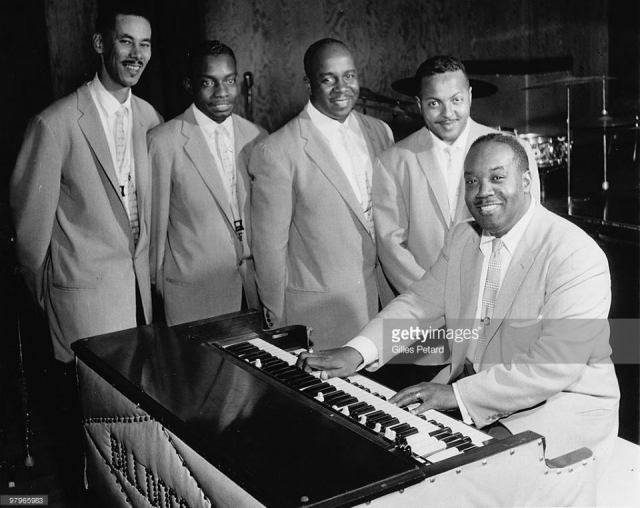
doggettcombo1956

Bill Doggett with his combo (getty images)

William Ballard Doggett, better known as Bill Doggett was born in Philadelphia in 1916 and was introduced to music by his church pianist mother.  He played in a combo while still in high school and went on to work with a plethora of stars in rock, jazz, rhythm and blues amassing a string of hits but, sadly, seems to have barely been noticed on this the 100th anniversary of his birth.  Where is NPR at a time like this?

Well, all is not lost.  Fortunately his nephew and namesake Bill Doggett is doing justice to the memory of this important American musician.  This younger Doggett is an archivist, lecturer, curator, strategic marketer, photographer, filmmaker, and arts advocate (his website is well worth your time).  I am hardly as well prepared to provide more than an overview of this musician’s work but I feel obliged to do my small part in recognizing this man’s work.

doggettposter

Promotional poster for the September 28, 2016 centennial celebration curated by nephew and namesake, Bill Doggett.

Doggett’s list of chart singles:

  • “Be-Baba-Leba” (vocal by Helen Humes) (Philo/Aladdin 106) 1945 (#3 R&B)
  • “Moon Dust” 1953 (#18 R&B)
  • “Early Bird” 1953 (#21 R&B)
  • “No More In Life” 1953 (#20 R&B)
  • “High Heels” 1954 (#15 R&B)
  • “Honky Tonk, Part 1″/”Honky Tonk, Part 2” (King 4950) 1956 (#1(14) R&B/#2(3) Pop)
  • “Slow Walk” (King 5000) 1956 (#4 R&B/#19 Pop)
  • “Ram-Bunk-Shush” (King 5020) 1957 (#4 R&B)
  • “Soft” 1957 (#11 R&B)
  • “Leaps And Bounds, Part 1″/”Leaps And Bounds, Part 2” (King 5101) 1958 (#13 R&B)
  • “Blip Blop” 1958 (#11 R&B)
  • “Hold It!” (King 5149) 1958 (#3 R&B)
  • “Rainbow Riot, Part 1″/”Rainbow Riot, Part 2” (King 5159) 1959 (#15 R&B)
  • “Monster Party” (King 5176) 1959 (#27 R&B)
  • “Yocky Dock, Part 1″/”Yocky Dock, Part 2” (King 5256) 1959 (#30 R&B)
  • “Honky Tonk, Part 2” 1961 (#21 R&B)


  • doggetthonky

    Doggett’s best known work.

While his last chart hit was 1961 his collaborations with  Lucky MillinderFrank FairfaxJimmy Mundythe Ink SpotsLouis JordanJohnny Otis, Wynonie Harris, Ella Fitzgerald, Louis Armstrong, Count Basie,  Lionel HamptonRed Holloway, Clifford Scott, Percy France, David “Bubba” Brooks, Clifford Davis, and Floyd “Candy” Johnson; guitarists Floyd Smith, Billy Butler, Sam Lackey and Pete Mayes; and singers Edwin Starr, Toni Williams and Betty Saint-Clair attest to the scope of his work.  Doggett continued to play and arrange until his death from a heart attack in New York in 1996 at the age of 80.

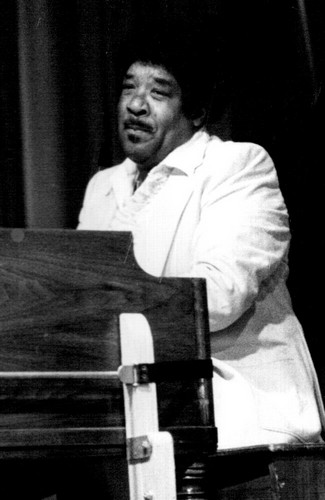
bill_doggett

Bill Doggett photographed in France in 1980 by Lionel Decoster (from Wikipedia article)

The Hammond Organ is known for being the workhorse of modern classical as well as rock, rhythm and blues and jazz.  It was Bill Doggett who became one of the early masters of this (then new) electronic instrument.  While he was also a highly competent pianist, it was with the Hammond Organ that he had his greatest success. There is little doubt that his playing has influenced subsequent musicians who took on this instrument.

Here’s hoping that astute musicians and producers will take on the task of recognizing the work of the late great Bill Doggett.  Toward that end here, from Wikipedia, is a discography of his work:

10 inch LPs

  • Bill Doggett: His Organ And Combo, Volume 1 King 295-82 (1954)
  • Bill Doggett: His Organ And Combo, Volume 2 King 295-83 (1954)
  • All Time Christmas Favorites King 295-89 (1954)
  • Sentimentally Yours King 295-102 (1955)

12 inch LPs (on King Records)

  • Moon Dust King 395-502 (1956)
  • Hot Doggett King 395-514 (1956)
  • As You Desire Me King 395-523 (1956)
  • Everybody Dance The Honky Tonk King 395-531 (1956)
  • Dame Dreaming With Bill Doggett King 395-532 (1957)
  • A Salute To Ellington King 533 (1957)
  • The Doggett Beat For Dancing Feet King 557 (1957)
  • Candle Glow King 563 (1958)
  • Swingin’ Easy King 582 (1958)
  • Dance Awhile With Doggett King 585 (1958)
  • 12 Songs Of Christmas [reissue of King 295-89 plus 6 additional tracks] King 600 (1958)
  • Hold It! King 609 (1959)
  • High And Wide King 633 (1959)
  • Big City Dance Party King 641 (1959)
  • Bill Doggett On Tour [this is NOT a live album] King 667 (1959)
  • For Reminiscent Lovers, Romantic Songs By Bill Doggett King 706 (1960)
  • Back With More Bill Doggett King 723 (1960)
  • The Many Moods Of Bill Doggett King 778 (1962)
  • Bill Doggett Plays American Songs, Bossa Nova Style King 830 (1963)
  • Impressions King 868 (1963)
  • The Best Of Bill Doggett [compilation] King 908 (1964)
  • Bonanza Of 24 Songs [compilation] King 959 (1966)
  • Take Your Shot King 1041 (1969)
  • Honky Tonk Popcorn King 1078 (1970)
  • The Nearness Of You King 1097 (1970)
  • Ram-Bunk-Shush [compilation] King 1101 (1970)
  • Sentimental Mood [compilation] King 1104 (1970)
  • Soft [compilation] King 1108 (1970)
  • 14 Original Greatest Hits [compilation; reissued as ‘All His Hits’] King-Starday 5009 (1977)
  • Charles Brown: PLEASE COME HOME FOR CHRISTMAS [this vocal album includes 4 instrumental tracks by Bill Doggett] King-Starday 5019 (1978)

12 inch LPs (on other labels)

  • 3,046 People Danced ‘Til 4 A.M. To Bill Doggett [this is a live album] Warner Bros. WS-1404 (1961)
  • The Band With The Beat! Warner Bros. WS-1421 (1961)
  • Bill Doggett Swings Warner Bros. WS-1452 (1962)
  • Rhythm Is My Business (Ella Fitzgerald with Bill Doggett) Verve V6-4056 (1962)
  • Oops! The Swinging Sounds Of Bill Doggett Columbia CL-1814/CS-8614 (1962)
  • Prelude To The Blues Columbia CL-1942/CS-8742 (1962)
  • Finger-Tips Columbia CL-2082/CS-8882 (1963)
  • Wow! ABC-Paramount S-507 (1964)
  • Honky Tonk A-La-Mod! Roulette SR-25330 (1966)
  • The Right Choice After Hours/Ichiban 4112 (1991) Note: this is Bill’s last recorded album of original material; also released on CD.

OK all you producers, have at it.


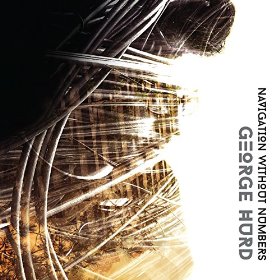
Navigation Without Numbers: George Hurd and his ensemble


george hurd

The San Francisco Bay Area is a rich and varied musical scene with a plethora of talented and creative musicians.  Given that I am not surprised and perhaps just a touch chagrined to not have heard of George Hurd.  After a bit of research I learned that this is his debut album so I guess I feel better.

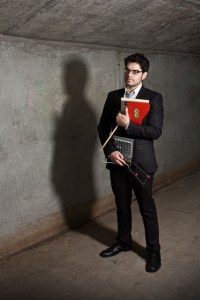
George_01-681x1024

George Hurd (promotional photo)

For an emerging composer he is well represented by his web page referenced above and another for the George Hurd Ensemble.  Like Philip Glass, Steve Reich and many others he is taking the composer/performer route which is certainly a better guarantee of getting one’s music performed and performed well.

Hurd is also a promoter of an interesting gaggle of other musicians and musical organizations as well and while this is his debut recording Hurd has a significant history of success and a composer, performer and arts administrator.

Now to the album at hand.  Navigation Without Numbers consists of 11 tracks of chamber music with electronics, electroacoustic music.  Each is an individual piece but they seem to create a unity and this listener’s experience was that of a soundtrack to a film yet to be made.  Indeed Hurd has written a few film scores as well.

The musicians are: Solenn Suguillon, violin; Jacob Hansen-Joseph, viola (and stomping); Erin Wang, cello; Ari Gorman, double bass; Elyse Weakley, piano; Annie Phillips, bass clarinet; Adam Murray, violin; Andrew  McGuire, vibes; Anton Estaniel, cello; Theresa Au-Stephen, violin; Jason Hallowed, viola; Anna Steinhoff, cello; Alana Grelyak, piano; Stephanie Wallace, harp; Katie Weigman, vibes; George Hurd, electronics with Anna Singer and Joseph Voves, stomping and clapping.  There is also an appearance by well known bay area violinist Carla Kihlstedt appearing on the fourth track.

There are no liner notes here so one is left only to one’s ear and heart to extract meaning and significance from these compositions.  To this writer’s ear it seems to be a combination of gypsy influence and jazz at times in a tonal context with an almost dance like feel at times.  This is not background music but it can be enjoyed with varying degrees of attention.  By that I mean that the music is assertive enough to be useless as Muzak which requires little attention and perhaps even none and that it benefits from closer attention and multiple hearings.  The overall experience is perhaps that of a good chamber group entertaining a knowledgeable clientele at a hip coffee shop.  Not your run of the mill classical, not exactly jazz but a very pleasant album.


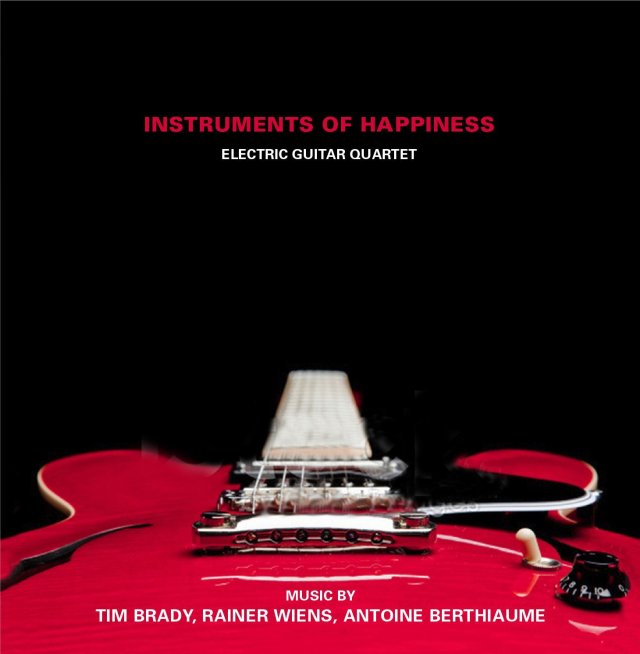
Tim Brady: The Canadian Connection


tbradyhappiness

Starkland is one of the few American labels that regularly pays attention to Canadian composers.  I previously reviewed their Paul Dolden release here.  This challenge to the curious apartheid we seem to maintain with Canadian culture is most welcome of course and one can obtain a great deal of Canadian music via Canadian labels but retail distribution of their non-pop music is limited to mail order and Internet sales (and I don’t mean Amazon either).  I strongly recommend perusing the web site of the Canadian Music Center for a truly stunning selection of this too little known recorded repertoire.  I should note that most of Brady’s releases are readily available from actuellecd.com.  You can find several of those other symphonies here as well as many other pieces and collaborative releases.  After hearing this disc I couldn’t resist hearing more  by this artist whose work has been known only faintly to me thus far.  That order is now being shipped.

Now to the disc at hand.  The  use of electric guitars as a primary instrument conjures immediate comparisons to Glenn Branca and Rhys Chatham as well as to rock and blues but this music is quite different from all of these.  This is one aspect of  the work of a composer whose work includes writing for orchestra, chamber and solo instruments as well.  Brady, largely set taught in music until he attended college (Concordia University 1975-78; New England Conservatory 1978-80) is an interesting composer and performer with a widely varied palette.  Brady’s Wikipedia page is surprisingly informative as well.  You can find that here.

Tim Brady (1956- ) is an artist of many talents and this recording represents his most recent work, a symphony.  It is his fifth essay so titled and his choice of instrumentation for each (of his now 6 symphonies) is unique.  In this case he has chosen to score for four guitars (his Symphony No. 4 is for full orchestra) and also presents a separate solo version backed by electronics.  It is subtitled, “The Same River Twice” (2013) and I struggled a bit initially getting wrapped up in trying to discern the differences between the two versions but realized that is rather beside the point in a way.  What makes this music interesting is the way in which it differs from the likes of Branca and Chatham.  Brady clearly comes from a different perspective.  The myriad ways in which creative musicians find to integrate cross genre elements fascinates me as a listener.  He is 8 years younger than Branca, 4 younger than Chatham but his perspective of the inherently “pop” inflection of the electric guitar differs greatly.  He is writing another vital and welcome chapter in this loosely defined group of guitar based experimental musics of the last 40 years and his work deserves attention.

He seems to have more in common (broadly speaking) with Pat Metheny than Fred Frith and his discography reflects encounters with several ECM artists.  I’m not sure who influences who here but this is a pleasant and intelligent exploration sometimes virtuosic, sometimes drone-like but a consistently engaging piece.

As I said there are two versions of this symphony on the disc.  Along with those are two shorter tracks by Antoine Berthiaume and Rainer Wiens.  Fungi by Berthiaume is another example of the integration of pop motives into a broader quasi-improvisational context and is most successful.  The disc is rounded out with a sort of little summation “remix” by Wiens entitled “What is time?” which reportedly uses breath as a rhythmic determinant.

The playing is competent and intuitive, not flashy or self-consciously experimental.  Rather this is the work of a seasoned composer who uses his materials well .

Recording and mastering, all expertly done, were done in Canada by the artists who also did the useful liner notes (Allan Kozinn writes the gatefold notes).  The cover art and the production of the CD belong to Starkland and it is a very nice production.

Next Gen Steve Reich: Two Great New Recordings


One of the hurdles on the way to long-term historical recognition is finding the next generation of interpreters for whom the music itself is not new but whose interpretation is needed anew in light of the music’s place in the canon of performed and recorded music. So Mr. Reich has now arrived in two fantastic new recordings.


The first CD here is the Cedille (Cedille 90000 161) label debut by Third Coast Percussion, a young Chicago based group.  The label itself is reason enough to pay attention with their intelligently selected and well-recorded releases.  But even so this one stands out for a couple of reasons.

As  Reich reaches his 80th birthday (as are many composers whose work informed my listening life since the 70s) we are seeing the next generation (or so)  of performers, musicians for whom this music is not new.  (Third Coast Percussion is Sean Connors, Robert Dillon, Peter Martin and David Skidmore. They were founded in Chicago in 2005.). As these dedicated musicians traverse this repertoire they see it from a different perspective and they acknowledge this in the accompanying notes by Robert Dillon.  No doubt they are familiar with the music and have heard some if not all previous recordings. This music is no longer new and novel the way it was to those who first heard it.  And that is what we have here, a new take on music already familiar giving us the perspective of another generation.

The second reason to get this recording is the sheer beauty of the sound.  It is a masterpiece of recorded sound which does justice to the work of these fine musicians as well as the music.  The album was recorded at the University of Notre Dame’s DeBartolo Performing Arts Center (where Third Coast is in residency).  Dan Nichols was the engineer assisted by Matt Ponio.  It was mastered by Jessie Lewis and Kyle Pyke.
The CD opens with the recent Mallett Quartet (2009) which has been recorded only once before.  The piece is in three sections fast-slow-fast split over the first three tracks.  It is one of Reich’s finest compositions showing him as a still vital artist and it will no doubt receive many more performances but it would be hard to imagine a better recording.

The second selection is, for this writer, one of Reich’s more unusual pieces.  The Sextet (1984) is scored for two keyboards (pianos doubling synthesizers used for long held tones) and percussion.  David Friend and Oliver Hagen lend their formidable keyboard skills to this work and help it to swing.

I must admit that this performance has resulted in me giving this work some serious close listening again and I am liking it better.  Some of these movements seem like precursors to some of the writing in Reich’s wonderful The Four Sections (1987), another work that deserves more attention.

The brief but lovely Nagoya Marimbas (1994) is pretty much an accepted staple of the classical marimba repertoire and has also been transcribed and performed on guitars as well.  As with the preceding the performance is faithful and lively.

For the final track a decision was made to go back to early in Reich’s output with Music for Pieces of Wood (1973).  As with much of his early work we see his experimental side focusing as much as possible on a single process.  It uses the same rhythmic pattern as the 1972 Clapping Music but uses additive rather than phasing techniques (I believe), a great example of the roots of minimalism.  The group does some toying with the choice of percussion but, as in the preceding tracks, manage to create a performance worthy of the best interpreters in their generation.  Happy Birthday Mr. Reich!!


This second CD (New Focus fcr 165) is another aspect of crafting a legitimate new interpretation of a given piece of music.  Guitarist Daniel Lippel goes back to some of the roots of Reich’s mature style, Ghanaian drumming.  Reich seems to have achieved his personal artistic synthesis after his encounter and study with the master drummers of Ghana.  It is here that he was finally able to synthesize the gifts received from his study of jazz (Reich was/is a jazz drummer) and his tape music experiments into the larger forms for which he is now known through these studies with West African musicians.  And it is here that Lippel goes, with an assist from musicologist Martin Scherzinger, to create his (re)vision of this classic Reich composition.

Electric Counterpoint (1987) was written for and first recorded by the still wonderful jazz guitarist Pat Metheny.  His recording is certainly definitive but, as with all music performance, hardly the last word.  Several artists have presented their versions (David Tanenbaum’s acoustic guitar version deserves more attention by the way).  It is a very appealing and interesting piece cast in a classic fast-slow-fast format that presents formidable challenges for the musician but not for the listener.

It is difficult (and certainly beyond the scope of this review) to say specifically what Mr. Lippel has done differently but there is clearly a difference (further notes can be found here).  I am loathe to find adjectives to describe this recording except to say that it is well worth your time to hear it.  It provides a different way of hearing much as Glenn Gould has done for Bach.  Just sit back and enjoy.

A Grand Early Start to Black History Month


BHM160006

The United States (unlike England who use the 31 day month October) has chosen the shortest month of the year to celebrate Black History  but I have managed to get 30 days to celebrate this year by starting a day early in this leap year.  Basically I cheated, deal with it.

This is the year of the last term of our first black president and, while that is a historically significant fact, so are the facts of the police killings that demands the development of interventions like “Black Lives Matter” to remind society of a fact that should be obvious but clearly is not, that we have a serious human rights crisis here.  However, rather than getting into yet another acknowledgement of our racist society, I am interested in sharing a wonderful positive experience that I hope will provide as much inspiration to my readers as it did to the fortunate folks who attended this night’s festivities.

Friend and colleague Bill Doggett kindly made arrangements for me to attend this annual fundraising event at the Eastside College Preparatory School and sponnsored by the African American Composer Initiative  and the San Francisco Friends of Chamber Music.  The featured guest was composer/pianist Valerie Capers (1935- ) a Julliard trained pianist and composer. She was joined by a wealth of highly skilled musicians in a fascinating program of music and arrangements by Capers, John Robinson and several others.

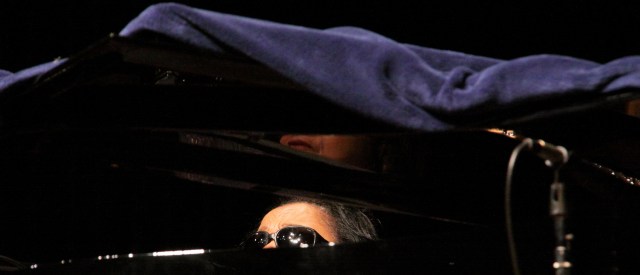
The well attended evening began with a couple of vocal numbers done by the Eastside Preparatory School Choir followed by the playing of the beginning of a documentary film about Ms. Capers (Dr. Valerie Capers: Dream Big, 2015).  In the excerpt she talks about her life, losing her sight and the importance of music to her.  She is a delightfully positive, optimistic and energetic person and, as we saw later, a powerful and inspiring musician. This became even more evident when we were treated to the live interview conducted from the stage by LaDoris Cordelle, herself an accomplished pianist and singer as well as a respected lawyer, judge and activist.

BHM160002

LaDoris Cordelle (left) interviewing Valerie Capers

Participating this evening were the Eastside Preparatory School Choir conducted by David Chaidez, soprano Yolanda Rhodes, vocalists/pianists LaDoris Cordell and Deanne Tucker, pianist Josephine Gandolfi, violinist Susan C. Brown, cellist Victoria Ehrlich, and clarinetist Carol Somersille along with guest artists Valerie Capers, John Robinson (bass, composer), Jim Kassis (percussion), Rufus Olivier (bassoon), Stephanie McNab (flute), John Monroe (trombone), John Worley (trumpet) and Lauren Sibley (narrator in “Ruby”).  I must say that the musicians this evening were truly spectacular and seemed to work even harder in their homage to guest of honor Valerie Capers.

The musical program properly began with the performance of John Robinson’s Fanfare for an Uncommon Woman (2015).  The work whose title echoes Aaron Copland’s populist Fanfare for the Common Man (1941) and was written in honor of Ms. Capers.  This was followed by several of Capers’ Portraits in Jazz (1976) compositions and her take (not at all like Vivaldi’s) on the four seasons in her, Song of the Seasons (1987).

BHM160005

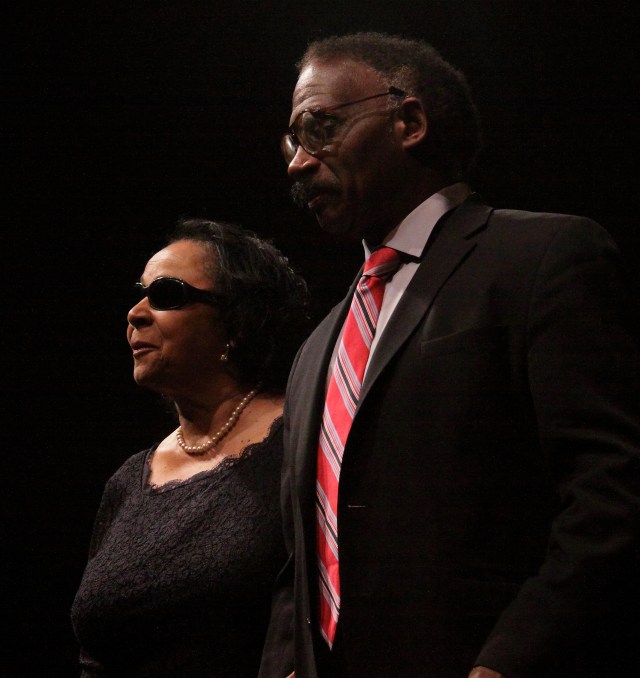
Valerie Capers with John Robinson acknowledging the grateful applause.

The first half of the program concluded with Capers’ Winter Love, her gloss on Wagner and her arrangement of Duke Ellington’s “Don’t Mean a Thing if it Ain’t Got that Swing”.

The second half began with Bird Alone, an Abbey Lincoln song arranged by Capers.  This was followed by another composition from Mr. Robinson, “Tarantella with a Twist of Lime” (2015), a catchy somewhat humorous piece, and then “Doodlin'” by Horace Silver.

Next up was a work in a genre of great interest to this reviewer, that of a political classical piece written to express political ideas.  Ruby (2013) with text and music by Valerie Capers is a work for narrator, vocalists and ensemble that tells the story of Ruby Bridges who, in 1960, became the first black child admitted to the the all white William Frantz Elementary School in New Orleans, Louisiana.  She had to be accompanied by Federal Marshals under orders from then President Eisenhower.  Bridges was the only black student and was taught by the only teacher willing to teach a black student, Barbara Henry who remained Bridges teacher for the entire year and there were no other students in that classroom though some white families did eventually send their children back to the school where they were taught in their accustomed segregated fashion (ironic here too because New Orleans had had the beginnings of an integrated school system prior to the civil war). Bridges and her family suffered many indignities as a result of her participation in this landmark event, a critical step in the Civil Rights Movement. This was a powerful and touching piece performed with reverence, sympathy driven by the hindsight of the accomplishment itself as well as the frustration and sadness that even some 50 years later the struggle still continues.

BHM160007

The Grand Finale

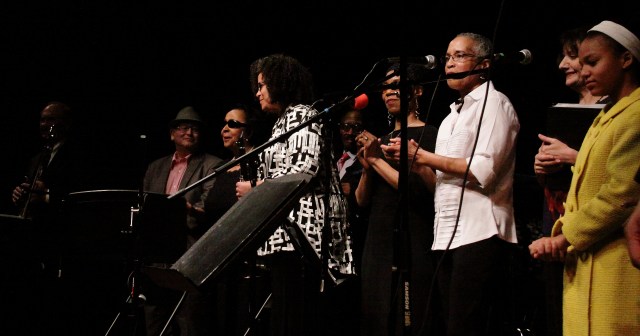
The evening concluded with a group performance of Capers’ arrangement of the iconic spiritual, “Eyes on the Prize” whose strains provided some of the soundtrack of the civil rights struggles of the 1960s.  It is a hymn which still offers much inspiration.  It was a joyful and optimistic evening much like the times 50 years ago whose struggles now rest on the shoulders of yet another generation hoping, praying, working and performing amidst adversities that seem to never end.  But even a progress measured in inches is still progress.

The reception which followed was catered by apprentices from a group called, “Worth Our Weight” (based in Santa Rosa) which teaches culinary and catering skills to minority students.  Various tasty little sandwiches, meatballs and pastries tended to our palates while we took advantage of the opportunity to meet the performers.

I took the opportunity to meet and talk briefly with Capers whose energy was unabated belying her 80 years as she greeted a wealth of appreciative audience members.  I commented to her that I thought her vocal writing sounded a bit like Mahler  Capers paused oh so briefly before stating with her characteristically good humor and a knowing smile, “I think that’s  compliment.” Indeed it was.


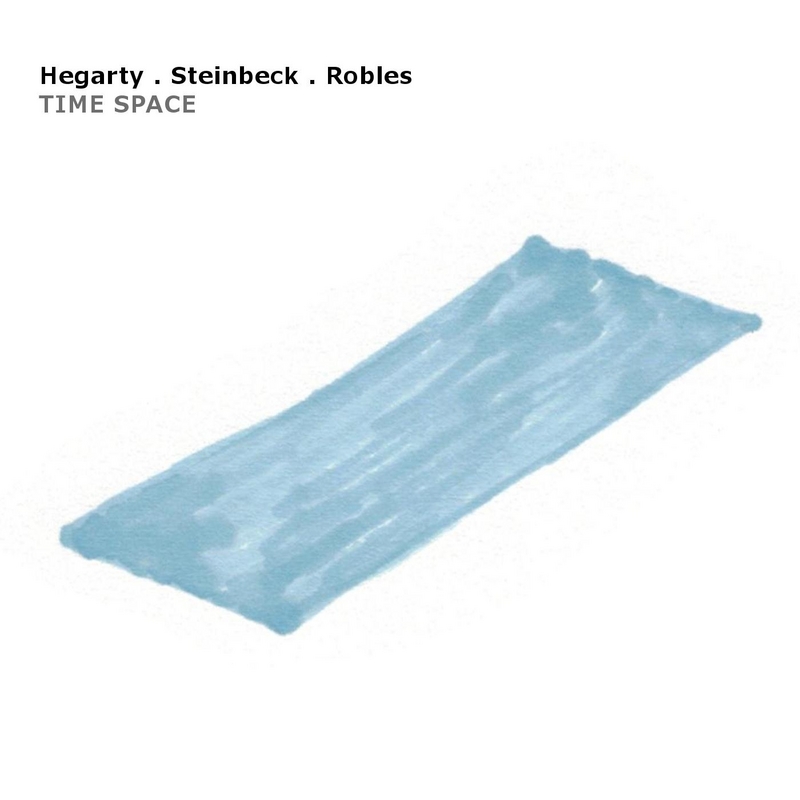
CD Review-Hegarty, Steinbeck and Robles: Time/Space, an atypical jazz trio


HegartySteinbeck-TimeSpace

An old school twelve tone composer, an AACM composer and Julliard composer walked into a bar.  They sat down to play an out came, well, this album. And the bar I am imagining is perhaps a sort of post beat, post bop version of the bar from Star Wars.  I guess I am awash with metaphors here.

Imagine, if you can, a melding of musical styles.  Take a little Milton Babbitt, a little Anthony Davis, a touch of Wadada Leo Smith and perhaps a bit of Oscar Peterson (there is a little bit of a traditional lounge jazz touch here).  I have struggled to characterize this music and struggled perhaps even more to envision its ideal audience but that is not a criticism and is not intended to say anything negative about this album.

To be fair one of the main reasons I think I am struggling to describe this release is that it is a download only release which fortunately is accompanied by some nice cover art by Anna Hegarty and some liner notes which are essentially a  quote from some reviews but contain very useful information about the musicians and their history.  I guess I would feel differently if this had been a physical instead of digital release but perhaps I am just being nostalgic.  Oh, and keep in mind this is a free download.

The varied backgrounds of these musicians have resulted in a blending of styles creating a unique and enjoyable listening experience.  You can listen to this relatively short pieces as chamber music of a new classical variety but I think that would be missing the point.  This is basically an album of lounge jazz written and performed by some really good musicians who play well together.  Calling it “avant-garde” serves only to add a layer of fear and confusion to what should be a pleasant or at least innocuous experience.   That is why I called these guys an “atypical” jazz trio in the title of this review.

The musicians include James Hegarty on piano, Paul Steinbeck, electric bass and Shane Del Robles on drums.  According to the liner notes these musicians  have a pretty varied experience including free jazz,  AACM jazz, rock and various other projects.  They come together here very well.

In 12 short pieces (a metaphor for serialism?) this album manages to be lyrical and understated.  A few tracks use some studio effect of playing the tape backwards but most of what you hear is just acoustic instruments playing short numbers whose titles may mean more to the musicians than to the music itself but that is consistent with the type of music they are playing.  The music and the musicianship are good and sincere.

I would love to hear these guys play live in a smoky bar while sipping single malt scotch and hobnobbing with some kindred artistic spirits but I’ll have to settle for hearing it on my CD player (you have to hear this on a decent sound system).  I might even try to slip this in to some background music at a party just to see if anyone would notice it as different from whatever other background music might be played.  Very nice album and you can’t beat the price.

In the Mood for Food, a unique underground dinner/concert series returns to the east bay


The door is open to the underground restaurant.

The door is open to the underground restaurant.

This past Monday October 7th there was a gathering of twelve people at a small loft space in West Oakland.  This is not a neighborhood known for about anything but light industry and cheaper rents.  But there are gems to be found in nasty old Oakland, CA and this is one of them.  It was the return of an irregular (approximately monthly) series of dinners and dinner concerts hosted by local vegan caterer and chef extraordinaire (and shakuhachi teacher as well) Philip Gelb.  These concerts, according to Mr. Gelb, were inspired by the Creative Music Studio which flourished in Woodstock, New York from 1971 to 1984 which featured many of the brightest and most innovative musicians in jazz, free improvisation and experimental music.  But the inclusion of such high quality creative cooking is unique here.

View through a glass, lightly.

View through a glass, lightly.

It has been many months since he last hosted one of these at his loft space.  Phil has chosen to combine his substantial cooking talents with his interest and connections with the music community to create this unique blend of freshly shopped and created vegan dishes with local and visiting musical talent.  This series, dubbed “In The Mood for Food”, is named after one of his favorite films, “In the Mood for Love” by Wong Kar-Wai.  The series has occurred more or less monthly for the last 8 years. To date I have enjoyed the creative and varied multi-course meals (which are frequently themed to the season or to the performer’s preferences) and have enjoyed both dinner conversation and performances by Pauline Oliveros, Terry Riley, Stuart Dempster, Gyan Riley, Tim Rayborn, Michael Manring, Barre Phillips, Mark Dresser, Amy X Neuberg and Pamela Z to name just a few.

The meals are always multi-course, locally created, sourced and shopped meticulously by Phil himself.  He serves only farm fresh ingredients, never canned or packaged and the recipes are his personal creations.  Food is served by the chef and one or two assistants depending on the size of the audience (maximum capacity is about 20 people).  Cost ranges from $40 to $60 per person, about what you would pay at a good area restaurant.  The musicians are either people with whom Phil has collaborated or found by word of mouth from other musicians and friends.  He has had many musicians call him to ask if they can play at his venue.  Why would that be?  There is no significant publicity or profit to be had here.  The answer, I believe, is the intimacy which is a combination of the loving creation of both food and music, both raised to an art form by their execution as well as their content.

There is reportedly a cook book in the works which, in addition to many carefully tested vegan recipes, will tell some of the history of this series.  Phil is occasionally soliciting recipe testers via Facebook.  He is also known for his hands on cooking classes.

As it happened, Monday’s event did not include music but it did include some familiar faces who I frequently encounter at these dinners as well as an overall interesting collection of guests who make for great conversation and frequently share their BYOB offerings.  In fact the bartender from the great San Francisco vegan restaurant, ‘Millenium’, asked to attend and to prepare some delicious cocktails specially designed by him and incorporating some of the food ingredients to enhance the experience.  Two of the guests were the operators of a local new tempeh making business called Rhizocali and their superior product was featured in the night’s food offerings.

Unfortunately I forgot to get a picture of the wonderful dessert course which consisted of pumpkin waffles, spiced pumpkin sorbet and maple tea poached pears.  Characteristically the attentive chef went around offering more scoops of the refreshing pumpkin sorbet which no one appeared to refuse as they engaged each other in pleasant conversations.  It is good to have this series back again and, well, let’s just say no one walked away unsatisfied.

Appetizer- Fresh rice noodles wrapped with apple smoked tofu and miso glazed, grilled pumpkin hijiki salad

Appetizer- Fresh rice noodles wrapped with apple smoked tofu and miso glazed, grilled pumpkin hijiki salad

First course- Kim chi soup with rice cakes, homemade kim chi in a seaweed/pumpkin broth and a little side dish of Pumpkin tempura brushed with gochujang

First course- Kim chi soup with rice cakes, homemade kim chi in a seaweed/pumpkin broth and a little side dish of Pumpkin tempura brushed with gochujang

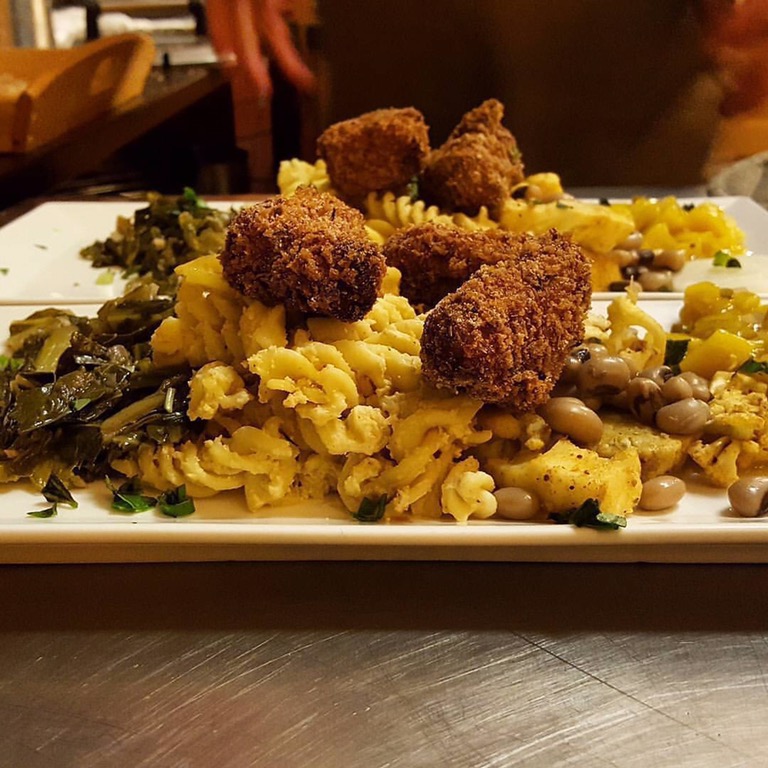
Entree- Dumpling pumpkin stuffed with Thai red curry with Rhizocali Tempeh, gai fan, snap peas and Thai eggplant; jade pearl rice, green mango salad and lotus root pickles

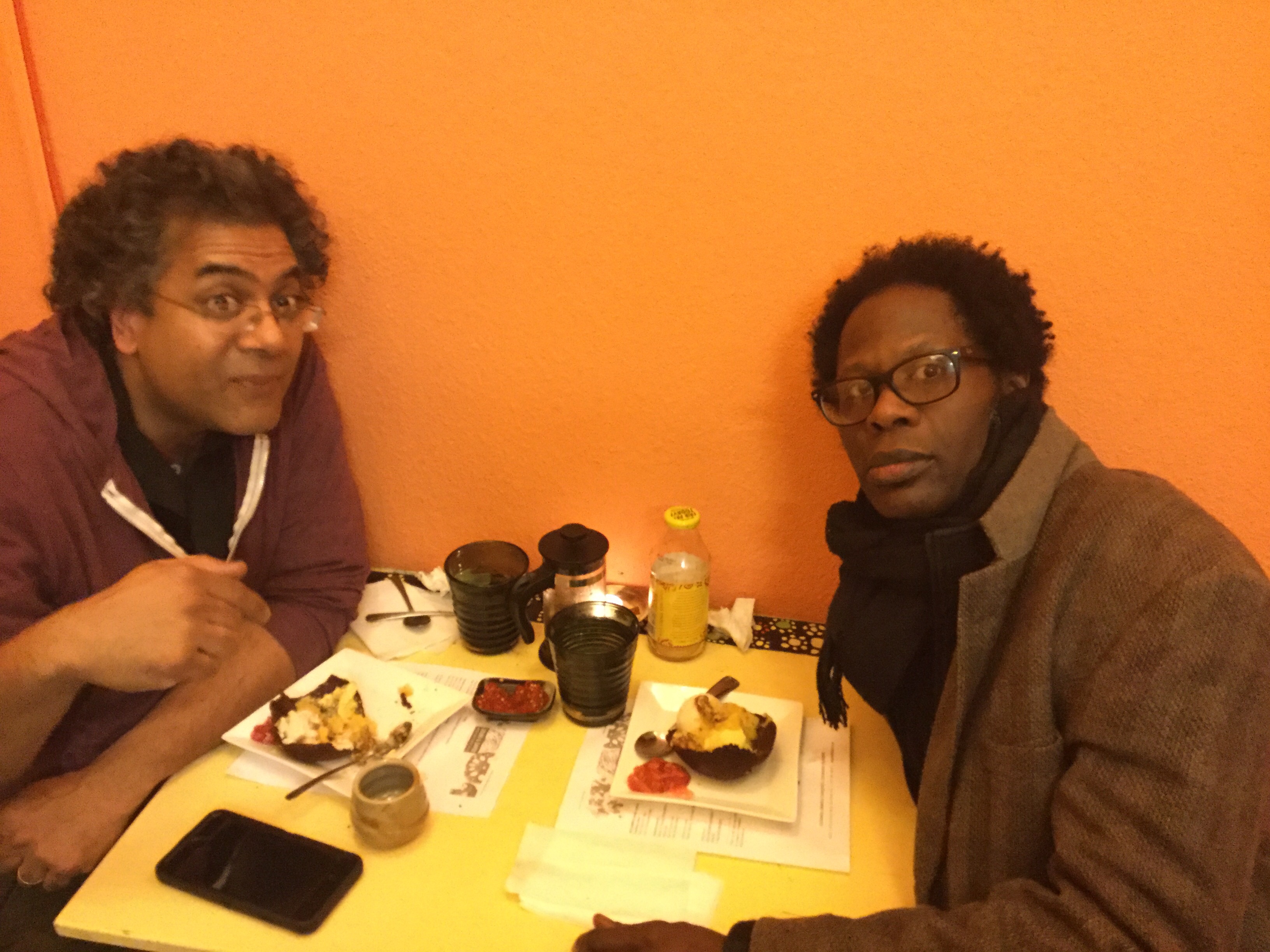
Happy diners chatting after a fantastic dinner.

Happy diners chatting after a fantastic dinner.

Experimentalism Otherwise, a significant new book on the New York progressive music scene in thec1960’s


I posted my blog review of the Carl Ruggles CD release on Amazon so I decided it would be reasonable to take an earlier review from Amazon and post it to my blog. So having made this guilty disclaimer, here is my review of a great book I came across in the fall of 2011:

For those interested in contemporary music and the New York avant garde of the early to mid 1960’s this is a book that is hard to put down. Each of the first four chapters is devoted respectively to: The New York Philharmonic’s 1961 performance of John Cage’s ‘Atlas Eclipticalis’; Henry Flynt and his rejection of mainstream avant garde trends (Stockhausen, Boulez, etc.); The (short lived) Jazz Composer’s Guild; and the performances of cellist Charlotte Moorman. A final chapter is devoted to a summary analysis which further connects these performers and events to the work of the ONCE Festival, Sonic Arts Union and (surprisingly but most appropriately) to the influence of these avant gardists on the subsequent work of Iggy Pop.

Nearly every significant figure of the avant garde is mentioned or quoted and the views of the general public as well as more specialized critics (which, of course, includes various members of the avant garde) are included in the course of the discussion and analysis. In addition to John Cage we hear from the likes of Morton Feldman, Christian Wolff, David Tudor. The Henry Flynt chapter necessarily involves various figures associated with the Fluxus movement and related projects. The Jazz Composer’s Guild chapter includes Bill Dixon, Roswell Rudd, Michael Mantler, Carla Bley, Paul Bley, Amiri Baraka, George Lewis, the AACM. And the chapter on Moorman includes Nam Jun Paik as well as John Cage and various Fluxus artists. The final chapter connects to others not so closely associated with New York such as Robert Ashley, Gordon Mumma, the ONCE Festival, Sonic Arts Union and finally to MC5, John Sinclair and Iggy Pop.

While there is some musical analysis here the author seems primarily concerned with analyzing these events and people and placing them more clearly within the political, social and cultural contexts in which they existed and to which they reacted. And indeed he finds highly relevant connections to civil rights issues and political conflicts and social movements as well as musical and performance movements and practices.

The analysis in terms of the likes of Pierre Bordieu, Franzt Fanon and Michel Foucault may be a bit difficult for those who have no familiarity with their works but his analysis is fascinating and his writing style is very lucid. This is an intelligent book not aimed at a narrow specialist audience. I believe that he succeeds in producing a fresh, important and valuable perspective on the people, the music, the events and the responses to them which will continue to prove useful in present and future analyses of the state of contemporary music and performance.

Finally the book is full of references comprising at least a third of the volume which serve both to support and illustrate Mr. Piekut’s theses and also to provide easy access to further reading and research.

In the time since I published this review Mr. Piekut has come to the United States and is now an Assistant Professor at Cornell University. I will certainly continue to follow the work of this young scholar. And I eagerly anticipate his next project. Perhaps he will see fit to turn his analytical insights to more of America’s too little known avant garde music movements and provide some much needed documentation. And hopefully his students will be motivated to explore these as well.

It is worth noting that the ‘Other Minds’ people in San Francisco have recently chosen to make this book available at a discount on their website. They stock a small but carefully selected cache of books related to new music and their inclusion of this one suggests that they find it a significant volume. In addition they are also stocking local artist/composer/professor Luciano Chessa’s new book on Luigi Russolo, the early twentieth century Italian artist best known for his advocacy of the use of noise as a musical element. In fact I have it cued up in my reading list and plan a future review.

In the Mood for Shakuhachi, Man?


Last night I had the pleasure of attending another in the great occasional series of house concerts produced by vegan chef extraordinaire, Philip Gelb. Phil wears many hats. He is a fine shakuhachi player and, by his own students’ testimony, a great teacher as well. He is without doubt a wonderfully creative chef catering vegan cuisine to the bay area and beyond. And over the last six years he has hosted an occasional series of concerts at his loft in West Oakland modeled in part on the Creative Music Studio that flourished in Woodstock, New York in the seventies and early eighties. In fact some of the musicians Phil has hosted are alumni of that fine collective. His business is called, ‘In the Mood for Food’.

The dinner which is frequently tailored to the artist’s preference was a Thai/Japanese fusion of some five delicious courses. And customarily the performance occurs followed by the dessert course.

The musician was a shakuhachi player and instrument maker named John Kaizan Neptune, an American expatriate living in Japan since the seventies. Neptune is a surfer and surf board maker who has turned his carpentry skills and musical talent on the creation and/or modification of musical instruments after his interest in eastern philosophy drew him to Japan where he continues to live and perform.

Having heard traditional shakuhachi I was somewhat unprepared for the kaleidoscope of sounds and styles of music which followed our entree. Neptune, dressed in a head scarf and and Japanese style short vest jacket and blue jeans, looked the role of the American surfer/musician he describes himself to be. He had three shakuhachi of different lengths and he described some basic facts about the instruments in a most pleasant manner demonstrating his love and depth of knowledge of his medium.

He varied his program with a mix of traditional pieces and a sampling of some jazz/improvisational work which opened our ears to some amazing possibilities for this ancient instrument. He spoke casually of scales and playing techniques demonstrating by playing. At one point he displayed his skill by playing the opening of the Mozart G minor symphony quite in tune on an instrument designed to play a five tone scale. And if any of this sounds at all pedantic it is the fault of my writing, not the artist’s presentation. He was engaging in the manner of a skillful teacher able to meet his students’ needs at their level, neither condescending, nor opaque.

Neptune’s knowledge and respect for traditional Japanese music was evident but his own creative, dare I say American sensibility, has not been lost or subsumed. He performed music that paid homage to the traditions of its origin and kicked out some soulful jazz and blues jams that would do any ensemble proud. The effect was mind expanding and joyful evidenced by a very appreciative audience.

In addition to shakuhachi we were treated to an instrument of Neptune’s own creation, a two headed drum made entirely of bamboo. As in his shakuhachi playing there was a synthesis reflecting and integrating various cultural/musical influences into a new and worthy product embodying the influences of its ancestors as a child embodies the genetic heritage of its parents.

This drum produces four distinct sounds and was played strapped to the performer’s waist. And it could conceivably have great utility in a variety of musical settings. Mr. Neptune again demonstrated his swinging musical sensibilities in playing his new creation. It’s sounds evoked a variety of ethnomusical sounds ranging from South Asian and African to Latin and American. and he will soon be selling this instrument along with traditional and custom shakuhachi.

Following this good humored and spirited performance followed a great dessert and the almost obligatory selling of CDs which the audience, this writer included, consumed nearly as voraciously as the dessert. Many in the audience were Phil’s shakuhachi students and were freely invited to try Mr. Neptune’s instruments which they did with little hesitation.

House concerts generally convey a far greater sense of intimacy and connection than larger more traditional concert settings. And this was even more evident here due the persona of the performer and the receptivity of the audience many of whom were regular attendees at these events.

I happened to have brought a couple of guests to this event and the energy seemed to grab them as much as it did those more familiar with this series. It was a great evening in a great ongoing series at “In the Mood for Food’, a very special place on the east bay.

Other Minds 17 Day 3


The final night of the 17th Other Minds Festival presented music by four composers and included two premieres of music commissioned by Other Minds.

The concert began with music by Finnish composer Lotte Wenakoski. This diminutive Finnish woman, who also sang quite beautifully during the panel discussion, works with barely audible sounds seeking inspiration ” on the borders of silence”. Her 2006-7 work Nosztalgiam (Hungarian for ‘my nostalgia’) was performed by the modular Magik*Magik Orchestra whose size varies according to the need of the pieces to be played. Tonight’s configuration for this piece consisted of 12 players playing woodwinds, brass and strings.

Fellow OM 17 composer John Kennedy, who is the conductor for the Spoleto Festival among others, conducted the chamber ensemble. Nosztalgiam (2007) is apparently a set of variations/deconstructions or meditations on two Hungarian folk songs (one of which she spiritedly sang during the preconcert discussion). The sometimes sparse and always delicate sounds expressed Wennakoski’s personal impressions of her time studying in Budapest in the late 1980s. It is difficult to assess this composer represented in this festival by a single work. But the sweet, delicate personally nostalgic sounds evoked by a variety of extended techniques suggest that seeking to hear more of her work would certainly be worth one’s effort. The sensitive and virtuosic performance was greeted warmly by audience and composer alike.

Next in this first half were two works by John Kennedy, conductor, composer, percussionist and promoter of New Music. Here is a man in a role similar to that of OM Festival director Charles Amirkhanian having a chance to be, so to speak, on the other side of the table. There are apparently no available commercial recordings of this man’s music but according to his web site (which does have some too brief sound samples) he has composed many works in all genres including theater, orchestral, solo and electronic. And he has received many commissions.

This night he was represented by two works, one of them an Other Minds commission. Both are hommages to the late John Cage. As I mentioned in an earlier blog Cage is also the inspiration/impetus behind Other Minds’ esthetic.

The first work, “First Deconstruction in Plastic” (the title a play on Cage’s First Construction in Metal), does double duty as an homage and as an environmental statement. Percussion duo Ryder Shelley and Andrew Myerson sat facing each other each with a collection of ‘found objects’ consisting of plastic buckets, bottles, shopping bags, etc. This well rehearsed duo gave an energetic and engaging performance which the audience clearly appreciated. But for this reviewer was left with the impression that this accomplished work, though no doubt intricate in it’s conception and satisfying to the musicians, failed to fully engage it’s audience. I was entertained but I did not particularly want to hear it again.

The second work, “Island in Time” (2012), was a world premiere. This, also dedicated to Cage, was a different matter. Scored for the unusual combination of bass clarinet, flute, cello and percussion (all members of Magik*Magik Orchestra) was an engaging though not derivative tribute to the influence of John Cage. The composer describes a process involving different types of temporal processes to structure the work. But the specifics of the processes are secondary here to the overall impact of the work. A meandering flow of sounds and tempi flowed beautifully reverently invoking the spirit and influence of Cage’s work. I have no doubt that the riches in this piece would continue to reveal themselves with repeated hearings. And though I have very little knowledge of this composer’s other work I have no doubt that it is likely to be quite compelling.

The musicians, clearly familiar with the work, gave a loving smooth reading of what appears to be a fairly complex work requiring serious concentration and collaboration. The audience, myself included, rewarded their efforts with enthusiastic applause.

In the second half of the program the next composer, who had performed the previous night in collaboration with Ikue Mori and Ken Ueno, was Tyshawn Sorey. This was to have been a solo performance as a percussionist but in the course of the discussion in last night’s pre-concert panel festival director Charles Amirkhanian mentioned that he had heard Sorey playing the piano earlier in the day. Amirkhanian remarked on the apparently eclectic nature of what he had played. Sorey responded saying that his piano playing is informed by the likes of Art Tatum, David Tudor, Cecil Taylor and Morton Feldman. He also mentioned deconstructing Boulez’ Second Piano Sonata (!) to inspire his compositional process. Eclectic indeed! And he easily consented to playing the piano in his segment of the program saying, “…if you are open to it, sure.”. Sorey exudes a sort of calm, friendly, matter of fact confidence in his skills.

So Sorey walked onto the stage which contained his percussion kit on one side and a concert grand piano on the other. He began with a percussion improvisation starting with a fortissimo strike on the side drum followed by some fevered loud work on tenor and snares as well. This then segued into some more delicate and complex soft sounds elicited from various cymbals and drums making frequent use of special techniques which brought forth some rich vibrant harmonics especially in the quieter moments. I couldn’t help being reminded at times of Han Benink’s performance at last years festival as he released a small sower of sticks onto a drum at one point. Sorey’s sheer energy and good humor were reminiscent (though not imitative). And, unlike Benink, Sorey never left the stage in the course of the performance.

Following the well received percussion set Sorey moved to the grand piano sitting confidently and commandingly at the keyboard and pausing as he focused on the task at hand. He started slowly with a few chords and before long launched into a dizzying and virtuosic flow of music reflecting the influences he mentioned. At first perhaps Morton Feldman, sometimes Pierre Boulez, a little Art Tatum, certainly some Cecil Taylor and then deftly playing sometimes inside the piano then back to the keyboard as part of the same unbroken musical phrase evoking the experimentalism of David Tudor. But the overall impression was not episodic imitation but rather an absorption and integration of all these techniques transcending genre and becoming, simply, inspired music making. The audience was transfixed and absorbed in the flow of the music and responded with cheers of “Bravo” and enthusiastic applause (I think they were pushing for an encore but time did not permit). Had I heard a recording of this without knowing the background I would have guessed this to have been an accomplished composed work by a master composer but this was an improvisation. I am surely going to seek recordings and follow this man’s career in the years to come.

The finale was another Other Minds commission this time from composer, vocalist and Berkeley music professor Ken Ueno. The piece, “Peradam” (2011) takes it’s title from the unfinished spiritual allegorical novel, “Mount Analogue” by the French surrealist writer and poet Rene Daumal (1908-1944). Peradam is a mythical diamond-like stone sought after on the similarly mythical mountain of the title.

Ueno’s work is scored, as is his practice, specifically for the skills of the formidably talented Del Sol Quartet who so ably played the Gloria Coates quartet the previous night. Specifically the specialized skill (in addition of course to their string playing) is the multiphonic throat singing capability of violist Charlton Lee. Ueno demonstrated his vocal skills on the previous night singing with the percussions of Ikue Mori and Tyshawn Sorey. In fact all the players were asked to sing as well as play their instruments for this performance. In addition there was video creatively projected onto the sound baffles at the rear of the stage.

The music was a post modern integrated amalgam of a wide variety of conventional and extended instrumental techniques along with singing at times (the throat singing is a strikingly unique timbre which commands attention when it emerges in the fabric of the piece). The quartet positioned themselves stage right to afford the audience a clear view of the projection across the three sound baffles at the back of the stage. They played with characteristic concentration and skill in what looks like a technically challenging piece of shifting moods and tempi to which the images responded.

The images, manipulated in real time and in coordination with the music with software written by video artist Johnny Dekam, were abstract mostly monochrome images that moved and transmuted hypnotically along with the music. Dekam, who has worked with a variety of pop acts like Eminem and Thomas Dolby, had collaborated with Ueno before. In the darkened theater the images dominated the visual field though the quartet could be seen as well.

It was a complex experience that could only be grasped, if at all, by going with the simultaneous flow of music and image. This piece will benefit from repeated listenings/viewings to more fully appreciate it’s intricacies. But this first performance clearly satisfied the mostly hard core new music fans audience. And while the direct John Cage associations were not as obvious it is clear that Ueno, Dekam and the Del Sols embody the open minded spirit of his work in this, his centennial year. This grand finale was appreciated in kind by the cheering audience successfully bringing to a conclusion the 17th always uncategorizably eclectic Other Minds Festival.

Other Minds 17. Day 2


The second night at Other Minds featured two different generations of composers. As is their practice Other Minds on this night featured two composers already established and fairly well known in new music circles as well as three up and coming artists.

The first performance was by San Francisco’s own champions of new music, the Del Sol Quartet. They performed the American premiere of American expatriate composer Gloria Coates’ String Quartet No. 5 composed in 1988. This and her 8 other quartets have been made available on the brave and progressive Naxos CD label. Coates also holds the record as the most prolific woman symphonist of all time with some 16 symphonies to her credit (many of those are available and well worth seeking on CD as Well).

String Quartet No. 5 is cast in three movements. By the composers description all of the movements are canons, a simple counterpoint form. But the result is hardly simple. Using microtonal glissandi, sometimes having instruments tuned a quarter tone apart and relying on creative ways of synchronizing the players individual tempos Coates achieved a complex sounding but friendly and approachable result. The quartet which lasted about 30 minutes would be a challenge for any ensemble but the Del Sol (which, except for the cellist, perform standing in a break with convention) clearly knew and liked the work and gave an intense and beautiful rendering sounding at times like there were more than four players. The piece has an almost romantic feel at times, cleverly incorporating melodies into a sound world uniquely the composer’s own (I am at a loss to identify a precedent). I sincerely hope that this work and her other works become better known in this, her native country. It is a tribute to the acumen of the Other Minds team that music like this is presented here. The audience greeted the performance very appreciatively.

Next up was Harold Budd on piano playing with Keith Lowe on double bass augmented with electronic effects. The piece, titled “It’s Only a Daydream” from 2011 is, by Budd’s description, entirely improvisational as is most of his music. Lowe began playing first with long sustained tones awash with rich harmonics. Budd’s piano then entered and we were transported to the familiar sound world which is Budd’s musical signature. Those who knew his collaborations with Brian Eno and his later solo works recognized his somber pretty ambient sounds. The two musicians were well matched and played a sort of jazz duet trading solos and accompaniments evoking a curiously nostalgic and hypnotic atmosphere of a strange dream-like lounge. Time seemed suspended and I don’t know exactly how long they played but when they finished the enthusiastic audience reception brought them back for a shorter encore, something I had never seen occur before at this festival.

Following intermission Ikue Mori took the stage sitting at her laptop which controls her various electronic sounds. She played the laptop solo for a few minutes and was then joined by UC Berkeley faculty composer Ken Ueno on vocals. But ah, what unusual vocals. His extended vocal techniques seem to come equally from Tuvan throat singing, Buddhist chanting, David Hykes (of the harmonic choir), Meredith Monk, Diamanda Galas, Kenji Suzuki (of the band Can), Tan Dun (on Taoism) and God knows what else. After another few minutes Tyshawn Sorey, a doctoral candidate in composition at Columbia, seated himself quietly at his drum/percussion kit, then with an assertive fortissimo bang on the side drum confidently entered the energetic fray. Mori sat intently gazing at her computer screen and entering the sound changes for her part while Ueno, holding the microphone to his mouth with both hands issued passionate wordless vocalizations of endless variety and Sorey executed a similar endless variety of high energy acoustic percussion sounds.

Mori calmly issued computer commands to perform her Japanese/New York/ punk/free jazz/Stockhausen expanded percussions while the academic Ueno improvised intense growling, multiphonic, wild vocals with few pauses and Sorey got in touch with his AACM ancestors producing a unified three ring circus of wonderful musical mayhem transcending any concept of genre. Three different traditions, separate but working together. Metaphorical? You decide.

Well deserved and enthusiastic applause greeted the intense but calm Mori and the sweaty and apparently exhausted but satisfied Ueno and Sorey.

The relative order of Coates followed by the ethereal calm improvisations of Budd were but a distant memory (albeit a pleasant one) after the ritual emotional exorcism of the second half. This is the rich variety that characterizes these concerts. And now anticipation builds for tomorrow’s finale.

Other Minds Festival 17


Thursday night was the opening concert of Other Minds 17th annual series at the beautiful Kanbar Hall in the San Francisco Jewish Community Center which features a typically eclectic selection of new and recent music. Six countries are represented this year including the United States, Germany, Japan, Denmark, Norway and Finland.

This first night featured the palindromically named Norwegian ensemble Asamisimasa. They are a group of highly trained young musicians who dedicate themselves to the performance of post war avant garde and recent music (some written for them).

What makes them unique is their integration of traditional instruments with various types of electronics and techniques to modify and enhance their sound. They include standard video, digital processing and extended instrumental techniques as well as uncommon enhancements such as hand held megaphones and found sounds like tearing newspaper, spray cans and sliding blocks that rub on various surfaces.

The result was a wonderful embodiment of the post- Cagean musical esthetic which is the driving force behind Other Minds as they describe it in their mission statement. These dedicated skilled classical musicians played a program of a fellow Norwegian and a Danish composer. It was a performance that was adventurous, humorous and engaging.

The first half featured two works by Oivind Torvund. The first work from 2009 was “Neon Forest Space” for clarinet, cello, guitar/radio, percussion and pre-recorded media. Brief motivic segments, mostly by solo instruments, were strung together by a variety of sounds controlled by a musician who doubled as conductor. The overall impression was one of a spare impressionistic piece informed equally by the sound worlds of Pierre Boulez, Karlheinz Stockhausen and, according to the program, Black Flag.
The second piece was the world premiere of “Willibald Motor Landscape” written last year. This piece, using essentially the same instrumentation was built upon a recorded soundtrack of traffic sounds creating an impressionistic picture presumably of the road in the title.
The audience was very appreciative and we learned following intermission that all of the Oivind Torvund CDs had sold out! Welcome to America Mr. Torvund.

The second half of the night featured what was to have been a performance without pause of four pieces by Simon Steen-Andersen of Denmark. Unfortunately, following the performance of “Study for String Instrument #2” (for cello and whammy pedal, 2009), the cellist lost her footing on the darkened stage. The crashing sound seemed at first a part of the performance. But the lights were brought up quickly finding that the cellist was thankfully mostly unharmed and able to continue performing. However her cello had sustained a broken tuning peg. Charles Amirkhanian, the festival director tactfully asked the audience’s indulgence while another cello was obtained, a process which required only about 10 minutes (!). The cellist with the replacement cello returned to the stage to relieved and appreciative applause. Mr. Amirkhanian thanked the audience, who barely moved in the interim, for their patience.

The stage lights were darkened again and the ensemble restarted the piece which had been so briefly interrupted. From the microtonal glissandos duet of cello and whammy pedal they began the second piece, “Half a Bit of Nothing Integrated” (2007) for extremely amplified clarinet, percussion, cello and live video operated by the percussionist. In good humor and with professional showmanship the percussionist began by speaking, “Now where were we?”. And they performed with sounds of seemingly malfunctioning electronics evoking a post apocalyptic sound world which evoked worlds like that of “Blade Runner”.
This time there was no pause as they moved on with an illuminated stage to “On And Off And To And Fro” (2008). This piece featured megaphones operated by musicians who at times were miking the instrumentalists and at other times playing percussive effects with the microphones (blowing into them, scraping them, etc.) and playing quite skillfully with feedback created by holding the mikes various distances from the speakers. The sight of four musicians reading from scores and following a conductor with these megaphones evoked appreciative laughter from the audience. The final piece, “Study for String Instrument #3 (2011)”, was for cello and video. The cellist, Tanja Orning, played her instrument in non-melodic fashion with a bow which produced scraping sounds. Superimposed upon her was a video of her playing and the interest of the piece is a fascinating mostly visual duet between the live performer and the video. Her actions sometimes duplicated, sometimes opposed that of the video and the effect, sometimes humorously reminiscent of the Marx Brothers mirror routine, was an engaging and occasionally disturbing image (I’m not sure why it was disturbing actually).

Warm applause followed this lively and dedicated performance from this fine young group. All in all a very entertaining evening opening the always unpredictable and eclectic Other Minds Festival.

Hello world! This is “New Music Buff”


Welcome to my music blog. I am an avid listener, collector and supporter of music in general. I am particularly interested in new and cutting edge music.

What I offer here are informed opinions about what is essentially one of my hobbies. The blog title “New Music Buff” is intended to connote a somewhat casual perspective by an educated consumer.

I offer personal opinions which I hope will provoke discussion but also stimulate interest.

Thank you for reading.

Allan J. Cronin