75 Years of Classical Music in Israel


Utter the name “Israel” and probably only a handful of people will think, “classical music”. As a lifelong new music fan I’ve made many wonderful discoveries by looking at work done by composers in countries that aren’t part of the typical America, Germany, Italy, France, Russia nexus. Throw in the Nordic countries, Canada, and Australia more recently and you have perhaps 90% of what is marketed (even if not efficiently distributed) as new classical music. Israel, at 75, remains a young country but its participation with world class classical composers and musicians is among their proudest contributions to the world at large and those contributions are both extensive and interesting.

Neuma 177

This fine release gives only the briefest taste with a curious selection of pieces that will likely lead listeners to the “more where that came from” path to discover a huge trove of music that really needs to be heard. The only problem with this release is that it’s not a 20 or 30 CD box set of representative western classical music from a comparatively new country in a very old artistic/cultural hotbed.

This fine Neuma release is actually a very nice taste whetting collection of three generations of Israeli composers. I wish I could call it “representative” but that would be a tall order. It is an intelligent selection that will hopefully inspire further exploration of Israel’s classical music artistic legacy. Israel is, in many ways, a country of challenges and this release is, similarly, an extension of this country’s challenges to the canon of western art music in its way and a gentle nudge to curious listeners.

Professor Robert Fleisher (photo: Darsha Primich, courtesy Navona Records)

This project began with a 1986 Israel residency by American composer/musicologist (now Professor Emeritus at NIU) Robert Fleisher. The culmination of this residency resulted in his marvelous book, “Twenty Israeli Composers” (1997) and all but one track on this disc from an earlier concert at NIU in 1987. which was fortunately recorded rather nicely. You can download the book for free by clicking on the title above. Fleisher wrote the very useful liner notes which are also available as a free download. Those two sources can help guide the avid listener to a wider range of music from Israel’s first 75 years.

Track list

German refugee Paul Frankenburger (1897-1984), better known as Paul Ben-Haim is doubtless the one name in this collection that listeners may have heard. He emigrated to the (then British Mandate of Palestine) in 1933 just ahead of the onslaught of the Third Reich in Germany. He Hebraicized his name when he became an Israeli citizen at that country’s inception in 1948. Truly, he was there at the beginning.

His pupils Tvi Avni, Eliahu Inbal, Henri Lazarof, Ami Maayani, Ben-Zion Orgad, and Shulamit Ran (to name just a few) all went on to make significant impacts on the musical world. Some made their careers in Israel, others established the Israeli artistic diaspora but that is another story.

The disc opens with one of Ben-Haim’s finest and best known compositions, his 1943 protominimal “Toccata” for piano. This brief piece is a virtuoso showpiece that this listener found immediately appealing having heard it played as an encore after a concerto performance. Here, a wonderful rendition by Liora Ziv-Li makes a strong case for this piece to be heard more often. This first release of this live performance is, happily, not the only recording of the work. Ben-Haim whose style is of a post romantic/nationalistic style somewhat like an Israeli Aaron Copland, creative and nationalist with just a dash of liturgical. His work is fairly well represented on recordings and on YouTube but he is far less known outside his adopted country where his pedagogy also sowed further seeds.

This second track is one of two (with Tsippi Fleischer’s “The Gown of Night”) that did not appear on the 1987 concert referenced in the intro. Bashrav (2004) by Betty Olivero (the first Israeli born composer represented on this recording) was recorded in Tel Aviv in 2020. The inclusion of this work can stand as a challenge to get listeners to hear one of the finest living composers from Israel. Olivero (1954- ) is very well known in Israel but less so elsewhere despite the fact that some major American orchestras have embraced her work. She is a lyrical and substantive composer whose work is quite appealing. Bashrav is an instrumental chamber orchestra piece based on a Turkish/Iranian musical form from which the work’s title is drawn. It was commissioned and first performed by the San Francisco Contemporary Chamber Players. This is the first commercial recording.

Now we come to another name changer. Tzvi Avni (1927- ) was born Hermann Jakob Steinke in Saarbrucken, Germany. He, like Ben-Haim (with whom he later studied) fled Germany (in 1935) for the safety of the British Mandate of Palestine and took a name reflecting his adopted national alliance. Avni is probably the second best known Israeli composer outside of Israel. His somewhat Stravinskian (to this listener’s ears) neoclassicism is another voice seriously in need of a wider hearing. His brief Capriccio (1955/1975) for piano has had several recordings and performances and the release of this live recording provides an opportunity to hear the work as well as the opportunity to hear another artist’s interpretation of the work. Avni had the foresight to tap into the emerging world of electronic and computer music and added a stint at the justly famed Columbia Princeton Electronic Music Studio to his musical training. Sadly, though he may have name recognition, his representation in recordings is nothing short of abysmal.

Ami Maayani (1936-2019) is, in this writer’s opinion, the third best known composer of those represented here outside of Israel. He was the founder of several fine Israeli music ensembles including the Israel Youth Orchestra. Like Avni, he chose to supplement his traditional music studies at the fledgling Columbia Princeton Electronic Music Center. He also counts Paul Ben-Haim among his teachers. His musical style derives from Arabic traditional music (one of the few folk musics routinely incorporating the microtonal quarter tone) as well as Ashkenazi and Sephardic folk music. In addition to training in music, he studied architecture and has written several books.

While he has written more experimental work, the majority of his available music sounds basically tonal with folk and sometimes electronic elements. Maayani was a prolific composer who, like his “best known” colleagues, suffers from a distribution problem. His architectural work is represented in several portions of Israel’s infrastructure. His three volume study in Hebrew of Richard Wagner challenged Israel’s (understandable) dislike of Wagner’s music. And now time is nigh for a fair reckoning of Maayani’s own music. This is not the first recording of his Arabesque No. 2 (1973) scored for flute and harp. His sister Ruth Maayani (1948-1921), herself an accomplished musician plays the harp in this 1987 performance. His orchestral work, “Qumran” (1970) was the first Israeli composition to be performed in Germany after World War II (even that took nearly thirty years to achieve).

Now we come to another refugee from early to mid century European fascism. Abel Ehrlich (1915-2003) was born in east Prussia and took a more circuitous route to Israel, arriving in the Palestine Mandate in 1939. Unlike some of his predecessors he made no changes to his name. He did study at the Eretz-Israel Conservatory in Jerusalem and went on to write music and teach at Israel Conservatory, the Rubin Academy of Music, Jerusalem; the Rubin Academy of Music, Tel Aviv; Bar-Ilan University and Oranim Academic College. He was of an age that didn’t create a web page but even Wikipedia has very little to say about him except that he was recognized during his lifetime with various prizes and I was able to find this laudatory 2004 concert review in Ha’aretz which reports a count of some 3500 compositions (sic)! It also makes mention of one of his best known compositions, his 1953 “Bashrav” for solo violin. This is a piece based on the Arabic musical form for which it is named. Astute listeners/readers will recognize the name from the earlier Betty Olivero work with which it shares both its name and structure. Would that a performance could have been included here but listeners can easily find several recordings of that other Bashrav on YouTube.

Abel is represented on this recording by two works, both from 1986 and both world premiere recordings from the 1987 concert that forms the core of this album. Track five documents a piano work called, “The Death of Dan Pagis”. It is a sort of lament for Pagis (1930-1986) some of whose poetry Abel set musically but was sadly never heard by the poet. Track eight gives us a hearing of Ehrlich’s “The Dream About Strange Terrors” for two flutes. Both are brief but effective works and, like much of the music here (and a lot of art) seem to be a form of sublimation, a Freudian derived term which refers to an adaptive psychological mechanism, a transformation of pain, anxiety, anger, etc. into something positive. The otherwise informative liner notes say little about these two works but given the composer’s history, both works would seem to fall into that category. Both are in a sort of mid century post romantic style that challenge the performers but speak pretty directly, in a musical sense, to the listener.

Track six introduces us to another native born Israeli composer, Tsippi Fleischer (1948- ). This one is a graphic score which is realized electronically. “The Gown of Night” (1988) is a setting of a poem. It is performed in the original Arabic. The English translation is below.

THE GOWN OF NIGHT
Muhammad Ghana’im


The gown of night
Envelops the desert
Engulfing tent and well
From the boundaries of night
The howling of jackals descends
To raise the dawn
Engulfing tent and well
Then came the dawn …

A portion of the graphic score is reproduced in both physical and digital formats of the album. It is one of the pieces that has actually been released before but those releases on small limited distribution independent labels has likely remained obscure to all but the most tenacious listeners and collectors. It is a fine example of purely electronic music and was composed using recordings of Bedouin children reciting the poem.

I was astounded and oh so pleased to learn that all of Fleischer’s recorded output (including liner notes) is available for free downloads via her website the link for which can be accessed by clicking on the composer’s name in this review. Well, brava Maestra Fleischer for striking a blow against obscurity.

Arie Shapira (1915-2013) is another substantial and prolific composer with no personal website, no government generated website, no publisher generated website, and a way too brief Wikipedia page. In fact Professor Fleisher’s book remains the “go to” resource for this man’s work. A quick look on the discogs site, not surprisingly, list only two CD releases.

He is represented in this collection by “Off Piano” (1984) written for the Michal Tal who performs it here. The 1984 premiere was broadcast by Israeli media. This all too brief work immediately suggested the pianistic fireworks of Frederic Rzewski.

Tracks nine, ten, and eleven comprise the second largest offering by time of all the composers on this album. The “Three Romances” (1986) for piano by Ari Ben-Shabetai (1954- )The works, premiered in 1986 and were written for Liora Ziv-Li whose 1987 performance are on the present disc. Ostensibly an homage to Robert Schumann’s similarly titled work are a modernist and highly virtuosic set of pieces.

Lastly we have by far the longest offering of music of all the represented composers with Oded Zehavi’s “Wire” (1986) for chamber orchestra and soprano (Zehavi plays the piano part in the ensemble). Born in 1961, he is by far the youngest composer this collection. Wire is a setting of a poem in Hebrew by Chaya Shenhav, English text given below.

Chaya Shenhav, “Strange Brightness,”
(‘Thread: Poems’), Hakibbutz Hameuchad
Publishers Ltd, 1984, p. 22; Translated by
Oded Zehavi. ©All rights reserved.


In those awful shadowless
minutes before sunset
when greenish lights rise
from the valley
When the trees on the slopes
glow with a sudden great light
but beingless, perhaps,
And the children slowly climb the path,
their faces shining with a strange brightness . . .
Call out to them quickly, “speak,” “shout,”
like the partridges screaming in the valley
scream,
You see, you know, don’t you?
that they are moving away

This release is a testament to Professor Fleisher’s musicological efforts that help raise awareness that Israel has some truly world class composers of new classical music. It is also a fine place for listeners to begin their explorations of this repertoire.

A Reason to Listen: Roger Reynolds’ Latest, “For a Reason”,new recordings on Neuma Records


Neuma 128

Roger Reynolds (1934- ) turns 90 next year. This prolific American artist’s work is being collected and preserved by the Library of Congress. The present recording is the most recent release documenting Reynolds’ music, now numbering about 30 CDs and DVDs. And this is but a fraction of his musical works.

I first encountered Reynolds’ music when I heard a broadcast of the first commercial recording of his music. The disc, released in 1969 on Nonesuch records documented performances of Frederic Myrow’s “Songs from the Japanese” (1964) paired with Reynolds’ “Quick are the Mouths of the Earth” (1965), a work that actually uses the text of the title to derive the music. I recall that the sound of this music sent chills up my spine and sent me to a record store to purchase a copy. This first encounter was a visceral experience, one of many I would encounter as I heard his subsequent music, and that of his contemporaries.

Reynolds has been a prolific composer, writer, and reader. His father was an architect, Roger would go on initially to study engineering and then also encountered some of the new interest in experimental music at the ONCE Festival in Ann Arbor, Michigan in the early 60s. His studies in music and literature continued to be wide ranging and the fine liner notes by Thomas May in “For a Reason” are extremely useful in grasping the range of inspirations that inform Reynolds’ music. This is one of those gorgeous new music releases that will likely become one of those odd but much sought after collectibles. The booklet jdesign by Karen Reynolds, Stacie Birky Greene, and producer Philip Blackburn is by itself, worth the price of this release.

While listeners can certainly appreciate Reynolds’ work without those details, they add a dimension of understanding and provide contexts as well. In some ways, Reynolds is unclassifiable but this writer finds him to be the consummate experimentalist and modernist, two aspects that appear to have been in his work from the very beginning. His work is rarely easy listening but, even if you don’t get it on first hearing, his compositions tend to reveal weight and substance with repeated listenings.

That said, Reynolds’ music produces sounds that might be heard as romantic, expressionist, and even classical at times. Much of his work, as is the case with most of this 2 CD set, is electroacoustic. It is not heavily dissonant or overly complex to the listener’s ear but his music presents unique challenges to performers. And, as mentioned, this beautifully designed set includes a decent set of liner notes to help navigate this voyage.

Three of the four works here are “electroacoustic”, meaning that some form of electronics interacts with the performer. The one work that does not fit that category pretty much needs it’s own category. Pieces for speaking pianist are getting more common in the last 20 years or so but pieces for speaking percussionist are far less common. Frederic Rzewski’s “To the Earth” for speaking percussionist playing on clay flower pots comes to mind. Of course John Cage also wrote in this genre but Reynolds’ essay is the longest, most complex work this listener has encountered for solo percussionist with speaking duties.

The first track is “Dream Mirror” (2010), the first of Reynolds’ “Sharespace” series of compositions in which an instrumental performer interacts in the shared performance space with a computer musician in a duet. This first sharespace work is for guitar and computer musician. It features the fine Mexican guitarist, Pablo Gomez Cano. The fact that Cano is not a familiar name is likely that his work has focused on challenging new music such as this. Dream Mirror is a big work, at over 20 minutes in performance, but it has a chamber music quality consistent with the composer’s focus on the interaction of this duet in their shared performance space.

The second track introduces listeners to the fourth in the Sharespace series, this time, for violin. “Shifting/Drifting” (2015) was written for Irvine Arditti, one of the finest working musicians of our time supporting new music via his solo efforts and his work with his esteemed “Arditti Quartet”. Like the preceding track, this big duet takes some 20+ minutes in performance.

On to CD 2 for the third offering, “Here and There” (2018), both the longest work and the most recent. This one is for solo percussionist with a substantial speaking part designed to be spoken by the percussionist (in this case, Steven Schick, one of Reynolds’ fellow faculty at UCSD). Solo percussion works are relatively uncommon, though readers will want to familiarize themselves with volume one of Mr. Schick’s ongoing series of the solo percussion repertoire Hard Rain.

This will likely become a showpiece but, at the time of this writing only Schick and the ubiquitous William Winant come to mind as being both willing and able to perform this work right now. And it is apparently a beast of a challenge for the performer but remarkably engaging for the listener. The texts, from Samuel Beckett, are referenced in the liner notes. Not surprisingly, Schick delivers a stunning performance, setting a bar for successive performers and performances. The texts are non-narrative and have a more musical than didactic or dramatic function.

Last but not least is the earliest work on the album, “Sketchbook”(1985), originally written for Joan LaBarbara but never performed. Here, singer, Liz Pearse effectively took a page from Irvine Arditti (whose doctoral studies resulted in research that culminated in John Cage being able to finish his partially completed solo violin work, “Freeman Etudes”). Pearse, also pursuing doctoral studies came upon this work and collaborated with Reynolds in creating a performance. His texts here come from Milan Kundera. The work, while dramatic and challenging, is not a species of opera or monodrama but, like the preceding works, a piece that, like Reynolds, thrives on collaboration. In addition to requiring some pianistic skills, the singer collaborates with interactive computer electronics.

These four works, despite their differences, clearly fit Reynolds’ interest in literature, collaboration, and in various technical aspects described in the well documented liner notes. Those notes provide technical detail and insights beyond the scope of your humble reviewer’s skills but what I can tell you is that this release is a marvelously engaging experience revealing fascinating aspects of this composer’s work.

The experience of listening and reading and the visual experience of the graphics was an immersive one and a delightful use of my time. Heads up to all my fellow new music aficionados. This is truly spectacular.

To Dance and Sing, Meredith Monk on ECM


Meredith Monk on ECM

Being asked to review this retrospective of the work of this virtually uncategorizable dancer, singer, composer, dramatist is the telling of my personal experience of growing up nurtured by this artist. Monk is not, of course the only artist whose presence has nurtured me and so many friends but her work is a case where I learned how to tune my curious radar to find more of the music that touched me deeply.

I first discovered her work when I purchased her album, “Key” (1971), self released and marketed via the late lamented New Music Distribution Center in New York. That album, later released on the Lovely Music label along with two releases on the great German avant garde label Wergo (Our Lady of Late, 1973 and Songs from the Hill/Tablet, 1979), constitute the minimalist, SOHO loft music which characterizes her style even now. But with her first ECM release she clearly hit her stride. Those early albums are definitely worth hearing but her mature style blossomed on ECM. It was, in retrospect, a sort of quantum leap, if you will.

LP album cover of “Key”
“Our Lady of Late”
“Songs from The Hill”

In that first album one can find Dick Higgins among the singers and Colin Walcott producing and playing percussion (as well as singing). Walcott, along with the yet to be known Julius Eastman would later participate in the Dolmen Music release. Monk, who studied dance at Sarah Lawrence College along with fellow student Alwyn Nikolais established “The House”, her flexible performing group in 1968 at a time which saw a great deal of artistic energy in and around Manhattan’s SOHO district where she encountered musicians like Philip Glass, Steve Reich, and performers sympathetic to new innovations and ideas. She also taught and continues to teach her characteristic extended vocal techniques. Monk, along with John Cage, Philip Glass, and Robert Ashley was featured in Peter Greenaway’s “Four American Composers (1983).

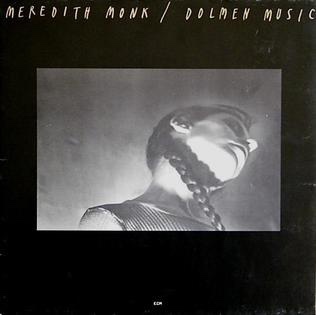
The release of her first ECM disc, “Dolmen Music” (1981) can now be seen as a sort of watershed event. It was followed by “Turtle Dreams” (1983) a work which was prominently featured at New Music America 1982 in Chicago along with Robert Ashley’s “Perfect Lives”. Monk’s appearance on ECM occurred at about the same time as Steve Reich’s masterful “Music for 18 Musicians”. Monk found her mature voice more or less at the same time that Steve Reich and Philip Glass had found theirs. And anyone following new music in those years will recall the flow of new musical ideas that established many now acknowledged masters as legitimate artists.

While the major masterpiece, “Dolmen Music” dominates the album, Monk’s quirky mix of humor and pathos in pieces like “Gotham Lullaby” and “Biography” remain signature pieces in her oeuvre. And Turtle Dreams was made into a performance film for public television by visual artist Ping Chong in 1983, now available on YouTube.

She followed with “Do You Be” (1987) and “Book of Days” (1990) which also exists in at least two film versions and the CD itself which has been described as a “film for the ears”.

Following “Facing North” (1992) Monk released her only opera (though she refers to much of her works as “operas” this is the only one that comes close to the more generic concept of western music operas) to date, “Atlas” (1993) which was commissioned and subsequently performed at the Houston Opera. This represented another phase in her artistic development as she utilized her structured improvisation techniques along with her now familiar extended vocal techniques with an expanded set of performers both vocal and instrumental. Atlas is arguably similarly creative (and transgressive) as Philip Glass’ 1976 “Einstein on the Beach”. Both were developed in an unconventional manner and uses a similar harmonic language with really none of the standard conventions of western music in opera. Would that we can some day see a filming of this work.

I was privileged to see Monk in person for the first time when she performed excerpts from “Volcano Songs” (1997) in Chicago. Those images involving, among other things, light sensitive areas where Monk lay down and left a ghostly shadow upon arising. In addition to her engaging minimalist inflected music, Monk is a master at creating compelling images.

“Mercy” (2002) was followed by “Impermanence” (2008) which I was thrilled to see at Stanford. “Songs of Ascension” (2011) was another landmark in this piece conceived and performed in conjunction with installation artist Ann Hamilton in her tower in Northern California. Attendees to this event were brought in by bus due to the lack of actual parking facilities in that tower. I wish I could have experienced this but hopefully a cohesive video release will be forthcoming. Excerpts are available for viewing on YouTube and on Monk’s website.

“Piano Songs” (2014) by the wonderful new music championing pianists Bruce Brubaker and Ursula Oppens filled an inexcusable gap in the documentation of Monk’s piano music. And following her receiving the National Medal for the Arts in 2015 she released “On Behalf of Nature”(2016).

Monk is a well documented artist largely due to her productive affiliation with Manfred Eicher and ECM and, while gaps remain these recordings represent a major artistic accomplishment and an enduring legacy for new music, for women composers, for western art music. This lovely box set is truly a joy to behold.

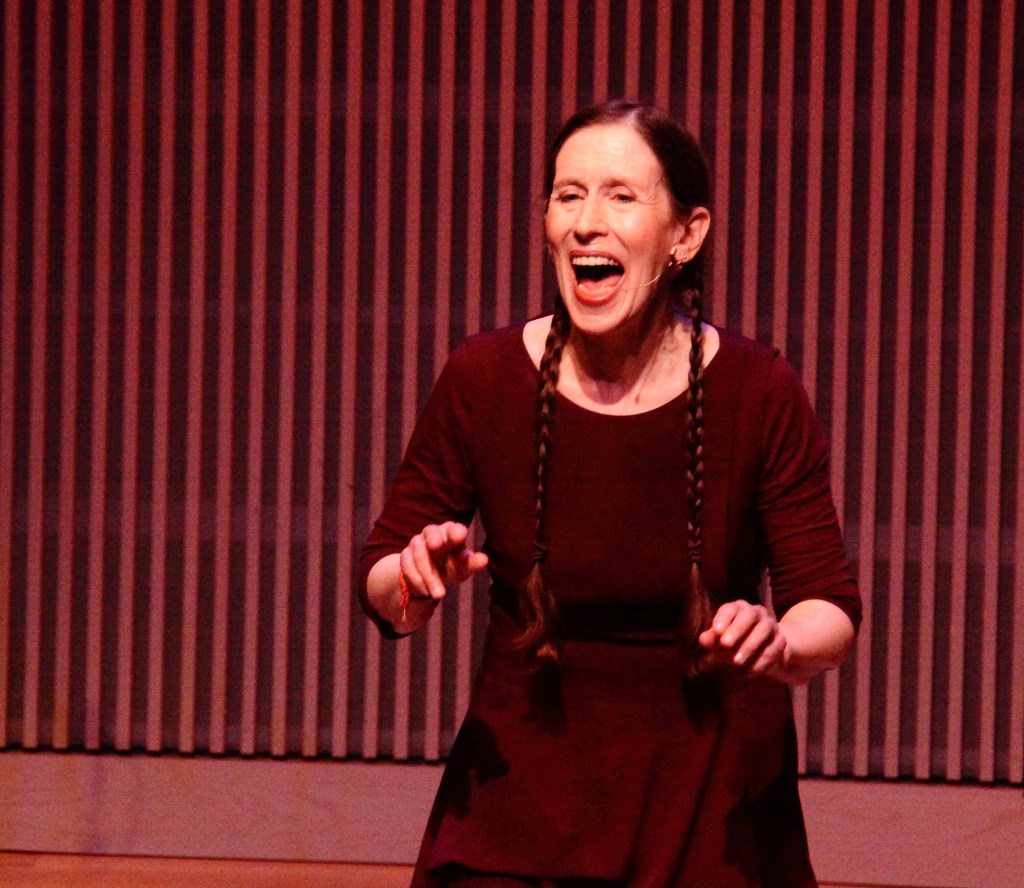
Meredith Monk performing an encore at the final concert of OM 21 (2016) in San Francisco

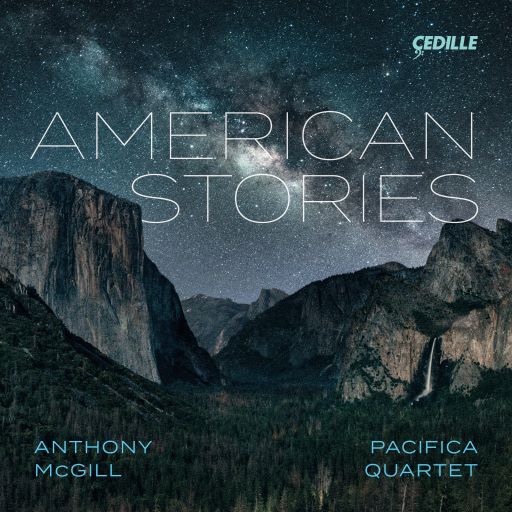
Anthony McGill and the Pacifica Quartet: Telling American Stories with music


Cedille CDR 9000216

Anthony McGill’s star rises rapidly higher with the release of this new album. His previous Cedille release was music for woodwind soloists and orchestra and featured Anthony’s brother, flautist Demarre McGill as well. And this one is a real gem that introduces listeners to four composers whose work defines to significant degree the current state of American music. From the very well known work of Richard Danielpour to three less familiar names listeners will want to know better, this is one fine chamber music recording.

I was first introduced to the clarinet and string quartet genre via the 1957 RCA recording of Mozart’s A major Clarinet Quartet played by Benny Goodman with the Boston String Quartet (paired with Mozart’s Clarinet Concerto and this disc was my first hearing of both works). I later heard the Brahms Clarinet Quintet (McGill recorded both of these on a 2014 Cedille release) and other essays in this genre but the Mozart and Brahms are forever my reference point as I imagine they are for most listeners.

Anthony McGill (photo copyright 2014 by Chris Lee)

All of these works are essentially clarinet quintets though only one bears that specific title. All but one work are recorded premieres but all are fulfilling listening experiences beautifully performed by Mr. McGill and the fabulous Pacifica Quartet . This album is almost as much an homage to the clarinet quintet genre as it is to the people and historical events that provided inspiration for the music. This is music with messages for all who want to hear them.

Pacifica Quartet (photo from their website)

All four works here are inspired by “American Stories”, as Maestro McGill says in his introductory notes, “Through music we connect with our stories.” The music here is about pain, struggle, memorial, and hope. It is more elegy than lamentation and, ultimately more music than history. But, as music, it succeeds very well and one hopes that these works will help preserve the histories described. This is beautiful and lyrical music with immediate appeal and substance that demands repeated hearings.

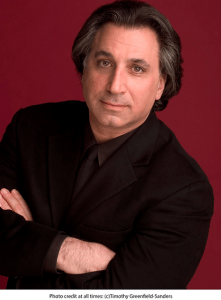
Richard Danielpour

Richard Danielpour’s “Four Angels” (2020) is in one movement divided into four sections, each lamenting the death of four little girls (Addie May Collins, Carol Denise McNair, Cynthia Wesley, Carole Rosamond Robertson) who were killed in the bombing of the 16th Street Baptist Church in 1963 by Ku Klux Klan members. Danielpour says in his notes, “This music also stands as a small testament to the choice for a better path, one consisting of the compassion and understanding that we must have for one another.”, a statement that could be applied to all the works herein.

James Lee III (photo from composer’s website)

James Lee III is represented by his four movement “Clarinet Quintet”(2019) here in its premiere recording. This rising star states in his liner notes that this quintet is inspired by his reading of the experiences of Native Americans. It is also, via quotation in the first movement, homage to Black American composers who preceded him. The scherzo movement is named “Awashoha”, a Choctaw word meaning, “play here”. The metaphors he attaches to his classical forms are gentle impressionistic clues to his compositional processes. It is a deeply felt work and listeners are advised to explore his well organized website.

Ben Shirley (Photo from composer’s website)

Ben Shirley’s “High Sierra Sonata” (2019) is in three movements and, according to the composer, is somewhat autobiographical, inspired by his fall into addiction and subsequent recovery. He specifically references his experience as a volunteer for an athletic event in the Eastern Sierra Mountains in eastern California where the unpredictable changes in weather provided him with a metaphor for life’s unpredictable nature, both in his life and others.

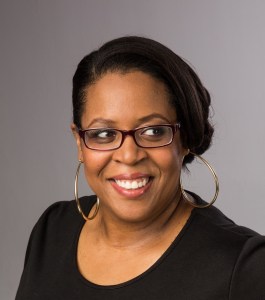
Valerie Coleman (Photo by Matthew Murphy from the composer’s website)

The recording concludes with “Shotgun Houses” (2000) by Valerie Coleman. This work, the only one on this release that is not a premiere recording, is an homage to fellow Louisville resident Muhammad Ali and references the architectural style known as “shotgun houses” known to both Ali and Coleman when they resided there. She states that the opening movement is a general homage to southern black culture, the second an homage to Ali’s mother, and the third a celebration of Ali’s triumph in the 1960 Olympics which essentially launched his fame.

Marc-Andre Hamelin Plays Charles Ives’ “Concord Sonata” in Honor of Other Minds’ 30th Anniversary


Hamelin begins his focused Ives journey

The late, great British science fiction writer Arthur C. Clarke once asserted that “any sufficiently advanced technology is indistinguishable from magic (to those who don’t know the technology)”. A similar assertion can be said to be true of music. New music is a large and diverse repertoire that is difficult to navigate without some sort of guide to put those new sounds in context. And Charles Amirkhanian has, via his years as music director of KPFA and his stewardship as Executive and Artistic Director of Other Minds (among the many hats he wears) has provided such guidance for interested listeners to new music since at least 1969.

In an unanticipated gesture of magnanimity there was, at the will call table, not the usual “items for sale”, rather there was a lovely free tote bag and a large selection of OM CDs there for the taking. Suffice it to say, I and many others went home heavier than we had arrived.

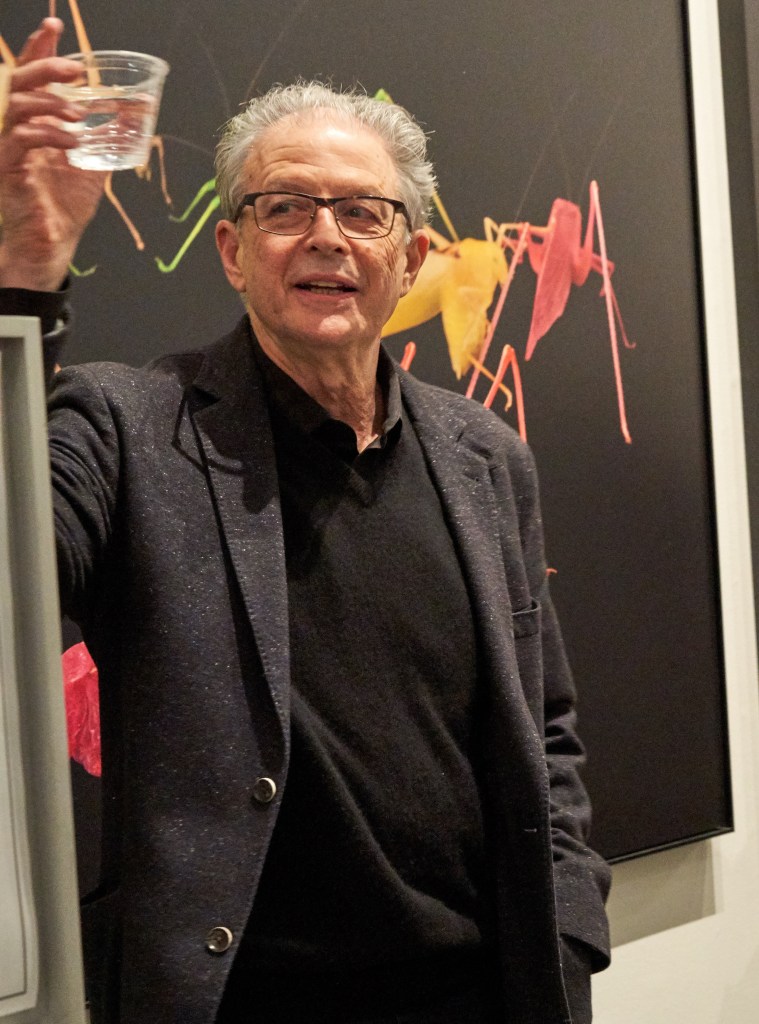
Charles Amirkhanian raising a toast at his 75th birthday celebration ( in which Kyle Gann was host and discussant)

He and his hard working team (Blaine Todd, Associate Director; Mark Abramson, Creative Director; Liam Herb, Production Director; Adrienne Cardwell, Archivist; Andrew Weathers, Recordings Director; Jenny Maxwell, Business Manager; and Joseph Bohigian, Program Associate) have provided guides for adventurous listeners that have included interviews with musicians and composers, a record label dedicated to new music, and live lectures and performances of creative new music from all over the world. The annual Other Minds Festival (the 26th was presented earlier this year) has brought in a cornucopia of stellar performers with a knack for finding stars at the outset of their careers. Other Minds at 30 is truly one of the great joys of San Francisco and it’s environs.

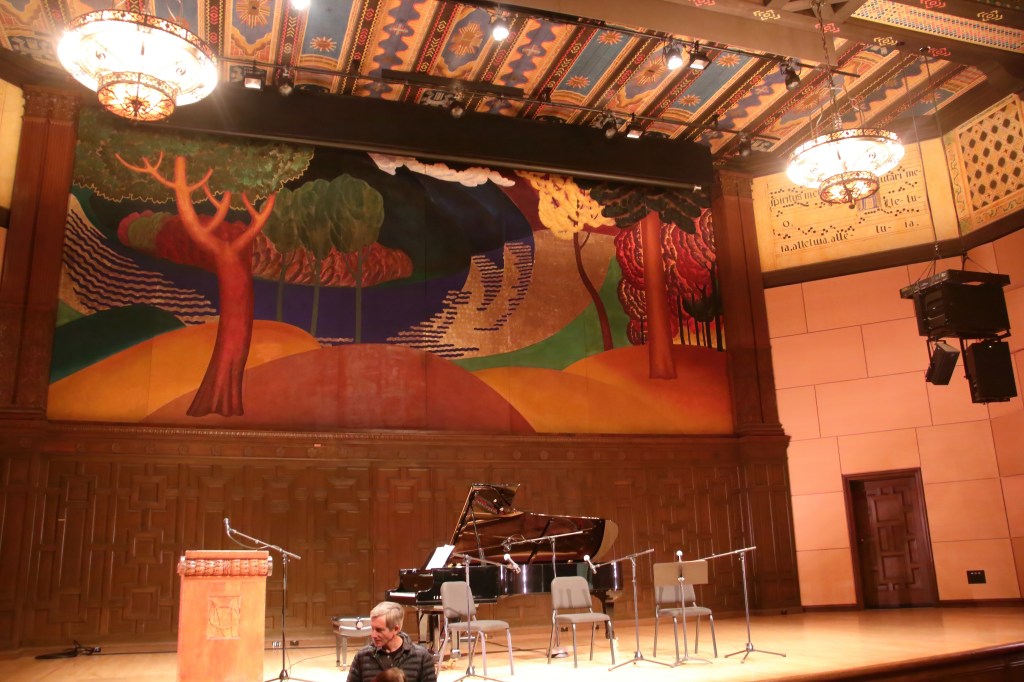
This evening was one of the lecture recital variety. Kyle Gann, composer, writer, critic, musicologist, OM alum, and vice president of the Charles Ives Society was brought in to provide the lecture portion of the evening. In addition, this event was held at a major temple of new music in the Bay Area, Mills College (actually Amirkhanian’s alma mater). The beautiful Littlefield Concert Hall itself displays the striking work of California architect, Julia Morgan. Artistic spirits past and present were undoubtedly here this night in the history of this place as well as those artistic spirits present in the audience.

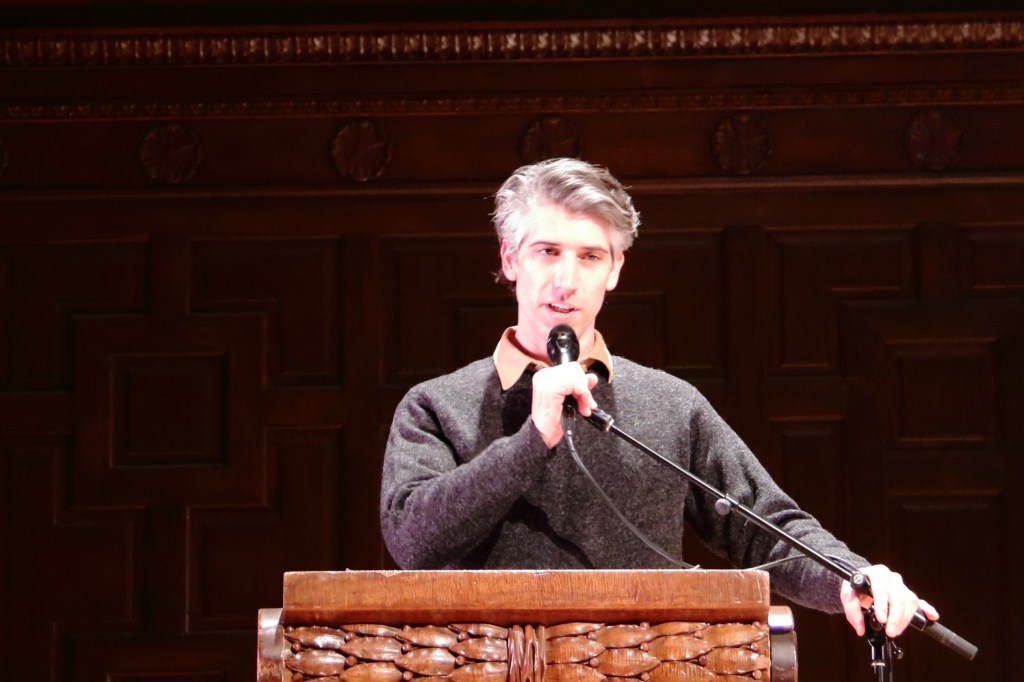
Blaine Todd officiated the preliminaries by introducing tonight’s stars.

The program began with a brief discussion among Mr. Amirkhanian, Professor Gann, and maestro Hamelin. Then Gann took his place at the lectern and Hamelin took a seat at the piano where he had graciously agreed to perform musical excerpts to illustrate Gann’s lecture. Actually Gann has written a definitive and very readable book on the work destined for performance on this night. “Essays After a Sonata” (2017), the title a gentle pun in homage to composer Charles Ives who (in an unprecedented move) wrote a little book titled “Essays Before a Sonata” as a means of introducing his landmark Second Piano Sonata.

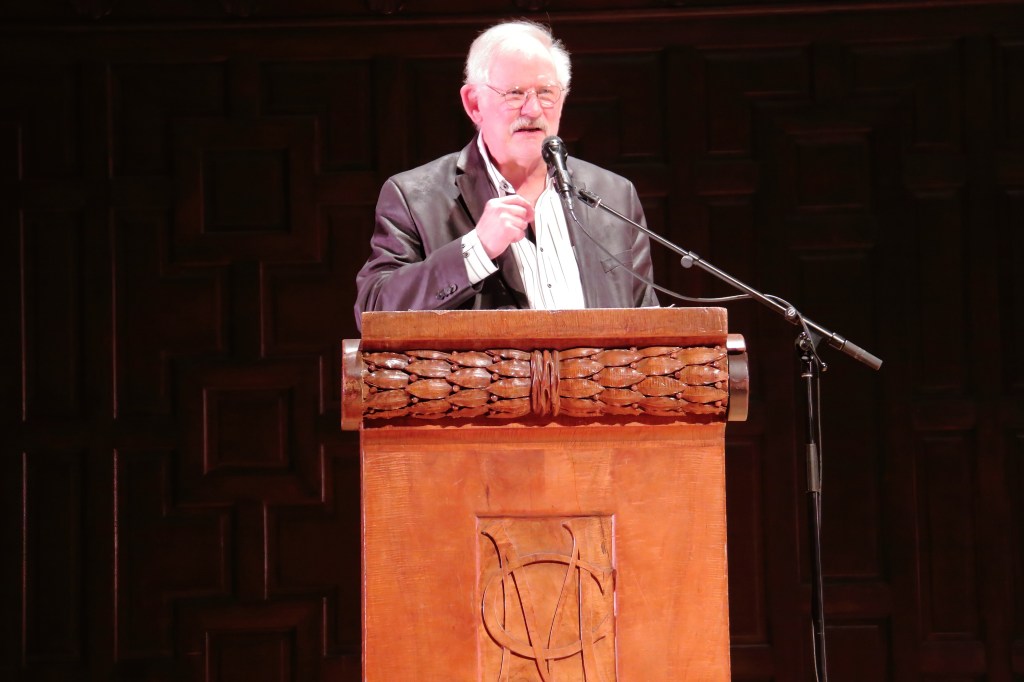
Professor Gann providing a context.

In addition to his wonderful book, Gann has had a long interest in the literature of the so called “Transcendentalists” who are the subject (or at least subtext) of this music. He even went as far as to suggest specific literary references implied in the music. The Second Sonata “Concord, Mass., 1840-60, (written 1904 to 1915 with several subsequent revisions) is in four movements titled, “Emerson”, “Hawthorne”, “The Alcotts”, and “Thoreau”. Gann provided a few concise illustrations in a rather brief talk that provided just enough context to assuage the uninitiated (if there were any in the audience, lol). Hamelin coordinated most amicably and then there was a short intermission.

Marc-Andre Hamelin (http://www.marcandrehamelin.com) was born in Montreal and is now based in Boston. His discography consists of over 80 albums. My own introduction to his artistry was his first release in 1988 of William Bolcom’s Pulitzer Prize winning, Twelve New Etudes (1977-1986) and Stefan Wolpe’s “Battle Piece” (1943-47). His web site is worth your time and gives an idea of the sheer scope and acumen of his repertory choices. In fact his most recent releases include more from William Bolcom and a disc of his own compositions. In fact he gives fine performances of music from Mozart and Haydn to the present. Hamelin has performed the Concord Sonata numerous times and has recorded it twice. He performed this gargantuan work entirely from memory.

Maestro Hamelin taking a moment to savor his fine performance and return his focus to the standing ovation that greeted him.

Hamelin gave an extremely focused and convincing performance, an exercise of both intellectual and physical stamina. The audience, due to their reverence for Ives, Hamelin, and the spirits present in the hall, sat in rapt attention with nary a squirm nor a cough (well, maybe one cough) to interrupt the flow of this landmark work of American modernism. Such was Hamelin’s thrall. The piece goes through a wide dynamic range and the soft pianissimo resonances could be heard as clearly as the Beethoven-esque heroic fortes. Hamelin took two curtain calls to a standing ovation of a very appreciative audience. Gann quipped at one point that he uses Hamelin’s Hyperion recording of the Sonata in his classes. It was easy to see why.

The Lincoln Trio Plays Contemporary Piano Trios from Chicago


Cedille CDR 90000 211

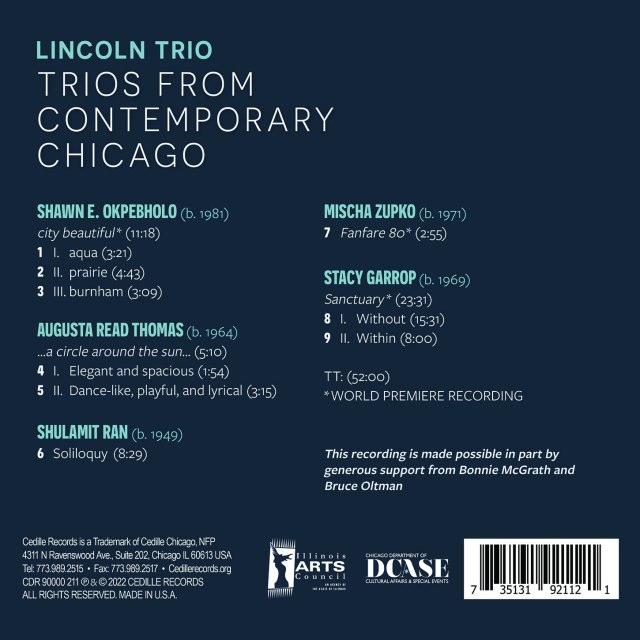
This is another entry in an ongoing series of music for piano trio by the tried and true Lincoln Trio. In this fine release they play a delightful collection of five works (three are world premiere recordings) by living composers. This is their eighth Cedille release by my count. It is the second recording of piano trios from Chicago based composers, a follow up to their previous survey of early to mid-twentieth century piano trios, Trios from the City of Big Shoulders.

back cover

The five works presented here are but a sampling of the available repertoire from Chicago based composers. That said it is a fine sampling of the current state of the art and one would do well to explore more of the music of all these composers.

The first selection is the three movement, “city beautiful” (2021) by the American composer of Nigerian/American Heritage, Shawn E. Okpebholo (1981- ), a world premiere recording. The title is taken from that of the 19th century initiative that helped build the now familiar skyline which had been ravaged by the 1871 Chicago Fire.

Okpebholo is no stranger to this blog. His fine album of spiritual arrangements Steal Away (2016), and his contributions to Will Liverman’s album, “Dreams of a New Day” (2021) revealed his interest in and expertise with spirituals and art song. “city beautiful” by contrast is essentially three tone poems inspired by Chicago architecture, perhaps one of the city’s finest distinctions. The three movements, aqua, prairie, and burnham are effectively homages to architects Jeanne Gang (whose Aqua Tower is a most recent major addition to the famous skyline), Frank Lloyd Wright (whose Robie House is a classic example of the “prairie school” design), and Daniel Burnham (whose 19th century designs define the famously beautiful lakefront and the iconic Union Station).

Opkebholo’s idiom is basically tonal and could be characterized as post romantic. But regardless of how you categorize it the music is eminently listener friendly and a fine vehicle for the estimable Lincoln Trio. This is the work of a rapidly emerging composer with both substance and style. Keep his name on your radar. I expect to hear much more from this talented and prolific composer who currently holds a professorship at Wheaton College in that western suburb of Chicago.

Next is a two movement work by Augusta Read Thomas (1964- ) entitled, “…a circle around the sun” (2021). This work was a commission by the Children’s Memorial Foundation for the Amelia Piano Trio in honor of George D. Kennedy. Thomas has long been a fixture in Chicago’s music life where she was a composer in residence with the Chicago Symphony from 1997-2006. She is currently professor of music at the University of Chicago and a former professor at Northwestern University. Her work also tends toward the tonal idiom and this rather brief two movement work is a fine example of her writing for chamber ensemble.

“Soliloquy” (2003) by the truly fine, if still too little known, Shulamit Ran (1949- ), an Israeli born American composer. She was a student of the esteemed Ralph Shapey (1921-2002) to whom she dedicated her Pulitzer Prize winning Symphony (1990). The composer states in her liner notes that the origins of this work come from her opera “Dybbuk”. It is a pleasant piece perhaps less complex and more lyrical in sound than some of her larger works. Ran was professor of music at the University of Chicago from 1973 to her retirement in 2015.

Mischa Zupko (1971- ) contributes the briefest work to this collection. Clocking in at just under three minutes, “Fanfare 80” (2010) was written in celebration of the 80th anniversary of the Music Institute of Chicago. The brevity here belies the complexities within this ear catching piece.

The album concludes with a substantial two movement work (just over 23 minutes), “Sanctuary” by Stacy Garrop (1969- ) is the work of another prolific composer whose work is, happily, getting much deserved recognition. The 2016 recording of her wonderful orchestral work was reviewed in these pages. Garrop’s work is invariably kinetic and deeply felt with a dramatic flair. Garrop was on the composition faculty of Roosevelt University in Chicago from 2000 to 2016 and is now a freelance composer.

The usual audiophile production (Bill Maylone, engineer) which characterizes Cedille releases is evident here. This is a fine sampling of music which is roughly representative of the musical riches producer James Ginsburg has mined from the “city beautiful”.

David Schrader Plays Sowerby and Ferko


Cedille

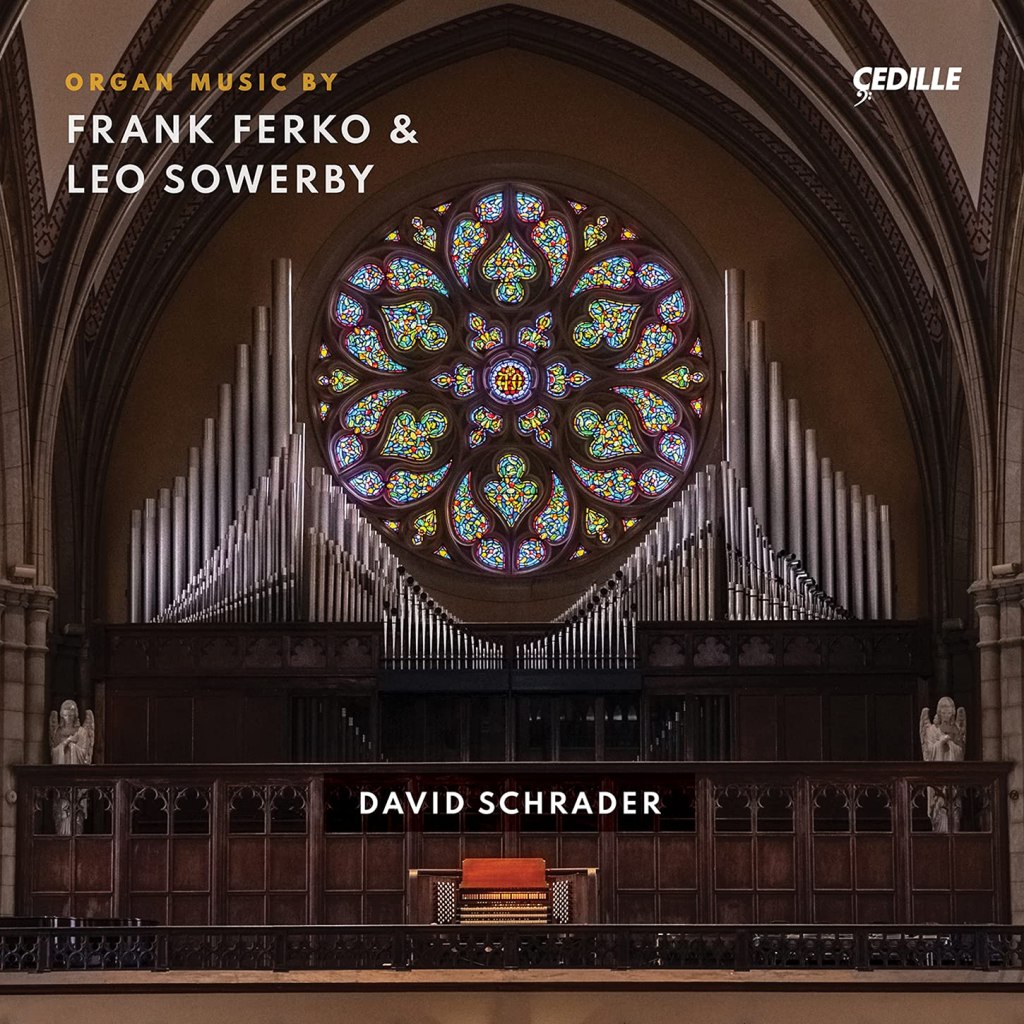
From the gorgeous photography of the cover, to the choices of the musical selections, their interpretation, and recording this is a love song to two fine Chicago composers, Frank Ferko and the late great Leo Sowerby. Here are two full discs of eminently listenable and fulfilling organ music by two of the best composers to write for that instrument in the 20th and 21st centuries.

Organs, at least the types of organs you’ll hear in this recording, are unique instruments built specifically for the site (usually a church) in which they will be used. As such they are a part of the architecture and are themselves works of art. If you’re a fan of organ music you have to have this disc. It is sonically beautiful and full details and specifications of each of the instruments recorded here are provided in the excellent liner notes and the Chicago born David Schrader is a truly fine organist (as well as harpsichord and fortepiano player). He has no less than 26 releases on this label alone, all worthy of a place in any serious collector’s library. One of the great added values of this release is its attention to providing the technical specs of the instruments involved (every one of these instruments is a unique construction) and those with an interest in such details will be thrilled with the liner notes which do justice to listeners who crave such details (this listener included of course).

Cedille Records has already done much to bring Sowerby’s music to listeners in several previous releases but this is the first recording they’ve released of his organ music. Frank Ferko, a well known working composer in Chicago (and points beyond), was also previously represented on this label by the release in 2000 of his fine Stabat Mater.

The first disc (of two) is dedicated to the music of Frank Ferko (1950- ) and all of these are world premiere recordings. While Ferko is a church musician this music is not typical liturgical fare. His work echoes the traditions of the great romantic church organist/composers like Marcel Dupre, Olivier Messiaen, Cesar Franck, Charles Marie Widor, Louis Vierne, etc.

All of the music on these discs is for organ alone and titles like “Mass for Dedication” fall into the category of “organ masses” (generally a French tradition) in which music is used liturgically but does not accompany choral settings of the texts generally associated with the sections of the mass in what is known as “alternatim practice” where the organ plays during moments that would normally contain sung texts. It is almost like incidental or film score music which is intended to create a mood for the ritual on stage or on screen.

Ferko, trained as an organist and studied composition and music history. He has worked as a church musician in various Chicago area churches and his compositions have gotten worldwide acclaim and performances. His Stabat Mater (1999) was released on CD by Cedille and his “Hildegard Organ Cycle” (1995) based on the music of Hildegard von Bingen (ca. 1098-1107) are major works worth your time.

The works on this recording are a wonderfully representative selection of Ferko’s compositional achievements and will doubtless want the appreciative listener wanting more. He clearly understands how to write for the organ. His basically tonal style is very listener friendly but clearly a style that represents the composer’s vision.

Leo Sowerby (1895-1968) was a Chicago composer, church musician and teacher. This disc presents a nicely chosen selection of Sowerby’s solo organ compositions. This is another in a series of releases presenting the too little known compositions of a man who was pretty well known during his lifetime, especially in Chicago where he taught for years at the American Conservatory of Music and served as organist at St. James Episcopal Church. Cedille has presented the world premiere recording of Sowerby’s Pulitzer Prize winning cantata, “The Canticle of the Sun” (1944), the composer’s second (of five) symphonies, and some of his orchestral tone poems. Cedille takes its mission seriously as it methodically documents the work of Chicago composers and musicians.

Unlike the Ferko disc, the selection of Sowerby’s compositions is decidedly non-liturgical and reflects his skills as a composer for the concert hall (of course the church becomes the concert hall here). In fact it was Sowerby’s Violin Concerto of 1913, premiered by the Chicago Symphony that brought the composer early recognition in his career.

The selection of Sowerby pieces, with the exception of a couple of tracks only available in online versions of this album, are a fair assessment of his organ works and a very good introduction to the composer’s style and compositional skills. The Organ Symphony in G Major from 1930, which occupies the last three tracks on the disc, is without doubt one of Sowerby’s most enduring masterworks. It has received numerous recordings of which this is the finest this reviewer has heard. The first four tracks are shorter but no less substantial works showing Sowerby’s mastery of this medium and his ability to engage his listeners in convincing and compelling essays which will have the listener returning again and again.

This double disc set has the feel of a landmark recording and, though many of Sowerby’s organ compositions have been recorded, many are out of print and/or difficult to find and this is one very satisfying collection. It is definitively performed, beautifully recorded, and satisfyingly documented. This one is a classic release!

Nadia Shpachenko’s Poetry of Places


shpachenko

This is another in an ongoing series from various labels which are publishing a selection of repertoire chosen by artists who define themselves by their individual approaches to new and recent music.  Kathleen Supove, Sarah Cahill, R. Andrew Lee, Lisa Moore, Liza Stepanova, and Lara Downes come to mind as recent entries into this field.  In the past similar such focused collections has opened many listeners minds to hitherto unknown repertoire.  One would have to include names like Robert Helps, Natalie Hinderas, and Ursula Oppens, all of whom produced revelatory adventures into the world of new and recent piano music in historical landmark recordings. (A recent such collection by Emanuele Arciuli was reviewed here).

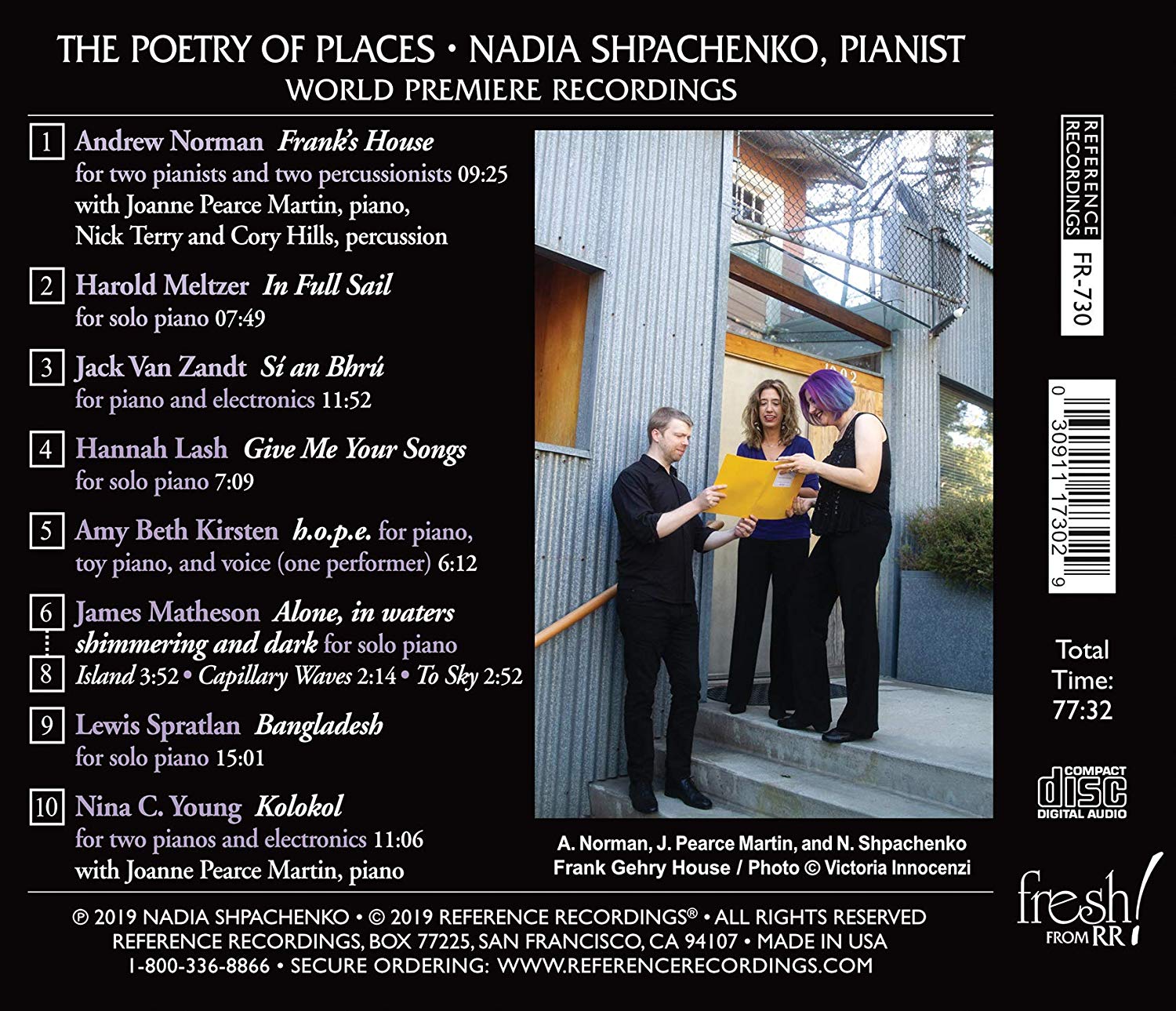
On this Reference Recordings disc Nadia Shpachenko presents a series of works, many commissioned for her, of piano music whose focus is architecture, buildings, facades, etc.  It is a curious and unique angle on choosing new music.  There are 11 pieces here all involving Shpachenko at the piano but sometimes with various combinations of electronics, another piano, and a couple of percussionists.

Strictly speaking this is the third disc by Shpachenko featuring new music.  Last year’s “Quotations and Homages” and 2013’s “Woman at the Piano” are doubtlessly worthy precursors to the present disc.

poetryofplacestracks

These works are neither trite nor easy listening.  They are new works and one can get lost in their complexity worrying about the way in which architecture is incorporated.  Or one can listen simply to hear the gorgeous sounds (this is a Reference Recording) of the introductory interpretations by a master musician of works which may or may not become repertory staples but whose substance deserves more than a passing listen.

I won’t go into any detail about these works except to say that the disc seems to have been well received by virtue of the amount of reviews it received on Amazon (I am frequently the first and only reviewer on Amazon when it comes to new music such as this) and those reviewers seem to have heard this release in a way similar to what this reviewer has experienced.

Shpachenko is an important artist who, along many of the artists mentioned at the beginning of this review, is pointing the way to some of the best music currently being written.

Post Holy Minimalism? New Music from Lithuania


Starkland ST-231

All ready for Women’s History Month is this fine offering which features a fine young woman composer from Lithuania. It comes on the radar of Starkland Records and, happily now, to a new listening audience.

I sincerely hope that no one takes umbrage at my off handed categorization of this music as related to minimalism but I’m not sure what else to call it. This 70 minute work is divided into 10 sections which have poetic titles. It is scored for piano, violin, cello, and electronic sound. It comes from an area of the world (Lithuania, Latvia, Estonia) where individual national identities have long been overshadowed by the annexation of the former USSR. In the last 20 years a style related to minimalism has emerged as a characteristic style from this region (primarily in the work of Arvo Part). Some of that is here but this music is at least a generation removed and has evolved its own identity at the hands of this new composer.

In an unusual (though not unprecedented) move this album was recorded and produced entirely by the composer in Lithuania. In addition some of her fine color photography is featured in the liner notes (which are mostly by the composer). The production values are very much consistent with the high quality one expects from the Starkland label. In addition it must be noted that this is the simplest and sanest packaging now being used for CDs. None of that fragile plastic and still a functional storage sleeve.

So the next question (also common with Starkland releases) is: Who is
Žibuoklė Martinaitytė ? Well she is one of the emerging generation of composers from Lithuania. That, along with her having studied with Bronius Kutavičius (I actually started his Wikipedia article many years ago but his and other articles on new Lithuanian composers is limited still) suggested to me that she may be of the branch of minimalism which hails from this part of the world (i.e. Estonia, Latvia, Lithuania). Wrong, but not entirely.

Like a lot of emerging composers we have here an artist fully schooled in a very wide range of musical techniques and possibilities. On first listen one hears elements of drone, ambient, minimalism, extended instrumental techniques, and mysterious but effective use of electronics with this small chamber ensemble. The effect is frequently almost orchestral but also capable of great stillness and silence.

In the liner notes by the composer she speaks of being inspired by her observations whilst visiting Notre Dame in Paris. She speaks of a rather impressionistic notion of hidden or lost beauty. So I guess that throws impressionism into the mix. The composition does have metaphorical devices which do suggest the emerging of ideas and themes from an initial chaos or, to use Ives term, a “silence of the druids”. One must get to the 4th track to really get a sense that there is actually a piano trio on this recording. Very effective actually and then it fades back into the chaos and then the silence.

The album opens with silence into which a drone gradually makes itself known. These meanderings take the listener on a journey which is essentially the artists sonic vision as she walked through and around the iconic cathedral. The listener doesn’t even hear really more conventional musical sounds until about track 4 and concepts like melody and harmony take on a different meaning in this context. It is a large arc of a composition that embraces both chamber and orchestral textures as it tells its sonic tale of the composer’s visions and returns to the chaos of the unfocused mind at the end.

This puts this work in the realm of the earlier release (also on Starkland) of Ingram Marshall’s Alcatraz (1982) and Eberbach (1985). Eberbach was later released with its originally intended photographic component along with Alcatraz on a recent DVD on Starkland. And Mr Marshall provides some insight and reassurance in his liner notes for In Search of Lost Beauty. He affirmed for this listener that one needs to listen more than once to perceive the beauty found herein.

Recorded and produced entirely in Lithuania the artists include Indre Baikstyte, piano; Ingrida Rupaite-Petrikiene, violin, and Povilas Jacunskas, cello. The recording, done in Lithuania was mastered by the always reliable Silas Brown back here in the United States assures the quality listeners have come to expect from this fine independent record label.

Harold Meltzer: Wonderful New Chamber Music on Bridge


meltzersongs
Bridge 9513

This is the second Harold Meltzer (1966- ) disc to come across my desk in the last two months or so.  This time he is heard on the venerable Bridge label which produces a great deal of quality recordings of new and recent music.  This one contains four works spread over 15 tracks and, like his previous CD, includes some vocal music alongside two chamber music pieces without voice.

Meltzer seems to be one of a generation of composers who have absorbed many of the vast styles and methods which flowered in the twentieth century.  He is not easy to categorize except as a composer.  There are in his music gestures and ideas that span neo-romanticism, minimalism, etc. but he has a distinctive and very affecting style.

Meltzer’s ability to write for the human voice and these songs put this reviewer in the mind of composers like Ned Rorem.  I’m not saying he exactly sounds like Rorem, just that he is as effective in his writing.  Stylistically there is at times an almost impressionist feel in these songs and, while the piano accompaniment is wonderful, they almost beg to be orchestrated.

There are two song cycles on this disc, the first setting poems of Ted Hughes (Bride of the Island, 2016) and the second setting poems by Ohio poet James Wright (Beautiful Ohio, 2010).  Tenor Paul Appleby had his work cut out for him and he delivers wonderful performances with a voice that is well suited to lieder but clearly with operatic ability as well.  Pianist Natalya Katyukova handles the intricate accompaniments with deceptive ease in these cycles.

There are two chamber works on this disc.  The first is Aqua (2011-12) which is inspired by the architecture of the so-called Aqua building in Chicago by architect Jeanne Gang.  In a city known for its fine architecture this 2007 building manages to stand out in its uniqueness.  Need I say that his piece suggests impressionism.  It’s string writing is complex with a vast mixture of effects that, under the interpretive skill of the Avalon String Quartet, suggest movement in much the way the building itself does.  This is genius, the ability to mix all these string techniques into a coherent whole.  It is a basically tonal work and it is seriously engaging but listener friendly in the end.  

The second chamber work is a piece written for the 50th anniversary of the death of legendary violinist Fritz Kreisler.  As it happens the Library of Congress, who commissioned the piece, owns Kreisler’s Guarneri violin and it is they who commissioned this work.  Miranda Cuckson does the honors on violin ably accompanied by the trustworthy Blair McMillen.  To be sure some of Kreisler’s style is used here but this work, “Kreisleriana” (2012) comes across as more than an homage, more a work informed by Kreisler.  It’s a really entertaining piece too.

Thanks in particular to Bridge Records for releasing this.  Bridge is one of those labels whose every release deserves at least a bit of attention.  This time I think they’ve found a fascinating voice in Meltzer’s works.  Now how about some orchestral work?

Other Minds 23: Whereof One Cannot Speak…


“Fragment #3”
speaking is speakingWe repeat
what we speak
and then we are
speaking again and that
speaking is speaking.

TokyoJune sometime, 1976                                                                         Richard Brautigan (1935-1984)
OM230007

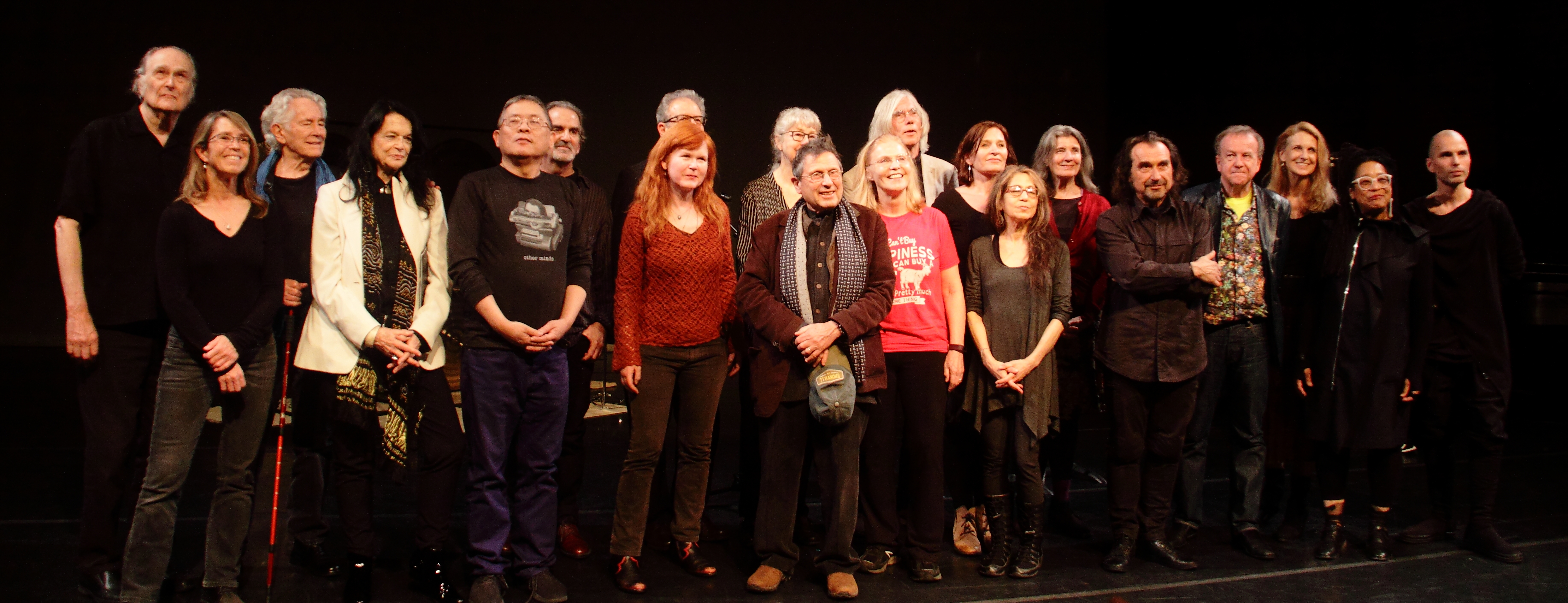
(Left to right: Clark Coolidge, Karen Stackpole, Michael McClure, Anne Waldman, Randall Wong, Aram Saroyan, Sarah Cahill, Charles Amirkhanian, Carol Law, Alvin Curran, Beth Anderson, Jaap Blonk, Tone Åse, Amy X Neuberg, Sheila Davies Sumner, Enzo Minarelli, Ottar Ormstad, Susan Stone, Pamela Z, Taras Mashtalir)

The last statement in Ludwig Wittgenstein’s 1921 Tractatus Logico-Philosophicus (Whereof one cannot speak, thereof one must remain silent) is well known among philosophy students and has taken on the quality of an aphorism or truism.  But the six days of this most recent Other Minds Festival was functionally an effective refutation of this concept.  And the controversy over the awarding of the most recent Pulitzer Prize in music to a rap/hip-hop artist (a species of sound poetry?) which was announced on April 16th, 2 days after the end of this festival of sound poetry seems to reflect the prescience and presence of mind of the Other Minds organization.  Apparently words are “in” even if Wittgenstein and the critics of the Pulitzer Foundation say otherwise.

The Wages of Syntax

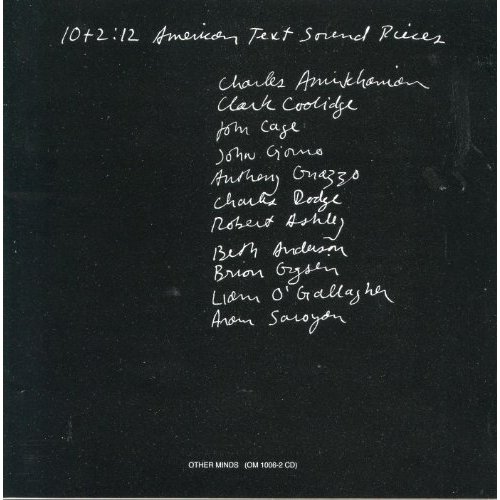
Other Minds 23 (April 9-14, 2018) in many ways began with the release in 1975, of one of the first (and still arguably the finest and still in print) anthologies of a strange, somewhat nebulous species of what can loosely be termed “sound poetry”.  That anthology was called “10+2: 12 American Text Sound Pieces” curated by the man behind this week’s vast expansion on that anthology, Charles Amirkhanian.
american text sound

Amirkhanian and his wife, artist and photographer Carol Law took a long strange trip in the early 1970s.  No, they did not follow the Grateful Dead.  Rather they sought a little known group of artists who walked a line seemingly between poetry and music.  From the Nordic countries to northern Europe, France and Italy they encountered artists who used the voice (though not necessarily language per se) to produce a sonic art form which nearly defies categorization.

1280px-Amirkhanian

Amirkhanian  in his office

Charles Amirkhanian is himself a composer and percussionist in addition to being a producer and promoter of contemporary music.  As a composer, as it was with his long radio career, his voice has been his main instrument.  His resonant, articulate baritone voice has served him well these years and this festival provided a rare opportunity to see/hear Amirkhanian perform his own work live.

This unprecedented 6 day festival marks the longest in the series of the Other Minds annual music festivals.  As relatively obscure as this art form may seem to the casual observer this series managed to provide historical context, current practices, and a tantalizing look/listen at the future of what is in fact a vast body of work.  The ability of Other Minds to find hidden treasures of sonic art continues to amaze.

Day one,subtitled, “The Wages of Syntax”, was the gala opening featuring some of the leading artists in the field.  After the obligatory intros the Italian master Enzo Minarelli presented the world premiere of his tribute to Stephane Mallarmé, “Ptyx”.

OM230013

The piece, comprised of phonemes rather than syntactical sounds, was an apt introduction to the weird and wonderful world of sound poetry.  Minarelli was passionate and expressive, a beautiful performance.  Only later in this series would we come to know the depth of scholarship, preparation, and experience that informed this and all his performances.  More on that a bit later.

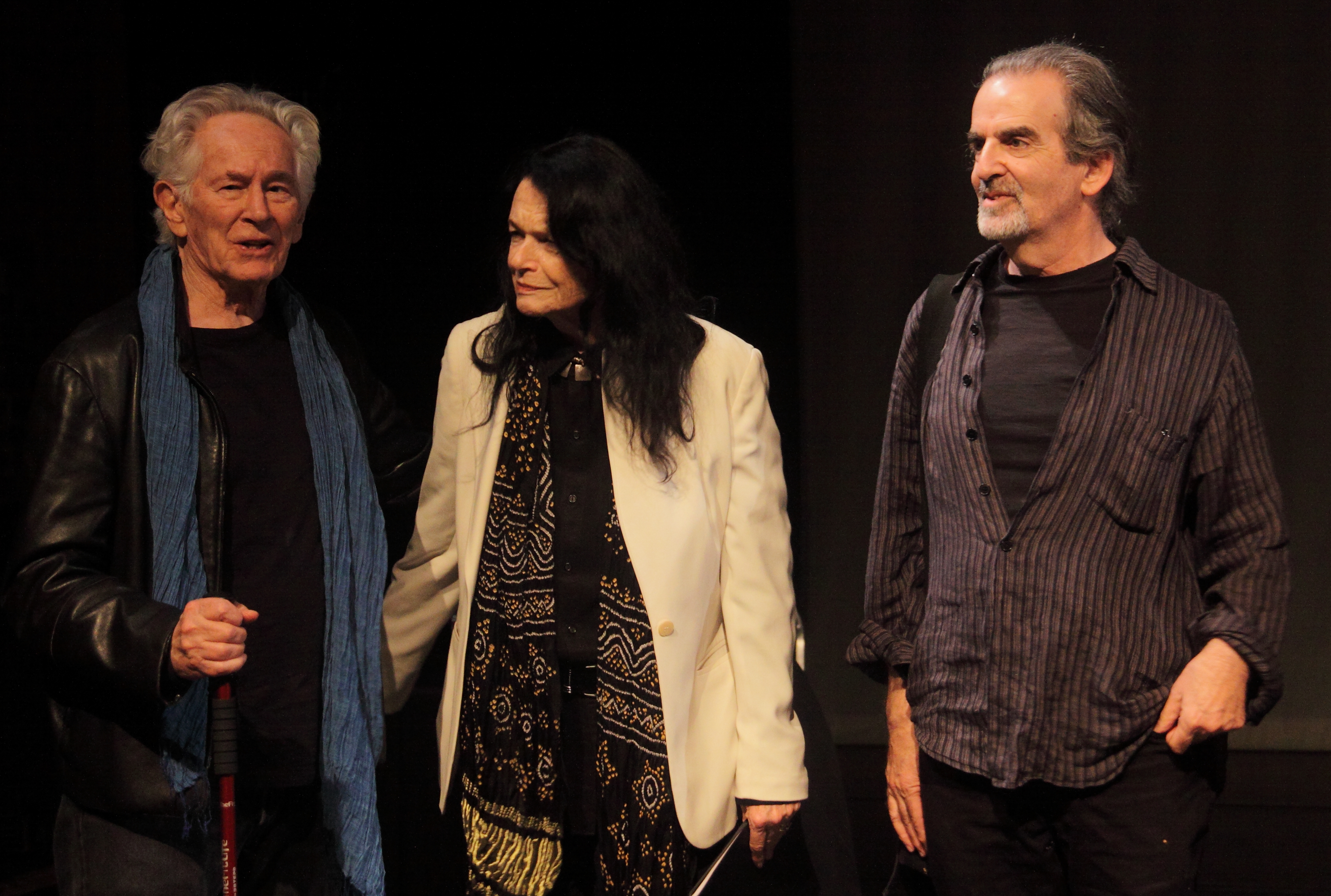
Next up was one of the elder statesmen of San Francisco poets, the wonderful Michael McClure.  At 85 he sported a walking stick (no not really a cane) needed due to a recent fall.  He also required assistance of one of the stage managers to help him to the little chair and desk set up for him.  But none of that mattered once he opened his little bookmarked book of poetry and began to read “Marilyn Monroe Thou Hast Passed the Dark Barrier” and some of his Ghost Tantras from 1962.  His voice was strong, his delivery both certain and witty.  His combinations of words and non-syntactical sounds were delivered with the same joy, humor, and pathos which appears to have inspired them in the first place.  The audience responded very warmly to his ecstatic delivery.

OM230015

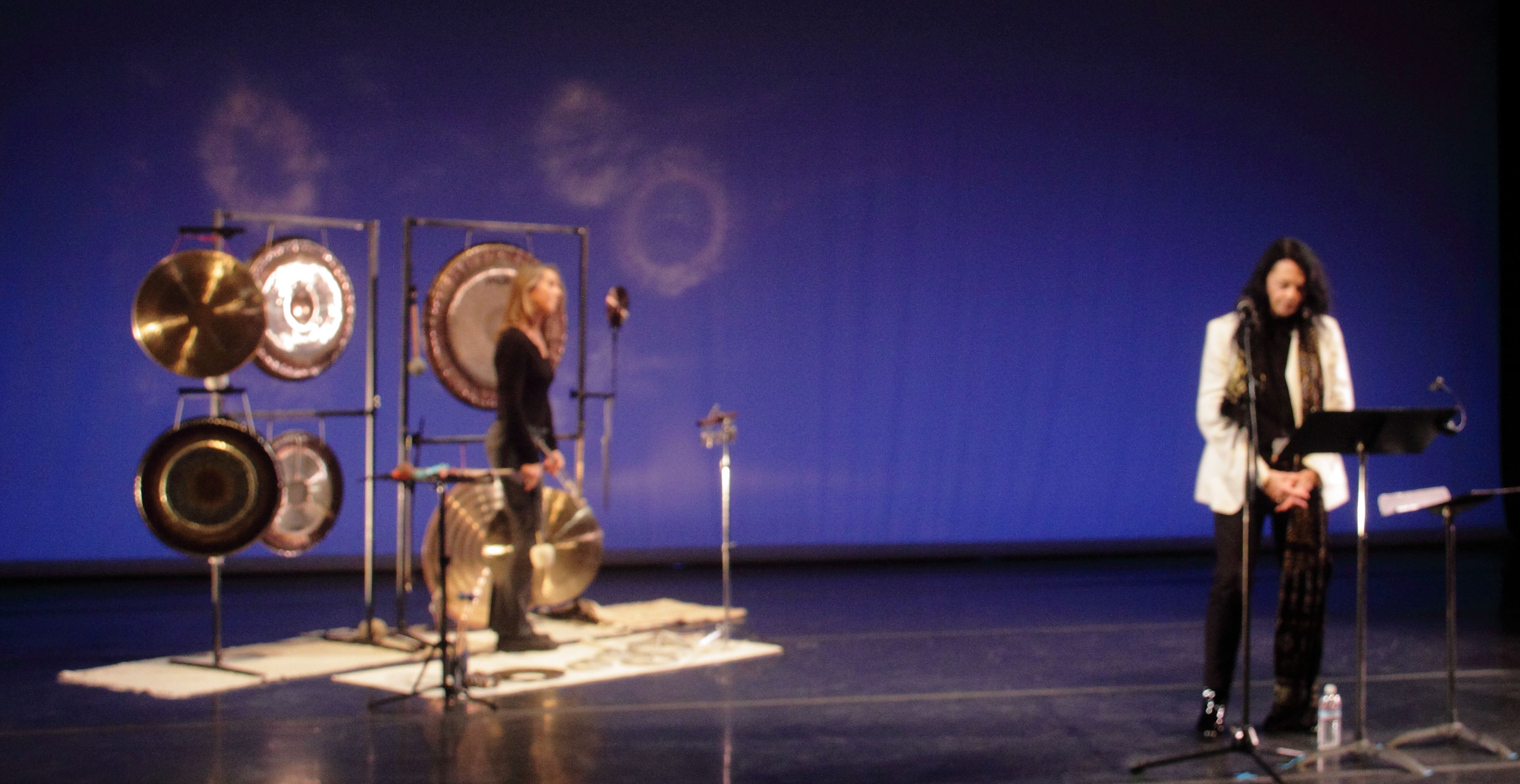
After a bit of stage preparation we were treated to one of the most prominent members of the next generation of American poets that followed Mr. McClure (can I be forgiven for saying beat poets?), Anne Waldman.  She was accompanied (as her texts required) by percussionist Karen Stackpole.  Waldman presented from her “New and Selected Poems”, “Pieces of an Hour (for John Cage)”, excerpts from “Voices Daughter of a Heart Yet to Be Born”, and excerpts from “Trickster Feminism”.  Her characteristically forceful and peripatetic performance carried her between the microphone and Stackpole’s percussion instruments and back again.  It was a charged and sincere performance which clearly charmed (some might say stunned) the audience.

Waldman’s ties to the world of sound poetry go back to her New York roots and her involvement in the St. Mark’s Poetry Project and the Dial-a Poem Poets whose recordings have included her work and that of John Cage, Charles Amirkhanian, Clark Coolidge, and Michael McClure among others.  Small world.
OM230021

Next up was the venerable Aram Saroyan.  I suppose Saroyan (yes, the son of Pulitzer Prize winner William Saroyan) can be said to be part of the same post beat generation artists as Waldman.  Perhaps best known for his “minimalist poetry” he is also an accomplished biographer (Genesis Angels deserves to be better known IMHO) and literary innovator.  It was Saroyan’s poem “Crickets” (1965) which ended the first side of that anthology mentioned at the beginning of this article.  It was in an infinite loop in the end groove of side one of the LP playing the one word which comprises the poem, “crickets”.  And it was this little gem that he performed on this night….with a twist.  After a few repetitions he invited the audience (many apparently still trying to figure out what was going on) to join…which we did…,at first hesitantly, in unison…and then, in a touch of group inspiration, just like real crickets, not all in unison.  It was a strange sort of call and response that charmed the audience and brought a smile to the poet as well.  And that only brought us to intermission.
OM230004

Michael McClure, Anne Waldman, and Aram Saroyan

The second half introduced the first of the international stars, Jaap Blonk, the Dutch sound poet and performance artist.  He began with one of his own works, Obbele Boep ‘m Pam (a bebop sound poem).  It was a sound poetry homage to that 1950s species of jazz which inspired the beats, Bebop.  It was a sequence of sounds and words in a made up (by the performer) language intended to imitate the sound of his native Dutch language.

His second performance was of a sound poem from 1916 by the man who coined the term, “phonetic poem”, Hugo Ball (1886-1927).  This poem, based on phonemes common to the Swiss and German languages, was called, “Seepferdchen und Flugfische” (in English “Seahorses and Flying Fish”).  Blonk’s delivery of this turn of the century classic was the first of what would be several such revivals of revered early material of this nascent artistic genre.

OM230026

Jaap Blonk

Blonk was followed by the grand finale which returned us to the local roots with poet Clark Coolidge and the ever innovative Alvin Curran.  We learned that the two went to high school together and this was a strange and wonderful reunion with Coolidge reading his manic stream of consciousness poetry accompanied (sort of) by Curran’s musical ministering at both a grand piano and a sampling keyboard in a world premiere collaboration.

Though Curran now lives in Rome (and has for many years) he will always be welcome in the Bay Area where he lived, taught, and performed for many years.  Curran is no stranger to Other Minds either having performed at Other Minds 7 in 2001 and, more recently, at the Nature of Music series.  He is a musician, not a poet but his eclecticism has allowed him to collaborate successfully with a wide variety of artists in a long and varied career which continues to command attention.

The nature of the interactions which characterized this world premiere performance of “Just Out of Nowhere” were not obvious though it is a fair assumption that a degree of improvisation was used and, no doubt, some of the successful confluences on this night were first encountered in rehearsals.  Coolidge’s stream of consciousness rhythmic ramblings were ever present but never overwhelming.  In response, Curran moved back and forth between the grand piano and the sampling keyboard working with serious concentration to provide his musical support for the words.

It was an intense performance as inscrutably mind expanding as all that went before.  Curran signaled the end (as has become his performance custom) by blowing the sacred shofar over the undampened piano strings which resonated in kind and faded to silence which, in turn, was held for a moment by the audience as they disengaged from their attention to offer warm and appreciative applause.  It was a striking collaboration and a reunion of two beloved artists.

OM230033

The audience seemed to feel the pure emotion of this performance and the two performers embraced warmly before acknowledging the accolades of the charmed audience.

OM230035

Sadly this writer had to miss the second night of the festival which consisted of a lecture by Enzo Minarelli on the history of sound poetry followed in the evening by a workshop on how to do sound poetry run by Jaap Blonk.  Both were apparently well received and it is my understanding that they will soon be available for streaming on the Other Minds web site.  Definitely gonna check that out.

The second night was given the subtitle, “No Poets Don’t Own Words”.  Even for those who were fortunate enough to have attended this extended Tuesday program it is worth noting that there is a wealth of resources easily available to the interested listener.  The Other Minds website has links to a wealth of archives which include interviews and performances by a variety of artists.  In fact (and this was a creative touch) you get a free CD entitled, “What is sound poetry?”, an archived KPFA radio program when you buy one of the unique t-shirts (designed by none other than Carol Law) from the Other Minds Web Store.  Get this stuff while you can folks.

Also worthy of note (this writer has lost many hours browsing here) is Ubuweb, an online archive of music, texts, films, and sound poetry.  The fact is that these six evenings ultimately could only serve as an introduction to the unusual and entertaining genre.  And those whose appetites have been whetted by this series will want to hear more.

The History Channel
OM230039

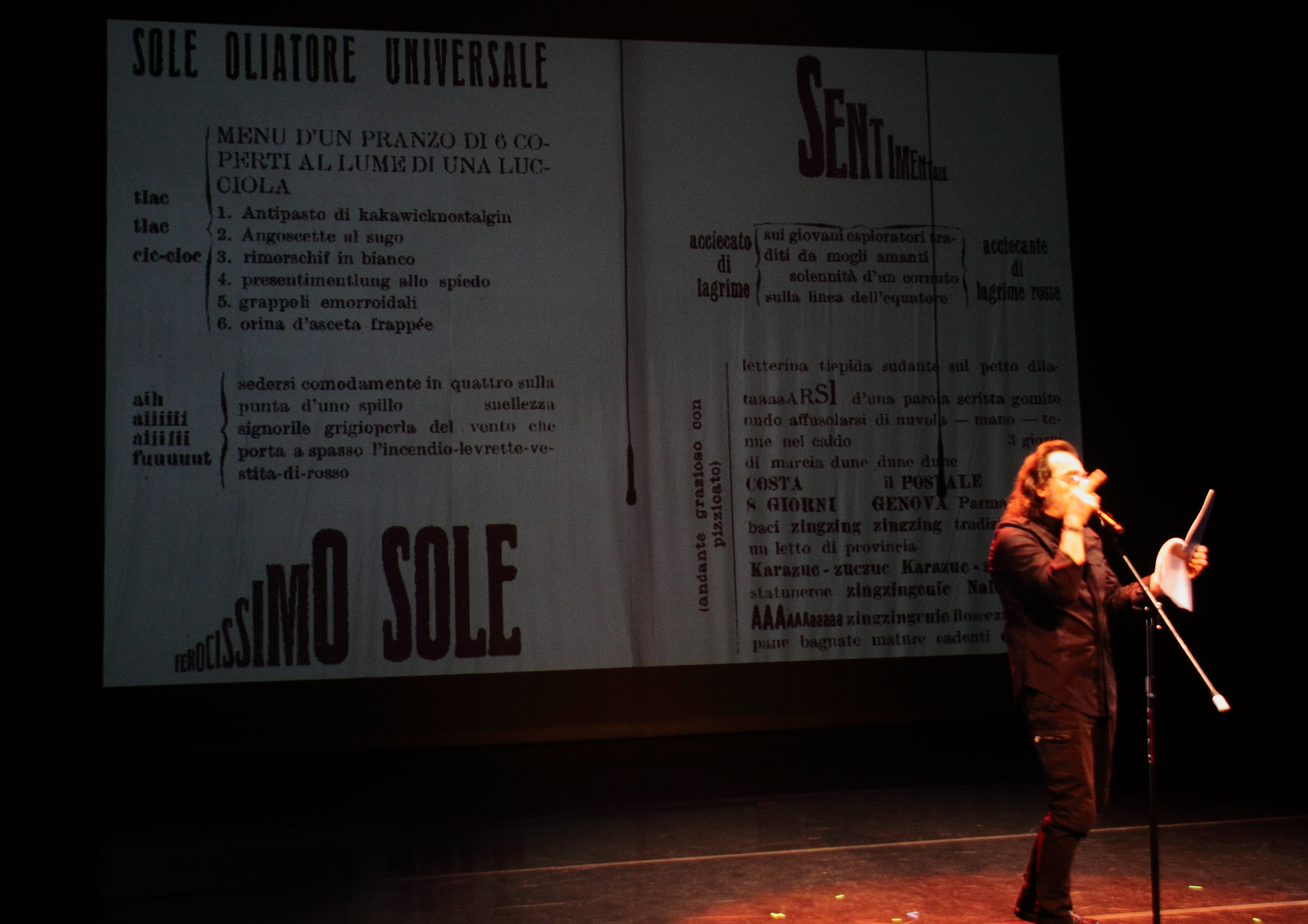
Day 3, April 11th.  The subtitle for this night’s performance was, appropriately, The History Channel.  It was an opportunity to display some of the origins and early foundational masterworks of sound poetry.  Enzo Minarelli displayed his academic skills and interests as he interpreted several classic “scores” (which were projected on the back wall) as the performer brought them to life in what appears to have been as authentic a performance as could be had with this material from the early twentieth century.

Minarelli did readings of: “Dune (parole in libertå)” (1914) and “Zang Tumb Tuuum: Adrianopoli, 1912” (1914) by Filippo Tommaso Marinetti; Fortunato Depero’s “Subway” (1939), “Verbalizzazione astratta di signora” (1927), and “Graticieli” (Skyscrapers, 1929).  He finished with one more by Marinetti, “Savoia” (1917).  In addition to the passion of Minarelli’s performance the look of the score, essentially artistically printed pages of words and phonemes, and the choices made by the performer to interpret those scores itself provided its own sense of drama.  The lighting and projection were simple and effective, supporting the live performance.
OM230042

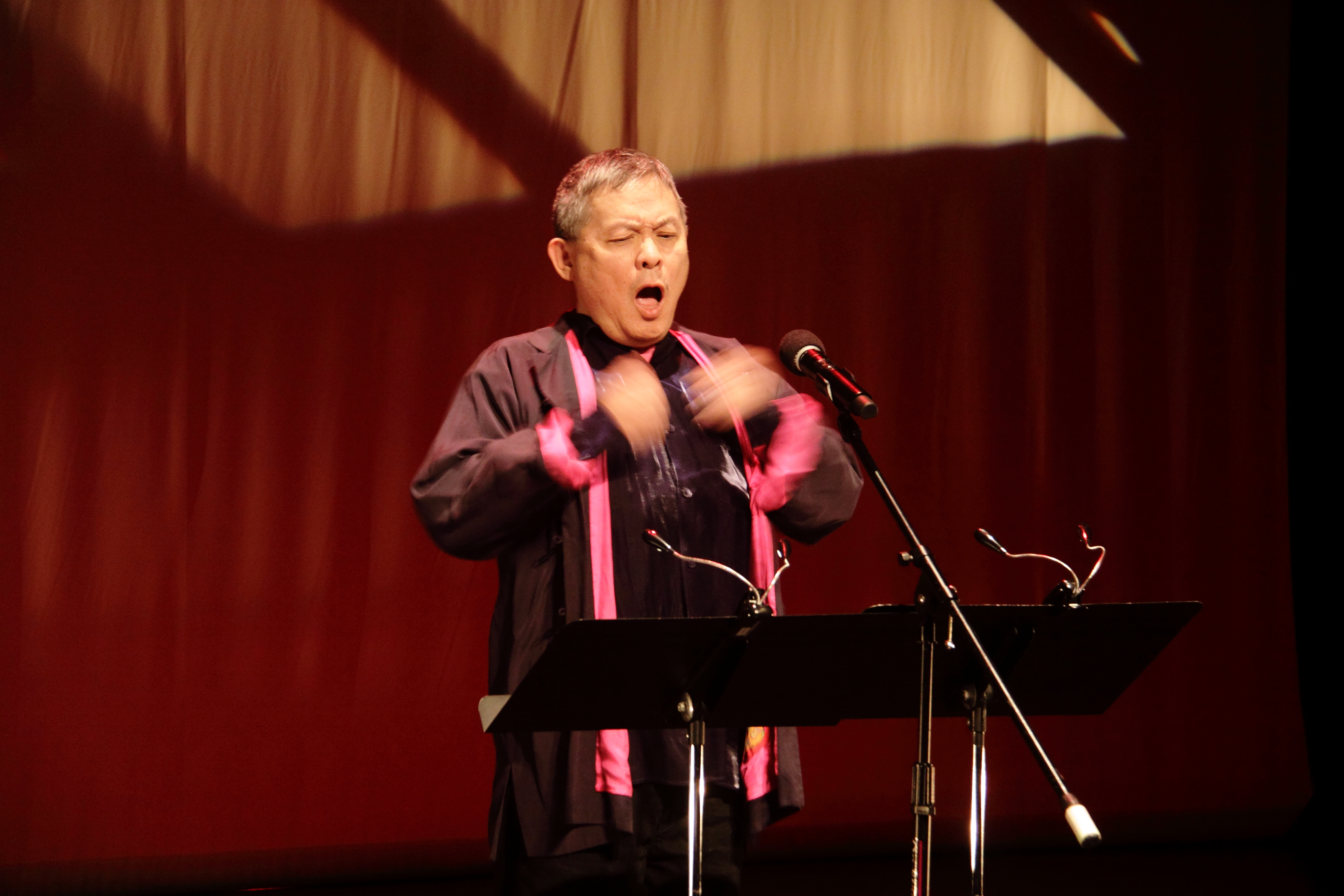
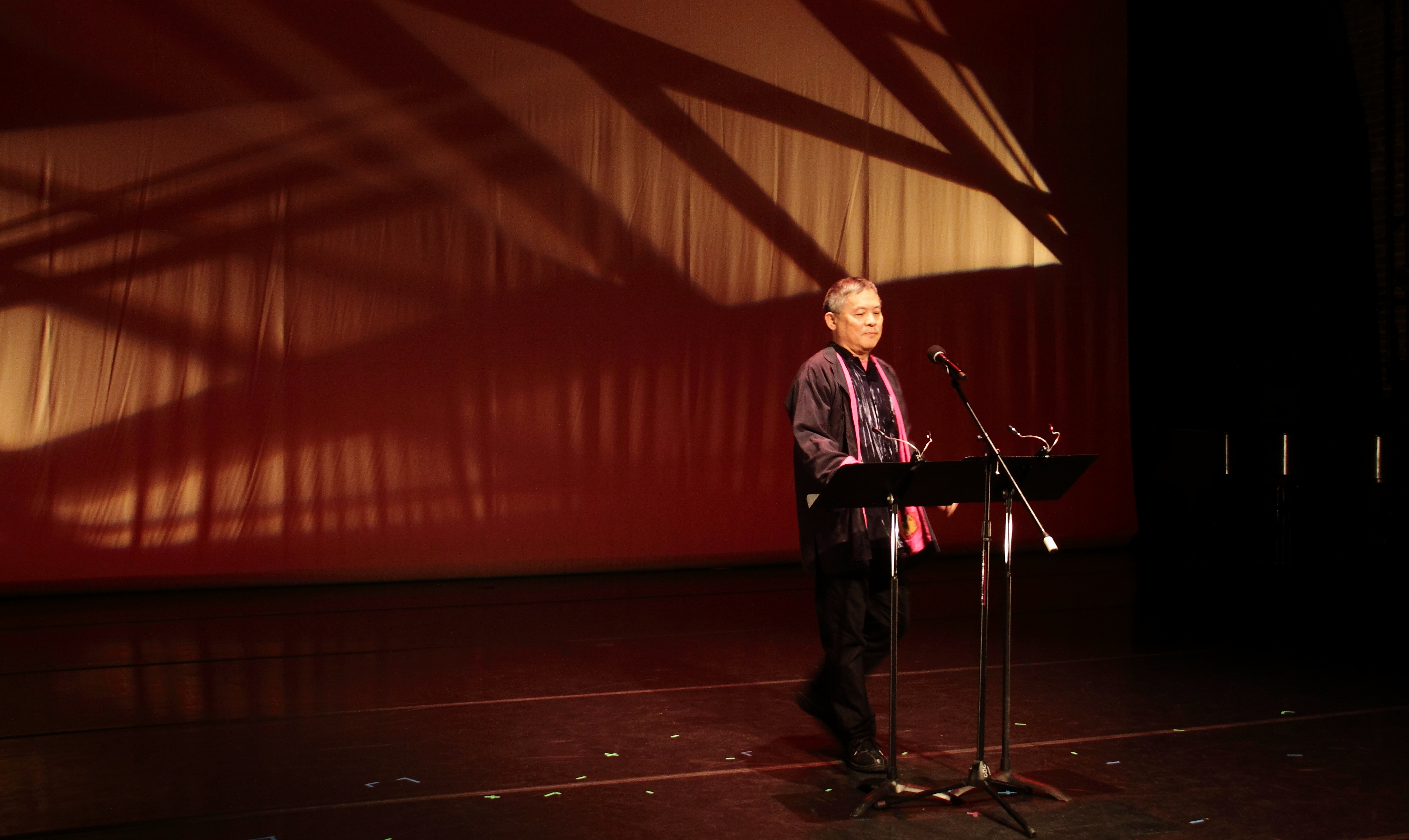
No major stage changes were needed for the next performer, just a little music stand with a microphone and small lights to illuminate the score.  Randall Wong, currently administrative director at Other Minds is an accomplished singer.  He is in fact a male soprano who specializes in baroque vocal scores including opera.  No stranger to new music, Wong has also demonstrated his formidable vocal skills singing with the Meredith Monk Ensemble among others.  It was those extended vocal skills that were called upon this night.

One could hardly have found a more appropriate casting to perform this next item on the program, “Stripsody” (1966) by the deservedly celebrated new music soprano Cathy Berberian.  Similarly to Wong, Berberian’s career took her from baroque opera to a plethora of modern music (Berberian was married for a time to Italian modernist composer Luciano Berio who wrote many a score for her).  What is lesser known is that Berberian wrote some music designed and inspired by her own vocal skills.

OM230045

Stripsody is difficult to describe.

OM230043

It is, in fact, a combination of sounds, specialized vocal utterances, and visual theater and is a sort of homage to comic strips (hence the title).  Utilizing onomatopoetic sounds, imitations of real world sounds and the sheer range of Berberian’s vocal instrument the performer becomes a sort of live comic character.  This piece is demanding but highly entertaining and contains humor and a variety of references.  Never did the audience lose track of the virtuosity involved or the intensity of the performer’s stage presence.  Wong’s performance was at once accurate, virtuosic, and a touching evocation of the memory of Ms. Berberian.

OM230044

It was an immersive experience for both performer and audience witnessing the sounds, the gestures, the facial expressions, the sheer concentration required to convey both the humor and joy of this work.  Wong demonstrated serious stamina and seemed to have enjoyed himself.

OM230047

Now what is history without a bit of archaeology added in?  Charles Amirkhanian introduced writer Lawrence Weschler who is (bear with me now) the grandson of the composer Ernst Toch.  Toch is responsible for writing what is perhaps the best known example of the genre represented by OM 23 this year.

In 1930 he wrote a three part composition entitled, “Gesprochene Musik” (Spoken Music).  Two of the three parts of this composition had long been thought lost.  However choreographer Christopher Caines apparently did a reconstruction for his dance piece, Spoken Music (2006).  Tonight’s performance was the American premiere of substantially what Toch had originally intended way back in 1930.

OM230049

The last of the three pieces, “Geographical Fugue” is by far the best known of Toch’s spoken music (indeed the probably the best known of all his music despite a truly substantial catalog and a Pulitzer Prize, no less).  In addition to the Gesprochene Musik there was a performance of a much later work by Toch which parodies chatter at cocktail parties, “Valse”(1962).

All of these were performed by The Other Minds Ensemble which consists of Kevin Baum, tenor; Randall Wong, tenor (yes, he can handle both soprano and tenor); Joel Chapman, baritone; Sidney Chen, bass, Amy X Neuberg, and Pamela Z.

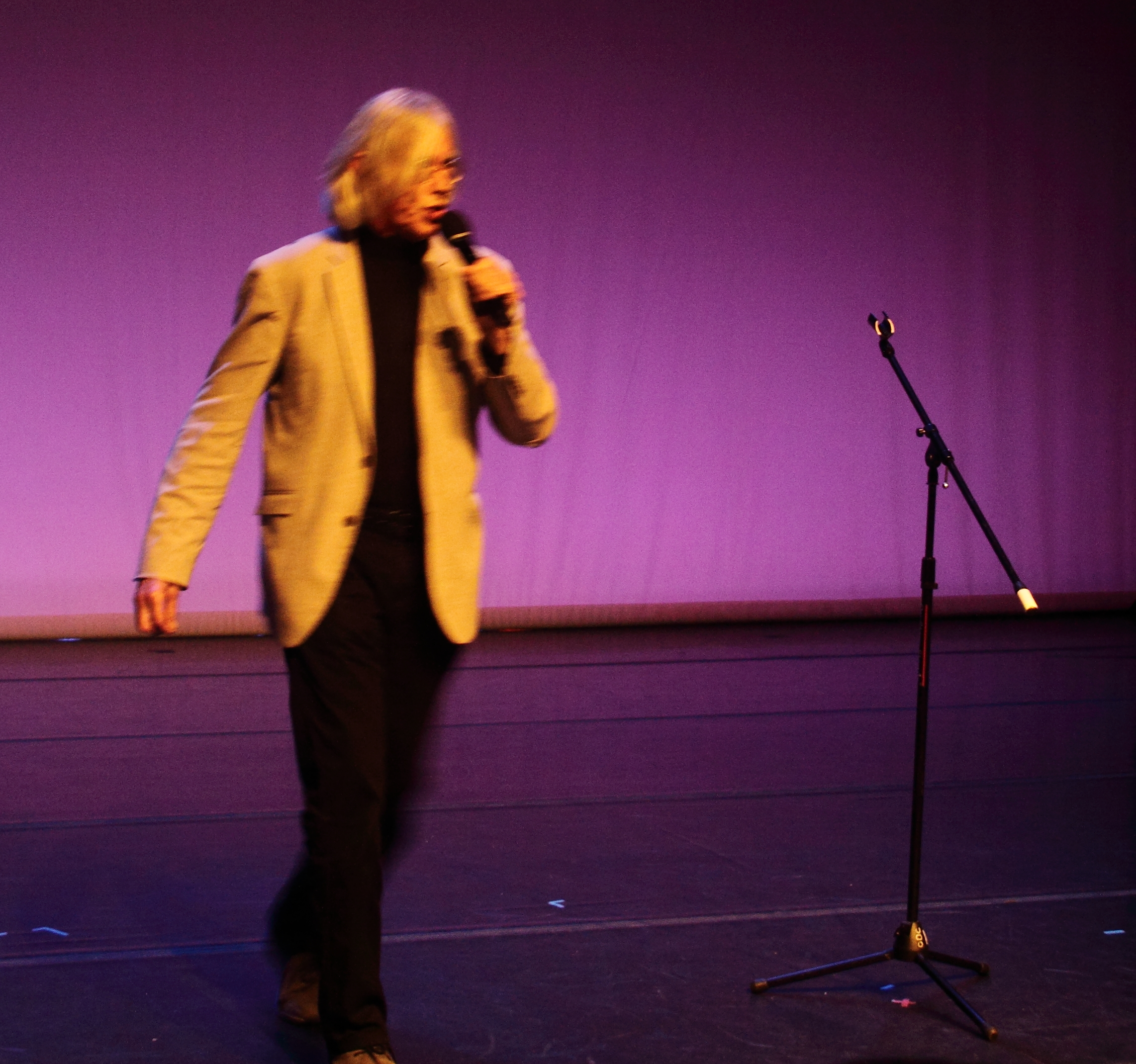
Fast forward now to 2014  when grandson, executor, and writer Lawrence Weschler came up, on a whim, with a medical text to fit to the original Geographical Fugue.  Tonight we were treated to the world premiere performance of Medical Fugue with the same ensemble.  Weschler’s facility with language allowed him to choose the phonetics which worked as effectively as Toch did in his original. No doubt grandaddy would have been proud.
OM230054

Following intermission Jaap Blonk again took the stage, this time doing a historical performance for which he has become quite well known.  Tonight he performed (from memory, no less) “Ursonate” (1932) by Kurt Schwitters.  This large and complex work in several sections (or movements) utilizes vocal sounds fit together in the manner of classical sonata form in music.  Blonk has been performing this work for many years now and he obviously both knows and loves this piece.  His sincere, kinetic performance brought the audience back to the time frame of those years between the wars most effectively.

Two pieces on tape were next: “La Poinçonneuse, Passe Partot No. 2” (1970) by Bernard Heidsieck (1928-2014) and “If I told him (a completed portrait of Pablo Picasso) (1934) by Gertrude Stein (1874-1946).  Both were presented with the theater darkened and a simple card projected on the back wall of the name of the work and the composer.

The Heidsieck piece is a poignant and bittersweet scenario alleged to be at least partly autobiographical.  The Stein was a poetic portrait of her friend, Pablo Picasso.  It was in Stein’s own unique take on language and left one wondering why Stein’s work is not even better known than it is.

OM230057

And for the finale the Other Minds Ensemble was joined by a frequent guest artist, the justly renowned pianist Sarah Cahill in a seldom performed work by American Composer (and Gertrude Stein collaborator) Virgil Thomson (1896-1989).  “Capital Capitals” (1917-1927) utilizes a Stein text.  Thomson and Stein enjoyed several successful collaborations (including two operas) with Thomson setting Stein’s words to music.

The text, designed with musical analogies in mind, was presented uncensored with a disclaimer in the program.  The text, a bit dated, would not be considered politically correct by today’s standards.  It is a celebration of the ancient capitals of Provence (Aix, Arles, Avignon, and Les Baux).  The music was written ten years after the text and shows the same collaborative affinity demonstrated in the operas.

The ensemble appeared to have a great deal of fun with the punning language and the music such a good fit. The audience clearly agreed.

Scandalnavians

Day 4:  One of the things that has characterized Other Minds concerts over the years is the attempt to include the world outside of the United States.  This year the international artists mostly come from that same territory which Mr. Amirkhanian and Ms. Law traversed on their journey in the early 1970s.  Jaap Blonk, who had already performed in from the Netherlands, Enzo Minarelli, from Italy.  We would on this night also be introduced to Sten Hanson (1936-2013), Ottar Ormstad , Taras Mashtalir , Lily Greenham, Åke Hodell, Sten Sandell, and Tone Åse.

The evening opened with tape presentations of two pieces by Sten Hanson (1936-2013).  Che (1968) and How Are You (1989).  The first was a deconstruction of words of Che Guevara and the second a phonemic deconstruction and electronic manipulation of the three words of the title.

OM230064

Then, in a significantly darkened hall, we were introduced to the work of Ottaras, a duo consisting of Russian composer Taras Mashtalir and Norwegian poet/artist Ottar Ormstad.  Standing stage left of the projection screen which covered almost the entire back wall Mashtalir worked on his laptop (producing some heavy rumbling that shook the walls and was felt in the listener’s body).  This writer’s first impression was that of some sort of IDM (Intelligent Dance Music) or ambient rave soundtrack.  It accompanied some striking (mostly) black and white images which took center stage on the screen at the back wall.  Slowly, at first imperceptibly, Ormstad wove some vocal sounds into the fabric.  It was the U.S. premiere of a 2018 work entitled, “Concrete”.  It was in four sections (or movements if you will) each separately titled, “Long Rong Song”, “Navn Nome Name”, “Kakaoase”, and “Sol”.
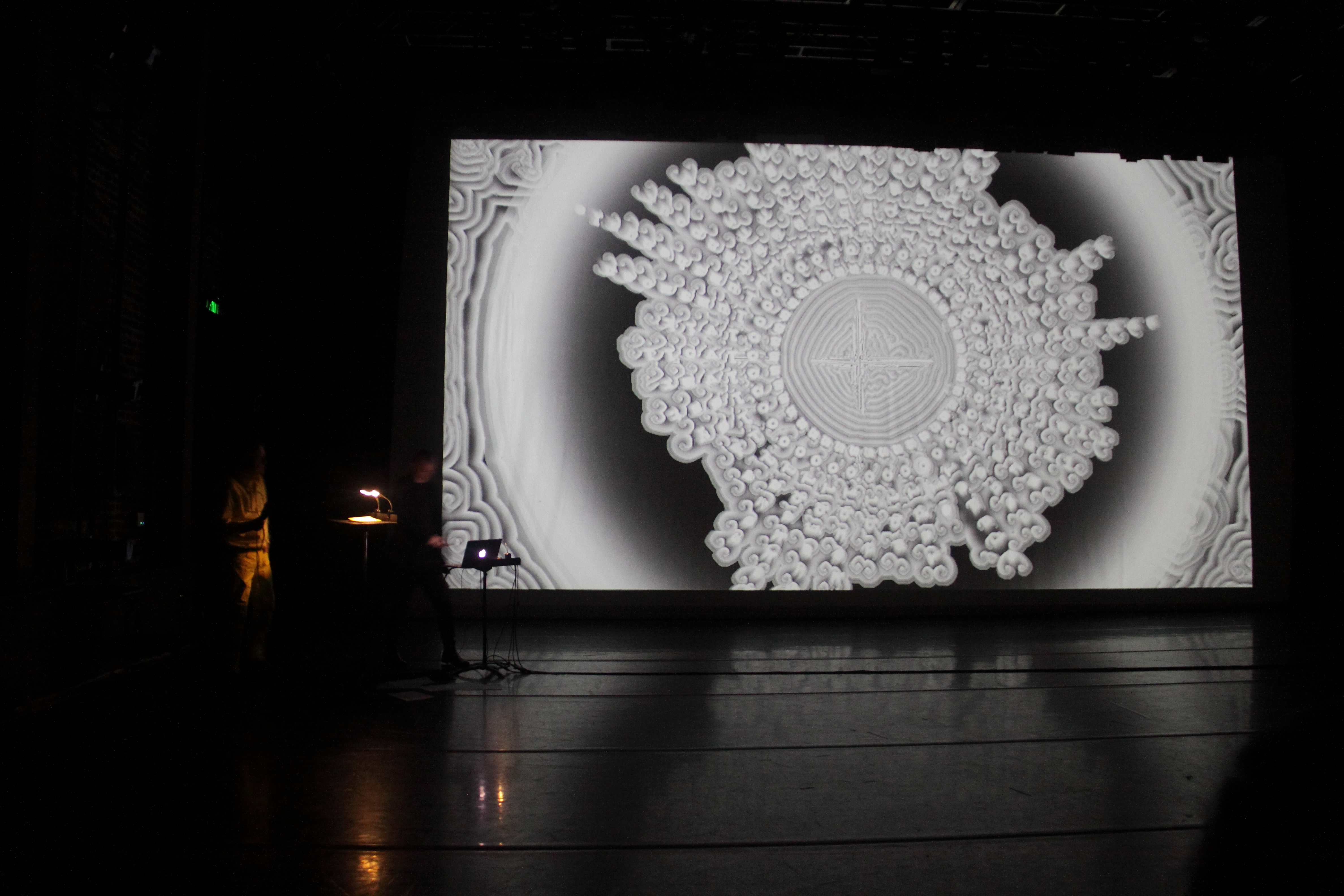
OM230065

The strange swirling images, sometimes with words or parts of words moved across the back screen while the two performers, barely visible, worked with their instruments (computer and voice) to create a soundtrack for the images.  Much like the non-syntactic use of sounds and language, the musical accompaniment was comprised of rather minimalistic utterances orchestrated in a wide range of frequencies with frequent heavy bass sound which provided a tactile component. All in all a rather mystical experience, exactly the cutting edge one looks for when attending an Other Minds production.
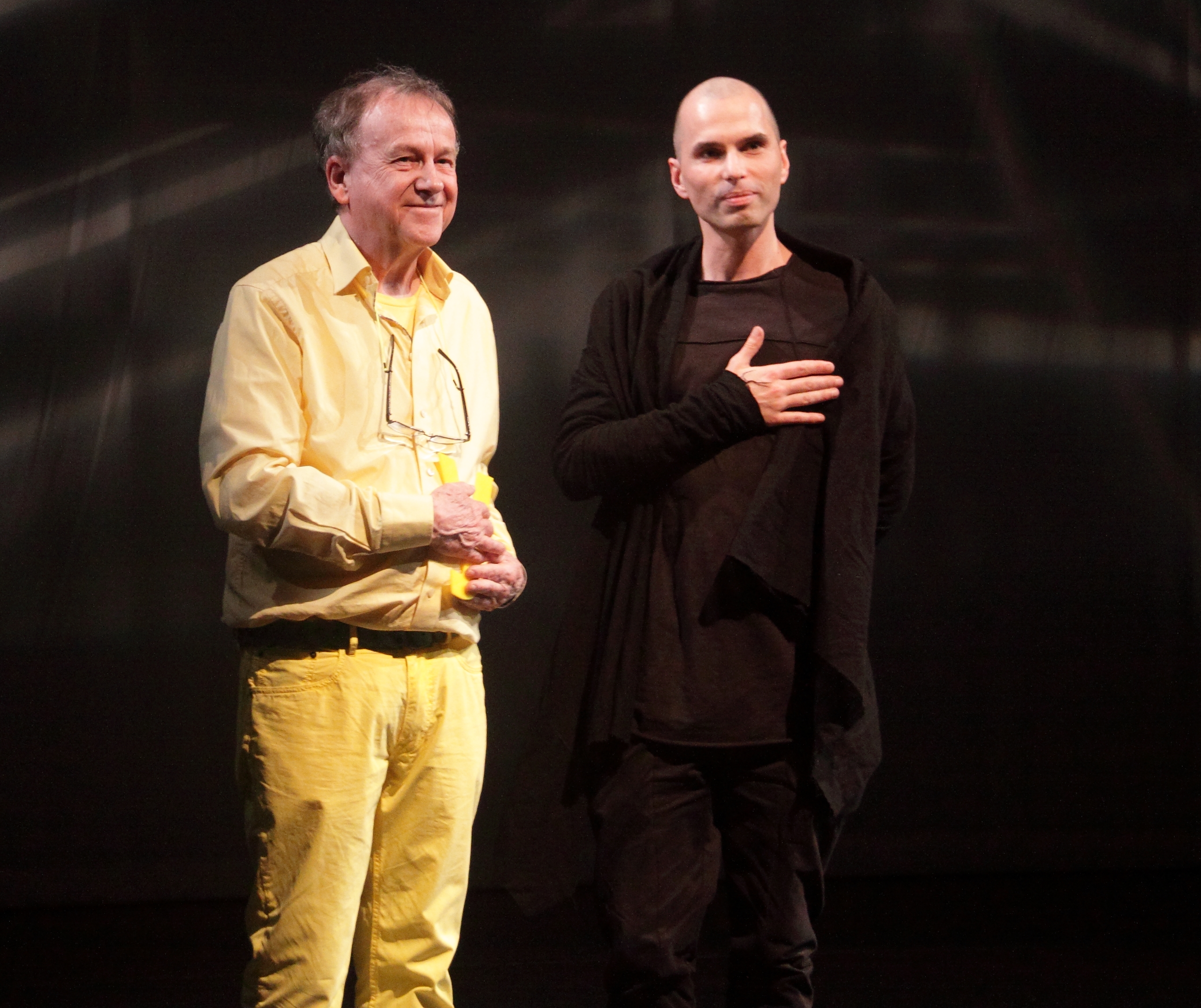
OM230067

The performers seemed touched, perhaps even a bit surprised by the very warm response from the audience who seemed to connect rather easily to this unusual and very sensual experience.

The first half of this night’s concert concluded with the presentation of two more tape pieces, Lily Greenham’s “Outsider” (1973) and Åke Hodell’s “Mr. Smith Goes to Rhodesia” (1970).  As in previous tape presentations a static photograph with titles was projected on the back wall in the darkened theater.

The Greenham piece is a solo monodrama in which the speaker (Greenham) is accompanied by an electronic chorus of her own voice.  Hodell’s piece is clearly a protest piece about racial oppression by Ian Smith (Rhodesian Prime Minister 1964-1979) in Rhodesia (now Zimbabwe and Zambia).  It is like the Greenham piece in that it utilizes a chorus but here the chorus is actual children gathered by the artist to speak/echo the lines of the narrative which contrasts the colonial narrative with both Hodell and the children periodically intoning, “Mr. Smith is a murderer.”  The contrast was chilling and the pause for intermission a welcome respite.
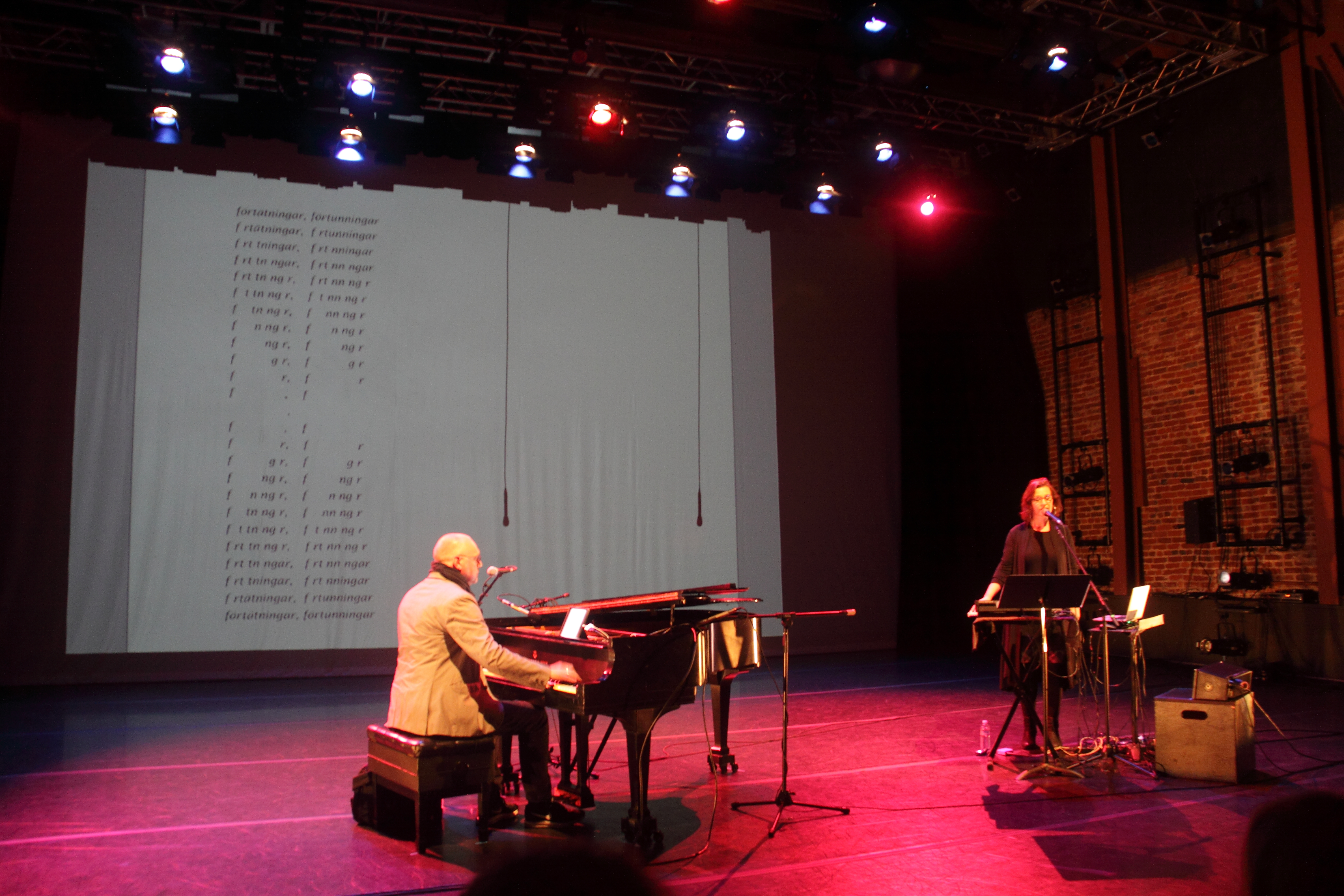
OM230071

The second half of the program began with a solo performance by Tone Åse, another world premiere.  She performed her work, Ka? (2018) for voice and electronics.  In this piece she works with the sounds of questions, hesitations, and the sound of dubiousness deconstructing words, phrases, sounds and manipulating them vocally and electronically in a piece whose low volume and sparse sounds certainly evoked the intended emotions.

After a brief acknowledgement of the appreciative applause the next performer, Sten Sandell sat down at the keyboard stage left and began the performance of Voices Inside the Language (2018), another world premiere.  Again this experience had a similar sparse, almost minimalist approach.  It was a collaboration that echoed the first night’s Coolidge and Curran performance and presented an entirely different sound world.

OM230073

Almost before the audience realized the collaboration was over Åse discreetly left the stage leaving Sandell to perform his work, “vertikalakustik: med horisontell prosodi” (2017).  Here was a near complete deconstruction of language using simply phonemes, individual sounds.  With voice, piano, and projections on the back screen, Sandell delivered his necessarily minimalistic piece.

Both Sandell and Åse briefly acknowledged the applause bringing to an end this most satisfying international segment of the festival.

Good Luck with/for/on/in/at Friday the 13th

Described as an antidote for triskaidekaphobia (fear of the number 13), this evening’s program featured primarily California based artists including Amy X Neuberg, Mark Applebaum, Charles Amirkhanian, Carol Law, and (the one non-Californian) Enzo Minarelli.

The most famous victim of triskaidekaphobia was the Austrian/American composer Arnold Schoenberg (1874-1951).  Curiously for the sake of the present subject matter, Schoenberg invented sprechstimme (speech song), a sort of half sung/half spoken style of performance for many of his vocal scores.  His unfinished opera, Moses und Aron (1932) uses it and ends the second (and last completed) act with Moses singing/speaking the following words: “O Wort, du Wort, das mir fehlt!” (in English: “O word, thou word, that I lack!”)  Indeed the theme in the composer’s libretto is centered in part around Moses’ inability to articulate his ideas.  (Aaron was the man of words, Moses the charismatic leader)  Here, tonight, we were presented with artists who have grappled similarly (as all artists do) with the issue of expression and their unique solutions to the problem.  (By the way the spelling, “Aron” is not a German spelling, it is Schoenberg’s truncation of the name so that the title would not have 13 letters.)  The poor man probably wouldn’t have survived this night.
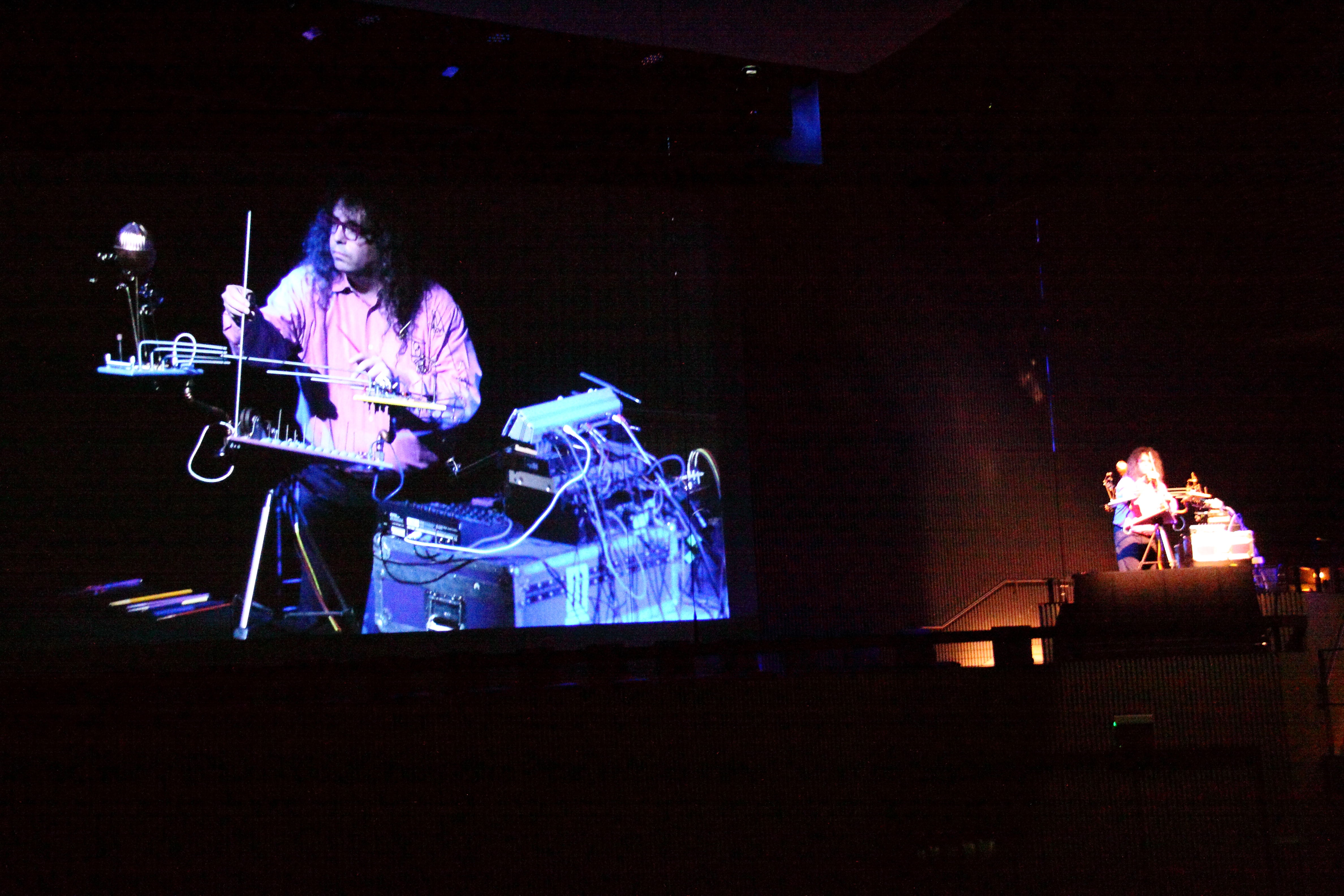
OM190013

Projection of Applebaum performing with view of the composer/performer stage right as well.

The night opened to a darkened stage with the projection of one of those info/program note cards on the back wall.  The presentation was of a tape piece by Stanford professor (and Other Minds alumnus) Mark Applebaum.  Since the darkened stage and the all too brief bow taken by the composer exceeded the limits of this writer’s photographic skills I offer the above photo of Mr. Applebaum from previous Other Minds program.

The piece at hand on this Friday the 13th was, “Three Unlikely Corporate Sponsorships” (2016) which had it’s premiere at Stanford.  The three sections were entitled, “Nestlé”, “General Motors”, and “Haliburton”.  The mocking and humorous content was such that there was no doubt that the three named corporations were not involved in the creation and funding of this work.  Like some of his predecessors this week Applebaum is prone to political commentary in his music whose sound appeared to take place in a stereo sound field with some antiphonal effects.  Words were used, deconstructed, used again and never once were they used in a complementary fashion.  This is, in its way, a protest piece.

As I said, Applebaum came out only briefly (with a smile on his face) to acknowledge the very amused and appreciative audience.  One senses that protest against corporate greed is hardly an unpopular theme with this self selected audience which greeted this work with obvious satisfaction.

OM230078

Amy X Neuberg is a well known performer in the Bay Area and is also an alumnus of Other Minds.  Neuberg studied both linguistics and voice (at Oberlin College), and electronic music (at Mills College).  She has a strong well-honed soprano voice and has developed her own unique mix of language and music in compositions that defy easy categorization.

Neuberg graced us with “My Go”, “Christmas Truce: a journal of landlord/tenant situations”, yet another world premiere for this series, “Say it like you mean”, “That’s a great question (A Jerry Hunt Song Drape)”, and, one of her classics, “Life Stepped In”.

Neuberg’s work is a striking and unique combination of linguistic wizardry, cabaret style song writing, probably some rock and pop sensibilities, and the indefinably unique way in which she integrates voice and electronics with a touch of drama at times.  Her work is permeated with humor but also with social critique.  As is always the case (at least in this writer’s experience) her performance was greeted with warmth and appreciation.

OM230080

Following intermission we were again treated to the substantial performing skills of Enzo Minarelli who graced us with a generous selection of his own works including, “La grandeur di Ghengis Khan” (The grandeur of Ghengis Khan) comprised of eight vocal tracks and three noise tracks, “Il supere scopo di vita” (Knowledge as the purpose of life) “I nomi delle città come inno nazionale per Sinclair Lewis” (The names of the cities as national anthem to Sinclair Lewis) another multi-track work, and Excerpts from Fama: “Ciò chevoglio dire” (Fame: What I Want to Say): “Affermasi senza chiedere” (To succeed without asking), “Che teme il dolore (use la medicine della religion)” (Those who fear pain fuse the medicine of religion), “Alla ricerca del suono farmacopeo” (Seeking the pharmaceutical sound) and “Poema”.

In addition to their described meanings and verbal content these works were about the beauty of the Italian language and the beauty of the sound of the performer’s voice as well as the accompanying performance.  Minarelli is apparently a performer of high energy.  He performed on five of the six days and attended the last night as well seemingly all in a weeks work.
OM230086

Once again the fairly minimalist lighting strategies were remarkably effective.  Projections on the back wall along with Minarelli’s strong stage presence made for a striking performance of these works.

OM230091

Minarelli was like a poet from a cabaret in some lost Fellini film fraught with intelligence, drama, passion, and humor.
OM230092

Any of the above led the audience in some degree to the notion that what had just transpired would be a tough act to follow.  Certainly this was true for Mr. Minarelli but, rather than a denouement or even a cooling down there was a shift of gears, a transition if you will, to yet another universe of creativity.

We were next presented with a fairly rare experience.  We got to hear Other Minds’ executive and artistic director perform some of his own dalliances with languages and vocal utterances.  Charles Amirkhanian, no longer wearing his jacket but rather a long white shirt, came on stage with this wife and partner, in both life and artistic crimes, Carol Law.  Together they shared some of the inspirations of their (obviously still in progress) long strange trip.

OM230097

In addition to being a photographer, Carol Law is a collage artist and has also been involved in the design of a few of pieces of Other Minds collectibles such as the t-shirts created for this year and several from previous years.  What is a bit lesser known are her collaborative efforts with Charles Amirkhanian.  The above image, for example, demonstrates the striking, slightly disturbing images that characterize the first work on tonight’s program, “History of Collage” (1981).  Carol’s images were accompanied by a live recitation by Charles of a text which is actually about collage but is manipulated by a cut up technique.  Here we saw images and heard the spoken text.  For the next two collaborations Amirkhanian took his microphone and did his recitation in front of the projection screen creating effects not unlike the light shows and projections one might have seen in one of Bill Graham’s productions at the Fillmore Theater some 50 years ago.  That is not to say that the intent or effect was nostalgic or historical, just that it seems to exist in a parallel universe.  The long white shirt thus became a part of the projection screen with Amirkhanian moving dynamically along with the speaking of the disjointed texts.

OM230100

The visual imagery was both striking and unique and held this writer, if not the entire audience, in thrall to a powerful sensual onslaught.

Hypothetical Moments (in the intellectual life of Southern California) (1981) is another of these cut up texts, this time an intercutting of Edith Wharton’s, “Glimpses of the Moon” and what Amirkhanian describes as “the gruff drugged-out reportage of a Yankee baseball game”, Ted Berrigan and Harris Schiff’s, “Yo-Yo’s with Money” (Amirkhanian is an avowed baseball fan).  These were spoken over an improvisation done on an out of tune harpsichord modified by an Eventide Harmonizer.

OM230101

The pair stepped on stage together to acknowledge the very appreciative applause.  Indeed this was a rare and precious experience seeing them perform together and, though they did not eclipse the previous artists, they clearly established their parallel universe in the shared multiverse of sound poetry.  These are wonderful performance pieces.
OM230104

So…how do you follow that?  Well, apparently with some solo Amirkhanian.  As noted previously, Charles has been writing and performing his brand of vocal gymnastics since at least 1969.  Two of his works, “Just” (1972), and “Heavy Aspirations” (1973) were included on that anthology mentioned at the beginning of this review.

OM230113

Amirkhanian has taken the stage at least twice before at Other Minds performing his own text sound works.  Tonight he presented, “Maroa” (1981), a sort of homage to a street in his home town of Fresno, “Ka Himeni Hehena” (The Raving Mad Hymn, 1997), a  celebration/deconstruction of the Hawaiian language, “Marathon” (1997), a two voice poem which is like a nostalgic parody of the fundraising which Charles did so many times for KPFA, and, one of this best known works, the gently humorous “Dutiful Ducks” (1977) which involves rhythmic speaking and deconstruction of words on tape to which he reads live and (mostly) in sync.  As with most of what we all heard on these days, live performance IS the point.

INK Conclusion

OM230118

Day 6 featured beloved Bay Area diva (and Other Minds alumnus) Pamela Z.  While one might note that, like Amy X Neuberg, she has a powerful, trained soprano voice and relies on electronics, her results are an entirely different animal.  Some of Z’s specialized proximity controlled electronics are artistic creations themselves and play a part in the theatrical component of her performances.
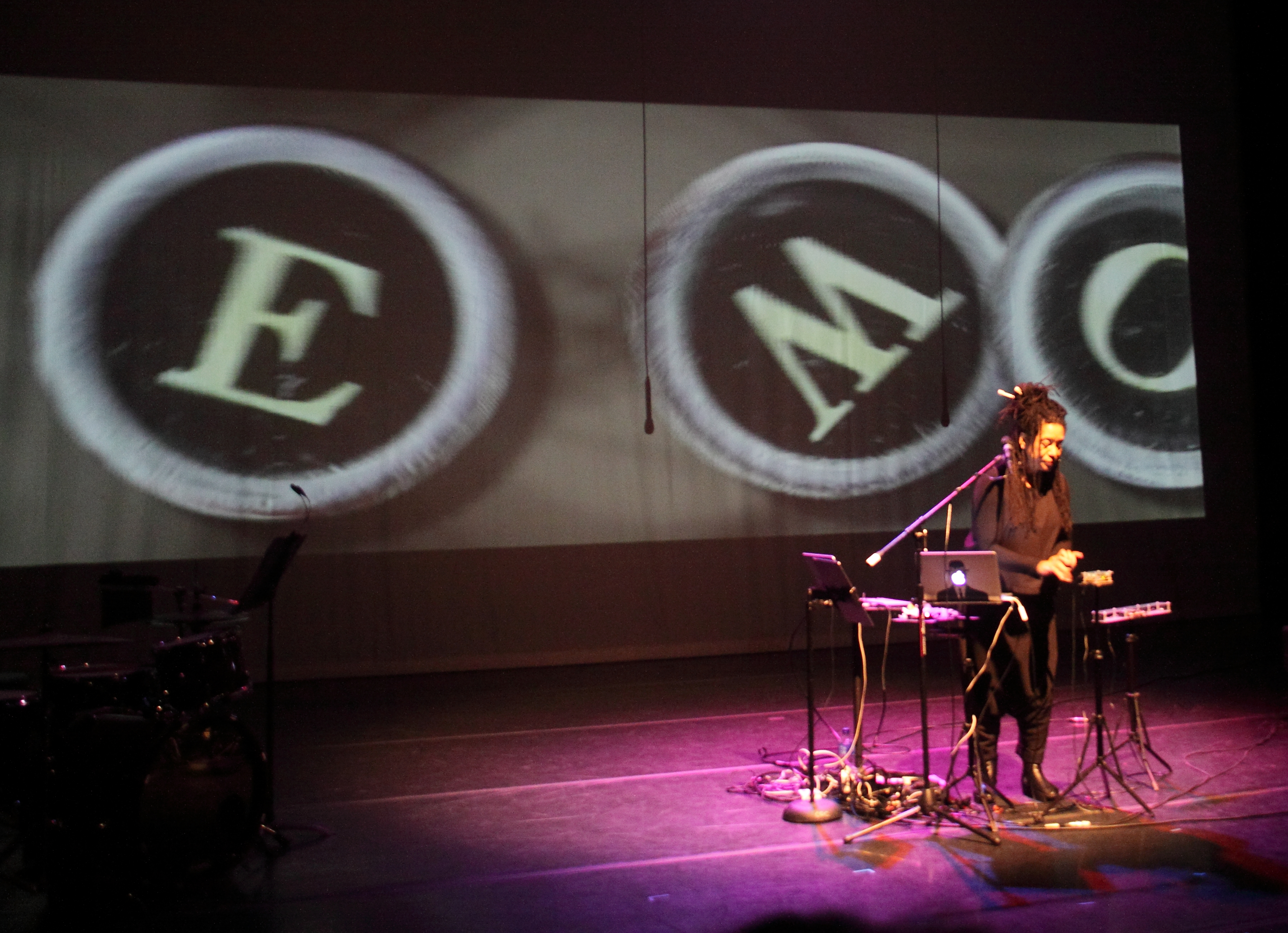
OM230121

Pamela Z’s performances were enhanced tonight with video and slides such as this projection which supported her performance of Typewriter/Declaratives.

Like Neuberg, Pamela Z does a sort of cabaret style performance.  On this night she graced us with, “Quatre Couches/Flare Stains” (2015), “Typewriter/Declaratives” (2015), “33 Arches” (from a larger work called, Span, 2015), “Pop Titles: You” (1986) and the SF premiere of “Other Rooms” (2018).

OM230123

Z’s skills at writing for chamber ensemble were displayed in 33 Arches, a section of a larger work called Span.

Most commonly seen as a soloist with electronics, it was a wonderful opportunity to hear a portion of one of her recent works which involved writing for more conventional instruments in addition to her voice and electronics.  This was done also in conjunction with video.

OM230124

Pamela concluded with a performance of one of her classic works, “Pop Titles ‘You'” (1986) enhanced by the back wall projection of the text source for the work, a page of the now defunct Phonolog report which was commonly found in record stores “back in the day” as they say.  Z worked for a time at Tower Records.

Like Amy X Neuberg, Pamela Z was treated to a warm round of appreciation from this adoring home town Bay Area audience.
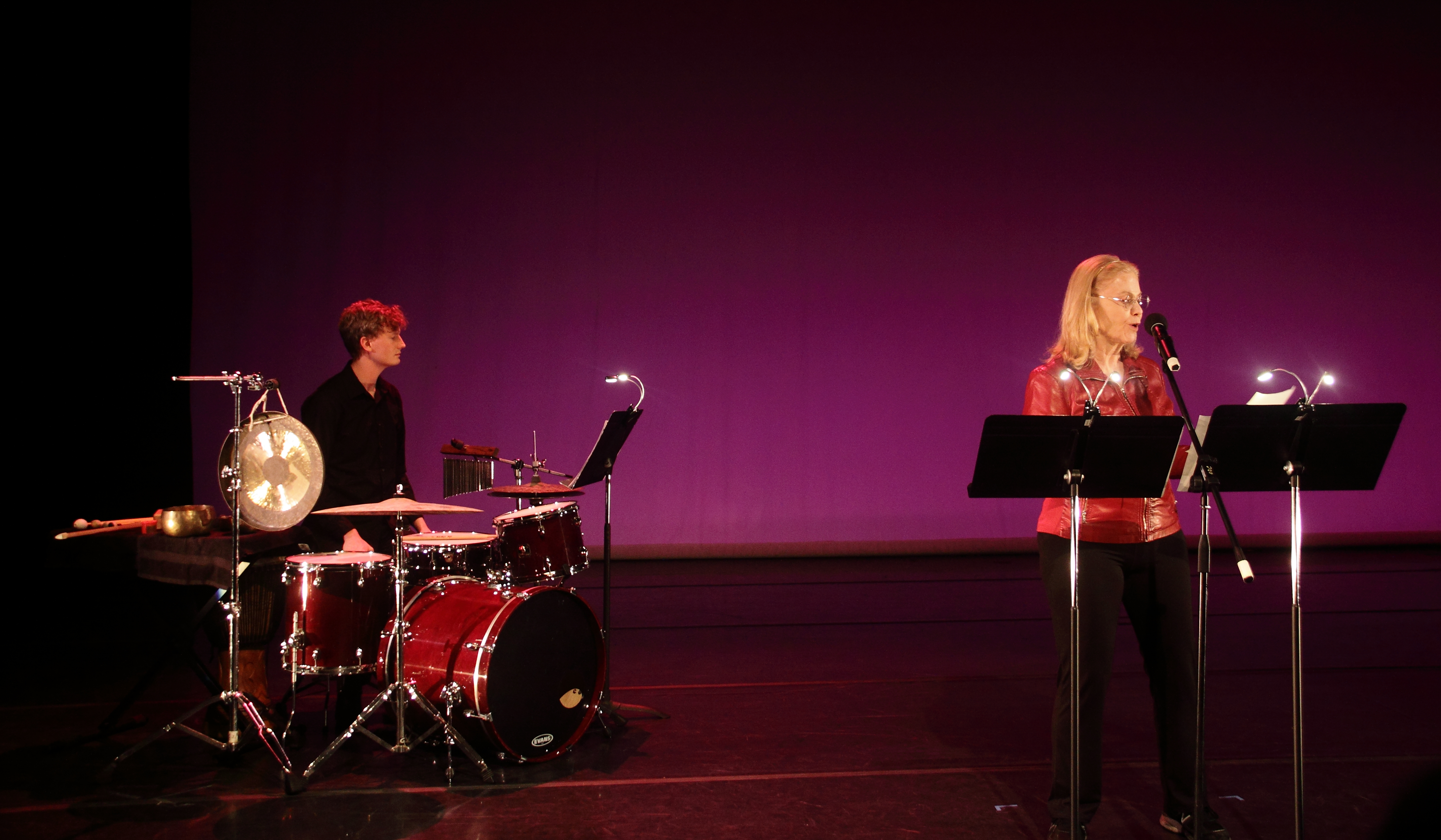
OM230128

Next came another of the artists who appeared on the 10+2 anthology, Beth Anderson-Harold.  She was accompanied by Other Minds intern and percussionist, Michael Jones.  Beth Anderson, originally from Kentucky, exudes a sort of midwest wholesomeness that belies a complex and assertive artist.  She is now based in New York but has strong roots in the Bay Area having worked with Charles Shere, John Cage, Terry Riley, Robert Ashley, and Larry Austin.

Her performances of “If I Were a Poet” (1975), I Can’t Stand It” (1976), “Crackers and Checkers” (1977), “Country Time” (1981), “Killdeer and Chicory” (2005), “Ocean, Motion, Mildew, Mind” (1979), and “Yes Sir Ree” (1978) were delivered with a powerful energy and enthusiasm.  She seemed almost surprised at the warm reception her performance received.  It was yet another example of the incredible variety that this genre of music embodies.

OM230131

Anderson’s delivery was powerful, ecstatic, and assertive.

OM230133

This sixth day of the varieties of sound poetry was brought to a conclusion first with three tape works by fellow KPFA (1990-2005) radio producer Susan Stone.  The works presented were, “Couch” (from House with a View, 1989), “Ruby” (from House with a View, 1993), and “Loose Tongues” (1990).  All are basically Stone’s personal take on radio theater which she describes as, “Cinema in the Head”.  Stone took an all too brief bow to acknowledge the applause.
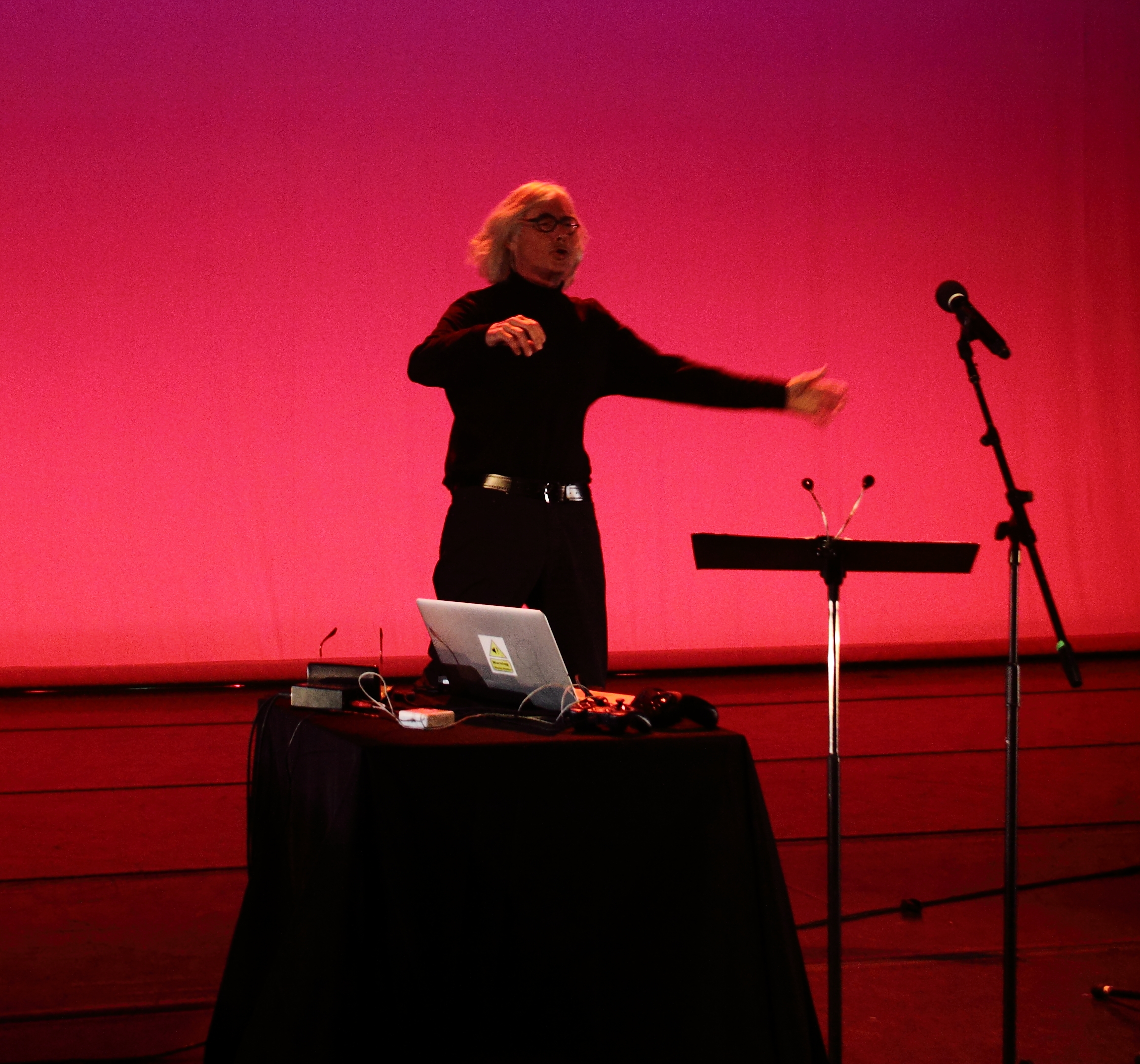
OM230135

Though the audience’s attention seemed not yet to have flagged we were given an infusion of energy from the seemingly always energetic Jaap Blonk.  He presented six of his works to conclude the evening, “Dr. Voxoid’s Next Move”, “Onderland” (Underland, excerpts), “Rhotic (Phonetic Study #1, about the R), “Muzikaret (Music Made of Rubber)”, “Cheek-a-Synth (Solo for Cheek Synthesizer)”, and “Hommage à A.A. (for Antonin Artaud).

OM230137

Blonk’s seemingly boundless energy took him around the stage at times.

Blonk did a lovely thing to cap off this mind bending week (almost) of performances.  He engaged the audience in a call and response improvisation.  As these things generally go he began with fairly simple sounds and progressed to longer and more complex sound groupings which challenged the audiences attention and repetition skills, a task they/we performed with great joy and amusement.

OM230142

Blonk leading the call and response performance with the audience which concluded the series.

Twenty performers, four of whom had appeared on that wonderful anthology, kept the ODC Theater packed to near capacity on all six nights.  That alone is a feat.  What cannot be satisfactorily communicated in a mere article is the energy and focus of both the performers and the enraptured audience whose attention never seemed to flag as they/we were lead down unfamiliar paths to little heard universes of ideas and sounds.

This expanded festival also included one of the most spectacular program books this writer has ever seen from Other Minds.  Mark Abramson did the eye popping graphic design which featured no fewer than four different covers and very useful texts and photographs documenting the works performed and their history.  The t-shirts were another of Carol Law’s successful designs.  These may be highly collectible and, as of this writing, are still available through the Other Minds website.

In an promotional article entitled, “Other Minds 23: In the Beginning was the Word” I obviously used a biblical quotation (John 1: 1 for those interested).  In fact the only religious thing going on here was the spiritual magic of astoundingly talented performers, and a mighty unusual gathering of Other Minds in terms of the enthusiastic audience.  But I would be remiss if I did not take note of the fact that this fabulous marathon was done in six days.  I’m guessing we all rested on the seventh.

More Than the Ears Can Hear: Bill Fontana in Conversation


img_0200

Despite being possessed of a rabid and eclectic interest in all music I had not been aware of Bill Fontana until I found this presentation sponsored by Other Minds and curated by Charles Amirkhanian (whose radar seems to capture just about everything).  This entry into the Nature of Music series last night featured this artist who extends the very meaning of composition and the very reach of our ability to hear.

This series is hosted by the David Brower Center in Berkeley, CA.  The center is a state of the art environmentally friendly building which serves, appropriately, as a center for ecological awareness and hosts various organizations within its walls (including the Berkeley office of Other Minds) whose missions serve various environmental concerns.  The Nature of Music series attempts to address ecological concerns and indeed the featured artists have all demonstrated connections to the environment in various creative ways.

Bill Fontana (1947- ) is a San Francisco resident but his art takes him all over the world.  He presented audio and video excerpts from his installation works in Kyoto, Lisbon, San Francisco, London, and Iceland.  The basic concepts behind his work seem to be the extension of hearing and, to some degree, of seeing.  He uses multiple microphones and transducers to extract sound from objects such as bridges, bells (when not ringing), musical instruments (not playing), etc.  His multi-layered video experiments are at least partly analogous to this.

The first presentation was perhaps the most striking.  Fontana showed a video of an old Zen Temple bell which was just hanging there in a still video recording.  He had attached a sonic transducer to pick up the subtle vibrations of the bell as it reacted to the ambient sounds around it, something it had been doing for its entire existence (though no one knew until this).  He quipped that the monk whose job it was to care for said bell was somewhat anxious about what Fontana was doing.  When the monk heard the sound that this “silent” bell made he was astonished.  What one learns is that there are sounds made which our ears do not hear.

img_0199

Another “not ringing” bell in a New York tower revealed its reactions to its environment sonically and in a still video overlooking Manhattan from the high atop the lonely tower.

One installation involved 8 microphones arranged around San Francisco Bay which transmitted the sounds they captured to an installation of 8 loudspeakers located at Fort Mason.  The effect was of having ears that could hear all of these sounds which were so geographically distant that one pair of ears could not hear them in this way.  This 1982 installation is scheduled to have the recordings of those captured sounds from the original presentation played continuously in a permanent installation at Fort Mason.

Other installations included a bridge and a river in Lisbon and some hydrothermal installations in a couple of places.  What these all had in common was this extension of hearing (and vision) and how this increases one’s awareness of the environment both sonically and visually.  The artist acknowledged a passion for environmentalism and took the time to answer the questions of a medium sized but very engaged audience.

There are things in his work that echo the work of John Cage, Annea Lockwood (who appeared on a previous Nature of Music program), Pauline Oliveros, and any number of drone/noise composers.  But his vision is clearly a unique one and it was revelatory to have been able to hear/see this little exposition.  Fontana is truly a phenomenon whose roots fit comfortably on the west coast but whose vision is global.

It is well worth your time to peruse Fontana’s web site which is full of videos and sound files depicting his unique visions from various locations all over the world.  Fontana seemed a warm and unpretentious figure led all these years and still going with a child-like sense of wonder and a spectacular imagination.  All in all a mind-blowing and entertaining evening.

Paula Matthusen’s Pieces for People


matthusen

This is the first disc devoted entirely to the music of Paula Matthusen who as of July is a newly minted associate professor at Wesleyan University where she walks at least partly in the footsteps of emeritus professor Alvin Lucier whose course Music 109 she inherited from him.  I had the pleasure of meeting Ms. Matthusen at Other Minds 18 where she was one of the featured composers.  In our all too brief conversation she was affable and unpretentious but certainly passionate about music.

Paula Matthusen

Paula Matthusen performing her work, ‘…and believing in…’ at Other Minds in 2013


She holds a B.M. from the University of Wisconsin and an M.A. and PhD. from New York University.  She announced her recent promotion to associate professor on Facebook as is, I suppose, customary for people of her generation.  It is on Facebook that I contacted her to request a review copy of this CD to which she quickly and graciously agreed.

This CD contains 9 tracks representing 8 works.  They range from solo to small ensemble works, some with electronics as well.  Her musical ideas seem to have much in common with her emeritus colleague Alvin Lucier but her sound world is her own despite some similarities in techniques, especially her attention to sonic spaces and her use of electronics to amplify sonic micro-events which might even include her heartbeat.


sparrows in supermarkets (2011) for recorder looks at the sound of birds in the acoustic space of a supermarket and their melodic repetition.  It is for recorder (Terri Hron) and electronics

limerance (2008) is another solo work, this time for banjo (James Moore) with electronics.  She says she is working with the concept of reciprocation here but that seems rather a subjective construct.  Like the previous piece this is a contemplative and spare work with some spectral sounds as well.

the days are nouns (2013) is for soprano and percussion ensemble and electronics.  Here she is concerned with resonances within the vibrators of the instruments as well as the acoustics of the room.  It is a dreamy, impressionistic setting of a poem by Naomi Shihab Nye whose poem supplies the title but the text is fragments of a Norwegian table prayer.  A very subtle and effective work.

AEG (2011) is represented by two movements (of four?) all of which were written for the Estonian ballet.  It is similarly concerned with resonances and words at times.  Of course it would be interesting to hear those other movements but perhaps another time.

of architecture and accumulation (2012) is the first of two purely acoustic compositions on this disc.  This one is for organ solo (Will Smith) and explores long tones within the acoustic space.  It is a very satisfying work even if one doesn’t go into the underlying complexities.

corpo/Cage (2009) is  the longest and largest work here and is the second purely acoustic piece on this recording.  It has echoes of Stravinsky at and it is an enticing example of Matthusen’s writing for orchestra.  This reviewer certainly looks forward to hearing more of this composer’s works for larger ensembles.  Very effective writing.

in absentia (2008) is the earliest work here.  It is written for violin, piano, glasses and miniature electronics (not quite sure what that means).  Like many of the works on this disc the concern or focus seems to be on small events and sounds.  This is a rather contemplative piece that nicely rounds out the recording.

Matthusen resembles Lucier in some of her techniques and focus on small sounds otherwise missed and she certainly owes a debt to people like Pauline Oliveros.  But in truth she sounds like no one as much as Paula Matthusen.  The composer presents a strong and intelligent voice and one wishes for more from this interesting artist.  Thank you for the opportunity to review this.

Pounding on History: Joseph Bertolozzi Literally Plays the Eiffel Tower


delatour

I recall a video from the 90s featuring percussionist David van Tieghem manically going down a street in Manhattan playing pretty much every object in his reach (fire plugs, phone booths, etc.) and that serves to create my mindset for the understanding the present recording.  Now this recording is more site specific and all music is site specific in the sense that each performance is unique by virtue of the acoustics, the time/day of the performance, the audience, etc. but this recording is pretty unique.  I mean, this band can’t travel.

Following in the spirit of R. Murray Schaefer’s huge environmental concepts, Pauline Oliveros’s deep listening ideas and even inspiration from David van Tieghem and perhaps the wild energy of Han Benink as well this is album is actually a sort of sequel to a previous effort, 2009’s Bridge Music (written for/on the Franklin Delano Roosevelt Bridge).  I have not heard the former album but the compositional techniques appear to have been similar in both the former and present album.  He explores the sounds he can make with various mallets and samples them into a computer for later use.

bridgemus

What prevents this Tower Music from becoming ordinary is the extraordinary inventiveness of his Bertolozzi‘s compositions.  This is not just a catalog of “where I’ve banged the tower” but rather a loving sound portrait derived from the sonic possibilities of a major architectural landmark making creative use of the famed tower’s utterances unleashed by the composer/performer’s experiments.  Having found and extracted a huge catalog of tuned and untuned sounds from months of experimentation and recording the composer has assembled a very interesting set of pieces that hold the attention well.

There are ten tracks in total, the last being an audio tour of the Eiffel Tower (without pounding).  The musical tracks run from 49 seconds to about 11 minutes and all are given fanciful titles sometimes related to the area being played.

In addition to being a set of compositions it is also a sort of sonic portrait unique as DNA to the structure from which it has been extracted and upon which it is played.  One can envision an ongoing project of more such sonic portraits.  It works on both these levels. There are plans for live performances in the works at the time of this recording’s publication..

Leave it to Innova in their ongoing search for the mavericks.  They have found one here. This appears to be a labor of love from it’s conception to it’s recording and presentation here including the package design and liner notes.  And now who knows what other structures are laying about with sonic possibilities yet to be heard?

Final Culmination of a Long Collaboration: Alcatraz/Eberbach by Ingram Marshall and Jim Bengston


Starkland's Alcatraz DVD

Starkland’s Alcatraz DVD

The music of Ingram Marshall (1942- ) first came to my ears via the New Albion recording of the Gradual Requiem (1994) written in memory of his father.  The spare sounds in this abstract electroacoustic piece remind one of the music of Harold Budd or the ambient music of Brian Eno.  Like them Marshall has developed a unique and significant voice drawing from methods including minimalist repetition, drones and static harmonies.  He also incorporates electronic music techniques and the techniques of the modern recording studio as well as non-western tunings and instruments.  But even given all the comparisons and qualifiers it is difficult to describe his voice because it is a unique style that, once heard, will leave it’s stamp of individuality much as the distinction between the above-named artists or, for that matter between a Mozart vs. Haydn style.  Very difficult to describe in words alone.

Ingram Marshall in his Hamden, CT studio.

Ingram Marshall in his Hamden, CT studio. (Photo credit: Wikipedia)

Now a visiting professor of composition at Yale School of Music, Marshall has had a successful career as a professor, composer and performer.  He has written for a variety of instruments including electronic sounds, piano, guitar and voices as well as for chamber and orchestral groups.  He has released 8 (now 9 with the present DVD) albums.

Jim Bengston (1942- ), born in Evanston, IL developed an interest in photography while in the army.  His work will be familiar to music fans through his work on many albums including the characteristically beautiful photographs seen on albums from  ECM.  His work has been exhibited at MoMA, Art Institute of Chicago, Walker Art Center, National Museum of Art, Architecture and Design in Oslo, Lillehammer Art Museum and many others.

JimBengston in studio 2009 crop1107

Jim Bengston in his studio 2009

Starkland pioneered a wonderful DVD audio release in 2000 (which includes Marshall’s ‘Sighs and Murmurs’) called Immersion which contained works commissioned for the new Dolby 5.1 system, the first disc of it’s kind and still a landmark production.  Now comes this DVD from the always interesting Starkland records of two collaborative works between these fine artists making full use of the medium.

Like that earlier disc, this is a venture into another type of art object.  The disc contains musical tracks and a series of photographs leisurely timed with the flow of the music.  But this is not a commercial DVD experience of a film nor is it a traditional slide show.  It is not didactic and only incidentally linear.  It is not just a piece of music for listening either.  The experience that I come away with is more of a hybrid experience of something like a living electrovisualacoustic sculpture (sorry for the improvised neologism).

Alcatraz is a 1991 piece realized on tape as is the companion piece.  It is a sonic reworking by the producers into Dolby 5.1 surround sound.   Here it is paired with photography lovingly displayed on the video format by Jim Bengston.  There is a second work on the disc which is a fitting companion piece called Eberbach (1985) after the abandoned monastery Kloster Eberbach in Germany.  Both works are video sequences of images by the photographer accompanied by Marshall’s hypnotic, impressionistic and elegiac  music.

The audio version of Alcatraz was originally released on a New Albion disc in 1991 and Eberbach (the first two of the “Three Penitential Visions”) was released on a Nonesuch disc in 1985.  According to the liner notes the two artists, who first met at Lake Forest College in Illinois, had been discussing a collaboration such as this for many years and a quick look at the copyright info confirms the dates of the photography to 1984 and 1985 for Alcatraz and Eberbach respectively.  They reportedly exchanged photos and cassette recordings for some time  and the quality of their collaboration is apparent.  And now this formerly languishing collaboration is now completed as it was intended with the release of this DVD.

The first work, Alcatraz consists of environmental sounds as well as electronic music and recorded acoustic instruments.  Marshall creates a glowing ambient texture attempting to reflect the history of the famous prison island in the San Francisco Bay.  The piece is in 7 sections nicely divided into tracks.  Each section reflects different aspects of the prison and the location.

The first section is a minimalistic piano piece which has added ambiance apparently from some added electronic manipulation adding a slight echoing which reflects the open empty reflectively resonant chambers of the stone confinements of the old prison structures.  It is followed by some musique concréte incorporating sounds of the prison environment like the ominous slamming of a metal cell door and its echo.  These sounds are manipulated with minimalist techniques of repetition creating a disturbingly oppressive memory of a sound which cannot ever have had a happy connotation for anyone.  And, of course, throughout the stark, at times almost colorless photographs flow in a gentle rhythm from one to another with a few instances of “jump cuts” or quicker transitions.  One gets the sense almost of the visual and sonic events having been co-composed into this hybrid art form.

English: Monastery Eberbach, Germany

English: Monastery Eberbach, Germany (Photo credit: Wikipedia)

Eberbach is based on impressions by the artists of Kloster Eberbach, the first Cistercian Monastery which was established in 1136 by Saint Bernard of Clairvaux.  It is no longer in use as a monastery but is actively used as a concert space, wine tasting space (there is a large vineyard and winery on the property which is run by the state) and has been used for scenes in films such as ‘The Name of the Rose’.  It is in fact an acknowledged architectural heritage site as it preserves fine examples of architecture from Romanesque, Gothic and Baroque periods.

Eberbach was conceived and works as a companion to the first piece in several ways.  The same attention is paid to the use of environmental sounds as well as use of conventional instruments to evoke the scenes depicted in Bengston’s photographs.  Both the prison and the monastery are about isolation from the larger society, monks in their cells, prisoners in theirs.

The press room of Kloster Eberbach, a Cisterci...

The press room of Kloster Eberbach, a Cistercian monastery in Germany (Photo credit: Wikipedia)

This disc works on many levels.  You can enjoy it as a focused experience sitting in front of the television listening to the music as the pictures flow by.  But you can also experience it as it was played in an installation type setting with the pictures and the music as this sort of ambient living sculpture object.  One can, of course, also experience the pictures or the music alone.  This is a very pleasant and enjoyable disc which is a satisfying culmination of these long gestating projects.

The original recordings were mastered by Bob Shumaker and the current surround sound mix was done by the equally talented Tom Lazarus.  Photo to digital transfers were done by Lavasir Nordrum Design.  Executive producer Thomas Steenland did the design of the package and the DVD menus.

Enhanced by Zemanta